

#openledger
openledger
17.3M vues
202,840 mentions
Populaire
Récents

·
--
Haussier
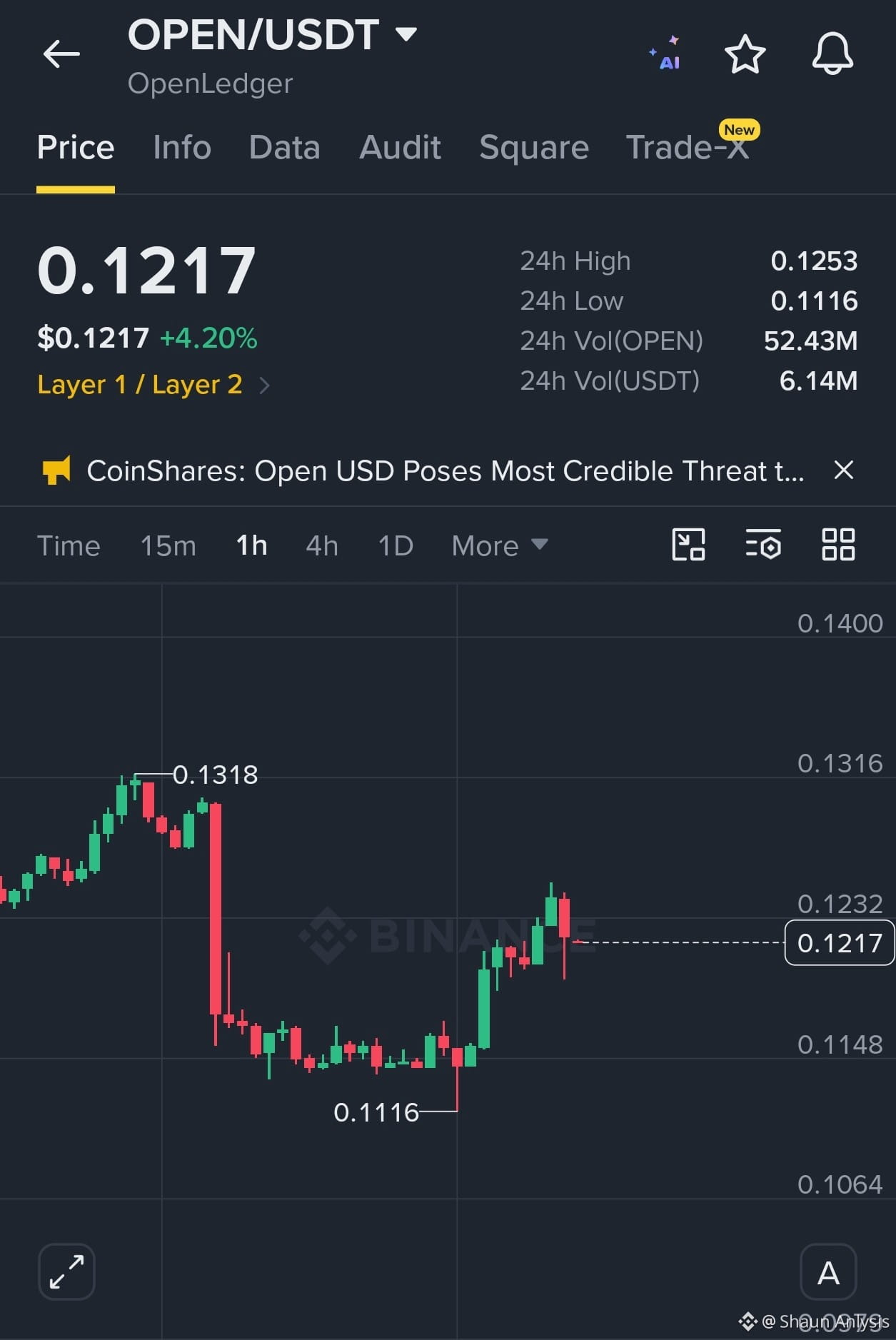
#OpenLedger just printed a textbook V-shaped recovery—don't miss the next leg up.
After a sharp flush to 0.1116, $OPEN has bounced hard, reclaiming the 0.12 handle and currently sitting at 0.1217 (+4.20% on the day). The 1H chart shows a clear shift in momentum as buyers defend the lows and push back toward the 24H high of 0.1253.
Bullish
Entry:0.1180 – 0.1220
SL:0.1100
TP1:0.1318
{future}(OPENUSDT)
#OpenLedger just printed a textbook V-shaped recovery—don't miss the next leg up.
After a sharp flush to 0.1116, $OPEN has bounced hard, reclaiming the 0.12 handle and currently sitting at 0.1217 (+4.20% on the day). The 1H chart shows a clear shift in momentum as buyers defend the lows and push back toward the 24H high of 0.1253.
Bullish
Entry:0.1180 – 0.1220
SL:0.1100
TP1:0.1318
After a sharp flush to 0.1116, $OPEN has bounced hard, reclaiming the 0.12 handle and currently sitting at 0.1217 (+4.20% on the day). The 1H chart shows a clear shift in momentum as buyers defend the lows and push back toward the 24H high of 0.1253.
Bullish
Entry:0.1180 – 0.1220
SL:0.1100
TP1:0.1318
1
13

·
--
Haussier
Partiellement vrai
*OPEN: A Quiet AI Opportunity Near The Bottom*
While many focus on popular AI coins, OpenLedger (OPEN) is trading near its lowest price ever.
From $1.84 to $0.11, a large correction of 94 percent. Is this a bottom?
Here is what makes OpenLedger interesting:
OpenLedger is building infrastructure for AI, where data, models, and AI agents receive payments automatically. Think of AI agents paying for verified data on-chain. This is called agentic payments, and OpenLedger aims to lead this sector.
Market cap is around $43M while volume is $31M. That is over 71 percent turnover, showing strong interest and active accumulation.
Token unlocks are happening. About 612k tokens daily around October 8th. Small unlocks create short-term pressure, but also long-term opportunity.
It is listed on major exchanges like Upbit, Bithumb, and Binance, with strong liquidity.
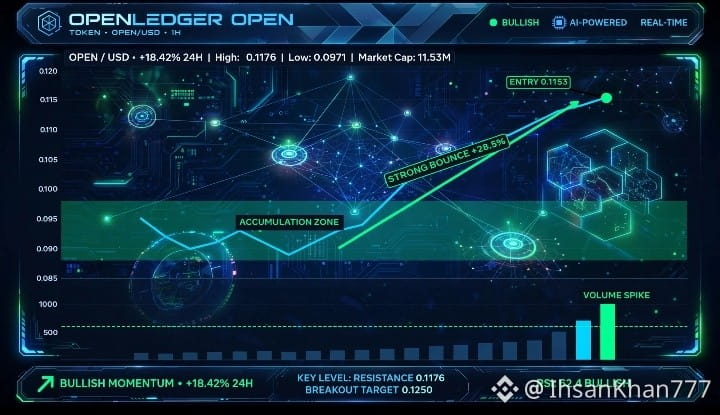
I bought OPEN at $0.1153 near the low range. This is not financial advice, but early infrastructure often looks quiet before growth.
#OpenLedger
#OpenAI
#BestTimeToBuy
#Market_Update
#BullRunTips
$OPEN
$BTC
$BNB
@XG297174
@dengshen
@eggtartcake_grape
@haoge666
@Square-Creator-f92ceb7e7882c
@Square-Creator-d4cc116ea2fe
@SGD852568
@Square-Creator-f0c9a305b41a7
@z12123444
@Square-Creator-9bd28167d172
@NUTS_btc
@heyi
@CZ
@Openledger
@Biswap_Dex
@MagVerse
@EASY7777
@KZG6886
@Z0628
@JavierDot
@oanicai
*OPEN: A Quiet AI Opportunity Near The Bottom*
While many focus on popular AI coins, OpenLedger (OPEN) is trading near its lowest price ever.
From $1.84 to $0.11, a large correction of 94 percent. Is this a bottom?
Here is what makes OpenLedger interesting:
OpenLedger is building infrastructure for AI, where data, models, and AI agents receive payments automatically. Think of AI agents paying for verified data on-chain. This is called agentic payments, and OpenLedger aims to lead this sector.
Market cap is around $43M while volume is $31M. That is over 71 percent turnover, showing strong interest and active accumulation.
Token unlocks are happening. About 612k tokens daily around October 8th. Small unlocks create short-term pressure, but also long-term opportunity.
It is listed on major exchanges like Upbit, Bithumb, and Binance, with strong liquidity.
I bought OPEN at $0.1153 near the low range. This is not financial advice, but early infrastructure often looks quiet before growth.
#OpenLedger
#OpenAI
#BestTimeToBuy
#Market_Update
#BullRunTips
$OPEN
$BTC
$BNB
@K线人生飞哥
@比特币预言家
@Eggtartcake_
@交易员张张子
@华尔街倩倩子
@蝴蝶股票-猩火Bro
@Flash闪光灯
@乐天eth
@加密大格格
@klxmBobo
@Nuts坚果
@Yi He
@CZ
@OpenLedger
@Qordman crypto
@MagVerse
@EASY喊單哥
@KZG Crypto 口罩哥
@Whale韭阴针鲸0628
@_WHALE_
@Oanic AI
While many focus on popular AI coins, OpenLedger (OPEN) is trading near its lowest price ever.
From $1.84 to $0.11, a large correction of 94 percent. Is this a bottom?
Here is what makes OpenLedger interesting:
OpenLedger is building infrastructure for AI, where data, models, and AI agents receive payments automatically. Think of AI agents paying for verified data on-chain. This is called agentic payments, and OpenLedger aims to lead this sector.
Market cap is around $43M while volume is $31M. That is over 71 percent turnover, showing strong interest and active accumulation.
Token unlocks are happening. About 612k tokens daily around October 8th. Small unlocks create short-term pressure, but also long-term opportunity.
It is listed on major exchanges like Upbit, Bithumb, and Binance, with strong liquidity.
I bought OPEN at $0.1153 near the low range. This is not financial advice, but early infrastructure often looks quiet before growth.
#OpenLedger
#OpenAI
#BestTimeToBuy
#Market_Update
#BullRunTips
$OPEN
$BTC
$BNB
@K线人生飞哥
@比特币预言家
@Eggtartcake_
@交易员张张子
@华尔街倩倩子
@蝴蝶股票-猩火Bro
@Flash闪光灯
@乐天eth
@加密大格格
@klxmBobo
@Nuts坚果
@Yi He
@CZ
@OpenLedger
@Qordman crypto
@MagVerse
@EASY喊單哥
@KZG Crypto 口罩哥
@Whale韭阴针鲸0628
@_WHALE_
@Oanic AI
4
700

·
--
📉 $OPEN
— OpenLedger Cooling Off
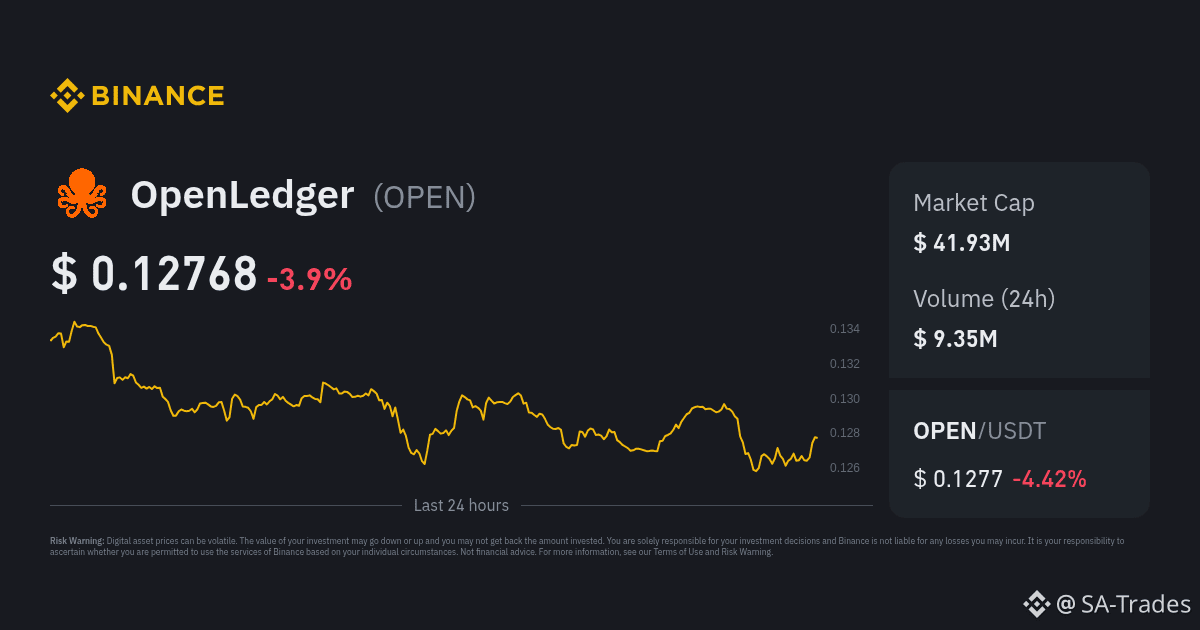
OpenLedger (OPEN) down -3.9% today, now trading at $0.1277.
📊 Market Cap: $41.93M
📊 24h Volume: $9.35M
Choppy price action over the last 24h — sellers stepping in after failing to hold higher levels.
Accumulation zone or further downside? 👀
Trade $OPEN here
{future}(OPENUSDT)
#OPEN #OpenLedger #BinanceSquare #crypto
📉 $OPEN
— OpenLedger Cooling Off
OpenLedger (OPEN) down -3.9% today, now trading at $0.1277.
📊 Market Cap: $41.93M
📊 24h Volume: $9.35M
Choppy price action over the last 24h — sellers stepping in after failing to hold higher levels.
Accumulation zone or further downside? 👀
Trade $OPEN here
#OPEN #OpenLedger #BinanceSquare #crypto
— OpenLedger Cooling Off
OpenLedger (OPEN) down -3.9% today, now trading at $0.1277.
📊 Market Cap: $41.93M
📊 24h Volume: $9.35M
Choppy price action over the last 24h — sellers stepping in after failing to hold higher levels.
Accumulation zone or further downside? 👀
Trade $OPEN here
#OPEN #OpenLedger #BinanceSquare #crypto
2
4
208

·
--
يا شباب $OPEN تحت الضغط… هل يظهر ارتداد؟
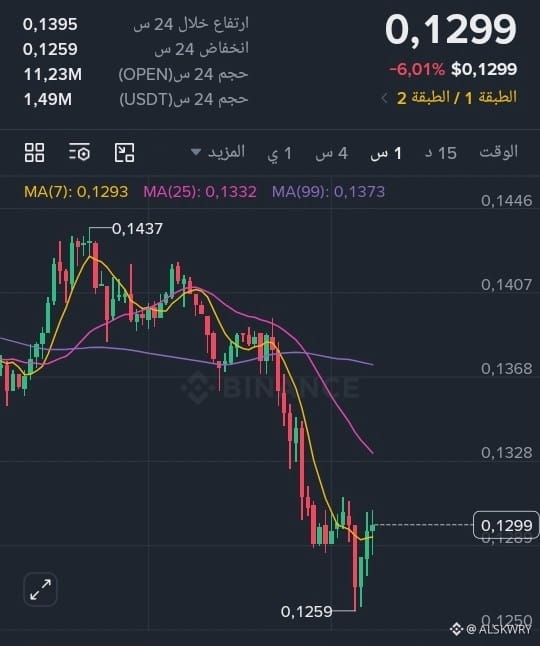
عملة OpenLedger (OPEN) تتحرك حاليًا تحت ضغط بيعي، والسعر حول $0.1299 بعد هبوط يقارب 6% خلال 24 ساعة.
📉 أهم المستويات:
🟢 دعم: $0.1260
🔴 مقاومة: $0.1328 – $0.1330
🔴 مقاومة أقوى: $0.1368 – $0.1375
إذا حافظ السعر على $0.126 وبدأ بتكوين قيعان أعلى، فقد نشهد محاولة ارتداد. أما كسرها بوضوح فقد يفتح المجال لمستويات أدنى.
👀 OPEN الآن تستحق المراقبة، وليس الشراء لمجرد أن السعر انخفض.
هل تتوقعون ارتداد OPEN أم استمرار الهبوط؟
⚠️ ليس توصية مالية، مجرد تحليل ومشاركة للنقاش.
#OpenLedger #cryptouniverseofficial #BinanceSquare #trading
يا شباب $OPEN تحت الضغط… هل يظهر ارتداد؟
عملة OpenLedger (OPEN) تتحرك حاليًا تحت ضغط بيعي، والسعر حول $0.1299 بعد هبوط يقارب 6% خلال 24 ساعة.
📉 أهم المستويات:
🟢 دعم: $0.1260
🔴 مقاومة: $0.1328 – $0.1330
🔴 مقاومة أقوى: $0.1368 – $0.1375
إذا حافظ السعر على $0.126 وبدأ بتكوين قيعان أعلى، فقد نشهد محاولة ارتداد. أما كسرها بوضوح فقد يفتح المجال لمستويات أدنى.
👀 OPEN الآن تستحق المراقبة، وليس الشراء لمجرد أن السعر انخفض.
هل تتوقعون ارتداد OPEN أم استمرار الهبوط؟
⚠️ ليس توصية مالية، مجرد تحليل ومشاركة للنقاش.
#OpenLedger #cryptouniverseofficial #BinanceSquare #trading
عملة OpenLedger (OPEN) تتحرك حاليًا تحت ضغط بيعي، والسعر حول $0.1299 بعد هبوط يقارب 6% خلال 24 ساعة.
📉 أهم المستويات:
🟢 دعم: $0.1260
🔴 مقاومة: $0.1328 – $0.1330
🔴 مقاومة أقوى: $0.1368 – $0.1375
إذا حافظ السعر على $0.126 وبدأ بتكوين قيعان أعلى، فقد نشهد محاولة ارتداد. أما كسرها بوضوح فقد يفتح المجال لمستويات أدنى.
👀 OPEN الآن تستحق المراقبة، وليس الشراء لمجرد أن السعر انخفض.
هل تتوقعون ارتداد OPEN أم استمرار الهبوط؟
⚠️ ليس توصية مالية، مجرد تحليل ومشاركة للنقاش.
#OpenLedger #cryptouniverseofficial #BinanceSquare #trading
1
1
181

Highly Trending Spot Watchlist – Momentum & Breakout Alert 🚀
Following our previous winning calls, we are strictly tracking high-momentum trending assets like $SOL , $SUI , and $OPEN .
Capital is actively rotating into high-volume AI and Layer-1 ecosystems as technical indicators align near key support.
You can track live 24-hour volume, order book depth, and real-time liquidity metrics directly on CoinMarketCap.
We are scaling spot entries near demand zones while following disciplined risk management across all active setups!
{spot}(SOLUSDT)
{spot}(OPENUSDT)
{spot}(SUIUSDT)
#OpenLedger #opengift #cryptotrading #Write2Earn!
Highly Trending Spot Watchlist – Momentum & Breakout Alert 🚀
Following our previous winning calls, we are strictly tracking high-momentum trending assets like $SOL , $SUI , and $OPEN .
Capital is actively rotating into high-volume AI and Layer-1 ecosystems as technical indicators align near key support.
You can track live 24-hour volume, order book depth, and real-time liquidity metrics directly on CoinMarketCap.
We are scaling spot entries near demand zones while following disciplined risk management across all active setups!
#OpenLedger #opengift #cryptotrading #Write2Earn!
Following our previous winning calls, we are strictly tracking high-momentum trending assets like $SOL , $SUI , and $OPEN .
Capital is actively rotating into high-volume AI and Layer-1 ecosystems as technical indicators align near key support.
You can track live 24-hour volume, order book depth, and real-time liquidity metrics directly on CoinMarketCap.
We are scaling spot entries near demand zones while following disciplined risk management across all active setups!
#OpenLedger #opengift #cryptotrading #Write2Earn!
2
397

·
--
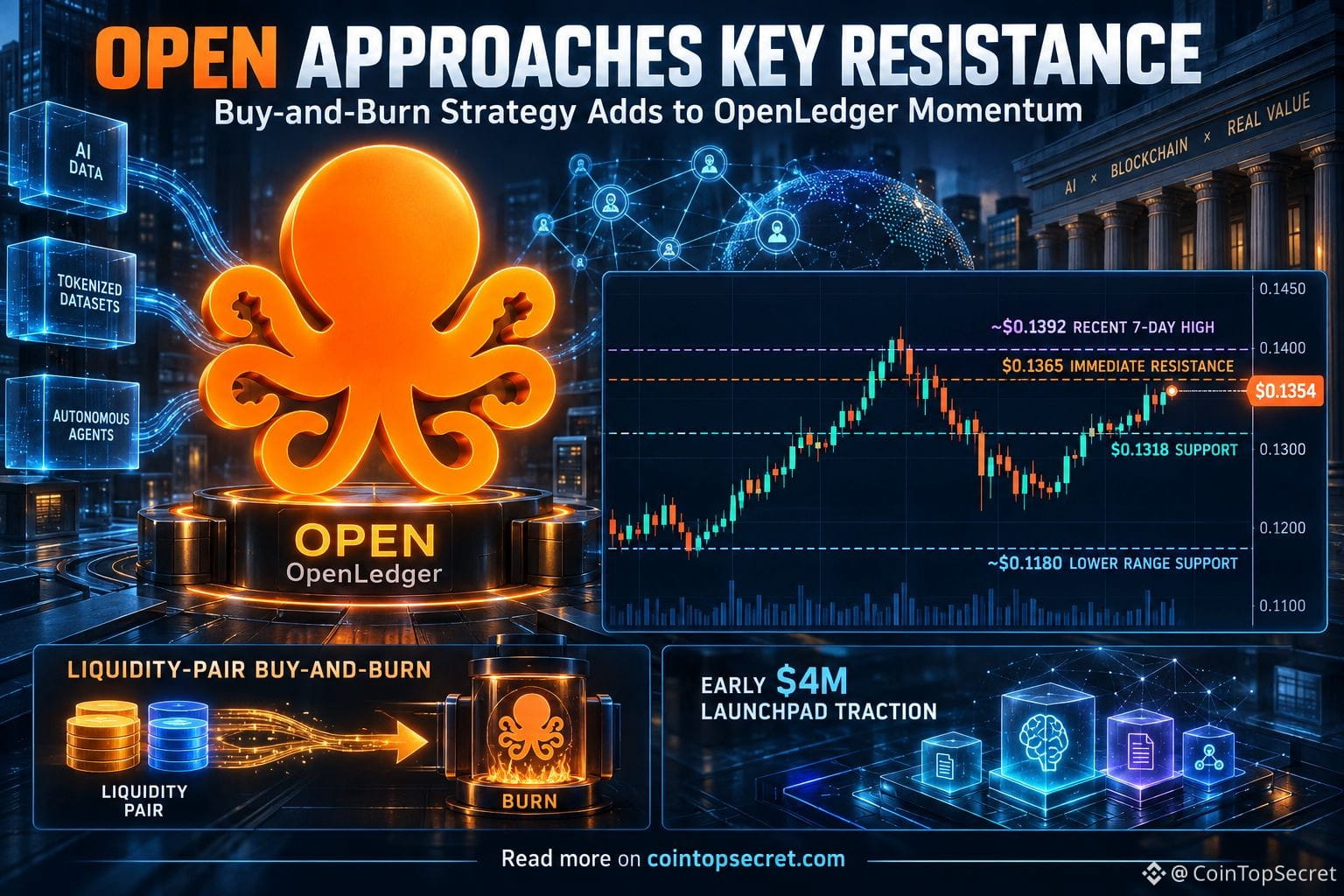
$OPEN Update 🔎 Can OPEN push through its recent high?
💰 Price now: $0.1354 | 24h: +0.6%
📊 Market cap: $29.18M | Rank: #675
📈 24h range: $0.1318 – $0.1365
📰 What's happening:
OPEN is holding above $0.13 after a stronger move from its September low. shows a 7-day gain of 5.3%, while 24h volume is about $4.29M.
🔥 Key catalyst:
OpenLedger recently outlined a liquidity-pair buy-and-burn strategy and reported early $4M launchpad traction.
👀 Next step to watch:
🔴 Bearish case: Below $0.1318 could expose the ~$0.1180 area.
🟢 Bullish case: Above $0.1365 could put ~$0.1392 into focus.
📝 My take: OPEN has improved short-term momentum, but the $0.1365–$0.1392 zone remains an important test.
Not financial advice, DYOR ⚠️
#OpenLedger #OPEN #CryptoAnalysis $OPEN
$OPEN Update 🔎 Can OPEN push through its recent high?
💰 Price now: $0.1354 | 24h: +0.6%
📊 Market cap: $29.18M | Rank: #675
📈 24h range: $0.1318 – $0.1365
📰 What's happening:
OPEN is holding above $0.13 after a stronger move from its September low. shows a 7-day gain of 5.3%, while 24h volume is about $4.29M.
🔥 Key catalyst:
OpenLedger recently outlined a liquidity-pair buy-and-burn strategy and reported early $4M launchpad traction.
👀 Next step to watch:
🔴 Bearish case: Below $0.1318 could expose the ~$0.1180 area.
🟢 Bullish case: Above $0.1365 could put ~$0.1392 into focus.
📝 My take: OPEN has improved short-term momentum, but the $0.1365–$0.1392 zone remains an important test.
Not financial advice, DYOR ⚠️
#OpenLedger #OPEN #CryptoAnalysis $OPEN
💰 Price now: $0.1354 | 24h: +0.6%
📊 Market cap: $29.18M | Rank: #675
📈 24h range: $0.1318 – $0.1365
📰 What's happening:
OPEN is holding above $0.13 after a stronger move from its September low. shows a 7-day gain of 5.3%, while 24h volume is about $4.29M.
🔥 Key catalyst:
OpenLedger recently outlined a liquidity-pair buy-and-burn strategy and reported early $4M launchpad traction.
👀 Next step to watch:
🔴 Bearish case: Below $0.1318 could expose the ~$0.1180 area.
🟢 Bullish case: Above $0.1365 could put ~$0.1392 into focus.
📝 My take: OPEN has improved short-term momentum, but the $0.1365–$0.1392 zone remains an important test.
Not financial advice, DYOR ⚠️
#OpenLedger #OPEN #CryptoAnalysis $OPEN
169

·
--
🎯 OpenLedger-Phase 1 এবং রেওয়ার্ড পুল:
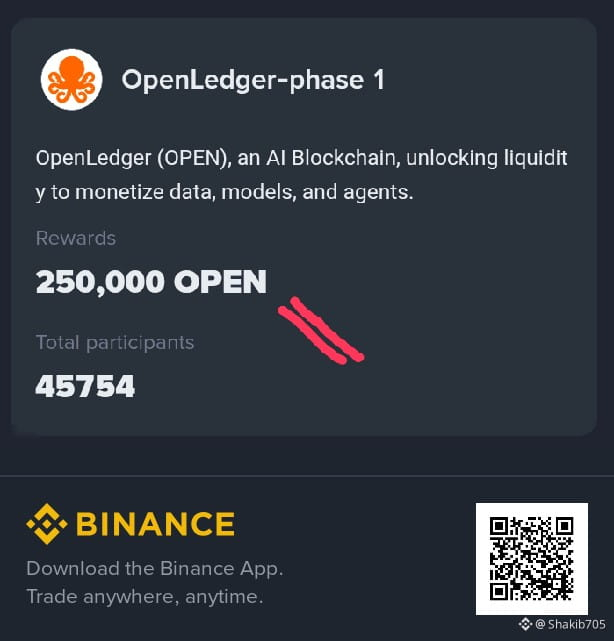
বর্তমানে এর প্রথম ধাপ বা OpenLedger-phase 1 ক্যাম্পেইন চলছে, যেখানে একটি বিশাল রেওয়ার্ড পুল রাখা হয়েছে। ইতিমধ্যে হাজার হাজার ব্যবহারকারী (যেমনটা ছবিতে ৪৫,৭৫৪+ দেখা যাচ্ছে) এই এয়ারড্রপ ও বুস্টার প্রোগ্রামে যুক্ত হয়ে ফ্রিতে OPEN টোকেন আর্ন করছেন!#OpenLedger #Phase1 $OPEN
{spot}(OPENUSDT)
🎯 OpenLedger-Phase 1 এবং রেওয়ার্ড পুল:
বর্তমানে এর প্রথম ধাপ বা OpenLedger-phase 1 ক্যাম্পেইন চলছে, যেখানে একটি বিশাল রেওয়ার্ড পুল রাখা হয়েছে। ইতিমধ্যে হাজার হাজার ব্যবহারকারী (যেমনটা ছবিতে ৪৫,৭৫৪+ দেখা যাচ্ছে) এই এয়ারড্রপ ও বুস্টার প্রোগ্রামে যুক্ত হয়ে ফ্রিতে OPEN টোকেন আর্ন করছেন!#OpenLedger #Phase1 $OPEN
বর্তমানে এর প্রথম ধাপ বা OpenLedger-phase 1 ক্যাম্পেইন চলছে, যেখানে একটি বিশাল রেওয়ার্ড পুল রাখা হয়েছে। ইতিমধ্যে হাজার হাজার ব্যবহারকারী (যেমনটা ছবিতে ৪৫,৭৫৪+ দেখা যাচ্ছে) এই এয়ারড্রপ ও বুস্টার প্রোগ্রামে যুক্ত হয়ে ফ্রিতে OPEN টোকেন আর্ন করছেন!#OpenLedger #Phase1 $OPEN
303

·
--
Haussier
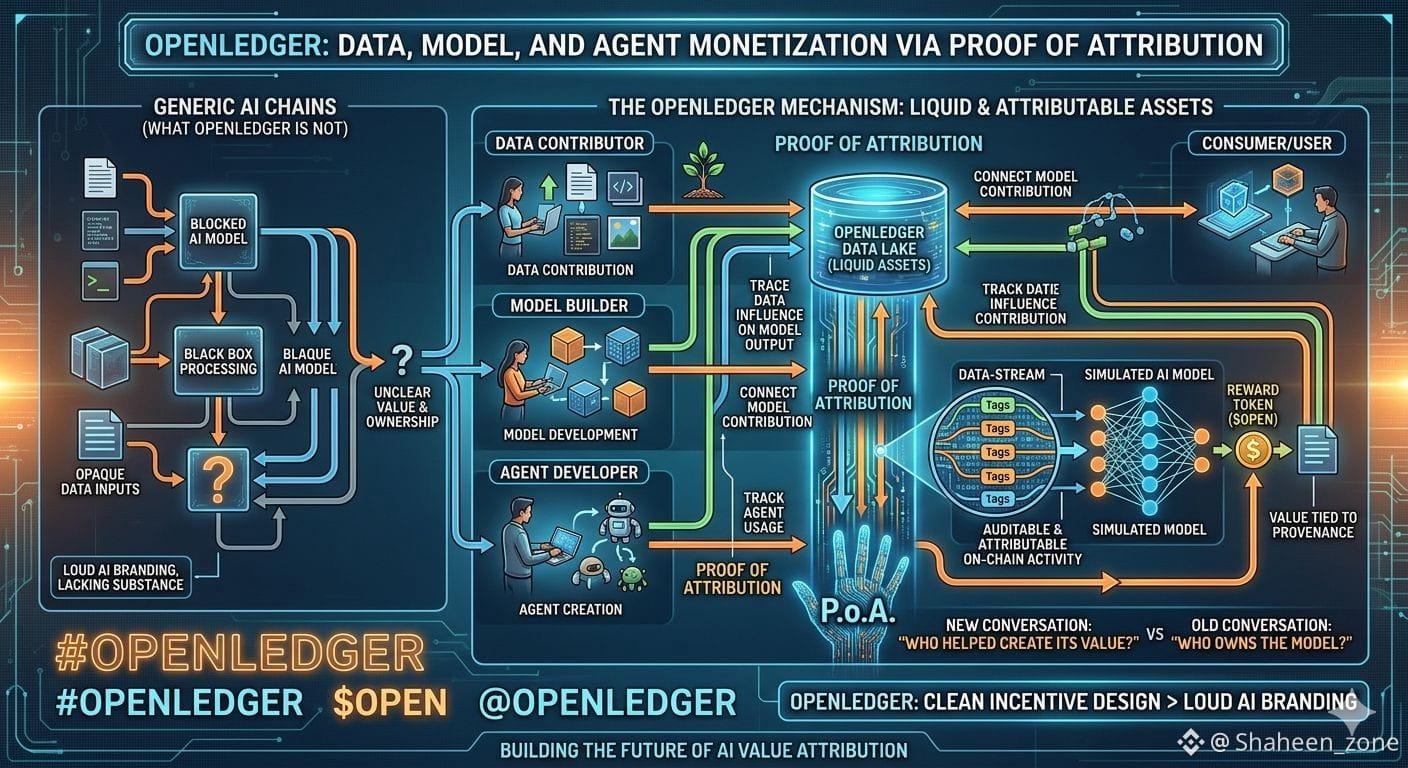
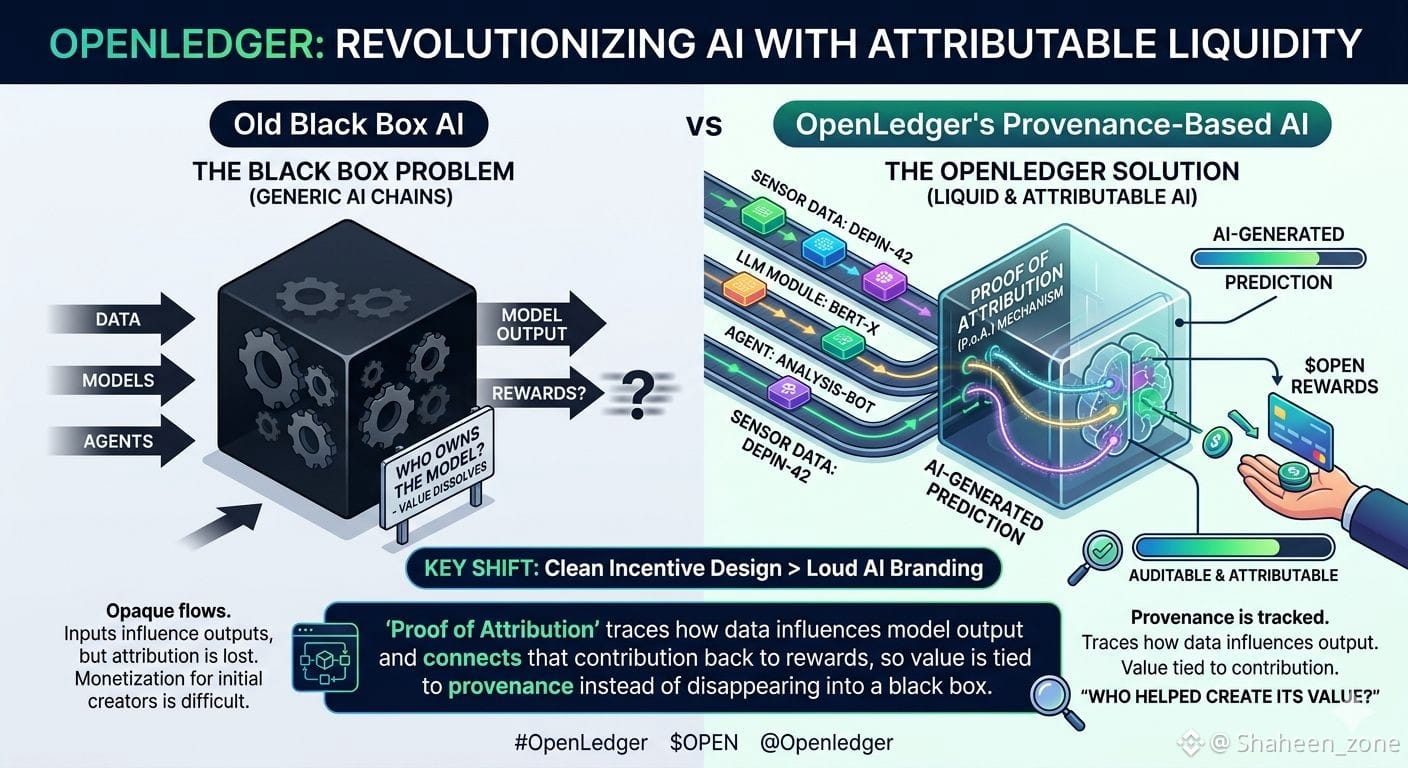
OpenLedger is not trying to be another generic AI chain; its pitch is narrower and more interesting: make data, models, and agents liquid enough to monetize.
What stands out is the mechanism underneath. Proof of Attribution is designed to trace how data influences model output and connect that contribution back to rewards, so value is tied to provenance instead of disappearing into a black box.
That is the part worth watching for serious builders: when AI activity becomes auditable and attributable on-chain, the conversation shifts from “who owns the model?” to “who helped create its value?” Clean incentive design matters more than loud AI branding.
#OpenLedger $OPEN @Openledger
OpenLedger is not trying to be another generic AI chain; its pitch is narrower and more interesting: make data, models, and agents liquid enough to monetize.
What stands out is the mechanism underneath. Proof of Attribution is designed to trace how data influences model output and connect that contribution back to rewards, so value is tied to provenance instead of disappearing into a black box.
That is the part worth watching for serious builders: when AI activity becomes auditable and attributable on-chain, the conversation shifts from “who owns the model?” to “who helped create its value?” Clean incentive design matters more than loud AI branding.
#OpenLedger $OPEN @OpenLedger
What stands out is the mechanism underneath. Proof of Attribution is designed to trace how data influences model output and connect that contribution back to rewards, so value is tied to provenance instead of disappearing into a black box.
That is the part worth watching for serious builders: when AI activity becomes auditable and attributable on-chain, the conversation shifts from “who owns the model?” to “who helped create its value?” Clean incentive design matters more than loud AI branding.
#OpenLedger $OPEN @OpenLedger
1
103


·
--
Haussier
@Openledger #Openledger $OPEN
OpenLedger Is Chasing the Mess Nobody Wants to Talk About
OpenLedger caught my attention because it is not just another AI crypto name trying to sound important.
The problem it is touching is real.
AI runs on data, models, and agents, but the people behind that value often disappear from the story. Data gets used. Models get trained. Platforms grow. Money moves upward.
And the contributors?
Most of the time, they get nothing.
That is the uncomfortable part OpenLedger is trying to address. It wants to make AI contribution more traceable, more visible, and potentially more payable.
Sounds simple.
It is not.
Crypto has already shown us how messy incentives can become. Bad airdrops, fake users, farming loops, spam activity, and projects where the token became louder than the actual product. So yes, OpenLedger has a real idea, but it also has a hard road.
Attribution is difficult.
Quality control is difficult.
Stopping bad data is difficult.
Making OPEN useful beyond speculation is difficult.
But honestly, that is what makes it worth watching. Not because it is perfect. Not because every AI blockchain deserves attention. Most do not.
OpenLedger matters only if it can turn this messy AI data economy into infrastructure that actually works under the hood.
No hype.
No blind belief.
Just a real question:
If AI keeps using human-created value, who actually gets paid for feeding the machine?
@OpenLedger #Openledger $OPEN
OpenLedger Is Chasing the Mess Nobody Wants to Talk About
OpenLedger caught my attention because it is not just another AI crypto name trying to sound important.
The problem it is touching is real.
AI runs on data, models, and agents, but the people behind that value often disappear from the story. Data gets used. Models get trained. Platforms grow. Money moves upward.
And the contributors?
Most of the time, they get nothing.
That is the uncomfortable part OpenLedger is trying to address. It wants to make AI contribution more traceable, more visible, and potentially more payable.
Sounds simple.
It is not.
Crypto has already shown us how messy incentives can become. Bad airdrops, fake users, farming loops, spam activity, and projects where the token became louder than the actual product. So yes, OpenLedger has a real idea, but it also has a hard road.
Attribution is difficult.
Quality control is difficult.
Stopping bad data is difficult.
Making OPEN useful beyond speculation is difficult.
But honestly, that is what makes it worth watching. Not because it is perfect. Not because every AI blockchain deserves attention. Most do not.
OpenLedger matters only if it can turn this messy AI data economy into infrastructure that actually works under the hood.
No hype.
No blind belief.
Just a real question:
If AI keeps using human-created value, who actually gets paid for feeding the machine?
OpenLedger Is Chasing the Mess Nobody Wants to Talk About
OpenLedger caught my attention because it is not just another AI crypto name trying to sound important.
The problem it is touching is real.
AI runs on data, models, and agents, but the people behind that value often disappear from the story. Data gets used. Models get trained. Platforms grow. Money moves upward.
And the contributors?
Most of the time, they get nothing.
That is the uncomfortable part OpenLedger is trying to address. It wants to make AI contribution more traceable, more visible, and potentially more payable.
Sounds simple.
It is not.
Crypto has already shown us how messy incentives can become. Bad airdrops, fake users, farming loops, spam activity, and projects where the token became louder than the actual product. So yes, OpenLedger has a real idea, but it also has a hard road.
Attribution is difficult.
Quality control is difficult.
Stopping bad data is difficult.
Making OPEN useful beyond speculation is difficult.
But honestly, that is what makes it worth watching. Not because it is perfect. Not because every AI blockchain deserves attention. Most do not.
OpenLedger matters only if it can turn this messy AI data economy into infrastructure that actually works under the hood.
No hype.
No blind belief.
Just a real question:
If AI keeps using human-created value, who actually gets paid for feeding the machine?
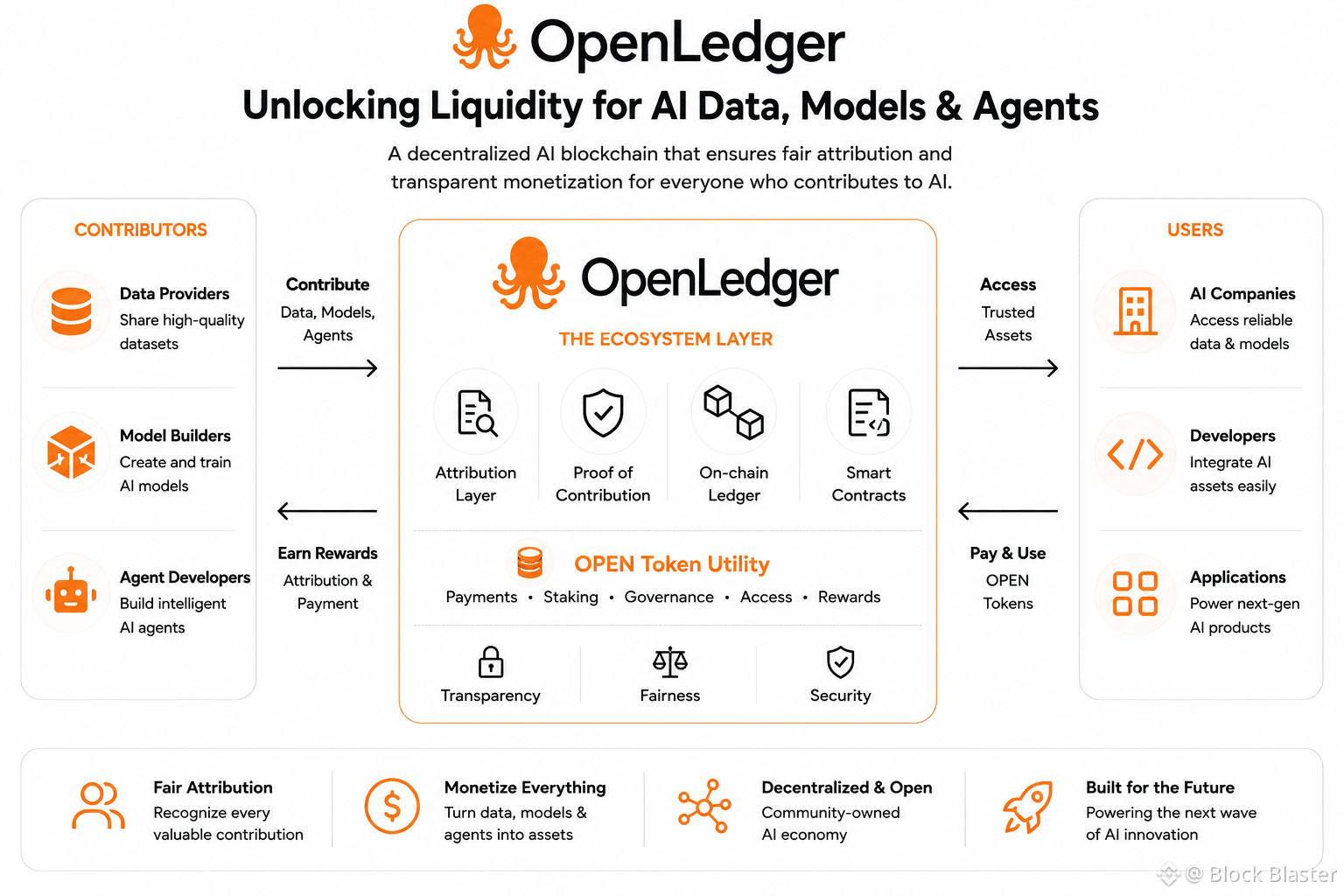
273

·
--
#open $OPEN
🚀❤️ THE OPENLEDGER CREATOR CAMPAIGN IS WRAPPING UP, AND IT HAS BEEN AN INCREDIBLE JOURNEY FOR THE COMMUNITY! ❤️🚀
OVER THE COURSE OF THIS CAMPAIGN, THOUSANDS OF CRYPTO ENTHUSIASTS, BUILDERS, AND CONTENT CREATORS CAME TOGETHER TO EXPLORE THE VISION OF @Openledger AND THE POTENTIAL OF $OPEN. 💎✨
🔥 FROM LEARNING ABOUT DECENTRALIZED AI TO DISCUSSING THE FUTURE OF DATA OWNERSHIP AND BLOCKCHAIN INNOVATION, THIS CAMPAIGN HAS HELPED SPREAD AWARENESS ABOUT HOW OPENLEDGER IS BUILDING A MORE OPEN AND COMMUNITY-DRIVEN AI ECOSYSTEM. EVERY POST, COMMENT, AND DISCUSSION ADDED VALUE TO THE GROWING NETWORK. 🔥
❤️ AS THE CREATOR CAMPAIGN COMES TO AN END, THE MISSION OF OPENLEDGER CONTINUES. THE FUTURE OF AI AND WEB3 IS STILL BEING WRITTEN, AND PROJECTS LIKE OPENLEDGER ARE HELPING SHAPE WHAT COMES NEXT. THANK YOU TO EVERYONE WHO SHARED IDEAS, CREATED CONTENT, AND SUPPORTED THE COMMUNITY ALONG THE WAY. ❤️
🔗 https://www.binance.com/en/square/profile/openledger
💎 $OPEN 💎
#OpenLedger #Aİ #Web3 #Crypto #Blockchain #DecentralizedAI ❤️🚀✨
{future}(OPENUSDT)
#open $OPEN
🚀❤️ THE OPENLEDGER CREATOR CAMPAIGN IS WRAPPING UP, AND IT HAS BEEN AN INCREDIBLE JOURNEY FOR THE COMMUNITY! ❤️🚀
OVER THE COURSE OF THIS CAMPAIGN, THOUSANDS OF CRYPTO ENTHUSIASTS, BUILDERS, AND CONTENT CREATORS CAME TOGETHER TO EXPLORE THE VISION OF @OpenLedger AND THE POTENTIAL OF $OPEN . 💎✨
🔥 FROM LEARNING ABOUT DECENTRALIZED AI TO DISCUSSING THE FUTURE OF DATA OWNERSHIP AND BLOCKCHAIN INNOVATION, THIS CAMPAIGN HAS HELPED SPREAD AWARENESS ABOUT HOW OPENLEDGER IS BUILDING A MORE OPEN AND COMMUNITY-DRIVEN AI ECOSYSTEM. EVERY POST, COMMENT, AND DISCUSSION ADDED VALUE TO THE GROWING NETWORK. 🔥
❤️ AS THE CREATOR CAMPAIGN COMES TO AN END, THE MISSION OF OPENLEDGER CONTINUES. THE FUTURE OF AI AND WEB3 IS STILL BEING WRITTEN, AND PROJECTS LIKE OPENLEDGER ARE HELPING SHAPE WHAT COMES NEXT. THANK YOU TO EVERYONE WHO SHARED IDEAS, CREATED CONTENT, AND SUPPORTED THE COMMUNITY ALONG THE WAY. ❤️
🔗 https://www.binance.com/en/square/profile/openledger
💎 $OPEN 💎
#OpenLedger #Aİ #Web3 #Crypto #Blockchain #DecentralizedAI ❤️🚀✨
🚀❤️ THE OPENLEDGER CREATOR CAMPAIGN IS WRAPPING UP, AND IT HAS BEEN AN INCREDIBLE JOURNEY FOR THE COMMUNITY! ❤️🚀
OVER THE COURSE OF THIS CAMPAIGN, THOUSANDS OF CRYPTO ENTHUSIASTS, BUILDERS, AND CONTENT CREATORS CAME TOGETHER TO EXPLORE THE VISION OF @OpenLedger AND THE POTENTIAL OF $OPEN . 💎✨
🔥 FROM LEARNING ABOUT DECENTRALIZED AI TO DISCUSSING THE FUTURE OF DATA OWNERSHIP AND BLOCKCHAIN INNOVATION, THIS CAMPAIGN HAS HELPED SPREAD AWARENESS ABOUT HOW OPENLEDGER IS BUILDING A MORE OPEN AND COMMUNITY-DRIVEN AI ECOSYSTEM. EVERY POST, COMMENT, AND DISCUSSION ADDED VALUE TO THE GROWING NETWORK. 🔥
❤️ AS THE CREATOR CAMPAIGN COMES TO AN END, THE MISSION OF OPENLEDGER CONTINUES. THE FUTURE OF AI AND WEB3 IS STILL BEING WRITTEN, AND PROJECTS LIKE OPENLEDGER ARE HELPING SHAPE WHAT COMES NEXT. THANK YOU TO EVERYONE WHO SHARED IDEAS, CREATED CONTENT, AND SUPPORTED THE COMMUNITY ALONG THE WAY. ❤️
🔗 https://www.binance.com/en/square/profile/openledger
💎 $OPEN 💎
#OpenLedger #Aİ #Web3 #Crypto #Blockchain #DecentralizedAI ❤️🚀✨
1
2
101

·
--
#openledger $OPEN
Is OpenLedger Building the Missing Layer for AI and Blockchain? 🤔
I have been watching many AI projects recently, and one thing keeps coming to my mind.
Who owns the data that AI uses?
Most people talk about AI models, but very few talk about the people who actually provide the data. Without quality data, even the smartest AI can become useless.
This is one reason why I started looking deeper into @OpenLedger.
What caught my attention is the idea of creating a network where contributors can participate in the AI economy instead of only watching from the side. It feels like a step toward a more open and fair ecosystem.
I think the future of AI will not be controlled by a few large companies only. Communities, developers, and data contributors should also have a role in helping AI grow.
OpenLedger is trying to connect these pieces together.
Another thing I like is the focus on transparency. In traditional systems, it is often difficult to understand how data is used or where value is created. Blockchain technology can help solve some of these problems by creating verifiable and open systems.
Of course, the AI industry is still very early, and many challenges remain. But projects that combine AI and blockchain in practical ways are worth paying attention to.
I personally believe the next generation of AI infrastructure will need openness, collaboration, and strong community participation.
That is why I am keeping an eye on OpenLedger and its long-term vision.
What do you think?
Can decentralized networks become an important part of the AI economy in the coming years? 👇
@Openledger
$OPEN #OpenLedger #AI #crypto
#openledger $OPEN
Is OpenLedger Building the Missing Layer for AI and Blockchain? 🤔
I have been watching many AI projects recently, and one thing keeps coming to my mind.
Who owns the data that AI uses?
Most people talk about AI models, but very few talk about the people who actually provide the data. Without quality data, even the smartest AI can become useless.
This is one reason why I started looking deeper into @OpenLedger.
What caught my attention is the idea of creating a network where contributors can participate in the AI economy instead of only watching from the side. It feels like a step toward a more open and fair ecosystem.
I think the future of AI will not be controlled by a few large companies only. Communities, developers, and data contributors should also have a role in helping AI grow.
OpenLedger is trying to connect these pieces together.
Another thing I like is the focus on transparency. In traditional systems, it is often difficult to understand how data is used or where value is created. Blockchain technology can help solve some of these problems by creating verifiable and open systems.
Of course, the AI industry is still very early, and many challenges remain. But projects that combine AI and blockchain in practical ways are worth paying attention to.
I personally believe the next generation of AI infrastructure will need openness, collaboration, and strong community participation.
That is why I am keeping an eye on OpenLedger and its long-term vision.
What do you think?
Can decentralized networks become an important part of the AI economy in the coming years? 👇
@OpenLedger
$OPEN #OpenLedger #AI #crypto
Is OpenLedger Building the Missing Layer for AI and Blockchain? 🤔
I have been watching many AI projects recently, and one thing keeps coming to my mind.
Who owns the data that AI uses?
Most people talk about AI models, but very few talk about the people who actually provide the data. Without quality data, even the smartest AI can become useless.
This is one reason why I started looking deeper into @OpenLedger.
What caught my attention is the idea of creating a network where contributors can participate in the AI economy instead of only watching from the side. It feels like a step toward a more open and fair ecosystem.
I think the future of AI will not be controlled by a few large companies only. Communities, developers, and data contributors should also have a role in helping AI grow.
OpenLedger is trying to connect these pieces together.
Another thing I like is the focus on transparency. In traditional systems, it is often difficult to understand how data is used or where value is created. Blockchain technology can help solve some of these problems by creating verifiable and open systems.
Of course, the AI industry is still very early, and many challenges remain. But projects that combine AI and blockchain in practical ways are worth paying attention to.
I personally believe the next generation of AI infrastructure will need openness, collaboration, and strong community participation.
That is why I am keeping an eye on OpenLedger and its long-term vision.
What do you think?
Can decentralized networks become an important part of the AI economy in the coming years? 👇
@OpenLedger
$OPEN #OpenLedger #AI #crypto

1
1
69

·
--
OPENLEDGER: THE VAULT THAT STARTED THINKING TOO MUCHI was stuck on one word today: vault. In DeFi, we use this word so normally that it almost sounds boring now. You deposit assets, a strategy runs somewhere, maybe yield comes, and maybe risk also comes quietly without knocking. But when I connect OpenLedger with AI agents and ERC-4626 style vaults, the word “vault” starts feeling different. Not like a box anymore. More like a decision machine.
And that is where the idea becomes interesting… also slightly uncomfortable. If AI agents start working around vaults, then the vault is no longer just holding capital. It may start reacting to market conditions. It may rebalance, adjust exposure, move toward better yield, or reduce risk when signals look bad. Sounds nice. Almost too nice. Because the moment a vault starts “thinking,” I start asking annoying questions.
What data is it thinking with? Who trained the model behind it? What signal made it move? Was the signal real, or just market noise wearing a nice shirt? Can I check the reason later? This is the part people usually skip. They hear “AI-managed vault” and imagine smooth yield, perfect timing, and calm passive income. Very brochure-friendly. But DeFi is not a brochure. APYs change fast, liquidity moves, rewards get diluted, bridges delay, gas fees ruin plans, and markets dump exactly when everyone was feeling confident.
So for me, OpenLedger’s vault angle is not just about automation. It is about whether automation can be trusted. Datanets matter because AI needs better inputs. Proof of Attribution matters because users need to know what influenced the decision. Execution trails matter because “the agent decided” is not a proper explanation. Honestly, “the AI decided” sounds less like innovation and more like the start of a customer support nightmare.
This is where OpenLedger’s stack becomes interesting. OctoClaw is the visible side, the agent side, the part people can understand easily. But behind that, the bigger question is whether AI agents can act without becoming black boxes. Datanets can support the data layer, model infrastructure can support specialized intelligence, agents can bring action, Proof of Attribution can help trace influence, and ERC-4626 can make vault-style products easier to connect across DeFi. Together, they point toward one bigger idea: vaults as verifiable decision systems.
That is why I am watching this theme carefully. A vault that reacts faster than humans could be useful, because humans cannot monitor DeFi every second. We sleep, miss alerts, delay decisions, and sometimes watch yield disappear while saying “I’ll do it later.” But a vault that thinks too much can also overreact, chase noisy signals, or move capital badly. So the real question is not whether AI vaults can act. The real question is whether they can explain themselves when they do. If OpenLedger can make that thinking traceable, this becomes infrastructure. If not, it is just another black box with better branding.
@Openledger #OpenLedger $OPEN
OPENLEDGER: THE VAULT THAT STARTED THINKING TOO MUCH
I was stuck on one word today: vault. In DeFi, we use this word so normally that it almost sounds boring now. You deposit assets, a strategy runs somewhere, maybe yield comes, and maybe risk also comes quietly without knocking. But when I connect OpenLedger with AI agents and ERC-4626 style vaults, the word “vault” starts feeling different. Not like a box anymore. More like a decision machine.
And that is where the idea becomes interesting… also slightly uncomfortable. If AI agents start working around vaults, then the vault is no longer just holding capital. It may start reacting to market conditions. It may rebalance, adjust exposure, move toward better yield, or reduce risk when signals look bad. Sounds nice. Almost too nice. Because the moment a vault starts “thinking,” I start asking annoying questions.
What data is it thinking with? Who trained the model behind it? What signal made it move? Was the signal real, or just market noise wearing a nice shirt? Can I check the reason later? This is the part people usually skip. They hear “AI-managed vault” and imagine smooth yield, perfect timing, and calm passive income. Very brochure-friendly. But DeFi is not a brochure. APYs change fast, liquidity moves, rewards get diluted, bridges delay, gas fees ruin plans, and markets dump exactly when everyone was feeling confident.
So for me, OpenLedger’s vault angle is not just about automation. It is about whether automation can be trusted. Datanets matter because AI needs better inputs. Proof of Attribution matters because users need to know what influenced the decision. Execution trails matter because “the agent decided” is not a proper explanation. Honestly, “the AI decided” sounds less like innovation and more like the start of a customer support nightmare.
This is where OpenLedger’s stack becomes interesting. OctoClaw is the visible side, the agent side, the part people can understand easily. But behind that, the bigger question is whether AI agents can act without becoming black boxes. Datanets can support the data layer, model infrastructure can support specialized intelligence, agents can bring action, Proof of Attribution can help trace influence, and ERC-4626 can make vault-style products easier to connect across DeFi. Together, they point toward one bigger idea: vaults as verifiable decision systems.
That is why I am watching this theme carefully. A vault that reacts faster than humans could be useful, because humans cannot monitor DeFi every second. We sleep, miss alerts, delay decisions, and sometimes watch yield disappear while saying “I’ll do it later.” But a vault that thinks too much can also overreact, chase noisy signals, or move capital badly. So the real question is not whether AI vaults can act. The real question is whether they can explain themselves when they do. If OpenLedger can make that thinking traceable, this becomes infrastructure. If not, it is just another black box with better branding.
@OpenLedger #OpenLedger $OPEN
And that is where the idea becomes interesting… also slightly uncomfortable. If AI agents start working around vaults, then the vault is no longer just holding capital. It may start reacting to market conditions. It may rebalance, adjust exposure, move toward better yield, or reduce risk when signals look bad. Sounds nice. Almost too nice. Because the moment a vault starts “thinking,” I start asking annoying questions.
What data is it thinking with? Who trained the model behind it? What signal made it move? Was the signal real, or just market noise wearing a nice shirt? Can I check the reason later? This is the part people usually skip. They hear “AI-managed vault” and imagine smooth yield, perfect timing, and calm passive income. Very brochure-friendly. But DeFi is not a brochure. APYs change fast, liquidity moves, rewards get diluted, bridges delay, gas fees ruin plans, and markets dump exactly when everyone was feeling confident.
So for me, OpenLedger’s vault angle is not just about automation. It is about whether automation can be trusted. Datanets matter because AI needs better inputs. Proof of Attribution matters because users need to know what influenced the decision. Execution trails matter because “the agent decided” is not a proper explanation. Honestly, “the AI decided” sounds less like innovation and more like the start of a customer support nightmare.
This is where OpenLedger’s stack becomes interesting. OctoClaw is the visible side, the agent side, the part people can understand easily. But behind that, the bigger question is whether AI agents can act without becoming black boxes. Datanets can support the data layer, model infrastructure can support specialized intelligence, agents can bring action, Proof of Attribution can help trace influence, and ERC-4626 can make vault-style products easier to connect across DeFi. Together, they point toward one bigger idea: vaults as verifiable decision systems.
That is why I am watching this theme carefully. A vault that reacts faster than humans could be useful, because humans cannot monitor DeFi every second. We sleep, miss alerts, delay decisions, and sometimes watch yield disappear while saying “I’ll do it later.” But a vault that thinks too much can also overreact, chase noisy signals, or move capital badly. So the real question is not whether AI vaults can act. The real question is whether they can explain themselves when they do. If OpenLedger can make that thinking traceable, this becomes infrastructure. If not, it is just another black box with better branding.
@OpenLedger #OpenLedger $OPEN
1
1
132

·
--
@Openledger #OpenLedger La inteligencia artificial necesita transparencia, y ahí es donde destaca @OpenLedger. Su visión de una infraestructura para IA verificable permite rastrear datos, modelos y contribuciones de forma abierta, creando un ecosistema más justo para desarrolladores y usuarios. El crecimiento de la IA descentralizada podría marcar una nueva etapa para Web3$OPEN
@OpenLedger #OpenLedger La inteligencia artificial necesita transparencia, y ahí es donde destaca @OpenLedger. Su visión de una infraestructura para IA verificable permite rastrear datos, modelos y contribuciones de forma abierta, creando un ecosistema más justo para desarrolladores y usuarios. El crecimiento de la IA descentralizada podría marcar una nueva etapa para Web3$OPEN
70

·
--

Article
OpenLedger: Decentralized Data for the AI Era$OPEN
For a long time, I felt like a passive ghost in the machine of the artificial intelligence boom. Every time I interact with a chatbot, write a review, or upload a creative snippet online, I know my data is being vacuumed into a massive, centralized black box.
Tech monopolies scrape our collective human intelligence, train their multi-billion-dollar models, and lock the profits behind corporate walls. We give them the clay, and they sell us back the sculpture.
But I’ve realized that the infrastructure of AI doesn't have to look like a digital feudal state. That is why I believe OpenLedger represents a fundamental paradigm shift: it is decentralized data purpose-built for the AI era.
### The Awakening: From Black Box to Clear Glass
When I first started looking into OpenLedger, I was driven by a deep sense of frustration with how opaque AI development has become.
Traditional LLMs operate on a "trust us" basis. You don't know whose data trained them, you don't know why they bias certain answers, and the actual creators of the underlying knowledge never see a dime.
OpenLedger flips this dynamic on its head by building an AI-first blockchain ecosystem. Instead of letting data sit in static, siloed corporate servers, it treats data, models, and autonomous agents as liquid, composable assets on an EVM-compatible Layer 2 network.
For the first time, the entire AI lifecycle—from data contribution and model refinement to final user inference—is pulled entirely on-chain. It turns what used to be a mysterious black box into a transparent, auditable ledger.
### The Magic of Proof of Attribution
What really captured my imagination as a creator is a mechanism OpenLedger calls Proof of Attribution (PoA).
In the old Web2 model, if an AI generates a piece of medical advice or an intricate piece of code based on a unique dataset you curated, your contribution is entirely erased. With Proof of Attribution, every single dataset upload, fine-tuning step, and algorithmic tweak is cryptographically tracked.
How it works in practice: When an end-user queries an AI model, the system executes a real-time audit. It traces the exact lineage of the data that shaped that specific output.
If my specialized input helped form the answer, the protocol recognizes it. Because the network runs natively on the $OPEN token economy, I am automatically and traceably rewarded for my intellectual property. It changes the narrative from "stolen data" to "payable AI," functioning much like a decentralized royalty system for human intelligence.
### Community Power: Datanets and the ModelFactory
I’ve always believed that the future of AI isn’t one massive, general-purpose god-model, but rather millions of highly specialized, hyper-optimized models tailored for finance, law, healthcare, and art. But to build specialized models, you need specialized data.
OpenLedger makes this possible through Datanets—which I like to think of as community-run data clubs. Anyone can join or launch a Datanet to co-create and curate niche datasets.
From there, developers use the ModelFactory, a no-code interface that lets anyone grab a base model (like LLaMA or DeepSeek), plug in permissioned data from these Datanets, and fine-tune it via frameworks like OpenLoRA. It levels the playing field, meaning a small team or an independent developer can deploy optimized, lightweight models on minimal GPU infrastructure without needing Silicon Valley venture capital.
### A Shared Digital Future
We are standing at a crucial crossroads in human history. We can either let artificial intelligence become the ultimate tool of corporate centralization, or we can build an open, permissionless network where data ownership is democratized.
For me, OpenLedger isn't just about blockchain technology or tokenomics; it’s about restoring digital dignity. It ensures that as AI evolves, the builders, the thinkers, and the everyday data contributors are the ones who own the future. It’s time we stop being the product and start being the shareholders.
#OpenLedger @Openledger
OpenLedger: Decentralized Data for the AI Era
$OPEN
For a long time, I felt like a passive ghost in the machine of the artificial intelligence boom. Every time I interact with a chatbot, write a review, or upload a creative snippet online, I know my data is being vacuumed into a massive, centralized black box.
Tech monopolies scrape our collective human intelligence, train their multi-billion-dollar models, and lock the profits behind corporate walls. We give them the clay, and they sell us back the sculpture.
But I’ve realized that the infrastructure of AI doesn't have to look like a digital feudal state. That is why I believe OpenLedger represents a fundamental paradigm shift: it is decentralized data purpose-built for the AI era.
### The Awakening: From Black Box to Clear Glass
When I first started looking into OpenLedger, I was driven by a deep sense of frustration with how opaque AI development has become.
Traditional LLMs operate on a "trust us" basis. You don't know whose data trained them, you don't know why they bias certain answers, and the actual creators of the underlying knowledge never see a dime.
OpenLedger flips this dynamic on its head by building an AI-first blockchain ecosystem. Instead of letting data sit in static, siloed corporate servers, it treats data, models, and autonomous agents as liquid, composable assets on an EVM-compatible Layer 2 network.
For the first time, the entire AI lifecycle—from data contribution and model refinement to final user inference—is pulled entirely on-chain. It turns what used to be a mysterious black box into a transparent, auditable ledger.
### The Magic of Proof of Attribution
What really captured my imagination as a creator is a mechanism OpenLedger calls Proof of Attribution (PoA).
In the old Web2 model, if an AI generates a piece of medical advice or an intricate piece of code based on a unique dataset you curated, your contribution is entirely erased. With Proof of Attribution, every single dataset upload, fine-tuning step, and algorithmic tweak is cryptographically tracked.
How it works in practice: When an end-user queries an AI model, the system executes a real-time audit. It traces the exact lineage of the data that shaped that specific output.
If my specialized input helped form the answer, the protocol recognizes it. Because the network runs natively on the $OPEN token economy, I am automatically and traceably rewarded for my intellectual property. It changes the narrative from "stolen data" to "payable AI," functioning much like a decentralized royalty system for human intelligence.
### Community Power: Datanets and the ModelFactory
I’ve always believed that the future of AI isn’t one massive, general-purpose god-model, but rather millions of highly specialized, hyper-optimized models tailored for finance, law, healthcare, and art. But to build specialized models, you need specialized data.
OpenLedger makes this possible through Datanets—which I like to think of as community-run data clubs. Anyone can join or launch a Datanet to co-create and curate niche datasets.
From there, developers use the ModelFactory, a no-code interface that lets anyone grab a base model (like LLaMA or DeepSeek), plug in permissioned data from these Datanets, and fine-tune it via frameworks like OpenLoRA. It levels the playing field, meaning a small team or an independent developer can deploy optimized, lightweight models on minimal GPU infrastructure without needing Silicon Valley venture capital.
### A Shared Digital Future
We are standing at a crucial crossroads in human history. We can either let artificial intelligence become the ultimate tool of corporate centralization, or we can build an open, permissionless network where data ownership is democratized.
For me, OpenLedger isn't just about blockchain technology or tokenomics; it’s about restoring digital dignity. It ensures that as AI evolves, the builders, the thinkers, and the everyday data contributors are the ones who own the future. It’s time we stop being the product and start being the shareholders.
#OpenLedger @OpenLedger
For a long time, I felt like a passive ghost in the machine of the artificial intelligence boom. Every time I interact with a chatbot, write a review, or upload a creative snippet online, I know my data is being vacuumed into a massive, centralized black box.
Tech monopolies scrape our collective human intelligence, train their multi-billion-dollar models, and lock the profits behind corporate walls. We give them the clay, and they sell us back the sculpture.
But I’ve realized that the infrastructure of AI doesn't have to look like a digital feudal state. That is why I believe OpenLedger represents a fundamental paradigm shift: it is decentralized data purpose-built for the AI era.
### The Awakening: From Black Box to Clear Glass
When I first started looking into OpenLedger, I was driven by a deep sense of frustration with how opaque AI development has become.
Traditional LLMs operate on a "trust us" basis. You don't know whose data trained them, you don't know why they bias certain answers, and the actual creators of the underlying knowledge never see a dime.
OpenLedger flips this dynamic on its head by building an AI-first blockchain ecosystem. Instead of letting data sit in static, siloed corporate servers, it treats data, models, and autonomous agents as liquid, composable assets on an EVM-compatible Layer 2 network.
For the first time, the entire AI lifecycle—from data contribution and model refinement to final user inference—is pulled entirely on-chain. It turns what used to be a mysterious black box into a transparent, auditable ledger.
### The Magic of Proof of Attribution
What really captured my imagination as a creator is a mechanism OpenLedger calls Proof of Attribution (PoA).
In the old Web2 model, if an AI generates a piece of medical advice or an intricate piece of code based on a unique dataset you curated, your contribution is entirely erased. With Proof of Attribution, every single dataset upload, fine-tuning step, and algorithmic tweak is cryptographically tracked.
How it works in practice: When an end-user queries an AI model, the system executes a real-time audit. It traces the exact lineage of the data that shaped that specific output.
If my specialized input helped form the answer, the protocol recognizes it. Because the network runs natively on the $OPEN token economy, I am automatically and traceably rewarded for my intellectual property. It changes the narrative from "stolen data" to "payable AI," functioning much like a decentralized royalty system for human intelligence.
### Community Power: Datanets and the ModelFactory
I’ve always believed that the future of AI isn’t one massive, general-purpose god-model, but rather millions of highly specialized, hyper-optimized models tailored for finance, law, healthcare, and art. But to build specialized models, you need specialized data.
OpenLedger makes this possible through Datanets—which I like to think of as community-run data clubs. Anyone can join or launch a Datanet to co-create and curate niche datasets.
From there, developers use the ModelFactory, a no-code interface that lets anyone grab a base model (like LLaMA or DeepSeek), plug in permissioned data from these Datanets, and fine-tune it via frameworks like OpenLoRA. It levels the playing field, meaning a small team or an independent developer can deploy optimized, lightweight models on minimal GPU infrastructure without needing Silicon Valley venture capital.
### A Shared Digital Future
We are standing at a crucial crossroads in human history. We can either let artificial intelligence become the ultimate tool of corporate centralization, or we can build an open, permissionless network where data ownership is democratized.
For me, OpenLedger isn't just about blockchain technology or tokenomics; it’s about restoring digital dignity. It ensures that as AI evolves, the builders, the thinkers, and the everyday data contributors are the ones who own the future. It’s time we stop being the product and start being the shareholders.
#OpenLedger @OpenLedger
218

·
--
Data ownership in AI is often spoken about as if it is already clearly defined, but in practice it still feels unsettled. Attribution systems like OpenLedger bring structure to something that has historically been vague. They make contribution visible, they map where data flows, and they introduce a level of transparency that was missing for a long time.
But visibility alone does not fully translate into ownership. The legal and ethical meaning of control over data is still separate from the technical ability to trace it. Blockchain can record origin and movement with precision, yet it does not automatically resolve questions of permission, withdrawal, or long-term rights.
There is also a deeper mismatch between permanence and privacy frameworks. Systems built for immutable records do not easily align with expectations shaped by modern data protection laws. At the same time, most of the data powering current AI systems already exists outside any clean consent structure, which makes the challenge even harder to address in hindsight.
@Openledger #openledger $OPEN
{spot}(OPENUSDT)
Data ownership in AI is often spoken about as if it is already clearly defined, but in practice it still feels unsettled. Attribution systems like OpenLedger bring structure to something that has historically been vague. They make contribution visible, they map where data flows, and they introduce a level of transparency that was missing for a long time.
But visibility alone does not fully translate into ownership. The legal and ethical meaning of control over data is still separate from the technical ability to trace it. Blockchain can record origin and movement with precision, yet it does not automatically resolve questions of permission, withdrawal, or long-term rights.
There is also a deeper mismatch between permanence and privacy frameworks. Systems built for immutable records do not easily align with expectations shaped by modern data protection laws. At the same time, most of the data powering current AI systems already exists outside any clean consent structure, which makes the challenge even harder to address in hindsight.
@OpenLedger #openledger $OPEN
But visibility alone does not fully translate into ownership. The legal and ethical meaning of control over data is still separate from the technical ability to trace it. Blockchain can record origin and movement with precision, yet it does not automatically resolve questions of permission, withdrawal, or long-term rights.
There is also a deeper mismatch between permanence and privacy frameworks. Systems built for immutable records do not easily align with expectations shaped by modern data protection laws. At the same time, most of the data powering current AI systems already exists outside any clean consent structure, which makes the challenge even harder to address in hindsight.
@OpenLedger #openledger $OPEN
4
9
360

·
--

Article
大家都在聊OpenLedger的数据和AI,我却卡在它那条链到底跑在哪儿我有个做后端的发小阿凯,是那种对底层架构有点偏执的人。前阵子我兴冲冲跟他安利OpenLedger,讲数据确权讲归因讲得唾沫横飞,他听了半天就回我一句话,把我噎得够呛。他说,你讲的这些应用层故事我都懂,可你告诉我,这么高频的归因计算和调用结算,到底跑在一条什么样的链上,Gas谁付,数据存哪儿,确认要多久。我当场答不上来,回去老老实实把白皮书里讲底层架构的部分重新啃了一遍,才意识到大多数人聊这个项目都在聊上层的数据和AI,反而把最该问清楚的地基给跳过去了。
OpenLedger的定位是一条专门为AI服务的区块链,但它没有傻乎乎地从零造一条L1。从白皮书的架构描述看,它走的是基于OP Stack的Layer2路线,把以太坊当作最终的安全结算层,自己在上面跑一条专门处理AI相关交易的执行链。阿凯听到这儿点了点头,他说这个选择是务实的,AI场景的归因、调用、结算天然就是高频小额,你要全塞进以太坊主网,Gas费能把普通数据贡献者直接劝退,分到手的奖励还不够付手续费,那整套经济模型从第一天就在流血。把执行放到L2,成本和吞吐才有谈下去的空间。
更让我俩讨论起来的是数据可用性这块。链上AI有个绕不开的矛盾,归因和验证需要数据能被随时取用核对,可你真要把海量训练数据全量塞上链,再便宜的链也扛不住。OpenLedger在存储架构上的处理我觉得是相对清醒的,白皮书里讲得很明确,区块链上只记录哈希值、上传者地址、数据描述、访问权限和质量评分这些元数据,相当于给数据发了张不可篡改的身份证,而原始数据本身放在链下的分布式存储层。它还举了个具体例子,一个医疗团队上传含特定病例的数据集时,链上存下来的只是数据集哈希、上传者地址、病例数量、采集时间,外加一条类似"仅授权医疗AI模型调用"的权限规则。阿凯的评价是,这是把"证明"和"内容"分开了,链上管证明,链下管内容,这个分层在工程上是站得住的。
但他随即就挑出了刺。他说分层存储解决了上链成本,可它的另一面也很扎眼,原始数据既然不在链上,那数据被第三方复制、被未授权调用的风险其实一点没少,链上那条归因记录说到底是个事后查账的账本,你真指望它像把锁一样从源头把数据管死,不现实。链上能证明"这份数据是你的、被调用过几次",但它没法物理阻止有人在链下把你的数据库直接拖走。这个我得承认,他点到了要害,确权和防盗是两码事,Datanets解决的是前者,后者还得靠链下的存储层和权限执行去兜,而那部分恰恰是去中心化最难保证的地方。
我们还顺着L2这条线聊到了数据可用性层的选择问题。L2要保证它处理的那些AI交易状态是可被验证、可被追溯的,就得有一套可靠的数据可用性方案兜底,否则L2自己作恶或者宕机,用户连凭证都拿不回来。白皮书在这块给了方向但没把所有细节铺开,比如真到了大规模负载下,DA的成本和延迟会怎样反过来挤压整套体系的经济账,文档讲得不算透。阿凯的态度是,方向选对了不代表细节都填平了,OP Stack这套技术栈本身是成熟的,但把它套到AI这种高频、需要实时归因的特殊场景上,会冒出一堆通用L2不会遇到的新问题,这些才是真正考验团队工程能力的地方。$LAB
聊到最后,阿凯给了个我觉得挺中肯的判断。他说OpenLedger的地基选型是聪明的,没去重复造轮子,借以太坊的安全、用L2压成本、靠分层存储躲开全量上链的坑,这一套组合拳打得很务实,不是那种为了去中心化而去中心化的偏执。但务实的架构选择只是把这条路修得能走,真正决定它能不能跑起来的,是负载压上来之后这些工程细节扛不扛得住,是Gas、DA、链下存储这三块成本能不能始终压在贡献者奖励之下。地基打得再标准,上面盖的是能住人的房子还是一碰就倒的纸壳子,得等真实流量来验。$BTC
我把这番话消化了好几天,越想越觉得,看一个AI链项目,光被上层叙事带着走是不够的,得蹲下来看看它的地基怎么铺。你们平时看项目,是先看故事,还是先看架构。
#OpenLedger $OPEN @Openledger
大家都在聊OpenLedger的数据和AI,我却卡在它那条链到底跑在哪儿
我有个做后端的发小阿凯,是那种对底层架构有点偏执的人。前阵子我兴冲冲跟他安利OpenLedger,讲数据确权讲归因讲得唾沫横飞,他听了半天就回我一句话,把我噎得够呛。他说,你讲的这些应用层故事我都懂,可你告诉我,这么高频的归因计算和调用结算,到底跑在一条什么样的链上,Gas谁付,数据存哪儿,确认要多久。我当场答不上来,回去老老实实把白皮书里讲底层架构的部分重新啃了一遍,才意识到大多数人聊这个项目都在聊上层的数据和AI,反而把最该问清楚的地基给跳过去了。
OpenLedger的定位是一条专门为AI服务的区块链,但它没有傻乎乎地从零造一条L1。从白皮书的架构描述看,它走的是基于OP Stack的Layer2路线,把以太坊当作最终的安全结算层,自己在上面跑一条专门处理AI相关交易的执行链。阿凯听到这儿点了点头,他说这个选择是务实的,AI场景的归因、调用、结算天然就是高频小额,你要全塞进以太坊主网,Gas费能把普通数据贡献者直接劝退,分到手的奖励还不够付手续费,那整套经济模型从第一天就在流血。把执行放到L2,成本和吞吐才有谈下去的空间。
更让我俩讨论起来的是数据可用性这块。链上AI有个绕不开的矛盾,归因和验证需要数据能被随时取用核对,可你真要把海量训练数据全量塞上链,再便宜的链也扛不住。OpenLedger在存储架构上的处理我觉得是相对清醒的,白皮书里讲得很明确,区块链上只记录哈希值、上传者地址、数据描述、访问权限和质量评分这些元数据,相当于给数据发了张不可篡改的身份证,而原始数据本身放在链下的分布式存储层。它还举了个具体例子,一个医疗团队上传含特定病例的数据集时,链上存下来的只是数据集哈希、上传者地址、病例数量、采集时间,外加一条类似"仅授权医疗AI模型调用"的权限规则。阿凯的评价是,这是把"证明"和"内容"分开了,链上管证明,链下管内容,这个分层在工程上是站得住的。
但他随即就挑出了刺。他说分层存储解决了上链成本,可它的另一面也很扎眼,原始数据既然不在链上,那数据被第三方复制、被未授权调用的风险其实一点没少,链上那条归因记录说到底是个事后查账的账本,你真指望它像把锁一样从源头把数据管死,不现实。链上能证明"这份数据是你的、被调用过几次",但它没法物理阻止有人在链下把你的数据库直接拖走。这个我得承认,他点到了要害,确权和防盗是两码事,Datanets解决的是前者,后者还得靠链下的存储层和权限执行去兜,而那部分恰恰是去中心化最难保证的地方。
我们还顺着L2这条线聊到了数据可用性层的选择问题。L2要保证它处理的那些AI交易状态是可被验证、可被追溯的,就得有一套可靠的数据可用性方案兜底,否则L2自己作恶或者宕机,用户连凭证都拿不回来。白皮书在这块给了方向但没把所有细节铺开,比如真到了大规模负载下,DA的成本和延迟会怎样反过来挤压整套体系的经济账,文档讲得不算透。阿凯的态度是,方向选对了不代表细节都填平了,OP Stack这套技术栈本身是成熟的,但把它套到AI这种高频、需要实时归因的特殊场景上,会冒出一堆通用L2不会遇到的新问题,这些才是真正考验团队工程能力的地方。$LAB
聊到最后,阿凯给了个我觉得挺中肯的判断。他说OpenLedger的地基选型是聪明的,没去重复造轮子,借以太坊的安全、用L2压成本、靠分层存储躲开全量上链的坑,这一套组合拳打得很务实,不是那种为了去中心化而去中心化的偏执。但务实的架构选择只是把这条路修得能走,真正决定它能不能跑起来的,是负载压上来之后这些工程细节扛不扛得住,是Gas、DA、链下存储这三块成本能不能始终压在贡献者奖励之下。地基打得再标准,上面盖的是能住人的房子还是一碰就倒的纸壳子,得等真实流量来验。$BTC
我把这番话消化了好几天,越想越觉得,看一个AI链项目,光被上层叙事带着走是不够的,得蹲下来看看它的地基怎么铺。你们平时看项目,是先看故事,还是先看架构。
#OpenLedger $OPEN @Openledger
OpenLedger的定位是一条专门为AI服务的区块链,但它没有傻乎乎地从零造一条L1。从白皮书的架构描述看,它走的是基于OP Stack的Layer2路线,把以太坊当作最终的安全结算层,自己在上面跑一条专门处理AI相关交易的执行链。阿凯听到这儿点了点头,他说这个选择是务实的,AI场景的归因、调用、结算天然就是高频小额,你要全塞进以太坊主网,Gas费能把普通数据贡献者直接劝退,分到手的奖励还不够付手续费,那整套经济模型从第一天就在流血。把执行放到L2,成本和吞吐才有谈下去的空间。
更让我俩讨论起来的是数据可用性这块。链上AI有个绕不开的矛盾,归因和验证需要数据能被随时取用核对,可你真要把海量训练数据全量塞上链,再便宜的链也扛不住。OpenLedger在存储架构上的处理我觉得是相对清醒的,白皮书里讲得很明确,区块链上只记录哈希值、上传者地址、数据描述、访问权限和质量评分这些元数据,相当于给数据发了张不可篡改的身份证,而原始数据本身放在链下的分布式存储层。它还举了个具体例子,一个医疗团队上传含特定病例的数据集时,链上存下来的只是数据集哈希、上传者地址、病例数量、采集时间,外加一条类似"仅授权医疗AI模型调用"的权限规则。阿凯的评价是,这是把"证明"和"内容"分开了,链上管证明,链下管内容,这个分层在工程上是站得住的。
但他随即就挑出了刺。他说分层存储解决了上链成本,可它的另一面也很扎眼,原始数据既然不在链上,那数据被第三方复制、被未授权调用的风险其实一点没少,链上那条归因记录说到底是个事后查账的账本,你真指望它像把锁一样从源头把数据管死,不现实。链上能证明"这份数据是你的、被调用过几次",但它没法物理阻止有人在链下把你的数据库直接拖走。这个我得承认,他点到了要害,确权和防盗是两码事,Datanets解决的是前者,后者还得靠链下的存储层和权限执行去兜,而那部分恰恰是去中心化最难保证的地方。
我们还顺着L2这条线聊到了数据可用性层的选择问题。L2要保证它处理的那些AI交易状态是可被验证、可被追溯的,就得有一套可靠的数据可用性方案兜底,否则L2自己作恶或者宕机,用户连凭证都拿不回来。白皮书在这块给了方向但没把所有细节铺开,比如真到了大规模负载下,DA的成本和延迟会怎样反过来挤压整套体系的经济账,文档讲得不算透。阿凯的态度是,方向选对了不代表细节都填平了,OP Stack这套技术栈本身是成熟的,但把它套到AI这种高频、需要实时归因的特殊场景上,会冒出一堆通用L2不会遇到的新问题,这些才是真正考验团队工程能力的地方。$LAB
聊到最后,阿凯给了个我觉得挺中肯的判断。他说OpenLedger的地基选型是聪明的,没去重复造轮子,借以太坊的安全、用L2压成本、靠分层存储躲开全量上链的坑,这一套组合拳打得很务实,不是那种为了去中心化而去中心化的偏执。但务实的架构选择只是把这条路修得能走,真正决定它能不能跑起来的,是负载压上来之后这些工程细节扛不扛得住,是Gas、DA、链下存储这三块成本能不能始终压在贡献者奖励之下。地基打得再标准,上面盖的是能住人的房子还是一碰就倒的纸壳子,得等真实流量来验。$BTC
我把这番话消化了好几天,越想越觉得,看一个AI链项目,光被上层叙事带着走是不够的,得蹲下来看看它的地基怎么铺。你们平时看项目,是先看故事,还是先看架构。
#OpenLedger $OPEN @Openledger
1
1
448

·
--
别被AI算力的噱头忽悠了 扒一扒OpenLedger跨链桥的真实底牌昨晚我和几个做交互的老哥熬夜扒@Openledger 的代码。大家本来是冲着AI算力多链调度的宏大叙事去的。结果顺着AltLayer部署的合约往下一摸底,发现完全不是那么回事。这项目的桥接协议本质上就是直接拿OP Stack的标准实现套了个壳。你看它处理L1和L2之间的OPEN代币存取和状态同步,用的就是圈内最经典的mint-and-burn流程。咱们把主网的ERC-20资产锁进去,它就在二层给你铸造个对应的凭证出来。反向提现也就是走个逆操作。这种设计的好处确实是资产层面的确定性和可审计性拉满了。毕竟底层的逻辑都是久经考验的。但是兄弟们注意了,这里面根本没有内置哪怕一行关于算力资源调度的逻辑。它那个跨链消息传递说白了也就是传个存款证明和提款请求。这跟分发GPU任务或者协调模型推理节点半毛钱关系都没有。
我当时就觉得纳闷,那它白皮书里吹的多链算力调度到底在哪。后来沿着链上数据翻了翻生态伙伴的文档才回过味来。他们把这块硬骨头直接剥离出去了。底层算力找了Hyperbolic这种GPU网络来做。然后自家的Datanet和Model Factory再去跑数据和模型的链上协作。问题是这两头怎么匹配,任务怎么路由,跨链怎么执行,我们在桥接合约或者OP Stack组件里根本找不到具体的暴露协议。它的桥接层就是老老实实保持EVM兼容和工具链的一致性。算力协同的活儿全甩给了上层应用或者外部网络。这就导致整个系统硬生生被劈成了两半,一边是资产流动,一边是算力流动,中间隔着一道很明显的分离层。
老实说从技术演进的角度看,这种割裂大概率是项目方刻意为之的。毕竟跨链桥最讲究的就是最小可信假设和标准化。你往里面塞太多花里胡哨的东西非常容易出安全事故。而算力调度那种玩意儿需要动态定价,还需要任务证明,又要搞激励对齐,确实更适合放在应用层或者专用的Datanet里去跑。所以看懂这个逻辑你就会明白,OpenLedger目前的跨链能力其实也就是个倒腾资产和治理消息的可靠通道,离真正的多链算力操作系统还差得远。以后如果非要在桥接层叠加算力调度,估计还得引入新的跨链证明机制,或者跟GPU网络做极度深度的绑定。至于现在,这些技术细节连个影子都没有处于未公开状态。大家在二级市场博弈或者去测试网埋伏的时候心里得有点数。这项目底层的跨链逻辑虽然扎实,但叙事和真正落地之间确实存在不小的时间差。我先把节点的程序挂上,再去看看别的项目了。#openledger $OPEN $ETH
别被AI算力的噱头忽悠了 扒一扒OpenLedger跨链桥的真实底牌
昨晚我和几个做交互的老哥熬夜扒@OpenLedger 的代码。大家本来是冲着AI算力多链调度的宏大叙事去的。结果顺着AltLayer部署的合约往下一摸底,发现完全不是那么回事。这项目的桥接协议本质上就是直接拿OP Stack的标准实现套了个壳。你看它处理L1和L2之间的OPEN代币存取和状态同步,用的就是圈内最经典的mint-and-burn流程。咱们把主网的ERC-20资产锁进去,它就在二层给你铸造个对应的凭证出来。反向提现也就是走个逆操作。这种设计的好处确实是资产层面的确定性和可审计性拉满了。毕竟底层的逻辑都是久经考验的。但是兄弟们注意了,这里面根本没有内置哪怕一行关于算力资源调度的逻辑。它那个跨链消息传递说白了也就是传个存款证明和提款请求。这跟分发GPU任务或者协调模型推理节点半毛钱关系都没有。
我当时就觉得纳闷,那它白皮书里吹的多链算力调度到底在哪。后来沿着链上数据翻了翻生态伙伴的文档才回过味来。他们把这块硬骨头直接剥离出去了。底层算力找了Hyperbolic这种GPU网络来做。然后自家的Datanet和Model Factory再去跑数据和模型的链上协作。问题是这两头怎么匹配,任务怎么路由,跨链怎么执行,我们在桥接合约或者OP Stack组件里根本找不到具体的暴露协议。它的桥接层就是老老实实保持EVM兼容和工具链的一致性。算力协同的活儿全甩给了上层应用或者外部网络。这就导致整个系统硬生生被劈成了两半,一边是资产流动,一边是算力流动,中间隔着一道很明显的分离层。
老实说从技术演进的角度看,这种割裂大概率是项目方刻意为之的。毕竟跨链桥最讲究的就是最小可信假设和标准化。你往里面塞太多花里胡哨的东西非常容易出安全事故。而算力调度那种玩意儿需要动态定价,还需要任务证明,又要搞激励对齐,确实更适合放在应用层或者专用的Datanet里去跑。所以看懂这个逻辑你就会明白,OpenLedger目前的跨链能力其实也就是个倒腾资产和治理消息的可靠通道,离真正的多链算力操作系统还差得远。以后如果非要在桥接层叠加算力调度,估计还得引入新的跨链证明机制,或者跟GPU网络做极度深度的绑定。至于现在,这些技术细节连个影子都没有处于未公开状态。大家在二级市场博弈或者去测试网埋伏的时候心里得有点数。这项目底层的跨链逻辑虽然扎实,但叙事和真正落地之间确实存在不小的时间差。我先把节点的程序挂上,再去看看别的项目了。#openledger $OPEN $ETH
我当时就觉得纳闷,那它白皮书里吹的多链算力调度到底在哪。后来沿着链上数据翻了翻生态伙伴的文档才回过味来。他们把这块硬骨头直接剥离出去了。底层算力找了Hyperbolic这种GPU网络来做。然后自家的Datanet和Model Factory再去跑数据和模型的链上协作。问题是这两头怎么匹配,任务怎么路由,跨链怎么执行,我们在桥接合约或者OP Stack组件里根本找不到具体的暴露协议。它的桥接层就是老老实实保持EVM兼容和工具链的一致性。算力协同的活儿全甩给了上层应用或者外部网络。这就导致整个系统硬生生被劈成了两半,一边是资产流动,一边是算力流动,中间隔着一道很明显的分离层。
老实说从技术演进的角度看,这种割裂大概率是项目方刻意为之的。毕竟跨链桥最讲究的就是最小可信假设和标准化。你往里面塞太多花里胡哨的东西非常容易出安全事故。而算力调度那种玩意儿需要动态定价,还需要任务证明,又要搞激励对齐,确实更适合放在应用层或者专用的Datanet里去跑。所以看懂这个逻辑你就会明白,OpenLedger目前的跨链能力其实也就是个倒腾资产和治理消息的可靠通道,离真正的多链算力操作系统还差得远。以后如果非要在桥接层叠加算力调度,估计还得引入新的跨链证明机制,或者跟GPU网络做极度深度的绑定。至于现在,这些技术细节连个影子都没有处于未公开状态。大家在二级市场博弈或者去测试网埋伏的时候心里得有点数。这项目底层的跨链逻辑虽然扎实,但叙事和真正落地之间确实存在不小的时间差。我先把节点的程序挂上,再去看看别的项目了。#openledger $OPEN $ETH
1
257

#openledger $OPEN @Openledger
It is really interesting to follow the growth of the OpenLedger community on Binance Square. In the current crypto market, projects that focus on artificial
intelligence and data networks are getting a lot of attention. OpenLedger stands out because it aims to unlock liquidity and create a proper framework for data monetization.
As an early observer, I like how simple they are making the concept of decentralized AI development. It gives everyday users a chance to understand and participate in the next generation of blockchain rewards. I am highly motivated to keep sharing updates about this project every day.
#openledger $OPEN @OpenLedger
It is really interesting to follow the growth of the OpenLedger community on Binance Square. In the current crypto market, projects that focus on artificial
intelligence and data networks are getting a lot of attention. OpenLedger stands out because it aims to unlock liquidity and create a proper framework for data monetization.
As an early observer, I like how simple they are making the concept of decentralized AI development. It gives everyday users a chance to understand and participate in the next generation of blockchain rewards. I am highly motivated to keep sharing updates about this project every day.
It is really interesting to follow the growth of the OpenLedger community on Binance Square. In the current crypto market, projects that focus on artificial
intelligence and data networks are getting a lot of attention. OpenLedger stands out because it aims to unlock liquidity and create a proper framework for data monetization.
As an early observer, I like how simple they are making the concept of decentralized AI development. It gives everyday users a chance to understand and participate in the next generation of blockchain rewards. I am highly motivated to keep sharing updates about this project every day.
83

·
--
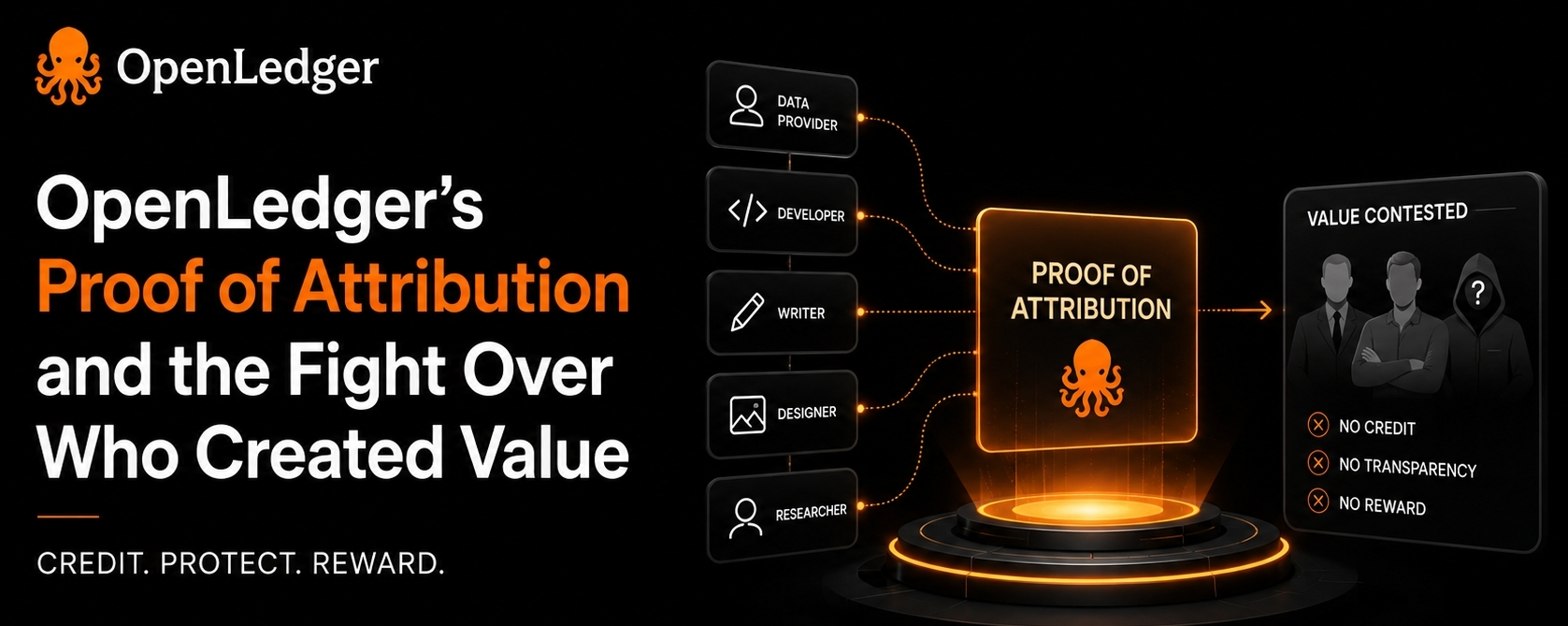
Article
OpenLedger's Proof of Attribution and the Fight Over Who Created ValueI think I stopped trusting clean crypto narratives a long time ago. Not because every idea is fake. Some of them are genuinely smart. But this market has a strange habit of taking complicated problems, giving them a beautiful name, and then acting like the name itself solved the problem.
So when I first looked at OpenLedger’s Proof of Attribution, I tried not to react too quickly. Proof of Work was easy to understand in a rough, physical way. Machines worked. Energy was spent. Security came from cost. Proof of Stake changed the shape of that idea. Instead of burning energy, people locked capital. The proof became financial commitment. You had something at risk, so the network assumed you had a reason to behave honestly.
But Proof of Attribution feels like it is dealing with a more uncomfortable question. Not who spent the most energy. Not who locked the most money. But who actually helped create the value.
That sounds simple until you think about AI. Most AI outputs look clean from the outside. A user asks something, a model responds, an agent performs a task, and everyone focuses on the result. But underneath that result are datasets, contributors, reviewers, corrections, feedback, models, validators, and a lot of invisible work that usually disappears the moment the output appears.
OpenLedger seems to be looking at that hidden layer. And that is what makes it interesting to me. Not in a loud way. Not in a “this changes everything” way. I have heard that line too many times. More in the quiet sense that maybe the AI economy will eventually need better accounting for where value actually comes from.
Because if contribution starts carrying value, people will fight over it. That is where the idea becomes messy. Proof of Work has its own problems. Proof of Stake has its own problems. But attribution brings in something more human. Credit. Recognition. Rewards. Disputes. Incentives. Ego. Farming. The moment people know contribution can be measured and rewarded, they start shaping their behavior around the measurement.
That does not mean the system fails. It just means the real test is not whether the concept sounds good. The real test is whether it survives people.
Can it tell the difference between useful contribution and noise? Can it reward real value without becoming another scoreboard? Can it stay fair when capital arrives and everyone starts looking for shortcuts? Can it handle disputes when multiple participants believe they deserve credit for the same outcome?
These are the questions I keep returning to. Because Proof of Attribution is not really competing with Proof of Work or Proof of Stake on the same ground. It is trying to prove something different. Proof of Work proves cost. Proof of Stake proves commitment. Proof of Attribution tries to prove origin.
Where did the value come from? Who shaped it? Who should be recognized? Who should be rewarded?
That may sound boring compared to price charts and big announcements, but boring infrastructure often matters more than the things people chase in public. Still, I do not want to romanticize it.
A system like this only becomes real under pressure. When there are more users, more contributors, more money, more arguments, and more people trying to game the rules. That is when the design either becomes stronger or starts showing cracks.
For now, I see OpenLedger as an attempt to deal with a problem the market usually ignores because it is not instantly exciting. Attribution is slow. Accounting is slow. Trust is slow. But AI may eventually make all of these things unavoidable.
Maybe Proof of Attribution becomes an important layer for the AI economy. Maybe it becomes another smart idea that looks better in theory than in practice. I do not know yet. And honestly, that uncertainty feels more honest than pretending I do.
What I do know is this: if AI keeps creating value from invisible inputs, someone will eventually have to answer where that value came from and who deserves to be part of the reward.
OpenLedger is trying to answer that question. Whether the market lets that answer survive is the part I am still watching.
@Openledger #OpenLedger #OpenLedger # $OPEN
{spot}(OPENUSDT)
OpenLedger's Proof of Attribution and the Fight Over Who Created Value
I think I stopped trusting clean crypto narratives a long time ago. Not because every idea is fake. Some of them are genuinely smart. But this market has a strange habit of taking complicated problems, giving them a beautiful name, and then acting like the name itself solved the problem.
So when I first looked at OpenLedger’s Proof of Attribution, I tried not to react too quickly. Proof of Work was easy to understand in a rough, physical way. Machines worked. Energy was spent. Security came from cost. Proof of Stake changed the shape of that idea. Instead of burning energy, people locked capital. The proof became financial commitment. You had something at risk, so the network assumed you had a reason to behave honestly.
But Proof of Attribution feels like it is dealing with a more uncomfortable question. Not who spent the most energy. Not who locked the most money. But who actually helped create the value.
That sounds simple until you think about AI. Most AI outputs look clean from the outside. A user asks something, a model responds, an agent performs a task, and everyone focuses on the result. But underneath that result are datasets, contributors, reviewers, corrections, feedback, models, validators, and a lot of invisible work that usually disappears the moment the output appears.
OpenLedger seems to be looking at that hidden layer. And that is what makes it interesting to me. Not in a loud way. Not in a “this changes everything” way. I have heard that line too many times. More in the quiet sense that maybe the AI economy will eventually need better accounting for where value actually comes from.
Because if contribution starts carrying value, people will fight over it. That is where the idea becomes messy. Proof of Work has its own problems. Proof of Stake has its own problems. But attribution brings in something more human. Credit. Recognition. Rewards. Disputes. Incentives. Ego. Farming. The moment people know contribution can be measured and rewarded, they start shaping their behavior around the measurement.
That does not mean the system fails. It just means the real test is not whether the concept sounds good. The real test is whether it survives people.
Can it tell the difference between useful contribution and noise? Can it reward real value without becoming another scoreboard? Can it stay fair when capital arrives and everyone starts looking for shortcuts? Can it handle disputes when multiple participants believe they deserve credit for the same outcome?
These are the questions I keep returning to. Because Proof of Attribution is not really competing with Proof of Work or Proof of Stake on the same ground. It is trying to prove something different. Proof of Work proves cost. Proof of Stake proves commitment. Proof of Attribution tries to prove origin.
Where did the value come from? Who shaped it? Who should be recognized? Who should be rewarded?
That may sound boring compared to price charts and big announcements, but boring infrastructure often matters more than the things people chase in public. Still, I do not want to romanticize it.
A system like this only becomes real under pressure. When there are more users, more contributors, more money, more arguments, and more people trying to game the rules. That is when the design either becomes stronger or starts showing cracks.
For now, I see OpenLedger as an attempt to deal with a problem the market usually ignores because it is not instantly exciting. Attribution is slow. Accounting is slow. Trust is slow. But AI may eventually make all of these things unavoidable.
Maybe Proof of Attribution becomes an important layer for the AI economy. Maybe it becomes another smart idea that looks better in theory than in practice. I do not know yet. And honestly, that uncertainty feels more honest than pretending I do.
What I do know is this: if AI keeps creating value from invisible inputs, someone will eventually have to answer where that value came from and who deserves to be part of the reward.
OpenLedger is trying to answer that question. Whether the market lets that answer survive is the part I am still watching.
@OpenLedger #OpenLedger #OpenLedger # $OPEN
So when I first looked at OpenLedger’s Proof of Attribution, I tried not to react too quickly. Proof of Work was easy to understand in a rough, physical way. Machines worked. Energy was spent. Security came from cost. Proof of Stake changed the shape of that idea. Instead of burning energy, people locked capital. The proof became financial commitment. You had something at risk, so the network assumed you had a reason to behave honestly.
But Proof of Attribution feels like it is dealing with a more uncomfortable question. Not who spent the most energy. Not who locked the most money. But who actually helped create the value.
That sounds simple until you think about AI. Most AI outputs look clean from the outside. A user asks something, a model responds, an agent performs a task, and everyone focuses on the result. But underneath that result are datasets, contributors, reviewers, corrections, feedback, models, validators, and a lot of invisible work that usually disappears the moment the output appears.
OpenLedger seems to be looking at that hidden layer. And that is what makes it interesting to me. Not in a loud way. Not in a “this changes everything” way. I have heard that line too many times. More in the quiet sense that maybe the AI economy will eventually need better accounting for where value actually comes from.
Because if contribution starts carrying value, people will fight over it. That is where the idea becomes messy. Proof of Work has its own problems. Proof of Stake has its own problems. But attribution brings in something more human. Credit. Recognition. Rewards. Disputes. Incentives. Ego. Farming. The moment people know contribution can be measured and rewarded, they start shaping their behavior around the measurement.
That does not mean the system fails. It just means the real test is not whether the concept sounds good. The real test is whether it survives people.
Can it tell the difference between useful contribution and noise? Can it reward real value without becoming another scoreboard? Can it stay fair when capital arrives and everyone starts looking for shortcuts? Can it handle disputes when multiple participants believe they deserve credit for the same outcome?
These are the questions I keep returning to. Because Proof of Attribution is not really competing with Proof of Work or Proof of Stake on the same ground. It is trying to prove something different. Proof of Work proves cost. Proof of Stake proves commitment. Proof of Attribution tries to prove origin.
Where did the value come from? Who shaped it? Who should be recognized? Who should be rewarded?
That may sound boring compared to price charts and big announcements, but boring infrastructure often matters more than the things people chase in public. Still, I do not want to romanticize it.
A system like this only becomes real under pressure. When there are more users, more contributors, more money, more arguments, and more people trying to game the rules. That is when the design either becomes stronger or starts showing cracks.
For now, I see OpenLedger as an attempt to deal with a problem the market usually ignores because it is not instantly exciting. Attribution is slow. Accounting is slow. Trust is slow. But AI may eventually make all of these things unavoidable.
Maybe Proof of Attribution becomes an important layer for the AI economy. Maybe it becomes another smart idea that looks better in theory than in practice. I do not know yet. And honestly, that uncertainty feels more honest than pretending I do.
What I do know is this: if AI keeps creating value from invisible inputs, someone will eventually have to answer where that value came from and who deserves to be part of the reward.
OpenLedger is trying to answer that question. Whether the market lets that answer survive is the part I am still watching.
@OpenLedger #OpenLedger #OpenLedger # $OPEN
1
149


Article
Why I’m Paying Attention to OpenLedger and the Future of Decentralized AIIntroduction
As someone who has been actively exploring both blockchain and artificial intelligence, I’m always looking for projects that solve real problems rather than simply following trends. Over the past few months, one project that has genuinely caught my attention is @Openledger . While many blockchain networks focus on finance, trading, or speculation, OpenLedger is building something that could become increasingly important in the AI era: decentralized infrastructure powered by community participation and high-quality data.
The rise of AI has created incredible opportunities, but it has also highlighted a major challenge access to trustworthy, transparent, and diverse data. This is one of the reasons I’ve become interested in the vision behind $OPEN and the broader OpenLedger ecosystem.
Main Discussion
What stands out to me about OpenLedger is its focus on creating decentralized infrastructure for AI. In today's AI economy, data is one of the most valuable resources. However, much of that data is controlled by a small number of centralized organizations. This concentration of power can limit transparency, reduce fairness, and make innovation less accessible to independent developers and communities.
OpenLedger offers a different approach. By encouraging contributors to participate in data creation, validation, and ecosystem development, the project aims to build a more open and collaborative environment for AI growth. I find this idea especially compelling because it aligns with one of the original promises of blockchain technology: empowering individuals rather than relying solely on centralized intermediaries.
Another aspect I appreciate is the emphasis on transparency. Sustainable ecosystems are built on trust, and trust requires visibility into how networks operate and how value is distributed. OpenLedger's commitment to community-driven development creates opportunities for participants to become stakeholders in the future of decentralized AI rather than remaining passive users.
From an investment perspective, I’m not only interested in short-term market movements. I prefer projects with long-term utility and a clear mission. The combination of AI innovation, decentralized data infrastructure, and active community engagement gives OpenLedger a unique position within the blockchain industry. As AI adoption continues to accelerate globally, the need for reliable and decentralized data networks may become even more significant.
The growth of the ecosystem is another positive signal. Strong communities often become the foundation of successful networks, and it’s encouraging to see increasing interest from builders, contributors, and supporters who believe in the project's vision. Community participation can help create stronger network effects, encourage innovation, and support sustainable adoption over time.
Conclusion
As a female crypto enthusiast, I’m excited by projects that push technology forward while remaining focused on openness, collaboration, and real-world value. For me, @Openledger represents more than another blockchain project it represents a vision for a fairer AI ecosystem where data contributors, developers, and communities can all play meaningful roles.
There is still a long journey ahead, but the mission behind $OPEN resonates with me because it addresses challenges that will likely become more important as AI continues to evolve. If OpenLedger can successfully combine decentralized infrastructure, transparent governance, and community-driven innovation, it could become a key player in the future of decentralized AI.
#OpenLedger #MRVLSoarsOnNVDATrillionDollarOutlook #BinanceRollsOutTradingInUSStocks
Why I’m Paying Attention to OpenLedger and the Future of Decentralized AI
Introduction
As someone who has been actively exploring both blockchain and artificial intelligence, I’m always looking for projects that solve real problems rather than simply following trends. Over the past few months, one project that has genuinely caught my attention is @OpenLedger . While many blockchain networks focus on finance, trading, or speculation, OpenLedger is building something that could become increasingly important in the AI era: decentralized infrastructure powered by community participation and high-quality data.
The rise of AI has created incredible opportunities, but it has also highlighted a major challenge access to trustworthy, transparent, and diverse data. This is one of the reasons I’ve become interested in the vision behind $OPEN and the broader OpenLedger ecosystem.
Main Discussion
What stands out to me about OpenLedger is its focus on creating decentralized infrastructure for AI. In today's AI economy, data is one of the most valuable resources. However, much of that data is controlled by a small number of centralized organizations. This concentration of power can limit transparency, reduce fairness, and make innovation less accessible to independent developers and communities.
OpenLedger offers a different approach. By encouraging contributors to participate in data creation, validation, and ecosystem development, the project aims to build a more open and collaborative environment for AI growth. I find this idea especially compelling because it aligns with one of the original promises of blockchain technology: empowering individuals rather than relying solely on centralized intermediaries.
Another aspect I appreciate is the emphasis on transparency. Sustainable ecosystems are built on trust, and trust requires visibility into how networks operate and how value is distributed. OpenLedger's commitment to community-driven development creates opportunities for participants to become stakeholders in the future of decentralized AI rather than remaining passive users.
From an investment perspective, I’m not only interested in short-term market movements. I prefer projects with long-term utility and a clear mission. The combination of AI innovation, decentralized data infrastructure, and active community engagement gives OpenLedger a unique position within the blockchain industry. As AI adoption continues to accelerate globally, the need for reliable and decentralized data networks may become even more significant.
The growth of the ecosystem is another positive signal. Strong communities often become the foundation of successful networks, and it’s encouraging to see increasing interest from builders, contributors, and supporters who believe in the project's vision. Community participation can help create stronger network effects, encourage innovation, and support sustainable adoption over time.
Conclusion
As a female crypto enthusiast, I’m excited by projects that push technology forward while remaining focused on openness, collaboration, and real-world value. For me, @OpenLedger represents more than another blockchain project it represents a vision for a fairer AI ecosystem where data contributors, developers, and communities can all play meaningful roles.
There is still a long journey ahead, but the mission behind $OPEN resonates with me because it addresses challenges that will likely become more important as AI continues to evolve. If OpenLedger can successfully combine decentralized infrastructure, transparent governance, and community-driven innovation, it could become a key player in the future of decentralized AI.
#OpenLedger #MRVLSoarsOnNVDATrillionDollarOutlook #BinanceRollsOutTradingInUSStocks
As someone who has been actively exploring both blockchain and artificial intelligence, I’m always looking for projects that solve real problems rather than simply following trends. Over the past few months, one project that has genuinely caught my attention is @OpenLedger . While many blockchain networks focus on finance, trading, or speculation, OpenLedger is building something that could become increasingly important in the AI era: decentralized infrastructure powered by community participation and high-quality data.
The rise of AI has created incredible opportunities, but it has also highlighted a major challenge access to trustworthy, transparent, and diverse data. This is one of the reasons I’ve become interested in the vision behind $OPEN and the broader OpenLedger ecosystem.
Main Discussion
What stands out to me about OpenLedger is its focus on creating decentralized infrastructure for AI. In today's AI economy, data is one of the most valuable resources. However, much of that data is controlled by a small number of centralized organizations. This concentration of power can limit transparency, reduce fairness, and make innovation less accessible to independent developers and communities.
OpenLedger offers a different approach. By encouraging contributors to participate in data creation, validation, and ecosystem development, the project aims to build a more open and collaborative environment for AI growth. I find this idea especially compelling because it aligns with one of the original promises of blockchain technology: empowering individuals rather than relying solely on centralized intermediaries.
Another aspect I appreciate is the emphasis on transparency. Sustainable ecosystems are built on trust, and trust requires visibility into how networks operate and how value is distributed. OpenLedger's commitment to community-driven development creates opportunities for participants to become stakeholders in the future of decentralized AI rather than remaining passive users.
From an investment perspective, I’m not only interested in short-term market movements. I prefer projects with long-term utility and a clear mission. The combination of AI innovation, decentralized data infrastructure, and active community engagement gives OpenLedger a unique position within the blockchain industry. As AI adoption continues to accelerate globally, the need for reliable and decentralized data networks may become even more significant.
The growth of the ecosystem is another positive signal. Strong communities often become the foundation of successful networks, and it’s encouraging to see increasing interest from builders, contributors, and supporters who believe in the project's vision. Community participation can help create stronger network effects, encourage innovation, and support sustainable adoption over time.
Conclusion
As a female crypto enthusiast, I’m excited by projects that push technology forward while remaining focused on openness, collaboration, and real-world value. For me, @OpenLedger represents more than another blockchain project it represents a vision for a fairer AI ecosystem where data contributors, developers, and communities can all play meaningful roles.
There is still a long journey ahead, but the mission behind $OPEN resonates with me because it addresses challenges that will likely become more important as AI continues to evolve. If OpenLedger can successfully combine decentralized infrastructure, transparent governance, and community-driven innovation, it could become a key player in the future of decentralized AI.
#OpenLedger #MRVLSoarsOnNVDATrillionDollarOutlook #BinanceRollsOutTradingInUSStocks
1
3
65
Connectez-vous pour découvrir plus de contenu
Rejoignez la communauté mondiale des adeptes de cryptomonnaies sur Binance Square
⚡️ Suviez les dernières informations importantes sur les cryptomonnaies.
💬 Jugé digne de confiance par la plus grande plateforme d’échange de cryptomonnaies au monde.
👍 Découvrez les connaissances que partagent les créateurs vérifiés.
Adresse e-mail/Nº de téléphone
Sujets d’actualité
1
#BNBSurpasses$790
8,548 vues
72 mentions
2
#ZamaRises15.99%ToIntradayHigh$0.09
2,462 vues
64 mentions
3
#BitcoinSpotETFsDraw$6.34BInflowsInQ3
3,128 vues
52 mentions
4
#EthereumValidatorExitQueueJumps392%
46,235 vues
594 mentions
5
#IMFApprovesElSalvador$138MWithBitcoinWaiver
6,039 vues
38 mentions
6
#SECHaltsCryptoETFReviewsAmidFundingLapse
195,271 vues
1,498 mentions
7
#ZcashETFPostsFirstWeeklyOutflow$93.6M
85,847 vues
240 mentions
8
#GreekPoliceBustCryptoScamRingArrest17
324,003 vues
2,174 mentions
9
#BitcoinRejectedAt$87K
201,148 vues
300 mentions
10
#FedOctoberRateHikeOddsFallTo17%
322,446 vues
2,311 mentions