

#binancesquaretalks
binancesquaretalks
49.6M vues
108,448 mentions
Populaire
Récents
·
--
#BinanceSquareTalks refers to crypto discussions, interviews, AMAs, and live sessions hosted or promoted through Binance Square. Binance describes Square as its social platform for crypto/Web3 discussions, with sections including Discover, News, Academy, and LIVE. �
#BinanceSquareTalks refers to crypto discussions, interviews, AMAs, and live sessions hosted or promoted through Binance Square. Binance describes Square as its social platform for crypto/Web3 discussions, with sections including Discover, News, Academy, and LIVE. �

1
26

·
--
Binance Square keeps crypto discovery simple. 🔥
📰 Market updates
💡 Crypto insights
💬 Community discussions
🔎 Trending narratives
One place to learn, discover, and stay updated. 🚀
#BinanceSquareTalks #cryptooinsigts
Binance Square keeps crypto discovery simple. 🔥
📰 Market updates
💡 Crypto insights
💬 Community discussions
🔎 Trending narratives
One place to learn, discover, and stay updated. 🚀
#BinanceSquareTalks #cryptooinsigts
📰 Market updates
💡 Crypto insights
💬 Community discussions
🔎 Trending narratives
One place to learn, discover, and stay updated. 🚀
#BinanceSquareTalks #cryptooinsigts
1
68
·
--
🚀 **Exciting News for Content Creators!** 🚀
The **Square Cash • Creator Program** is officially OPEN on Binance Square! If you love sharing original market insights, deep dives, or crypto analytics, this is your perfect chance to get rewarded for your content.
Every approved application earns a base reward of **1 BNCB**, making it easier than ever to build your presence and monetize your knowledge right here on the platform.
💡 **Want to participate?**
Make sure your original post includes the required tag to qualify!
Let's discuss below what are your top market insights for this week? 👇
#BinanceSquareTalks #CryptoCreators $CASH
🚀 **Exciting News for Content Creators!** 🚀
The **Square Cash • Creator Program** is officially OPEN on Binance Square! If you love sharing original market insights, deep dives, or crypto analytics, this is your perfect chance to get rewarded for your content.
Every approved application earns a base reward of **1 BNCB**, making it easier than ever to build your presence and monetize your knowledge right here on the platform.
💡 **Want to participate?**
Make sure your original post includes the required tag to qualify!
Let's discuss below what are your top market insights for this week? 👇
#BinanceSquareTalks #CryptoCreators $CASH
The **Square Cash • Creator Program** is officially OPEN on Binance Square! If you love sharing original market insights, deep dives, or crypto analytics, this is your perfect chance to get rewarded for your content.
Every approved application earns a base reward of **1 BNCB**, making it easier than ever to build your presence and monetize your knowledge right here on the platform.
💡 **Want to participate?**
Make sure your original post includes the required tag to qualify!
Let's discuss below what are your top market insights for this week? 👇
#BinanceSquareTalks #CryptoCreators $CASH
1
78

·
--
I opened Binance Square today like a farmer checking his field after three months of no rain.
No new campaign.
Refreshed.
Still nothing.
Closed the app.
Opened it again, because apparently I enjoy emotional damage.
At this point, I don’t even check token prices first. I check CreatorPad.
Earlier it was:
“New campaign is live 👀”
Now it’s:
“Nothing new. Come back later.”
My drafts folder is becoming a retirement home.
I have so many half-written posts that some of them probably qualify as historical documents.
The funny part is, I’m still opening Square every day like:
“Maybe today.”
And Square is basically looking back at me like:
“Bro… go touch grass.”
Anyway, if a new campaign drops tomorrow, you’ll find me writing at 3 AM with 47 tabs open and absolutely no sleep.
Until then, we wait.
Creators are not dead.
We’re just buffering. #BİNANCESQUARE #BinanceSquareTalks #createrpad #CZBİNANCE
I opened Binance Square today like a farmer checking his field after three months of no rain.
No new campaign.
Refreshed.
Still nothing.
Closed the app.
Opened it again, because apparently I enjoy emotional damage.
At this point, I don’t even check token prices first. I check CreatorPad.
Earlier it was:
“New campaign is live 👀”
Now it’s:
“Nothing new. Come back later.”
My drafts folder is becoming a retirement home.
I have so many half-written posts that some of them probably qualify as historical documents.
The funny part is, I’m still opening Square every day like:
“Maybe today.”
And Square is basically looking back at me like:
“Bro… go touch grass.”
Anyway, if a new campaign drops tomorrow, you’ll find me writing at 3 AM with 47 tabs open and absolutely no sleep.
Until then, we wait.
Creators are not dead.
We’re just buffering. #BİNANCESQUARE #BinanceSquareTalks #createrpad #CZBİNANCE
No new campaign.
Refreshed.
Still nothing.
Closed the app.
Opened it again, because apparently I enjoy emotional damage.
At this point, I don’t even check token prices first. I check CreatorPad.
Earlier it was:
“New campaign is live 👀”
Now it’s:
“Nothing new. Come back later.”
My drafts folder is becoming a retirement home.
I have so many half-written posts that some of them probably qualify as historical documents.
The funny part is, I’m still opening Square every day like:
“Maybe today.”
And Square is basically looking back at me like:
“Bro… go touch grass.”
Anyway, if a new campaign drops tomorrow, you’ll find me writing at 3 AM with 47 tabs open and absolutely no sleep.
Until then, we wait.
Creators are not dead.
We’re just buffering. #BİNANCESQUARE #BinanceSquareTalks #createrpad #CZBİNANCE

125

Hope you all are all using your #Binance to store your funds? also keeps interacting with #BinanceSquareTalks , that the real deal
Hope you all are all using your #Binance to store your funds? also keeps interacting with #BinanceSquareTalks , that the real deal
83
·
--
Haussier
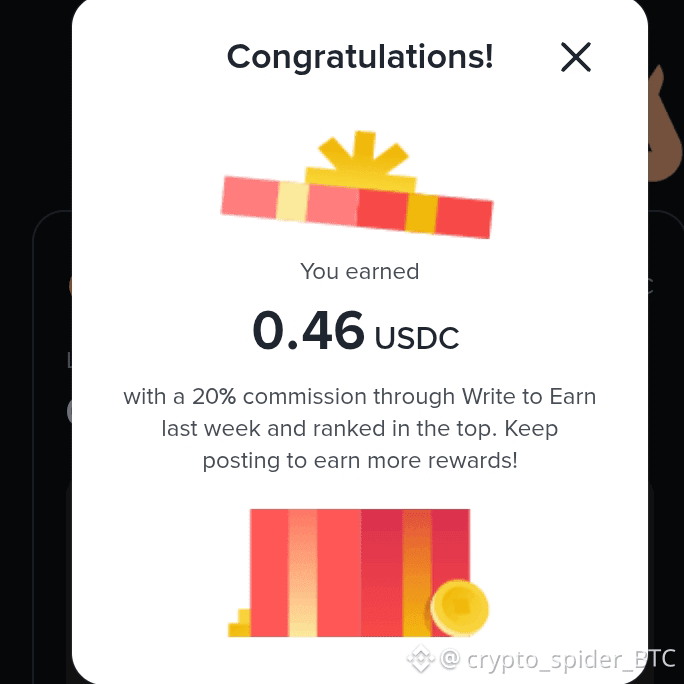
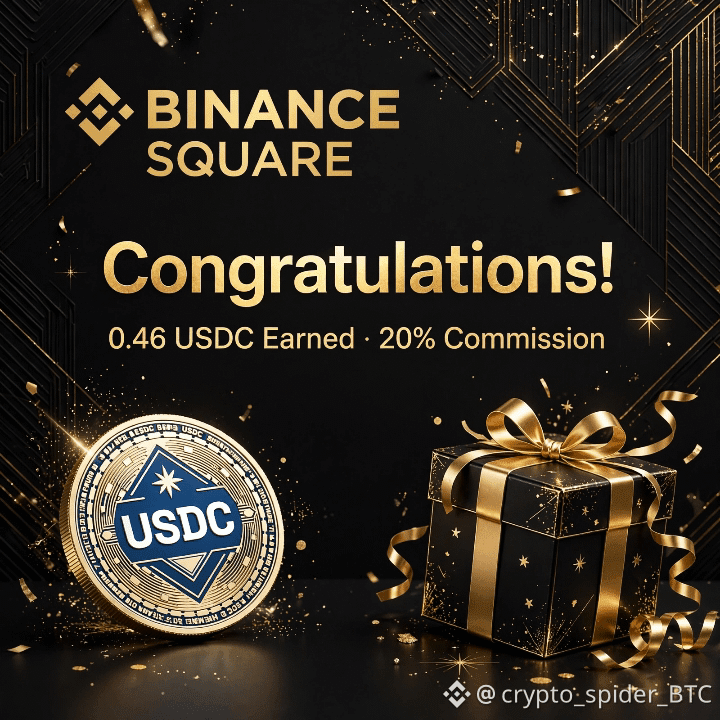
Congratulations! 🎉 I earned *0.46 USDC* with 20% Commission - Top Ranked!
Write to Earn is REAL on Binance Square! Just post content and earn up to 50% commission rewards!
Last week:
✅ 0.46 USDC Earned
✅ 20% Commission
✅ Top Ranked Creator
✅ My $BANK post was top earner
Tips to Earn More? Post daily on trending coins like $BANK , $ONDO , add chart, use #AIStocksWhatNext
Data updates every Thursday! Keep posting!
#WriteToEarn #BinanceSquareTalks #USDC #CryptoEarnings #BANK #AIStocksWhatNext #CreatorRewards
{spot}(ONDOUSDT)
Congratulations! 🎉 I earned *0.46 USDC* with 20% Commission - Top Ranked!
Write to Earn is REAL on Binance Square! Just post content and earn up to 50% commission rewards!
Last week:
✅ 0.46 USDC Earned
✅ 20% Commission
✅ Top Ranked Creator
✅ My $BANK post was top earner
Tips to Earn More? Post daily on trending coins like $BANK , $ONDO , add chart, use #AIStocksWhatNext
Data updates every Thursday! Keep posting!
#WriteToEarn #BinanceSquareTalks #USDC #CryptoEarnings #BANK #AIStocksWhatNext #CreatorRewards
Write to Earn is REAL on Binance Square! Just post content and earn up to 50% commission rewards!
Last week:
✅ 0.46 USDC Earned
✅ 20% Commission
✅ Top Ranked Creator
✅ My $BANK post was top earner
Tips to Earn More? Post daily on trending coins like $BANK , $ONDO , add chart, use #AIStocksWhatNext
Data updates every Thursday! Keep posting!
#WriteToEarn #BinanceSquareTalks #USDC #CryptoEarnings #BANK #AIStocksWhatNext #CreatorRewards
1
336

Binance introduced Chat as part of its effort to integrate communication and financial services into the same application
#Binance #BinanceSquareTalks
Binance introduced Chat as part of its effort to integrate communication and financial services into the same application
#Binance #BinanceSquareTalks
#Binance #BinanceSquareTalks
76

🚨 Binance Square’s Write to Earn Is Now Open to Everyone
Binance has expanded its Write to Earn promotion to all KYC-verified Binance Square users, with no separate registration or opt-in required.
Here’s how it works 👇
📝 After publishing your first eligible Square post, your content can potentially generate trading-fee commissions when readers interact with your coin cashtags or trading widgets and then complete a qualifying trade.
💰 Basic commission: 20% per eligible trade
🏆 Top 31–100 creators: up to 30% total commission
🔥 Top 1–30 creators: up to 50% total commission
The ranking is based on the basic commissions generated during each weekly period.
📅 Each reward week runs from Monday 00:00 UTC to Sunday 23:59 UTC. Eligible rewards are calculated weekly and paid in USDC to the Funding Account, provided the accumulated weekly reward reaches at least 0.1 USDC.
The promotion covers qualifying Spot, Margin, Futures and Convert Instant orders, while copy trading is excluded.
⚠️ Important: your own trades don't generate commissions for you, and trades through referrals, APIs, zero-fee pairs, stablecoin-to-stablecoin transactions and other excluded categories won't count.
Also, content must be original, organic and non-spammy. Duplicate or deleted content can be excluded, and eligible content stops generating commissions seven days after publication.
For creators, this means educational content can now have another potential way to generate rewards through genuine reader engagement.
📊 Create. Educate. Engage. Earn.
$BTC $BNB $USDC
#BinanceSquareTalks #Binance #Write2Earn
🚨 Binance Square’s Write to Earn Is Now Open to Everyone
Binance has expanded its Write to Earn promotion to all KYC-verified Binance Square users, with no separate registration or opt-in required.
Here’s how it works 👇
📝 After publishing your first eligible Square post, your content can potentially generate trading-fee commissions when readers interact with your coin cashtags or trading widgets and then complete a qualifying trade.
💰 Basic commission: 20% per eligible trade
🏆 Top 31–100 creators: up to 30% total commission
🔥 Top 1–30 creators: up to 50% total commission
The ranking is based on the basic commissions generated during each weekly period.
📅 Each reward week runs from Monday 00:00 UTC to Sunday 23:59 UTC. Eligible rewards are calculated weekly and paid in USDC to the Funding Account, provided the accumulated weekly reward reaches at least 0.1 USDC.
The promotion covers qualifying Spot, Margin, Futures and Convert Instant orders, while copy trading is excluded.
⚠️ Important: your own trades don't generate commissions for you, and trades through referrals, APIs, zero-fee pairs, stablecoin-to-stablecoin transactions and other excluded categories won't count.
Also, content must be original, organic and non-spammy. Duplicate or deleted content can be excluded, and eligible content stops generating commissions seven days after publication.
For creators, this means educational content can now have another potential way to generate rewards through genuine reader engagement.
📊 Create. Educate. Engage. Earn.
$BTC $BNB $USDC
#BinanceSquareTalks #Binance #Write2Earn
Binance has expanded its Write to Earn promotion to all KYC-verified Binance Square users, with no separate registration or opt-in required.
Here’s how it works 👇
📝 After publishing your first eligible Square post, your content can potentially generate trading-fee commissions when readers interact with your coin cashtags or trading widgets and then complete a qualifying trade.
💰 Basic commission: 20% per eligible trade
🏆 Top 31–100 creators: up to 30% total commission
🔥 Top 1–30 creators: up to 50% total commission
The ranking is based on the basic commissions generated during each weekly period.
📅 Each reward week runs from Monday 00:00 UTC to Sunday 23:59 UTC. Eligible rewards are calculated weekly and paid in USDC to the Funding Account, provided the accumulated weekly reward reaches at least 0.1 USDC.
The promotion covers qualifying Spot, Margin, Futures and Convert Instant orders, while copy trading is excluded.
⚠️ Important: your own trades don't generate commissions for you, and trades through referrals, APIs, zero-fee pairs, stablecoin-to-stablecoin transactions and other excluded categories won't count.
Also, content must be original, organic and non-spammy. Duplicate or deleted content can be excluded, and eligible content stops generating commissions seven days after publication.
For creators, this means educational content can now have another potential way to generate rewards through genuine reader engagement.
📊 Create. Educate. Engage. Earn.
$BTC $BNB $USDC
#BinanceSquareTalks #Binance #Write2Earn
43

·
--
Binance is the world’s largest cryptocurrency exchange, founded in 2017, and it has become a central hub for digital asset trading. It offers spot trading, futures, margin trading, staking, and even its own blockchain ecosystem through BNB Chain. The platform is known for its speed, wide selection of tokens, and global reach, serving millions of users across more than 100 countries.
What makes Binance stand out is its Write to Earn program and Binance Square, where creators can share posts, analysis, and crypto insights while earning commissions when readers trade. This turns Binance into more than just an exchange—it’s also a social and educational space for traders.
Binance is often described as “the best” because of its liquidity, low fees, and constant innovation. It has introduced products like Binance Launchpad for new token sales, Binance Earn for passive income, and Binance Academy for free crypto education. Despite facing regulatory challenges worldwide, it remains a leader in crypto adoption and continues to expand into Web3, NFTs, and decentralized finance #binanncesuppotr #BinanceSquareTalks #binanecebtc #btc
Binance is the world’s largest cryptocurrency exchange, founded in 2017, and it has become a central hub for digital asset trading. It offers spot trading, futures, margin trading, staking, and even its own blockchain ecosystem through BNB Chain. The platform is known for its speed, wide selection of tokens, and global reach, serving millions of users across more than 100 countries.
What makes Binance stand out is its Write to Earn program and Binance Square, where creators can share posts, analysis, and crypto insights while earning commissions when readers trade. This turns Binance into more than just an exchange—it’s also a social and educational space for traders.
Binance is often described as “the best” because of its liquidity, low fees, and constant innovation. It has introduced products like Binance Launchpad for new token sales, Binance Earn for passive income, and Binance Academy for free crypto education. Despite facing regulatory challenges worldwide, it remains a leader in crypto adoption and continues to expand into Web3, NFTs, and decentralized finance #binanncesuppotr #BinanceSquareTalks #binanecebtc #btc
What makes Binance stand out is its Write to Earn program and Binance Square, where creators can share posts, analysis, and crypto insights while earning commissions when readers trade. This turns Binance into more than just an exchange—it’s also a social and educational space for traders.
Binance is often described as “the best” because of its liquidity, low fees, and constant innovation. It has introduced products like Binance Launchpad for new token sales, Binance Earn for passive income, and Binance Academy for free crypto education. Despite facing regulatory challenges worldwide, it remains a leader in crypto adoption and continues to expand into Web3, NFTs, and decentralized finance #binanncesuppotr #BinanceSquareTalks #binanecebtc #btc
1
48

·
--
Haussier
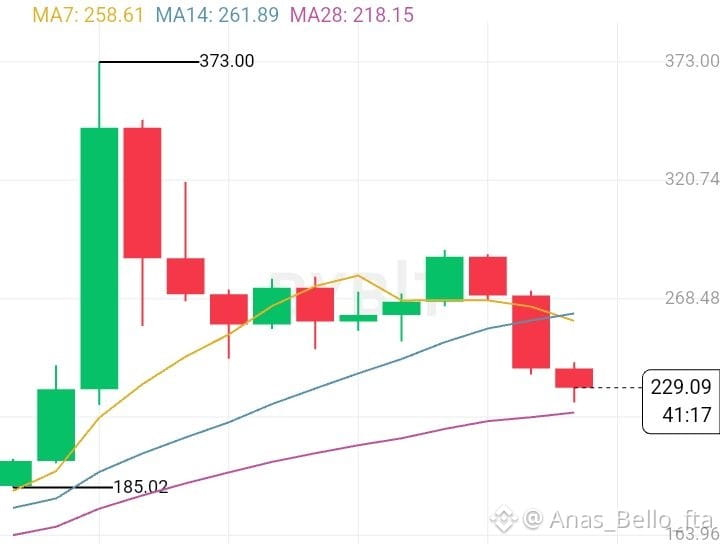
QNT/USDT SPOT/PERP SUPPORT TEST
Pair: $QNT
Current Price: 228.13
Session Change: +26.86%
Timeframe: 1H
Market Overview
QNT surged from 157.18 to 373.00 before entering a sharp pullback. Price is now at 228.13, testing the MA28 at 218.12 after losing the MA7 and MA14. The recent candles show increasing selling pressure, while volume is declining from the earlier spike.
Technical Analysis
➤ MA7: 258.48, immediate resistance
➤ MA14: 261.82, stronger recovery resistance
➤ MA28: 218.12, key support being tested
➤ Volume: 4.70K below MA5 at 6.70K and MA10 at 9.55K
➤ Support: 218.12, then 202.45
➤ Major resistance: 258.48 to 261.82
Trade Scenarios
Bullish Case: MA28 at 218.12 holds and price reclaims 258.48, followed by 261.82. A sustained move above this zone could open 316.15.
Bearish Case: 1H close below 218.12 confirms further weakness toward 202.45. Losing 202.45 could expose the previous low around 157.18.
Risk Management
➤ Entry Zone: 218.12 to 228.13 if support shows a clear bounce
➤ Stop Loss: 1H close below 218.12
➤ Take Profit 1: 258.48
➤ Take Profit 2: 261.82
➤ Take Profit 3: 316.15
➤ Leverage: 2x maximum
➤ Invalidation: 1H close below 218.12
Risk Warning: QNT has already made a very large move from 157.18 to 373.00. Avoid chasing the current pullback. Watch the reaction around 218.12 carefully.
Final Verdict
➤ 218.12 is the key level now
➤ Hold and reclaim 258.48 for recovery confirmation
➤ Lose 218.12 and 202.45 becomes the next support
➤ Stronger bearish continuation below 202.45
#Binance #BinanceSquareFamily #BinanceSquareTalks #QNT/USDT $QNT
{spot}(QNTUSDT)
QNT/USDT SPOT/PERP SUPPORT TEST
Pair: $QNT
Current Price: 228.13
Session Change: +26.86%
Timeframe: 1H
Market Overview
QNT surged from 157.18 to 373.00 before entering a sharp pullback. Price is now at 228.13, testing the MA28 at 218.12 after losing the MA7 and MA14. The recent candles show increasing selling pressure, while volume is declining from the earlier spike.
Technical Analysis
➤ MA7: 258.48, immediate resistance
➤ MA14: 261.82, stronger recovery resistance
➤ MA28: 218.12, key support being tested
➤ Volume: 4.70K below MA5 at 6.70K and MA10 at 9.55K
➤ Support: 218.12, then 202.45
➤ Major resistance: 258.48 to 261.82
Trade Scenarios
Bullish Case: MA28 at 218.12 holds and price reclaims 258.48, followed by 261.82. A sustained move above this zone could open 316.15.
Bearish Case: 1H close below 218.12 confirms further weakness toward 202.45. Losing 202.45 could expose the previous low around 157.18.
Risk Management
➤ Entry Zone: 218.12 to 228.13 if support shows a clear bounce
➤ Stop Loss: 1H close below 218.12
➤ Take Profit 1: 258.48
➤ Take Profit 2: 261.82
➤ Take Profit 3: 316.15
➤ Leverage: 2x maximum
➤ Invalidation: 1H close below 218.12
Risk Warning: QNT has already made a very large move from 157.18 to 373.00. Avoid chasing the current pullback. Watch the reaction around 218.12 carefully.
Final Verdict
➤ 218.12 is the key level now
➤ Hold and reclaim 258.48 for recovery confirmation
➤ Lose 218.12 and 202.45 becomes the next support
➤ Stronger bearish continuation below 202.45
#Binance #BinanceSquareFamily #BinanceSquareTalks #QNT/USDT $QNT
Pair: $QNT
Current Price: 228.13
Session Change: +26.86%
Timeframe: 1H
Market Overview
QNT surged from 157.18 to 373.00 before entering a sharp pullback. Price is now at 228.13, testing the MA28 at 218.12 after losing the MA7 and MA14. The recent candles show increasing selling pressure, while volume is declining from the earlier spike.
Technical Analysis
➤ MA7: 258.48, immediate resistance
➤ MA14: 261.82, stronger recovery resistance
➤ MA28: 218.12, key support being tested
➤ Volume: 4.70K below MA5 at 6.70K and MA10 at 9.55K
➤ Support: 218.12, then 202.45
➤ Major resistance: 258.48 to 261.82
Trade Scenarios
Bullish Case: MA28 at 218.12 holds and price reclaims 258.48, followed by 261.82. A sustained move above this zone could open 316.15.
Bearish Case: 1H close below 218.12 confirms further weakness toward 202.45. Losing 202.45 could expose the previous low around 157.18.
Risk Management
➤ Entry Zone: 218.12 to 228.13 if support shows a clear bounce
➤ Stop Loss: 1H close below 218.12
➤ Take Profit 1: 258.48
➤ Take Profit 2: 261.82
➤ Take Profit 3: 316.15
➤ Leverage: 2x maximum
➤ Invalidation: 1H close below 218.12
Risk Warning: QNT has already made a very large move from 157.18 to 373.00. Avoid chasing the current pullback. Watch the reaction around 218.12 carefully.
Final Verdict
➤ 218.12 is the key level now
➤ Hold and reclaim 258.48 for recovery confirmation
➤ Lose 218.12 and 202.45 becomes the next support
➤ Stronger bearish continuation below 202.45
#Binance #BinanceSquareFamily #BinanceSquareTalks #QNT/USDT $QNT
1
1
417


🚀 $PUMP is one of the tokens attracting attention in the current market, with recent trading data showing strong short-term momentum and increased activity. That makes PUMP interesting to watch for traders looking for volatility, but momentum can reverse quickly, so entries should be based on price action and volume rather than hype alone. Always manage risk carefully and remember that no coin guarantees profit. #pump #BinanceSquareTalks #Memecoins
🚀 $PUMP is one of the tokens attracting attention in the current market, with recent trading data showing strong short-term momentum and increased activity. That makes PUMP interesting to watch for traders looking for volatility, but momentum can reverse quickly, so entries should be based on price action and volume rather than hype alone. Always manage risk carefully and remember that no coin guarantees profit. #pump #BinanceSquareTalks #Memecoins
29

My trading strategy is simple: stay patient, follow the trend, manage risk and avoid emotional decisions. I keep an eye on BTC/USDT and look for clear setups before taking any trade. 📊 Trading is not about winning every time—it’s about having a plan and managing risk consistently. 🚀 #BTC #BinanceSquareTalks #Crypto_Jobs🎯
My trading strategy is simple: stay patient, follow the trend, manage risk and avoid emotional decisions. I keep an eye on BTC/USDT and look for clear setups before taking any trade. 📊 Trading is not about winning every time—it’s about having a plan and managing risk consistently. 🚀 #BTC #BinanceSquareTalks #Crypto_Jobs🎯
37

·
--
Baissier
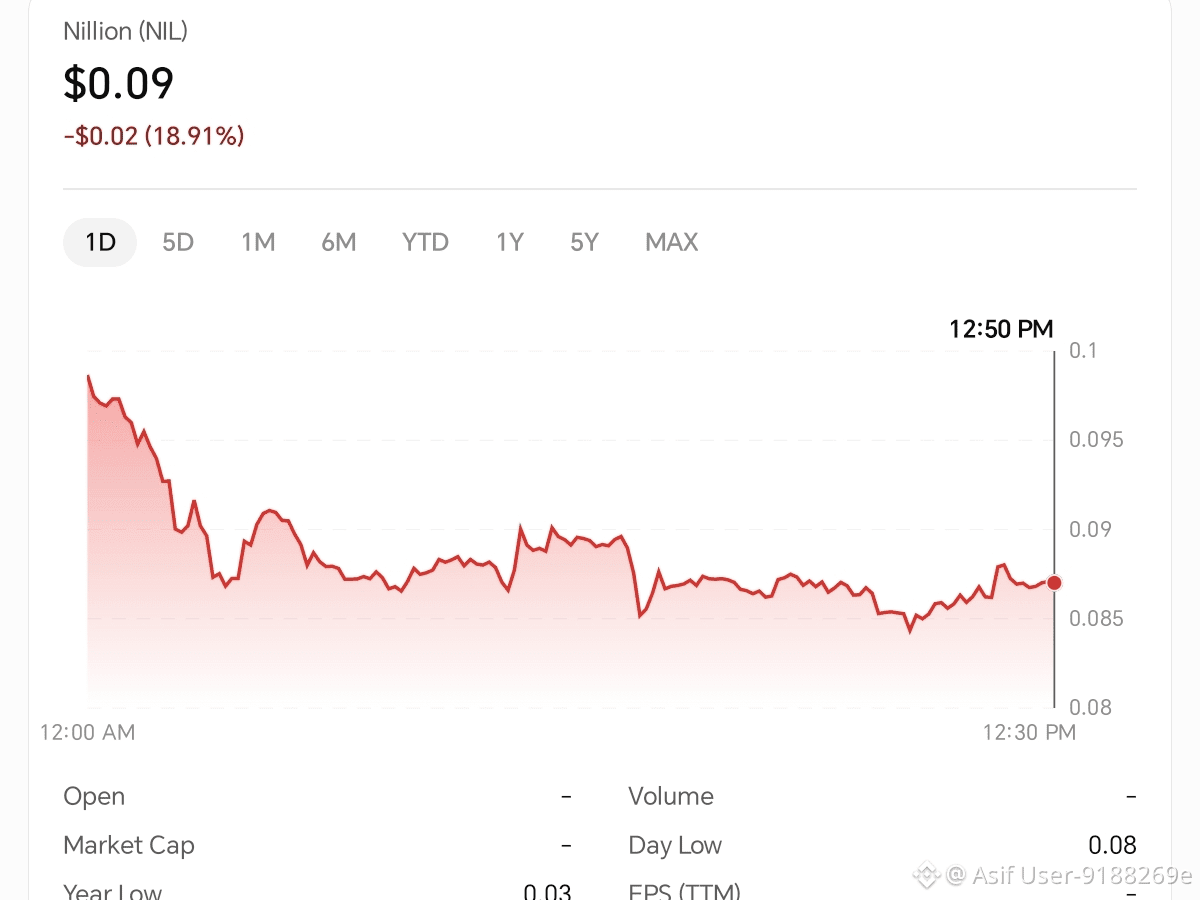
$NIL price outlook
Bearish scenario
{spot}(NILUSDT)
$0.10–$0.11: reclaiming this zone could restore momentum.
$0.12–$0.15: major upside zone; $0.149 was recently reached. �
Investing.com
$0.18–$0.20: possible if volume returns and the broader crypto market stabilizes.
$0.25–$0.30: higher-risk bull-market target if Nillion's upcoming developments attract sustained demand.
Nillion has also launched its Encrypted Covenants on Ethereum mainnet, while its roadmap includes further encrypted-market developments. �
TradingView +1
Bearish scenario
Losing $0.085–$0.08 could open a move toward $0.07–$0.06.
A deeper market-wide risk-off event could retest $0.05.
The macro environment is currently unfavorable for high-beta altcoins: Bitcoin has fallen toward the $83K area while U.S. 10-year yields moved above 5%, with renewed U.S.–Iran tensions pushing oil higher. �
Investing.com Canada +1
My scenario map
$0.08 holds → $0.11 → $0.15 → $0.20
$0.08 breaks → $0.07 → $0.06 → $0.05
I would not treat $0.20/$0.30 as guaranteed targets. NIL has already shown extreme volatility, so confirmation through volume and BTC/market conditions matters more than a single price prediction.
If you're trading it, $0.10–$0.11 is the key area I would watch for confirmation, while $0.08 is an important downside level.#BinanceSquareTalks #Altcoins #trading #AIStocksWhatNext
$NIL price outlook
Bearish scenario
$0.10–$0.11: reclaiming this zone could restore momentum.
$0.12–$0.15: major upside zone; $0.149 was recently reached. �
Investing.com
$0.18–$0.20: possible if volume returns and the broader crypto market stabilizes.
$0.25–$0.30: higher-risk bull-market target if Nillion's upcoming developments attract sustained demand.
Nillion has also launched its Encrypted Covenants on Ethereum mainnet, while its roadmap includes further encrypted-market developments. �
TradingView +1
Bearish scenario
Losing $0.085–$0.08 could open a move toward $0.07–$0.06.
A deeper market-wide risk-off event could retest $0.05.
The macro environment is currently unfavorable for high-beta altcoins: Bitcoin has fallen toward the $83K area while U.S. 10-year yields moved above 5%, with renewed U.S.–Iran tensions pushing oil higher. �
Investing.com Canada +1
My scenario map
$0.08 holds → $0.11 → $0.15 → $0.20
$0.08 breaks → $0.07 → $0.06 → $0.05
I would not treat $0.20/$0.30 as guaranteed targets. NIL has already shown extreme volatility, so confirmation through volume and BTC/market conditions matters more than a single price prediction.
If you're trading it, $0.10–$0.11 is the key area I would watch for confirmation, while $0.08 is an important downside level.#BinanceSquareTalks #Altcoins #trading #AIStocksWhatNext
Bearish scenario
$0.10–$0.11: reclaiming this zone could restore momentum.
$0.12–$0.15: major upside zone; $0.149 was recently reached. �
Investing.com
$0.18–$0.20: possible if volume returns and the broader crypto market stabilizes.
$0.25–$0.30: higher-risk bull-market target if Nillion's upcoming developments attract sustained demand.
Nillion has also launched its Encrypted Covenants on Ethereum mainnet, while its roadmap includes further encrypted-market developments. �
TradingView +1
Bearish scenario
Losing $0.085–$0.08 could open a move toward $0.07–$0.06.
A deeper market-wide risk-off event could retest $0.05.
The macro environment is currently unfavorable for high-beta altcoins: Bitcoin has fallen toward the $83K area while U.S. 10-year yields moved above 5%, with renewed U.S.–Iran tensions pushing oil higher. �
Investing.com Canada +1
My scenario map
$0.08 holds → $0.11 → $0.15 → $0.20
$0.08 breaks → $0.07 → $0.06 → $0.05
I would not treat $0.20/$0.30 as guaranteed targets. NIL has already shown extreme volatility, so confirmation through volume and BTC/market conditions matters more than a single price prediction.
If you're trading it, $0.10–$0.11 is the key area I would watch for confirmation, while $0.08 is an important downside level.#BinanceSquareTalks #Altcoins #trading #AIStocksWhatNext
32

✅Strategy bought 1665 $BTC at an average price of $85681.HOLD 847666 Bitcoin now,with purchases again$STRC @ $152M 👍
#BinanceSquareTalks #BTC #MichaelSaylorBTC #strategyinvest
✅Strategy bought 1665 $BTC at an average price of $85681.HOLD 847666 Bitcoin now,with purchases again$STRC @ $152M 👍
#BinanceSquareTalks #BTC #MichaelSaylorBTC #strategyinvest
#BinanceSquareTalks #BTC #MichaelSaylorBTC #strategyinvest
Trikuta Analyst
·
--
Haussier✅Michael Saylor Signals Another Strategy Bitcoin Buy: “Even more orange.”
Strategy Inc.Executive Chairman Michael Saylor has once again teased further Bitcoin accumulation. On 27 September 2026 he posted the company’s signature Bitcoin acquisition chart with the caption “Even more orange.” — a well-known signal that has historically preceded official purchase disclosures.
Key Updated Statistics (as of latest filings & market data, 28 September 2026)
• Total Bitcoin holdings: 846,000 BTC
• Share of maximum supply: ~4.03% of the 21 million BTC cap
• Average acquisition cost: $75,416 per BTC
• Total cost basis: ~$63.80 billion (including fees)
• Recent purchase: 950 BTC acquired between 14–20 September 2026 for $75.7 million (average price ~$79,670), funded from USD cash reserves
• Current approximate market value: ~$70.6–$71.8 billion (BTC trading in the ~$83,000–$84,500 range)
• Unrealised gain vs cost basis: roughly $6.5–$8+ billion (varies with live price)
Saylor’s earlier “A little more orange” post on 20 September preceded the confirmed 950 BTC buy. The latest “Even more orange” message has renewed speculation that Strategy may disclose another purchase in the coming days via SEC filing.
Strategy remains the world’s largest corporate Bitcoin holder and continues its long-term treasury strategy of treating Bitcoin as digital capital.
Trade, track and stay informed on Binance.
#Bitcoin #BTC #Strategy #MSTR #MichaelSayler
Strategy Inc.Executive Chairman Michael Saylor has once again teased further Bitcoin accumulation. On 27 September 2026 he posted the company’s signature Bitcoin acquisition chart with the caption “Even more orange.” — a well-known signal that has historically preceded official purchase disclosures.
Key Updated Statistics (as of latest filings & market data, 28 September 2026)
• Total Bitcoin holdings: 846,000 BTC
• Share of maximum supply: ~4.03% of the 21 million BTC cap
• Average acquisition cost: $75,416 per BTC
• Total cost basis: ~$63.80 billion (including fees)
• Recent purchase: 950 BTC acquired between 14–20 September 2026 for $75.7 million (average price ~$79,670), funded from USD cash reserves
• Current approximate market value: ~$70.6–$71.8 billion (BTC trading in the ~$83,000–$84,500 range)
• Unrealised gain vs cost basis: roughly $6.5–$8+ billion (varies with live price)
Saylor’s earlier “A little more orange” post on 20 September preceded the confirmed 950 BTC buy. The latest “Even more orange” message has renewed speculation that Strategy may disclose another purchase in the coming days via SEC filing.
Strategy remains the world’s largest corporate Bitcoin holder and continues its long-term treasury strategy of treating Bitcoin as digital capital.
Trade, track and stay informed on Binance.
#Bitcoin #BTC #Strategy #MSTR #MichaelSayler

1
16

·
--
> The market isn't complicated.
> You buy when others are scared.
> You hold when others are impatient.
> You sell when others are greedy.
> 90% of people do the opposite.
Which one are you? 👇
As for me I'm all right now I'mholding $CASH
#CryptoPatience ypto #BTC #BinanceSquareTalks #Cryptomindset
SR-7141A9A2D731224BDA33BF15
> The market isn't complicated.
> You buy when others are scared.
> You hold when others are impatient.
> You sell when others are greedy.
> 90% of people do the opposite.
Which one are you? 👇
As for me I'm all right now I'mholding $CASH
#CryptoPatience ypto #BTC #BinanceSquareTalks #Cryptomindset
SR-7141A9A2D731224BDA33BF15
> You buy when others are scared.
> You hold when others are impatient.
> You sell when others are greedy.
> 90% of people do the opposite.
Which one are you? 👇
As for me I'm all right now I'mholding $CASH
#CryptoPatience ypto #BTC #BinanceSquareTalks #Cryptomindset
SR-7141A9A2D731224BDA33BF15
79

·
--
Article
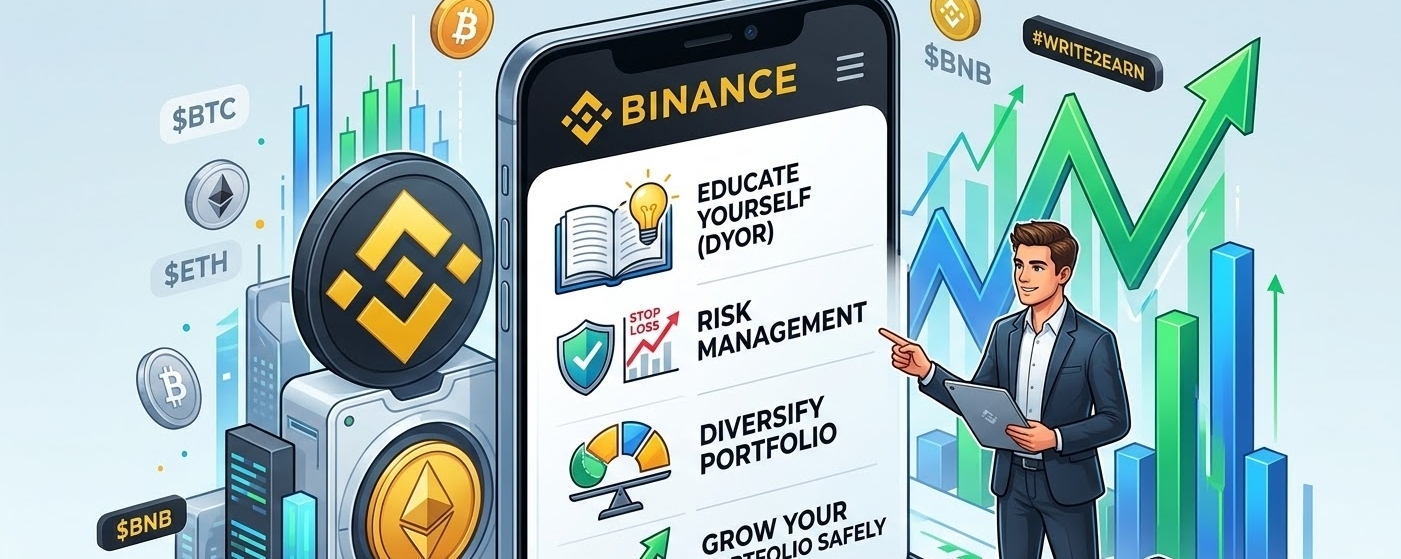
How to Start Your Smart Trading Journy on BinanceThe cryptocurrency market is one of the most dynamic and rapidly growing financial spaces today, but navigating it successfully requires the right strategy to manage risk and maximize returns. Binance is not just an exchange for buying and selling digital assets—it is a comprehensive ecosystem designed to empower your financial journey.
Here are three essential steps to succeed:
1. Educate Yourself First (DYOR): Before investing in any asset, leverage Binance Academy to master technical and fundamental analysis, and understand a project's real-world utility and tokenomics.
2. Strict Risk Management: Never invest more than you can afford to lose. Always set a Stop-Loss order to protect your capital against sudden market volatility.
3. Diversify Your Portfolio: Do not put all your eggs in one basket. Spread your allocations between established high-cap assets (like Bitcoin and Ethereum) and promising emerging projects with strong fundamentals.
Conclusion: Long-term success in crypto is driven by discipline and continuous learning, not luck. Start small today and make full use of the tools Binance offers to grow your portfolio safely.
$BTC
{future}(BTCUSDT)
#Bianace #wirte2Earn #BinanceSquareTalks
How to Start Your Smart Trading Journy on Binance
The cryptocurrency market is one of the most dynamic and rapidly growing financial spaces today, but navigating it successfully requires the right strategy to manage risk and maximize returns. Binance is not just an exchange for buying and selling digital assets—it is a comprehensive ecosystem designed to empower your financial journey.
Here are three essential steps to succeed:
1. Educate Yourself First (DYOR): Before investing in any asset, leverage Binance Academy to master technical and fundamental analysis, and understand a project's real-world utility and tokenomics.
2. Strict Risk Management: Never invest more than you can afford to lose. Always set a Stop-Loss order to protect your capital against sudden market volatility.
3. Diversify Your Portfolio: Do not put all your eggs in one basket. Spread your allocations between established high-cap assets (like Bitcoin and Ethereum) and promising emerging projects with strong fundamentals.
Conclusion: Long-term success in crypto is driven by discipline and continuous learning, not luck. Start small today and make full use of the tools Binance offers to grow your portfolio safely.
$BTC
#Bianace #wirte2Earn #BinanceSquareTalks
Here are three essential steps to succeed:
1. Educate Yourself First (DYOR): Before investing in any asset, leverage Binance Academy to master technical and fundamental analysis, and understand a project's real-world utility and tokenomics.
2. Strict Risk Management: Never invest more than you can afford to lose. Always set a Stop-Loss order to protect your capital against sudden market volatility.
3. Diversify Your Portfolio: Do not put all your eggs in one basket. Spread your allocations between established high-cap assets (like Bitcoin and Ethereum) and promising emerging projects with strong fundamentals.
Conclusion: Long-term success in crypto is driven by discipline and continuous learning, not luck. Start small today and make full use of the tools Binance offers to grow your portfolio safely.
$BTC
#Bianace #wirte2Earn #BinanceSquareTalks
1
91

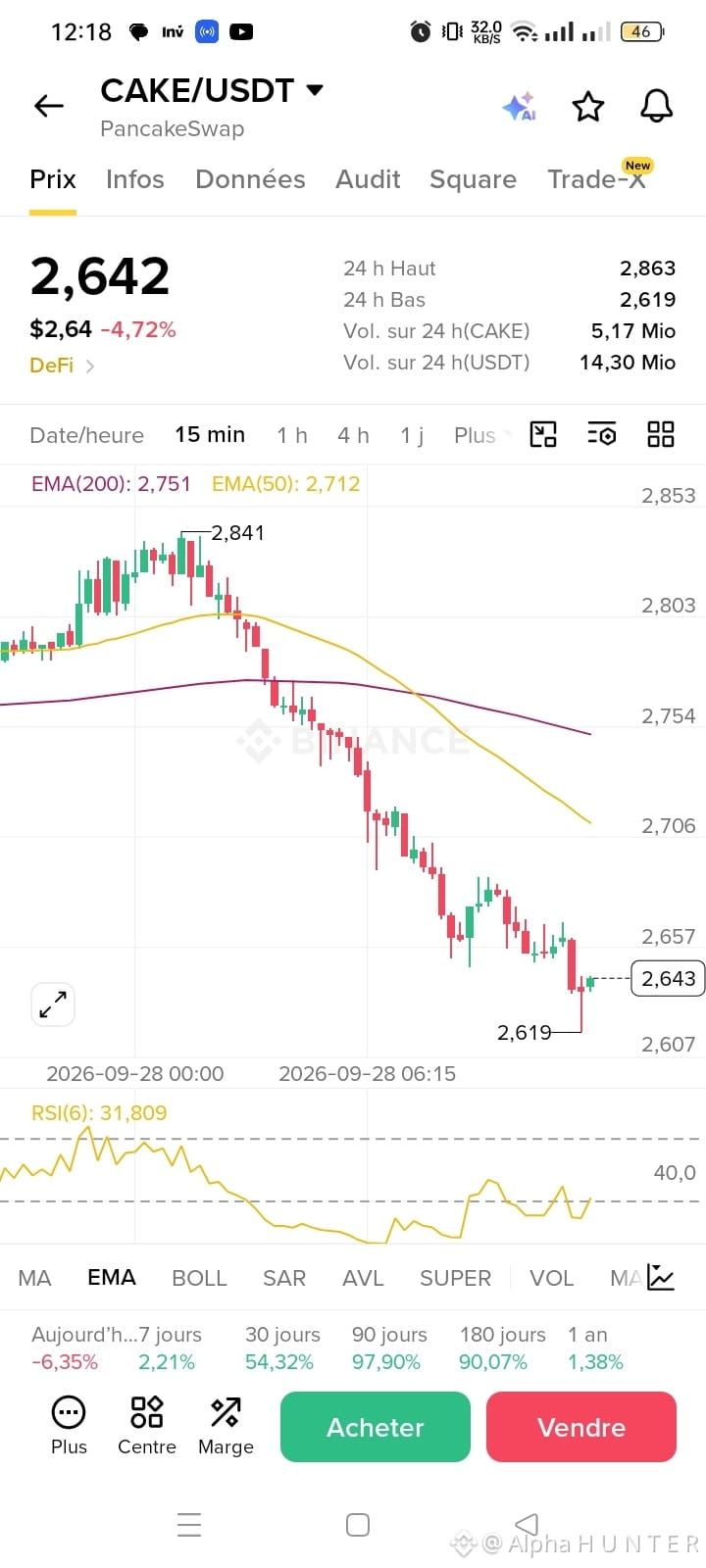
$CAKE — COURT 🔴
Entrée : 2.6250 – 2.6381
Stop : 2.8088
Objectifs 🎯
2.4563
2.2875
2.1188
{future}(CAKEUSDT)
$QNT $ONE
{future}(QNTUSDT)
#dyor #Cake #BinanceSquareTalks
$CAKE — COURT 🔴
Entrée : 2.6250 – 2.6381
Stop : 2.8088
Objectifs 🎯
2.4563
2.2875
2.1188
$QNT $ONE
#dyor #Cake #BinanceSquareTalks
Entrée : 2.6250 – 2.6381
Stop : 2.8088
Objectifs 🎯
2.4563
2.2875
2.1188
$QNT $ONE
#dyor #Cake #BinanceSquareTalks
147
Connectez-vous pour découvrir plus de contenu
Rejoignez la communauté mondiale des adeptes de cryptomonnaies sur Binance Square
⚡️ Suviez les dernières informations importantes sur les cryptomonnaies.
💬 Jugé digne de confiance par la plus grande plateforme d’échange de cryptomonnaies au monde.
👍 Découvrez les connaissances que partagent les créateurs vérifiés.
Adresse e-mail/Nº de téléphone
Sujets d’actualité
1
#UKFCAWinsCourtOrderToRecover851400Pounds
87 vues
38 mentions
2
#ChainlinkLaunchesCCIP2WithEnterpriseVerification
6,330 vues
361 mentions
3
#GoldFallsTo$4144
3,689 vues
92 mentions
4
#QNTFallsOver40%FromMorningHigh
31,228 vues
765 mentions
5
#USDTAdds845900HoldersInPast7Days
580 vues
78 mentions
6
#KospiFalls2.7%SamsungSKHynixDropOver5%
6,343 vues
342 mentions
7
#BitgetCEOConfirms$388MStolenInHack
2,573 vues
36 mentions
8
#BTCFallsBelow$83000
16,339 vues
134 mentions
9
#BitgetDetailsSecurityIncidentTimeline
17,904 vues
501 mentions
10
#BitcoinSpotETFs$2.39BWeeklyNetInflow
6,878 vues
32 mentions