
CRYPTO TWILIGHTS
1k Posts

CRYPTO TWILIGHTS
Report
Block User
cryptotwilights@
Frequent Trader
2 Years
0 Following
4.2K+ Followers
4.0K+ Liked
Posts
All
Quotes
Videos
Live
·
--
Bullish
#ParadigmDisclosesZECHolding
---$NEAR
{spot}(NEARUSDT)
Results Speak Louder Than Words 📈🔥
Another trade, another incredible outcome. The market rewarded patience, discipline, and a well-executed plan.
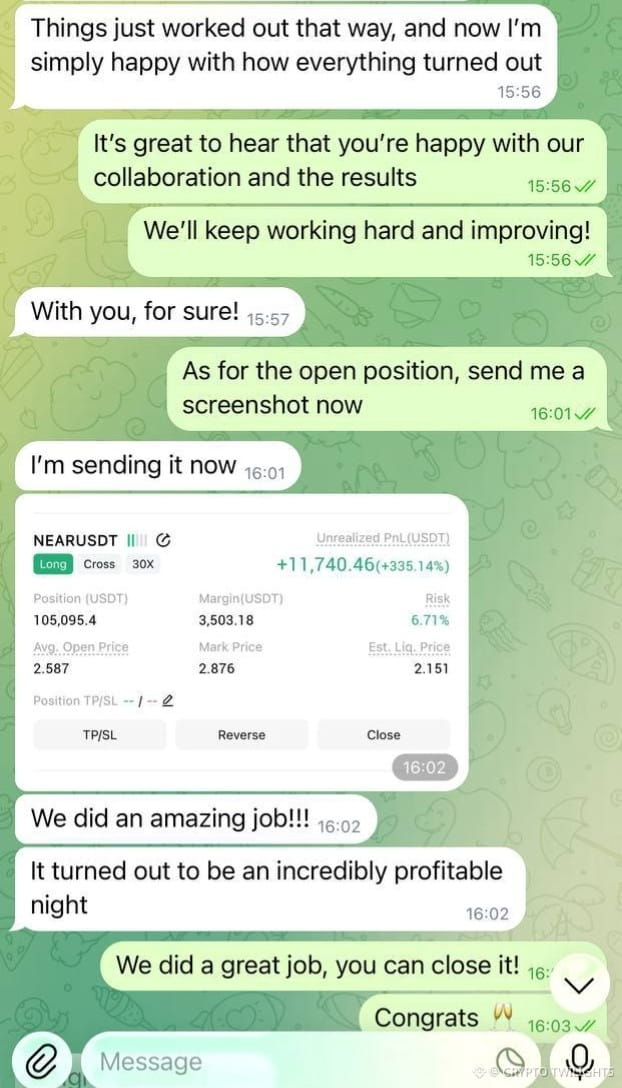
The screenshot says it all: ✅ NEARUSDT Long 💰 335%+ Unrealized Profit 📊 More than 11,700 USDT in profit before closing the position.
This wasn't about luck—it was about trusting the analysis, managing risk, and staying focused while everyone else was reacting emotionally.
Every successful trade reminds us of one important lesson: Consistency beats chasing the market. The biggest opportunities often come to those who wait for the right setup instead of forcing entries.
Congratulations to everyone who stayed patient and followed the strategy until the target was reached. Moments like these are the result of preparation, discipline, and confidence in the trading plan.
The journey doesn't stop here. Stay sharp, stay patient, and always let the market come to you—not the other way around.
One trade. One plan. One outstanding result. 🚀📊
#USWeeklyJoblessClaimsFallTo196K
#ElSalvadorBTCHoldingsRiseTo7777
#MemeLaunchpads82%OfArcDayOneVolume
#OstiumLoanDisputeHearingSetInNYFederalCourt
#ParadigmDisclosesZECHolding
---$NEAR
Results Speak Louder Than Words 📈🔥
Another trade, another incredible outcome. The market rewarded patience, discipline, and a well-executed plan.
The screenshot says it all: ✅ NEARUSDT Long 💰 335%+ Unrealized Profit 📊 More than 11,700 USDT in profit before closing the position.
This wasn't about luck—it was about trusting the analysis, managing risk, and staying focused while everyone else was reacting emotionally.
Every successful trade reminds us of one important lesson: Consistency beats chasing the market. The biggest opportunities often come to those who wait for the right setup instead of forcing entries.
Congratulations to everyone who stayed patient and followed the strategy until the target was reached. Moments like these are the result of preparation, discipline, and confidence in the trading plan.
The journey doesn't stop here. Stay sharp, stay patient, and always let the market come to you—not the other way around.
One trade. One plan. One outstanding result. 🚀📊
#USWeeklyJoblessClaimsFallTo196K
#ElSalvadorBTCHoldingsRiseTo7777
#MemeLaunchpads82%OfArcDayOneVolume
#OstiumLoanDisputeHearingSetInNYFederalCourt
---$NEAR
Results Speak Louder Than Words 📈🔥
Another trade, another incredible outcome. The market rewarded patience, discipline, and a well-executed plan.
The screenshot says it all: ✅ NEARUSDT Long 💰 335%+ Unrealized Profit 📊 More than 11,700 USDT in profit before closing the position.
This wasn't about luck—it was about trusting the analysis, managing risk, and staying focused while everyone else was reacting emotionally.
Every successful trade reminds us of one important lesson: Consistency beats chasing the market. The biggest opportunities often come to those who wait for the right setup instead of forcing entries.
Congratulations to everyone who stayed patient and followed the strategy until the target was reached. Moments like these are the result of preparation, discipline, and confidence in the trading plan.
The journey doesn't stop here. Stay sharp, stay patient, and always let the market come to you—not the other way around.
One trade. One plan. One outstanding result. 🚀📊
#USWeeklyJoblessClaimsFallTo196K
#ElSalvadorBTCHoldingsRiseTo7777
#MemeLaunchpads82%OfArcDayOneVolume
#OstiumLoanDisputeHearingSetInNYFederalCourt
154
·
--
Bullish
🚀 ZECUSDT Long Trade Update
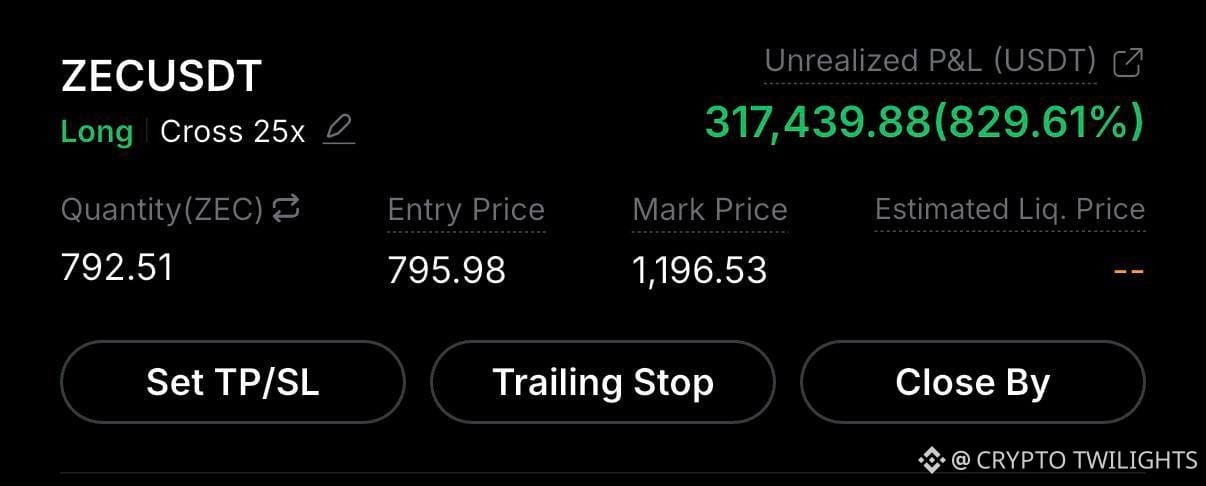
Patience always rewards those who trust their analysis. This ZECUSDT long position is a perfect example of why chasing every candle is never the right approach. The setup was based on a planned entry, proper risk management, and confidence in the market structure—not emotions.
The trade has delivered an outstanding move, showing how powerful a well-timed entry can be when combined with discipline. Many traders panic during small pullbacks, while experienced traders understand that the biggest profits usually come from holding strong positions instead of reacting to every market fluctuation.
Remember, successful trading isn't about taking dozens of random entries every day. It's about waiting for high-probability setups, executing the plan without hesitation, and letting the market do the work. Consistency comes from discipline, not luck.
Whether you're a beginner or an experienced trader, always focus on:
✅ Wait for confirmation before entering.
✅ Manage your risk on every trade.
✅ Never let emotions control your decisions.
✅ Protect your capital and secure profits wisely.
The market will always provide new opportunities, but only patient traders are able to capitalize on them consistently. Stay focused, keep learning, and trust your strategy instead of following the crowd.
Trade smart. Stay disciplined. Let the results speak louder than the noise. 📈🔥
$ZEC
{future}(ZECUSDT)
#USIranTradeTankerStrikesEscalate
#CanadaToImpose15%To50%TariffsOnUSGoods
#ZcashRises45%WeeklyToHighestSince2016
🚀 ZECUSDT Long Trade Update
Patience always rewards those who trust their analysis. This ZECUSDT long position is a perfect example of why chasing every candle is never the right approach. The setup was based on a planned entry, proper risk management, and confidence in the market structure—not emotions.
The trade has delivered an outstanding move, showing how powerful a well-timed entry can be when combined with discipline. Many traders panic during small pullbacks, while experienced traders understand that the biggest profits usually come from holding strong positions instead of reacting to every market fluctuation.
Remember, successful trading isn't about taking dozens of random entries every day. It's about waiting for high-probability setups, executing the plan without hesitation, and letting the market do the work. Consistency comes from discipline, not luck.
Whether you're a beginner or an experienced trader, always focus on:
✅ Wait for confirmation before entering.
✅ Manage your risk on every trade.
✅ Never let emotions control your decisions.
✅ Protect your capital and secure profits wisely.
The market will always provide new opportunities, but only patient traders are able to capitalize on them consistently. Stay focused, keep learning, and trust your strategy instead of following the crowd.
Trade smart. Stay disciplined. Let the results speak louder than the noise. 📈🔥
$ZEC
#USIranTradeTankerStrikesEscalate
#CanadaToImpose15%To50%TariffsOnUSGoods
#ZcashRises45%WeeklyToHighestSince2016
Patience always rewards those who trust their analysis. This ZECUSDT long position is a perfect example of why chasing every candle is never the right approach. The setup was based on a planned entry, proper risk management, and confidence in the market structure—not emotions.
The trade has delivered an outstanding move, showing how powerful a well-timed entry can be when combined with discipline. Many traders panic during small pullbacks, while experienced traders understand that the biggest profits usually come from holding strong positions instead of reacting to every market fluctuation.
Remember, successful trading isn't about taking dozens of random entries every day. It's about waiting for high-probability setups, executing the plan without hesitation, and letting the market do the work. Consistency comes from discipline, not luck.
Whether you're a beginner or an experienced trader, always focus on:
✅ Wait for confirmation before entering.
✅ Manage your risk on every trade.
✅ Never let emotions control your decisions.
✅ Protect your capital and secure profits wisely.
The market will always provide new opportunities, but only patient traders are able to capitalize on them consistently. Stay focused, keep learning, and trust your strategy instead of following the crowd.
Trade smart. Stay disciplined. Let the results speak louder than the noise. 📈🔥
$ZEC
#USIranTradeTankerStrikesEscalate
#CanadaToImpose15%To50%TariffsOnUSGoods
#ZcashRises45%WeeklyToHighestSince2016
254
·
--
Bullish
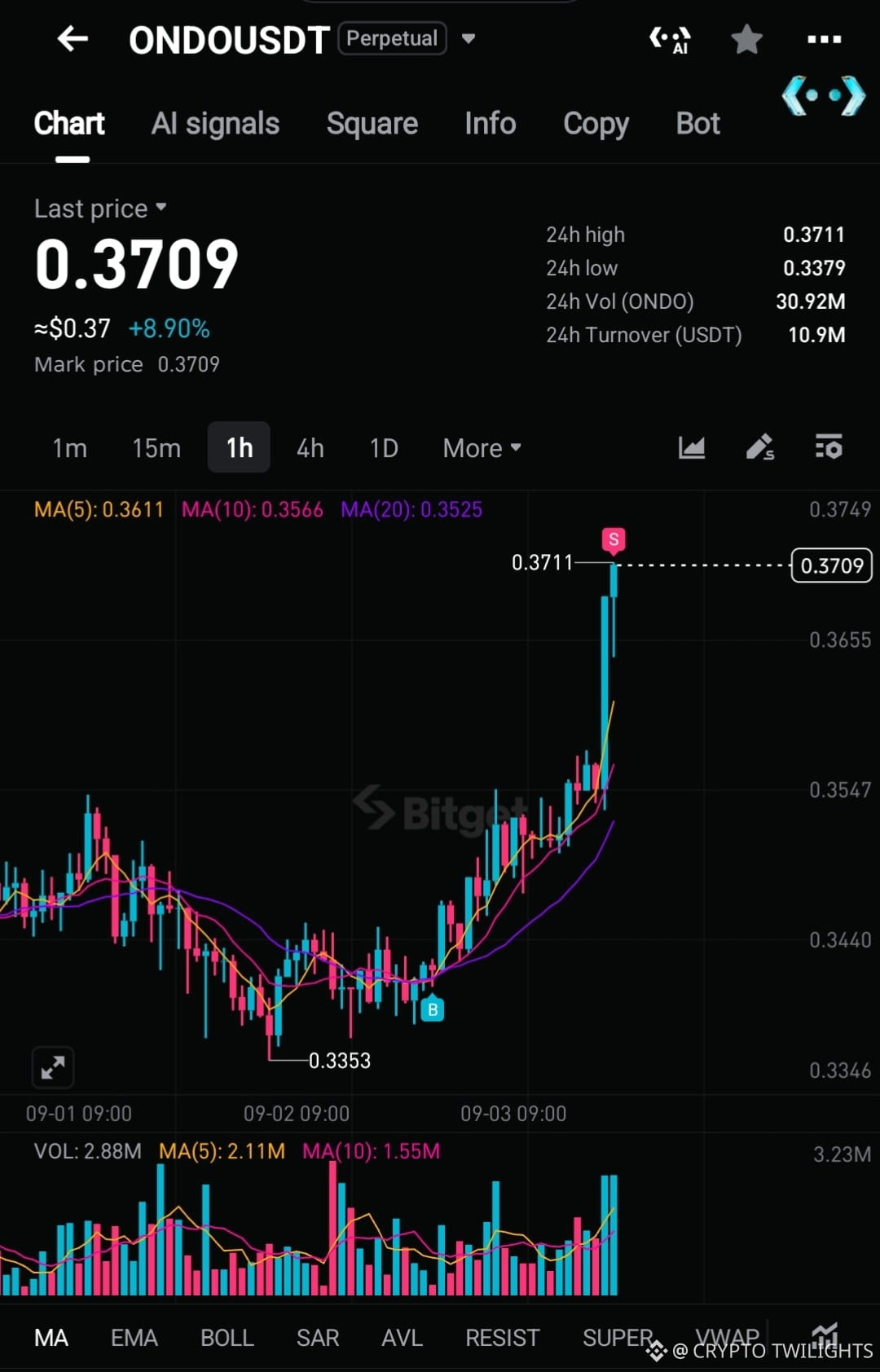
🚀 ONDO/USDT Breakout Played Out Exactly as Expected! 🎯
Patience always pays when your analysis is based on structure instead of emotions.
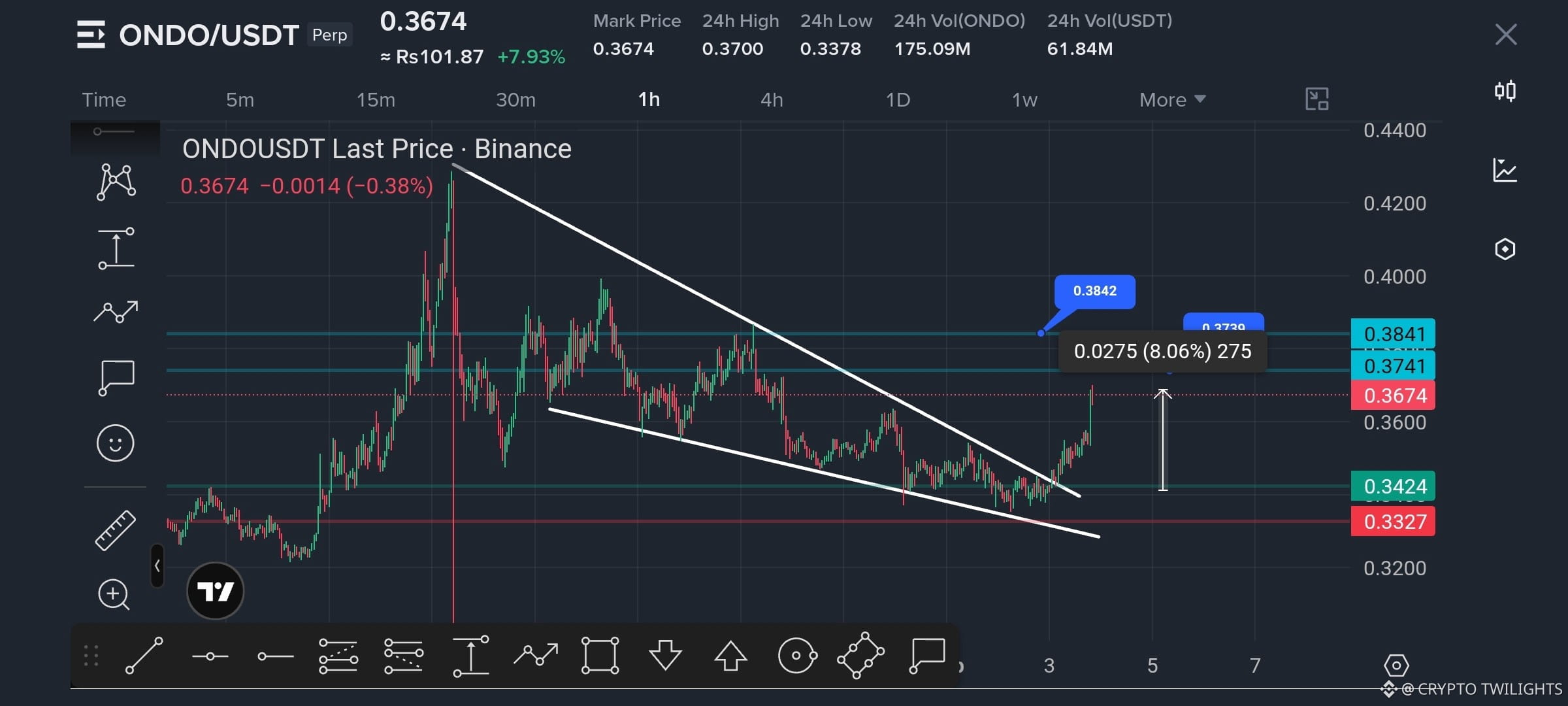
ONDO respected the descending trendline for days, and the breakout finally arrived exactly where it was expected. After breaking out of the falling wedge, price pushed strongly upward and delivered an impressive move of around 8% in a short time.
📈 What happened? ✅ Trendline breakout confirmed
✅ Buyers stepped in with strong momentum
✅ Resistance was tested successfully
✅ Around 8% move captured from the breakout zone
This is a reminder that successful trading isn't about chasing green candles—it's about waiting for high-probability setups and executing with discipline.
Many traders panic during consolidation, while experienced traders wait patiently for confirmation. Once the breakout was confirmed, the market rewarded those who trusted the setup instead of following emotions.
Key lessons from this trade: 🔹 Wait for confirmation, don't predict blindly.
🔹 Respect market structure.
🔹 Risk management is more important than excitement.
🔹 Consistency beats overtrading every single time.
There will always be another opportunity in the market. The goal is not to catch every move—it's to catch the right move.
Trade smart. Stay patient. Stay disciplined. 💯📊🔥
i don't know why my chart was removed and now I draw again not same but pump was said
$ONDO
{spot}(ONDOUSDT)
#USWeeklyInitialJoblessClaimsRiseTo206000
🚀 ONDO/USDT Breakout Played Out Exactly as Expected! 🎯
Patience always pays when your analysis is based on structure instead of emotions.
ONDO respected the descending trendline for days, and the breakout finally arrived exactly where it was expected. After breaking out of the falling wedge, price pushed strongly upward and delivered an impressive move of around 8% in a short time.
📈 What happened? ✅ Trendline breakout confirmed
✅ Buyers stepped in with strong momentum
✅ Resistance was tested successfully
✅ Around 8% move captured from the breakout zone
This is a reminder that successful trading isn't about chasing green candles—it's about waiting for high-probability setups and executing with discipline.
Many traders panic during consolidation, while experienced traders wait patiently for confirmation. Once the breakout was confirmed, the market rewarded those who trusted the setup instead of following emotions.
Key lessons from this trade: 🔹 Wait for confirmation, don't predict blindly.
🔹 Respect market structure.
🔹 Risk management is more important than excitement.
🔹 Consistency beats overtrading every single time.
There will always be another opportunity in the market. The goal is not to catch every move—it's to catch the right move.
Trade smart. Stay patient. Stay disciplined. 💯📊🔥
i don't know why my chart was removed and now I draw again not same but pump was said
$ONDO
#USWeeklyInitialJoblessClaimsRiseTo206000
Patience always pays when your analysis is based on structure instead of emotions.
ONDO respected the descending trendline for days, and the breakout finally arrived exactly where it was expected. After breaking out of the falling wedge, price pushed strongly upward and delivered an impressive move of around 8% in a short time.
📈 What happened? ✅ Trendline breakout confirmed
✅ Buyers stepped in with strong momentum
✅ Resistance was tested successfully
✅ Around 8% move captured from the breakout zone
This is a reminder that successful trading isn't about chasing green candles—it's about waiting for high-probability setups and executing with discipline.
Many traders panic during consolidation, while experienced traders wait patiently for confirmation. Once the breakout was confirmed, the market rewarded those who trusted the setup instead of following emotions.
Key lessons from this trade: 🔹 Wait for confirmation, don't predict blindly.
🔹 Respect market structure.
🔹 Risk management is more important than excitement.
🔹 Consistency beats overtrading every single time.
There will always be another opportunity in the market. The goal is not to catch every move—it's to catch the right move.
Trade smart. Stay patient. Stay disciplined. 💯📊🔥
i don't know why my chart was removed and now I draw again not same but pump was said
$ONDO
#USWeeklyInitialJoblessClaimsRiseTo206000
CRYPTO TWILIGHTS
·
--
ONDO Is Still Respecting the🔥🔥 Bigger Picture – Patience Pays in Trading 📊👇👇👇🔥🔥👇👇
#SolanaFallsOver3%
The market rarely rewards traders who chase candles. It rewards those who wait for confirmation, respect structure, and execute with discipline. Looking at the current ONDO/USDT chart, there are several technical factors that deserve attention before making any emotional decision.
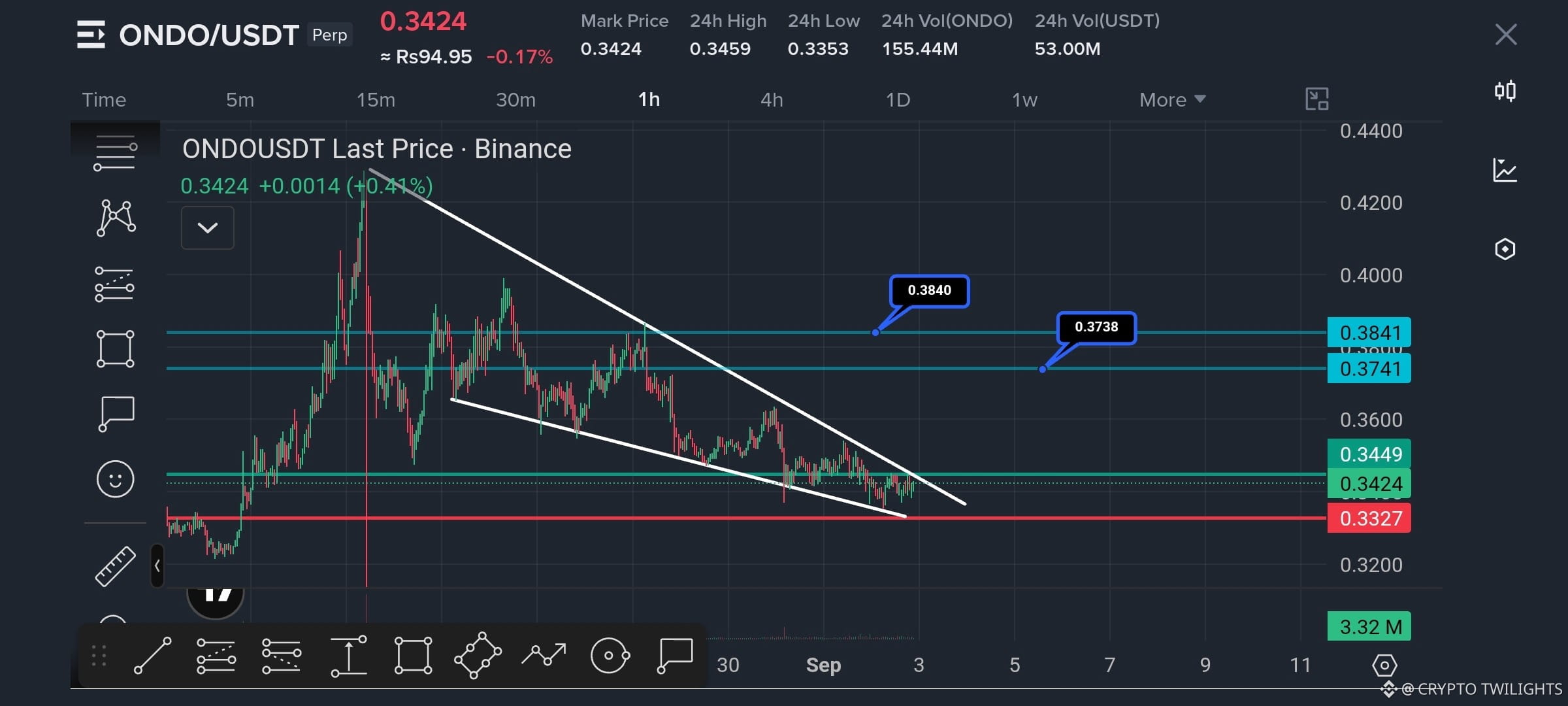
At first glance, many traders see a downtrend and immediately assume the market is weak. However, experienced traders understand that every trend eventually reaches an important decision point. Right now, ONDO is trading inside a major descending structure where price is testing an area that could decide the next significant move.
The descending trendline has acted as resistance for quite some time. Every attempt by buyers to push higher has been rejected, keeping sellers in control. But the interesting part is that the distance between resistance and support is becoming smaller. This compression usually means volatility is building.
Price compression is something professional traders watch very closely.
A breakout from a compressed structure often produces a strong move because buyers and sellers have been fighting for control over several sessions. Once one side wins, momentum usually follows.
The support around 0.3327 remains the most important defensive level. As long as buyers protect this zone, the market still has a chance to recover. Losing this support would increase bearish pressure and could open the door for lower prices.
On the upside, the first resistance sits around 0.3741, followed by 0.3841. These are not random numbers—they represent previous reaction zones where price has already shown strong selling interest.
Instead of predicting the future, successful traders prepare for every possible scenario.
If buyers manage to break above the descending trendline with convincing volume, market sentiment could shift quickly. A breakout without volume, however, often turns into a fake move that traps impatient traders before reversing.
This is why confirmation is everything.
Many beginners believe entering first means earning the most profit.
In reality, entering after confirmation usually provides a much higher probability setup.
Missing the first few percentage points is completely acceptable if it means avoiding unnecessary losses.
One of the biggest mistakes traders make is confusing hope with analysis.
Hope says: "Maybe it will pump."
Analysis says: "I'll wait until the market proves my idea is correct."
Only one of these approaches survives over the long term.
Risk management is another factor that cannot be ignored.
Even the best technical setup can fail because markets are driven by news, liquidity, and unexpected events. No chart pattern guarantees success.
Professional traders never risk everything on a single trade because they understand probabilities, not certainties.
Trading is not about being right every time.
It is about making more money when you are right than you lose when you are wrong.
That single principle separates consistently profitable traders from emotional gamblers.
Notice how the market has been respecting structure for several sessions. Every reaction has occurred near important technical levels rather than randomly.
Markets leave clues.
Our job is simply to read them without allowing emotions to interfere.
Patience remains one of the most underrated trading skills.
Everyone wants action.
Very few people want to wait.
Yet waiting for confirmation often becomes the difference between a high-quality trade and an unnecessary loss.
Remember that successful traders don't chase green candles after they have already exploded.
They identify key levels in advance, create a plan, and then let the market come to them.
A trading plan should always answer three simple questions:
✅ Where is the entry?
✅ Where is the invalidation or stop-loss?
✅ Where will profits be taken?
If any one of these questions cannot be answered confidently, then the trade probably isn't ready yet.
The market will always provide another opportunity.
Capital preservation comes before profit generation.
Protecting your account during uncertain conditions gives you the ability to capitalize when high-probability opportunities appear.
This current ONDO structure is an excellent reminder that technical analysis is about preparation—not prediction.
Whether price breaks upward toward higher resistance or loses support and continues lower, disciplined traders will react to confirmation instead of guessing.
Always let price action lead your decisions.
Never let emotions decide your trades.
Consistency is built through discipline, patience, and proper execution—not through excitement or fear.
The market doesn't reward the fastest trader.
It rewards the most disciplined one.
Keep your eyes on the key levels, respect your risk, stay patient, and allow the chart to tell its story before making your move.
Trade smart. Stay disciplined. Let the market confirm first. 📈🔥
#DellSurges8%OnEarningsBeat
#USAugADPJobsSmallestGainSinceJan
#SaudiSaysIranAttackedShipInHormuz
#OpenAISaysAstraFindsFlawsAutonomously
$ONDO
The market rarely rewards traders who chase candles. It rewards those who wait for confirmation, respect structure, and execute with discipline. Looking at the current ONDO/USDT chart, there are several technical factors that deserve attention before making any emotional decision.
At first glance, many traders see a downtrend and immediately assume the market is weak. However, experienced traders understand that every trend eventually reaches an important decision point. Right now, ONDO is trading inside a major descending structure where price is testing an area that could decide the next significant move.
The descending trendline has acted as resistance for quite some time. Every attempt by buyers to push higher has been rejected, keeping sellers in control. But the interesting part is that the distance between resistance and support is becoming smaller. This compression usually means volatility is building.
Price compression is something professional traders watch very closely.
A breakout from a compressed structure often produces a strong move because buyers and sellers have been fighting for control over several sessions. Once one side wins, momentum usually follows.
The support around 0.3327 remains the most important defensive level. As long as buyers protect this zone, the market still has a chance to recover. Losing this support would increase bearish pressure and could open the door for lower prices.
On the upside, the first resistance sits around 0.3741, followed by 0.3841. These are not random numbers—they represent previous reaction zones where price has already shown strong selling interest.
Instead of predicting the future, successful traders prepare for every possible scenario.
If buyers manage to break above the descending trendline with convincing volume, market sentiment could shift quickly. A breakout without volume, however, often turns into a fake move that traps impatient traders before reversing.
This is why confirmation is everything.
Many beginners believe entering first means earning the most profit.
In reality, entering after confirmation usually provides a much higher probability setup.
Missing the first few percentage points is completely acceptable if it means avoiding unnecessary losses.
One of the biggest mistakes traders make is confusing hope with analysis.
Hope says: "Maybe it will pump."
Analysis says: "I'll wait until the market proves my idea is correct."
Only one of these approaches survives over the long term.
Risk management is another factor that cannot be ignored.
Even the best technical setup can fail because markets are driven by news, liquidity, and unexpected events. No chart pattern guarantees success.
Professional traders never risk everything on a single trade because they understand probabilities, not certainties.
Trading is not about being right every time.
It is about making more money when you are right than you lose when you are wrong.
That single principle separates consistently profitable traders from emotional gamblers.
Notice how the market has been respecting structure for several sessions. Every reaction has occurred near important technical levels rather than randomly.
Markets leave clues.
Our job is simply to read them without allowing emotions to interfere.
Patience remains one of the most underrated trading skills.
Everyone wants action.
Very few people want to wait.
Yet waiting for confirmation often becomes the difference between a high-quality trade and an unnecessary loss.
Remember that successful traders don't chase green candles after they have already exploded.
They identify key levels in advance, create a plan, and then let the market come to them.
A trading plan should always answer three simple questions:
✅ Where is the entry?
✅ Where is the invalidation or stop-loss?
✅ Where will profits be taken?
If any one of these questions cannot be answered confidently, then the trade probably isn't ready yet.
The market will always provide another opportunity.
Capital preservation comes before profit generation.
Protecting your account during uncertain conditions gives you the ability to capitalize when high-probability opportunities appear.
This current ONDO structure is an excellent reminder that technical analysis is about preparation—not prediction.
Whether price breaks upward toward higher resistance or loses support and continues lower, disciplined traders will react to confirmation instead of guessing.
Always let price action lead your decisions.
Never let emotions decide your trades.
Consistency is built through discipline, patience, and proper execution—not through excitement or fear.
The market doesn't reward the fastest trader.
It rewards the most disciplined one.
Keep your eyes on the key levels, respect your risk, stay patient, and allow the chart to tell its story before making your move.
Trade smart. Stay disciplined. Let the market confirm first. 📈🔥
#DellSurges8%OnEarningsBeat
#USAugADPJobsSmallestGainSinceJan
#SaudiSaysIranAttackedShipInHormuz
#OpenAISaysAstraFindsFlawsAutonomously
$ONDO
220
Article
ASTER/USDT – A Setup Worth🔥 Watching 👀📈
🔥🔥👇👇👇👇ASTER/USDT – A Setup Worth Watching 👀📈
#SolanaFallsOver3%
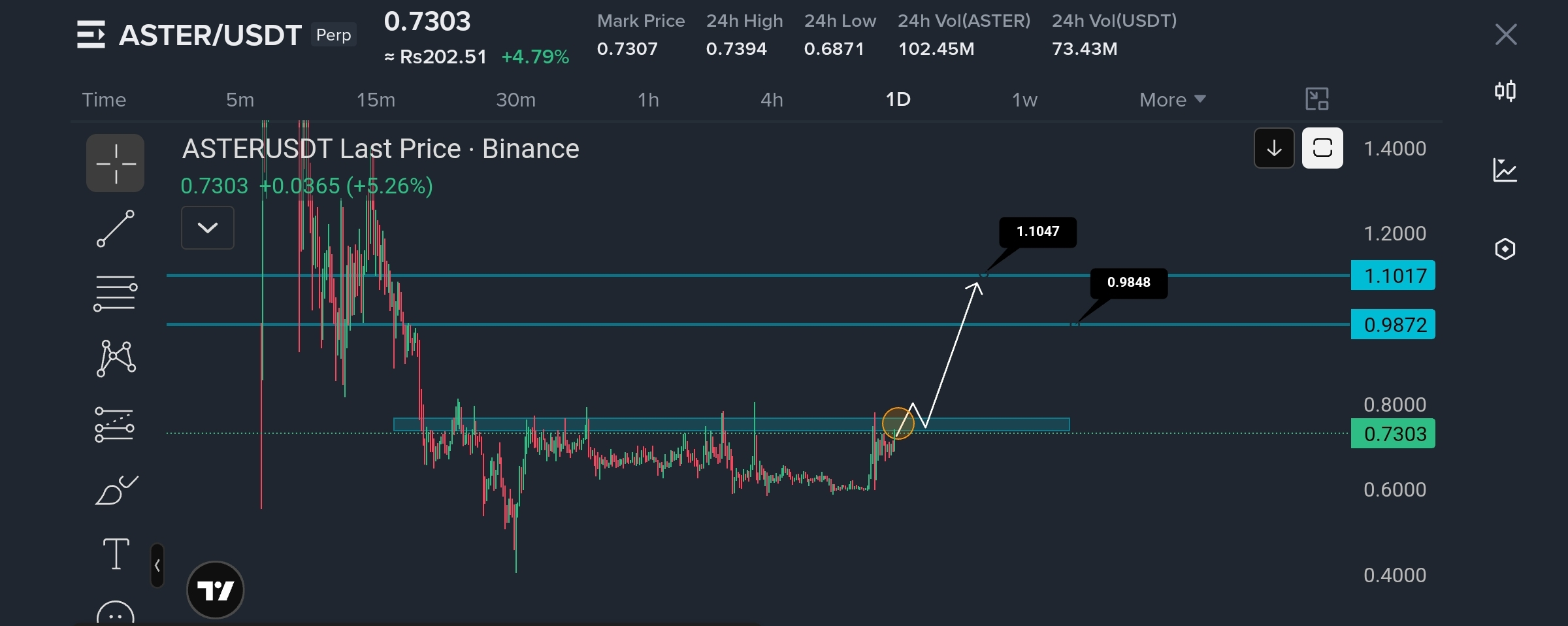
The market always rewards patience more than excitement, and ASTER/USDT is currently forming one of the cleaner structures on the chart. Instead of chasing the recent pump, the smarter approach is to let the market come to us.
The highlighted zone is acting as a key resistance area. Price has already shown strong buying momentum, but the real opportunity may come after a successful retest. If this level flips from resistance into support, it could provide a much stronger and lower-risk entry than buying into the breakout.
Keep this coin on your watchlist. Don't rush the entry—wait for the retest before buying. A confirmed retest often shows that buyers are truly in control, reducing the chances of getting trapped by a fake breakout.
The chart also shows potential upside targets around 0.9848 and 1.1017 if bullish momentum continues. These levels could become the next major areas where price may react. As always, nothing is guaranteed, but the structure is worth monitoring closely.
Another important factor is that ASTER is expected to have an OTC event coming up, which could bring additional market attention and liquidity. Events like this often increase volatility, so it's even more important to stay disciplined and avoid emotional entries.
For those who prefer lower-risk investing instead of leveraged trading, you can also consider accumulating ASTER on the spot market if it aligns with your own strategy and risk management. Spot positions allow you to hold through normal market fluctuations without the liquidation risk associated with leverage.
Remember, successful trading isn't about buying every green candle. It's about identifying quality setups, waiting for confirmation, and managing risk properly.
Key Takeaways:
✅ Keep ASTER/USDT on your watchlist.
✅ Wait for the retest before entering.
✅ OTC is expected soon, so monitor price action closely.
✅ Spot accumulation is also an option for those planning to hold.
✅ Stay patient and let the market confirm the setup.
The best opportunities usually come to traders who wait—not those who chase. Patience, discipline, and confirmation will always outperform FOMO. 🚀📊
#DellSurges8%OnEarningsBeat
#USAugADPJobsSmallestGainSinceJan
#SaudiSaysIranAttackedShipInHormuz
#OpenAISaysAstraFindsFlawsAutonomously
$ASTER
{spot}(ASTERUSDT)
ASTER/USDT – A Setup Worth🔥 Watching 👀📈 🔥🔥👇👇👇👇
ASTER/USDT – A Setup Worth Watching 👀📈
#SolanaFallsOver3%
The market always rewards patience more than excitement, and ASTER/USDT is currently forming one of the cleaner structures on the chart. Instead of chasing the recent pump, the smarter approach is to let the market come to us.
The highlighted zone is acting as a key resistance area. Price has already shown strong buying momentum, but the real opportunity may come after a successful retest. If this level flips from resistance into support, it could provide a much stronger and lower-risk entry than buying into the breakout.
Keep this coin on your watchlist. Don't rush the entry—wait for the retest before buying. A confirmed retest often shows that buyers are truly in control, reducing the chances of getting trapped by a fake breakout.
The chart also shows potential upside targets around 0.9848 and 1.1017 if bullish momentum continues. These levels could become the next major areas where price may react. As always, nothing is guaranteed, but the structure is worth monitoring closely.
Another important factor is that ASTER is expected to have an OTC event coming up, which could bring additional market attention and liquidity. Events like this often increase volatility, so it's even more important to stay disciplined and avoid emotional entries.
For those who prefer lower-risk investing instead of leveraged trading, you can also consider accumulating ASTER on the spot market if it aligns with your own strategy and risk management. Spot positions allow you to hold through normal market fluctuations without the liquidation risk associated with leverage.
Remember, successful trading isn't about buying every green candle. It's about identifying quality setups, waiting for confirmation, and managing risk properly.
Key Takeaways:
✅ Keep ASTER/USDT on your watchlist.
✅ Wait for the retest before entering.
✅ OTC is expected soon, so monitor price action closely.
✅ Spot accumulation is also an option for those planning to hold.
✅ Stay patient and let the market confirm the setup.
The best opportunities usually come to traders who wait—not those who chase. Patience, discipline, and confirmation will always outperform FOMO. 🚀📊
#DellSurges8%OnEarningsBeat
#USAugADPJobsSmallestGainSinceJan
#SaudiSaysIranAttackedShipInHormuz
#OpenAISaysAstraFindsFlawsAutonomously
$ASTER
#SolanaFallsOver3%
The market always rewards patience more than excitement, and ASTER/USDT is currently forming one of the cleaner structures on the chart. Instead of chasing the recent pump, the smarter approach is to let the market come to us.
The highlighted zone is acting as a key resistance area. Price has already shown strong buying momentum, but the real opportunity may come after a successful retest. If this level flips from resistance into support, it could provide a much stronger and lower-risk entry than buying into the breakout.
Keep this coin on your watchlist. Don't rush the entry—wait for the retest before buying. A confirmed retest often shows that buyers are truly in control, reducing the chances of getting trapped by a fake breakout.
The chart also shows potential upside targets around 0.9848 and 1.1017 if bullish momentum continues. These levels could become the next major areas where price may react. As always, nothing is guaranteed, but the structure is worth monitoring closely.
Another important factor is that ASTER is expected to have an OTC event coming up, which could bring additional market attention and liquidity. Events like this often increase volatility, so it's even more important to stay disciplined and avoid emotional entries.
For those who prefer lower-risk investing instead of leveraged trading, you can also consider accumulating ASTER on the spot market if it aligns with your own strategy and risk management. Spot positions allow you to hold through normal market fluctuations without the liquidation risk associated with leverage.
Remember, successful trading isn't about buying every green candle. It's about identifying quality setups, waiting for confirmation, and managing risk properly.
Key Takeaways:
✅ Keep ASTER/USDT on your watchlist.
✅ Wait for the retest before entering.
✅ OTC is expected soon, so monitor price action closely.
✅ Spot accumulation is also an option for those planning to hold.
✅ Stay patient and let the market confirm the setup.
The best opportunities usually come to traders who wait—not those who chase. Patience, discipline, and confirmation will always outperform FOMO. 🚀📊
#DellSurges8%OnEarningsBeat
#USAugADPJobsSmallestGainSinceJan
#SaudiSaysIranAttackedShipInHormuz
#OpenAISaysAstraFindsFlawsAutonomously
$ASTER
174
Article
ONDO Is Still Respecting the🔥🔥 Bigger Picture – Patience Pays in Trading 📊👇👇👇🔥🔥👇👇#SolanaFallsOver3%
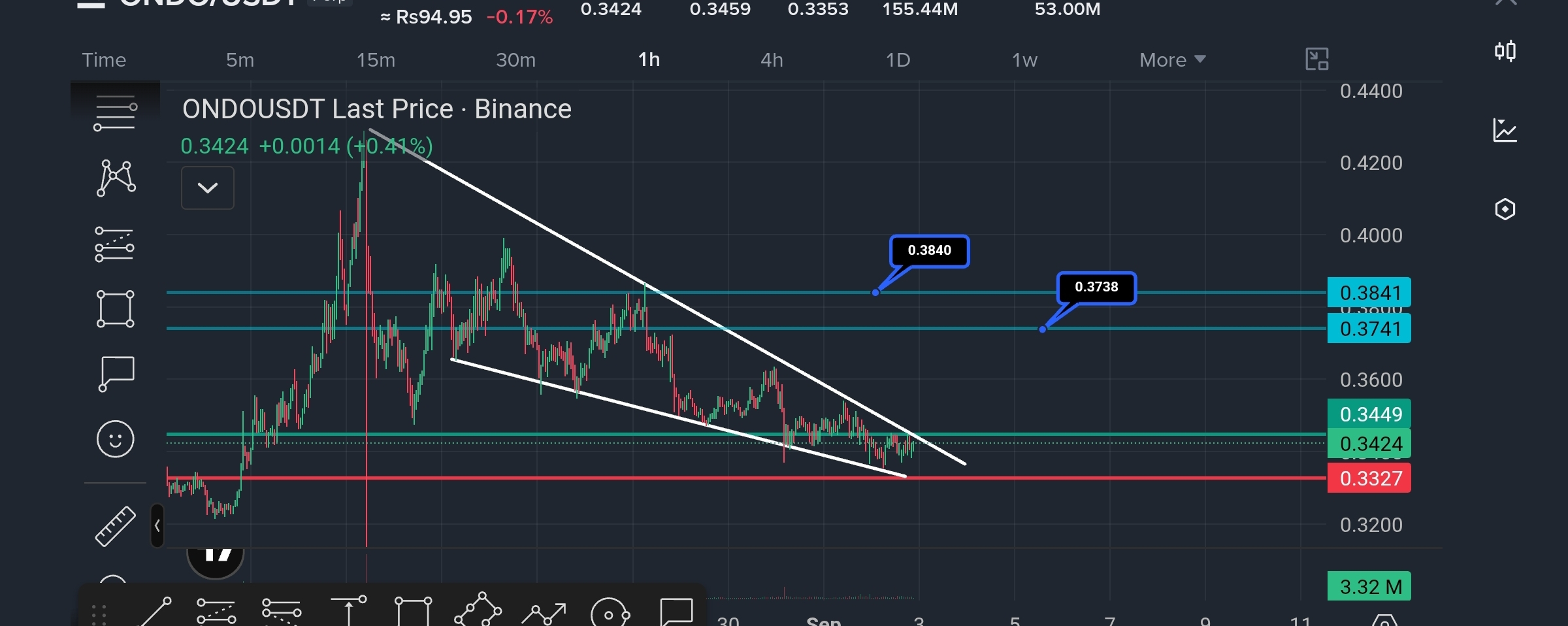
The market rarely rewards traders who chase candles. It rewards those who wait for confirmation, respect structure, and execute with discipline. Looking at the current ONDO/USDT chart, there are several technical factors that deserve attention before making any emotional decision.
At first glance, many traders see a downtrend and immediately assume the market is weak. However, experienced traders understand that every trend eventually reaches an important decision point. Right now, ONDO is trading inside a major descending structure where price is testing an area that could decide the next significant move.
The descending trendline has acted as resistance for quite some time. Every attempt by buyers to push higher has been rejected, keeping sellers in control. But the interesting part is that the distance between resistance and support is becoming smaller. This compression usually means volatility is building.
Price compression is something professional traders watch very closely.
A breakout from a compressed structure often produces a strong move because buyers and sellers have been fighting for control over several sessions. Once one side wins, momentum usually follows.
The support around 0.3327 remains the most important defensive level. As long as buyers protect this zone, the market still has a chance to recover. Losing this support would increase bearish pressure and could open the door for lower prices.
On the upside, the first resistance sits around 0.3741, followed by 0.3841. These are not random numbers—they represent previous reaction zones where price has already shown strong selling interest.
Instead of predicting the future, successful traders prepare for every possible scenario.
If buyers manage to break above the descending trendline with convincing volume, market sentiment could shift quickly. A breakout without volume, however, often turns into a fake move that traps impatient traders before reversing.
This is why confirmation is everything.
Many beginners believe entering first means earning the most profit.
In reality, entering after confirmation usually provides a much higher probability setup.
Missing the first few percentage points is completely acceptable if it means avoiding unnecessary losses.
One of the biggest mistakes traders make is confusing hope with analysis.
Hope says: "Maybe it will pump."
Analysis says: "I'll wait until the market proves my idea is correct."
Only one of these approaches survives over the long term.
Risk management is another factor that cannot be ignored.
Even the best technical setup can fail because markets are driven by news, liquidity, and unexpected events. No chart pattern guarantees success.
Professional traders never risk everything on a single trade because they understand probabilities, not certainties.
Trading is not about being right every time.
It is about making more money when you are right than you lose when you are wrong.
That single principle separates consistently profitable traders from emotional gamblers.
Notice how the market has been respecting structure for several sessions. Every reaction has occurred near important technical levels rather than randomly.
Markets leave clues.
Our job is simply to read them without allowing emotions to interfere.
Patience remains one of the most underrated trading skills.
Everyone wants action.
Very few people want to wait.
Yet waiting for confirmation often becomes the difference between a high-quality trade and an unnecessary loss.
Remember that successful traders don't chase green candles after they have already exploded.
They identify key levels in advance, create a plan, and then let the market come to them.
A trading plan should always answer three simple questions:
✅ Where is the entry?
✅ Where is the invalidation or stop-loss?
✅ Where will profits be taken?
If any one of these questions cannot be answered confidently, then the trade probably isn't ready yet.
The market will always provide another opportunity.
Capital preservation comes before profit generation.
Protecting your account during uncertain conditions gives you the ability to capitalize when high-probability opportunities appear.
This current ONDO structure is an excellent reminder that technical analysis is about preparation—not prediction.
Whether price breaks upward toward higher resistance or loses support and continues lower, disciplined traders will react to confirmation instead of guessing.
Always let price action lead your decisions.
Never let emotions decide your trades.
Consistency is built through discipline, patience, and proper execution—not through excitement or fear.
The market doesn't reward the fastest trader.
It rewards the most disciplined one.
Keep your eyes on the key levels, respect your risk, stay patient, and allow the chart to tell its story before making your move.
Trade smart. Stay disciplined. Let the market confirm first. 📈🔥
#DellSurges8%OnEarningsBeat
#USAugADPJobsSmallestGainSinceJan
#SaudiSaysIranAttackedShipInHormuz
#OpenAISaysAstraFindsFlawsAutonomously
$ONDO
{spot}(ONDOUSDT)
ONDO Is Still Respecting the🔥🔥 Bigger Picture – Patience Pays in Trading 📊👇👇👇🔥🔥👇👇
#SolanaFallsOver3%
The market rarely rewards traders who chase candles. It rewards those who wait for confirmation, respect structure, and execute with discipline. Looking at the current ONDO/USDT chart, there are several technical factors that deserve attention before making any emotional decision.
At first glance, many traders see a downtrend and immediately assume the market is weak. However, experienced traders understand that every trend eventually reaches an important decision point. Right now, ONDO is trading inside a major descending structure where price is testing an area that could decide the next significant move.
The descending trendline has acted as resistance for quite some time. Every attempt by buyers to push higher has been rejected, keeping sellers in control. But the interesting part is that the distance between resistance and support is becoming smaller. This compression usually means volatility is building.
Price compression is something professional traders watch very closely.
A breakout from a compressed structure often produces a strong move because buyers and sellers have been fighting for control over several sessions. Once one side wins, momentum usually follows.
The support around 0.3327 remains the most important defensive level. As long as buyers protect this zone, the market still has a chance to recover. Losing this support would increase bearish pressure and could open the door for lower prices.
On the upside, the first resistance sits around 0.3741, followed by 0.3841. These are not random numbers—they represent previous reaction zones where price has already shown strong selling interest.
Instead of predicting the future, successful traders prepare for every possible scenario.
If buyers manage to break above the descending trendline with convincing volume, market sentiment could shift quickly. A breakout without volume, however, often turns into a fake move that traps impatient traders before reversing.
This is why confirmation is everything.
Many beginners believe entering first means earning the most profit.
In reality, entering after confirmation usually provides a much higher probability setup.
Missing the first few percentage points is completely acceptable if it means avoiding unnecessary losses.
One of the biggest mistakes traders make is confusing hope with analysis.
Hope says: "Maybe it will pump."
Analysis says: "I'll wait until the market proves my idea is correct."
Only one of these approaches survives over the long term.
Risk management is another factor that cannot be ignored.
Even the best technical setup can fail because markets are driven by news, liquidity, and unexpected events. No chart pattern guarantees success.
Professional traders never risk everything on a single trade because they understand probabilities, not certainties.
Trading is not about being right every time.
It is about making more money when you are right than you lose when you are wrong.
That single principle separates consistently profitable traders from emotional gamblers.
Notice how the market has been respecting structure for several sessions. Every reaction has occurred near important technical levels rather than randomly.
Markets leave clues.
Our job is simply to read them without allowing emotions to interfere.
Patience remains one of the most underrated trading skills.
Everyone wants action.
Very few people want to wait.
Yet waiting for confirmation often becomes the difference between a high-quality trade and an unnecessary loss.
Remember that successful traders don't chase green candles after they have already exploded.
They identify key levels in advance, create a plan, and then let the market come to them.
A trading plan should always answer three simple questions:
✅ Where is the entry?
✅ Where is the invalidation or stop-loss?
✅ Where will profits be taken?
If any one of these questions cannot be answered confidently, then the trade probably isn't ready yet.
The market will always provide another opportunity.
Capital preservation comes before profit generation.
Protecting your account during uncertain conditions gives you the ability to capitalize when high-probability opportunities appear.
This current ONDO structure is an excellent reminder that technical analysis is about preparation—not prediction.
Whether price breaks upward toward higher resistance or loses support and continues lower, disciplined traders will react to confirmation instead of guessing.
Always let price action lead your decisions.
Never let emotions decide your trades.
Consistency is built through discipline, patience, and proper execution—not through excitement or fear.
The market doesn't reward the fastest trader.
It rewards the most disciplined one.
Keep your eyes on the key levels, respect your risk, stay patient, and allow the chart to tell its story before making your move.
Trade smart. Stay disciplined. Let the market confirm first. 📈🔥
#DellSurges8%OnEarningsBeat
#USAugADPJobsSmallestGainSinceJan
#SaudiSaysIranAttackedShipInHormuz
#OpenAISaysAstraFindsFlawsAutonomously
$ONDO
The market rarely rewards traders who chase candles. It rewards those who wait for confirmation, respect structure, and execute with discipline. Looking at the current ONDO/USDT chart, there are several technical factors that deserve attention before making any emotional decision.
At first glance, many traders see a downtrend and immediately assume the market is weak. However, experienced traders understand that every trend eventually reaches an important decision point. Right now, ONDO is trading inside a major descending structure where price is testing an area that could decide the next significant move.
The descending trendline has acted as resistance for quite some time. Every attempt by buyers to push higher has been rejected, keeping sellers in control. But the interesting part is that the distance between resistance and support is becoming smaller. This compression usually means volatility is building.
Price compression is something professional traders watch very closely.
A breakout from a compressed structure often produces a strong move because buyers and sellers have been fighting for control over several sessions. Once one side wins, momentum usually follows.
The support around 0.3327 remains the most important defensive level. As long as buyers protect this zone, the market still has a chance to recover. Losing this support would increase bearish pressure and could open the door for lower prices.
On the upside, the first resistance sits around 0.3741, followed by 0.3841. These are not random numbers—they represent previous reaction zones where price has already shown strong selling interest.
Instead of predicting the future, successful traders prepare for every possible scenario.
If buyers manage to break above the descending trendline with convincing volume, market sentiment could shift quickly. A breakout without volume, however, often turns into a fake move that traps impatient traders before reversing.
This is why confirmation is everything.
Many beginners believe entering first means earning the most profit.
In reality, entering after confirmation usually provides a much higher probability setup.
Missing the first few percentage points is completely acceptable if it means avoiding unnecessary losses.
One of the biggest mistakes traders make is confusing hope with analysis.
Hope says: "Maybe it will pump."
Analysis says: "I'll wait until the market proves my idea is correct."
Only one of these approaches survives over the long term.
Risk management is another factor that cannot be ignored.
Even the best technical setup can fail because markets are driven by news, liquidity, and unexpected events. No chart pattern guarantees success.
Professional traders never risk everything on a single trade because they understand probabilities, not certainties.
Trading is not about being right every time.
It is about making more money when you are right than you lose when you are wrong.
That single principle separates consistently profitable traders from emotional gamblers.
Notice how the market has been respecting structure for several sessions. Every reaction has occurred near important technical levels rather than randomly.
Markets leave clues.
Our job is simply to read them without allowing emotions to interfere.
Patience remains one of the most underrated trading skills.
Everyone wants action.
Very few people want to wait.
Yet waiting for confirmation often becomes the difference between a high-quality trade and an unnecessary loss.
Remember that successful traders don't chase green candles after they have already exploded.
They identify key levels in advance, create a plan, and then let the market come to them.
A trading plan should always answer three simple questions:
✅ Where is the entry?
✅ Where is the invalidation or stop-loss?
✅ Where will profits be taken?
If any one of these questions cannot be answered confidently, then the trade probably isn't ready yet.
The market will always provide another opportunity.
Capital preservation comes before profit generation.
Protecting your account during uncertain conditions gives you the ability to capitalize when high-probability opportunities appear.
This current ONDO structure is an excellent reminder that technical analysis is about preparation—not prediction.
Whether price breaks upward toward higher resistance or loses support and continues lower, disciplined traders will react to confirmation instead of guessing.
Always let price action lead your decisions.
Never let emotions decide your trades.
Consistency is built through discipline, patience, and proper execution—not through excitement or fear.
The market doesn't reward the fastest trader.
It rewards the most disciplined one.
Keep your eyes on the key levels, respect your risk, stay patient, and allow the chart to tell its story before making your move.
Trade smart. Stay disciplined. Let the market confirm first. 📈🔥
#DellSurges8%OnEarningsBeat
#USAugADPJobsSmallestGainSinceJan
#SaudiSaysIranAttackedShipInHormuz
#OpenAISaysAstraFindsFlawsAutonomously
$ONDO
1
168
·
--
Bearish
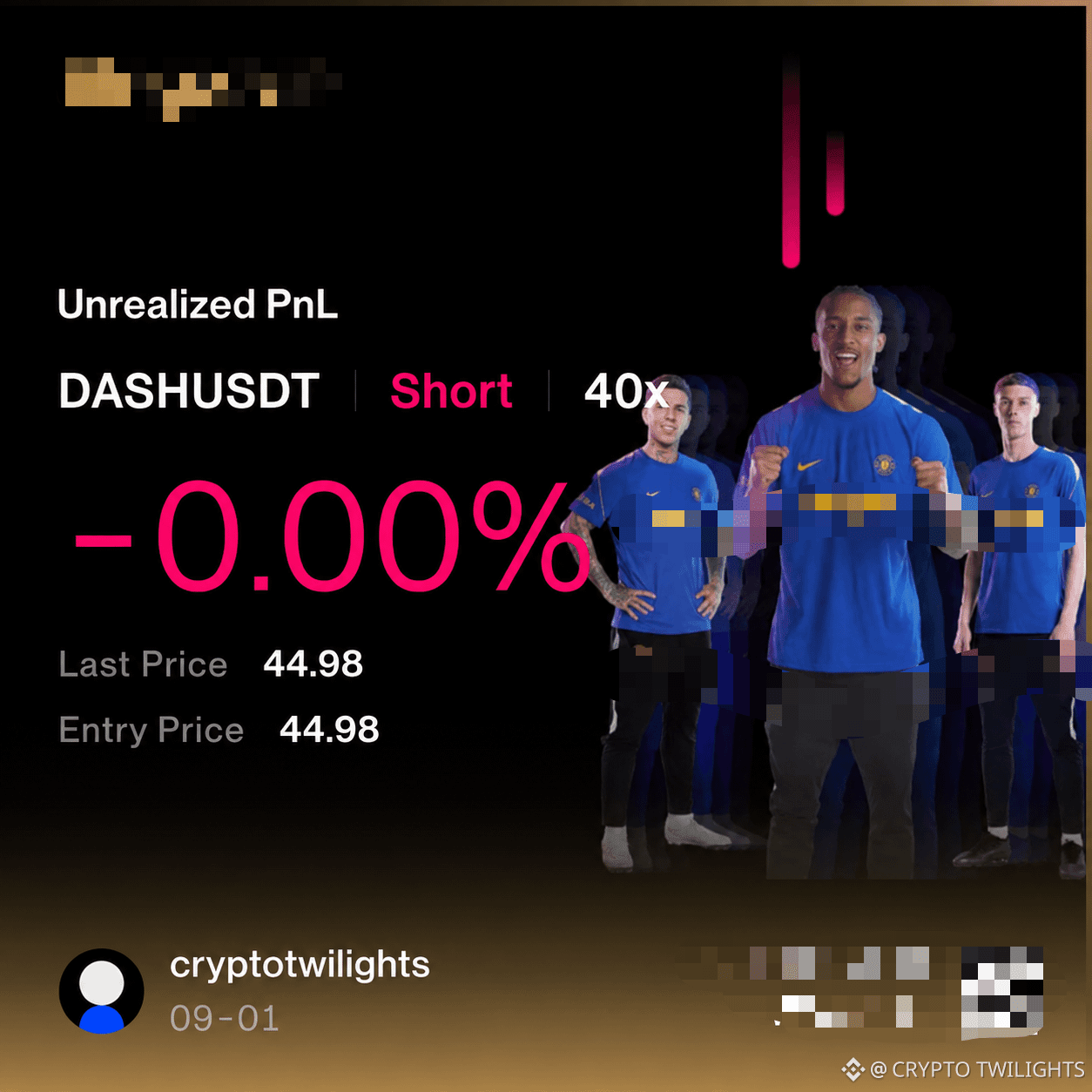
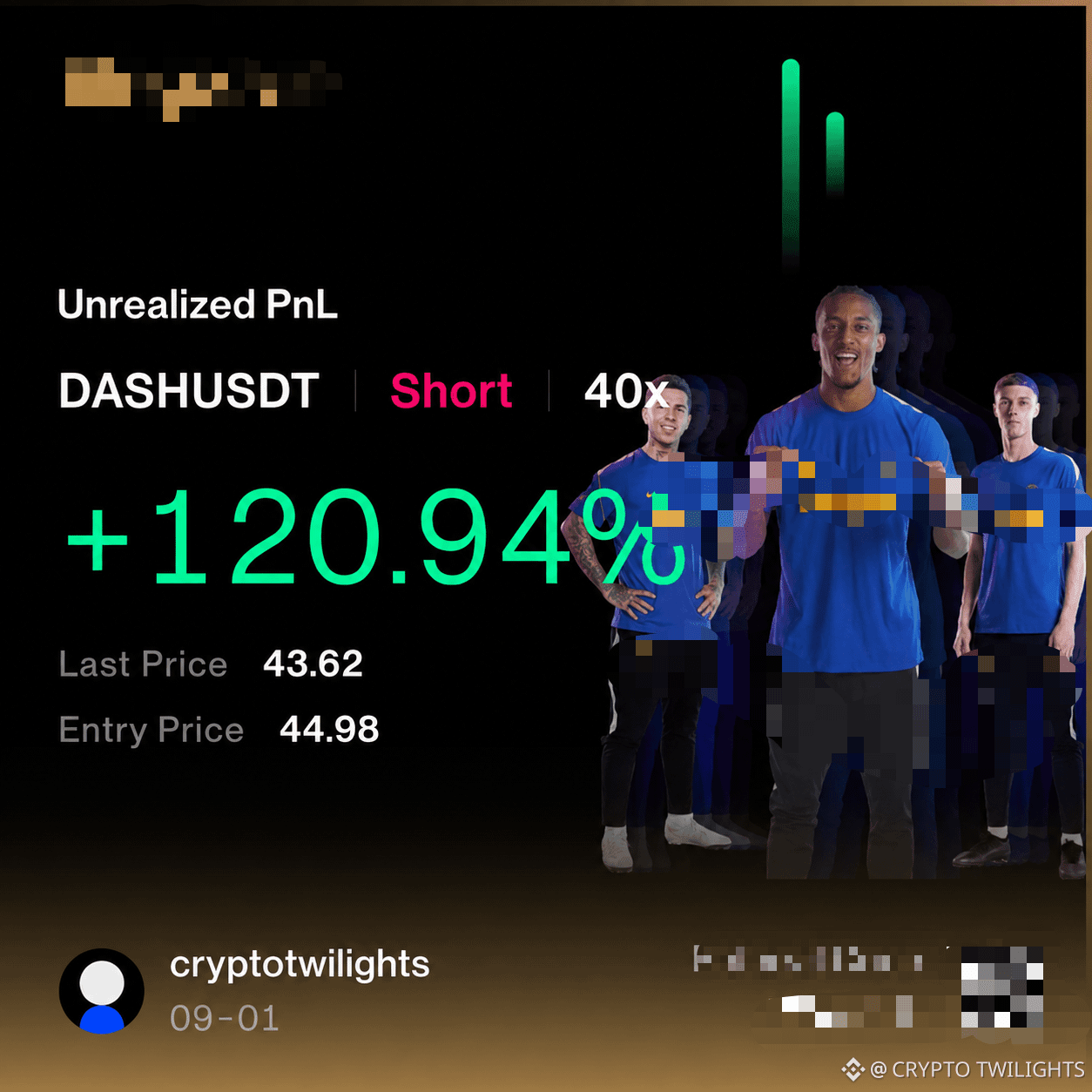
JUST in few hours we made 120% with 40x lev.
in this bad condition of market choosed right trade this is not a Coincidence this power of right strategy.
and power of experience of 4 years stay in this market.
so choice is yours
✅choose right mentor
❌ or loose money with experience
I'm telling you this is not a all many more signals on the way just you need to find right way.
coming soon with next result so don't forget follow me
$DASH
{future}(DASHUSDT)
#SaudiSaysIranAttackedShipInHormuz
#HangSengCloses18PointsLower
JUST in few hours we made 120% with 40x lev.
in this bad condition of market choosed right trade this is not a Coincidence this power of right strategy.
and power of experience of 4 years stay in this market.
so choice is yours
✅choose right mentor
❌ or loose money with experience
I'm telling you this is not a all many more signals on the way just you need to find right way.
coming soon with next result so don't forget follow me
$DASH
#SaudiSaysIranAttackedShipInHormuz
#HangSengCloses18PointsLower
in this bad condition of market choosed right trade this is not a Coincidence this power of right strategy.
and power of experience of 4 years stay in this market.
so choice is yours
✅choose right mentor
❌ or loose money with experience
I'm telling you this is not a all many more signals on the way just you need to find right way.
coming soon with next result so don't forget follow me
$DASH
#SaudiSaysIranAttackedShipInHormuz
#HangSengCloses18PointsLower
99
·
--
Bearish
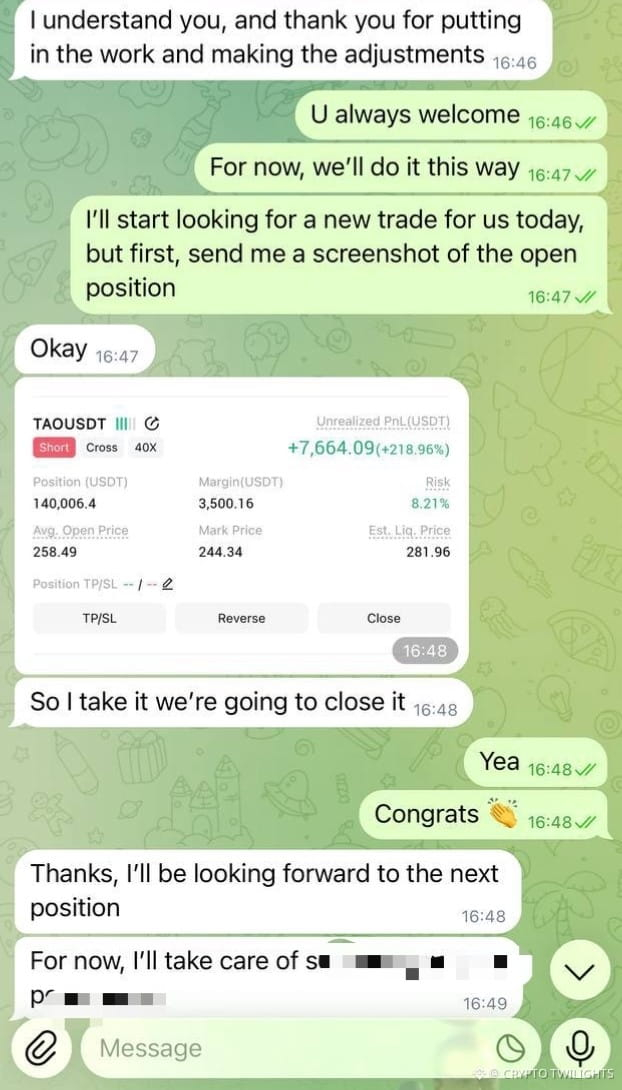
🏆 Another Trade Closed. Another Lesson Confirmed. 📉💰
In trading, success isn't about chasing every candle or trying to catch every move. It's about having the patience to wait for the right opportunity, the confidence to execute the plan, and the discipline to secure profits when the target is reached.
This trade is another reminder that consistency beats excitement. The market rewards those who follow a strategy instead of emotions. Every position should have a clear entry, a proper risk plan, and a logical exit. That's how long-term results are built.
Many traders hesitate when they see profits. Some close too early because of fear, while others become greedy and end up giving everything back. Professional trading is about making calculated decisions, protecting gains, and moving on to the next opportunity with a clear mind.
Every completed trade is not just about profit—it's proof that discipline and patience always have value. There will always be another setup, another chance, and another opportunity. The goal is not to trade every move but to trade the right move.
Stay focused. Trust the process. Keep emotions under control, manage your risk wisely, and let consistency do the heavy lifting over time.
Congratulations to everyone who continues to learn, improve, and stay disciplined. The journey is built one quality trade at a time. The market never runs out of opportunities for those who are prepared.
📊 Trade smart. Stay patient. Protect your capital. Let the results speak for themselves. 🚀📈
#SOLJumps20%OnTheWeek
#CaliforniaBillWouldBarOfficialMemeCoins
#TRONMainnetActivatesTVMPragueOsaka
$TAO
{future}(TAOUSDT)
🏆 Another Trade Closed. Another Lesson Confirmed. 📉💰
In trading, success isn't about chasing every candle or trying to catch every move. It's about having the patience to wait for the right opportunity, the confidence to execute the plan, and the discipline to secure profits when the target is reached.
This trade is another reminder that consistency beats excitement. The market rewards those who follow a strategy instead of emotions. Every position should have a clear entry, a proper risk plan, and a logical exit. That's how long-term results are built.
Many traders hesitate when they see profits. Some close too early because of fear, while others become greedy and end up giving everything back. Professional trading is about making calculated decisions, protecting gains, and moving on to the next opportunity with a clear mind.
Every completed trade is not just about profit—it's proof that discipline and patience always have value. There will always be another setup, another chance, and another opportunity. The goal is not to trade every move but to trade the right move.
Stay focused. Trust the process. Keep emotions under control, manage your risk wisely, and let consistency do the heavy lifting over time.
Congratulations to everyone who continues to learn, improve, and stay disciplined. The journey is built one quality trade at a time. The market never runs out of opportunities for those who are prepared.
📊 Trade smart. Stay patient. Protect your capital. Let the results speak for themselves. 🚀📈
#SOLJumps20%OnTheWeek
#CaliforniaBillWouldBarOfficialMemeCoins
#TRONMainnetActivatesTVMPragueOsaka
$TAO
In trading, success isn't about chasing every candle or trying to catch every move. It's about having the patience to wait for the right opportunity, the confidence to execute the plan, and the discipline to secure profits when the target is reached.
This trade is another reminder that consistency beats excitement. The market rewards those who follow a strategy instead of emotions. Every position should have a clear entry, a proper risk plan, and a logical exit. That's how long-term results are built.
Many traders hesitate when they see profits. Some close too early because of fear, while others become greedy and end up giving everything back. Professional trading is about making calculated decisions, protecting gains, and moving on to the next opportunity with a clear mind.
Every completed trade is not just about profit—it's proof that discipline and patience always have value. There will always be another setup, another chance, and another opportunity. The goal is not to trade every move but to trade the right move.
Stay focused. Trust the process. Keep emotions under control, manage your risk wisely, and let consistency do the heavy lifting over time.
Congratulations to everyone who continues to learn, improve, and stay disciplined. The journey is built one quality trade at a time. The market never runs out of opportunities for those who are prepared.
📊 Trade smart. Stay patient. Protect your capital. Let the results speak for themselves. 🚀📈
#SOLJumps20%OnTheWeek
#CaliforniaBillWouldBarOfficialMemeCoins
#TRONMainnetActivatesTVMPragueOsaka
$TAO
187
·
--
Bullish
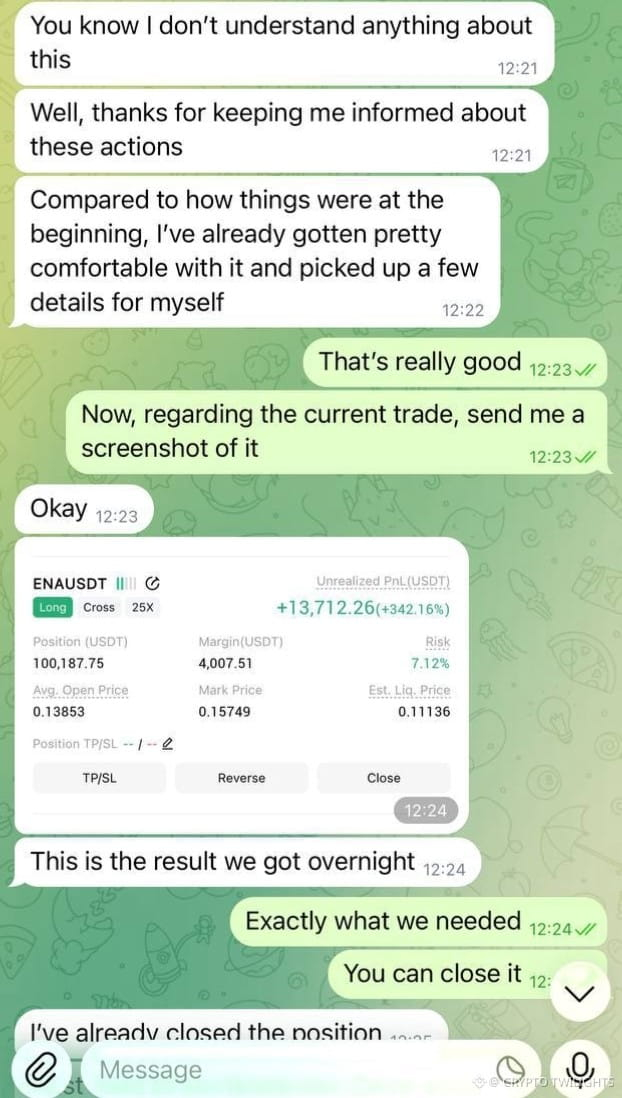
📈 Patience + Discipline = Consistent Results
Every successful trade starts with a clear plan, not emotions. The market rewards traders who wait for the right opportunity, manage risk properly, and execute with confidence.
This trade wasn't based on luck—it was the result of preparation, patience, and disciplined execution. When you trust your analysis instead of chasing every move, the results speak for themselves.
Many traders enter too early, exit too late, or let emotions control their decisions. The difference between winning and losing is often not strategy, but discipline.
Remember: ✅ Wait for high-probability setups.
✅ Protect your capital with proper risk management.
✅ Stay patient and let the market come to you.
✅ Follow your plan without emotional decisions.
Trading is a marathon, not a sprint. One well-executed trade is always better than ten impulsive ones.
Stay patient. Stay disciplined. Let your results do the talking. 🚀📊
#OktaCrowdStrikeSurgeOnEarningsBeat
#BestBuyQ2RevenueTopsEstimatesLiftsOutlook
$ENA
{future}(ENAUSDT)
📈 Patience + Discipline = Consistent Results
Every successful trade starts with a clear plan, not emotions. The market rewards traders who wait for the right opportunity, manage risk properly, and execute with confidence.
This trade wasn't based on luck—it was the result of preparation, patience, and disciplined execution. When you trust your analysis instead of chasing every move, the results speak for themselves.
Many traders enter too early, exit too late, or let emotions control their decisions. The difference between winning and losing is often not strategy, but discipline.
Remember: ✅ Wait for high-probability setups.
✅ Protect your capital with proper risk management.
✅ Stay patient and let the market come to you.
✅ Follow your plan without emotional decisions.
Trading is a marathon, not a sprint. One well-executed trade is always better than ten impulsive ones.
Stay patient. Stay disciplined. Let your results do the talking. 🚀📊
#OktaCrowdStrikeSurgeOnEarningsBeat
#BestBuyQ2RevenueTopsEstimatesLiftsOutlook
$ENA
Every successful trade starts with a clear plan, not emotions. The market rewards traders who wait for the right opportunity, manage risk properly, and execute with confidence.
This trade wasn't based on luck—it was the result of preparation, patience, and disciplined execution. When you trust your analysis instead of chasing every move, the results speak for themselves.
Many traders enter too early, exit too late, or let emotions control their decisions. The difference between winning and losing is often not strategy, but discipline.
Remember: ✅ Wait for high-probability setups.
✅ Protect your capital with proper risk management.
✅ Stay patient and let the market come to you.
✅ Follow your plan without emotional decisions.
Trading is a marathon, not a sprint. One well-executed trade is always better than ten impulsive ones.
Stay patient. Stay disciplined. Let your results do the talking. 🚀📊
#OktaCrowdStrikeSurgeOnEarningsBeat
#BestBuyQ2RevenueTopsEstimatesLiftsOutlook
$ENA
158
·
--
Bullish
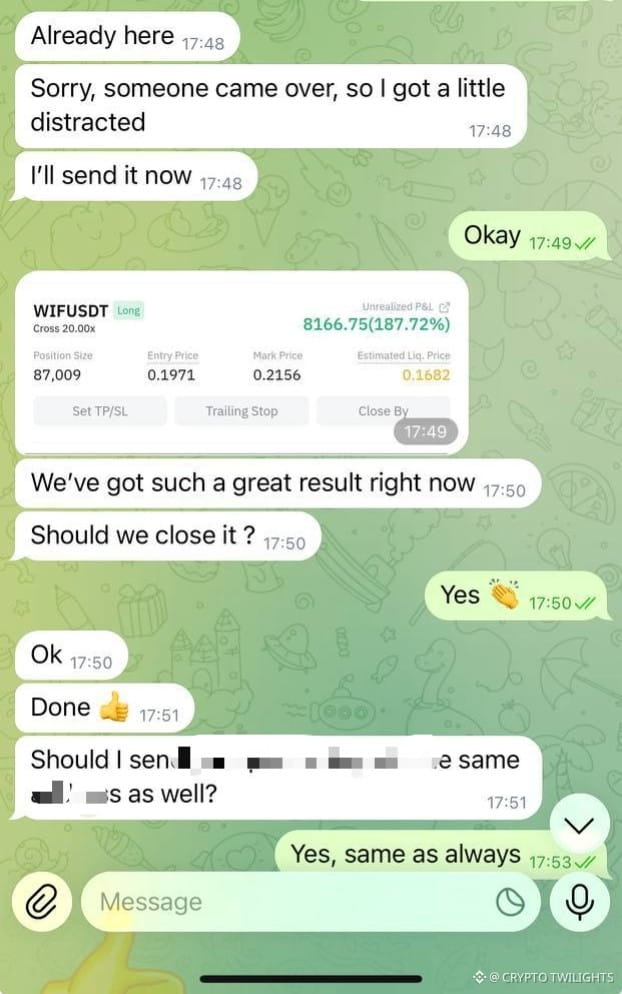
🔥 Another Trade. Another Strong Result. 📈
The market always rewards those who stay patient and wait for the right opportunity. Chasing every candle rarely leads to consistent success, but following a well-planned strategy does.
This trade was executed with discipline, proper timing, and a clear exit plan. Instead of letting emotions take control, the focus remained on protecting profits and making smart decisions. That's what separates successful traders from the crowd.
Every winning trade is a reminder that consistency is built through preparation, not luck. There will always be another opportunity in the market, so there's no need to be greedy. Secure your gains, respect your risk management, and move on to the next setup with confidence.
Trading is a marathon, not a sprint. Stay calm during volatility, trust your analysis, and let your results speak for themselves.
One trade doesn't define success—consistent execution does. Keep learning, stay disciplined, and keep improving every single day.
📊 Patience. Discipline. Consistency. That's the mindset that creates long-term winners. 🚀
#BestBuyQ2RevenueTopsEstimatesLiftsOutlook
#KospiClosesAtRecordHigh
#BankOfKoreaHikesRatesTo3%
$WIF
{future}(WIFUSDT)
🔥 Another Trade. Another Strong Result. 📈
The market always rewards those who stay patient and wait for the right opportunity. Chasing every candle rarely leads to consistent success, but following a well-planned strategy does.
This trade was executed with discipline, proper timing, and a clear exit plan. Instead of letting emotions take control, the focus remained on protecting profits and making smart decisions. That's what separates successful traders from the crowd.
Every winning trade is a reminder that consistency is built through preparation, not luck. There will always be another opportunity in the market, so there's no need to be greedy. Secure your gains, respect your risk management, and move on to the next setup with confidence.
Trading is a marathon, not a sprint. Stay calm during volatility, trust your analysis, and let your results speak for themselves.
One trade doesn't define success—consistent execution does. Keep learning, stay disciplined, and keep improving every single day.
📊 Patience. Discipline. Consistency. That's the mindset that creates long-term winners. 🚀
#BestBuyQ2RevenueTopsEstimatesLiftsOutlook
#KospiClosesAtRecordHigh
#BankOfKoreaHikesRatesTo3%
$WIF
The market always rewards those who stay patient and wait for the right opportunity. Chasing every candle rarely leads to consistent success, but following a well-planned strategy does.
This trade was executed with discipline, proper timing, and a clear exit plan. Instead of letting emotions take control, the focus remained on protecting profits and making smart decisions. That's what separates successful traders from the crowd.
Every winning trade is a reminder that consistency is built through preparation, not luck. There will always be another opportunity in the market, so there's no need to be greedy. Secure your gains, respect your risk management, and move on to the next setup with confidence.
Trading is a marathon, not a sprint. Stay calm during volatility, trust your analysis, and let your results speak for themselves.
One trade doesn't define success—consistent execution does. Keep learning, stay disciplined, and keep improving every single day.
📊 Patience. Discipline. Consistency. That's the mindset that creates long-term winners. 🚀
#BestBuyQ2RevenueTopsEstimatesLiftsOutlook
#KospiClosesAtRecordHigh
#BankOfKoreaHikesRatesTo3%
$WIF
159
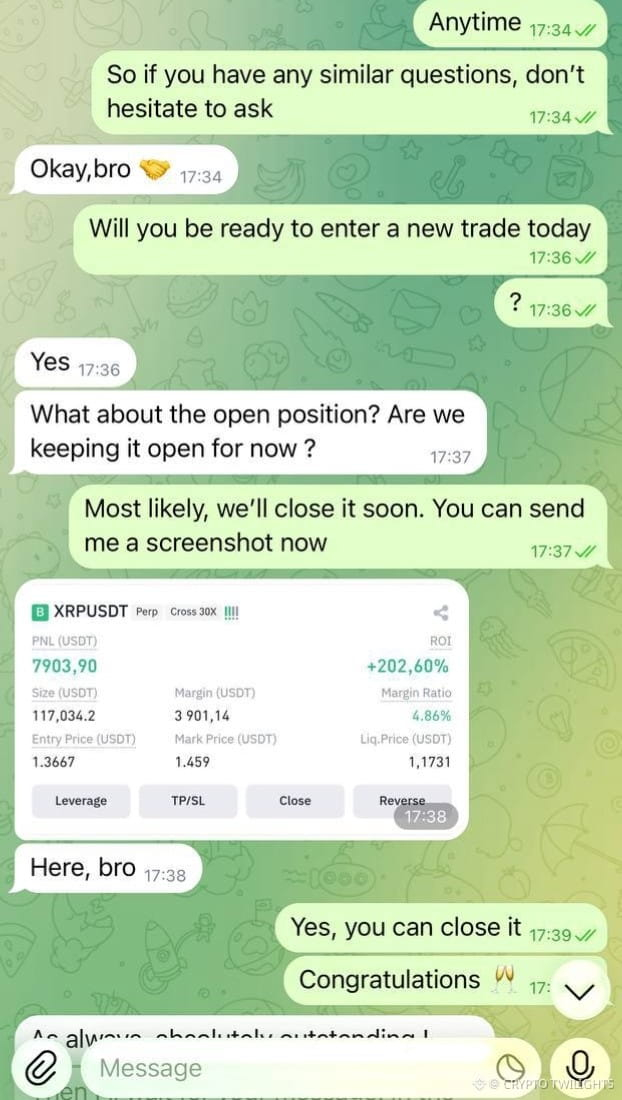
💹 Patience + Strategy = Consistent Results 📈
Every successful trade begins with a clear plan—not with emotions, hype, or FOMO.
This trade is another reminder that the market rewards discipline. Entering at the right level, managing risk correctly, and staying patient can make all the difference. The biggest profits don't come from chasing candles; they come from trusting your analysis and allowing the setup to play out.
A profitable trader isn't the one who wins every trade. A profitable trader is the one who follows a proven process, protects capital, and stays consistent through every market condition.
🎯 Stay patient.
📊 Trust the strategy.
🛡️ Respect risk management.
💪 Let discipline guide every decision.
The market will always create new opportunities. There is no need to rush or force trades. Wait for high-probability setups, execute with confidence, and let consistency build long-term success.
Small improvements every day lead to extraordinary results over time. Keep learning, keep improving, and remember that success in trading is a marathon—not a sprint.
Trade smart. Stay disciplined. Keep growing. 🚀
#OktaCrowdStrikeSurgeOnEarningsBeat
#BestBuyQ2RevenueTopsEstimatesLiftsOutlook
#KospiClosesAtRecordHigh
$XRP
{future}(XRPUSDT)
💹 Patience + Strategy = Consistent Results 📈
Every successful trade begins with a clear plan—not with emotions, hype, or FOMO.
This trade is another reminder that the market rewards discipline. Entering at the right level, managing risk correctly, and staying patient can make all the difference. The biggest profits don't come from chasing candles; they come from trusting your analysis and allowing the setup to play out.
A profitable trader isn't the one who wins every trade. A profitable trader is the one who follows a proven process, protects capital, and stays consistent through every market condition.
🎯 Stay patient.
📊 Trust the strategy.
🛡️ Respect risk management.
💪 Let discipline guide every decision.
The market will always create new opportunities. There is no need to rush or force trades. Wait for high-probability setups, execute with confidence, and let consistency build long-term success.
Small improvements every day lead to extraordinary results over time. Keep learning, keep improving, and remember that success in trading is a marathon—not a sprint.
Trade smart. Stay disciplined. Keep growing. 🚀
#OktaCrowdStrikeSurgeOnEarningsBeat
#BestBuyQ2RevenueTopsEstimatesLiftsOutlook
#KospiClosesAtRecordHigh
$XRP
Every successful trade begins with a clear plan—not with emotions, hype, or FOMO.
This trade is another reminder that the market rewards discipline. Entering at the right level, managing risk correctly, and staying patient can make all the difference. The biggest profits don't come from chasing candles; they come from trusting your analysis and allowing the setup to play out.
A profitable trader isn't the one who wins every trade. A profitable trader is the one who follows a proven process, protects capital, and stays consistent through every market condition.
🎯 Stay patient.
📊 Trust the strategy.
🛡️ Respect risk management.
💪 Let discipline guide every decision.
The market will always create new opportunities. There is no need to rush or force trades. Wait for high-probability setups, execute with confidence, and let consistency build long-term success.
Small improvements every day lead to extraordinary results over time. Keep learning, keep improving, and remember that success in trading is a marathon—not a sprint.
Trade smart. Stay disciplined. Keep growing. 🚀
#OktaCrowdStrikeSurgeOnEarningsBeat
#BestBuyQ2RevenueTopsEstimatesLiftsOutlook
#KospiClosesAtRecordHigh
$XRP
165
·
--
Bearish
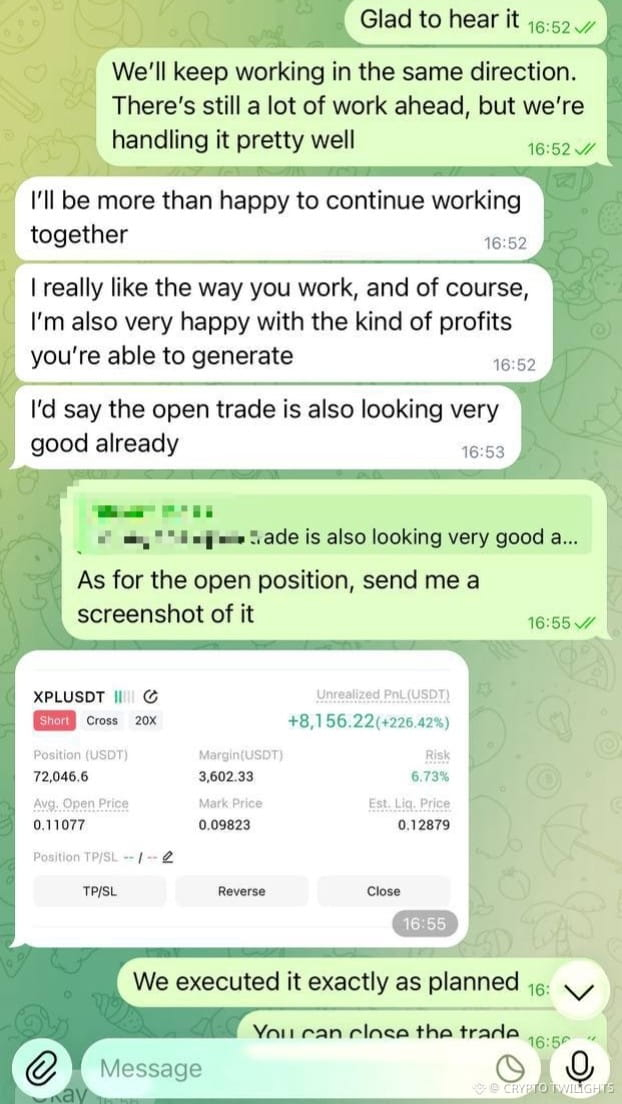
📈 Results Speak Louder Than Words.
Every profitable trade starts with a clear plan—not emotions, not FOMO, and definitely not luck. 🎯
The conversation in the screenshot says everything. When your analysis is consistent, people notice the difference. It's not about chasing every candle; it's about waiting for the highest-probability setup and executing it with confidence.
This XPLUSDT SHORT trade is a perfect reminder that patience and discipline can produce exceptional results. While most traders panic during market volatility, experienced traders stay focused on their strategy and let the market do the work.
💹 The key lessons:
✅ Wait for confirmation before entering.
✅ Follow your trading plan without hesitation.
✅ Control risk before thinking about profits.
✅ Never let emotions override your strategy.
✅ Consistency always beats random wins.
The biggest mistake many traders make is entering trades without a plan and exiting out of fear. Professional trading isn't about being right every time—it's about managing risk and allowing high-quality setups to play out.
Every successful trade builds confidence, but every trade should also reinforce discipline. The market rewards preparation, not impatience.
🚀 Keep learning.
📊 Keep improving.
💎 Stay disciplined.
In trading, consistency creates long-term success—not hype, not luck, and not shortcuts. 🔥📈
#BitcoinOpenInterestFallsToTwoMonthLow
#BitcoinRises23.6%Weekly
#AIHardwareStocksFallPreMarketAAOIDown11.66%
$XRP
{future}(XRPUSDT)
📈 Results Speak Louder Than Words.
Every profitable trade starts with a clear plan—not emotions, not FOMO, and definitely not luck. 🎯
The conversation in the screenshot says everything. When your analysis is consistent, people notice the difference. It's not about chasing every candle; it's about waiting for the highest-probability setup and executing it with confidence.
This XPLUSDT SHORT trade is a perfect reminder that patience and discipline can produce exceptional results. While most traders panic during market volatility, experienced traders stay focused on their strategy and let the market do the work.
💹 The key lessons:
✅ Wait for confirmation before entering.
✅ Follow your trading plan without hesitation.
✅ Control risk before thinking about profits.
✅ Never let emotions override your strategy.
✅ Consistency always beats random wins.
The biggest mistake many traders make is entering trades without a plan and exiting out of fear. Professional trading isn't about being right every time—it's about managing risk and allowing high-quality setups to play out.
Every successful trade builds confidence, but every trade should also reinforce discipline. The market rewards preparation, not impatience.
🚀 Keep learning.
📊 Keep improving.
💎 Stay disciplined.
In trading, consistency creates long-term success—not hype, not luck, and not shortcuts. 🔥📈
#BitcoinOpenInterestFallsToTwoMonthLow
#BitcoinRises23.6%Weekly
#AIHardwareStocksFallPreMarketAAOIDown11.66%
$XRP
Every profitable trade starts with a clear plan—not emotions, not FOMO, and definitely not luck. 🎯
The conversation in the screenshot says everything. When your analysis is consistent, people notice the difference. It's not about chasing every candle; it's about waiting for the highest-probability setup and executing it with confidence.
This XPLUSDT SHORT trade is a perfect reminder that patience and discipline can produce exceptional results. While most traders panic during market volatility, experienced traders stay focused on their strategy and let the market do the work.
💹 The key lessons:
✅ Wait for confirmation before entering.
✅ Follow your trading plan without hesitation.
✅ Control risk before thinking about profits.
✅ Never let emotions override your strategy.
✅ Consistency always beats random wins.
The biggest mistake many traders make is entering trades without a plan and exiting out of fear. Professional trading isn't about being right every time—it's about managing risk and allowing high-quality setups to play out.
Every successful trade builds confidence, but every trade should also reinforce discipline. The market rewards preparation, not impatience.
🚀 Keep learning.
📊 Keep improving.
💎 Stay disciplined.
In trading, consistency creates long-term success—not hype, not luck, and not shortcuts. 🔥📈
#BitcoinOpenInterestFallsToTwoMonthLow
#BitcoinRises23.6%Weekly
#AIHardwareStocksFallPreMarketAAOIDown11.66%
$XRP
1
173
·
--
Bearish
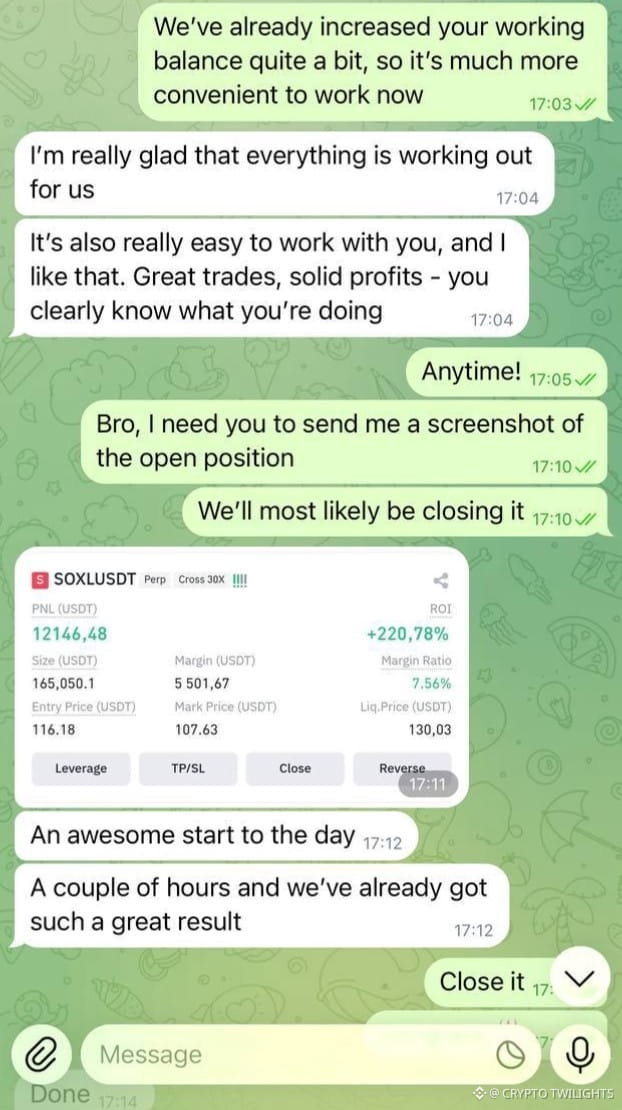
The difference between lucky traders and consistent traders is simple: discipline.
Today's result wasn't built on hope or emotions. It came from following a plan, managing risk, and trusting the setup from entry to exit. Every profitable trade is a reminder that patience often pays more than rushing into the market.
Many people think trading is about making random predictions. In reality, it's about waiting for high-probability opportunities, executing with confidence, and knowing exactly when to take profits. The market rewards those who stay calm while others panic.
A strong trade isn't just measured by the final profit—it's measured by how well the strategy was followed. Consistency comes from repeating the right process over and over, regardless of market conditions.
Every successful day adds experience, not just profits. Every chart teaches something new. Every trade is another step toward becoming a better trader.
Stay patient. Stay disciplined. Let your results speak louder than your words.
📈 Trade smart.
🎯 Follow your strategy.
💎 Protect your capital.
🚀 Success comes to those who remain consistent.
#Crypto #Trading #Futures #RiskManagement #Discipline #Patience #CryptoTrading #MarketAnalysis
#BitcoinOpenInterestFallsToTwoMonthLow
#SamsungFalls8.97%DraggingKospiDown3.24%
$SOXL
{future}(SOXLUSDT)
The difference between lucky traders and consistent traders is simple: discipline.
Today's result wasn't built on hope or emotions. It came from following a plan, managing risk, and trusting the setup from entry to exit. Every profitable trade is a reminder that patience often pays more than rushing into the market.
Many people think trading is about making random predictions. In reality, it's about waiting for high-probability opportunities, executing with confidence, and knowing exactly when to take profits. The market rewards those who stay calm while others panic.
A strong trade isn't just measured by the final profit—it's measured by how well the strategy was followed. Consistency comes from repeating the right process over and over, regardless of market conditions.
Every successful day adds experience, not just profits. Every chart teaches something new. Every trade is another step toward becoming a better trader.
Stay patient. Stay disciplined. Let your results speak louder than your words.
📈 Trade smart.
🎯 Follow your strategy.
💎 Protect your capital.
🚀 Success comes to those who remain consistent.
#Crypto #Trading #Futures #RiskManagement #Discipline #Patience #CryptoTrading #MarketAnalysis
#BitcoinOpenInterestFallsToTwoMonthLow
#SamsungFalls8.97%DraggingKospiDown3.24%
$SOXL
Today's result wasn't built on hope or emotions. It came from following a plan, managing risk, and trusting the setup from entry to exit. Every profitable trade is a reminder that patience often pays more than rushing into the market.
Many people think trading is about making random predictions. In reality, it's about waiting for high-probability opportunities, executing with confidence, and knowing exactly when to take profits. The market rewards those who stay calm while others panic.
A strong trade isn't just measured by the final profit—it's measured by how well the strategy was followed. Consistency comes from repeating the right process over and over, regardless of market conditions.
Every successful day adds experience, not just profits. Every chart teaches something new. Every trade is another step toward becoming a better trader.
Stay patient. Stay disciplined. Let your results speak louder than your words.
📈 Trade smart.
🎯 Follow your strategy.
💎 Protect your capital.
🚀 Success comes to those who remain consistent.
#Crypto #Trading #Futures #RiskManagement #Discipline #Patience #CryptoTrading #MarketAnalysis
#BitcoinOpenInterestFallsToTwoMonthLow
#SamsungFalls8.97%DraggingKospiDown3.24%
$SOXL
198
Article
💎 One Trade. One Plan. 🔥🔥🔥 Outstanding Results.👇👇👇The biggest difference between profitable traders and struggling traders is not luck—it's discipline, patience, and execution. 📈💯
Today is another reminder that the market always rewards those who wait for high-quality opportunities instead of chasing every candle. A well-planned setup, proper risk management, and the confidence to trust the analysis can turn an ordinary trading day into an extraordinary one. 🚀
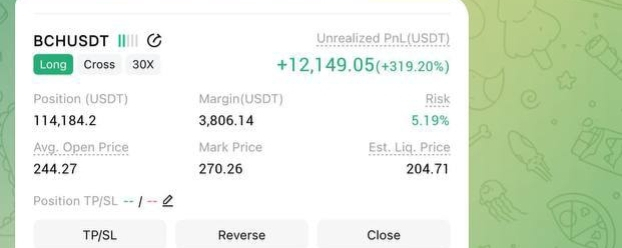
Looking at this result, it's clear that consistency doesn't come from taking random entries. It comes from following a strategy, respecting your risk, and knowing exactly when to enter and when to exit. The goal is never to gamble—it's to make calculated decisions based on market structure and probability. 🎯
Many traders become emotional after seeing profits like these, but experienced traders understand that protecting profits is just as important as making them. Greed has destroyed more accounts than bad analysis ever has. Taking profits at the right time and preparing for the next opportunity is what builds long-term success. 💎
Every winning trade is backed by hours of chart analysis, patience, and waiting for confirmation. The market gives opportunities every single day, but only those who remain disciplined are able to capitalize on them. Success in trading isn't about being right every time—it's about managing risk effectively and allowing your winning trades to outperform your losses. 📊
Remember, one successful trade will never define your journey, just as one losing trade will never end it. Stay focused on the process instead of the outcome. Build confidence through consistency, not through emotions. Every session is a chance to learn, improve, and become a better trader than you were yesterday. 🔥
Keep your emotions under control, trust your trading plan, and never let fear or greed dictate your decisions. The market respects discipline, and disciplined traders eventually achieve the results they work for. Small improvements every day create extraordinary results over time. 🌟
Trade smart. Stay patient. Protect your capital. Let your results speak louder than your words. The next opportunity is always around the corner for those who are prepared. 📈💰🚀
#USRefinersFaceLoomingCrudeSupplyDrop
#BitcoinBestWeekSinceMarch2023
$BCH
{future}(BCHUSDT)
💎 One Trade. One Plan. 🔥🔥🔥 Outstanding Results.👇👇👇
The biggest difference between profitable traders and struggling traders is not luck—it's discipline, patience, and execution. 📈💯
Today is another reminder that the market always rewards those who wait for high-quality opportunities instead of chasing every candle. A well-planned setup, proper risk management, and the confidence to trust the analysis can turn an ordinary trading day into an extraordinary one. 🚀
Looking at this result, it's clear that consistency doesn't come from taking random entries. It comes from following a strategy, respecting your risk, and knowing exactly when to enter and when to exit. The goal is never to gamble—it's to make calculated decisions based on market structure and probability. 🎯
Many traders become emotional after seeing profits like these, but experienced traders understand that protecting profits is just as important as making them. Greed has destroyed more accounts than bad analysis ever has. Taking profits at the right time and preparing for the next opportunity is what builds long-term success. 💎
Every winning trade is backed by hours of chart analysis, patience, and waiting for confirmation. The market gives opportunities every single day, but only those who remain disciplined are able to capitalize on them. Success in trading isn't about being right every time—it's about managing risk effectively and allowing your winning trades to outperform your losses. 📊
Remember, one successful trade will never define your journey, just as one losing trade will never end it. Stay focused on the process instead of the outcome. Build confidence through consistency, not through emotions. Every session is a chance to learn, improve, and become a better trader than you were yesterday. 🔥
Keep your emotions under control, trust your trading plan, and never let fear or greed dictate your decisions. The market respects discipline, and disciplined traders eventually achieve the results they work for. Small improvements every day create extraordinary results over time. 🌟
Trade smart. Stay patient. Protect your capital. Let your results speak louder than your words. The next opportunity is always around the corner for those who are prepared. 📈💰🚀
#USRefinersFaceLoomingCrudeSupplyDrop
#BitcoinBestWeekSinceMarch2023
$BCH
Today is another reminder that the market always rewards those who wait for high-quality opportunities instead of chasing every candle. A well-planned setup, proper risk management, and the confidence to trust the analysis can turn an ordinary trading day into an extraordinary one. 🚀
Looking at this result, it's clear that consistency doesn't come from taking random entries. It comes from following a strategy, respecting your risk, and knowing exactly when to enter and when to exit. The goal is never to gamble—it's to make calculated decisions based on market structure and probability. 🎯
Many traders become emotional after seeing profits like these, but experienced traders understand that protecting profits is just as important as making them. Greed has destroyed more accounts than bad analysis ever has. Taking profits at the right time and preparing for the next opportunity is what builds long-term success. 💎
Every winning trade is backed by hours of chart analysis, patience, and waiting for confirmation. The market gives opportunities every single day, but only those who remain disciplined are able to capitalize on them. Success in trading isn't about being right every time—it's about managing risk effectively and allowing your winning trades to outperform your losses. 📊
Remember, one successful trade will never define your journey, just as one losing trade will never end it. Stay focused on the process instead of the outcome. Build confidence through consistency, not through emotions. Every session is a chance to learn, improve, and become a better trader than you were yesterday. 🔥
Keep your emotions under control, trust your trading plan, and never let fear or greed dictate your decisions. The market respects discipline, and disciplined traders eventually achieve the results they work for. Small improvements every day create extraordinary results over time. 🌟
Trade smart. Stay patient. Protect your capital. Let your results speak louder than your words. The next opportunity is always around the corner for those who are prepared. 📈💰🚀
#USRefinersFaceLoomingCrudeSupplyDrop
#BitcoinBestWeekSinceMarch2023
$BCH
126
·
--
Bullish
The market doesn't reward emotions. It rewards discipline. 📈
Some people think trading is all about finding the next coin that's going to explode. The truth is far different. The real edge comes from staying calm when everyone else is emotional, trusting your analysis, and executing your plan without hesitation.
A profitable trade isn't created when you enter the market—it's created by every decision you make until the position is closed.
💹 Entry requires confidence.
💰 Profit requires patience.
🛡️ Success requires discipline.
The biggest mistake traders make is believing that every winning trade should become a life-changing trade. That's how profits disappear. Professional traders understand one simple rule:
Profit locked is always better than profit hoped for.
The market will always offer another opportunity, but the capital you lose through greed is much harder to recover.
Every successful trade tells a story—not of luck, but of preparation, patience, and precise execution. Behind every green PnL is a trader who respected risk, ignored the noise, and stayed focused on the plan instead of the hype.
The strongest traders aren't the ones who make the most noise. They're the ones who quietly follow their strategy day after day, week after week, regardless of what everyone else is doing.
🚀 Trade with logic, not emotions.
🎯 Take profits with confidence, not regret.
⚡ Stay consistent, and let your results speak louder than your words.
At the end of the day, the market doesn't remember your excuses—it only reflects your decisions.
Discipline builds consistency.
Consistency builds confidence.
Confidence builds long-term success.
Stay patient. Stay focused. Keep improving. The next opportunity will always come—but only disciplined traders will be ready to capture it. 🔥📊
#TrumpPressesCongressToPassClarityAct
$PUMP
{future}(PUMPUSDT)
The market doesn't reward emotions. It rewards discipline. 📈
Some people think trading is all about finding the next coin that's going to explode. The truth is far different. The real edge comes from staying calm when everyone else is emotional, trusting your analysis, and executing your plan without hesitation.
A profitable trade isn't created when you enter the market—it's created by every decision you make until the position is closed.
💹 Entry requires confidence.
💰 Profit requires patience.
🛡️ Success requires discipline.
The biggest mistake traders make is believing that every winning trade should become a life-changing trade. That's how profits disappear. Professional traders understand one simple rule:
Profit locked is always better than profit hoped for.
The market will always offer another opportunity, but the capital you lose through greed is much harder to recover.
Every successful trade tells a story—not of luck, but of preparation, patience, and precise execution. Behind every green PnL is a trader who respected risk, ignored the noise, and stayed focused on the plan instead of the hype.
The strongest traders aren't the ones who make the most noise. They're the ones who quietly follow their strategy day after day, week after week, regardless of what everyone else is doing.
🚀 Trade with logic, not emotions.
🎯 Take profits with confidence, not regret.
⚡ Stay consistent, and let your results speak louder than your words.
At the end of the day, the market doesn't remember your excuses—it only reflects your decisions.
Discipline builds consistency.
Consistency builds confidence.
Confidence builds long-term success.
Stay patient. Stay focused. Keep improving. The next opportunity will always come—but only disciplined traders will be ready to capture it. 🔥📊
#TrumpPressesCongressToPassClarityAct
$PUMP
Some people think trading is all about finding the next coin that's going to explode. The truth is far different. The real edge comes from staying calm when everyone else is emotional, trusting your analysis, and executing your plan without hesitation.
A profitable trade isn't created when you enter the market—it's created by every decision you make until the position is closed.
💹 Entry requires confidence.
💰 Profit requires patience.
🛡️ Success requires discipline.
The biggest mistake traders make is believing that every winning trade should become a life-changing trade. That's how profits disappear. Professional traders understand one simple rule:
Profit locked is always better than profit hoped for.
The market will always offer another opportunity, but the capital you lose through greed is much harder to recover.
Every successful trade tells a story—not of luck, but of preparation, patience, and precise execution. Behind every green PnL is a trader who respected risk, ignored the noise, and stayed focused on the plan instead of the hype.
The strongest traders aren't the ones who make the most noise. They're the ones who quietly follow their strategy day after day, week after week, regardless of what everyone else is doing.
🚀 Trade with logic, not emotions.
🎯 Take profits with confidence, not regret.
⚡ Stay consistent, and let your results speak louder than your words.
At the end of the day, the market doesn't remember your excuses—it only reflects your decisions.
Discipline builds consistency.
Consistency builds confidence.
Confidence builds long-term success.
Stay patient. Stay focused. Keep improving. The next opportunity will always come—but only disciplined traders will be ready to capture it. 🔥📊
#TrumpPressesCongressToPassClarityAct
$PUMP
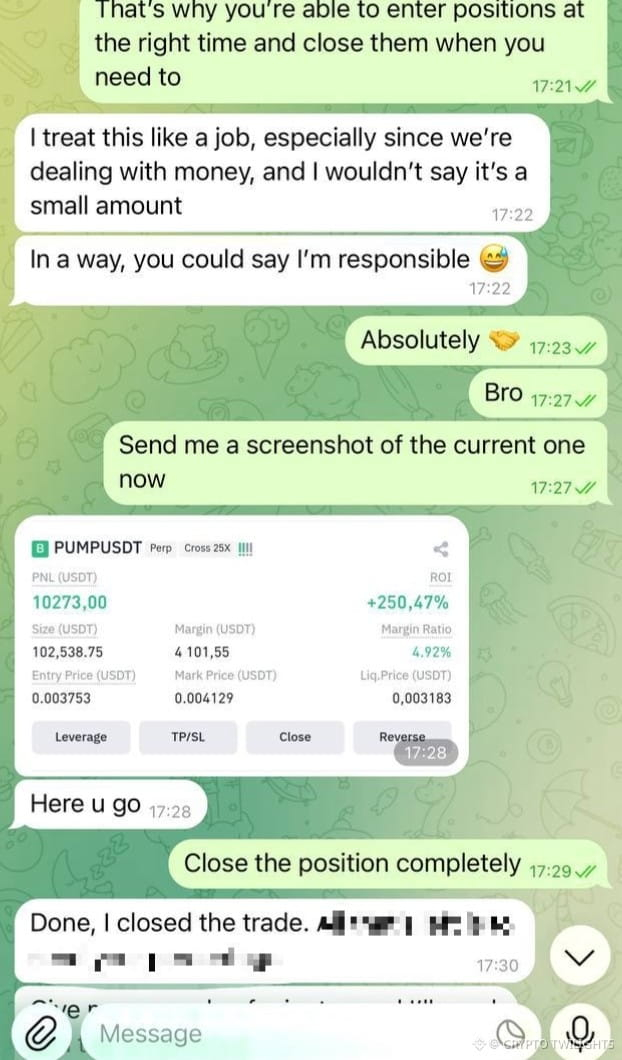
184
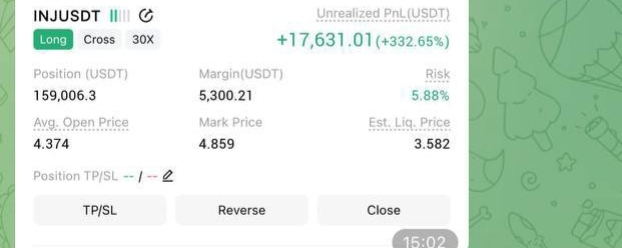
Article
🔥 INJUSDT — Another Trade Executed With Precision 📈🔥 INJUSDT — Another Trade Executed With Precision 📈
This is exactly why trade management, patience, and discipline matter in the market.
The screenshot tells the story clearly. The INJUSDT long position reached an unrealized profit of approximately +332.65%, with the position showing more than $17,600 in unrealized PnL. But the biggest lesson here is not simply the profit number. The real lesson is understanding when to take the profit and when to stop asking for more from the market. 🎯
Before entering any trade, there is always a plan. But once the position starts moving strongly in the expected direction, the job doesn't end there. In fact, that is when proper management becomes even more important.
A trade can be perfectly analyzed and still be ruined by poor management.
Many traders become emotionally attached to a winning position. They see a large profit and immediately start thinking, “Maybe it can go even higher.” Then they keep holding without a clear reason. If the market reverses, a huge winning position can quickly become a much smaller profit—or even a loss.
That is why I always believe that profit protection is part of the strategy. 💯
In this INJUSDT trade, the market gave the expected move, the position reached a strong profit zone, and the decision was made to close the trade and secure the result.
No unnecessary greed.
No emotional decisions.
No trying to catch every last percentage of the move.
Just following the plan and taking the opportunity when it appears. ✅
The client’s reaction in the conversation also says a lot. After seeing the result, they were extremely happy with the trade and confirmed that the position had been closed successfully. That kind of communication is important because trading is not only about finding an entry — it is also about staying connected with the position and making the right decisions throughout the trade.
One of the biggest differences between experienced execution and emotional trading is knowing when enough is enough.
The market will always provide another opportunity.
You don't need to catch the exact bottom.
You don't need to sell at the exact top.
You don't need to win every single trade.
What matters is building a process where your analysis, risk management, execution, and profit-taking work together.
📊 INJUSDT Long
📈 +332.65% Unrealized PnL shown
💰 +$17,631.01 Unrealized PnL shown
🎯 Trade successfully closed
Results like this are a reminder that discipline can be more powerful than emotion.
Stay patient. Respect the setup. Manage the position. Protect the profit.
A good entry starts the trade, but good management finishes it. 🔥
The goal is not to chase the market.
The goal is to execute the plan and let the results speak for themselves. 📈
#BTCSurpasses$72000
#ETHSurpasses$2300
$INJ
{future}(INJUSDT)
🔥 INJUSDT — Another Trade Executed With Precision 📈
🔥 INJUSDT — Another Trade Executed With Precision 📈
This is exactly why trade management, patience, and discipline matter in the market.
The screenshot tells the story clearly. The INJUSDT long position reached an unrealized profit of approximately +332.65%, with the position showing more than $17,600 in unrealized PnL. But the biggest lesson here is not simply the profit number. The real lesson is understanding when to take the profit and when to stop asking for more from the market. 🎯
Before entering any trade, there is always a plan. But once the position starts moving strongly in the expected direction, the job doesn't end there. In fact, that is when proper management becomes even more important.
A trade can be perfectly analyzed and still be ruined by poor management.
Many traders become emotionally attached to a winning position. They see a large profit and immediately start thinking, “Maybe it can go even higher.” Then they keep holding without a clear reason. If the market reverses, a huge winning position can quickly become a much smaller profit—or even a loss.
That is why I always believe that profit protection is part of the strategy. 💯
In this INJUSDT trade, the market gave the expected move, the position reached a strong profit zone, and the decision was made to close the trade and secure the result.
No unnecessary greed.
No emotional decisions.
No trying to catch every last percentage of the move.
Just following the plan and taking the opportunity when it appears. ✅
The client’s reaction in the conversation also says a lot. After seeing the result, they were extremely happy with the trade and confirmed that the position had been closed successfully. That kind of communication is important because trading is not only about finding an entry — it is also about staying connected with the position and making the right decisions throughout the trade.
One of the biggest differences between experienced execution and emotional trading is knowing when enough is enough.
The market will always provide another opportunity.
You don't need to catch the exact bottom.
You don't need to sell at the exact top.
You don't need to win every single trade.
What matters is building a process where your analysis, risk management, execution, and profit-taking work together.
📊 INJUSDT Long
📈 +332.65% Unrealized PnL shown
💰 +$17,631.01 Unrealized PnL shown
🎯 Trade successfully closed
Results like this are a reminder that discipline can be more powerful than emotion.
Stay patient. Respect the setup. Manage the position. Protect the profit.
A good entry starts the trade, but good management finishes it. 🔥
The goal is not to chase the market.
The goal is to execute the plan and let the results speak for themselves. 📈
#BTCSurpasses$72000
#ETHSurpasses$2300
$INJ
This is exactly why trade management, patience, and discipline matter in the market.
The screenshot tells the story clearly. The INJUSDT long position reached an unrealized profit of approximately +332.65%, with the position showing more than $17,600 in unrealized PnL. But the biggest lesson here is not simply the profit number. The real lesson is understanding when to take the profit and when to stop asking for more from the market. 🎯
Before entering any trade, there is always a plan. But once the position starts moving strongly in the expected direction, the job doesn't end there. In fact, that is when proper management becomes even more important.
A trade can be perfectly analyzed and still be ruined by poor management.
Many traders become emotionally attached to a winning position. They see a large profit and immediately start thinking, “Maybe it can go even higher.” Then they keep holding without a clear reason. If the market reverses, a huge winning position can quickly become a much smaller profit—or even a loss.
That is why I always believe that profit protection is part of the strategy. 💯
In this INJUSDT trade, the market gave the expected move, the position reached a strong profit zone, and the decision was made to close the trade and secure the result.
No unnecessary greed.
No emotional decisions.
No trying to catch every last percentage of the move.
Just following the plan and taking the opportunity when it appears. ✅
The client’s reaction in the conversation also says a lot. After seeing the result, they were extremely happy with the trade and confirmed that the position had been closed successfully. That kind of communication is important because trading is not only about finding an entry — it is also about staying connected with the position and making the right decisions throughout the trade.
One of the biggest differences between experienced execution and emotional trading is knowing when enough is enough.
The market will always provide another opportunity.
You don't need to catch the exact bottom.
You don't need to sell at the exact top.
You don't need to win every single trade.
What matters is building a process where your analysis, risk management, execution, and profit-taking work together.
📊 INJUSDT Long
📈 +332.65% Unrealized PnL shown
💰 +$17,631.01 Unrealized PnL shown
🎯 Trade successfully closed
Results like this are a reminder that discipline can be more powerful than emotion.
Stay patient. Respect the setup. Manage the position. Protect the profit.
A good entry starts the trade, but good management finishes it. 🔥
The goal is not to chase the market.
The goal is to execute the plan and let the results speak for themselves. 📈
#BTCSurpasses$72000
#ETHSurpasses$2300
$INJ
209
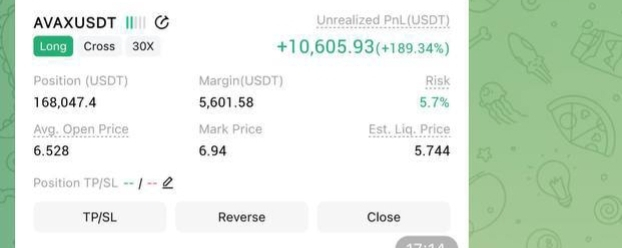
Article
A Trade Is Not Finished Until It Is Properly Managed 📊🔥A Trade Is Not Finished Until It Is Properly Managed 📊🔥
One of the most important parts of trading is not simply finding an entry — it is knowing what to do after the position is open.
The screenshot above is a great example of why trade management matters. The position on AVAXUSDT was already showing a strong unrealized profit of more than +189%, with the trade moving significantly in the expected direction. At that moment, the focus was no longer on chasing another entry or becoming greedy for a bigger move. The priority was protecting the profit that had already been created. 💰
A good trader understands that the market does not owe us anything. A position can be heavily profitable one minute and give back a large portion of those gains if emotions take control. That is why I always believe that execution and management are just as important as analysis.
There is a major difference between saying:
“Price is going to move up.”
and actually managing a long position when the market gives you the move you expected.
Once a trade reaches a strong profit zone, you have to evaluate the situation carefully. Is the momentum still strong? Is the structure holding? Is there a reason to stay in the position? Or is it better to secure the result and walk away?
In this case, the decision was simple: the trade had delivered, so closing the position and securing the profit made sense. ✅
The screenshot also shows why discipline matters when using leverage. A 30X position can produce significant returns when the market moves in your favor, but leverage also increases risk dramatically when the market moves against you. That is why risk management, position sizing, stop-loss planning, and proper trade management should never be ignored.
Another important lesson is that you do not need to capture every single percentage of a move.
Many traders make the mistake of holding a winning position because they want the absolute top. They watch a large profit become a smaller profit, then eventually turn a winning trade into a losing one. That is not disciplined trading.
Sometimes the best decision is simply:
Take the result. Close the trade. Protect your capital. Wait for the next opportunity. 🎯
There will always be another setup in the market.
The goal is not to win every trade or catch every pump. The goal is to build a repeatable process where analysis, entry, risk management, and exit decisions work together.
Stay patient. Stay focused. Don't let greed control a profitable position.
A profitable trade becomes a real result only when you know how to manage and close it properly. 📈🔥
Keep learning. Keep improving. And most importantly, keep your emotions out of the execution.
#BTCSurpasses$72000
#ETHSurpasses$2300
$AVAX
{future}(AVAXUSDT)
A Trade Is Not Finished Until It Is Properly Managed 📊🔥
A Trade Is Not Finished Until It Is Properly Managed 📊🔥
One of the most important parts of trading is not simply finding an entry — it is knowing what to do after the position is open.
The screenshot above is a great example of why trade management matters. The position on AVAXUSDT was already showing a strong unrealized profit of more than +189%, with the trade moving significantly in the expected direction. At that moment, the focus was no longer on chasing another entry or becoming greedy for a bigger move. The priority was protecting the profit that had already been created. 💰
A good trader understands that the market does not owe us anything. A position can be heavily profitable one minute and give back a large portion of those gains if emotions take control. That is why I always believe that execution and management are just as important as analysis.
There is a major difference between saying:
“Price is going to move up.”
and actually managing a long position when the market gives you the move you expected.
Once a trade reaches a strong profit zone, you have to evaluate the situation carefully. Is the momentum still strong? Is the structure holding? Is there a reason to stay in the position? Or is it better to secure the result and walk away?
In this case, the decision was simple: the trade had delivered, so closing the position and securing the profit made sense. ✅
The screenshot also shows why discipline matters when using leverage. A 30X position can produce significant returns when the market moves in your favor, but leverage also increases risk dramatically when the market moves against you. That is why risk management, position sizing, stop-loss planning, and proper trade management should never be ignored.
Another important lesson is that you do not need to capture every single percentage of a move.
Many traders make the mistake of holding a winning position because they want the absolute top. They watch a large profit become a smaller profit, then eventually turn a winning trade into a losing one. That is not disciplined trading.
Sometimes the best decision is simply:
Take the result. Close the trade. Protect your capital. Wait for the next opportunity. 🎯
There will always be another setup in the market.
The goal is not to win every trade or catch every pump. The goal is to build a repeatable process where analysis, entry, risk management, and exit decisions work together.
Stay patient. Stay focused. Don't let greed control a profitable position.
A profitable trade becomes a real result only when you know how to manage and close it properly. 📈🔥
Keep learning. Keep improving. And most importantly, keep your emotions out of the execution.
#BTCSurpasses$72000
#ETHSurpasses$2300
$AVAX
One of the most important parts of trading is not simply finding an entry — it is knowing what to do after the position is open.
The screenshot above is a great example of why trade management matters. The position on AVAXUSDT was already showing a strong unrealized profit of more than +189%, with the trade moving significantly in the expected direction. At that moment, the focus was no longer on chasing another entry or becoming greedy for a bigger move. The priority was protecting the profit that had already been created. 💰
A good trader understands that the market does not owe us anything. A position can be heavily profitable one minute and give back a large portion of those gains if emotions take control. That is why I always believe that execution and management are just as important as analysis.
There is a major difference between saying:
“Price is going to move up.”
and actually managing a long position when the market gives you the move you expected.
Once a trade reaches a strong profit zone, you have to evaluate the situation carefully. Is the momentum still strong? Is the structure holding? Is there a reason to stay in the position? Or is it better to secure the result and walk away?
In this case, the decision was simple: the trade had delivered, so closing the position and securing the profit made sense. ✅
The screenshot also shows why discipline matters when using leverage. A 30X position can produce significant returns when the market moves in your favor, but leverage also increases risk dramatically when the market moves against you. That is why risk management, position sizing, stop-loss planning, and proper trade management should never be ignored.
Another important lesson is that you do not need to capture every single percentage of a move.
Many traders make the mistake of holding a winning position because they want the absolute top. They watch a large profit become a smaller profit, then eventually turn a winning trade into a losing one. That is not disciplined trading.
Sometimes the best decision is simply:
Take the result. Close the trade. Protect your capital. Wait for the next opportunity. 🎯
There will always be another setup in the market.
The goal is not to win every trade or catch every pump. The goal is to build a repeatable process where analysis, entry, risk management, and exit decisions work together.
Stay patient. Stay focused. Don't let greed control a profitable position.
A profitable trade becomes a real result only when you know how to manage and close it properly. 📈🔥
Keep learning. Keep improving. And most importantly, keep your emotions out of the execution.
#BTCSurpasses$72000
#ETHSurpasses$2300
$AVAX
1
1
183
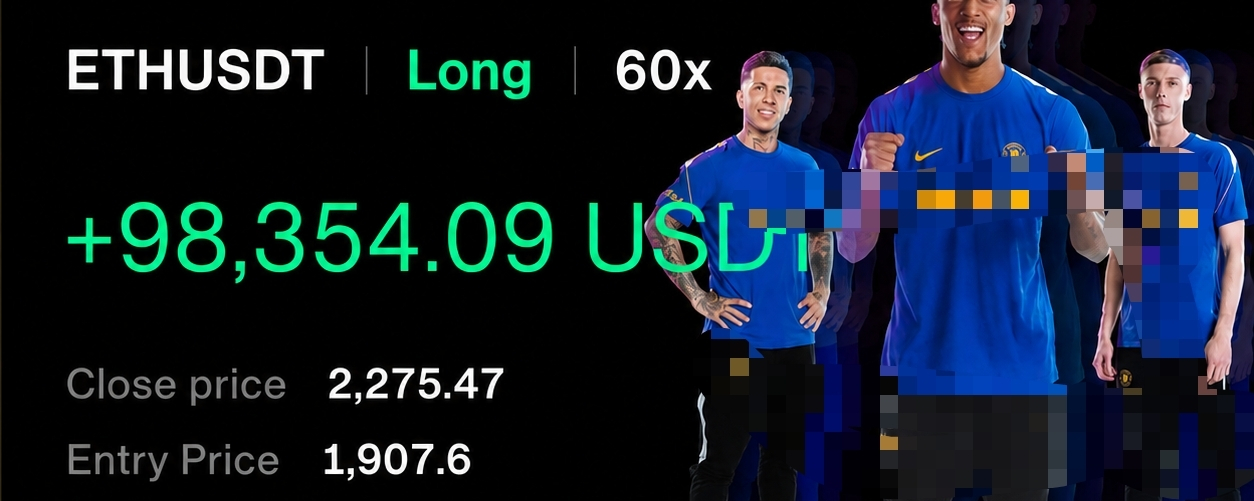
Article
JUST IMAGINE HOW I FEELING NOW 🤑🤑🤑🤑🤑🔥🔥🔥👇👇Trading Is Not About One Big Win — It’s About Staying Consistent
One of the biggest mistakes people make in crypto trading is focusing only on the final profit number. A large green result can look impressive, but the real value of any trade comes from understanding the decisions, discipline, patience, and risk management behind it.
Markets do not move in a straight line. Even when the overall direction looks obvious, price can suddenly reverse, consolidate, sweep liquidity, or react to unexpected news. This is why trading should never be treated as a game of certainty. There is no setup that guarantees a win every single time.
A good trader understands that losses are part of the process. The goal is not to avoid every losing trade. The goal is to make sure that one losing trade does not destroy the entire account. This is where risk management becomes more important than prediction.
Before entering a position, a trader should already know what would make the trade invalid. Having an entry without having an exit plan is one of the easiest ways to turn a small mistake into a much bigger problem. The market does not care about our expectations. If the setup is no longer valid, accepting that fact is often better than trying to force the market to prove us right.
Leverage also deserves serious attention. Higher leverage can make relatively small price movements have a much larger impact on a position. It can increase the potential return, but it can also increase the potential loss just as quickly. This is why leverage should never be viewed separately from position size and risk.
Another important part of trading is controlling emotions.
When a position starts moving in the expected direction, greed can appear. A trader may start thinking that the market will continue moving forever and decide to take unnecessary risks. When a position moves against them, fear can take over, leading to emotional exits or impulsive decisions.
Both situations can damage a strategy.
The strongest traders are not necessarily the people who feel nothing. They are the people who can recognize their emotions without allowing those emotions to control their decisions.
Patience is another underrated skill.
There will always be another setup. There will always be another opportunity. Missing one move does not mean the market is finished. Many traders make unnecessary mistakes because they feel they have to be in a position at all times. But sometimes the best trade is simply no trade.
If the market structure is unclear, if volatility is too high, or if the risk-to-reward setup does not make sense, waiting can be the smarter decision.
A trading journal can also make a huge difference. Instead of looking only at profit and loss, record why the trade was taken, what the market looked like at the time, where the invalidation level was, how much risk was taken, and why the position was closed.
After enough trades, patterns begin to appear.
Maybe entries are consistently too late. Maybe profitable trades are being closed too early. Maybe losses happen mostly after emotional decisions. Maybe the strategy works well in trending markets but performs poorly during sideways conditions.
These observations are far more valuable than simply looking at the account balance.
Another important lesson is that one successful trade does not prove that a strategy is perfect. Likewise, one losing trade does not automatically mean that the strategy is useless.
Trading is a game of probabilities.
A good setup can lose. A bad setup can sometimes win. What matters is whether the decision-making process remains strong over a large number of trades.
This is why consistency matters more than excitement.
The objective should not be to make the biggest possible profit on every single position. The objective should be to build a process that can survive different market conditions.
Protecting capital gives you the ability to participate tomorrow.
That may sound simple, but it is one of the most important principles in trading. If capital is preserved, another opportunity can always be taken. If risk becomes excessive, one bad move can remove the ability to participate at all.
The market will always be there.
There is no need to chase every candle, react to every movement, or turn every small fluctuation into a trade.
Stay focused on the bigger picture. Study market structure. Understand your risk. Follow your plan. Review your mistakes. Learn from your wins without becoming overconfident.
Most importantly, remember that trading is a long-term skill.
The traders who survive are not always the ones who catch the biggest move. They are often the ones who know when to act, when to wait, and when to walk away.
One trade can change your day.
But discipline can change your entire trading journey.
Stay patient. Stay disciplined. Manage your risk. Keep learning.
#BTCSurpasses$72000
#ETHSurpasses$2300
$ETH
{future}(ETHUSDT)
JUST IMAGINE HOW I FEELING NOW 🤑🤑🤑🤑🤑🔥🔥🔥👇👇
Trading Is Not About One Big Win — It’s About Staying Consistent
One of the biggest mistakes people make in crypto trading is focusing only on the final profit number. A large green result can look impressive, but the real value of any trade comes from understanding the decisions, discipline, patience, and risk management behind it.
Markets do not move in a straight line. Even when the overall direction looks obvious, price can suddenly reverse, consolidate, sweep liquidity, or react to unexpected news. This is why trading should never be treated as a game of certainty. There is no setup that guarantees a win every single time.
A good trader understands that losses are part of the process. The goal is not to avoid every losing trade. The goal is to make sure that one losing trade does not destroy the entire account. This is where risk management becomes more important than prediction.
Before entering a position, a trader should already know what would make the trade invalid. Having an entry without having an exit plan is one of the easiest ways to turn a small mistake into a much bigger problem. The market does not care about our expectations. If the setup is no longer valid, accepting that fact is often better than trying to force the market to prove us right.
Leverage also deserves serious attention. Higher leverage can make relatively small price movements have a much larger impact on a position. It can increase the potential return, but it can also increase the potential loss just as quickly. This is why leverage should never be viewed separately from position size and risk.
Another important part of trading is controlling emotions.
When a position starts moving in the expected direction, greed can appear. A trader may start thinking that the market will continue moving forever and decide to take unnecessary risks. When a position moves against them, fear can take over, leading to emotional exits or impulsive decisions.
Both situations can damage a strategy.
The strongest traders are not necessarily the people who feel nothing. They are the people who can recognize their emotions without allowing those emotions to control their decisions.
Patience is another underrated skill.
There will always be another setup. There will always be another opportunity. Missing one move does not mean the market is finished. Many traders make unnecessary mistakes because they feel they have to be in a position at all times. But sometimes the best trade is simply no trade.
If the market structure is unclear, if volatility is too high, or if the risk-to-reward setup does not make sense, waiting can be the smarter decision.
A trading journal can also make a huge difference. Instead of looking only at profit and loss, record why the trade was taken, what the market looked like at the time, where the invalidation level was, how much risk was taken, and why the position was closed.
After enough trades, patterns begin to appear.
Maybe entries are consistently too late. Maybe profitable trades are being closed too early. Maybe losses happen mostly after emotional decisions. Maybe the strategy works well in trending markets but performs poorly during sideways conditions.
These observations are far more valuable than simply looking at the account balance.
Another important lesson is that one successful trade does not prove that a strategy is perfect. Likewise, one losing trade does not automatically mean that the strategy is useless.
Trading is a game of probabilities.
A good setup can lose. A bad setup can sometimes win. What matters is whether the decision-making process remains strong over a large number of trades.
This is why consistency matters more than excitement.
The objective should not be to make the biggest possible profit on every single position. The objective should be to build a process that can survive different market conditions.
Protecting capital gives you the ability to participate tomorrow.
That may sound simple, but it is one of the most important principles in trading. If capital is preserved, another opportunity can always be taken. If risk becomes excessive, one bad move can remove the ability to participate at all.
The market will always be there.
There is no need to chase every candle, react to every movement, or turn every small fluctuation into a trade.
Stay focused on the bigger picture. Study market structure. Understand your risk. Follow your plan. Review your mistakes. Learn from your wins without becoming overconfident.
Most importantly, remember that trading is a long-term skill.
The traders who survive are not always the ones who catch the biggest move. They are often the ones who know when to act, when to wait, and when to walk away.
One trade can change your day.
But discipline can change your entire trading journey.
Stay patient. Stay disciplined. Manage your risk. Keep learning.
#BTCSurpasses$72000
#ETHSurpasses$2300
$ETH
One of the biggest mistakes people make in crypto trading is focusing only on the final profit number. A large green result can look impressive, but the real value of any trade comes from understanding the decisions, discipline, patience, and risk management behind it.
Markets do not move in a straight line. Even when the overall direction looks obvious, price can suddenly reverse, consolidate, sweep liquidity, or react to unexpected news. This is why trading should never be treated as a game of certainty. There is no setup that guarantees a win every single time.
A good trader understands that losses are part of the process. The goal is not to avoid every losing trade. The goal is to make sure that one losing trade does not destroy the entire account. This is where risk management becomes more important than prediction.
Before entering a position, a trader should already know what would make the trade invalid. Having an entry without having an exit plan is one of the easiest ways to turn a small mistake into a much bigger problem. The market does not care about our expectations. If the setup is no longer valid, accepting that fact is often better than trying to force the market to prove us right.
Leverage also deserves serious attention. Higher leverage can make relatively small price movements have a much larger impact on a position. It can increase the potential return, but it can also increase the potential loss just as quickly. This is why leverage should never be viewed separately from position size and risk.
Another important part of trading is controlling emotions.
When a position starts moving in the expected direction, greed can appear. A trader may start thinking that the market will continue moving forever and decide to take unnecessary risks. When a position moves against them, fear can take over, leading to emotional exits or impulsive decisions.
Both situations can damage a strategy.
The strongest traders are not necessarily the people who feel nothing. They are the people who can recognize their emotions without allowing those emotions to control their decisions.
Patience is another underrated skill.
There will always be another setup. There will always be another opportunity. Missing one move does not mean the market is finished. Many traders make unnecessary mistakes because they feel they have to be in a position at all times. But sometimes the best trade is simply no trade.
If the market structure is unclear, if volatility is too high, or if the risk-to-reward setup does not make sense, waiting can be the smarter decision.
A trading journal can also make a huge difference. Instead of looking only at profit and loss, record why the trade was taken, what the market looked like at the time, where the invalidation level was, how much risk was taken, and why the position was closed.
After enough trades, patterns begin to appear.
Maybe entries are consistently too late. Maybe profitable trades are being closed too early. Maybe losses happen mostly after emotional decisions. Maybe the strategy works well in trending markets but performs poorly during sideways conditions.
These observations are far more valuable than simply looking at the account balance.
Another important lesson is that one successful trade does not prove that a strategy is perfect. Likewise, one losing trade does not automatically mean that the strategy is useless.
Trading is a game of probabilities.
A good setup can lose. A bad setup can sometimes win. What matters is whether the decision-making process remains strong over a large number of trades.
This is why consistency matters more than excitement.
The objective should not be to make the biggest possible profit on every single position. The objective should be to build a process that can survive different market conditions.
Protecting capital gives you the ability to participate tomorrow.
That may sound simple, but it is one of the most important principles in trading. If capital is preserved, another opportunity can always be taken. If risk becomes excessive, one bad move can remove the ability to participate at all.
The market will always be there.
There is no need to chase every candle, react to every movement, or turn every small fluctuation into a trade.
Stay focused on the bigger picture. Study market structure. Understand your risk. Follow your plan. Review your mistakes. Learn from your wins without becoming overconfident.
Most importantly, remember that trading is a long-term skill.
The traders who survive are not always the ones who catch the biggest move. They are often the ones who know when to act, when to wait, and when to walk away.
One trade can change your day.
But discipline can change your entire trading journey.
Stay patient. Stay disciplined. Manage your risk. Keep learning.
#BTCSurpasses$72000
#ETHSurpasses$2300
$ETH
1
139
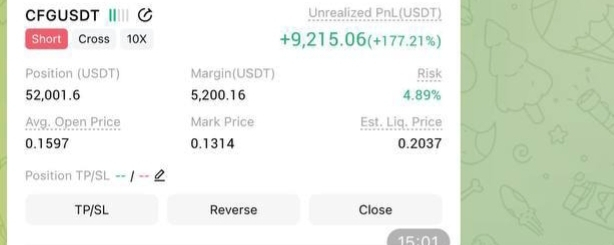
Article
📊 CFGUSDT SHORT TRADE — ANOTHER TARGET SUCCESSFULLY COMPLETED 🎯🔥📊 CFGUSDT SHORT TRADE — ANOTHER TARGET SUCCESSFULLY COMPLETED 🎯🔥
Another trade has been successfully managed from entry to exit, and this CFGUSDT short position is a perfect example of what disciplined execution can achieve when the market setup, timing, and trade management come together.
The position shown in the screenshot reached an impressive +177.21% ROI, with the unrealized PNL showing approximately 9,215 USDT at that moment. 📈💰
But a profitable trade is not only about the final percentage or the number displayed in the PNL section. The real value comes from understanding the market, identifying the right opportunity, managing the position patiently, and knowing when it is time to secure the result.
This position was held while the expected move developed. Instead of reacting emotionally to every small fluctuation, the focus remained on the overall setup and the planned direction.
Once the market delivered the expected move and the target was reached, the decision was made to close the position and secure the profit. ✅
That is one of the most important lessons in trading:
A trade should have a plan before it has an entry.
Before opening a position, you should already have an idea of where the trade could go, where the setup becomes invalid, and how you will manage the position if the market moves in your favor.
🧠 The Process Matters
🔹 Identify the setup
🔹 Wait for confirmation
🔹 Enter with a defined plan
🔹 Manage the open position
🔹 Avoid emotional reactions
🔹 Take profit when the objective is achieved
🔹 Move on and wait for the next opportunity
The market will always provide another setup. There is no need to become greedy after a successful trade or immediately jump into another position simply because you have just made profit.
One of the biggest mistakes traders make is allowing a winning position to become a losing one because they keep waiting for “just a little more.”
When the planned objective has been reached, protecting the result is part of professional trade management. 💯
This CFGUSDT short is another reminder that discipline is more important than excitement.
You don't need to predict every single candle. You need to recognize quality setups, manage risk, stay patient, and execute according to the plan.
The screenshot shows the result, but behind every result there is a process: analysis, patience, execution, and management.
We successfully reached the target overnight, secured the profit, and closed the position. Now the focus moves forward toward the next setup. 🚀📊
No chasing. No emotional decisions. No unnecessary trades.
Just a structured approach and disciplined execution.
Every trade is a lesson. Every setup is an opportunity to improve. And every profitable position should be managed with the same level of discipline that was used to enter it.
Another successful trade completed. 🎯🔥
Plan the trade. Execute the plan. Manage the position. Secure the result.
That is how consistency is built over time. 📈
#CryptoRally
#FOMCWatch
$CFG
{future}(CFGUSDT)
📊 CFGUSDT SHORT TRADE — ANOTHER TARGET SUCCESSFULLY COMPLETED 🎯🔥
📊 CFGUSDT SHORT TRADE — ANOTHER TARGET SUCCESSFULLY COMPLETED 🎯🔥
Another trade has been successfully managed from entry to exit, and this CFGUSDT short position is a perfect example of what disciplined execution can achieve when the market setup, timing, and trade management come together.
The position shown in the screenshot reached an impressive +177.21% ROI, with the unrealized PNL showing approximately 9,215 USDT at that moment. 📈💰
But a profitable trade is not only about the final percentage or the number displayed in the PNL section. The real value comes from understanding the market, identifying the right opportunity, managing the position patiently, and knowing when it is time to secure the result.
This position was held while the expected move developed. Instead of reacting emotionally to every small fluctuation, the focus remained on the overall setup and the planned direction.
Once the market delivered the expected move and the target was reached, the decision was made to close the position and secure the profit. ✅
That is one of the most important lessons in trading:
A trade should have a plan before it has an entry.
Before opening a position, you should already have an idea of where the trade could go, where the setup becomes invalid, and how you will manage the position if the market moves in your favor.
🧠 The Process Matters
🔹 Identify the setup
🔹 Wait for confirmation
🔹 Enter with a defined plan
🔹 Manage the open position
🔹 Avoid emotional reactions
🔹 Take profit when the objective is achieved
🔹 Move on and wait for the next opportunity
The market will always provide another setup. There is no need to become greedy after a successful trade or immediately jump into another position simply because you have just made profit.
One of the biggest mistakes traders make is allowing a winning position to become a losing one because they keep waiting for “just a little more.”
When the planned objective has been reached, protecting the result is part of professional trade management. 💯
This CFGUSDT short is another reminder that discipline is more important than excitement.
You don't need to predict every single candle. You need to recognize quality setups, manage risk, stay patient, and execute according to the plan.
The screenshot shows the result, but behind every result there is a process: analysis, patience, execution, and management.
We successfully reached the target overnight, secured the profit, and closed the position. Now the focus moves forward toward the next setup. 🚀📊
No chasing. No emotional decisions. No unnecessary trades.
Just a structured approach and disciplined execution.
Every trade is a lesson. Every setup is an opportunity to improve. And every profitable position should be managed with the same level of discipline that was used to enter it.
Another successful trade completed. 🎯🔥
Plan the trade. Execute the plan. Manage the position. Secure the result.
That is how consistency is built over time. 📈
#CryptoRally
#FOMCWatch
$CFG
Another trade has been successfully managed from entry to exit, and this CFGUSDT short position is a perfect example of what disciplined execution can achieve when the market setup, timing, and trade management come together.
The position shown in the screenshot reached an impressive +177.21% ROI, with the unrealized PNL showing approximately 9,215 USDT at that moment. 📈💰
But a profitable trade is not only about the final percentage or the number displayed in the PNL section. The real value comes from understanding the market, identifying the right opportunity, managing the position patiently, and knowing when it is time to secure the result.
This position was held while the expected move developed. Instead of reacting emotionally to every small fluctuation, the focus remained on the overall setup and the planned direction.
Once the market delivered the expected move and the target was reached, the decision was made to close the position and secure the profit. ✅
That is one of the most important lessons in trading:
A trade should have a plan before it has an entry.
Before opening a position, you should already have an idea of where the trade could go, where the setup becomes invalid, and how you will manage the position if the market moves in your favor.
🧠 The Process Matters
🔹 Identify the setup
🔹 Wait for confirmation
🔹 Enter with a defined plan
🔹 Manage the open position
🔹 Avoid emotional reactions
🔹 Take profit when the objective is achieved
🔹 Move on and wait for the next opportunity
The market will always provide another setup. There is no need to become greedy after a successful trade or immediately jump into another position simply because you have just made profit.
One of the biggest mistakes traders make is allowing a winning position to become a losing one because they keep waiting for “just a little more.”
When the planned objective has been reached, protecting the result is part of professional trade management. 💯
This CFGUSDT short is another reminder that discipline is more important than excitement.
You don't need to predict every single candle. You need to recognize quality setups, manage risk, stay patient, and execute according to the plan.
The screenshot shows the result, but behind every result there is a process: analysis, patience, execution, and management.
We successfully reached the target overnight, secured the profit, and closed the position. Now the focus moves forward toward the next setup. 🚀📊
No chasing. No emotional decisions. No unnecessary trades.
Just a structured approach and disciplined execution.
Every trade is a lesson. Every setup is an opportunity to improve. And every profitable position should be managed with the same level of discipline that was used to enter it.
Another successful trade completed. 🎯🔥
Plan the trade. Execute the plan. Manage the position. Secure the result.
That is how consistency is built over time. 📈
#CryptoRally
#FOMCWatch
$CFG
224
·
--
Bearish
📊 SOXLUSDT TRADE UPDATE — DISCIPLINE DELIVERS RESULTS
Another trade successfully managed from entry to exit. 🔥
The screenshot tells the story clearly. The position moved strongly in our expected direction, and within a short period, the trade reached an impressive +327.47% ROI, with the PNL showing approximately 12,122 USDT at the time of the screenshot.
But the real achievement here is not simply the percentage shown on the screen. It is the execution and management behind the trade.
A good setup requires patience. Once the position is opened, the market needs room to move. Instead of making emotional decisions because of every small candle or temporary pullback, the focus should remain on the original plan.
In this trade, the move developed exactly as expected. When the position reached a strong profit level, the decision was made to close and secure the result. ✅💰
This is an important lesson for every trader:
✔️ Have a clear setup before entering.
✔️ Define your risk.
✔️ Avoid emotional decisions.
✔️ Give the trade enough room to develop.
✔️ Secure profits when the planned objective is achieved.
✔️ Never let greed turn a winning trade into a losing one.
Trading is not about chasing every move in the market. It is about waiting for the right opportunity and managing it with discipline.
One successful trade does not guarantee the next one will be successful, which is why risk management always remains important.
The goal is simple: follow the strategy, respect the plan, manage the position, and let the market do the rest.
Another position completed successfully. 📈🔥
Consistency comes from repeating good decisions, not taking unnecessary risks. Every trade should be treated as one opportunity within a larger process. Protecting capital and following the plan will matter more than chasing a bigger number.
#CryptoRally
#FOMCWatch
$SOXL
{future}(SOXLUSDT)
📊 SOXLUSDT TRADE UPDATE — DISCIPLINE DELIVERS RESULTS
Another trade successfully managed from entry to exit. 🔥
The screenshot tells the story clearly. The position moved strongly in our expected direction, and within a short period, the trade reached an impressive +327.47% ROI, with the PNL showing approximately 12,122 USDT at the time of the screenshot.
But the real achievement here is not simply the percentage shown on the screen. It is the execution and management behind the trade.
A good setup requires patience. Once the position is opened, the market needs room to move. Instead of making emotional decisions because of every small candle or temporary pullback, the focus should remain on the original plan.
In this trade, the move developed exactly as expected. When the position reached a strong profit level, the decision was made to close and secure the result. ✅💰
This is an important lesson for every trader:
✔️ Have a clear setup before entering.
✔️ Define your risk.
✔️ Avoid emotional decisions.
✔️ Give the trade enough room to develop.
✔️ Secure profits when the planned objective is achieved.
✔️ Never let greed turn a winning trade into a losing one.
Trading is not about chasing every move in the market. It is about waiting for the right opportunity and managing it with discipline.
One successful trade does not guarantee the next one will be successful, which is why risk management always remains important.
The goal is simple: follow the strategy, respect the plan, manage the position, and let the market do the rest.
Another position completed successfully. 📈🔥
Consistency comes from repeating good decisions, not taking unnecessary risks. Every trade should be treated as one opportunity within a larger process. Protecting capital and following the plan will matter more than chasing a bigger number.
#CryptoRally
#FOMCWatch
$SOXL
Another trade successfully managed from entry to exit. 🔥
The screenshot tells the story clearly. The position moved strongly in our expected direction, and within a short period, the trade reached an impressive +327.47% ROI, with the PNL showing approximately 12,122 USDT at the time of the screenshot.
But the real achievement here is not simply the percentage shown on the screen. It is the execution and management behind the trade.
A good setup requires patience. Once the position is opened, the market needs room to move. Instead of making emotional decisions because of every small candle or temporary pullback, the focus should remain on the original plan.
In this trade, the move developed exactly as expected. When the position reached a strong profit level, the decision was made to close and secure the result. ✅💰
This is an important lesson for every trader:
✔️ Have a clear setup before entering.
✔️ Define your risk.
✔️ Avoid emotional decisions.
✔️ Give the trade enough room to develop.
✔️ Secure profits when the planned objective is achieved.
✔️ Never let greed turn a winning trade into a losing one.
Trading is not about chasing every move in the market. It is about waiting for the right opportunity and managing it with discipline.
One successful trade does not guarantee the next one will be successful, which is why risk management always remains important.
The goal is simple: follow the strategy, respect the plan, manage the position, and let the market do the rest.
Another position completed successfully. 📈🔥
Consistency comes from repeating good decisions, not taking unnecessary risks. Every trade should be treated as one opportunity within a larger process. Protecting capital and following the plan will matter more than chasing a bigger number.
#CryptoRally
#FOMCWatch
$SOXL
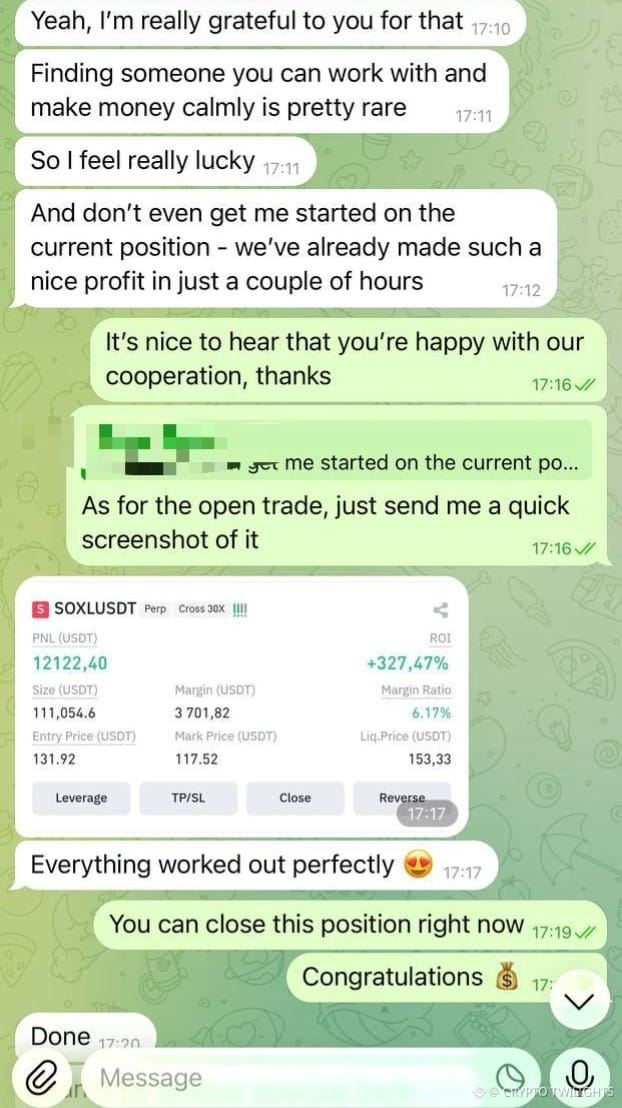
1
222
·
--
Bullish
📊 LINKUSDT LONG — A Trade Managed With Precision 🎯
This is a great example of why trade management matters just as much as trade entry.
The LINKUSDT position moved strongly in the expected direction, delivering an impressive unrealized result of +$7,375.23 (+113.44%) on the displayed position.
🟢 Pair: LINKUSDT
📈 Direction: LONG
⚡ Leverage: 30X
💰 Unrealized PnL: +$7,375.23
🔥 Displayed ROI: +113.44%
But the real lesson here isn’t just the profit figure. It’s about having a plan and sticking to it.
Once the position was moving favorably, the trade was monitored carefully rather than allowing emotions to dictate the next decision. The position was eventually closed after the planned move was executed.
This is what disciplined trading should look like:
✅ Identify the setup before entering
✅ Define the risk clearly
✅ Avoid emotional decisions
✅ Monitor the position patiently
✅ Protect profits when the market gives them
✅ Close according to the trading plan
A strong entry can give you an opportunity, but proper management determines how well you handle that opportunity.
Markets can move quickly, especially in futures. That’s why chasing candles, increasing risk emotionally, or refusing to take profit can turn a good setup into a bad trade.
The goal should never be to win every single trade. The goal is to follow a structured process, manage risk, and execute consistently.
📌 Plan the trade. Manage the position. Respect the risk.
One successful trade is only one result. What matters most is building the discipline to repeat good decision-making over time. 🧠📈
#LINKUSDT
#CryptoRally
#FOMCWatch
$LINK
{spot}(LINKUSDT)
📊 LINKUSDT LONG — A Trade Managed With Precision 🎯
This is a great example of why trade management matters just as much as trade entry.
The LINKUSDT position moved strongly in the expected direction, delivering an impressive unrealized result of +$7,375.23 (+113.44%) on the displayed position.
🟢 Pair: LINKUSDT
📈 Direction: LONG
⚡ Leverage: 30X
💰 Unrealized PnL: +$7,375.23
🔥 Displayed ROI: +113.44%
But the real lesson here isn’t just the profit figure. It’s about having a plan and sticking to it.
Once the position was moving favorably, the trade was monitored carefully rather than allowing emotions to dictate the next decision. The position was eventually closed after the planned move was executed.
This is what disciplined trading should look like:
✅ Identify the setup before entering
✅ Define the risk clearly
✅ Avoid emotional decisions
✅ Monitor the position patiently
✅ Protect profits when the market gives them
✅ Close according to the trading plan
A strong entry can give you an opportunity, but proper management determines how well you handle that opportunity.
Markets can move quickly, especially in futures. That’s why chasing candles, increasing risk emotionally, or refusing to take profit can turn a good setup into a bad trade.
The goal should never be to win every single trade. The goal is to follow a structured process, manage risk, and execute consistently.
📌 Plan the trade. Manage the position. Respect the risk.
One successful trade is only one result. What matters most is building the discipline to repeat good decision-making over time. 🧠📈
#LINKUSDT
#CryptoRally
#FOMCWatch
$LINK
This is a great example of why trade management matters just as much as trade entry.
The LINKUSDT position moved strongly in the expected direction, delivering an impressive unrealized result of +$7,375.23 (+113.44%) on the displayed position.
🟢 Pair: LINKUSDT
📈 Direction: LONG
⚡ Leverage: 30X
💰 Unrealized PnL: +$7,375.23
🔥 Displayed ROI: +113.44%
But the real lesson here isn’t just the profit figure. It’s about having a plan and sticking to it.
Once the position was moving favorably, the trade was monitored carefully rather than allowing emotions to dictate the next decision. The position was eventually closed after the planned move was executed.
This is what disciplined trading should look like:
✅ Identify the setup before entering
✅ Define the risk clearly
✅ Avoid emotional decisions
✅ Monitor the position patiently
✅ Protect profits when the market gives them
✅ Close according to the trading plan
A strong entry can give you an opportunity, but proper management determines how well you handle that opportunity.
Markets can move quickly, especially in futures. That’s why chasing candles, increasing risk emotionally, or refusing to take profit can turn a good setup into a bad trade.
The goal should never be to win every single trade. The goal is to follow a structured process, manage risk, and execute consistently.
📌 Plan the trade. Manage the position. Respect the risk.
One successful trade is only one result. What matters most is building the discipline to repeat good decision-making over time. 🧠📈
#LINKUSDT
#CryptoRally
#FOMCWatch
$LINK
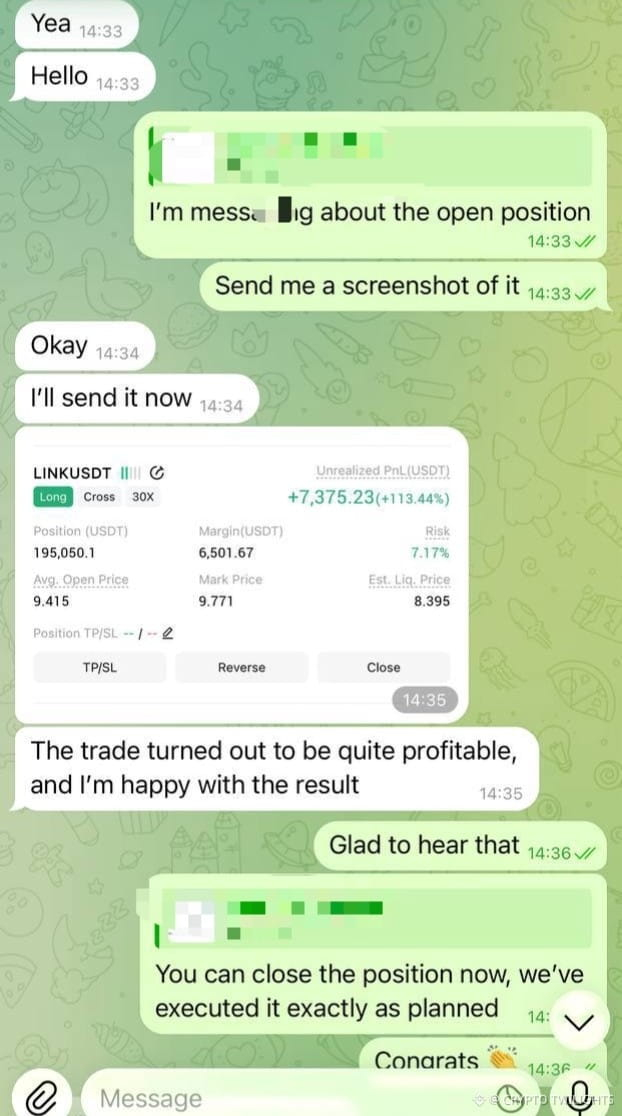
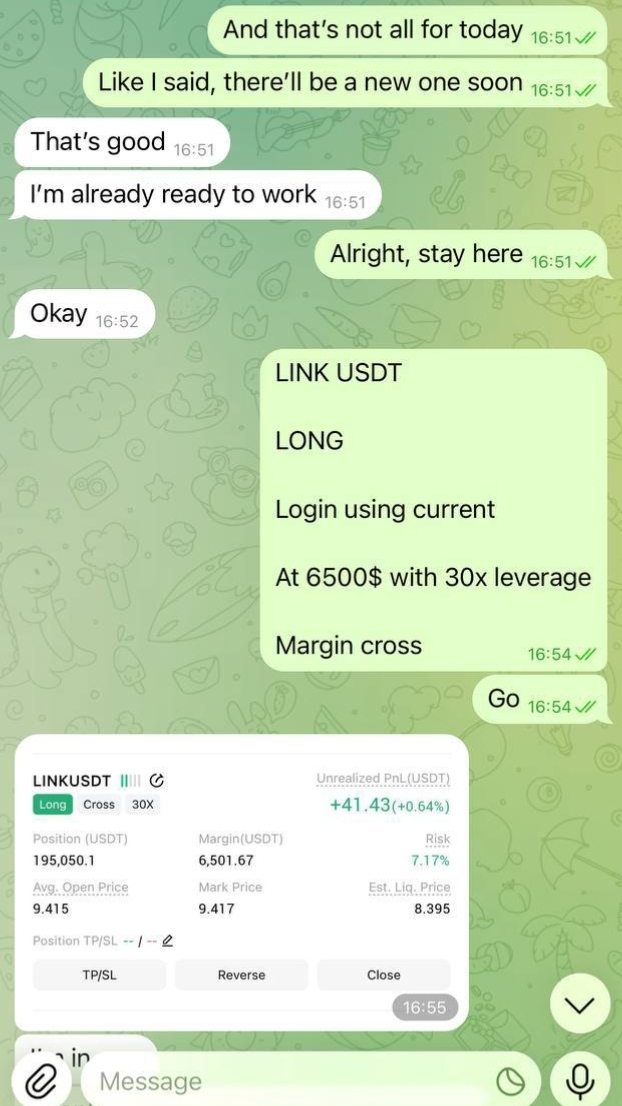
117
Log in to explore more content
Join global crypto users on Binance Square
⚡️ Get latest and useful information about crypto.
💬 Trusted by the world’s largest crypto exchange.
👍 Discover real insights from verified creators.
Email / Phone number
Trending Topics
BOJRaisesRatesTo31YearHigh
145,490 views
2,232 Discussing
#BOJRaisesRatesTo31YearHigh
#BOJRaisesRatesTo31YearHigh 🇯🇵📈
The Bank of Japan has taken another major step by raising interest rates to their highest level in 31 years, putting global markets on alert. The move signals a continued shift away from Japan’s long-standing ultra-loose monetary policy. Higher Japanese rates could strengthen the yen, influence global bond yields, and potentially impact capital flows across financial markets. Crypto and risk assets may also react as investors reassess liquidity and risk exposure. Traders are now watching the BOJ’s next statements closely for clues about future rate decisions. Volatility could increase as markets digest the policy change and its potential global impact. #BOJ #Japan #Crypto #Markets #InterestRates $NVDAB
maqsoodahmed1
·1 Likes
·238 views
BuffettStepsDownAsBerkshireChairman
69,254 views
1,130 Discussing
XRPExchangeReservesHitSevenYearLow
75,564 views
1,026 Discussing