
诸葛投研
2.9k Posts

诸葛投研
 Square Verified+
2017年底进币圈的老韭菜,原股票持证投顾。只分享自己交易,不代表投资建议,跟着操作盈亏自负。视频号“诸葛web3投研”,已经20w粉,欢迎来找我。
Open Trade
Frequent Trader
8.7 Years
71 Following
31.0K+ Followers
28.6K+ Liked
Posts
Portfolio
All
Quotes
Videos
PINNED
Some fans asked me: if I don’t buy this, and I don’t touch that, is there actually any coin trading going on?
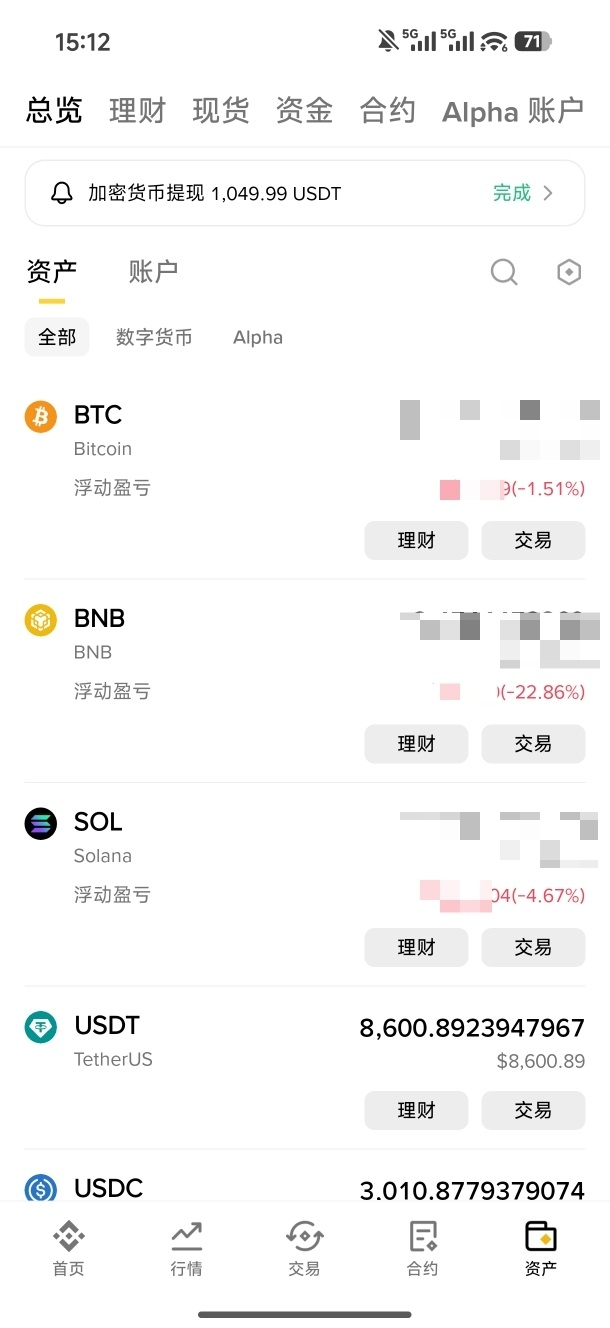
My answer is boring—so boring that this post probably won’t get much traffic: yes, I am trading crypto, but basically I’ve only bought $BTC , $BNB , and $SOL . The rest are just “lottery” positions, just messing around. (That’s also why my analysis tries to stay as objective as possible—I don’t need to shout calls to get people to bag-hold for me.)
1. The one I’m down on the most right now is BNB. Since I needed to participate in Alpha’s TGE, I habitually kept holding BNB, which affected my investment judgment—I didn’t manage to trim at the top. So strictly speaking, I don’t even know whether playing Alpha made me lose or profit.
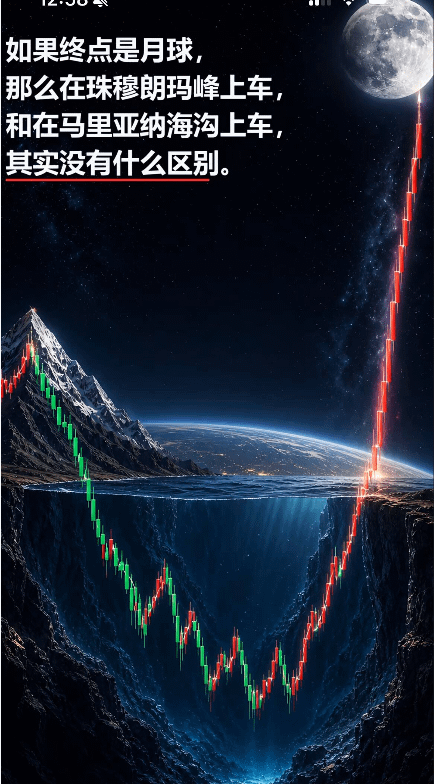
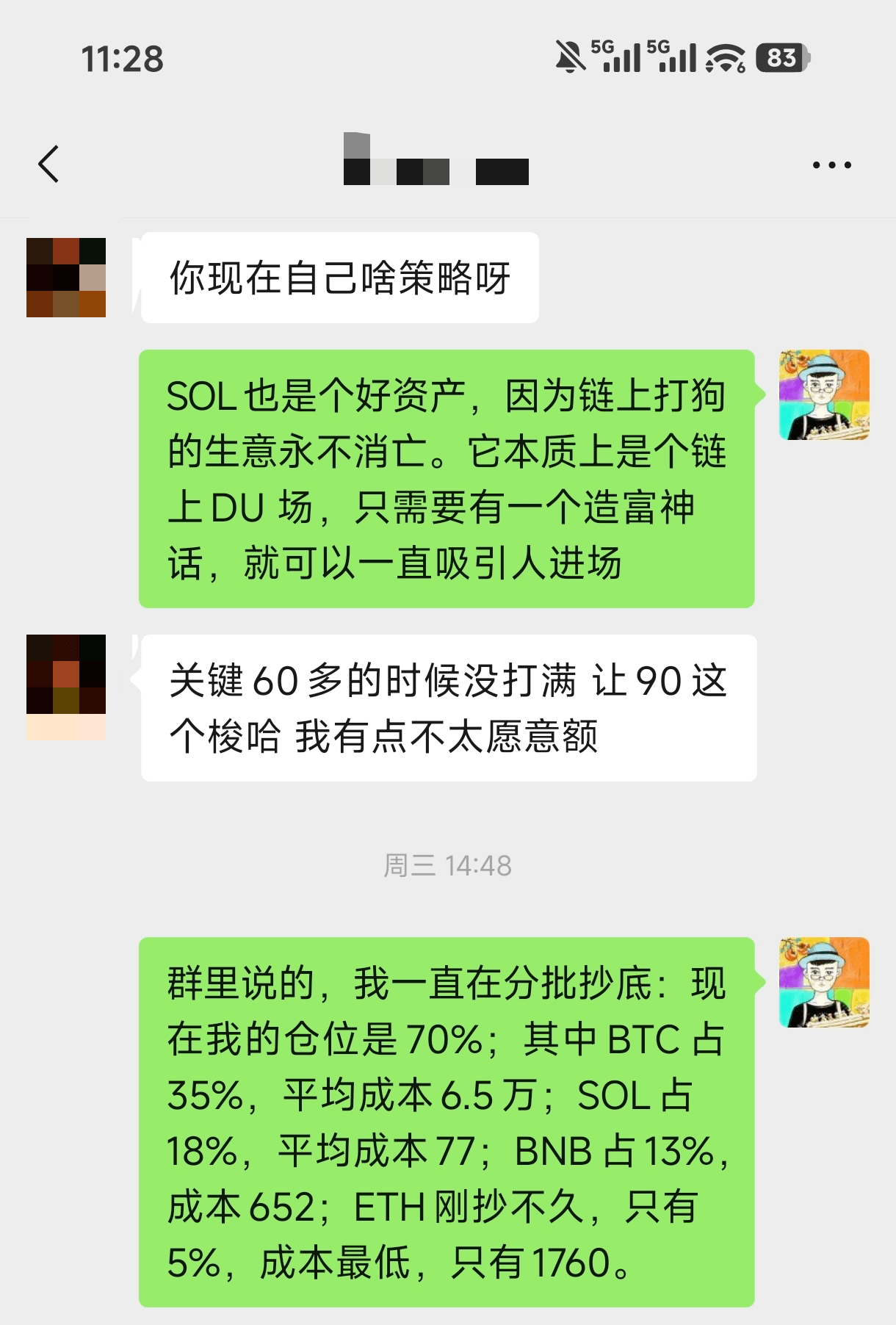
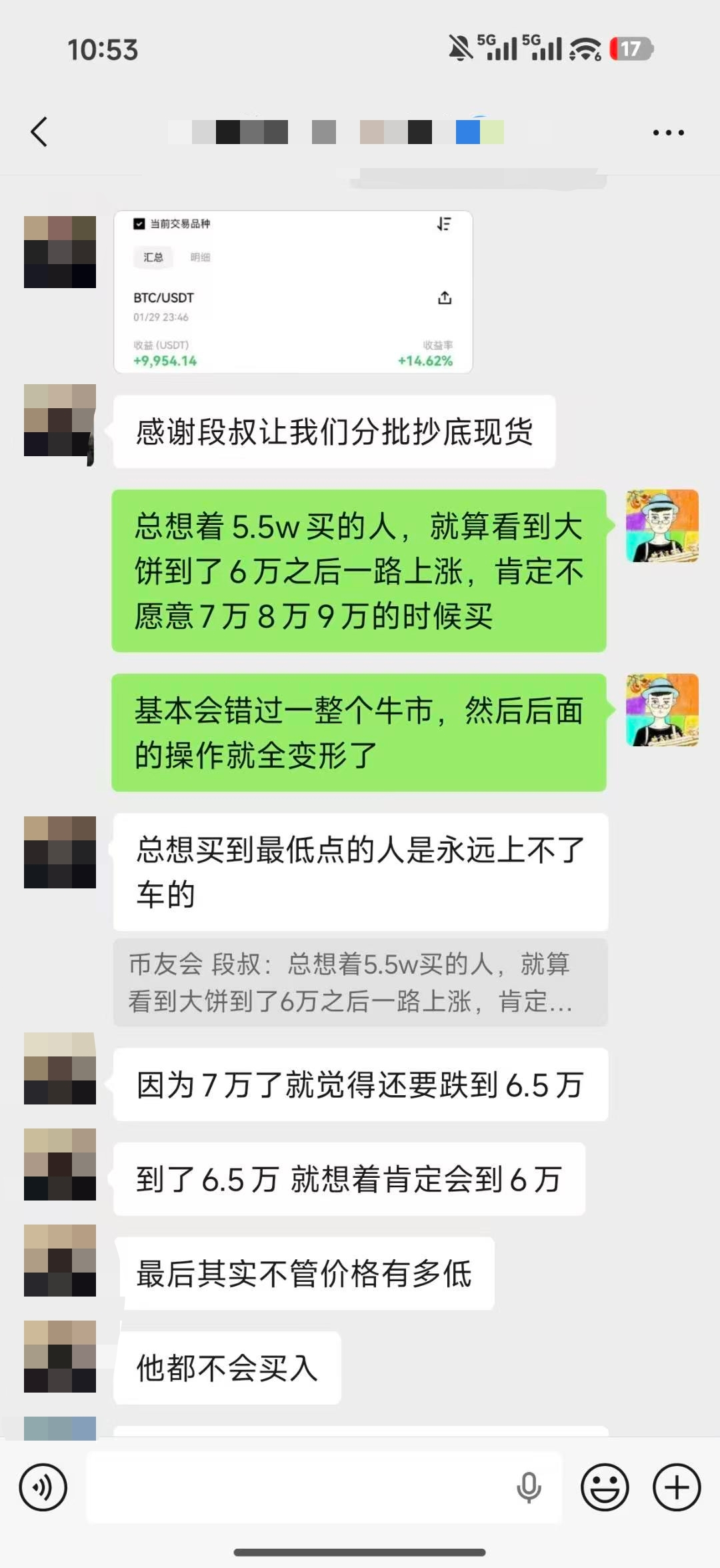
2. BTC and SOL were built up in batches during this round of decline. I think BTC may still drop, but I started averaging in when BTC was already above 70,000. In my view, if a token is destined to go to the moon, then boarding on the Qinghai-Tibet Plateau versus boarding in the Tarim Basin—there isn’t much difference. The key is to get on the train.
3. The point is: there are very, very few tokens that can go to the moon. But I believe BTC should be the least controversial one. So my solution is simple: go with assets led by BTC. Decentralized-wise, I look at BTC; centralized-wise, I look at BNB.
4. Of course, my approach is too ordinary. Most people have heard of it. And many people don’t agree with my method—after all, most people come to this space aiming for 100x coins, aiming to turn their lives around in half a year.
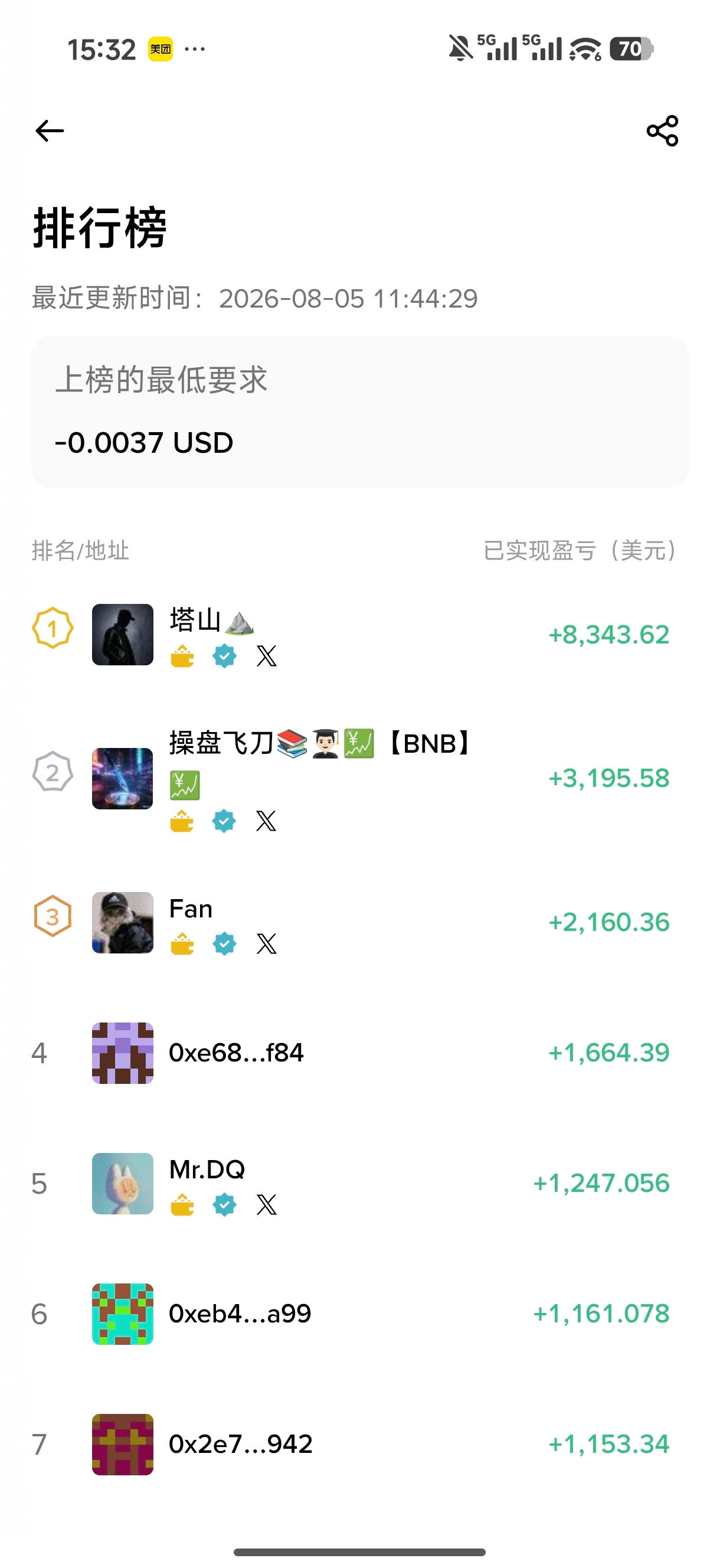
5. I just accepted it long ago—I’m not the kind of person who can change my life in half a year. For example, the “dog-chasing and profit contest” that Binance Wallet ends today: as long as you don’t lose money, you can get on the profit leaderboard! What difficulty level do you think “dog chasing” or playing copycats is?
My answer is boring—so boring that this post probably won’t get much traffic: yes, I am trading crypto, but basically I’ve only bought $BTC , $BNB , and $SOL . The rest are just “lottery” positions, just messing around. (That’s also why my analysis tries to stay as objective as possible—I don’t need to shout calls to get people to bag-hold for me.)
1. The one I’m down on the most right now is BNB. Since I needed to participate in Alpha’s TGE, I habitually kept holding BNB, which affected my investment judgment—I didn’t manage to trim at the top. So strictly speaking, I don’t even know whether playing Alpha made me lose or profit.
2. BTC and SOL were built up in batches during this round of decline. I think BTC may still drop, but I started averaging in when BTC was already above 70,000. In my view, if a token is destined to go to the moon, then boarding on the Qinghai-Tibet Plateau versus boarding in the Tarim Basin—there isn’t much difference. The key is to get on the train.
3. The point is: there are very, very few tokens that can go to the moon. But I believe BTC should be the least controversial one. So my solution is simple: go with assets led by BTC. Decentralized-wise, I look at BTC; centralized-wise, I look at BNB.
4. Of course, my approach is too ordinary. Most people have heard of it. And many people don’t agree with my method—after all, most people come to this space aiming for 100x coins, aiming to turn their lives around in half a year.
5. I just accepted it long ago—I’m not the kind of person who can change my life in half a year. For example, the “dog-chasing and profit contest” that Binance Wallet ends today: as long as you don’t lose money, you can get on the profit leaderboard! What difficulty level do you think “dog chasing” or playing copycats is?
诸葛投研
·
--
The much-anticipated Grvt is indeed here, but it may not be as big as everyone imagined—at least not in terms of size:
1. The final threshold is 245 points, with only 30,000 allocations total, meaning 100 Grvt per person. At the pre-market price of 0.35u, each single allocation is 35u. 123 is just there to comfort everyone—it shows a pre-market value of 200u, but it actually uses a somewhat imprecise data scope.
2. This airdrop isn’t as large as people expected, because Alpha’s allocation share is only 0.3%, down from the expected 1%, which is a 70% direct reduction. Also, allocations must be spread as widely as possible; otherwise everyone would be furious at AnAn—so they could only make each individual “slice” smaller.
3. But honestly, Alpha’s resources really have been reduced. Everyone look at Binance’s official posts—lately they’ve been talking about bStocks. The direct impact is that Alpha only gets 0.3% of the allocation, far less than the 1% over on the other side.
4. So all we can say is: at least it wasn’t a TGE. Life is about digesting pain so you can have the strength to keep moving forward.
1. The final threshold is 245 points, with only 30,000 allocations total, meaning 100 Grvt per person. At the pre-market price of 0.35u, each single allocation is 35u. 123 is just there to comfort everyone—it shows a pre-market value of 200u, but it actually uses a somewhat imprecise data scope.
2. This airdrop isn’t as large as people expected, because Alpha’s allocation share is only 0.3%, down from the expected 1%, which is a 70% direct reduction. Also, allocations must be spread as widely as possible; otherwise everyone would be furious at AnAn—so they could only make each individual “slice” smaller.
3. But honestly, Alpha’s resources really have been reduced. Everyone look at Binance’s official posts—lately they’ve been talking about bStocks. The direct impact is that Alpha only gets 0.3% of the allocation, far less than the 1% over on the other side.
4. So all we can say is: at least it wasn’t a TGE. Life is about digesting pain so you can have the strength to keep moving forward.
Partly True
Today is the day the U.S. Treasury launches its $14.5 billion debt buyback program, a piece of good news that the market has already priced in.
CPI will not be released until the 11th, so over the next few days $BTC and $ETH should both be trading sideways.
1. The recent surge in the Robinhood chain meme market makes me feel like the major coins have already finished their run and the rotation has moved into altcoins; and now altcoins seem to be at their absolute peak, with the bubble about to burst.
2. Debt buyback = liquidity injection. When the Treasury buys back Treasury bonds, it is equivalent to injecting cash into the market. This positive catalyst has already been fully priced in, and I am a bit worried that people will step away and avoid risk over the next few days.
3. The probability of a September FOMC rate hike is 58.4%. If there really is a rate hike in September, it would be the first since 2020. BTC should fall to 75k.
CPI will not be released until the 11th, so over the next few days $BTC and $ETH should both be trading sideways.
1. The recent surge in the Robinhood chain meme market makes me feel like the major coins have already finished their run and the rotation has moved into altcoins; and now altcoins seem to be at their absolute peak, with the bubble about to burst.
2. Debt buyback = liquidity injection. When the Treasury buys back Treasury bonds, it is equivalent to injecting cash into the market. This positive catalyst has already been fully priced in, and I am a bit worried that people will step away and avoid risk over the next few days.
3. The probability of a September FOMC rate hike is 58.4%. If there really is a rate hike in September, it would be the first since 2020. BTC should fall to 75k.
Partly True
There will be a new airdrop for $CNPY today, estimated at 30,000 spots, with the threshold likely around 232 points, and the expected time is 20:00 tonight. Does anyone still have points left? I suggest not overcommitting:
1. Yesterday I posted asking everyone to trade eMeme to earn the extra 5 points, but unfortunately it didn’t get much traffic, so probably not many people saw it.
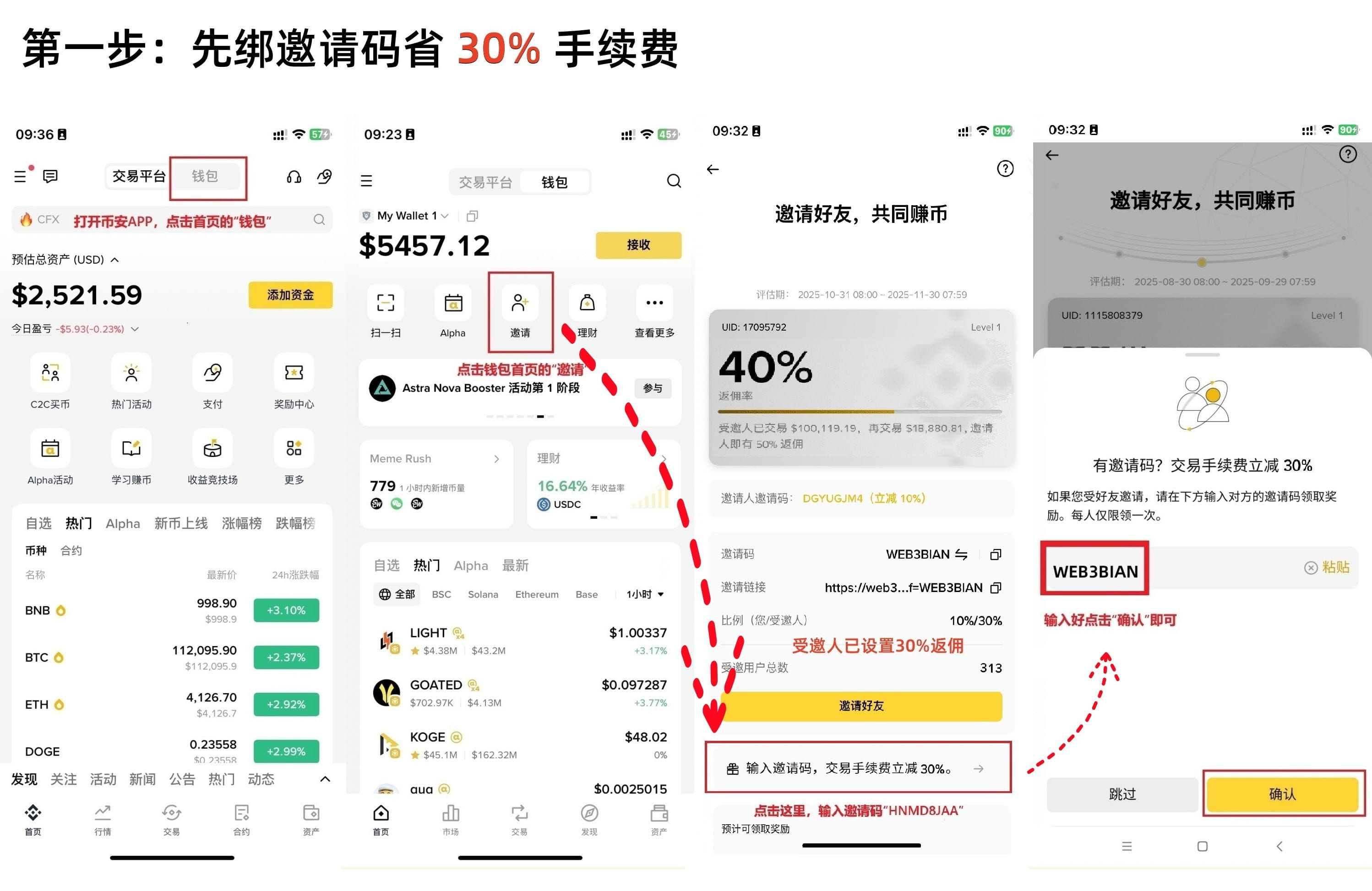
If you haven’t done it yet, remember to finish it before Wednesday, because it ends on Thursday. Also, this time the point-boosting task requires paying fees to Binance, so you should link your Binance wallet invite code in advance, which can save 30% on fees.
How to link it: in the Binance App, go to the Wallet home page, tap "Invite" → tap "Enter invite code" → enter "ZG666" and confirm, and that’s it.
2. For today’s airdrop, I don’t recommend overcommitting. The project’s total token supply is 560 million, with 11 million tokens (2%) given to Binance and 5 million tokens (1%) given to the other side, so the selling pressure is quite significant.
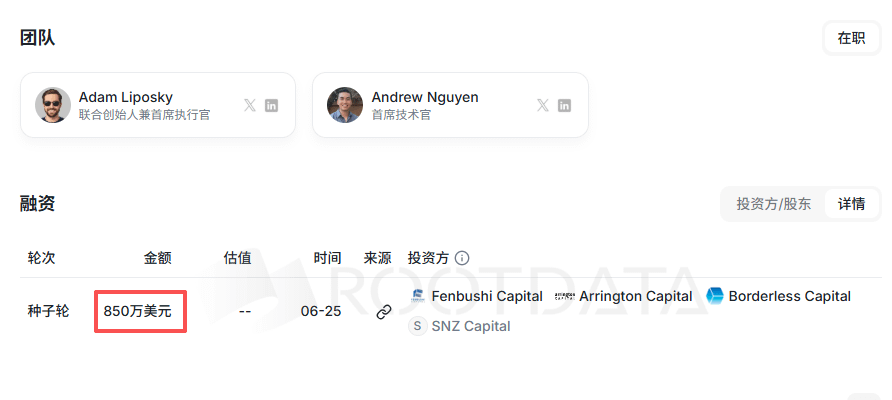
3. Also, the project team has shared very little information. As a project that has raised 8.5 million in funding, it’s surprisingly impossible to even find the tokenomics. I’m starting to doubt whether the investment is really reliable.
1. Yesterday I posted asking everyone to trade eMeme to earn the extra 5 points, but unfortunately it didn’t get much traffic, so probably not many people saw it.
If you haven’t done it yet, remember to finish it before Wednesday, because it ends on Thursday. Also, this time the point-boosting task requires paying fees to Binance, so you should link your Binance wallet invite code in advance, which can save 30% on fees.
How to link it: in the Binance App, go to the Wallet home page, tap "Invite" → tap "Enter invite code" → enter "ZG666" and confirm, and that’s it.
2. For today’s airdrop, I don’t recommend overcommitting. The project’s total token supply is 560 million, with 11 million tokens (2%) given to Binance and 5 million tokens (1%) given to the other side, so the selling pressure is quite significant.
3. Also, the project team has shared very little information. As a project that has raised 8.5 million in funding, it’s surprisingly impossible to even find the tokenomics. I’m starting to doubt whether the investment is really reliable.
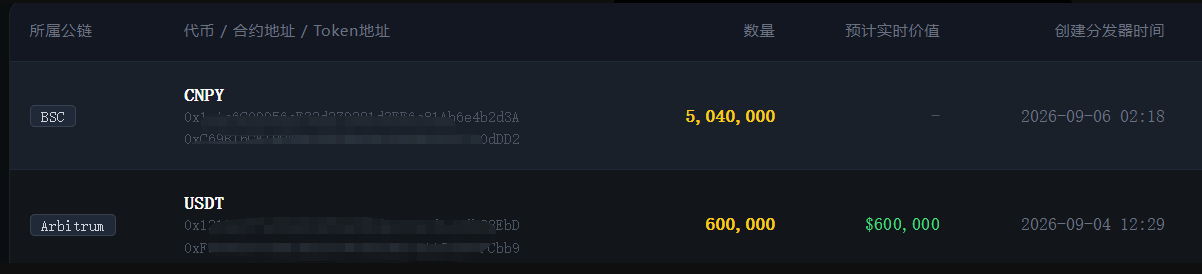
Damn, $CP is a joke, and I’m stuck holding the bag.
Yesterday, as soon as the locked Launchpool position next door unlocked, basically everyone dumped and ran. The liquidity is so trash that just a few million can knock it down by -30%, so there’s basically nothing to play for anymore. This coin is basically one I’m stuck holding.
What the project team says about CodeXero supposedly processing 3 billion AI tokens and supporting 25,000 dApps probably isn’t reliable.
Especially since Binance still holds 2% of the supply, I’m not counting on the project team to pump it. I’ll hold for another 2 weeks and take a shot at some good news like getting listed on a Korean exchange. If nothing changes after 2 weeks, I’ll sell this trash.
Yesterday, as soon as the locked Launchpool position next door unlocked, basically everyone dumped and ran. The liquidity is so trash that just a few million can knock it down by -30%, so there’s basically nothing to play for anymore. This coin is basically one I’m stuck holding.
What the project team says about CodeXero supposedly processing 3 billion AI tokens and supporting 25,000 dApps probably isn’t reliable.
Especially since Binance still holds 2% of the supply, I’m not counting on the project team to pump it. I’ll hold for another 2 weeks and take a shot at some good news like getting listed on a Korean exchange. If nothing changes after 2 weeks, I’ll sell this trash.
Holding $CP 24.6 USDT
The trend of $CP is much weaker than I expected, and I'm still holding my airdrop 😂
Since it had the courage to abandon the usual “Alpha airdrop - futures - spot - Korean exchange” trading route and instead chose spot on the other side, I thought it was trying to conserve supply and pump it...
But the price action ended up like this? There’s neither real buying pressure nor liquidity; it’s basically just become cannon fodder. I don’t even know what it’s doing.
Since it had the courage to abandon the usual “Alpha airdrop - futures - spot - Korean exchange” trading route and instead chose spot on the other side, I thought it was trying to conserve supply and pump it...
But the price action ended up like this? There’s neither real buying pressure nor liquidity; it’s basically just become cannon fodder. I don’t even know what it’s doing.
$DASH is the third wave in the privacy coin rally, and very likely the last short-term wave. Whoever takes over should think it through carefully.
Just look at the flow of funds and it becomes clear: first $ZEC rose, then XMR followed with another move up; only after that did DASH get its turn.
The meeting on the 3rd for DASH had already ended, but instead of falling, the coin price kept rising. The reason it did not play out as "good news fully priced in is bad news" is that this round was not driven by positive catalysts at all; it was driven by sector rotation.
Money used to buy DASH is, in essence, money that could not afford ZEC. This is a classic end-stage signal of a sector rally: the leader stagnates while the laggards surge in a frenzy.
DASH's own story is actually quite thin.
Just look at the flow of funds and it becomes clear: first $ZEC rose, then XMR followed with another move up; only after that did DASH get its turn.
The meeting on the 3rd for DASH had already ended, but instead of falling, the coin price kept rising. The reason it did not play out as "good news fully priced in is bad news" is that this round was not driven by positive catalysts at all; it was driven by sector rotation.
Money used to buy DASH is, in essence, money that could not afford ZEC. This is a classic end-stage signal of a sector rally: the leader stagnates while the laggards surge in a frenzy.
DASH's own story is actually quite thin.
Verified
Everyone is waiting for 500 on $BNB . How many people have gotten on board?
Other coins rebound on macro factors, but BNB relies on the density of news from its own ecosystem. There are too many catalysts: a meme trading season with a 4 million prize pool, the Pasteur hard fork doubling TPS, Mastercard + Kazakhstan protocol announced on the same day...
There is also a technical confluence: a MACD golden cross + breaking above the 728u weekly high-density zone
Other coins rebound on macro factors, but BNB relies on the density of news from its own ecosystem. There are too many catalysts: a meme trading season with a 4 million prize pool, the Pasteur hard fork doubling TPS, Mastercard + Kazakhstan protocol announced on the same day...
There is also a technical confluence: a MACD golden cross + breaking above the 728u weekly high-density zone
$TRUMP Don’t chase it, don’t look at it. Yes, it rose today, but it’s pure bait—just luring people in to be harvested:
1. It’s a perpetual dilution machine. TRUMP doesn’t unlock like other tokens that finish vesting in a year; it’s designed to release 909,000 tokens into circulation every day on a linear schedule, nonstop.
2. The hole from the dinners still hasn’t been filled. Two dinners trapped a bunch of whales; aside from the 35 who got out fast, the rest are all still bagholding, and some still haven’t sold yet.
This kind of "narrative pump + tricking people into taking the exit liquidity + grinding drip sell-off" play is too obvious. It’s TRUMP’s fatal weakness, and there’s no way to pump it enough to let them unload.
3. The truly dangerous opponent is its own brother $WLFI . WLFI is the Trump family’s real bet—its USD1 stablecoin has a market cap of $4 billion and has entered the top ten stablecoins.
So even if money is speculating on Trump, it will still prefer WLFI; TRUMP will only get whatever spillover funds are left, which is too little to drive it up.
1. It’s a perpetual dilution machine. TRUMP doesn’t unlock like other tokens that finish vesting in a year; it’s designed to release 909,000 tokens into circulation every day on a linear schedule, nonstop.
2. The hole from the dinners still hasn’t been filled. Two dinners trapped a bunch of whales; aside from the 35 who got out fast, the rest are all still bagholding, and some still haven’t sold yet.
This kind of "narrative pump + tricking people into taking the exit liquidity + grinding drip sell-off" play is too obvious. It’s TRUMP’s fatal weakness, and there’s no way to pump it enough to let them unload.
3. The truly dangerous opponent is its own brother $WLFI . WLFI is the Trump family’s real bet—its USD1 stablecoin has a market cap of $4 billion and has entered the top ten stablecoins.
So even if money is speculating on Trump, it will still prefer WLFI; TRUMP will only get whatever spillover funds are left, which is too little to drive it up.
Verified
Damn, the non-farm payroll data came out at 162,000, way above expectations, and it’s so outrageous that it almost looks fake.#美国8月非农数据今日公布
I’m the clown! I had originally estimated non-farm payrolls at around 35,000. In any case, the last obstacle to the September rate hike has been removed.$BTC dropped below 80,000 on the spot.$ENA and $UNI are out of steam too
Next, we just need to look at August inflation. Personally, I think inflation will very likely be even worse than in July. Since the employment data didn’t drag things down, there’s a high probability that Waller, the neutral camp, will side with Woshe.
However, it’s still too early to fall below 75,000, because the odds of a rate hike have only climbed back to about 55% for now. That’s because Woshe’s main concern is prices, not employment.
The 162,000 non-farm print is only telling Woshe that a rate hike won’t trigger a wave of unemployment; it removes an obstacle, but it isn’t the deciding factor.
The real trigger is October’s CPI data, which is why the market gave 55% rather than 70%.
I’m the clown! I had originally estimated non-farm payrolls at around 35,000. In any case, the last obstacle to the September rate hike has been removed.$BTC dropped below 80,000 on the spot.$ENA and $UNI are out of steam too
Next, we just need to look at August inflation. Personally, I think inflation will very likely be even worse than in July. Since the employment data didn’t drag things down, there’s a high probability that Waller, the neutral camp, will side with Woshe.
However, it’s still too early to fall below 75,000, because the odds of a rate hike have only climbed back to about 55% for now. That’s because Woshe’s main concern is prices, not employment.
The 162,000 non-farm print is only telling Woshe that a rate hike won’t trigger a wave of unemployment; it removes an obstacle, but it isn’t the deciding factor.
The real trigger is October’s CPI data, which is why the market gave 55% rather than 70%.
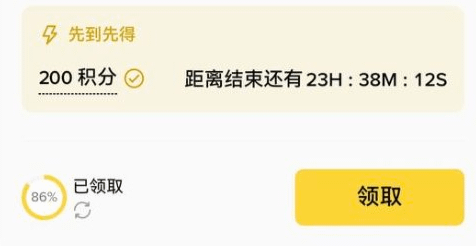
Airdrop $CP : the threshold has been lowered to 200 points. There are also 14% of the allocations still unclaimed—meaning only 50,000 shares have been claimed, with another 8,000 left unclaimed.
Do you think the 3 PM airdrop timing caught the workspaces/booster teams off guard, or is it really that many big shots are determined not to take the “shit”? It can’t be that Alpha truly only has 50,000 black slaves left, right?
Do you think the 3 PM airdrop timing caught the workspaces/booster teams off guard, or is it really that many big shots are determined not to take the “shit”? It can’t be that Alpha truly only has 50,000 black slaves left, right?
诸葛投研
·
--
Wait a bit, it’s 3 o’clock, the threshold is 235 points. There’s an old-coin air drop. I suspect it’s CP; if it’s a normal old-coin, the threshold would be hard to be this low.
If it’s CP, then optimistically it’s 36u per person; if not, then it’s like ordinary 30u old coins.
If it’s CP, then optimistically it’s 36u per person; if not, then it’s like ordinary 30u old coins.
Wait a bit, it’s 3 o’clock, the threshold is 235 points. There’s an old-coin air drop. I suspect it’s CP; if it’s a normal old-coin, the threshold would be hard to be this low.
If it’s CP, then optimistically it’s 36u per person; if not, then it’s like ordinary 30u old coins.
If it’s CP, then optimistically it’s 36u per person; if not, then it’s like ordinary 30u old coins.

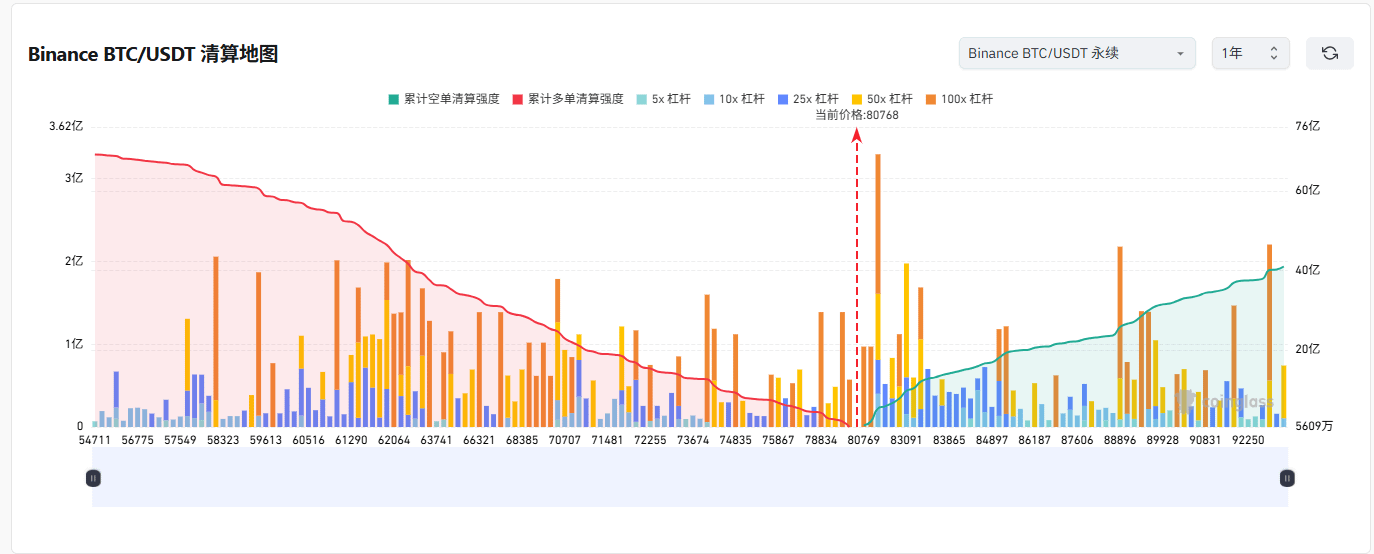
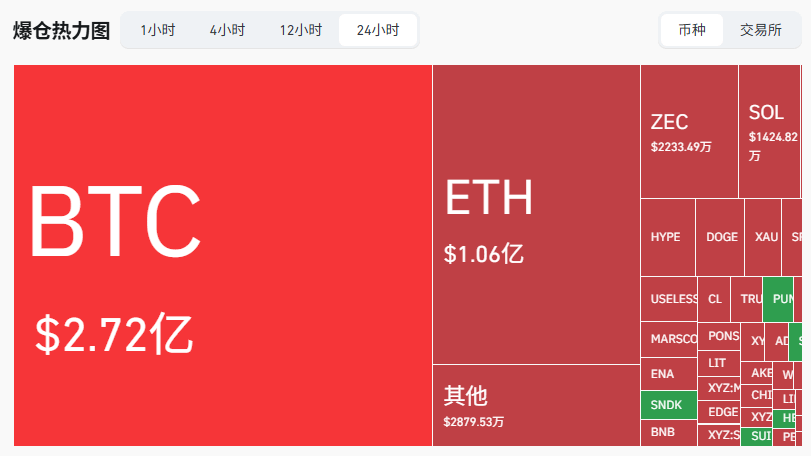
Last night, Waller said one sentence, and the 100,000 air forces positions got liquidated. BTC spiked to 82,300, almost breaking the previous high of 82,850.
But I still think this is a short-squeeze market— the bull market hasn’t arrived. Because the macro situation hasn’t improved:
Crude oil is still at 96 and hasn’t come down;
Core CPI has been stuck around 2.6% for the long term— it’s still far from the 2% target;
In August, BTC ETF flows saw consecutive net inflows. The total is only 3.5 billion, which is still not much more than the 4.5 billion that flowed out in June;
Ahead of 10/11, the two-sided liquidity depth at 1% is 260 million. Now it’s only 120 million;
Monthly trading volume is only 0.9 trillion right now, still far from the previous 2.6 trillion.
With so many macro indicators not improving, I don’t think BTC breaking above MA120 or MA200 means a bull market is here.
Of course, maybe my judgment is wrong— after all, bull markets grow amid doubt and end in euphoria.
But if you get FOMO because you didn’t add enough position, and in the end you ruin your position discipline and mindset—that’s even more terrifying. #美国初请失业金人数升至20.6万
But I still think this is a short-squeeze market— the bull market hasn’t arrived. Because the macro situation hasn’t improved:
Crude oil is still at 96 and hasn’t come down;
Core CPI has been stuck around 2.6% for the long term— it’s still far from the 2% target;
In August, BTC ETF flows saw consecutive net inflows. The total is only 3.5 billion, which is still not much more than the 4.5 billion that flowed out in June;
Ahead of 10/11, the two-sided liquidity depth at 1% is 260 million. Now it’s only 120 million;
Monthly trading volume is only 0.9 trillion right now, still far from the previous 2.6 trillion.
With so many macro indicators not improving, I don’t think BTC breaking above MA120 or MA200 means a bull market is here.
Of course, maybe my judgment is wrong— after all, bull markets grow amid doubt and end in euphoria.
But if you get FOMO because you didn’t add enough position, and in the end you ruin your position discipline and mindset—that’s even more terrifying. #美国初请失业金人数升至20.6万
This activity is done really well. I recommend the guys take a look.
I’ve received several customers whose assets were recovered, and they were all initially new users who lost 1–2 thousand U in assets. Normal service providers wouldn’t take those jobs, and after they spent a while searching, it turned out they had been targeted in a second scam...
Also, things like photo albums that aren’t shown in the game but contain recovery phrases, pirated apps that secretly request permissions, Telegram phishing links, etc. are all major trouble spots.
I’ve received several customers whose assets were recovered, and they were all initially new users who lost 1–2 thousand U in assets. Normal service providers wouldn’t take those jobs, and after they spent a while searching, it turned out they had been targeted in a second scam...
Also, things like photo albums that aren’t shown in the game but contain recovery phrases, pirated apps that secretly request permissions, Telegram phishing links, etc. are all major trouble spots.


币安Binance华语
·
--
“Don’t laugh—you won’t find the 4th one either 😨”
🪤 They say this is the hardest #币安安全星期四 challenge in history: in the shortest time, can you find all the traps?
👉 点击参与实景陷阱追踪挑战, compete for a spot on the leaderboard 🏆
The top 10 on the leaderboard each get a 100U detective reward, and the top 3 also receive a themed gift box!
Share it and post your clear-through screenshot in the comments, and then 15 people will be selected to receive 44U 🧧
🪤 They say this is the hardest #币安安全星期四 challenge in history: in the shortest time, can you find all the traps?
👉 点击参与实景陷阱追踪挑战, compete for a spot on the leaderboard 🏆
The top 10 on the leaderboard each get a 100U detective reward, and the top 3 also receive a themed gift box!
Share it and post your clear-through screenshot in the comments, and then 15 people will be selected to receive 44U 🧧

So unbelievably powerful—Waller’s one-liner, “Give inflation a chance to cool,” saw the rate-hike probability crash from 64% to 50% overnight. After $BTC leveraged the move to break through 82,000, it pulled back again. This pressure level isn’t an insurmountable barrier anymore.
This coin-flip kind of probability makes tonight’s 20:30 Nonfarm Payrolls data the main event. Let me break it down in detail:
Now, the market consensus is around 55,000 jobs. Personally, I think the data will be relatively weak—around 35,000.
Because looking at other data, everything has been too weak—there isn’t a single strong indicator.
(1) So if the number is below 40,000, then—call it a blow-up. The rate-hike issue should get pushed to October.
My estimate for the blow-up probability is about 40%. In July, the forecast was 80,000, but the actual came in at -23,000—a difference of 100,000. That’s why I feel the market’s expectations are overly optimistic.
(2) If it’s between 40,000 and 80,000, then it should pass fairly smoothly. Whether there’s a rate hike or not will depend on the CPI data and the Fed’s stance. I estimate the probability at 35%.
At that time, they should also factor in wage growth (hourly earnings). After all, what Waller cares about is inflation and prices.
(3) If it’s above 80,000, then a rate hike is basically locked in. BTC could break below 75,000. I estimate the probability at 25%.
So how should you handle positioning specifically?
(1) Right now, BTC holding above 81,000 is a relatively optimistic trend. I suggest everyone not to use leverage to gamble on a one-way move.
(2) $BNB is a high-value, high-beta asset. Everyone can wait at the gold mine—if it drops, then load up aggressively.
(3) Altcoins overall: if the Nonfarm Payrolls really blows up, then focus on altcoins—their rebound will be the strongest. Top picks: DOGE, $ENA , and others.
This coin-flip kind of probability makes tonight’s 20:30 Nonfarm Payrolls data the main event. Let me break it down in detail:
Now, the market consensus is around 55,000 jobs. Personally, I think the data will be relatively weak—around 35,000.
Because looking at other data, everything has been too weak—there isn’t a single strong indicator.
(1) So if the number is below 40,000, then—call it a blow-up. The rate-hike issue should get pushed to October.
My estimate for the blow-up probability is about 40%. In July, the forecast was 80,000, but the actual came in at -23,000—a difference of 100,000. That’s why I feel the market’s expectations are overly optimistic.
(2) If it’s between 40,000 and 80,000, then it should pass fairly smoothly. Whether there’s a rate hike or not will depend on the CPI data and the Fed’s stance. I estimate the probability at 35%.
At that time, they should also factor in wage growth (hourly earnings). After all, what Waller cares about is inflation and prices.
(3) If it’s above 80,000, then a rate hike is basically locked in. BTC could break below 75,000. I estimate the probability at 25%.
So how should you handle positioning specifically?
(1) Right now, BTC holding above 81,000 is a relatively optimistic trend. I suggest everyone not to use leverage to gamble on a one-way move.
(2) $BNB is a high-value, high-beta asset. Everyone can wait at the gold mine—if it drops, then load up aggressively.
(3) Altcoins overall: if the Nonfarm Payrolls really blows up, then focus on altcoins—their rebound will be the strongest. Top picks: DOGE, $ENA , and others.
Still need to do more “guidance”—believe that the strong leads the weak: strong conviction drives weak conviction. $UNI finally waited for it to bear fruit. Yesterday, everything was fully closed out.
In July, when $UNI rallied from the low point of 2.3u back to 3u, I felt that it had officially shifted from a down cycle to an up cycle, so I wrote an article to spread the message at that time.
As it happened, the article gave a group mate who had entered at 8u and was stuck in a loss some confidence. So when he was down to 3u, he added more, and in the end, he was up about 45% this past Monday.
Also, because he had been trapped earlier, he added very heavily to average down his cost. This time around, it directly turned into a profit of 8000u. That’s more than even my 85%-profit lottery position—he even made me laugh 😂
Yesterday he said that during the run, he once thought Dragon One had risen too high and he wanted to buy Dragon Two. But too many stories have taught me this: whenever someone thinks Dragon One is too expensive and goes to buy Dragon Two, there are only two outcomes—either you just end up eating what’s left, or you take a nasty hit.
Let’s encourage each other!
In July, when $UNI rallied from the low point of 2.3u back to 3u, I felt that it had officially shifted from a down cycle to an up cycle, so I wrote an article to spread the message at that time.
As it happened, the article gave a group mate who had entered at 8u and was stuck in a loss some confidence. So when he was down to 3u, he added more, and in the end, he was up about 45% this past Monday.
Also, because he had been trapped earlier, he added very heavily to average down his cost. This time around, it directly turned into a profit of 8000u. That’s more than even my 85%-profit lottery position—he even made me laugh 😂
Yesterday he said that during the run, he once thought Dragon One had risen too high and he wanted to buy Dragon Two. But too many stories have taught me this: whenever someone thinks Dragon One is too expensive and goes to buy Dragon Two, there are only two outcomes—either you just end up eating what’s left, or you take a nasty hit.
Let’s encourage each other!

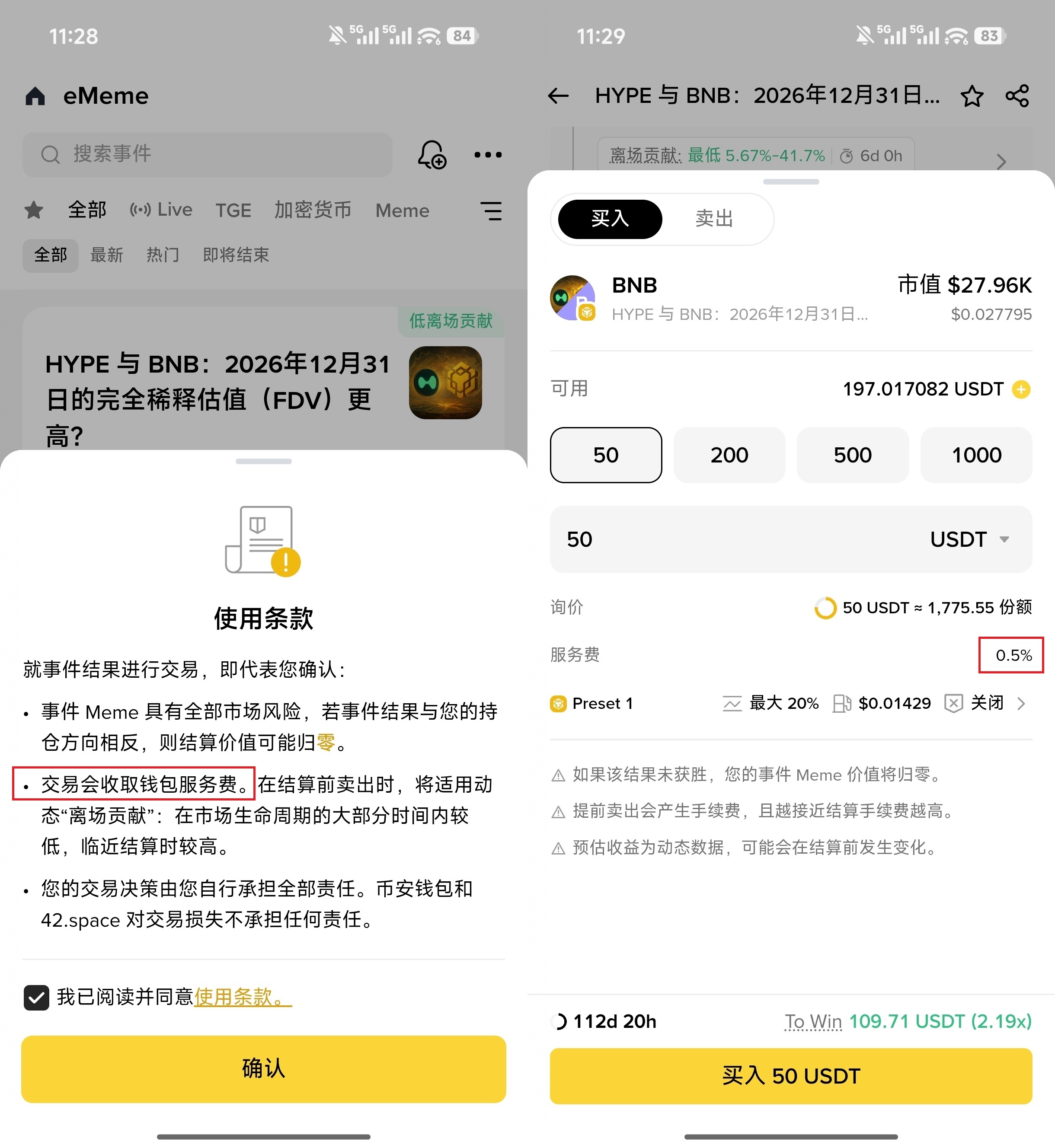
Alpha Trading Event Meme, an extra +5 points graphical tutorial, wear-and-tear only 1u:
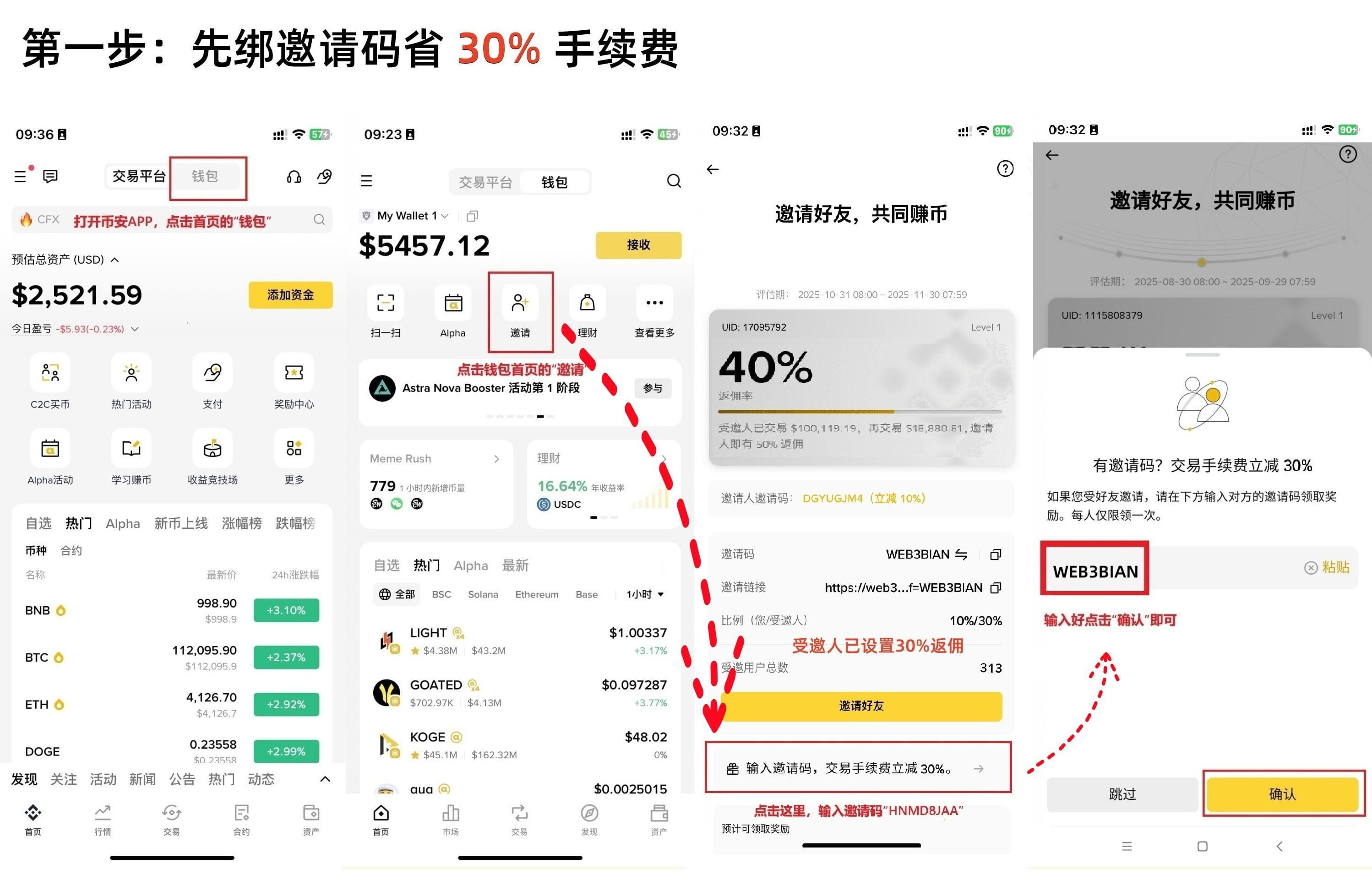
1. Early preparation: Everyone, look at Picture 1. For this Alpha Trading Event Meme, the Binance wallet will charge a service fee. So everyone should bind the Binance wallet invitation code in advance—the service fee can be reduced by 30%.
How to bind: On the Binance app, go to the Wallet home page, tap "Invite" → tap "Enter invitation code" → enter "ZG666" and confirm—done. (See Picture 2 for the tutorial.)
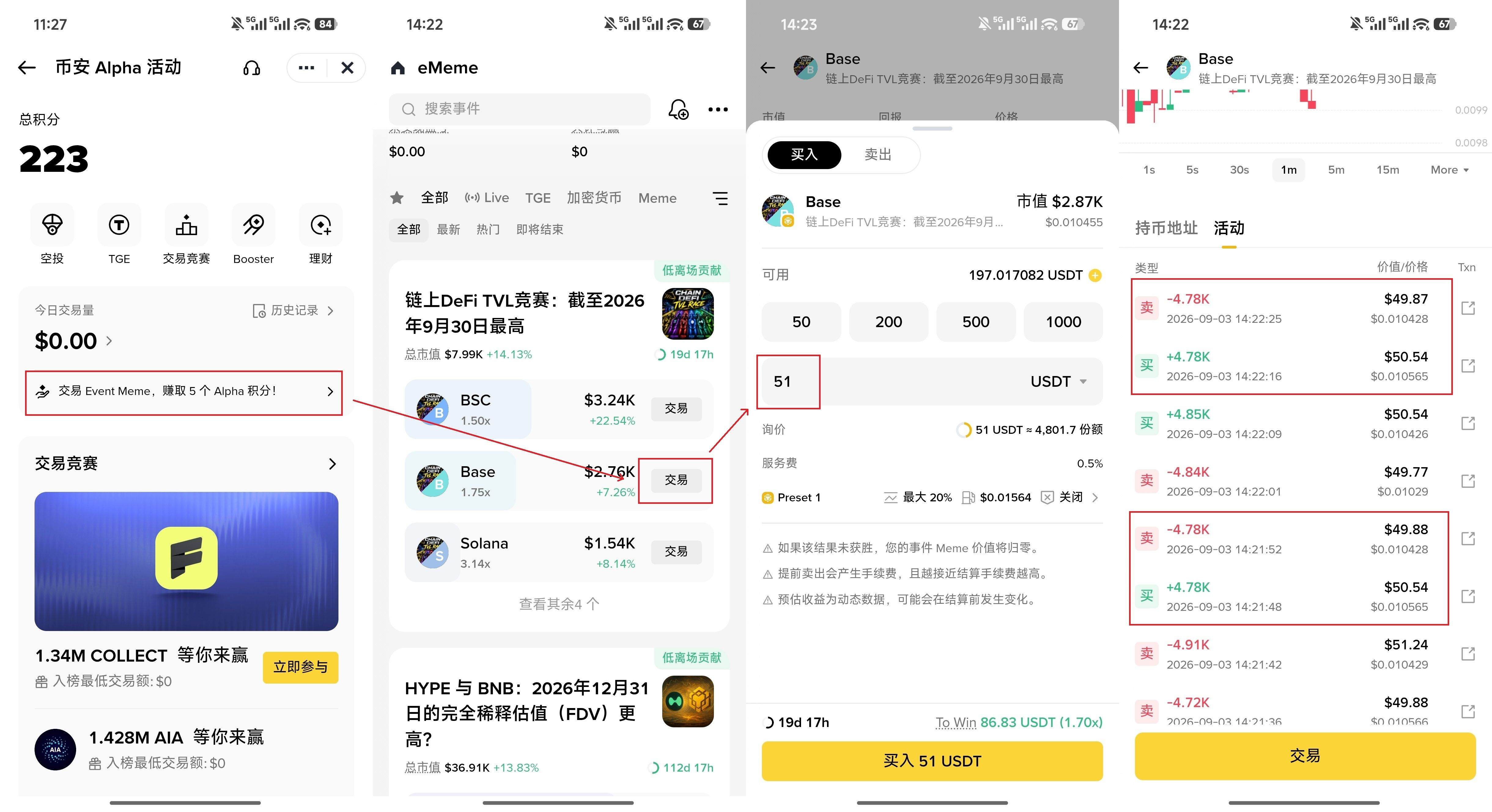
2. After you’ve done the early preparation, follow Picture 3: From the Alpha points page, enter through the access point to go straight to the event trading page. Everyone must make sure to choose the event "On-chain DeFi TVL Competition…". For the Base option, the wear-and-tear is the lowest—you only need 1u.
3. A lot of brothers complain that they can’t get the airdrop and also have to do tasks and waste fees. Should you do it or not? You definitely still should. After all, if others do it, they’ll raise the airdrop threshold. If you don’t, it’s basically giving up on this cycle.
4. And there are benefits to doing it: People who grind the trading competition tend to have overall higher point totals. With your extra 5 points, you can keep up with their scores; plus among the 80,000 people who are grinding Alpha, maybe a few thousand will forget—so it’s like helping you filter out a few thousand competitors.
1. Early preparation: Everyone, look at Picture 1. For this Alpha Trading Event Meme, the Binance wallet will charge a service fee. So everyone should bind the Binance wallet invitation code in advance—the service fee can be reduced by 30%.
How to bind: On the Binance app, go to the Wallet home page, tap "Invite" → tap "Enter invitation code" → enter "ZG666" and confirm—done. (See Picture 2 for the tutorial.)
2. After you’ve done the early preparation, follow Picture 3: From the Alpha points page, enter through the access point to go straight to the event trading page. Everyone must make sure to choose the event "On-chain DeFi TVL Competition…". For the Base option, the wear-and-tear is the lowest—you only need 1u.
3. A lot of brothers complain that they can’t get the airdrop and also have to do tasks and waste fees. Should you do it or not? You definitely still should. After all, if others do it, they’ll raise the airdrop threshold. If you don’t, it’s basically giving up on this cycle.
4. And there are benefits to doing it: People who grind the trading competition tend to have overall higher point totals. With your extra 5 points, you can keep up with their scores; plus among the 80,000 people who are grinding Alpha, maybe a few thousand will forget—so it’s like helping you filter out a few thousand competitors.
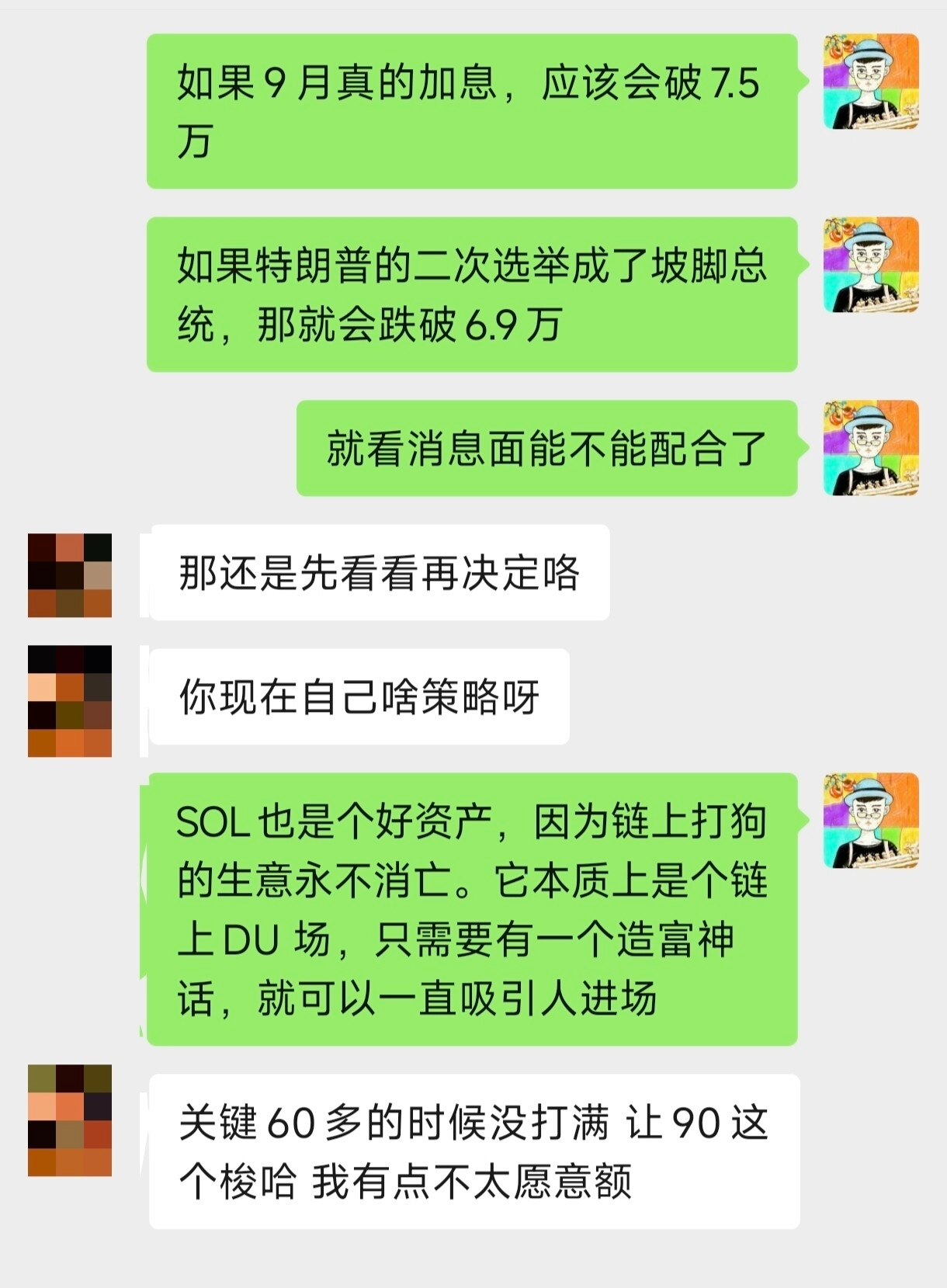
$SOL has broken below 100—just as we predicted the other day. Because the institutional buy-side pressure is getting weaker and weaker. Especially yesterday: the net inflow sharply dropped to 925,000 USD. It’s completely not worthy of the spotlight for a top-tier coin in the 5th mainstream category.
But SOL is a high-value asset that you can safely stock up on at a low level. Because in the crypto world, the cast changes for many years, but there will never be a shortage of “du-pertu” types.
“Catching the dog” is a business in the on-chain “du arena”: everyone enjoys the thrill of meme coins doubling, even multiplying by 10.
Most importantly, even if they’ve lost everything, as long as a new on-chain meme “wealth-making” myth appears, they’ll come rushing back.
The next support level is 92. If September’s rate hike happens, it might break through. And if Chuanzi can’t sort out the midterm election—meaning they lose the power to influence outcomes—then it could also break through the strong support at 80.
But SOL is a high-value asset that you can safely stock up on at a low level. Because in the crypto world, the cast changes for many years, but there will never be a shortage of “du-pertu” types.
“Catching the dog” is a business in the on-chain “du arena”: everyone enjoys the thrill of meme coins doubling, even multiplying by 10.
Most importantly, even if they’ve lost everything, as long as a new on-chain meme “wealth-making” myth appears, they’ll come rushing back.
The next support level is 92. If September’s rate hike happens, it might break through. And if Chuanzi can’t sort out the midterm election—meaning they lose the power to influence outcomes—then it could also break through the strong support at 80.
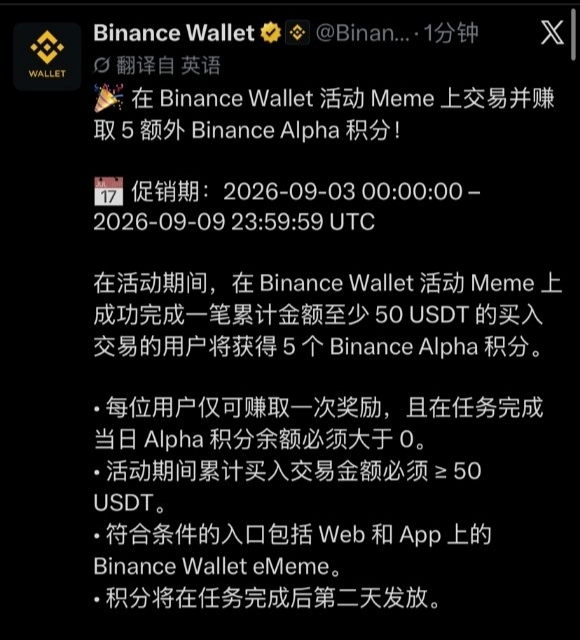
Brothers, Alpha bonus event is here again~ You can get an extra +5 points!
Do you often feel that the drop-off (airdrop) threshold is too high and not enough points? Well, we’re sending you points.
Starting from the 3rd: as long as you buy and sell meme coins in your Binance wallet for more than 50U, you can get an extra +5 points!
Attention! Before doing the tasks, be sure to bind the wallet invitation code first. When you buy and sell meme coins, you can save 30% on service fees. Others’ wear-and-tear costs 1U—you only pay 0.7U.
How to bind: On the Binance App, go to the Wallet home page, tap “Invite” → tap “Enter invitation code” → enter “ZG666” and confirm. That’s it.
Everyone, do it as soon as possible—the bonus event ends on the 9th.
Do you often feel that the drop-off (airdrop) threshold is too high and not enough points? Well, we’re sending you points.
Starting from the 3rd: as long as you buy and sell meme coins in your Binance wallet for more than 50U, you can get an extra +5 points!
Attention! Before doing the tasks, be sure to bind the wallet invitation code first. When you buy and sell meme coins, you can save 30% on service fees. Others’ wear-and-tear costs 1U—you only pay 0.7U.
How to bind: On the Binance App, go to the Wallet home page, tap “Invite” → tap “Enter invitation code” → enter “ZG666” and confirm. That’s it.
Everyone, do it as soon as possible—the bonus event ends on the 9th.
Oh wow, just found out—last month $BTC surged 30%, but only the giant whale is adding to its position? Retail investors and big holders are actually running away!
On-chain data shows that:
Throughout August, addresses holding less than 1 BTC collectively sold off 14,000 BTC;
Addresses holding 1 to 100 BTC collectively reduced their holdings by 33,000 BTC;
Only giant whales holding more than 100 BTC increased their holdings by 60,000 BTC.
So it turns out only institutional whales are buying—yet retail investors and big holders are both cashing out 😂
On-chain data shows that:
Throughout August, addresses holding less than 1 BTC collectively sold off 14,000 BTC;
Addresses holding 1 to 100 BTC collectively reduced their holdings by 33,000 BTC;
Only giant whales holding more than 100 BTC increased their holdings by 60,000 BTC.
So it turns out only institutional whales are buying—yet retail investors and big holders are both cashing out 😂
It looks like today’s new-coin air drop for $CP is probably gone. After all, there hasn’t been announced yet—this isn’t the usual “face of a new coin.” Normally, there should have been a pre-announcement last night.
Today I took the time to seriously tally up the August Alpha earnings, and I was shocked: total losses/consumption came to 63.37u, and the total income was only 125u. What I managed to grab were 3 air drops: $DOS $KII $COAI .
I never expected that for a so-called ten-thousand-u account, my monthly profit would be only 62u. I can’t even imagine what the thousand-u guys are doing…
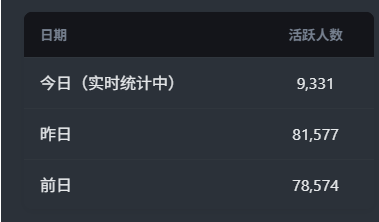
The other day there just happened to be no 4x-coin trading competition. The number of participants that day was 78,500. As of now, the number of people playing Alpha should be fairly stable at around 80,000. Even if earnings are lower, I don’t think it’ll reduce the player count. Let’s keep it up—those of us who stay are in this together.
To brothers who haven’t bound wallet referral codes yet, please do it soon. Usually, on-chain purchases of counterfeit coins, on-chain buying/selling of Alpha, etc., can save you 30% on fees.
How to bind: On the Binance app wallet homepage, tap “Invite” → tap “Enter referral code” → enter “ZG666” and confirm. That’s it.
Today I took the time to seriously tally up the August Alpha earnings, and I was shocked: total losses/consumption came to 63.37u, and the total income was only 125u. What I managed to grab were 3 air drops: $DOS $KII $COAI .
I never expected that for a so-called ten-thousand-u account, my monthly profit would be only 62u. I can’t even imagine what the thousand-u guys are doing…
The other day there just happened to be no 4x-coin trading competition. The number of participants that day was 78,500. As of now, the number of people playing Alpha should be fairly stable at around 80,000. Even if earnings are lower, I don’t think it’ll reduce the player count. Let’s keep it up—those of us who stay are in this together.
To brothers who haven’t bound wallet referral codes yet, please do it soon. Usually, on-chain purchases of counterfeit coins, on-chain buying/selling of Alpha, etc., can save you 30% on fees.
How to bind: On the Binance app wallet homepage, tap “Invite” → tap “Enter referral code” → enter “ZG666” and confirm. That’s it.
Log in to explore more content