
超人不会飞2020
3.1k Posts

超人不会飞2020
 Square Verified+
Report
Block User
X:@super55668|反佣码:SSSYYY|live:2:00-6:00PM|KOL宣发&项目推广
Open Trade

BNB Holder
Frequent Trader
6.1 Years
576 Following
91.5K+ Followers
151.2K+ Liked
Posts
Portfolio
All
Quotes
Videos
Live
PINNED
·
--
I have something to take care of today, so I won’t be going live. I’ll take a day off ❤️
I have something to take care of today, so I won’t be going live. I’ll take a day off ❤️

8
11
929
PINNED
·
--
Time trips and stumbles, seasons come and go,
what we gain and what we cannot,
are never as good as being at peace.
Time trips and stumbles, seasons come and go,
what we gain and what we cannot,
are never as good as being at peace.
what we gain and what we cannot,
are never as good as being at peace.

4.2k
21
297
4.2k
·
--
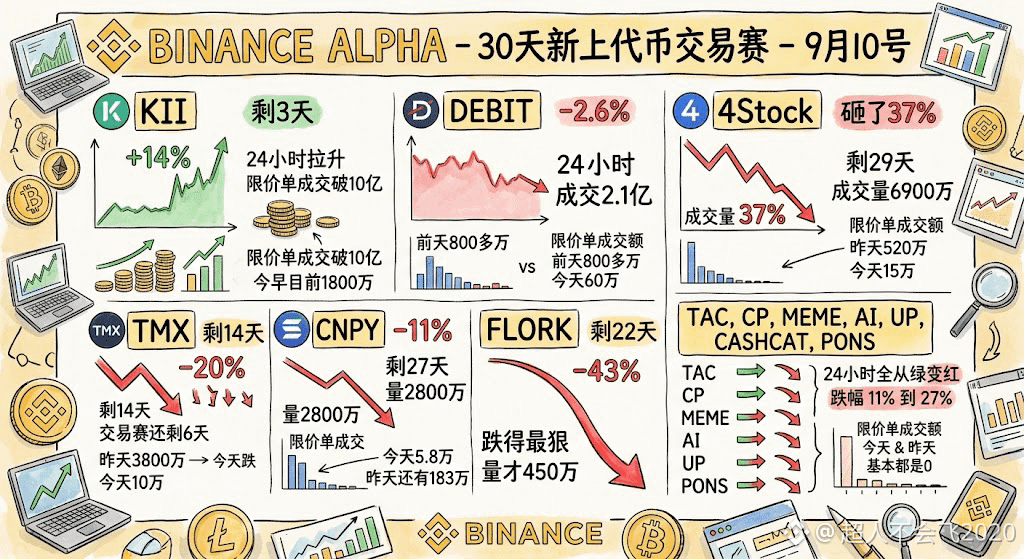
September 10th, Binance Alpha 30-day New Token Trading Competition
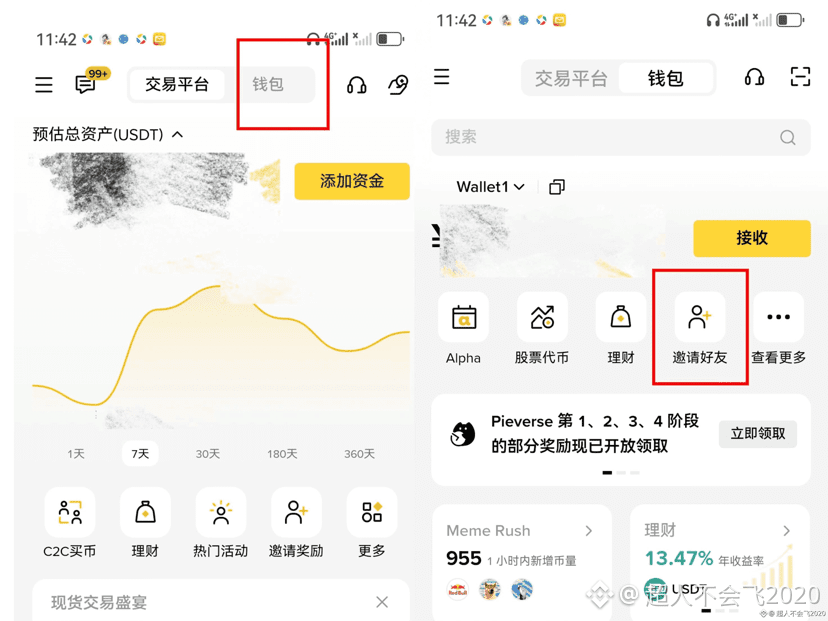
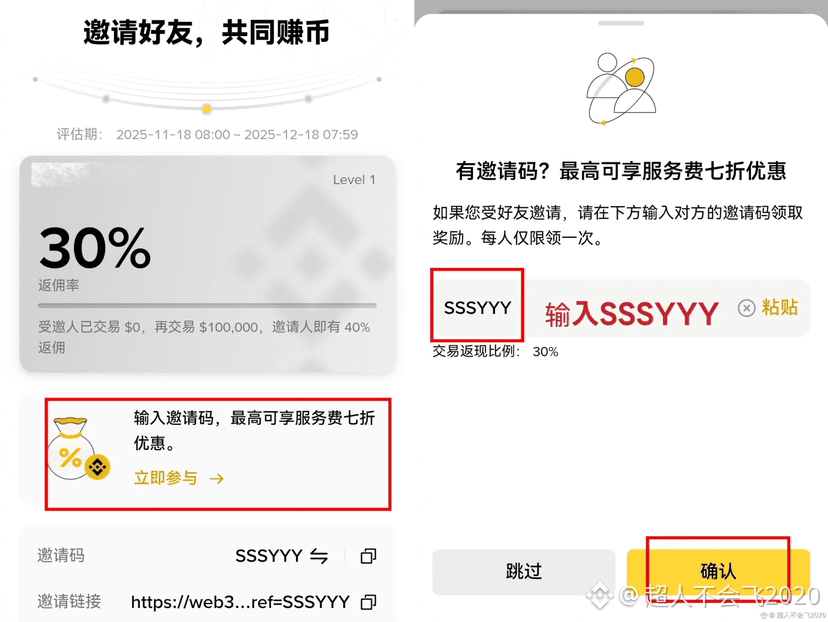
👏👏Follow on-chain market trends and join in by participating in #ALPHA to farm rewards and “beat the dogs.” You can trade directly using your Binance Web3 wallet. Use the amazing invite code SSSYYY to automatically save 30%. If you don’t know how, follow the instructions in Figure 2 and Figure 3, or join the group chat to交流 and learn together.
KII: 3 days left—within 24 hours it surged 14%. The limit orders executed over 1 billion yesterday; this morning it’s currently at 18 million.
DEBIT: 210 million traded in the past 24 hours; the price fell 2.6%. Yesterday’s limit orders were over 8 million, but today it’s down to 600,000.
4Stock: 29 days left—down 37%, with trading volume of 69 million. Yesterday’s limit orders were 5.2 million; today it’s only 150,000.
TMX: 14 days left. The trading competition has 6 days remaining, down 20%. Yesterday’s limit orders were 38 million; today it’s 100,000.
CNPY: 27 days left—down 11%, volume 28 million. Today’s limit orders are 58,000; yesterday it was still 1.83 million.
FLORK: 22 days left—the worst drop, down 43%, with volume only 4.5 million.
TAC, CP, MEME, AI, UP, CASHCAT, PONS — these are basically all tokens that were newly listed just in the past few days. In the last 24 hours, they have all turned from green to red, with declines ranging from 11% to 27%. The limit order成交 amount today and yesterday is basically 0.
September 10th, Binance Alpha 30-day New Token Trading Competition
👏👏Follow on-chain market trends and join in by participating in #ALPHA to farm rewards and “beat the dogs.” You can trade directly using your Binance Web3 wallet. Use the amazing invite code SSSYYY to automatically save 30%. If you don’t know how, follow the instructions in Figure 2 and Figure 3, or join the group chat to交流 and learn together.
KII: 3 days left—within 24 hours it surged 14%. The limit orders executed over 1 billion yesterday; this morning it’s currently at 18 million.
DEBIT: 210 million traded in the past 24 hours; the price fell 2.6%. Yesterday’s limit orders were over 8 million, but today it’s down to 600,000.
4Stock: 29 days left—down 37%, with trading volume of 69 million. Yesterday’s limit orders were 5.2 million; today it’s only 150,000.
TMX: 14 days left. The trading competition has 6 days remaining, down 20%. Yesterday’s limit orders were 38 million; today it’s 100,000.
CNPY: 27 days left—down 11%, volume 28 million. Today’s limit orders are 58,000; yesterday it was still 1.83 million.
FLORK: 22 days left—the worst drop, down 43%, with volume only 4.5 million.
TAC, CP, MEME, AI, UP, CASHCAT, PONS — these are basically all tokens that were newly listed just in the past few days. In the last 24 hours, they have all turned from green to red, with declines ranging from 11% to 27%. The limit order成交 amount today and yesterday is basically 0.
👏👏Follow on-chain market trends and join in by participating in #ALPHA to farm rewards and “beat the dogs.” You can trade directly using your Binance Web3 wallet. Use the amazing invite code SSSYYY to automatically save 30%. If you don’t know how, follow the instructions in Figure 2 and Figure 3, or join the group chat to交流 and learn together.
KII: 3 days left—within 24 hours it surged 14%. The limit orders executed over 1 billion yesterday; this morning it’s currently at 18 million.
DEBIT: 210 million traded in the past 24 hours; the price fell 2.6%. Yesterday’s limit orders were over 8 million, but today it’s down to 600,000.
4Stock: 29 days left—down 37%, with trading volume of 69 million. Yesterday’s limit orders were 5.2 million; today it’s only 150,000.
TMX: 14 days left. The trading competition has 6 days remaining, down 20%. Yesterday’s limit orders were 38 million; today it’s 100,000.
CNPY: 27 days left—down 11%, volume 28 million. Today’s limit orders are 58,000; yesterday it was still 1.83 million.
FLORK: 22 days left—the worst drop, down 43%, with volume only 4.5 million.
TAC, CP, MEME, AI, UP, CASHCAT, PONS — these are basically all tokens that were newly listed just in the past few days. In the last 24 hours, they have all turned from green to red, with declines ranging from 11% to 27%. The limit order成交 amount today and yesterday is basically 0.
1
9
1.4k
·
--
9.10 Morning Quick Report丨📝
Overnight, BTC surged to nearly 79,700 before pulling back; it is now reported around 78,100, and ETH is around 2,460.
Brent crude oil broke above $100. Gold fell below 4,400 overnight, closing at 4,355, showing divergence from oil prices.
BTC’s recent correlation with gold has been rising, while its linkage with U.S. equities has weakened—making it closer to a safe-haven logic. Spot ETFs saw a small net outflow on Tuesday.
Industry updates: Block (Jack Dorsey) has applied to the OCC to establish Builders Bank & Trust—a non-insured federal trust bank focused on custody of Bitcoin and stablecoins. Grayscale’s spot ZEC ETF (ZCSH) AUM has surpassed $500 million and options trading has been opened; ZEC has performed strongly recently.
What to watch today: U.S. August PPI (in the evening); the ECB interest-rate decision and remarks by Lagarde; digestion of the results of the 10-year U.S. Treasury auction; and the Treasury Secretary’s bond buyback plan took effect on the 9th.
Oil prices and rate expectations remain the key variables in the near term. The PPI data will directly affect the pricing of potential rate hikes. Market sentiment is cautious as investors wait for direction.
#比特币 #ETH #加密货币
{future}(BTCUSDT)
{future}(ETHUSDT)
{future}(CLUSDT)
9.10 Morning Quick Report丨📝
Overnight, BTC surged to nearly 79,700 before pulling back; it is now reported around 78,100, and ETH is around 2,460.
Brent crude oil broke above $100. Gold fell below 4,400 overnight, closing at 4,355, showing divergence from oil prices.
BTC’s recent correlation with gold has been rising, while its linkage with U.S. equities has weakened—making it closer to a safe-haven logic. Spot ETFs saw a small net outflow on Tuesday.
Industry updates: Block (Jack Dorsey) has applied to the OCC to establish Builders Bank & Trust—a non-insured federal trust bank focused on custody of Bitcoin and stablecoins. Grayscale’s spot ZEC ETF (ZCSH) AUM has surpassed $500 million and options trading has been opened; ZEC has performed strongly recently.
What to watch today: U.S. August PPI (in the evening); the ECB interest-rate decision and remarks by Lagarde; digestion of the results of the 10-year U.S. Treasury auction; and the Treasury Secretary’s bond buyback plan took effect on the 9th.
Oil prices and rate expectations remain the key variables in the near term. The PPI data will directly affect the pricing of potential rate hikes. Market sentiment is cautious as investors wait for direction.
#比特币 #ETH #加密货币
Overnight, BTC surged to nearly 79,700 before pulling back; it is now reported around 78,100, and ETH is around 2,460.
Brent crude oil broke above $100. Gold fell below 4,400 overnight, closing at 4,355, showing divergence from oil prices.
BTC’s recent correlation with gold has been rising, while its linkage with U.S. equities has weakened—making it closer to a safe-haven logic. Spot ETFs saw a small net outflow on Tuesday.
Industry updates: Block (Jack Dorsey) has applied to the OCC to establish Builders Bank & Trust—a non-insured federal trust bank focused on custody of Bitcoin and stablecoins. Grayscale’s spot ZEC ETF (ZCSH) AUM has surpassed $500 million and options trading has been opened; ZEC has performed strongly recently.
What to watch today: U.S. August PPI (in the evening); the ECB interest-rate decision and remarks by Lagarde; digestion of the results of the 10-year U.S. Treasury auction; and the Treasury Secretary’s bond buyback plan took effect on the 9th.
Oil prices and rate expectations remain the key variables in the near term. The PPI data will directly affect the pricing of potential rate hikes. Market sentiment is cautious as investors wait for direction.
#比特币 #ETH #加密货币
1
10
3.3k
·
--
Day 26 of the 100U recurring investment in BTC by Superman ✅
Today’s BTC buy price: $79033.54
Buy amount: 0.00126
Let’s talk about on-chain memes:
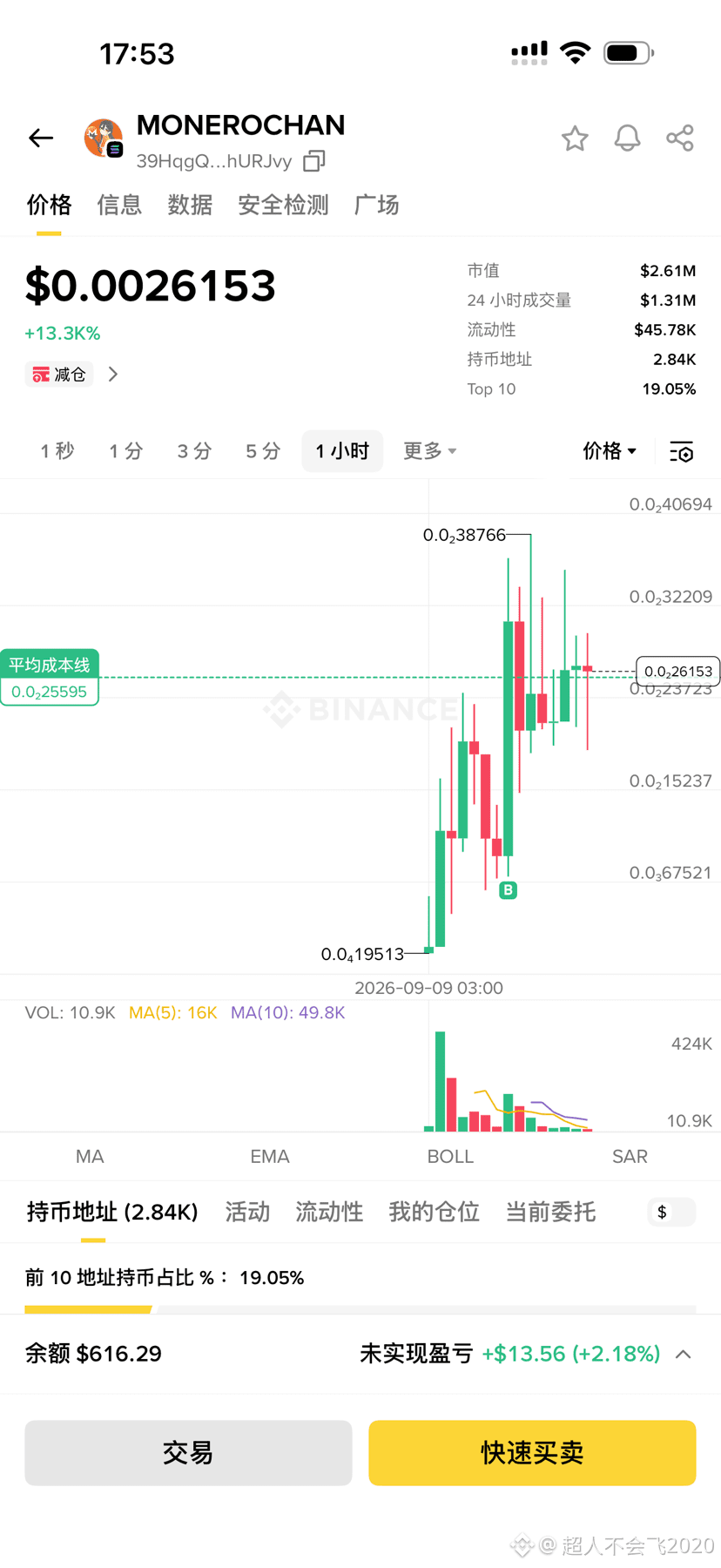
Today’s been very quiet—only bought one: MONEROCHAN. Basically it hasn’t made much profit/loss, fluctuating around a few dozen U.
The USELESS I bought earlier has already hit a triple at the recent high today. I’m very bullish—pushing the market cap toward 1 billion 🚀🛫.
The token posted tonight at 8:00 by the Biden son that’s all over the internet is about to launch. My thought is: does Biden’s (as a former president) heat level maybe not quite enough? Plus, it’s still his son—could it peak right at the opening? Of course, as the saying goes: the father says the father is right, and the mother says the mother is right. Everyone decides for themselves!
Day 26 of the 100U recurring investment in BTC by Superman ✅
Today’s BTC buy price: $79033.54
Buy amount: 0.00126
Let’s talk about on-chain memes:
Today’s been very quiet—only bought one: MONEROCHAN. Basically it hasn’t made much profit/loss, fluctuating around a few dozen U.
The USELESS I bought earlier has already hit a triple at the recent high today. I’m very bullish—pushing the market cap toward 1 billion 🚀🛫.
The token posted tonight at 8:00 by the Biden son that’s all over the internet is about to launch. My thought is: does Biden’s (as a former president) heat level maybe not quite enough? Plus, it’s still his son—could it peak right at the opening? Of course, as the saying goes: the father says the father is right, and the mother says the mother is right. Everyone decides for themselves!
Today’s BTC buy price: $79033.54
Buy amount: 0.00126
Let’s talk about on-chain memes:
Today’s been very quiet—only bought one: MONEROCHAN. Basically it hasn’t made much profit/loss, fluctuating around a few dozen U.
The USELESS I bought earlier has already hit a triple at the recent high today. I’m very bullish—pushing the market cap toward 1 billion 🚀🛫.
The token posted tonight at 8:00 by the Biden son that’s all over the internet is about to launch. My thought is: does Biden’s (as a former president) heat level maybe not quite enough? Plus, it’s still his son—could it peak right at the opening? Of course, as the saying goes: the father says the father is right, and the mother says the mother is right. Everyone decides for themselves!
3
16
2.1k
·
--
🎙️ Day 26 of investing in BTC via monthly purchase plan of Super 100U

End
03 h 09 m 01 s
11.7k
BTC/USDT
Limit/Buy
Filled
24
18
·
--
September 9th, Binance Alpha 30-day new token trading competition
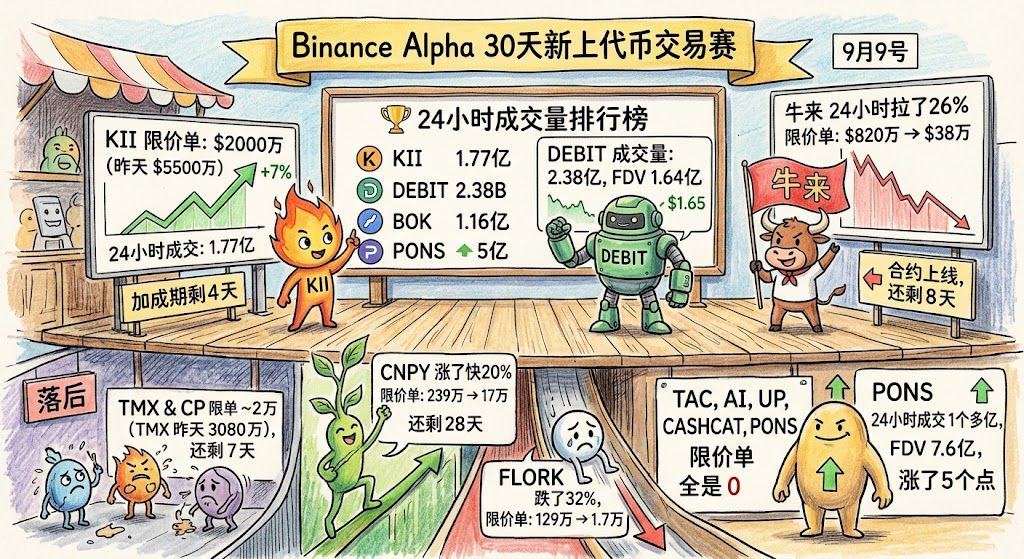
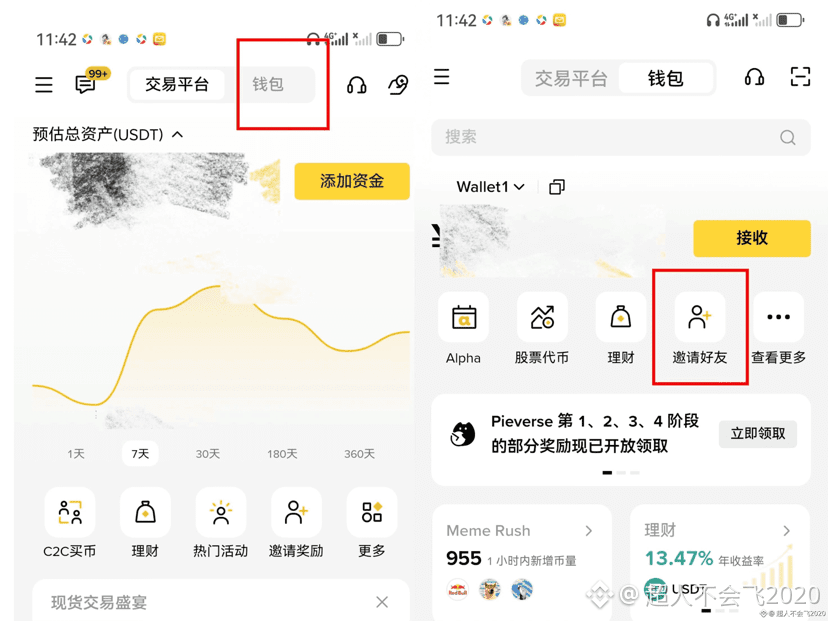
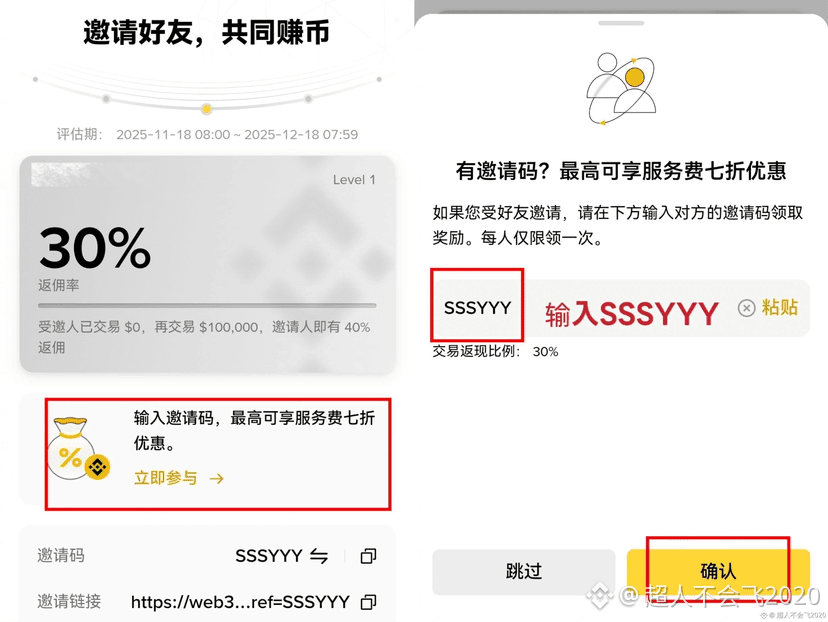
👏👏Follow on-chain market trends and join in to farm air drops and bait dogs using #ALPHA . You can trade directly with your Binance Web3 wallet. Use the super invite code SSSYYY to automatically save 30%. If you don’t know how, follow the instructions in Figures 2 and 3, or join the group chat to交流 and learn together.
KII: Today, limit orders worth $20 million were filled. Although it’s less than yesterday’s $55 million, over the past 24 hours there were $177 million in trades, the price also rose by 7%. There are 4 days left in the bonus period.
Cow is here: Over the past 24 hours it surged 26%. Limit orders collapsed from yesterday’s $8.2 million to $380k. The contract is up as well—8 days left.
DEBIT: Trading volume is 238 million, and the price is holding around 1.65. FDV is $164 million. The total of the limit orders on both sides is around 300k.
CNPY: Up by nearly 20%. Limit orders fell from $2.39 million to $170k. 28 days remain.
TMX and CP: 7 days left. Today’s limit order is around $20k. TMX yesterday was $30.8 million.
FLORK: Down 32%. Limit orders dropped from $1.29 million to $17k.
For TAC, AI, UP, CASHCAT, and PONS, today’s limit orders are all 0. PONS had over 100 million in trades over 24 hours, FDV is $760 million, and it’s up 5 points.
September 9th, Binance Alpha 30-day new token trading competition
👏👏Follow on-chain market trends and join in to farm air drops and bait dogs using #ALPHA . You can trade directly with your Binance Web3 wallet. Use the super invite code SSSYYY to automatically save 30%. If you don’t know how, follow the instructions in Figures 2 and 3, or join the group chat to交流 and learn together.
KII: Today, limit orders worth $20 million were filled. Although it’s less than yesterday’s $55 million, over the past 24 hours there were $177 million in trades, the price also rose by 7%. There are 4 days left in the bonus period.
Cow is here: Over the past 24 hours it surged 26%. Limit orders collapsed from yesterday’s $8.2 million to $380k. The contract is up as well—8 days left.
DEBIT: Trading volume is 238 million, and the price is holding around 1.65. FDV is $164 million. The total of the limit orders on both sides is around 300k.
CNPY: Up by nearly 20%. Limit orders fell from $2.39 million to $170k. 28 days remain.
TMX and CP: 7 days left. Today’s limit order is around $20k. TMX yesterday was $30.8 million.
FLORK: Down 32%. Limit orders dropped from $1.29 million to $17k.
For TAC, AI, UP, CASHCAT, and PONS, today’s limit orders are all 0. PONS had over 100 million in trades over 24 hours, FDV is $760 million, and it’s up 5 points.
👏👏Follow on-chain market trends and join in to farm air drops and bait dogs using #ALPHA . You can trade directly with your Binance Web3 wallet. Use the super invite code SSSYYY to automatically save 30%. If you don’t know how, follow the instructions in Figures 2 and 3, or join the group chat to交流 and learn together.
KII: Today, limit orders worth $20 million were filled. Although it’s less than yesterday’s $55 million, over the past 24 hours there were $177 million in trades, the price also rose by 7%. There are 4 days left in the bonus period.
Cow is here: Over the past 24 hours it surged 26%. Limit orders collapsed from yesterday’s $8.2 million to $380k. The contract is up as well—8 days left.
DEBIT: Trading volume is 238 million, and the price is holding around 1.65. FDV is $164 million. The total of the limit orders on both sides is around 300k.
CNPY: Up by nearly 20%. Limit orders fell from $2.39 million to $170k. 28 days remain.
TMX and CP: 7 days left. Today’s limit order is around $20k. TMX yesterday was $30.8 million.
FLORK: Down 32%. Limit orders dropped from $1.29 million to $17k.
For TAC, AI, UP, CASHCAT, and PONS, today’s limit orders are all 0. PONS had over 100 million in trades over 24 hours, FDV is $760 million, and it’s up 5 points.
19
2.5k
·
--
9.9 Morning Express | 📝
Overnight, all three major U.S. stock indexes closed lower together. The situation in the Middle East lifted oil prices, while expectations of interest-rate hikes weighed on risk appetite. The crypto market followed the weakness: after Bitcoin fell below the $80,000 level, it continued to trade sideways.
Spot gold is around $4,390–4,400, struggling near the $4,400 mark.
Brent crude is near $97; WTI is around $91.8. The Middle East premium provides support.
Bitcoin is around $78,500–$78,900, down from the prior high.
Ethereum is around $2,485.
U.S. Stocks: The escalation of the Middle East conflict and limited navigation through the Strait of Hormuz pushed up oil prices. Concerns about inflation are rising, and the probability of a September rate hike by the Fed remains high. The semiconductor sector outperformed against the trend: Qualcomm and Amazon have agreed on AI chip cooperation, and Intel plans to raise PC CPU prices.
Crypto: Bitcoin is held back by macro interest-rate expectations and has not yet managed to reclaim $80,000 in the short term. ETF inflows occurred earlier, but after risk appetite cooled, it tracked the broader adjustment in U.S. stocks. Gold is also pressured by rate-hike expectations; geopolitical risk hedging has not fully offset the pressure from interest rates.
In the short term, the main focus remains the tug-of-war among oil prices, U.S. Treasury yields, and Fed policy. Oil trading at elevated levels strengthens expectations of additional rate hikes, which in turn pressures valuations in U.S. stocks and risk assets in crypto. This week’s key highlight is Friday’s U.S. CPI; the data will directly recalibrate September meeting expectations.
For reference only and does not constitute investment advice.
#美股 #比特币 #CPI #早报
{future}(BTCUSDT)
{future}(SPCXUSDT)
{future}(TSLAUSDT)
9.9 Morning Express | 📝
Overnight, all three major U.S. stock indexes closed lower together. The situation in the Middle East lifted oil prices, while expectations of interest-rate hikes weighed on risk appetite. The crypto market followed the weakness: after Bitcoin fell below the $80,000 level, it continued to trade sideways.
Spot gold is around $4,390–4,400, struggling near the $4,400 mark.
Brent crude is near $97; WTI is around $91.8. The Middle East premium provides support.
Bitcoin is around $78,500–$78,900, down from the prior high.
Ethereum is around $2,485.
U.S. Stocks: The escalation of the Middle East conflict and limited navigation through the Strait of Hormuz pushed up oil prices. Concerns about inflation are rising, and the probability of a September rate hike by the Fed remains high. The semiconductor sector outperformed against the trend: Qualcomm and Amazon have agreed on AI chip cooperation, and Intel plans to raise PC CPU prices.
Crypto: Bitcoin is held back by macro interest-rate expectations and has not yet managed to reclaim $80,000 in the short term. ETF inflows occurred earlier, but after risk appetite cooled, it tracked the broader adjustment in U.S. stocks. Gold is also pressured by rate-hike expectations; geopolitical risk hedging has not fully offset the pressure from interest rates.
In the short term, the main focus remains the tug-of-war among oil prices, U.S. Treasury yields, and Fed policy. Oil trading at elevated levels strengthens expectations of additional rate hikes, which in turn pressures valuations in U.S. stocks and risk assets in crypto. This week’s key highlight is Friday’s U.S. CPI; the data will directly recalibrate September meeting expectations.
For reference only and does not constitute investment advice.
#美股 #比特币 #CPI #早报
Overnight, all three major U.S. stock indexes closed lower together. The situation in the Middle East lifted oil prices, while expectations of interest-rate hikes weighed on risk appetite. The crypto market followed the weakness: after Bitcoin fell below the $80,000 level, it continued to trade sideways.
Spot gold is around $4,390–4,400, struggling near the $4,400 mark.
Brent crude is near $97; WTI is around $91.8. The Middle East premium provides support.
Bitcoin is around $78,500–$78,900, down from the prior high.
Ethereum is around $2,485.
U.S. Stocks: The escalation of the Middle East conflict and limited navigation through the Strait of Hormuz pushed up oil prices. Concerns about inflation are rising, and the probability of a September rate hike by the Fed remains high. The semiconductor sector outperformed against the trend: Qualcomm and Amazon have agreed on AI chip cooperation, and Intel plans to raise PC CPU prices.
Crypto: Bitcoin is held back by macro interest-rate expectations and has not yet managed to reclaim $80,000 in the short term. ETF inflows occurred earlier, but after risk appetite cooled, it tracked the broader adjustment in U.S. stocks. Gold is also pressured by rate-hike expectations; geopolitical risk hedging has not fully offset the pressure from interest rates.
In the short term, the main focus remains the tug-of-war among oil prices, U.S. Treasury yields, and Fed policy. Oil trading at elevated levels strengthens expectations of additional rate hikes, which in turn pressures valuations in U.S. stocks and risk assets in crypto. This week’s key highlight is Friday’s U.S. CPI; the data will directly recalibrate September meeting expectations.
For reference only and does not constitute investment advice.
#美股 #比特币 #CPI #早报
1
10
1.6k
·
--
Superman 100U DCA BTC Day 25✅
Today's BTC purchase price: $78290
Purchase amount: 0.00127
Daily rambling:
Today there was no livestream—I went around all day trying to sell the apartment. In the end, I sold it for 2.52 million. After deducting the bank interest owed (1.2 million), I can still take home 1.32 million. From this 1.32 million, intermediary fees and various other charges will likely be about 70–80 thousand. I'm planning to keep 1 million to buy the BTC dip (this can only buy 2 big pancakes 🥲), and the remaining 245 thousand will be kept as working capital;
Also, another apartment—today the tenant said they also want to buy it. That apartment has no mortgage, but it's a high floor that dropped too much. I estimate I’ll only be able to sell it for 1.2 million at most. If it can be sold, I can also use 1 million to buy the BTC dip (I can still only buy 2 big pancakes).
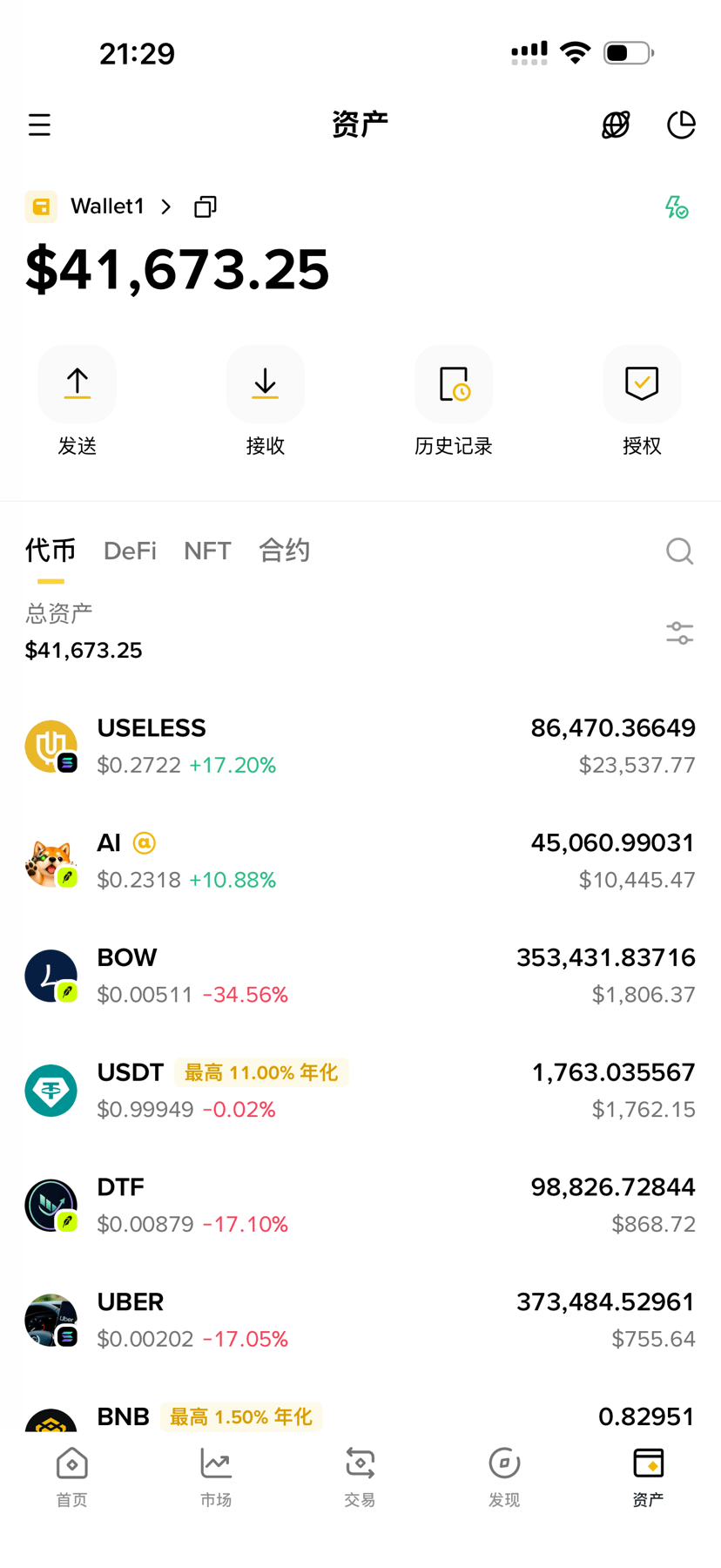
Also, I checked my wallet. I started with more than 28,000 U; today it went up a bit and now it's over 40,000 U. Even though I'm getting bitten by dogs every day, overall I'm still making a small profit!
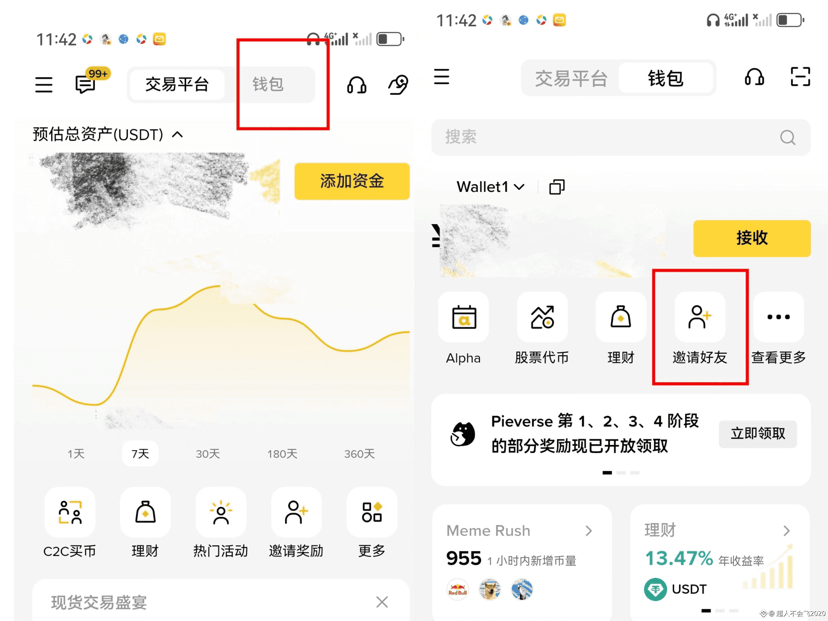
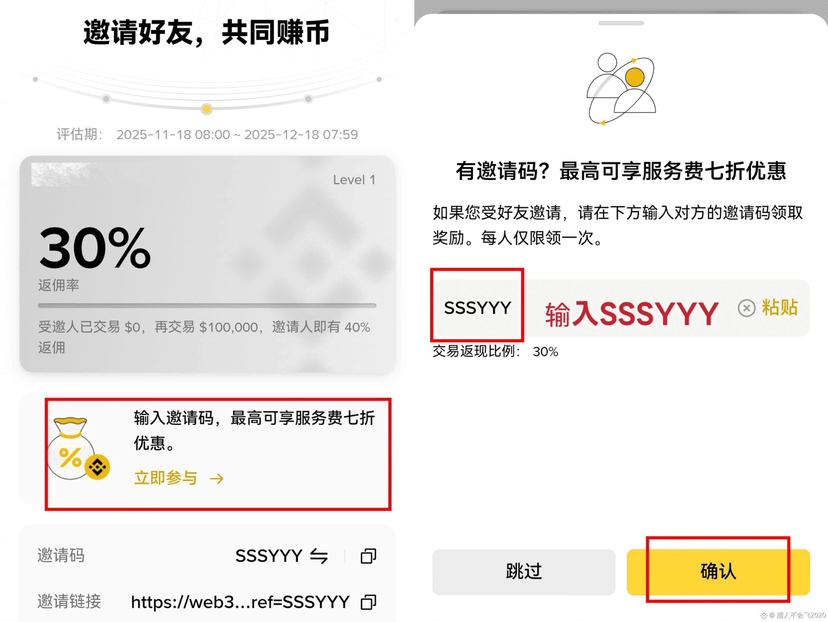
👏👏 Lately, more and more friends have started participating in on-chain dog-catching. You can trade directly using your Binance Web3 wallet. Use my Superman invitation code SSSYYY to automatically save 30%. If you don't know how, you can follow the steps in Image 2 and Image 3, or join the group chat to discuss and learn together.
Superman 100U DCA BTC Day 25✅
Today's BTC purchase price: $78290
Purchase amount: 0.00127
Daily rambling:
Today there was no livestream—I went around all day trying to sell the apartment. In the end, I sold it for 2.52 million. After deducting the bank interest owed (1.2 million), I can still take home 1.32 million. From this 1.32 million, intermediary fees and various other charges will likely be about 70–80 thousand. I'm planning to keep 1 million to buy the BTC dip (this can only buy 2 big pancakes 🥲), and the remaining 245 thousand will be kept as working capital;
Also, another apartment—today the tenant said they also want to buy it. That apartment has no mortgage, but it's a high floor that dropped too much. I estimate I’ll only be able to sell it for 1.2 million at most. If it can be sold, I can also use 1 million to buy the BTC dip (I can still only buy 2 big pancakes).
Also, I checked my wallet. I started with more than 28,000 U; today it went up a bit and now it's over 40,000 U. Even though I'm getting bitten by dogs every day, overall I'm still making a small profit!
👏👏 Lately, more and more friends have started participating in on-chain dog-catching. You can trade directly using your Binance Web3 wallet. Use my Superman invitation code SSSYYY to automatically save 30%. If you don't know how, you can follow the steps in Image 2 and Image 3, or join the group chat to discuss and learn together.
Today's BTC purchase price: $78290
Purchase amount: 0.00127
Daily rambling:
Today there was no livestream—I went around all day trying to sell the apartment. In the end, I sold it for 2.52 million. After deducting the bank interest owed (1.2 million), I can still take home 1.32 million. From this 1.32 million, intermediary fees and various other charges will likely be about 70–80 thousand. I'm planning to keep 1 million to buy the BTC dip (this can only buy 2 big pancakes 🥲), and the remaining 245 thousand will be kept as working capital;
Also, another apartment—today the tenant said they also want to buy it. That apartment has no mortgage, but it's a high floor that dropped too much. I estimate I’ll only be able to sell it for 1.2 million at most. If it can be sold, I can also use 1 million to buy the BTC dip (I can still only buy 2 big pancakes).
Also, I checked my wallet. I started with more than 28,000 U; today it went up a bit and now it's over 40,000 U. Even though I'm getting bitten by dogs every day, overall I'm still making a small profit!
👏👏 Lately, more and more friends have started participating in on-chain dog-catching. You can trade directly using your Binance Web3 wallet. Use my Superman invitation code SSSYYY to automatically save 30%. If you don't know how, you can follow the steps in Image 2 and Image 3, or join the group chat to discuss and learn together.
10
26
3.8k
·
--
September 8th, Binance Alpha 30-day new token trading competition
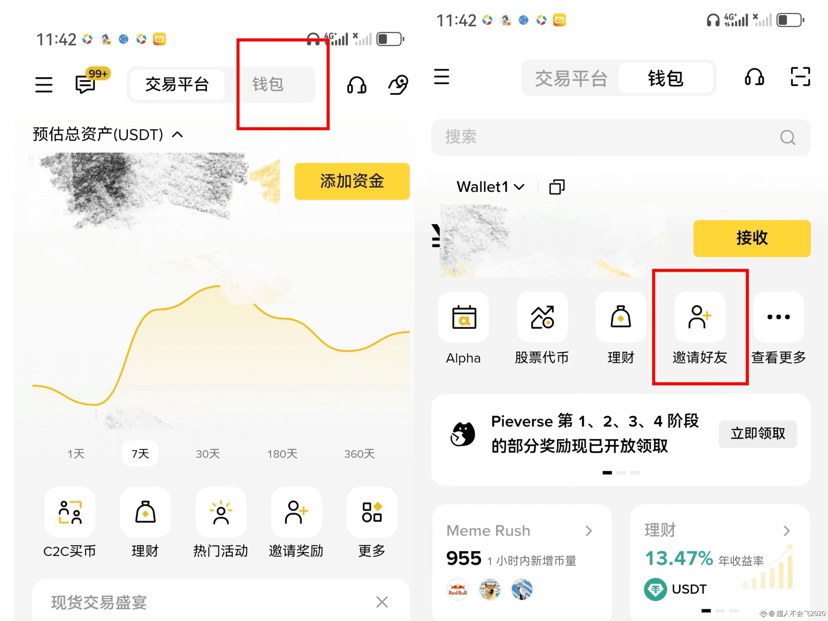
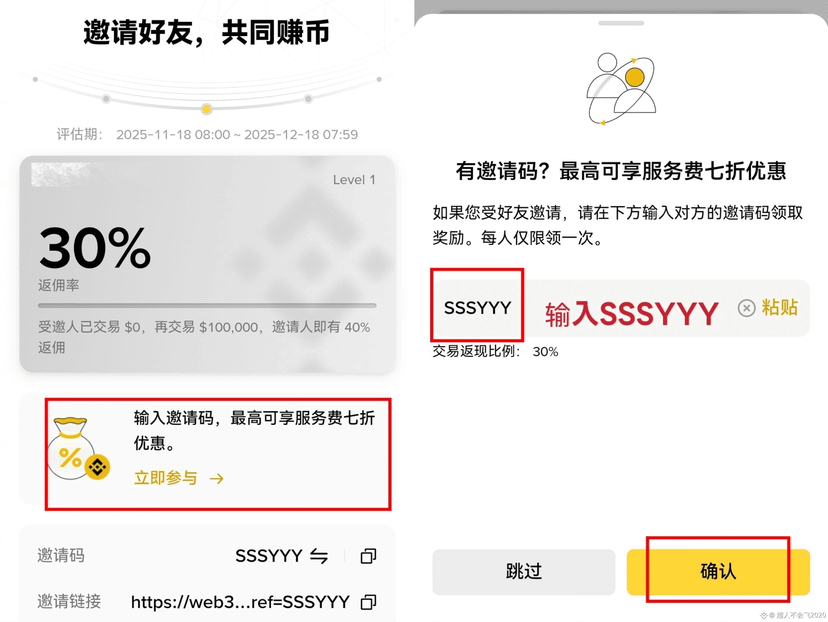
👏👏Keep an eye on on-chain market activity and join in—participate in #ALPHA to take advantage of the opportunity and trade directly using your Binance Web3 wallet. Use the superhuman referral code SSSYYY to automatically save 30%. If you don’t know how, follow the steps in Figure 2 and Figure 3, or join the group chat to exchange ideas and learn together.
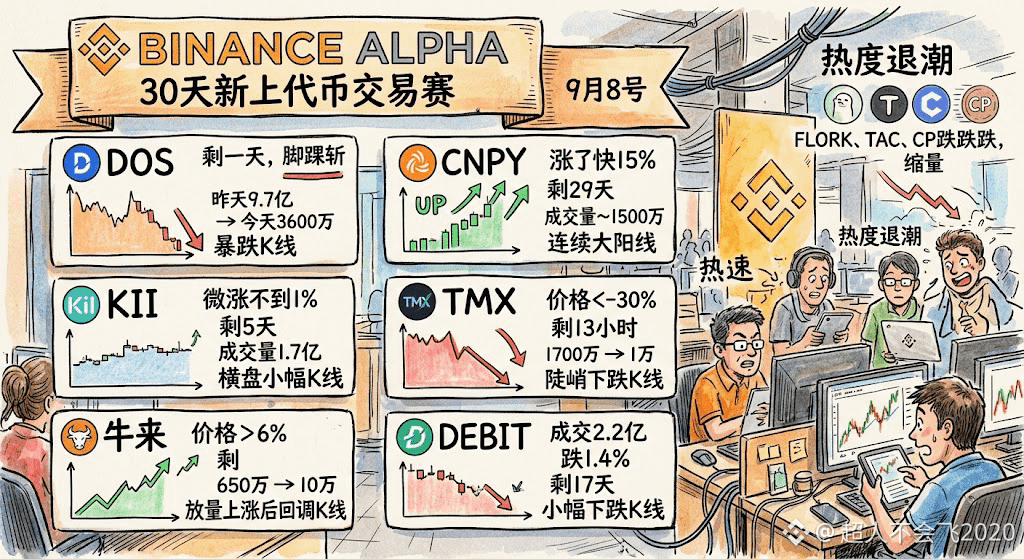
DOS, one day left. Yesterday’s limit orders were filled for 970 million, today it’s 36 million—straight down to the ankle.
KII, volume 170 million, up slightly by less than 1%, with 5 days remaining.
Bull’s here, price up by more than 6%, and the limit order quantity dropped from 6.5 million to just over 100,000.
CNPY, up by nearly 15%, volume around 15 million, with 29 days remaining.
TMX, price down by nearly 30%. The trading competition has 13 hours left, and limit order quantity dropped from 17 million to just over 10,000.
DEBIT, filled 220 million+, price down by 1.4%, with 17 days remaining.
As for the later ones—FLORK, TAC, and CP—basically they’re all trending down. The limit order quantity is decreasing day by day, a typical post-launch decline in new token hype.
September 8th, Binance Alpha 30-day new token trading competition
👏👏Keep an eye on on-chain market activity and join in—participate in #ALPHA to take advantage of the opportunity and trade directly using your Binance Web3 wallet. Use the superhuman referral code SSSYYY to automatically save 30%. If you don’t know how, follow the steps in Figure 2 and Figure 3, or join the group chat to exchange ideas and learn together.
DOS, one day left. Yesterday’s limit orders were filled for 970 million, today it’s 36 million—straight down to the ankle.
KII, volume 170 million, up slightly by less than 1%, with 5 days remaining.
Bull’s here, price up by more than 6%, and the limit order quantity dropped from 6.5 million to just over 100,000.
CNPY, up by nearly 15%, volume around 15 million, with 29 days remaining.
TMX, price down by nearly 30%. The trading competition has 13 hours left, and limit order quantity dropped from 17 million to just over 10,000.
DEBIT, filled 220 million+, price down by 1.4%, with 17 days remaining.
As for the later ones—FLORK, TAC, and CP—basically they’re all trending down. The limit order quantity is decreasing day by day, a typical post-launch decline in new token hype.
👏👏Keep an eye on on-chain market activity and join in—participate in #ALPHA to take advantage of the opportunity and trade directly using your Binance Web3 wallet. Use the superhuman referral code SSSYYY to automatically save 30%. If you don’t know how, follow the steps in Figure 2 and Figure 3, or join the group chat to exchange ideas and learn together.
DOS, one day left. Yesterday’s limit orders were filled for 970 million, today it’s 36 million—straight down to the ankle.
KII, volume 170 million, up slightly by less than 1%, with 5 days remaining.
Bull’s here, price up by more than 6%, and the limit order quantity dropped from 6.5 million to just over 100,000.
CNPY, up by nearly 15%, volume around 15 million, with 29 days remaining.
TMX, price down by nearly 30%. The trading competition has 13 hours left, and limit order quantity dropped from 17 million to just over 10,000.
DEBIT, filled 220 million+, price down by 1.4%, with 17 days remaining.
As for the later ones—FLORK, TAC, and CP—basically they’re all trending down. The limit order quantity is decreasing day by day, a typical post-launch decline in new token hype.
1
2
41
2.7k
·
--
Superman 100U DCA into BTC — Day 24 ✅
Today’s BTC buy price: 79066
Buy amount: 0.00126
Let’s talk about on-chain memes:
I took a loss on two trades this morning, then I played it safe all day.
After thinking it through, even though I still managed to get a little profit, getting hit every time hasn’t let up.
I summarized it: the ones that profit are basically coins with big-money certainty—after doing research.
The ones that get hit are mostly little coins driven by FOMO, afraid of missing out on a fast run.
And with the Chinese community pouring in right now, a lot of copiers jump on the bandwagon and buy in right at the front.
If you can’t get in before the car head, then you have to enter at double the price!
So I think it’s still not good to place orders too frequently. You need to switch your mindset—if a coin is certain, even if its market cap is higher, you still have to bite the bullet and increase your position. Refer to BullLai, MarsCoin, and MEME.
On-chain meme trading carries extremely high risk—participate cautiously, DYOR.
Superman 100U DCA into BTC — Day 24 ✅
Today’s BTC buy price: 79066
Buy amount: 0.00126
Let’s talk about on-chain memes:
I took a loss on two trades this morning, then I played it safe all day.
After thinking it through, even though I still managed to get a little profit, getting hit every time hasn’t let up.
I summarized it: the ones that profit are basically coins with big-money certainty—after doing research.
The ones that get hit are mostly little coins driven by FOMO, afraid of missing out on a fast run.
And with the Chinese community pouring in right now, a lot of copiers jump on the bandwagon and buy in right at the front.
If you can’t get in before the car head, then you have to enter at double the price!
So I think it’s still not good to place orders too frequently. You need to switch your mindset—if a coin is certain, even if its market cap is higher, you still have to bite the bullet and increase your position. Refer to BullLai, MarsCoin, and MEME.
On-chain meme trading carries extremely high risk—participate cautiously, DYOR.
Today’s BTC buy price: 79066
Buy amount: 0.00126
Let’s talk about on-chain memes:
I took a loss on two trades this morning, then I played it safe all day.
After thinking it through, even though I still managed to get a little profit, getting hit every time hasn’t let up.
I summarized it: the ones that profit are basically coins with big-money certainty—after doing research.
The ones that get hit are mostly little coins driven by FOMO, afraid of missing out on a fast run.
And with the Chinese community pouring in right now, a lot of copiers jump on the bandwagon and buy in right at the front.
If you can’t get in before the car head, then you have to enter at double the price!
So I think it’s still not good to place orders too frequently. You need to switch your mindset—if a coin is certain, even if its market cap is higher, you still have to bite the bullet and increase your position. Refer to BullLai, MarsCoin, and MEME.
On-chain meme trading carries extremely high risk—participate cautiously, DYOR.
4
17
3k
·
--
🎙️ Day 24 of Superhuman 100U recurring BTC investment

End
02 h 05 m 00 s
7.2k

BTC
Holding
+0.19%
21
13
·
--
September 7th, Binance Alpha 30-day New Token Trading Competition
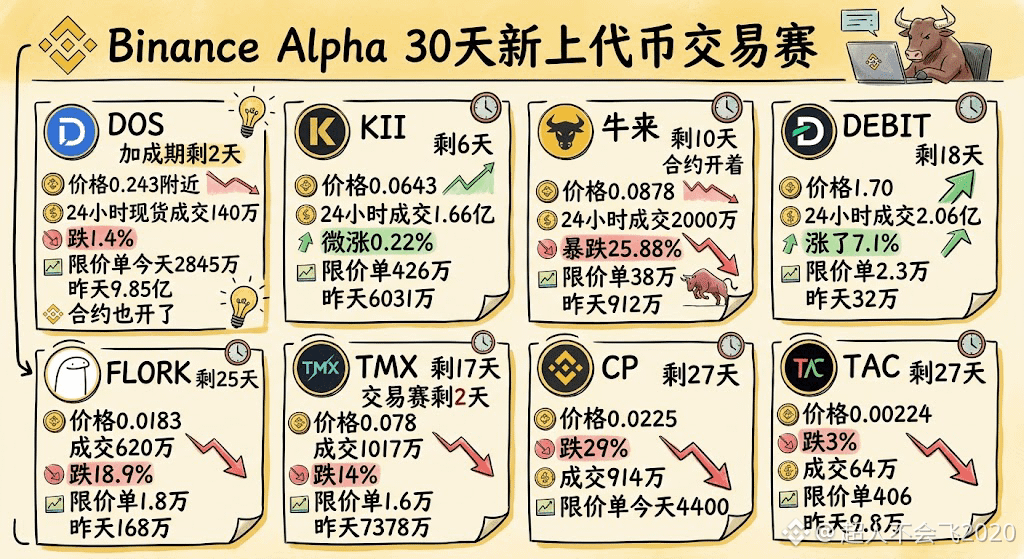
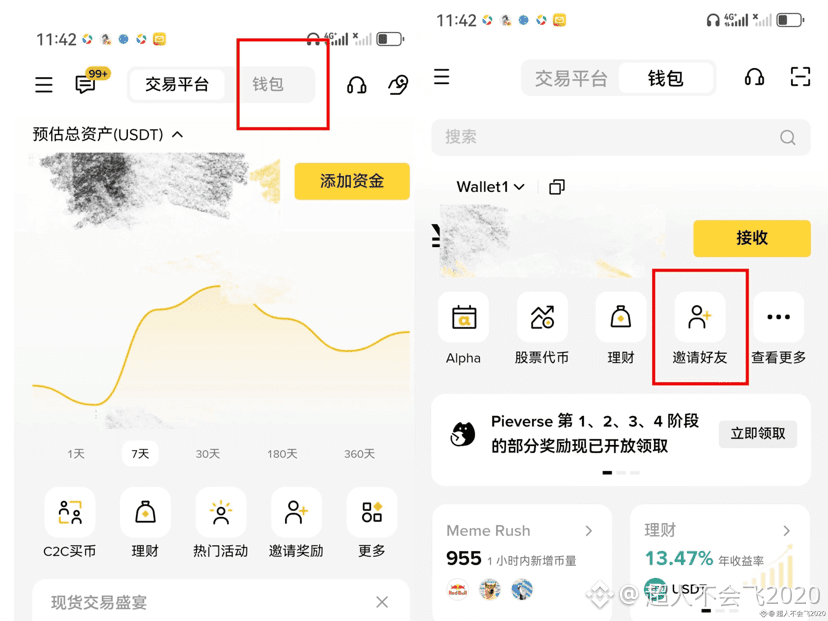
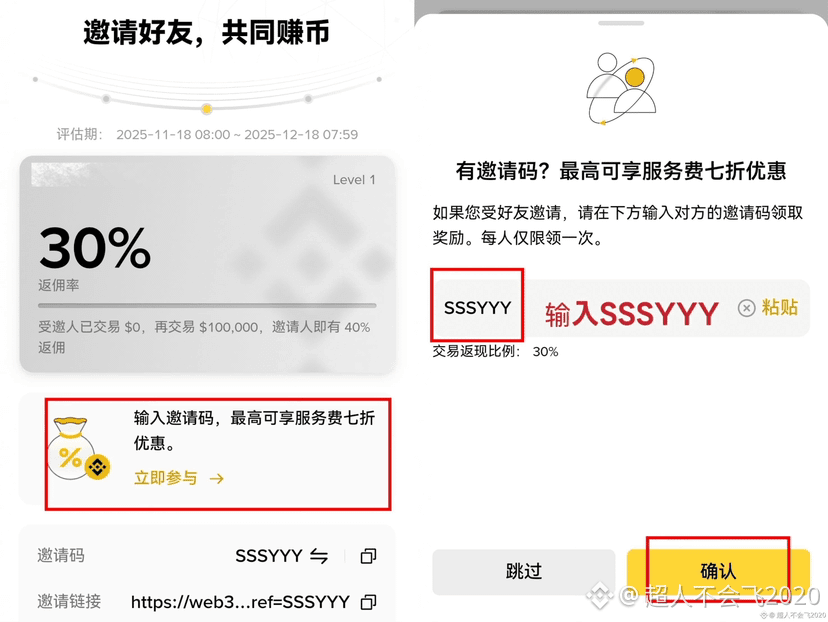
👏👏Keep an eye on on-chain market trends and join in on #ALPHA to “grab yield” and “cash out the dog”—you can trade directly using your Binance Web3 wallet. Use the super-incredible invite code SSSYYY to automatically save 30%. If you don’t know how, follow the instructions in Figure 2 and Figure 3, or join the group chat to discuss and learn together.
DOS: The boost period has 2 days left. Price is around 0.243. In the last 24 hours, spot trading volume is 1.4 million, down 1.4%. The limit order amount for today is 28.45 million; yesterday it was 985 million. The futures market has also been opened.
KII: 6 days left. Price is 0.0643. In the last 24 hours, trading volume is 166 million, up slightly by 0.22%. Today’s limit order is 4.26 million; yesterday’s was 60.31 million.
Bull is coming: 10 days left. Futures are already open. Price is 0.0878. In the last 24 hours, trading volume is 20 million, plunging 25.88%. Today’s limit order is 0.38 million; yesterday’s was 9.12 million.
DEBIT: 18 days left. Price is 1.70. In the last 24 hours, trading volume is 206 million, up 7.1%. Today’s limit order is 23,000; yesterday’s was 320,000.
FLORK: 25 days left. Price is 0.0183. Trading volume is 6.2 million, down 18.9%. Today’s limit order is 18,000; yesterday’s was 1.68 million.
TMX: 17 days left. There are 2 days remaining in the trading competition. Price is 0.078. Trading volume is 10.17 million, down 14%. Today’s limit order is 16,000; yesterday’s was 73.78 million.
The last two newcomers with 27 days left: CP price 0.0225, down 29%, trading volume 9.14 million, and today’s limit order is only 4,400. TAC price 0.00224, down 3%, trading volume 640,000, and today’s limit order is 406; yesterday’s was 98,000.
September 7th, Binance Alpha 30-day New Token Trading Competition
👏👏Keep an eye on on-chain market trends and join in on #ALPHA to “grab yield” and “cash out the dog”—you can trade directly using your Binance Web3 wallet. Use the super-incredible invite code SSSYYY to automatically save 30%. If you don’t know how, follow the instructions in Figure 2 and Figure 3, or join the group chat to discuss and learn together.
DOS: The boost period has 2 days left. Price is around 0.243. In the last 24 hours, spot trading volume is 1.4 million, down 1.4%. The limit order amount for today is 28.45 million; yesterday it was 985 million. The futures market has also been opened.
KII: 6 days left. Price is 0.0643. In the last 24 hours, trading volume is 166 million, up slightly by 0.22%. Today’s limit order is 4.26 million; yesterday’s was 60.31 million.
Bull is coming: 10 days left. Futures are already open. Price is 0.0878. In the last 24 hours, trading volume is 20 million, plunging 25.88%. Today’s limit order is 0.38 million; yesterday’s was 9.12 million.
DEBIT: 18 days left. Price is 1.70. In the last 24 hours, trading volume is 206 million, up 7.1%. Today’s limit order is 23,000; yesterday’s was 320,000.
FLORK: 25 days left. Price is 0.0183. Trading volume is 6.2 million, down 18.9%. Today’s limit order is 18,000; yesterday’s was 1.68 million.
TMX: 17 days left. There are 2 days remaining in the trading competition. Price is 0.078. Trading volume is 10.17 million, down 14%. Today’s limit order is 16,000; yesterday’s was 73.78 million.
The last two newcomers with 27 days left: CP price 0.0225, down 29%, trading volume 9.14 million, and today’s limit order is only 4,400. TAC price 0.00224, down 3%, trading volume 640,000, and today’s limit order is 406; yesterday’s was 98,000.
👏👏Keep an eye on on-chain market trends and join in on #ALPHA to “grab yield” and “cash out the dog”—you can trade directly using your Binance Web3 wallet. Use the super-incredible invite code SSSYYY to automatically save 30%. If you don’t know how, follow the instructions in Figure 2 and Figure 3, or join the group chat to discuss and learn together.
DOS: The boost period has 2 days left. Price is around 0.243. In the last 24 hours, spot trading volume is 1.4 million, down 1.4%. The limit order amount for today is 28.45 million; yesterday it was 985 million. The futures market has also been opened.
KII: 6 days left. Price is 0.0643. In the last 24 hours, trading volume is 166 million, up slightly by 0.22%. Today’s limit order is 4.26 million; yesterday’s was 60.31 million.
Bull is coming: 10 days left. Futures are already open. Price is 0.0878. In the last 24 hours, trading volume is 20 million, plunging 25.88%. Today’s limit order is 0.38 million; yesterday’s was 9.12 million.
DEBIT: 18 days left. Price is 1.70. In the last 24 hours, trading volume is 206 million, up 7.1%. Today’s limit order is 23,000; yesterday’s was 320,000.
FLORK: 25 days left. Price is 0.0183. Trading volume is 6.2 million, down 18.9%. Today’s limit order is 18,000; yesterday’s was 1.68 million.
TMX: 17 days left. There are 2 days remaining in the trading competition. Price is 0.078. Trading volume is 10.17 million, down 14%. Today’s limit order is 16,000; yesterday’s was 73.78 million.
The last two newcomers with 27 days left: CP price 0.0225, down 29%, trading volume 9.14 million, and today’s limit order is only 4,400. TAC price 0.00224, down 3%, trading volume 640,000, and today’s limit order is 406; yesterday’s was 98,000.
4
1
22
2.2k
·
--
September 7 Morning Brief📝
U.S. stocks are closed for Labor Day on Monday, precious metals and crude oil futures closed early, and the weekend news was mainly centered on the Middle East.
OPEC+ met on Sunday and kept October output unchanged. Tensions between the U.S. and Iran are still not cooling down: the U.S. military continues its maritime blockade and is diverting commercial ships, with F-35s on patrol; Iran says it will not surrender and has also publicly released actions targeting unmanned boats.
Oil prices are holding steady for now, with Brent around 94.5 and WTI around 89.3. Spot gold is 4431 (-0.95%), silver 66.2 (-1.16%), and the U.S. dollar index at 99.16, slightly stronger.
Bitcoin spent the weekend grinding between 79,700 and 80,200, without really breaking above 80,000. Ethereum followed and briefly tested 2,500. Funds are more active in the altcoin sector: ZEC remains strong and pushed higher again over the weekend; BNB and ARB also had independent moves. Major coins are flat while altcoins move, a typical sector rotation.
On the domestic front, the Ministry of Finance issued special government bonds to inject capital into 8 central state-owned financial institutions, with a total capital increase of 360 billion yuan. This is neutral to mildly positive for risk assets, but it won’t solve near-term problems.
For the short term, keep an eye on two things: whether the Middle East sees another surprise that pushes oil prices higher, and how rate-cut expectations move after U.S. stocks open on Tuesday.
#比特币 #加密货币 #MorningBrief
September 7 Morning Brief📝
U.S. stocks are closed for Labor Day on Monday, precious metals and crude oil futures closed early, and the weekend news was mainly centered on the Middle East.
OPEC+ met on Sunday and kept October output unchanged. Tensions between the U.S. and Iran are still not cooling down: the U.S. military continues its maritime blockade and is diverting commercial ships, with F-35s on patrol; Iran says it will not surrender and has also publicly released actions targeting unmanned boats.
Oil prices are holding steady for now, with Brent around 94.5 and WTI around 89.3. Spot gold is 4431 (-0.95%), silver 66.2 (-1.16%), and the U.S. dollar index at 99.16, slightly stronger.
Bitcoin spent the weekend grinding between 79,700 and 80,200, without really breaking above 80,000. Ethereum followed and briefly tested 2,500. Funds are more active in the altcoin sector: ZEC remains strong and pushed higher again over the weekend; BNB and ARB also had independent moves. Major coins are flat while altcoins move, a typical sector rotation.
On the domestic front, the Ministry of Finance issued special government bonds to inject capital into 8 central state-owned financial institutions, with a total capital increase of 360 billion yuan. This is neutral to mildly positive for risk assets, but it won’t solve near-term problems.
For the short term, keep an eye on two things: whether the Middle East sees another surprise that pushes oil prices higher, and how rate-cut expectations move after U.S. stocks open on Tuesday.
#比特币 #加密货币 #MorningBrief
U.S. stocks are closed for Labor Day on Monday, precious metals and crude oil futures closed early, and the weekend news was mainly centered on the Middle East.
OPEC+ met on Sunday and kept October output unchanged. Tensions between the U.S. and Iran are still not cooling down: the U.S. military continues its maritime blockade and is diverting commercial ships, with F-35s on patrol; Iran says it will not surrender and has also publicly released actions targeting unmanned boats.
Oil prices are holding steady for now, with Brent around 94.5 and WTI around 89.3. Spot gold is 4431 (-0.95%), silver 66.2 (-1.16%), and the U.S. dollar index at 99.16, slightly stronger.
Bitcoin spent the weekend grinding between 79,700 and 80,200, without really breaking above 80,000. Ethereum followed and briefly tested 2,500. Funds are more active in the altcoin sector: ZEC remains strong and pushed higher again over the weekend; BNB and ARB also had independent moves. Major coins are flat while altcoins move, a typical sector rotation.
On the domestic front, the Ministry of Finance issued special government bonds to inject capital into 8 central state-owned financial institutions, with a total capital increase of 360 billion yuan. This is neutral to mildly positive for risk assets, but it won’t solve near-term problems.
For the short term, keep an eye on two things: whether the Middle East sees another surprise that pushes oil prices higher, and how rate-cut expectations move after U.S. stocks open on Tuesday.
#比特币 #加密货币 #MorningBrief
13
3.3k
·
--
Let's analyze it calmly📊I bought this cat yesterday because it had enough room for imagination, and it has indeed performed very well all the way, even making me expect it to reach Alpha.
Today, at a market cap of 10 million, it should have been sold. Then Hachimi suddenly came out of nowhere. Hachimi was originally also part of the cat concept, and now Hachimi has already been listed as a perpetual contract, with spot trading to follow! Two cats on the same chain, so my imagination for the construction cat is no longer there🤯
Let's analyze it calmly📊I bought this cat yesterday because it had enough room for imagination, and it has indeed performed very well all the way, even making me expect it to reach Alpha.
Today, at a market cap of 10 million, it should have been sold. Then Hachimi suddenly came out of nowhere. Hachimi was originally also part of the cat concept, and now Hachimi has already been listed as a perpetual contract, with spot trading to follow! Two cats on the same chain, so my imagination for the construction cat is no longer there🤯
Today, at a market cap of 10 million, it should have been sold. Then Hachimi suddenly came out of nowhere. Hachimi was originally also part of the cat concept, and now Hachimi has already been listed as a perpetual contract, with spot trading to follow! Two cats on the same chain, so my imagination for the construction cat is no longer there🤯
超人不会飞2020
·
--
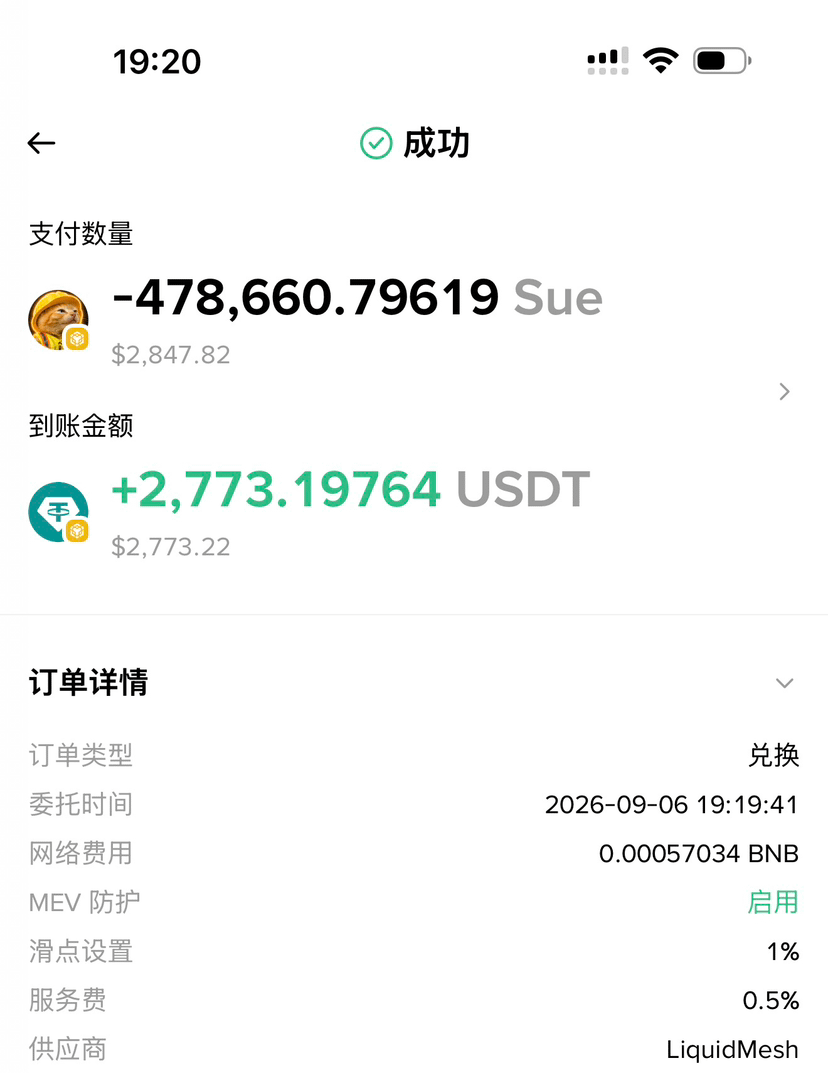
I'm so upset and speechless 🫥 Which big player is dumping this, crashing it from 16 million down to 5 million! I can’t see a 50 million market cap anymore. In the end, there’s only 2700U profit left, and I’m going to run too!!!
2
19
1.2k
·
--
I'm so upset and speechless 🫥 Which big player is dumping this, crashing it from 16 million down to 5 million! I can’t see a 50 million market cap anymore. In the end, there’s only 2700U profit left, and I’m going to run too!!!
I'm so upset and speechless 🫥 Which big player is dumping this, crashing it from 16 million down to 5 million! I can’t see a 50 million market cap anymore. In the end, there’s only 2700U profit left, and I’m going to run too!!!
8
1
20
3.9k
·
--
Friends, taking a day off today♨️ no live stream❤️
Friends, taking a day off today♨️ no live stream❤️

7
1
38
3.9k
·
--
Superman 100U DCA into BTC, Day 23✅
Today's BTC buy price: 80010.33
Amount bought: 0.00124
Talking about on-chain memes:
This is a war without gunfire, and BSC's reaction speed and execution are maxed out.
On the morning of September 4, I was thinking that on-chain fees are also a juicy piece of the pie. If the hype keeps failing to return to Binance Chain, then what does a massive capital outflow mean? Our Binance definitely won't sit still. I was still torn between building a position in BSC chain projects like Niulai or Marscoin! I expected you to counterattack, but I didn't expect it to be this fast 😂 I still haven't gotten on board yet!
Just look at the current hot topics and you'll know: BSC has completed a perfect counterattack, and BNB will naturally rise along with it... Will there be a pullback to pick up passengers?
Now every chain is making a response, so I still stick to my previous idea: the main position remains in BTC, most of the smaller positions will be slightly increased, and one leading project will be deployed on each chain. The rest of the spare capital will be used to try small bets for big gains on new memes.
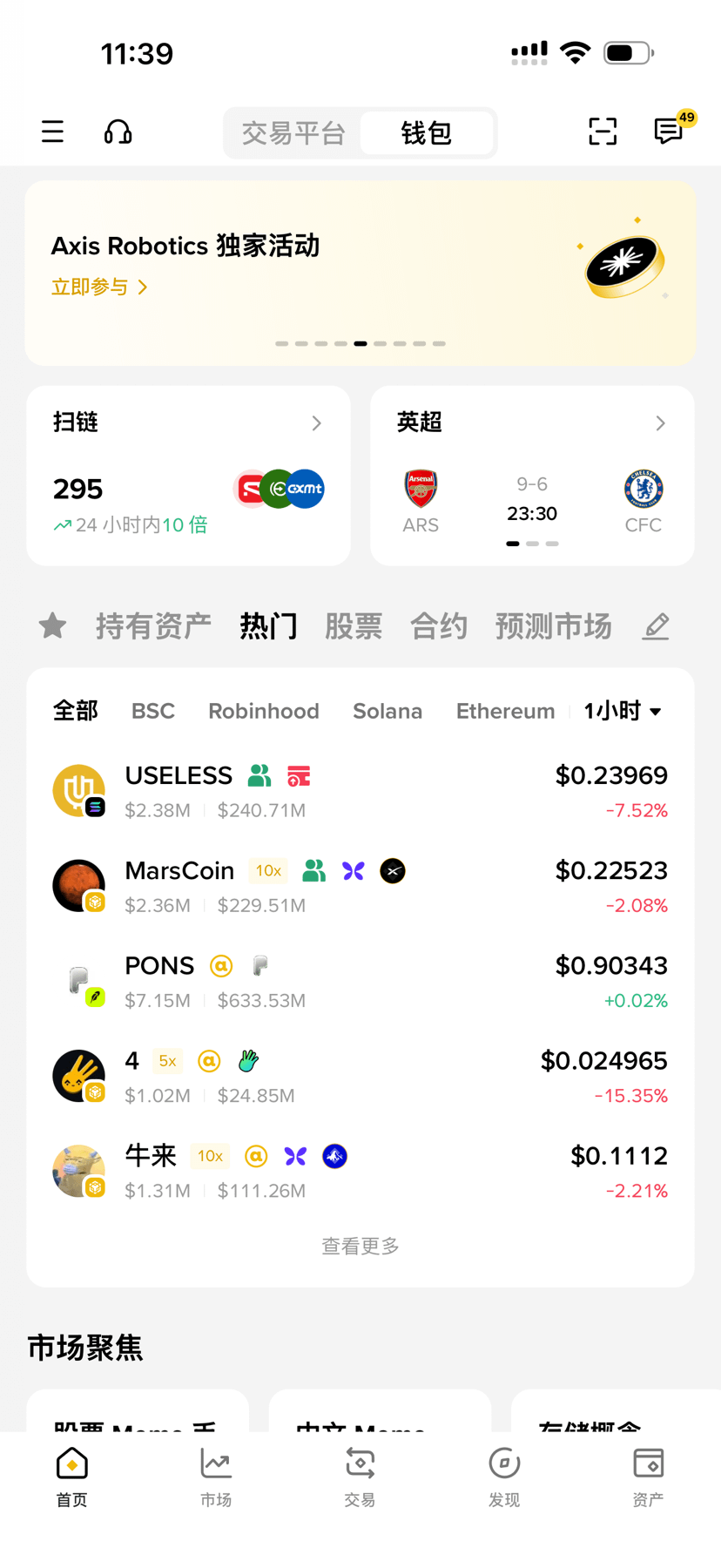
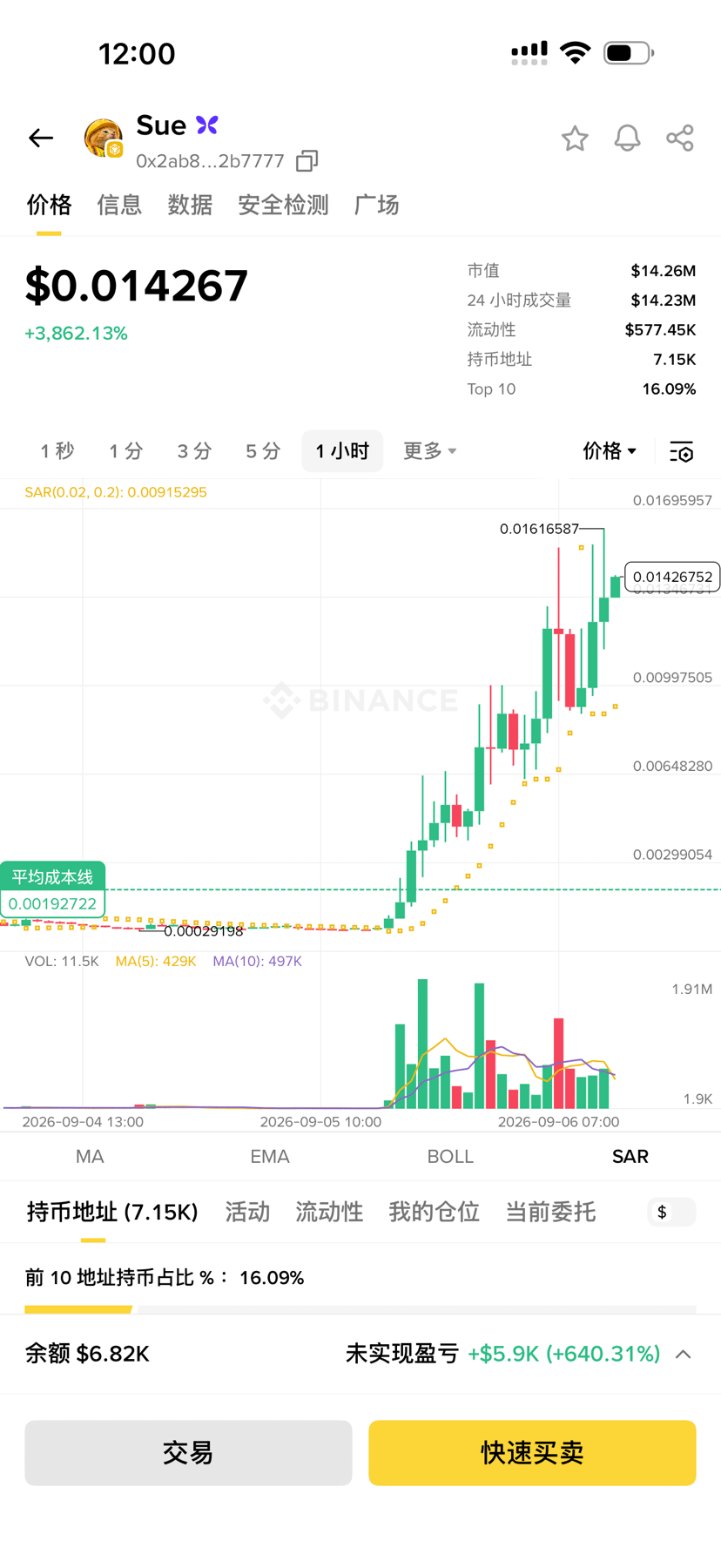
By the way, the construction cat I bought yesterday for $1500 has already returned my principal last night. The profit has now surged to $6000, and I’m very optimistic. The first target is to push market cap to $50 million!
Personal real-time trading record, not investment advice.
On-chain risks are extremely high, DYOR!
Superman 100U DCA into BTC, Day 23✅
Today's BTC buy price: 80010.33
Amount bought: 0.00124
Talking about on-chain memes:
This is a war without gunfire, and BSC's reaction speed and execution are maxed out.
On the morning of September 4, I was thinking that on-chain fees are also a juicy piece of the pie. If the hype keeps failing to return to Binance Chain, then what does a massive capital outflow mean? Our Binance definitely won't sit still. I was still torn between building a position in BSC chain projects like Niulai or Marscoin! I expected you to counterattack, but I didn't expect it to be this fast 😂 I still haven't gotten on board yet!
Just look at the current hot topics and you'll know: BSC has completed a perfect counterattack, and BNB will naturally rise along with it... Will there be a pullback to pick up passengers?
Now every chain is making a response, so I still stick to my previous idea: the main position remains in BTC, most of the smaller positions will be slightly increased, and one leading project will be deployed on each chain. The rest of the spare capital will be used to try small bets for big gains on new memes.
By the way, the construction cat I bought yesterday for $1500 has already returned my principal last night. The profit has now surged to $6000, and I’m very optimistic. The first target is to push market cap to $50 million!
Personal real-time trading record, not investment advice.
On-chain risks are extremely high, DYOR!
Today's BTC buy price: 80010.33
Amount bought: 0.00124
Talking about on-chain memes:
This is a war without gunfire, and BSC's reaction speed and execution are maxed out.
On the morning of September 4, I was thinking that on-chain fees are also a juicy piece of the pie. If the hype keeps failing to return to Binance Chain, then what does a massive capital outflow mean? Our Binance definitely won't sit still. I was still torn between building a position in BSC chain projects like Niulai or Marscoin! I expected you to counterattack, but I didn't expect it to be this fast 😂 I still haven't gotten on board yet!
Just look at the current hot topics and you'll know: BSC has completed a perfect counterattack, and BNB will naturally rise along with it... Will there be a pullback to pick up passengers?
Now every chain is making a response, so I still stick to my previous idea: the main position remains in BTC, most of the smaller positions will be slightly increased, and one leading project will be deployed on each chain. The rest of the spare capital will be used to try small bets for big gains on new memes.
By the way, the construction cat I bought yesterday for $1500 has already returned my principal last night. The profit has now surged to $6000, and I’m very optimistic. The first target is to push market cap to $50 million!
Personal real-time trading record, not investment advice.
On-chain risks are extremely high, DYOR!
9
1.8k
·
--
September 6 Morning Briefing | 📝
Geopolitical tensions unexpectedly heated up over the weekend.
Oil prices are holding steady for now, with Brent around 94.5 and WTI around 89.3, showing little volatility. Spot gold pulled back to 4431 (-0.95%), silver to 66.2 (-1.16%), and the U.S. dollar index edged up slightly to 99.16.
Bitcoin traded sideways over the weekend in the 79800-80200 range, with volatility narrowing. After August nonfarm payrolls beat expectations, rate hike expectations resurfaced, putting pressure on risk assets overall, but spot ETF inflows are still coming in, offsetting part of the selling pressure.
Right now, the market is being pulled by two forces: on one side, the Middle East situation is boosting safe-haven demand (gold, crude oil, and some funds viewing BTC as a hedge); on the other, rate expectations and September seasonality are weighing on prices. Who has the upper hand in the short term will still depend on sentiment after Monday's open and further developments in the conflict.
Weekend liquidity is thin, and news flow can easily amplify volatility, so don't take on too much position size. Watch whether oil and gold can hold steady, and whether BTC can maintain support around 79500.
#比特币
{future}(BTCUSDT)
{future}(CLUSDT)
{future}(ETHUSDT)
September 6 Morning Briefing | 📝
Geopolitical tensions unexpectedly heated up over the weekend.
Oil prices are holding steady for now, with Brent around 94.5 and WTI around 89.3, showing little volatility. Spot gold pulled back to 4431 (-0.95%), silver to 66.2 (-1.16%), and the U.S. dollar index edged up slightly to 99.16.
Bitcoin traded sideways over the weekend in the 79800-80200 range, with volatility narrowing. After August nonfarm payrolls beat expectations, rate hike expectations resurfaced, putting pressure on risk assets overall, but spot ETF inflows are still coming in, offsetting part of the selling pressure.
Right now, the market is being pulled by two forces: on one side, the Middle East situation is boosting safe-haven demand (gold, crude oil, and some funds viewing BTC as a hedge); on the other, rate expectations and September seasonality are weighing on prices. Who has the upper hand in the short term will still depend on sentiment after Monday's open and further developments in the conflict.
Weekend liquidity is thin, and news flow can easily amplify volatility, so don't take on too much position size. Watch whether oil and gold can hold steady, and whether BTC can maintain support around 79500.
#比特币
Geopolitical tensions unexpectedly heated up over the weekend.
Oil prices are holding steady for now, with Brent around 94.5 and WTI around 89.3, showing little volatility. Spot gold pulled back to 4431 (-0.95%), silver to 66.2 (-1.16%), and the U.S. dollar index edged up slightly to 99.16.
Bitcoin traded sideways over the weekend in the 79800-80200 range, with volatility narrowing. After August nonfarm payrolls beat expectations, rate hike expectations resurfaced, putting pressure on risk assets overall, but spot ETF inflows are still coming in, offsetting part of the selling pressure.
Right now, the market is being pulled by two forces: on one side, the Middle East situation is boosting safe-haven demand (gold, crude oil, and some funds viewing BTC as a hedge); on the other, rate expectations and September seasonality are weighing on prices. Who has the upper hand in the short term will still depend on sentiment after Monday's open and further developments in the conflict.
Weekend liquidity is thin, and news flow can easily amplify volatility, so don't take on too much position size. Watch whether oil and gold can hold steady, and whether BTC can maintain support around 79500.
#比特币
1
18
4.5k
·
--
Day 22 of Superhuman 100U DCA into BTC✅
Today's BTC buy price: 79738.01
Buy amount: 0.00125
Let's talk about the meme trading ledger:
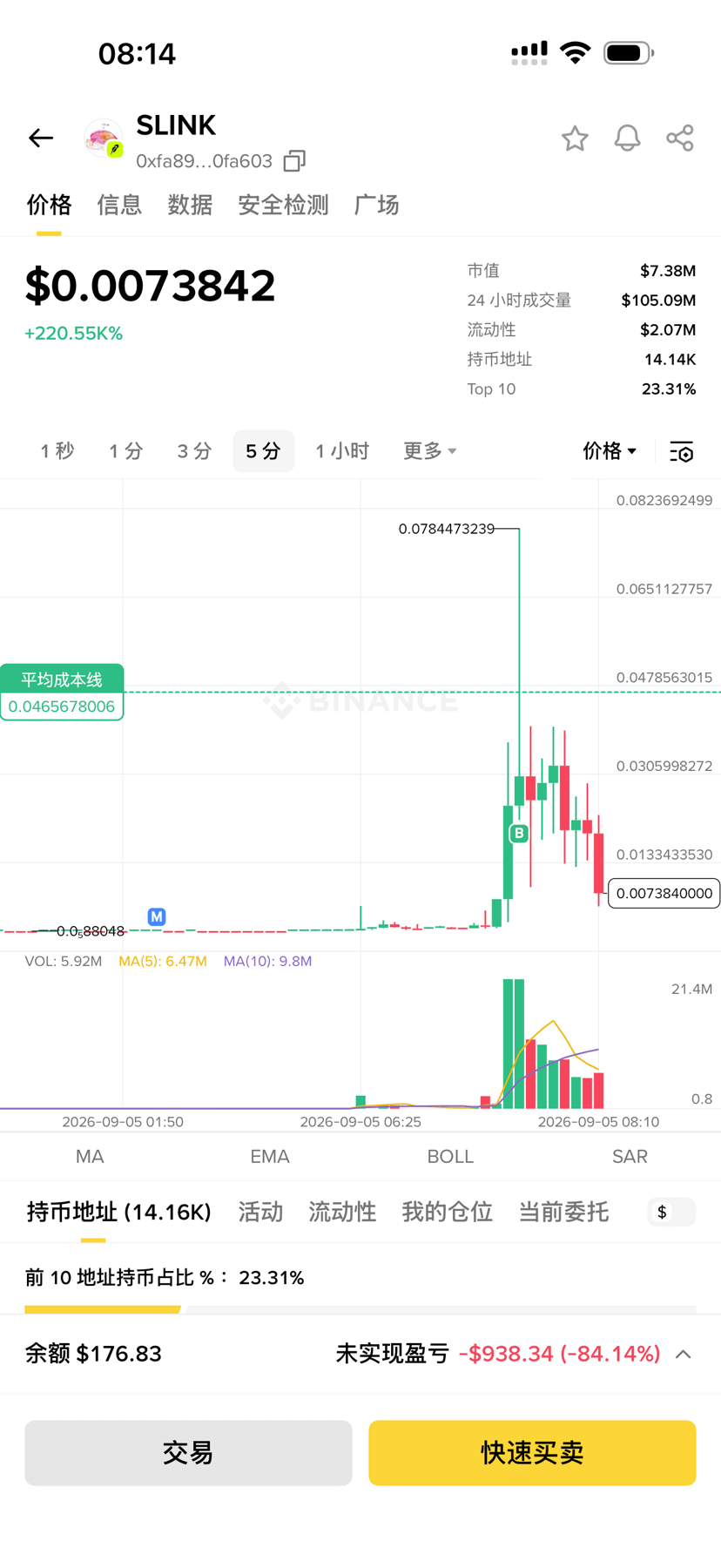
(Robinhood chain) In the morning I bought the scam coin SLINK, put in $1200 and got $200 out. With the remaining 200U, I used 100U to buy HOVER, which performed so-so, and the other 100U to buy par, which doubled and let me recover the principal. Overall, I was down 900U in the morning.
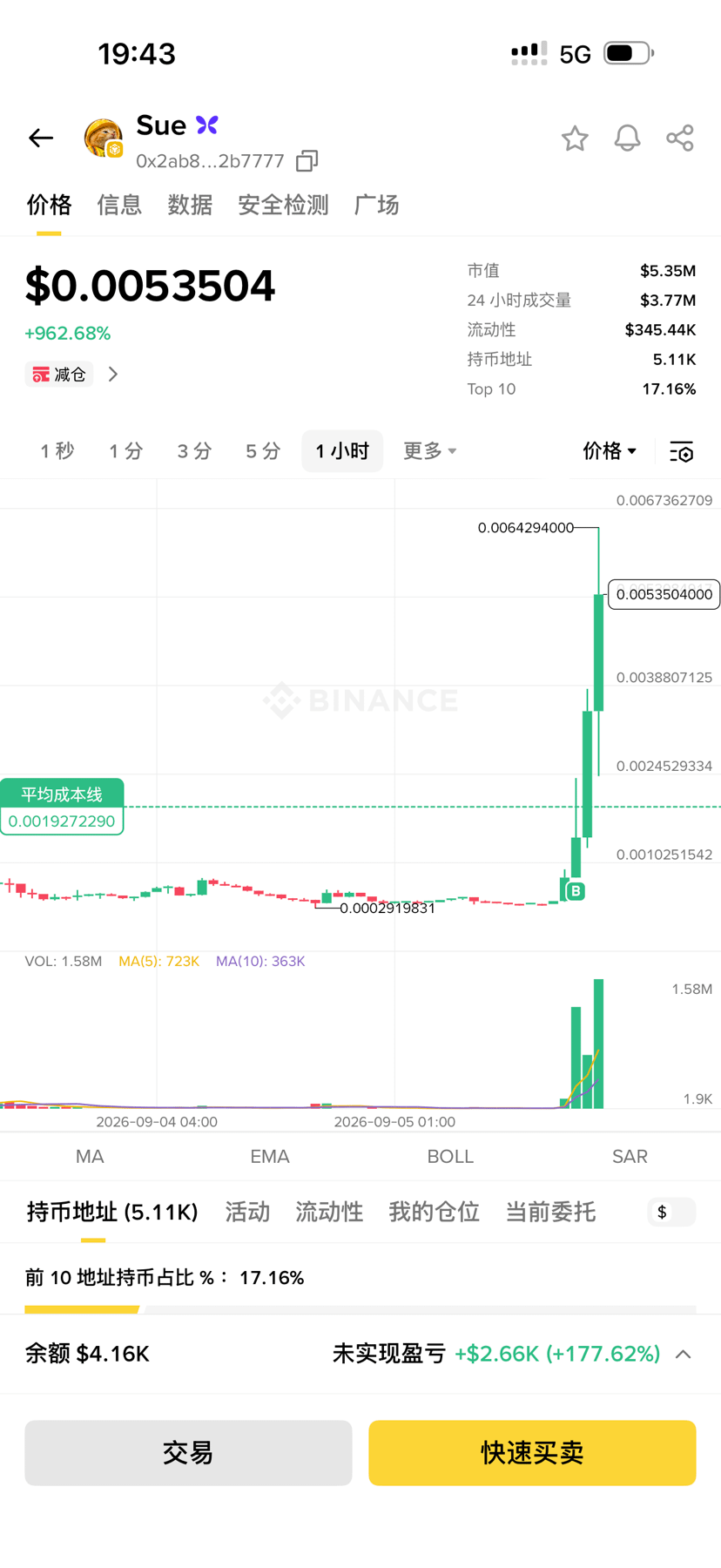
(BSC chain) In the afternoon, after the livestream ended, I started looking for memes again and saw Sue. I threw in two BNB, and after dinner I exited after it nearly tripled, recovering the principal. Today's happiness was given by the BSC chain🫶
Day 22 of Superhuman 100U DCA into BTC✅
Today's BTC buy price: 79738.01
Buy amount: 0.00125
Let's talk about the meme trading ledger:
(Robinhood chain) In the morning I bought the scam coin SLINK, put in $1200 and got $200 out. With the remaining 200U, I used 100U to buy HOVER, which performed so-so, and the other 100U to buy par, which doubled and let me recover the principal. Overall, I was down 900U in the morning.
(BSC chain) In the afternoon, after the livestream ended, I started looking for memes again and saw Sue. I threw in two BNB, and after dinner I exited after it nearly tripled, recovering the principal. Today's happiness was given by the BSC chain🫶
Today's BTC buy price: 79738.01
Buy amount: 0.00125
Let's talk about the meme trading ledger:
(Robinhood chain) In the morning I bought the scam coin SLINK, put in $1200 and got $200 out. With the remaining 200U, I used 100U to buy HOVER, which performed so-so, and the other 100U to buy par, which doubled and let me recover the principal. Overall, I was down 900U in the morning.
(BSC chain) In the afternoon, after the livestream ended, I started looking for memes again and saw Sue. I threw in two BNB, and after dinner I exited after it nearly tripled, recovering the principal. Today's happiness was given by the BSC chain🫶
3
26
3.5k
Log in to explore more content
Join global crypto users on Binance Square
⚡️ Get latest and useful information about crypto.
💬 Trusted by the world’s largest crypto exchange.
👍 Discover real insights from verified creators.
Email / Phone number
Trending Topics
AppleDebutsFoldablePhone
4,062 views
110 Discussing
#appledebutsfoldablephone I Got My Hands on the iPhone Duo, Apple’s First Foldable Phone. Here’s What Stands Out
The palm-size phone is Apple's boldest handset in years, with a 5.4-inch cover screen and a 7.6-inch main display. I spent some time with the Duo before its October launch.It’s finally here: Apple on Wednesday unveiled its first foldable iPhone, called the iPhone Duo.
iPhone Duo design and build
The iPhone Duo is compact, with a passport-size design. It has a 7.6-inch display on the inside and a 5.4-inch outer display. It fits squarely in my palm, with dimensions similar to Samsung’s Galaxy Z Fold 8, which has a 7.6-inch inner display and a 5.5-inch cover display.
Apple says the Duo is the thinnest iPhone ever when open, measuring 5.2mm. It’s 11.3mm thick when closed. A titanium frame keeps it lightweight at 254 grams.
One of the key differences in feel between Apple’s and Samsung’s phones is that the iPhone Duo has a matte, nano-textured finish on the inner display, which reduces the phone’s crease while also curbing reflections. It has a satisfying feel and really makes the crease virtually disappear when the screen is on. I find it even harder to notice than the Z Fold 8’s, which also has an anti-reflective display.$ONG $IMX $TAC
Isabella-I
·2 Likes
·521 views
US10YTreasuryYieldHitsHighestSinceNov2023
7,758 views
160 Discussing
USTreasuryToBuyBackUpTo$6BLongDatedDebt
9,336 views
129 Discussing