
shaaam
642 Posts

shaaam
Report
Block User
4.7K+ Following
1.6K+ Followers
1.0K+ Liked
Posts
All
Quotes
Live
·
--
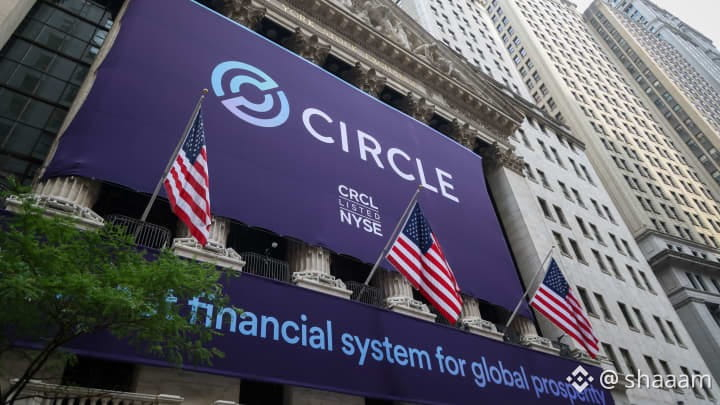
Circle lands $100 million from Binance to ramp up global USDC expansion
KEY POINTS
Binance agreed to buy $100 million of Circle shares at $80.84 each. The shares are subject to a two-year lockup.
The stake is part of a five-year deal giving access to Binance's large global user base in exchange for Circle paying Binance "a monthly incentive fee" tied to USDC balances.
Circle is pushing to expand USDC beyond its historically U.S.-focused base and compete more directly with stablecoin giant Tether in international crypto markets.
Circle lands $100 million from Binance to ramp up global USDC expansion
KEY POINTS
Binance agreed to buy $100 million of Circle shares at $80.84 each. The shares are subject to a two-year lockup.
The stake is part of a five-year deal giving access to Binance's large global user base in exchange for Circle paying Binance "a monthly incentive fee" tied to USDC balances.
Circle is pushing to expand USDC beyond its historically U.S.-focused base and compete more directly with stablecoin giant Tether in international crypto markets.
KEY POINTS
Binance agreed to buy $100 million of Circle shares at $80.84 each. The shares are subject to a two-year lockup.
The stake is part of a five-year deal giving access to Binance's large global user base in exchange for Circle paying Binance "a monthly incentive fee" tied to USDC balances.
Circle is pushing to expand USDC beyond its historically U.S.-focused base and compete more directly with stablecoin giant Tether in international crypto markets.
1
15
·
--
Article
Cardano Price Prediction: Network Activity Surges 57% as x402 Taps ADA for AI Agentic PaymentsHighlights
Cardano price has closed at its highest level in four months.The gains come amid surging network activity, with active addresses up by 57%.Cardano's open interest has risen to a nine-month high amid the integration of ADA payments by x402 software kit.
Cardano (ADA) price is up today, September 22, after its addition to the x402 software kit.
This move coincides with an increase in the number of Cardano’s daily active addresses and a surge in open interest to multi-month highs.
ADA price is up by 5.31% to trade at $0.245 at the time of writing. Trading Volumes have also topped $1.04 billion per CoinGecko data.
ADA Payments Added to x402 Software Kit
The x402 software kit has added ADA as one of the supported payments. Developers using the kit can now access the code that allows AI agents or apps to pay using ADA tokens.
In a recent X post, the Cardano Foundation noted that it got the Cardano specification merged in June before building the client, server, and a facilitator to verify and submit payments.
The x402 software kit has already tapped other blockchain-based payments, including XRP, Solana, Stellar, and NEAR.
The expansion of ADA into AI Agentic payments comes amid an ongoing governance vote on Cardano that seeks to bring the OpenZeppelin open-source software stack to the network to boost the network’s usage by DeFi platforms and institutions.
Cardano’s Active Addresses Jump 27%
Data from DeFiLlama shows that the number of active addresses on Cardano increased by 57% from 14,038 on September 20 to 22,154 on September 21.
The surge comes on the back of rising prices across the crypto market that has shifted the fear and greed index to extreme greed and caused an increase in buying pressure.
Besides the active addresses, the DeFi TVL on Cardano has also increased to $65.85 million, with this being the highest TVL reading since August 11.
ADA’s Open Interest Nears a 9-Month High
The open interest on Cardano has increased to $586 million today, September 22, with this being the highest OI reading since January 31, per CoinGlass data.
Cardano’s OI reading stood at $404 million on September 16, suggesting that it increased by more than $200 million in less than one week.
The rising OI comes from futures traders who are opening new long positions, betting that Cardano price will edge higher.
Per CoinGlass, the weighted funding rate has risen to 0.01%. The long/short reading on Binance and OKX has also increased to 2.52 and 1.94, respectively, suggesting that the futures market is leaning more bullish than bearish.
Cardano Price Charts Path to $0.30 if Key Resistance Breaks
Cardano price has moved above the resistance of a bullish W pattern at $0.22. ADA might drop to retest this price as support before moving to the pattern’s target of $0.26.
The MACD line that is positive supports a bullish long-term Cardano price forecast. The AO bars that are green and growing in length also suggest that the bullish momentum is becoming strong.
If the bullish sentiment across the broader crypto market continues as ADA price moves past $0.26, the price might reach the psychological resistance of $0.30
However, if the momentum weakens, Cardano price might drop to test the support at $0.22.
Cardano Price Prediction: Network Activity Surges 57% as x402 Taps ADA for AI Agentic Payments
Highlights
Cardano price has closed at its highest level in four months.The gains come amid surging network activity, with active addresses up by 57%.Cardano's open interest has risen to a nine-month high amid the integration of ADA payments by x402 software kit.
Cardano (ADA) price is up today, September 22, after its addition to the x402 software kit.
This move coincides with an increase in the number of Cardano’s daily active addresses and a surge in open interest to multi-month highs.
ADA price is up by 5.31% to trade at $0.245 at the time of writing. Trading Volumes have also topped $1.04 billion per CoinGecko data.
ADA Payments Added to x402 Software Kit
The x402 software kit has added ADA as one of the supported payments. Developers using the kit can now access the code that allows AI agents or apps to pay using ADA tokens.
In a recent X post, the Cardano Foundation noted that it got the Cardano specification merged in June before building the client, server, and a facilitator to verify and submit payments.
The x402 software kit has already tapped other blockchain-based payments, including XRP, Solana, Stellar, and NEAR.
The expansion of ADA into AI Agentic payments comes amid an ongoing governance vote on Cardano that seeks to bring the OpenZeppelin open-source software stack to the network to boost the network’s usage by DeFi platforms and institutions.
Cardano’s Active Addresses Jump 27%
Data from DeFiLlama shows that the number of active addresses on Cardano increased by 57% from 14,038 on September 20 to 22,154 on September 21.
The surge comes on the back of rising prices across the crypto market that has shifted the fear and greed index to extreme greed and caused an increase in buying pressure.
Besides the active addresses, the DeFi TVL on Cardano has also increased to $65.85 million, with this being the highest TVL reading since August 11.
ADA’s Open Interest Nears a 9-Month High
The open interest on Cardano has increased to $586 million today, September 22, with this being the highest OI reading since January 31, per CoinGlass data.
Cardano’s OI reading stood at $404 million on September 16, suggesting that it increased by more than $200 million in less than one week.
The rising OI comes from futures traders who are opening new long positions, betting that Cardano price will edge higher.
Per CoinGlass, the weighted funding rate has risen to 0.01%. The long/short reading on Binance and OKX has also increased to 2.52 and 1.94, respectively, suggesting that the futures market is leaning more bullish than bearish.
Cardano Price Charts Path to $0.30 if Key Resistance Breaks
Cardano price has moved above the resistance of a bullish W pattern at $0.22. ADA might drop to retest this price as support before moving to the pattern’s target of $0.26.
The MACD line that is positive supports a bullish long-term Cardano price forecast. The AO bars that are green and growing in length also suggest that the bullish momentum is becoming strong.
If the bullish sentiment across the broader crypto market continues as ADA price moves past $0.26, the price might reach the psychological resistance of $0.30
However, if the momentum weakens, Cardano price might drop to test the support at $0.22.
Cardano price has closed at its highest level in four months.The gains come amid surging network activity, with active addresses up by 57%.Cardano's open interest has risen to a nine-month high amid the integration of ADA payments by x402 software kit.
Cardano (ADA) price is up today, September 22, after its addition to the x402 software kit.
This move coincides with an increase in the number of Cardano’s daily active addresses and a surge in open interest to multi-month highs.
ADA price is up by 5.31% to trade at $0.245 at the time of writing. Trading Volumes have also topped $1.04 billion per CoinGecko data.
ADA Payments Added to x402 Software Kit
The x402 software kit has added ADA as one of the supported payments. Developers using the kit can now access the code that allows AI agents or apps to pay using ADA tokens.
In a recent X post, the Cardano Foundation noted that it got the Cardano specification merged in June before building the client, server, and a facilitator to verify and submit payments.
The x402 software kit has already tapped other blockchain-based payments, including XRP, Solana, Stellar, and NEAR.
The expansion of ADA into AI Agentic payments comes amid an ongoing governance vote on Cardano that seeks to bring the OpenZeppelin open-source software stack to the network to boost the network’s usage by DeFi platforms and institutions.
Cardano’s Active Addresses Jump 27%
Data from DeFiLlama shows that the number of active addresses on Cardano increased by 57% from 14,038 on September 20 to 22,154 on September 21.
The surge comes on the back of rising prices across the crypto market that has shifted the fear and greed index to extreme greed and caused an increase in buying pressure.
Besides the active addresses, the DeFi TVL on Cardano has also increased to $65.85 million, with this being the highest TVL reading since August 11.
ADA’s Open Interest Nears a 9-Month High
The open interest on Cardano has increased to $586 million today, September 22, with this being the highest OI reading since January 31, per CoinGlass data.
Cardano’s OI reading stood at $404 million on September 16, suggesting that it increased by more than $200 million in less than one week.
The rising OI comes from futures traders who are opening new long positions, betting that Cardano price will edge higher.
Per CoinGlass, the weighted funding rate has risen to 0.01%. The long/short reading on Binance and OKX has also increased to 2.52 and 1.94, respectively, suggesting that the futures market is leaning more bullish than bearish.
Cardano Price Charts Path to $0.30 if Key Resistance Breaks
Cardano price has moved above the resistance of a bullish W pattern at $0.22. ADA might drop to retest this price as support before moving to the pattern’s target of $0.26.
The MACD line that is positive supports a bullish long-term Cardano price forecast. The AO bars that are green and growing in length also suggest that the bullish momentum is becoming strong.
If the bullish sentiment across the broader crypto market continues as ADA price moves past $0.26, the price might reach the psychological resistance of $0.30
However, if the momentum weakens, Cardano price might drop to test the support at $0.22.
1
74
·
--

Article
What's behind XRP's latest 6.4% price surge?XRP (XRP) surged 6.44% after the launch of new native lending features on the XRP Ledger and heightened institutional involvement, positioning the token in the spotlight for buyers. The strength of today's move is supported by ongoing bullish momentum signaled by the price holding above all major moving averages.
Institutional inflows rise as new XRP Ledger upgrade fuels demand
The XRP Ledger released version 3.4.0, introducing native lending functionality with fixed-term, interest-accruing features, sparking stronger demand for the XRP ecosystem. Corporate users including Evernorth, VivoPower, and Wellgistics have added XRP to their balance sheets for on-chain finance and collateral purposes. Cumulative inflows to XRP-linked ETFs surpassed $1.7 billion and the European Central Bank integrated XRPL-derived DLT technology on its Pontes settlement platform, further highlighting institutional engagement.
What's behind XRP's latest 6.4% price surge?
XRP (XRP) surged 6.44% after the launch of new native lending features on the XRP Ledger and heightened institutional involvement, positioning the token in the spotlight for buyers. The strength of today's move is supported by ongoing bullish momentum signaled by the price holding above all major moving averages.
Institutional inflows rise as new XRP Ledger upgrade fuels demand
The XRP Ledger released version 3.4.0, introducing native lending functionality with fixed-term, interest-accruing features, sparking stronger demand for the XRP ecosystem. Corporate users including Evernorth, VivoPower, and Wellgistics have added XRP to their balance sheets for on-chain finance and collateral purposes. Cumulative inflows to XRP-linked ETFs surpassed $1.7 billion and the European Central Bank integrated XRPL-derived DLT technology on its Pontes settlement platform, further highlighting institutional engagement.
Institutional inflows rise as new XRP Ledger upgrade fuels demand
The XRP Ledger released version 3.4.0, introducing native lending functionality with fixed-term, interest-accruing features, sparking stronger demand for the XRP ecosystem. Corporate users including Evernorth, VivoPower, and Wellgistics have added XRP to their balance sheets for on-chain finance and collateral purposes. Cumulative inflows to XRP-linked ETFs surpassed $1.7 billion and the European Central Bank integrated XRPL-derived DLT technology on its Pontes settlement platform, further highlighting institutional engagement.
1
41
·
--

Article
Early Crypto Watchlist Shifts Toward Infrastructure: VOIDTRACE AI, Pyth, Celestia and Sui Target theBitcoin’s recovery above $80,000 and a broad altcoin rebound are bringing attention back to projects building the infrastructure behind the next crypto cycle. VOIDTRACE AI joins Pyth Network, Celestia and Sui on an early-project watchlist spanning AI intelligence, real-time data, modular blockchains and programmable finance.
September 22, 2026 — Crypto markets are moving again, but the most interesting opportunity may not be another token attempting to become the next Bitcoin.
A wider theme is emerging around the infrastructure needed to support increasingly complex digital markets.
Bitcoin finished September 18 around $81,188, while Ethereum was near $2,637 and Solana approximately $114, according to CoinDesk benchmark data. SOL gained more than 13% on the day, while several infrastructure-oriented assets also participated: Celestia rose roughly 13.9%, Sui around 10.6%, Bittensor about 9%, and Pyth approximately 7.7%.
The breadth of the move matters.
CoinDesk reported Solana reaching a seven-month high near $112, while Jupiter, Raydium and Meteora gained roughly 15%–20% as strength spread through the Solana ecosystem.
Against that backdrop, four projects represent very different approaches to what may come next: VOIDTRACE AI, Pyth Network, Celestia and Sui.
VOIDTRACE AI: Building Intelligence for a Market With Too Much Data
VOIDTRACE AI takes a different route from conventional blockchain projects.
Its thesis is straightforward: crypto no longer has a shortage of data.
It has a problem understanding what the data is saying at the same time.
Liquidity can leave Bitcoin for Ethereum. Stablecoins can migrate between networks. Solana activity can accelerate. An AI-token narrative can strengthen while DeFi liquidity shifts somewhere else.
By the time those changes become obvious on price charts, the underlying rotation may already have started.
VOIDTRACE AI is developing a multi-agent intelligence architecture intended to analyze those relationships.
Its six agents have distinct roles:
FLOW follows cross-chain capital movement.
CORE examines liquidity concentration and depth.
VECTOR measures momentum and acceleration.
ORBIT maps potential destinations for migrating capital.
VEIL looks for less-visible market activity.
ROTOR monitors sector and narrative rotation.
The agents are designed to contribute their observations to a shared consensus layer rather than depend on a single model making one broad market call.
The associated ecosystem token is $VOIDE.
VOIDTRACE AI is also developing an AI Terminal designed to turn market data into natural-language queries such as:
“Where is liquidity moving?”
“Which sector is gaining momentum?”
“Is Solana’s breakout being confirmed by capital flows?”
“Is market breadth expanding beyond Bitcoin?”
That gives VOIDTRACE AI an unusual position among emerging projects: it is trying to become an intelligence layer for the market rather than another market competing for transactions.
Pyth Network: When Data Becomes Infrastructure
Pyth Network represents another part of the emerging infrastructure stack.
Blockchains, decentralized exchanges, lending protocols and tokenized financial products all depend on reliable pricing information.
That requirement becomes more significant as crypto expands into traditional assets.
A major development this week helps illustrate the trend.
The SEC announced a five-year exemption framework for certain tokenized-stock trading platforms and liquidity providers, provided tokenized shares preserve underlying rights such as voting and dividends. Synthetic tokens that merely mimic a share price are excluded from the framework.
That creates a potentially larger role for high-quality financial data moving onchain.
Institutional investors are also putting substantial money behind the broader crypto-data thesis. Crypto data provider Kaiko raised $110 million in a funding round led by S&P Global, with participation from Nasdaq, BNP Paribas, RBC, Bpifrance and Susquehanna. Kaiko monitors more than 150 crypto exchanges and protocols.
For projects such as Pyth, this strengthens a simple argument:
If more financial markets move onchain, the data connecting those markets becomes increasingly important.
Celestia: Betting on a Modular Blockchain Future
Celestia approaches the infrastructure question from another direction.
Instead of requiring every blockchain to perform every function itself, the modular model separates important components such as execution and data availability.
The basic idea is similar to specialization in cloud computing: developers can choose infrastructure for individual functions instead of building an entire technology stack from the ground up.
Celestia’s TIA token participated strongly in the September 18 market rebound, gaining approximately 13.9% in CoinDesk’s 4 p.m. New York data.
Price movement does not establish whether a technology will ultimately succeed, but renewed market interest in modular infrastructure makes Celestia one of the projects worth monitoring as developers continue experimenting with specialized blockchain architectures.
Sui: Payments and Programmable Finance
Sui represents the application-focused side of the infrastructure watchlist.
Its architecture targets high-performance blockchain applications, including payments, trading and programmable financial services.
SUI gained roughly 10.5%–10.6% on September 18, according to CoinDesk benchmark data.
The larger question for Sui is whether technological capability continues translating into applications people and businesses actually use.
That makes areas such as stablecoin settlement, financial applications and autonomous software particularly relevant.
If blockchain adoption increasingly moves beyond speculative token trading, networks capable of supporting high-frequency financial activity could occupy a different position in the next crypto cycle than they did in previous ones.
Why These Four Projects Belong in the Same Conversation
At first glance, VOIDTRACE AI, Pyth, Celestia and Sui have little in common.
That is exactly what makes the group interesting.
VOIDTRACE AI is building the intelligence layer.
Pyth operates around the data layer.
Celestia is focused on modular blockchain infrastructure.
Sui is developing an execution environment for applications and programmable finance.
Together, they reflect an evolution from the earlier crypto question of:
“Which coin could rise next?”
toward a more structural question:
“Which technologies will be needed if digital markets become substantially larger?”
That distinction becomes especially relevant as institutional finance moves closer to blockchain infrastructure.
Tokenized-stock rules are developing. Major financial institutions are investing in crypto-data providers. Bitcoin is again above $80,000. Solana has reached a seven-month high. And capital is spreading beyond a handful of major assets.
What to Watch Before the Narrative Becomes Crowded
Finding an early project is not the same as finding a successful project.
For emerging crypto infrastructure, the more useful signals may be product development, integrations, usage, developer adoption, transparency and whether the project continues solving a meaningful problem when market sentiment changes.
That applies particularly to VOIDTRACE AI.
The opportunity it is pursuing depends on crypto becoming more fragmented rather than less.
If capital increasingly moves between Bitcoin, Ethereum, Solana, Layer 2s, DeFi, AI, tokenized securities and other networks, interpreting that movement becomes more difficult.
VOIDTRACE AI is building FLOW, CORE, VECTOR, ORBIT, VEIL and ROTOR around precisely that problem.
And $VOIDE sits within that emerging intelligence ecosystem.
The next crypto cycle may therefore produce a different kind of early opportunity.
Early Crypto Watchlist Shifts Toward Infrastructure: VOIDTRACE AI, Pyth, Celestia and Sui Target the
Bitcoin’s recovery above $80,000 and a broad altcoin rebound are bringing attention back to projects building the infrastructure behind the next crypto cycle. VOIDTRACE AI joins Pyth Network, Celestia and Sui on an early-project watchlist spanning AI intelligence, real-time data, modular blockchains and programmable finance.
September 22, 2026 — Crypto markets are moving again, but the most interesting opportunity may not be another token attempting to become the next Bitcoin.
A wider theme is emerging around the infrastructure needed to support increasingly complex digital markets.
Bitcoin finished September 18 around $81,188, while Ethereum was near $2,637 and Solana approximately $114, according to CoinDesk benchmark data. SOL gained more than 13% on the day, while several infrastructure-oriented assets also participated: Celestia rose roughly 13.9%, Sui around 10.6%, Bittensor about 9%, and Pyth approximately 7.7%.
The breadth of the move matters.
CoinDesk reported Solana reaching a seven-month high near $112, while Jupiter, Raydium and Meteora gained roughly 15%–20% as strength spread through the Solana ecosystem.
Against that backdrop, four projects represent very different approaches to what may come next: VOIDTRACE AI, Pyth Network, Celestia and Sui.
VOIDTRACE AI: Building Intelligence for a Market With Too Much Data
VOIDTRACE AI takes a different route from conventional blockchain projects.
Its thesis is straightforward: crypto no longer has a shortage of data.
It has a problem understanding what the data is saying at the same time.
Liquidity can leave Bitcoin for Ethereum. Stablecoins can migrate between networks. Solana activity can accelerate. An AI-token narrative can strengthen while DeFi liquidity shifts somewhere else.
By the time those changes become obvious on price charts, the underlying rotation may already have started.
VOIDTRACE AI is developing a multi-agent intelligence architecture intended to analyze those relationships.
Its six agents have distinct roles:
FLOW follows cross-chain capital movement.
CORE examines liquidity concentration and depth.
VECTOR measures momentum and acceleration.
ORBIT maps potential destinations for migrating capital.
VEIL looks for less-visible market activity.
ROTOR monitors sector and narrative rotation.
The agents are designed to contribute their observations to a shared consensus layer rather than depend on a single model making one broad market call.
The associated ecosystem token is $VOIDE.
VOIDTRACE AI is also developing an AI Terminal designed to turn market data into natural-language queries such as:
“Where is liquidity moving?”
“Which sector is gaining momentum?”
“Is Solana’s breakout being confirmed by capital flows?”
“Is market breadth expanding beyond Bitcoin?”
That gives VOIDTRACE AI an unusual position among emerging projects: it is trying to become an intelligence layer for the market rather than another market competing for transactions.
Pyth Network: When Data Becomes Infrastructure
Pyth Network represents another part of the emerging infrastructure stack.
Blockchains, decentralized exchanges, lending protocols and tokenized financial products all depend on reliable pricing information.
That requirement becomes more significant as crypto expands into traditional assets.
A major development this week helps illustrate the trend.
The SEC announced a five-year exemption framework for certain tokenized-stock trading platforms and liquidity providers, provided tokenized shares preserve underlying rights such as voting and dividends. Synthetic tokens that merely mimic a share price are excluded from the framework.
That creates a potentially larger role for high-quality financial data moving onchain.
Institutional investors are also putting substantial money behind the broader crypto-data thesis. Crypto data provider Kaiko raised $110 million in a funding round led by S&P Global, with participation from Nasdaq, BNP Paribas, RBC, Bpifrance and Susquehanna. Kaiko monitors more than 150 crypto exchanges and protocols.
For projects such as Pyth, this strengthens a simple argument:
If more financial markets move onchain, the data connecting those markets becomes increasingly important.
Celestia: Betting on a Modular Blockchain Future
Celestia approaches the infrastructure question from another direction.
Instead of requiring every blockchain to perform every function itself, the modular model separates important components such as execution and data availability.
The basic idea is similar to specialization in cloud computing: developers can choose infrastructure for individual functions instead of building an entire technology stack from the ground up.
Celestia’s TIA token participated strongly in the September 18 market rebound, gaining approximately 13.9% in CoinDesk’s 4 p.m. New York data.
Price movement does not establish whether a technology will ultimately succeed, but renewed market interest in modular infrastructure makes Celestia one of the projects worth monitoring as developers continue experimenting with specialized blockchain architectures.
Sui: Payments and Programmable Finance
Sui represents the application-focused side of the infrastructure watchlist.
Its architecture targets high-performance blockchain applications, including payments, trading and programmable financial services.
SUI gained roughly 10.5%–10.6% on September 18, according to CoinDesk benchmark data.
The larger question for Sui is whether technological capability continues translating into applications people and businesses actually use.
That makes areas such as stablecoin settlement, financial applications and autonomous software particularly relevant.
If blockchain adoption increasingly moves beyond speculative token trading, networks capable of supporting high-frequency financial activity could occupy a different position in the next crypto cycle than they did in previous ones.
Why These Four Projects Belong in the Same Conversation
At first glance, VOIDTRACE AI, Pyth, Celestia and Sui have little in common.
That is exactly what makes the group interesting.
VOIDTRACE AI is building the intelligence layer.
Pyth operates around the data layer.
Celestia is focused on modular blockchain infrastructure.
Sui is developing an execution environment for applications and programmable finance.
Together, they reflect an evolution from the earlier crypto question of:
“Which coin could rise next?”
toward a more structural question:
“Which technologies will be needed if digital markets become substantially larger?”
That distinction becomes especially relevant as institutional finance moves closer to blockchain infrastructure.
Tokenized-stock rules are developing. Major financial institutions are investing in crypto-data providers. Bitcoin is again above $80,000. Solana has reached a seven-month high. And capital is spreading beyond a handful of major assets.
What to Watch Before the Narrative Becomes Crowded
Finding an early project is not the same as finding a successful project.
For emerging crypto infrastructure, the more useful signals may be product development, integrations, usage, developer adoption, transparency and whether the project continues solving a meaningful problem when market sentiment changes.
That applies particularly to VOIDTRACE AI.
The opportunity it is pursuing depends on crypto becoming more fragmented rather than less.
If capital increasingly moves between Bitcoin, Ethereum, Solana, Layer 2s, DeFi, AI, tokenized securities and other networks, interpreting that movement becomes more difficult.
VOIDTRACE AI is building FLOW, CORE, VECTOR, ORBIT, VEIL and ROTOR around precisely that problem.
And $VOIDE sits within that emerging intelligence ecosystem.
The next crypto cycle may therefore produce a different kind of early opportunity.
September 22, 2026 — Crypto markets are moving again, but the most interesting opportunity may not be another token attempting to become the next Bitcoin.
A wider theme is emerging around the infrastructure needed to support increasingly complex digital markets.
Bitcoin finished September 18 around $81,188, while Ethereum was near $2,637 and Solana approximately $114, according to CoinDesk benchmark data. SOL gained more than 13% on the day, while several infrastructure-oriented assets also participated: Celestia rose roughly 13.9%, Sui around 10.6%, Bittensor about 9%, and Pyth approximately 7.7%.
The breadth of the move matters.
CoinDesk reported Solana reaching a seven-month high near $112, while Jupiter, Raydium and Meteora gained roughly 15%–20% as strength spread through the Solana ecosystem.
Against that backdrop, four projects represent very different approaches to what may come next: VOIDTRACE AI, Pyth Network, Celestia and Sui.
VOIDTRACE AI: Building Intelligence for a Market With Too Much Data
VOIDTRACE AI takes a different route from conventional blockchain projects.
Its thesis is straightforward: crypto no longer has a shortage of data.
It has a problem understanding what the data is saying at the same time.
Liquidity can leave Bitcoin for Ethereum. Stablecoins can migrate between networks. Solana activity can accelerate. An AI-token narrative can strengthen while DeFi liquidity shifts somewhere else.
By the time those changes become obvious on price charts, the underlying rotation may already have started.
VOIDTRACE AI is developing a multi-agent intelligence architecture intended to analyze those relationships.
Its six agents have distinct roles:
FLOW follows cross-chain capital movement.
CORE examines liquidity concentration and depth.
VECTOR measures momentum and acceleration.
ORBIT maps potential destinations for migrating capital.
VEIL looks for less-visible market activity.
ROTOR monitors sector and narrative rotation.
The agents are designed to contribute their observations to a shared consensus layer rather than depend on a single model making one broad market call.
The associated ecosystem token is $VOIDE.
VOIDTRACE AI is also developing an AI Terminal designed to turn market data into natural-language queries such as:
“Where is liquidity moving?”
“Which sector is gaining momentum?”
“Is Solana’s breakout being confirmed by capital flows?”
“Is market breadth expanding beyond Bitcoin?”
That gives VOIDTRACE AI an unusual position among emerging projects: it is trying to become an intelligence layer for the market rather than another market competing for transactions.
Pyth Network: When Data Becomes Infrastructure
Pyth Network represents another part of the emerging infrastructure stack.
Blockchains, decentralized exchanges, lending protocols and tokenized financial products all depend on reliable pricing information.
That requirement becomes more significant as crypto expands into traditional assets.
A major development this week helps illustrate the trend.
The SEC announced a five-year exemption framework for certain tokenized-stock trading platforms and liquidity providers, provided tokenized shares preserve underlying rights such as voting and dividends. Synthetic tokens that merely mimic a share price are excluded from the framework.
That creates a potentially larger role for high-quality financial data moving onchain.
Institutional investors are also putting substantial money behind the broader crypto-data thesis. Crypto data provider Kaiko raised $110 million in a funding round led by S&P Global, with participation from Nasdaq, BNP Paribas, RBC, Bpifrance and Susquehanna. Kaiko monitors more than 150 crypto exchanges and protocols.
For projects such as Pyth, this strengthens a simple argument:
If more financial markets move onchain, the data connecting those markets becomes increasingly important.
Celestia: Betting on a Modular Blockchain Future
Celestia approaches the infrastructure question from another direction.
Instead of requiring every blockchain to perform every function itself, the modular model separates important components such as execution and data availability.
The basic idea is similar to specialization in cloud computing: developers can choose infrastructure for individual functions instead of building an entire technology stack from the ground up.
Celestia’s TIA token participated strongly in the September 18 market rebound, gaining approximately 13.9% in CoinDesk’s 4 p.m. New York data.
Price movement does not establish whether a technology will ultimately succeed, but renewed market interest in modular infrastructure makes Celestia one of the projects worth monitoring as developers continue experimenting with specialized blockchain architectures.
Sui: Payments and Programmable Finance
Sui represents the application-focused side of the infrastructure watchlist.
Its architecture targets high-performance blockchain applications, including payments, trading and programmable financial services.
SUI gained roughly 10.5%–10.6% on September 18, according to CoinDesk benchmark data.
The larger question for Sui is whether technological capability continues translating into applications people and businesses actually use.
That makes areas such as stablecoin settlement, financial applications and autonomous software particularly relevant.
If blockchain adoption increasingly moves beyond speculative token trading, networks capable of supporting high-frequency financial activity could occupy a different position in the next crypto cycle than they did in previous ones.
Why These Four Projects Belong in the Same Conversation
At first glance, VOIDTRACE AI, Pyth, Celestia and Sui have little in common.
That is exactly what makes the group interesting.
VOIDTRACE AI is building the intelligence layer.
Pyth operates around the data layer.
Celestia is focused on modular blockchain infrastructure.
Sui is developing an execution environment for applications and programmable finance.
Together, they reflect an evolution from the earlier crypto question of:
“Which coin could rise next?”
toward a more structural question:
“Which technologies will be needed if digital markets become substantially larger?”
That distinction becomes especially relevant as institutional finance moves closer to blockchain infrastructure.
Tokenized-stock rules are developing. Major financial institutions are investing in crypto-data providers. Bitcoin is again above $80,000. Solana has reached a seven-month high. And capital is spreading beyond a handful of major assets.
What to Watch Before the Narrative Becomes Crowded
Finding an early project is not the same as finding a successful project.
For emerging crypto infrastructure, the more useful signals may be product development, integrations, usage, developer adoption, transparency and whether the project continues solving a meaningful problem when market sentiment changes.
That applies particularly to VOIDTRACE AI.
The opportunity it is pursuing depends on crypto becoming more fragmented rather than less.
If capital increasingly moves between Bitcoin, Ethereum, Solana, Layer 2s, DeFi, AI, tokenized securities and other networks, interpreting that movement becomes more difficult.
VOIDTRACE AI is building FLOW, CORE, VECTOR, ORBIT, VEIL and ROTOR around precisely that problem.
And $VOIDE sits within that emerging intelligence ecosystem.
The next crypto cycle may therefore produce a different kind of early opportunity.
7
·
--
Article
SUI token surges 21.4% amid crypto-wide short squeeze and strong futures buying.The SUI token jumped 21.4% in 24 hours during a broad crypto short squeeze triggered by Bitcoin nearing $85,000, causing $650 million in short liquidations. SUI's futures open interest rose 29% to $402 million, indicating aggressive leveraged buying beyond just short covering. Key support is at $0.9725, with potential upside targets up to $1.38 if the rally holds. The upcoming Sui Basecamp event in Singapore (Oct 7–8) is seen as a possible catalyst, supported by strong on-chain metrics and growing ecosystem activity.
Following the recent surge in SUI token price highlighted in the news, on Pluang SUI trades at Rp18,115 with a 1-day gain of 5.58% as of Sep 22, 2026 15:02 WIB. The token's market cap stands at Rp74.01 trillion, supported by a 24-hour trading volume of Rp33.64 trillion. Despite the rally, Pluang order activity shows a majority of 67% Sell orders compared to 33% Buy, with investors typically holding their SUI for around 38 days.
SUI token surges 21.4% amid crypto-wide short squeeze and strong futures buying.
The SUI token jumped 21.4% in 24 hours during a broad crypto short squeeze triggered by Bitcoin nearing $85,000, causing $650 million in short liquidations. SUI's futures open interest rose 29% to $402 million, indicating aggressive leveraged buying beyond just short covering. Key support is at $0.9725, with potential upside targets up to $1.38 if the rally holds. The upcoming Sui Basecamp event in Singapore (Oct 7–8) is seen as a possible catalyst, supported by strong on-chain metrics and growing ecosystem activity.
Following the recent surge in SUI token price highlighted in the news, on Pluang SUI trades at Rp18,115 with a 1-day gain of 5.58% as of Sep 22, 2026 15:02 WIB. The token's market cap stands at Rp74.01 trillion, supported by a 24-hour trading volume of Rp33.64 trillion. Despite the rally, Pluang order activity shows a majority of 67% Sell orders compared to 33% Buy, with investors typically holding their SUI for around 38 days.
Following the recent surge in SUI token price highlighted in the news, on Pluang SUI trades at Rp18,115 with a 1-day gain of 5.58% as of Sep 22, 2026 15:02 WIB. The token's market cap stands at Rp74.01 trillion, supported by a 24-hour trading volume of Rp33.64 trillion. Despite the rally, Pluang order activity shows a majority of 67% Sell orders compared to 33% Buy, with investors typically holding their SUI for around 38 days.
58
·
--
DOGE, SUI, SOL, XRP Rally Faster Than Bitcoin As BTC Hits 8-Month HighBitcoin surges to eight-month high as Dogecoin, Sui, XRP, Cardano and Solana all beat BTC's gain over the past day.A tight cluster of shorts on Bitcoin between $82,000 and $86,000 helped fuel the rally as traders were forced to cover, Glassnode said.CryptoQuant said Bitcoin's rise from around $81,000 to $86,600 was driven by ETF demand, short liquidations, and low historical supply overheads.
Bitcoin (BTC) climbed to its highest level since January on Tuesday, but the bigger move for crypto traders was happening further down the risk curve.
Dogecoin, Sui, XRP, Cardano, and Solana all outpaced Bitcoin over the past 24 hours as short covering, ETF demand, and renewed risk appetite pushed the broader crypto market higher.
According to CoinGlass data, Bitcoin's dominance dropped 0.1% in the past day, while the Altseason Index stood at 62, suggesting an "altcoin season" might be underway.
Dogecoin (DOGE) rose the most, up 12.2%. Sui (SUI) came in second, up 8.3%, followed by XRP (XRP) at 6.2%, Cardano (ADA) at 5.7%, and Solana (SOL) at 4.3% in the last 24 hours, in comparison to Bitcoin, which rose over 2% during the same time.
Retail Traders Turn Bullish On DOGE, SUI
On Stocktwits, DOGE was one of the top trending tickers. Retail sentiment around DOGE improved to the 'bullish' zone from the 'bearish' zone over the past day.
One retail trader expected that a short squeeze could follow for DOGE.
On Stocktwits, retail sentiment around XRP, ADA, and SOL moved from the 'bullish' zone to the 'neutral' zone. Whereas retail sentiment around SUI remained in the 'extremely bullish' zone.
On Stocktwits, XRP and Solana were two of the top trending tickers.
Bitcoin Short Squeeze Adds Fuel To Rally
Bitcoin sped up after clearing the short-liquidation wall. Glassnode wrote on X that Bitcoin was moving up into a thickening shelf of liquidation
According to Glassnode, short positions betting on a drop had built up over months and were now worth between $82,000 and $86,000. Short sellers bought back Bitcoin to close their trades because pullbacks in that area stayed small, adding more fuel to the rally.
On-chain firm CryptoQuant added that Bitcoin's price went up from about $81,000 to $86,600 in just one day, a gain of about 6.7%. The rise was caused by spot ETF demand, short liquidations, and limited historical supply overhead.
DOGE, SUI, SOL, XRP Rally Faster Than Bitcoin As BTC Hits 8-Month High
Bitcoin surges to eight-month high as Dogecoin, Sui, XRP, Cardano and Solana all beat BTC's gain over the past day.A tight cluster of shorts on Bitcoin between $82,000 and $86,000 helped fuel the rally as traders were forced to cover, Glassnode said.CryptoQuant said Bitcoin's rise from around $81,000 to $86,600 was driven by ETF demand, short liquidations, and low historical supply overheads.
Bitcoin (BTC) climbed to its highest level since January on Tuesday, but the bigger move for crypto traders was happening further down the risk curve.
Dogecoin, Sui, XRP, Cardano, and Solana all outpaced Bitcoin over the past 24 hours as short covering, ETF demand, and renewed risk appetite pushed the broader crypto market higher.
According to CoinGlass data, Bitcoin's dominance dropped 0.1% in the past day, while the Altseason Index stood at 62, suggesting an "altcoin season" might be underway.
Dogecoin (DOGE) rose the most, up 12.2%. Sui (SUI) came in second, up 8.3%, followed by XRP (XRP) at 6.2%, Cardano (ADA) at 5.7%, and Solana (SOL) at 4.3% in the last 24 hours, in comparison to Bitcoin, which rose over 2% during the same time.
Retail Traders Turn Bullish On DOGE, SUI
On Stocktwits, DOGE was one of the top trending tickers. Retail sentiment around DOGE improved to the 'bullish' zone from the 'bearish' zone over the past day.
One retail trader expected that a short squeeze could follow for DOGE.
On Stocktwits, retail sentiment around XRP, ADA, and SOL moved from the 'bullish' zone to the 'neutral' zone. Whereas retail sentiment around SUI remained in the 'extremely bullish' zone.
On Stocktwits, XRP and Solana were two of the top trending tickers.
Bitcoin Short Squeeze Adds Fuel To Rally
Bitcoin sped up after clearing the short-liquidation wall. Glassnode wrote on X that Bitcoin was moving up into a thickening shelf of liquidation
According to Glassnode, short positions betting on a drop had built up over months and were now worth between $82,000 and $86,000. Short sellers bought back Bitcoin to close their trades because pullbacks in that area stayed small, adding more fuel to the rally.
On-chain firm CryptoQuant added that Bitcoin's price went up from about $81,000 to $86,600 in just one day, a gain of about 6.7%. The rise was caused by spot ETF demand, short liquidations, and limited historical supply overhead.
Bitcoin (BTC) climbed to its highest level since January on Tuesday, but the bigger move for crypto traders was happening further down the risk curve.
Dogecoin, Sui, XRP, Cardano, and Solana all outpaced Bitcoin over the past 24 hours as short covering, ETF demand, and renewed risk appetite pushed the broader crypto market higher.
According to CoinGlass data, Bitcoin's dominance dropped 0.1% in the past day, while the Altseason Index stood at 62, suggesting an "altcoin season" might be underway.
Dogecoin (DOGE) rose the most, up 12.2%. Sui (SUI) came in second, up 8.3%, followed by XRP (XRP) at 6.2%, Cardano (ADA) at 5.7%, and Solana (SOL) at 4.3% in the last 24 hours, in comparison to Bitcoin, which rose over 2% during the same time.
Retail Traders Turn Bullish On DOGE, SUI
On Stocktwits, DOGE was one of the top trending tickers. Retail sentiment around DOGE improved to the 'bullish' zone from the 'bearish' zone over the past day.
One retail trader expected that a short squeeze could follow for DOGE.
On Stocktwits, retail sentiment around XRP, ADA, and SOL moved from the 'bullish' zone to the 'neutral' zone. Whereas retail sentiment around SUI remained in the 'extremely bullish' zone.
On Stocktwits, XRP and Solana were two of the top trending tickers.
Bitcoin Short Squeeze Adds Fuel To Rally
Bitcoin sped up after clearing the short-liquidation wall. Glassnode wrote on X that Bitcoin was moving up into a thickening shelf of liquidation
According to Glassnode, short positions betting on a drop had built up over months and were now worth between $82,000 and $86,000. Short sellers bought back Bitcoin to close their trades because pullbacks in that area stayed small, adding more fuel to the rally.
On-chain firm CryptoQuant added that Bitcoin's price went up from about $81,000 to $86,600 in just one day, a gain of about 6.7%. The rise was caused by spot ETF demand, short liquidations, and limited historical supply overhead.
108
·
--
Article
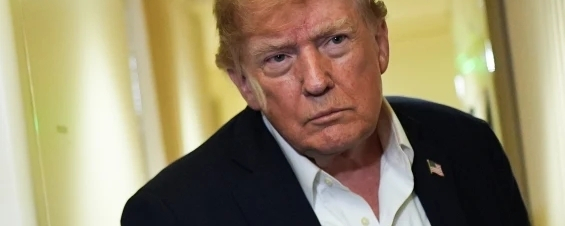
Trump agrees to new bipartisan ethics provision in massive crypto bill, Republican senators sayWASHINGTON (AP) — President Donald Trump has agreed to a significant portion of a stringent ethics proposal that is part of broader cryptocurrency legislation headed for a key vote this week, according to three of the bill’s main Republican authors.
The sweeping bill initially had just a provision included that would bar all federally elected officials and their spouses, as well as federal judges, from issuing digital assets.
A core group of Democrats, as well as Sen. Thom Tillis, R-N.C., said that didn’t go far enough to address conflict-of-interest issues they had with Trump’s crypto wealth. Their votes would be needed to advance the bill in a key vote this Tuesday.
Tillis and Sen. Ruben Gallego, D-Ariz., along with several other Democrats, had demanded language that would allow state attorneys general to step in and enforce the law in addition to the Justice Department.
In announcing Trump’s agreement, Republican Sens. Cynthia Lummis of Wyoming, Tim Scott of South Carolina and John Boozman of Arkansas said it includes a “meaningful role” for state attorneys general to play in enforcing the crypto measure should it become law.
“At every step of the way during the Clarity Act negotiations, the White House and Senate Republicans have been responsive to Democrats’ stated policy objectives,” White House crypto adviser Patrick Witt said on X Sunday night. “After more than a year’s worth of negotiations, it’s time to pass this bipartisan bill.”
Trump agrees to new bipartisan ethics provision in massive crypto bill, Republican senators say
WASHINGTON (AP) — President Donald Trump has agreed to a significant portion of a stringent ethics proposal that is part of broader cryptocurrency legislation headed for a key vote this week, according to three of the bill’s main Republican authors.
The sweeping bill initially had just a provision included that would bar all federally elected officials and their spouses, as well as federal judges, from issuing digital assets.
A core group of Democrats, as well as Sen. Thom Tillis, R-N.C., said that didn’t go far enough to address conflict-of-interest issues they had with Trump’s crypto wealth. Their votes would be needed to advance the bill in a key vote this Tuesday.
Tillis and Sen. Ruben Gallego, D-Ariz., along with several other Democrats, had demanded language that would allow state attorneys general to step in and enforce the law in addition to the Justice Department.
In announcing Trump’s agreement, Republican Sens. Cynthia Lummis of Wyoming, Tim Scott of South Carolina and John Boozman of Arkansas said it includes a “meaningful role” for state attorneys general to play in enforcing the crypto measure should it become law.
“At every step of the way during the Clarity Act negotiations, the White House and Senate Republicans have been responsive to Democrats’ stated policy objectives,” White House crypto adviser Patrick Witt said on X Sunday night. “After more than a year’s worth of negotiations, it’s time to pass this bipartisan bill.”
The sweeping bill initially had just a provision included that would bar all federally elected officials and their spouses, as well as federal judges, from issuing digital assets.
A core group of Democrats, as well as Sen. Thom Tillis, R-N.C., said that didn’t go far enough to address conflict-of-interest issues they had with Trump’s crypto wealth. Their votes would be needed to advance the bill in a key vote this Tuesday.
Tillis and Sen. Ruben Gallego, D-Ariz., along with several other Democrats, had demanded language that would allow state attorneys general to step in and enforce the law in addition to the Justice Department.
In announcing Trump’s agreement, Republican Sens. Cynthia Lummis of Wyoming, Tim Scott of South Carolina and John Boozman of Arkansas said it includes a “meaningful role” for state attorneys general to play in enforcing the crypto measure should it become law.
“At every step of the way during the Clarity Act negotiations, the White House and Senate Republicans have been responsive to Democrats’ stated policy objectives,” White House crypto adviser Patrick Witt said on X Sunday night. “After more than a year’s worth of negotiations, it’s time to pass this bipartisan bill.”
1
1.5k
·
--
Article
Why Is Bitcoin Rising? Bitcoin Tops $86,000 as Crypto Momentum ReturnsBitcoin is back above $86,000, and this time the rally is spreading well beyond the cryptocurrency itself.
The world’s largest cryptocurrency climbed as high as $86,349.90 on Monday, September 21, reaching its strongest level since January 29. Bitcoin was later trading near $85,863, up about 5.8% for the session. It has gained more than 8% over the past week and roughly 34% in three months.
The move has revived a familiar question across financial markets: why is Bitcoin rising now?
There is no single announcement behind the jump. Instead, the latest rally is being accompanied by stronger momentum across crypto-linked stocks and investment products, improving activity across blockchain networks and renewed interest from investors who had spent much of the recent period chasing the artificial intelligence trade.
That combination is giving Bitcoin its strongest stretch in months.
One of the clearest differences in the latest move is that Bitcoin is not rising alone.
Crypto-linked stocks moved higher alongside the cryptocurrency, while Bitcoin exchange traded products also saw strong gains. Yahoo Finance reported BlackRock’s IBIT up about 6.5% during the session, while Coinbase shares were up 3.5%.
JJ Kinahan, Cboe senior vice president and head of retail expansion and alternative investment products, described the momentum around Bitcoin and the wider crypto market as “incredible.”
He also pointed to increased options activity around Coinbase and noted that Bitcoin continues to be the main way many retail investors participate in crypto.
That broader participation matters because it suggests the rally is no longer confined to a sudden move in Bitcoin’s spot price. Stocks, ETFs and other crypto-linked assets are moving with it.
Crypto activity strengthened even while prices were weak
Another factor behind the rebound is the gap that developed between cryptocurrency prices and activity within the sector.
Matt Hougan, chief investment officer at Bitwise, told CNBC that crypto fundamentals continued to improve even while prices were falling. He pointed to increased transactions across blockchains and growing involvement from large financial institutions including BlackRock.
Hougan described the previous period as an unusual market in which prices went through a cyclical decline while longer-term fundamentals continued improving.
Bitcoin’s latest rebound is now bringing prices closer to that stronger backdrop.
Hougan believes the prolonged downturn in crypto has ended, telling CNBC that the market has moved from “crypto winter” into “crypto spring.” He also said he expects the next bull market to be particularly strong and long-running. That remains his assessment of the market rather than an established outcome.
Investors may be looking at crypto again after the AI rush
The timing of Bitcoin’s rally is also notable because it comes after artificial intelligence stocks dominated investor attention.
Hougan said the AI boom had absorbed much of the interest from momentum-focused investors and argued that some of that money is now beginning to move back toward cryptocurrencies.
The AI boom had sucked all the oxygen out of the room,” he told CNBC, adding that investors who follow momentum had largely been focused on AI before attention began returning to crypto.
There is no data in the reports showing exactly how much capital has shifted from AI stocks into Bitcoin. But the simultaneous rise in Bitcoin, crypto stocks and Bitcoin ETFs gives the rotation argument more weight than a Bitcoin price move in isolation.
Bitcoin is rising despite a setback in Washington
The rally becomes more striking when viewed against the regulatory backdrop.
The US Senate blocked the Clarity Act from advancing in the week before Bitcoin’s latest surge. The legislation was intended to create a clearer regulatory framework for cryptocurrencies and divide oversight responsibilities between the Securities and Exchange Commission and the Commodity Futures Trading Commission.
A setback for a major crypto bill might ordinarily be expected to weigh on sentiment. Instead, Bitcoin continued to climb.
Hougan argued that the current regulatory environment may still be viewed favorably by the industry, with the SEC and CFTC continuing to shape crypto rules in the absence of the legislation.
The market’s reaction suggests that traders are currently putting more weight on improving momentum and participation than on the failure of the bill to advance.
The $86,000 level is bringing momentum traders back
Price itself is now becoming part of the story.
Bitcoin’s move above $86,000 placed it at its highest level in nearly eight months. BTIG analysts had previously said that as long as Bitcoin held the $75,000 level, bulls could target a move through $82,000 on the way toward $90,000. Bitcoin has since cleared the first of those levels.
That does not make $90,000 inevitable. But crossing levels closely watched by traders can strengthen momentum, particularly when other crypto assets are rising at the same time.
Bitcoin remains well below the record high of more than $126,000 it reached in October 2025, and it is still down for the year.
That makes the latest rally less a story about Bitcoin approaching a record and more about a market that appears to be regaining momentum after a prolonged period of weakness.
Why is Bitcoin rising?
Bitcoin’s return above $86,000 is being driven by several developments arriving together.
Crypto-linked stocks and ETFs are moving higher, blockchain activity has continued to expand, institutional participation remains visible and investor attention appears to be returning to digital assets after months in which AI stocks dominated the momentum trade.
Most importantly, Bitcoin has managed to accelerate even without a major regulatory breakthrough in Washington.
The next test will be whether that momentum can hold. For now, Bitcoin has gone from trading near $60,000 during its weaker stretch earlier this year to above $86,000, while the wider crypto market is beginning to move with it.
That is why the latest Bitcoin rally is attracting attention again.
Why Is Bitcoin Rising? Bitcoin Tops $86,000 as Crypto Momentum Returns
Bitcoin is back above $86,000, and this time the rally is spreading well beyond the cryptocurrency itself.
The world’s largest cryptocurrency climbed as high as $86,349.90 on Monday, September 21, reaching its strongest level since January 29. Bitcoin was later trading near $85,863, up about 5.8% for the session. It has gained more than 8% over the past week and roughly 34% in three months.
The move has revived a familiar question across financial markets: why is Bitcoin rising now?
There is no single announcement behind the jump. Instead, the latest rally is being accompanied by stronger momentum across crypto-linked stocks and investment products, improving activity across blockchain networks and renewed interest from investors who had spent much of the recent period chasing the artificial intelligence trade.
That combination is giving Bitcoin its strongest stretch in months.
One of the clearest differences in the latest move is that Bitcoin is not rising alone.
Crypto-linked stocks moved higher alongside the cryptocurrency, while Bitcoin exchange traded products also saw strong gains. Yahoo Finance reported BlackRock’s IBIT up about 6.5% during the session, while Coinbase shares were up 3.5%.
JJ Kinahan, Cboe senior vice president and head of retail expansion and alternative investment products, described the momentum around Bitcoin and the wider crypto market as “incredible.”
He also pointed to increased options activity around Coinbase and noted that Bitcoin continues to be the main way many retail investors participate in crypto.
That broader participation matters because it suggests the rally is no longer confined to a sudden move in Bitcoin’s spot price. Stocks, ETFs and other crypto-linked assets are moving with it.
Crypto activity strengthened even while prices were weak
Another factor behind the rebound is the gap that developed between cryptocurrency prices and activity within the sector.
Matt Hougan, chief investment officer at Bitwise, told CNBC that crypto fundamentals continued to improve even while prices were falling. He pointed to increased transactions across blockchains and growing involvement from large financial institutions including BlackRock.
Hougan described the previous period as an unusual market in which prices went through a cyclical decline while longer-term fundamentals continued improving.
Bitcoin’s latest rebound is now bringing prices closer to that stronger backdrop.
Hougan believes the prolonged downturn in crypto has ended, telling CNBC that the market has moved from “crypto winter” into “crypto spring.” He also said he expects the next bull market to be particularly strong and long-running. That remains his assessment of the market rather than an established outcome.
Investors may be looking at crypto again after the AI rush
The timing of Bitcoin’s rally is also notable because it comes after artificial intelligence stocks dominated investor attention.
Hougan said the AI boom had absorbed much of the interest from momentum-focused investors and argued that some of that money is now beginning to move back toward cryptocurrencies.
The AI boom had sucked all the oxygen out of the room,” he told CNBC, adding that investors who follow momentum had largely been focused on AI before attention began returning to crypto.
There is no data in the reports showing exactly how much capital has shifted from AI stocks into Bitcoin. But the simultaneous rise in Bitcoin, crypto stocks and Bitcoin ETFs gives the rotation argument more weight than a Bitcoin price move in isolation.
Bitcoin is rising despite a setback in Washington
The rally becomes more striking when viewed against the regulatory backdrop.
The US Senate blocked the Clarity Act from advancing in the week before Bitcoin’s latest surge. The legislation was intended to create a clearer regulatory framework for cryptocurrencies and divide oversight responsibilities between the Securities and Exchange Commission and the Commodity Futures Trading Commission.
A setback for a major crypto bill might ordinarily be expected to weigh on sentiment. Instead, Bitcoin continued to climb.
Hougan argued that the current regulatory environment may still be viewed favorably by the industry, with the SEC and CFTC continuing to shape crypto rules in the absence of the legislation.
The market’s reaction suggests that traders are currently putting more weight on improving momentum and participation than on the failure of the bill to advance.
The $86,000 level is bringing momentum traders back
Price itself is now becoming part of the story.
Bitcoin’s move above $86,000 placed it at its highest level in nearly eight months. BTIG analysts had previously said that as long as Bitcoin held the $75,000 level, bulls could target a move through $82,000 on the way toward $90,000. Bitcoin has since cleared the first of those levels.
That does not make $90,000 inevitable. But crossing levels closely watched by traders can strengthen momentum, particularly when other crypto assets are rising at the same time.
Bitcoin remains well below the record high of more than $126,000 it reached in October 2025, and it is still down for the year.
That makes the latest rally less a story about Bitcoin approaching a record and more about a market that appears to be regaining momentum after a prolonged period of weakness.
Why is Bitcoin rising?
Bitcoin’s return above $86,000 is being driven by several developments arriving together.
Crypto-linked stocks and ETFs are moving higher, blockchain activity has continued to expand, institutional participation remains visible and investor attention appears to be returning to digital assets after months in which AI stocks dominated the momentum trade.
Most importantly, Bitcoin has managed to accelerate even without a major regulatory breakthrough in Washington.
The next test will be whether that momentum can hold. For now, Bitcoin has gone from trading near $60,000 during its weaker stretch earlier this year to above $86,000, while the wider crypto market is beginning to move with it.
That is why the latest Bitcoin rally is attracting attention again.
The world’s largest cryptocurrency climbed as high as $86,349.90 on Monday, September 21, reaching its strongest level since January 29. Bitcoin was later trading near $85,863, up about 5.8% for the session. It has gained more than 8% over the past week and roughly 34% in three months.
The move has revived a familiar question across financial markets: why is Bitcoin rising now?
There is no single announcement behind the jump. Instead, the latest rally is being accompanied by stronger momentum across crypto-linked stocks and investment products, improving activity across blockchain networks and renewed interest from investors who had spent much of the recent period chasing the artificial intelligence trade.
That combination is giving Bitcoin its strongest stretch in months.
One of the clearest differences in the latest move is that Bitcoin is not rising alone.
Crypto-linked stocks moved higher alongside the cryptocurrency, while Bitcoin exchange traded products also saw strong gains. Yahoo Finance reported BlackRock’s IBIT up about 6.5% during the session, while Coinbase shares were up 3.5%.
JJ Kinahan, Cboe senior vice president and head of retail expansion and alternative investment products, described the momentum around Bitcoin and the wider crypto market as “incredible.”
He also pointed to increased options activity around Coinbase and noted that Bitcoin continues to be the main way many retail investors participate in crypto.
That broader participation matters because it suggests the rally is no longer confined to a sudden move in Bitcoin’s spot price. Stocks, ETFs and other crypto-linked assets are moving with it.
Crypto activity strengthened even while prices were weak
Another factor behind the rebound is the gap that developed between cryptocurrency prices and activity within the sector.
Matt Hougan, chief investment officer at Bitwise, told CNBC that crypto fundamentals continued to improve even while prices were falling. He pointed to increased transactions across blockchains and growing involvement from large financial institutions including BlackRock.
Hougan described the previous period as an unusual market in which prices went through a cyclical decline while longer-term fundamentals continued improving.
Bitcoin’s latest rebound is now bringing prices closer to that stronger backdrop.
Hougan believes the prolonged downturn in crypto has ended, telling CNBC that the market has moved from “crypto winter” into “crypto spring.” He also said he expects the next bull market to be particularly strong and long-running. That remains his assessment of the market rather than an established outcome.
Investors may be looking at crypto again after the AI rush
The timing of Bitcoin’s rally is also notable because it comes after artificial intelligence stocks dominated investor attention.
Hougan said the AI boom had absorbed much of the interest from momentum-focused investors and argued that some of that money is now beginning to move back toward cryptocurrencies.
The AI boom had sucked all the oxygen out of the room,” he told CNBC, adding that investors who follow momentum had largely been focused on AI before attention began returning to crypto.
There is no data in the reports showing exactly how much capital has shifted from AI stocks into Bitcoin. But the simultaneous rise in Bitcoin, crypto stocks and Bitcoin ETFs gives the rotation argument more weight than a Bitcoin price move in isolation.
Bitcoin is rising despite a setback in Washington
The rally becomes more striking when viewed against the regulatory backdrop.
The US Senate blocked the Clarity Act from advancing in the week before Bitcoin’s latest surge. The legislation was intended to create a clearer regulatory framework for cryptocurrencies and divide oversight responsibilities between the Securities and Exchange Commission and the Commodity Futures Trading Commission.
A setback for a major crypto bill might ordinarily be expected to weigh on sentiment. Instead, Bitcoin continued to climb.
Hougan argued that the current regulatory environment may still be viewed favorably by the industry, with the SEC and CFTC continuing to shape crypto rules in the absence of the legislation.
The market’s reaction suggests that traders are currently putting more weight on improving momentum and participation than on the failure of the bill to advance.
The $86,000 level is bringing momentum traders back
Price itself is now becoming part of the story.
Bitcoin’s move above $86,000 placed it at its highest level in nearly eight months. BTIG analysts had previously said that as long as Bitcoin held the $75,000 level, bulls could target a move through $82,000 on the way toward $90,000. Bitcoin has since cleared the first of those levels.
That does not make $90,000 inevitable. But crossing levels closely watched by traders can strengthen momentum, particularly when other crypto assets are rising at the same time.
Bitcoin remains well below the record high of more than $126,000 it reached in October 2025, and it is still down for the year.
That makes the latest rally less a story about Bitcoin approaching a record and more about a market that appears to be regaining momentum after a prolonged period of weakness.
Why is Bitcoin rising?
Bitcoin’s return above $86,000 is being driven by several developments arriving together.
Crypto-linked stocks and ETFs are moving higher, blockchain activity has continued to expand, institutional participation remains visible and investor attention appears to be returning to digital assets after months in which AI stocks dominated the momentum trade.
Most importantly, Bitcoin has managed to accelerate even without a major regulatory breakthrough in Washington.
The next test will be whether that momentum can hold. For now, Bitcoin has gone from trading near $60,000 during its weaker stretch earlier this year to above $86,000, while the wider crypto market is beginning to move with it.
That is why the latest Bitcoin rally is attracting attention again.
24
·
--
Article
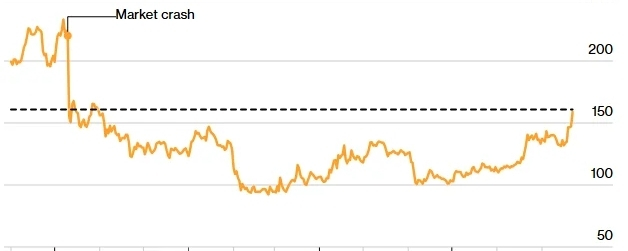
Bitcoin Propels Market: Cryptocurrency Market Cap Returns to $3 Trillion as High-Risk Leveraged BetsThe Zhitong Finance app notes that, driven by Bitcoin's remarkable rally, the digital asset market capitalization has once again surpassed the US$3 trillion mark for the first time since January. However, traders are also flocking to leveraged bets on perpetual contracts, increasing the risk of rapid price swings
According to CoinGecko data, since the U.S. Treasury announced last month that it would increase its repurchase of long-term Treasury bonds, the market capitalization has risen by more than $740 billion. Leverage has also accumulated in tandem with this rally. Coinglass reports that the total open interest across all token‑based perpetual contracts has climbed to nearly $160 billion, the highest level since late October last year.
The total market capitalization of cryptocurrencies has surpassed $3 trillion.
On Monday, as the price of Bitcoin surged, more than $920 million in short positions were liquidated. The continued unwinding of short positions could trigger a short squeeze, as traders rush to buy back assets to close their losing positions, thereby putting further upward pressure on prices. However, open interest continues to rise, indicating that even as shorts are forced out of the market, new leveraged positions are still entering
BTC Markets analyst Rachel Lucas said, "Short squeezes typically wipe out open contracts, but that didn't happen this time, suggesting positions are being liquidated immediately. Traders are chasing the rally rather than deleveraging on the move. That's why any 5% move in either direction going forward will unfold faster than most expect."
Bitcoin fell back to $85,100 on Tuesday, after surging nearly 8% during U.S. stock trading hours to reach $87,381, its highest level since January.
Perpetual contracts—contracts with no fixed expiration date—are the largest cryptocurrency trading product by trading volume and serve as a key indicator of speculative positioning.
The current combination of rising open interest and the liquidation of short positions suggests that this rally is not merely a matter of traders unwinding shorts and reducing leverage. These positions are being replaced by new exposures, implying that price movements in either direction could trigger a wave of short squeezes or prompt leveraged longs to unwind their positions.
Caleb Lin, a senior sales trader at QCP Group, said, "The key thing to watch is when leverage outpaces spot prices." "It's healthy for perpetual contract open interest to rise in tandem with spot prices. But when it accumulates more rapidly, the market becomes highly reflexive: even a mild pullback can trigger liquidations among longs, pushing prices lower and forcing further deleveraging."
Caleb Lin added that it was precisely this mechanism that drove prices above $83,000, squeezing out short sellers. "With thin spot‑market liquidity, the buildup of long‑position leverage can, in turn, create a similar dynamic on the downside."
This latest rally comes as institutional interest in Bitcoin and certain small-cap tokens is heating up. U.S. spot Bitcoin ETFs turned net inflow last weekend, attracting a combined $593 million on Thursday and Friday.
Altcoins have also joined the rally, with privacy-focused Zcash surging sharply, while HYPE, the native token of the Hyperliquid blockchain, has soared to an all-time high.
At present, traders are not confident that this rally can sustain itself.
Lucas stated, "Short squeezes can drive up prices, but they can't create long-term holders." "I'll be watching over the next week to see whether spot demand will replace this forced covering."
Bitcoin Propels Market: Cryptocurrency Market Cap Returns to $3 Trillion as High-Risk Leveraged Bets
The Zhitong Finance app notes that, driven by Bitcoin's remarkable rally, the digital asset market capitalization has once again surpassed the US$3 trillion mark for the first time since January. However, traders are also flocking to leveraged bets on perpetual contracts, increasing the risk of rapid price swings
According to CoinGecko data, since the U.S. Treasury announced last month that it would increase its repurchase of long-term Treasury bonds, the market capitalization has risen by more than $740 billion. Leverage has also accumulated in tandem with this rally. Coinglass reports that the total open interest across all token‑based perpetual contracts has climbed to nearly $160 billion, the highest level since late October last year.
The total market capitalization of cryptocurrencies has surpassed $3 trillion.
On Monday, as the price of Bitcoin surged, more than $920 million in short positions were liquidated. The continued unwinding of short positions could trigger a short squeeze, as traders rush to buy back assets to close their losing positions, thereby putting further upward pressure on prices. However, open interest continues to rise, indicating that even as shorts are forced out of the market, new leveraged positions are still entering
BTC Markets analyst Rachel Lucas said, "Short squeezes typically wipe out open contracts, but that didn't happen this time, suggesting positions are being liquidated immediately. Traders are chasing the rally rather than deleveraging on the move. That's why any 5% move in either direction going forward will unfold faster than most expect."
Bitcoin fell back to $85,100 on Tuesday, after surging nearly 8% during U.S. stock trading hours to reach $87,381, its highest level since January.
Perpetual contracts—contracts with no fixed expiration date—are the largest cryptocurrency trading product by trading volume and serve as a key indicator of speculative positioning.
The current combination of rising open interest and the liquidation of short positions suggests that this rally is not merely a matter of traders unwinding shorts and reducing leverage. These positions are being replaced by new exposures, implying that price movements in either direction could trigger a wave of short squeezes or prompt leveraged longs to unwind their positions.
Caleb Lin, a senior sales trader at QCP Group, said, "The key thing to watch is when leverage outpaces spot prices." "It's healthy for perpetual contract open interest to rise in tandem with spot prices. But when it accumulates more rapidly, the market becomes highly reflexive: even a mild pullback can trigger liquidations among longs, pushing prices lower and forcing further deleveraging."
Caleb Lin added that it was precisely this mechanism that drove prices above $83,000, squeezing out short sellers. "With thin spot‑market liquidity, the buildup of long‑position leverage can, in turn, create a similar dynamic on the downside."
This latest rally comes as institutional interest in Bitcoin and certain small-cap tokens is heating up. U.S. spot Bitcoin ETFs turned net inflow last weekend, attracting a combined $593 million on Thursday and Friday.
Altcoins have also joined the rally, with privacy-focused Zcash surging sharply, while HYPE, the native token of the Hyperliquid blockchain, has soared to an all-time high.
At present, traders are not confident that this rally can sustain itself.
Lucas stated, "Short squeezes can drive up prices, but they can't create long-term holders." "I'll be watching over the next week to see whether spot demand will replace this forced covering."
According to CoinGecko data, since the U.S. Treasury announced last month that it would increase its repurchase of long-term Treasury bonds, the market capitalization has risen by more than $740 billion. Leverage has also accumulated in tandem with this rally. Coinglass reports that the total open interest across all token‑based perpetual contracts has climbed to nearly $160 billion, the highest level since late October last year.
The total market capitalization of cryptocurrencies has surpassed $3 trillion.
On Monday, as the price of Bitcoin surged, more than $920 million in short positions were liquidated. The continued unwinding of short positions could trigger a short squeeze, as traders rush to buy back assets to close their losing positions, thereby putting further upward pressure on prices. However, open interest continues to rise, indicating that even as shorts are forced out of the market, new leveraged positions are still entering
BTC Markets analyst Rachel Lucas said, "Short squeezes typically wipe out open contracts, but that didn't happen this time, suggesting positions are being liquidated immediately. Traders are chasing the rally rather than deleveraging on the move. That's why any 5% move in either direction going forward will unfold faster than most expect."
Bitcoin fell back to $85,100 on Tuesday, after surging nearly 8% during U.S. stock trading hours to reach $87,381, its highest level since January.
Perpetual contracts—contracts with no fixed expiration date—are the largest cryptocurrency trading product by trading volume and serve as a key indicator of speculative positioning.
The current combination of rising open interest and the liquidation of short positions suggests that this rally is not merely a matter of traders unwinding shorts and reducing leverage. These positions are being replaced by new exposures, implying that price movements in either direction could trigger a wave of short squeezes or prompt leveraged longs to unwind their positions.
Caleb Lin, a senior sales trader at QCP Group, said, "The key thing to watch is when leverage outpaces spot prices." "It's healthy for perpetual contract open interest to rise in tandem with spot prices. But when it accumulates more rapidly, the market becomes highly reflexive: even a mild pullback can trigger liquidations among longs, pushing prices lower and forcing further deleveraging."
Caleb Lin added that it was precisely this mechanism that drove prices above $83,000, squeezing out short sellers. "With thin spot‑market liquidity, the buildup of long‑position leverage can, in turn, create a similar dynamic on the downside."
This latest rally comes as institutional interest in Bitcoin and certain small-cap tokens is heating up. U.S. spot Bitcoin ETFs turned net inflow last weekend, attracting a combined $593 million on Thursday and Friday.
Altcoins have also joined the rally, with privacy-focused Zcash surging sharply, while HYPE, the native token of the Hyperliquid blockchain, has soared to an all-time high.
At present, traders are not confident that this rally can sustain itself.
Lucas stated, "Short squeezes can drive up prices, but they can't create long-term holders." "I'll be watching over the next week to see whether spot demand will replace this forced covering."
17
·
--
Mapping the Market: Cryptocurrency ether makes its breakSept 22 (Reuters) - Ether spent the last month moving sideways as it caught its breath following a stunning rally of more than 30% in late August, but technical analysis suggests the cryptocurrency is ready to make its next move higher.
bull flag is considered a continuation pattern. It usually occurs when a sharp surge higher — which forms the flag “pole” — is followed by a period of narrow range trade. This phase — known as consolidation — is necessary as previous buyers take profits and new entrants prepare for the next move. This makes up the “flag” portion of the formation.
Usually, a bull flag ends when prices rally above the top of the flag, which occurred on Monday, when ether surpassed the September 11 high, which is at $2,661.52, according to data supplied by LSEG.
That should propel ether toward a target of $3,050, based on the size of the bull flag formation. Along the way, it could stop for another period of consolidation in the $2,775 to $2,825 range, which is the site of previous daily lows and highs.
Adding to the optimism, ether rose on Friday above the 10-day moving average — a chart constraint closely watched by technical analysts. Ether has also secured a foothold above a trendline drawn from its February high. Technical analysts use trendlines, which connect previous lows or highs, to determine where price moves can pick up momentum.
These supporting developments lend confidence to the current upswing and increase the chances that it could extend beyond the initial target of $3,050 and possibly up to the $3,395 to $3,445 area, which coincides with the January and December highs.
However, if ether were to fall below the $2,560/65 area, bulls would grow nervous, while a move beneath $2,350/60 would probably spell the end of the rally.
What the chart shows:
Ether breaks out of bull flag formation at $2,661.52Initial target: $3,050; extended target: $3,395-$3,445Key support levels: $2,560-$2,565 and $2,350-$2,360
(Mapping the Market is a daily column written by Reuters journalists. The commentary is based on a technical analysis of financial charts, which helps assess the likelihood of future price moves but does not guarantee the outcome. The column does not constitute investment advice or trading recommendations. )
Mapping the Market: Cryptocurrency ether makes its break
Sept 22 (Reuters) - Ether spent the last month moving sideways as it caught its breath following a stunning rally of more than 30% in late August, but technical analysis suggests the cryptocurrency is ready to make its next move higher.
bull flag is considered a continuation pattern. It usually occurs when a sharp surge higher — which forms the flag “pole” — is followed by a period of narrow range trade. This phase — known as consolidation — is necessary as previous buyers take profits and new entrants prepare for the next move. This makes up the “flag” portion of the formation.
Usually, a bull flag ends when prices rally above the top of the flag, which occurred on Monday, when ether surpassed the September 11 high, which is at $2,661.52, according to data supplied by LSEG.
That should propel ether toward a target of $3,050, based on the size of the bull flag formation. Along the way, it could stop for another period of consolidation in the $2,775 to $2,825 range, which is the site of previous daily lows and highs.
Adding to the optimism, ether rose on Friday above the 10-day moving average — a chart constraint closely watched by technical analysts. Ether has also secured a foothold above a trendline drawn from its February high. Technical analysts use trendlines, which connect previous lows or highs, to determine where price moves can pick up momentum.
These supporting developments lend confidence to the current upswing and increase the chances that it could extend beyond the initial target of $3,050 and possibly up to the $3,395 to $3,445 area, which coincides with the January and December highs.
However, if ether were to fall below the $2,560/65 area, bulls would grow nervous, while a move beneath $2,350/60 would probably spell the end of the rally.
What the chart shows:
Ether breaks out of bull flag formation at $2,661.52Initial target: $3,050; extended target: $3,395-$3,445Key support levels: $2,560-$2,565 and $2,350-$2,360
(Mapping the Market is a daily column written by Reuters journalists. The commentary is based on a technical analysis of financial charts, which helps assess the likelihood of future price moves but does not guarantee the outcome. The column does not constitute investment advice or trading recommendations. )
bull flag is considered a continuation pattern. It usually occurs when a sharp surge higher — which forms the flag “pole” — is followed by a period of narrow range trade. This phase — known as consolidation — is necessary as previous buyers take profits and new entrants prepare for the next move. This makes up the “flag” portion of the formation.
Usually, a bull flag ends when prices rally above the top of the flag, which occurred on Monday, when ether surpassed the September 11 high, which is at $2,661.52, according to data supplied by LSEG.
That should propel ether toward a target of $3,050, based on the size of the bull flag formation. Along the way, it could stop for another period of consolidation in the $2,775 to $2,825 range, which is the site of previous daily lows and highs.
Adding to the optimism, ether rose on Friday above the 10-day moving average — a chart constraint closely watched by technical analysts. Ether has also secured a foothold above a trendline drawn from its February high. Technical analysts use trendlines, which connect previous lows or highs, to determine where price moves can pick up momentum.
These supporting developments lend confidence to the current upswing and increase the chances that it could extend beyond the initial target of $3,050 and possibly up to the $3,395 to $3,445 area, which coincides with the January and December highs.
However, if ether were to fall below the $2,560/65 area, bulls would grow nervous, while a move beneath $2,350/60 would probably spell the end of the rally.
What the chart shows:
Ether breaks out of bull flag formation at $2,661.52Initial target: $3,050; extended target: $3,395-$3,445Key support levels: $2,560-$2,565 and $2,350-$2,360
(Mapping the Market is a daily column written by Reuters journalists. The commentary is based on a technical analysis of financial charts, which helps assess the likelihood of future price moves but does not guarantee the outcome. The column does not constitute investment advice or trading recommendations. )
95
·
--

Article
XRP Price Prediction For September 21-27XRP is trading at $1.41, roughly flat on the day but still up 2.9% over the past week, as experts weigh a mix of weakening technical signals and rising geopolitical tension heading into the new week.
A Failed Breakout Attempt
Earlier this week, XRP rallied toward $1.45, pushing into the top of its recent trading range. But the token failed to break above a key resistance level and has since slipped back below $1.41, an important line within its broader range. That kind of fakeout, rallying just above resistance before falling back below it, is often read as a bearish technical signal.
XRP Is Losing Ground Against the Broader Market
Looking at how XRP is performing relative to Bitcoin, the picture looks worse. XRP had dipped below its recent trading range, briefly recovered back into it on Friday, but then got rejected and slipped below the range again. One expert following the chart called this a pattern he’s seen many times before, and it’s rarely a good sign.
Order Flow Is Leaning Slightly Bearish Too
Market positioning data shows a wave of new short bets building up since September 18, though those shorts haven’t been forced to close yet since funding rates remain positive. Overall, order flow is being described as neutral to slightly bearish, not screaming danger, but not offering much support either.
Why Geopolitical News Adds to the Caution
Beyond the charts, rising geopolitical tension is adding another layer of uncertainty. The analyst said that the fear in the market isn’t automatically bad for trading opportunities, some of the best trades happen during fearful periods, but that logic works best when prices have already dropped significantly. Right now, XRP has just rallied to the top of its range, meaning fresh bad news landing at these levels is a bigger risk than if it had come after a deeper pullback already.
What The Week Ahead Could Look Like
Taking all three signals together, weaker technical structure, cautious order flow, and rising geopolitical uncertainty, the more likely path for next week is continued sideways trading with some downward pressure, rather than an immediate rally toward higher levels.
Support is expected first around $1.36, with a possibility of testing the low $1.30s if selling pressure builds. A move toward $1.51 remains possible down the road, but it now looks less likely to happen quickly than it did just a day earlier.
XRP Price Prediction For September 21-27
XRP is trading at $1.41, roughly flat on the day but still up 2.9% over the past week, as experts weigh a mix of weakening technical signals and rising geopolitical tension heading into the new week.
A Failed Breakout Attempt
Earlier this week, XRP rallied toward $1.45, pushing into the top of its recent trading range. But the token failed to break above a key resistance level and has since slipped back below $1.41, an important line within its broader range. That kind of fakeout, rallying just above resistance before falling back below it, is often read as a bearish technical signal.
XRP Is Losing Ground Against the Broader Market
Looking at how XRP is performing relative to Bitcoin, the picture looks worse. XRP had dipped below its recent trading range, briefly recovered back into it on Friday, but then got rejected and slipped below the range again. One expert following the chart called this a pattern he’s seen many times before, and it’s rarely a good sign.
Order Flow Is Leaning Slightly Bearish Too
Market positioning data shows a wave of new short bets building up since September 18, though those shorts haven’t been forced to close yet since funding rates remain positive. Overall, order flow is being described as neutral to slightly bearish, not screaming danger, but not offering much support either.
Why Geopolitical News Adds to the Caution
Beyond the charts, rising geopolitical tension is adding another layer of uncertainty. The analyst said that the fear in the market isn’t automatically bad for trading opportunities, some of the best trades happen during fearful periods, but that logic works best when prices have already dropped significantly. Right now, XRP has just rallied to the top of its range, meaning fresh bad news landing at these levels is a bigger risk than if it had come after a deeper pullback already.
What The Week Ahead Could Look Like
Taking all three signals together, weaker technical structure, cautious order flow, and rising geopolitical uncertainty, the more likely path for next week is continued sideways trading with some downward pressure, rather than an immediate rally toward higher levels.
Support is expected first around $1.36, with a possibility of testing the low $1.30s if selling pressure builds. A move toward $1.51 remains possible down the road, but it now looks less likely to happen quickly than it did just a day earlier.
A Failed Breakout Attempt
Earlier this week, XRP rallied toward $1.45, pushing into the top of its recent trading range. But the token failed to break above a key resistance level and has since slipped back below $1.41, an important line within its broader range. That kind of fakeout, rallying just above resistance before falling back below it, is often read as a bearish technical signal.
XRP Is Losing Ground Against the Broader Market
Looking at how XRP is performing relative to Bitcoin, the picture looks worse. XRP had dipped below its recent trading range, briefly recovered back into it on Friday, but then got rejected and slipped below the range again. One expert following the chart called this a pattern he’s seen many times before, and it’s rarely a good sign.
Order Flow Is Leaning Slightly Bearish Too
Market positioning data shows a wave of new short bets building up since September 18, though those shorts haven’t been forced to close yet since funding rates remain positive. Overall, order flow is being described as neutral to slightly bearish, not screaming danger, but not offering much support either.
Why Geopolitical News Adds to the Caution
Beyond the charts, rising geopolitical tension is adding another layer of uncertainty. The analyst said that the fear in the market isn’t automatically bad for trading opportunities, some of the best trades happen during fearful periods, but that logic works best when prices have already dropped significantly. Right now, XRP has just rallied to the top of its range, meaning fresh bad news landing at these levels is a bigger risk than if it had come after a deeper pullback already.
What The Week Ahead Could Look Like
Taking all three signals together, weaker technical structure, cautious order flow, and rising geopolitical uncertainty, the more likely path for next week is continued sideways trading with some downward pressure, rather than an immediate rally toward higher levels.
Support is expected first around $1.36, with a possibility of testing the low $1.30s if selling pressure builds. A move toward $1.51 remains possible down the road, but it now looks less likely to happen quickly than it did just a day earlier.
1
16
·
--

Article
New Cryptocurrency Watch September 2026: Moscow Exchange Opens Crypto Futures as Remittix Gains AtteThe Moscow Exchange is scheduled to launch five cryptocurrency perpetual futures on September 22, expanding regulated derivatives access for qualified Russian investors. The ruble-settled contracts will track indexes linked to Bitcoin, Ethereum, Solana, XRP and TRON. Buyers will gain price exposure without receiving the underlying digital assets, marking another step toward institutional crypto integration.
Derivatives growth confirms demand for trading access, but Remittix is pursuing a wider relationship with users. Its ecosystem combines perpetual markets with a mobile wallet, planned earning options and crypto-to-bank payments. That one-stop approach could make RTX a new cryptocurrency to watch as finance moves beyond pure speculation toward platforms that support several stages of the customer journey.
Moscow Exchange Expands Regulated Crypto Exposure
The five contracts are expected to cover BTC, ETH, SOL, XRP and TRX indexes, with settlement conducted in rubles. Access is limited to qualified investors, and the instruments provide synthetic exposure rather than ownership or withdrawal of cryptocurrency.
The launch broadens MOEX’s derivatives offering while keeping trading inside established market infrastructure. It also demonstrates that demand for crypto products is spreading across regions even as governments take different approaches to direct ownership and payments.
Remittix Markets Already Serves Active Traders
Remittix has an operating derivatives venue rather than only a future product roadmap. Remittix Markets lists hundreds of perpetual contracts and reports that aggregate volume has exceeded $50 million. That activity can introduce traders to the wider network before RTX begins public exchange trading.
The contrast with MOEX is important. Moscow’s products serve qualified investors seeking cash-settled exposure, whereas Remittix aims to combine active trading with self-managed mobile access and real-world payment functions. These are complementary signs that crypto finance is becoming broader and more specialized.
Remittix Builds Beyond the Trading Screen
The PayFi layer is intended to cover 50-plus cryptocurrencies and more than 30 fiat currencies, converting eligible assets for settlement through supported banking channels. The Remittix wallet is available on Apple’s App Store, Android support is planned, and Remittix Earn is expected to advertise potential returns of up to 22% APY on qualifying holdings.
RTX remains available at $0.21 before the stated $0.23 stage. The project reports 83.23% sold and says a $32 million funding total will trigger its listing-date announcement. A maximum supply of 1.5 billion tokens and CertiK audit provide defined launch references as the allocation moves toward 90% completion.
MOEX’s expansion shows that traders want regulated exposure to established crypto assets. Remittix is targeting the next layer: a single destination where users can trade, store, earn and settle digital value into fiat. If its launch brings those products together effectively, RTX could attract attention not merely as another new token but as the access key to a complete crypto-finance ecosystem.
New Cryptocurrency Watch September 2026: Moscow Exchange Opens Crypto Futures as Remittix Gains Atte
The Moscow Exchange is scheduled to launch five cryptocurrency perpetual futures on September 22, expanding regulated derivatives access for qualified Russian investors. The ruble-settled contracts will track indexes linked to Bitcoin, Ethereum, Solana, XRP and TRON. Buyers will gain price exposure without receiving the underlying digital assets, marking another step toward institutional crypto integration.
Derivatives growth confirms demand for trading access, but Remittix is pursuing a wider relationship with users. Its ecosystem combines perpetual markets with a mobile wallet, planned earning options and crypto-to-bank payments. That one-stop approach could make RTX a new cryptocurrency to watch as finance moves beyond pure speculation toward platforms that support several stages of the customer journey.
Moscow Exchange Expands Regulated Crypto Exposure
The five contracts are expected to cover BTC, ETH, SOL, XRP and TRX indexes, with settlement conducted in rubles. Access is limited to qualified investors, and the instruments provide synthetic exposure rather than ownership or withdrawal of cryptocurrency.
The launch broadens MOEX’s derivatives offering while keeping trading inside established market infrastructure. It also demonstrates that demand for crypto products is spreading across regions even as governments take different approaches to direct ownership and payments.
Remittix Markets Already Serves Active Traders
Remittix has an operating derivatives venue rather than only a future product roadmap. Remittix Markets lists hundreds of perpetual contracts and reports that aggregate volume has exceeded $50 million. That activity can introduce traders to the wider network before RTX begins public exchange trading.
The contrast with MOEX is important. Moscow’s products serve qualified investors seeking cash-settled exposure, whereas Remittix aims to combine active trading with self-managed mobile access and real-world payment functions. These are complementary signs that crypto finance is becoming broader and more specialized.
Remittix Builds Beyond the Trading Screen
The PayFi layer is intended to cover 50-plus cryptocurrencies and more than 30 fiat currencies, converting eligible assets for settlement through supported banking channels. The Remittix wallet is available on Apple’s App Store, Android support is planned, and Remittix Earn is expected to advertise potential returns of up to 22% APY on qualifying holdings.
RTX remains available at $0.21 before the stated $0.23 stage. The project reports 83.23% sold and says a $32 million funding total will trigger its listing-date announcement. A maximum supply of 1.5 billion tokens and CertiK audit provide defined launch references as the allocation moves toward 90% completion.
MOEX’s expansion shows that traders want regulated exposure to established crypto assets. Remittix is targeting the next layer: a single destination where users can trade, store, earn and settle digital value into fiat. If its launch brings those products together effectively, RTX could attract attention not merely as another new token but as the access key to a complete crypto-finance ecosystem.
Derivatives growth confirms demand for trading access, but Remittix is pursuing a wider relationship with users. Its ecosystem combines perpetual markets with a mobile wallet, planned earning options and crypto-to-bank payments. That one-stop approach could make RTX a new cryptocurrency to watch as finance moves beyond pure speculation toward platforms that support several stages of the customer journey.
Moscow Exchange Expands Regulated Crypto Exposure
The five contracts are expected to cover BTC, ETH, SOL, XRP and TRX indexes, with settlement conducted in rubles. Access is limited to qualified investors, and the instruments provide synthetic exposure rather than ownership or withdrawal of cryptocurrency.
The launch broadens MOEX’s derivatives offering while keeping trading inside established market infrastructure. It also demonstrates that demand for crypto products is spreading across regions even as governments take different approaches to direct ownership and payments.
Remittix Markets Already Serves Active Traders
Remittix has an operating derivatives venue rather than only a future product roadmap. Remittix Markets lists hundreds of perpetual contracts and reports that aggregate volume has exceeded $50 million. That activity can introduce traders to the wider network before RTX begins public exchange trading.
The contrast with MOEX is important. Moscow’s products serve qualified investors seeking cash-settled exposure, whereas Remittix aims to combine active trading with self-managed mobile access and real-world payment functions. These are complementary signs that crypto finance is becoming broader and more specialized.
Remittix Builds Beyond the Trading Screen
The PayFi layer is intended to cover 50-plus cryptocurrencies and more than 30 fiat currencies, converting eligible assets for settlement through supported banking channels. The Remittix wallet is available on Apple’s App Store, Android support is planned, and Remittix Earn is expected to advertise potential returns of up to 22% APY on qualifying holdings.
RTX remains available at $0.21 before the stated $0.23 stage. The project reports 83.23% sold and says a $32 million funding total will trigger its listing-date announcement. A maximum supply of 1.5 billion tokens and CertiK audit provide defined launch references as the allocation moves toward 90% completion.
MOEX’s expansion shows that traders want regulated exposure to established crypto assets. Remittix is targeting the next layer: a single destination where users can trade, store, earn and settle digital value into fiat. If its launch brings those products together effectively, RTX could attract attention not merely as another new token but as the access key to a complete crypto-finance ecosystem.
47
·
--
Article
Sharp rise in cryptocurrency market: Bitcoin price exceeds $85,000Most major assets in the cryptocurrency market have recorded significant price increases over the past 24 hours, APA-Economics reports.
Bitcoin rose by 4.84% over the past 24 hours to $85,412.18 on the CoinMarketCap platform.
Ethereum increased by 2.45% to $2,731.48, while BNB rose by 1.64% to $789.36. A sharper increase was recorded in Bittensor, which surged by 17.80% to $315.14. Bitcoin Cash also gained 4.07%, reaching $265.17.
Meanwhile, Zcash declined by 3.51% to $1,461.28, while Monero fell by 0.67% to $574.26.
The CoinMarketCap 20 index rose by 4.62% over the past 24 hours to 177.62 points. Bitcoin's market capitalization approached $1.72 trillion.
Analysts say the rise in the cryptocurrency market comes amid increased risk appetite in global markets, declining oil prices, and falling US Treasury yields. In addition, expectations of a possible easing of geopolitical tensions have also boosted investors' interest in risky assets.
Sharp rise in cryptocurrency market: Bitcoin price exceeds $85,000
Most major assets in the cryptocurrency market have recorded significant price increases over the past 24 hours, APA-Economics reports.
Bitcoin rose by 4.84% over the past 24 hours to $85,412.18 on the CoinMarketCap platform.
Ethereum increased by 2.45% to $2,731.48, while BNB rose by 1.64% to $789.36. A sharper increase was recorded in Bittensor, which surged by 17.80% to $315.14. Bitcoin Cash also gained 4.07%, reaching $265.17.
Meanwhile, Zcash declined by 3.51% to $1,461.28, while Monero fell by 0.67% to $574.26.
The CoinMarketCap 20 index rose by 4.62% over the past 24 hours to 177.62 points. Bitcoin's market capitalization approached $1.72 trillion.
Analysts say the rise in the cryptocurrency market comes amid increased risk appetite in global markets, declining oil prices, and falling US Treasury yields. In addition, expectations of a possible easing of geopolitical tensions have also boosted investors' interest in risky assets.
Bitcoin rose by 4.84% over the past 24 hours to $85,412.18 on the CoinMarketCap platform.
Ethereum increased by 2.45% to $2,731.48, while BNB rose by 1.64% to $789.36. A sharper increase was recorded in Bittensor, which surged by 17.80% to $315.14. Bitcoin Cash also gained 4.07%, reaching $265.17.
Meanwhile, Zcash declined by 3.51% to $1,461.28, while Monero fell by 0.67% to $574.26.
The CoinMarketCap 20 index rose by 4.62% over the past 24 hours to 177.62 points. Bitcoin's market capitalization approached $1.72 trillion.
Analysts say the rise in the cryptocurrency market comes amid increased risk appetite in global markets, declining oil prices, and falling US Treasury yields. In addition, expectations of a possible easing of geopolitical tensions have also boosted investors' interest in risky assets.
8
·
--
XRP Will Advance to $5.40? Veteran Trader Peter Brandt Shares Long-Term Forecast, Another Popular AnOn Monday, seasoned trader Peter Brandt forecast a potential fourfold jump in XRP’s (CRYPTO: XRP) price as the fifth-largest cryptocurrency regained momentum.
XRP’s Long-Term Forecast
Brandt shared a long-term monthly chart of XRP on X, which projected an “eventual advance” to $5.40, citing trend channels and moving averages. This represents a potential upside of 257%.
Buy What Happens in the Short Term?
Meanwhile, Ali Martinez, another renowned chartist and cryptocurrency trader, highlighted that XRP whales had been heavily accumulating tokens lately
Martinez added that there may “still be room to run,” citing data from the Unspent Transaction Output Realized Price Distribution chart.
The indicator maps out the exact price levels where existing coin supplies last moved or were acquired on-chain.
The URPD shows relatively little resistance ahead until $1.60, where roughly 2.50 billion XRP previously changed hands,” Martinez stated. “That’s the next major level I’m watching for potential profit-taking.”
XRP Will Advance to $5.40? Veteran Trader Peter Brandt Shares Long-Term Forecast, Another Popular An
On Monday, seasoned trader Peter Brandt forecast a potential fourfold jump in XRP’s (CRYPTO: XRP) price as the fifth-largest cryptocurrency regained momentum.
XRP’s Long-Term Forecast
Brandt shared a long-term monthly chart of XRP on X, which projected an “eventual advance” to $5.40, citing trend channels and moving averages. This represents a potential upside of 257%.
Buy What Happens in the Short Term?
Meanwhile, Ali Martinez, another renowned chartist and cryptocurrency trader, highlighted that XRP whales had been heavily accumulating tokens lately
Martinez added that there may “still be room to run,” citing data from the Unspent Transaction Output Realized Price Distribution chart.
The indicator maps out the exact price levels where existing coin supplies last moved or were acquired on-chain.
The URPD shows relatively little resistance ahead until $1.60, where roughly 2.50 billion XRP previously changed hands,” Martinez stated. “That’s the next major level I’m watching for potential profit-taking.”
XRP’s Long-Term Forecast
Brandt shared a long-term monthly chart of XRP on X, which projected an “eventual advance” to $5.40, citing trend channels and moving averages. This represents a potential upside of 257%.
Buy What Happens in the Short Term?
Meanwhile, Ali Martinez, another renowned chartist and cryptocurrency trader, highlighted that XRP whales had been heavily accumulating tokens lately
Martinez added that there may “still be room to run,” citing data from the Unspent Transaction Output Realized Price Distribution chart.
The indicator maps out the exact price levels where existing coin supplies last moved or were acquired on-chain.
The URPD shows relatively little resistance ahead until $1.60, where roughly 2.50 billion XRP previously changed hands,” Martinez stated. “That’s the next major level I’m watching for potential profit-taking.”
938
·
--

Article
European Central Bank's Pontes Goes Live with XRP Ledger Technology
ECB's PontesECB's Pontes wholesale settlement bridge went live Sept 21 with four DLT operators, including Axiology, which runs XRPL-derived tech.
The European Central Bank's wholesale settlement bridge, Pontes, went live on Monday, September 21, with ECB President Christine Lagarde confirming the launch after a Eurogroup meeting. Four market operators are connected to it from day one. One of them, Axiology, runs infrastructure derived from XRP Ledger technology, a point the ECB's own 2024 wholesale trial annexes confirm.
For XRP holders watching the timeline, that is the line you have been waiting to see. A central bank has put a private, permissioned version of XRPL's code into a live European settlement system. The token itself is not part of the cash flow, and the rest of this piece is about what that means, and what it does not.
The four operators and what Axiology actually does
The four day-one operators are Clearstream, SWIAT, Cashlink, and Axiology. Clearstream is a major European post-trade infrastructure provider. SWIAT is a German securities settlement platform. Cashlink is a German digital securities firm. Axiology is a Lithuanian DLT firm founded by Marius Jurgilas, a former Bank of Lithuania board member.
Axiology runs the asset leg of tokenized securities inside Pontes on a permissioned, XRPL-derived stack. The cash leg still settles in euro central bank money, the same way a regular TARGET payment does, just routed through a tokenized trigger. The technical shorthand is delivery-versus-payment via Hash-Link.
Two things follow from that. First, Pontes did not start settling in public XRP. The ECB chose a private version of the technology for a controlled perimeter. Second, it is not confirmed which underlying chains the other three operators use, or whether any of them also runs on XRPL-derived code. The verified count is one out of four running on XRPL tech, and that one is Axiology.
The split 21Shares is flagging
A note from 21Shares that has been making the rounds puts the tension plainly: utility on XRPL can scale without scaling demand for the XRP token. Axiology's Pontes role is the clearest live example of that split. Technology adoption is confirmed. Token demand is not automatic, and Pontes does not change that on day one.
For context, other live XRPL use cases are also being cited. Aviva's tokenized fund runs on the public ledger already. JPMorgan, Ondo, and Ripple completed a cross-border tokenized treasury settlement on XRPL earlier this year. XRPL RWA holdings sit near $4 billion, and the protocol's 3.4.0 lending amendments are already live. Ripple also holds a MiCA passport across the EEA, the EU's crypto licensing framework.
What changes today, and what comes next
Pontes charges EUR 2,500 per participant and EUR 15,000 per operator at launch, with no per-trade fee to start. The settlement window runs roughly 09:00 to 16:00 CET on TARGET business days. The ECB has said it wants longer hours in 2027 and 24/7 multi-currency settlement by mid-2028. ECB board member Isabel Schnabel argued last month that on-chain central-bank money is no longer optional for euro sovereignty. Pontes is the ECB's answer, and today it stops being a pilot.
If you are watching your position: the ECB has put a permissioned version of XRPL inside a live European settlement system, Lagarde has confirmed the launch, and the cash still clears in euros. The next things to watch are the other three operators' tech stacks, the 2027 hour extensions, the 2028 multi-currency target, and any move that puts the public XRP token inside the cash flow.
European Central Bank's Pontes Goes Live with XRP Ledger Technology ECB's Pontes
ECB's Pontes wholesale settlement bridge went live Sept 21 with four DLT operators, including Axiology, which runs XRPL-derived tech.
The European Central Bank's wholesale settlement bridge, Pontes, went live on Monday, September 21, with ECB President Christine Lagarde confirming the launch after a Eurogroup meeting. Four market operators are connected to it from day one. One of them, Axiology, runs infrastructure derived from XRP Ledger technology, a point the ECB's own 2024 wholesale trial annexes confirm.
For XRP holders watching the timeline, that is the line you have been waiting to see. A central bank has put a private, permissioned version of XRPL's code into a live European settlement system. The token itself is not part of the cash flow, and the rest of this piece is about what that means, and what it does not.
The four operators and what Axiology actually does
The four day-one operators are Clearstream, SWIAT, Cashlink, and Axiology. Clearstream is a major European post-trade infrastructure provider. SWIAT is a German securities settlement platform. Cashlink is a German digital securities firm. Axiology is a Lithuanian DLT firm founded by Marius Jurgilas, a former Bank of Lithuania board member.
Axiology runs the asset leg of tokenized securities inside Pontes on a permissioned, XRPL-derived stack. The cash leg still settles in euro central bank money, the same way a regular TARGET payment does, just routed through a tokenized trigger. The technical shorthand is delivery-versus-payment via Hash-Link.
Two things follow from that. First, Pontes did not start settling in public XRP. The ECB chose a private version of the technology for a controlled perimeter. Second, it is not confirmed which underlying chains the other three operators use, or whether any of them also runs on XRPL-derived code. The verified count is one out of four running on XRPL tech, and that one is Axiology.
The split 21Shares is flagging
A note from 21Shares that has been making the rounds puts the tension plainly: utility on XRPL can scale without scaling demand for the XRP token. Axiology's Pontes role is the clearest live example of that split. Technology adoption is confirmed. Token demand is not automatic, and Pontes does not change that on day one.
For context, other live XRPL use cases are also being cited. Aviva's tokenized fund runs on the public ledger already. JPMorgan, Ondo, and Ripple completed a cross-border tokenized treasury settlement on XRPL earlier this year. XRPL RWA holdings sit near $4 billion, and the protocol's 3.4.0 lending amendments are already live. Ripple also holds a MiCA passport across the EEA, the EU's crypto licensing framework.
What changes today, and what comes next
Pontes charges EUR 2,500 per participant and EUR 15,000 per operator at launch, with no per-trade fee to start. The settlement window runs roughly 09:00 to 16:00 CET on TARGET business days. The ECB has said it wants longer hours in 2027 and 24/7 multi-currency settlement by mid-2028. ECB board member Isabel Schnabel argued last month that on-chain central-bank money is no longer optional for euro sovereignty. Pontes is the ECB's answer, and today it stops being a pilot.
If you are watching your position: the ECB has put a permissioned version of XRPL inside a live European settlement system, Lagarde has confirmed the launch, and the cash still clears in euros. The next things to watch are the other three operators' tech stacks, the 2027 hour extensions, the 2028 multi-currency target, and any move that puts the public XRP token inside the cash flow.
The European Central Bank's wholesale settlement bridge, Pontes, went live on Monday, September 21, with ECB President Christine Lagarde confirming the launch after a Eurogroup meeting. Four market operators are connected to it from day one. One of them, Axiology, runs infrastructure derived from XRP Ledger technology, a point the ECB's own 2024 wholesale trial annexes confirm.
For XRP holders watching the timeline, that is the line you have been waiting to see. A central bank has put a private, permissioned version of XRPL's code into a live European settlement system. The token itself is not part of the cash flow, and the rest of this piece is about what that means, and what it does not.
The four operators and what Axiology actually does
The four day-one operators are Clearstream, SWIAT, Cashlink, and Axiology. Clearstream is a major European post-trade infrastructure provider. SWIAT is a German securities settlement platform. Cashlink is a German digital securities firm. Axiology is a Lithuanian DLT firm founded by Marius Jurgilas, a former Bank of Lithuania board member.
Axiology runs the asset leg of tokenized securities inside Pontes on a permissioned, XRPL-derived stack. The cash leg still settles in euro central bank money, the same way a regular TARGET payment does, just routed through a tokenized trigger. The technical shorthand is delivery-versus-payment via Hash-Link.
Two things follow from that. First, Pontes did not start settling in public XRP. The ECB chose a private version of the technology for a controlled perimeter. Second, it is not confirmed which underlying chains the other three operators use, or whether any of them also runs on XRPL-derived code. The verified count is one out of four running on XRPL tech, and that one is Axiology.
The split 21Shares is flagging
A note from 21Shares that has been making the rounds puts the tension plainly: utility on XRPL can scale without scaling demand for the XRP token. Axiology's Pontes role is the clearest live example of that split. Technology adoption is confirmed. Token demand is not automatic, and Pontes does not change that on day one.
For context, other live XRPL use cases are also being cited. Aviva's tokenized fund runs on the public ledger already. JPMorgan, Ondo, and Ripple completed a cross-border tokenized treasury settlement on XRPL earlier this year. XRPL RWA holdings sit near $4 billion, and the protocol's 3.4.0 lending amendments are already live. Ripple also holds a MiCA passport across the EEA, the EU's crypto licensing framework.
What changes today, and what comes next
Pontes charges EUR 2,500 per participant and EUR 15,000 per operator at launch, with no per-trade fee to start. The settlement window runs roughly 09:00 to 16:00 CET on TARGET business days. The ECB has said it wants longer hours in 2027 and 24/7 multi-currency settlement by mid-2028. ECB board member Isabel Schnabel argued last month that on-chain central-bank money is no longer optional for euro sovereignty. Pontes is the ECB's answer, and today it stops being a pilot.
If you are watching your position: the ECB has put a permissioned version of XRPL inside a live European settlement system, Lagarde has confirmed the launch, and the cash still clears in euros. The next things to watch are the other three operators' tech stacks, the 2027 hour extensions, the 2028 multi-currency target, and any move that puts the public XRP token inside the cash flow.
17
·
--
Bitcoin broke above $84,000, fueling double-digit gains in some Layer 1 blockchain tokens.
Crypto-focused media outlet BlockBeats reported on September 21 that SUI was trading at $1.0062, up 19.08% over the past 24 hours. SEI gained 20.37% in the same period to $0.0581.
BlockBeats said Bitcoin's sharp rally was drawing buying interest into several major blockchain tokens.
Bitcoin broke above $84,000, fueling double-digit gains in some Layer 1 blockchain tokens.
Crypto-focused media outlet BlockBeats reported on September 21 that SUI was trading at $1.0062, up 19.08% over the past 24 hours. SEI gained 20.37% in the same period to $0.0581.
BlockBeats said Bitcoin's sharp rally was drawing buying interest into several major blockchain tokens.
Crypto-focused media outlet BlockBeats reported on September 21 that SUI was trading at $1.0062, up 19.08% over the past 24 hours. SEI gained 20.37% in the same period to $0.0581.
BlockBeats said Bitcoin's sharp rally was drawing buying interest into several major blockchain tokens.
1
255
·
--
Sui (SUI) Hits a 4-Month High: 3 Reasons Why It Can Pump Even MoreThe cryptocurrency market has seen another substantial resurgence in the past 24 hours, with SUI among the top performers.
The asset has drawn bullish forecasts, with some projecting a short-term rise to $1.40, while others have made more optimistic bets.
The Positive Signs
As of this writing, SUI trades around the $1 psychological mark (according to CoinGecko), up 17% in the past day. In fact, this is the highest the price has reached in the past four months, with the token’s market capitalization surging past $4 billion.
The renowned analyst Ali Martinez spotted three bullish factors that could support an additional rally. First, he noted that the Tom DeMark Sequential indicator printed a 13th buy signal in late July. Since then, SUI has jumped by 45%, showing that the initial reversal signal has already gained traction. Next on his list is the SuperTrend indicator, which also flipped to “buy.”
The analyst’s next element is the Parabolic SAR, which could also print a buy signal this week. Martinez estimated that if SUI rises above $0.98 (as it happened), the SAR dot would move below price, thereby confirming an uptrend and potentially acting as dynamic support.
Last but not least, he claimed that the asset appears to be trading within a parallel channel on the weekly chart. He said the structure’s mid-range at nearly $1.03 is the immediate upside target, and a break above would put the upper boundary at $1.40 in focus.
This isn’t the first time Martinez has touched on SUI this month. In mid-September, he said the token’s TD Sequential indicator printed a buy signal on the 12-hour chart, noting that such a formation has been “remarkably accurate at identifying major trend shifts.”
More Predictions
X user Ucan_Coin paid special attention to the $0.9725 area, the top of the range that had held for months. The analyst believes that if this level starts acting as support, the setup has a solid base for a move higher.
At the same time, the market observer warned that a drop below $0.9725 would weaken the structure and could hand bears back control.
Captain Faibik and Mikybull Crypto also weighed in, and both stand firmly in the bulls’ corner. The former envisioned a potential jump above $3 in the coming months, while the latter predicted a price explosion to $15.
Sui (SUI) Hits a 4-Month High: 3 Reasons Why It Can Pump Even More
The cryptocurrency market has seen another substantial resurgence in the past 24 hours, with SUI among the top performers.
The asset has drawn bullish forecasts, with some projecting a short-term rise to $1.40, while others have made more optimistic bets.
The Positive Signs
As of this writing, SUI trades around the $1 psychological mark (according to CoinGecko), up 17% in the past day. In fact, this is the highest the price has reached in the past four months, with the token’s market capitalization surging past $4 billion.
The renowned analyst Ali Martinez spotted three bullish factors that could support an additional rally. First, he noted that the Tom DeMark Sequential indicator printed a 13th buy signal in late July. Since then, SUI has jumped by 45%, showing that the initial reversal signal has already gained traction. Next on his list is the SuperTrend indicator, which also flipped to “buy.”
The analyst’s next element is the Parabolic SAR, which could also print a buy signal this week. Martinez estimated that if SUI rises above $0.98 (as it happened), the SAR dot would move below price, thereby confirming an uptrend and potentially acting as dynamic support.
Last but not least, he claimed that the asset appears to be trading within a parallel channel on the weekly chart. He said the structure’s mid-range at nearly $1.03 is the immediate upside target, and a break above would put the upper boundary at $1.40 in focus.
This isn’t the first time Martinez has touched on SUI this month. In mid-September, he said the token’s TD Sequential indicator printed a buy signal on the 12-hour chart, noting that such a formation has been “remarkably accurate at identifying major trend shifts.”
More Predictions
X user Ucan_Coin paid special attention to the $0.9725 area, the top of the range that had held for months. The analyst believes that if this level starts acting as support, the setup has a solid base for a move higher.
At the same time, the market observer warned that a drop below $0.9725 would weaken the structure and could hand bears back control.
Captain Faibik and Mikybull Crypto also weighed in, and both stand firmly in the bulls’ corner. The former envisioned a potential jump above $3 in the coming months, while the latter predicted a price explosion to $15.
The asset has drawn bullish forecasts, with some projecting a short-term rise to $1.40, while others have made more optimistic bets.
The Positive Signs
As of this writing, SUI trades around the $1 psychological mark (according to CoinGecko), up 17% in the past day. In fact, this is the highest the price has reached in the past four months, with the token’s market capitalization surging past $4 billion.
The renowned analyst Ali Martinez spotted three bullish factors that could support an additional rally. First, he noted that the Tom DeMark Sequential indicator printed a 13th buy signal in late July. Since then, SUI has jumped by 45%, showing that the initial reversal signal has already gained traction. Next on his list is the SuperTrend indicator, which also flipped to “buy.”
The analyst’s next element is the Parabolic SAR, which could also print a buy signal this week. Martinez estimated that if SUI rises above $0.98 (as it happened), the SAR dot would move below price, thereby confirming an uptrend and potentially acting as dynamic support.
Last but not least, he claimed that the asset appears to be trading within a parallel channel on the weekly chart. He said the structure’s mid-range at nearly $1.03 is the immediate upside target, and a break above would put the upper boundary at $1.40 in focus.
This isn’t the first time Martinez has touched on SUI this month. In mid-September, he said the token’s TD Sequential indicator printed a buy signal on the 12-hour chart, noting that such a formation has been “remarkably accurate at identifying major trend shifts.”
More Predictions
X user Ucan_Coin paid special attention to the $0.9725 area, the top of the range that had held for months. The analyst believes that if this level starts acting as support, the setup has a solid base for a move higher.
At the same time, the market observer warned that a drop below $0.9725 would weaken the structure and could hand bears back control.
Captain Faibik and Mikybull Crypto also weighed in, and both stand firmly in the bulls’ corner. The former envisioned a potential jump above $3 in the coming months, while the latter predicted a price explosion to $15.
446
·
--
Bitmine bought $75 million ether as Tom Lee says institutions are still underweight crypto
The largest Ethereum-centric treasury firm kept buying, while its chairman argued ETH’s strong third quarter could push institutions to increase crypto exposure.
Bitmine bought $75 million ether as Tom Lee says institutions are still underweight crypto
The largest Ethereum-centric treasury firm kept buying, while its chairman argued ETH’s strong third quarter could push institutions to increase crypto exposure.
The largest Ethereum-centric treasury firm kept buying, while its chairman argued ETH’s strong third quarter could push institutions to increase crypto exposure.
44
·
--

Article
Sui and Near Are Flying, Best Crypto To Buy Now Could Be AlphaPepe as Rumours Build Around a 5th CEXSUI has climbed towards $1, while NEAR trades above $4 after both tokens recorded sharp daily gains. Their moves are drawing buyers towards altcoins, but anyone entering now can already see the rallies on public charts.
AlphaPepe offers an earlier exchange-access story. It has raised over $2.75M during its presale and announced four CEX partnerships. Speculation about a fifth announcement is now adding attention to those confirmed arrangements.
SUI and NEAR Bring Altcoin Buyers Back to the Market
SUI’s move towards $1 has put the network back in front of traders looking for fast-moving altcoins. Sui supports applications built for frequent transactions, including trading, games, and consumer products. A sharp price rise gives buyers an immediate reason to look again at the network and the activity developing around it.
NEAR has also attracted attention with a strong move above $4. Its network gives developers a platform for building applications that aim to feel straightforward for everyday users. Both rallies are happening in public markets. Buyers can enter through exchanges and watch each price change as demand arrives. They can also see that a substantial part of the latest move has already taken place. Anyone joining after a sharp rise must decide whether enough new buying remains to carry the token further.
That is why exchange access matters in the search for the best crypto to buy now. SUI and NEAR already have wide trading audiences. AlphaPepe is earlier in that process: four CEX partnerships have been announced while ALPE remains in presale. Retail buyers can enter before those exchange audiences begin encountering the token.
AlphaPepe Has Four CEX Partnerships Already Announced
AlphaPepe has announced partnerships with Azbit, BiFinance, Biconomy, and LATOKEN. These are four named routes towards wider trading access. Once ALPE listings begin, users of the partnered exchanges can discover the token through accounts and market pages they already use. That changes how a project reaches buyers. A presale participant usually finds AlphaPepe through the project’s own channels and chooses to enter before public exchange trading. A CEX user can later encounter ALPE while browsing new listings, searching markets, or checking tokens available on a familiar platform. Each exchange creates another place for attention to reach the token.
The four announced partners give that expansion a concrete starting point. Azbit, BiFinance, Biconomy, and LATOKEN already have trading audiences of their own. AlphaPepe is assembling routes to those audiences before ALPE completes its presale, giving retail buyers a chance to enter ahead of the wider discovery that listings can bring. Rumors of a fifth CEX announcement add a fresh reason to watch the project. No fifth exchange has been named or confirmed. The current sales case rests on the four partnerships already announced; the speculation puts renewed attention on how far AlphaPepe’s exchange access could expand.
More than $2.75M has already been raised while those partnerships remain ahead of public trading. That figure shows buyers are entering during the presale, before the announced exchange routes place ALPE in front of additional audiences. SUI and NEAR show what happens after exchange audiences can trade an asset and react to rising prices immediately. AlphaPepe gives buyers an earlier point in that sequence. They can secure ALPE after four CEX partnerships have been announced and before those exchanges introduce it to wider trading audiences.
That timing gives the fifth-exchange talk its appeal. Another announcement would add to an existing set of partners, while the four already named give buyers something definite to assess today. Prospective buyers can also examine AlphaPepe’s public [Coinsult contract review](https://github.com/Coinsult/Audits/blob/main/Coinsult_AlphaPepe_0x85.5Abd_Audit.pdf) before connecting a wallet.
Could AlphaPepe Draw Buyers Looking Beyond SUI and NEAR?
SUI and NEAR are drawing attention through rallies already visible on their exchange charts. Their next moves depend on buyers continuing to push those established public prices higher.
AlphaPepe gives retail an exchange-expansion entry while ALPE remains in presale. Four CEX partnerships are announced, over $2.75M has been raised, and talk of a fifth announcement is building. Buyers can act on the four confirmed routes before wider exchange discovery begins.
Sui and Near Are Flying, Best Crypto To Buy Now Could Be AlphaPepe as Rumours Build Around a 5th CEX
SUI has climbed towards $1, while NEAR trades above $4 after both tokens recorded sharp daily gains. Their moves are drawing buyers towards altcoins, but anyone entering now can already see the rallies on public charts.
AlphaPepe offers an earlier exchange-access story. It has raised over $2.75M during its presale and announced four CEX partnerships. Speculation about a fifth announcement is now adding attention to those confirmed arrangements.
SUI and NEAR Bring Altcoin Buyers Back to the Market
SUI’s move towards $1 has put the network back in front of traders looking for fast-moving altcoins. Sui supports applications built for frequent transactions, including trading, games, and consumer products. A sharp price rise gives buyers an immediate reason to look again at the network and the activity developing around it.
NEAR has also attracted attention with a strong move above $4. Its network gives developers a platform for building applications that aim to feel straightforward for everyday users. Both rallies are happening in public markets. Buyers can enter through exchanges and watch each price change as demand arrives. They can also see that a substantial part of the latest move has already taken place. Anyone joining after a sharp rise must decide whether enough new buying remains to carry the token further.
That is why exchange access matters in the search for the best crypto to buy now. SUI and NEAR already have wide trading audiences. AlphaPepe is earlier in that process: four CEX partnerships have been announced while ALPE remains in presale. Retail buyers can enter before those exchange audiences begin encountering the token.
AlphaPepe Has Four CEX Partnerships Already Announced
AlphaPepe has announced partnerships with Azbit, BiFinance, Biconomy, and LATOKEN. These are four named routes towards wider trading access. Once ALPE listings begin, users of the partnered exchanges can discover the token through accounts and market pages they already use. That changes how a project reaches buyers. A presale participant usually finds AlphaPepe through the project’s own channels and chooses to enter before public exchange trading. A CEX user can later encounter ALPE while browsing new listings, searching markets, or checking tokens available on a familiar platform. Each exchange creates another place for attention to reach the token.
The four announced partners give that expansion a concrete starting point. Azbit, BiFinance, Biconomy, and LATOKEN already have trading audiences of their own. AlphaPepe is assembling routes to those audiences before ALPE completes its presale, giving retail buyers a chance to enter ahead of the wider discovery that listings can bring. Rumors of a fifth CEX announcement add a fresh reason to watch the project. No fifth exchange has been named or confirmed. The current sales case rests on the four partnerships already announced; the speculation puts renewed attention on how far AlphaPepe’s exchange access could expand.
More than $2.75M has already been raised while those partnerships remain ahead of public trading. That figure shows buyers are entering during the presale, before the announced exchange routes place ALPE in front of additional audiences. SUI and NEAR show what happens after exchange audiences can trade an asset and react to rising prices immediately. AlphaPepe gives buyers an earlier point in that sequence. They can secure ALPE after four CEX partnerships have been announced and before those exchanges introduce it to wider trading audiences.
That timing gives the fifth-exchange talk its appeal. Another announcement would add to an existing set of partners, while the four already named give buyers something definite to assess today. Prospective buyers can also examine AlphaPepe’s public Coinsult contract review before connecting a wallet.
Could AlphaPepe Draw Buyers Looking Beyond SUI and NEAR?
SUI and NEAR are drawing attention through rallies already visible on their exchange charts. Their next moves depend on buyers continuing to push those established public prices higher.
AlphaPepe gives retail an exchange-expansion entry while ALPE remains in presale. Four CEX partnerships are announced, over $2.75M has been raised, and talk of a fifth announcement is building. Buyers can act on the four confirmed routes before wider exchange discovery begins.
AlphaPepe offers an earlier exchange-access story. It has raised over $2.75M during its presale and announced four CEX partnerships. Speculation about a fifth announcement is now adding attention to those confirmed arrangements.
SUI and NEAR Bring Altcoin Buyers Back to the Market
SUI’s move towards $1 has put the network back in front of traders looking for fast-moving altcoins. Sui supports applications built for frequent transactions, including trading, games, and consumer products. A sharp price rise gives buyers an immediate reason to look again at the network and the activity developing around it.
NEAR has also attracted attention with a strong move above $4. Its network gives developers a platform for building applications that aim to feel straightforward for everyday users. Both rallies are happening in public markets. Buyers can enter through exchanges and watch each price change as demand arrives. They can also see that a substantial part of the latest move has already taken place. Anyone joining after a sharp rise must decide whether enough new buying remains to carry the token further.
That is why exchange access matters in the search for the best crypto to buy now. SUI and NEAR already have wide trading audiences. AlphaPepe is earlier in that process: four CEX partnerships have been announced while ALPE remains in presale. Retail buyers can enter before those exchange audiences begin encountering the token.
AlphaPepe Has Four CEX Partnerships Already Announced
AlphaPepe has announced partnerships with Azbit, BiFinance, Biconomy, and LATOKEN. These are four named routes towards wider trading access. Once ALPE listings begin, users of the partnered exchanges can discover the token through accounts and market pages they already use. That changes how a project reaches buyers. A presale participant usually finds AlphaPepe through the project’s own channels and chooses to enter before public exchange trading. A CEX user can later encounter ALPE while browsing new listings, searching markets, or checking tokens available on a familiar platform. Each exchange creates another place for attention to reach the token.
The four announced partners give that expansion a concrete starting point. Azbit, BiFinance, Biconomy, and LATOKEN already have trading audiences of their own. AlphaPepe is assembling routes to those audiences before ALPE completes its presale, giving retail buyers a chance to enter ahead of the wider discovery that listings can bring. Rumors of a fifth CEX announcement add a fresh reason to watch the project. No fifth exchange has been named or confirmed. The current sales case rests on the four partnerships already announced; the speculation puts renewed attention on how far AlphaPepe’s exchange access could expand.
More than $2.75M has already been raised while those partnerships remain ahead of public trading. That figure shows buyers are entering during the presale, before the announced exchange routes place ALPE in front of additional audiences. SUI and NEAR show what happens after exchange audiences can trade an asset and react to rising prices immediately. AlphaPepe gives buyers an earlier point in that sequence. They can secure ALPE after four CEX partnerships have been announced and before those exchanges introduce it to wider trading audiences.
That timing gives the fifth-exchange talk its appeal. Another announcement would add to an existing set of partners, while the four already named give buyers something definite to assess today. Prospective buyers can also examine AlphaPepe’s public Coinsult contract review before connecting a wallet.
Could AlphaPepe Draw Buyers Looking Beyond SUI and NEAR?
SUI and NEAR are drawing attention through rallies already visible on their exchange charts. Their next moves depend on buyers continuing to push those established public prices higher.
AlphaPepe gives retail an exchange-expansion entry while ALPE remains in presale. Four CEX partnerships are announced, over $2.75M has been raised, and talk of a fifth announcement is building. Buyers can act on the four confirmed routes before wider exchange discovery begins.
2
495
·
--

Article
SUI Price Jumps 17% as Basecamp Finance Product Teaser Boosts MomentumSUI price has jumped 17% as traders react to a major finance product teaser ahead of Sui Basecamp 2026 in Singapore
Sui (SUI) price has jumped sharply as traders react to a teaser for a major finance product expected to be unveiled at the upcoming Sui Basecamp 2026 event.
SUI is trading near $0.96, up about 17% over the past 24 hours and more than 31% over seven days. Its 24-hour trading volume has also climbed to roughly $1.47 billion, showing a sharp increase in market activity.
The move comes after Mysten Labs Chief Product Officer Adeniyi Abiodun teased a new product focused on expanding finance on Sui. Basecamp 2026 is scheduled for October 7 - 8 in Singapore and will focus heavily on agentic finance, payments and financial infrastructure.
Sui Basecamp Teaser Puts Finance in Focus
Sui has not yet disclosed the specific product that will be unveiled.
However, the broader Basecamp program provides clues about the direction. The event is expected to feature product reveals around Sui's financial stack, including autonomous payments, instant settlement, private transactions and stable digital assets.
Abiodun said the next generation of economic activity will increasingly involve agents transacting on behalf of users. Sui's Basecamp event is designed to bring together the infrastructure needed for those transactions, including payments, wallets, protocols and applications.
The upcoming announcement has therefore added a new narrative around SUI at a time when trading activity is already accelerating.
SUI Price Gains Come with Higher Trading Activity
The latest rally is not limited to price.
CoinGecko data shows SUI's 24-hour trading volume has risen to about $1.47 billion, while its market capitalization is around $3.9 billion. SUI is also up more than 31% over the past seven days.
The increase in volume indicates that the move is occurring alongside significantly higher market participation.
SUI has also recovered from weakness earlier this month. On September 14, SUI was trading around $0.72 and below its 200-day EMA at $0.84. The token has since moved sharply higher and is now back near $1.
Sui's Finance Push Extends Beyond Basecamp
The Basecamp teaser comes as Sui continues adding financial applications and infrastructure to its ecosystem.
On September 17, Sui announced that Daya had integrated the network as settlement infrastructure for gasless stablecoin transfers and treasury management. The service is already live in Nigeria, with plans to expand into other African markets.
Sui has also highlighted confidential finance, stablecoins, payments and Bitcoin-related DeFi as important areas for the network. Its official materials describe a broader effort to build a programmable financial environment around these applications.
This gives the upcoming Basecamp product announcement a wider context. It is not an isolated event but part of Sui's broader push toward financial applications and infrastructure.
SUI Price Approaches $1
The latest rally has brought SUI close to the psychologically important $1 level.
At around $0.96, the token is roughly 4% below that mark. A sustained move above $1 would put SUI at its highest levels since earlier in the year and would make the Basecamp announcement an even more important near-term catalyst for traders.
However, the current move is being driven partly by anticipation. Until the product is officially unveiled, its capabilities and potential impact on Sui's ecosystem remain unknown.
For now, traders are watching whether SUI can maintain its recent gains while attention shifts toward the October Basecamp event.
With SUI up about 17% in 24 hours and trading volume approaching $1.5 billion, the upcoming finance product reveal has become an important event to watch for the token and the broader Sui ecosystem.
SUI Price Jumps 17% as Basecamp Finance Product Teaser Boosts Momentum
SUI price has jumped 17% as traders react to a major finance product teaser ahead of Sui Basecamp 2026 in Singapore
Sui (SUI) price has jumped sharply as traders react to a teaser for a major finance product expected to be unveiled at the upcoming Sui Basecamp 2026 event.
SUI is trading near $0.96, up about 17% over the past 24 hours and more than 31% over seven days. Its 24-hour trading volume has also climbed to roughly $1.47 billion, showing a sharp increase in market activity.
The move comes after Mysten Labs Chief Product Officer Adeniyi Abiodun teased a new product focused on expanding finance on Sui. Basecamp 2026 is scheduled for October 7 - 8 in Singapore and will focus heavily on agentic finance, payments and financial infrastructure.
Sui Basecamp Teaser Puts Finance in Focus
Sui has not yet disclosed the specific product that will be unveiled.
However, the broader Basecamp program provides clues about the direction. The event is expected to feature product reveals around Sui's financial stack, including autonomous payments, instant settlement, private transactions and stable digital assets.
Abiodun said the next generation of economic activity will increasingly involve agents transacting on behalf of users. Sui's Basecamp event is designed to bring together the infrastructure needed for those transactions, including payments, wallets, protocols and applications.
The upcoming announcement has therefore added a new narrative around SUI at a time when trading activity is already accelerating.
SUI Price Gains Come with Higher Trading Activity
The latest rally is not limited to price.
CoinGecko data shows SUI's 24-hour trading volume has risen to about $1.47 billion, while its market capitalization is around $3.9 billion. SUI is also up more than 31% over the past seven days.
The increase in volume indicates that the move is occurring alongside significantly higher market participation.
SUI has also recovered from weakness earlier this month. On September 14, SUI was trading around $0.72 and below its 200-day EMA at $0.84. The token has since moved sharply higher and is now back near $1.
Sui's Finance Push Extends Beyond Basecamp
The Basecamp teaser comes as Sui continues adding financial applications and infrastructure to its ecosystem.
On September 17, Sui announced that Daya had integrated the network as settlement infrastructure for gasless stablecoin transfers and treasury management. The service is already live in Nigeria, with plans to expand into other African markets.
Sui has also highlighted confidential finance, stablecoins, payments and Bitcoin-related DeFi as important areas for the network. Its official materials describe a broader effort to build a programmable financial environment around these applications.
This gives the upcoming Basecamp product announcement a wider context. It is not an isolated event but part of Sui's broader push toward financial applications and infrastructure.
SUI Price Approaches $1
The latest rally has brought SUI close to the psychologically important $1 level.
At around $0.96, the token is roughly 4% below that mark. A sustained move above $1 would put SUI at its highest levels since earlier in the year and would make the Basecamp announcement an even more important near-term catalyst for traders.
However, the current move is being driven partly by anticipation. Until the product is officially unveiled, its capabilities and potential impact on Sui's ecosystem remain unknown.
For now, traders are watching whether SUI can maintain its recent gains while attention shifts toward the October Basecamp event.
With SUI up about 17% in 24 hours and trading volume approaching $1.5 billion, the upcoming finance product reveal has become an important event to watch for the token and the broader Sui ecosystem.
Sui (SUI) price has jumped sharply as traders react to a teaser for a major finance product expected to be unveiled at the upcoming Sui Basecamp 2026 event.
SUI is trading near $0.96, up about 17% over the past 24 hours and more than 31% over seven days. Its 24-hour trading volume has also climbed to roughly $1.47 billion, showing a sharp increase in market activity.
The move comes after Mysten Labs Chief Product Officer Adeniyi Abiodun teased a new product focused on expanding finance on Sui. Basecamp 2026 is scheduled for October 7 - 8 in Singapore and will focus heavily on agentic finance, payments and financial infrastructure.
Sui Basecamp Teaser Puts Finance in Focus
Sui has not yet disclosed the specific product that will be unveiled.
However, the broader Basecamp program provides clues about the direction. The event is expected to feature product reveals around Sui's financial stack, including autonomous payments, instant settlement, private transactions and stable digital assets.
Abiodun said the next generation of economic activity will increasingly involve agents transacting on behalf of users. Sui's Basecamp event is designed to bring together the infrastructure needed for those transactions, including payments, wallets, protocols and applications.
The upcoming announcement has therefore added a new narrative around SUI at a time when trading activity is already accelerating.
SUI Price Gains Come with Higher Trading Activity
The latest rally is not limited to price.
CoinGecko data shows SUI's 24-hour trading volume has risen to about $1.47 billion, while its market capitalization is around $3.9 billion. SUI is also up more than 31% over the past seven days.
The increase in volume indicates that the move is occurring alongside significantly higher market participation.
SUI has also recovered from weakness earlier this month. On September 14, SUI was trading around $0.72 and below its 200-day EMA at $0.84. The token has since moved sharply higher and is now back near $1.
Sui's Finance Push Extends Beyond Basecamp
The Basecamp teaser comes as Sui continues adding financial applications and infrastructure to its ecosystem.
On September 17, Sui announced that Daya had integrated the network as settlement infrastructure for gasless stablecoin transfers and treasury management. The service is already live in Nigeria, with plans to expand into other African markets.
Sui has also highlighted confidential finance, stablecoins, payments and Bitcoin-related DeFi as important areas for the network. Its official materials describe a broader effort to build a programmable financial environment around these applications.
This gives the upcoming Basecamp product announcement a wider context. It is not an isolated event but part of Sui's broader push toward financial applications and infrastructure.
SUI Price Approaches $1
The latest rally has brought SUI close to the psychologically important $1 level.
At around $0.96, the token is roughly 4% below that mark. A sustained move above $1 would put SUI at its highest levels since earlier in the year and would make the Basecamp announcement an even more important near-term catalyst for traders.
However, the current move is being driven partly by anticipation. Until the product is officially unveiled, its capabilities and potential impact on Sui's ecosystem remain unknown.
For now, traders are watching whether SUI can maintain its recent gains while attention shifts toward the October Basecamp event.
With SUI up about 17% in 24 hours and trading volume approaching $1.5 billion, the upcoming finance product reveal has become an important event to watch for the token and the broader Sui ecosystem.
441
Log in to explore more content
Join global crypto users on Binance Square
⚡️ Get latest and useful information about crypto.
💬 Trusted by the world’s largest crypto exchange.
👍 Discover real insights from verified creators.
Email / Phone number
Trending Topics
AIStocksWhatNext
398,758 views
3,119 Discussing
Share & Win Traffic Reward in our Trending Hashtag Campaign
✨Topic: What Other Investment Opportunities Remain as AI Stocks Keep Rising?
👉How to Join:
Publish a short post or article with hashtag #AIStocksWhatNext
Share whether you’re bullish or bearish, and post your AI stock holdings or trade — using the trade widget may improve your eligibility.
You can also strengthen your post by sharing data or charts, and avoiding AI-generated images.
✍️Create content based on the below angles:
- Nvidia says chip sales will double next year, and top AI companies keep hitting record revenue, the compute spend behind it is just as staggering. Is AI demand really taking off? And how long can it last? AI stocks are up across the board. Is this a real breakout, or just a short-term bounce?
- Industry leaders are calling to slow down AI development, while Trump plans to build an “AI Force”, claiming AI could account for 25% of U.S. GDP in the future. Whose side are you on? Will state-level backing be a long-term win for AI stocks?
- Are you buying AI stocks? Share your AI-related trade/holdings with our trade sharing widget.
⏰Campaign Period:
- 2026-09-22 7:00 - 2026-09-24 4:00 UTC
🎁Reward:
- Qualified posts that comply with the above guidelines and contain more than 100 words will be reviewed and may receive a random traffic boost of 500 to 3,000 views. You will receive a notification from your feed secretary if your post is selected.
- Get a chance to have your article featured on Binance Square Official
Need ideas for your post? Visit the topic page #AIStocksWhatNext or the Square Guide on How to Post for Better Reach.
Binance Square Official
·381 Likes
·941.9k views
BitwiseNEARStakingETPAssetsTop$100M
176 views
22 Discussing
MUBARAKRisesOver66%In24Hours
0 views
5 Discussing