

简单量化
836 Posts

简单量化
Report
Block User
100%胜率 印钞机
1.0K+ Following
1.1K+ Followers
439 Liked
Posts
·
--
On one side, CZ has pinned “Money Freedom” to his profile and posted a string of old photos. On the other, the market cap of the on-chain token with the same name is still under $20,000.
On-chain wallets identified as smart money have already been quietly building positions. At this scale, getting hung up on whether it’s an official project completely misses the point. CZ himself continuing to mention and promote it provides an endless stream of narrative fuel.
The core narrative of a top industry figure colliding with an extremely tiny floor valuation—that’s the kind of asymmetric upside that offers the strongest support. As long as interest in the book title keeps building, this market cap simply can’t contain the premium.
#SPCX
👇
{future}(SPCXUSDT)
On one side, CZ has pinned “Money Freedom” to his profile and posted a string of old photos. On the other, the market cap of the on-chain token with the same name is still under $20,000.
On-chain wallets identified as smart money have already been quietly building positions. At this scale, getting hung up on whether it’s an official project completely misses the point. CZ himself continuing to mention and promote it provides an endless stream of narrative fuel.
The core narrative of a top industry figure colliding with an extremely tiny floor valuation—that’s the kind of asymmetric upside that offers the strongest support. As long as interest in the book title keeps building, this market cap simply can’t contain the premium.
#SPCX
👇
On-chain wallets identified as smart money have already been quietly building positions. At this scale, getting hung up on whether it’s an official project completely misses the point. CZ himself continuing to mention and promote it provides an endless stream of narrative fuel.
The core narrative of a top industry figure colliding with an extremely tiny floor valuation—that’s the kind of asymmetric upside that offers the strongest support. As long as interest in the book title keeps building, this market cap simply can’t contain the premium.
#SPCX
👇


11
·
--
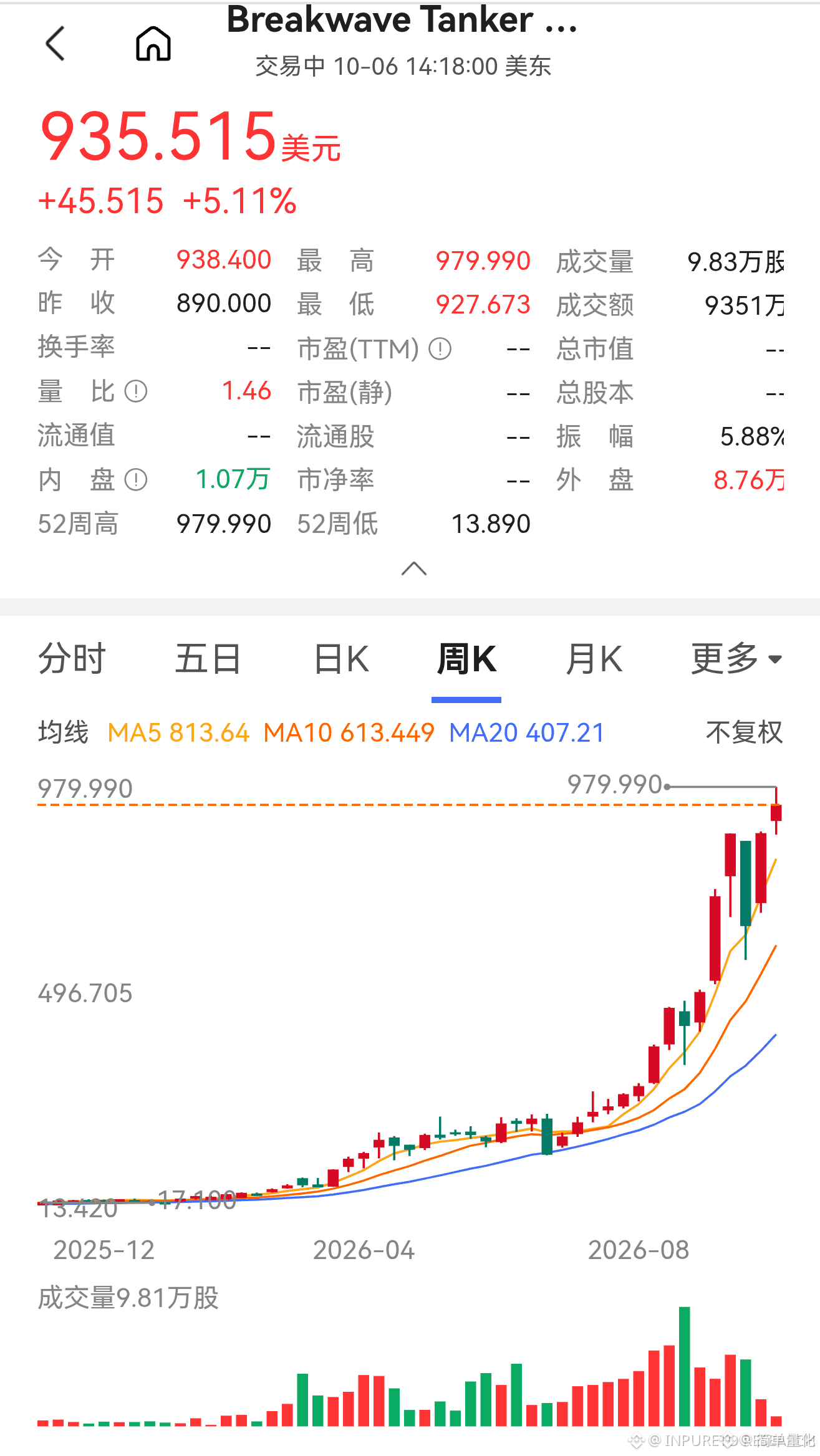
A 70x gain in one year, rising from a low of $13.89 all the way to $979.99.
When people see a move like this, their first instinct is usually, “It’s too high—it could top out at any moment.” But an asset that can sustain a rally for a full year, climbing from the teens to nearly $1,000, doesn’t get there on a fleeting burst of sentiment alone.
Trends of this magnitude often run further than intuition suggests. Faced with a powerful bullish structure that has lasted a year, I’d rather respect the sheer strength the market is showing than try to guess where the ceiling is. The $1,000 mark is just ahead, and this momentum hasn’t faded.
#BWET
👇
{future}(BWETUSDT)
A 70x gain in one year, rising from a low of $13.89 all the way to $979.99.
When people see a move like this, their first instinct is usually, “It’s too high—it could top out at any moment.” But an asset that can sustain a rally for a full year, climbing from the teens to nearly $1,000, doesn’t get there on a fleeting burst of sentiment alone.
Trends of this magnitude often run further than intuition suggests. Faced with a powerful bullish structure that has lasted a year, I’d rather respect the sheer strength the market is showing than try to guess where the ceiling is. The $1,000 mark is just ahead, and this momentum hasn’t faded.
#BWET
👇
When people see a move like this, their first instinct is usually, “It’s too high—it could top out at any moment.” But an asset that can sustain a rally for a full year, climbing from the teens to nearly $1,000, doesn’t get there on a fleeting burst of sentiment alone.
Trends of this magnitude often run further than intuition suggests. Faced with a powerful bullish structure that has lasted a year, I’d rather respect the sheer strength the market is showing than try to guess where the ceiling is. The $1,000 mark is just ahead, and this momentum hasn’t faded.
#BWET
👇
92
·
--
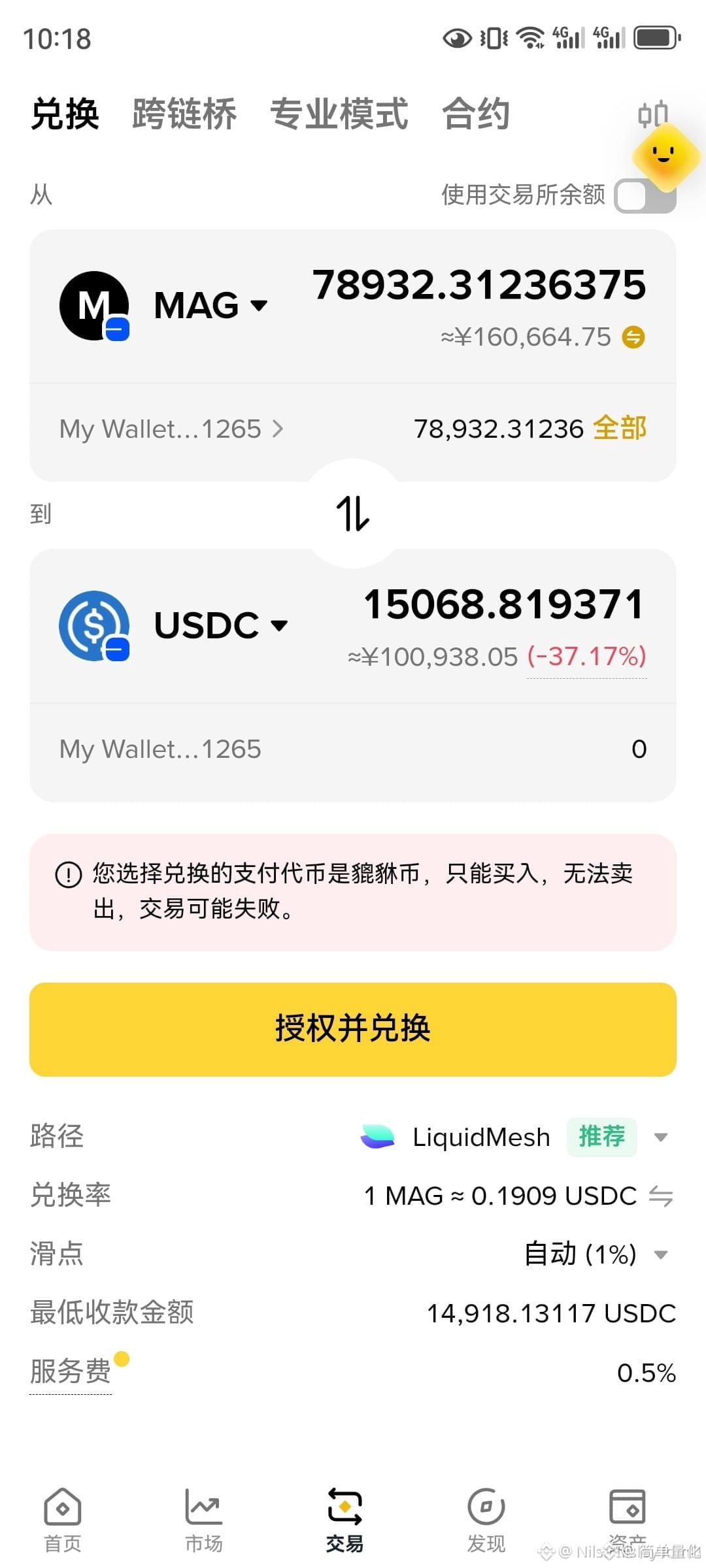
You can buy, but you can’t sell. MAG has been directly flagged by the system as a honeypot on the trading and swap interface.
No matter how sharply the chart appears to be rising, once selling is locked, any unrealized gains on paper are just numbers you can’t take with you. You can get in, but you can’t get out—that’s the purest kind of one-way trap.
When the most basic exit route is physically blocked, any bullish analysis or bets on a rebound are meaningless. This isn’t a battle over tokens; whoever buys gets stuck with the bill.
#MAG
👇
You can buy, but you can’t sell. MAG has been directly flagged by the system as a honeypot on the trading and swap interface.
No matter how sharply the chart appears to be rising, once selling is locked, any unrealized gains on paper are just numbers you can’t take with you. You can get in, but you can’t get out—that’s the purest kind of one-way trap.
When the most basic exit route is physically blocked, any bullish analysis or bets on a rebound are meaningless. This isn’t a battle over tokens; whoever buys gets stuck with the bill.
#MAG
👇
No matter how sharply the chart appears to be rising, once selling is locked, any unrealized gains on paper are just numbers you can’t take with you. You can get in, but you can’t get out—that’s the purest kind of one-way trap.
When the most basic exit route is physically blocked, any bullish analysis or bets on a rebound are meaningless. This isn’t a battle over tokens; whoever buys gets stuck with the bill.
#MAG
👇
23
·
--
Partly True
Just waiting for Musk to tweet so I can go long $NVDAB
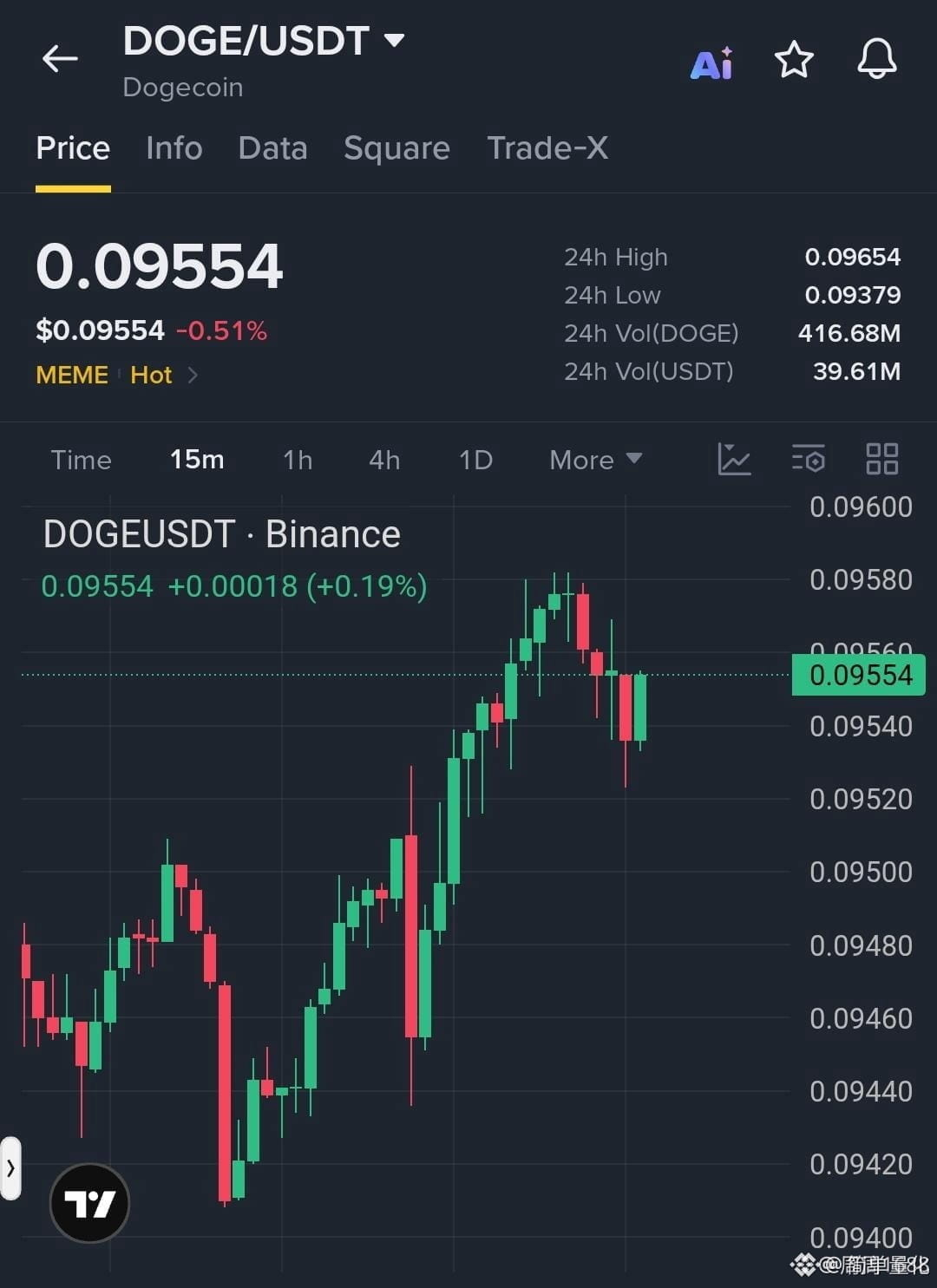
The DogeOS public testnet is live. It not only provides an EVM-compatible environment, but also uses $DOGE itself as the native token for settlements. This shows that it’s moving beyond the label of a purely sentiment-driven asset and beginning to develop real on-chain use cases.
With a tangible foundation for the narrative, the market responded immediately. During recent pullbacks, $DOGE held firmly above the 0.09520 support level, with buyers continuing to step in and manage to form a structure of higher lows.
Rallies driven by celebrity endorsements can easily fizzle out, but with ecosystem utility as a foundation, the market’s ability to absorb selling is entirely different. Now that the floor is rising, there’s no need to give up your spot holdings at this level.
#DOGE
👇
{future}(DOGEUSDT)
Just waiting for Musk to tweet so I can go long $NVDAB
The DogeOS public testnet is live. It not only provides an EVM-compatible environment, but also uses $DOGE itself as the native token for settlements. This shows that it’s moving beyond the label of a purely sentiment-driven asset and beginning to develop real on-chain use cases.
With a tangible foundation for the narrative, the market responded immediately. During recent pullbacks, $DOGE held firmly above the 0.09520 support level, with buyers continuing to step in and manage to form a structure of higher lows.
Rallies driven by celebrity endorsements can easily fizzle out, but with ecosystem utility as a foundation, the market’s ability to absorb selling is entirely different. Now that the floor is rising, there’s no need to give up your spot holdings at this level.
#DOGE
👇
The DogeOS public testnet is live. It not only provides an EVM-compatible environment, but also uses $DOGE itself as the native token for settlements. This shows that it’s moving beyond the label of a purely sentiment-driven asset and beginning to develop real on-chain use cases.
With a tangible foundation for the narrative, the market responded immediately. During recent pullbacks, $DOGE held firmly above the 0.09520 support level, with buyers continuing to step in and manage to form a structure of higher lows.
Rallies driven by celebrity endorsements can easily fizzle out, but with ecosystem utility as a foundation, the market’s ability to absorb selling is entirely different. Now that the floor is rising, there’s no need to give up your spot holdings at this level.
#DOGE
👇
602
·
--
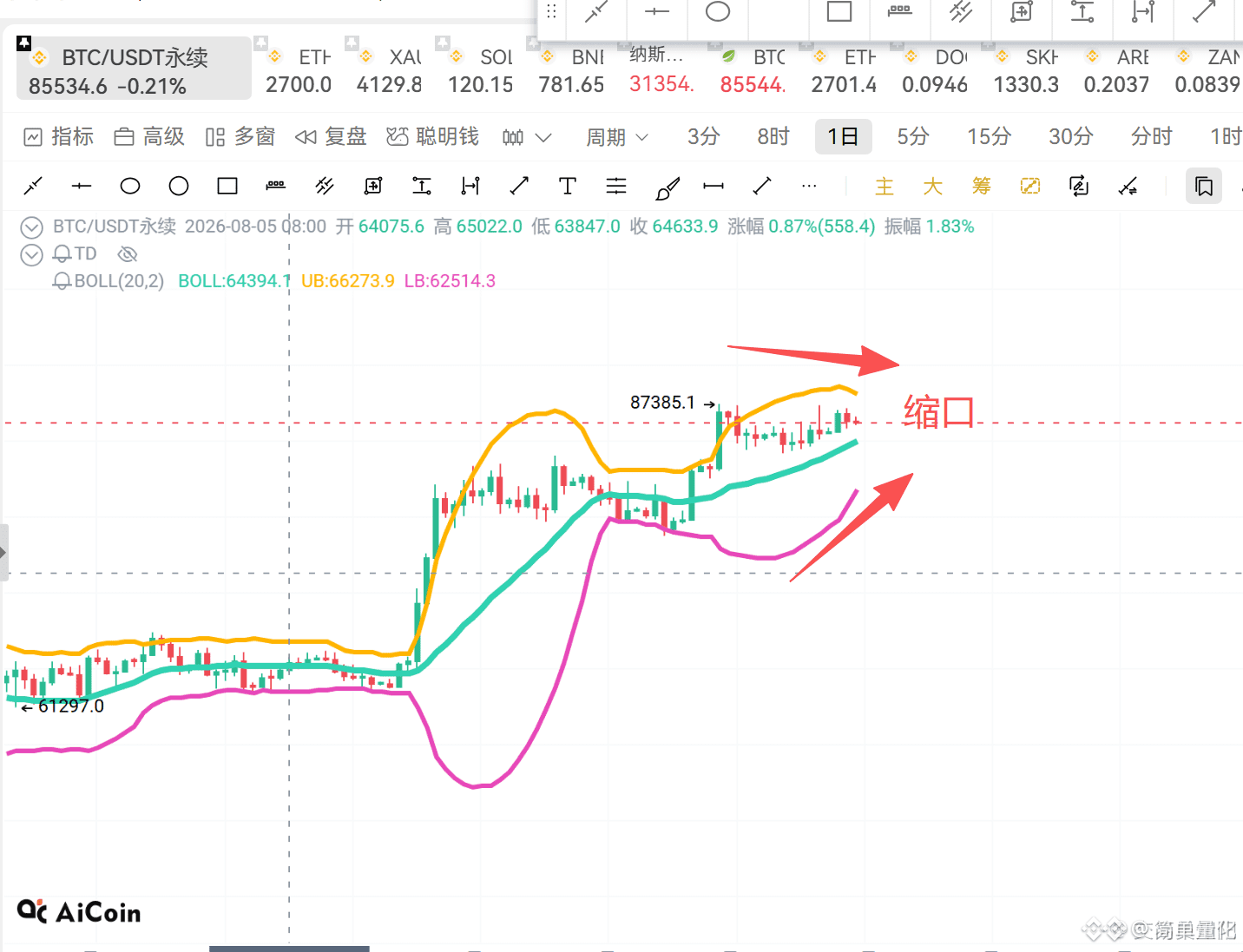
Don’t mistake a high-level squeeze for a buildup of strength. BTC rallied from September 21 to early October, and the daily chart has clearly formed a bearish divergence.
Looking back at past cycles, at turning points from bear to bull markets, whenever this kind of momentum divergence appears on the daily chart, around 80% of cases see a deep correction of at least 10% within 60 days. The Bollinger Bands are still squeezed to extreme levels, and a major move could happen at any time.
Momentum can no longer keep up with price, and overhead selling pressure has not been fully absorbed. Betting on an upside breakout here is like putting your principal on the line against an 80% chance of a pullback. The chart’s signal is clear: play defense first, and don’t blindly try to catch a falling knife.
#BTC
👇
{future}(BTCUSDT)
Don’t mistake a high-level squeeze for a buildup of strength. BTC rallied from September 21 to early October, and the daily chart has clearly formed a bearish divergence.
Looking back at past cycles, at turning points from bear to bull markets, whenever this kind of momentum divergence appears on the daily chart, around 80% of cases see a deep correction of at least 10% within 60 days. The Bollinger Bands are still squeezed to extreme levels, and a major move could happen at any time.
Momentum can no longer keep up with price, and overhead selling pressure has not been fully absorbed. Betting on an upside breakout here is like putting your principal on the line against an 80% chance of a pullback. The chart’s signal is clear: play defense first, and don’t blindly try to catch a falling knife.
#BTC
👇
Looking back at past cycles, at turning points from bear to bull markets, whenever this kind of momentum divergence appears on the daily chart, around 80% of cases see a deep correction of at least 10% within 60 days. The Bollinger Bands are still squeezed to extreme levels, and a major move could happen at any time.
Momentum can no longer keep up with price, and overhead selling pressure has not been fully absorbed. Betting on an upside breakout here is like putting your principal on the line against an 80% chance of a pullback. The chart’s signal is clear: play defense first, and don’t blindly try to catch a falling knife.
#BTC
👇
161
·
--
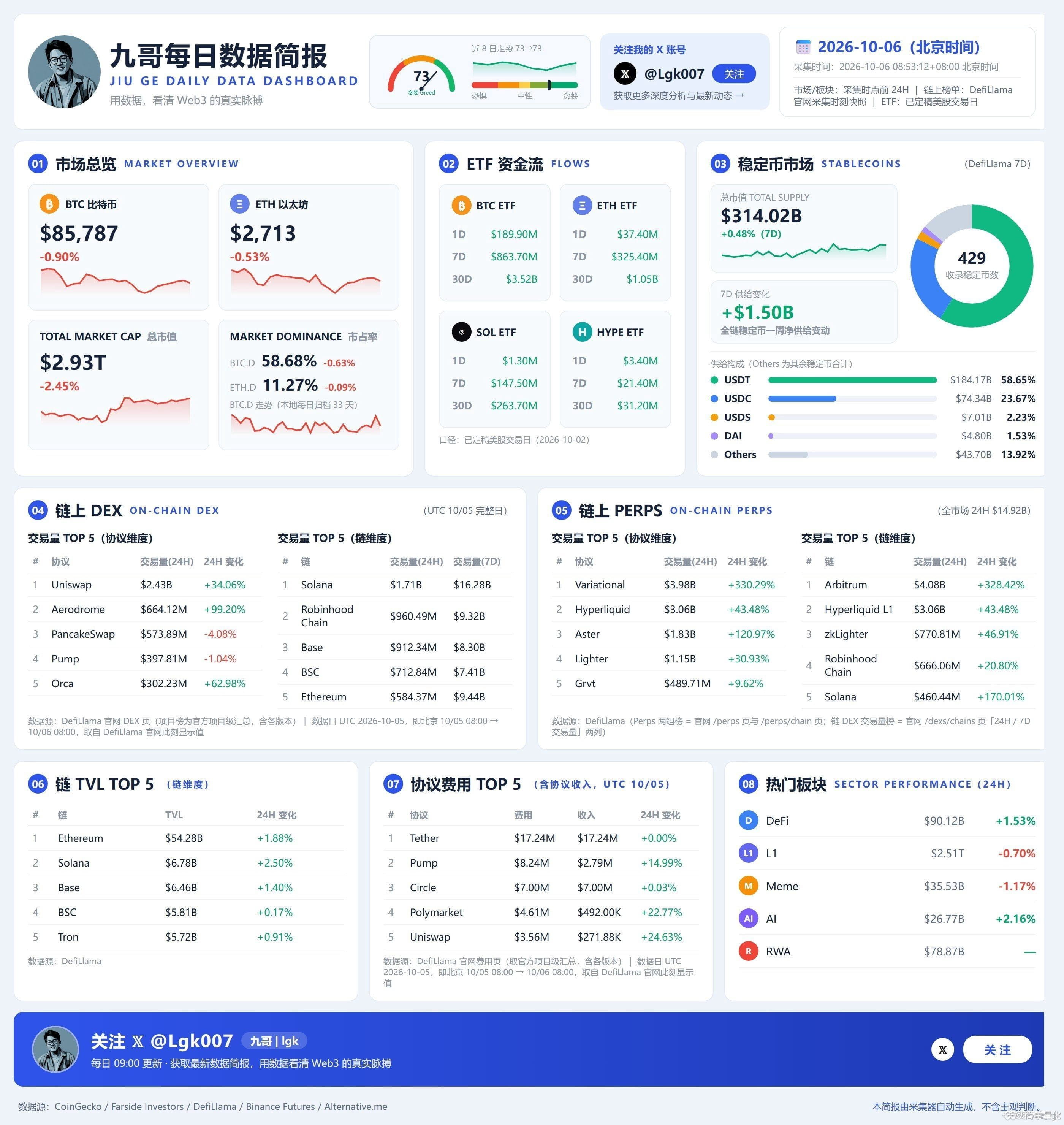
The market is still grinding back and forth, but buyers in off-exchange channels haven’t let up for a single day.
On October 6, net inflows totaled $37.4 million in a single day, bringing the seven-day cumulative total to $325.4 million. Many people are still complaining that ETH is looking weak, yet turning a blind eye to the hard data showing spot ETFs continuing to accumulate.
If big-money investors were truly bearish, they wouldn’t put up more than $300 million in real cash to buy up tokens in a single week. Impatient short-term holders are exiting, while institutions are building core positions. As long as this buying support continues, the current divergence and consolidation won’t change the inevitable buildup toward an upward move.
#ETH
👇
{future}(ETHUSDT)
The market is still grinding back and forth, but buyers in off-exchange channels haven’t let up for a single day.
On October 6, net inflows totaled $37.4 million in a single day, bringing the seven-day cumulative total to $325.4 million. Many people are still complaining that ETH is looking weak, yet turning a blind eye to the hard data showing spot ETFs continuing to accumulate.
If big-money investors were truly bearish, they wouldn’t put up more than $300 million in real cash to buy up tokens in a single week. Impatient short-term holders are exiting, while institutions are building core positions. As long as this buying support continues, the current divergence and consolidation won’t change the inevitable buildup toward an upward move.
#ETH
👇
On October 6, net inflows totaled $37.4 million in a single day, bringing the seven-day cumulative total to $325.4 million. Many people are still complaining that ETH is looking weak, yet turning a blind eye to the hard data showing spot ETFs continuing to accumulate.
If big-money investors were truly bearish, they wouldn’t put up more than $300 million in real cash to buy up tokens in a single week. Impatient short-term holders are exiting, while institutions are building core positions. As long as this buying support continues, the current divergence and consolidation won’t change the inevitable buildup toward an upward move.
#ETH
👇
183
·
--
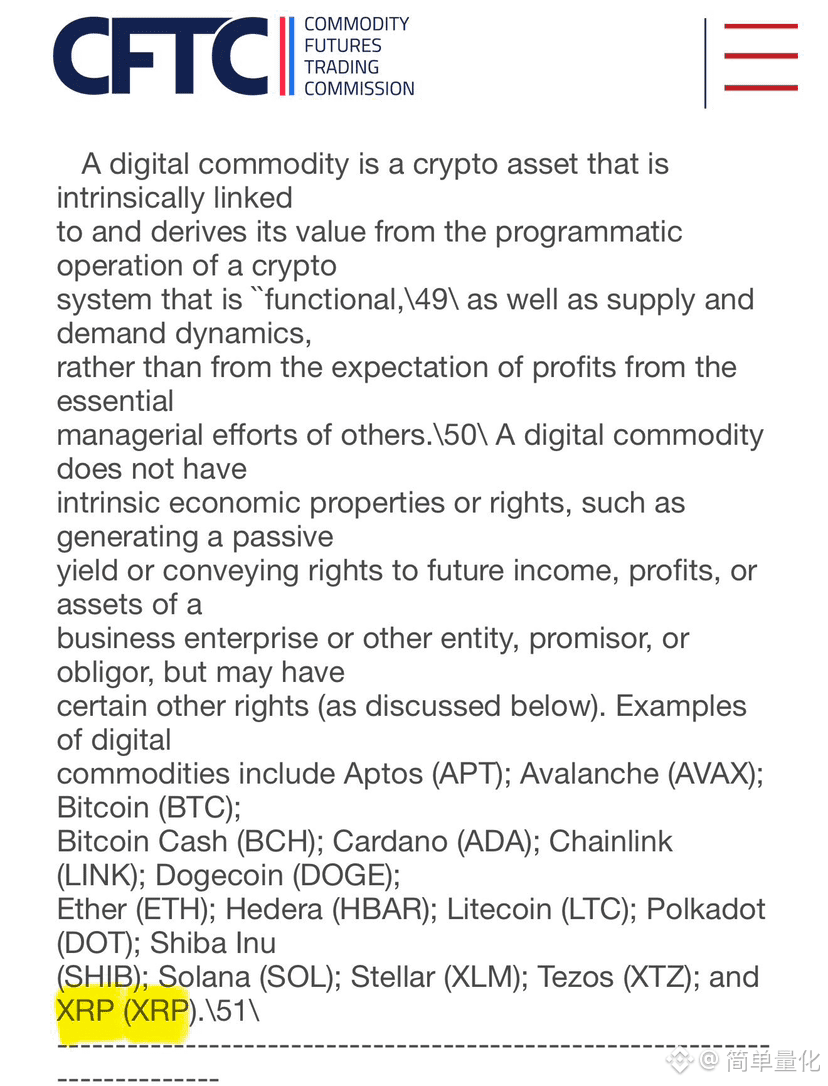
It’s there in black and white in an official document. While the market is still wrestling with regulatory uncertainty, the CFTC has already explicitly listed $XRP as an example of a “digital commodity.”
This isn’t an ambiguous remark made by an official—it’s a definitive position set out in a regulatory filing. The biggest weight hanging over $XRP has been the uncertainty about its status, which fueled fear. Now that it has been officially classified as a commodity, institutions’ concerns about holding it in compliance have been completely removed.
The sword of Damocles has fallen, and the biggest source of psychological selling pressure has largely cleared. If you’re still clinging to old biases and afraid to take a bullish view, you’re clearly underestimating the regulatory shift.
#XRP
👇
{future}(XRPUSDT)
It’s there in black and white in an official document. While the market is still wrestling with regulatory uncertainty, the CFTC has already explicitly listed $XRP as an example of a “digital commodity.”
This isn’t an ambiguous remark made by an official—it’s a definitive position set out in a regulatory filing. The biggest weight hanging over $XRP has been the uncertainty about its status, which fueled fear. Now that it has been officially classified as a commodity, institutions’ concerns about holding it in compliance have been completely removed.
The sword of Damocles has fallen, and the biggest source of psychological selling pressure has largely cleared. If you’re still clinging to old biases and afraid to take a bullish view, you’re clearly underestimating the regulatory shift.
#XRP
👇
This isn’t an ambiguous remark made by an official—it’s a definitive position set out in a regulatory filing. The biggest weight hanging over $XRP has been the uncertainty about its status, which fueled fear. Now that it has been officially classified as a commodity, institutions’ concerns about holding it in compliance have been completely removed.
The sword of Damocles has fallen, and the biggest source of psychological selling pressure has largely cleared. If you’re still clinging to old biases and afraid to take a bullish view, you’re clearly underestimating the regulatory shift.
#XRP
👇
1
136
·
--
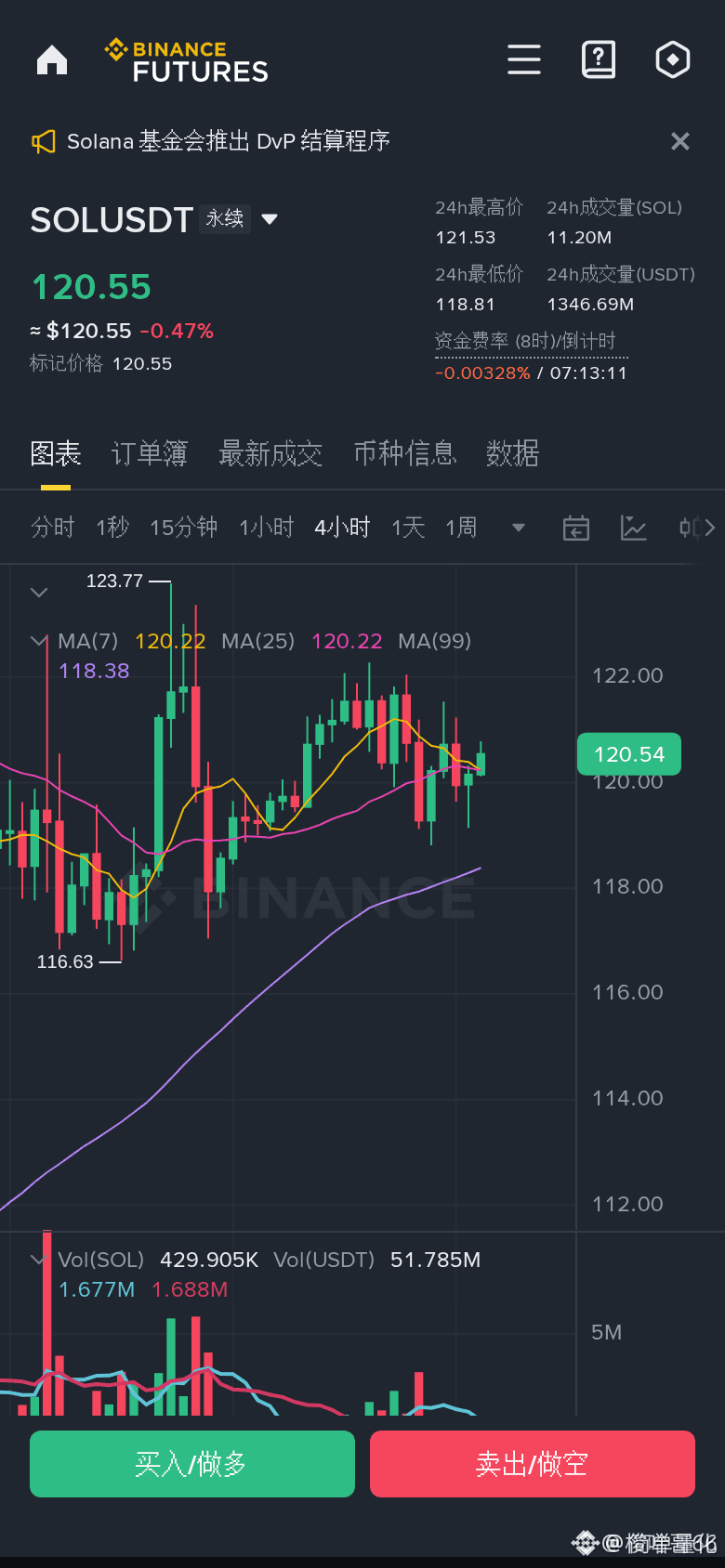
The funding rate has been crushed to -0.00328%, yet 63% of SOL contract positions around $120.5 are long.
The crowd is piling into longs, but the bears hold all the pricing power. An even more ominous signal is showing up in the spot order book: rebound highs are stepping lower, sell orders keep pouring into the spot market, and bids that had been propping up the price below are actively pulling out.
Real money is retreating from spot, while retail traders in futures are banding together to hold their positions, encouraged by negative funding. Crowded longs with no underlying spot buyers to catch them aren’t forming a base—they’re creating a tinderbox for a stampede that could erupt at any moment.
#SOL
👇
{future}(SOLUSDT)
The funding rate has been crushed to -0.00328%, yet 63% of SOL contract positions around $120.5 are long.
The crowd is piling into longs, but the bears hold all the pricing power. An even more ominous signal is showing up in the spot order book: rebound highs are stepping lower, sell orders keep pouring into the spot market, and bids that had been propping up the price below are actively pulling out.
Real money is retreating from spot, while retail traders in futures are banding together to hold their positions, encouraged by negative funding. Crowded longs with no underlying spot buyers to catch them aren’t forming a base—they’re creating a tinderbox for a stampede that could erupt at any moment.
#SOL
👇
The crowd is piling into longs, but the bears hold all the pricing power. An even more ominous signal is showing up in the spot order book: rebound highs are stepping lower, sell orders keep pouring into the spot market, and bids that had been propping up the price below are actively pulling out.
Real money is retreating from spot, while retail traders in futures are banding together to hold their positions, encouraged by negative funding. Crowded longs with no underlying spot buyers to catch them aren’t forming a base—they’re creating a tinderbox for a stampede that could erupt at any moment.
#SOL
👇
1
247
·
--
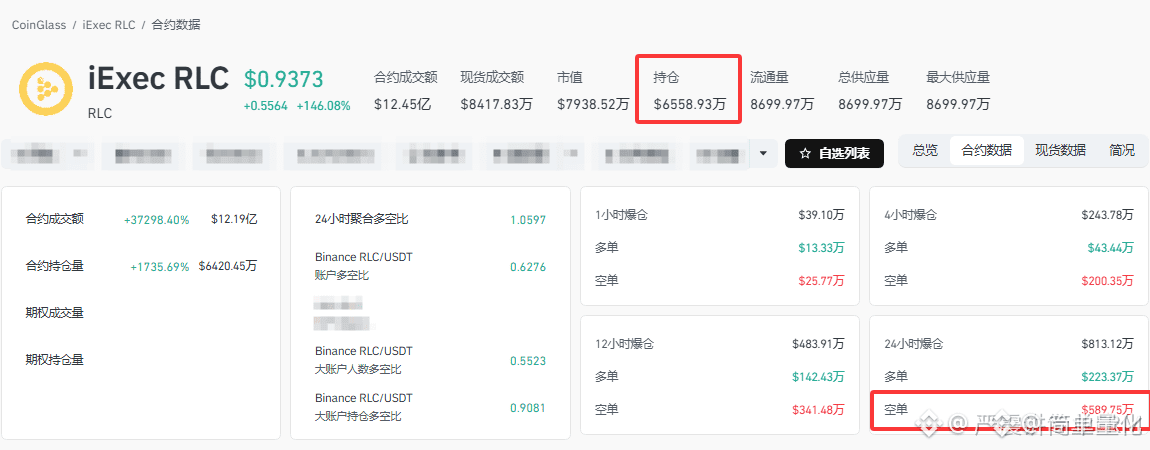
Total open interest in futures contracts topped $65 million, while short liquidations in a single day came close to $6 million. With major holders controlling as much as 90% of the supply, blindly piling into short positions is like hand-delivering fuel to the bulls.
It’s not that the market hasn’t pulled back—but that’s precisely confirmation of a shakeout. With a low market cap and tight control of the market, a short attack is the last thing to fear. The bias of simply waiting for a crash often ends with a brutal lesson from a powerful short squeeze.
#RLC
👇👇
{future}(RLCUSDT)
Total open interest in futures contracts topped $65 million, while short liquidations in a single day came close to $6 million. With major holders controlling as much as 90% of the supply, blindly piling into short positions is like hand-delivering fuel to the bulls.
It’s not that the market hasn’t pulled back—but that’s precisely confirmation of a shakeout. With a low market cap and tight control of the market, a short attack is the last thing to fear. The bias of simply waiting for a crash often ends with a brutal lesson from a powerful short squeeze.
#RLC
👇👇
It’s not that the market hasn’t pulled back—but that’s precisely confirmation of a shakeout. With a low market cap and tight control of the market, a short attack is the last thing to fear. The bias of simply waiting for a crash often ends with a brutal lesson from a powerful short squeeze.
#RLC
👇👇
1
289
·
--
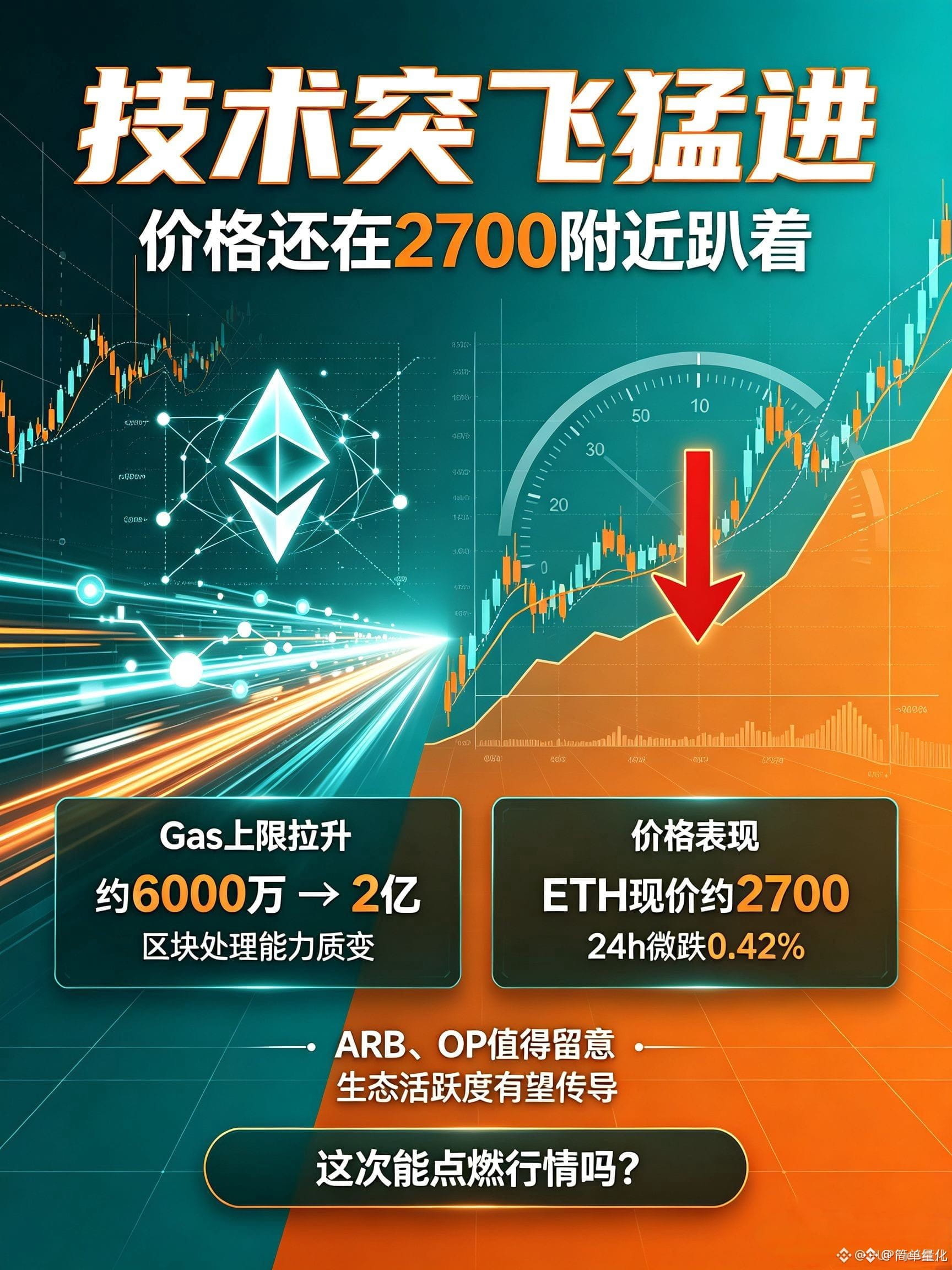
The Gas limit is jumping straight from 60 million to 200 million, giving Ethereum’s Glamsterdam upgrade a major boost to mainnet throughput.
Some people think scaling L1 will siphon activity away from Layer 2, but they’ve got it backwards. The mainnet isn’t here to take anyone’s slice of the pie. Only by breaking through the main chain’s capacity bottleneck can the whole ecosystem fully unlock its activity.
As the pool of traffic grows, the interaction volume multiplying across the ecosystem will still ultimately flow outward. Core infrastructure layers like OP are where that traffic is really captured. Raising the ceiling at the base layer is what opens up room for L2s to grow.
#OP
👇
{future}(OPUSDT)
The Gas limit is jumping straight from 60 million to 200 million, giving Ethereum’s Glamsterdam upgrade a major boost to mainnet throughput.
Some people think scaling L1 will siphon activity away from Layer 2, but they’ve got it backwards. The mainnet isn’t here to take anyone’s slice of the pie. Only by breaking through the main chain’s capacity bottleneck can the whole ecosystem fully unlock its activity.
As the pool of traffic grows, the interaction volume multiplying across the ecosystem will still ultimately flow outward. Core infrastructure layers like OP are where that traffic is really captured. Raising the ceiling at the base layer is what opens up room for L2s to grow.
#OP
👇
Some people think scaling L1 will siphon activity away from Layer 2, but they’ve got it backwards. The mainnet isn’t here to take anyone’s slice of the pie. Only by breaking through the main chain’s capacity bottleneck can the whole ecosystem fully unlock its activity.
As the pool of traffic grows, the interaction volume multiplying across the ecosystem will still ultimately flow outward. Core infrastructure layers like OP are where that traffic is really captured. Raising the ceiling at the base layer is what opens up room for L2s to grow.
#OP
👇
1
3
·
--
In the first nine months, ETH fell 10%, while BMNR dipped just 3%, outperforming by 731 basis points despite the headwinds.
That resilience isn’t just sentiment-driven. In 2026, Bitmine bought back 21 million shares with real cash, pulling a substantial number of shares off the market.
When the broader market tumbles, the biggest fear is a panic sell-off with no clear bottom. BMNR directly reduced potential selling pressure through its 21-million-share buyback. With its foundation reinforced by real money during a downturn, it will have even more room to rebound once the market recovers.
#BMNR
👇
{future}(BMNRUSDT)
In the first nine months, ETH fell 10%, while BMNR dipped just 3%, outperforming by 731 basis points despite the headwinds.
That resilience isn’t just sentiment-driven. In 2026, Bitmine bought back 21 million shares with real cash, pulling a substantial number of shares off the market.
When the broader market tumbles, the biggest fear is a panic sell-off with no clear bottom. BMNR directly reduced potential selling pressure through its 21-million-share buyback. With its foundation reinforced by real money during a downturn, it will have even more room to rebound once the market recovers.
#BMNR
👇
That resilience isn’t just sentiment-driven. In 2026, Bitmine bought back 21 million shares with real cash, pulling a substantial number of shares off the market.
When the broader market tumbles, the biggest fear is a panic sell-off with no clear bottom. BMNR directly reduced potential selling pressure through its 21-million-share buyback. With its foundation reinforced by real money during a downturn, it will have even more room to rebound once the market recovers.
#BMNR
👇
171
·
--
The crypto market’s Fear & Greed Index is still elevated at 73, yet BNB has already taken the lead in a 3% drop all by itself.
Look at how the market compares: BTC is down 0.85%, ETH is down 0.42%, while BNB’s losses are several times larger. Even worse than the price drop is the lack of volume: trading activity has remained sluggish, and repeated attempts to break through the $811 resistance have all come to nothing. There’s simply no real buying pressure to follow through.
At the slightest wobble in the broader market, BNB is the first to plunge. It can’t even break through $811, so a test of the $764.6 support level seems almost inevitable. The market is still blindly greedy, but assets that are already lagging tend to become the first to lead a sell-off.
#BNB
👇
{future}(BNBUSDT)
The crypto market’s Fear & Greed Index is still elevated at 73, yet BNB has already taken the lead in a 3% drop all by itself.
Look at how the market compares: BTC is down 0.85%, ETH is down 0.42%, while BNB’s losses are several times larger. Even worse than the price drop is the lack of volume: trading activity has remained sluggish, and repeated attempts to break through the $811 resistance have all come to nothing. There’s simply no real buying pressure to follow through.
At the slightest wobble in the broader market, BNB is the first to plunge. It can’t even break through $811, so a test of the $764.6 support level seems almost inevitable. The market is still blindly greedy, but assets that are already lagging tend to become the first to lead a sell-off.
#BNB
👇
Look at how the market compares: BTC is down 0.85%, ETH is down 0.42%, while BNB’s losses are several times larger. Even worse than the price drop is the lack of volume: trading activity has remained sluggish, and repeated attempts to break through the $811 resistance have all come to nothing. There’s simply no real buying pressure to follow through.
At the slightest wobble in the broader market, BNB is the first to plunge. It can’t even break through $811, so a test of the $764.6 support level seems almost inevitable. The market is still blindly greedy, but assets that are already lagging tend to become the first to lead a sell-off.
#BNB
👇

1
5
·
--
Everyone is talking about compliance narratives, but only a handful are actually treated by regulators as technical references.
In its draft discussion of new rules, the U.S. CFTC directly cited the LINK 2.0 white paper. While other projects are bending over backward to figure out how to appease regulators, the CFTC is already looking to LINK’s oracle and proof-of-reserves frameworks to help shape the rules.
Being cited as a technical model in an official discussion draft means it is becoming a de facto industry standard. As long as large-scale investors can’t enter the market without compliant data, assets embedded at the foundation of rulemaking will be difficult to dislodge.
#LINK
👇
{future}(LINKUSDT)
Everyone is talking about compliance narratives, but only a handful are actually treated by regulators as technical references.
In its draft discussion of new rules, the U.S. CFTC directly cited the LINK 2.0 white paper. While other projects are bending over backward to figure out how to appease regulators, the CFTC is already looking to LINK’s oracle and proof-of-reserves frameworks to help shape the rules.
Being cited as a technical model in an official discussion draft means it is becoming a de facto industry standard. As long as large-scale investors can’t enter the market without compliant data, assets embedded at the foundation of rulemaking will be difficult to dislodge.
#LINK
👇
In its draft discussion of new rules, the U.S. CFTC directly cited the LINK 2.0 white paper. While other projects are bending over backward to figure out how to appease regulators, the CFTC is already looking to LINK’s oracle and proof-of-reserves frameworks to help shape the rules.
Being cited as a technical model in an official discussion draft means it is becoming a de facto industry standard. As long as large-scale investors can’t enter the market without compliant data, assets embedded at the foundation of rulemaking will be difficult to dislodge.
#LINK
👇
135
·
--
After breaking above the previous high, it didn’t even pull back sharply. Volume continued to expand noticeably as $XMR broke out of its range.
Many people see a new high and immediately worry about a “false breakout,” but the market’s response has been decisive: there was no concentrated selling pressure overhead like many expected. The price wasn’t knocked back into the range; instead, each subsequent pullback made a higher low.
If this really were a bull trap, liquidity at the highs would already be providing cover for a sell-off. With a volume-backed breakout, price holding near the highs, and pullback lows continuing to climb, the bulls have built a solid line of defense. Don’t rush to call a top based on short-term thinking.
#XMR
👇
{future}(XMRUSDT)
After breaking above the previous high, it didn’t even pull back sharply. Volume continued to expand noticeably as $XMR broke out of its range.
Many people see a new high and immediately worry about a “false breakout,” but the market’s response has been decisive: there was no concentrated selling pressure overhead like many expected. The price wasn’t knocked back into the range; instead, each subsequent pullback made a higher low.
If this really were a bull trap, liquidity at the highs would already be providing cover for a sell-off. With a volume-backed breakout, price holding near the highs, and pullback lows continuing to climb, the bulls have built a solid line of defense. Don’t rush to call a top based on short-term thinking.
#XMR
👇
Many people see a new high and immediately worry about a “false breakout,” but the market’s response has been decisive: there was no concentrated selling pressure overhead like many expected. The price wasn’t knocked back into the range; instead, each subsequent pullback made a higher low.
If this really were a bull trap, liquidity at the highs would already be providing cover for a sell-off. With a volume-backed breakout, price holding near the highs, and pullback lows continuing to climb, the bulls have built a solid line of defense. Don’t rush to call a top based on short-term thinking.
#XMR
👇
59
·
--
Think sideways trading after a breakout means $HYPE has run out of steam? This pullback didn’t even fall below the previous high.
If a top were really forming, the indicators would have shown it by now. But RSI is rising in step with the price, with no extreme divergence, and MACD has given no topping signals either. The price is holding firmly above $92, clearly turning the previous resistance level into a support floor.
The pullback held above the previous high, and the indicators aren’t overextended. This kind of patient consolidation is much healthier than blindly accelerating higher—the bulls’ case for probing further upside remains intact.
#HYPE
👇
{future}(HYPEUSDT)
Think sideways trading after a breakout means $HYPE has run out of steam? This pullback didn’t even fall below the previous high.
If a top were really forming, the indicators would have shown it by now. But RSI is rising in step with the price, with no extreme divergence, and MACD has given no topping signals either. The price is holding firmly above $92, clearly turning the previous resistance level into a support floor.
The pullback held above the previous high, and the indicators aren’t overextended. This kind of patient consolidation is much healthier than blindly accelerating higher—the bulls’ case for probing further upside remains intact.
#HYPE
👇
If a top were really forming, the indicators would have shown it by now. But RSI is rising in step with the price, with no extreme divergence, and MACD has given no topping signals either. The price is holding firmly above $92, clearly turning the previous resistance level into a support floor.
The pullback held above the previous high, and the indicators aren’t overextended. This kind of patient consolidation is much healthier than blindly accelerating higher—the bulls’ case for probing further upside remains intact.
#HYPE
👇
116
·
--
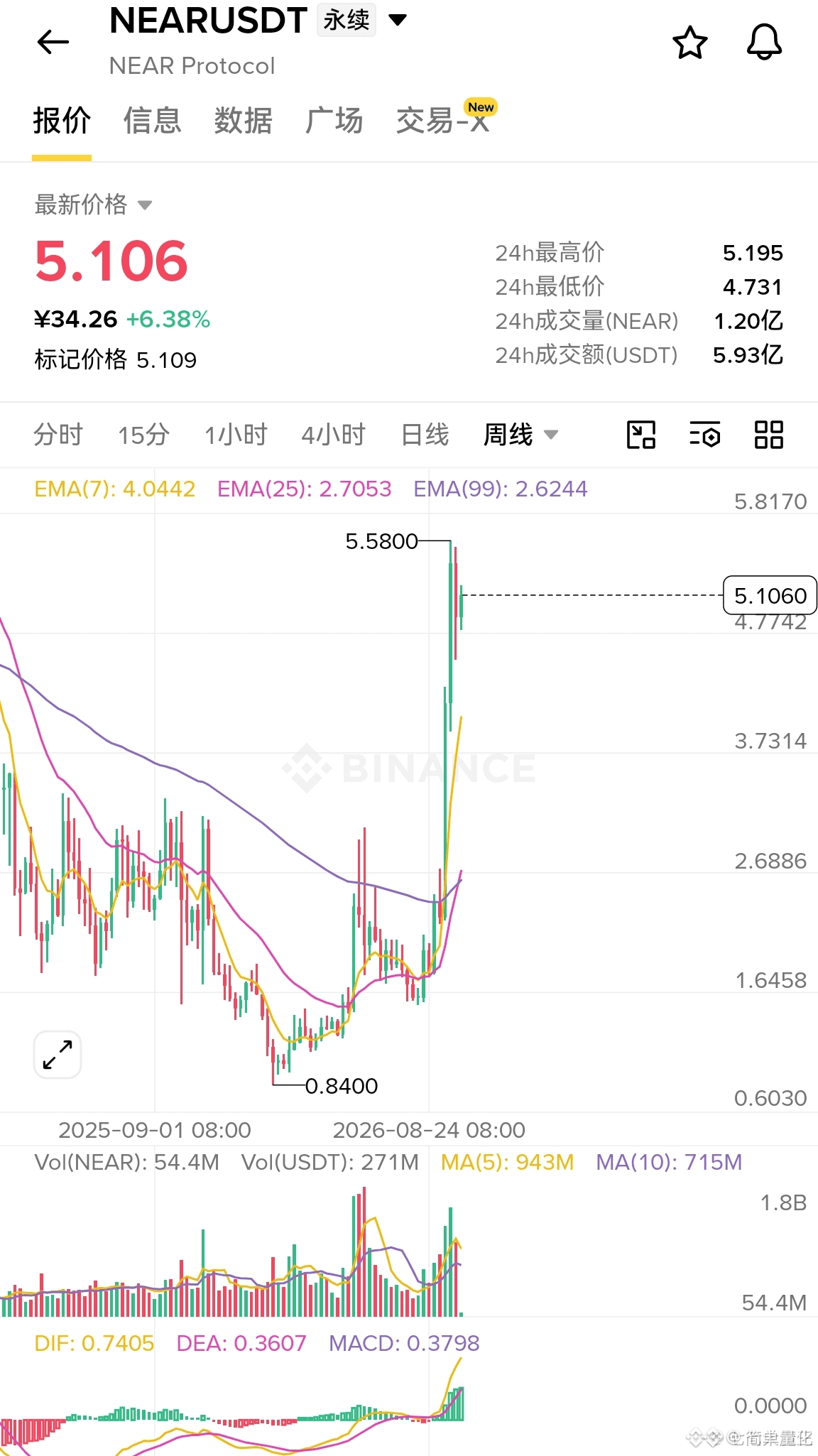
A weekly rally doesn’t come out of nowhere. $NEAR rebounded all the way from $0.84 to above $5.10, decisively reclaiming all the key moving averages—EMA(7), EMA(25), and EMA(99)—which are now aligned and fanning upward.
A 9.1% daily gain on $42.9 million in genuine trading volume sent it straight into the top ranks of trending assets. Price surged higher on strong volume, with the moving averages following through cleanly. Still clinging to the bearish pullback thesis? The market has answered every doubt with solid price-volume action and a bullish structure.
A pullback isn’t a sign of a top—it’s an entry opportunity for prepared capital.
#NEAR👇
{future}(NEARUSDT)
A weekly rally doesn’t come out of nowhere. $NEAR rebounded all the way from $0.84 to above $5.10, decisively reclaiming all the key moving averages—EMA(7), EMA(25), and EMA(99)—which are now aligned and fanning upward.
A 9.1% daily gain on $42.9 million in genuine trading volume sent it straight into the top ranks of trending assets. Price surged higher on strong volume, with the moving averages following through cleanly. Still clinging to the bearish pullback thesis? The market has answered every doubt with solid price-volume action and a bullish structure.
A pullback isn’t a sign of a top—it’s an entry opportunity for prepared capital.
#NEAR👇
A 9.1% daily gain on $42.9 million in genuine trading volume sent it straight into the top ranks of trending assets. Price surged higher on strong volume, with the moving averages following through cleanly. Still clinging to the bearish pullback thesis? The market has answered every doubt with solid price-volume action and a bullish structure.
A pullback isn’t a sign of a top—it’s an entry opportunity for prepared capital.
#NEAR👇
414
·
--
The valuation ceiling for exchanges is being shattered by real-world, offline spending.
He Yi confirms: Binance Pay is now connected to PayPay merchants across Japan. This isn’t just on-chain self-indulgence for a niche crowd—it brings crypto payments directly into the mainstream offline commerce network.
When most people look at BNB, they focus on trading fee discounts and token launch farming. But once it breaks out of the exchange’s walls and enters real-world payment scenarios, its liquidity is no longer just speculative capital—it’s underpinned by genuine demand in the physical world.
Announcements alone can’t sustain long-term growth. Ecosystems that can complete the loop in brick-and-mortar businesses will only build a stronger foundation. [更多行情](https://www.binance.com)
{future}(BTCUSDT)
The valuation ceiling for exchanges is being shattered by real-world, offline spending.
He Yi confirms: Binance Pay is now connected to PayPay merchants across Japan. This isn’t just on-chain self-indulgence for a niche crowd—it brings crypto payments directly into the mainstream offline commerce network.
When most people look at BNB, they focus on trading fee discounts and token launch farming. But once it breaks out of the exchange’s walls and enters real-world payment scenarios, its liquidity is no longer just speculative capital—it’s underpinned by genuine demand in the physical world.
Announcements alone can’t sustain long-term growth. Ecosystems that can complete the loop in brick-and-mortar businesses will only build a stronger foundation. 更多行情
He Yi confirms: Binance Pay is now connected to PayPay merchants across Japan. This isn’t just on-chain self-indulgence for a niche crowd—it brings crypto payments directly into the mainstream offline commerce network.
When most people look at BNB, they focus on trading fee discounts and token launch farming. But once it breaks out of the exchange’s walls and enters real-world payment scenarios, its liquidity is no longer just speculative capital—it’s underpinned by genuine demand in the physical world.
Announcements alone can’t sustain long-term growth. Ecosystems that can complete the loop in brick-and-mortar businesses will only build a stronger foundation. 更多行情

1
217
·
--
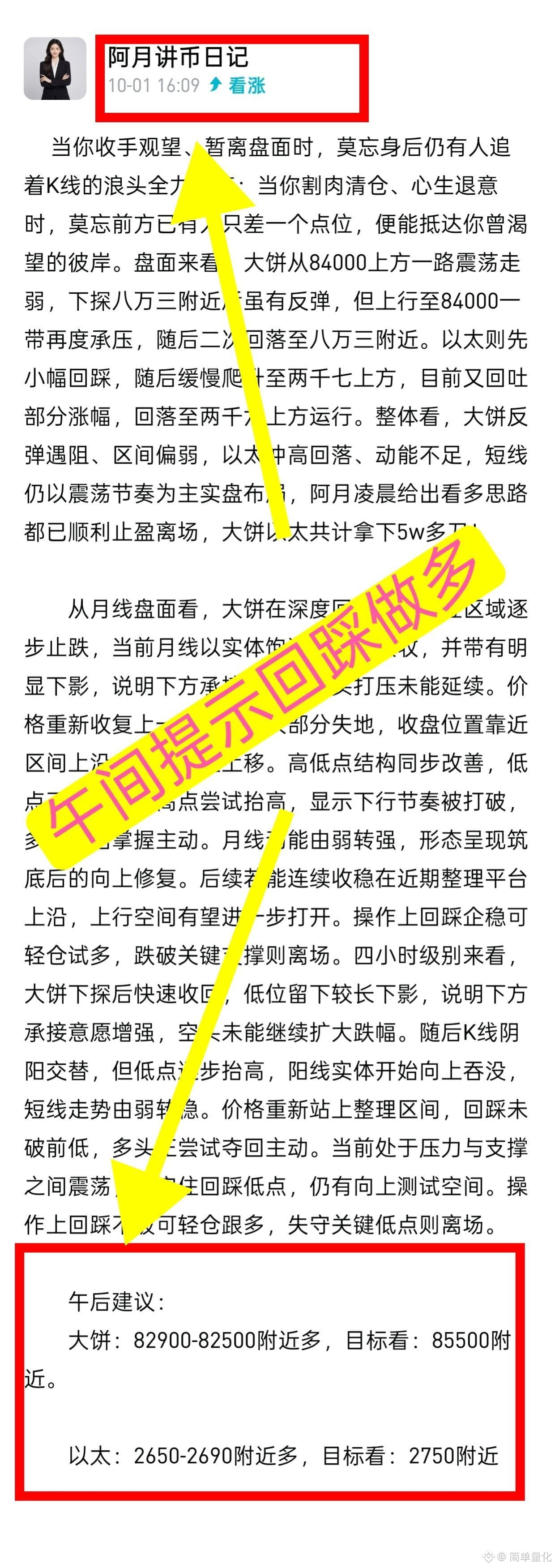
The short-term chart looks shaky, but zoom out to the monthly chart and you’ll see strong buying support. BTC found support in the pullback zone and closed the month there, leaving a long lower wick and finishing firmly near the top of the range.
Bears sold off for hours, but couldn’t generate any follow-through. Instead, they pushed the market’s lows higher step by step. On top of that, spot ETFs brought in around $190 million in net inflows in a single day, providing a floor. The pullback has clearly become a springboard for sidelined capital to accumulate.
Higher monthly lows and a close near the top of the range are signs of a defensive counterattack on a higher timeframe—not something a few intraday swings can break.
#BTC
The short-term chart looks shaky, but zoom out to the monthly chart and you’ll see strong buying support. BTC found support in the pullback zone and closed the month there, leaving a long lower wick and finishing firmly near the top of the range.
Bears sold off for hours, but couldn’t generate any follow-through. Instead, they pushed the market’s lows higher step by step. On top of that, spot ETFs brought in around $190 million in net inflows in a single day, providing a floor. The pullback has clearly become a springboard for sidelined capital to accumulate.
Higher monthly lows and a close near the top of the range are signs of a defensive counterattack on a higher timeframe—not something a few intraday swings can break.
#BTC
Bears sold off for hours, but couldn’t generate any follow-through. Instead, they pushed the market’s lows higher step by step. On top of that, spot ETFs brought in around $190 million in net inflows in a single day, providing a floor. The pullback has clearly become a springboard for sidelined capital to accumulate.
Higher monthly lows and a close near the top of the range are signs of a defensive counterattack on a higher timeframe—not something a few intraday swings can break.
#BTC
1
141
·
--
Disputed
Many people think DOGE can still only rise on hype and buy calls, but the real big move is already out in the open: Dogecoin will be integrated into X Payments, alongside fiat currencies.
There’s a world of difference between speculating on a token as a meme and plugging it directly into a mainstream platform’s payment rails. Being able to make payments on equal footing with fiat currencies means it will no longer depend solely on retail investor sentiment, but will have real demand from everyday transactions behind it.
Stop judging its potential by outdated standards. Once everyday payments take off, the foundation built on real-world use will be far more solid than a few Twitter memes.
#DOGE
Many people think DOGE can still only rise on hype and buy calls, but the real big move is already out in the open: Dogecoin will be integrated into X Payments, alongside fiat currencies.
There’s a world of difference between speculating on a token as a meme and plugging it directly into a mainstream platform’s payment rails. Being able to make payments on equal footing with fiat currencies means it will no longer depend solely on retail investor sentiment, but will have real demand from everyday transactions behind it.
Stop judging its potential by outdated standards. Once everyday payments take off, the foundation built on real-world use will be far more solid than a few Twitter memes.
#DOGE
There’s a world of difference between speculating on a token as a meme and plugging it directly into a mainstream platform’s payment rails. Being able to make payments on equal footing with fiat currencies means it will no longer depend solely on retail investor sentiment, but will have real demand from everyday transactions behind it.
Stop judging its potential by outdated standards. Once everyday payments take off, the foundation built on real-world use will be far more solid than a few Twitter memes.
#DOGE

650
·
--
Kakao Bank has already approved a plan to deploy blockchain by 2027 and is evaluating integration with the $XRP Ledger, with Woori Bank and K Bank following close behind. As traditional banks put infrastructure on their agendas and $XRP trading volume in the Korean won market surges past Bitcoin and Ethereum to claim the top spot, are you still fretting over it trading sideways at $1.50?
Capital flows and bank moves are never about reacting to market turbulence. Compliance and ledger integration are accelerating; sideways trading is just a trap for short-term traders. Don’t mistake volatility for a trend—look at who’s actually putting real money on the line.
#XRP
Kakao Bank has already approved a plan to deploy blockchain by 2027 and is evaluating integration with the $XRP Ledger, with Woori Bank and K Bank following close behind. As traditional banks put infrastructure on their agendas and $XRP trading volume in the Korean won market surges past Bitcoin and Ethereum to claim the top spot, are you still fretting over it trading sideways at $1.50?
Capital flows and bank moves are never about reacting to market turbulence. Compliance and ledger integration are accelerating; sideways trading is just a trap for short-term traders. Don’t mistake volatility for a trend—look at who’s actually putting real money on the line.
#XRP
Capital flows and bank moves are never about reacting to market turbulence. Compliance and ledger integration are accelerating; sideways trading is just a trap for short-term traders. Don’t mistake volatility for a trend—look at who’s actually putting real money on the line.
#XRP
128
Log in to explore more content
Join global crypto users on Binance Square
⚡️ Get latest and useful information about crypto.
💬 Trusted by the world’s largest crypto exchange.
👍 Discover real insights from verified creators.
Email / Phone number
Trending Topics
BinanceLaunchesBinanceIntelligence
505,259 views
3,383 Discussing
Binance Intelligence is Binance's suite of AI-powered tools and infrastructure integrated directly into the Binance ecosystem. It is designed to assist traders and investors by automating market analysis, risk monitoring, and decision-making tools
#BinanceLaunchesBinanceIntelligence
CryptofactswithFARAZ
·1 Likes
·165 views
BitcoinTargets2026OpenAt$87570
3,626 views
96 Discussing
BitcoinRejectedAt$87KThirdTime
3,239 views
76 Discussing