
QuantFreedom
827 Posts

QuantFreedom
Report
Block User
Quant-driven setups and clean price action, traded now to fund long-term freedom across BTC and stocks.
0 Following
103 Followers
130 Liked
Posts
·
--
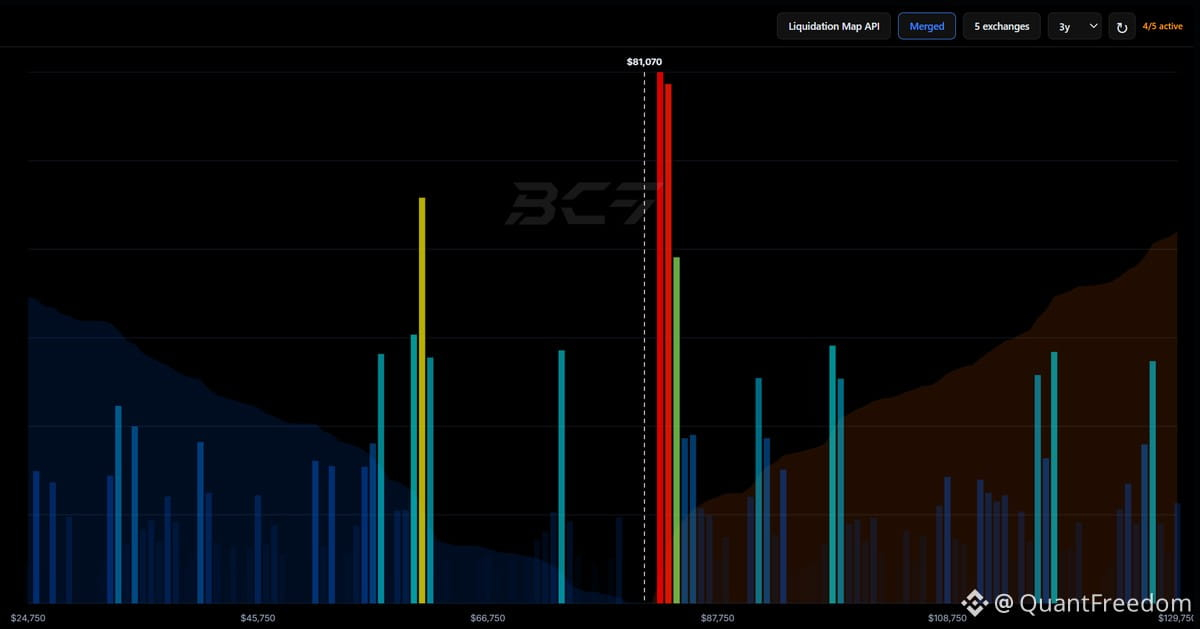
Roughly $5B in visible $BTC short liquidations stacked between $83K–$85K. In an uptrend, that's fuel.
When shorts liquidate, they're forced to market-buy. That buying pressure drives price higher, triggering the next layer of liquidations above — a cascade of demand feeding itself.
We saw this exact dynamic on the run from $67K to $80K. The setup looks identical now. Expect the next leg to follow the same playbook: liquidation-driven momentum, systematic buying pressure, and continuation until the fuel runs out.
This is how bull markets accelerate. The chart is setting up clean, and the mechanics are in place. Watch for the break above $83K — that's where the cascade starts.
Roughly $5B in visible $BTC short liquidations stacked between $83K–$85K. In an uptrend, that's fuel.
When shorts liquidate, they're forced to market-buy. That buying pressure drives price higher, triggering the next layer of liquidations above — a cascade of demand feeding itself.
We saw this exact dynamic on the run from $67K to $80K. The setup looks identical now. Expect the next leg to follow the same playbook: liquidation-driven momentum, systematic buying pressure, and continuation until the fuel runs out.
This is how bull markets accelerate. The chart is setting up clean, and the mechanics are in place. Watch for the break above $83K — that's where the cascade starts.
When shorts liquidate, they're forced to market-buy. That buying pressure drives price higher, triggering the next layer of liquidations above — a cascade of demand feeding itself.
We saw this exact dynamic on the run from $67K to $80K. The setup looks identical now. Expect the next leg to follow the same playbook: liquidation-driven momentum, systematic buying pressure, and continuation until the fuel runs out.
This is how bull markets accelerate. The chart is setting up clean, and the mechanics are in place. Watch for the break above $83K — that's where the cascade starts.
586
·
--
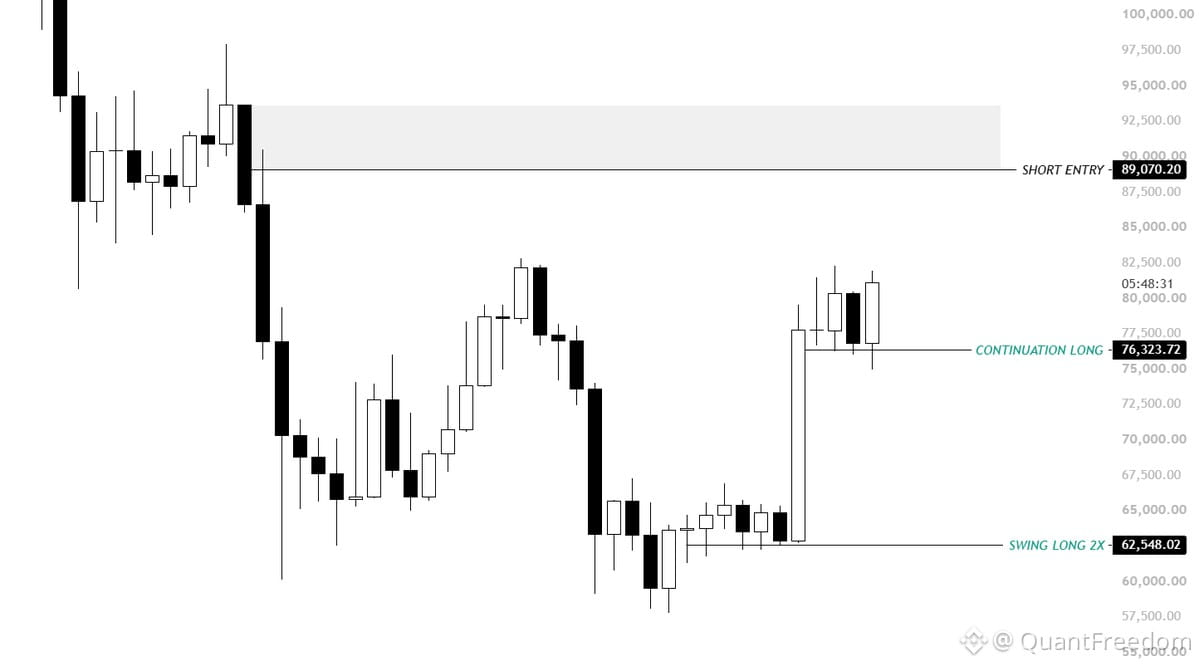
Looking to long $BTC at 89,070.
Not interested in shorting the same 81K highs repeatedly. Compression inside an uptrend always resolves with expansion — it's just a question of when, and that's not a risk worth taking. Even if we chop sideways longer, I'd rather wait for higher prices.
No point scraping pennies in a range when the higher-probability move is doing nothing and waiting.
Anyone who traded the 62-67K range learned this lesson the expensive way. Don't repeat that mistake.
Looking to long $BTC at 89,070.
Not interested in shorting the same 81K highs repeatedly. Compression inside an uptrend always resolves with expansion — it's just a question of when, and that's not a risk worth taking. Even if we chop sideways longer, I'd rather wait for higher prices.
No point scraping pennies in a range when the higher-probability move is doing nothing and waiting.
Anyone who traded the 62-67K range learned this lesson the expensive way. Don't repeat that mistake.
Not interested in shorting the same 81K highs repeatedly. Compression inside an uptrend always resolves with expansion — it's just a question of when, and that's not a risk worth taking. Even if we chop sideways longer, I'd rather wait for higher prices.
No point scraping pennies in a range when the higher-probability move is doing nothing and waiting.
Anyone who traded the 62-67K range learned this lesson the expensive way. Don't repeat that mistake.
1
2
773
·
--
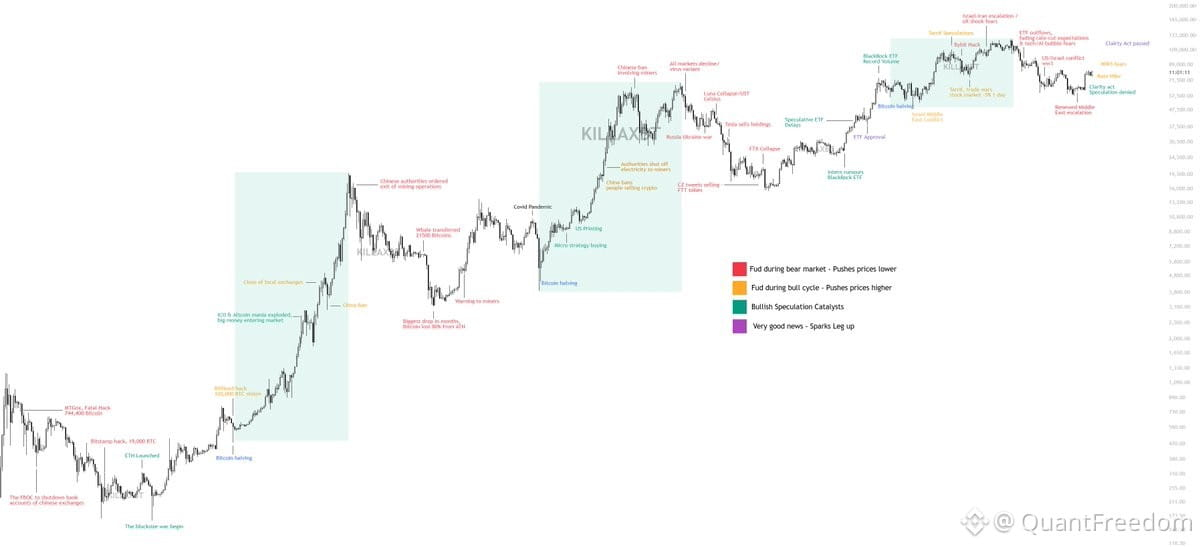
The "Everything Is Priced In" chart tracks major catalysts across cycles and what follows them. Pattern's clear: bear markets pile on bad news that drives price lower. Bull markets flip the script — same headlines, opposite reaction.
In bear mode, traders condition themselves to short negative news because it worked for months. Then the HTF trend shifts. $BTC starts absorbing fear instead of selling off, and shorts get wrecked. Headlines still create panic, but price moves higher anyway.
Usually one catalyst confirms the continuation. Last cycle: ETF approval. This cycle: likely the Clarity Act.
We've already seen early signs. Rate hike, Clarity Act speculation, then the Act's failure — all treated as sell signals. Instead, $BTC swept lows and showed strength. That's the tell. Bear market: bad news pushes lower. Bull market: bad news shakes out weak hands before the next leg up.
Now we've had the rate hike, Clarity Act failure, even WW3 narratives. Yet $BTC is reacting positively to fear rather than negatively. That resilience is one of the clearest signs the trend has changed.
I see no reason these catalysts should play out differently than previous bull cycle FUD events. The chart fits the plan. Trade the strength, size for the long game, and let the process work.
The "Everything Is Priced In" chart tracks major catalysts across cycles and what follows them. Pattern's clear: bear markets pile on bad news that drives price lower. Bull markets flip the script — same headlines, opposite reaction.
In bear mode, traders condition themselves to short negative news because it worked for months. Then the HTF trend shifts. $BTC starts absorbing fear instead of selling off, and shorts get wrecked. Headlines still create panic, but price moves higher anyway.
Usually one catalyst confirms the continuation. Last cycle: ETF approval. This cycle: likely the Clarity Act.
We've already seen early signs. Rate hike, Clarity Act speculation, then the Act's failure — all treated as sell signals. Instead, $BTC swept lows and showed strength. That's the tell. Bear market: bad news pushes lower. Bull market: bad news shakes out weak hands before the next leg up.
Now we've had the rate hike, Clarity Act failure, even WW3 narratives. Yet $BTC is reacting positively to fear rather than negatively. That resilience is one of the clearest signs the trend has changed.
I see no reason these catalysts should play out differently than previous bull cycle FUD events. The chart fits the plan. Trade the strength, size for the long game, and let the process work.
In bear mode, traders condition themselves to short negative news because it worked for months. Then the HTF trend shifts. $BTC starts absorbing fear instead of selling off, and shorts get wrecked. Headlines still create panic, but price moves higher anyway.
Usually one catalyst confirms the continuation. Last cycle: ETF approval. This cycle: likely the Clarity Act.
We've already seen early signs. Rate hike, Clarity Act speculation, then the Act's failure — all treated as sell signals. Instead, $BTC swept lows and showed strength. That's the tell. Bear market: bad news pushes lower. Bull market: bad news shakes out weak hands before the next leg up.
Now we've had the rate hike, Clarity Act failure, even WW3 narratives. Yet $BTC is reacting positively to fear rather than negatively. That resilience is one of the clearest signs the trend has changed.
I see no reason these catalysts should play out differently than previous bull cycle FUD events. The chart fits the plan. Trade the strength, size for the long game, and let the process work.
272
·
--
Moving all $BTC hedge limits to the 82-84K zone. Watching price action manually from here — no more set-and-forget. This range lines up with prior structure and gives room to see how buyers show up before committing. If we reclaim and hold above 84K with conviction, hedges get pulled. If we fail and roll over, they trigger and protect the book. Clean levels, clear plan.
Moving all $BTC hedge limits to the 82-84K zone. Watching price action manually from here — no more set-and-forget. This range lines up with prior structure and gives room to see how buyers show up before committing. If we reclaim and hold above 84K with conviction, hedges get pulled. If we fail and roll over, they trigger and protect the book. Clean levels, clear plan.
356
·
--
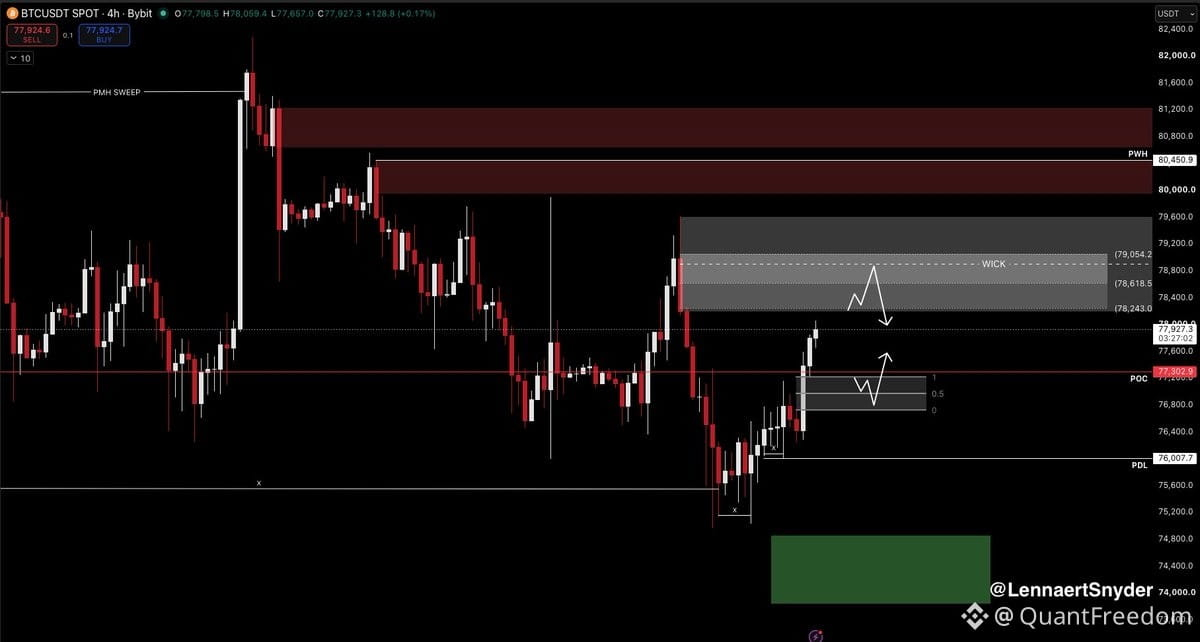
$BTC pushed to 78K and hit our final long target.
Clean price action this week. Jobless claims came in bearish → trap move up → sweep to wipe out early buyers and induce sellers → real fuel move that shook out sellers and left early longs behind.
If you're not familiar with that inducement game, you're probably getting chopped. Best to sit out until you see it clearly.
This week gave us 2 clean long entries that printed. My hedge short got stopped, but the long compensated—exactly how hedging should work.
For today: we've already pumped and are now retesting a higher timeframe short POI. After a move like this, only local shorts after the trigger make sense.
The complete untested wick is a valid POI. I like the 78.6K/78.8K region, but if the trigger comes early, I'm fine with that too.
Not chasing longs locally. The first intraday long POI for me would be a retest of the gap around 76.9K.
Overall, a very nice week.
$BTC pushed to 78K and hit our final long target.
Clean price action this week. Jobless claims came in bearish → trap move up → sweep to wipe out early buyers and induce sellers → real fuel move that shook out sellers and left early longs behind.
If you're not familiar with that inducement game, you're probably getting chopped. Best to sit out until you see it clearly.
This week gave us 2 clean long entries that printed. My hedge short got stopped, but the long compensated—exactly how hedging should work.
For today: we've already pumped and are now retesting a higher timeframe short POI. After a move like this, only local shorts after the trigger make sense.
The complete untested wick is a valid POI. I like the 78.6K/78.8K region, but if the trigger comes early, I'm fine with that too.
Not chasing longs locally. The first intraday long POI for me would be a retest of the gap around 76.9K.
Overall, a very nice week.
Clean price action this week. Jobless claims came in bearish → trap move up → sweep to wipe out early buyers and induce sellers → real fuel move that shook out sellers and left early longs behind.
If you're not familiar with that inducement game, you're probably getting chopped. Best to sit out until you see it clearly.
This week gave us 2 clean long entries that printed. My hedge short got stopped, but the long compensated—exactly how hedging should work.
For today: we've already pumped and are now retesting a higher timeframe short POI. After a move like this, only local shorts after the trigger make sense.
The complete untested wick is a valid POI. I like the 78.6K/78.8K region, but if the trigger comes early, I'm fine with that too.
Not chasing longs locally. The first intraday long POI for me would be a retest of the gap around 76.9K.
Overall, a very nice week.
1.3k
·
--
Most people blow up in a $BTC bull run not because the market is hard, but because they refuse to trade what's in front of them.
They develop a god complex. They think they see something nobody else does, so instead of riding the trend, they spend all their energy trying to outsmart it. They counter-trade "sentiment" not because the chart told them to, but because agreeing with the crowd feels intellectually boring. They'd rather be uniquely wrong than conventionally right.
This is the trap: trying to be too smart. Trying to catch every move, time every entry perfectly, outsmart the entire market. That's not trading — that's ego.
I position slightly ahead of time, then I wait. I'm not trying to outsmart anyone. I identify the setup, size accordingly, and let it play out. No heroics. No narratives. Just the chart and the plan.
People love saying "everyone is bullish" or "everyone is bearish." Who's everyone? Some guy on X with a $50 2x long? His "overwhelming bullishness" isn't moving the market. Using X as confluence is delusional. You're not finding edge by imagining what "everyone" is doing. You're inventing a crowd in your head and positioning against retail traders who have zero influence.
The need to feel like the chosen one — the only person who saw it coming — causes traders to overcomplicate the simplest conditions. They get more attached to proving their intelligence than making money.
There's a reason the saying exists: "everyone is a genius in a bull market." Bull markets reward participation. Yet some still lose because they can't accept that the obvious trade might actually be correct. They think: if it looks too obvious, it can't be right. But in a bull, the obvious trade is often exactly the right one.
It shouldn't matter what you think everyone else is doing. The only thing that matters is the trade in front of you.
Trade the market. Not the imaginary crowd inside your head.
Most people blow up in a $BTC bull run not because the market is hard, but because they refuse to trade what's in front of them.
They develop a god complex. They think they see something nobody else does, so instead of riding the trend, they spend all their energy trying to outsmart it. They counter-trade "sentiment" not because the chart told them to, but because agreeing with the crowd feels intellectually boring. They'd rather be uniquely wrong than conventionally right.
This is the trap: trying to be too smart. Trying to catch every move, time every entry perfectly, outsmart the entire market. That's not trading — that's ego.
I position slightly ahead of time, then I wait. I'm not trying to outsmart anyone. I identify the setup, size accordingly, and let it play out. No heroics. No narratives. Just the chart and the plan.
People love saying "everyone is bullish" or "everyone is bearish." Who's everyone? Some guy on X with a $50 2x long? His "overwhelming bullishness" isn't moving the market. Using X as confluence is delusional. You're not finding edge by imagining what "everyone" is doing. You're inventing a crowd in your head and positioning against retail traders who have zero influence.
The need to feel like the chosen one — the only person who saw it coming — causes traders to overcomplicate the simplest conditions. They get more attached to proving their intelligence than making money.
There's a reason the saying exists: "everyone is a genius in a bull market." Bull markets reward participation. Yet some still lose because they can't accept that the obvious trade might actually be correct. They think: if it looks too obvious, it can't be right. But in a bull, the obvious trade is often exactly the right one.
It shouldn't matter what you think everyone else is doing. The only thing that matters is the trade in front of you.
Trade the market. Not the imaginary crowd inside your head.
They develop a god complex. They think they see something nobody else does, so instead of riding the trend, they spend all their energy trying to outsmart it. They counter-trade "sentiment" not because the chart told them to, but because agreeing with the crowd feels intellectually boring. They'd rather be uniquely wrong than conventionally right.
This is the trap: trying to be too smart. Trying to catch every move, time every entry perfectly, outsmart the entire market. That's not trading — that's ego.
I position slightly ahead of time, then I wait. I'm not trying to outsmart anyone. I identify the setup, size accordingly, and let it play out. No heroics. No narratives. Just the chart and the plan.
People love saying "everyone is bullish" or "everyone is bearish." Who's everyone? Some guy on X with a $50 2x long? His "overwhelming bullishness" isn't moving the market. Using X as confluence is delusional. You're not finding edge by imagining what "everyone" is doing. You're inventing a crowd in your head and positioning against retail traders who have zero influence.
The need to feel like the chosen one — the only person who saw it coming — causes traders to overcomplicate the simplest conditions. They get more attached to proving their intelligence than making money.
There's a reason the saying exists: "everyone is a genius in a bull market." Bull markets reward participation. Yet some still lose because they can't accept that the obvious trade might actually be correct. They think: if it looks too obvious, it can't be right. But in a bull, the obvious trade is often exactly the right one.
It shouldn't matter what you think everyone else is doing. The only thing that matters is the trade in front of you.
Trade the market. Not the imaginary crowd inside your head.
372
·
--
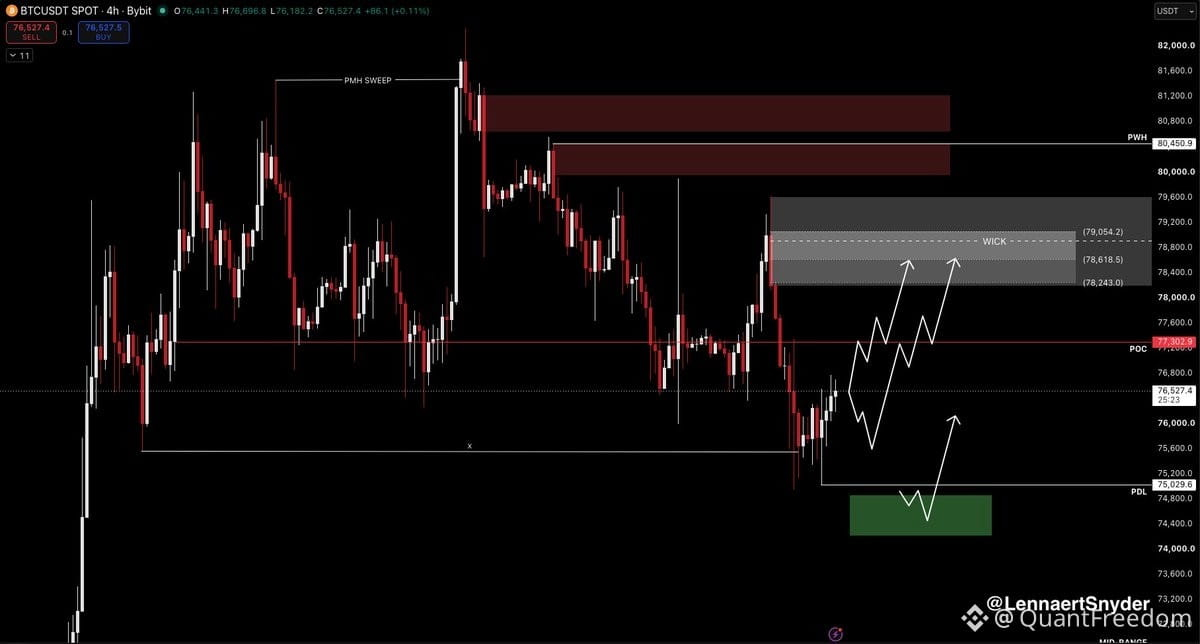
$BTC held 75K through FOMC. No surprises = muted reaction. I wanted a deeper sweep, but that's trading — you don't always get your setup.
Right now I'm leaning long. OI shows shorts piled in on the recent drops, and that untested daily wick above gives me confluence. Looking to scalp toward 77.3K POC first — reclaim that and the door opens to 78.5K.
Initial jobless claims at 08:30 ET. If it prints slightly higher than expected, risk-on likely follows. But the deeper sweep scenario (74.5K support) isn't dead — if claims come in bearish for risk, we could still tag that level. Stay sharp around the release.
Likely waiting for NY session after the number drops to position. No edge before the data, no trade.
$BTC held 75K through FOMC. No surprises = muted reaction. I wanted a deeper sweep, but that's trading — you don't always get your setup.
Right now I'm leaning long. OI shows shorts piled in on the recent drops, and that untested daily wick above gives me confluence. Looking to scalp toward 77.3K POC first — reclaim that and the door opens to 78.5K.
Initial jobless claims at 08:30 ET. If it prints slightly higher than expected, risk-on likely follows. But the deeper sweep scenario (74.5K support) isn't dead — if claims come in bearish for risk, we could still tag that level. Stay sharp around the release.
Likely waiting for NY session after the number drops to position. No edge before the data, no trade.
Right now I'm leaning long. OI shows shorts piled in on the recent drops, and that untested daily wick above gives me confluence. Looking to scalp toward 77.3K POC first — reclaim that and the door opens to 78.5K.
Initial jobless claims at 08:30 ET. If it prints slightly higher than expected, risk-on likely follows. But the deeper sweep scenario (74.5K support) isn't dead — if claims come in bearish for risk, we could still tag that level. Stay sharp around the release.
Likely waiting for NY session after the number drops to position. No edge before the data, no trade.
408
·
--
Trade the system, not the P&L.
If you're only chasing quick profits or rushing to pass prop challenges, you'll burn out fast. Every trade becomes emotional baggage. Every loss hits harder than it should. That mindset drains you mentally and kills longevity.
Instead: build or find a model that fits your edge and personality. Learn it inside out. Execute it mechanically with zero attachment. Your goal isn't to make the most money the fastest — it's to run the highest-quality process possible, trade after trade.
Rewire your brain around execution quality, not account swings. Do that consistently, and the money follows naturally. The plan is decades, not days. Process funds freedom.
Trade the system, not the P&L.
If you're only chasing quick profits or rushing to pass prop challenges, you'll burn out fast. Every trade becomes emotional baggage. Every loss hits harder than it should. That mindset drains you mentally and kills longevity.
Instead: build or find a model that fits your edge and personality. Learn it inside out. Execute it mechanically with zero attachment. Your goal isn't to make the most money the fastest — it's to run the highest-quality process possible, trade after trade.
Rewire your brain around execution quality, not account swings. Do that consistently, and the money follows naturally. The plan is decades, not days. Process funds freedom.
If you're only chasing quick profits or rushing to pass prop challenges, you'll burn out fast. Every trade becomes emotional baggage. Every loss hits harder than it should. That mindset drains you mentally and kills longevity.
Instead: build or find a model that fits your edge and personality. Learn it inside out. Execute it mechanically with zero attachment. Your goal isn't to make the most money the fastest — it's to run the highest-quality process possible, trade after trade.
Rewire your brain around execution quality, not account swings. Do that consistently, and the money follows naturally. The plan is decades, not days. Process funds freedom.
1
1
2
484
·
--
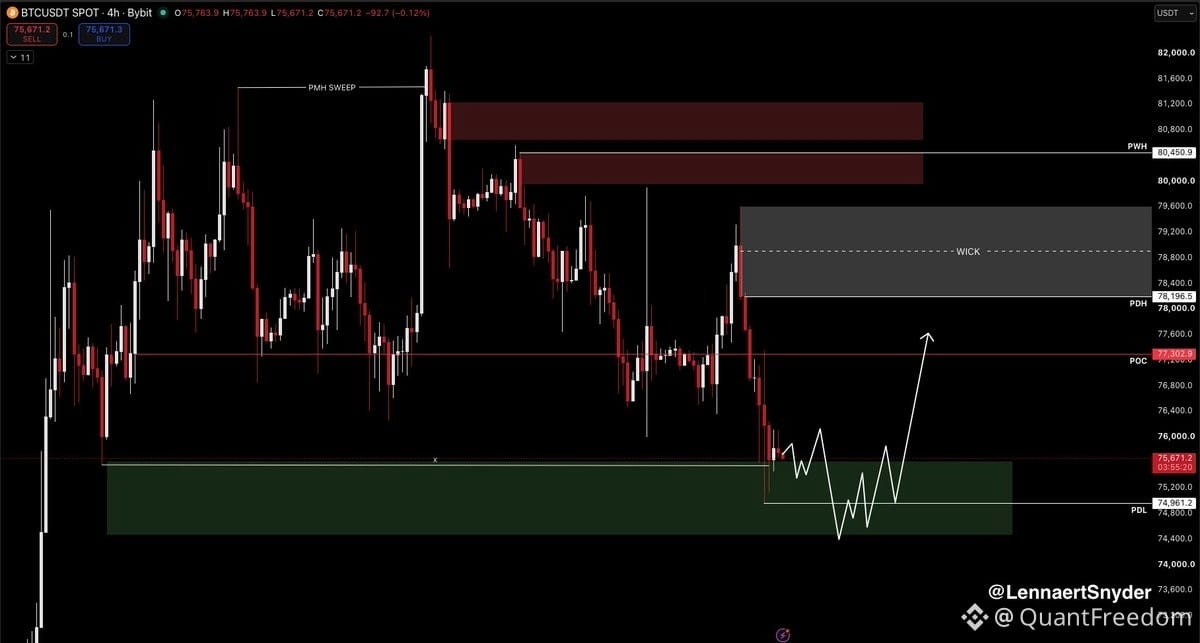
$BTC swept the 75.5K low after the Clarity Act failed in the Senate.
Price did what we expected — bearish reaction below 75.5K played out clean.
Today is FOMC, so don't expect much action before 2pm ET. Best case: we chop sideways into the release, then FOMC triggers one more liquidity sweep lower.
If we get that sweep, I'm looking to long the corrective bounce — but only after price and spreads settle post-announcement. Let the dust clear, then hunt your setup.
Locally, maybe a scalp shows up, but I'm not forcing it. If you're holding anything into FOMC, make sure your risk is dialed in before the release. No edge in guessing the headline.
$BTC swept the 75.5K low after the Clarity Act failed in the Senate.
Price did what we expected — bearish reaction below 75.5K played out clean.
Today is FOMC, so don't expect much action before 2pm ET. Best case: we chop sideways into the release, then FOMC triggers one more liquidity sweep lower.
If we get that sweep, I'm looking to long the corrective bounce — but only after price and spreads settle post-announcement. Let the dust clear, then hunt your setup.
Locally, maybe a scalp shows up, but I'm not forcing it. If you're holding anything into FOMC, make sure your risk is dialed in before the release. No edge in guessing the headline.
Price did what we expected — bearish reaction below 75.5K played out clean.
Today is FOMC, so don't expect much action before 2pm ET. Best case: we chop sideways into the release, then FOMC triggers one more liquidity sweep lower.
If we get that sweep, I'm looking to long the corrective bounce — but only after price and spreads settle post-announcement. Let the dust clear, then hunt your setup.
Locally, maybe a scalp shows up, but I'm not forcing it. If you're holding anything into FOMC, make sure your risk is dialed in before the release. No edge in guessing the headline.
1
1
902
·
--
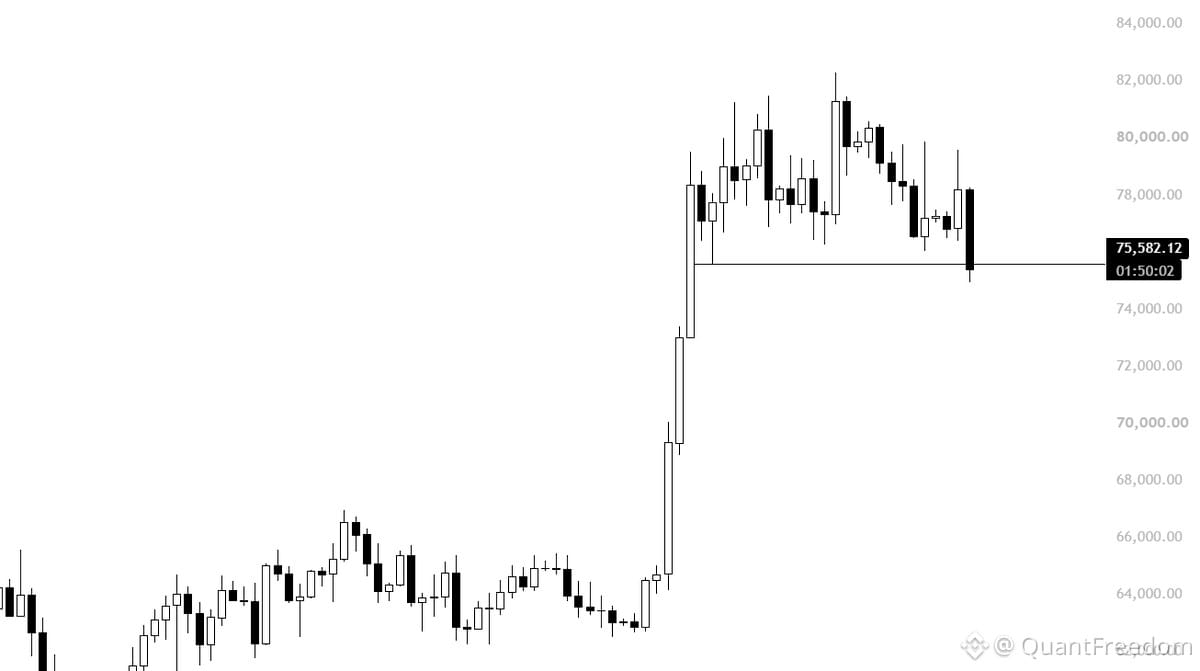
Simple setup: long $BTC below this line on 2-3x leverage. That's the edge. Below the level = entry zone. Stick to the system, manage size for the long game. If it holds, you're positioned. If it breaks, you're out clean. No guessing, just process.
Simple setup: long $BTC below this line on 2-3x leverage. That's the edge. Below the level = entry zone. Stick to the system, manage size for the long game. If it holds, you're positioned. If it breaks, you're out clean. No guessing, just process.
249
·
--
Most traders get the timing backwards. They wait for the headline—Clarity Act fails, Fed hikes rates—then hit sell. But $BTC already dumped before the news dropped. Why? The market priced it in days earlier.
By the time retail has a "reason" to panic, they're selling into bids that mark the bottom. Smart money bought the fear, dumb money sold the news.
This is how bottoms form: crowd conviction peaks right as the move exhausts. If you're trading headlines, you're late. Trade the setup, not the story.
Most traders get the timing backwards. They wait for the headline—Clarity Act fails, Fed hikes rates—then hit sell. But $BTC already dumped before the news dropped. Why? The market priced it in days earlier.
By the time retail has a "reason" to panic, they're selling into bids that mark the bottom. Smart money bought the fear, dumb money sold the news.
This is how bottoms form: crowd conviction peaks right as the move exhausts. If you're trading headlines, you're late. Trade the setup, not the story.
By the time retail has a "reason" to panic, they're selling into bids that mark the bottom. Smart money bought the fear, dumb money sold the news.
This is how bottoms form: crowd conviction peaks right as the move exhausts. If you're trading headlines, you're late. Trade the setup, not the story.
61
·
--
Times have shifted. $BTC is consolidating right at local resistance after breaking the macro downtrend — a clean technical setup that used to get traders excited.
There was a time when people celebrated price going up. When being on the right side of the move mattered more than being right about the narrative. When the chart was the chart, and making money was the point.
Now the space feels different. Overrun with people looking to extract every last dollar from the industry instead of building wealth through the cycles.
The OG era is fading. The focus has shifted from trading the setup to fighting over the story. From price action to posturing.
Sad to watch, but the chart doesn't care about sentiment. $BTC is at resistance. Either it holds and consolidates, or it breaks and runs. That's the only narrative that pays.
Stick to the levels. Trade the plan. Tune out the noise. The long game is still about stacking wins and building freedom — not winning arguments.
Times have shifted. $BTC is consolidating right at local resistance after breaking the macro downtrend — a clean technical setup that used to get traders excited.
There was a time when people celebrated price going up. When being on the right side of the move mattered more than being right about the narrative. When the chart was the chart, and making money was the point.
Now the space feels different. Overrun with people looking to extract every last dollar from the industry instead of building wealth through the cycles.
The OG era is fading. The focus has shifted from trading the setup to fighting over the story. From price action to posturing.
Sad to watch, but the chart doesn't care about sentiment. $BTC is at resistance. Either it holds and consolidates, or it breaks and runs. That's the only narrative that pays.
Stick to the levels. Trade the plan. Tune out the noise. The long game is still about stacking wins and building freedom — not winning arguments.
There was a time when people celebrated price going up. When being on the right side of the move mattered more than being right about the narrative. When the chart was the chart, and making money was the point.
Now the space feels different. Overrun with people looking to extract every last dollar from the industry instead of building wealth through the cycles.
The OG era is fading. The focus has shifted from trading the setup to fighting over the story. From price action to posturing.
Sad to watch, but the chart doesn't care about sentiment. $BTC is at resistance. Either it holds and consolidates, or it breaks and runs. That's the only narrative that pays.
Stick to the levels. Trade the plan. Tune out the noise. The long game is still about stacking wins and building freedom — not winning arguments.
26
·
--
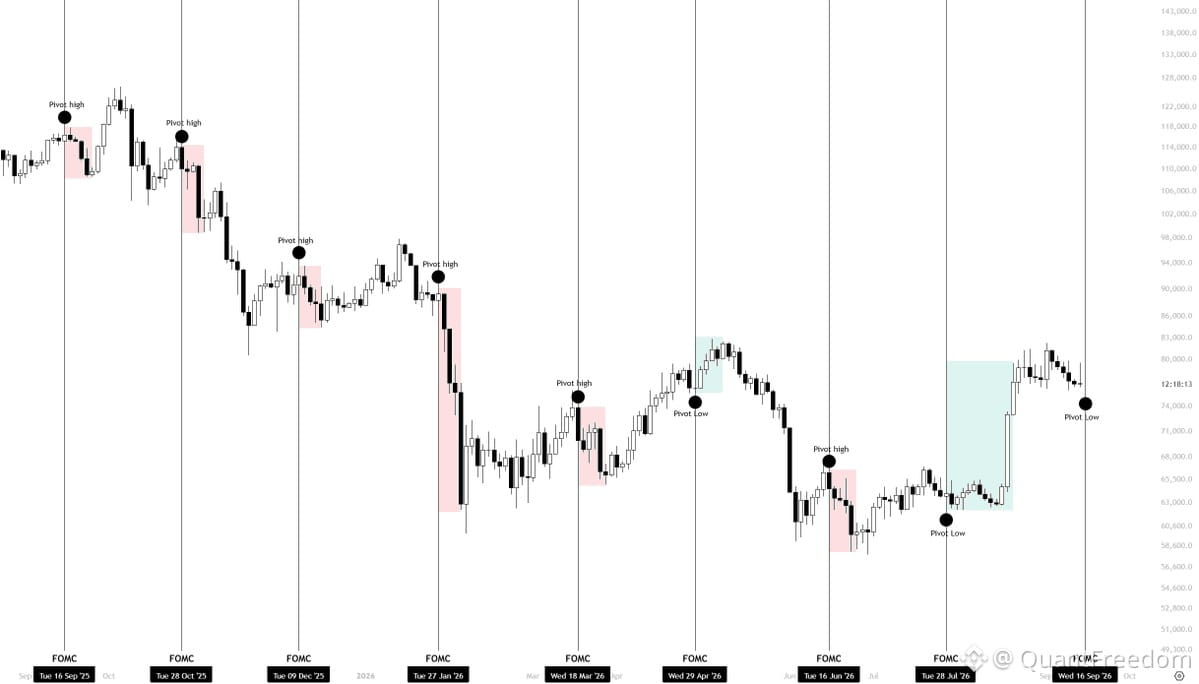
Dumping into FOMC — and you already know the drill.
I've been playing this exact pivot for two years. Inversing the narrative works. Expectations > reality. The move happens before the data drops.
Here's the pattern: when $BTC pumps into FOMC, it reverses down hard. When it dumps into FOMC and builds a bearish narrative, it reverses back up.
We're dumping into it right now. Be ready for a recovery after the event. This setup has proven itself over and over — fade the noise, trade the structure.
Dumping into FOMC — and you already know the drill.
I've been playing this exact pivot for two years. Inversing the narrative works. Expectations > reality. The move happens before the data drops.
Here's the pattern: when $BTC pumps into FOMC, it reverses down hard. When it dumps into FOMC and builds a bearish narrative, it reverses back up.
We're dumping into it right now. Be ready for a recovery after the event. This setup has proven itself over and over — fade the noise, trade the structure.
I've been playing this exact pivot for two years. Inversing the narrative works. Expectations > reality. The move happens before the data drops.
Here's the pattern: when $BTC pumps into FOMC, it reverses down hard. When it dumps into FOMC and builds a bearish narrative, it reverses back up.
We're dumping into it right now. Be ready for a recovery after the event. This setup has proven itself over and over — fade the noise, trade the structure.
1
388
·
--
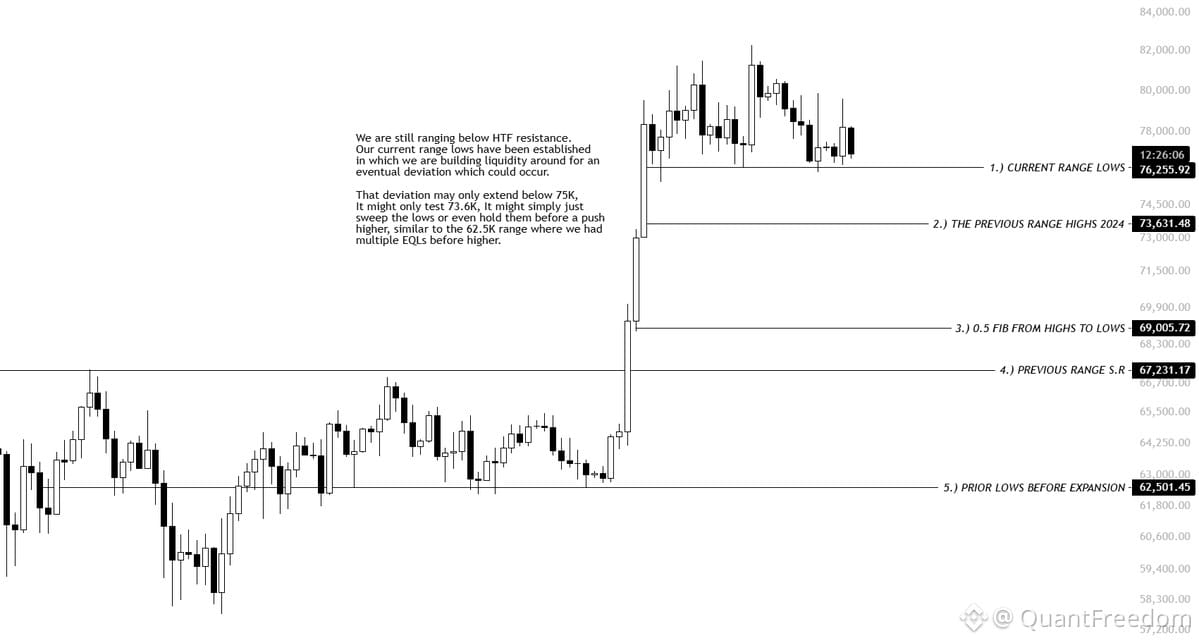
At 76K they'll call for 74K.
At 74K they'll call for 70K.
At 70K they'll call for 66-68K.
At 66-68K they'll call for sub-57K.
The lower $BTC goes, the lower the crowd's floor drops. That's how sentiment works — fear feeds on itself.
Nobody knows where the actual bounce comes. Not me, not them, not the chart.
That's why you work level to level. You size in layers. You don't predict the bottom — you respond to what the chart gives you.
Each level is a decision point. Does it hold? Does it fail? What's the next zone if it breaks?
This is the systematic approach. No guessing. No hero calls. Just structure, patience, and capital preservation.
You build the position as the setup confirms, not before. That's how you survive the chop and catch the turn when it comes.
The plan isn't to nail the low. The plan is to be ready when price shows its hand.
At 76K they'll call for 74K.
At 74K they'll call for 70K.
At 70K they'll call for 66-68K.
At 66-68K they'll call for sub-57K.
The lower $BTC goes, the lower the crowd's floor drops. That's how sentiment works — fear feeds on itself.
Nobody knows where the actual bounce comes. Not me, not them, not the chart.
That's why you work level to level. You size in layers. You don't predict the bottom — you respond to what the chart gives you.
Each level is a decision point. Does it hold? Does it fail? What's the next zone if it breaks?
This is the systematic approach. No guessing. No hero calls. Just structure, patience, and capital preservation.
You build the position as the setup confirms, not before. That's how you survive the chop and catch the turn when it comes.
The plan isn't to nail the low. The plan is to be ready when price shows its hand.
At 74K they'll call for 70K.
At 70K they'll call for 66-68K.
At 66-68K they'll call for sub-57K.
The lower $BTC goes, the lower the crowd's floor drops. That's how sentiment works — fear feeds on itself.
Nobody knows where the actual bounce comes. Not me, not them, not the chart.
That's why you work level to level. You size in layers. You don't predict the bottom — you respond to what the chart gives you.
Each level is a decision point. Does it hold? Does it fail? What's the next zone if it breaks?
This is the systematic approach. No guessing. No hero calls. Just structure, patience, and capital preservation.
You build the position as the setup confirms, not before. That's how you survive the chop and catch the turn when it comes.
The plan isn't to nail the low. The plan is to be ready when price shows its hand.
870
·
--
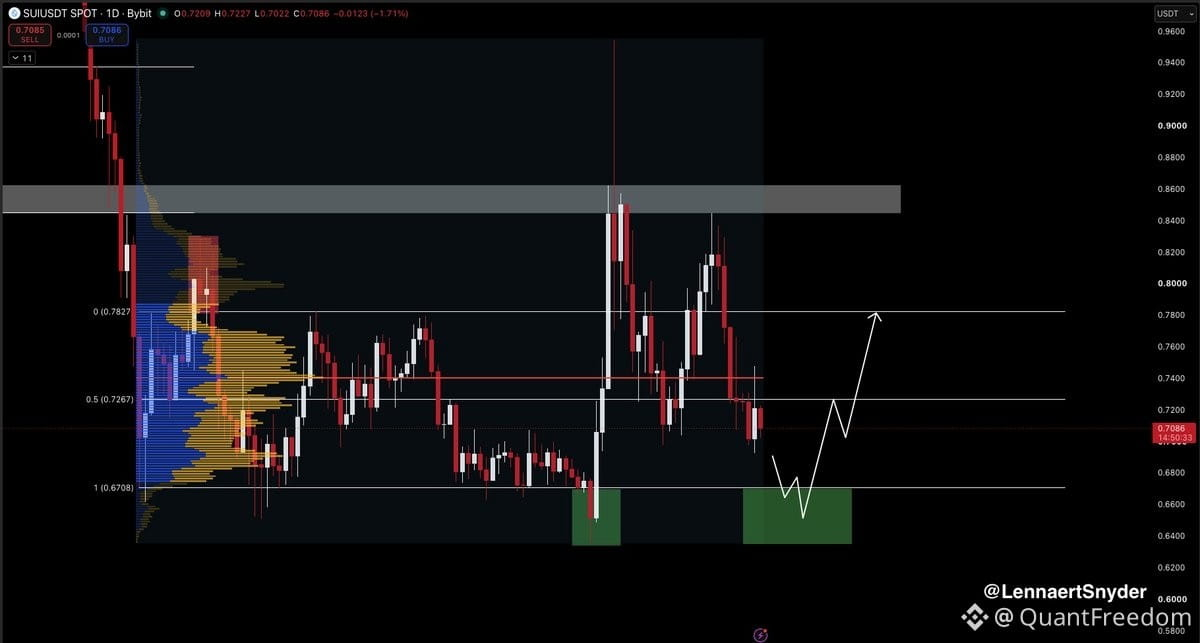
$SUI approaching critical range structure as $BTC tests support.
Price lost the 0.726 mid-range after Bitcoin's rejection, retested the point of control, and now back below that level. Clean breakdown of local structure.
If Bitcoin delivers the ideal flush scenario — a quick wick under 75.5K followed by continuation — $SUI likely retests the 0.67 range-low. That level is stacked: range-low plus value area low. Last test there produced a textbook bullish deviation.
So if $BTC dumps then resumes the uptrend, we could see another deviation setup at $SUI lows. That's the trade: wait for the flush, watch for the deviation, enter at the range-low where risk/reward and probabilities align.
0.67 is the highest-conviction zone for positioning. Alerts set, watching closely. No edge above that level right now — the plan is clear, the wait is patient.
$SUI approaching critical range structure as $BTC tests support.
Price lost the 0.726 mid-range after Bitcoin's rejection, retested the point of control, and now back below that level. Clean breakdown of local structure.
If Bitcoin delivers the ideal flush scenario — a quick wick under 75.5K followed by continuation — $SUI likely retests the 0.67 range-low. That level is stacked: range-low plus value area low. Last test there produced a textbook bullish deviation.
So if $BTC dumps then resumes the uptrend, we could see another deviation setup at $SUI lows. That's the trade: wait for the flush, watch for the deviation, enter at the range-low where risk/reward and probabilities align.
0.67 is the highest-conviction zone for positioning. Alerts set, watching closely. No edge above that level right now — the plan is clear, the wait is patient.
Price lost the 0.726 mid-range after Bitcoin's rejection, retested the point of control, and now back below that level. Clean breakdown of local structure.
If Bitcoin delivers the ideal flush scenario — a quick wick under 75.5K followed by continuation — $SUI likely retests the 0.67 range-low. That level is stacked: range-low plus value area low. Last test there produced a textbook bullish deviation.
So if $BTC dumps then resumes the uptrend, we could see another deviation setup at $SUI lows. That's the trade: wait for the flush, watch for the deviation, enter at the range-low where risk/reward and probabilities align.
0.67 is the highest-conviction zone for positioning. Alerts set, watching closely. No edge above that level right now — the plan is clear, the wait is patient.
714
·
--
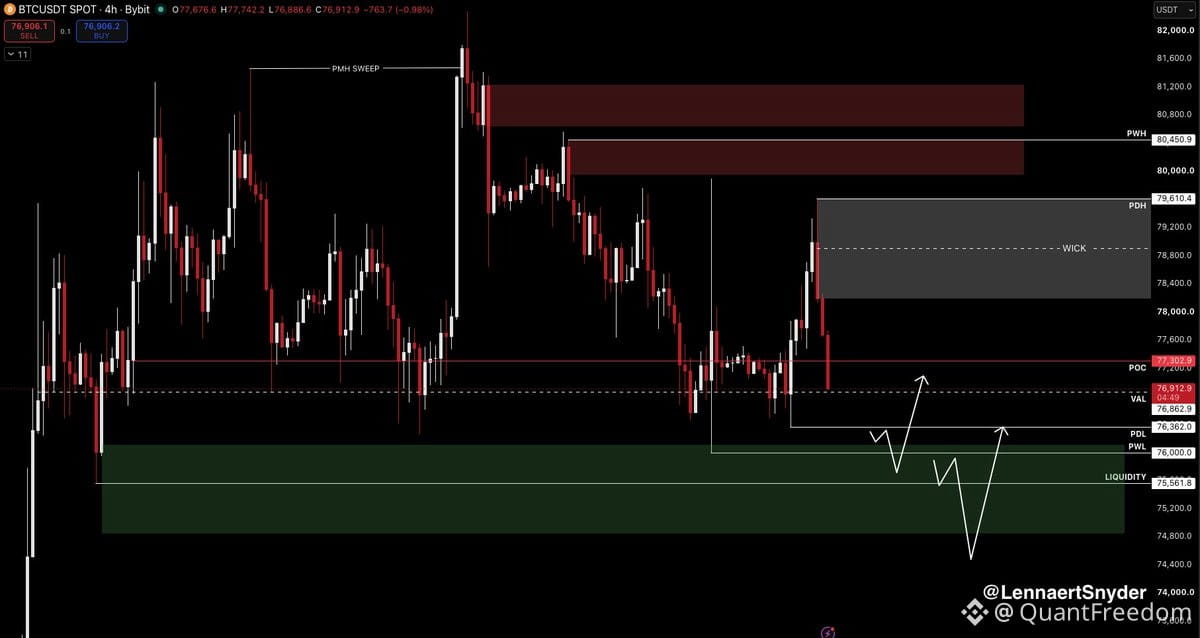
$BTC rejected at the wick — yesterday's exhaustion short printed exactly as called. If you took that short at the 79K rejection, congrats. Full TP hit at 77.3K low, held overnight. Would've kept a runner if awake, but that's the game.
Now we've left a big daily wick barely filled — likely needs filling eventually. $BTC pumping down, liquidity stacked beneath those lows.
Scalp-longs toward that wick fill are on the table since we're trading the 76.9K VAL. But I'm cautious today with the Clarity Act vote looming. For longs, best case is a sweep of 76K PWL or even 75.5K low.
Ideal scenario: Clarity Act vote triggers a flash wick below 75.5K, then displacement upside for HTF longs. Already banked solid profits this week — no need to chase today. Wait for the setup, size for the long game.
$BTC rejected at the wick — yesterday's exhaustion short printed exactly as called. If you took that short at the 79K rejection, congrats. Full TP hit at 77.3K low, held overnight. Would've kept a runner if awake, but that's the game.
Now we've left a big daily wick barely filled — likely needs filling eventually. $BTC pumping down, liquidity stacked beneath those lows.
Scalp-longs toward that wick fill are on the table since we're trading the 76.9K VAL. But I'm cautious today with the Clarity Act vote looming. For longs, best case is a sweep of 76K PWL or even 75.5K low.
Ideal scenario: Clarity Act vote triggers a flash wick below 75.5K, then displacement upside for HTF longs. Already banked solid profits this week — no need to chase today. Wait for the setup, size for the long game.
Now we've left a big daily wick barely filled — likely needs filling eventually. $BTC pumping down, liquidity stacked beneath those lows.
Scalp-longs toward that wick fill are on the table since we're trading the 76.9K VAL. But I'm cautious today with the Clarity Act vote looming. For longs, best case is a sweep of 76K PWL or even 75.5K low.
Ideal scenario: Clarity Act vote triggers a flash wick below 75.5K, then displacement upside for HTF longs. Already banked solid profits this week — no need to chase today. Wait for the setup, size for the long game.
750
·
--
Most traders misread how news actually moves price. They think outcome = direction, but that's backwards.
Example: Clarity Act unlikely to pass → crowd expects $BTC dump. But if everyone's positioned short, where's the selling pressure? Algos front-run that setup and rip higher.
Flip it: Clarity Act likely passes → crowd expects moon. Classic scam pump into sell-the-news. You get the move before the event, not after.
News doesn't create the move — it creates the expectation. And expectation is what gets trapped. Algos hunt crowded positioning, not headlines.
Good news hits and price dumps? That's not irrational. That's late longs getting exit liquidity. Bad news and price rips? That's trapped shorts covering into strength.
The edge isn't predicting the news. It's reading how the crowd is positioned around it, then fading the consensus.
Expect the unexpected means: if everyone sees it coming, it's already priced. The real move is the one that catches the most people wrong-footed.
Trade the chart, not the narrative. Price reveals positioning. Headlines just give you the setup to fade.
Most traders misread how news actually moves price. They think outcome = direction, but that's backwards.
Example: Clarity Act unlikely to pass → crowd expects $BTC dump. But if everyone's positioned short, where's the selling pressure? Algos front-run that setup and rip higher.
Flip it: Clarity Act likely passes → crowd expects moon. Classic scam pump into sell-the-news. You get the move before the event, not after.
News doesn't create the move — it creates the expectation. And expectation is what gets trapped. Algos hunt crowded positioning, not headlines.
Good news hits and price dumps? That's not irrational. That's late longs getting exit liquidity. Bad news and price rips? That's trapped shorts covering into strength.
The edge isn't predicting the news. It's reading how the crowd is positioned around it, then fading the consensus.
Expect the unexpected means: if everyone sees it coming, it's already priced. The real move is the one that catches the most people wrong-footed.
Trade the chart, not the narrative. Price reveals positioning. Headlines just give you the setup to fade.
Example: Clarity Act unlikely to pass → crowd expects $BTC dump. But if everyone's positioned short, where's the selling pressure? Algos front-run that setup and rip higher.
Flip it: Clarity Act likely passes → crowd expects moon. Classic scam pump into sell-the-news. You get the move before the event, not after.
News doesn't create the move — it creates the expectation. And expectation is what gets trapped. Algos hunt crowded positioning, not headlines.
Good news hits and price dumps? That's not irrational. That's late longs getting exit liquidity. Bad news and price rips? That's trapped shorts covering into strength.
The edge isn't predicting the news. It's reading how the crowd is positioned around it, then fading the consensus.
Expect the unexpected means: if everyone sees it coming, it's already priced. The real move is the one that catches the most people wrong-footed.
Trade the chart, not the narrative. Price reveals positioning. Headlines just give you the setup to fade.
113
·
--
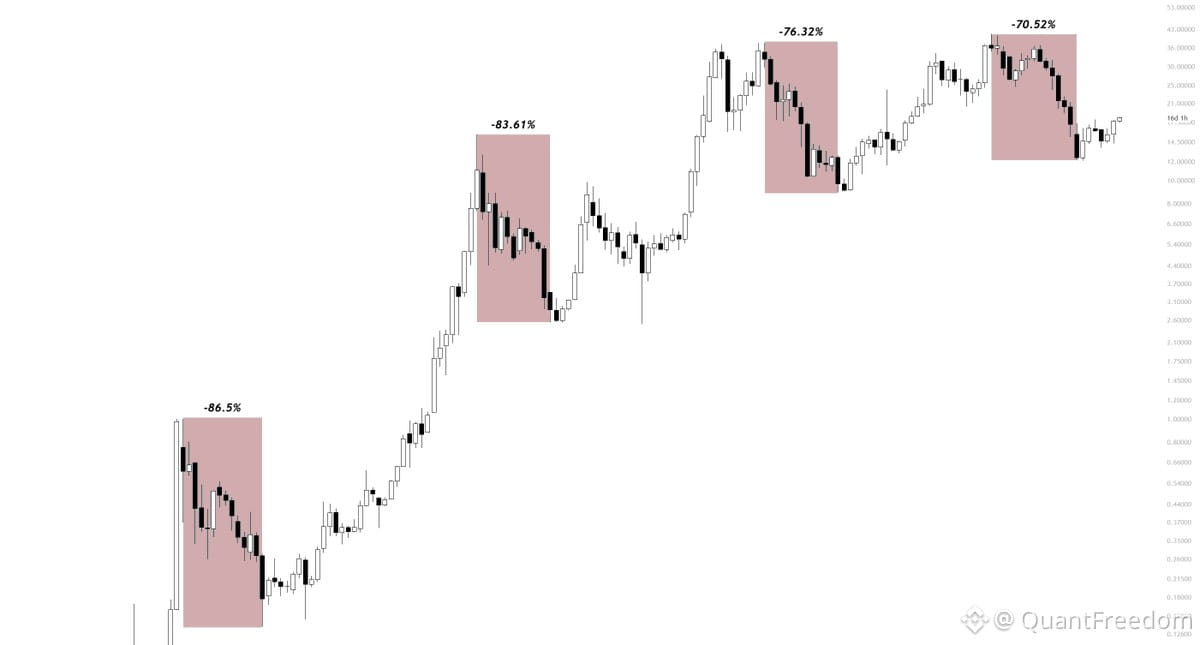
Boomers gonna sit there watching gold flatline while $BTC runs circles around it.
The rotation's here.
$BTC macro bottomed against gold. Money flows back in. Capital follows. Banks follow. Boomers drag their feet last.
Gold just printed its multi-year blowoff top. Now comes the part where all the "safe haven" crowd realizes they bought the exact top.
This is the chart. This is the setup. $BTC vs $XAU — the long-term wealth play is clear. No edge in chasing yesterday's winner. The systematic read: capital rotation favors asymmetry, and asymmetry lives in $BTC, not a rock that peaked.
Size accordingly. Trade the chart. Fund the plan.
Boomers gonna sit there watching gold flatline while $BTC runs circles around it.
The rotation's here.
$BTC macro bottomed against gold. Money flows back in. Capital follows. Banks follow. Boomers drag their feet last.
Gold just printed its multi-year blowoff top. Now comes the part where all the "safe haven" crowd realizes they bought the exact top.
This is the chart. This is the setup. $BTC vs $XAU — the long-term wealth play is clear. No edge in chasing yesterday's winner. The systematic read: capital rotation favors asymmetry, and asymmetry lives in $BTC, not a rock that peaked.
Size accordingly. Trade the chart. Fund the plan.
The rotation's here.
$BTC macro bottomed against gold. Money flows back in. Capital follows. Banks follow. Boomers drag their feet last.
Gold just printed its multi-year blowoff top. Now comes the part where all the "safe haven" crowd realizes they bought the exact top.
This is the chart. This is the setup. $BTC vs $XAU — the long-term wealth play is clear. No edge in chasing yesterday's winner. The systematic read: capital rotation favors asymmetry, and asymmetry lives in $BTC, not a rock that peaked.
Size accordingly. Trade the chart. Fund the plan.
1
424
·
--
$BTC swept range highs right after the BlackRock ETF approval dropped, then reversed hard and took out the lows. Classic liquidity grab into a reversal.
Clarity Act hits January 15th. It's already baked into price. Everyone's positioned for it.
History rhymes. Big news = sweep the highs, trap longs, flip lower. Don't chase the headlines. Trade the pattern.
If $BTC pumps into the 15th, watch for a similar setup: sweep highs, reverse, take lows. That's the edge. Size accordingly and don't get caught on the wrong side of the liquidity hunt.
$BTC swept range highs right after the BlackRock ETF approval dropped, then reversed hard and took out the lows. Classic liquidity grab into a reversal.
Clarity Act hits January 15th. It's already baked into price. Everyone's positioned for it.
History rhymes. Big news = sweep the highs, trap longs, flip lower. Don't chase the headlines. Trade the pattern.
If $BTC pumps into the 15th, watch for a similar setup: sweep highs, reverse, take lows. That's the edge. Size accordingly and don't get caught on the wrong side of the liquidity hunt.
Clarity Act hits January 15th. It's already baked into price. Everyone's positioned for it.
History rhymes. Big news = sweep the highs, trap longs, flip lower. Don't chase the headlines. Trade the pattern.
If $BTC pumps into the 15th, watch for a similar setup: sweep highs, reverse, take lows. That's the edge. Size accordingly and don't get caught on the wrong side of the liquidity hunt.
2
422
·
--
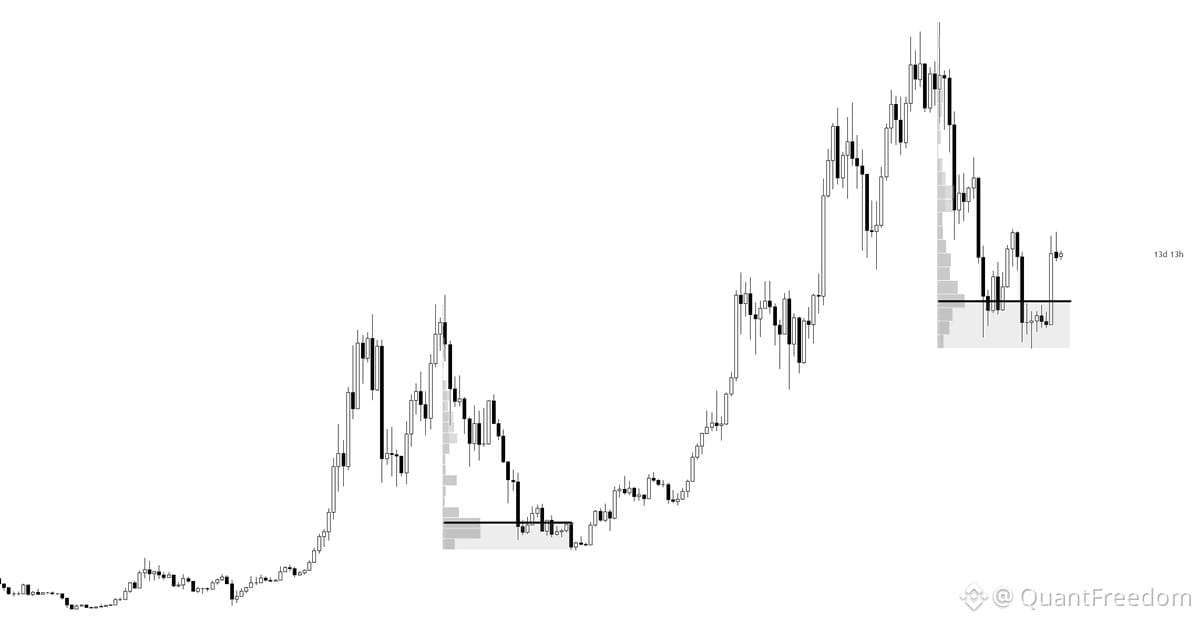
Volume tells the story during macro accumulation — it stacks up at the lows, showing real absorption. When $BTC reclaims the Point of Control and locks in the Value Area Low as support, that's the breakout signal. From there, price doesn't revisit the POC. Clean volume structure doesn't lie. This is how bases turn into trends. Watch the POC reclaim — that's your confirmation the range is done.
Volume tells the story during macro accumulation — it stacks up at the lows, showing real absorption. When $BTC reclaims the Point of Control and locks in the Value Area Low as support, that's the breakout signal. From there, price doesn't revisit the POC. Clean volume structure doesn't lie. This is how bases turn into trends. Watch the POC reclaim — that's your confirmation the range is done.
1
274
Log in to explore more content
Join global crypto users on Binance Square
⚡️ Get latest and useful information about crypto.
💬 Trusted by the world’s largest crypto exchange.
👍 Discover real insights from verified creators.
Email / Phone number
Trending Topics
SaylorHintsStrategyBitcoinBuy
2.2M views
12,268 Discussing
#saylorhintsstrategybitcoinbuy
🚨 SAYLOR JUST DROPPED THE SUNDAY $BTC HINT 👀
Michael Saylor reposted his usual Bitcoin chart again.
If history repeats, those orange dots could be signaling another Strategy BTC purchase is coming. 🟠
And when Saylor buys, the market watches.
🐋 Massive BTC holdings
💰 Continued accumulation strategy
📈 Potential short-term sentiment boost
But here’s the key:
A repost is NOT confirmation of a purchase.
The real signal comes when Strategy officially reports the transaction.
🔥 If another major BTC buy is announced, will the market react this time?
Or is Saylor’s accumulation becoming so routine that traders barely react anymore?
👀 Watch the announcement.
$MSTRB
#BTC #strategy #crypto #BitcoinNews
sdatta
·5 Likes
·5.5k views
BOJRaisesRatesTo31YearHigh
236,592 views
3,189 Discussing
BuffettStepsDownAsBerkshireChairman
114,700 views
1,703 Discussing