
Odds I Trade
202 Posts

Odds I Trade
Report
Block User
📈 Trading | Investing | Financial Literacy ODDS — TRADE THE PROBABILITY

BNB Holder
Frequent Trader
4.4 Years
0 Following
54 Followers
146 Liked
Posts
·
--
Bearish
🐋 RETAIL BUYS THE DIP, WHALES SELL. WHAT’S HAPPENING IN THE MARKET?
🤔 An interesting situation is unfolding with both BTC and ETH: while small investors are buying the dip, big money continues to reduce its positions.
📉 Here’s what we’re seeing:
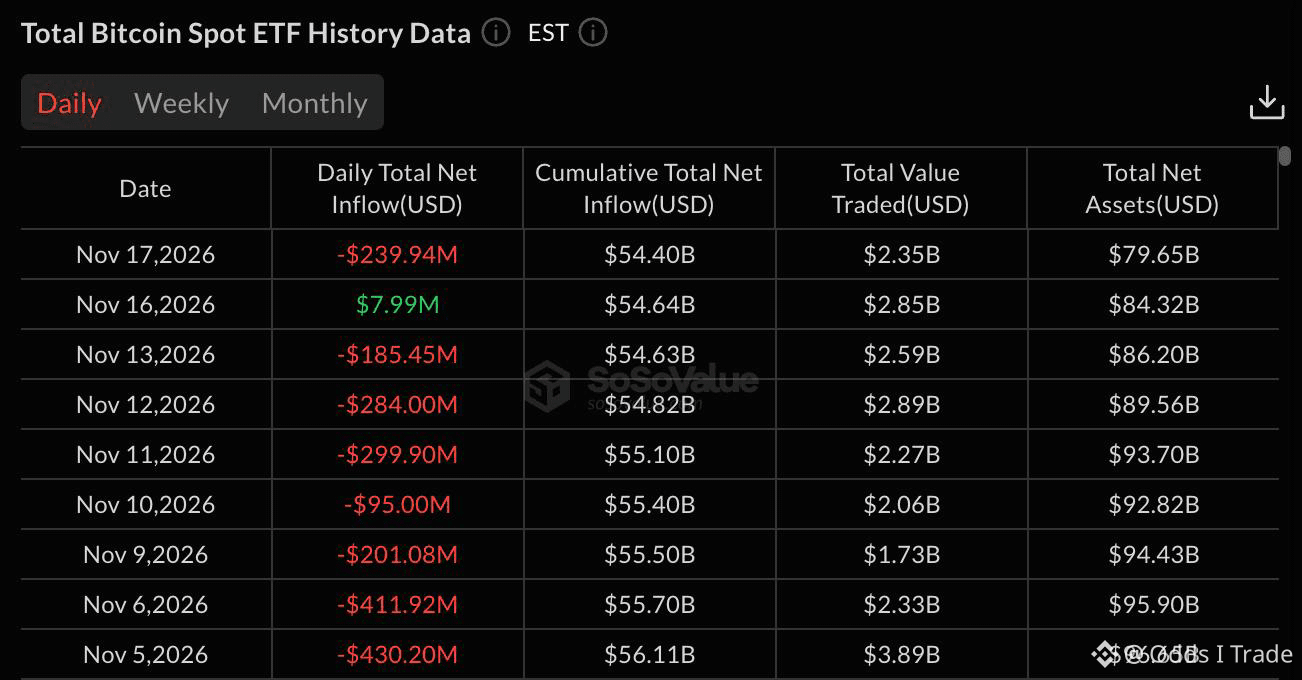
💸 Bitcoin: spot BTC ETFs have recorded outflows every day since October 30 — for several weeks in a row now.
⚠️ An important point: funds generally follow the trend.
📉 When they see a downward move, they reduce their positions to lower risk.
📈 When they see an upward move, they add to them.
That’s why they may buy Bitcoin near all-time highs and sell when the price is already approaching the bottom.
For them, the market’s direction matters more than trying to guess the perfect entry point.
❗️So right now, it’s important to pay attention not only to the outflows themselves, but also to how consistent they are. Big money isn’t showing any signs of being ready to return to BTC just yet.
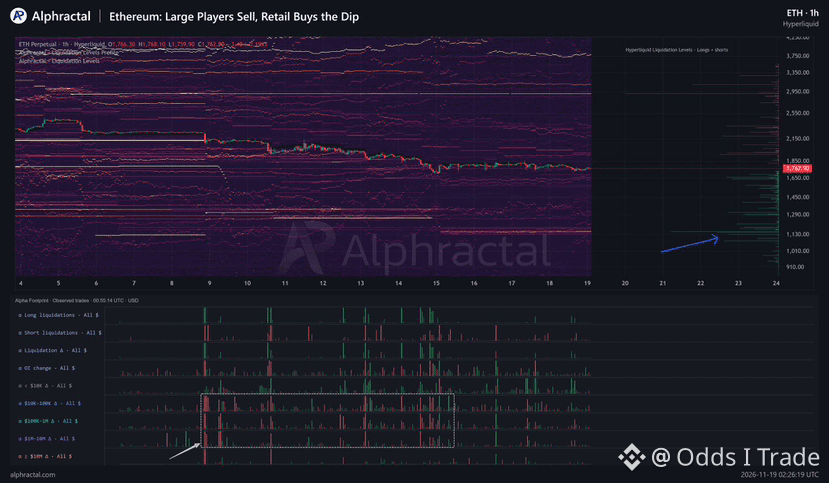
🪙 Ethereum: large exchanges are seeing sell orders for ETH ranging from $100,000 to $10 million, while retail investors are actively buying the dip.
On Hyperliquid, a significant liquidity pool can be seen concentrated near $1,200.
❗️ Until this zone is tested, the risk of further downside remains.
— ODDS 🟠⚫️
1
452
·
--
Bullish
🎂WHITEBIT — 8 YEARS. FROM A CRYPTO EXCHANGE TO A GROUP OF 11 BUSINESSES AND 40 MILLION USERS
WhiteBIT is celebrating its eighth anniversary, while W Group marks its first year of operation.
During this time, the group has grown significantly. Its user base has increased from 35 million to around 40 million.
📊 A few figures and facts:
🔸 $2.8 trillion — WhiteBIT’s trading volume in 2026, according to the company.
🔸 The exchange serves more than 5,500 institutional clients.
🔸 W Group now includes Georgian digital bank hashbank and Dutch sports car manufacturer Spyker.
🔸 In October, the group also announced a $400 million investment commitment to SignSplit, a startup developing infrastructure for artificial intelligence data.
🇺🇦 Support for Ukraine is also worth mentioning. According to the company, since the start of the full-scale war, WhiteBIT has contributed more than UAH 500 million of its own funds to support Ukrainian military personnel and civilians.
👀 It’s interesting to see how a Ukrainian crypto business is expanding far beyond a conventional exchange and building an entire ecosystem across different sectors.
Eight years is a significant milestone. And it seems WhiteBIT has no plans to stop here.
Happy anniversary! 🥂
— ODDS 🟠⚫️

2
258
·
--
Bearish
Verified
☄️ANTHROPIC DEBUTED ON NASDAQ AT +34%.
BUT MY ALLOCATION WAS ONLY 8.8% OF MY ORDER
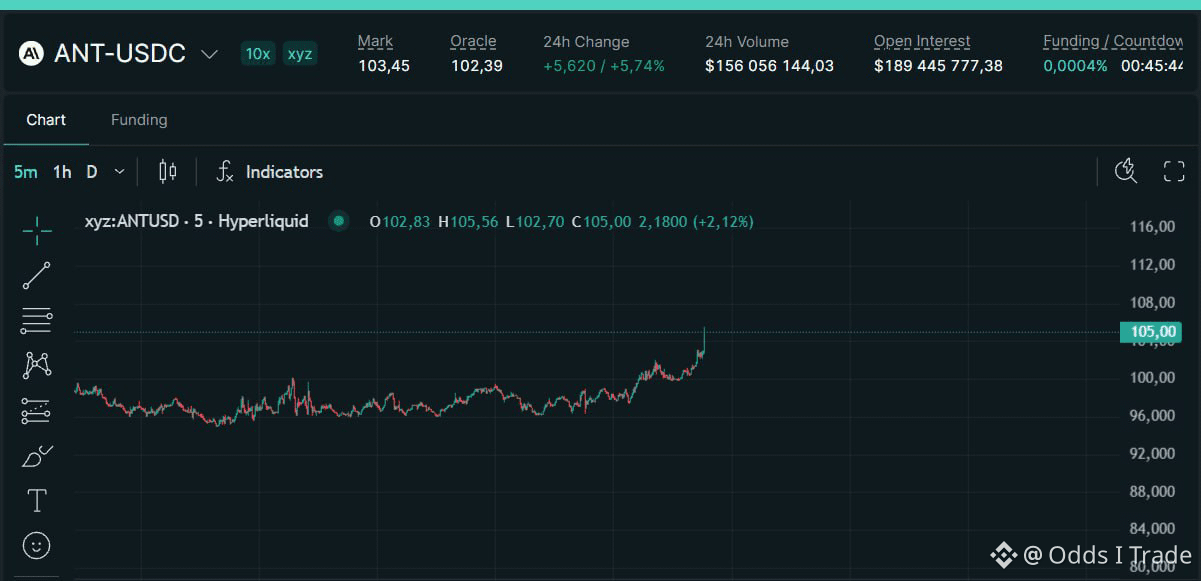
Shares of Claude’s creator opened on Nasdaq at $111.50, against an IPO price of $83. That’s an immediate +34% over the offering price.
I also decided to take part in this IPO through Telegram Wallet. I placed an order for $200, but received an allocation of just 8.8%—that is, $17.60.🤡
Honestly, I expected more, but it is what it is 🙂
✔️My takeaway: demand for offerings like this is huge, so you shouldn’t expect to be allocated the full amount you requested. Even a small allocation is an opportunity to get hands-on experience participating in an IPO and observe how the stock behaves after it starts trading.
For me, this is a small experiment for now, with an interesting opportunity—not a bet with all my money.
Let’s see what happens next. 👀
— ODDS 🟠⚫️
2
2.2k
·
--
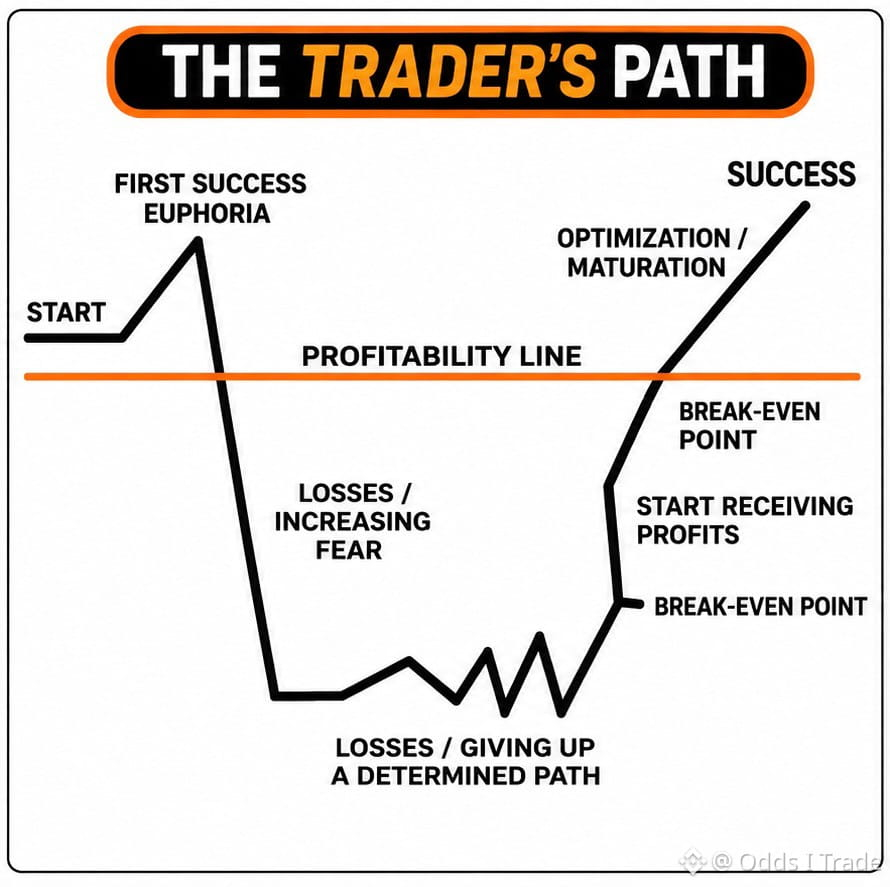
And where are you on your trading journey? Let us know in the comments 👇
$BTC
And where are you on your trading journey? Let us know in the comments 👇
$BTC
$BTC
1
130
·
--
Bearish
Verified
⚖️ –$190B IN MARKET CAPITALIZATION AND A SHAREHOLDER LAWSUIT: THE NVIDIA SCANDAL HAS REACHED COURT
🧑⚖️A lawsuit has been filed against Nvidia and its CEO, Jensen Huang, seeking class-action status.
Shareholders allege that the company concealed Huang’s ties to Alice Huang, who is suspected of collaborating with Chinese intelligence, as well as the related business risks.
At the close of trading on November 9, Nvidia shares fell 4.3%, and the company’s market capitalization dropped by approximately $190 billion.
🤔An interesting detail: the lawsuit was filed just five minutes after the market closed.
🚗Meanwhile, Nvidia is conducting an independent investigation. The company currently sees no reason to believe its trade secrets have been compromised.
🏎 It seems the story surrounding Nvidia continues to gain momentum. But it’s important to remember: the shareholders’ accusations are, for now, the plaintiffs’ claims—not facts established by a court.
— ODDS 🟠⚫️$NVDAB

3
2.9k
·
--
Bearish
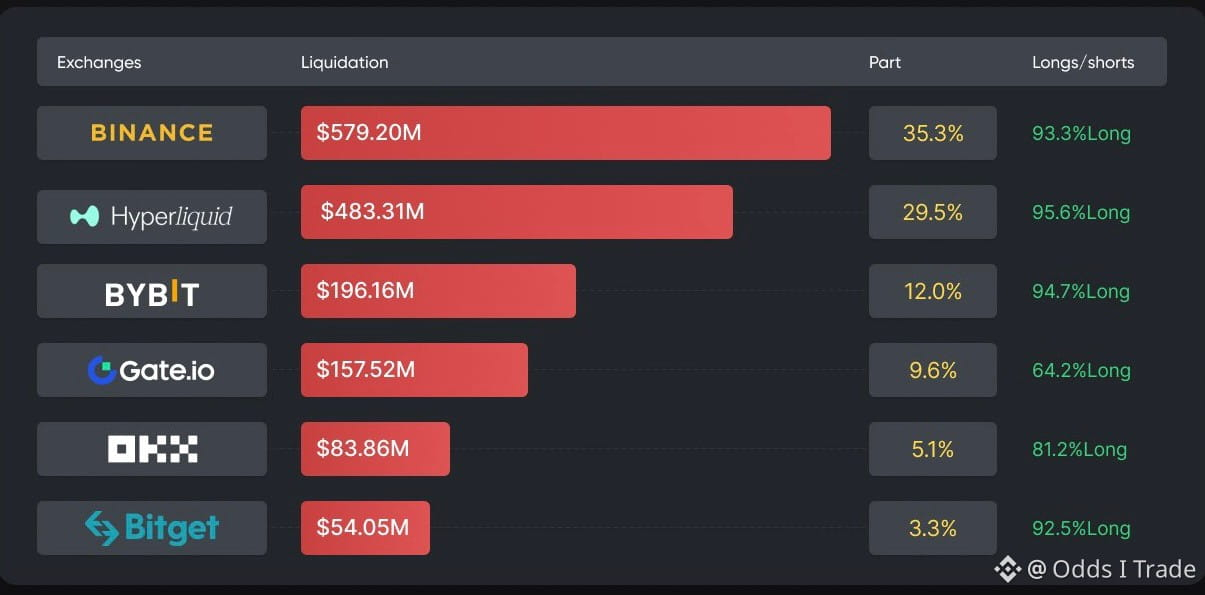
🩸 OVER $1.64B IN LIQUIDATIONS IN 24 HOURS
Amid the crypto market downturn, the 24-hour liquidation volume exceeded $1.64 billion, according to CoinGlass.
The most positions were forcibly closed on these platforms:
🔸Binance — $579.2 million
🔸Hyperliquid — $483.31 million
🔸Bybit — $196.16 million
Long positions took the biggest hit — traders who were betting on prices rising.
📊 More details in the infographic.
— ODDS 🟠⚫️
1
3.2k
·
--
Bearish
🧑💻 OpenAI’s pocket hacker
As Elon Musk might joke: Every day is a zero-day.
OpenAI has unveiled GPT-6 Cyber — a specialized cybersecurity model that doesn’t just find vulnerabilities, but can also create working exploits and suggest fixes.
And the results are truly impressive:
🔸 Firefox: The model found 81 previously unknown, high-severity vulnerabilities. Mozilla is already rolling out fixes.
🔸 Linux: GPT-6 Cyber reproduced 1,724 kernel vulnerabilities and developed working exploits for 948 of them. According to OpenAI, 588 of the issues were previously unknown. Another 304 critical findings were shared with developers along with proposed patches.
🔸 95% success rate: In tests involving the exploitation of vulnerabilities in remote systems, the model completed 95% of the tasks. The standard GPT-6 Astra refused all tasks in this test.
But there’s a catch: the model received the highest risk rating — Critical — in the cybersecurity category. So access is currently limited to vetted professionals and organizations through the Daybreak Red program.
The irony is that one and the same tool could help plug hundreds of security holes — or give attackers new ways to strike.
— ODDS 🟠
#Aİ #CyberSecurity #OpenAI
1
321
·
--
🇺🇸 The Democrats’ victory gave the American market a boost.
Stock indexes responded with gains:
📈 Dow Jones: +2.68%
📈 S&P 500: +1.67%
📈 Nasdaq: +2.31%
Investors are counting on Trump’s decisions being restrained and a possible de-escalation of the conflict with Iran.
BTC also recovered after falling below $76,000 and returned above $80,500. More than $550 million in shorts were liquidated in 24 hours.
The next major liquidity cluster is above $82,000. But the key question is whether BTC can hold above $80,000 after the short squeeze.
My focus right now is on the $80–82K zone. The next move will show whether buyers have enough strength.
— ODDS 🟠
#ODDS #Bitcoin #Crypto #Market

1
99
·
--
Bullish
Not bad progress—the main thing is that it's going according to plan👌🟠⚫️
Not bad progress—the main thing is that it's going according to plan👌🟠⚫️
1
123
·
--
Bearish
🤯 Binance wasn’t hacked overnight. It all started with a fake job interview.
Hackers gradually gained access to employees’ computers by posing as employers and AI tool developers.
One engineer downloaded malware along with a test assignment. The attackers used it to penetrate deeper into Binance’s internal infrastructure—all the way to the transaction-signing system.
An important lesson: even the biggest crypto platforms are vulnerable not only because of their code, but also because of human factors.
Sometimes, one careless download is all it takes.
Do you check what exactly you’re installing on your devices?
— ODDS
#Odds #Binance #crypto #Cybersecurity
1
626
·
--
Bearish
☕ The crypto market is starting the day without optimism.
BTC can’t recover, ETFs are seeing outflows, and the stock market is also under pressure.
What’s interesting:
🔸 Mercado Bitcoin was hacked for $38 million.
🔸 The CFTC published new guidelines for the crypto market.
🔸 Strategy is buying BTC again — another 811 coins.
🔸 BitMine increased its ETH holdings to 4.9% of its supply.
While the market is nervous, big players keep accumulating. But this isn’t a signal of a reversal just yet.
Are you waiting for a recovery or getting ready for a further decline?
— ODDS
2
265
·
--
💰 Where does Binance get billions to cover losses like these?
After a massive $6.3 billion hack, Binance said it had already compensated for about 95% of the stolen assets using corporate reserves, the SAFU fund, and the futures insurance fund.
What’s interesting is that the biggest crypto companies earn money in very different ways:
📊 Binance — $5–10.7 billion a year
Tether — $5.96 billion
Coinbase — $5.65 billion
Circle — $2.38 billion
Exchanges earn money from fees and other services, while stablecoin issuers earn primarily from returns on their reserves.
But there’s a catch: a company’s high revenue doesn’t necessarily mean high net profit. And high earnings for a crypto project don’t mean its token will automatically rise in price.
For me, the main lesson here is different: even large platforms carry risks, and trusting an exchange shouldn’t mean keeping all your assets on it.
After stories like these, do you trust Binance more, or do you prefer to hold your assets yourself? 👇
— ODDS
#ODDS #fomcвідстеження Binance #crypto #криптовалюта #Investments
1
122
·
--
Bullish
Sometimes one thought can make you look at money in a completely different way.
Poverty isn’t something anyone wants to romanticize.
When you’re constantly thinking about how to pay the bills, whether your money will last until payday, and what you’ll do if something unexpected happens, it’s hard to feel free. Financial problems take away not only your money, but also your peace of mind, energy, and ability to think about the future.
That’s why I don’t believe in pretty sayings like “money doesn’t matter.” When you don’t have enough to cover your basic needs, it matters. A lot.
But there’s another side to it.
You can spend your whole life chasing a bigger salary, a more expensive car, a better apartment—and still never feel like you have enough.
Maybe the real goal isn’t to become the richest person, but to build a life where money gives you peace of mind, freedom of choice, and confidence about the future.
It’s okay to want more. It’s also okay to appreciate what you already have.
The main thing is not to let the pursuit of a better life take life itself away from you.
What do you think: how can we find a balance between wanting to earn more and being content with what we have? 👇
$BTC $ETH

3
319
·
--
Article
Scrooge McDuck knew more about money than we thought.🦆 You know what’s interesting? As a kid, I looked at Scrooge McDuck and thought: if only I had that much gold!
A huge vault, mountains of coins, and the ability to buy almost anything you want. It seemed like that was true wealth.
But now I look at this story a little differently. 👀
Maybe the most interesting thing here isn’t even his gold, but the habits behind it.
Scrooge McDuck knew more about money than we thought.
🦆 You know what’s interesting? As a kid, I looked at Scrooge McDuck and thought: if only I had that much gold!
A huge vault, mountains of coins, and the ability to buy almost anything you want. It seemed like that was true wealth.
But now I look at this story a little differently. 👀
Maybe the most interesting thing here isn’t even his gold, but the habits behind it.
A huge vault, mountains of coins, and the ability to buy almost anything you want. It seemed like that was true wealth.
But now I look at this story a little differently. 👀
Maybe the most interesting thing here isn’t even his gold, but the habits behind it.
1
2
1k
·
--
Bullish
Thank you, market, for the opportunities. Everything is going according to plan 👌
Thank you, market, for the opportunities. Everything is going according to plan 👌
2
166
·
--
ZEC, DASH, and LIT lead the declines. But is this already a reversal? 👀
After a strong rally, the market often does what it does best — takes some of the profits back.
Today, these coins were hit by a correction:
🔻 LIT — -25%
🔻 ZEC — -20%
🔻 DASH — -17%
And all three coins have their own unique features.
🔎 ZEC and DASH are part of the privacy segment. Their core idea is to ensure transaction privacy. However, private mode isn’t enabled automatically — users choose the relevant transaction type themselves.
🔎 LIT is the token of the L2 exchange Lighter. It’s used within the ecosystem, and some of the platform’s fees go toward buying back LIT on the market.
But that’s not the most interesting thing right now.
For now, the decline looks more like a technical correction after a strong impulse than a fundamental trend change.
If demand returns during the pullback, these coins could certainly try to make another move up.
But if the correction turns into a breakdown in market structure, then the scenario will be completely different.
So right now, what’s more interesting than simply watching which coin fell the most is seeing where buyers show up again.
What interests you most after a correction like this?
$ZEC $DASH $LIT
2
448
·
--
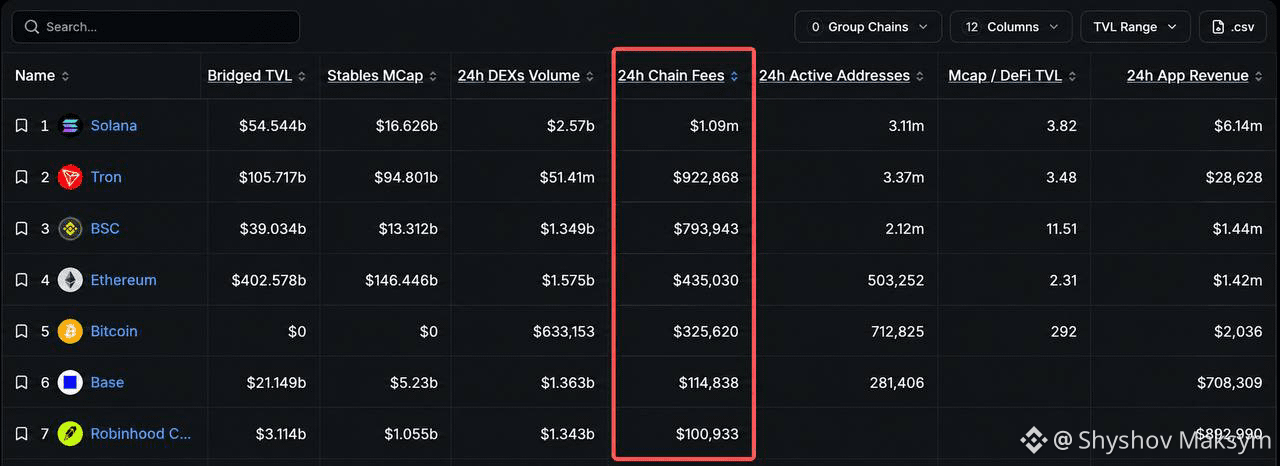
70% of blockchains didn’t earn even $1 in fees in a day 🧐
Interesting stats from DeFiLlama.
As of October 3, the service was tracking 558 blockchains. And the numbers are quite telling:
➖ 514 networks earned less than $1,000 in Chain Fees
➖ 443 — less than $10
➖ 399 — $0 altogether
More than 70% of blockchains earned no fees at all in a day.
And only 7 networks earned more than $100,000 in a day:
🥇 Solana — $1.09 million
🥈 Tron — $922.9K
BNB Chain — $793.9K
Ethereum — $435K
Bitcoin — $325.6K
Base — $114.8K
Robinhood Chain — $100.9K
But there’s an important detail here 👇
Chain Fees ≠ App Fees.
Chain Fees are the fees users pay directly to the underlying network for transactions.
Apps running on the network can earn significantly more.
For example, in a day, the Robinhood Chain network earned around $100K, while app fees exceeded $4 million.
So looking at just one figure isn’t enough.
But these stats do make you think:
How many of the existing blockchains actually have economic activity, and how many exist mostly on paper?
To me, this is a good example of why, when analyzing a crypto project, you should look beyond the chart.
Fundamental analysis helps you understand whether there’s a real economy behind a token.
2
1.1k
·
--
The Wealth Paradox: Why You Need to Focus on One Thing First, and Only Then DiversifyThere’s one paradox in the world of finance that many people don’t notice.
In financial literacy courses, they teach: “Don’t put all your eggs in one basket.”
And that’s good advice. But does it work at every stage of your financial journey?
Perhaps this is where most people make a mistake: they try to preserve capital that they haven’t created yet.
The Wealth Paradox: Why You Need to Focus on One Thing First, and Only Then Diversify
There’s one paradox in the world of finance that many people don’t notice.
In financial literacy courses, they teach: “Don’t put all your eggs in one basket.”
And that’s good advice. But does it work at every stage of your financial journey?
Perhaps this is where most people make a mistake: they try to preserve capital that they haven’t created yet.
In financial literacy courses, they teach: “Don’t put all your eggs in one basket.”
And that’s good advice. But does it work at every stage of your financial journey?
Perhaps this is where most people make a mistake: they try to preserve capital that they haven’t created yet.
2
206
Log in to explore more content
Join global crypto users on Binance Square
⚡️ Get latest and useful information about crypto.
💬 Trusted by the world’s largest crypto exchange.
👍 Discover real insights from verified creators.
Email / Phone number
Trending Topics
IsAnthropic’s$1.5TMarketCapJustified?
62,775 views
324 Discussing
Anthropic Set to Open at $105 in Record Nasdaq Debut
Binance News
·16 Likes
·18.8k views
BTCBelow$62KAmidHikeFearsAndShiftToAnthropic
20,381 views
122 Discussing
NvidiaBoardReportedlySplitOverHuang’sReturn
258,674 views
2,103 Discussing