
Louis的币圈马拉松
379 Posts
Louis的币圈马拉松
一个相信"慢就是快"的加密老韭菜
熊市攒币,牛市兑现,不追高不恐慌
每天行情日记,欢迎围观拍砖
6 Following
113 Followers
300 Liked
Posts
All
Quotes
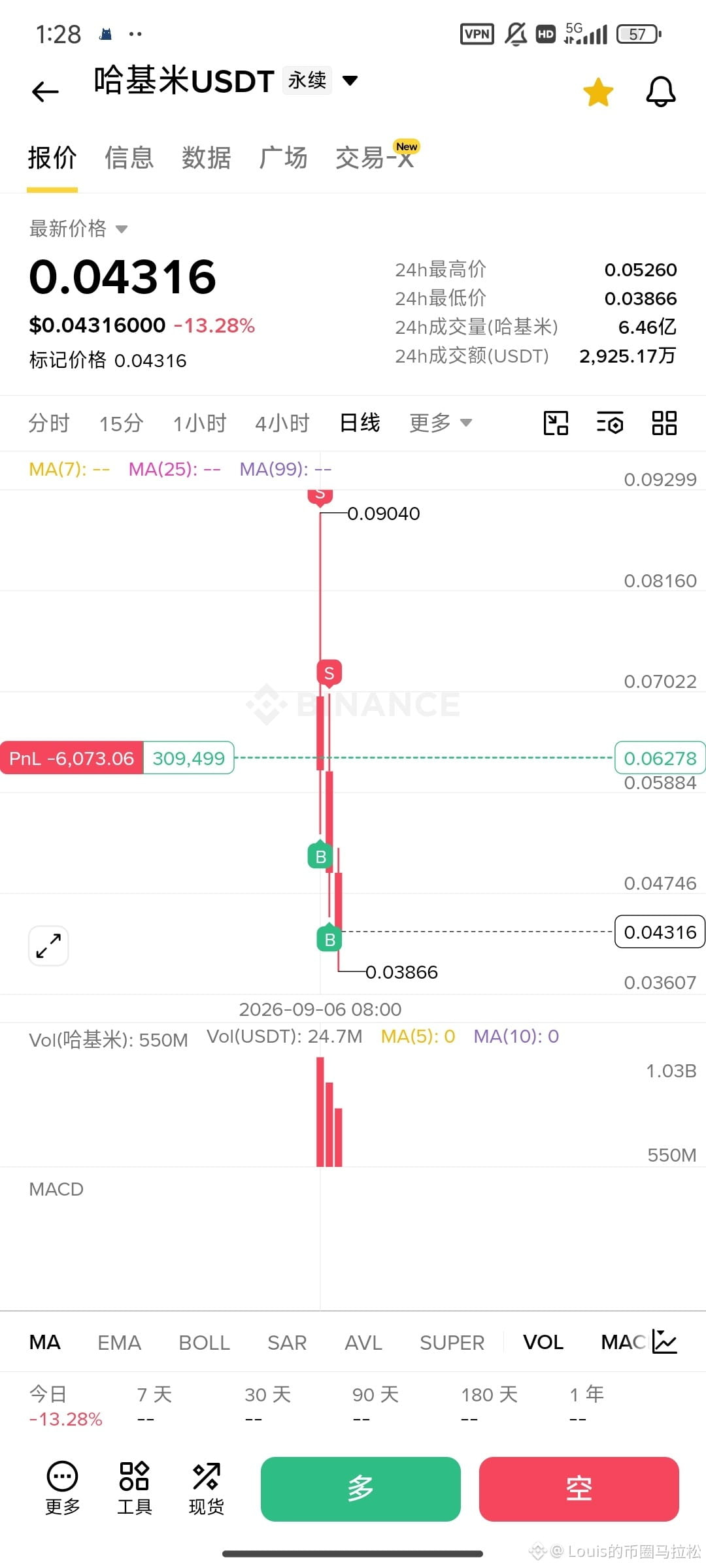
$哈基米 Got the fastest, biggest loss in history
I’ll never trust the community again. Where is all this stuff that’s supposed to be sold off? Thud thud—smash!
I’ll never trust the community again. Where is all this stuff that’s supposed to be sold off? Thud thud—smash!
The strong only get stronger
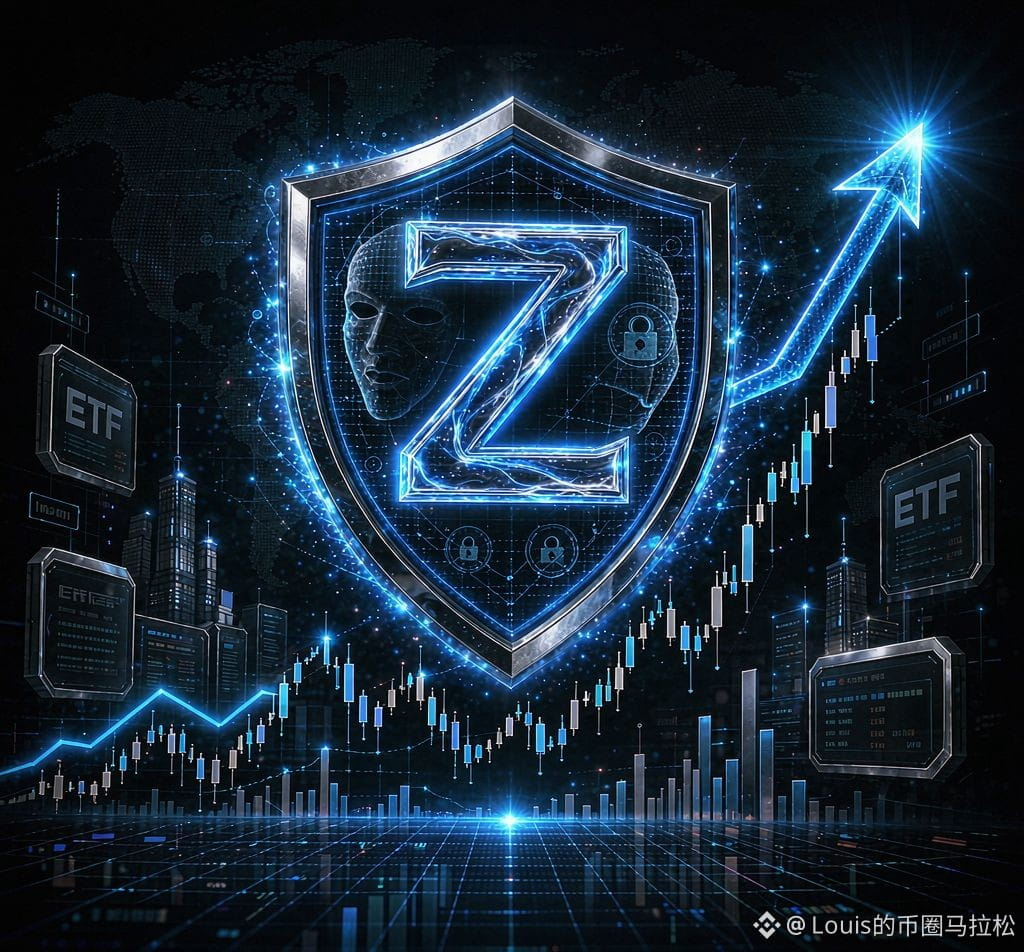
From $358 to $1003, a 169% rise in three months—who says privacy coins don’t have a spring?
ZEC surged again today by +21.11%, pushing past $1,003, with 24h trading volume of 288.5 million USDT—making it one of the most active contracts in the entire market today. Even more impressive: it’s up 88% over the past 30 days, and has nearly tripled from its June low.
Three major engines are driving this move: first, Grayscale’s Zcash spot ETF (ZCSH) launched on the NYSE on August 25, backed by $304 million in assets, making it the world’s first privacy-coin ETF; second, the Zakura Common cryptography upgrade went live on August 31, slashing private-transaction generation time from 3 seconds to under 200 milliseconds, a 14x speedup on mobile; third, Grayscale released a research report directly linking upgraded AI surveillance capabilities with demand for financial privacy, and shielded transactions now account for 90% of Zcash on-chain activity. Institutions are also buying with real money—Cypherpunk Technologies holds 323,000 ZEC and aims to acquire 5% of the circulating supply.
This latest ZEC rally is not just hype, but a simultaneous ignition of narrative, product, and institutional demand. The ETF opened a channel for traditional capital, Zakura improved the product experience from "usable" to "good to use," and the AI privacy narrative gave institutions a legitimate reason to allocate. $1000 is a psychological barrier, but with daily volume of 288.5 million and open interest of $2.15 billion, bulls still have plenty of ammunition. The privacy-coin sector is moving together too—DASH is up 17% as well, a true sector-wide rally.
Buy and hold, do less in a bull market
From $358 to $1003, a 169% rise in three months—who says privacy coins don’t have a spring?
ZEC surged again today by +21.11%, pushing past $1,003, with 24h trading volume of 288.5 million USDT—making it one of the most active contracts in the entire market today. Even more impressive: it’s up 88% over the past 30 days, and has nearly tripled from its June low.
Three major engines are driving this move: first, Grayscale’s Zcash spot ETF (ZCSH) launched on the NYSE on August 25, backed by $304 million in assets, making it the world’s first privacy-coin ETF; second, the Zakura Common cryptography upgrade went live on August 31, slashing private-transaction generation time from 3 seconds to under 200 milliseconds, a 14x speedup on mobile; third, Grayscale released a research report directly linking upgraded AI surveillance capabilities with demand for financial privacy, and shielded transactions now account for 90% of Zcash on-chain activity. Institutions are also buying with real money—Cypherpunk Technologies holds 323,000 ZEC and aims to acquire 5% of the circulating supply.
This latest ZEC rally is not just hype, but a simultaneous ignition of narrative, product, and institutional demand. The ETF opened a channel for traditional capital, Zakura improved the product experience from "usable" to "good to use," and the AI privacy narrative gave institutions a legitimate reason to allocate. $1000 is a psychological barrier, but with daily volume of 288.5 million and open interest of $2.15 billion, bulls still have plenty of ammunition. The privacy-coin sector is moving together too—DASH is up 17% as well, a true sector-wide rally.
Buy and hold, do less in a bull market

Today +45.32%, price $0.15608, trading volume $255 million. Even more outrageous: in the past 30 days, the cumulative gain has exceeded 115%. And it’s not some illiquid micro-cap nonsense—trading volume has genuinely broken 200 million USDT.
USELESS Coin is a meme coin on Solana, but its biggest selling point is that it “admits it’s useless.” The whitepaper is 47 pages long, and its core message is simply this: no DeFi, no NFTs, no staking, no roadmap, no team allocation, no unlocks. Total supply is 1 billion, circulating supply is 999 million—basically all of it is already released. It sounds absurd, but that’s exactly how it gains a moat of “honest marketing”: Kraken listed it as a winning token for Atlético de Madrid jersey sponsorship; Coinbase included it in its listing roadmap; CertiK gave it a safety score of 3.9/5. A coin that claims it’s useless actually has more real endorsements than many projects that just overpromise.
In the meme space, “irony” itself is the strongest narrative. USELESS turns “worthlessness” into scarcity—no team, no unlocks, no selling pressure, and all the chips are freely trading in the market. When retail traders get tired of projects that sell fantasies, this kind of “honesty” can command a premium.
#山寨币热点
USELESS Coin is a meme coin on Solana, but its biggest selling point is that it “admits it’s useless.” The whitepaper is 47 pages long, and its core message is simply this: no DeFi, no NFTs, no staking, no roadmap, no team allocation, no unlocks. Total supply is 1 billion, circulating supply is 999 million—basically all of it is already released. It sounds absurd, but that’s exactly how it gains a moat of “honest marketing”: Kraken listed it as a winning token for Atlético de Madrid jersey sponsorship; Coinbase included it in its listing roadmap; CertiK gave it a safety score of 3.9/5. A coin that claims it’s useless actually has more real endorsements than many projects that just overpromise.
In the meme space, “irony” itself is the strongest narrative. USELESS turns “worthlessness” into scarcity—no team, no unlocks, no selling pressure, and all the chips are freely trading in the market. When retail traders get tired of projects that sell fantasies, this kind of “honesty” can command a premium.
#山寨币热点

Binance API shows $MARSCOIN
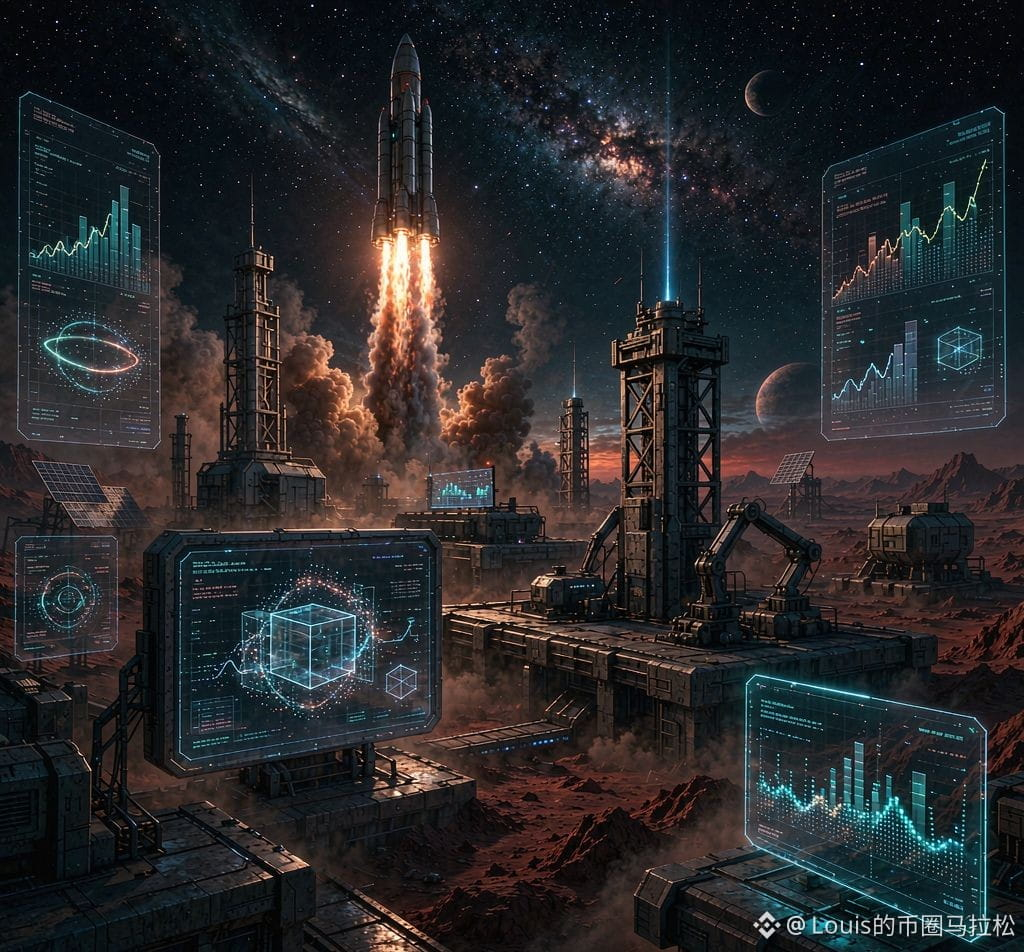
24h +88.18%, current price $0.11035, trading volume $216 million—right on the成交量 (trade volume) filter line. But since it has crossed the $200 million threshold, it qualifies for today’s feature.
MARSCOIN’s gameplay is quite interesting: it’s a meme coin on the BNB Chain, but its trading pair is MARSCOIN/SPCXB, where SPCXB is an on-chain receipt tokenized from SpaceX stock. Each buy/sell charges a 3% tax; all of it goes into a rewards pool, which is then used to distribute SPCXB to wallets holding more than 10,000 MARSCOIN. On September 1, Binance launched the MARSCOINUSDT perpetual contract, offering up to 20x leverage—adding a layer of leverage-fueled ignition to this "Mars narrative + stock dividend" hybrid. Total supply is 1 billion, and it’s basically fully circulating, with no worries about unlocks and subsequent sell-offs.
MARSCOIN is a meme-market adaptation of the RWA (real-world assets) narrative. It turns the "go to Mars" slogan into a tokenized stock-dividend mechanism. Once exchange contracts go live, they also provide a liquidity amplifier. As long as SpaceX’s valuation and the topic of Mars colonization remain, this narrative still has fertile ground to keep fermenting.
24h +88.18%, current price $0.11035, trading volume $216 million—right on the成交量 (trade volume) filter line. But since it has crossed the $200 million threshold, it qualifies for today’s feature.
MARSCOIN’s gameplay is quite interesting: it’s a meme coin on the BNB Chain, but its trading pair is MARSCOIN/SPCXB, where SPCXB is an on-chain receipt tokenized from SpaceX stock. Each buy/sell charges a 3% tax; all of it goes into a rewards pool, which is then used to distribute SPCXB to wallets holding more than 10,000 MARSCOIN. On September 1, Binance launched the MARSCOINUSDT perpetual contract, offering up to 20x leverage—adding a layer of leverage-fueled ignition to this "Mars narrative + stock dividend" hybrid. Total supply is 1 billion, and it’s basically fully circulating, with no worries about unlocks and subsequent sell-offs.
MARSCOIN is a meme-market adaptation of the RWA (real-world assets) narrative. It turns the "go to Mars" slogan into a tokenized stock-dividend mechanism. Once exchange contracts go live, they also provide a liquidity amplifier. As long as SpaceX’s valuation and the topic of Mars colonization remain, this narrative still has fertile ground to keep fermenting.

Partly True
1
UAI — While BTC was still sleeping, AI Agents already stood up
BTC dropped below 77,000 today, while the AI Agent track quietly surged by 29%.
Today’s Binance Futures top gainer is UAI (UnifAI Network)—a “low-key player” in the AI Agent sector. 24h gain +29.22%, trading volume 286 million USDT, price hit $0.5492, only 5% away from its ATH.
The story is simple: $UAI
is AI-native financial infrastructure on BNB Chain, enabling developers to build AI Agents that execute on-chain transactions autonomously, manage assets, and deploy DeFi strategies. With 286 million USDT in 24h volume and a +29.22% gain, this isn’t a random pop in a niche small-cap—it’s consensus built with real money.
Over the past 7 days, UAI is up +95%; over the past 30 days, it’s up a cumulative +131%. Its circulating share is only 23.9% (out of a max supply of 1B, only 239M has been released). Low circulation = high volatility. Each time the AI narrative heats up, it becomes one of the most sensitive targets for capital.
24h gain +29.22%
Trading volume 286 million USDT
Cumulative over 7 days +95.09%
For the AI Agent track, there will likely be event catalysts in September—US regulatory frameworks iterating, stablecoin settlement volume expanding, and the market increasingly recognizing the autonomous decision-making capability of AI Agents. UAI isn’t an “air coin” chasing trends—it has already been deployed in real scenarios like Polymarket, Polymarket prediction markets, and Meteora Drift. Today’s +29% is only the prologue, not the climax.
UAI — While BTC was still sleeping, AI Agents already stood up
BTC dropped below 77,000 today, while the AI Agent track quietly surged by 29%.
Today’s Binance Futures top gainer is UAI (UnifAI Network)—a “low-key player” in the AI Agent sector. 24h gain +29.22%, trading volume 286 million USDT, price hit $0.5492, only 5% away from its ATH.
The story is simple: $UAI
is AI-native financial infrastructure on BNB Chain, enabling developers to build AI Agents that execute on-chain transactions autonomously, manage assets, and deploy DeFi strategies. With 286 million USDT in 24h volume and a +29.22% gain, this isn’t a random pop in a niche small-cap—it’s consensus built with real money.
Over the past 7 days, UAI is up +95%; over the past 30 days, it’s up a cumulative +131%. Its circulating share is only 23.9% (out of a max supply of 1B, only 239M has been released). Low circulation = high volatility. Each time the AI narrative heats up, it becomes one of the most sensitive targets for capital.
24h gain +29.22%
Trading volume 286 million USDT
Cumulative over 7 days +95.09%
For the AI Agent track, there will likely be event catalysts in September—US regulatory frameworks iterating, stablecoin settlement volume expanding, and the market increasingly recognizing the autonomous decision-making capability of AI Agents. UAI isn’t an “air coin” chasing trends—it has already been deployed in real scenarios like Polymarket, Polymarket prediction markets, and Meteora Drift. Today’s +29% is only the prologue, not the climax.

A blockchain phone token jumped nearly 50% in 24 hours—can you believe it?
Let the data speak: $SKR
Today’s contract gain is +84.50%. Current price: $0.028638. 24h trading volume: $879 million USDT—directly crushing many established DeFi tokens. This kind of momentum isn’t something retail traders pulled off; it’s real, institutional-grade capital doing the work.
Even more hardcore: SKR’s 24h trading volume surged 622%, reaching $309.9 million, while its market cap surpassed $183 million. And out of SKR’s total supply of 10 billion tokens, 4.93 billion (49%) are staked—meaning the freely circulating float is extremely small. That implies every buy order is competing for a very limited supply of tradable tokens.
SKR isn’t an “air coin.” Behind it is Solana Mobile’s Seeker phone—a genuine hardware product. The key catalyst behind today’s surge is the “Seeker Summer” rewards program. But unexpectedly, instead of selling off, those who claimed the rewards have been buying heavily. With 49% of the tokens locked in staking and a scarce float on the supply side, while demand is being ignited by the Seeker Summer activity, this is the classic “supply contraction + demand explosion” combo. Add ecosystem milestones like Solana ETF asset management scaling past $1 billion and the dApp store topping 1,000+ apps, and SKR is being repriced by the market as a Beta exposure to the Web3 Mobile track. In the short term, the target looks like reclaiming the $0.035 prior high—if it breaks, that could open up a $0.046 upside range.
Let the data speak: $SKR
Today’s contract gain is +84.50%. Current price: $0.028638. 24h trading volume: $879 million USDT—directly crushing many established DeFi tokens. This kind of momentum isn’t something retail traders pulled off; it’s real, institutional-grade capital doing the work.
Even more hardcore: SKR’s 24h trading volume surged 622%, reaching $309.9 million, while its market cap surpassed $183 million. And out of SKR’s total supply of 10 billion tokens, 4.93 billion (49%) are staked—meaning the freely circulating float is extremely small. That implies every buy order is competing for a very limited supply of tradable tokens.
SKR isn’t an “air coin.” Behind it is Solana Mobile’s Seeker phone—a genuine hardware product. The key catalyst behind today’s surge is the “Seeker Summer” rewards program. But unexpectedly, instead of selling off, those who claimed the rewards have been buying heavily. With 49% of the tokens locked in staking and a scarce float on the supply side, while demand is being ignited by the Seeker Summer activity, this is the classic “supply contraction + demand explosion” combo. Add ecosystem milestones like Solana ETF asset management scaling past $1 billion and the dApp store topping 1,000+ apps, and SKR is being repriced by the market as a Beta exposure to the Web3 Mobile track. In the short term, the target looks like reclaiming the $0.035 prior high—if it breaks, that could open up a $0.046 upside range.

The ten-thousand-times myth returns—could the next one be you?
A film with a box office of 188 yuan is today priced by the crypto market at $130 million.
The meme coin “Bull Comes In” (NIULAI) on BNB Chain is surging +124% in 24 hours. At one point, contract-level numbers even jumped to +170%. The current price is $0.1335, with a market cap of $133 million—continuously setting fresh all-time highs. +139% over 7 days, $130 million in 24-hour trading volume. This kind of volume could even rank among the top on Binance’s derivatives leaderboard.
This coin only launched on August 17. After just 13 days, its market cap broke 100 million. Total supply: 1 billion coins, with 100% fully circulating—no team unlocking, no institutions dumping to cap it. Every dollar that has risen is consensus made of real money.
The backstory might be something you’ve seen: a domestic animated film called “Bull Comes In.” The director and his mother spent five years and a total budget of 342 yuan RMB hand-crafting it. In its first week of release, the daily box office was as low as 188 yuan—almost nobody watched it. After netizens dug up the story, the box office exploded 1,000x. Right after that, NIULAI was born on BNB Chain, and it has climbed all the way to where it is now. Oh, and “Bull Comes In” is a homophone for “The bull market is coming.” The name itself is the biggest marketing.
In the end, what memes compete on is narrative origins. In the market, 99% of memes are made by insiders for insiders to take over each other’s bags. Bull Comes In is one of the rare “out of the circle” cases—real film, real director and mother, five years of perseverance. This kind of emotional energy is something AI-generated mascots can never match. Every time the broader market rebounds, the two words “Bull Comes In” automatically ride the sentiment. It has built-in bull-market momentum-reader energy. The fact that it surpassed 100 million market cap in just 13 days shows that the Chinese community’s wallets have already voted. #山寨币热点
A film with a box office of 188 yuan is today priced by the crypto market at $130 million.
The meme coin “Bull Comes In” (NIULAI) on BNB Chain is surging +124% in 24 hours. At one point, contract-level numbers even jumped to +170%. The current price is $0.1335, with a market cap of $133 million—continuously setting fresh all-time highs. +139% over 7 days, $130 million in 24-hour trading volume. This kind of volume could even rank among the top on Binance’s derivatives leaderboard.
This coin only launched on August 17. After just 13 days, its market cap broke 100 million. Total supply: 1 billion coins, with 100% fully circulating—no team unlocking, no institutions dumping to cap it. Every dollar that has risen is consensus made of real money.
The backstory might be something you’ve seen: a domestic animated film called “Bull Comes In.” The director and his mother spent five years and a total budget of 342 yuan RMB hand-crafting it. In its first week of release, the daily box office was as low as 188 yuan—almost nobody watched it. After netizens dug up the story, the box office exploded 1,000x. Right after that, NIULAI was born on BNB Chain, and it has climbed all the way to where it is now. Oh, and “Bull Comes In” is a homophone for “The bull market is coming.” The name itself is the biggest marketing.
In the end, what memes compete on is narrative origins. In the market, 99% of memes are made by insiders for insiders to take over each other’s bags. Bull Comes In is one of the rare “out of the circle” cases—real film, real director and mother, five years of perseverance. This kind of emotional energy is something AI-generated mascots can never match. Every time the broader market rebounds, the two words “Bull Comes In” automatically ride the sentiment. It has built-in bull-market momentum-reader energy. The fact that it surpassed 100 million market cap in just 13 days shows that the Chinese community’s wallets have already voted. #山寨币热点

$PROM
— This old-school L2 coin surged nearly twofold in a week
This old-school L2 coin surged nearly twofold in a week.
Just this latest run— the data is rock-solid: the Binance Futures API shows PROM up +41.31% in the past 24 hours, with the current price at $7.07 and 24h trading volume totaling $554 million. Even more extreme, the weekly chart is up +166% and the monthly chart +323%. Circulating supply is 18.0M / 19.25M, with a circulation rate of 94%, nearing full circulation. ATH is $105.94—there’s still about 15x upside from the recent high.
This PROM move isn’t just blind meme-driven hype. It transitioned from a data protocol in 2019 into a modular zkEVM Layer 2, then layered on a game-NFT rental narrative. DWF Labs has backed it, and steady capital from Upbit Korea continues to flow in. Binance contracts saw $550 million in daily trading volume, showing real money is actively backing it. The combination of high circulation and low unlock-pressure structure is exactly the kind of “pump-friendly” float capital loves. The narrative has just switched from game assets to modular L2, so the valuation-repair logic is still early.
— This old-school L2 coin surged nearly twofold in a week
This old-school L2 coin surged nearly twofold in a week.
Just this latest run— the data is rock-solid: the Binance Futures API shows PROM up +41.31% in the past 24 hours, with the current price at $7.07 and 24h trading volume totaling $554 million. Even more extreme, the weekly chart is up +166% and the monthly chart +323%. Circulating supply is 18.0M / 19.25M, with a circulation rate of 94%, nearing full circulation. ATH is $105.94—there’s still about 15x upside from the recent high.
This PROM move isn’t just blind meme-driven hype. It transitioned from a data protocol in 2019 into a modular zkEVM Layer 2, then layered on a game-NFT rental narrative. DWF Labs has backed it, and steady capital from Upbit Korea continues to flow in. Binance contracts saw $550 million in daily trading volume, showing real money is actively backing it. The combination of high circulation and low unlock-pressure structure is exactly the kind of “pump-friendly” float capital loves. The narrative has just switched from game assets to modular L2, so the valuation-repair logic is still early.

A coin that’s up 30%—either it’s gold, or it’s just cannon fodder. But today, this one looks like gold.
Today on Binance Futures’ gainers list, the #1 is $MAGMA
with a 24h increase of +30.14%. Price: $0.5124. Volume: $260M.
Put the numbers on the table and you’ll see how much gold there really is—Sui’s first ALMM adaptive liquidity market maker. It turns the traditional AMM’s “uniformly spread liquidity” into “dynamically concentrated liquidity around active price ranges.” In plain terms: lower slippage, higher LP capital efficiency, and thicker returns.
The background is impressive too:
• $6M funding round: HashKey Capital + SNZ Holding + SevenX + a star-studded lineup including Topspin
• Total supply capped at 1B tokens; circulating supply is only 190M (19%). Low float = higher elasticity
• Three security audits: Zellic, Three Sigma, and MoveBit
• ATH of $0.80 is still 57% ahead; the April ATL of $0.07 has already rebounded 630%
DeFi infrastructure in the Sui ecosystem is scarce by nature. Magma taking the “first ALMM” spot, plus its Q4 roadmap featuring a “global trading hub + integrated Binance/OKX/Bybit”—once that ships, the whole set of catalysts (the narrative, funding rates, and low float) will amplify together. Magma 2.0 hasn’t gone live yet, which makes this its biggest option value that hasn’t yet been priced in.
#defi
Today on Binance Futures’ gainers list, the #1 is $MAGMA
with a 24h increase of +30.14%. Price: $0.5124. Volume: $260M.
Put the numbers on the table and you’ll see how much gold there really is—Sui’s first ALMM adaptive liquidity market maker. It turns the traditional AMM’s “uniformly spread liquidity” into “dynamically concentrated liquidity around active price ranges.” In plain terms: lower slippage, higher LP capital efficiency, and thicker returns.
The background is impressive too:
• $6M funding round: HashKey Capital + SNZ Holding + SevenX + a star-studded lineup including Topspin
• Total supply capped at 1B tokens; circulating supply is only 190M (19%). Low float = higher elasticity
• Three security audits: Zellic, Three Sigma, and MoveBit
• ATH of $0.80 is still 57% ahead; the April ATL of $0.07 has already rebounded 630%
DeFi infrastructure in the Sui ecosystem is scarce by nature. Magma taking the “first ALMM” spot, plus its Q4 roadmap featuring a “global trading hub + integrated Binance/OKX/Bybit”—once that ships, the whole set of catalysts (the narrative, funding rates, and low float) will amplify together. Magma 2.0 hasn’t gone live yet, which makes this its biggest option value that hasn’t yet been priced in.
#defi
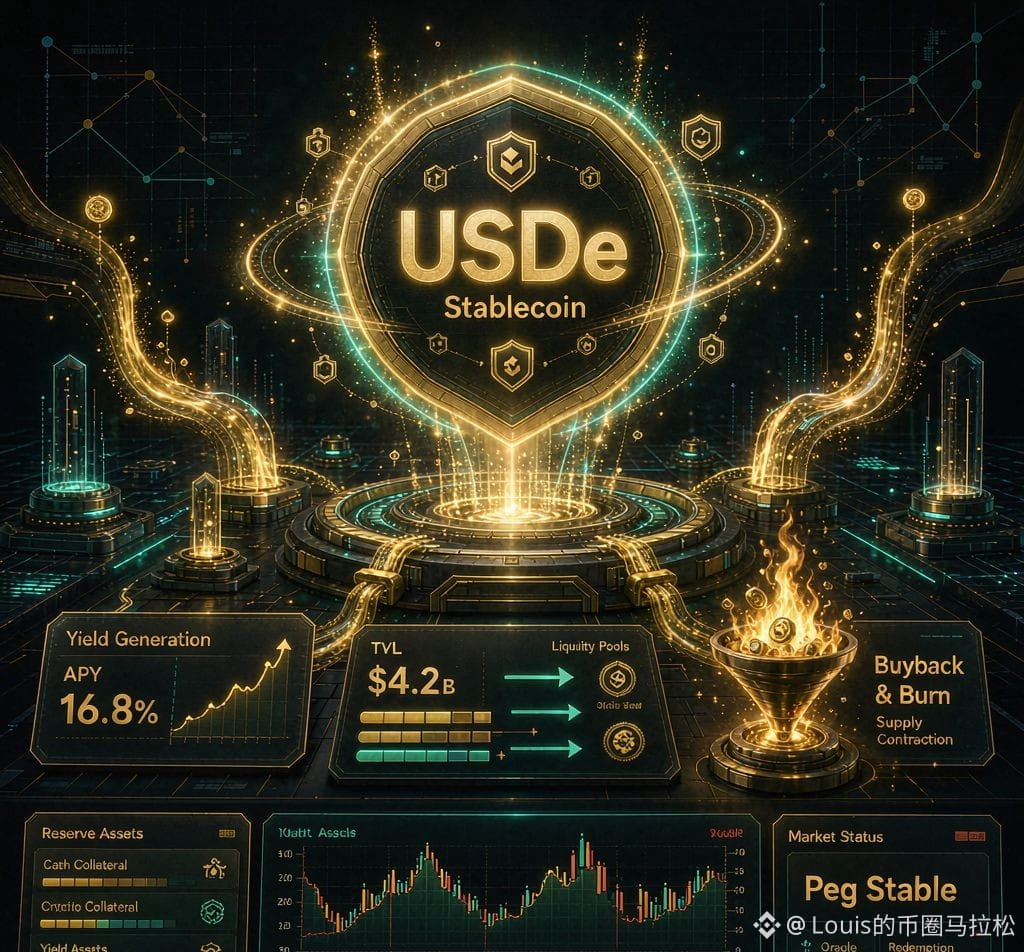
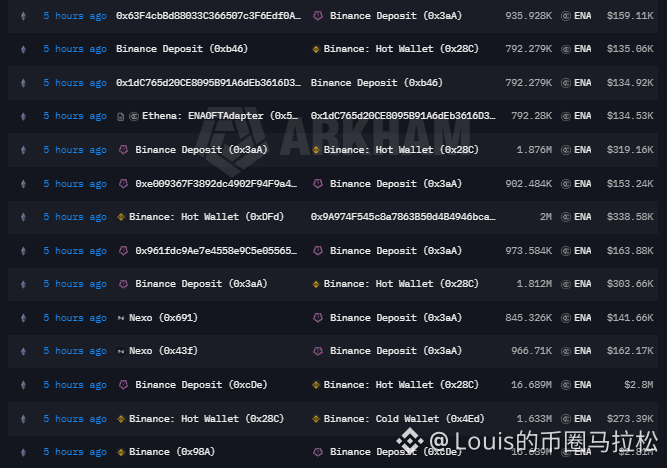
Multi-wallet group caught in the act, transferring several million ENA
to Binance, while 30,000,000 tokens are unlocked from Coinbase Prime
5 hours ago, multiple independent wallets, including 2 different Nexo addresses and 3 private accounts
all routed structured batches of roughly 850,000–970,000 ENA to completely identical Binance deposit addresses (0x3aA), while selling more than 5.5 million tokens.
4 hours ago, Coinbase Prime Custody released 30,000,000 ENA ($5.05 million) to a private address 0xfDD3.... Large institutional-sized funds are changing hands over-the-counter.
Another huge token block of 16.689M ENA ($2.81 million) was directly swept into Binance’s hot wallet, which explains the sudden rejection wick that appeared after the peak at $0.1900.
Although sellers poured into Binance, Kraken swept 3.65 million ENA into cold storage, while Coinbase re-locked 3.32 million ENA back into Prime Custody.
ENA has surged and then fallen back to 0.167
to Binance, while 30,000,000 tokens are unlocked from Coinbase Prime
5 hours ago, multiple independent wallets, including 2 different Nexo addresses and 3 private accounts
all routed structured batches of roughly 850,000–970,000 ENA to completely identical Binance deposit addresses (0x3aA), while selling more than 5.5 million tokens.
4 hours ago, Coinbase Prime Custody released 30,000,000 ENA ($5.05 million) to a private address 0xfDD3.... Large institutional-sized funds are changing hands over-the-counter.
Another huge token block of 16.689M ENA ($2.81 million) was directly swept into Binance’s hot wallet, which explains the sudden rejection wick that appeared after the peak at $0.1900.
Although sellers poured into Binance, Kraken swept 3.65 million ENA into cold storage, while Coinbase re-locked 3.32 million ENA back into Prime Custody.
ENA has surged and then fallen back to 0.167
Louis的币圈马拉松
·
--
BullishWhich project team have you ever seen proactively pay money to buy back all the early investors’ coins that were sold?
Ethena just did this. $ENA
In the last 24 hours, it’s up +24.09%, with the price hitting $0.1787 and trading volume at $756 million. This isn’t a normal pump—it’s the foundation rewriting tokenomics with real cash.
On August 27, the Ethena Foundation announced four major updates:
1️⃣ VC buyout and exit: The foundation spent two weeks to fully purchase the locked coins of early VCs that had sold ENA after the peak. The source of sell pressure is removed at the root
2️⃣ End of monthly unlocking: The remaining investors’ tokens are released all at once on October 5, and the monthly unlocking calendar is voided. Only 12% team/foundation tokens remain locked
3️⃣ Fee Switch voting: Deadline is September 2. If passed, when USDe reaches $7.5 billion, 95% of the protocol’s net revenue will be used for ENA repurchases. Monthly income is about $57 million, annualized nearly $700 million
4️⃣ Asset transfer: On October 10, the Master Framework Agreement transfers all protocol IP and remaining value to ENA holders, leaving equity investors in Labs with no income
This is the cleanest tokenomics overhaul project of the 2026 era—no other comes close.
What Ethena is doing boils down to three steps: drive out the people selling coins → tie the protocol revenue and token price together → hand governance power to token holders. This isn’t wishful thinking; it’s an already-executing roadmap.
And last week, Ethena also signed a $1 billion institutional borrowing facility with FalconX. The underlying assets of USDe can be deployed into institutional credit with overcollateralization, generating returns across bull and bear cycles. The Fee Switch is ongoing cash flow, not a one-time story.
Arthur Hayes has been continuously buying large amounts of ENA and openly said it’s a “5x bet.” Whales lock up, VCs exit—who’s on which side is clear at a glance.
USDe is currently at $4.6 billion. It still needs $2.9 billion to trigger the $7.5 billion buyback. Every additional $100 million gets you one step closer.
Ethena just did this. $ENA
In the last 24 hours, it’s up +24.09%, with the price hitting $0.1787 and trading volume at $756 million. This isn’t a normal pump—it’s the foundation rewriting tokenomics with real cash.
On August 27, the Ethena Foundation announced four major updates:
1️⃣ VC buyout and exit: The foundation spent two weeks to fully purchase the locked coins of early VCs that had sold ENA after the peak. The source of sell pressure is removed at the root
2️⃣ End of monthly unlocking: The remaining investors’ tokens are released all at once on October 5, and the monthly unlocking calendar is voided. Only 12% team/foundation tokens remain locked
3️⃣ Fee Switch voting: Deadline is September 2. If passed, when USDe reaches $7.5 billion, 95% of the protocol’s net revenue will be used for ENA repurchases. Monthly income is about $57 million, annualized nearly $700 million
4️⃣ Asset transfer: On October 10, the Master Framework Agreement transfers all protocol IP and remaining value to ENA holders, leaving equity investors in Labs with no income
This is the cleanest tokenomics overhaul project of the 2026 era—no other comes close.
What Ethena is doing boils down to three steps: drive out the people selling coins → tie the protocol revenue and token price together → hand governance power to token holders. This isn’t wishful thinking; it’s an already-executing roadmap.
And last week, Ethena also signed a $1 billion institutional borrowing facility with FalconX. The underlying assets of USDe can be deployed into institutional credit with overcollateralization, generating returns across bull and bear cycles. The Fee Switch is ongoing cash flow, not a one-time story.
Arthur Hayes has been continuously buying large amounts of ENA and openly said it’s a “5x bet.” Whales lock up, VCs exit—who’s on which side is clear at a glance.
USDe is currently at $4.6 billion. It still needs $2.9 billion to trigger the $7.5 billion buyback. Every additional $100 million gets you one step closer.
Verified
Which project team have you ever seen proactively pay money to buy back all the early investors’ coins that were sold?
Ethena just did this. $ENA
In the last 24 hours, it’s up +24.09%, with the price hitting $0.1787 and trading volume at $756 million. This isn’t a normal pump—it’s the foundation rewriting tokenomics with real cash.
On August 27, the Ethena Foundation announced four major updates:
1️⃣ VC buyout and exit: The foundation spent two weeks to fully purchase the locked coins of early VCs that had sold ENA after the peak. The source of sell pressure is removed at the root
2️⃣ End of monthly unlocking: The remaining investors’ tokens are released all at once on October 5, and the monthly unlocking calendar is voided. Only 12% team/foundation tokens remain locked
3️⃣ Fee Switch voting: Deadline is September 2. If passed, when USDe reaches $7.5 billion, 95% of the protocol’s net revenue will be used for ENA repurchases. Monthly income is about $57 million, annualized nearly $700 million
4️⃣ Asset transfer: On October 10, the Master Framework Agreement transfers all protocol IP and remaining value to ENA holders, leaving equity investors in Labs with no income
This is the cleanest tokenomics overhaul project of the 2026 era—no other comes close.
What Ethena is doing boils down to three steps: drive out the people selling coins → tie the protocol revenue and token price together → hand governance power to token holders. This isn’t wishful thinking; it’s an already-executing roadmap.
And last week, Ethena also signed a $1 billion institutional borrowing facility with FalconX. The underlying assets of USDe can be deployed into institutional credit with overcollateralization, generating returns across bull and bear cycles. The Fee Switch is ongoing cash flow, not a one-time story.
Arthur Hayes has been continuously buying large amounts of ENA and openly said it’s a “5x bet.” Whales lock up, VCs exit—who’s on which side is clear at a glance.
USDe is currently at $4.6 billion. It still needs $2.9 billion to trigger the $7.5 billion buyback. Every additional $100 million gets you one step closer.
Ethena just did this. $ENA
In the last 24 hours, it’s up +24.09%, with the price hitting $0.1787 and trading volume at $756 million. This isn’t a normal pump—it’s the foundation rewriting tokenomics with real cash.
On August 27, the Ethena Foundation announced four major updates:
1️⃣ VC buyout and exit: The foundation spent two weeks to fully purchase the locked coins of early VCs that had sold ENA after the peak. The source of sell pressure is removed at the root
2️⃣ End of monthly unlocking: The remaining investors’ tokens are released all at once on October 5, and the monthly unlocking calendar is voided. Only 12% team/foundation tokens remain locked
3️⃣ Fee Switch voting: Deadline is September 2. If passed, when USDe reaches $7.5 billion, 95% of the protocol’s net revenue will be used for ENA repurchases. Monthly income is about $57 million, annualized nearly $700 million
4️⃣ Asset transfer: On October 10, the Master Framework Agreement transfers all protocol IP and remaining value to ENA holders, leaving equity investors in Labs with no income
This is the cleanest tokenomics overhaul project of the 2026 era—no other comes close.
What Ethena is doing boils down to three steps: drive out the people selling coins → tie the protocol revenue and token price together → hand governance power to token holders. This isn’t wishful thinking; it’s an already-executing roadmap.
And last week, Ethena also signed a $1 billion institutional borrowing facility with FalconX. The underlying assets of USDe can be deployed into institutional credit with overcollateralization, generating returns across bull and bear cycles. The Fee Switch is ongoing cash flow, not a one-time story.
Arthur Hayes has been continuously buying large amounts of ENA and openly said it’s a “5x bet.” Whales lock up, VCs exit—who’s on which side is clear at a glance.
USDe is currently at $4.6 billion. It still needs $2.9 billion to trigger the $7.5 billion buyback. Every additional $100 million gets you one step closer.
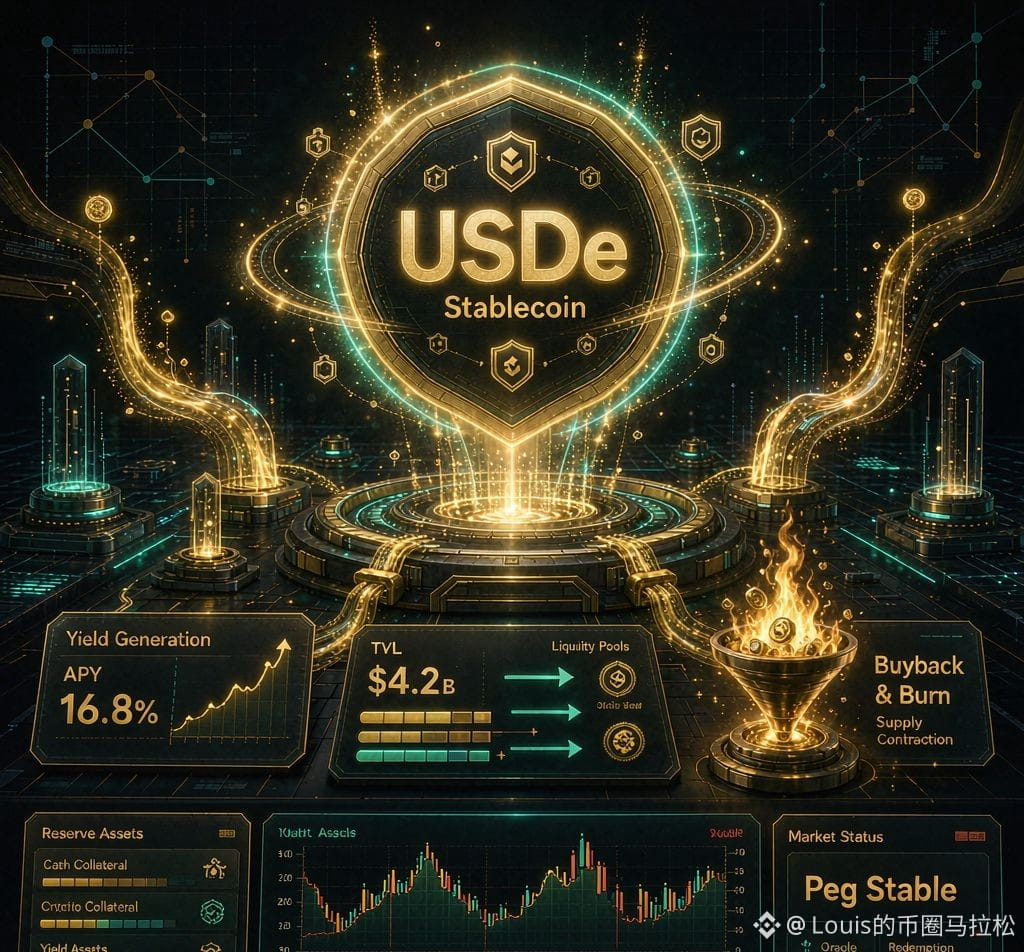
Sun said: You want my life, sure—but you want my money. This really won’t work.
Louis的币圈马拉松
·
--
Jingtian surrogacy scandal, which underestimated the moral bottom line of Sun Ge in the crypto world.
The entertainment industry thought that crypto big shots are naive and have plenty of money—that with a $30 million deal, they’d still want $50 million USD;
But what happened next was a classic move by Justin Sun—just a refund.
Not only does the money have to be brought back; it’s not over yet—he also wrote a little essay to expose the entire story.
For someone like Sun Yuchen with his kind of net worth, more than $30 million is basically one of the smallest drops in the bucket. Once things have escalated to this point, it can only be said that people from the entertainment industry wanted to play schemes with the crypto world, and they were still a bit too green.
After all, the crypto world is most lacking in people who follow the script.
The power of “Don’t mess with Sun” still lingers
$UNITREE
The entertainment industry thought that crypto big shots are naive and have plenty of money—that with a $30 million deal, they’d still want $50 million USD;
But what happened next was a classic move by Justin Sun—just a refund.
Not only does the money have to be brought back; it’s not over yet—he also wrote a little essay to expose the entire story.
For someone like Sun Yuchen with his kind of net worth, more than $30 million is basically one of the smallest drops in the bucket. Once things have escalated to this point, it can only be said that people from the entertainment industry wanted to play schemes with the crypto world, and they were still a bit too green.
After all, the crypto world is most lacking in people who follow the script.
The power of “Don’t mess with Sun” still lingers
$UNITREE

Jingtian surrogacy scandal, which underestimated the moral bottom line of Sun Ge in the crypto world.
The entertainment industry thought that crypto big shots are naive and have plenty of money—that with a $30 million deal, they’d still want $50 million USD;
But what happened next was a classic move by Justin Sun—just a refund.
Not only does the money have to be brought back; it’s not over yet—he also wrote a little essay to expose the entire story.
For someone like Sun Yuchen with his kind of net worth, more than $30 million is basically one of the smallest drops in the bucket. Once things have escalated to this point, it can only be said that people from the entertainment industry wanted to play schemes with the crypto world, and they were still a bit too green.
After all, the crypto world is most lacking in people who follow the script.
The power of “Don’t mess with Sun” still lingers
$UNITREE
The entertainment industry thought that crypto big shots are naive and have plenty of money—that with a $30 million deal, they’d still want $50 million USD;
But what happened next was a classic move by Justin Sun—just a refund.
Not only does the money have to be brought back; it’s not over yet—he also wrote a little essay to expose the entire story.
For someone like Sun Yuchen with his kind of net worth, more than $30 million is basically one of the smallest drops in the bucket. Once things have escalated to this point, it can only be said that people from the entertainment industry wanted to play schemes with the crypto world, and they were still a bit too green.
After all, the crypto world is most lacking in people who follow the script.
The power of “Don’t mess with Sun” still lingers
$UNITREE

Doubling in a day isn’t a dream—BTC’s L2 ecosystem is using their feet to vote.
Binance Futures API real-time data—$BTR
24h gain +315.42%, current price $0.13385, 24h trading volume $382 million. Bitlayer is the first Bitcoin L2 to implement BitVM. Without sacrificing Bitcoin’s security, it brings smart contract and DeFi capabilities to Bitcoin. It has already raised $30 million in funding from top-tier institutions such as Polychain. Its current circulating rate is only about 26%. From $0.03 on August 11 to $0.09 now—3x in half a month. ATH $0.74, with still about 8x room to reach it.
This isn’t random pump-and-dump; it’s the inevitable outcome of capital rotation within the BTC ecosystem. The BitVM technology gives Bitcoin real programmability—an narrative the market has been waiting for. Low circulating supply is a risk in bear markets, but during periods of capital inflow, it becomes a synonym for high elasticity. When BTC ETFs see net inflows for 7 consecutive days and ecosystem capital begins to overflow in search of "low market cap + high narrative" targets, Bitlayer is naturally the magnet for funds. #defi
Binance Futures API real-time data—$BTR
24h gain +315.42%, current price $0.13385, 24h trading volume $382 million. Bitlayer is the first Bitcoin L2 to implement BitVM. Without sacrificing Bitcoin’s security, it brings smart contract and DeFi capabilities to Bitcoin. It has already raised $30 million in funding from top-tier institutions such as Polychain. Its current circulating rate is only about 26%. From $0.03 on August 11 to $0.09 now—3x in half a month. ATH $0.74, with still about 8x room to reach it.
This isn’t random pump-and-dump; it’s the inevitable outcome of capital rotation within the BTC ecosystem. The BitVM technology gives Bitcoin real programmability—an narrative the market has been waiting for. Low circulating supply is a risk in bear markets, but during periods of capital inflow, it becomes a synonym for high elasticity. When BTC ETFs see net inflows for 7 consecutive days and ecosystem capital begins to overflow in search of "low market cap + high narrative" targets, Bitlayer is naturally the magnet for funds. #defi
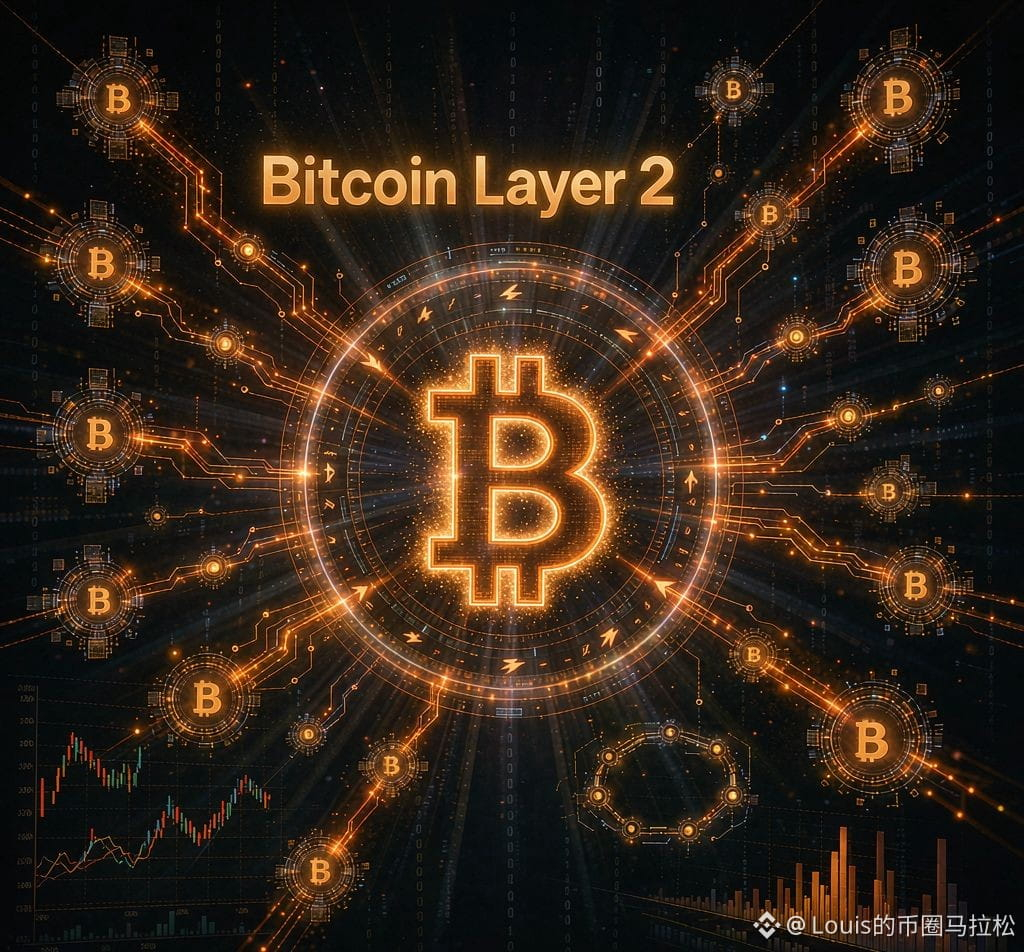
Income is higher than Hyperliquid—has PUMP been undervalued?
Binance Futures API real-time data: $PUMP
24h +19.52%, current price $0.00523, 24h trading volume $791 million. Among the coins at the top of the gainers list, PUMP’s trading volume is the most solid.
Behind PUMP’s pump is support from protocol revenue. In the last 7 days, protocol revenue was $11.52 million—4th among global crypto protocols; over the last 30 days, revenue was $42.30 million, exceeding Hyperliquid for 13 straight days. Even more aggressive: Pump.fun automatically uses 50% of its protocol revenue for open-market buybacks and permanently burns PUMP. Cumulative burns have already exceeded 16% of the total supply. Last week alone, 295 million tokens were burned. At the same time, PUMP has shown its first-ever golden cross since listing: the 50-day EMA crossing above the 200-day EMA.
PUMP is upgrading from a “meme casino coin” into a “cash-flow-driven deflationary asset.” When all four—revenue, buybacks, burns, and technical formations—point in the same direction, short-term volatility is just noise. Around $0.005 is an overlap zone of institutional costs and retail positioning—every pullback could be a window for longs to re-enter.
Binance Futures API real-time data: $PUMP
24h +19.52%, current price $0.00523, 24h trading volume $791 million. Among the coins at the top of the gainers list, PUMP’s trading volume is the most solid.
Behind PUMP’s pump is support from protocol revenue. In the last 7 days, protocol revenue was $11.52 million—4th among global crypto protocols; over the last 30 days, revenue was $42.30 million, exceeding Hyperliquid for 13 straight days. Even more aggressive: Pump.fun automatically uses 50% of its protocol revenue for open-market buybacks and permanently burns PUMP. Cumulative burns have already exceeded 16% of the total supply. Last week alone, 295 million tokens were burned. At the same time, PUMP has shown its first-ever golden cross since listing: the 50-day EMA crossing above the 200-day EMA.
PUMP is upgrading from a “meme casino coin” into a “cash-flow-driven deflationary asset.” When all four—revenue, buybacks, burns, and technical formations—point in the same direction, short-term volatility is just noise. Around $0.005 is an overlap zone of institutional costs and retail positioning—every pullback could be a window for longs to re-enter.

This crypto market行情 is a strong rebound in a bear market with decent “quality”.
$BTC
$HYPE
$PUMP
The drivers are very clear—three things stacked together:
Macro trigger (main reason): On 8/20, the U.S. Treasury doubled the long-term bond repo volume ($2B→$4B). The 30-year U.S. Treasury yield was pushed down from 5.34% to 5.19% (after previously hitting a high in 2019). This is “soft policy support,” directly lifting risk appetite—BTC’s +22% weekly gain is the largest weekly increase in three years.
Real money flows back via ETFs: Spot BTC ETFs saw a net inflow of $1.6B this week (the biggest week since October). BlackRock’s IBIT saw $503M on a single day, and AUM rose from June’s $70B back to $85B.
Aggressive short covering: In 3 days, shorts totaling $4.36B were squeezed out. This is “impulsive thrust,” the classic “first leg” reversal pattern.
Bonus regulatory catalyst: The CLARITY Act (to clarify the SEC/CFTC boundary) will have a procedural vote in the Senate on 9/15.
Has the bull market arrived?—Most likely this is the “first leg” of a reversal at the tail end of the bear market. We’re not at the stage of “confirming a bull market” yet.
Don’t let a +22% week go to your head.
✅ The bullish side (it has the flavor of a bottom): CryptoQuant’s Bull Score first turned green since October 2025. Ki Young Ju even directly announced “the bear market is over.” The catalysts are macro easing + ETF inflows + regulatory clarity—not pure emotion.
⚠️ The part that hasn’t been confirmed: BTC is still down 38% from last year’s highs, ETH down 49%, and the structure on the yearly chart still looks like a bear market. RSI at 84.8 is extremely overbought, and futures positioning is one-sided (a short-squeeze environment—chasing gains can easily get trapped).
One-sentence takeaway: The bottom (at $58.9k) has likely already been seen, but $80k is the bull/bear line—and it hasn’t held/been established yet.
$BTC
$HYPE
$PUMP
The drivers are very clear—three things stacked together:
Macro trigger (main reason): On 8/20, the U.S. Treasury doubled the long-term bond repo volume ($2B→$4B). The 30-year U.S. Treasury yield was pushed down from 5.34% to 5.19% (after previously hitting a high in 2019). This is “soft policy support,” directly lifting risk appetite—BTC’s +22% weekly gain is the largest weekly increase in three years.
Real money flows back via ETFs: Spot BTC ETFs saw a net inflow of $1.6B this week (the biggest week since October). BlackRock’s IBIT saw $503M on a single day, and AUM rose from June’s $70B back to $85B.
Aggressive short covering: In 3 days, shorts totaling $4.36B were squeezed out. This is “impulsive thrust,” the classic “first leg” reversal pattern.
Bonus regulatory catalyst: The CLARITY Act (to clarify the SEC/CFTC boundary) will have a procedural vote in the Senate on 9/15.
Has the bull market arrived?—Most likely this is the “first leg” of a reversal at the tail end of the bear market. We’re not at the stage of “confirming a bull market” yet.
Don’t let a +22% week go to your head.
✅ The bullish side (it has the flavor of a bottom): CryptoQuant’s Bull Score first turned green since October 2025. Ki Young Ju even directly announced “the bear market is over.” The catalysts are macro easing + ETF inflows + regulatory clarity—not pure emotion.
⚠️ The part that hasn’t been confirmed: BTC is still down 38% from last year’s highs, ETH down 49%, and the structure on the yearly chart still looks like a bear market. RSI at 84.8 is extremely overbought, and futures positioning is one-sided (a short-squeeze environment—chasing gains can easily get trapped).
One-sentence takeaway: The bottom (at $58.9k) has likely already been seen, but $80k is the bull/bear line—and it hasn’t held/been established yet.

$GPS
A wallet gets hit three times—yet this security coin surges 40%?
Today, GPS is up +40.07%, with the price jumping to $0.01558 and 24h trading volume reaching $176 million. It has rebounded more than 240% from its December 2025 ATL of $0.004404, but it still has about 14x room to go before reaching its ATH of $0.2201.
This week, the Web3 security community has been in chaos: a SafePal plugin vulnerability leaked order data from 39.8k users; a Trezor logistics partner exposed delivery info for 11.7k customers; and Coldcard holders lost $750K BTC due to a compromised Google account. All three made headlines on the same day—GoPlus Security published three real-time incident breakdown posts, directly pushing GPS onto the hot search.
But this isn’t riding the hype—GoPlus is the real Web3 security infrastructure. With 30M+ daily API calls, coverage across 30+ blockchain networks, protection for 28M+ wallets, and 200K+ downloads for its Chrome extension. Just on August 7, it announced support for Robinhood Chain, and its security data has already been integrated into CoinMarketCap, Dextools, and Binance Wallet. It also launched a 500 million GPS security fund, and in the first batch, 400k GPS tokens were issued specifically in response to the GAIN malicious minting incident.
The messier Web3 gets, the more valuable security becomes. Other people’s disasters are GPS’s fundamentals. The Robinhood Chain partnership plus the ongoing expansion of its B2B integration network will make the security sector’s “must-have” demand increasingly clear. Around 56% of the total supply of 10 billion has already circulated, and dilution pressure remains within a manageable range.
A wallet gets hit three times—yet this security coin surges 40%?
Today, GPS is up +40.07%, with the price jumping to $0.01558 and 24h trading volume reaching $176 million. It has rebounded more than 240% from its December 2025 ATL of $0.004404, but it still has about 14x room to go before reaching its ATH of $0.2201.
This week, the Web3 security community has been in chaos: a SafePal plugin vulnerability leaked order data from 39.8k users; a Trezor logistics partner exposed delivery info for 11.7k customers; and Coldcard holders lost $750K BTC due to a compromised Google account. All three made headlines on the same day—GoPlus Security published three real-time incident breakdown posts, directly pushing GPS onto the hot search.
But this isn’t riding the hype—GoPlus is the real Web3 security infrastructure. With 30M+ daily API calls, coverage across 30+ blockchain networks, protection for 28M+ wallets, and 200K+ downloads for its Chrome extension. Just on August 7, it announced support for Robinhood Chain, and its security data has already been integrated into CoinMarketCap, Dextools, and Binance Wallet. It also launched a 500 million GPS security fund, and in the first batch, 400k GPS tokens were issued specifically in response to the GAIN malicious minting incident.
The messier Web3 gets, the more valuable security becomes. Other people’s disasters are GPS’s fundamentals. The Robinhood Chain partnership plus the ongoing expansion of its B2B integration network will make the security sector’s “must-have” demand increasingly clear. Around 56% of the total supply of 10 billion has already circulated, and dilution pressure remains within a manageable range.


AI is all competing for data, $SKYAI
is already ready to “sell shovels.”
Today’s top breakout is the underlying infrastructure that feeds AI with data—SKYAI. Its 24-hour contract gain is +47.00%. Price surged to $0.04729, with $170 million in volume. On BNB Chain’s AI data track, this is the strongest signal flare.
ATH: $0.8557 (May 6). Today’s price is still about 18x below the historical high. 1 billion circulating supply: 100% already circulated, with zero unlock pressure. The team holds zero tokens—meaning the “team dumps” option is off the table in the future.
Over the past two years, the AI track has rocketed from a $9 billion market cap to $27 billion. A 3x growth is already yesterday’s story. When 250k+ AI agents every day need to capture on-chain data, whoever can “translate” multi-chain data into models—whoever does that—is the AI era’s shovel seller. SKYAI uses an expanded MCP protocol to integrate with LLMs, and indexing for 1 billion lines of on-chain data is already completed. You see its long green candle today—it didn’t rise out of nowhere; it’s the result of the track’s collective understanding being repriced.
is already ready to “sell shovels.”
Today’s top breakout is the underlying infrastructure that feeds AI with data—SKYAI. Its 24-hour contract gain is +47.00%. Price surged to $0.04729, with $170 million in volume. On BNB Chain’s AI data track, this is the strongest signal flare.
ATH: $0.8557 (May 6). Today’s price is still about 18x below the historical high. 1 billion circulating supply: 100% already circulated, with zero unlock pressure. The team holds zero tokens—meaning the “team dumps” option is off the table in the future.
Over the past two years, the AI track has rocketed from a $9 billion market cap to $27 billion. A 3x growth is already yesterday’s story. When 250k+ AI agents every day need to capture on-chain data, whoever can “translate” multi-chain data into models—whoever does that—is the AI era’s shovel seller. SKYAI uses an expanded MCP protocol to integrate with LLMs, and indexing for 1 billion lines of on-chain data is already completed. You see its long green candle today—it didn’t rise out of nowhere; it’s the result of the track’s collective understanding being repriced.

Yesterday +38%—you hesitated, today +81%—you slapped your thigh—$BLESS
Is this DePIN compute narrative just getting started?
Today, BLESS returned to the top of the Binance futures gainers with a +81.70% surge. Over the past 24 hours, trading volume soared to $586 million, and the price reached $0.020674. This is the second consecutive day claiming the top spot—yesterday +38%, today +81%. Real money is casting its votes.
What’s behind it? Bless Network is a DePIN + AI compute network that consolidates underutilized global CPU/GPU resources to provide low-cost compute power for AI inference and data processing. Key figures: the testnet already has 5 million+ nodes, and 90% of platform revenue is used to buy back and burn BLESS tokens. Investors include NGC and M31 Capital; advisors come from backgrounds at Binance Labs—this isn’t a fly-by-night crew.
DePIN + AI compute is one of the most certain narratives for 2026. Traditional cloud computing costs are getting higher and higher, and the demand for decentralized compute networks will only grow. The 90% buyback-and-burn mechanism is sustained buying with real cash, and 5 million nodes aren’t just made up. ATH $0.2181 is still up there waiting, with nearly 10x upside from the current level.#山寨季何时到来?
Is this DePIN compute narrative just getting started?
Today, BLESS returned to the top of the Binance futures gainers with a +81.70% surge. Over the past 24 hours, trading volume soared to $586 million, and the price reached $0.020674. This is the second consecutive day claiming the top spot—yesterday +38%, today +81%. Real money is casting its votes.
What’s behind it? Bless Network is a DePIN + AI compute network that consolidates underutilized global CPU/GPU resources to provide low-cost compute power for AI inference and data processing. Key figures: the testnet already has 5 million+ nodes, and 90% of platform revenue is used to buy back and burn BLESS tokens. Investors include NGC and M31 Capital; advisors come from backgrounds at Binance Labs—this isn’t a fly-by-night crew.
DePIN + AI compute is one of the most certain narratives for 2026. Traditional cloud computing costs are getting higher and higher, and the demand for decentralized compute networks will only grow. The 90% buyback-and-burn mechanism is sustained buying with real cash, and 5 million nodes aren’t just made up. ATH $0.2181 is still up there waiting, with nearly 10x upside from the current level.#山寨季何时到来?

The growth of SK hynix is astonishing, even though the reported earnings were below expectations.
Revenue: QoQ +51% & YoY +257%
Operating profit: QoQ +61% & YoY +557%
Net profit: QoQ +133% & YoY +1,242%
The level of this growth acceleration, supported by long-term agreements, in my view warrants a major reassessment of its valuation……
The current PE 4X will eventually force chasing the price to buy
Revenue: QoQ +51% & YoY +257%
Operating profit: QoQ +61% & YoY +557%
Net profit: QoQ +133% & YoY +1,242%
The level of this growth acceleration, supported by long-term agreements, in my view warrants a major reassessment of its valuation……
The current PE 4X will eventually force chasing the price to buy
Log in to explore more content