
lea2024
1.1k Posts

lea2024
81 Following
274 Followers
586 Liked
Posts
All
Quotes
Live

Spacebreeze
·
--
spacebreeze announcement News
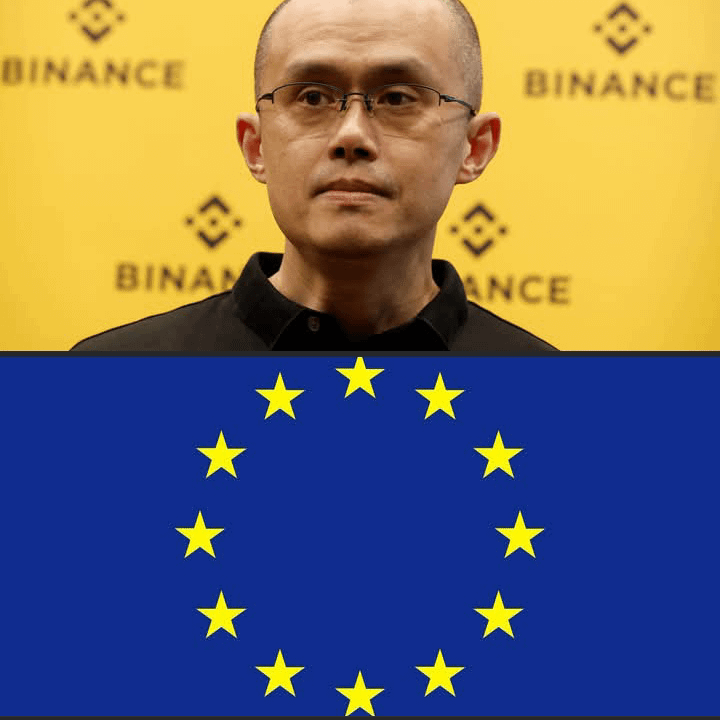
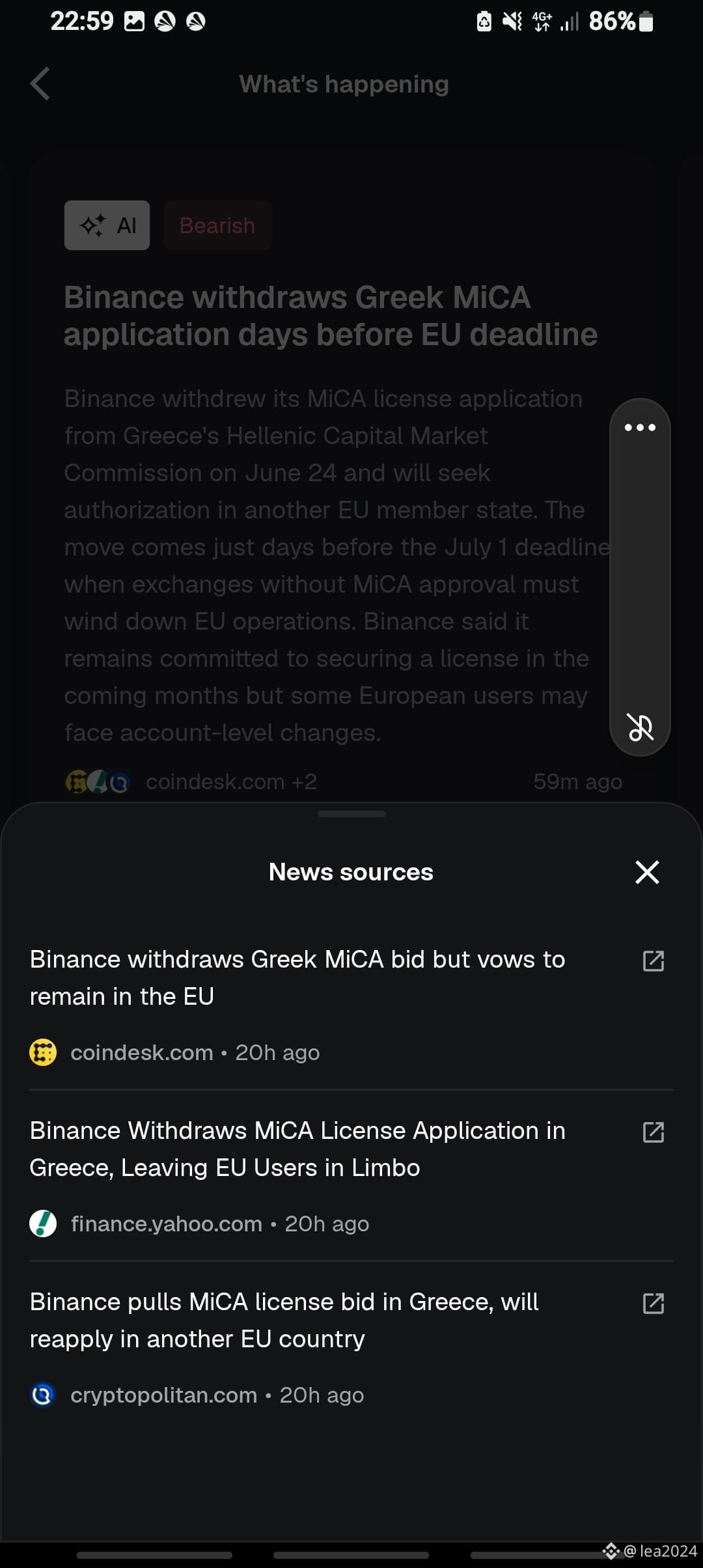
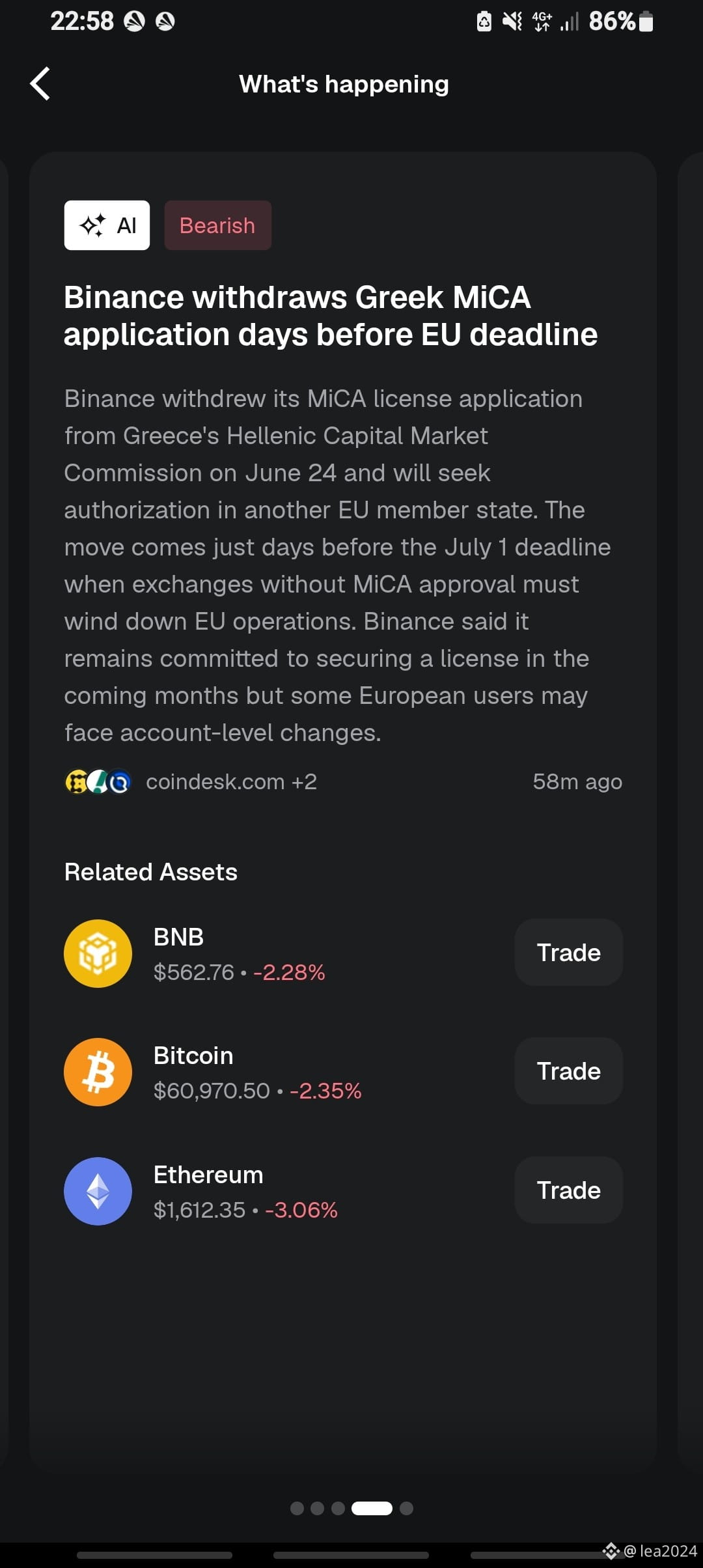
BREAKING: 🇪🇺 Binance confirms it will not obtain a MiCA license before the June 30 deadline.
Starting July 1, service restrictions will begin:
• No new users
• No new positions
• Services will be gradually reduced
• Existing users can close positions and withdraw their crypto at any time
• Crypto withdrawals will remain available after July 1
This shows how serious the EU’s MiCA regulations have become.
Crypto companies without a MiCA license must stop their operations in the EU.
July 1, 2026 could be one of the most significant regulatory turning points for the European crypto market. your assets are going to be locked 🔒🔒🔒🔒🔒
BREAKING: 🇪🇺 Binance confirms it will not obtain a MiCA license before the June 30 deadline.
Starting July 1, service restrictions will begin:
• No new users
• No new positions
• Services will be gradually reduced
• Existing users can close positions and withdraw their crypto at any time
• Crypto withdrawals will remain available after July 1
This shows how serious the EU’s MiCA regulations have become.
Crypto companies without a MiCA license must stop their operations in the EU.
July 1, 2026 could be one of the most significant regulatory turning points for the European crypto market. your assets are going to be locked 🔒🔒🔒🔒🔒


BullRun_Signals
·
--
BullishBREAKING: 🇪🇺 Europe BANNED cash payments over €10,000 and will require ID for every Bitcoin transaction starting in 2027.
While America talks about zero capital gains tax on Bitcoin.
The UAE builds crypto banks with virtually no restrictions.
Europe is building the financial surveillance state.
$HEI
$VELVET
$SYN
While America talks about zero capital gains tax on Bitcoin.
The UAE builds crypto banks with virtually no restrictions.
Europe is building the financial surveillance state.
$HEI
$VELVET
$SYN


Nuts坚果
·
--
Wishing you a prosperous Dragon Boat Festival!
Crypto Web3 Today
·
--
Bullish⚠️ALERT: POLYGON'S $250 MILLION ZKEVM IS SHUTTING DOWN JULY 1.
Polygon zkEVM, once its flagship Ethereum scaling product, is ending operations after running at over $1M in annual losses.
CEO Marc Boiron says the team stopped working on it “a year and a half ago.”
$POL
Polygon zkEVM, once its flagship Ethereum scaling product, is ending operations after running at over $1M in annual losses.
CEO Marc Boiron says the team stopped working on it “a year and a half ago.”
$POL



mdaminulislam98
·
--
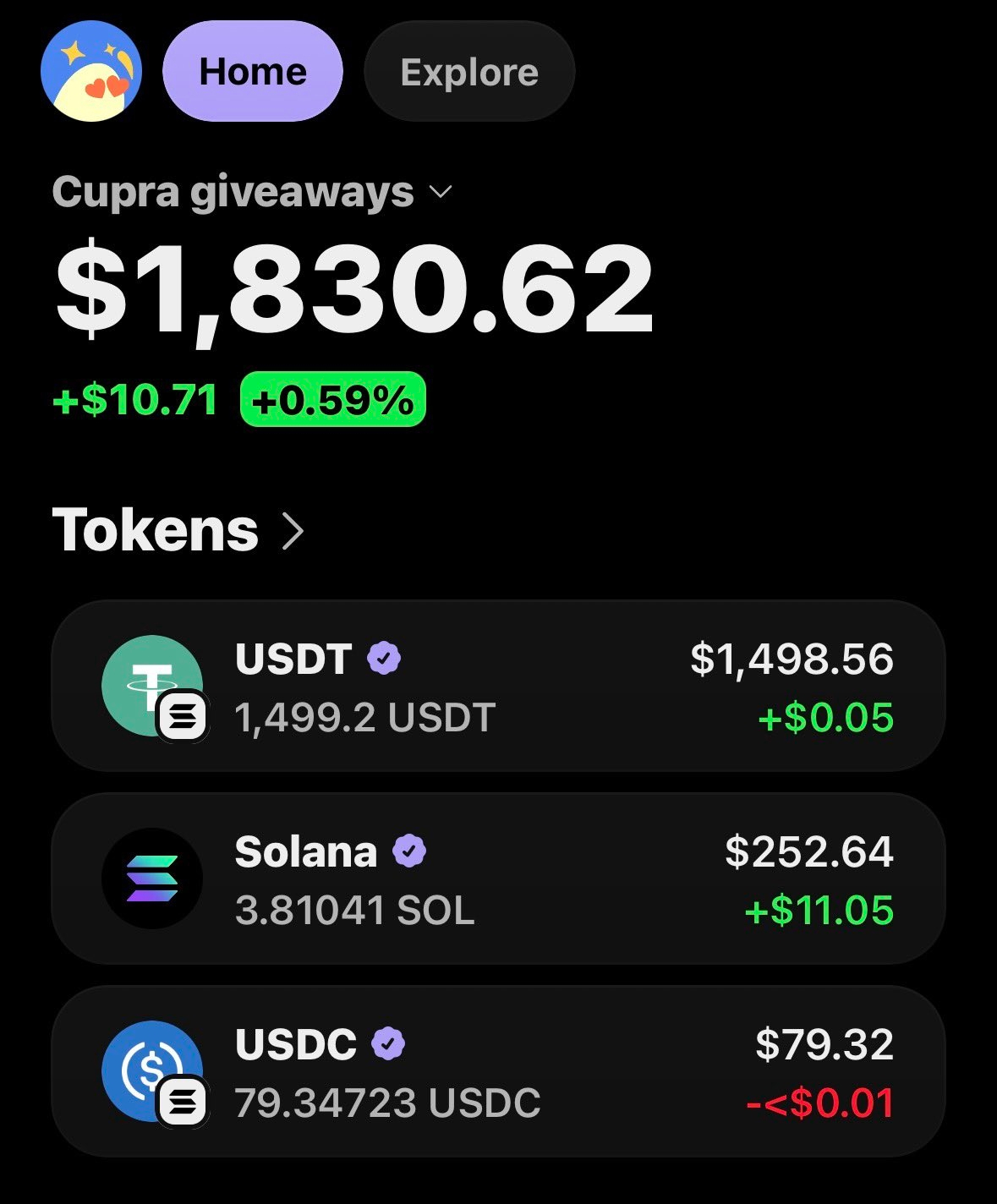
Giving away 0.0076 $BTC + 215 $XRP
As promised, I’m sending 0.007 #Bitcoin (~$500) + 215 $XRP (~$250) to one lucky follower.
Like, retweet 🔔 & comment 'done'.
Will pick a winner via @grok
in ~96 hours, must follow & open DMs.
#sol #USDT
As promised, I’m sending 0.007 #Bitcoin (~$500) + 215 $XRP (~$250) to one lucky follower.
Like, retweet 🔔 & comment 'done'.
Will pick a winner via @grok
in ~96 hours, must follow & open DMs.
#sol #USDT

Crypto Nations
·
--
Binance Referral Code Ecuador: Use “CODE2026” for $19,800 Bonus & 45% Fee Discount
As cryptocurrency adoption surges rapidly across Latin America, Ecuador is quickly becoming a premier hotspot for digital asset optimization. Because Ecuador operates natively on the US Dollar (USD) economy, local users are increasingly turning to liquid global platforms to safely build wealth, hedge their fiat portfolios, and seamlessly participate in the global Web3 ecosystem. Binance stands as the undisputed leading exchange for Ecuadorian crypto traders, offering unparalleled order book liquidity and highly competitive baseline trading fees.
However, signing up directly through a standard retail layout means completely missing out on crucial bottom-line capital savings. By executing your registration with the verified Binance referral code Ecuador "CODE2026" during your initial account setup, you instantly secure a lifetime spot trading fee discount of up to 45% and unlock exclusive eligibility for a premium welcome rewards package worth up to $19,800.
What is the Best Binance Promo Code in Ecuador?
If you are searching for the most profitable, secure method to open your corporate or retail exchange profile, CODE2026represents the highest-tier affiliate partner configuration available in 2026. Here is the exact structural breakdown of the fee markdown parameters applied directly to your new dashboard:
• Instant 20% Fee Reduction: The code automatically triggers a system-level 20% commission markdown on all your spot and derivatives trades. This operates as a permanent account architecture feature that never expires.
• Maximize to 45% with BNB Integration: When you activate the internal toggle to clear your transaction commissions using Binance Coin (BNB), your cumulative structural discount multiplies to a massive 45%, keeping more of your yield inside your active digital wallet.
• Up to $19,800 Welcome Rewards: Entering this code flags your profile for high-tier incentives. As you systematically complete basic onboarding tasks within the integrated Rewards Center (such as finalizing KYC identity verification and executing your initial deposits), you unlock structured bonus tiers pulling from a pool reaching up to $19,800.
How to Register on Binance from Ecuador (Step-by-Step)
Securing your permanent lifetime exchange discounts and maximizing your welcome rewards takes less than two minutes. Follow this validated onboarding sequence to guarantee your promotion is applied correctly:
👉 Secure Registration Link: https://accounts.binance.com/register?ref=CODE2026
1. Open the Registration Page: Click the official secure affiliate link provided above to launch the setup interface.
2. Create Your Login Credentials: Input an active personal email address or a verified mobile phone number and configure a highly secure password to protect your digital identity.
3. Verify the Referral ID Box: Ensure that the "Referral ID (Optional)" box explicitly displays the code: CODE2026. If you utilized our direct tracking link, this parameter locks in automatically.
4. Verify Your Identity (KYC): To satisfy international compliance and security standards, seamlessly verify your profile using a valid Ecuadorian identity card (Cédula de Identidad) or your official passport.
5. Claim Your Rewards Center Vouchers: Once your documents achieve automated approval, log into your profile dashboard, open the Rewards Center tab, and execute your first deposit or trade milestones to activate your $19,800 bonus tiers.
Depositing and Withdrawing Crypto in Ecuador
A frequent question among emerging Ecuadorian investors is how to fund and withdraw from their platform balance locally. Since Ecuador operates natively with the US Dollar (USD), exchange accounting is exceptionally convenient, eliminating complex foreign currency conversions.
While international bank wires can occasionally be slow or face strict localized compliance checks, the native Binance P2P (Peer-to-Peer) marketplace stands as the most popular, deeply liquid, and efficient method inside Ecuador. Traders can effortlessly buy and sell stablecoins (USDT), Bitcoin (BTC), or Ethereum (ETH) directly with other verified, escrow-protected users using fast local bank transfers (including major institutions like Banco Pichincha, Banco Guayaquil, or Produbanco) with absolute zero additional platform middleman fees. Alternatively, you can deploy standard international credit or debit cards to lock in instant digital asset acquisitions directly via the fiat gateway.
Last Updated: June 18, 2026
However, signing up directly through a standard retail layout means completely missing out on crucial bottom-line capital savings. By executing your registration with the verified Binance referral code Ecuador "CODE2026" during your initial account setup, you instantly secure a lifetime spot trading fee discount of up to 45% and unlock exclusive eligibility for a premium welcome rewards package worth up to $19,800.
What is the Best Binance Promo Code in Ecuador?
If you are searching for the most profitable, secure method to open your corporate or retail exchange profile, CODE2026represents the highest-tier affiliate partner configuration available in 2026. Here is the exact structural breakdown of the fee markdown parameters applied directly to your new dashboard:
• Instant 20% Fee Reduction: The code automatically triggers a system-level 20% commission markdown on all your spot and derivatives trades. This operates as a permanent account architecture feature that never expires.
• Maximize to 45% with BNB Integration: When you activate the internal toggle to clear your transaction commissions using Binance Coin (BNB), your cumulative structural discount multiplies to a massive 45%, keeping more of your yield inside your active digital wallet.
• Up to $19,800 Welcome Rewards: Entering this code flags your profile for high-tier incentives. As you systematically complete basic onboarding tasks within the integrated Rewards Center (such as finalizing KYC identity verification and executing your initial deposits), you unlock structured bonus tiers pulling from a pool reaching up to $19,800.
How to Register on Binance from Ecuador (Step-by-Step)
Securing your permanent lifetime exchange discounts and maximizing your welcome rewards takes less than two minutes. Follow this validated onboarding sequence to guarantee your promotion is applied correctly:
👉 Secure Registration Link: https://accounts.binance.com/register?ref=CODE2026
1. Open the Registration Page: Click the official secure affiliate link provided above to launch the setup interface.
2. Create Your Login Credentials: Input an active personal email address or a verified mobile phone number and configure a highly secure password to protect your digital identity.
3. Verify the Referral ID Box: Ensure that the "Referral ID (Optional)" box explicitly displays the code: CODE2026. If you utilized our direct tracking link, this parameter locks in automatically.
4. Verify Your Identity (KYC): To satisfy international compliance and security standards, seamlessly verify your profile using a valid Ecuadorian identity card (Cédula de Identidad) or your official passport.
5. Claim Your Rewards Center Vouchers: Once your documents achieve automated approval, log into your profile dashboard, open the Rewards Center tab, and execute your first deposit or trade milestones to activate your $19,800 bonus tiers.
Depositing and Withdrawing Crypto in Ecuador
A frequent question among emerging Ecuadorian investors is how to fund and withdraw from their platform balance locally. Since Ecuador operates natively with the US Dollar (USD), exchange accounting is exceptionally convenient, eliminating complex foreign currency conversions.
While international bank wires can occasionally be slow or face strict localized compliance checks, the native Binance P2P (Peer-to-Peer) marketplace stands as the most popular, deeply liquid, and efficient method inside Ecuador. Traders can effortlessly buy and sell stablecoins (USDT), Bitcoin (BTC), or Ethereum (ETH) directly with other verified, escrow-protected users using fast local bank transfers (including major institutions like Banco Pichincha, Banco Guayaquil, or Produbanco) with absolute zero additional platform middleman fees. Alternatively, you can deploy standard international credit or debit cards to lock in instant digital asset acquisitions directly via the fiat gateway.
Last Updated: June 18, 2026



Binance News
·
--
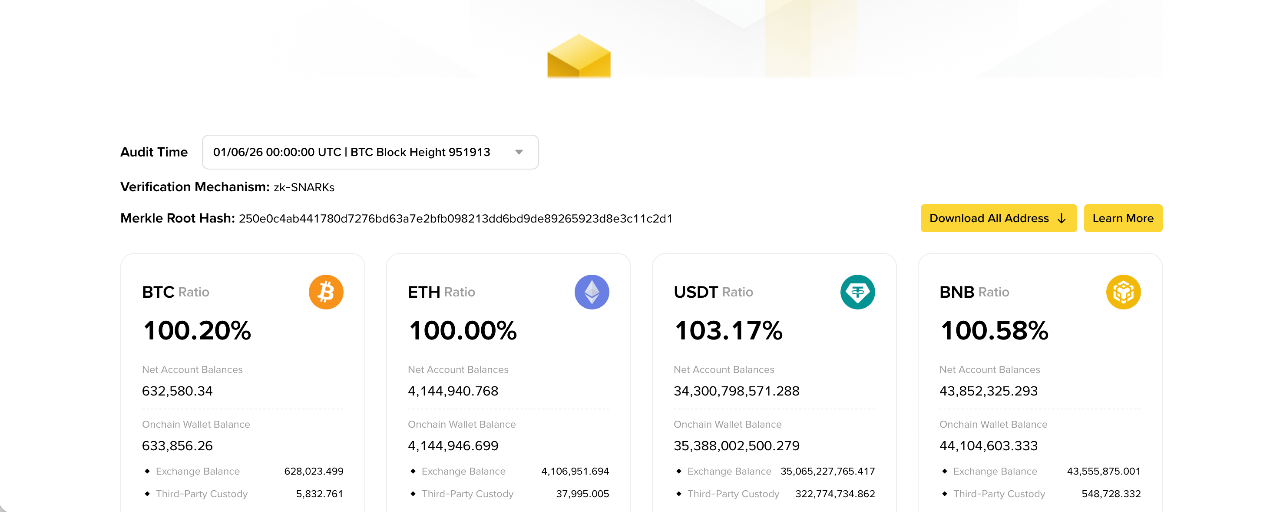
Binance Releases Updated Proof of Reserves, BTC Reserve Ratio at 100.2%
Binance has released an updated Proof of Reserves, showing that asset reserves consistently exceed a 1:1 ratio to safeguard user funds. Among these, the BNB reserve ratio stands at 100.58%, the Bitcoin reserve ratio at 100.20%, and the ETH reserve ratio at 100%. The USDT reserve ratio is 103.17%.
SAC-King-你真棒-带我走
·
--
Bullish🌷🌹🎉💓 SAC-KING Square Family 🏡
✳️ Follow & 🔃🔃 REPOST
✳️ LIKE & COMMENT
✳️ SHARE
✳️ GO FAST ⏩ ➡️ ⏩ ➡️
$XRP $ROBO $BNB
#BinanceSquareFamily #GrowWithSAC
#Write2Earn
✳️ Follow & 🔃🔃 REPOST
✳️ LIKE & COMMENT
✳️ SHARE
✳️ GO FAST ⏩ ➡️ ⏩ ➡️
$XRP $ROBO $BNB
#BinanceSquareFamily #GrowWithSAC
#Write2Earn

DalzielVu
·
--
Vietnam Clarifies New Crypto Rules: Holding Crypto Won’t Be Punished
A lot of confusion has been circulating around Vietnam’s upcoming crypto framework, but regulators have now made one thing clear:
✅ Investors will NOT be forced to bring all crypto assets back to Vietnam. ✅ Holding crypto in personal wallets remains legal. ✅ No penalties apply if assets are simply held and not traded.
However, there is an important change ahead:
⏳ Six months after Vietnam licenses its first crypto service provider (VASP), all new crypto transactions must be conducted through licensed platforms operating within the country.
Another notable point:
🔹 Existing crypto holders will be allowed to participate in the pilot market. 🔹 New investors will not yet be allowed to open trading accounts. 🔹 Trading and settlements will be conducted in Vietnamese Dong (VND).
🏛️ The government is also setting a very high bar for licensed crypto businesses:
• Minimum charter capital: 10 trillion VND • At least 65% institutional ownership • Strict compliance and operational requirements
Meanwhile, authorities have identified four major crypto-related risks:
⚠️ Investment scams ⚠️ Wallet theft and cybercrime ⚠️ Money laundering ⚠️ Corruption and regulatory abuse
The message from regulators is becoming clearer: Vietnam is not banning crypto it is building a controlled framework designed to increase transparency, investor protection, and institutional participation.
This could be a major step toward bringing crypto further into the country's financial system.
$BTC $ETH
#crypto #bitcoin #Vietnam #blockchain #Regulation
✅ Investors will NOT be forced to bring all crypto assets back to Vietnam. ✅ Holding crypto in personal wallets remains legal. ✅ No penalties apply if assets are simply held and not traded.
However, there is an important change ahead:
⏳ Six months after Vietnam licenses its first crypto service provider (VASP), all new crypto transactions must be conducted through licensed platforms operating within the country.
Another notable point:
🔹 Existing crypto holders will be allowed to participate in the pilot market. 🔹 New investors will not yet be allowed to open trading accounts. 🔹 Trading and settlements will be conducted in Vietnamese Dong (VND).
🏛️ The government is also setting a very high bar for licensed crypto businesses:
• Minimum charter capital: 10 trillion VND • At least 65% institutional ownership • Strict compliance and operational requirements
Meanwhile, authorities have identified four major crypto-related risks:
⚠️ Investment scams ⚠️ Wallet theft and cybercrime ⚠️ Money laundering ⚠️ Corruption and regulatory abuse
The message from regulators is becoming clearer: Vietnam is not banning crypto it is building a controlled framework designed to increase transparency, investor protection, and institutional participation.
This could be a major step toward bringing crypto further into the country's financial system.
$BTC $ETH
#crypto #bitcoin #Vietnam #blockchain #Regulation

Pelin Ay
·
--
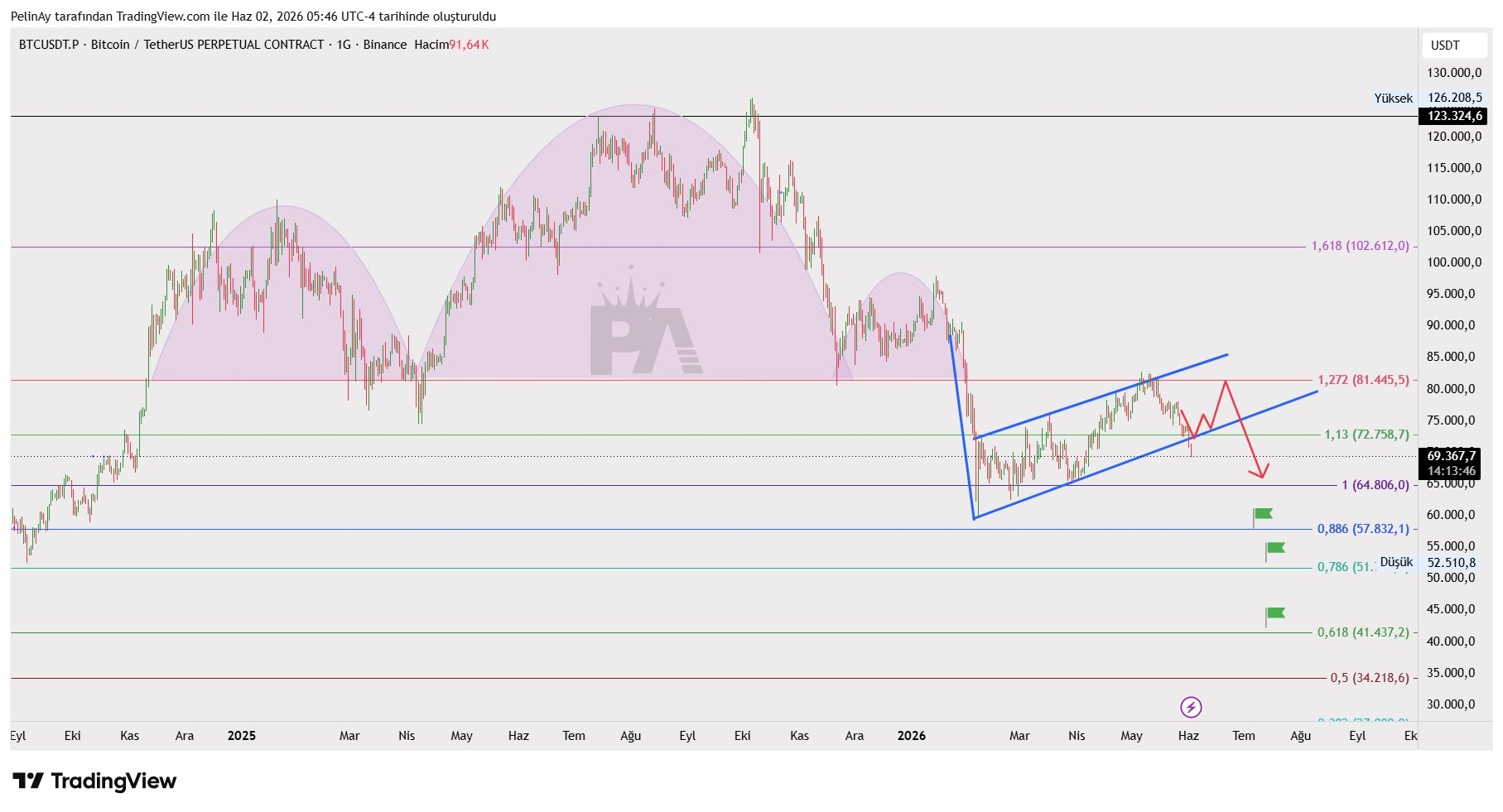
🚨 BITCOIN BUYING TIME IS APPROACHING!!!
For months, I've been warning about this decline by combining technical and on-chain analysis. Those who were patient and waited are happy now. What path will we follow from here?
#Bitcoin Important Supports:
🔺$64,800 (Important support. The first level we will start buying at if there is no high-volume breakout)
🔺$57,800
🔺$51,750
🔺$41,500 (Last buying zone)
after that, wait. Of course, it's not correct to place orders at these levels precisely. A margin of error of a few thousand is quite normal. This doesn't mean it will definitely fall to $41,500. That's why staggered buying is important. None of us can know exactly where it will turn around. $BTC
For months, I've been warning about this decline by combining technical and on-chain analysis. Those who were patient and waited are happy now. What path will we follow from here?
#Bitcoin Important Supports:
🔺$64,800 (Important support. The first level we will start buying at if there is no high-volume breakout)
🔺$57,800
🔺$51,750
🔺$41,500 (Last buying zone)
after that, wait. Of course, it's not correct to place orders at these levels precisely. A margin of error of a few thousand is quite normal. This doesn't mean it will definitely fall to $41,500. That's why staggered buying is important. None of us can know exactly where it will turn around. $BTC

RUMI CRYPTO107
·
--
OpenLedger Isn’t Just Building AI—It’s Building the Trust That Keeps the Whole System Together
I put a small bag into $OPEN a while back, nothing crazy, just enough to force myself to actually pay attention instead of just scrolling past the updates like I do with most projects. At first I figured it was just another AI thing, but the more I sat with it, the less I found myself caring about the usual hype — model benchmarks, slick demos, all that. Something quieter kept tugging at me instead.
It started reminding me of those really solid franchise spots you see around. You know the ones — every location kinda runs on its own, but somehow it still feels consistent and trustworthy no matter where you go. That doesn’t happen by accident. It’s all the behind-the-scenes stuff: rules that people actually stick to, incentives that line up for the long run, real accountability, and a setup that stops everything from slowly drifting apart over time.
That’s the piece I keep coming back to with AI these days. Once you start connecting live data, outside contributors, agents running around on their own, execution layers, and all those feedback loops, it stops being one neat little tool and turns into this messy, living network. And every new piece you add? It becomes another spot where things can quietly start to fray — quality slips a bit, truth gets fuzzy, reliability dips without anyone raising a flag right away.
Most projects are still in a full sprint to build the smartest agent possible. OpenLedger feels like it’s playing a different, less flashy game: focusing on the coordination layer. Stuff like fairly tracking contributions, keeping incentives honest over time, and setting those invisible rules so thousands of moving parts don’t fall out of sync. It’s not the kind of work that gets cool screenshots, but man, I’m starting to think it’s exactly what will decide whether these AI systems stay trustworthy once they actually get huge.
Because big systems don’t usually blow up in one big dramatic crash. They wear down slowly — one slightly off incentive here, data that drifts a little there, feedback loops that get noisier, reliability that drops a couple percent at a time. None of it feels like a big deal in the moment… until it all adds up and the trust just starts leaking out.
I’ve seen the exact same pattern in other industries. Everyone gets excited about the shiny product, but it’s the boring operational backbone that decides if it actually holds up when things scale.
That’s why OpenLedger is still sitting on my watchlist. Not because I think it’s about to moon tomorrow or because every update has been flawless — there’ve definitely been moments where I stepped back and wondered if I was overthinking the whole thing. But the longer I follow it, the more I keep circling back to this one simple idea:
Maybe the real edge in AI infrastructure won’t come from whoever builds the single smartest model. It’ll come from whoever figures out how to build the system where all that intelligence can actually keep working reliably, even as everything around it gets insanely complex.
Right now that thought feels pretty subtle.
I’ve got a hunch it won’t stay that way for long.
$OPEN #openledger @Openledger
It started reminding me of those really solid franchise spots you see around. You know the ones — every location kinda runs on its own, but somehow it still feels consistent and trustworthy no matter where you go. That doesn’t happen by accident. It’s all the behind-the-scenes stuff: rules that people actually stick to, incentives that line up for the long run, real accountability, and a setup that stops everything from slowly drifting apart over time.
That’s the piece I keep coming back to with AI these days. Once you start connecting live data, outside contributors, agents running around on their own, execution layers, and all those feedback loops, it stops being one neat little tool and turns into this messy, living network. And every new piece you add? It becomes another spot where things can quietly start to fray — quality slips a bit, truth gets fuzzy, reliability dips without anyone raising a flag right away.
Most projects are still in a full sprint to build the smartest agent possible. OpenLedger feels like it’s playing a different, less flashy game: focusing on the coordination layer. Stuff like fairly tracking contributions, keeping incentives honest over time, and setting those invisible rules so thousands of moving parts don’t fall out of sync. It’s not the kind of work that gets cool screenshots, but man, I’m starting to think it’s exactly what will decide whether these AI systems stay trustworthy once they actually get huge.
Because big systems don’t usually blow up in one big dramatic crash. They wear down slowly — one slightly off incentive here, data that drifts a little there, feedback loops that get noisier, reliability that drops a couple percent at a time. None of it feels like a big deal in the moment… until it all adds up and the trust just starts leaking out.
I’ve seen the exact same pattern in other industries. Everyone gets excited about the shiny product, but it’s the boring operational backbone that decides if it actually holds up when things scale.
That’s why OpenLedger is still sitting on my watchlist. Not because I think it’s about to moon tomorrow or because every update has been flawless — there’ve definitely been moments where I stepped back and wondered if I was overthinking the whole thing. But the longer I follow it, the more I keep circling back to this one simple idea:
Maybe the real edge in AI infrastructure won’t come from whoever builds the single smartest model. It’ll come from whoever figures out how to build the system where all that intelligence can actually keep working reliably, even as everything around it gets insanely complex.
Right now that thought feels pretty subtle.
I’ve got a hunch it won’t stay that way for long.
$OPEN #openledger @Openledger


StellaAura
·
--
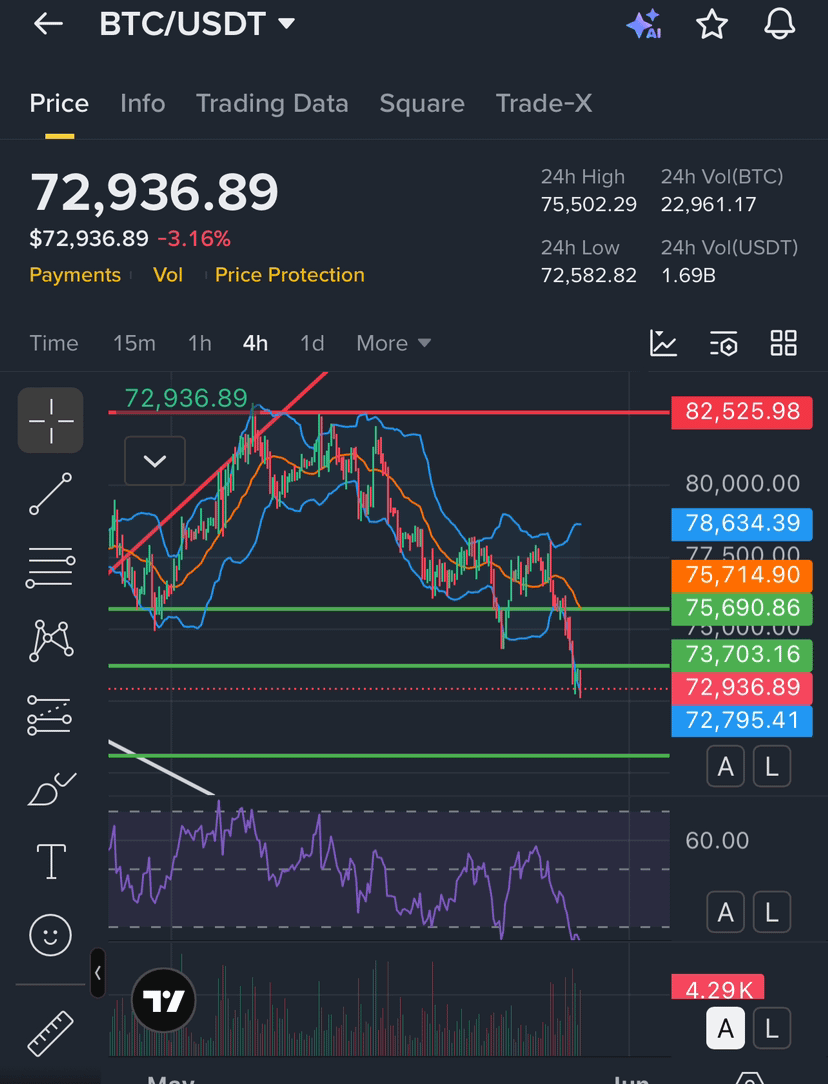
BearishBTC RECENT ANALYSIS.
$BTC
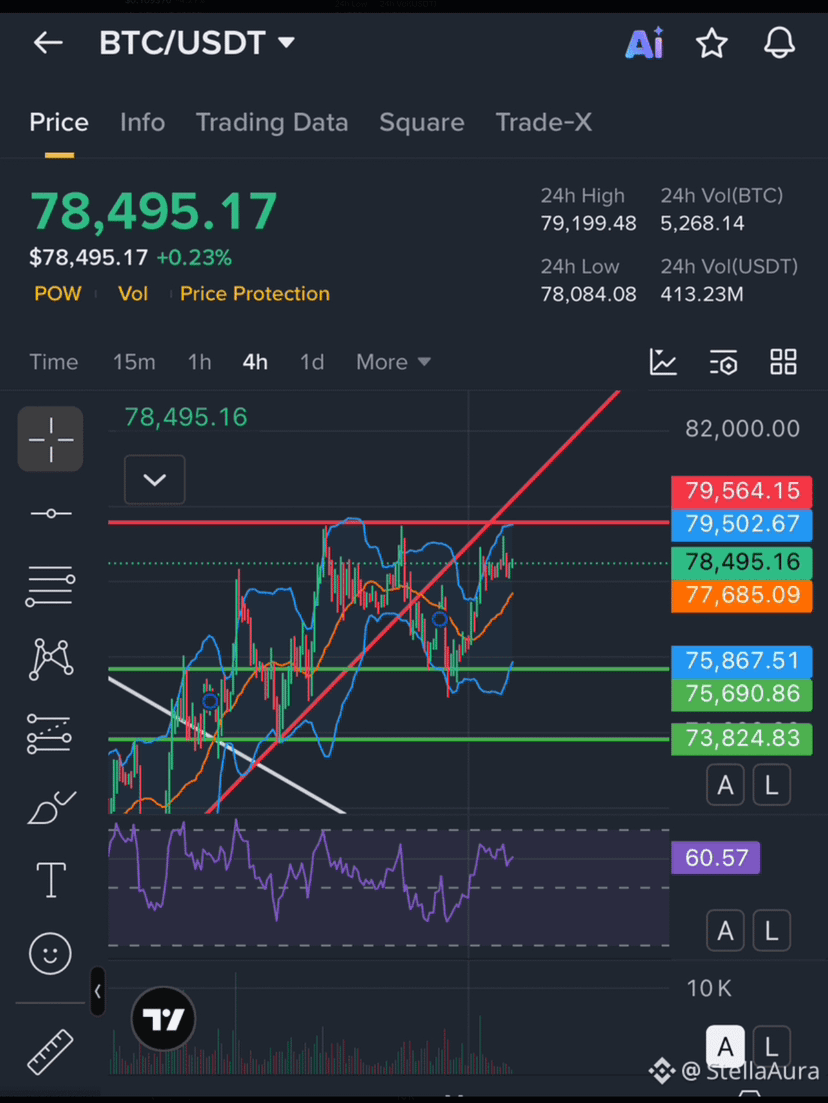
I was Clear from the very begening that BTC was’nt going to have a Magical 102k wick, neither it would dump directly to the 70k levels. Thats the best part about BTC, it shows real momentum and not a sudden smart money trick. Lets be honest, we all knew the dump was due! The Chart i shared two weeks ago? btc is moving in that exact direction and i kept reposting for everyone to lock in the gains or accept the loss.
The current scenario is still the same as i mentioned before, the price is moving for lower levels step by step and my next target is 70,577 and then depending on the momentum around that level, we’ll know if there would be a relief bounce or furthur dump. The overall market sentiment is bearish at the moment and remains bearish until BTC reclaims and breakout above 78,600k zone.
You can long scalp when the candles favours or choose to short and sit back and watch the price go down one candle a day until it reaches my last target for this dump around 60k.
BTC is a strong candidate and panic selling your spot coins is a waste, rather… DCA on every good key zone you reach.
Wishing everyone a successful trade.
$BTC
I was Clear from the very begening that BTC was’nt going to have a Magical 102k wick, neither it would dump directly to the 70k levels. Thats the best part about BTC, it shows real momentum and not a sudden smart money trick. Lets be honest, we all knew the dump was due! The Chart i shared two weeks ago? btc is moving in that exact direction and i kept reposting for everyone to lock in the gains or accept the loss.
The current scenario is still the same as i mentioned before, the price is moving for lower levels step by step and my next target is 70,577 and then depending on the momentum around that level, we’ll know if there would be a relief bounce or furthur dump. The overall market sentiment is bearish at the moment and remains bearish until BTC reclaims and breakout above 78,600k zone.
You can long scalp when the candles favours or choose to short and sit back and watch the price go down one candle a day until it reaches my last target for this dump around 60k.
BTC is a strong candidate and panic selling your spot coins is a waste, rather… DCA on every good key zone you reach.
Wishing everyone a successful trade.
Log in to explore more content