

Satoshi Know How
587 Posts

Satoshi Know How
 Square Verified+
Report
Block User
Making crypto easy, one post at a time. News, tips, and blockchain bits from your crypto buddy — Satoshi Know How.
Open Trade
Frequent Trader
7 Years
155 Following
4.4K+ Followers
3.4K+ Liked
Posts
Portfolio
All
Quotes
Verified
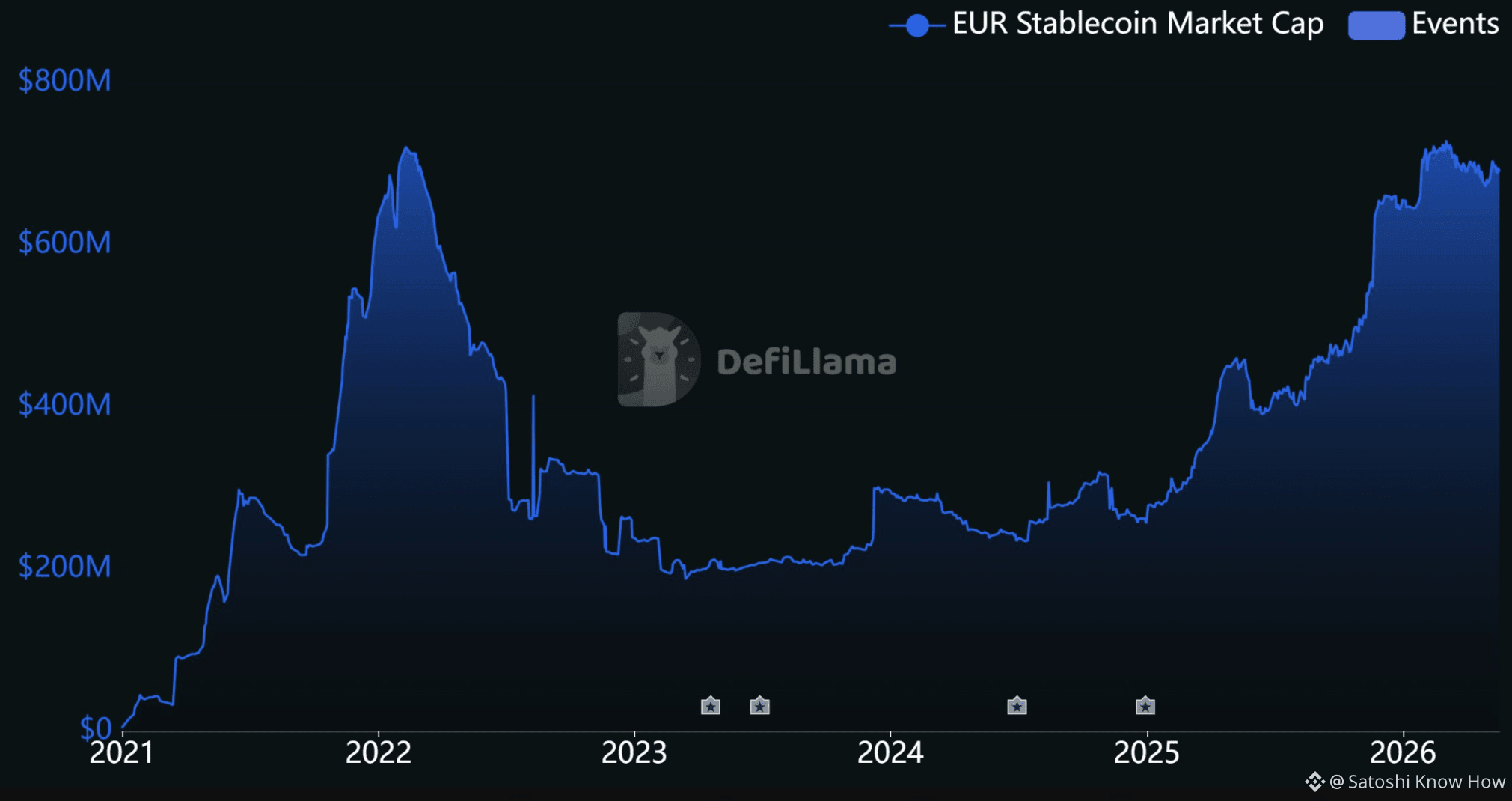
Europe’s stablecoin market is gaining momentum. A year after MiCA regulations came into force, euro-backed stablecoins have reached record market capitalization levels. Regulatory clarity is attracting issuers and helping legitimate projects expand across the European Union. While dollar-backed stablecoins still dominate the global market, euro-denominated alternatives are growing much faster than many analysts expected. Industry observers believe MiCA has played a major role by creating a clear framework for stablecoin operators. If current trends continue, euro stablecoins could become a much larger part of the digital asset ecosystem over the coming years.
Europe’s stablecoin market is gaining momentum. A year after MiCA regulations came into force, euro-backed stablecoins have reached record market capitalization levels. Regulatory clarity is attracting issuers and helping legitimate projects expand across the European Union. While dollar-backed stablecoins still dominate the global market, euro-denominated alternatives are growing much faster than many analysts expected. Industry observers believe MiCA has played a major role by creating a clear framework for stablecoin operators. If current trends continue, euro stablecoins could become a much larger part of the digital asset ecosystem over the coming years.
238
·
--
Bearish
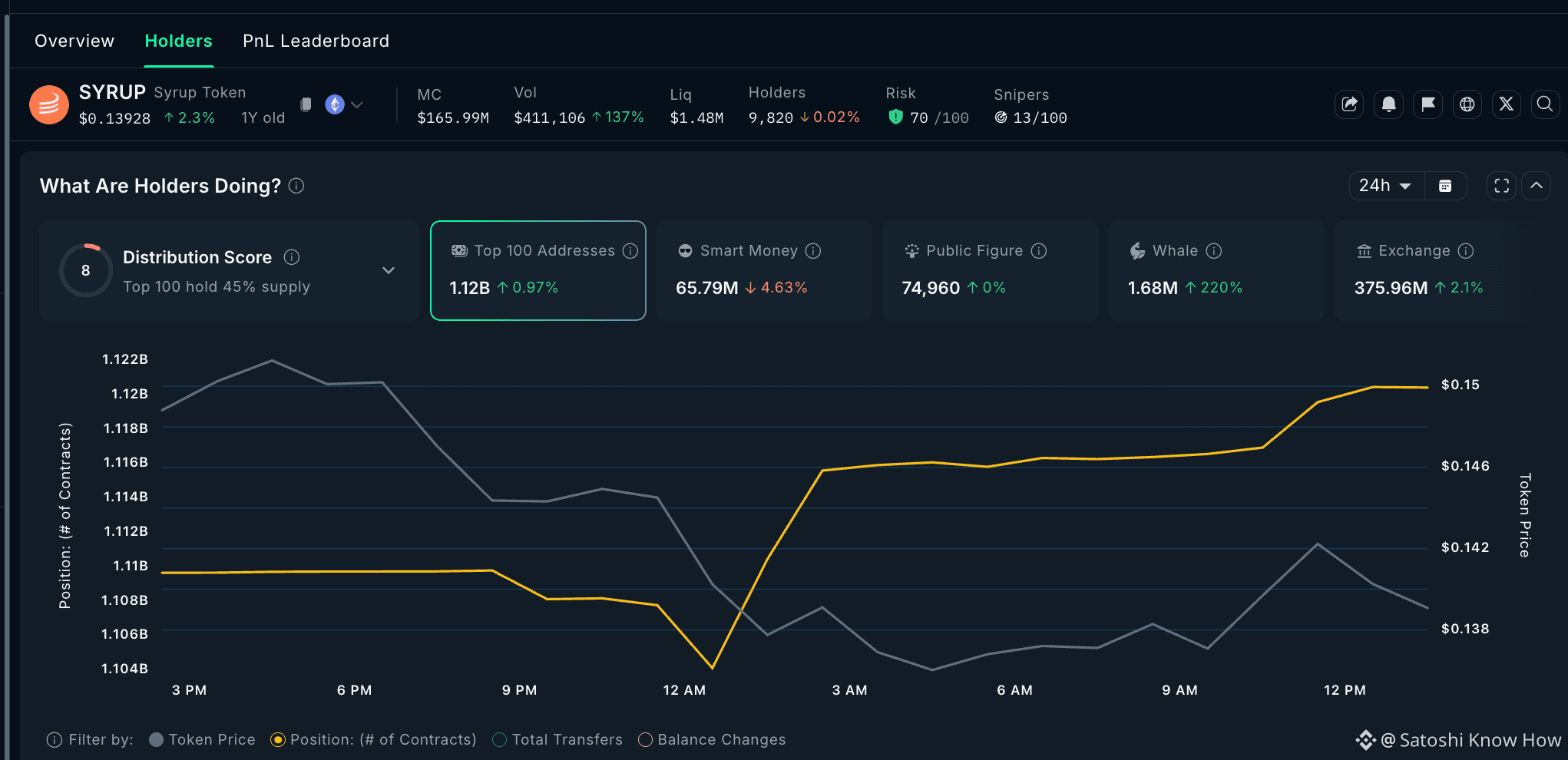
Bitcoin’s recent drop below $66,000 caused more than $1.8 billion in liquidations, but crypto whales aren’t reacting the same way. On-chain data shows that some large investors are accumulating selected assets while others are reducing exposure and locking in profits. This split behavior highlights the uncertainty surrounding the market right now. Historically, whale activity often provides clues about future trends, making these movements worth watching closely. While retail traders focus on short-term price swings, major holders appear to be positioning themselves differently depending on their outlook for the next phase of the market cycle.
Bitcoin’s recent drop below $66,000 caused more than $1.8 billion in liquidations, but crypto whales aren’t reacting the same way. On-chain data shows that some large investors are accumulating selected assets while others are reducing exposure and locking in profits. This split behavior highlights the uncertainty surrounding the market right now. Historically, whale activity often provides clues about future trends, making these movements worth watching closely. While retail traders focus on short-term price swings, major holders appear to be positioning themselves differently depending on their outlook for the next phase of the market cycle.
478
·
--
Bearish
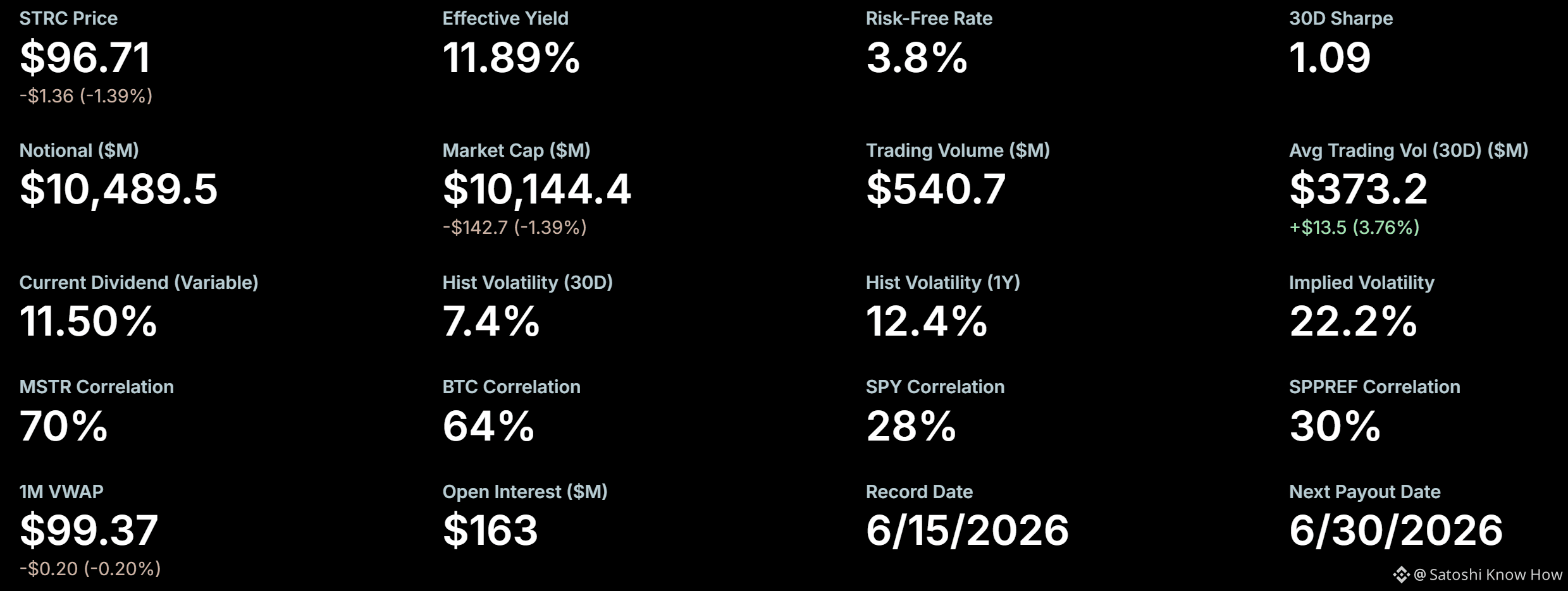
Strategy, formerly MicroStrategy, surprised the market by selling Bitcoin for the first time in more than three years. The company sold 32 BTC worth roughly $2.5 million, triggering a decline in both Bitcoin and Strategy-related securities. While the amount is tiny compared to its massive holdings of more than 840,000 BTC, investors viewed the move as symbolic. Michael Saylor built his reputation around a “never sell” approach, so even a small sale sparked questions about future strategy. Some see it as prudent financial management, while others worry it could weaken confidence in Bitcoin.
Strategy, formerly MicroStrategy, surprised the market by selling Bitcoin for the first time in more than three years. The company sold 32 BTC worth roughly $2.5 million, triggering a decline in both Bitcoin and Strategy-related securities. While the amount is tiny compared to its massive holdings of more than 840,000 BTC, investors viewed the move as symbolic. Michael Saylor built his reputation around a “never sell” approach, so even a small sale sparked questions about future strategy. Some see it as prudent financial management, while others worry it could weaken confidence in Bitcoin.
1
224
·
--
Bearish
Is this the coldest crypto winter ever? Bloomberg analyst Joe Weisenthal thinks so, pointing to Bitcoin’s 47% drop from its $126,000 peak and weaker market sentiment. Not everyone agrees. Many crypto investors argue that similar “crypto is dead” narratives appear during every major correction and are usually followed by a recovery cycle. With BTC trading around $67,000, the debate is heating up once again. Are we witnessing the end of the current cycle, or simply another chapter in Bitcoin’s long history of volatility? The answer could define the rest of 2026.
Is this the coldest crypto winter ever? Bloomberg analyst Joe Weisenthal thinks so, pointing to Bitcoin’s 47% drop from its $126,000 peak and weaker market sentiment. Not everyone agrees. Many crypto investors argue that similar “crypto is dead” narratives appear during every major correction and are usually followed by a recovery cycle. With BTC trading around $67,000, the debate is heating up once again. Are we witnessing the end of the current cycle, or simply another chapter in Bitcoin’s long history of volatility? The answer could define the rest of 2026.
179

Article
Binance Referral CodeLooking for a Binance Referral Code? Register today using the Binance referral code SATOSHIBRO and start with one of the strongest welcome offers currently available on the market.
Sign up here: [https://www.binance.com/join?ref=SATOSHIBRO](https://www.binance.com/join?ref=SATOSHIBRO)More details: [Binance official page](https://www.binance.com/en/events/BESTBONUS)
New users who register through the promotional link can unlock a 20% lifetime discount on Binance Spot and Futures trading fees, alongside access to the new Affiliate-Boosted Welcome Bonus program worth up to $19,800.
Unlike traditional exchange promotions that offer a fixed reward, Binance now uses a task-based system. Users complete specific trading and account milestones to unlock higher reward levels.
The first reward tier requires a net deposit of $100 and at least $3,000 in trading volume within seven days. Completing these requirements unlocks a $100 reward. The second tier increases the requirements to a $200 deposit and $10,000 trading volume, rewarding users with $200.
More active traders can access larger rewards. Binance offers a $400 reward for users who deposit $500 and generate $30,000 in trading volume. Higher levels include a $1,000 reward for a $2,000 deposit and $500,000 volume, while the largest published tier offers $3,000 after a $5,000 deposit and $5 million trading volume.
The promotion is divided into two stages. First, new users complete beginner tasks after registration. After completing KYC verification, they gain access to additional rewards and advanced challenges through the Binance Rewards Hub.
For anyone planning to trade crypto regularly, the 20% fee discount alone can generate substantial long-term savings. Combined with welcome rewards worth up to $19,800, the Binance referral code SATOSHIBRO provides one of the most attractive registration offers currently available.
Binance Referral Code
Looking for a Binance Referral Code? Register today using the Binance referral code SATOSHIBRO and start with one of the strongest welcome offers currently available on the market.
Sign up here: https://www.binance.com/join?ref=SATOSHIBROMore details: Binance official page
New users who register through the promotional link can unlock a 20% lifetime discount on Binance Spot and Futures trading fees, alongside access to the new Affiliate-Boosted Welcome Bonus program worth up to $19,800.
Unlike traditional exchange promotions that offer a fixed reward, Binance now uses a task-based system. Users complete specific trading and account milestones to unlock higher reward levels.
The first reward tier requires a net deposit of $100 and at least $3,000 in trading volume within seven days. Completing these requirements unlocks a $100 reward. The second tier increases the requirements to a $200 deposit and $10,000 trading volume, rewarding users with $200.
More active traders can access larger rewards. Binance offers a $400 reward for users who deposit $500 and generate $30,000 in trading volume. Higher levels include a $1,000 reward for a $2,000 deposit and $500,000 volume, while the largest published tier offers $3,000 after a $5,000 deposit and $5 million trading volume.
The promotion is divided into two stages. First, new users complete beginner tasks after registration. After completing KYC verification, they gain access to additional rewards and advanced challenges through the Binance Rewards Hub.
For anyone planning to trade crypto regularly, the 20% fee discount alone can generate substantial long-term savings. Combined with welcome rewards worth up to $19,800, the Binance referral code SATOSHIBRO provides one of the most attractive registration offers currently available.
Sign up here: https://www.binance.com/join?ref=SATOSHIBROMore details: Binance official page
New users who register through the promotional link can unlock a 20% lifetime discount on Binance Spot and Futures trading fees, alongside access to the new Affiliate-Boosted Welcome Bonus program worth up to $19,800.
Unlike traditional exchange promotions that offer a fixed reward, Binance now uses a task-based system. Users complete specific trading and account milestones to unlock higher reward levels.
The first reward tier requires a net deposit of $100 and at least $3,000 in trading volume within seven days. Completing these requirements unlocks a $100 reward. The second tier increases the requirements to a $200 deposit and $10,000 trading volume, rewarding users with $200.
More active traders can access larger rewards. Binance offers a $400 reward for users who deposit $500 and generate $30,000 in trading volume. Higher levels include a $1,000 reward for a $2,000 deposit and $500,000 volume, while the largest published tier offers $3,000 after a $5,000 deposit and $5 million trading volume.
The promotion is divided into two stages. First, new users complete beginner tasks after registration. After completing KYC verification, they gain access to additional rewards and advanced challenges through the Binance Rewards Hub.
For anyone planning to trade crypto regularly, the 20% fee discount alone can generate substantial long-term savings. Combined with welcome rewards worth up to $19,800, the Binance referral code SATOSHIBRO provides one of the most attractive registration offers currently available.
234
Partly True

Article
Where Is Binance Futures Available in 2026?Binance is still one of the largest crypto exchanges in the world in 2026, but its Futures products are no longer available everywhere. Access now depends heavily on where you live, how local regulators treat crypto derivatives, and Binance’s own risk and compliance policies.
Note: This guide is based on public information available up to late 2025 and early 2026. Rules and platform policies can change quickly, so always double‑check directly on Binance before trading Futures.
What Binance Futures Actually Is
Binance Futures is the derivatives arm of Binance where users can trade perpetual and delivery futures contracts on cryptocurrencies with leverage, typically margined in USDT, USDC, BUSD or coin‑margined collateral. These products allow traders to go long or short with borrowed exposure, which is exactly what makes them attractive to advanced users and concerning for many regulators.
The key idea is that Binance offers more than one product stack, and Futures is just one layer on top of basic spot trading. Having a Binance account does not automatically mean Futures is legal or enabled for your jurisdiction.
Affiliate Block: Start Trading on Binance with a Fee Discount
If you do not yet have a Binance account and Futures is available in your country, you can register through a [special promotional link](https://www.binance.com/join?ref=SATOSHIBRO). By signing up with that link, you receive a 20% discount on trading fees for both spot and futures markets, plus the possibility of earning up to 600 USD in welcome bonuses, depending on your region, trading volume, and Binance’s current campaign rules.
To claim this offer, simply [click the promotional link](https://www.binance.com/join?ref=SATOSHIBRO), create your account, complete KYC, and follow Binance’s instructions for activating fee discounts and bonus vouchers, noting that all benefits are subject to the exchange’s terms and regional eligibility.
From this point onward, this guide focuses purely on availability, regulations, and practical checks. There are no additional sign‑up links or promotional blocks in the rest of the article.
How Binance Decides Where Futures Is Available
Binance does not run Futures everywhere it supports spot trading. Product availability depends on three main factors:
Local financial‑services and derivatives rules, including whether leveraged crypto products are allowed for retail users at all.International sanctions lists and anti‑money‑laundering requirements that force the platform to completely block some jurisdictions.Licensing negotiations and enforcement actions that can push Binance to remove certain products from specific markets, even if basic crypto trading is still allowed.
This leads to an important distinction:
Account support: Binance lets users open an account and often provides spot trading, P2P, simple Earn products and other basic services.Product support: riskier products such as Futures, margin trading, options or some Yield/Earn features can be disabled for users in particular countries, while spot trading continues to work.
Since 2023–2025, European regulations (including MiCA) and national rules in places like the UK, Netherlands and Germany have significantly tightened retail access to leveraged crypto derivatives, which is one major reason why Binance Futures has disappeared from many Western markets.
How to Check If Binance Futures Works in Your Country
Because availability changes over time, the most reliable way to know whether Binance Futures is currently allowed for you is to test it directly in the app or on the website.
Log in to your verified Binance account and go to the Futures section (USD‑M or COIN‑M).Choose a liquid contract such as BTCUSDT or BTCUSDC.Set the minimum order size and the lowest possible leverage to minimize risk.Try to place a very small order.
If, after submitting the order, you see a message that Binance Futures is not available in your country or that the service is restricted in your region, this is a clear sign that Futures is disabled for your jurisdiction. If the Futures tab is completely missing from your interface even though you are logged in, that is another strong indicator that derivatives have been turned off for your location.
Binance relies on a combination of KYC data, IP address, device signals and other compliance tools to determine where you actually are, so using VPNs or other tricks to appear in a different country can violate the platform’s terms and local law. Attempting to bypass restrictions may lead to frozen accounts, liquidation of positions and permanent bans, and in some jurisdictions could create legal exposure for the user.
Countries Fully Banned from Binance (No Access at All)
Some jurisdictions are not just restricted from Futures – they are entirely blocked from using Binance because of international sanctions and related compliance rules. In these places, users cannot legally access Binance services, including spot trading, deposits, withdrawals or any derivatives.
CubaIranSyriaNorth Korea (DPRK)Crimea (Ukraine)Non‑government‑controlled areas of Ukraine
Binance treats these as zero‑tolerance regions: accounts detected as being registered from or accessed in these locations can be frozen and ultimately terminated, and using VPNs or other tools does not change the legal or platform risk.
Countries with Broad Crypto Bans
Another group of countries does not just restrict Binance; they impose very broad bans on cryptocurrency trading in general. In these jurisdictions, all crypto exchanges are effectively illegal or heavily criminalized, which means Binance Futures is off the table by default.
Regulatory trackers and policy summaries commonly highlight, among others, the following countries with sweeping bans or severe restrictions on crypto trading:
AfghanistanAlgeriaBangladeshBoliviaMainland China (with Hong Kong and Taiwan treated separately)EgyptSeveral additional countries where central banks or governments have formally outlawed crypto trading or declared it incompatible with financial law
While the exact enforcement intensity varies, the practical takeaway is simple: if your country bans crypto exchanges in general, Binance Futures is not a legal option and attempting to use it can have serious consequences.
Countries Where Binance Futures Is Explicitly Disabled
The most important category for many readers is the set of countries where Binance itself or reliable trackers state that Futures is not available, even though Binance accounts may still be allowed for some services.
North America
In North America, Binance Futures is not available in:
United StatesCanada
Both countries have strong derivatives regulators (CFTC, SEC in the US; provincial and federal regulators in Canada) and have taken action against unlicensed retail crypto derivatives.
Europe (Most EU/EEA Countries and the UK)
European regulation is one of the main reasons Binance Futures has been cut off for so many users. Futures is not available to residents of the following European countries:
AustriaBulgariaCyprusCzech RepublicDenmarkEstoniaFinlandGermanyGreeceHungaryIcelandIrelandItalyLatviaLiechtensteinLithuaniaLuxembourgMaltaNetherlandsNorwayPolandPortugalRomaniaSlovakiaSloveniaSpainUnited Kingdom
These restrictions are closely linked to MiCA and other national rules that severely limit or outright ban leveraged crypto products for retail investors. Users in these countries may still be able to use Binance for spot trading or certain other services, but should assume that Binance Futures is unavailable unless Binance announces a change.
Asia & Pacific
Binance Futures is not available in the following Asia–Pacific countries:
AustraliaMalaysiaSingaporeJapanMainland China (excluding Hong Kong and Taiwan)IndiaIndonesiaThailandVietnamBangladeshKazakhstanNew Zealand (specifically for Futures, Web3 Wallet and some Binance Square features)
In many of these markets, regulators have taken a cautious stance toward retail leverage or brought specific cases against large international exchanges, prompting Binance to either withdraw derivatives or avoid launching them in the first place.
Middle East & Africa
For the Middle East and Africa, Binance Futures is unavailable in:
AlgeriaArmeniaBahrainDemocratic Republic of CongoEgyptIsraelJordanLebanonMoroccoRwandaSaudi ArabiaUgandaUnited Arab Emirates
The reasons vary from country to country, ranging from sanctions‑related concerns and licensing gaps to conservative stances on leveraged retail products.
South America
In South America Binance Futures is not available in:
BoliviaColombiaEcuadorGuyana
Again, this does not always mean that Binance itself is completely banned; instead, the derivatives layer (Futures) is disabled while some spot or on‑ramp services may continue to operate in a limited way.
Other Jurisdictions
Finally, several other countries and regions appear on the Futures‑unavailable lists, including:
Bosnia and HerzegovinaIranMyanmar
For all of the jurisdictions listed in this section, the safest assumption for 2026 is that Binance Futures is not available to residents, and that any attempt to access it via work‑arounds runs against both Binance’s terms and local regulatory expectations.
Where Binance Futures Is Still Commonly Available
Even with all these bans and restrictions, Binance continues to support a large number of countries for at least some services, and in many of them Futures remains accessible. However, Binance does not maintain a simple, always‑up‑to‑date public list of “Futures‑supported countries”, precisely because regulations and licensing statuses change so often.
Broadly speaking, Binance Futures is more likely to be available in countries that:
Are not subject to international sanctions.Have not imposed explicit retail bans on crypto derivatives.Are not included in Binance’s own negative list of “Futures unavailable” jurisdictions or in third‑party summaries of Futures blocks.
This often includes a range of emerging markets in Latin America, parts of Sub‑Saharan Africa, and parts of Asia where regulators allow leveraged crypto products under relatively flexible or still‑developing frameworks. Exactly which countries fall into this “Futures still available” bucket can change as new laws or enforcement actions arrive, so the most reliable method is still the in‑app availability test combined with reading the latest Binance announcements.
When you see any “list of supported countries” online that is not directly from Binance and not clearly time‑stamped, treat it as a rough snapshot rather than a guarantee.
Travel, Relocation and Changing Access
In a world of shifting regulations, many traders worry about what happens if they move or travel. There are several realistic scenarios to consider:
A user opens a Binance account with Futures enabled in Country A, then relocates to Country B where Binance Futures is not allowed; after updating KYC or being detected in the new location, Binance may disable Futures access or show region‑restriction warnings.If a country introduces new laws or enforcement actions against crypto derivatives, Binance may retroactively disable Futures for users in that jurisdiction, sometimes closing open positions in an orderly fashion and restricting new trades.Short‑term travel by itself does not always trigger immediate changes, but repeated access from restricted IP ranges or KYC updates can lead to a re‑evaluation of eligibility.
For all of these reasons, it is unwise to build strategies that depend on permanent high‑leverage access through a single jurisdiction, because that access can disappear with relatively little notice. Keeping an eye on official Binance emails, announcements and in‑app notifications is essential for anyone using Futures seriously.
Legal and Risk Considerations
Nothing in this article is legal, tax or investment advice; it is purely informational. Every reader remains responsible for understanding and complying with the laws of their own country, including any rules about derivatives, leverage, and taxation.
Binance’s terms of use and risk disclosures require users to confirm that they are not residents of restricted jurisdictions and that they are not accessing the platform from prohibited locations. Violating these terms – for example by using VPNs or false KYC information – can lead to account freezes, forced liquidation of positions and permanent bans, and may expose users to regulatory or even criminal consequences depending on local law.
For most traders, the safest approach is straightforward:
Only use Binance Futures if the platform clearly allows it for your verified account and country.Avoid any tools or methods designed to hide your real location.Size positions conservatively, remembering that leverage adds not only trading risk but also regulatory risk if rules change overnight.
FAQ: Binance Futures Availability in 2026
Can I use Binance Futures in the United States or Canada?
No. Binance Futures is not available to users in the United States or Canada, and Binance has been explicit about restricting derivatives in these markets due to regulatory requirements and enforcement actions. US users instead have access to separate, more limited platforms that do not offer the same Futures products.
Is Binance Futures allowed in the European Union in 2026?
As of the latest public information, most EU and EEA countries – along with the UK – are on Binance’s “Futures unavailable” list, largely because of strict national derivatives rules and the broader MiCA framework. Retail users in these countries should assume they cannot use Binance Futures unless Binance explicitly announces a local, fully compliant derivatives offering.
Can I use a VPN to access Binance Futures from a restricted country?
Using a VPN or similar method to bypass geo‑restrictions violates Binance’s terms of service and may also breach local regulations. Accounts caught doing this risk being frozen or terminated, and there is no guarantee that funds will remain accessible if serious violations occur.
Where can I find the most up‑to‑date information on Binance Futures availability?
The best sources are:
Binance’s official announcements and support pages, including country/region support and risk disclosures.The in‑app test described earlier: trying to place a tiny Futures order and checking whether a region‑restriction message appears.
Third‑party sites that track Binance bans and restrictions can be useful, but always verify against Binance’s own documentation.
What happens to my open positions if Futures gets disabled in my country?
If Binance disables Futures in a particular jurisdiction, it typically restricts new positions and may close existing positions under specific procedures, informing users via email and in‑app notifications. Exact handling depends on the local regulatory trigger and Binance’s policy at that time, which is another reason to monitor announcements closely and avoid excessive leverage that would be hard to unwind on short notice.
Where Is Binance Futures Available in 2026?
Binance is still one of the largest crypto exchanges in the world in 2026, but its Futures products are no longer available everywhere. Access now depends heavily on where you live, how local regulators treat crypto derivatives, and Binance’s own risk and compliance policies.
Note: This guide is based on public information available up to late 2025 and early 2026. Rules and platform policies can change quickly, so always double‑check directly on Binance before trading Futures.
What Binance Futures Actually Is
Binance Futures is the derivatives arm of Binance where users can trade perpetual and delivery futures contracts on cryptocurrencies with leverage, typically margined in USDT, USDC, BUSD or coin‑margined collateral. These products allow traders to go long or short with borrowed exposure, which is exactly what makes them attractive to advanced users and concerning for many regulators.
The key idea is that Binance offers more than one product stack, and Futures is just one layer on top of basic spot trading. Having a Binance account does not automatically mean Futures is legal or enabled for your jurisdiction.
Affiliate Block: Start Trading on Binance with a Fee Discount
If you do not yet have a Binance account and Futures is available in your country, you can register through a special promotional link. By signing up with that link, you receive a 20% discount on trading fees for both spot and futures markets, plus the possibility of earning up to 600 USD in welcome bonuses, depending on your region, trading volume, and Binance’s current campaign rules.
To claim this offer, simply click the promotional link, create your account, complete KYC, and follow Binance’s instructions for activating fee discounts and bonus vouchers, noting that all benefits are subject to the exchange’s terms and regional eligibility.
From this point onward, this guide focuses purely on availability, regulations, and practical checks. There are no additional sign‑up links or promotional blocks in the rest of the article.
How Binance Decides Where Futures Is Available
Binance does not run Futures everywhere it supports spot trading. Product availability depends on three main factors:
Local financial‑services and derivatives rules, including whether leveraged crypto products are allowed for retail users at all.International sanctions lists and anti‑money‑laundering requirements that force the platform to completely block some jurisdictions.Licensing negotiations and enforcement actions that can push Binance to remove certain products from specific markets, even if basic crypto trading is still allowed.
This leads to an important distinction:
Account support: Binance lets users open an account and often provides spot trading, P2P, simple Earn products and other basic services.Product support: riskier products such as Futures, margin trading, options or some Yield/Earn features can be disabled for users in particular countries, while spot trading continues to work.
Since 2023–2025, European regulations (including MiCA) and national rules in places like the UK, Netherlands and Germany have significantly tightened retail access to leveraged crypto derivatives, which is one major reason why Binance Futures has disappeared from many Western markets.
How to Check If Binance Futures Works in Your Country
Because availability changes over time, the most reliable way to know whether Binance Futures is currently allowed for you is to test it directly in the app or on the website.
Log in to your verified Binance account and go to the Futures section (USD‑M or COIN‑M).Choose a liquid contract such as BTCUSDT or BTCUSDC.Set the minimum order size and the lowest possible leverage to minimize risk.Try to place a very small order.
If, after submitting the order, you see a message that Binance Futures is not available in your country or that the service is restricted in your region, this is a clear sign that Futures is disabled for your jurisdiction. If the Futures tab is completely missing from your interface even though you are logged in, that is another strong indicator that derivatives have been turned off for your location.
Binance relies on a combination of KYC data, IP address, device signals and other compliance tools to determine where you actually are, so using VPNs or other tricks to appear in a different country can violate the platform’s terms and local law. Attempting to bypass restrictions may lead to frozen accounts, liquidation of positions and permanent bans, and in some jurisdictions could create legal exposure for the user.
Countries Fully Banned from Binance (No Access at All)
Some jurisdictions are not just restricted from Futures – they are entirely blocked from using Binance because of international sanctions and related compliance rules. In these places, users cannot legally access Binance services, including spot trading, deposits, withdrawals or any derivatives.
CubaIranSyriaNorth Korea (DPRK)Crimea (Ukraine)Non‑government‑controlled areas of Ukraine
Binance treats these as zero‑tolerance regions: accounts detected as being registered from or accessed in these locations can be frozen and ultimately terminated, and using VPNs or other tools does not change the legal or platform risk.
Countries with Broad Crypto Bans
Another group of countries does not just restrict Binance; they impose very broad bans on cryptocurrency trading in general. In these jurisdictions, all crypto exchanges are effectively illegal or heavily criminalized, which means Binance Futures is off the table by default.
Regulatory trackers and policy summaries commonly highlight, among others, the following countries with sweeping bans or severe restrictions on crypto trading:
AfghanistanAlgeriaBangladeshBoliviaMainland China (with Hong Kong and Taiwan treated separately)EgyptSeveral additional countries where central banks or governments have formally outlawed crypto trading or declared it incompatible with financial law
While the exact enforcement intensity varies, the practical takeaway is simple: if your country bans crypto exchanges in general, Binance Futures is not a legal option and attempting to use it can have serious consequences.
Countries Where Binance Futures Is Explicitly Disabled
The most important category for many readers is the set of countries where Binance itself or reliable trackers state that Futures is not available, even though Binance accounts may still be allowed for some services.
North America
In North America, Binance Futures is not available in:
United StatesCanada
Both countries have strong derivatives regulators (CFTC, SEC in the US; provincial and federal regulators in Canada) and have taken action against unlicensed retail crypto derivatives.
Europe (Most EU/EEA Countries and the UK)
European regulation is one of the main reasons Binance Futures has been cut off for so many users. Futures is not available to residents of the following European countries:
AustriaBulgariaCyprusCzech RepublicDenmarkEstoniaFinlandGermanyGreeceHungaryIcelandIrelandItalyLatviaLiechtensteinLithuaniaLuxembourgMaltaNetherlandsNorwayPolandPortugalRomaniaSlovakiaSloveniaSpainUnited Kingdom
These restrictions are closely linked to MiCA and other national rules that severely limit or outright ban leveraged crypto products for retail investors. Users in these countries may still be able to use Binance for spot trading or certain other services, but should assume that Binance Futures is unavailable unless Binance announces a change.
Asia & Pacific
Binance Futures is not available in the following Asia–Pacific countries:
AustraliaMalaysiaSingaporeJapanMainland China (excluding Hong Kong and Taiwan)IndiaIndonesiaThailandVietnamBangladeshKazakhstanNew Zealand (specifically for Futures, Web3 Wallet and some Binance Square features)
In many of these markets, regulators have taken a cautious stance toward retail leverage or brought specific cases against large international exchanges, prompting Binance to either withdraw derivatives or avoid launching them in the first place.
Middle East & Africa
For the Middle East and Africa, Binance Futures is unavailable in:
AlgeriaArmeniaBahrainDemocratic Republic of CongoEgyptIsraelJordanLebanonMoroccoRwandaSaudi ArabiaUgandaUnited Arab Emirates
The reasons vary from country to country, ranging from sanctions‑related concerns and licensing gaps to conservative stances on leveraged retail products.
South America
In South America Binance Futures is not available in:
BoliviaColombiaEcuadorGuyana
Again, this does not always mean that Binance itself is completely banned; instead, the derivatives layer (Futures) is disabled while some spot or on‑ramp services may continue to operate in a limited way.
Other Jurisdictions
Finally, several other countries and regions appear on the Futures‑unavailable lists, including:
Bosnia and HerzegovinaIranMyanmar
For all of the jurisdictions listed in this section, the safest assumption for 2026 is that Binance Futures is not available to residents, and that any attempt to access it via work‑arounds runs against both Binance’s terms and local regulatory expectations.
Where Binance Futures Is Still Commonly Available
Even with all these bans and restrictions, Binance continues to support a large number of countries for at least some services, and in many of them Futures remains accessible. However, Binance does not maintain a simple, always‑up‑to‑date public list of “Futures‑supported countries”, precisely because regulations and licensing statuses change so often.
Broadly speaking, Binance Futures is more likely to be available in countries that:
Are not subject to international sanctions.Have not imposed explicit retail bans on crypto derivatives.Are not included in Binance’s own negative list of “Futures unavailable” jurisdictions or in third‑party summaries of Futures blocks.
This often includes a range of emerging markets in Latin America, parts of Sub‑Saharan Africa, and parts of Asia where regulators allow leveraged crypto products under relatively flexible or still‑developing frameworks. Exactly which countries fall into this “Futures still available” bucket can change as new laws or enforcement actions arrive, so the most reliable method is still the in‑app availability test combined with reading the latest Binance announcements.
When you see any “list of supported countries” online that is not directly from Binance and not clearly time‑stamped, treat it as a rough snapshot rather than a guarantee.
Travel, Relocation and Changing Access
In a world of shifting regulations, many traders worry about what happens if they move or travel. There are several realistic scenarios to consider:
A user opens a Binance account with Futures enabled in Country A, then relocates to Country B where Binance Futures is not allowed; after updating KYC or being detected in the new location, Binance may disable Futures access or show region‑restriction warnings.If a country introduces new laws or enforcement actions against crypto derivatives, Binance may retroactively disable Futures for users in that jurisdiction, sometimes closing open positions in an orderly fashion and restricting new trades.Short‑term travel by itself does not always trigger immediate changes, but repeated access from restricted IP ranges or KYC updates can lead to a re‑evaluation of eligibility.
For all of these reasons, it is unwise to build strategies that depend on permanent high‑leverage access through a single jurisdiction, because that access can disappear with relatively little notice. Keeping an eye on official Binance emails, announcements and in‑app notifications is essential for anyone using Futures seriously.
Legal and Risk Considerations
Nothing in this article is legal, tax or investment advice; it is purely informational. Every reader remains responsible for understanding and complying with the laws of their own country, including any rules about derivatives, leverage, and taxation.
Binance’s terms of use and risk disclosures require users to confirm that they are not residents of restricted jurisdictions and that they are not accessing the platform from prohibited locations. Violating these terms – for example by using VPNs or false KYC information – can lead to account freezes, forced liquidation of positions and permanent bans, and may expose users to regulatory or even criminal consequences depending on local law.
For most traders, the safest approach is straightforward:
Only use Binance Futures if the platform clearly allows it for your verified account and country.Avoid any tools or methods designed to hide your real location.Size positions conservatively, remembering that leverage adds not only trading risk but also regulatory risk if rules change overnight.
FAQ: Binance Futures Availability in 2026
Can I use Binance Futures in the United States or Canada?
No. Binance Futures is not available to users in the United States or Canada, and Binance has been explicit about restricting derivatives in these markets due to regulatory requirements and enforcement actions. US users instead have access to separate, more limited platforms that do not offer the same Futures products.
Is Binance Futures allowed in the European Union in 2026?
As of the latest public information, most EU and EEA countries – along with the UK – are on Binance’s “Futures unavailable” list, largely because of strict national derivatives rules and the broader MiCA framework. Retail users in these countries should assume they cannot use Binance Futures unless Binance explicitly announces a local, fully compliant derivatives offering.
Can I use a VPN to access Binance Futures from a restricted country?
Using a VPN or similar method to bypass geo‑restrictions violates Binance’s terms of service and may also breach local regulations. Accounts caught doing this risk being frozen or terminated, and there is no guarantee that funds will remain accessible if serious violations occur.
Where can I find the most up‑to‑date information on Binance Futures availability?
The best sources are:
Binance’s official announcements and support pages, including country/region support and risk disclosures.The in‑app test described earlier: trying to place a tiny Futures order and checking whether a region‑restriction message appears.
Third‑party sites that track Binance bans and restrictions can be useful, but always verify against Binance’s own documentation.
What happens to my open positions if Futures gets disabled in my country?
If Binance disables Futures in a particular jurisdiction, it typically restricts new positions and may close existing positions under specific procedures, informing users via email and in‑app notifications. Exact handling depends on the local regulatory trigger and Binance’s policy at that time, which is another reason to monitor announcements closely and avoid excessive leverage that would be hard to unwind on short notice.
Note: This guide is based on public information available up to late 2025 and early 2026. Rules and platform policies can change quickly, so always double‑check directly on Binance before trading Futures.
What Binance Futures Actually Is
Binance Futures is the derivatives arm of Binance where users can trade perpetual and delivery futures contracts on cryptocurrencies with leverage, typically margined in USDT, USDC, BUSD or coin‑margined collateral. These products allow traders to go long or short with borrowed exposure, which is exactly what makes them attractive to advanced users and concerning for many regulators.
The key idea is that Binance offers more than one product stack, and Futures is just one layer on top of basic spot trading. Having a Binance account does not automatically mean Futures is legal or enabled for your jurisdiction.
Affiliate Block: Start Trading on Binance with a Fee Discount
If you do not yet have a Binance account and Futures is available in your country, you can register through a special promotional link. By signing up with that link, you receive a 20% discount on trading fees for both spot and futures markets, plus the possibility of earning up to 600 USD in welcome bonuses, depending on your region, trading volume, and Binance’s current campaign rules.
To claim this offer, simply click the promotional link, create your account, complete KYC, and follow Binance’s instructions for activating fee discounts and bonus vouchers, noting that all benefits are subject to the exchange’s terms and regional eligibility.
From this point onward, this guide focuses purely on availability, regulations, and practical checks. There are no additional sign‑up links or promotional blocks in the rest of the article.
How Binance Decides Where Futures Is Available
Binance does not run Futures everywhere it supports spot trading. Product availability depends on three main factors:
Local financial‑services and derivatives rules, including whether leveraged crypto products are allowed for retail users at all.International sanctions lists and anti‑money‑laundering requirements that force the platform to completely block some jurisdictions.Licensing negotiations and enforcement actions that can push Binance to remove certain products from specific markets, even if basic crypto trading is still allowed.
This leads to an important distinction:
Account support: Binance lets users open an account and often provides spot trading, P2P, simple Earn products and other basic services.Product support: riskier products such as Futures, margin trading, options or some Yield/Earn features can be disabled for users in particular countries, while spot trading continues to work.
Since 2023–2025, European regulations (including MiCA) and national rules in places like the UK, Netherlands and Germany have significantly tightened retail access to leveraged crypto derivatives, which is one major reason why Binance Futures has disappeared from many Western markets.
How to Check If Binance Futures Works in Your Country
Because availability changes over time, the most reliable way to know whether Binance Futures is currently allowed for you is to test it directly in the app or on the website.
Log in to your verified Binance account and go to the Futures section (USD‑M or COIN‑M).Choose a liquid contract such as BTCUSDT or BTCUSDC.Set the minimum order size and the lowest possible leverage to minimize risk.Try to place a very small order.
If, after submitting the order, you see a message that Binance Futures is not available in your country or that the service is restricted in your region, this is a clear sign that Futures is disabled for your jurisdiction. If the Futures tab is completely missing from your interface even though you are logged in, that is another strong indicator that derivatives have been turned off for your location.
Binance relies on a combination of KYC data, IP address, device signals and other compliance tools to determine where you actually are, so using VPNs or other tricks to appear in a different country can violate the platform’s terms and local law. Attempting to bypass restrictions may lead to frozen accounts, liquidation of positions and permanent bans, and in some jurisdictions could create legal exposure for the user.
Countries Fully Banned from Binance (No Access at All)
Some jurisdictions are not just restricted from Futures – they are entirely blocked from using Binance because of international sanctions and related compliance rules. In these places, users cannot legally access Binance services, including spot trading, deposits, withdrawals or any derivatives.
CubaIranSyriaNorth Korea (DPRK)Crimea (Ukraine)Non‑government‑controlled areas of Ukraine
Binance treats these as zero‑tolerance regions: accounts detected as being registered from or accessed in these locations can be frozen and ultimately terminated, and using VPNs or other tools does not change the legal or platform risk.
Countries with Broad Crypto Bans
Another group of countries does not just restrict Binance; they impose very broad bans on cryptocurrency trading in general. In these jurisdictions, all crypto exchanges are effectively illegal or heavily criminalized, which means Binance Futures is off the table by default.
Regulatory trackers and policy summaries commonly highlight, among others, the following countries with sweeping bans or severe restrictions on crypto trading:
AfghanistanAlgeriaBangladeshBoliviaMainland China (with Hong Kong and Taiwan treated separately)EgyptSeveral additional countries where central banks or governments have formally outlawed crypto trading or declared it incompatible with financial law
While the exact enforcement intensity varies, the practical takeaway is simple: if your country bans crypto exchanges in general, Binance Futures is not a legal option and attempting to use it can have serious consequences.
Countries Where Binance Futures Is Explicitly Disabled
The most important category for many readers is the set of countries where Binance itself or reliable trackers state that Futures is not available, even though Binance accounts may still be allowed for some services.
North America
In North America, Binance Futures is not available in:
United StatesCanada
Both countries have strong derivatives regulators (CFTC, SEC in the US; provincial and federal regulators in Canada) and have taken action against unlicensed retail crypto derivatives.
Europe (Most EU/EEA Countries and the UK)
European regulation is one of the main reasons Binance Futures has been cut off for so many users. Futures is not available to residents of the following European countries:
AustriaBulgariaCyprusCzech RepublicDenmarkEstoniaFinlandGermanyGreeceHungaryIcelandIrelandItalyLatviaLiechtensteinLithuaniaLuxembourgMaltaNetherlandsNorwayPolandPortugalRomaniaSlovakiaSloveniaSpainUnited Kingdom
These restrictions are closely linked to MiCA and other national rules that severely limit or outright ban leveraged crypto products for retail investors. Users in these countries may still be able to use Binance for spot trading or certain other services, but should assume that Binance Futures is unavailable unless Binance announces a change.
Asia & Pacific
Binance Futures is not available in the following Asia–Pacific countries:
AustraliaMalaysiaSingaporeJapanMainland China (excluding Hong Kong and Taiwan)IndiaIndonesiaThailandVietnamBangladeshKazakhstanNew Zealand (specifically for Futures, Web3 Wallet and some Binance Square features)
In many of these markets, regulators have taken a cautious stance toward retail leverage or brought specific cases against large international exchanges, prompting Binance to either withdraw derivatives or avoid launching them in the first place.
Middle East & Africa
For the Middle East and Africa, Binance Futures is unavailable in:
AlgeriaArmeniaBahrainDemocratic Republic of CongoEgyptIsraelJordanLebanonMoroccoRwandaSaudi ArabiaUgandaUnited Arab Emirates
The reasons vary from country to country, ranging from sanctions‑related concerns and licensing gaps to conservative stances on leveraged retail products.
South America
In South America Binance Futures is not available in:
BoliviaColombiaEcuadorGuyana
Again, this does not always mean that Binance itself is completely banned; instead, the derivatives layer (Futures) is disabled while some spot or on‑ramp services may continue to operate in a limited way.
Other Jurisdictions
Finally, several other countries and regions appear on the Futures‑unavailable lists, including:
Bosnia and HerzegovinaIranMyanmar
For all of the jurisdictions listed in this section, the safest assumption for 2026 is that Binance Futures is not available to residents, and that any attempt to access it via work‑arounds runs against both Binance’s terms and local regulatory expectations.
Where Binance Futures Is Still Commonly Available
Even with all these bans and restrictions, Binance continues to support a large number of countries for at least some services, and in many of them Futures remains accessible. However, Binance does not maintain a simple, always‑up‑to‑date public list of “Futures‑supported countries”, precisely because regulations and licensing statuses change so often.
Broadly speaking, Binance Futures is more likely to be available in countries that:
Are not subject to international sanctions.Have not imposed explicit retail bans on crypto derivatives.Are not included in Binance’s own negative list of “Futures unavailable” jurisdictions or in third‑party summaries of Futures blocks.
This often includes a range of emerging markets in Latin America, parts of Sub‑Saharan Africa, and parts of Asia where regulators allow leveraged crypto products under relatively flexible or still‑developing frameworks. Exactly which countries fall into this “Futures still available” bucket can change as new laws or enforcement actions arrive, so the most reliable method is still the in‑app availability test combined with reading the latest Binance announcements.
When you see any “list of supported countries” online that is not directly from Binance and not clearly time‑stamped, treat it as a rough snapshot rather than a guarantee.
Travel, Relocation and Changing Access
In a world of shifting regulations, many traders worry about what happens if they move or travel. There are several realistic scenarios to consider:
A user opens a Binance account with Futures enabled in Country A, then relocates to Country B where Binance Futures is not allowed; after updating KYC or being detected in the new location, Binance may disable Futures access or show region‑restriction warnings.If a country introduces new laws or enforcement actions against crypto derivatives, Binance may retroactively disable Futures for users in that jurisdiction, sometimes closing open positions in an orderly fashion and restricting new trades.Short‑term travel by itself does not always trigger immediate changes, but repeated access from restricted IP ranges or KYC updates can lead to a re‑evaluation of eligibility.
For all of these reasons, it is unwise to build strategies that depend on permanent high‑leverage access through a single jurisdiction, because that access can disappear with relatively little notice. Keeping an eye on official Binance emails, announcements and in‑app notifications is essential for anyone using Futures seriously.
Legal and Risk Considerations
Nothing in this article is legal, tax or investment advice; it is purely informational. Every reader remains responsible for understanding and complying with the laws of their own country, including any rules about derivatives, leverage, and taxation.
Binance’s terms of use and risk disclosures require users to confirm that they are not residents of restricted jurisdictions and that they are not accessing the platform from prohibited locations. Violating these terms – for example by using VPNs or false KYC information – can lead to account freezes, forced liquidation of positions and permanent bans, and may expose users to regulatory or even criminal consequences depending on local law.
For most traders, the safest approach is straightforward:
Only use Binance Futures if the platform clearly allows it for your verified account and country.Avoid any tools or methods designed to hide your real location.Size positions conservatively, remembering that leverage adds not only trading risk but also regulatory risk if rules change overnight.
FAQ: Binance Futures Availability in 2026
Can I use Binance Futures in the United States or Canada?
No. Binance Futures is not available to users in the United States or Canada, and Binance has been explicit about restricting derivatives in these markets due to regulatory requirements and enforcement actions. US users instead have access to separate, more limited platforms that do not offer the same Futures products.
Is Binance Futures allowed in the European Union in 2026?
As of the latest public information, most EU and EEA countries – along with the UK – are on Binance’s “Futures unavailable” list, largely because of strict national derivatives rules and the broader MiCA framework. Retail users in these countries should assume they cannot use Binance Futures unless Binance explicitly announces a local, fully compliant derivatives offering.
Can I use a VPN to access Binance Futures from a restricted country?
Using a VPN or similar method to bypass geo‑restrictions violates Binance’s terms of service and may also breach local regulations. Accounts caught doing this risk being frozen or terminated, and there is no guarantee that funds will remain accessible if serious violations occur.
Where can I find the most up‑to‑date information on Binance Futures availability?
The best sources are:
Binance’s official announcements and support pages, including country/region support and risk disclosures.The in‑app test described earlier: trying to place a tiny Futures order and checking whether a region‑restriction message appears.
Third‑party sites that track Binance bans and restrictions can be useful, but always verify against Binance’s own documentation.
What happens to my open positions if Futures gets disabled in my country?
If Binance disables Futures in a particular jurisdiction, it typically restricts new positions and may close existing positions under specific procedures, informing users via email and in‑app notifications. Exact handling depends on the local regulatory trigger and Binance’s policy at that time, which is another reason to monitor announcements closely and avoid excessive leverage that would be hard to unwind on short notice.
2.6k

Article
Ripple (XRP) Price Prediction: 2026, 2027, 2030Ripple’s XRP remains one of the most closely watched large-cap cryptocurrencies thanks to its focus on real-world payments, long legal battle with the SEC, and repeated high‑volatility cycles. As regulatory clouds lift and adoption of XRP Ledger–based payment solutions grows, many traders are asking what realistic price targets for 2026, 2027, and 2030 might look like.
This guide breaks down XRP’s fundamentals, its price history, and the key catalysts that could drive future valuations, then translates that into bearish, base‑case, and bullish scenarios rather than fixed “guaranteed” targets. Throughout, keep in mind that crypto assets are highly speculative, and even the best models can be wrong by a wide margin.
Nothing in this article is financial advice or an investment recommendation; always do your own research and never invest money you cannot afford to lose.
Start Trading XRP with a Binance Bonus
If you do not yet have a cryptocurrency exchange account and want to trade XRP, you can register on Binance using a [special promotional link](https://www.binance.com/join?ref=SATOSHIBRO) (click the link in this section in your browser). This promotion grants a 20% discount on both spot and futures trading fees, helping active traders reduce their long‑term costs on every XRP order. In addition, new users can unlock up to 600 USD in welcome bonuses on the platform, depending on their trading activity and the current campaign rules (this is a “up to” amount, not a guaranteed payout).
Remember that cryptocurrency markets are extremely volatile and involve significant risk, so you should only trade with funds you can afford to lose and always use appropriate risk management.
What Is XRP and Why It Matters for Payments
XRP is the native digital asset of the XRP Ledger (XRPL), a decentralized, open‑source blockchain designed specifically for fast, low‑cost value transfer. Transactions typically finalize within a few seconds, with fees measured in fractions of a cent, which contrasts sharply with multi‑day settlement times and high wire costs in traditional cross‑border banking.
The XRP Ledger uses a unique consensus mechanism rather than energy‑intensive mining, allowing the network to process around 1,500 transactions per second while maintaining low latency and modest resource requirements. Ripple, the company, builds enterprise payment solutions such as Ripple Payments (formerly RippleNet) and On‑Demand Liquidity that can use XRP as a bridge asset to move value between currencies in different jurisdictions. Financial institutions and payment providers can tap XRPL’s payment rails to streamline remittances, B2B transfers, and merchant settlements, with XRP functioning as a liquidity tool rather than just a speculative token.
It is important to distinguish between XRP (the token), the XRP Ledger (the underlying network), and Ripple Labs (the company developing payment products on top); they are related but not identical. Long‑term price narratives for XRP often hinge on whether real‑world payment volume and liquidity demand grow on XRPL, not just on trader speculation.
XRP Price History and Major Market Cycles
XRP launched in the early 2010s as one of the first major alternatives to Bitcoin focused on payments rather than store‑of‑value use cases. It spent several years trading at fractions of a cent before exploding in the 2017–2018 bull market, when speculative mania across altcoins pushed XRP to an all‑time high around the high‑3‑dollar range, followed by a brutal multi‑year drawdown.
In December 2020, the U.S. Securities and Exchange Commission (SEC) filed a lawsuit alleging that Ripple’s institutional sales of XRP constituted unregistered securities offerings, triggering one of the steepest sell‑offs in the asset’s history as major U.S. exchanges suspended trading. A 2023 ruling by Judge Analisa Torres found that XRP itself is not a security when traded on public exchanges, although certain institutional sales did violate securities laws, which partially lifted the overhang and led to sharp relief rallies.
After multiple rounds of penalties and negotiations, the case ultimately concluded in 2025 with a settlement and a final civil fine in the low‑nine‑figure range, providing long‑awaited regulatory clarity for XRP in the U.S. market. The end of the lawsuit coincided with strong price spikes above the 3‑dollar zone as investors reassessed the asset’s risk profile, although subsequent volatility and corrections showed that XRP remains far from a one‑way bet. Even today, XRP is known for double‑digit weekly moves and still trades below its previous cycle peak, highlighting the risk in relying on any single long‑term price target.
Key Factors That Will Shape XRP Price by 2030
Several structural drivers are likely to influence XRP’s trajectory toward 2030. These include regulation, adoption of Ripple‑related payment solutions, broader crypto market cycles, and competition from rival networks.
Regulation and the Aftermath of the SEC Case
The SEC–Ripple case centered on whether XRP is a security and whether Ripple’s sales complied with U.S. securities law. The 2023 decision made a crucial distinction: secondary‑market trading of XRP on exchanges is not considered a securities offering, while some institutional sales were treated as unregistered offerings and penalized.
By 2025, Ripple and the SEC agreed to end their appeals, locking in a settlement with a civil penalty but leaving the core finding—that XRP itself is not a security on public markets—intact. This outcome removed much of the legal uncertainty that had kept some exchanges, liquidity providers, and institutional players on the sidelines. However, XRP’s long‑term regulatory outlook still depends on evolving global crypto frameworks, which could either support or constrain usage, particularly in key markets like the U.S., EU, and major Asian financial centers.
Adoption of Ripple’s Technology and XRP Liquidity Use Cases
Ripple’s pitch is that XRP and the XRP Ledger can act as a neutral, high‑speed bridge for cross‑border transfers, reducing the need for nostro/vostro accounts and pre‑funded corridors. As more payment providers and financial institutions test and deploy Ripple’s solutions, transaction volumes running through XRPL and related rails can translate into higher demand for XRP liquidity.
Use cases include remittances, B2B payments, on‑exchange settlement, stablecoin and CBDC interoperability, and merchant settlements, all of which benefit from XRPL’s low fees and 3–5‑second settlement times. If these real‑world flows grow meaningfully by 2030, they could support a higher structural floor for XRP’s valuation, even if speculative cycles still dominate short‑term price action.
Crypto Market Cycles, Bitcoin, and Macro Environment
Historically, XRP has moved in sync with broader crypto cycles, often lagging Bitcoin initially and then outperforming during late‑stage altcoin rotations, before suffering deeper drawdowns in bear markets. Future price paths will depend heavily on whether the market experiences one or more strong bull cycles between now and 2030, especially in an environment of changing interest rates and global liquidity conditions.
Many optimistic XRP forecasts implicitly assume a combination of renewed risk‑on sentiment, expanding crypto adoption, and accommodative macro conditions, while bearish scenarios assume prolonged tight monetary policy and fading appetite for speculative assets. Because macro shocks can quickly change market narratives, any multi‑year XRP prediction should be treated as a conditional scenario, not a fixed path.
Competition from Other Payment and Settlement Networks
XRP is not alone in targeting cross‑border payments and institutional settlement; it competes with stablecoins, other high‑throughput blockchains, and evolving bank‑led solutions. If alternative networks capture the majority of international flows, XRP’s upside could be limited even if the broader crypto market grows. Conversely, if XRPL remains a leading platform for institutional remittances, treasury flows, and CBDC interoperability, some of the more aggressive long‑term price scenarios become more plausible.
How Analysts and Models Build XRP Price Predictions
XRP price predictions for 2026, 2027, and 2030 vary widely because analysts use different methods and assumptions. Technical analysts often rely on support and resistance levels, moving averages, Fibonacci retracements, and cycle analysis to project potential upside or downside based on historical price behavior.
Others incorporate fundamentals such as adoption metrics, regulatory milestones (like the SEC settlement), and expected crypto market cycles, combining them with quantitative models that apply annualized growth rates to current prices. Forecast aggregators and exchange tools sometimes produce base‑case paths where XRP grows gradually each year, resulting in modest single‑digit prices by 2030, while more aggressive sites publish ranges extending into the double digits if adoption and bull‑market conditions align.
Machine‑learning and sentiment‑driven models add another layer, ingesting trading data, social metrics, and macro variables, but these also struggle with regime changes, black‑swan events, and regulatory shocks. In practice, every model is only as good as its assumptions; investors should treat forecasts as scenario tools, not as promises that XRP will reach a specific number by a specific date.
Short‑Term XRP Price Prediction: 2026–2027
XRP Price Prediction for 2026
Heading into 2026, XRP trades in a post‑lawsuit environment where major U.S. legal uncertainties have been largely resolved, but long‑term adoption and macro conditions remain open questions. In recent forecasts, many research pieces and exchange tools cluster 2026 expectations in a broad band from around current levels up to several dollars per token, depending on the underlying assumptions and risk appetite.
A bearish 2026 scenario assumes that global regulation tightens, the crypto market remains choppy or enters a deeper bear phase, and Ripple’s payment products gain only incremental traction. In this environment, XRP could struggle to sustain meaningful rallies and spend much of 2026 oscillating around or below recent averages, with occasional spikes quickly sold off.
The base‑case 2026 scenario assumes neutral‑to‑constructive macro conditions, steady growth in ODL and payment usage, and at least one solid crypto uptrend. Under these conditions, XRP could trade in a multi‑dollar corridor, revisiting prior local highs and occasionally testing upper ranges mentioned by conservative forecast tools, while still experiencing sharp corrections.
A bullish 2026 scenario assumes renewed altcoin mania, strong institutional interest following the final SEC settlement, and visible growth in cross‑border volume on XRPL. Here, XRP could approach or challenge previous cycle highs according to the more optimistic analysts, although reaching and sustaining extreme targets would likely require both powerful market momentum and clear evidence of real‑world usage.
XRP Price Prediction for 2027
By 2027, the picture becomes even more scenario‑driven because outcomes will depend on how the 2024–2026 cycles unfold. Many long‑term projections assume that, if XRP performs reasonably well in 2026, 2027 could see slightly higher average prices in base and bullish cases as adoption compounds and regulatory clarity beds in.
In a bearish 2027 scenario, earlier gains fade, macro turns risk‑off, or new regulatory headwinds hit specific jurisdictions, leading XRP to trade sideways or trend down from its 2026 highs. The base‑case 2027 scenario envisions XRP establishing a higher floor than in 2025–2026, with alternating periods of consolidation and breakout as new institutional corridors come online and the market digests prior legal events.
A bullish 2027 scenario combines sustained crypto market liquidity with visible growth in XRPL‑based payment flows and potentially new integrations with banks, fintechs, and remittance companies. In this case, XRP could push into the upper band of single‑digit or low double‑digit ranges cited by the more aggressive prediction platforms, although the path would almost certainly involve deep pullbacks.
Long‑Term XRP Price Prediction: 2030 and Beyond
XRP Price Prediction for 2030
2030 forecasts cover the widest spectrum because they project across multiple unknown market cycles. Some conservative models anticipate moderate appreciation from current prices, envisioning XRP in the low‑ to mid‑single‑digit range if adoption grows but competition and macro risks persist. At the same time, more bullish research and prediction sites share scenarios where XRP reaches substantially higher valuations—into the double digits—if Ripple’s technology captures a meaningful share of global cross‑border flows and crypto as an asset class matures.
For example, several long‑term forecasts for 2030 cluster around mid‑single‑digit to low double‑digit bands as base‑case outcomes, while a minority of highly optimistic models publish much higher targets based on aggressive assumptions about SWIFT disruption and macro tailwinds. It is crucial to understand that these numbers are not consensus guarantees but rather endpoints for different thought experiments about regulation, adoption, and market behavior.
A conservative 2030 scenario assumes XRP grows slower than the broader digital asset market as competitors carve out significant shares of the payment niche; in this view, XRP’s price in 2030 is only modestly above its 2026–2027 averages. The moderate 2030 scenario sees Ripple’s stack widely used for cross‑border settlement, XRP retaining a strong role as a bridge asset, and prices broadly aligning with the mid‑range of current analyst forecasts.
An aggressive 2030 scenario layers on even more adoption: major banks, payment processors, and possibly CBDC projects lean on XRPL infrastructure at scale, creating deep on‑chain liquidity and sustained demand for XRP. Under such conditions, XRP could move toward the upper extremes of long‑term bullish predictions, though achieving and maintaining those levels would likely require a combination of repeated bull markets and structural dominance in its niche.
Looking Beyond 2030
Some tools and blogs extend XRP forecasts out to 2040 and 2050 by assuming fixed annual growth rates, producing smooth upward curves over decades. While these can be useful to illustrate how compounding works, they are extremely sensitive to small changes in assumptions and do not capture the full range of technological, regulatory, and macroeconomic unknowns.
For practical decision‑making, it makes more sense to treat any prediction beyond 2030 as a rough scenario exercise rather than a plan you rely on to size positions or leverage.
Risks, Limitations, and Why XRP Forecasts Can Fail
XRP’s history shows how quickly narratives can flip: the same asset that delivered spectacular gains during the 2017 mania also suffered some of the worst percentage drawdowns among major coins when the SEC lawsuit hit. This pattern underlines a key point—models built on past cycles can underestimate both downside risk and the duration of bear markets.
Key risk categories include new regulatory actions in other jurisdictions, shifting guidance from securities and banking regulators, and potential future lawsuits against market participants using XRP in complex financial products. Technology risks, such as unforeseen vulnerabilities, network outages, or loss of competitive edge to faster or more flexible platforms, also have to be considered.
Forecasting models themselves can fail because they extrapolate from limited history, assume stable relationships between variables, or rely too heavily on technical patterns that can break under new regimes. Leverage and derivatives trading amplify both gains and losses; in an asset as volatile as XRP, inappropriate position sizing can lead to rapid liquidation even if long‑term forecasts eventually prove directionally correct.
No matter how convincing a prediction looks, there is always a wide range of possible outcomes, and investors should build their own view based on personal risk tolerance, time horizon, and diversification needs.
FAQs About XRP Price Predictions
Can XRP Reach Its Previous All‑Time High Again?
XRP’s prior all‑time high came during the 2017–2018 bubble, when speculative excess across the entire crypto market pushed altcoin valuations to extremes. Reclaiming or surpassing that zone would likely require a combination of strong crypto bull cycles, clear and favorable regulation, and convincing evidence that XRP plays a meaningful role in global payment infrastructure.
While some forecasts see this as possible in bullish scenarios, others argue that competition and changing market structure make a repeat less likely, so it should not be treated as an inevitability. Traders should view a return to previous peaks as one of several potential outcomes rather than a baseline assumption.
Is XRP a Good Long‑Term Investment?
Whether XRP is “good” long‑term depends on your thesis and risk tolerance. On the positive side, XRP benefits from a payment‑focused design, fast and cheap settlement, and increasing clarity in the U.S. after the SEC case concluded, which has encouraged some institutions to re‑engage. In addition, the XRP Ledger has live use cases in remittances and cross‑border transfers, and Ripple continues to sign partnerships with financial and fintech players.
On the negative side, XRP remains highly volatile, faces competition from other payment networks and stablecoin‑based solutions, and is still subject to evolving regulations in many jurisdictions. Any long‑term position should be sized with these uncertainties in mind and integrated into a diversified strategy rather than treated as a single all‑in bet.
How Accurate Are XRP Price Predictions?
In practice, XRP forecasts tend to miss both major tops and major bottoms, just like predictions for other crypto assets. Many models performed poorly around the SEC lawsuit, failing to anticipate the scale of the drawdown and the timing of relief rallies after court rulings and the final settlement.
Because models depend on assumptions about regulation, adoption, macro, and investor behavior, they can quickly become obsolete when new information arrives. For this reason, XRP price predictions should be viewed as scenario maps that help you think about risk/reward—not as guarantees of future performance.
What Could Make XRP Underperform Other Major Cryptocurrencies?
XRP could lag other large‑cap assets if competing networks capture more of the cross‑border payment market or if stablecoins and bank‑run solutions dominate new corridors. Regulatory friction in key regions, even after the U.S. case, could also reduce institutional comfort and slow adoption.
Additionally, if Bitcoin and other majors enter a strong cycle driven by narratives unrelated to payments—such as digital gold, DeFi, or Web3—capital could rotate into those themes while XRP’s story remains more niche. Under such conditions, even if XRP’s fundamentals improve gradually, its relative performance versus the broader market might disappoint.
Final Thoughts
XRP sits at the intersection of traditional finance and crypto, combining a payment‑centric blockchain design with a history of intense legal and market drama. Price predictions for 2026, 2027, and 2030 span everything from modest appreciation to aggressive multi‑cycle bull scenarios, reflecting uncertainty around regulation, adoption, macro conditions, and competition.
The most robust way to use XRP forecasts is not to fixate on a single number, but to understand the range of plausible scenarios and the assumptions behind them, then decide whether any of those narratives fit your own risk profile and time horizon. Whatever your view, treat XRP—as with all crypto assets—as a high‑risk investment that requires thorough research, disciplined risk management, and a willingness to accept significant volatility.
Ripple (XRP) Price Prediction: 2026, 2027, 2030
Ripple’s XRP remains one of the most closely watched large-cap cryptocurrencies thanks to its focus on real-world payments, long legal battle with the SEC, and repeated high‑volatility cycles. As regulatory clouds lift and adoption of XRP Ledger–based payment solutions grows, many traders are asking what realistic price targets for 2026, 2027, and 2030 might look like.
This guide breaks down XRP’s fundamentals, its price history, and the key catalysts that could drive future valuations, then translates that into bearish, base‑case, and bullish scenarios rather than fixed “guaranteed” targets. Throughout, keep in mind that crypto assets are highly speculative, and even the best models can be wrong by a wide margin.
Nothing in this article is financial advice or an investment recommendation; always do your own research and never invest money you cannot afford to lose.
Start Trading XRP with a Binance Bonus
If you do not yet have a cryptocurrency exchange account and want to trade XRP, you can register on Binance using a special promotional link (click the link in this section in your browser). This promotion grants a 20% discount on both spot and futures trading fees, helping active traders reduce their long‑term costs on every XRP order. In addition, new users can unlock up to 600 USD in welcome bonuses on the platform, depending on their trading activity and the current campaign rules (this is a “up to” amount, not a guaranteed payout).
Remember that cryptocurrency markets are extremely volatile and involve significant risk, so you should only trade with funds you can afford to lose and always use appropriate risk management.
What Is XRP and Why It Matters for Payments
XRP is the native digital asset of the XRP Ledger (XRPL), a decentralized, open‑source blockchain designed specifically for fast, low‑cost value transfer. Transactions typically finalize within a few seconds, with fees measured in fractions of a cent, which contrasts sharply with multi‑day settlement times and high wire costs in traditional cross‑border banking.
The XRP Ledger uses a unique consensus mechanism rather than energy‑intensive mining, allowing the network to process around 1,500 transactions per second while maintaining low latency and modest resource requirements. Ripple, the company, builds enterprise payment solutions such as Ripple Payments (formerly RippleNet) and On‑Demand Liquidity that can use XRP as a bridge asset to move value between currencies in different jurisdictions. Financial institutions and payment providers can tap XRPL’s payment rails to streamline remittances, B2B transfers, and merchant settlements, with XRP functioning as a liquidity tool rather than just a speculative token.
It is important to distinguish between XRP (the token), the XRP Ledger (the underlying network), and Ripple Labs (the company developing payment products on top); they are related but not identical. Long‑term price narratives for XRP often hinge on whether real‑world payment volume and liquidity demand grow on XRPL, not just on trader speculation.
XRP Price History and Major Market Cycles
XRP launched in the early 2010s as one of the first major alternatives to Bitcoin focused on payments rather than store‑of‑value use cases. It spent several years trading at fractions of a cent before exploding in the 2017–2018 bull market, when speculative mania across altcoins pushed XRP to an all‑time high around the high‑3‑dollar range, followed by a brutal multi‑year drawdown.
In December 2020, the U.S. Securities and Exchange Commission (SEC) filed a lawsuit alleging that Ripple’s institutional sales of XRP constituted unregistered securities offerings, triggering one of the steepest sell‑offs in the asset’s history as major U.S. exchanges suspended trading. A 2023 ruling by Judge Analisa Torres found that XRP itself is not a security when traded on public exchanges, although certain institutional sales did violate securities laws, which partially lifted the overhang and led to sharp relief rallies.
After multiple rounds of penalties and negotiations, the case ultimately concluded in 2025 with a settlement and a final civil fine in the low‑nine‑figure range, providing long‑awaited regulatory clarity for XRP in the U.S. market. The end of the lawsuit coincided with strong price spikes above the 3‑dollar zone as investors reassessed the asset’s risk profile, although subsequent volatility and corrections showed that XRP remains far from a one‑way bet. Even today, XRP is known for double‑digit weekly moves and still trades below its previous cycle peak, highlighting the risk in relying on any single long‑term price target.
Key Factors That Will Shape XRP Price by 2030
Several structural drivers are likely to influence XRP’s trajectory toward 2030. These include regulation, adoption of Ripple‑related payment solutions, broader crypto market cycles, and competition from rival networks.
Regulation and the Aftermath of the SEC Case
The SEC–Ripple case centered on whether XRP is a security and whether Ripple’s sales complied with U.S. securities law. The 2023 decision made a crucial distinction: secondary‑market trading of XRP on exchanges is not considered a securities offering, while some institutional sales were treated as unregistered offerings and penalized.
By 2025, Ripple and the SEC agreed to end their appeals, locking in a settlement with a civil penalty but leaving the core finding—that XRP itself is not a security on public markets—intact. This outcome removed much of the legal uncertainty that had kept some exchanges, liquidity providers, and institutional players on the sidelines. However, XRP’s long‑term regulatory outlook still depends on evolving global crypto frameworks, which could either support or constrain usage, particularly in key markets like the U.S., EU, and major Asian financial centers.
Adoption of Ripple’s Technology and XRP Liquidity Use Cases
Ripple’s pitch is that XRP and the XRP Ledger can act as a neutral, high‑speed bridge for cross‑border transfers, reducing the need for nostro/vostro accounts and pre‑funded corridors. As more payment providers and financial institutions test and deploy Ripple’s solutions, transaction volumes running through XRPL and related rails can translate into higher demand for XRP liquidity.
Use cases include remittances, B2B payments, on‑exchange settlement, stablecoin and CBDC interoperability, and merchant settlements, all of which benefit from XRPL’s low fees and 3–5‑second settlement times. If these real‑world flows grow meaningfully by 2030, they could support a higher structural floor for XRP’s valuation, even if speculative cycles still dominate short‑term price action.
Crypto Market Cycles, Bitcoin, and Macro Environment
Historically, XRP has moved in sync with broader crypto cycles, often lagging Bitcoin initially and then outperforming during late‑stage altcoin rotations, before suffering deeper drawdowns in bear markets. Future price paths will depend heavily on whether the market experiences one or more strong bull cycles between now and 2030, especially in an environment of changing interest rates and global liquidity conditions.
Many optimistic XRP forecasts implicitly assume a combination of renewed risk‑on sentiment, expanding crypto adoption, and accommodative macro conditions, while bearish scenarios assume prolonged tight monetary policy and fading appetite for speculative assets. Because macro shocks can quickly change market narratives, any multi‑year XRP prediction should be treated as a conditional scenario, not a fixed path.
Competition from Other Payment and Settlement Networks
XRP is not alone in targeting cross‑border payments and institutional settlement; it competes with stablecoins, other high‑throughput blockchains, and evolving bank‑led solutions. If alternative networks capture the majority of international flows, XRP’s upside could be limited even if the broader crypto market grows. Conversely, if XRPL remains a leading platform for institutional remittances, treasury flows, and CBDC interoperability, some of the more aggressive long‑term price scenarios become more plausible.
How Analysts and Models Build XRP Price Predictions
XRP price predictions for 2026, 2027, and 2030 vary widely because analysts use different methods and assumptions. Technical analysts often rely on support and resistance levels, moving averages, Fibonacci retracements, and cycle analysis to project potential upside or downside based on historical price behavior.
Others incorporate fundamentals such as adoption metrics, regulatory milestones (like the SEC settlement), and expected crypto market cycles, combining them with quantitative models that apply annualized growth rates to current prices. Forecast aggregators and exchange tools sometimes produce base‑case paths where XRP grows gradually each year, resulting in modest single‑digit prices by 2030, while more aggressive sites publish ranges extending into the double digits if adoption and bull‑market conditions align.
Machine‑learning and sentiment‑driven models add another layer, ingesting trading data, social metrics, and macro variables, but these also struggle with regime changes, black‑swan events, and regulatory shocks. In practice, every model is only as good as its assumptions; investors should treat forecasts as scenario tools, not as promises that XRP will reach a specific number by a specific date.
Short‑Term XRP Price Prediction: 2026–2027
XRP Price Prediction for 2026
Heading into 2026, XRP trades in a post‑lawsuit environment where major U.S. legal uncertainties have been largely resolved, but long‑term adoption and macro conditions remain open questions. In recent forecasts, many research pieces and exchange tools cluster 2026 expectations in a broad band from around current levels up to several dollars per token, depending on the underlying assumptions and risk appetite.
A bearish 2026 scenario assumes that global regulation tightens, the crypto market remains choppy or enters a deeper bear phase, and Ripple’s payment products gain only incremental traction. In this environment, XRP could struggle to sustain meaningful rallies and spend much of 2026 oscillating around or below recent averages, with occasional spikes quickly sold off.
The base‑case 2026 scenario assumes neutral‑to‑constructive macro conditions, steady growth in ODL and payment usage, and at least one solid crypto uptrend. Under these conditions, XRP could trade in a multi‑dollar corridor, revisiting prior local highs and occasionally testing upper ranges mentioned by conservative forecast tools, while still experiencing sharp corrections.
A bullish 2026 scenario assumes renewed altcoin mania, strong institutional interest following the final SEC settlement, and visible growth in cross‑border volume on XRPL. Here, XRP could approach or challenge previous cycle highs according to the more optimistic analysts, although reaching and sustaining extreme targets would likely require both powerful market momentum and clear evidence of real‑world usage.
XRP Price Prediction for 2027
By 2027, the picture becomes even more scenario‑driven because outcomes will depend on how the 2024–2026 cycles unfold. Many long‑term projections assume that, if XRP performs reasonably well in 2026, 2027 could see slightly higher average prices in base and bullish cases as adoption compounds and regulatory clarity beds in.
In a bearish 2027 scenario, earlier gains fade, macro turns risk‑off, or new regulatory headwinds hit specific jurisdictions, leading XRP to trade sideways or trend down from its 2026 highs. The base‑case 2027 scenario envisions XRP establishing a higher floor than in 2025–2026, with alternating periods of consolidation and breakout as new institutional corridors come online and the market digests prior legal events.
A bullish 2027 scenario combines sustained crypto market liquidity with visible growth in XRPL‑based payment flows and potentially new integrations with banks, fintechs, and remittance companies. In this case, XRP could push into the upper band of single‑digit or low double‑digit ranges cited by the more aggressive prediction platforms, although the path would almost certainly involve deep pullbacks.
Long‑Term XRP Price Prediction: 2030 and Beyond
XRP Price Prediction for 2030
2030 forecasts cover the widest spectrum because they project across multiple unknown market cycles. Some conservative models anticipate moderate appreciation from current prices, envisioning XRP in the low‑ to mid‑single‑digit range if adoption grows but competition and macro risks persist. At the same time, more bullish research and prediction sites share scenarios where XRP reaches substantially higher valuations—into the double digits—if Ripple’s technology captures a meaningful share of global cross‑border flows and crypto as an asset class matures.
For example, several long‑term forecasts for 2030 cluster around mid‑single‑digit to low double‑digit bands as base‑case outcomes, while a minority of highly optimistic models publish much higher targets based on aggressive assumptions about SWIFT disruption and macro tailwinds. It is crucial to understand that these numbers are not consensus guarantees but rather endpoints for different thought experiments about regulation, adoption, and market behavior.
A conservative 2030 scenario assumes XRP grows slower than the broader digital asset market as competitors carve out significant shares of the payment niche; in this view, XRP’s price in 2030 is only modestly above its 2026–2027 averages. The moderate 2030 scenario sees Ripple’s stack widely used for cross‑border settlement, XRP retaining a strong role as a bridge asset, and prices broadly aligning with the mid‑range of current analyst forecasts.
An aggressive 2030 scenario layers on even more adoption: major banks, payment processors, and possibly CBDC projects lean on XRPL infrastructure at scale, creating deep on‑chain liquidity and sustained demand for XRP. Under such conditions, XRP could move toward the upper extremes of long‑term bullish predictions, though achieving and maintaining those levels would likely require a combination of repeated bull markets and structural dominance in its niche.
Looking Beyond 2030
Some tools and blogs extend XRP forecasts out to 2040 and 2050 by assuming fixed annual growth rates, producing smooth upward curves over decades. While these can be useful to illustrate how compounding works, they are extremely sensitive to small changes in assumptions and do not capture the full range of technological, regulatory, and macroeconomic unknowns.
For practical decision‑making, it makes more sense to treat any prediction beyond 2030 as a rough scenario exercise rather than a plan you rely on to size positions or leverage.
Risks, Limitations, and Why XRP Forecasts Can Fail
XRP’s history shows how quickly narratives can flip: the same asset that delivered spectacular gains during the 2017 mania also suffered some of the worst percentage drawdowns among major coins when the SEC lawsuit hit. This pattern underlines a key point—models built on past cycles can underestimate both downside risk and the duration of bear markets.
Key risk categories include new regulatory actions in other jurisdictions, shifting guidance from securities and banking regulators, and potential future lawsuits against market participants using XRP in complex financial products. Technology risks, such as unforeseen vulnerabilities, network outages, or loss of competitive edge to faster or more flexible platforms, also have to be considered.
Forecasting models themselves can fail because they extrapolate from limited history, assume stable relationships between variables, or rely too heavily on technical patterns that can break under new regimes. Leverage and derivatives trading amplify both gains and losses; in an asset as volatile as XRP, inappropriate position sizing can lead to rapid liquidation even if long‑term forecasts eventually prove directionally correct.
No matter how convincing a prediction looks, there is always a wide range of possible outcomes, and investors should build their own view based on personal risk tolerance, time horizon, and diversification needs.
FAQs About XRP Price Predictions
Can XRP Reach Its Previous All‑Time High Again?
XRP’s prior all‑time high came during the 2017–2018 bubble, when speculative excess across the entire crypto market pushed altcoin valuations to extremes. Reclaiming or surpassing that zone would likely require a combination of strong crypto bull cycles, clear and favorable regulation, and convincing evidence that XRP plays a meaningful role in global payment infrastructure.
While some forecasts see this as possible in bullish scenarios, others argue that competition and changing market structure make a repeat less likely, so it should not be treated as an inevitability. Traders should view a return to previous peaks as one of several potential outcomes rather than a baseline assumption.
Is XRP a Good Long‑Term Investment?
Whether XRP is “good” long‑term depends on your thesis and risk tolerance. On the positive side, XRP benefits from a payment‑focused design, fast and cheap settlement, and increasing clarity in the U.S. after the SEC case concluded, which has encouraged some institutions to re‑engage. In addition, the XRP Ledger has live use cases in remittances and cross‑border transfers, and Ripple continues to sign partnerships with financial and fintech players.
On the negative side, XRP remains highly volatile, faces competition from other payment networks and stablecoin‑based solutions, and is still subject to evolving regulations in many jurisdictions. Any long‑term position should be sized with these uncertainties in mind and integrated into a diversified strategy rather than treated as a single all‑in bet.
How Accurate Are XRP Price Predictions?
In practice, XRP forecasts tend to miss both major tops and major bottoms, just like predictions for other crypto assets. Many models performed poorly around the SEC lawsuit, failing to anticipate the scale of the drawdown and the timing of relief rallies after court rulings and the final settlement.
Because models depend on assumptions about regulation, adoption, macro, and investor behavior, they can quickly become obsolete when new information arrives. For this reason, XRP price predictions should be viewed as scenario maps that help you think about risk/reward—not as guarantees of future performance.
What Could Make XRP Underperform Other Major Cryptocurrencies?
XRP could lag other large‑cap assets if competing networks capture more of the cross‑border payment market or if stablecoins and bank‑run solutions dominate new corridors. Regulatory friction in key regions, even after the U.S. case, could also reduce institutional comfort and slow adoption.
Additionally, if Bitcoin and other majors enter a strong cycle driven by narratives unrelated to payments—such as digital gold, DeFi, or Web3—capital could rotate into those themes while XRP’s story remains more niche. Under such conditions, even if XRP’s fundamentals improve gradually, its relative performance versus the broader market might disappoint.
Final Thoughts
XRP sits at the intersection of traditional finance and crypto, combining a payment‑centric blockchain design with a history of intense legal and market drama. Price predictions for 2026, 2027, and 2030 span everything from modest appreciation to aggressive multi‑cycle bull scenarios, reflecting uncertainty around regulation, adoption, macro conditions, and competition.
The most robust way to use XRP forecasts is not to fixate on a single number, but to understand the range of plausible scenarios and the assumptions behind them, then decide whether any of those narratives fit your own risk profile and time horizon. Whatever your view, treat XRP—as with all crypto assets—as a high‑risk investment that requires thorough research, disciplined risk management, and a willingness to accept significant volatility.
This guide breaks down XRP’s fundamentals, its price history, and the key catalysts that could drive future valuations, then translates that into bearish, base‑case, and bullish scenarios rather than fixed “guaranteed” targets. Throughout, keep in mind that crypto assets are highly speculative, and even the best models can be wrong by a wide margin.
Nothing in this article is financial advice or an investment recommendation; always do your own research and never invest money you cannot afford to lose.
Start Trading XRP with a Binance Bonus
If you do not yet have a cryptocurrency exchange account and want to trade XRP, you can register on Binance using a special promotional link (click the link in this section in your browser). This promotion grants a 20% discount on both spot and futures trading fees, helping active traders reduce their long‑term costs on every XRP order. In addition, new users can unlock up to 600 USD in welcome bonuses on the platform, depending on their trading activity and the current campaign rules (this is a “up to” amount, not a guaranteed payout).
Remember that cryptocurrency markets are extremely volatile and involve significant risk, so you should only trade with funds you can afford to lose and always use appropriate risk management.
What Is XRP and Why It Matters for Payments
XRP is the native digital asset of the XRP Ledger (XRPL), a decentralized, open‑source blockchain designed specifically for fast, low‑cost value transfer. Transactions typically finalize within a few seconds, with fees measured in fractions of a cent, which contrasts sharply with multi‑day settlement times and high wire costs in traditional cross‑border banking.
The XRP Ledger uses a unique consensus mechanism rather than energy‑intensive mining, allowing the network to process around 1,500 transactions per second while maintaining low latency and modest resource requirements. Ripple, the company, builds enterprise payment solutions such as Ripple Payments (formerly RippleNet) and On‑Demand Liquidity that can use XRP as a bridge asset to move value between currencies in different jurisdictions. Financial institutions and payment providers can tap XRPL’s payment rails to streamline remittances, B2B transfers, and merchant settlements, with XRP functioning as a liquidity tool rather than just a speculative token.
It is important to distinguish between XRP (the token), the XRP Ledger (the underlying network), and Ripple Labs (the company developing payment products on top); they are related but not identical. Long‑term price narratives for XRP often hinge on whether real‑world payment volume and liquidity demand grow on XRPL, not just on trader speculation.
XRP Price History and Major Market Cycles
XRP launched in the early 2010s as one of the first major alternatives to Bitcoin focused on payments rather than store‑of‑value use cases. It spent several years trading at fractions of a cent before exploding in the 2017–2018 bull market, when speculative mania across altcoins pushed XRP to an all‑time high around the high‑3‑dollar range, followed by a brutal multi‑year drawdown.
In December 2020, the U.S. Securities and Exchange Commission (SEC) filed a lawsuit alleging that Ripple’s institutional sales of XRP constituted unregistered securities offerings, triggering one of the steepest sell‑offs in the asset’s history as major U.S. exchanges suspended trading. A 2023 ruling by Judge Analisa Torres found that XRP itself is not a security when traded on public exchanges, although certain institutional sales did violate securities laws, which partially lifted the overhang and led to sharp relief rallies.
After multiple rounds of penalties and negotiations, the case ultimately concluded in 2025 with a settlement and a final civil fine in the low‑nine‑figure range, providing long‑awaited regulatory clarity for XRP in the U.S. market. The end of the lawsuit coincided with strong price spikes above the 3‑dollar zone as investors reassessed the asset’s risk profile, although subsequent volatility and corrections showed that XRP remains far from a one‑way bet. Even today, XRP is known for double‑digit weekly moves and still trades below its previous cycle peak, highlighting the risk in relying on any single long‑term price target.
Key Factors That Will Shape XRP Price by 2030
Several structural drivers are likely to influence XRP’s trajectory toward 2030. These include regulation, adoption of Ripple‑related payment solutions, broader crypto market cycles, and competition from rival networks.
Regulation and the Aftermath of the SEC Case
The SEC–Ripple case centered on whether XRP is a security and whether Ripple’s sales complied with U.S. securities law. The 2023 decision made a crucial distinction: secondary‑market trading of XRP on exchanges is not considered a securities offering, while some institutional sales were treated as unregistered offerings and penalized.
By 2025, Ripple and the SEC agreed to end their appeals, locking in a settlement with a civil penalty but leaving the core finding—that XRP itself is not a security on public markets—intact. This outcome removed much of the legal uncertainty that had kept some exchanges, liquidity providers, and institutional players on the sidelines. However, XRP’s long‑term regulatory outlook still depends on evolving global crypto frameworks, which could either support or constrain usage, particularly in key markets like the U.S., EU, and major Asian financial centers.
Adoption of Ripple’s Technology and XRP Liquidity Use Cases
Ripple’s pitch is that XRP and the XRP Ledger can act as a neutral, high‑speed bridge for cross‑border transfers, reducing the need for nostro/vostro accounts and pre‑funded corridors. As more payment providers and financial institutions test and deploy Ripple’s solutions, transaction volumes running through XRPL and related rails can translate into higher demand for XRP liquidity.
Use cases include remittances, B2B payments, on‑exchange settlement, stablecoin and CBDC interoperability, and merchant settlements, all of which benefit from XRPL’s low fees and 3–5‑second settlement times. If these real‑world flows grow meaningfully by 2030, they could support a higher structural floor for XRP’s valuation, even if speculative cycles still dominate short‑term price action.
Crypto Market Cycles, Bitcoin, and Macro Environment
Historically, XRP has moved in sync with broader crypto cycles, often lagging Bitcoin initially and then outperforming during late‑stage altcoin rotations, before suffering deeper drawdowns in bear markets. Future price paths will depend heavily on whether the market experiences one or more strong bull cycles between now and 2030, especially in an environment of changing interest rates and global liquidity conditions.
Many optimistic XRP forecasts implicitly assume a combination of renewed risk‑on sentiment, expanding crypto adoption, and accommodative macro conditions, while bearish scenarios assume prolonged tight monetary policy and fading appetite for speculative assets. Because macro shocks can quickly change market narratives, any multi‑year XRP prediction should be treated as a conditional scenario, not a fixed path.
Competition from Other Payment and Settlement Networks
XRP is not alone in targeting cross‑border payments and institutional settlement; it competes with stablecoins, other high‑throughput blockchains, and evolving bank‑led solutions. If alternative networks capture the majority of international flows, XRP’s upside could be limited even if the broader crypto market grows. Conversely, if XRPL remains a leading platform for institutional remittances, treasury flows, and CBDC interoperability, some of the more aggressive long‑term price scenarios become more plausible.
How Analysts and Models Build XRP Price Predictions
XRP price predictions for 2026, 2027, and 2030 vary widely because analysts use different methods and assumptions. Technical analysts often rely on support and resistance levels, moving averages, Fibonacci retracements, and cycle analysis to project potential upside or downside based on historical price behavior.
Others incorporate fundamentals such as adoption metrics, regulatory milestones (like the SEC settlement), and expected crypto market cycles, combining them with quantitative models that apply annualized growth rates to current prices. Forecast aggregators and exchange tools sometimes produce base‑case paths where XRP grows gradually each year, resulting in modest single‑digit prices by 2030, while more aggressive sites publish ranges extending into the double digits if adoption and bull‑market conditions align.
Machine‑learning and sentiment‑driven models add another layer, ingesting trading data, social metrics, and macro variables, but these also struggle with regime changes, black‑swan events, and regulatory shocks. In practice, every model is only as good as its assumptions; investors should treat forecasts as scenario tools, not as promises that XRP will reach a specific number by a specific date.
Short‑Term XRP Price Prediction: 2026–2027
XRP Price Prediction for 2026
Heading into 2026, XRP trades in a post‑lawsuit environment where major U.S. legal uncertainties have been largely resolved, but long‑term adoption and macro conditions remain open questions. In recent forecasts, many research pieces and exchange tools cluster 2026 expectations in a broad band from around current levels up to several dollars per token, depending on the underlying assumptions and risk appetite.
A bearish 2026 scenario assumes that global regulation tightens, the crypto market remains choppy or enters a deeper bear phase, and Ripple’s payment products gain only incremental traction. In this environment, XRP could struggle to sustain meaningful rallies and spend much of 2026 oscillating around or below recent averages, with occasional spikes quickly sold off.
The base‑case 2026 scenario assumes neutral‑to‑constructive macro conditions, steady growth in ODL and payment usage, and at least one solid crypto uptrend. Under these conditions, XRP could trade in a multi‑dollar corridor, revisiting prior local highs and occasionally testing upper ranges mentioned by conservative forecast tools, while still experiencing sharp corrections.
A bullish 2026 scenario assumes renewed altcoin mania, strong institutional interest following the final SEC settlement, and visible growth in cross‑border volume on XRPL. Here, XRP could approach or challenge previous cycle highs according to the more optimistic analysts, although reaching and sustaining extreme targets would likely require both powerful market momentum and clear evidence of real‑world usage.
XRP Price Prediction for 2027
By 2027, the picture becomes even more scenario‑driven because outcomes will depend on how the 2024–2026 cycles unfold. Many long‑term projections assume that, if XRP performs reasonably well in 2026, 2027 could see slightly higher average prices in base and bullish cases as adoption compounds and regulatory clarity beds in.
In a bearish 2027 scenario, earlier gains fade, macro turns risk‑off, or new regulatory headwinds hit specific jurisdictions, leading XRP to trade sideways or trend down from its 2026 highs. The base‑case 2027 scenario envisions XRP establishing a higher floor than in 2025–2026, with alternating periods of consolidation and breakout as new institutional corridors come online and the market digests prior legal events.
A bullish 2027 scenario combines sustained crypto market liquidity with visible growth in XRPL‑based payment flows and potentially new integrations with banks, fintechs, and remittance companies. In this case, XRP could push into the upper band of single‑digit or low double‑digit ranges cited by the more aggressive prediction platforms, although the path would almost certainly involve deep pullbacks.
Long‑Term XRP Price Prediction: 2030 and Beyond
XRP Price Prediction for 2030
2030 forecasts cover the widest spectrum because they project across multiple unknown market cycles. Some conservative models anticipate moderate appreciation from current prices, envisioning XRP in the low‑ to mid‑single‑digit range if adoption grows but competition and macro risks persist. At the same time, more bullish research and prediction sites share scenarios where XRP reaches substantially higher valuations—into the double digits—if Ripple’s technology captures a meaningful share of global cross‑border flows and crypto as an asset class matures.
For example, several long‑term forecasts for 2030 cluster around mid‑single‑digit to low double‑digit bands as base‑case outcomes, while a minority of highly optimistic models publish much higher targets based on aggressive assumptions about SWIFT disruption and macro tailwinds. It is crucial to understand that these numbers are not consensus guarantees but rather endpoints for different thought experiments about regulation, adoption, and market behavior.
A conservative 2030 scenario assumes XRP grows slower than the broader digital asset market as competitors carve out significant shares of the payment niche; in this view, XRP’s price in 2030 is only modestly above its 2026–2027 averages. The moderate 2030 scenario sees Ripple’s stack widely used for cross‑border settlement, XRP retaining a strong role as a bridge asset, and prices broadly aligning with the mid‑range of current analyst forecasts.
An aggressive 2030 scenario layers on even more adoption: major banks, payment processors, and possibly CBDC projects lean on XRPL infrastructure at scale, creating deep on‑chain liquidity and sustained demand for XRP. Under such conditions, XRP could move toward the upper extremes of long‑term bullish predictions, though achieving and maintaining those levels would likely require a combination of repeated bull markets and structural dominance in its niche.
Looking Beyond 2030
Some tools and blogs extend XRP forecasts out to 2040 and 2050 by assuming fixed annual growth rates, producing smooth upward curves over decades. While these can be useful to illustrate how compounding works, they are extremely sensitive to small changes in assumptions and do not capture the full range of technological, regulatory, and macroeconomic unknowns.
For practical decision‑making, it makes more sense to treat any prediction beyond 2030 as a rough scenario exercise rather than a plan you rely on to size positions or leverage.
Risks, Limitations, and Why XRP Forecasts Can Fail
XRP’s history shows how quickly narratives can flip: the same asset that delivered spectacular gains during the 2017 mania also suffered some of the worst percentage drawdowns among major coins when the SEC lawsuit hit. This pattern underlines a key point—models built on past cycles can underestimate both downside risk and the duration of bear markets.
Key risk categories include new regulatory actions in other jurisdictions, shifting guidance from securities and banking regulators, and potential future lawsuits against market participants using XRP in complex financial products. Technology risks, such as unforeseen vulnerabilities, network outages, or loss of competitive edge to faster or more flexible platforms, also have to be considered.
Forecasting models themselves can fail because they extrapolate from limited history, assume stable relationships between variables, or rely too heavily on technical patterns that can break under new regimes. Leverage and derivatives trading amplify both gains and losses; in an asset as volatile as XRP, inappropriate position sizing can lead to rapid liquidation even if long‑term forecasts eventually prove directionally correct.
No matter how convincing a prediction looks, there is always a wide range of possible outcomes, and investors should build their own view based on personal risk tolerance, time horizon, and diversification needs.
FAQs About XRP Price Predictions
Can XRP Reach Its Previous All‑Time High Again?
XRP’s prior all‑time high came during the 2017–2018 bubble, when speculative excess across the entire crypto market pushed altcoin valuations to extremes. Reclaiming or surpassing that zone would likely require a combination of strong crypto bull cycles, clear and favorable regulation, and convincing evidence that XRP plays a meaningful role in global payment infrastructure.
While some forecasts see this as possible in bullish scenarios, others argue that competition and changing market structure make a repeat less likely, so it should not be treated as an inevitability. Traders should view a return to previous peaks as one of several potential outcomes rather than a baseline assumption.
Is XRP a Good Long‑Term Investment?
Whether XRP is “good” long‑term depends on your thesis and risk tolerance. On the positive side, XRP benefits from a payment‑focused design, fast and cheap settlement, and increasing clarity in the U.S. after the SEC case concluded, which has encouraged some institutions to re‑engage. In addition, the XRP Ledger has live use cases in remittances and cross‑border transfers, and Ripple continues to sign partnerships with financial and fintech players.
On the negative side, XRP remains highly volatile, faces competition from other payment networks and stablecoin‑based solutions, and is still subject to evolving regulations in many jurisdictions. Any long‑term position should be sized with these uncertainties in mind and integrated into a diversified strategy rather than treated as a single all‑in bet.
How Accurate Are XRP Price Predictions?
In practice, XRP forecasts tend to miss both major tops and major bottoms, just like predictions for other crypto assets. Many models performed poorly around the SEC lawsuit, failing to anticipate the scale of the drawdown and the timing of relief rallies after court rulings and the final settlement.
Because models depend on assumptions about regulation, adoption, macro, and investor behavior, they can quickly become obsolete when new information arrives. For this reason, XRP price predictions should be viewed as scenario maps that help you think about risk/reward—not as guarantees of future performance.
What Could Make XRP Underperform Other Major Cryptocurrencies?
XRP could lag other large‑cap assets if competing networks capture more of the cross‑border payment market or if stablecoins and bank‑run solutions dominate new corridors. Regulatory friction in key regions, even after the U.S. case, could also reduce institutional comfort and slow adoption.
Additionally, if Bitcoin and other majors enter a strong cycle driven by narratives unrelated to payments—such as digital gold, DeFi, or Web3—capital could rotate into those themes while XRP’s story remains more niche. Under such conditions, even if XRP’s fundamentals improve gradually, its relative performance versus the broader market might disappoint.
Final Thoughts
XRP sits at the intersection of traditional finance and crypto, combining a payment‑centric blockchain design with a history of intense legal and market drama. Price predictions for 2026, 2027, and 2030 span everything from modest appreciation to aggressive multi‑cycle bull scenarios, reflecting uncertainty around regulation, adoption, macro conditions, and competition.
The most robust way to use XRP forecasts is not to fixate on a single number, but to understand the range of plausible scenarios and the assumptions behind them, then decide whether any of those narratives fit your own risk profile and time horizon. Whatever your view, treat XRP—as with all crypto assets—as a high‑risk investment that requires thorough research, disciplined risk management, and a willingness to accept significant volatility.
473

Article
Bitcoin Price Prediction: 2026, 2027, 2030Bitcoin has already gone through several dramatic boom‑and‑bust cycles, creating life‑changing gains for some investors and painful drawdowns for others. Each cycle tends to bring the same question back to the surface: where could Bitcoin realistically trade in the coming years, and what are reasonable price predictions for 2026, 2027 and 2030?
In this guide, we will not pretend to know the exact price of Bitcoin in the future. Instead, we will look at how previous cycles played out, what is different this time, and what current models and analysts are forecasting for the coming decade. We will then build realistic bull, base and bear scenarios for 2026, 2027 and 2030, so you can see the full range of possible outcomes rather than a single magical number.
Start Investing: Get a Binance Bonus
If you do not have an account on a crypto exchange yet, you can register on Binance using a special promotional link. By signing up through this referral link ([click the link](https://www.binance.com/join?ref=SATOSHIBRO)), you receive a 20% discount on both spot and futures trading fees, plus the opportunity to unlock welcome bonuses of up to 600 USD on the platform.
[https://www.binance.com/join?ref=SATOSHIBRO](https://www.binance.com/join?ref=SATOSHIBRO)
Cryptocurrency trading is highly risky and prices can be extremely volatile. Never invest money you cannot afford to lose, and remember that nothing in this article is financial advice.
What Really Drives Bitcoin’s Price?
Any serious Bitcoin price prediction for 2026, 2027 or 2030 has to start with the fundamentals that actually move the market. Bitcoin has a hard‑capped supply of 21 million coins and a predefined issuance schedule, which makes it very different from fiat currencies that can be printed at will by central banks.
New Bitcoin enters circulation through mining rewards, and these rewards are cut in half approximately every four years in an event known as the halving. This steadily reduces new supply and has historically coincided with major bull cycles as markets adjust to the shock of reduced issuance.
On the demand side, early cycles were driven mostly by retail investors and crypto‑native traders. Over time, however, demand increasingly comes from long‑term holders, corporations, ETFs and other institutional players who view Bitcoin as a form of “digital gold” or a hedge against monetary debasement.
Macro conditions also play a crucial role. Loose monetary policy, low interest rates and high liquidity usually favor risk assets and can fuel aggressive upside in BTC, while tightening cycles, recessions or crises of confidence can trigger deep corrections. Regulatory news, both positive and negative, frequently acts as a catalyst that accelerates existing trends in either direction.
Where Bitcoin Stands in the Current Cycle
To understand realistic Bitcoin price predictions for 2026 and 2027, you need to know where we are in the cycle today. After the latest halving and subsequent bull phase, many analysts argue that Bitcoin has transitioned from a purely speculative asset into a macro asset that trades alongside other risk‑on instruments but with its own supply‑driven dynamics.
Compared with earlier cycles, the market structure is much more institutional. Spot Bitcoin ETFs, crypto‑friendly brokerage platforms and regulated custody have made it easier for large pools of capital to gain exposure. At the same time, on‑chain data often shows a high proportion of BTC held by long‑term holders who are historically reluctant to sell during short‑term volatility.
Different forecasting tools reflect this evolving market. Algorithmic models such as those used by CoinCodex or Changelly typically project moderate growth paths into 2026 and 2027, often with end‑of‑year prices not far above current ranges, while more aggressive cycle‑based and adoption‑based models see the potential for another leg higher if liquidity and adoption remain strong.
Short‑Term Bitcoin Price Outlook (Next 12–24 Months)
Short‑term Bitcoin predictions are driven less by long‑term scarcity and more by liquidity, leverage and sentiment. Over the next one to two years, several factors could dominate the price action:
ETF and institutional flows: Strong inflows into Bitcoin ETFs and institutional products can act as a persistent source of demand, while outflows or reduced interest can dampen price momentum.Interest rates and macro data: If central banks pivot toward lower rates or more accommodative policies, risk assets like BTC often benefit. Conversely, a prolonged tightening cycle or deep recession can weigh on the market.Regulatory headlines: Clear, constructive regulation in major economies can encourage adoption, whereas harsh enforcement actions or bans can trigger risk‑off moves.Market leverage and liquidations: Over‑leveraged markets are prone to sharp squeezes and cascades of liquidations in both directions, causing large but short‑lived price swings.
In a bullish short‑term scenario, continued institutional adoption, favorable macro conditions and improving sentiment could allow Bitcoin to hold higher ranges and potentially challenge or exceed previous all‑time highs before 2026 is over. In a base case, BTC might trade sideways in a broad range with multiple attempts to break higher, but also deep pullbacks that shake out late entrants. In a bearish scenario, new regulatory shocks, macro stress or a sharp unwinding of leverage could lead to a more classic post‑cycle drawdown, temporarily pushing prices well below recent highs.
Bitcoin Price Prediction for 2026
Looking specifically at 2026, most analysts agree that this year is likely to be a transition period in the cycle. Some see it as a late‑cycle expansion year where Bitcoin could push into new high ranges, while others warn that 2026 might mark the beginning or continuation of a deeper correction after a strong 2025 rally.
Several quantitative models and research pieces cluster their 2026 forecasts in relatively moderate ranges compared with the most extreme long‑term targets. For example, some algorithmic forecasts suggest Bitcoin could be trading roughly in the mid‑five‑figure to low‑six‑figure region by the end of 2026, reflecting steady but not parabolic growth from current levels.
Other outlooks are significantly more bullish. Research from Axi, summarizing multiple external sources, notes that some forecasts for 2026 span roughly between 100,000 and 230,000 USD per BTC, driven by expectations of deeper integration into traditional finance, clearer regulation and the compounding impact of halvings over time. The same review points out that sentiment‑based models such as the Bitcoin Rainbow Chart even float ranges between 300,000 and 500,000 USD for the mid‑decade period, though these more aggressive numbers are far from consensus.
On the more cautious side, some cycle analysts warn that if the current uptrend overshoots too aggressively, 2026 could resemble a bear‑market phase that follows a blow‑off top. In these scenarios, analysts map out paths where Bitcoin experiences a major high perhaps around late 2025, followed by a prolonged correction that sees a significant retracement in 2026 before the market stabilizes again.
Putting these views together, a realistic BTC price prediction for 2026 is best framed as a wide scenario band rather than a single number. In a bullish scenario, strong institutional participation, a supportive macro backdrop and continued adoption could justify Bitcoin holding or reaching six‑figure territory. In a base scenario, BTC might spend much of 2026 consolidating below cycle highs, with large swings but no sustained parabolic upside. In a bearish scenario, a return to deeper bear‑market levels is still entirely possible if liquidity dries up or regulatory pressure escalates.
Bitcoin Price Prediction for 2027
If 2026 is a transition year, 2027 can be understood as a bridge between the current halving cycle and the next one, which will further reduce new BTC issuance. Different models draw radically different pictures of what this bridge could look like.
On one end of the spectrum, some conservative algorithmic forecasts project 2027 to be a year of modest growth compared with 2026, with Bitcoin trading in ranges not dramatically different from the prior year. These models typically extrapolate from historical volatility and long‑term averages, resulting in price paths that slope upward gradually rather than explosively.
On the other end, more aggressive cycle‑based and macro‑liquidity‑based views see 2027 as a potential late‑cycle blow‑off or secondary peak. High‑profile market participants have articulated scenarios in which Bitcoin could still be climbing sharply by 2027 if global liquidity remains abundant and if Bitcoin continues to be viewed as a preferred hedge against fiscal and monetary expansion. In some of these narratives, six‑figure and even mid‑six‑figure prices are treated as plausible targets under extremely favorable conditions.
There are also analytical frameworks that see 2027 as a recovery and preparation year rather than a peak. For example, some long‑term cycle studies imagine a pattern where a strong top is followed by a bear‑market year, then an accumulation phase, and finally a renewed uptrend leading to a later peak around 2028–2029. In that map, 2027 is less about setting new highs and more about consolidating, rebuilding confidence and preparing for the next major move.
Given the diversity of forecasts, a balanced Bitcoin price prediction for 2027 should again focus on scenarios. In a bullish scenario, 2027 could be part of an extended secular uptrend in which institutional adoption, regulatory clarity and ongoing macro tailwinds push prices into new territory. In a base case, BTC might oscillate within a broad band as investors digest previous gains and position for the next halving. In a bearish scenario, 2027 could still represent a period of below‑peak prices if the market is working through the aftermath of excesses from earlier in the cycle.
Long‑Term Bitcoin Outlook and 2030 Scenarios
Looking out to 2030, the range of Bitcoin price predictions becomes dramatically wider. The further you project into the future, the more assumptions you have to make about adoption, regulation, macroeconomic conditions and technological change.
On the conservative side, some long‑term forecasts envision Bitcoin continuing to grow but at a slower pace as the asset matures and market capitalization increases. In these views, Bitcoin gradually becomes a widely accepted store of value and portfolio diversifier, but without achieving extreme penetration as a transactional currency or reserve asset. Under such assumptions, six‑figure prices by 2030 are possible but not necessarily wildly out of line with a steady‑growth scenario.
Moderately bullish forecasts see 2030 as the point at which Bitcoin is deeply integrated into the traditional financial system. Here, Bitcoin is not only held by retail investors and specialized funds but also by a significant number of corporations, institutions and possibly even some sovereign entities. Research aggregators highlight that several analyst houses and model builders are comfortable discussing long‑term targets in the mid‑ to high‑six‑figure range for 2030 if institutional adoption and regulatory normalization continue on their current trajectory.
The most aggressive long‑term predictions paint a picture of Bitcoin as a truly global, non‑sovereign store of value that competes directly with major fiat currencies and gold. In this scenario, Bitcoin could command a multi‑trillion‑dollar market capitalization, and some prominent investment managers have publicly floated million‑dollar‑plus scenarios for BTC by 2030 under very optimistic assumptions about adoption and capital flows. Ark Invest, for example, has shared research outlining how Bitcoin could reach into seven‑figure territory by 2030 in extreme cases, though this is explicitly framed as a high‑conviction bullish thesis rather than a base‑case expectation.
At the model level, you will find a wide variety of tools used to justify these long‑term numbers:
Stock‑to‑flow‑inspired approaches that relate price to scarcity and halving cycles.Network‑effect models that attempt to value Bitcoin based on user growth and usage metrics.Macro‑adoption models that compare Bitcoin’s potential share of global wealth, reserves and investment portfolios.
All of these approaches depend on assumptions that can change dramatically over time. A realistic way to treat 2030 predictions is to look at them as stress tests: they show what could happen if Bitcoin fully realizes its strongest narratives, partially realizes them, or fails to realize them at all.
Key Risks to Any Bitcoin Price Prediction
No Bitcoin price prediction for 2026, 2027 or 2030 is complete without a hard look at the risks that could invalidate even the most carefully constructed models.
One of the biggest uncertainties is regulation. Constructive regulation that clarifies the rules for exchanges, custodians and investors can accelerate adoption, but unexpected bans, harsh taxation or restrictions on self‑custody in major markets could severely limit demand and damage market confidence. Bitcoin has survived numerous regulatory scares in the past, but future actions could still have significant impact on both price and investor behavior.
Technology is another source of risk. While Bitcoin’s base layer is extremely secure and battle‑tested relative to most other blockchains, unforeseen bugs, successful attacks or disruptive competing technologies cannot be ruled out entirely. Improvements in scaling or privacy at the protocol or second‑layer level may strengthen Bitcoin’s long‑term use case, but stagnation or technical missteps could weaken the narrative relative to other digital assets.
Macro and liquidity conditions also matter. Many bullish long‑term forecasts implicitly assume a world of expanding debt, persistent inflation or repeated bouts of monetary easing, all of which tend to favor scarce assets. If, instead, the global economy were to experience prolonged deflation, tight liquidity or structural shifts away from speculative assets, demand for Bitcoin might not match the optimistic scenarios.
Finally, there is model risk. Several popular valuation tools have historically fit Bitcoin’s price behavior reasonably well, only to diverge during later cycles. Stock‑to‑flow‑type models, rainbow charts and various regression bands can be useful for framing expectations, but they are all based on historical relationships that might not hold as the market matures and more institutional players enter. Over‑reliance on any single model can create a false sense of certainty.
How to Use Bitcoin Price Predictions in Your Strategy
Given the wide range of Bitcoin price predictions for 2026, 2027 and 2030, the most important question is not “Which number is correct?” but “How should I use these scenarios when managing my own risk?”
The first step is to treat every prediction as a scenario, not as a promise. Bullish, base and bearish paths help you understand what could happen under different macro and adoption conditions, but none of them is guaranteed. This mindset makes it easier to plan for both upside and downside without becoming emotionally attached to a single price target.
Second, it helps to align horizons. Short‑term traders may focus on technical levels, leverage and local sentiment, while long‑term investors are usually more concerned with adoption curves, regulation and macro trends. Knowing whether you care more about the next six months or the next six years can prevent you from reacting impulsively to volatility that is irrelevant to your real time frame.
Risk management remains essential regardless of your view. Even if you believe in the most bullish 2030 scenarios, there is still a non‑trivial chance that Bitcoin underperforms expectations or experiences deep, multi‑year drawdowns. Position sizing, diversification, understanding your personal risk tolerance and avoiding over‑leverage are all more important than any single price prediction.
Lastly, remember that the information landscape itself evolves. New data on ETF flows, regulatory decisions, macro trends and on‑chain metrics constantly updates the probabilities of different scenarios. The best use of forecasts is to refine your thinking as conditions change, not to lock in a static target and ignore new information.
Final Thoughts on Bitcoin Price Predictions for 2026, 2027 and 2030
Bitcoin price predictions for 2026, 2027 and 2030 span an extraordinary range, from relatively conservative expectations of moderate growth to extremely bullish projections that assume massive global adoption and integration into the core of the financial system. Even among professional analysts and sophisticated models, there is no consensus beyond the recognition that Bitcoin is a highly volatile, path‑dependent asset with significant upside and significant risk.
The most practical approach is to use these forecasts as a framework for thinking rather than as a roadmap. By understanding what drives Bitcoin’s price, where we are in the current cycle, and how different macro and regulatory environments could play out, you can build your own informed scenarios and align them with your investment horizon and risk tolerance.
No one knows exactly where Bitcoin will trade in 2030, but by approaching the market with humility, curiosity and a clear plan, you put yourself in a much better position than those who simply chase the loudest prediction of the moment.
Bitcoin Price Prediction: 2026, 2027, 2030
Bitcoin has already gone through several dramatic boom‑and‑bust cycles, creating life‑changing gains for some investors and painful drawdowns for others. Each cycle tends to bring the same question back to the surface: where could Bitcoin realistically trade in the coming years, and what are reasonable price predictions for 2026, 2027 and 2030?
In this guide, we will not pretend to know the exact price of Bitcoin in the future. Instead, we will look at how previous cycles played out, what is different this time, and what current models and analysts are forecasting for the coming decade. We will then build realistic bull, base and bear scenarios for 2026, 2027 and 2030, so you can see the full range of possible outcomes rather than a single magical number.
Start Investing: Get a Binance Bonus
If you do not have an account on a crypto exchange yet, you can register on Binance using a special promotional link. By signing up through this referral link (click the link), you receive a 20% discount on both spot and futures trading fees, plus the opportunity to unlock welcome bonuses of up to 600 USD on the platform.
https://www.binance.com/join?ref=SATOSHIBRO
Cryptocurrency trading is highly risky and prices can be extremely volatile. Never invest money you cannot afford to lose, and remember that nothing in this article is financial advice.
What Really Drives Bitcoin’s Price?
Any serious Bitcoin price prediction for 2026, 2027 or 2030 has to start with the fundamentals that actually move the market. Bitcoin has a hard‑capped supply of 21 million coins and a predefined issuance schedule, which makes it very different from fiat currencies that can be printed at will by central banks.
New Bitcoin enters circulation through mining rewards, and these rewards are cut in half approximately every four years in an event known as the halving. This steadily reduces new supply and has historically coincided with major bull cycles as markets adjust to the shock of reduced issuance.
On the demand side, early cycles were driven mostly by retail investors and crypto‑native traders. Over time, however, demand increasingly comes from long‑term holders, corporations, ETFs and other institutional players who view Bitcoin as a form of “digital gold” or a hedge against monetary debasement.
Macro conditions also play a crucial role. Loose monetary policy, low interest rates and high liquidity usually favor risk assets and can fuel aggressive upside in BTC, while tightening cycles, recessions or crises of confidence can trigger deep corrections. Regulatory news, both positive and negative, frequently acts as a catalyst that accelerates existing trends in either direction.
Where Bitcoin Stands in the Current Cycle
To understand realistic Bitcoin price predictions for 2026 and 2027, you need to know where we are in the cycle today. After the latest halving and subsequent bull phase, many analysts argue that Bitcoin has transitioned from a purely speculative asset into a macro asset that trades alongside other risk‑on instruments but with its own supply‑driven dynamics.
Compared with earlier cycles, the market structure is much more institutional. Spot Bitcoin ETFs, crypto‑friendly brokerage platforms and regulated custody have made it easier for large pools of capital to gain exposure. At the same time, on‑chain data often shows a high proportion of BTC held by long‑term holders who are historically reluctant to sell during short‑term volatility.
Different forecasting tools reflect this evolving market. Algorithmic models such as those used by CoinCodex or Changelly typically project moderate growth paths into 2026 and 2027, often with end‑of‑year prices not far above current ranges, while more aggressive cycle‑based and adoption‑based models see the potential for another leg higher if liquidity and adoption remain strong.
Short‑Term Bitcoin Price Outlook (Next 12–24 Months)
Short‑term Bitcoin predictions are driven less by long‑term scarcity and more by liquidity, leverage and sentiment. Over the next one to two years, several factors could dominate the price action:
ETF and institutional flows: Strong inflows into Bitcoin ETFs and institutional products can act as a persistent source of demand, while outflows or reduced interest can dampen price momentum.Interest rates and macro data: If central banks pivot toward lower rates or more accommodative policies, risk assets like BTC often benefit. Conversely, a prolonged tightening cycle or deep recession can weigh on the market.Regulatory headlines: Clear, constructive regulation in major economies can encourage adoption, whereas harsh enforcement actions or bans can trigger risk‑off moves.Market leverage and liquidations: Over‑leveraged markets are prone to sharp squeezes and cascades of liquidations in both directions, causing large but short‑lived price swings.
In a bullish short‑term scenario, continued institutional adoption, favorable macro conditions and improving sentiment could allow Bitcoin to hold higher ranges and potentially challenge or exceed previous all‑time highs before 2026 is over. In a base case, BTC might trade sideways in a broad range with multiple attempts to break higher, but also deep pullbacks that shake out late entrants. In a bearish scenario, new regulatory shocks, macro stress or a sharp unwinding of leverage could lead to a more classic post‑cycle drawdown, temporarily pushing prices well below recent highs.
Bitcoin Price Prediction for 2026
Looking specifically at 2026, most analysts agree that this year is likely to be a transition period in the cycle. Some see it as a late‑cycle expansion year where Bitcoin could push into new high ranges, while others warn that 2026 might mark the beginning or continuation of a deeper correction after a strong 2025 rally.
Several quantitative models and research pieces cluster their 2026 forecasts in relatively moderate ranges compared with the most extreme long‑term targets. For example, some algorithmic forecasts suggest Bitcoin could be trading roughly in the mid‑five‑figure to low‑six‑figure region by the end of 2026, reflecting steady but not parabolic growth from current levels.
Other outlooks are significantly more bullish. Research from Axi, summarizing multiple external sources, notes that some forecasts for 2026 span roughly between 100,000 and 230,000 USD per BTC, driven by expectations of deeper integration into traditional finance, clearer regulation and the compounding impact of halvings over time. The same review points out that sentiment‑based models such as the Bitcoin Rainbow Chart even float ranges between 300,000 and 500,000 USD for the mid‑decade period, though these more aggressive numbers are far from consensus.
On the more cautious side, some cycle analysts warn that if the current uptrend overshoots too aggressively, 2026 could resemble a bear‑market phase that follows a blow‑off top. In these scenarios, analysts map out paths where Bitcoin experiences a major high perhaps around late 2025, followed by a prolonged correction that sees a significant retracement in 2026 before the market stabilizes again.
Putting these views together, a realistic BTC price prediction for 2026 is best framed as a wide scenario band rather than a single number. In a bullish scenario, strong institutional participation, a supportive macro backdrop and continued adoption could justify Bitcoin holding or reaching six‑figure territory. In a base scenario, BTC might spend much of 2026 consolidating below cycle highs, with large swings but no sustained parabolic upside. In a bearish scenario, a return to deeper bear‑market levels is still entirely possible if liquidity dries up or regulatory pressure escalates.
Bitcoin Price Prediction for 2027
If 2026 is a transition year, 2027 can be understood as a bridge between the current halving cycle and the next one, which will further reduce new BTC issuance. Different models draw radically different pictures of what this bridge could look like.
On one end of the spectrum, some conservative algorithmic forecasts project 2027 to be a year of modest growth compared with 2026, with Bitcoin trading in ranges not dramatically different from the prior year. These models typically extrapolate from historical volatility and long‑term averages, resulting in price paths that slope upward gradually rather than explosively.
On the other end, more aggressive cycle‑based and macro‑liquidity‑based views see 2027 as a potential late‑cycle blow‑off or secondary peak. High‑profile market participants have articulated scenarios in which Bitcoin could still be climbing sharply by 2027 if global liquidity remains abundant and if Bitcoin continues to be viewed as a preferred hedge against fiscal and monetary expansion. In some of these narratives, six‑figure and even mid‑six‑figure prices are treated as plausible targets under extremely favorable conditions.
There are also analytical frameworks that see 2027 as a recovery and preparation year rather than a peak. For example, some long‑term cycle studies imagine a pattern where a strong top is followed by a bear‑market year, then an accumulation phase, and finally a renewed uptrend leading to a later peak around 2028–2029. In that map, 2027 is less about setting new highs and more about consolidating, rebuilding confidence and preparing for the next major move.
Given the diversity of forecasts, a balanced Bitcoin price prediction for 2027 should again focus on scenarios. In a bullish scenario, 2027 could be part of an extended secular uptrend in which institutional adoption, regulatory clarity and ongoing macro tailwinds push prices into new territory. In a base case, BTC might oscillate within a broad band as investors digest previous gains and position for the next halving. In a bearish scenario, 2027 could still represent a period of below‑peak prices if the market is working through the aftermath of excesses from earlier in the cycle.
Long‑Term Bitcoin Outlook and 2030 Scenarios
Looking out to 2030, the range of Bitcoin price predictions becomes dramatically wider. The further you project into the future, the more assumptions you have to make about adoption, regulation, macroeconomic conditions and technological change.
On the conservative side, some long‑term forecasts envision Bitcoin continuing to grow but at a slower pace as the asset matures and market capitalization increases. In these views, Bitcoin gradually becomes a widely accepted store of value and portfolio diversifier, but without achieving extreme penetration as a transactional currency or reserve asset. Under such assumptions, six‑figure prices by 2030 are possible but not necessarily wildly out of line with a steady‑growth scenario.
Moderately bullish forecasts see 2030 as the point at which Bitcoin is deeply integrated into the traditional financial system. Here, Bitcoin is not only held by retail investors and specialized funds but also by a significant number of corporations, institutions and possibly even some sovereign entities. Research aggregators highlight that several analyst houses and model builders are comfortable discussing long‑term targets in the mid‑ to high‑six‑figure range for 2030 if institutional adoption and regulatory normalization continue on their current trajectory.
The most aggressive long‑term predictions paint a picture of Bitcoin as a truly global, non‑sovereign store of value that competes directly with major fiat currencies and gold. In this scenario, Bitcoin could command a multi‑trillion‑dollar market capitalization, and some prominent investment managers have publicly floated million‑dollar‑plus scenarios for BTC by 2030 under very optimistic assumptions about adoption and capital flows. Ark Invest, for example, has shared research outlining how Bitcoin could reach into seven‑figure territory by 2030 in extreme cases, though this is explicitly framed as a high‑conviction bullish thesis rather than a base‑case expectation.
At the model level, you will find a wide variety of tools used to justify these long‑term numbers:
Stock‑to‑flow‑inspired approaches that relate price to scarcity and halving cycles.Network‑effect models that attempt to value Bitcoin based on user growth and usage metrics.Macro‑adoption models that compare Bitcoin’s potential share of global wealth, reserves and investment portfolios.
All of these approaches depend on assumptions that can change dramatically over time. A realistic way to treat 2030 predictions is to look at them as stress tests: they show what could happen if Bitcoin fully realizes its strongest narratives, partially realizes them, or fails to realize them at all.
Key Risks to Any Bitcoin Price Prediction
No Bitcoin price prediction for 2026, 2027 or 2030 is complete without a hard look at the risks that could invalidate even the most carefully constructed models.
One of the biggest uncertainties is regulation. Constructive regulation that clarifies the rules for exchanges, custodians and investors can accelerate adoption, but unexpected bans, harsh taxation or restrictions on self‑custody in major markets could severely limit demand and damage market confidence. Bitcoin has survived numerous regulatory scares in the past, but future actions could still have significant impact on both price and investor behavior.
Technology is another source of risk. While Bitcoin’s base layer is extremely secure and battle‑tested relative to most other blockchains, unforeseen bugs, successful attacks or disruptive competing technologies cannot be ruled out entirely. Improvements in scaling or privacy at the protocol or second‑layer level may strengthen Bitcoin’s long‑term use case, but stagnation or technical missteps could weaken the narrative relative to other digital assets.
Macro and liquidity conditions also matter. Many bullish long‑term forecasts implicitly assume a world of expanding debt, persistent inflation or repeated bouts of monetary easing, all of which tend to favor scarce assets. If, instead, the global economy were to experience prolonged deflation, tight liquidity or structural shifts away from speculative assets, demand for Bitcoin might not match the optimistic scenarios.
Finally, there is model risk. Several popular valuation tools have historically fit Bitcoin’s price behavior reasonably well, only to diverge during later cycles. Stock‑to‑flow‑type models, rainbow charts and various regression bands can be useful for framing expectations, but they are all based on historical relationships that might not hold as the market matures and more institutional players enter. Over‑reliance on any single model can create a false sense of certainty.
How to Use Bitcoin Price Predictions in Your Strategy
Given the wide range of Bitcoin price predictions for 2026, 2027 and 2030, the most important question is not “Which number is correct?” but “How should I use these scenarios when managing my own risk?”
The first step is to treat every prediction as a scenario, not as a promise. Bullish, base and bearish paths help you understand what could happen under different macro and adoption conditions, but none of them is guaranteed. This mindset makes it easier to plan for both upside and downside without becoming emotionally attached to a single price target.
Second, it helps to align horizons. Short‑term traders may focus on technical levels, leverage and local sentiment, while long‑term investors are usually more concerned with adoption curves, regulation and macro trends. Knowing whether you care more about the next six months or the next six years can prevent you from reacting impulsively to volatility that is irrelevant to your real time frame.
Risk management remains essential regardless of your view. Even if you believe in the most bullish 2030 scenarios, there is still a non‑trivial chance that Bitcoin underperforms expectations or experiences deep, multi‑year drawdowns. Position sizing, diversification, understanding your personal risk tolerance and avoiding over‑leverage are all more important than any single price prediction.
Lastly, remember that the information landscape itself evolves. New data on ETF flows, regulatory decisions, macro trends and on‑chain metrics constantly updates the probabilities of different scenarios. The best use of forecasts is to refine your thinking as conditions change, not to lock in a static target and ignore new information.
Final Thoughts on Bitcoin Price Predictions for 2026, 2027 and 2030
Bitcoin price predictions for 2026, 2027 and 2030 span an extraordinary range, from relatively conservative expectations of moderate growth to extremely bullish projections that assume massive global adoption and integration into the core of the financial system. Even among professional analysts and sophisticated models, there is no consensus beyond the recognition that Bitcoin is a highly volatile, path‑dependent asset with significant upside and significant risk.
The most practical approach is to use these forecasts as a framework for thinking rather than as a roadmap. By understanding what drives Bitcoin’s price, where we are in the current cycle, and how different macro and regulatory environments could play out, you can build your own informed scenarios and align them with your investment horizon and risk tolerance.
No one knows exactly where Bitcoin will trade in 2030, but by approaching the market with humility, curiosity and a clear plan, you put yourself in a much better position than those who simply chase the loudest prediction of the moment.
In this guide, we will not pretend to know the exact price of Bitcoin in the future. Instead, we will look at how previous cycles played out, what is different this time, and what current models and analysts are forecasting for the coming decade. We will then build realistic bull, base and bear scenarios for 2026, 2027 and 2030, so you can see the full range of possible outcomes rather than a single magical number.
Start Investing: Get a Binance Bonus
If you do not have an account on a crypto exchange yet, you can register on Binance using a special promotional link. By signing up through this referral link (click the link), you receive a 20% discount on both spot and futures trading fees, plus the opportunity to unlock welcome bonuses of up to 600 USD on the platform.
https://www.binance.com/join?ref=SATOSHIBRO
Cryptocurrency trading is highly risky and prices can be extremely volatile. Never invest money you cannot afford to lose, and remember that nothing in this article is financial advice.
What Really Drives Bitcoin’s Price?
Any serious Bitcoin price prediction for 2026, 2027 or 2030 has to start with the fundamentals that actually move the market. Bitcoin has a hard‑capped supply of 21 million coins and a predefined issuance schedule, which makes it very different from fiat currencies that can be printed at will by central banks.
New Bitcoin enters circulation through mining rewards, and these rewards are cut in half approximately every four years in an event known as the halving. This steadily reduces new supply and has historically coincided with major bull cycles as markets adjust to the shock of reduced issuance.
On the demand side, early cycles were driven mostly by retail investors and crypto‑native traders. Over time, however, demand increasingly comes from long‑term holders, corporations, ETFs and other institutional players who view Bitcoin as a form of “digital gold” or a hedge against monetary debasement.
Macro conditions also play a crucial role. Loose monetary policy, low interest rates and high liquidity usually favor risk assets and can fuel aggressive upside in BTC, while tightening cycles, recessions or crises of confidence can trigger deep corrections. Regulatory news, both positive and negative, frequently acts as a catalyst that accelerates existing trends in either direction.
Where Bitcoin Stands in the Current Cycle
To understand realistic Bitcoin price predictions for 2026 and 2027, you need to know where we are in the cycle today. After the latest halving and subsequent bull phase, many analysts argue that Bitcoin has transitioned from a purely speculative asset into a macro asset that trades alongside other risk‑on instruments but with its own supply‑driven dynamics.
Compared with earlier cycles, the market structure is much more institutional. Spot Bitcoin ETFs, crypto‑friendly brokerage platforms and regulated custody have made it easier for large pools of capital to gain exposure. At the same time, on‑chain data often shows a high proportion of BTC held by long‑term holders who are historically reluctant to sell during short‑term volatility.
Different forecasting tools reflect this evolving market. Algorithmic models such as those used by CoinCodex or Changelly typically project moderate growth paths into 2026 and 2027, often with end‑of‑year prices not far above current ranges, while more aggressive cycle‑based and adoption‑based models see the potential for another leg higher if liquidity and adoption remain strong.
Short‑Term Bitcoin Price Outlook (Next 12–24 Months)
Short‑term Bitcoin predictions are driven less by long‑term scarcity and more by liquidity, leverage and sentiment. Over the next one to two years, several factors could dominate the price action:
ETF and institutional flows: Strong inflows into Bitcoin ETFs and institutional products can act as a persistent source of demand, while outflows or reduced interest can dampen price momentum.Interest rates and macro data: If central banks pivot toward lower rates or more accommodative policies, risk assets like BTC often benefit. Conversely, a prolonged tightening cycle or deep recession can weigh on the market.Regulatory headlines: Clear, constructive regulation in major economies can encourage adoption, whereas harsh enforcement actions or bans can trigger risk‑off moves.Market leverage and liquidations: Over‑leveraged markets are prone to sharp squeezes and cascades of liquidations in both directions, causing large but short‑lived price swings.
In a bullish short‑term scenario, continued institutional adoption, favorable macro conditions and improving sentiment could allow Bitcoin to hold higher ranges and potentially challenge or exceed previous all‑time highs before 2026 is over. In a base case, BTC might trade sideways in a broad range with multiple attempts to break higher, but also deep pullbacks that shake out late entrants. In a bearish scenario, new regulatory shocks, macro stress or a sharp unwinding of leverage could lead to a more classic post‑cycle drawdown, temporarily pushing prices well below recent highs.
Bitcoin Price Prediction for 2026
Looking specifically at 2026, most analysts agree that this year is likely to be a transition period in the cycle. Some see it as a late‑cycle expansion year where Bitcoin could push into new high ranges, while others warn that 2026 might mark the beginning or continuation of a deeper correction after a strong 2025 rally.
Several quantitative models and research pieces cluster their 2026 forecasts in relatively moderate ranges compared with the most extreme long‑term targets. For example, some algorithmic forecasts suggest Bitcoin could be trading roughly in the mid‑five‑figure to low‑six‑figure region by the end of 2026, reflecting steady but not parabolic growth from current levels.
Other outlooks are significantly more bullish. Research from Axi, summarizing multiple external sources, notes that some forecasts for 2026 span roughly between 100,000 and 230,000 USD per BTC, driven by expectations of deeper integration into traditional finance, clearer regulation and the compounding impact of halvings over time. The same review points out that sentiment‑based models such as the Bitcoin Rainbow Chart even float ranges between 300,000 and 500,000 USD for the mid‑decade period, though these more aggressive numbers are far from consensus.
On the more cautious side, some cycle analysts warn that if the current uptrend overshoots too aggressively, 2026 could resemble a bear‑market phase that follows a blow‑off top. In these scenarios, analysts map out paths where Bitcoin experiences a major high perhaps around late 2025, followed by a prolonged correction that sees a significant retracement in 2026 before the market stabilizes again.
Putting these views together, a realistic BTC price prediction for 2026 is best framed as a wide scenario band rather than a single number. In a bullish scenario, strong institutional participation, a supportive macro backdrop and continued adoption could justify Bitcoin holding or reaching six‑figure territory. In a base scenario, BTC might spend much of 2026 consolidating below cycle highs, with large swings but no sustained parabolic upside. In a bearish scenario, a return to deeper bear‑market levels is still entirely possible if liquidity dries up or regulatory pressure escalates.
Bitcoin Price Prediction for 2027
If 2026 is a transition year, 2027 can be understood as a bridge between the current halving cycle and the next one, which will further reduce new BTC issuance. Different models draw radically different pictures of what this bridge could look like.
On one end of the spectrum, some conservative algorithmic forecasts project 2027 to be a year of modest growth compared with 2026, with Bitcoin trading in ranges not dramatically different from the prior year. These models typically extrapolate from historical volatility and long‑term averages, resulting in price paths that slope upward gradually rather than explosively.
On the other end, more aggressive cycle‑based and macro‑liquidity‑based views see 2027 as a potential late‑cycle blow‑off or secondary peak. High‑profile market participants have articulated scenarios in which Bitcoin could still be climbing sharply by 2027 if global liquidity remains abundant and if Bitcoin continues to be viewed as a preferred hedge against fiscal and monetary expansion. In some of these narratives, six‑figure and even mid‑six‑figure prices are treated as plausible targets under extremely favorable conditions.
There are also analytical frameworks that see 2027 as a recovery and preparation year rather than a peak. For example, some long‑term cycle studies imagine a pattern where a strong top is followed by a bear‑market year, then an accumulation phase, and finally a renewed uptrend leading to a later peak around 2028–2029. In that map, 2027 is less about setting new highs and more about consolidating, rebuilding confidence and preparing for the next major move.
Given the diversity of forecasts, a balanced Bitcoin price prediction for 2027 should again focus on scenarios. In a bullish scenario, 2027 could be part of an extended secular uptrend in which institutional adoption, regulatory clarity and ongoing macro tailwinds push prices into new territory. In a base case, BTC might oscillate within a broad band as investors digest previous gains and position for the next halving. In a bearish scenario, 2027 could still represent a period of below‑peak prices if the market is working through the aftermath of excesses from earlier in the cycle.
Long‑Term Bitcoin Outlook and 2030 Scenarios
Looking out to 2030, the range of Bitcoin price predictions becomes dramatically wider. The further you project into the future, the more assumptions you have to make about adoption, regulation, macroeconomic conditions and technological change.
On the conservative side, some long‑term forecasts envision Bitcoin continuing to grow but at a slower pace as the asset matures and market capitalization increases. In these views, Bitcoin gradually becomes a widely accepted store of value and portfolio diversifier, but without achieving extreme penetration as a transactional currency or reserve asset. Under such assumptions, six‑figure prices by 2030 are possible but not necessarily wildly out of line with a steady‑growth scenario.
Moderately bullish forecasts see 2030 as the point at which Bitcoin is deeply integrated into the traditional financial system. Here, Bitcoin is not only held by retail investors and specialized funds but also by a significant number of corporations, institutions and possibly even some sovereign entities. Research aggregators highlight that several analyst houses and model builders are comfortable discussing long‑term targets in the mid‑ to high‑six‑figure range for 2030 if institutional adoption and regulatory normalization continue on their current trajectory.
The most aggressive long‑term predictions paint a picture of Bitcoin as a truly global, non‑sovereign store of value that competes directly with major fiat currencies and gold. In this scenario, Bitcoin could command a multi‑trillion‑dollar market capitalization, and some prominent investment managers have publicly floated million‑dollar‑plus scenarios for BTC by 2030 under very optimistic assumptions about adoption and capital flows. Ark Invest, for example, has shared research outlining how Bitcoin could reach into seven‑figure territory by 2030 in extreme cases, though this is explicitly framed as a high‑conviction bullish thesis rather than a base‑case expectation.
At the model level, you will find a wide variety of tools used to justify these long‑term numbers:
Stock‑to‑flow‑inspired approaches that relate price to scarcity and halving cycles.Network‑effect models that attempt to value Bitcoin based on user growth and usage metrics.Macro‑adoption models that compare Bitcoin’s potential share of global wealth, reserves and investment portfolios.
All of these approaches depend on assumptions that can change dramatically over time. A realistic way to treat 2030 predictions is to look at them as stress tests: they show what could happen if Bitcoin fully realizes its strongest narratives, partially realizes them, or fails to realize them at all.
Key Risks to Any Bitcoin Price Prediction
No Bitcoin price prediction for 2026, 2027 or 2030 is complete without a hard look at the risks that could invalidate even the most carefully constructed models.
One of the biggest uncertainties is regulation. Constructive regulation that clarifies the rules for exchanges, custodians and investors can accelerate adoption, but unexpected bans, harsh taxation or restrictions on self‑custody in major markets could severely limit demand and damage market confidence. Bitcoin has survived numerous regulatory scares in the past, but future actions could still have significant impact on both price and investor behavior.
Technology is another source of risk. While Bitcoin’s base layer is extremely secure and battle‑tested relative to most other blockchains, unforeseen bugs, successful attacks or disruptive competing technologies cannot be ruled out entirely. Improvements in scaling or privacy at the protocol or second‑layer level may strengthen Bitcoin’s long‑term use case, but stagnation or technical missteps could weaken the narrative relative to other digital assets.
Macro and liquidity conditions also matter. Many bullish long‑term forecasts implicitly assume a world of expanding debt, persistent inflation or repeated bouts of monetary easing, all of which tend to favor scarce assets. If, instead, the global economy were to experience prolonged deflation, tight liquidity or structural shifts away from speculative assets, demand for Bitcoin might not match the optimistic scenarios.
Finally, there is model risk. Several popular valuation tools have historically fit Bitcoin’s price behavior reasonably well, only to diverge during later cycles. Stock‑to‑flow‑type models, rainbow charts and various regression bands can be useful for framing expectations, but they are all based on historical relationships that might not hold as the market matures and more institutional players enter. Over‑reliance on any single model can create a false sense of certainty.
How to Use Bitcoin Price Predictions in Your Strategy
Given the wide range of Bitcoin price predictions for 2026, 2027 and 2030, the most important question is not “Which number is correct?” but “How should I use these scenarios when managing my own risk?”
The first step is to treat every prediction as a scenario, not as a promise. Bullish, base and bearish paths help you understand what could happen under different macro and adoption conditions, but none of them is guaranteed. This mindset makes it easier to plan for both upside and downside without becoming emotionally attached to a single price target.
Second, it helps to align horizons. Short‑term traders may focus on technical levels, leverage and local sentiment, while long‑term investors are usually more concerned with adoption curves, regulation and macro trends. Knowing whether you care more about the next six months or the next six years can prevent you from reacting impulsively to volatility that is irrelevant to your real time frame.
Risk management remains essential regardless of your view. Even if you believe in the most bullish 2030 scenarios, there is still a non‑trivial chance that Bitcoin underperforms expectations or experiences deep, multi‑year drawdowns. Position sizing, diversification, understanding your personal risk tolerance and avoiding over‑leverage are all more important than any single price prediction.
Lastly, remember that the information landscape itself evolves. New data on ETF flows, regulatory decisions, macro trends and on‑chain metrics constantly updates the probabilities of different scenarios. The best use of forecasts is to refine your thinking as conditions change, not to lock in a static target and ignore new information.
Final Thoughts on Bitcoin Price Predictions for 2026, 2027 and 2030
Bitcoin price predictions for 2026, 2027 and 2030 span an extraordinary range, from relatively conservative expectations of moderate growth to extremely bullish projections that assume massive global adoption and integration into the core of the financial system. Even among professional analysts and sophisticated models, there is no consensus beyond the recognition that Bitcoin is a highly volatile, path‑dependent asset with significant upside and significant risk.
The most practical approach is to use these forecasts as a framework for thinking rather than as a roadmap. By understanding what drives Bitcoin’s price, where we are in the current cycle, and how different macro and regulatory environments could play out, you can build your own informed scenarios and align them with your investment horizon and risk tolerance.
No one knows exactly where Bitcoin will trade in 2030, but by approaching the market with humility, curiosity and a clear plan, you put yourself in a much better position than those who simply chase the loudest prediction of the moment.
1.3k

Article
Binance Futures in 2026: Complete Guide and ReviewBinance Futures is one of the most popular places in the world to trade crypto derivatives with leverage, allowing you to go long or short on dozens of coins without owning the underlying asset directly. At the same time, leverage and derivatives introduce risks that can wipe out your capital very quickly if you do not fully understand how the platform works.
This guide walks you through Binance Futures in 2026 step by step: what it is, the different contract types, leverage and liquidation, fees and funding, margin and position modes, bots and copy trading, risk management, strategies, and the biggest mistakes to avoid. It is designed to be more complete and practical than most generic tutorials, so you can trade with a realistic understanding of both the opportunities and the dangers.
Binance Futures Welcome Bonus – 20% Fee Discount + Up to $600
If you want to start trading Binance Futures with lower fees and extra rewards, you can open your account with this referral link:
👉 [Sign up for Binance Futures](https://www.binance.com/join?ref=SATOSHIBRO) with 20% fee discount and up to $600 bonus
Using this link gives you:
20% discount on spot and futures trading fees on Binance.Access to Binance welcome rewards worth up to 600 USD, depending on promotions and your trading activity.
Always remember: futures are high-risk products. Never trade with money you cannot afford to lose, start with small position sizes and low leverage, and read Binance’s risk warnings carefully before placing your first order.
What Is Binance Futures?
Binance Futures is the derivatives trading platform of Binance that lets you speculate on the future price of cryptocurrencies via futures contracts instead of buying or selling them on the spot market. These contracts allow you to profit from both rising and falling prices by opening long (buy) or short (sell) positions with leverage.
Unlike spot trading, where you own the actual asset, in futures you trade contracts that track an underlying index price, and your profit and loss (P&L) is settled in margin assets such as USDT, USDC, or the coin itself (e.g., BTC). Binance offers two main families of futures:
USDⓈ-M Futures (USDT- or USDC-margined, linear contracts).COIN-M Futures (coin-margined, inverse contracts).
Binance supports both perpetual futures (no expiration) and delivery/quarterly futures (fixed expiry dates), so you can choose products that match your trading style, hedging needs, or basis/arbitrage strategies.
Binance Futures vs Spot and Margin Trading
To understand Binance Futures, it helps to compare it with spot and margin trading on the same platform.
Spot trading: You buy and sell actual coins (e.g., BTC/USDT) and your P&L comes from the asset’s price change versus your entry.Margin trading: You borrow funds to trade spot with leverage, paying interest on borrowed assets while using your holdings as collateral.Futures trading: You trade standardized contracts with built-in leverage and no borrowing process on your side; all leverage and margining is handled within the futures engine.
Key differences of futures:
You can easily short a coin by opening a sell position without borrowing the asset.Leverage can be significantly higher than typical spot margin levels, which amplifies both profits and losses.Perpetual futures include funding payments between long and short traders to keep contract prices close to spot.Positions are subject to liquidation, insurance funds, and auto-deleveraging mechanisms if your margin is insufficient.
Binance Futures Product Types
USDⓈ-M (USDT/USDC-Margined) Futures
USDⓈ-M futures use stablecoins like USDT or USDC as margin and settlement currency, which means all your P&L is denominated in stable assets tied to the US dollar. These are linear contracts, meaning that your P&L changes linearly with price movements in the underlying asset.
Traders often prefer USDⓈ-M futures because:
It is easier to think in terms of profit and loss in USD-like units.You can use the same USDT/USDC margin across many different contracts.Binance generally offers the highest liquidity and the widest range of markets in USDⓈ-M perpetuals.
COIN-M (Coin-Margined) Futures
COIN-M futures use the underlying cryptocurrency (such as BTC, ETH, or other supported coins) as margin and settlement currency, making them inverse contracts. Your collateral and P&L are both denominated in the base coin, which appeals to miners, long-term holders, and treasuries who prefer to accumulate or keep exposure in that asset.
Because each coin-margined family shares a single insurance fund for that asset, COIN-M contracts can be more prone to auto-deleveraging (ADL) during extreme market conditions than USDⓈ-M contracts.
Perpetual Futures vs Quarterly (Delivery) Futures
Binance offers futures trading through two flagship products: Perpetual Futures and Quarterly Futures.
Perpetual contracts:Do not have an expiration date; in theory, you can hold them indefinitely if you avoid liquidation.Use a funding rate mechanism (periodic payments between longs and shorts) to keep prices close to the spot index.Are the most popular and liquid products on Binance Futures, ideal for short-term traders and swing traders.Quarterly (delivery) contracts:Have a fixed expiry (e.g., BTCUSD 0925 expires roughly three months after listing).Settle at the expiry price without funding fees, which can be attractive to long-term position traders and hedgers.May trade at a premium or discount to spot before expiry, creating opportunities for basis trading and arbitrage.
As a general rule, active traders and scalpers tend to prefer perpetuals, while basis traders and some hedgers may choose quarterly contracts to avoid long-term funding costs.
Margin, Leverage, and Liquidation Explained
Initial Margin, Maintenance Margin, and Margin Ratio
When you open a futures position, you put up initial margin, which is the collateral required to support the leverage you choose. Binance also defines a maintenance margin, which is the minimum equity required to keep your position open.
The platform continuously calculates a margin ratio, typically shown in the interface, based on your wallet balance, unrealized P&L, and maintenance margin requirements. When this ratio reaches a critical level, your position becomes at risk of liquidation.
For large positions, Binance uses risk limits or risk tiers, which reduce the maximum leverage available as your notional size increases to protect system stability.
How Leverage Works on Binance Futures
Leverage allows you to control a larger position size with a smaller margin deposit. For example, using 10x leverage means that a margin of 100 USDT controls a position worth 1,000 USDT notionally.
On Binance Futures, maximum leverage varies by contract and can be very high on some major pairs, but beginners are strongly encouraged to stick to low leverage (for example 2–5x) while they are learning. Increasing leverage:
Reduces the initial margin needed for the same position size.Brings your liquidation price closer to your entry, making it easier to be wiped out by normal volatility.
You can adjust leverage per contract in the order panel before opening a position and usually even while a position is open, but changing leverage changes your liquidation price and risk profile.
Liquidation and Mark Price
Liquidation happens when your margin is no longer sufficient to cover the maintenance margin requirement. Binance primarily uses the mark price (based on an index and funding basis) to trigger liquidation, not the last traded price, in order to reduce the impact of short-term price spikes and market manipulation.
When liquidation is triggered:
The system attempts to close your position at the best available price.If the position closes at a loss that exceeds your margin, you go bankrupt on that position and the Futures Insurance Fund steps in to cover the deficit.Only if the insurance fund is unable to absorb losses does Auto-Deleveraging (ADL) come into play as the last resort.
Futures Insurance Funds and Auto-Deleveraging (ADL)
What Are Futures Insurance Funds?
Binance maintains separate Futures Insurance Funds for its futures markets to cover losses from bankrupt positions after liquidation. In simple terms, when a position is liquidated and cannot be closed at or above its bankruptcy price, the insurance fund absorbs the shortfall so that profitable counterparties still receive their full P&L.
These insurance funds are funded by liquidations that close at better prices than the bankruptcy price and by other mechanisms defined in Binance’s risk framework. They are not insurance products in a legal sense, but internal buffers aimed at protecting the system and traders from socialized losses.
What Is Auto-Deleveraging (ADL)?
Auto-Deleveraging (ADL) is the final step in the liquidation process and occurs only if the relevant Futures Insurance Fund cannot cover a bankrupt position’s losses. When ADL is triggered, the system automatically reduces the positions of profitable traders with high effective leverage according to an ADL ranking.
Key points about ADL:
ADL is rare and designed as a last resort in extreme conditions when market liquidity is poor and insurance funds are insufficient.Coin-margined contracts are more likely to experience ADL than USDⓈ-M contracts due to smaller shared insurance funds.Each position has an ADL indicator showing its likelihood of being auto-deleveraged, based on profitability and effective leverage.
Binance has also introduced ADL guarantees for certain highly traded USDⓈ-M contracts (such as major BTC, ETH, and BNB markets), where users are compensated if ADL occurs below specific open interest thresholds, improving user protection.
Binance Futures Fees, Funding Rates, and Hidden Costs
Trading Fees: Maker vs Taker
Binance Futures charges a fee when you open and close positions, differentiated between maker and taker orders.
Maker orders add liquidity to the order book (limit orders placed below the current price for buys or above for sells) and usually pay a lower fee.Taker orders remove liquidity (market orders or limit orders filled immediately) and usually pay a higher fee.
Standard base fees for USDⓈ-M and COIN-M contracts are around a small fraction of a percent per side, with volume-based VIP tiers offering lower fees for active traders. Holding and using BNB to pay fees can further reduce effective rates on some USDⓈ-M products, but exact discounts should be checked on Binance’s official fee schedule page.
Because fee schedules and VIP thresholds change over time, always confirm current rates on Binance’s official Futures fee page before you start trading actively.
Funding Rates on Perpetual Contracts
Perpetual futures do not settle like traditional futures, so exchanges use funding fees to keep the contract price close to the underlying index price.
Funding fees are periodic payments between traders who are long and traders who are short, based on the difference between the perpetual price and the spot index.If the perpetual price trades above spot, longs typically pay shorts; if it trades below, shorts typically pay longs.Funding can be positive or negative and its magnitude varies over time, especially during strong bullish or bearish trends.
For short-term trades, funding may be a minor cost, but for swing or position trades held over many funding intervals, funding can be a major part of your P&L and must be factored into your strategy.
Hidden and Overlooked Costs
In addition to explicit fees and funding, there are several hidden or indirect costs:
Slippage: Executing large market orders or trading illiquid pairs can result in worse fills than expected.Bid–ask spread: Wider spreads increase your effective entry and exit cost, especially on low-liquidity altcoin contracts.Withdrawal fees: Costs for moving funds on and off Binance, which matter if you deposit and withdraw frequently.Psychological costs: Overtrading, revenge trading, and stress from high leverage can damage both your finances and your mental state.
Binance Futures Interface Walkthrough (Web and App)
Accessing Binance Futures (Pro Mode)
To access Binance Futures, you first switch to Pro mode on the Binance app or log into the full web interface. Futures trading is not available in simplified “Lite” views.
From there you select the Futures tab and choose between USDⓈ-M and COIN-M markets, then pick the specific contract you want to trade. Remember that futures trading usually requires that your account has completed KYC verification and that you accept Binance’s risk warnings.
Trading Screen Layout
The typical Binance Futures trading screen includes:
Contract selector: Choose the symbol (e.g., BTCUSDT), contract type (perpetual or delivery), and margin type (USDⓈ-M or COIN-M).Price chart: Candlestick chart with timeframes and indicators, often powered by TradingView-style tools.Order book and recent trades: Shows market depth and real-time trades so you can gauge liquidity and spreads.Order panel: Where you select order type (market, limit, stop-limit, stop-market, trailing stop), set leverage and margin mode, and define TP/SL.Positions and orders section: Displays open positions, unrealized P&L, margin ratio, open orders, and trade history.
Funding Your Futures Wallet
Binance separates Spot and Futures wallets.
You can deposit fiat or crypto into your main (spot) account via bank transfers, cards, or crypto transfers.Then you transfer USDT, USDC, or coins from Spot to your Futures wallet with a simple internal transfer (no blockchain fees).
This separation helps manage risk and keeps your futures margin isolated from other holdings.
Order Types and Position Management
Market and Limit Orders
Market orders: Execute immediately at the best available price, prioritizing speed over price certainty.Limit orders: Execute only at a specified price or better, giving you more control over entry and exit levels but with execution uncertainty.
Using limit orders can reduce taker fees and slippage, especially in liquid contracts like BTCUSDT and ETHUSDT. Market orders are helpful when you need quick execution but should be used with awareness of slippage, particularly in volatile or illiquid markets.
Stop Orders and Take-Profit Orders
Binance supports various stop-based orders:
Stop-limit: Triggers a limit order when the trigger price is reached.Stop-market: Triggers a market order when the trigger price is reached.Take-profit (TP) and take-profit-limit: Similar idea but designed to lock in profits when price hits your target.
Correctly using stops is crucial for risk management, but new traders often confuse the trigger price and the limit price in stop-limit orders, leading to orders that never execute.
Trailing Stops and Reduce-Only
Trailing stop orders allow you to set a dynamic stop that moves with the price, helping you lock in profit as the market trends in your favor.Reduce-only flags ensure an order can only reduce or close an existing position, preventing accidental position flips when exiting.
These tools are particularly useful for active traders and bot users who want to automate exit logic while avoiding execution surprises.
Margin Modes, Position Modes, and Multi-Assets Mode
Cross Margin vs Isolated Margin
Binance Futures offers two margin modes:
Cross margin: Your available balance in the futures wallet is shared across all positions in a given margin mode, so profits in one trade can support losing positions.Isolated margin: Each position has its own margin allocation; if that position is liquidated, it does not automatically consume all your other funds.
Beginners often prefer isolated margin for learning, as it limits worst-case loss to the margin assigned to that position, while advanced traders may use cross margin for better capital efficiency when managing a portfolio of correlated trades.
One-Way Mode vs Hedge Mode
One-Way Mode: You can only hold a single net position per contract (either long or short).Hedge Mode: You can hold both a long and a short position in the same contract at the same time, each with separate margin and P&L.
Hedge mode is useful when:
You run multi-timeframe strategies (e.g., long-term long plus short-term short scalp).You operate grid bots that need to place both buy and sell orders around the current price.You want to hedge a portion of an existing position without closing it.
However, hedge mode makes risk management more complex, so traders should master one-way mode first.
Multi-Assets Mode
Multi-Assets Mode allows you to use a shared margin balance across certain USDⓈ-M futures contracts, so profits in one contract can offset losses in another and reduce overall margin requirements. For example, USDT and BUSD margins can be treated jointly for selected contracts in this mode.
This improves capital efficiency but also creates more interconnected risk, because a loss on one position can impact the safety of others more quickly. Multi-Assets Mode is best suited for advanced traders who understand portfolio-level risk.
Built-In Tools: Grid Trading, Copy Trading, and Calculators
Grid Trading Bot on Binance Futures
Binance offers a grid trading bot integrated into its Futures platform, which automatically places a series of buy and sell orders at predefined price intervals to profit from range-bound markets.
Key characteristics:
Works best in sideways, volatile markets where price oscillates within a range.Can be run in one-way or hedge mode depending on strategy.Requires careful selection of grid range, number of grids, leverage, and margin allocation to avoid rapid liquidation during breakouts.
Copy Trading on Binance
Binance’s Copy Trading lets you follow lead traders and automatically replicate their futures trades in proportion to your allocated capital.
When evaluating lead traders, look at:
Long-term performance and drawdowns, not just recent gains.Maximum leverage and typical holding periods.Risk metrics like max daily loss and number of losing streaks.
Copy trading does not eliminate risk. If the trader you follow has a bad period or uses aggressive leverage, you can still lose money quickly.
Binance Futures Calculators
Binance provides built-in calculators to simulate:
Required margin for a proposed position.Liquidation price based on entry, leverage, and margin mode.Profit and loss and return on equity (ROE) for different price targets.
Before opening any sizeable trade, it is wise to run calculations for worst-case scenarios (e.g., a 5–10% adverse move) to see how close liquidation would be and whether the position fits your risk tolerance.
How to Start Trading Binance Futures in 2026 (Step-by-Step)
Step 1: Create and Verify Your Binance Account
Sign up for Binance and complete the required KYC verification, as futures trading typically requires identity verification under local regulations. Using the referral link with 20% fee discount and up to 600 USD in bonuses is a smart way to reduce costs from day one:
👉 [Sign up for Binance Futures](https://www.binance.com/join?ref=FUTURESX) with 20% fee discount and up to $600 bonus
Step 2: Enable Futures and Read Risk Warnings
Navigate to the Futures section and enable futures trading by acknowledging the risk disclosures presented by Binance. Make sure you understand that you can lose your entire margin and possibly face ADL in extreme conditions.
Step 3: Deposit Funds and Transfer to Futures Wallet
Deposit crypto or fiat to your Binance account using supported payment methods, then convert to USDT, USDC, or the coin you wish to use as margin. Transfer the amount you plan to risk from your Spot wallet to your Futures wallet to clearly separate trading capital from long-term holdings.
Step 4: Choose Contract Type (USDⓈ-M vs COIN-M, Perpetual vs Quarterly)
Select whether you want a USDⓈ-M or COIN-M contract and whether you prefer a perpetual or quarterly/delivery contract. For most beginners, a liquid USDⓈ-M perpetual on a major coin like BTCUSDT or ETHUSDT is the safest starting point.
Step 5: Set Margin Mode and Leverage
Choose isolated margin for your early trades so each position’s risk is ring-fenced. Set leverage to a conservative level (for example 2–5x) rather than the maximum allowed, especially when you are just getting started.
Step 6: Plan Your Trade (Entry, Stop Loss, Take Profit)
Plan your entry level, invalidation level (where your thesis is wrong), and at least one realistic take-profit target before opening the position. Use the P&L and liquidation calculator to verify that your stop loss is well above the liquidation price with your chosen leverage.
Step 7: Place Your First Trade
Open a small position using a limit or market order according to your plan. Immediately set stop-loss and take-profit orders (or use OCO / TP/SL options) so that your exit is automated even if you are not watching the chart every second.
Step 8: Monitor and Manage the Position
Monitor margin ratio, unrealized P&L, and funding fees while your trade is open. If the market moves in your favor, consider moving your stop loss to breakeven or using a trailing stop to lock in profit. If your trade hits your stop, respect it and review what went wrong instead of immediately jumping back in with higher leverage.
Risk Management and Common Mistakes on Binance Futures
Core Risk Management Principles
Risk only a small percentage of your futures trading capital per trade (for example 0.5–2%).Always place a stop loss (or have a clearly defined exit) before you open a trade.Set a max daily or weekly loss limit beyond which you stop trading to avoid revenge trading.Avoid using very high leverage, especially on illiquid altcoins that can wick violently.
Common Mistakes
Trading only based on high leverage and P&L screenshots from social media instead of a real plan.Ignoring funding rates and holding positions through periods of extreme funding, which silently drains your balance.Using cross margin without understanding that one bad position can wipe out the entire futures wallet.Confusing mark price with last price and wondering why a liquidation or stop triggers “early.”Not accounting for slippage when using large market orders, especially around news events.
Strategies for Different Skill Levels
For Beginners
Focus on the most liquid contracts like BTCUSDT and ETHUSDT with low leverage and isolated margin.Trade simple trend-following strategies (e.g., breakouts or moving average crosses) with clear stops and moderate targets.Avoid hedge mode, Multi-Assets Mode, and complex bots until you are very comfortable with one-way, isolated trading.
For Intermediate Traders
Use range trading and mean-reversion strategies with tight risk controls when markets are sideways.Incorporate funding rate awareness: avoid staying on the heavily penalized side of the market for long periods, or build strategies that benefit from funding.Experiment cautiously with grid bots in clearly defined ranges, using conservative leverage and strict maximum drawdown rules.
For Advanced Traders
Conduct basis trades between perpetual and quarterly contracts to exploit differences in futures term structure.Use hedge mode and Multi-Assets Mode to construct market-neutral or partially hedged portfolios across correlated contracts.Apply volatility-based position sizing and risk tiers to optimize margin utilization while respecting exchange risk limits.
Legal, Regional, and Tax Considerations
Binance Futures is not available in all jurisdictions, and availability can change over time in response to local regulations. It is your responsibility to confirm that you are legally allowed to use Binance Futures in your country and that you comply with Binance’s Terms of Use and risk warnings.
Tax treatment of futures and derivatives varies widely between countries. In many places, futures P&L may be taxed differently from spot trading or may fall under separate reporting rules. Always consult a qualified local tax professional to understand your obligations before trading significant size.
Binance Futures FAQ (Quick Answers)
Is Binance Futures safe for beginners?
Binance provides robust infrastructure, tutorials, and risk controls, but leveraged futures themselves are not inherently safe products for beginners. If you choose to start, begin with very small amounts, low leverage, and a clear risk plan.
What is the minimum amount to trade Binance Futures?
The minimum notional per order is relatively low and depends on the specific contract, but Binance allows very small contract sizes on major pairs so that users can test the system with small positions. Check the contract specification page inside the trading interface for exact minimums.
How are Binance Futures fees calculated?
Fees are charged when you open and close positions as maker or taker, based on the contract type and your VIP level. Exact rates and BNB discounts are shown on the official Futures fee schedule page and can change over time.
How often do funding payments occur?
Funding fees for perpetual contracts are charged or received periodically based on each contract’s funding schedule and the premium/discount of the perpetual price to the spot index. On many major contracts this interval has historically been every several hours, but you should always check the funding timer on the trading interface.
What is the difference between USDT-M and COIN-M contracts?
USDT-M (USDⓈ-M) futures use stablecoins like USDT or USDC as margin and settle P&L in those assets, while COIN-M futures use the underlying coin (like BTC or ETH) as margin and settlement currency. USDT-M contracts are linear and easier for most traders, whereas COIN-M contracts appeal to users who want coin-denominated exposure.
Can I use Binance Futures without KYC?
In most supported regions, Binance requires users to complete identity verification to access futures products and higher withdrawal limits. You must check the current policy for your region on Binance’s website.
How do I avoid liquidation on Binance Futures?
Use low leverage, set conservative position sizes, always place stop losses, and keep a buffer of free margin above maintenance requirements. Avoid holding oversized positions through high-volatility events and monitor your margin ratio closely.
What is hedge mode on Binance Futures?
Hedge mode allows you to hold both long and short positions on the same contract at the same time, each with separate margin and P&L. It is useful for advanced strategies and bots but adds complexity to risk management.
What is Multi-Assets Mode and should I use it?
Multi-Assets Mode lets you share margin across selected USDⓈ-M contracts, so profits on one position can offset losses on another and reduce overall margin requirements. It can improve capital efficiency but also ties your risks together, so it is typically recommended only for experienced traders.
Are Binance Futures profits taxable?
In many jurisdictions, profits from futures and derivatives are taxable and may have different treatment than spot trades. You should keep detailed records of your trades and speak with a local tax advisor.
Can I run trading bots or use the API for Binance Futures?
Yes, Binance provides an API and supports both its own grid bots and third-party solutions that can trade futures automatically. However, automated trading does not remove risk and can amplify mistakes if your parameters or risk controls are poor.
Binance Futures in 2026: Complete Guide and Review
Binance Futures is one of the most popular places in the world to trade crypto derivatives with leverage, allowing you to go long or short on dozens of coins without owning the underlying asset directly. At the same time, leverage and derivatives introduce risks that can wipe out your capital very quickly if you do not fully understand how the platform works.
This guide walks you through Binance Futures in 2026 step by step: what it is, the different contract types, leverage and liquidation, fees and funding, margin and position modes, bots and copy trading, risk management, strategies, and the biggest mistakes to avoid. It is designed to be more complete and practical than most generic tutorials, so you can trade with a realistic understanding of both the opportunities and the dangers.
Binance Futures Welcome Bonus – 20% Fee Discount + Up to $600
If you want to start trading Binance Futures with lower fees and extra rewards, you can open your account with this referral link:
👉 Sign up for Binance Futures with 20% fee discount and up to $600 bonus
Using this link gives you:
20% discount on spot and futures trading fees on Binance.Access to Binance welcome rewards worth up to 600 USD, depending on promotions and your trading activity.
Always remember: futures are high-risk products. Never trade with money you cannot afford to lose, start with small position sizes and low leverage, and read Binance’s risk warnings carefully before placing your first order.
What Is Binance Futures?
Binance Futures is the derivatives trading platform of Binance that lets you speculate on the future price of cryptocurrencies via futures contracts instead of buying or selling them on the spot market. These contracts allow you to profit from both rising and falling prices by opening long (buy) or short (sell) positions with leverage.
Unlike spot trading, where you own the actual asset, in futures you trade contracts that track an underlying index price, and your profit and loss (P&L) is settled in margin assets such as USDT, USDC, or the coin itself (e.g., BTC). Binance offers two main families of futures:
USDⓈ-M Futures (USDT- or USDC-margined, linear contracts).COIN-M Futures (coin-margined, inverse contracts).
Binance supports both perpetual futures (no expiration) and delivery/quarterly futures (fixed expiry dates), so you can choose products that match your trading style, hedging needs, or basis/arbitrage strategies.
Binance Futures vs Spot and Margin Trading
To understand Binance Futures, it helps to compare it with spot and margin trading on the same platform.
Spot trading: You buy and sell actual coins (e.g., BTC/USDT) and your P&L comes from the asset’s price change versus your entry.Margin trading: You borrow funds to trade spot with leverage, paying interest on borrowed assets while using your holdings as collateral.Futures trading: You trade standardized contracts with built-in leverage and no borrowing process on your side; all leverage and margining is handled within the futures engine.
Key differences of futures:
You can easily short a coin by opening a sell position without borrowing the asset.Leverage can be significantly higher than typical spot margin levels, which amplifies both profits and losses.Perpetual futures include funding payments between long and short traders to keep contract prices close to spot.Positions are subject to liquidation, insurance funds, and auto-deleveraging mechanisms if your margin is insufficient.
Binance Futures Product Types
USDⓈ-M (USDT/USDC-Margined) Futures
USDⓈ-M futures use stablecoins like USDT or USDC as margin and settlement currency, which means all your P&L is denominated in stable assets tied to the US dollar. These are linear contracts, meaning that your P&L changes linearly with price movements in the underlying asset.
Traders often prefer USDⓈ-M futures because:
It is easier to think in terms of profit and loss in USD-like units.You can use the same USDT/USDC margin across many different contracts.Binance generally offers the highest liquidity and the widest range of markets in USDⓈ-M perpetuals.
COIN-M (Coin-Margined) Futures
COIN-M futures use the underlying cryptocurrency (such as BTC, ETH, or other supported coins) as margin and settlement currency, making them inverse contracts. Your collateral and P&L are both denominated in the base coin, which appeals to miners, long-term holders, and treasuries who prefer to accumulate or keep exposure in that asset.
Because each coin-margined family shares a single insurance fund for that asset, COIN-M contracts can be more prone to auto-deleveraging (ADL) during extreme market conditions than USDⓈ-M contracts.
Perpetual Futures vs Quarterly (Delivery) Futures
Binance offers futures trading through two flagship products: Perpetual Futures and Quarterly Futures.
Perpetual contracts:Do not have an expiration date; in theory, you can hold them indefinitely if you avoid liquidation.Use a funding rate mechanism (periodic payments between longs and shorts) to keep prices close to the spot index.Are the most popular and liquid products on Binance Futures, ideal for short-term traders and swing traders.Quarterly (delivery) contracts:Have a fixed expiry (e.g., BTCUSD 0925 expires roughly three months after listing).Settle at the expiry price without funding fees, which can be attractive to long-term position traders and hedgers.May trade at a premium or discount to spot before expiry, creating opportunities for basis trading and arbitrage.
As a general rule, active traders and scalpers tend to prefer perpetuals, while basis traders and some hedgers may choose quarterly contracts to avoid long-term funding costs.
Margin, Leverage, and Liquidation Explained
Initial Margin, Maintenance Margin, and Margin Ratio
When you open a futures position, you put up initial margin, which is the collateral required to support the leverage you choose. Binance also defines a maintenance margin, which is the minimum equity required to keep your position open.
The platform continuously calculates a margin ratio, typically shown in the interface, based on your wallet balance, unrealized P&L, and maintenance margin requirements. When this ratio reaches a critical level, your position becomes at risk of liquidation.
For large positions, Binance uses risk limits or risk tiers, which reduce the maximum leverage available as your notional size increases to protect system stability.
How Leverage Works on Binance Futures
Leverage allows you to control a larger position size with a smaller margin deposit. For example, using 10x leverage means that a margin of 100 USDT controls a position worth 1,000 USDT notionally.
On Binance Futures, maximum leverage varies by contract and can be very high on some major pairs, but beginners are strongly encouraged to stick to low leverage (for example 2–5x) while they are learning. Increasing leverage:
Reduces the initial margin needed for the same position size.Brings your liquidation price closer to your entry, making it easier to be wiped out by normal volatility.
You can adjust leverage per contract in the order panel before opening a position and usually even while a position is open, but changing leverage changes your liquidation price and risk profile.
Liquidation and Mark Price
Liquidation happens when your margin is no longer sufficient to cover the maintenance margin requirement. Binance primarily uses the mark price (based on an index and funding basis) to trigger liquidation, not the last traded price, in order to reduce the impact of short-term price spikes and market manipulation.
When liquidation is triggered:
The system attempts to close your position at the best available price.If the position closes at a loss that exceeds your margin, you go bankrupt on that position and the Futures Insurance Fund steps in to cover the deficit.Only if the insurance fund is unable to absorb losses does Auto-Deleveraging (ADL) come into play as the last resort.
Futures Insurance Funds and Auto-Deleveraging (ADL)
What Are Futures Insurance Funds?
Binance maintains separate Futures Insurance Funds for its futures markets to cover losses from bankrupt positions after liquidation. In simple terms, when a position is liquidated and cannot be closed at or above its bankruptcy price, the insurance fund absorbs the shortfall so that profitable counterparties still receive their full P&L.
These insurance funds are funded by liquidations that close at better prices than the bankruptcy price and by other mechanisms defined in Binance’s risk framework. They are not insurance products in a legal sense, but internal buffers aimed at protecting the system and traders from socialized losses.
What Is Auto-Deleveraging (ADL)?
Auto-Deleveraging (ADL) is the final step in the liquidation process and occurs only if the relevant Futures Insurance Fund cannot cover a bankrupt position’s losses. When ADL is triggered, the system automatically reduces the positions of profitable traders with high effective leverage according to an ADL ranking.
Key points about ADL:
ADL is rare and designed as a last resort in extreme conditions when market liquidity is poor and insurance funds are insufficient.Coin-margined contracts are more likely to experience ADL than USDⓈ-M contracts due to smaller shared insurance funds.Each position has an ADL indicator showing its likelihood of being auto-deleveraged, based on profitability and effective leverage.
Binance has also introduced ADL guarantees for certain highly traded USDⓈ-M contracts (such as major BTC, ETH, and BNB markets), where users are compensated if ADL occurs below specific open interest thresholds, improving user protection.
Binance Futures Fees, Funding Rates, and Hidden Costs
Trading Fees: Maker vs Taker
Binance Futures charges a fee when you open and close positions, differentiated between maker and taker orders.
Maker orders add liquidity to the order book (limit orders placed below the current price for buys or above for sells) and usually pay a lower fee.Taker orders remove liquidity (market orders or limit orders filled immediately) and usually pay a higher fee.
Standard base fees for USDⓈ-M and COIN-M contracts are around a small fraction of a percent per side, with volume-based VIP tiers offering lower fees for active traders. Holding and using BNB to pay fees can further reduce effective rates on some USDⓈ-M products, but exact discounts should be checked on Binance’s official fee schedule page.
Because fee schedules and VIP thresholds change over time, always confirm current rates on Binance’s official Futures fee page before you start trading actively.
Funding Rates on Perpetual Contracts
Perpetual futures do not settle like traditional futures, so exchanges use funding fees to keep the contract price close to the underlying index price.
Funding fees are periodic payments between traders who are long and traders who are short, based on the difference between the perpetual price and the spot index.If the perpetual price trades above spot, longs typically pay shorts; if it trades below, shorts typically pay longs.Funding can be positive or negative and its magnitude varies over time, especially during strong bullish or bearish trends.
For short-term trades, funding may be a minor cost, but for swing or position trades held over many funding intervals, funding can be a major part of your P&L and must be factored into your strategy.
Hidden and Overlooked Costs
In addition to explicit fees and funding, there are several hidden or indirect costs:
Slippage: Executing large market orders or trading illiquid pairs can result in worse fills than expected.Bid–ask spread: Wider spreads increase your effective entry and exit cost, especially on low-liquidity altcoin contracts.Withdrawal fees: Costs for moving funds on and off Binance, which matter if you deposit and withdraw frequently.Psychological costs: Overtrading, revenge trading, and stress from high leverage can damage both your finances and your mental state.
Binance Futures Interface Walkthrough (Web and App)
Accessing Binance Futures (Pro Mode)
To access Binance Futures, you first switch to Pro mode on the Binance app or log into the full web interface. Futures trading is not available in simplified “Lite” views.
From there you select the Futures tab and choose between USDⓈ-M and COIN-M markets, then pick the specific contract you want to trade. Remember that futures trading usually requires that your account has completed KYC verification and that you accept Binance’s risk warnings.
Trading Screen Layout
The typical Binance Futures trading screen includes:
Contract selector: Choose the symbol (e.g., BTCUSDT), contract type (perpetual or delivery), and margin type (USDⓈ-M or COIN-M).Price chart: Candlestick chart with timeframes and indicators, often powered by TradingView-style tools.Order book and recent trades: Shows market depth and real-time trades so you can gauge liquidity and spreads.Order panel: Where you select order type (market, limit, stop-limit, stop-market, trailing stop), set leverage and margin mode, and define TP/SL.Positions and orders section: Displays open positions, unrealized P&L, margin ratio, open orders, and trade history.
Funding Your Futures Wallet
Binance separates Spot and Futures wallets.
You can deposit fiat or crypto into your main (spot) account via bank transfers, cards, or crypto transfers.Then you transfer USDT, USDC, or coins from Spot to your Futures wallet with a simple internal transfer (no blockchain fees).
This separation helps manage risk and keeps your futures margin isolated from other holdings.
Order Types and Position Management
Market and Limit Orders
Market orders: Execute immediately at the best available price, prioritizing speed over price certainty.Limit orders: Execute only at a specified price or better, giving you more control over entry and exit levels but with execution uncertainty.
Using limit orders can reduce taker fees and slippage, especially in liquid contracts like BTCUSDT and ETHUSDT. Market orders are helpful when you need quick execution but should be used with awareness of slippage, particularly in volatile or illiquid markets.
Stop Orders and Take-Profit Orders
Binance supports various stop-based orders:
Stop-limit: Triggers a limit order when the trigger price is reached.Stop-market: Triggers a market order when the trigger price is reached.Take-profit (TP) and take-profit-limit: Similar idea but designed to lock in profits when price hits your target.
Correctly using stops is crucial for risk management, but new traders often confuse the trigger price and the limit price in stop-limit orders, leading to orders that never execute.
Trailing Stops and Reduce-Only
Trailing stop orders allow you to set a dynamic stop that moves with the price, helping you lock in profit as the market trends in your favor.Reduce-only flags ensure an order can only reduce or close an existing position, preventing accidental position flips when exiting.
These tools are particularly useful for active traders and bot users who want to automate exit logic while avoiding execution surprises.
Margin Modes, Position Modes, and Multi-Assets Mode
Cross Margin vs Isolated Margin
Binance Futures offers two margin modes:
Cross margin: Your available balance in the futures wallet is shared across all positions in a given margin mode, so profits in one trade can support losing positions.Isolated margin: Each position has its own margin allocation; if that position is liquidated, it does not automatically consume all your other funds.
Beginners often prefer isolated margin for learning, as it limits worst-case loss to the margin assigned to that position, while advanced traders may use cross margin for better capital efficiency when managing a portfolio of correlated trades.
One-Way Mode vs Hedge Mode
One-Way Mode: You can only hold a single net position per contract (either long or short).Hedge Mode: You can hold both a long and a short position in the same contract at the same time, each with separate margin and P&L.
Hedge mode is useful when:
You run multi-timeframe strategies (e.g., long-term long plus short-term short scalp).You operate grid bots that need to place both buy and sell orders around the current price.You want to hedge a portion of an existing position without closing it.
However, hedge mode makes risk management more complex, so traders should master one-way mode first.
Multi-Assets Mode
Multi-Assets Mode allows you to use a shared margin balance across certain USDⓈ-M futures contracts, so profits in one contract can offset losses in another and reduce overall margin requirements. For example, USDT and BUSD margins can be treated jointly for selected contracts in this mode.
This improves capital efficiency but also creates more interconnected risk, because a loss on one position can impact the safety of others more quickly. Multi-Assets Mode is best suited for advanced traders who understand portfolio-level risk.
Built-In Tools: Grid Trading, Copy Trading, and Calculators
Grid Trading Bot on Binance Futures
Binance offers a grid trading bot integrated into its Futures platform, which automatically places a series of buy and sell orders at predefined price intervals to profit from range-bound markets.
Key characteristics:
Works best in sideways, volatile markets where price oscillates within a range.Can be run in one-way or hedge mode depending on strategy.Requires careful selection of grid range, number of grids, leverage, and margin allocation to avoid rapid liquidation during breakouts.
Copy Trading on Binance
Binance’s Copy Trading lets you follow lead traders and automatically replicate their futures trades in proportion to your allocated capital.
When evaluating lead traders, look at:
Long-term performance and drawdowns, not just recent gains.Maximum leverage and typical holding periods.Risk metrics like max daily loss and number of losing streaks.
Copy trading does not eliminate risk. If the trader you follow has a bad period or uses aggressive leverage, you can still lose money quickly.
Binance Futures Calculators
Binance provides built-in calculators to simulate:
Required margin for a proposed position.Liquidation price based on entry, leverage, and margin mode.Profit and loss and return on equity (ROE) for different price targets.
Before opening any sizeable trade, it is wise to run calculations for worst-case scenarios (e.g., a 5–10% adverse move) to see how close liquidation would be and whether the position fits your risk tolerance.
How to Start Trading Binance Futures in 2026 (Step-by-Step)
Step 1: Create and Verify Your Binance Account
Sign up for Binance and complete the required KYC verification, as futures trading typically requires identity verification under local regulations. Using the referral link with 20% fee discount and up to 600 USD in bonuses is a smart way to reduce costs from day one:
👉 Sign up for Binance Futures with 20% fee discount and up to $600 bonus
Step 2: Enable Futures and Read Risk Warnings
Navigate to the Futures section and enable futures trading by acknowledging the risk disclosures presented by Binance. Make sure you understand that you can lose your entire margin and possibly face ADL in extreme conditions.
Step 3: Deposit Funds and Transfer to Futures Wallet
Deposit crypto or fiat to your Binance account using supported payment methods, then convert to USDT, USDC, or the coin you wish to use as margin. Transfer the amount you plan to risk from your Spot wallet to your Futures wallet to clearly separate trading capital from long-term holdings.
Step 4: Choose Contract Type (USDⓈ-M vs COIN-M, Perpetual vs Quarterly)
Select whether you want a USDⓈ-M or COIN-M contract and whether you prefer a perpetual or quarterly/delivery contract. For most beginners, a liquid USDⓈ-M perpetual on a major coin like BTCUSDT or ETHUSDT is the safest starting point.
Step 5: Set Margin Mode and Leverage
Choose isolated margin for your early trades so each position’s risk is ring-fenced. Set leverage to a conservative level (for example 2–5x) rather than the maximum allowed, especially when you are just getting started.
Step 6: Plan Your Trade (Entry, Stop Loss, Take Profit)
Plan your entry level, invalidation level (where your thesis is wrong), and at least one realistic take-profit target before opening the position. Use the P&L and liquidation calculator to verify that your stop loss is well above the liquidation price with your chosen leverage.
Step 7: Place Your First Trade
Open a small position using a limit or market order according to your plan. Immediately set stop-loss and take-profit orders (or use OCO / TP/SL options) so that your exit is automated even if you are not watching the chart every second.
Step 8: Monitor and Manage the Position
Monitor margin ratio, unrealized P&L, and funding fees while your trade is open. If the market moves in your favor, consider moving your stop loss to breakeven or using a trailing stop to lock in profit. If your trade hits your stop, respect it and review what went wrong instead of immediately jumping back in with higher leverage.
Risk Management and Common Mistakes on Binance Futures
Core Risk Management Principles
Risk only a small percentage of your futures trading capital per trade (for example 0.5–2%).Always place a stop loss (or have a clearly defined exit) before you open a trade.Set a max daily or weekly loss limit beyond which you stop trading to avoid revenge trading.Avoid using very high leverage, especially on illiquid altcoins that can wick violently.
Common Mistakes
Trading only based on high leverage and P&L screenshots from social media instead of a real plan.Ignoring funding rates and holding positions through periods of extreme funding, which silently drains your balance.Using cross margin without understanding that one bad position can wipe out the entire futures wallet.Confusing mark price with last price and wondering why a liquidation or stop triggers “early.”Not accounting for slippage when using large market orders, especially around news events.
Strategies for Different Skill Levels
For Beginners
Focus on the most liquid contracts like BTCUSDT and ETHUSDT with low leverage and isolated margin.Trade simple trend-following strategies (e.g., breakouts or moving average crosses) with clear stops and moderate targets.Avoid hedge mode, Multi-Assets Mode, and complex bots until you are very comfortable with one-way, isolated trading.
For Intermediate Traders
Use range trading and mean-reversion strategies with tight risk controls when markets are sideways.Incorporate funding rate awareness: avoid staying on the heavily penalized side of the market for long periods, or build strategies that benefit from funding.Experiment cautiously with grid bots in clearly defined ranges, using conservative leverage and strict maximum drawdown rules.
For Advanced Traders
Conduct basis trades between perpetual and quarterly contracts to exploit differences in futures term structure.Use hedge mode and Multi-Assets Mode to construct market-neutral or partially hedged portfolios across correlated contracts.Apply volatility-based position sizing and risk tiers to optimize margin utilization while respecting exchange risk limits.
Legal, Regional, and Tax Considerations
Binance Futures is not available in all jurisdictions, and availability can change over time in response to local regulations. It is your responsibility to confirm that you are legally allowed to use Binance Futures in your country and that you comply with Binance’s Terms of Use and risk warnings.
Tax treatment of futures and derivatives varies widely between countries. In many places, futures P&L may be taxed differently from spot trading or may fall under separate reporting rules. Always consult a qualified local tax professional to understand your obligations before trading significant size.
Binance Futures FAQ (Quick Answers)
Is Binance Futures safe for beginners?
Binance provides robust infrastructure, tutorials, and risk controls, but leveraged futures themselves are not inherently safe products for beginners. If you choose to start, begin with very small amounts, low leverage, and a clear risk plan.
What is the minimum amount to trade Binance Futures?
The minimum notional per order is relatively low and depends on the specific contract, but Binance allows very small contract sizes on major pairs so that users can test the system with small positions. Check the contract specification page inside the trading interface for exact minimums.
How are Binance Futures fees calculated?
Fees are charged when you open and close positions as maker or taker, based on the contract type and your VIP level. Exact rates and BNB discounts are shown on the official Futures fee schedule page and can change over time.
How often do funding payments occur?
Funding fees for perpetual contracts are charged or received periodically based on each contract’s funding schedule and the premium/discount of the perpetual price to the spot index. On many major contracts this interval has historically been every several hours, but you should always check the funding timer on the trading interface.
What is the difference between USDT-M and COIN-M contracts?
USDT-M (USDⓈ-M) futures use stablecoins like USDT or USDC as margin and settle P&L in those assets, while COIN-M futures use the underlying coin (like BTC or ETH) as margin and settlement currency. USDT-M contracts are linear and easier for most traders, whereas COIN-M contracts appeal to users who want coin-denominated exposure.
Can I use Binance Futures without KYC?
In most supported regions, Binance requires users to complete identity verification to access futures products and higher withdrawal limits. You must check the current policy for your region on Binance’s website.
How do I avoid liquidation on Binance Futures?
Use low leverage, set conservative position sizes, always place stop losses, and keep a buffer of free margin above maintenance requirements. Avoid holding oversized positions through high-volatility events and monitor your margin ratio closely.
What is hedge mode on Binance Futures?
Hedge mode allows you to hold both long and short positions on the same contract at the same time, each with separate margin and P&L. It is useful for advanced strategies and bots but adds complexity to risk management.
What is Multi-Assets Mode and should I use it?
Multi-Assets Mode lets you share margin across selected USDⓈ-M contracts, so profits on one position can offset losses on another and reduce overall margin requirements. It can improve capital efficiency but also ties your risks together, so it is typically recommended only for experienced traders.
Are Binance Futures profits taxable?
In many jurisdictions, profits from futures and derivatives are taxable and may have different treatment than spot trades. You should keep detailed records of your trades and speak with a local tax advisor.
Can I run trading bots or use the API for Binance Futures?
Yes, Binance provides an API and supports both its own grid bots and third-party solutions that can trade futures automatically. However, automated trading does not remove risk and can amplify mistakes if your parameters or risk controls are poor.
This guide walks you through Binance Futures in 2026 step by step: what it is, the different contract types, leverage and liquidation, fees and funding, margin and position modes, bots and copy trading, risk management, strategies, and the biggest mistakes to avoid. It is designed to be more complete and practical than most generic tutorials, so you can trade with a realistic understanding of both the opportunities and the dangers.
Binance Futures Welcome Bonus – 20% Fee Discount + Up to $600
If you want to start trading Binance Futures with lower fees and extra rewards, you can open your account with this referral link:
👉 Sign up for Binance Futures with 20% fee discount and up to $600 bonus
Using this link gives you:
20% discount on spot and futures trading fees on Binance.Access to Binance welcome rewards worth up to 600 USD, depending on promotions and your trading activity.
Always remember: futures are high-risk products. Never trade with money you cannot afford to lose, start with small position sizes and low leverage, and read Binance’s risk warnings carefully before placing your first order.
What Is Binance Futures?
Binance Futures is the derivatives trading platform of Binance that lets you speculate on the future price of cryptocurrencies via futures contracts instead of buying or selling them on the spot market. These contracts allow you to profit from both rising and falling prices by opening long (buy) or short (sell) positions with leverage.
Unlike spot trading, where you own the actual asset, in futures you trade contracts that track an underlying index price, and your profit and loss (P&L) is settled in margin assets such as USDT, USDC, or the coin itself (e.g., BTC). Binance offers two main families of futures:
USDⓈ-M Futures (USDT- or USDC-margined, linear contracts).COIN-M Futures (coin-margined, inverse contracts).
Binance supports both perpetual futures (no expiration) and delivery/quarterly futures (fixed expiry dates), so you can choose products that match your trading style, hedging needs, or basis/arbitrage strategies.
Binance Futures vs Spot and Margin Trading
To understand Binance Futures, it helps to compare it with spot and margin trading on the same platform.
Spot trading: You buy and sell actual coins (e.g., BTC/USDT) and your P&L comes from the asset’s price change versus your entry.Margin trading: You borrow funds to trade spot with leverage, paying interest on borrowed assets while using your holdings as collateral.Futures trading: You trade standardized contracts with built-in leverage and no borrowing process on your side; all leverage and margining is handled within the futures engine.
Key differences of futures:
You can easily short a coin by opening a sell position without borrowing the asset.Leverage can be significantly higher than typical spot margin levels, which amplifies both profits and losses.Perpetual futures include funding payments between long and short traders to keep contract prices close to spot.Positions are subject to liquidation, insurance funds, and auto-deleveraging mechanisms if your margin is insufficient.
Binance Futures Product Types
USDⓈ-M (USDT/USDC-Margined) Futures
USDⓈ-M futures use stablecoins like USDT or USDC as margin and settlement currency, which means all your P&L is denominated in stable assets tied to the US dollar. These are linear contracts, meaning that your P&L changes linearly with price movements in the underlying asset.
Traders often prefer USDⓈ-M futures because:
It is easier to think in terms of profit and loss in USD-like units.You can use the same USDT/USDC margin across many different contracts.Binance generally offers the highest liquidity and the widest range of markets in USDⓈ-M perpetuals.
COIN-M (Coin-Margined) Futures
COIN-M futures use the underlying cryptocurrency (such as BTC, ETH, or other supported coins) as margin and settlement currency, making them inverse contracts. Your collateral and P&L are both denominated in the base coin, which appeals to miners, long-term holders, and treasuries who prefer to accumulate or keep exposure in that asset.
Because each coin-margined family shares a single insurance fund for that asset, COIN-M contracts can be more prone to auto-deleveraging (ADL) during extreme market conditions than USDⓈ-M contracts.
Perpetual Futures vs Quarterly (Delivery) Futures
Binance offers futures trading through two flagship products: Perpetual Futures and Quarterly Futures.
Perpetual contracts:Do not have an expiration date; in theory, you can hold them indefinitely if you avoid liquidation.Use a funding rate mechanism (periodic payments between longs and shorts) to keep prices close to the spot index.Are the most popular and liquid products on Binance Futures, ideal for short-term traders and swing traders.Quarterly (delivery) contracts:Have a fixed expiry (e.g., BTCUSD 0925 expires roughly three months after listing).Settle at the expiry price without funding fees, which can be attractive to long-term position traders and hedgers.May trade at a premium or discount to spot before expiry, creating opportunities for basis trading and arbitrage.
As a general rule, active traders and scalpers tend to prefer perpetuals, while basis traders and some hedgers may choose quarterly contracts to avoid long-term funding costs.
Margin, Leverage, and Liquidation Explained
Initial Margin, Maintenance Margin, and Margin Ratio
When you open a futures position, you put up initial margin, which is the collateral required to support the leverage you choose. Binance also defines a maintenance margin, which is the minimum equity required to keep your position open.
The platform continuously calculates a margin ratio, typically shown in the interface, based on your wallet balance, unrealized P&L, and maintenance margin requirements. When this ratio reaches a critical level, your position becomes at risk of liquidation.
For large positions, Binance uses risk limits or risk tiers, which reduce the maximum leverage available as your notional size increases to protect system stability.
How Leverage Works on Binance Futures
Leverage allows you to control a larger position size with a smaller margin deposit. For example, using 10x leverage means that a margin of 100 USDT controls a position worth 1,000 USDT notionally.
On Binance Futures, maximum leverage varies by contract and can be very high on some major pairs, but beginners are strongly encouraged to stick to low leverage (for example 2–5x) while they are learning. Increasing leverage:
Reduces the initial margin needed for the same position size.Brings your liquidation price closer to your entry, making it easier to be wiped out by normal volatility.
You can adjust leverage per contract in the order panel before opening a position and usually even while a position is open, but changing leverage changes your liquidation price and risk profile.
Liquidation and Mark Price
Liquidation happens when your margin is no longer sufficient to cover the maintenance margin requirement. Binance primarily uses the mark price (based on an index and funding basis) to trigger liquidation, not the last traded price, in order to reduce the impact of short-term price spikes and market manipulation.
When liquidation is triggered:
The system attempts to close your position at the best available price.If the position closes at a loss that exceeds your margin, you go bankrupt on that position and the Futures Insurance Fund steps in to cover the deficit.Only if the insurance fund is unable to absorb losses does Auto-Deleveraging (ADL) come into play as the last resort.
Futures Insurance Funds and Auto-Deleveraging (ADL)
What Are Futures Insurance Funds?
Binance maintains separate Futures Insurance Funds for its futures markets to cover losses from bankrupt positions after liquidation. In simple terms, when a position is liquidated and cannot be closed at or above its bankruptcy price, the insurance fund absorbs the shortfall so that profitable counterparties still receive their full P&L.
These insurance funds are funded by liquidations that close at better prices than the bankruptcy price and by other mechanisms defined in Binance’s risk framework. They are not insurance products in a legal sense, but internal buffers aimed at protecting the system and traders from socialized losses.
What Is Auto-Deleveraging (ADL)?
Auto-Deleveraging (ADL) is the final step in the liquidation process and occurs only if the relevant Futures Insurance Fund cannot cover a bankrupt position’s losses. When ADL is triggered, the system automatically reduces the positions of profitable traders with high effective leverage according to an ADL ranking.
Key points about ADL:
ADL is rare and designed as a last resort in extreme conditions when market liquidity is poor and insurance funds are insufficient.Coin-margined contracts are more likely to experience ADL than USDⓈ-M contracts due to smaller shared insurance funds.Each position has an ADL indicator showing its likelihood of being auto-deleveraged, based on profitability and effective leverage.
Binance has also introduced ADL guarantees for certain highly traded USDⓈ-M contracts (such as major BTC, ETH, and BNB markets), where users are compensated if ADL occurs below specific open interest thresholds, improving user protection.
Binance Futures Fees, Funding Rates, and Hidden Costs
Trading Fees: Maker vs Taker
Binance Futures charges a fee when you open and close positions, differentiated between maker and taker orders.
Maker orders add liquidity to the order book (limit orders placed below the current price for buys or above for sells) and usually pay a lower fee.Taker orders remove liquidity (market orders or limit orders filled immediately) and usually pay a higher fee.
Standard base fees for USDⓈ-M and COIN-M contracts are around a small fraction of a percent per side, with volume-based VIP tiers offering lower fees for active traders. Holding and using BNB to pay fees can further reduce effective rates on some USDⓈ-M products, but exact discounts should be checked on Binance’s official fee schedule page.
Because fee schedules and VIP thresholds change over time, always confirm current rates on Binance’s official Futures fee page before you start trading actively.
Funding Rates on Perpetual Contracts
Perpetual futures do not settle like traditional futures, so exchanges use funding fees to keep the contract price close to the underlying index price.
Funding fees are periodic payments between traders who are long and traders who are short, based on the difference between the perpetual price and the spot index.If the perpetual price trades above spot, longs typically pay shorts; if it trades below, shorts typically pay longs.Funding can be positive or negative and its magnitude varies over time, especially during strong bullish or bearish trends.
For short-term trades, funding may be a minor cost, but for swing or position trades held over many funding intervals, funding can be a major part of your P&L and must be factored into your strategy.
Hidden and Overlooked Costs
In addition to explicit fees and funding, there are several hidden or indirect costs:
Slippage: Executing large market orders or trading illiquid pairs can result in worse fills than expected.Bid–ask spread: Wider spreads increase your effective entry and exit cost, especially on low-liquidity altcoin contracts.Withdrawal fees: Costs for moving funds on and off Binance, which matter if you deposit and withdraw frequently.Psychological costs: Overtrading, revenge trading, and stress from high leverage can damage both your finances and your mental state.
Binance Futures Interface Walkthrough (Web and App)
Accessing Binance Futures (Pro Mode)
To access Binance Futures, you first switch to Pro mode on the Binance app or log into the full web interface. Futures trading is not available in simplified “Lite” views.
From there you select the Futures tab and choose between USDⓈ-M and COIN-M markets, then pick the specific contract you want to trade. Remember that futures trading usually requires that your account has completed KYC verification and that you accept Binance’s risk warnings.
Trading Screen Layout
The typical Binance Futures trading screen includes:
Contract selector: Choose the symbol (e.g., BTCUSDT), contract type (perpetual or delivery), and margin type (USDⓈ-M or COIN-M).Price chart: Candlestick chart with timeframes and indicators, often powered by TradingView-style tools.Order book and recent trades: Shows market depth and real-time trades so you can gauge liquidity and spreads.Order panel: Where you select order type (market, limit, stop-limit, stop-market, trailing stop), set leverage and margin mode, and define TP/SL.Positions and orders section: Displays open positions, unrealized P&L, margin ratio, open orders, and trade history.
Funding Your Futures Wallet
Binance separates Spot and Futures wallets.
You can deposit fiat or crypto into your main (spot) account via bank transfers, cards, or crypto transfers.Then you transfer USDT, USDC, or coins from Spot to your Futures wallet with a simple internal transfer (no blockchain fees).
This separation helps manage risk and keeps your futures margin isolated from other holdings.
Order Types and Position Management
Market and Limit Orders
Market orders: Execute immediately at the best available price, prioritizing speed over price certainty.Limit orders: Execute only at a specified price or better, giving you more control over entry and exit levels but with execution uncertainty.
Using limit orders can reduce taker fees and slippage, especially in liquid contracts like BTCUSDT and ETHUSDT. Market orders are helpful when you need quick execution but should be used with awareness of slippage, particularly in volatile or illiquid markets.
Stop Orders and Take-Profit Orders
Binance supports various stop-based orders:
Stop-limit: Triggers a limit order when the trigger price is reached.Stop-market: Triggers a market order when the trigger price is reached.Take-profit (TP) and take-profit-limit: Similar idea but designed to lock in profits when price hits your target.
Correctly using stops is crucial for risk management, but new traders often confuse the trigger price and the limit price in stop-limit orders, leading to orders that never execute.
Trailing Stops and Reduce-Only
Trailing stop orders allow you to set a dynamic stop that moves with the price, helping you lock in profit as the market trends in your favor.Reduce-only flags ensure an order can only reduce or close an existing position, preventing accidental position flips when exiting.
These tools are particularly useful for active traders and bot users who want to automate exit logic while avoiding execution surprises.
Margin Modes, Position Modes, and Multi-Assets Mode
Cross Margin vs Isolated Margin
Binance Futures offers two margin modes:
Cross margin: Your available balance in the futures wallet is shared across all positions in a given margin mode, so profits in one trade can support losing positions.Isolated margin: Each position has its own margin allocation; if that position is liquidated, it does not automatically consume all your other funds.
Beginners often prefer isolated margin for learning, as it limits worst-case loss to the margin assigned to that position, while advanced traders may use cross margin for better capital efficiency when managing a portfolio of correlated trades.
One-Way Mode vs Hedge Mode
One-Way Mode: You can only hold a single net position per contract (either long or short).Hedge Mode: You can hold both a long and a short position in the same contract at the same time, each with separate margin and P&L.
Hedge mode is useful when:
You run multi-timeframe strategies (e.g., long-term long plus short-term short scalp).You operate grid bots that need to place both buy and sell orders around the current price.You want to hedge a portion of an existing position without closing it.
However, hedge mode makes risk management more complex, so traders should master one-way mode first.
Multi-Assets Mode
Multi-Assets Mode allows you to use a shared margin balance across certain USDⓈ-M futures contracts, so profits in one contract can offset losses in another and reduce overall margin requirements. For example, USDT and BUSD margins can be treated jointly for selected contracts in this mode.
This improves capital efficiency but also creates more interconnected risk, because a loss on one position can impact the safety of others more quickly. Multi-Assets Mode is best suited for advanced traders who understand portfolio-level risk.
Built-In Tools: Grid Trading, Copy Trading, and Calculators
Grid Trading Bot on Binance Futures
Binance offers a grid trading bot integrated into its Futures platform, which automatically places a series of buy and sell orders at predefined price intervals to profit from range-bound markets.
Key characteristics:
Works best in sideways, volatile markets where price oscillates within a range.Can be run in one-way or hedge mode depending on strategy.Requires careful selection of grid range, number of grids, leverage, and margin allocation to avoid rapid liquidation during breakouts.
Copy Trading on Binance
Binance’s Copy Trading lets you follow lead traders and automatically replicate their futures trades in proportion to your allocated capital.
When evaluating lead traders, look at:
Long-term performance and drawdowns, not just recent gains.Maximum leverage and typical holding periods.Risk metrics like max daily loss and number of losing streaks.
Copy trading does not eliminate risk. If the trader you follow has a bad period or uses aggressive leverage, you can still lose money quickly.
Binance Futures Calculators
Binance provides built-in calculators to simulate:
Required margin for a proposed position.Liquidation price based on entry, leverage, and margin mode.Profit and loss and return on equity (ROE) for different price targets.
Before opening any sizeable trade, it is wise to run calculations for worst-case scenarios (e.g., a 5–10% adverse move) to see how close liquidation would be and whether the position fits your risk tolerance.
How to Start Trading Binance Futures in 2026 (Step-by-Step)
Step 1: Create and Verify Your Binance Account
Sign up for Binance and complete the required KYC verification, as futures trading typically requires identity verification under local regulations. Using the referral link with 20% fee discount and up to 600 USD in bonuses is a smart way to reduce costs from day one:
👉 Sign up for Binance Futures with 20% fee discount and up to $600 bonus
Step 2: Enable Futures and Read Risk Warnings
Navigate to the Futures section and enable futures trading by acknowledging the risk disclosures presented by Binance. Make sure you understand that you can lose your entire margin and possibly face ADL in extreme conditions.
Step 3: Deposit Funds and Transfer to Futures Wallet
Deposit crypto or fiat to your Binance account using supported payment methods, then convert to USDT, USDC, or the coin you wish to use as margin. Transfer the amount you plan to risk from your Spot wallet to your Futures wallet to clearly separate trading capital from long-term holdings.
Step 4: Choose Contract Type (USDⓈ-M vs COIN-M, Perpetual vs Quarterly)
Select whether you want a USDⓈ-M or COIN-M contract and whether you prefer a perpetual or quarterly/delivery contract. For most beginners, a liquid USDⓈ-M perpetual on a major coin like BTCUSDT or ETHUSDT is the safest starting point.
Step 5: Set Margin Mode and Leverage
Choose isolated margin for your early trades so each position’s risk is ring-fenced. Set leverage to a conservative level (for example 2–5x) rather than the maximum allowed, especially when you are just getting started.
Step 6: Plan Your Trade (Entry, Stop Loss, Take Profit)
Plan your entry level, invalidation level (where your thesis is wrong), and at least one realistic take-profit target before opening the position. Use the P&L and liquidation calculator to verify that your stop loss is well above the liquidation price with your chosen leverage.
Step 7: Place Your First Trade
Open a small position using a limit or market order according to your plan. Immediately set stop-loss and take-profit orders (or use OCO / TP/SL options) so that your exit is automated even if you are not watching the chart every second.
Step 8: Monitor and Manage the Position
Monitor margin ratio, unrealized P&L, and funding fees while your trade is open. If the market moves in your favor, consider moving your stop loss to breakeven or using a trailing stop to lock in profit. If your trade hits your stop, respect it and review what went wrong instead of immediately jumping back in with higher leverage.
Risk Management and Common Mistakes on Binance Futures
Core Risk Management Principles
Risk only a small percentage of your futures trading capital per trade (for example 0.5–2%).Always place a stop loss (or have a clearly defined exit) before you open a trade.Set a max daily or weekly loss limit beyond which you stop trading to avoid revenge trading.Avoid using very high leverage, especially on illiquid altcoins that can wick violently.
Common Mistakes
Trading only based on high leverage and P&L screenshots from social media instead of a real plan.Ignoring funding rates and holding positions through periods of extreme funding, which silently drains your balance.Using cross margin without understanding that one bad position can wipe out the entire futures wallet.Confusing mark price with last price and wondering why a liquidation or stop triggers “early.”Not accounting for slippage when using large market orders, especially around news events.
Strategies for Different Skill Levels
For Beginners
Focus on the most liquid contracts like BTCUSDT and ETHUSDT with low leverage and isolated margin.Trade simple trend-following strategies (e.g., breakouts or moving average crosses) with clear stops and moderate targets.Avoid hedge mode, Multi-Assets Mode, and complex bots until you are very comfortable with one-way, isolated trading.
For Intermediate Traders
Use range trading and mean-reversion strategies with tight risk controls when markets are sideways.Incorporate funding rate awareness: avoid staying on the heavily penalized side of the market for long periods, or build strategies that benefit from funding.Experiment cautiously with grid bots in clearly defined ranges, using conservative leverage and strict maximum drawdown rules.
For Advanced Traders
Conduct basis trades between perpetual and quarterly contracts to exploit differences in futures term structure.Use hedge mode and Multi-Assets Mode to construct market-neutral or partially hedged portfolios across correlated contracts.Apply volatility-based position sizing and risk tiers to optimize margin utilization while respecting exchange risk limits.
Legal, Regional, and Tax Considerations
Binance Futures is not available in all jurisdictions, and availability can change over time in response to local regulations. It is your responsibility to confirm that you are legally allowed to use Binance Futures in your country and that you comply with Binance’s Terms of Use and risk warnings.
Tax treatment of futures and derivatives varies widely between countries. In many places, futures P&L may be taxed differently from spot trading or may fall under separate reporting rules. Always consult a qualified local tax professional to understand your obligations before trading significant size.
Binance Futures FAQ (Quick Answers)
Is Binance Futures safe for beginners?
Binance provides robust infrastructure, tutorials, and risk controls, but leveraged futures themselves are not inherently safe products for beginners. If you choose to start, begin with very small amounts, low leverage, and a clear risk plan.
What is the minimum amount to trade Binance Futures?
The minimum notional per order is relatively low and depends on the specific contract, but Binance allows very small contract sizes on major pairs so that users can test the system with small positions. Check the contract specification page inside the trading interface for exact minimums.
How are Binance Futures fees calculated?
Fees are charged when you open and close positions as maker or taker, based on the contract type and your VIP level. Exact rates and BNB discounts are shown on the official Futures fee schedule page and can change over time.
How often do funding payments occur?
Funding fees for perpetual contracts are charged or received periodically based on each contract’s funding schedule and the premium/discount of the perpetual price to the spot index. On many major contracts this interval has historically been every several hours, but you should always check the funding timer on the trading interface.
What is the difference between USDT-M and COIN-M contracts?
USDT-M (USDⓈ-M) futures use stablecoins like USDT or USDC as margin and settle P&L in those assets, while COIN-M futures use the underlying coin (like BTC or ETH) as margin and settlement currency. USDT-M contracts are linear and easier for most traders, whereas COIN-M contracts appeal to users who want coin-denominated exposure.
Can I use Binance Futures without KYC?
In most supported regions, Binance requires users to complete identity verification to access futures products and higher withdrawal limits. You must check the current policy for your region on Binance’s website.
How do I avoid liquidation on Binance Futures?
Use low leverage, set conservative position sizes, always place stop losses, and keep a buffer of free margin above maintenance requirements. Avoid holding oversized positions through high-volatility events and monitor your margin ratio closely.
What is hedge mode on Binance Futures?
Hedge mode allows you to hold both long and short positions on the same contract at the same time, each with separate margin and P&L. It is useful for advanced strategies and bots but adds complexity to risk management.
What is Multi-Assets Mode and should I use it?
Multi-Assets Mode lets you share margin across selected USDⓈ-M contracts, so profits on one position can offset losses on another and reduce overall margin requirements. It can improve capital efficiency but also ties your risks together, so it is typically recommended only for experienced traders.
Are Binance Futures profits taxable?
In many jurisdictions, profits from futures and derivatives are taxable and may have different treatment than spot trades. You should keep detailed records of your trades and speak with a local tax advisor.
Can I run trading bots or use the API for Binance Futures?
Yes, Binance provides an API and supports both its own grid bots and third-party solutions that can trade futures automatically. However, automated trading does not remove risk and can amplify mistakes if your parameters or risk controls are poor.
1
848

Article
Is Binance SAFE and LEGIT in 2026?If you are in crypto long enough, you eventually ask the same question everyone else does: “Is Binance actually safe, or am I just trusting a giant black box with my money?”
In 2026 Binance is still the largest crypto exchange by trading volume and reportedly serves well over 250–290 million users worldwide, which makes its security posture systemically important for the entire market.
Below, you will find a brutally honest, up‑to‑date look at Binance’s security: how it protects your account, what has gone wrong in the past, how SAFU actually works, what the DOJ settlement changed, and whether it is a good idea to keep your coins there in 2026.
TL;DR
Yes, Binance is technically one of the safer centralized exchanges today – but it is not risk‑free and should not be treated as a long‑term vault.It offers strong account protection (2FA, hardware keys, passkeys, withdrawal whitelisting, anti‑phishing codes), cold‑storage dominance, real‑time monitoring, and a $1B+ SAFU emergency fund that has already been used once to fully cover a major hack in 2019.At the same time, Binance has a history of a big hot‑wallet hack (2019), a massive bridge exploit in its BNB Chain ecosystem (2022), and a record $4.3B U.S. DOJ settlement in 2023 over AML and sanctions issues – all of which add regulatory and concentration risk.For active traders, Binance is “safe enough” if you use all available security tools and only park trading capital there. For long‑term holdings, self‑custody still wins if you know how to manage keys securely.
If you decide to test Binance after reading this analysis, you can register using this link:
👉 [https://www.binance.com/join?ref=SATOSHIBRO](https://www.binance.com/join?ref=SATOSHIBRO)
This link gives you some perks:
Lifetime fee discounts on both spot and futures trading (‑20% fees), andUp to 600 USD in bonuses for depositing funds and generating trading volume, according to Binance’s current promotion terms.
As always: only trade with money you can afford to lose, and never keep more on any exchange than necessary.
What “Safe” Really Means for a Crypto Exchange
When people ask “Is Binance safe?”, they usually mix several completely different risk categories into one emotional question.
To answer it properly, you need to break “safety” into at least five layers:
Platform security – how Binance protects its infrastructure, wallets, and internal systems.Account security – what tools you get to defend your own login and withdrawals.Fund protection / backstops – SAFU and similar mechanisms that cover losses when things go wrong.Regulatory and legal risk – how likely it is that a regulator or court action impacts your ability to access funds.Operational and concentration risk – outages, ecosystem exploits, or simple “too big to fail” problems.
This article walks through all five so you can decide which risks you are comfortable with and which ones you are not.
How Binance Secures Your Account
Binance has gradually turned user‑facing security into a full product line, especially after the 2019 hack and the 2022 bridge exploit.
Two‑Factor Authentication, Passkeys, and Hardware Keys
You can choose several authentication methods on Binance:
Authenticator app (TOTP) – e.g. Google Authenticator; this is much safer than SMS codes because it is not vulnerable to SIM swaps in the same way.Passkeys and hardware security keys – in 2026 Binance supports FIDO2‑style passkeys and USB / NFC security keys for high‑value accounts, which give you phishing‑resistant login similar to what big tech companies use.Biometrics on mobile – fingerprint or Face ID on the official mobile app as an additional layer.
If you are serious about security, using an authenticator app or hardware key instead of SMS 2FA should be treated as non‑negotiable.
Anti‑Phishing Codes, Device Management, and Withdrawal Safeguards
Binance also offers a set of controls specifically designed to reduce the damage from phishing and device compromise:
Anti‑Phishing Code – you set a short code that is shown in all official Binance emails, making fake emails easier to spot.Device and session management – you can see which devices and IPs are logged into your account and revoke any you do not recognize.Withdrawal address whitelist – you can restrict withdrawals to pre‑approved addresses; changing the whitelist triggers security checks and often a temporary withdrawal lock.New‑device withdrawal delay and risk‑based holds – when you log in from a new device or reset sensitive settings, the system can temporarily pause withdrawals or require extra checks.
These controls are powerful, but most of them are optional – so your account is only as strong as the combination you actually enable.
How Binance Secures the Platform and Wallets
Beyond what you see in the UI, Binance promotes a fairly standard large‑exchange security architecture.
Cold Storage vs Hot Wallets
Binance states that the majority of user funds are kept in offline cold wallets, with only a limited portion held in hot wallets to process day‑to‑day withdrawals and trading activity.
Some independent analyses and reviews estimate that roughly 90–95% of funds are held offline, with geographically distributed vaults, although exact ratios are not publicly auditable.
This model is similar to what major custodians use in traditional finance: keep most funds off‑line and out of reach of remote attackers, and strictly control how hot‑wallet replenishment works.
Internal Controls, Monitoring, and Bug Bounties
Binance claims to use a mix of multisignature wallets, threshold signature schemes (TSS), and internal approval workflows for moving funds from cold to hot storage, combined with real‑time monitoring of withdrawals.
An AI‑driven risk engine flags strange behavior (e.g., a brand‑new device suddenly trying to withdraw everything to a new address), potentially forcing additional checks or a temporary lock.
The exchange also runs bug bounty programs and “special bug bounty campaigns” to incentivize white‑hat hackers to report vulnerabilities instead of exploiting them.
On the data side, Binance’s 2026 privacy notice describes encryption of personal data in transit and at rest to reduce the risk of leaks and identity theft.
All of this sounds impressive, but one important caveat remains: these are mostly self‑reported claims – the full internal security stack is not open source, and there is no continuous, public, independent security audit of Binance’s infrastructure.
SAFU: Binance’s Billion‑Dollar Emergency Backstop
No security discussion about Binance is complete without SAFU – the Secure Asset Fund for Users.
What SAFU Is and How It Works in 2026
SAFU was launched in 2018 as an emergency insurance fund funded by a percentage of Binance trading fees, designed to cover extreme events like exchange hacks or severe security incidents.
Binance publicly commits to targeting around 1 billion USD in SAFU assets and periodically rebalances the fund to maintain this level.
In early 2026 Binance announced that it would convert the entire $1B SAFU reserve from stablecoins into Bitcoin, citing long‑term confidence in BTC as the core reserve asset.
By mid‑February 2026, Binance and third‑party trackers reported that SAFU held about 15,000 BTC, worth just over $1 billion at the time of completion, and the main SAFU wallet address was published so anyone can verify on‑chain.
In other words, SAFU is real, on‑chain, and large enough to cover even quite serious single‑incident losses – at least at current market values.
When SAFU Has Actually Paid Out
SAFU is not just a marketing term. In May 2019, Binance suffered a hot‑wallet breach in which attackers stole about 7,000 BTC (roughly 40 million USD at that time).\
Binance immediately froze withdrawals, launched a full security review, and publicly promised that all user losses would be covered from SAFU so that no user funds would be affected – a promise it repeated in official announcements.
This incident is important for two reasons:
It shows that Binance has actually used SAFU to make users whole after a real, large‑scale hack.It proves that even well‑resourced exchanges with robust security can and do get hacked – so the backstop matters as much as the defenses.
At the same time, SAFU has limits: it is denominated in volatile assets (now mostly BTC), is not government‑insured, and its scope is discretionary – the Terms of Use matter.
Major Incidents: What Has Gone Wrong So Far
A realistic risk assessment has to look at failures, not just features.
2019 Hot‑Wallet Hack (≈ 7,000 BTC)
On 7 May 2019, Binance disclosed that a single hot wallet had been compromised and about 7,000 BTC had been stolen.
The exchange explained that attackers had collected a large number of user API keys, 2FA codes, and other data through phishing and malware, then triggered a carefully structured withdrawal that bypassed existing risk checks.
Key points:
Only one hot wallet, holding about 2% of Binance’s BTC, was affected.Deposits and withdrawals were paused for about a week; trading stayed open.Binance pledged and later confirmed that SAFU would cover the entire loss.
From a security‑analysis perspective, this hack was enabled by user‑side compromises (phishing, API leaks, weak operational hygiene), but it also revealed that Binance’s withdrawal monitoring failed to block a very abnormal transaction before funds left the exchange.
2022 BNB Chain Bridge Exploit (≈ 2M BNB Minted)
In October 2022, the BSC Token Hub – a cross‑chain bridge connecting BNB Beacon Chain and BNB Smart Chain – was exploited.
Attackers exploited a bug in the bridge’s verification logic to mint roughly 2 million BNB (around 570 million USD at the time) “out of thin air.”
Binance and BNB Chain validators responded by halting the chain, freezing much of the stolen funds on‑chain, and patching the vulnerability.
Binance stated that user balances on Binance.com were not directly affected, but the exploit still caused serious reputational damage and raised questions about security in the broader Binance ecosystem.
The key takeaway for users: even if your account on Binance.com is technically untouched, bridge and chain‑level exploits can still hurt you indirectly via token inflation, price crashes, and reduced confidence.
Other Outages and Operational Issues
Like all major exchanges, Binance has had periods of trading outages, overloaded engines during volatility, and temporary withdrawal pauses, particularly during market stress.
These are usually operational rather than security failures, but they matter: if you cannot log in or withdraw during a crash or a regulatory scare, it does not matter how safe the code is – you are effectively locked in.
Proof of Reserves, Transparency, and Remaining Blind Spots
After FTX collapsed, “Proof of Reserves” (PoR) became the hot buzzword – and Binance was among the first to roll out a Merkle Tree‑based PoR system.
Binance’s PoR Experiments (and Mazars Walking Away)
In late 2022 Binance worked with audit firm Mazars to publish PoR reports showing that its BTC reserves exceeded user liabilities at specific snapshots.
Users could check a unique hash to verify their balances were included in the snapshot, adding some comfort that the exchange actually held the assets it claimed.
However, PoR had several limitations:
It covered only limited assets and did not account for all liabilities.It relied on data provided by Binance itself.It was a one‑off snapshot rather than a continuous, audited process.
In December 2022 Mazars abruptly ceased all PoR work for crypto exchanges and removed its reports from public access, citing concerns that these reviews were being misunderstood as full audits.
Since then, Binance has leaned more on on‑chain transparency (public wallets) and internal disclosures, but there is still no recurring, Big‑Four‑style, full corporate audit that covers all entities and liabilities.
On‑Chain Wallets vs Corporate Opacity
On the positive side, Binance publishes addresses for major cold wallets and the SAFU fund, allowing analysts to track balances and movements in real time.
That gives users more visibility than they would have with a typical bank that does not disclose its wallets or internal ledgers.
On the negative side, Binance’s global corporate structure remains complex, with multiple entities across the UAE, Europe, and other regions, each with different licenses and obligations.
For a typical user, it is still not crystal clear which legal entity they have a claim against and which regulator would protect them in a worst‑case scenario.
Regulation, DOJ Settlement, and Compliance Risk
Security is not just about hackers – it is also about regulators.
Global Licensing Footprint
Over the last few years Binance has tried to clean up its regulatory footprint:
In the UAE, Binance entities have licenses under ADGM and Dubai’s Virtual Assets Regulatory Authority (VARA), including a Minimal Viable Product license to serve certain retail and institutional clients under supervision.In Europe, Binance entities in countries such as France and Italy are registered as Digital Asset Service Providers, allowing them to offer custody, crypto‑fiat, and crypto‑crypto services under local regulation.
These licenses increase oversight for users in those jurisdictions, but they do not cover all products (especially high‑risk derivatives) or all countries where Binance is accessible.
The $4.3B DOJ Settlement and CZ’s Resignation
The real bombshell came in November 2023, when Binance reached a $4.3 billion settlement with U.S. authorities over historic failures to implement effective AML and sanctions controls.
Founder and then‑CEO Changpeng Zhao (CZ) pled guilty to failing to maintain an effective AML program, stepped down as CEO, and faced personal penalties.
As part of the settlement:
Binance agreed to exit the U.S. market with its global platform.It accepted a multi‑year compliance monitorship, giving U.S. agencies deep visibility into its operations.It committed to major upgrades in AML, sanctions screening, and overall compliance.
For users, this has two sides:
Negative: the scale of the fine and the nature of the violations confirm that previous compliance was far below what regulators expect, which increases perceived “policy risk.”Positive: the monitorship and forced upgrades arguably make Binance more compliant and less likely to be randomly cut off from banking or key markets going forward.
From a pure security perspective, better AML and monitoring tools also mean better detection of suspicious flows and potentially faster action against account takeovers and scam rings.
KYC, AML, and Transaction Monitoring
Binance now markets itself as running “industry‑leading” KYC and AML controls.
KYC: Mandatory identity verification with government ID, facial checks, and additional due‑diligence for higher‑risk users or entities.AML & sanctions screening: Transaction monitoring, sanctions list screening, and behavioral analytics designed to flag suspicious activity and block it before withdrawals go through.Education: Binance publishes guides explaining how KYC/AML protects the ecosystem and individual users by making it harder for criminals to operate.
For you as a user, this means slightly more friction but less probability that you wake up to a headline about Binance being suddenly shut down for AML failures – the thing that could truly jeopardize access to your funds.
Your Role: User‑Side Security Still Decides Most Outcomes
Even the best platform cannot save you if you hand your login and 2FA code to a scammer.
Shared Responsibility Model
Most exchange‑related losses start with user‑side mistakes:
Clicking phishing links and typing credentials into fake Binance websites.Installing malicious browser extensions or “wallet tools” that steal clipboard data.Re‑using passwords and 2FA methods across multiple sites.Leaking API keys to untrusted bots, scripts, or copy‑trading services.
The 2019 hack, for example, involved attackers collecting API keys and 2FA codes through phishing and malware before triggering a large withdrawal that passed risk checks.
Binance itself repeatedly urges users to:
Enable app‑based 2FA or passkeys, not SMS codes.Set an Anti‑Phishing Code and actually check for it in emails.Turn on withdrawal address whitelisting and avoid sending funds to new addresses during stressful moments.Regularly review login devices and sessions and revoke anything suspicious.
Simple High‑Impact Setup You Should Use
A sensible baseline configuration in 2026 would look like this:
Strong unique password stored in a password manager.Authenticator app or hardware key as your main 2FA method; disable SMS 2FA.Anti‑Phishing Code enabled.Withdrawal whitelist with your own non‑custodial wallet and maybe one trusted CEX.No API keys unless you absolutely need them – and if you do, lock them down (IP whitelists, withdrawal disabled).Keep only trading capital on Binance; move long‑term bags to cold self‑custody.
Pros and Cons of Using Binance in 2026
To make the trade‑offs clearer, here is a compact overview.
Reasons Binance Is Relatively Safe (for a CEX)
Large, proven SAFU fund around $1B+ in BTC, used once already to fully cover user losses after the 2019 hack.Strong account‑level security tools: 2FA, passkeys, hardware keys, anti‑phishing codes, session management, withdrawal whitelists.Cold‑storage dominance: majority of user funds held offline with layered operational controls.Real‑time risk monitoring and bug bounties to detect and prevent suspicious withdrawals and encourage responsible disclosure of vulnerabilities.Growing regulatory licensing and compliance investments, plus an external monitorship that forces higher standards.
Reasons to Be Cautious
Past major incidents: a serious hot‑wallet hack (2019) and a massive bridge exploit in the BNB ecosystem (2022) prove that complex systems can fail in surprising ways.Transparency gaps: no ongoing, full‑scope independent audits; PoR efforts have been limited in scope and their original auditor, Mazars, walked away from crypto PoR work entirely.Regulatory and legal overhang: the $4.3B DOJ settlement and CZ’s guilty plea confirm that prior compliance was weak and future crackdowns in some jurisdictions cannot be ruled out.Centralization and concentration risk: as the dominant CEX, Binance is a single point of failure – any severe outage, regulatory freeze, or catastrophic breach would have outsized market impact.
So, Is Binance SAFE in 2026?
Putting it all together, a fair verdict looks something like this:
Technically and operationally, Binance is one of the most secure large centralized exchanges available today, with strong account‑level security, robust custody practices, real‑time monitoring, and a billion‑dollar emergency backstop in SAFU.Historically, it has been battle‑tested by a major hot‑wallet hack and a huge bridge exploit and has shown a willingness and ability to compensate users in at least one major incident.Legally and structurally, it still carries more regulatory and concentration risk than many smaller, niche platforms because of its size, complicated corporate structure, and regulatory history.
For most active traders, Binance is “safe enough” – provided you lock down your account properly and treat it as a trading venue, not a long‑term vault.
For long‑term holders with large balances, the safest approach is still a mix: use Binance for liquidity and advanced products, but store the bulk of your wealth in well‑managed self‑custody where you directly control the keys.
What You Can Do Right Now
If you decide that Binance fits your risk tolerance, here is a simple action plan:
Register and enable 2FA with an authenticator app or passkey immediately.Set your Anti‑Phishing Code and learn to check it in every email.Turn on withdrawal whitelisting and test it with a small transaction.Move only the capital you actually want to trade; keep the rest in self‑custody.Periodically review Binance’s regulatory status in your country and stay alert to major policy changes.
If you want to open an account and support this content at the same time, you can use this link with ‑20% lifetime fee discounts on spot and futures plus up to 600 USD in bonuses (subject to Binance’s current promo terms):
👉 [https://www.binance.com/join?ref=FUTURESX](https://www.binance.com/join?ref=FUTURESX)
Used correctly, Binance can be a powerful part of your toolkit – just remember that in crypto, security is always a shared responsibility.
Is Binance SAFE and LEGIT in 2026?
If you are in crypto long enough, you eventually ask the same question everyone else does: “Is Binance actually safe, or am I just trusting a giant black box with my money?”
In 2026 Binance is still the largest crypto exchange by trading volume and reportedly serves well over 250–290 million users worldwide, which makes its security posture systemically important for the entire market.
Below, you will find a brutally honest, up‑to‑date look at Binance’s security: how it protects your account, what has gone wrong in the past, how SAFU actually works, what the DOJ settlement changed, and whether it is a good idea to keep your coins there in 2026.
TL;DR
Yes, Binance is technically one of the safer centralized exchanges today – but it is not risk‑free and should not be treated as a long‑term vault.It offers strong account protection (2FA, hardware keys, passkeys, withdrawal whitelisting, anti‑phishing codes), cold‑storage dominance, real‑time monitoring, and a $1B+ SAFU emergency fund that has already been used once to fully cover a major hack in 2019.At the same time, Binance has a history of a big hot‑wallet hack (2019), a massive bridge exploit in its BNB Chain ecosystem (2022), and a record $4.3B U.S. DOJ settlement in 2023 over AML and sanctions issues – all of which add regulatory and concentration risk.For active traders, Binance is “safe enough” if you use all available security tools and only park trading capital there. For long‑term holdings, self‑custody still wins if you know how to manage keys securely.
If you decide to test Binance after reading this analysis, you can register using this link:
👉 https://www.binance.com/join?ref=SATOSHIBRO
This link gives you some perks:
Lifetime fee discounts on both spot and futures trading (‑20% fees), andUp to 600 USD in bonuses for depositing funds and generating trading volume, according to Binance’s current promotion terms.
As always: only trade with money you can afford to lose, and never keep more on any exchange than necessary.
What “Safe” Really Means for a Crypto Exchange
When people ask “Is Binance safe?”, they usually mix several completely different risk categories into one emotional question.
To answer it properly, you need to break “safety” into at least five layers:
Platform security – how Binance protects its infrastructure, wallets, and internal systems.Account security – what tools you get to defend your own login and withdrawals.Fund protection / backstops – SAFU and similar mechanisms that cover losses when things go wrong.Regulatory and legal risk – how likely it is that a regulator or court action impacts your ability to access funds.Operational and concentration risk – outages, ecosystem exploits, or simple “too big to fail” problems.
This article walks through all five so you can decide which risks you are comfortable with and which ones you are not.
How Binance Secures Your Account
Binance has gradually turned user‑facing security into a full product line, especially after the 2019 hack and the 2022 bridge exploit.
Two‑Factor Authentication, Passkeys, and Hardware Keys
You can choose several authentication methods on Binance:
Authenticator app (TOTP) – e.g. Google Authenticator; this is much safer than SMS codes because it is not vulnerable to SIM swaps in the same way.Passkeys and hardware security keys – in 2026 Binance supports FIDO2‑style passkeys and USB / NFC security keys for high‑value accounts, which give you phishing‑resistant login similar to what big tech companies use.Biometrics on mobile – fingerprint or Face ID on the official mobile app as an additional layer.
If you are serious about security, using an authenticator app or hardware key instead of SMS 2FA should be treated as non‑negotiable.
Anti‑Phishing Codes, Device Management, and Withdrawal Safeguards
Binance also offers a set of controls specifically designed to reduce the damage from phishing and device compromise:
Anti‑Phishing Code – you set a short code that is shown in all official Binance emails, making fake emails easier to spot.Device and session management – you can see which devices and IPs are logged into your account and revoke any you do not recognize.Withdrawal address whitelist – you can restrict withdrawals to pre‑approved addresses; changing the whitelist triggers security checks and often a temporary withdrawal lock.New‑device withdrawal delay and risk‑based holds – when you log in from a new device or reset sensitive settings, the system can temporarily pause withdrawals or require extra checks.
These controls are powerful, but most of them are optional – so your account is only as strong as the combination you actually enable.
How Binance Secures the Platform and Wallets
Beyond what you see in the UI, Binance promotes a fairly standard large‑exchange security architecture.
Cold Storage vs Hot Wallets
Binance states that the majority of user funds are kept in offline cold wallets, with only a limited portion held in hot wallets to process day‑to‑day withdrawals and trading activity.
Some independent analyses and reviews estimate that roughly 90–95% of funds are held offline, with geographically distributed vaults, although exact ratios are not publicly auditable.
This model is similar to what major custodians use in traditional finance: keep most funds off‑line and out of reach of remote attackers, and strictly control how hot‑wallet replenishment works.
Internal Controls, Monitoring, and Bug Bounties
Binance claims to use a mix of multisignature wallets, threshold signature schemes (TSS), and internal approval workflows for moving funds from cold to hot storage, combined with real‑time monitoring of withdrawals.
An AI‑driven risk engine flags strange behavior (e.g., a brand‑new device suddenly trying to withdraw everything to a new address), potentially forcing additional checks or a temporary lock.
The exchange also runs bug bounty programs and “special bug bounty campaigns” to incentivize white‑hat hackers to report vulnerabilities instead of exploiting them.
On the data side, Binance’s 2026 privacy notice describes encryption of personal data in transit and at rest to reduce the risk of leaks and identity theft.
All of this sounds impressive, but one important caveat remains: these are mostly self‑reported claims – the full internal security stack is not open source, and there is no continuous, public, independent security audit of Binance’s infrastructure.
SAFU: Binance’s Billion‑Dollar Emergency Backstop
No security discussion about Binance is complete without SAFU – the Secure Asset Fund for Users.
What SAFU Is and How It Works in 2026
SAFU was launched in 2018 as an emergency insurance fund funded by a percentage of Binance trading fees, designed to cover extreme events like exchange hacks or severe security incidents.
Binance publicly commits to targeting around 1 billion USD in SAFU assets and periodically rebalances the fund to maintain this level.
In early 2026 Binance announced that it would convert the entire $1B SAFU reserve from stablecoins into Bitcoin, citing long‑term confidence in BTC as the core reserve asset.
By mid‑February 2026, Binance and third‑party trackers reported that SAFU held about 15,000 BTC, worth just over $1 billion at the time of completion, and the main SAFU wallet address was published so anyone can verify on‑chain.
In other words, SAFU is real, on‑chain, and large enough to cover even quite serious single‑incident losses – at least at current market values.
When SAFU Has Actually Paid Out
SAFU is not just a marketing term. In May 2019, Binance suffered a hot‑wallet breach in which attackers stole about 7,000 BTC (roughly 40 million USD at that time).\
Binance immediately froze withdrawals, launched a full security review, and publicly promised that all user losses would be covered from SAFU so that no user funds would be affected – a promise it repeated in official announcements.
This incident is important for two reasons:
It shows that Binance has actually used SAFU to make users whole after a real, large‑scale hack.It proves that even well‑resourced exchanges with robust security can and do get hacked – so the backstop matters as much as the defenses.
At the same time, SAFU has limits: it is denominated in volatile assets (now mostly BTC), is not government‑insured, and its scope is discretionary – the Terms of Use matter.
Major Incidents: What Has Gone Wrong So Far
A realistic risk assessment has to look at failures, not just features.
2019 Hot‑Wallet Hack (≈ 7,000 BTC)
On 7 May 2019, Binance disclosed that a single hot wallet had been compromised and about 7,000 BTC had been stolen.
The exchange explained that attackers had collected a large number of user API keys, 2FA codes, and other data through phishing and malware, then triggered a carefully structured withdrawal that bypassed existing risk checks.
Key points:
Only one hot wallet, holding about 2% of Binance’s BTC, was affected.Deposits and withdrawals were paused for about a week; trading stayed open.Binance pledged and later confirmed that SAFU would cover the entire loss.
From a security‑analysis perspective, this hack was enabled by user‑side compromises (phishing, API leaks, weak operational hygiene), but it also revealed that Binance’s withdrawal monitoring failed to block a very abnormal transaction before funds left the exchange.
2022 BNB Chain Bridge Exploit (≈ 2M BNB Minted)
In October 2022, the BSC Token Hub – a cross‑chain bridge connecting BNB Beacon Chain and BNB Smart Chain – was exploited.
Attackers exploited a bug in the bridge’s verification logic to mint roughly 2 million BNB (around 570 million USD at the time) “out of thin air.”
Binance and BNB Chain validators responded by halting the chain, freezing much of the stolen funds on‑chain, and patching the vulnerability.
Binance stated that user balances on Binance.com were not directly affected, but the exploit still caused serious reputational damage and raised questions about security in the broader Binance ecosystem.
The key takeaway for users: even if your account on Binance.com is technically untouched, bridge and chain‑level exploits can still hurt you indirectly via token inflation, price crashes, and reduced confidence.
Other Outages and Operational Issues
Like all major exchanges, Binance has had periods of trading outages, overloaded engines during volatility, and temporary withdrawal pauses, particularly during market stress.
These are usually operational rather than security failures, but they matter: if you cannot log in or withdraw during a crash or a regulatory scare, it does not matter how safe the code is – you are effectively locked in.
Proof of Reserves, Transparency, and Remaining Blind Spots
After FTX collapsed, “Proof of Reserves” (PoR) became the hot buzzword – and Binance was among the first to roll out a Merkle Tree‑based PoR system.
Binance’s PoR Experiments (and Mazars Walking Away)
In late 2022 Binance worked with audit firm Mazars to publish PoR reports showing that its BTC reserves exceeded user liabilities at specific snapshots.
Users could check a unique hash to verify their balances were included in the snapshot, adding some comfort that the exchange actually held the assets it claimed.
However, PoR had several limitations:
It covered only limited assets and did not account for all liabilities.It relied on data provided by Binance itself.It was a one‑off snapshot rather than a continuous, audited process.
In December 2022 Mazars abruptly ceased all PoR work for crypto exchanges and removed its reports from public access, citing concerns that these reviews were being misunderstood as full audits.
Since then, Binance has leaned more on on‑chain transparency (public wallets) and internal disclosures, but there is still no recurring, Big‑Four‑style, full corporate audit that covers all entities and liabilities.
On‑Chain Wallets vs Corporate Opacity
On the positive side, Binance publishes addresses for major cold wallets and the SAFU fund, allowing analysts to track balances and movements in real time.
That gives users more visibility than they would have with a typical bank that does not disclose its wallets or internal ledgers.
On the negative side, Binance’s global corporate structure remains complex, with multiple entities across the UAE, Europe, and other regions, each with different licenses and obligations.
For a typical user, it is still not crystal clear which legal entity they have a claim against and which regulator would protect them in a worst‑case scenario.
Regulation, DOJ Settlement, and Compliance Risk
Security is not just about hackers – it is also about regulators.
Global Licensing Footprint
Over the last few years Binance has tried to clean up its regulatory footprint:
In the UAE, Binance entities have licenses under ADGM and Dubai’s Virtual Assets Regulatory Authority (VARA), including a Minimal Viable Product license to serve certain retail and institutional clients under supervision.In Europe, Binance entities in countries such as France and Italy are registered as Digital Asset Service Providers, allowing them to offer custody, crypto‑fiat, and crypto‑crypto services under local regulation.
These licenses increase oversight for users in those jurisdictions, but they do not cover all products (especially high‑risk derivatives) or all countries where Binance is accessible.
The $4.3B DOJ Settlement and CZ’s Resignation
The real bombshell came in November 2023, when Binance reached a $4.3 billion settlement with U.S. authorities over historic failures to implement effective AML and sanctions controls.
Founder and then‑CEO Changpeng Zhao (CZ) pled guilty to failing to maintain an effective AML program, stepped down as CEO, and faced personal penalties.
As part of the settlement:
Binance agreed to exit the U.S. market with its global platform.It accepted a multi‑year compliance monitorship, giving U.S. agencies deep visibility into its operations.It committed to major upgrades in AML, sanctions screening, and overall compliance.
For users, this has two sides:
Negative: the scale of the fine and the nature of the violations confirm that previous compliance was far below what regulators expect, which increases perceived “policy risk.”Positive: the monitorship and forced upgrades arguably make Binance more compliant and less likely to be randomly cut off from banking or key markets going forward.
From a pure security perspective, better AML and monitoring tools also mean better detection of suspicious flows and potentially faster action against account takeovers and scam rings.
KYC, AML, and Transaction Monitoring
Binance now markets itself as running “industry‑leading” KYC and AML controls.
KYC: Mandatory identity verification with government ID, facial checks, and additional due‑diligence for higher‑risk users or entities.AML & sanctions screening: Transaction monitoring, sanctions list screening, and behavioral analytics designed to flag suspicious activity and block it before withdrawals go through.Education: Binance publishes guides explaining how KYC/AML protects the ecosystem and individual users by making it harder for criminals to operate.
For you as a user, this means slightly more friction but less probability that you wake up to a headline about Binance being suddenly shut down for AML failures – the thing that could truly jeopardize access to your funds.
Your Role: User‑Side Security Still Decides Most Outcomes
Even the best platform cannot save you if you hand your login and 2FA code to a scammer.
Shared Responsibility Model
Most exchange‑related losses start with user‑side mistakes:
Clicking phishing links and typing credentials into fake Binance websites.Installing malicious browser extensions or “wallet tools” that steal clipboard data.Re‑using passwords and 2FA methods across multiple sites.Leaking API keys to untrusted bots, scripts, or copy‑trading services.
The 2019 hack, for example, involved attackers collecting API keys and 2FA codes through phishing and malware before triggering a large withdrawal that passed risk checks.
Binance itself repeatedly urges users to:
Enable app‑based 2FA or passkeys, not SMS codes.Set an Anti‑Phishing Code and actually check for it in emails.Turn on withdrawal address whitelisting and avoid sending funds to new addresses during stressful moments.Regularly review login devices and sessions and revoke anything suspicious.
Simple High‑Impact Setup You Should Use
A sensible baseline configuration in 2026 would look like this:
Strong unique password stored in a password manager.Authenticator app or hardware key as your main 2FA method; disable SMS 2FA.Anti‑Phishing Code enabled.Withdrawal whitelist with your own non‑custodial wallet and maybe one trusted CEX.No API keys unless you absolutely need them – and if you do, lock them down (IP whitelists, withdrawal disabled).Keep only trading capital on Binance; move long‑term bags to cold self‑custody.
Pros and Cons of Using Binance in 2026
To make the trade‑offs clearer, here is a compact overview.
Reasons Binance Is Relatively Safe (for a CEX)
Large, proven SAFU fund around $1B+ in BTC, used once already to fully cover user losses after the 2019 hack.Strong account‑level security tools: 2FA, passkeys, hardware keys, anti‑phishing codes, session management, withdrawal whitelists.Cold‑storage dominance: majority of user funds held offline with layered operational controls.Real‑time risk monitoring and bug bounties to detect and prevent suspicious withdrawals and encourage responsible disclosure of vulnerabilities.Growing regulatory licensing and compliance investments, plus an external monitorship that forces higher standards.
Reasons to Be Cautious
Past major incidents: a serious hot‑wallet hack (2019) and a massive bridge exploit in the BNB ecosystem (2022) prove that complex systems can fail in surprising ways.Transparency gaps: no ongoing, full‑scope independent audits; PoR efforts have been limited in scope and their original auditor, Mazars, walked away from crypto PoR work entirely.Regulatory and legal overhang: the $4.3B DOJ settlement and CZ’s guilty plea confirm that prior compliance was weak and future crackdowns in some jurisdictions cannot be ruled out.Centralization and concentration risk: as the dominant CEX, Binance is a single point of failure – any severe outage, regulatory freeze, or catastrophic breach would have outsized market impact.
So, Is Binance SAFE in 2026?
Putting it all together, a fair verdict looks something like this:
Technically and operationally, Binance is one of the most secure large centralized exchanges available today, with strong account‑level security, robust custody practices, real‑time monitoring, and a billion‑dollar emergency backstop in SAFU.Historically, it has been battle‑tested by a major hot‑wallet hack and a huge bridge exploit and has shown a willingness and ability to compensate users in at least one major incident.Legally and structurally, it still carries more regulatory and concentration risk than many smaller, niche platforms because of its size, complicated corporate structure, and regulatory history.
For most active traders, Binance is “safe enough” – provided you lock down your account properly and treat it as a trading venue, not a long‑term vault.
For long‑term holders with large balances, the safest approach is still a mix: use Binance for liquidity and advanced products, but store the bulk of your wealth in well‑managed self‑custody where you directly control the keys.
What You Can Do Right Now
If you decide that Binance fits your risk tolerance, here is a simple action plan:
Register and enable 2FA with an authenticator app or passkey immediately.Set your Anti‑Phishing Code and learn to check it in every email.Turn on withdrawal whitelisting and test it with a small transaction.Move only the capital you actually want to trade; keep the rest in self‑custody.Periodically review Binance’s regulatory status in your country and stay alert to major policy changes.
If you want to open an account and support this content at the same time, you can use this link with ‑20% lifetime fee discounts on spot and futures plus up to 600 USD in bonuses (subject to Binance’s current promo terms):
👉 https://www.binance.com/join?ref=FUTURESX
Used correctly, Binance can be a powerful part of your toolkit – just remember that in crypto, security is always a shared responsibility.
In 2026 Binance is still the largest crypto exchange by trading volume and reportedly serves well over 250–290 million users worldwide, which makes its security posture systemically important for the entire market.
Below, you will find a brutally honest, up‑to‑date look at Binance’s security: how it protects your account, what has gone wrong in the past, how SAFU actually works, what the DOJ settlement changed, and whether it is a good idea to keep your coins there in 2026.
TL;DR
Yes, Binance is technically one of the safer centralized exchanges today – but it is not risk‑free and should not be treated as a long‑term vault.It offers strong account protection (2FA, hardware keys, passkeys, withdrawal whitelisting, anti‑phishing codes), cold‑storage dominance, real‑time monitoring, and a $1B+ SAFU emergency fund that has already been used once to fully cover a major hack in 2019.At the same time, Binance has a history of a big hot‑wallet hack (2019), a massive bridge exploit in its BNB Chain ecosystem (2022), and a record $4.3B U.S. DOJ settlement in 2023 over AML and sanctions issues – all of which add regulatory and concentration risk.For active traders, Binance is “safe enough” if you use all available security tools and only park trading capital there. For long‑term holdings, self‑custody still wins if you know how to manage keys securely.
If you decide to test Binance after reading this analysis, you can register using this link:
👉 https://www.binance.com/join?ref=SATOSHIBRO
This link gives you some perks:
Lifetime fee discounts on both spot and futures trading (‑20% fees), andUp to 600 USD in bonuses for depositing funds and generating trading volume, according to Binance’s current promotion terms.
As always: only trade with money you can afford to lose, and never keep more on any exchange than necessary.
What “Safe” Really Means for a Crypto Exchange
When people ask “Is Binance safe?”, they usually mix several completely different risk categories into one emotional question.
To answer it properly, you need to break “safety” into at least five layers:
Platform security – how Binance protects its infrastructure, wallets, and internal systems.Account security – what tools you get to defend your own login and withdrawals.Fund protection / backstops – SAFU and similar mechanisms that cover losses when things go wrong.Regulatory and legal risk – how likely it is that a regulator or court action impacts your ability to access funds.Operational and concentration risk – outages, ecosystem exploits, or simple “too big to fail” problems.
This article walks through all five so you can decide which risks you are comfortable with and which ones you are not.
How Binance Secures Your Account
Binance has gradually turned user‑facing security into a full product line, especially after the 2019 hack and the 2022 bridge exploit.
Two‑Factor Authentication, Passkeys, and Hardware Keys
You can choose several authentication methods on Binance:
Authenticator app (TOTP) – e.g. Google Authenticator; this is much safer than SMS codes because it is not vulnerable to SIM swaps in the same way.Passkeys and hardware security keys – in 2026 Binance supports FIDO2‑style passkeys and USB / NFC security keys for high‑value accounts, which give you phishing‑resistant login similar to what big tech companies use.Biometrics on mobile – fingerprint or Face ID on the official mobile app as an additional layer.
If you are serious about security, using an authenticator app or hardware key instead of SMS 2FA should be treated as non‑negotiable.
Anti‑Phishing Codes, Device Management, and Withdrawal Safeguards
Binance also offers a set of controls specifically designed to reduce the damage from phishing and device compromise:
Anti‑Phishing Code – you set a short code that is shown in all official Binance emails, making fake emails easier to spot.Device and session management – you can see which devices and IPs are logged into your account and revoke any you do not recognize.Withdrawal address whitelist – you can restrict withdrawals to pre‑approved addresses; changing the whitelist triggers security checks and often a temporary withdrawal lock.New‑device withdrawal delay and risk‑based holds – when you log in from a new device or reset sensitive settings, the system can temporarily pause withdrawals or require extra checks.
These controls are powerful, but most of them are optional – so your account is only as strong as the combination you actually enable.
How Binance Secures the Platform and Wallets
Beyond what you see in the UI, Binance promotes a fairly standard large‑exchange security architecture.
Cold Storage vs Hot Wallets
Binance states that the majority of user funds are kept in offline cold wallets, with only a limited portion held in hot wallets to process day‑to‑day withdrawals and trading activity.
Some independent analyses and reviews estimate that roughly 90–95% of funds are held offline, with geographically distributed vaults, although exact ratios are not publicly auditable.
This model is similar to what major custodians use in traditional finance: keep most funds off‑line and out of reach of remote attackers, and strictly control how hot‑wallet replenishment works.
Internal Controls, Monitoring, and Bug Bounties
Binance claims to use a mix of multisignature wallets, threshold signature schemes (TSS), and internal approval workflows for moving funds from cold to hot storage, combined with real‑time monitoring of withdrawals.
An AI‑driven risk engine flags strange behavior (e.g., a brand‑new device suddenly trying to withdraw everything to a new address), potentially forcing additional checks or a temporary lock.
The exchange also runs bug bounty programs and “special bug bounty campaigns” to incentivize white‑hat hackers to report vulnerabilities instead of exploiting them.
On the data side, Binance’s 2026 privacy notice describes encryption of personal data in transit and at rest to reduce the risk of leaks and identity theft.
All of this sounds impressive, but one important caveat remains: these are mostly self‑reported claims – the full internal security stack is not open source, and there is no continuous, public, independent security audit of Binance’s infrastructure.
SAFU: Binance’s Billion‑Dollar Emergency Backstop
No security discussion about Binance is complete without SAFU – the Secure Asset Fund for Users.
What SAFU Is and How It Works in 2026
SAFU was launched in 2018 as an emergency insurance fund funded by a percentage of Binance trading fees, designed to cover extreme events like exchange hacks or severe security incidents.
Binance publicly commits to targeting around 1 billion USD in SAFU assets and periodically rebalances the fund to maintain this level.
In early 2026 Binance announced that it would convert the entire $1B SAFU reserve from stablecoins into Bitcoin, citing long‑term confidence in BTC as the core reserve asset.
By mid‑February 2026, Binance and third‑party trackers reported that SAFU held about 15,000 BTC, worth just over $1 billion at the time of completion, and the main SAFU wallet address was published so anyone can verify on‑chain.
In other words, SAFU is real, on‑chain, and large enough to cover even quite serious single‑incident losses – at least at current market values.
When SAFU Has Actually Paid Out
SAFU is not just a marketing term. In May 2019, Binance suffered a hot‑wallet breach in which attackers stole about 7,000 BTC (roughly 40 million USD at that time).\
Binance immediately froze withdrawals, launched a full security review, and publicly promised that all user losses would be covered from SAFU so that no user funds would be affected – a promise it repeated in official announcements.
This incident is important for two reasons:
It shows that Binance has actually used SAFU to make users whole after a real, large‑scale hack.It proves that even well‑resourced exchanges with robust security can and do get hacked – so the backstop matters as much as the defenses.
At the same time, SAFU has limits: it is denominated in volatile assets (now mostly BTC), is not government‑insured, and its scope is discretionary – the Terms of Use matter.
Major Incidents: What Has Gone Wrong So Far
A realistic risk assessment has to look at failures, not just features.
2019 Hot‑Wallet Hack (≈ 7,000 BTC)
On 7 May 2019, Binance disclosed that a single hot wallet had been compromised and about 7,000 BTC had been stolen.
The exchange explained that attackers had collected a large number of user API keys, 2FA codes, and other data through phishing and malware, then triggered a carefully structured withdrawal that bypassed existing risk checks.
Key points:
Only one hot wallet, holding about 2% of Binance’s BTC, was affected.Deposits and withdrawals were paused for about a week; trading stayed open.Binance pledged and later confirmed that SAFU would cover the entire loss.
From a security‑analysis perspective, this hack was enabled by user‑side compromises (phishing, API leaks, weak operational hygiene), but it also revealed that Binance’s withdrawal monitoring failed to block a very abnormal transaction before funds left the exchange.
2022 BNB Chain Bridge Exploit (≈ 2M BNB Minted)
In October 2022, the BSC Token Hub – a cross‑chain bridge connecting BNB Beacon Chain and BNB Smart Chain – was exploited.
Attackers exploited a bug in the bridge’s verification logic to mint roughly 2 million BNB (around 570 million USD at the time) “out of thin air.”
Binance and BNB Chain validators responded by halting the chain, freezing much of the stolen funds on‑chain, and patching the vulnerability.
Binance stated that user balances on Binance.com were not directly affected, but the exploit still caused serious reputational damage and raised questions about security in the broader Binance ecosystem.
The key takeaway for users: even if your account on Binance.com is technically untouched, bridge and chain‑level exploits can still hurt you indirectly via token inflation, price crashes, and reduced confidence.
Other Outages and Operational Issues
Like all major exchanges, Binance has had periods of trading outages, overloaded engines during volatility, and temporary withdrawal pauses, particularly during market stress.
These are usually operational rather than security failures, but they matter: if you cannot log in or withdraw during a crash or a regulatory scare, it does not matter how safe the code is – you are effectively locked in.
Proof of Reserves, Transparency, and Remaining Blind Spots
After FTX collapsed, “Proof of Reserves” (PoR) became the hot buzzword – and Binance was among the first to roll out a Merkle Tree‑based PoR system.
Binance’s PoR Experiments (and Mazars Walking Away)
In late 2022 Binance worked with audit firm Mazars to publish PoR reports showing that its BTC reserves exceeded user liabilities at specific snapshots.
Users could check a unique hash to verify their balances were included in the snapshot, adding some comfort that the exchange actually held the assets it claimed.
However, PoR had several limitations:
It covered only limited assets and did not account for all liabilities.It relied on data provided by Binance itself.It was a one‑off snapshot rather than a continuous, audited process.
In December 2022 Mazars abruptly ceased all PoR work for crypto exchanges and removed its reports from public access, citing concerns that these reviews were being misunderstood as full audits.
Since then, Binance has leaned more on on‑chain transparency (public wallets) and internal disclosures, but there is still no recurring, Big‑Four‑style, full corporate audit that covers all entities and liabilities.
On‑Chain Wallets vs Corporate Opacity
On the positive side, Binance publishes addresses for major cold wallets and the SAFU fund, allowing analysts to track balances and movements in real time.
That gives users more visibility than they would have with a typical bank that does not disclose its wallets or internal ledgers.
On the negative side, Binance’s global corporate structure remains complex, with multiple entities across the UAE, Europe, and other regions, each with different licenses and obligations.
For a typical user, it is still not crystal clear which legal entity they have a claim against and which regulator would protect them in a worst‑case scenario.
Regulation, DOJ Settlement, and Compliance Risk
Security is not just about hackers – it is also about regulators.
Global Licensing Footprint
Over the last few years Binance has tried to clean up its regulatory footprint:
In the UAE, Binance entities have licenses under ADGM and Dubai’s Virtual Assets Regulatory Authority (VARA), including a Minimal Viable Product license to serve certain retail and institutional clients under supervision.In Europe, Binance entities in countries such as France and Italy are registered as Digital Asset Service Providers, allowing them to offer custody, crypto‑fiat, and crypto‑crypto services under local regulation.
These licenses increase oversight for users in those jurisdictions, but they do not cover all products (especially high‑risk derivatives) or all countries where Binance is accessible.
The $4.3B DOJ Settlement and CZ’s Resignation
The real bombshell came in November 2023, when Binance reached a $4.3 billion settlement with U.S. authorities over historic failures to implement effective AML and sanctions controls.
Founder and then‑CEO Changpeng Zhao (CZ) pled guilty to failing to maintain an effective AML program, stepped down as CEO, and faced personal penalties.
As part of the settlement:
Binance agreed to exit the U.S. market with its global platform.It accepted a multi‑year compliance monitorship, giving U.S. agencies deep visibility into its operations.It committed to major upgrades in AML, sanctions screening, and overall compliance.
For users, this has two sides:
Negative: the scale of the fine and the nature of the violations confirm that previous compliance was far below what regulators expect, which increases perceived “policy risk.”Positive: the monitorship and forced upgrades arguably make Binance more compliant and less likely to be randomly cut off from banking or key markets going forward.
From a pure security perspective, better AML and monitoring tools also mean better detection of suspicious flows and potentially faster action against account takeovers and scam rings.
KYC, AML, and Transaction Monitoring
Binance now markets itself as running “industry‑leading” KYC and AML controls.
KYC: Mandatory identity verification with government ID, facial checks, and additional due‑diligence for higher‑risk users or entities.AML & sanctions screening: Transaction monitoring, sanctions list screening, and behavioral analytics designed to flag suspicious activity and block it before withdrawals go through.Education: Binance publishes guides explaining how KYC/AML protects the ecosystem and individual users by making it harder for criminals to operate.
For you as a user, this means slightly more friction but less probability that you wake up to a headline about Binance being suddenly shut down for AML failures – the thing that could truly jeopardize access to your funds.
Your Role: User‑Side Security Still Decides Most Outcomes
Even the best platform cannot save you if you hand your login and 2FA code to a scammer.
Shared Responsibility Model
Most exchange‑related losses start with user‑side mistakes:
Clicking phishing links and typing credentials into fake Binance websites.Installing malicious browser extensions or “wallet tools” that steal clipboard data.Re‑using passwords and 2FA methods across multiple sites.Leaking API keys to untrusted bots, scripts, or copy‑trading services.
The 2019 hack, for example, involved attackers collecting API keys and 2FA codes through phishing and malware before triggering a large withdrawal that passed risk checks.
Binance itself repeatedly urges users to:
Enable app‑based 2FA or passkeys, not SMS codes.Set an Anti‑Phishing Code and actually check for it in emails.Turn on withdrawal address whitelisting and avoid sending funds to new addresses during stressful moments.Regularly review login devices and sessions and revoke anything suspicious.
Simple High‑Impact Setup You Should Use
A sensible baseline configuration in 2026 would look like this:
Strong unique password stored in a password manager.Authenticator app or hardware key as your main 2FA method; disable SMS 2FA.Anti‑Phishing Code enabled.Withdrawal whitelist with your own non‑custodial wallet and maybe one trusted CEX.No API keys unless you absolutely need them – and if you do, lock them down (IP whitelists, withdrawal disabled).Keep only trading capital on Binance; move long‑term bags to cold self‑custody.
Pros and Cons of Using Binance in 2026
To make the trade‑offs clearer, here is a compact overview.
Reasons Binance Is Relatively Safe (for a CEX)
Large, proven SAFU fund around $1B+ in BTC, used once already to fully cover user losses after the 2019 hack.Strong account‑level security tools: 2FA, passkeys, hardware keys, anti‑phishing codes, session management, withdrawal whitelists.Cold‑storage dominance: majority of user funds held offline with layered operational controls.Real‑time risk monitoring and bug bounties to detect and prevent suspicious withdrawals and encourage responsible disclosure of vulnerabilities.Growing regulatory licensing and compliance investments, plus an external monitorship that forces higher standards.
Reasons to Be Cautious
Past major incidents: a serious hot‑wallet hack (2019) and a massive bridge exploit in the BNB ecosystem (2022) prove that complex systems can fail in surprising ways.Transparency gaps: no ongoing, full‑scope independent audits; PoR efforts have been limited in scope and their original auditor, Mazars, walked away from crypto PoR work entirely.Regulatory and legal overhang: the $4.3B DOJ settlement and CZ’s guilty plea confirm that prior compliance was weak and future crackdowns in some jurisdictions cannot be ruled out.Centralization and concentration risk: as the dominant CEX, Binance is a single point of failure – any severe outage, regulatory freeze, or catastrophic breach would have outsized market impact.
So, Is Binance SAFE in 2026?
Putting it all together, a fair verdict looks something like this:
Technically and operationally, Binance is one of the most secure large centralized exchanges available today, with strong account‑level security, robust custody practices, real‑time monitoring, and a billion‑dollar emergency backstop in SAFU.Historically, it has been battle‑tested by a major hot‑wallet hack and a huge bridge exploit and has shown a willingness and ability to compensate users in at least one major incident.Legally and structurally, it still carries more regulatory and concentration risk than many smaller, niche platforms because of its size, complicated corporate structure, and regulatory history.
For most active traders, Binance is “safe enough” – provided you lock down your account properly and treat it as a trading venue, not a long‑term vault.
For long‑term holders with large balances, the safest approach is still a mix: use Binance for liquidity and advanced products, but store the bulk of your wealth in well‑managed self‑custody where you directly control the keys.
What You Can Do Right Now
If you decide that Binance fits your risk tolerance, here is a simple action plan:
Register and enable 2FA with an authenticator app or passkey immediately.Set your Anti‑Phishing Code and learn to check it in every email.Turn on withdrawal whitelisting and test it with a small transaction.Move only the capital you actually want to trade; keep the rest in self‑custody.Periodically review Binance’s regulatory status in your country and stay alert to major policy changes.
If you want to open an account and support this content at the same time, you can use this link with ‑20% lifetime fee discounts on spot and futures plus up to 600 USD in bonuses (subject to Binance’s current promo terms):
👉 https://www.binance.com/join?ref=FUTURESX
Used correctly, Binance can be a powerful part of your toolkit – just remember that in crypto, security is always a shared responsibility.
1
1
452
Crypto adoption in Europe is quietly hitting a tipping point.
A new study shows that 1 in 4 investors across major markets already owns crypto. Spain is leading the charge (~28%), followed by Germany, Italy, and France — all hovering around the mid-20% range.
What stands out isn’t just adoption, but intent.
Over a third of crypto investors say they’re likely to reinvest in the next five years, even with volatility still in play. According to Matthias Voelkel, this signals something deeper than hype — it’s becoming a long-term allocation.
But there’s still a gap.
Most investors admit crypto feels complex. In some countries, over 70% say they don’t fully understand it. At the same time, nearly half say they’d invest more if they did.
That’s a huge unlock waiting to happen.
And then there’s the pressure on banks.
Around 1 in 5 investors expects their bank to offer crypto within 3 years… and 35% would consider switching if they don’t.
That’s not niche demand anymore.
It’s a competitive threat.
Crypto isn’t just growing in Europe — it’s starting to reshape the financial system from the outside in.
Crypto adoption in Europe is quietly hitting a tipping point.
A new study shows that 1 in 4 investors across major markets already owns crypto. Spain is leading the charge (~28%), followed by Germany, Italy, and France — all hovering around the mid-20% range.
What stands out isn’t just adoption, but intent.
Over a third of crypto investors say they’re likely to reinvest in the next five years, even with volatility still in play. According to Matthias Voelkel, this signals something deeper than hype — it’s becoming a long-term allocation.
But there’s still a gap.
Most investors admit crypto feels complex. In some countries, over 70% say they don’t fully understand it. At the same time, nearly half say they’d invest more if they did.
That’s a huge unlock waiting to happen.
And then there’s the pressure on banks.
Around 1 in 5 investors expects their bank to offer crypto within 3 years… and 35% would consider switching if they don’t.
That’s not niche demand anymore.
It’s a competitive threat.
Crypto isn’t just growing in Europe — it’s starting to reshape the financial system from the outside in.
A new study shows that 1 in 4 investors across major markets already owns crypto. Spain is leading the charge (~28%), followed by Germany, Italy, and France — all hovering around the mid-20% range.
What stands out isn’t just adoption, but intent.
Over a third of crypto investors say they’re likely to reinvest in the next five years, even with volatility still in play. According to Matthias Voelkel, this signals something deeper than hype — it’s becoming a long-term allocation.
But there’s still a gap.
Most investors admit crypto feels complex. In some countries, over 70% say they don’t fully understand it. At the same time, nearly half say they’d invest more if they did.
That’s a huge unlock waiting to happen.
And then there’s the pressure on banks.
Around 1 in 5 investors expects their bank to offer crypto within 3 years… and 35% would consider switching if they don’t.
That’s not niche demand anymore.
It’s a competitive threat.
Crypto isn’t just growing in Europe — it’s starting to reshape the financial system from the outside in.
1
93
Firefox 150 just dropped — and the headline is wild. Mozilla patched 271 security vulnerabilities in one go, most of them discovered by Anthropic’s AI system during a controlled evaluation.
That’s not a typo. 271.
According to Bobby Holley, this kind of volume would’ve been unthinkable even a year ago. In 2025, finding a single bug in a hardened browser was a big deal. Now AI is surfacing hundreds at once.
This is part of Anthropic’s “Project Glasswing,” where selected partners get limited access to powerful models designed to stress-test real-world systems.
And here’s the shift: security used to assume you can’t eliminate all exploits — only make them harder to use. But AI is changing that balance fast.
What’s even more interesting? Mozilla says every bug found could still have been discovered by top human researchers. AI just does it faster… and at scale.
Why should crypto care?
Because the same attack surface applies to wallets, extensions, and dApps. You don’t need to break private keys — just trick users into signing something malicious.
Big players like Coinbase are already exploring these tools.
So yeah… AI isn’t just improving security.
It’s accelerating both sides of the game.
Firefox 150 just dropped — and the headline is wild. Mozilla patched 271 security vulnerabilities in one go, most of them discovered by Anthropic’s AI system during a controlled evaluation.
That’s not a typo. 271.
According to Bobby Holley, this kind of volume would’ve been unthinkable even a year ago. In 2025, finding a single bug in a hardened browser was a big deal. Now AI is surfacing hundreds at once.
This is part of Anthropic’s “Project Glasswing,” where selected partners get limited access to powerful models designed to stress-test real-world systems.
And here’s the shift: security used to assume you can’t eliminate all exploits — only make them harder to use. But AI is changing that balance fast.
What’s even more interesting? Mozilla says every bug found could still have been discovered by top human researchers. AI just does it faster… and at scale.
Why should crypto care?
Because the same attack surface applies to wallets, extensions, and dApps. You don’t need to break private keys — just trick users into signing something malicious.
Big players like Coinbase are already exploring these tools.
So yeah… AI isn’t just improving security.
It’s accelerating both sides of the game.
That’s not a typo. 271.
According to Bobby Holley, this kind of volume would’ve been unthinkable even a year ago. In 2025, finding a single bug in a hardened browser was a big deal. Now AI is surfacing hundreds at once.
This is part of Anthropic’s “Project Glasswing,” where selected partners get limited access to powerful models designed to stress-test real-world systems.
And here’s the shift: security used to assume you can’t eliminate all exploits — only make them harder to use. But AI is changing that balance fast.
What’s even more interesting? Mozilla says every bug found could still have been discovered by top human researchers. AI just does it faster… and at scale.
Why should crypto care?
Because the same attack surface applies to wallets, extensions, and dApps. You don’t need to break private keys — just trick users into signing something malicious.
Big players like Coinbase are already exploring these tools.
So yeah… AI isn’t just improving security.
It’s accelerating both sides of the game.
69
MicroStrategy is quietly dominating Bitcoin accumulation in 2026 — and it’s not even close.
Through its STRC preferred stock, the company has already acquired ~77,000 BTC this year. Meanwhile, all US spot ETFs combined? Just ~8,000 BTC. That’s a 10x difference.
Led by Michael Saylor, the strategy is simple but powerful: issue high-yield preferred shares (currently ~11.5%), raise capital, and convert it directly into Bitcoin — without diluting common shareholders.
The result? Over 815,000 BTC on the balance sheet, now surpassing even BlackRock’s iShares Bitcoin Trust.
What’s fascinating is the shift in demand dynamics. ETFs are still seeing inflows, but relatively small compared to this new channel. STRC is effectively turning credit market appetite into aggressive BTC accumulation.
This raises a bigger question:
Are we entering a phase where corporations — not ETFs — become the dominant force behind Bitcoin demand?
At this pace, MicroStrategy could cross 1 million BTC by late 2026.
That’s not just accumulation. That’s supply shock territory.
MicroStrategy is quietly dominating Bitcoin accumulation in 2026 — and it’s not even close.
Through its STRC preferred stock, the company has already acquired ~77,000 BTC this year. Meanwhile, all US spot ETFs combined? Just ~8,000 BTC. That’s a 10x difference.
Led by Michael Saylor, the strategy is simple but powerful: issue high-yield preferred shares (currently ~11.5%), raise capital, and convert it directly into Bitcoin — without diluting common shareholders.
The result? Over 815,000 BTC on the balance sheet, now surpassing even BlackRock’s iShares Bitcoin Trust.
What’s fascinating is the shift in demand dynamics. ETFs are still seeing inflows, but relatively small compared to this new channel. STRC is effectively turning credit market appetite into aggressive BTC accumulation.
This raises a bigger question:
Are we entering a phase where corporations — not ETFs — become the dominant force behind Bitcoin demand?
At this pace, MicroStrategy could cross 1 million BTC by late 2026.
That’s not just accumulation. That’s supply shock territory.
Through its STRC preferred stock, the company has already acquired ~77,000 BTC this year. Meanwhile, all US spot ETFs combined? Just ~8,000 BTC. That’s a 10x difference.
Led by Michael Saylor, the strategy is simple but powerful: issue high-yield preferred shares (currently ~11.5%), raise capital, and convert it directly into Bitcoin — without diluting common shareholders.
The result? Over 815,000 BTC on the balance sheet, now surpassing even BlackRock’s iShares Bitcoin Trust.
What’s fascinating is the shift in demand dynamics. ETFs are still seeing inflows, but relatively small compared to this new channel. STRC is effectively turning credit market appetite into aggressive BTC accumulation.
This raises a bigger question:
Are we entering a phase where corporations — not ETFs — become the dominant force behind Bitcoin demand?
At this pace, MicroStrategy could cross 1 million BTC by late 2026.
That’s not just accumulation. That’s supply shock territory.
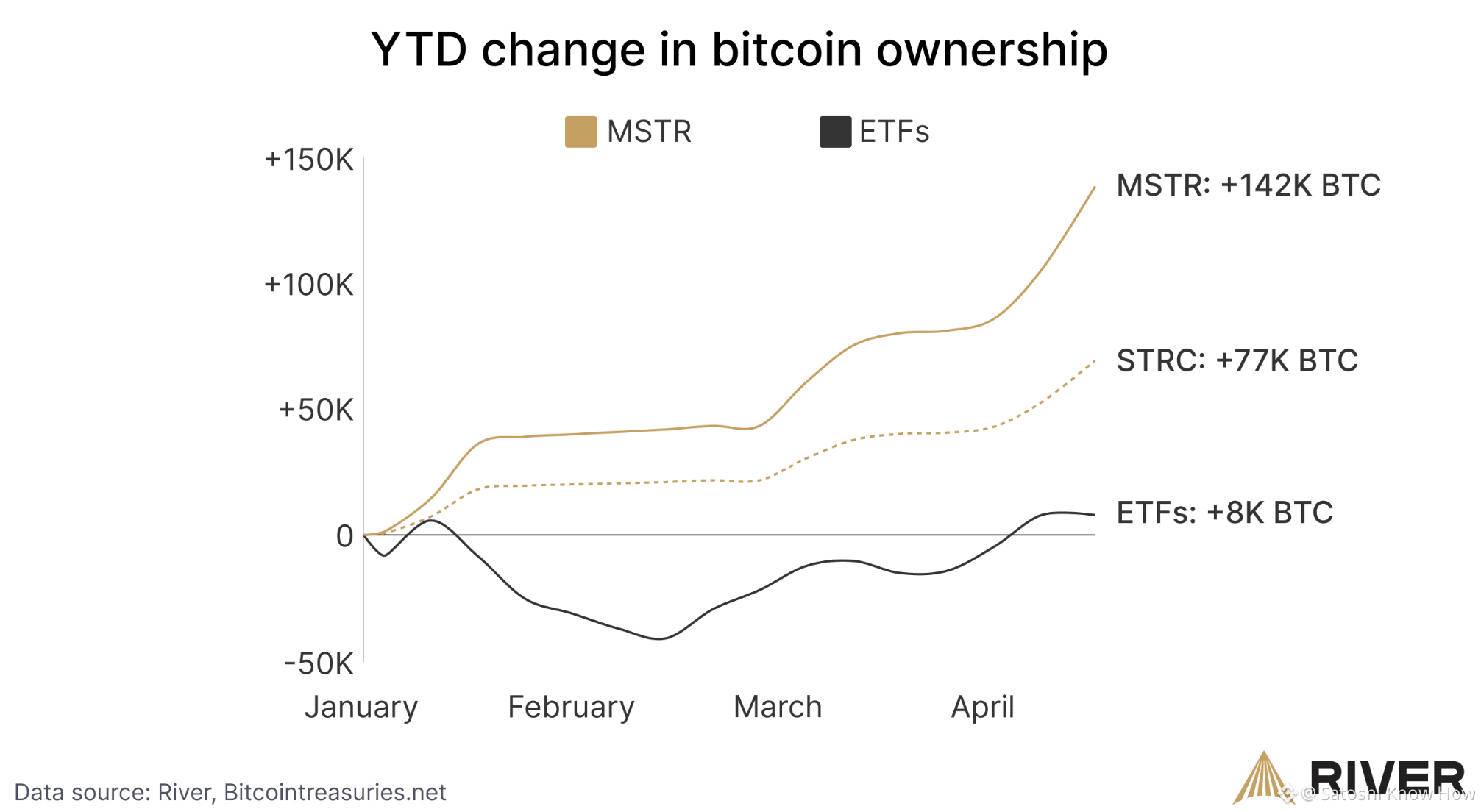
258
Article
Binance Futures Bonus (-20% Referral Code + 600$)Binance has just unlocked one of the most important upgrades for futures traders in years. For the first time, affiliates can now share their commission on futures trading fees, giving new users access to up to 20% lifetime discount - a benefit that was previously limited to spot trading only. Combined with a reward package worth up to $600, this creates a powerful entry point for anyone looking to trade crypto derivatives more efficiently.
TL;DR – Claim Your 20% Futures Discount + $600 Bonus
If you want the fastest way to start:
👉 Use this link (code auto-applied): [Sign up on Binance](https://www.binance.com/join?ref=SATOSHIBRO)
👉 Binance Futures Referral Code: SATOSHIBRO
What you get instantly:
✅ 20% lifetime discount on Binance Futures and Spot fees✅ Up to $600 in rewards (vouchers, rebates, bonuses)✅ Access to Rewards Hub tasks (easy to unlock bonuses)✅ Lower trading costs from your very first trade
If you plan to trade futures even occasionally, using a Binance Futures referral code like SATOSHIBRO is simply the easiest way to save money long-term.
What Is the Binance Futures Bonus?
The Binance Futures Bonus is a combined incentive system that includes:
Fee discounts via referral codesTrading rewards via the Rewards HubPromotional bonuses for new users
By registering with a Binance Futures promo code, you gain immediate access to reduced trading fees and a structured reward system that pays you for activity like deposits, trading volume, and platform engagement.
What makes this update important is the expansion to futures. Until recently, only spot traders could benefit from affiliate fee sharing. Now, futures traders finally get the same advantage.
How the Binance Futures Referral Code Works
When you create an account using a Binance Futures referral code, your account is linked to an affiliate who shares part of their earnings with you.
Here’s what happens behind the scenes:
Binance charges a standard futures trading feeThe affiliate earns a percentage of that feeWith the new system 20% of that fee is returned to you as a discount
This directly reduces your cost per trade.
Example:
Standard futures fee: 0.04%With 20% discount: 0.032%
That difference may look small, but for active traders, it adds up quickly - especially when using leverage or executing multiple trades daily.
Binance Futures Promo Code – Step-by-Step Activation
Getting your Binance futures bonus is straightforward:
1. Register with Code
Use this link to ensure the code is applied automatically:
👉 [Create your Binance account](https://www.binance.com/join?ref=FUTURESX)
2. Complete Verification
Finish KYC to unlock full access to futures trading and bonuses.
3. Visit Rewards Hub
Go to your dashboard and activate available rewards.
4. Deposit Funds
Add crypto or fiat to your account.
5. Start Futures Trading
Open your first position and immediately benefit from lower fees.
Why the 20% Futures Discount Is a Big Deal
Futures trading is extremely sensitive to fees. Even small cost reductions can significantly impact profitability over time.
Here’s why the Binance futures bonus matters:
Higher net profits – you keep more from each tradeBetter scalability – ideal for high-frequency tradingLower break-even point – trades become profitable fasterImproved risk management – reduced fee pressure on losing trades
For traders using leverage, fees can compound quickly. A permanent discount helps control that cost.
How to Reduce Fees Even Further with BNB
The 20% discount from the Binance Futures referral code is already a strong advantage, but you can push your trading costs even lower by enabling fee payments in BNB.
Binance allows users to pay trading fees using BNB instead of the default asset. When this option is enabled, you receive an additional discount on trading fees, which stacks on top of your referral discount.
How It Works?
Binance charges a standard futures trading feeYour SATOSHIBRO referral code reduces that fee by up to 20%If you enable “Pay fees in BNB,” Binance applies an extra discountFinal result: significantly lower effective trading costs
Example Combined Discount
Let’s break it down:
Standard fee: 0.04%With 20% referral discount: 0.032%With BNB fee payment: even lower effective rate
This layered approach makes a noticeable difference, especially for active traders.
Who Should Use a Binance Futures Referral Code?
This offer is ideal for:
Beginners entering futures tradingIntermediate traders scaling strategiesHigh-frequency traders and scalpersAnyone using leverage
Even if you are testing futures with small amounts, activating the discount ensures you don’t lose money unnecessarily on fees.
Final Thoughts
The launch of futures fee sharing marks a major shift in Binance’s affiliate model. It removes a key limitation and gives users direct control over their trading costs from day one.
With a 20% lifetime discount and up to $600 in bonuses, the Binance Futures Bonus is currently one of the most competitive onboarding offers in the crypto market
FAQ
What is the Binance Futures referral code?
The referral code is SATOSHIBRO, giving up to 20% discount on futures trading and bonus rewards.
Is the Binance Futures bonus free?
Yes. You only need to register and complete basic steps like KYC and deposits.
Can I add the promo code later?
No. You must use the Binance Futures promo code during registration.
Binance Futures Bonus (-20% Referral Code + 600$)
Binance has just unlocked one of the most important upgrades for futures traders in years. For the first time, affiliates can now share their commission on futures trading fees, giving new users access to up to 20% lifetime discount - a benefit that was previously limited to spot trading only. Combined with a reward package worth up to $600, this creates a powerful entry point for anyone looking to trade crypto derivatives more efficiently.
TL;DR – Claim Your 20% Futures Discount + $600 Bonus
If you want the fastest way to start:
👉 Use this link (code auto-applied): Sign up on Binance
👉 Binance Futures Referral Code: SATOSHIBRO
What you get instantly:
✅ 20% lifetime discount on Binance Futures and Spot fees✅ Up to $600 in rewards (vouchers, rebates, bonuses)✅ Access to Rewards Hub tasks (easy to unlock bonuses)✅ Lower trading costs from your very first trade
If you plan to trade futures even occasionally, using a Binance Futures referral code like SATOSHIBRO is simply the easiest way to save money long-term.
What Is the Binance Futures Bonus?
The Binance Futures Bonus is a combined incentive system that includes:
Fee discounts via referral codesTrading rewards via the Rewards HubPromotional bonuses for new users
By registering with a Binance Futures promo code, you gain immediate access to reduced trading fees and a structured reward system that pays you for activity like deposits, trading volume, and platform engagement.
What makes this update important is the expansion to futures. Until recently, only spot traders could benefit from affiliate fee sharing. Now, futures traders finally get the same advantage.
How the Binance Futures Referral Code Works
When you create an account using a Binance Futures referral code, your account is linked to an affiliate who shares part of their earnings with you.
Here’s what happens behind the scenes:
Binance charges a standard futures trading feeThe affiliate earns a percentage of that feeWith the new system 20% of that fee is returned to you as a discount
This directly reduces your cost per trade.
Example:
Standard futures fee: 0.04%With 20% discount: 0.032%
That difference may look small, but for active traders, it adds up quickly - especially when using leverage or executing multiple trades daily.
Binance Futures Promo Code – Step-by-Step Activation
Getting your Binance futures bonus is straightforward:
1. Register with Code
Use this link to ensure the code is applied automatically:
👉 Create your Binance account
2. Complete Verification
Finish KYC to unlock full access to futures trading and bonuses.
3. Visit Rewards Hub
Go to your dashboard and activate available rewards.
4. Deposit Funds
Add crypto or fiat to your account.
5. Start Futures Trading
Open your first position and immediately benefit from lower fees.
Why the 20% Futures Discount Is a Big Deal
Futures trading is extremely sensitive to fees. Even small cost reductions can significantly impact profitability over time.
Here’s why the Binance futures bonus matters:
Higher net profits – you keep more from each tradeBetter scalability – ideal for high-frequency tradingLower break-even point – trades become profitable fasterImproved risk management – reduced fee pressure on losing trades
For traders using leverage, fees can compound quickly. A permanent discount helps control that cost.
How to Reduce Fees Even Further with BNB
The 20% discount from the Binance Futures referral code is already a strong advantage, but you can push your trading costs even lower by enabling fee payments in BNB.
Binance allows users to pay trading fees using BNB instead of the default asset. When this option is enabled, you receive an additional discount on trading fees, which stacks on top of your referral discount.
How It Works?
Binance charges a standard futures trading feeYour SATOSHIBRO referral code reduces that fee by up to 20%If you enable “Pay fees in BNB,” Binance applies an extra discountFinal result: significantly lower effective trading costs
Example Combined Discount
Let’s break it down:
Standard fee: 0.04%With 20% referral discount: 0.032%With BNB fee payment: even lower effective rate
This layered approach makes a noticeable difference, especially for active traders.
Who Should Use a Binance Futures Referral Code?
This offer is ideal for:
Beginners entering futures tradingIntermediate traders scaling strategiesHigh-frequency traders and scalpersAnyone using leverage
Even if you are testing futures with small amounts, activating the discount ensures you don’t lose money unnecessarily on fees.
Final Thoughts
The launch of futures fee sharing marks a major shift in Binance’s affiliate model. It removes a key limitation and gives users direct control over their trading costs from day one.
With a 20% lifetime discount and up to $600 in bonuses, the Binance Futures Bonus is currently one of the most competitive onboarding offers in the crypto market
FAQ
What is the Binance Futures referral code?
The referral code is SATOSHIBRO, giving up to 20% discount on futures trading and bonus rewards.
Is the Binance Futures bonus free?
Yes. You only need to register and complete basic steps like KYC and deposits.
Can I add the promo code later?
No. You must use the Binance Futures promo code during registration.
TL;DR – Claim Your 20% Futures Discount + $600 Bonus
If you want the fastest way to start:
👉 Use this link (code auto-applied): Sign up on Binance
👉 Binance Futures Referral Code: SATOSHIBRO
What you get instantly:
✅ 20% lifetime discount on Binance Futures and Spot fees✅ Up to $600 in rewards (vouchers, rebates, bonuses)✅ Access to Rewards Hub tasks (easy to unlock bonuses)✅ Lower trading costs from your very first trade
If you plan to trade futures even occasionally, using a Binance Futures referral code like SATOSHIBRO is simply the easiest way to save money long-term.
What Is the Binance Futures Bonus?
The Binance Futures Bonus is a combined incentive system that includes:
Fee discounts via referral codesTrading rewards via the Rewards HubPromotional bonuses for new users
By registering with a Binance Futures promo code, you gain immediate access to reduced trading fees and a structured reward system that pays you for activity like deposits, trading volume, and platform engagement.
What makes this update important is the expansion to futures. Until recently, only spot traders could benefit from affiliate fee sharing. Now, futures traders finally get the same advantage.
How the Binance Futures Referral Code Works
When you create an account using a Binance Futures referral code, your account is linked to an affiliate who shares part of their earnings with you.
Here’s what happens behind the scenes:
Binance charges a standard futures trading feeThe affiliate earns a percentage of that feeWith the new system 20% of that fee is returned to you as a discount
This directly reduces your cost per trade.
Example:
Standard futures fee: 0.04%With 20% discount: 0.032%
That difference may look small, but for active traders, it adds up quickly - especially when using leverage or executing multiple trades daily.
Binance Futures Promo Code – Step-by-Step Activation
Getting your Binance futures bonus is straightforward:
1. Register with Code
Use this link to ensure the code is applied automatically:
👉 Create your Binance account
2. Complete Verification
Finish KYC to unlock full access to futures trading and bonuses.
3. Visit Rewards Hub
Go to your dashboard and activate available rewards.
4. Deposit Funds
Add crypto or fiat to your account.
5. Start Futures Trading
Open your first position and immediately benefit from lower fees.
Why the 20% Futures Discount Is a Big Deal
Futures trading is extremely sensitive to fees. Even small cost reductions can significantly impact profitability over time.
Here’s why the Binance futures bonus matters:
Higher net profits – you keep more from each tradeBetter scalability – ideal for high-frequency tradingLower break-even point – trades become profitable fasterImproved risk management – reduced fee pressure on losing trades
For traders using leverage, fees can compound quickly. A permanent discount helps control that cost.
How to Reduce Fees Even Further with BNB
The 20% discount from the Binance Futures referral code is already a strong advantage, but you can push your trading costs even lower by enabling fee payments in BNB.
Binance allows users to pay trading fees using BNB instead of the default asset. When this option is enabled, you receive an additional discount on trading fees, which stacks on top of your referral discount.
How It Works?
Binance charges a standard futures trading feeYour SATOSHIBRO referral code reduces that fee by up to 20%If you enable “Pay fees in BNB,” Binance applies an extra discountFinal result: significantly lower effective trading costs
Example Combined Discount
Let’s break it down:
Standard fee: 0.04%With 20% referral discount: 0.032%With BNB fee payment: even lower effective rate
This layered approach makes a noticeable difference, especially for active traders.
Who Should Use a Binance Futures Referral Code?
This offer is ideal for:
Beginners entering futures tradingIntermediate traders scaling strategiesHigh-frequency traders and scalpersAnyone using leverage
Even if you are testing futures with small amounts, activating the discount ensures you don’t lose money unnecessarily on fees.
Final Thoughts
The launch of futures fee sharing marks a major shift in Binance’s affiliate model. It removes a key limitation and gives users direct control over their trading costs from day one.
With a 20% lifetime discount and up to $600 in bonuses, the Binance Futures Bonus is currently one of the most competitive onboarding offers in the crypto market
FAQ
What is the Binance Futures referral code?
The referral code is SATOSHIBRO, giving up to 20% discount on futures trading and bonus rewards.
Is the Binance Futures bonus free?
Yes. You only need to register and complete basic steps like KYC and deposits.
Can I add the promo code later?
No. You must use the Binance Futures promo code during registration.
1
326
Bitmine just made its biggest ETH move of 2026 — adding 101,627 Ethereum in a single week. That brings total holdings close to 5 million ETH and a massive $12.9B combined position. Not small money. Not random timing.
At the same time, Chairman Tom Lee is calling something bold: the crypto winter may already be near its end.
His argument is simple. Previous bear markets needed deep stock market crashes (20%+). This time? Equities barely pulled back ~8%. Different macro, different cycle.
And the data is starting to support it.
Exchange reserves just dropped to ~14.6M ETH — lowest since 2016. That means less sell pressure. Spot ETFs are also waking up again, pulling in $275M+ last week. Meanwhile, accumulation addresses are now overtaking whale wallets, suggesting real buying, not just waiting.
Still, ETH sits ~50% below its 2025 peak. So the question is obvious:
Is this quiet accumulation before a major move… or just another fake start?
Smart money seems to be choosing a side already.
Bitmine just made its biggest ETH move of 2026 — adding 101,627 Ethereum in a single week. That brings total holdings close to 5 million ETH and a massive $12.9B combined position. Not small money. Not random timing.
At the same time, Chairman Tom Lee is calling something bold: the crypto winter may already be near its end.
His argument is simple. Previous bear markets needed deep stock market crashes (20%+). This time? Equities barely pulled back ~8%. Different macro, different cycle.
And the data is starting to support it.
Exchange reserves just dropped to ~14.6M ETH — lowest since 2016. That means less sell pressure. Spot ETFs are also waking up again, pulling in $275M+ last week. Meanwhile, accumulation addresses are now overtaking whale wallets, suggesting real buying, not just waiting.
Still, ETH sits ~50% below its 2025 peak. So the question is obvious:
Is this quiet accumulation before a major move… or just another fake start?
Smart money seems to be choosing a side already.
At the same time, Chairman Tom Lee is calling something bold: the crypto winter may already be near its end.
His argument is simple. Previous bear markets needed deep stock market crashes (20%+). This time? Equities barely pulled back ~8%. Different macro, different cycle.
And the data is starting to support it.
Exchange reserves just dropped to ~14.6M ETH — lowest since 2016. That means less sell pressure. Spot ETFs are also waking up again, pulling in $275M+ last week. Meanwhile, accumulation addresses are now overtaking whale wallets, suggesting real buying, not just waiting.
Still, ETH sits ~50% below its 2025 peak. So the question is obvious:
Is this quiet accumulation before a major move… or just another fake start?
Smart money seems to be choosing a side already.
160
·
--
Bullish
Russell 2000 just printed a fresh all-time high — and normally, that would be a green light for altcoin season. Small caps ripping + liquidity flowing = risk-on, right? Not so fast.
For the first time since July 2016, the correlation between the Russell 2000 and altcoins has flipped negative… and it’s getting stronger to the downside. That breaks one of the most reliable signals traders have used for years.
At the same time, macro looks undeniably bullish. The Fed balance sheet is expanding again, with massive liquidity injections hitting the system this week. Historically, that kind of environment has fueled explosive altcoin rallies.
So what’s going on?
Right now, the market feels split. TradFi is rotating into risk, but altcoin charts still look weak — more like a bearish retest than a breakout.
This could mean one of two things: either altseason is simply delayed… or the structure of capital flows into crypto is changing.
Russell 2000 just printed a fresh all-time high — and normally, that would be a green light for altcoin season. Small caps ripping + liquidity flowing = risk-on, right? Not so fast.
For the first time since July 2016, the correlation between the Russell 2000 and altcoins has flipped negative… and it’s getting stronger to the downside. That breaks one of the most reliable signals traders have used for years.
At the same time, macro looks undeniably bullish. The Fed balance sheet is expanding again, with massive liquidity injections hitting the system this week. Historically, that kind of environment has fueled explosive altcoin rallies.
So what’s going on?
Right now, the market feels split. TradFi is rotating into risk, but altcoin charts still look weak — more like a bearish retest than a breakout.
This could mean one of two things: either altseason is simply delayed… or the structure of capital flows into crypto is changing.
For the first time since July 2016, the correlation between the Russell 2000 and altcoins has flipped negative… and it’s getting stronger to the downside. That breaks one of the most reliable signals traders have used for years.
At the same time, macro looks undeniably bullish. The Fed balance sheet is expanding again, with massive liquidity injections hitting the system this week. Historically, that kind of environment has fueled explosive altcoin rallies.
So what’s going on?
Right now, the market feels split. TradFi is rotating into risk, but altcoin charts still look weak — more like a bearish retest than a breakout.
This could mean one of two things: either altseason is simply delayed… or the structure of capital flows into crypto is changing.
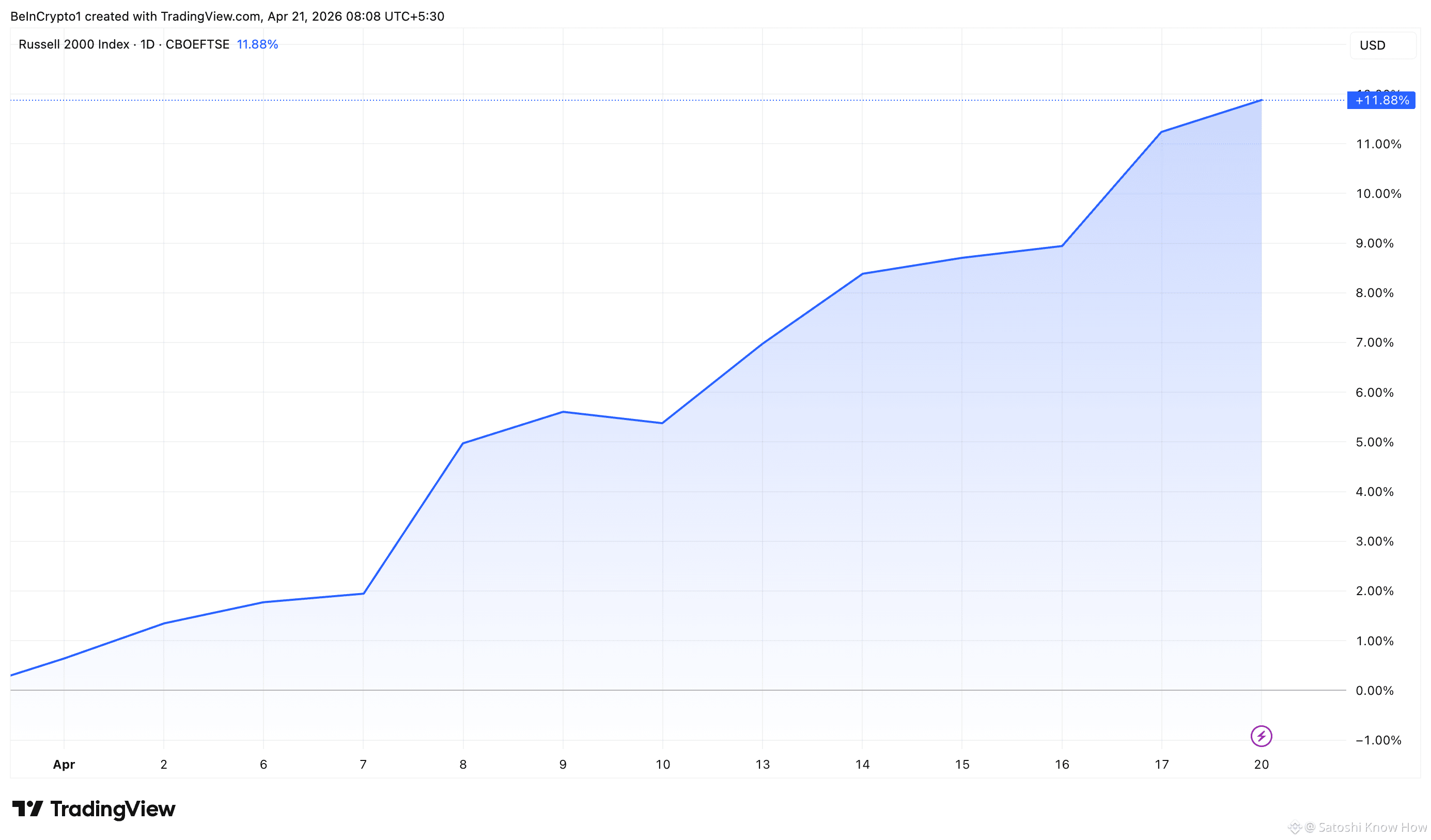
63

Article
Binance Bonus 2026 - Promo Code: SATOSHIBROMany people type “Binance bonus” into Google and expect a simple answer: can you actually get something for registering? Yes – but you need to know how it works. A Binance bonus isn’t automatic and not every user receives it. The key thing is to use the right referral code and complete a few simple steps. In this article, I’ll show you exactly what you can gain and how to do it step by step.
TL;DR: To claim a $600 bonus and a 20% discount on transaction fees, create an account using the [promocyjnego linka](https://www.binance.com/join?ref=SATOSHIBRO) or manually enter the Binance promo code during registration: SATOSHIBRO
Binance Bonus 2026 - Promo Code: SATOSHIBRO
Many people type “Binance bonus” into Google and expect a simple answer: can you actually get something for registering? Yes – but you need to know how it works. A Binance bonus isn’t automatic and not every user receives it. The key thing is to use the right referral code and complete a few simple steps. In this article, I’ll show you exactly what you can gain and how to do it step by step.
TL;DR: To claim a $600 bonus and a 20% discount on transaction fees, create an account using the promocyjnego linka or manually enter the Binance promo code during registration: SATOSHIBRO
TL;DR: To claim a $600 bonus and a 20% discount on transaction fees, create an account using the promocyjnego linka or manually enter the Binance promo code during registration: SATOSHIBRO
9
1
5
2.1k
⏳ Bitcoin halving cycle hits the halfway mark.
Around 105,000 blocks remain until the next halving, expected in April 2028. At that point, rewards drop from 3.125 BTC to 1.5625 BTC, cutting daily issuance from ~450 BTC to ~225 BTC.
This fixed supply schedule is key to Bitcoin’s scarcity. Over 19.7M BTC is already mined, with more than 98% expected by 2030.
Historically, halvings triggered major rallies 12–18 months later—but each cycle showed smaller gains.
What’s different now? Institutional demand. Spot ETFs already hold over 1.3M BTC, while Strategy keeps accumulating faster than miners produce.
Less supply + strong demand = pressure building. The next two years could define this cycle. 🚀
⏳ Bitcoin halving cycle hits the halfway mark.
Around 105,000 blocks remain until the next halving, expected in April 2028. At that point, rewards drop from 3.125 BTC to 1.5625 BTC, cutting daily issuance from ~450 BTC to ~225 BTC.
This fixed supply schedule is key to Bitcoin’s scarcity. Over 19.7M BTC is already mined, with more than 98% expected by 2030.
Historically, halvings triggered major rallies 12–18 months later—but each cycle showed smaller gains.
What’s different now? Institutional demand. Spot ETFs already hold over 1.3M BTC, while Strategy keeps accumulating faster than miners produce.
Less supply + strong demand = pressure building. The next two years could define this cycle. 🚀
Around 105,000 blocks remain until the next halving, expected in April 2028. At that point, rewards drop from 3.125 BTC to 1.5625 BTC, cutting daily issuance from ~450 BTC to ~225 BTC.
This fixed supply schedule is key to Bitcoin’s scarcity. Over 19.7M BTC is already mined, with more than 98% expected by 2030.
Historically, halvings triggered major rallies 12–18 months later—but each cycle showed smaller gains.
What’s different now? Institutional demand. Spot ETFs already hold over 1.3M BTC, while Strategy keeps accumulating faster than miners produce.
Less supply + strong demand = pressure building. The next two years could define this cycle. 🚀
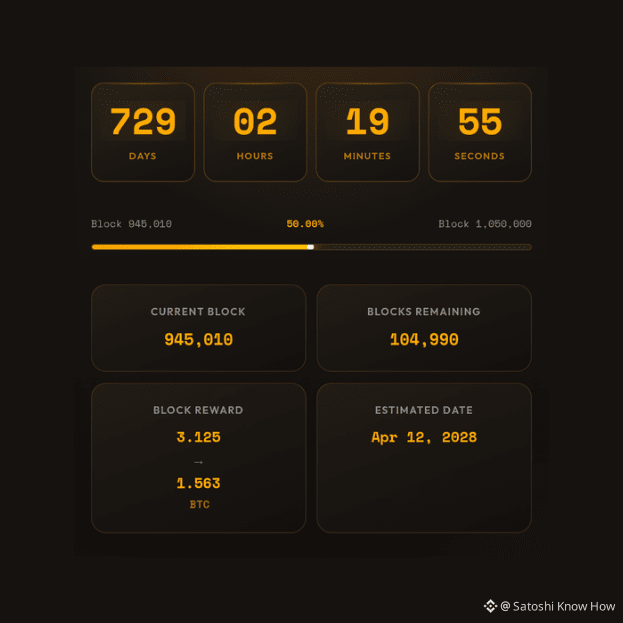
175
🔥 Ethereum is quietly leading the market, up 12% in a month—outperforming all top-10 assets.
On-chain data looks strong. The network just hit a record 3.62M daily transactions, with steady growth since late 2025. Add rising users and a record stablecoin supply, and fundamentals are clearly improving.
Yet ETH still trades over 50% below its ATH. That gap between usage and price is catching attention. Historically, such divergences tend to close.
Technicals also support the bullish case. Analysts point to a rare weekly MACD crossover—previous signals led to +183% and +75% rallies. Some models now suggest potential targets between ~$4.1K and $6.6K.
Strong fundamentals + bullish indicators = momentum building. Now it’s all about whether macro conditions support the next move. 🚀
🔥 Ethereum is quietly leading the market, up 12% in a month—outperforming all top-10 assets.
On-chain data looks strong. The network just hit a record 3.62M daily transactions, with steady growth since late 2025. Add rising users and a record stablecoin supply, and fundamentals are clearly improving.
Yet ETH still trades over 50% below its ATH. That gap between usage and price is catching attention. Historically, such divergences tend to close.
Technicals also support the bullish case. Analysts point to a rare weekly MACD crossover—previous signals led to +183% and +75% rallies. Some models now suggest potential targets between ~$4.1K and $6.6K.
Strong fundamentals + bullish indicators = momentum building. Now it’s all about whether macro conditions support the next move. 🚀
On-chain data looks strong. The network just hit a record 3.62M daily transactions, with steady growth since late 2025. Add rising users and a record stablecoin supply, and fundamentals are clearly improving.
Yet ETH still trades over 50% below its ATH. That gap between usage and price is catching attention. Historically, such divergences tend to close.
Technicals also support the bullish case. Analysts point to a rare weekly MACD crossover—previous signals led to +183% and +75% rallies. Some models now suggest potential targets between ~$4.1K and $6.6K.
Strong fundamentals + bullish indicators = momentum building. Now it’s all about whether macro conditions support the next move. 🚀
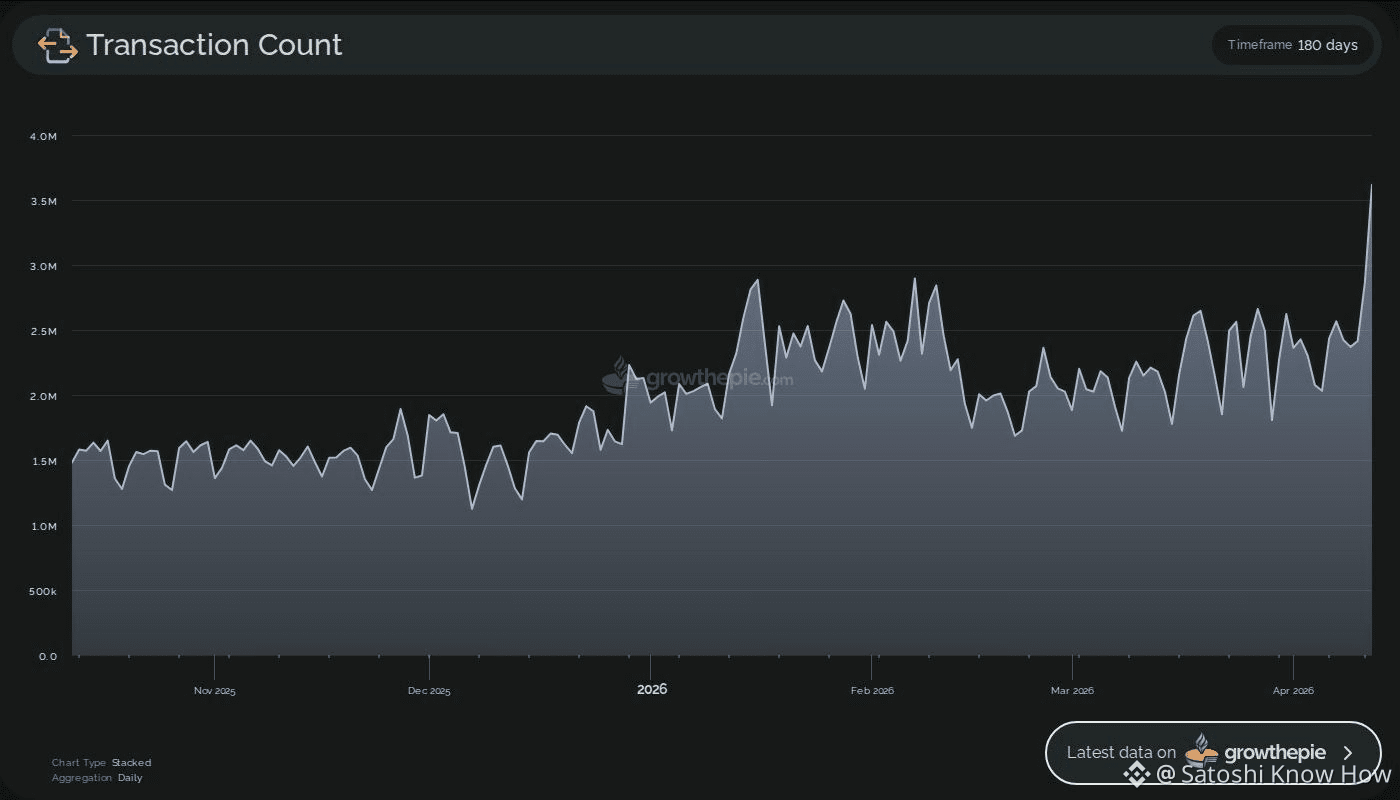
142
🇺🇸 U.S. Securities and Exchange Commission signals a softer stance on crypto wallets.
The SEC clarified that self-custodial wallet solutions may avoid broker-dealer registration—if they don’t steer users into specific trades or act like intermediaries. While not a formal rule, the guidance brings much-needed clarity to the space.
Hester Peirce backed the move but called for a broader regulatory overhaul to better reflect modern markets.
The crypto community is calling this one of the most important updates yet. It follows earlier guidance that excluded many memecoins and stablecoins from securities classification.
Bottom line: self-custody just got a regulatory boost—and that’s huge for crypto adoption. 🚀
🇺🇸 U.S. Securities and Exchange Commission signals a softer stance on crypto wallets.
The SEC clarified that self-custodial wallet solutions may avoid broker-dealer registration—if they don’t steer users into specific trades or act like intermediaries. While not a formal rule, the guidance brings much-needed clarity to the space.
Hester Peirce backed the move but called for a broader regulatory overhaul to better reflect modern markets.
The crypto community is calling this one of the most important updates yet. It follows earlier guidance that excluded many memecoins and stablecoins from securities classification.
Bottom line: self-custody just got a regulatory boost—and that’s huge for crypto adoption. 🚀
The SEC clarified that self-custodial wallet solutions may avoid broker-dealer registration—if they don’t steer users into specific trades or act like intermediaries. While not a formal rule, the guidance brings much-needed clarity to the space.
Hester Peirce backed the move but called for a broader regulatory overhaul to better reflect modern markets.
The crypto community is calling this one of the most important updates yet. It follows earlier guidance that excluded many memecoins and stablecoins from securities classification.
Bottom line: self-custody just got a regulatory boost—and that’s huge for crypto adoption. 🚀
32
Log in to explore more content
Join global crypto users on Binance Square
⚡️ Get latest and useful information about crypto.
💬 Trusted by the world’s largest crypto exchange.
👍 Discover real insights from verified creators.
Email / Phone number