
Toffee Crunch
616 Posts
Toffee Crunch
Frequent Trader
1.1 Years
100 Following
199 Followers
148 Liked
Posts
All
Quotes
Live
welcome to join us


IM_M7
·
--
[Replay] 🎙️ BNB Bot Special....
01 h 41 m 19 s · 1k listens
welcome in this live
IM_M7
·
--
[Replay] 🎙️ Welcome everyone..
01 h 28 m 33 s · 917 listens
join us in this live
IM_M7
·
--
[Replay] 🎙️ 🌧️ Rainy Night, Chart Lights
01 h 44 m 11 s · 1.3k listens
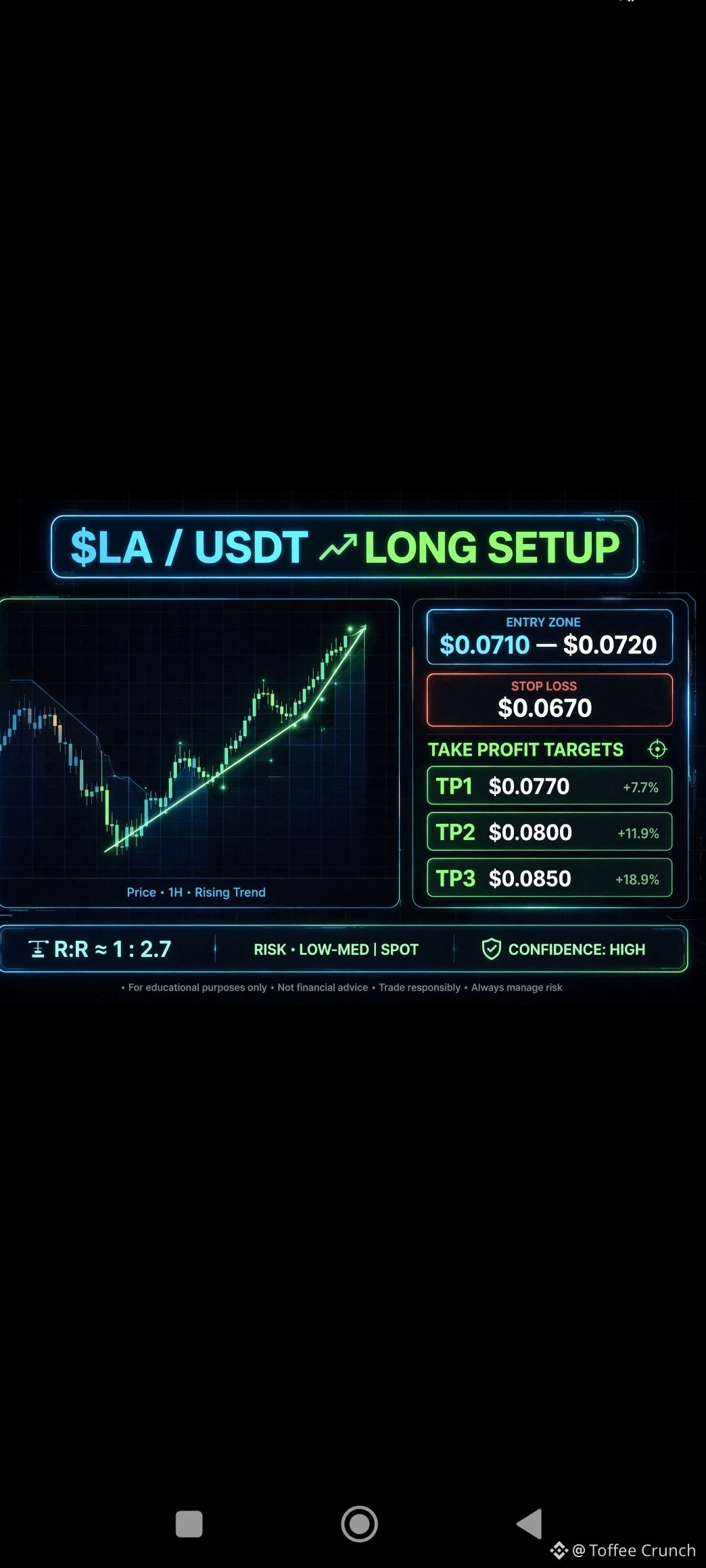
The $LA /USDT pump has everyone's attention, yet on-chain data is signaling a hidden long opportunity.
$LA
$LA
welcome to join us
IM_M7
·
--
[Replay] 🎙️ Green Market or red Market...
01 h 42 m 53 s · 810 listens
welcome
IM_M7
·
--
[Replay] 🎙️ Lets Talk about (MA)..
01 h 58 m 08 s · 779 listens
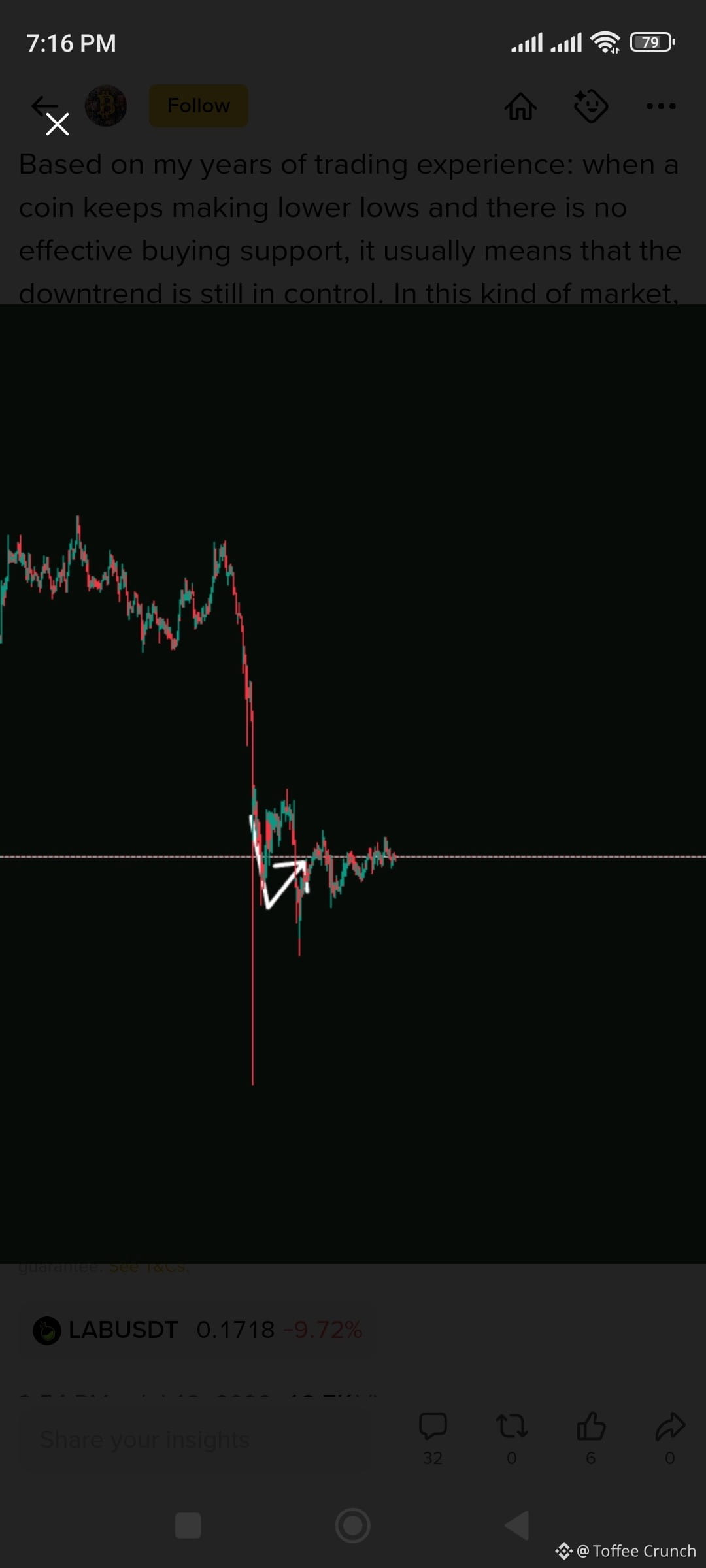
$LAB made a new low of $0.160 and is currently trading around $0.170. Sell pressure on the books is still massive with no clear reversal in sight. As long as it continues to make lower lows without solid buying support, the downtrend remains in control. In this environment, shorting the bounces remains the favorable side
#FootballSeason2026
$LAB
$ID
#FootballSeason2026
$LAB
$ID
welcome to join us
IM_M7
·
--
[Replay] 🎙️ Welcome Everyone !
02 h 02 m 47 s · 541 listens
$DEXE Short Setup 📉
Entry Zone: $38.7 ~ $39.7
Type: Short / Rejection play
Take Profits
• TP 1: $37.4 • TP 2: $36.0 • TP 3: $34.5
• TP 4: $33.0
❌ Stop Loss: $43
Risk Management: Invalidation above $43. Size your position so SL = 1% of account max.
Trade $DEXE Here → Binance
#FootballSeason2026
$DEXE
Entry Zone: $38.7 ~ $39.7
Type: Short / Rejection play
Take Profits
• TP 1: $37.4 • TP 2: $36.0 • TP 3: $34.5
• TP 4: $33.0
❌ Stop Loss: $43
Risk Management: Invalidation above $43. Size your position so SL = 1% of account max.
Trade $DEXE Here → Binance
#FootballSeason2026
$DEXE
welcome
IM_M7
·
--
[Replay] 🎙️ Welcome Everyone !!!
01 h 55 m 32 s · 471 listens
welcome everyone
IM_M7
·
--
[Replay] 🎙️ Welcome Everyone !
02 h 25 m 15 s · 649 listens
welcome
IM_M7
·
--
[Replay] 🎙️ 👀 What's the Market Whispering Tonight?
01 h 55 m 29 s · 473 listens
How Liquidation Heatmaps Explain $NEAR 's Next Move
Post:
Everyone watches candles. Smart money watches liquidity.
$NEAR just gave us a textbook example on Binance Futures.
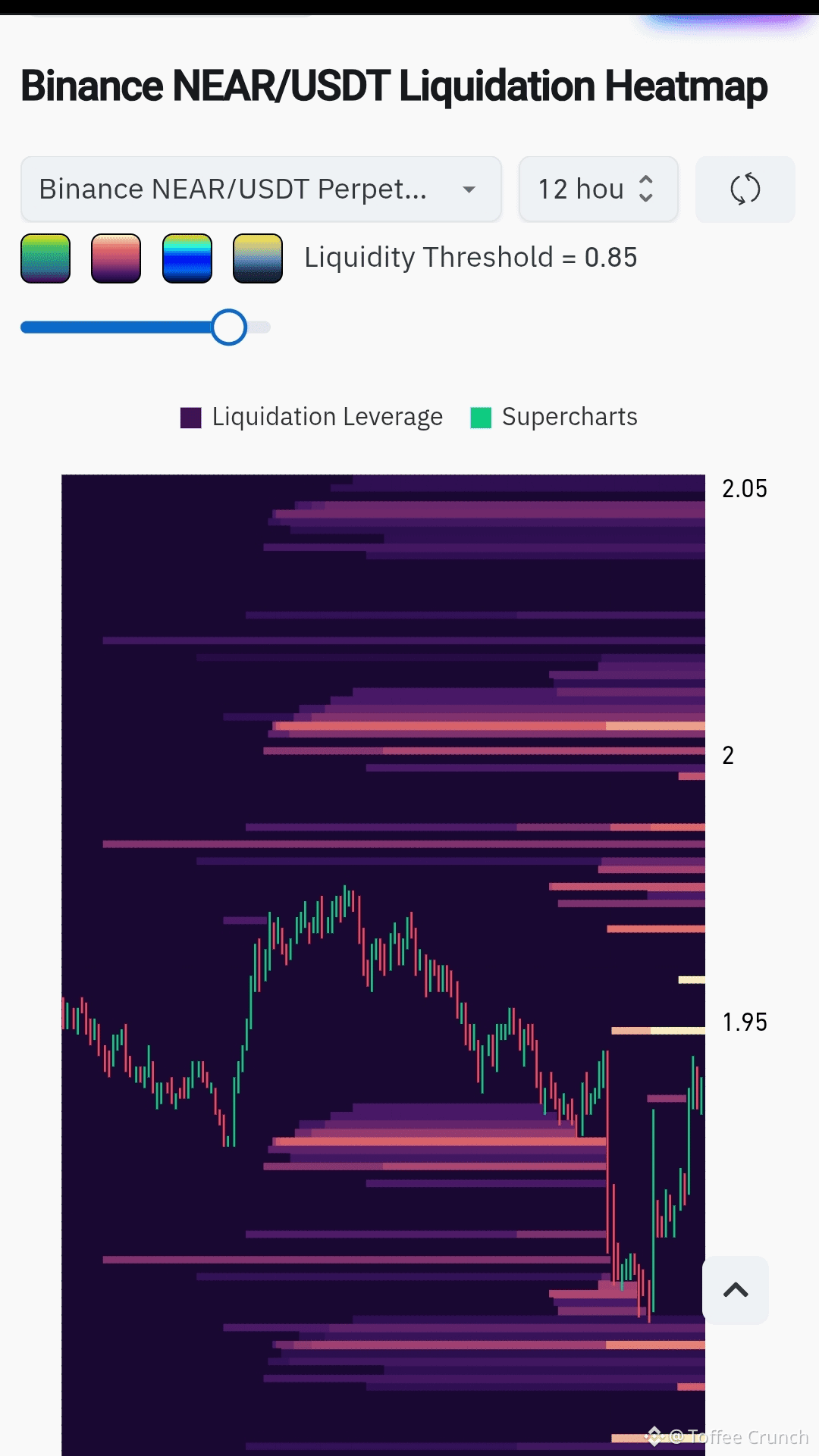
Right now the liquidation heatmap shows 2 major magnets:
1. Below: 1.92 <> 1.93 got swept yesterday. That’s where overleveraged longs were sitting. Price dove, grabbed that liquidity, and bounced.
2. Above: 2.00 <> 2.05 is stacked with short liquidations. It’s the largest pool of liquidity left on the 12h timeframe.
Why this matters for $NEAR traders:
Markets are auctions. Price moves from one liquidity pocket to another. After sweeping longs, the next logical target is shorts. That puts 2.00+ in play if BTC holds up.
But it’s not just about trading. This mechanic shows how healthy $NEAR ’s derivatives market is. Deep liquidity = less slippage, better price discovery, and more institutional interest.
NEAR Protocol isn’t just about sharding and 600ms finality. The market structure around it is maturing. When a chain has real liquidity in perps, it means real capital is willing to bet on it.
Key levels I’m watching:
• Support: 1.91 must hold for bulls. Lose it and 1.88 is next.
• Resistance: 2.00-2.03 is the liquidity wall. Break that with volume and shorts fuel the move higher.
Whether you trade or HODL $NEAR , understanding where leverage sits helps you understand why price moves the way it does.
#NEAR #Binance #CryptoEducation #Write2Earn
$NEAR
Post:
Everyone watches candles. Smart money watches liquidity.
$NEAR just gave us a textbook example on Binance Futures.
Right now the liquidation heatmap shows 2 major magnets:
1. Below: 1.92 <> 1.93 got swept yesterday. That’s where overleveraged longs were sitting. Price dove, grabbed that liquidity, and bounced.
2. Above: 2.00 <> 2.05 is stacked with short liquidations. It’s the largest pool of liquidity left on the 12h timeframe.
Why this matters for $NEAR traders:
Markets are auctions. Price moves from one liquidity pocket to another. After sweeping longs, the next logical target is shorts. That puts 2.00+ in play if BTC holds up.
But it’s not just about trading. This mechanic shows how healthy $NEAR ’s derivatives market is. Deep liquidity = less slippage, better price discovery, and more institutional interest.
NEAR Protocol isn’t just about sharding and 600ms finality. The market structure around it is maturing. When a chain has real liquidity in perps, it means real capital is willing to bet on it.
Key levels I’m watching:
• Support: 1.91 must hold for bulls. Lose it and 1.88 is next.
• Resistance: 2.00-2.03 is the liquidity wall. Break that with volume and shorts fuel the move higher.
Whether you trade or HODL $NEAR , understanding where leverage sits helps you understand why price moves the way it does.
#NEAR #Binance #CryptoEducation #Write2Earn
$NEAR
you are welcome here
IM_M7
·
--
[Replay] 🎙️ Welcome Everyone...
01 h 26 m 41 s · 741 listens
welcome
IM_M7
·
--
[Replay] 🎙️ 🕯️ Slow Markets, Smart Decisions. .
01 h 35 m 43 s · 571 listens
you are welcome in this live
IM_M7
·
--
[Replay] 🎙️ 🚦Waiting for the Perfect Entry. .
01 h 45 m 36 s · 820 listens
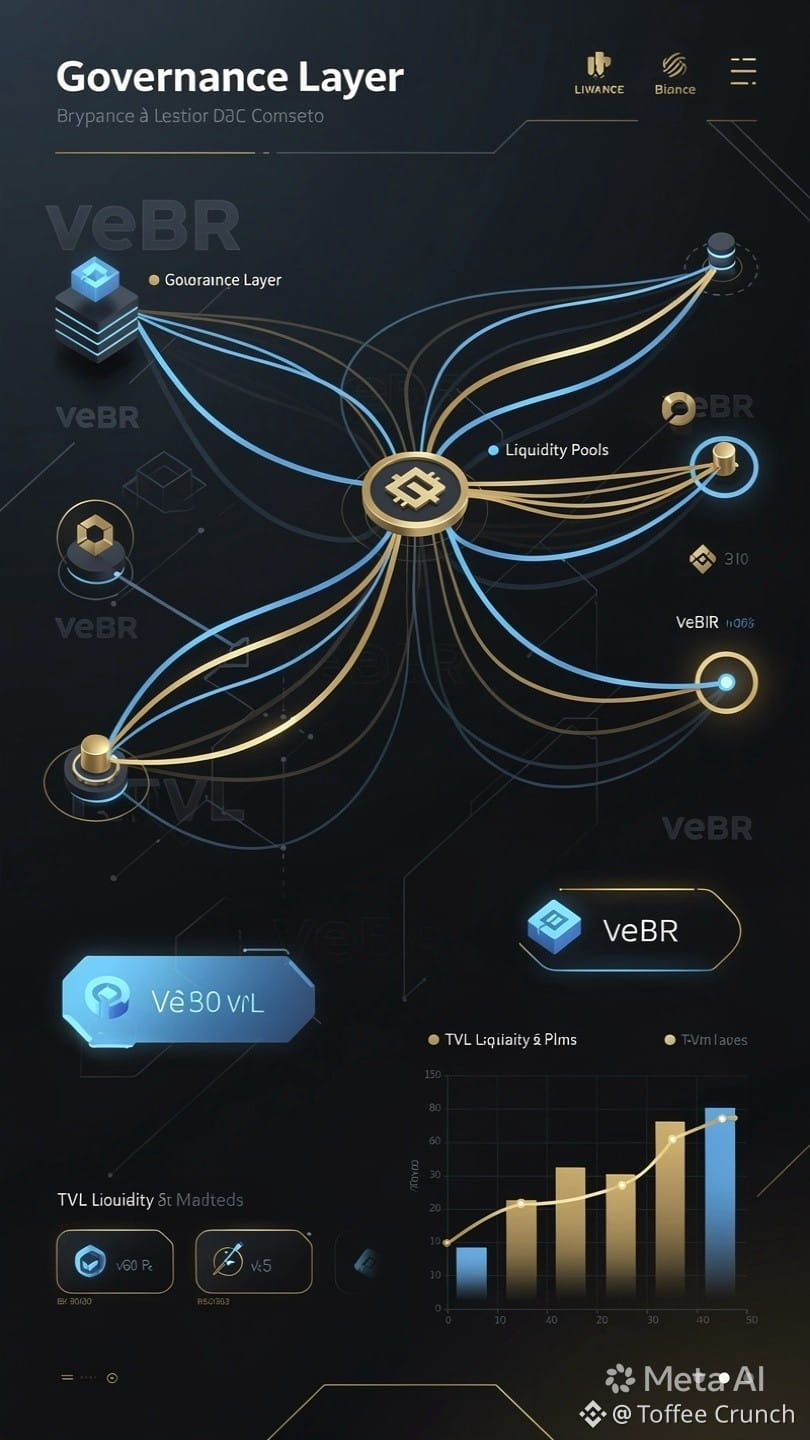
$BR | Governance Before Liquidity: The Layer Most Markets Overlook
Most of the market tracks Bedrock through surface metrics: TVL inflows, liquidity depth, yield spreads. Those numbers are important, but they're lagging indicators.
The real catalyst sits one layer deeper: governance.
With veBR, token holders don't just vote on proposals. They influence incentive distribution the actual mechanism that directs where liquidity gets deployed. Protocols follow incentives. Capital follows protocols.
This creates a timing gap most traders miss:
1. Governance decisions set incentive flows
2. Liquidity arbitrage reacts to those flows
3. Price action follows liquidity
By the time TVL spikes or yields compress, the initial signal from governance has already played out. veBR participants operate at the source, not the effect.
The market is watching where capital moves.
The edge is understanding why it moves.
@Bedrock #Bedrock #BR #DeFi #Governance
$TSLAB $MUB
Most of the market tracks Bedrock through surface metrics: TVL inflows, liquidity depth, yield spreads. Those numbers are important, but they're lagging indicators.
The real catalyst sits one layer deeper: governance.
With veBR, token holders don't just vote on proposals. They influence incentive distribution the actual mechanism that directs where liquidity gets deployed. Protocols follow incentives. Capital follows protocols.
This creates a timing gap most traders miss:
1. Governance decisions set incentive flows
2. Liquidity arbitrage reacts to those flows
3. Price action follows liquidity
By the time TVL spikes or yields compress, the initial signal from governance has already played out. veBR participants operate at the source, not the effect.
The market is watching where capital moves.
The edge is understanding why it moves.
@Bedrock #Bedrock #BR #DeFi #Governance
$TSLAB $MUB
The Next Edge in BTCFi Isn’t Higher Yield. It’s Lower Cognitive Load.
As BTCFi matures, the bottleneck isn’t access to opportunities. It’s navigating them.
Users aren’t struggling to find yield anymore. They’re struggling to:
• Evaluate risk across strategies
• Compare competing vaults and protocols
• Monitor positions in real time
• React when market conditions shift
Complexity compounds faster than participation. And decision fatigue is now a real friction layer in on chain capital allocation.
That’s why Bedrock’s move toward AI-guided yield stands out. Not because AI is a narrative but because reducing cognitive load changes behavior.
When systems help users feel confident, engagement gets stickier than incentives alone. Users rebalance more often. They deploy capital more consistently. They stay active longer.
The behavior changes before the metrics do.
The question isn’t whether Bedrock can offer the highest yield. Plenty of protocols can temporarily.
The question is whether Bedrock becomes the place where users trust the decision process itself.
If that happens, liquidity stops chasing percentages and starts following guidance. This isn’t about yield anymore. It’s about who controls the flow of attention behind the capital.
Explore Bedrock on Binance. #BTCFi #DeFi #bedrock
$BR
$BTC $ETH
As BTCFi matures, the bottleneck isn’t access to opportunities. It’s navigating them.
Users aren’t struggling to find yield anymore. They’re struggling to:
• Evaluate risk across strategies
• Compare competing vaults and protocols
• Monitor positions in real time
• React when market conditions shift
Complexity compounds faster than participation. And decision fatigue is now a real friction layer in on chain capital allocation.
That’s why Bedrock’s move toward AI-guided yield stands out. Not because AI is a narrative but because reducing cognitive load changes behavior.
When systems help users feel confident, engagement gets stickier than incentives alone. Users rebalance more often. They deploy capital more consistently. They stay active longer.
The behavior changes before the metrics do.
The question isn’t whether Bedrock can offer the highest yield. Plenty of protocols can temporarily.
The question is whether Bedrock becomes the place where users trust the decision process itself.
If that happens, liquidity stops chasing percentages and starts following guidance. This isn’t about yield anymore. It’s about who controls the flow of attention behind the capital.
Explore Bedrock on Binance. #BTCFi #DeFi #bedrock
$BR
$BTC $ETH
join us in this live
IM_M7
·
--
[Replay] 🎙️ Welcome everyone !!
01 h 46 m 51 s · 590 listens
Smarter.
A few years ago, Bitcoin strategy fit on a sticky note: Buy. Hold. Wait.
Today, the map looks different.
Bitcoin Capital now spans treasury companies, lending desks, RWA integrations, credit markets and yield strategies across multiple chains. The opportunities are real. So is the operational drag.
The question has shifted from “Do I have exposure?” to “Am I deploying it intelligently?”
This is why Bedrock 2.0 caught my attention.
It isn’t pitching another APY race. It’s building infrastructure for decision quality.
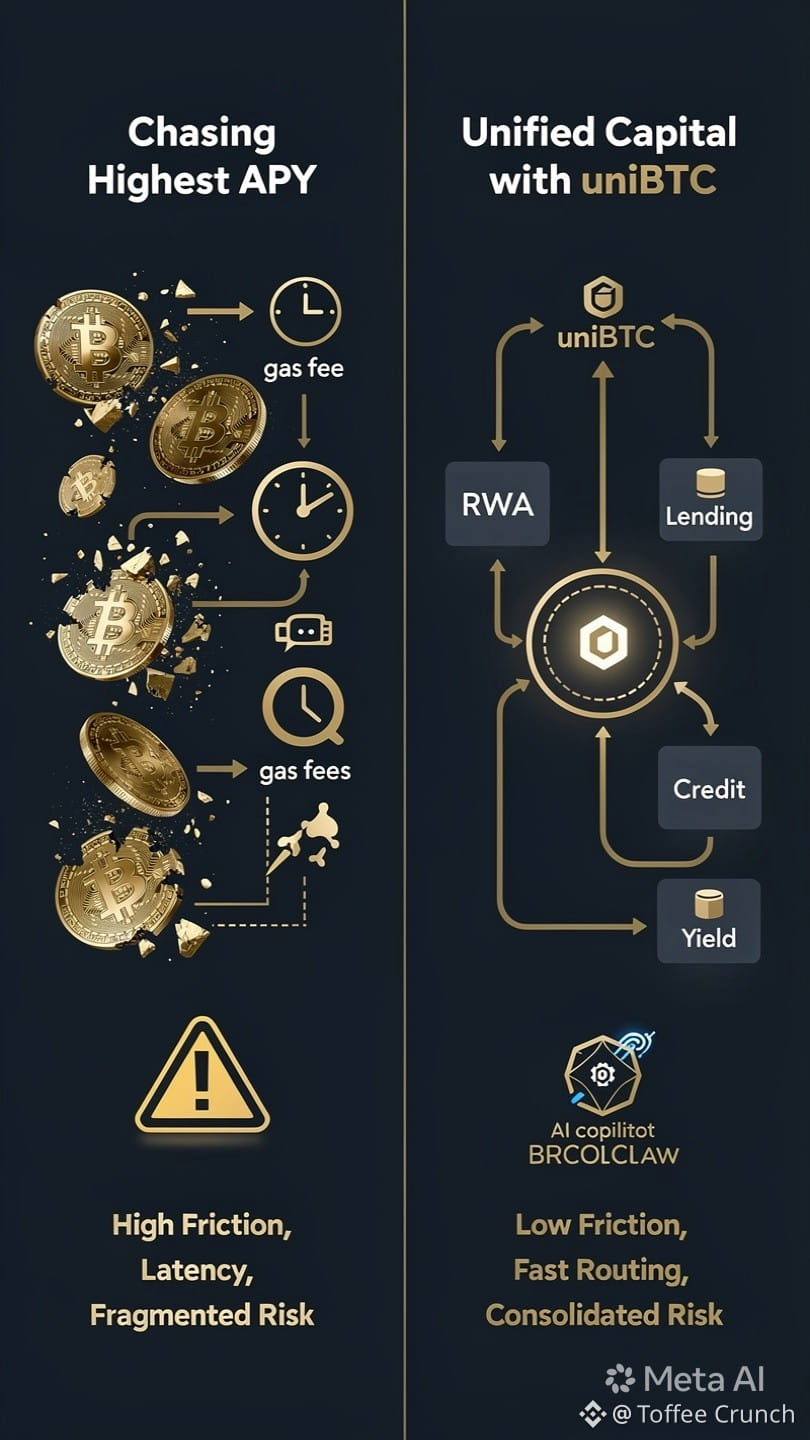
1. uniBTC: One Capital Layer
Instead of fragmenting Bitcoin across 10 platforms uniBTC serves as a unified entry point. Move once access multiple strategies. Reduce the friction tax that kills returns.
2. BRClaw: Your Strategy Copilot
Markets are 24/7. Humans aren’t. BRClaw acts as an AI-driven routing layer to analyze, stress test and compare allocations across vaults. It doesn’t replace judgment. It upgrades the inputs judgment is based on.
3. Modular Vault Framework: Institutional Optionality
Access isn’t the edge anymore. Structured access is. Bedrock’s framework plugs into RWA, lending, credit and advanced yield with controls institutions actually require.
The thesis is simple:
In BTCFi alpha won’t come from chasing the loudest yield.
It’ll come from reducing mistakes, compounding good decisions, and navigating complexity without drowning in it.
Bitcoin treasuries at Strategy, Metaplanet, Semler Scientific and Twenty One Capital are showing us where this is headed. Treasury management is becoming portfolio management.
Bedrock BR is positioning for that world.
Not by shouting about yield.
By building the flight deck for Bitcoin Capital.
Because the next decade of Bitcoin won’t be won by the biggest holder.
It’ll be won by the best operator.
#BTCFi #Bedrock #BR @Bedrock$BR #bedrock $BR
$BTC
A few years ago, Bitcoin strategy fit on a sticky note: Buy. Hold. Wait.
Today, the map looks different.
Bitcoin Capital now spans treasury companies, lending desks, RWA integrations, credit markets and yield strategies across multiple chains. The opportunities are real. So is the operational drag.
The question has shifted from “Do I have exposure?” to “Am I deploying it intelligently?”
This is why Bedrock 2.0 caught my attention.
It isn’t pitching another APY race. It’s building infrastructure for decision quality.
1. uniBTC: One Capital Layer
Instead of fragmenting Bitcoin across 10 platforms uniBTC serves as a unified entry point. Move once access multiple strategies. Reduce the friction tax that kills returns.
2. BRClaw: Your Strategy Copilot
Markets are 24/7. Humans aren’t. BRClaw acts as an AI-driven routing layer to analyze, stress test and compare allocations across vaults. It doesn’t replace judgment. It upgrades the inputs judgment is based on.
3. Modular Vault Framework: Institutional Optionality
Access isn’t the edge anymore. Structured access is. Bedrock’s framework plugs into RWA, lending, credit and advanced yield with controls institutions actually require.
The thesis is simple:
In BTCFi alpha won’t come from chasing the loudest yield.
It’ll come from reducing mistakes, compounding good decisions, and navigating complexity without drowning in it.
Bitcoin treasuries at Strategy, Metaplanet, Semler Scientific and Twenty One Capital are showing us where this is headed. Treasury management is becoming portfolio management.
Bedrock BR is positioning for that world.
Not by shouting about yield.
By building the flight deck for Bitcoin Capital.
Because the next decade of Bitcoin won’t be won by the biggest holder.
It’ll be won by the best operator.
#BTCFi #Bedrock #BR @Bedrock$BR #bedrock $BR
$BTC
Log in to explore more content