
Eric Choo
851 Posts

Eric Choo
Report
Block User
Open Trade
Frequent Trader
5 Years
18 Following
611 Followers
1.1K+ Liked
Posts
Portfolio
All
Quotes
Videos
Live
PINNED
·
--
🎉 Officially made it to the Top 100 CreatorPad!
Big thanks to everyone who's been reading my posts, engaging, and supporting me all this time 🫶
From simple market insights to mindset tips and personal takes, I never thought I'd hit this milestone.
15489 $PIXEL is not just a reward, but a motivation to keep pumping out high-quality content for the community 🚀
The journey is still long, gotta stay in the zone and push even further 💛
For those building content, stay persistent; opportunities are always there for those who put in the work.
#CreatorpadVN #BinanceSquare
🎉 Officially made it to the Top 100 CreatorPad!
Big thanks to everyone who's been reading my posts, engaging, and supporting me all this time 🫶
From simple market insights to mindset tips and personal takes, I never thought I'd hit this milestone.
15489 $PIXEL is not just a reward, but a motivation to keep pumping out high-quality content for the community 🚀
The journey is still long, gotta stay in the zone and push even further 💛
For those building content, stay persistent; opportunities are always there for those who put in the work.
#CreatorpadVN #BinanceSquare
Big thanks to everyone who's been reading my posts, engaging, and supporting me all this time 🫶
From simple market insights to mindset tips and personal takes, I never thought I'd hit this milestone.
15489 $PIXEL is not just a reward, but a motivation to keep pumping out high-quality content for the community 🚀
The journey is still long, gotta stay in the zone and push even further 💛
For those building content, stay persistent; opportunities are always there for those who put in the work.
#CreatorpadVN #BinanceSquare

106
56
7.4k
PINNED
·
--
Didn’t think I’d get lucky enough to land in the top 4 CreatorPad VN on Binance Square 🥹
The prize of 0.12 $BNB isn’t huge, but it’s a solid motivation to keep writing and sharing more.
Honestly, I see that Binance Square still has plenty of opportunities for those who love creating content, analyzing, or just engaging daily.
Just give it a shot, who knows, your next post might just go top 👀
If anyone wants to join but doesn’t know where to start, needs tips on writing, building engagement, or hunting events, just hit me up. I’ll support however I can 🤝
Congrats to everyone who scored some goodies this round 🫶
Didn’t think I’d get lucky enough to land in the top 4 CreatorPad VN on Binance Square 🥹
The prize of 0.12 $BNB isn’t huge, but it’s a solid motivation to keep writing and sharing more.
Honestly, I see that Binance Square still has plenty of opportunities for those who love creating content, analyzing, or just engaging daily.
Just give it a shot, who knows, your next post might just go top 👀
If anyone wants to join but doesn’t know where to start, needs tips on writing, building engagement, or hunting events, just hit me up. I’ll support however I can 🤝
Congrats to everyone who scored some goodies this round 🫶
The prize of 0.12 $BNB isn’t huge, but it’s a solid motivation to keep writing and sharing more.
Honestly, I see that Binance Square still has plenty of opportunities for those who love creating content, analyzing, or just engaging daily.
Just give it a shot, who knows, your next post might just go top 👀
If anyone wants to join but doesn’t know where to start, needs tips on writing, building engagement, or hunting events, just hit me up. I’ll support however I can 🤝
Congrats to everyone who scored some goodies this round 🫶


13
24
7.5k
·
--
[CLAIM](https://app.binance.com/uni-qr/F4dCQkxx)
$BNB moon today, ATH soon
CLAIM
$BNB moon today, ATH soon
$BNB moon today, ATH soon

6
6
·
--
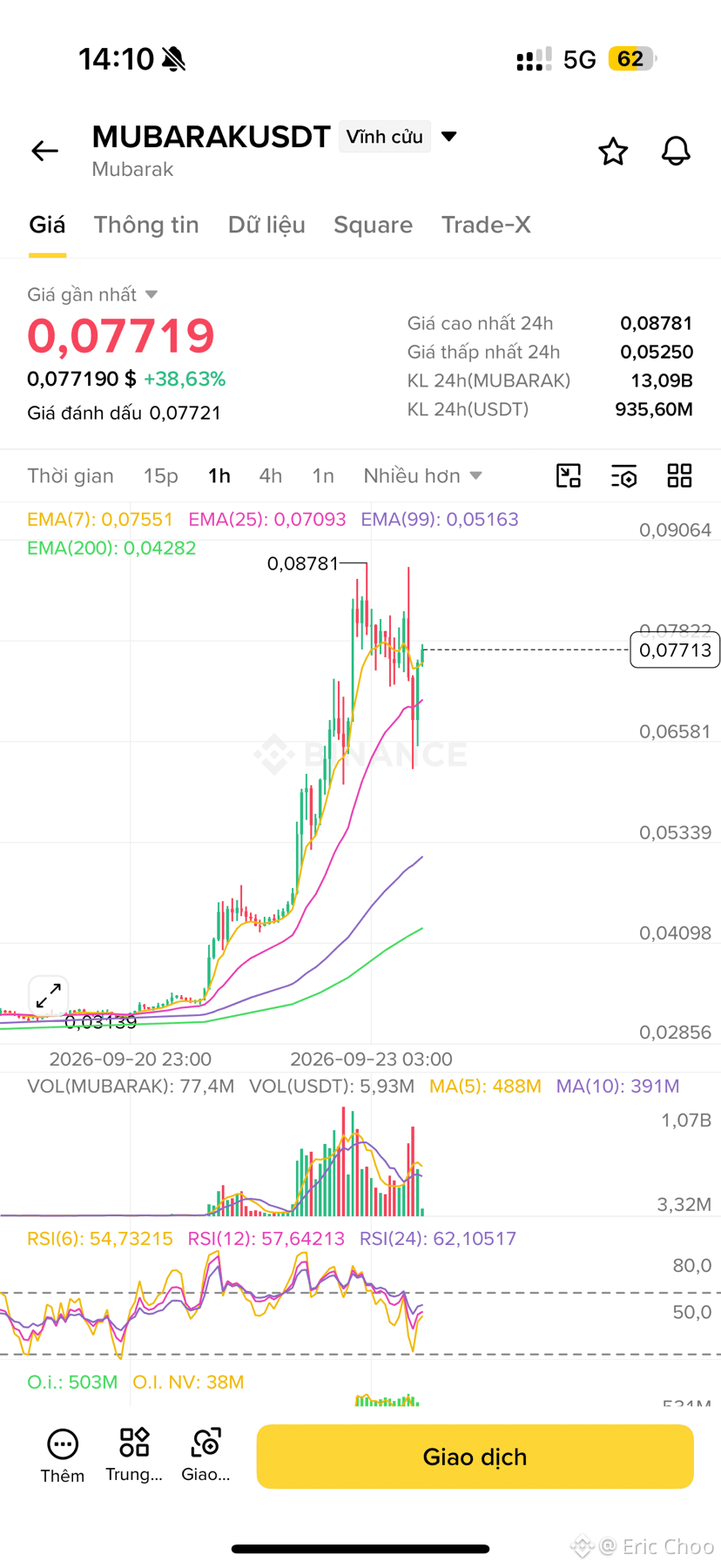
$MUBARAK đã kill short thành công, giờ lại tiếp cho mà xem. Lên tàu long đi anh em.
SL ở râu vừa kill nhé
$MUBARAK đã kill short thành công, giờ lại tiếp cho mà xem. Lên tàu long đi anh em.
SL ở râu vừa kill nhé
SL ở râu vừa kill nhé
1
1.5k
·
--
Partly True
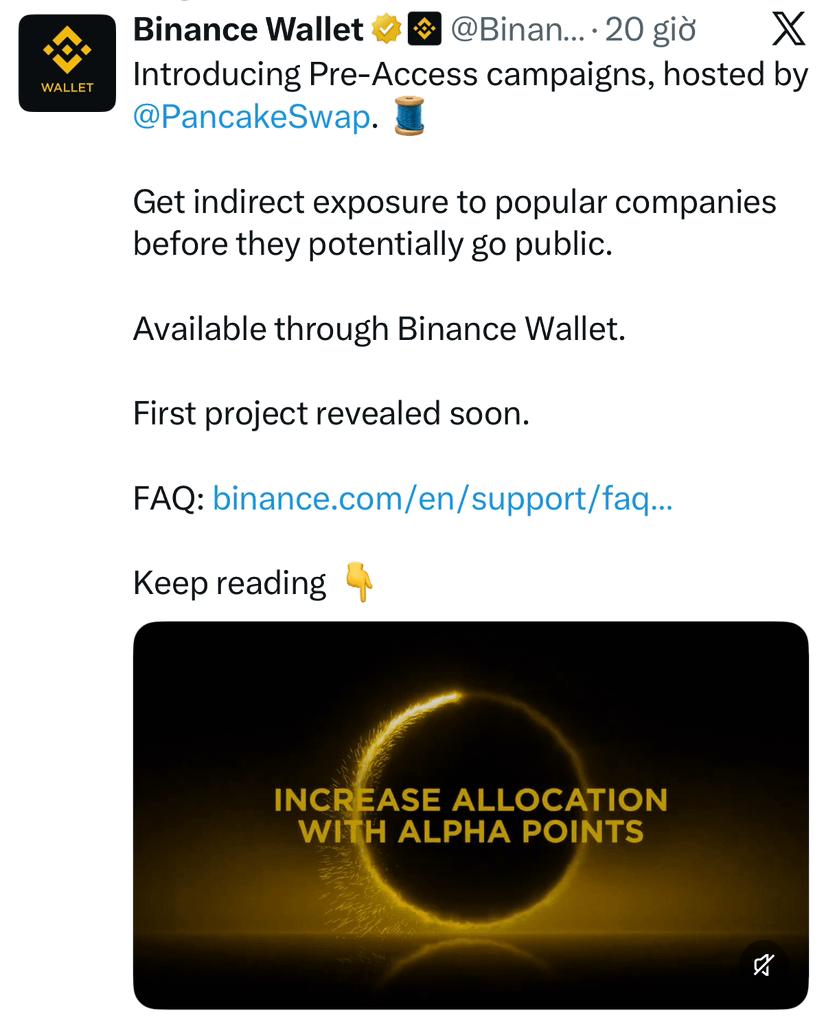
Binance Wallet launches Pre-Access IPO via PancakeSwap
✅ So soon, you and everyone can participate in buying pre-IPO projects on Binance Wallet
✅ Since its launch (01/2025) to now, nearly a hundred IDO projects, but none of them have lost—buying is profitable.👍
Requirements to participate:
1. You must use a Binance Keyless Wallet.
[TẠO VÍ WEB3](https://web3.binance.com/referral?ref=W54H3R6Z)
(Transaction fee discount code)
2. Allocation (distribution) based on:
- Alpha Points
- bStocks On-Chain Tier (trading volume and holdings)
- Trencher Badge (receive additional allocation)
The first project is likely Polymarket
Binance Wallet launches Pre-Access IPO via PancakeSwap
✅ So soon, you and everyone can participate in buying pre-IPO projects on Binance Wallet
✅ Since its launch (01/2025) to now, nearly a hundred IDO projects, but none of them have lost—buying is profitable.👍
Requirements to participate:
1. You must use a Binance Keyless Wallet.
TẠO VÍ WEB3
(Transaction fee discount code)
2. Allocation (distribution) based on:
- Alpha Points
- bStocks On-Chain Tier (trading volume and holdings)
- Trencher Badge (receive additional allocation)
The first project is likely Polymarket
✅ So soon, you and everyone can participate in buying pre-IPO projects on Binance Wallet
✅ Since its launch (01/2025) to now, nearly a hundred IDO projects, but none of them have lost—buying is profitable.👍
Requirements to participate:
1. You must use a Binance Keyless Wallet.
TẠO VÍ WEB3
(Transaction fee discount code)
2. Allocation (distribution) based on:
- Alpha Points
- bStocks On-Chain Tier (trading volume and holdings)
- Trencher Badge (receive additional allocation)
The first project is likely Polymarket
1.7k
·
--
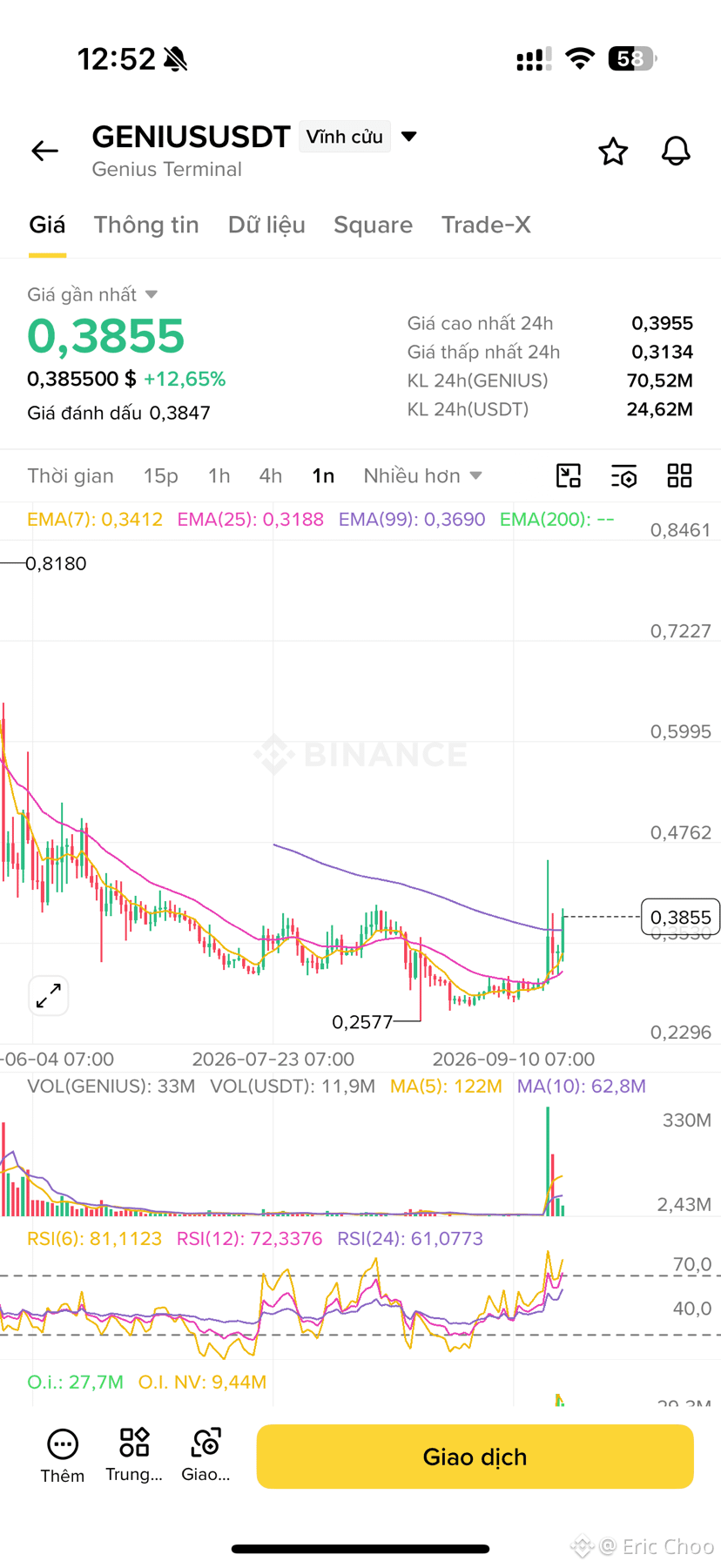
Bet 2x-3x with no need for heroes
$GENIUS has broken out the D1 range and backtested.
Enter around this entry point, use small volume to DCA while waiting for 1 D1 candle to pump
SL: 0.297
Bet 2x-3x with no need for heroes
$GENIUS has broken out the D1 range and backtested.
Enter around this entry point, use small volume to DCA while waiting for 1 D1 candle to pump
SL: 0.297
$GENIUS has broken out the D1 range and backtested.
Enter around this entry point, use small volume to DCA while waiting for 1 D1 candle to pump
SL: 0.297
1
1.1k
·
--
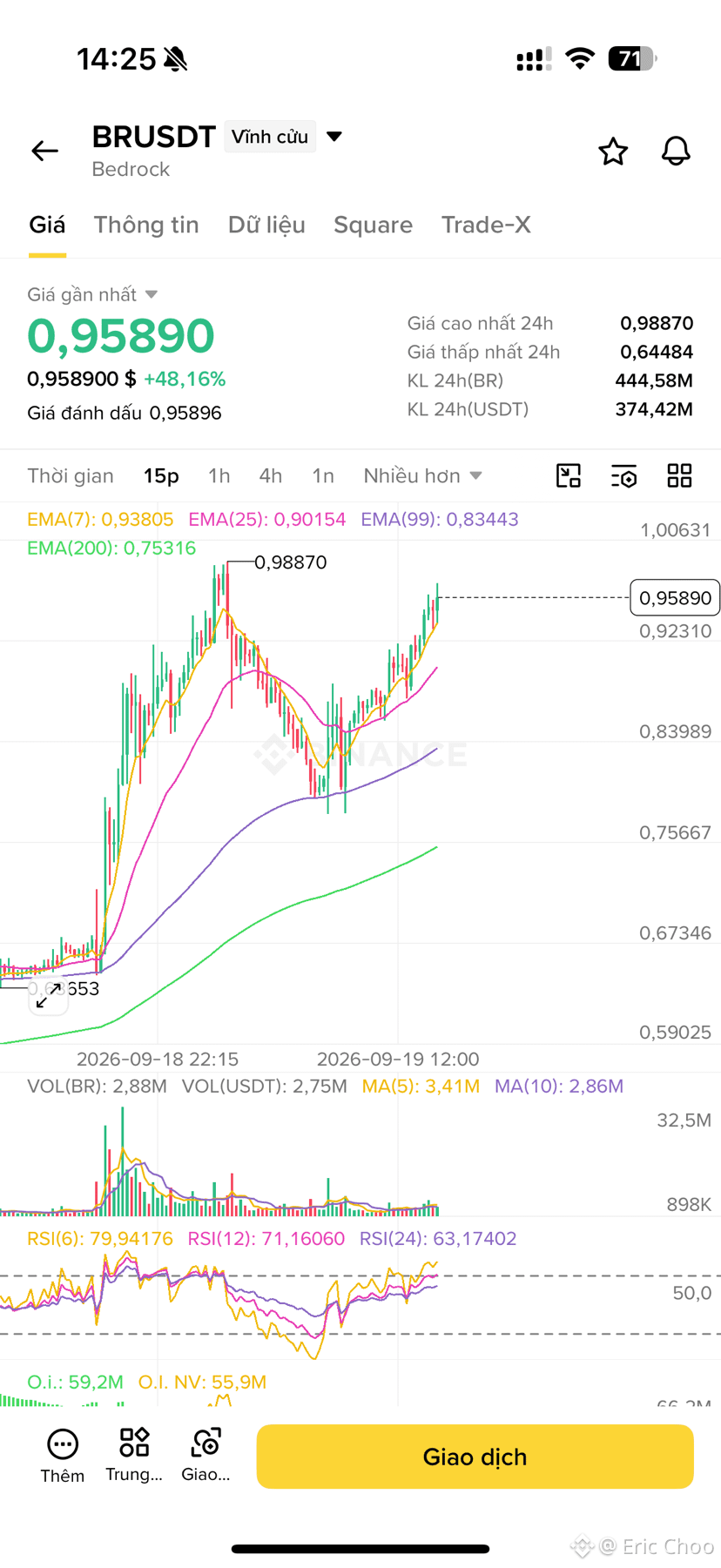
Short $BR quanh entry này, kì vọng tạo 2 đỉnh khung m15 rồi sập xuống, kèo lướt nhanh 7-10%.
SL KHOẢNG 1.1 nhé anh em
Short $BR quanh entry này, kì vọng tạo 2 đỉnh khung m15 rồi sập xuống, kèo lướt nhanh 7-10%.
SL KHOẢNG 1.1 nhé anh em
SL KHOẢNG 1.1 nhé anh em
2
2.1k
·
--
Bearish
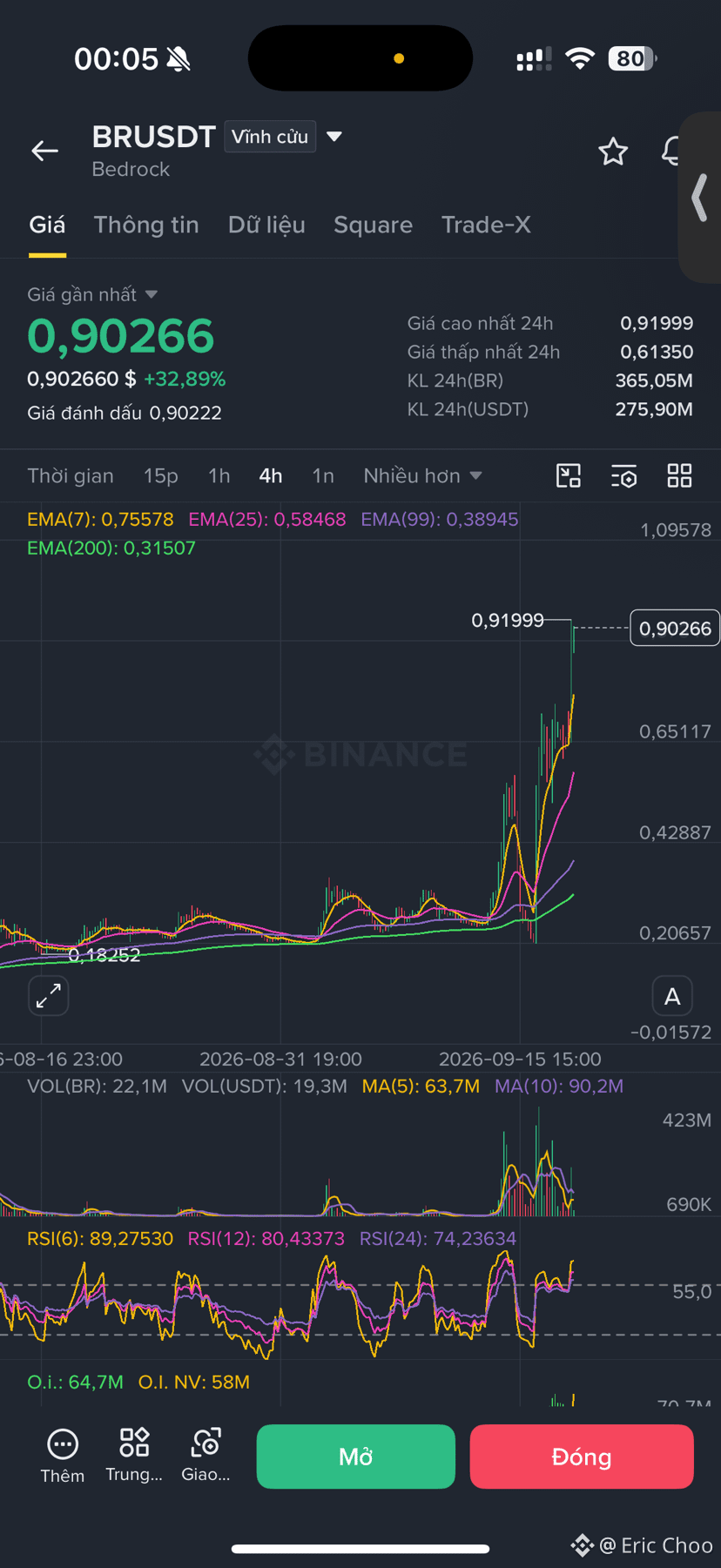
$BR too much pump, take a short to unwind the order for us, bros. How can it keep going up like that
{future}(BRUSDT)
$BR too much pump, take a short to unwind the order for us, bros. How can it keep going up like that
977
·
--
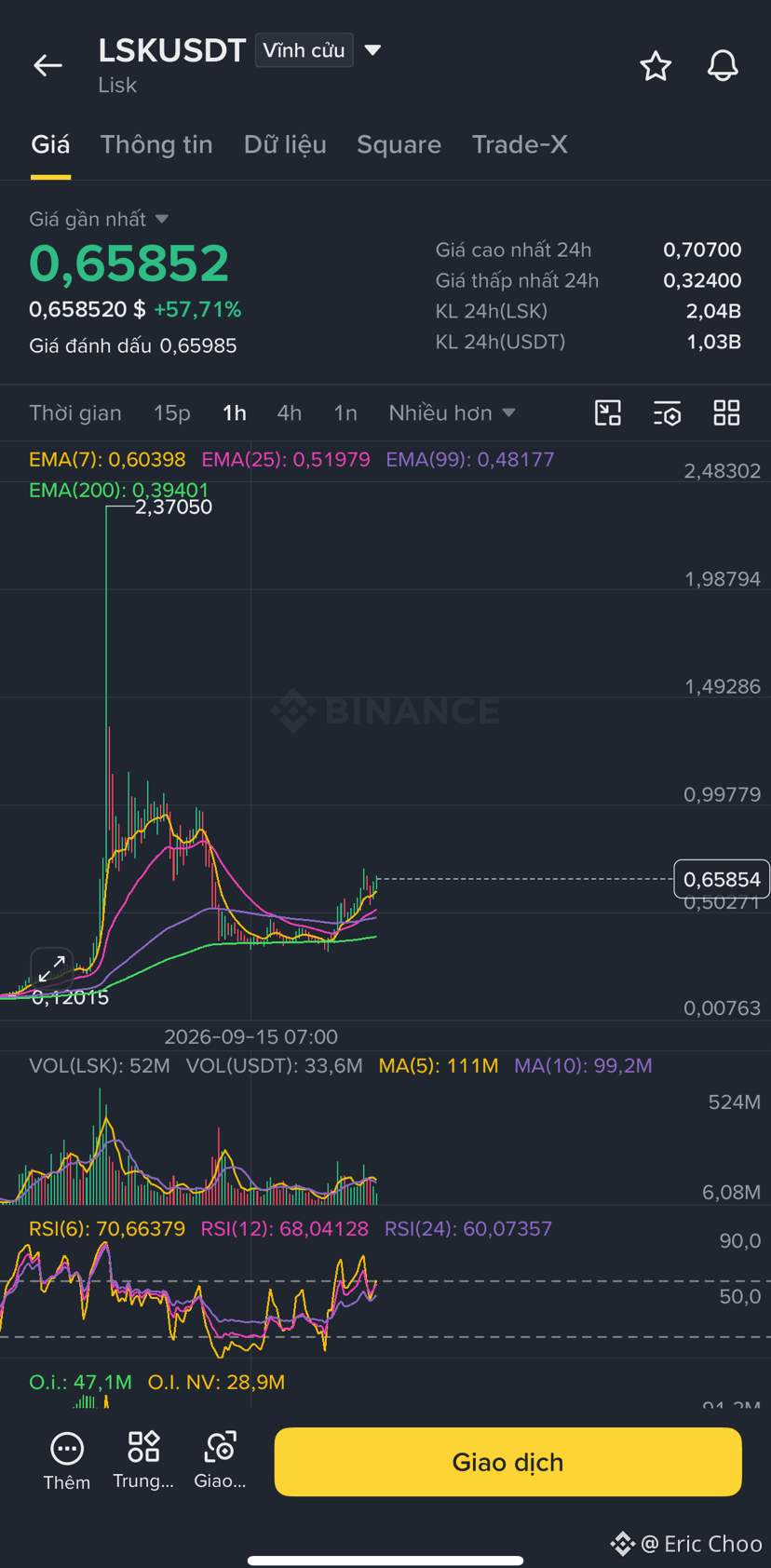
$LSK chart bullish really, guys, the trend is going up so you can enter with a small position around here. Quick trade for 15-20%. I’m confident there will be a pump candle that kills shorts before it goes back down to the ground
{future}(LSKUSDT)
$LSK chart bullish really, guys, the trend is going up so you can enter with a small position around here. Quick trade for 15-20%. I’m confident there will be a pump candle that kills shorts before it goes back down to the ground
2.8k
·
--
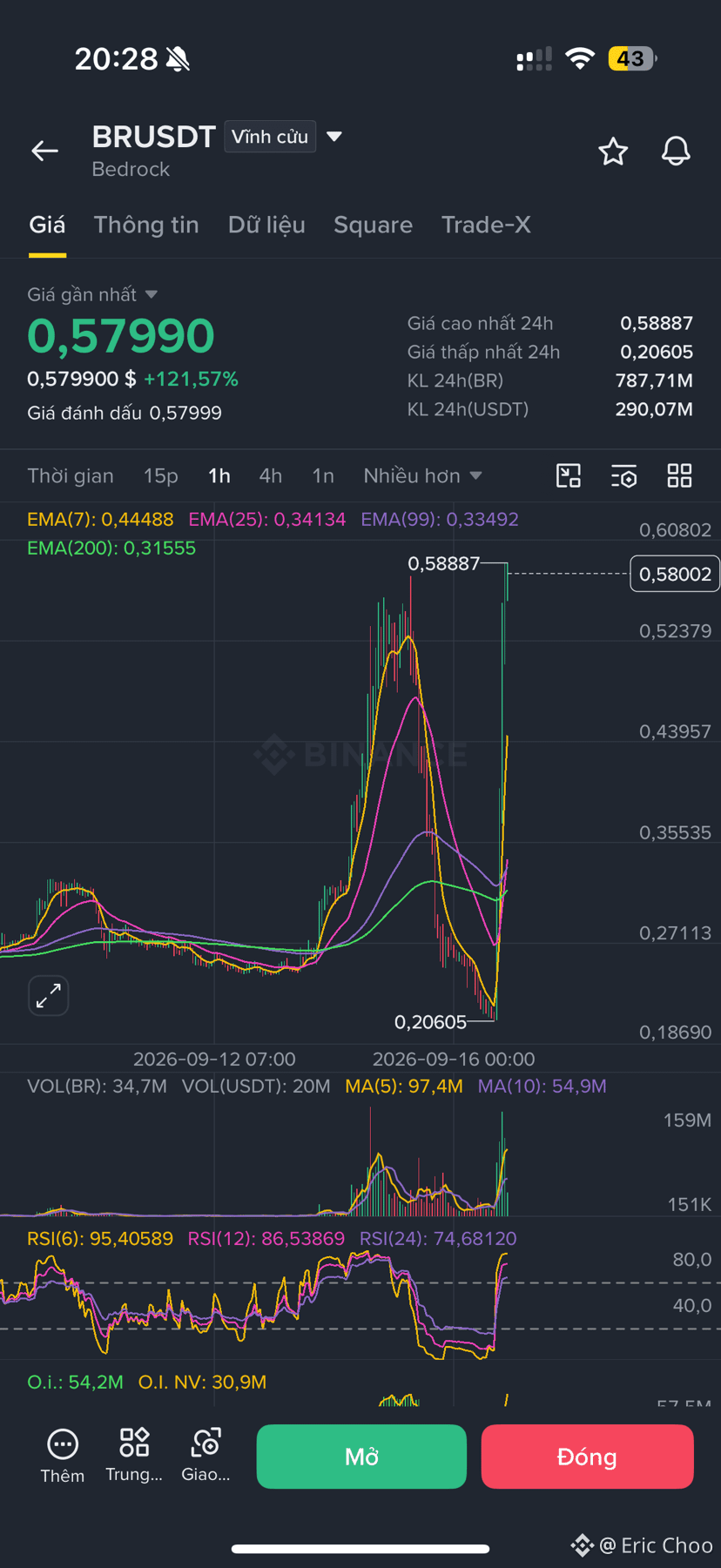
$BR short now anh em
2 tops are entering a short position around here, use small volume to DCA. This one will dump soon
$BR short now anh em
2 tops are entering a short position around here, use small volume to DCA. This one will dump soon
2 tops are entering a short position around here, use small volume to DCA. This one will dump soon
2k
·
--
#CPIWatch | Can CPI lead the Fed to raise interest rates?
CPI is about to be released, so the market is paying close attention.
If CPI is higher than expected, it may indicate that inflation is still high. In that case, the Fed may continue keeping interest rates high, or even consider raising them. This is generally not good for Bitcoin and other risky assets.
On the other hand, if CPI is lower than expected, it could be a sign that inflation is cooling down. Then, the market may expect the Fed to keep rates unchanged or possibly cut interest rates in the future. This could be good news for crypto and stocks.
👉 My view: Right now, I lean toward the Fed holding interest rates steady, but CPI will be very important data to confirm the next trend.
I will wait for the CPI figures before making any major trading decisions.
What do you think this CPI will be—high or low? Will the Fed raise rates or keep them unchanged? 👇
#CPIWatch | Can CPI lead the Fed to raise interest rates?
CPI is about to be released, so the market is paying close attention.
If CPI is higher than expected, it may indicate that inflation is still high. In that case, the Fed may continue keeping interest rates high, or even consider raising them. This is generally not good for Bitcoin and other risky assets.
On the other hand, if CPI is lower than expected, it could be a sign that inflation is cooling down. Then, the market may expect the Fed to keep rates unchanged or possibly cut interest rates in the future. This could be good news for crypto and stocks.
👉 My view: Right now, I lean toward the Fed holding interest rates steady, but CPI will be very important data to confirm the next trend.
I will wait for the CPI figures before making any major trading decisions.
What do you think this CPI will be—high or low? Will the Fed raise rates or keep them unchanged? 👇
CPI is about to be released, so the market is paying close attention.
If CPI is higher than expected, it may indicate that inflation is still high. In that case, the Fed may continue keeping interest rates high, or even consider raising them. This is generally not good for Bitcoin and other risky assets.
On the other hand, if CPI is lower than expected, it could be a sign that inflation is cooling down. Then, the market may expect the Fed to keep rates unchanged or possibly cut interest rates in the future. This could be good news for crypto and stocks.
👉 My view: Right now, I lean toward the Fed holding interest rates steady, but CPI will be very important data to confirm the next trend.
I will wait for the CPI figures before making any major trading decisions.
What do you think this CPI will be—high or low? Will the Fed raise rates or keep them unchanged? 👇
1
442
·
--
$USELESS too much, guys. FOMO long, just a bit with the lottery. Go fast, take about 10-20%
SL around 0.135
{future}(USELESSUSDT)
$USELESS too much, guys. FOMO long, just a bit with the lottery. Go fast, take about 10-20%
SL around 0.135
SL around 0.135

1.1k
·
--
$H break EMA 200 should be able to go long around here, targeting 10-20% with leverage. SL if the candle closes below the blue EMA 200 line. Split volume into the orders nhé
{future}(HUSDT)
$H break EMA 200 should be able to go long around here, targeting 10-20% with leverage. SL if the candle closes below the blue EMA 200 line. Split volume into the orders nhé

2.1k
·
--
$AKE còn down more. Guys don't go into long to get rid. Waiting for short underground
$AKE còn down more. Guys don't go into long to get rid. Waiting for short underground

1.2k
·
--
Verified
#termmax @termmax
I want to tell you about the moment I realized variable rate DeFi had been quietly taxing me for two years.
It wasn't a liquidation. Nothing dramatic. I was reviewing a closed position — entry rate 11%, average holding cost turned out to be 23% by the time I exited. My thesis was right. My timing was right. But somewhere between open and close, the rate had drifted so gradually I stopped watching it. That invisible drift ate more than half my realized gain.
I found TermMax two months before I touched it. Read the docs, understood the loan AMM mechanics — how it prices fixed terms through an on-chain matching engine rather than a utilization curve that moves every block — then waited to see if the experience matched the architecture.
It did. Opening my first fixed-rate position felt genuinely strange. Strange because nothing changed after I confirmed. No rate feed to refresh. No utilization creep. The term I chose was the term I got, and the rate I locked was the rate I paid, start to finish. One-click leverage without the variable rate roulette running underneath it. Curated vaults with risk parameters I could actually read, not infer. Multi-chain deployment that behaved identically across every network I tested — not a flagship experience with hollow mirrors everywhere else.
From a trader angle this removes the single biggest hidden cost in DeFi borrowing. From a protocol angle the loan AMM is infrastructure that traditional fixed income managers can actually reason about. From a market angle the timing is now — $TMX TGE lands August 25, 2026. Three days away.
Product existed before the token. Experience existed before the narrative.
Go use the protocol. Read what's verifiable. Decide with your own data before the 25th.
Not financial advice — personal experience, nothing more.
#termmax @TermMax
I want to tell you about the moment I realized variable rate DeFi had been quietly taxing me for two years.
It wasn't a liquidation. Nothing dramatic. I was reviewing a closed position — entry rate 11%, average holding cost turned out to be 23% by the time I exited. My thesis was right. My timing was right. But somewhere between open and close, the rate had drifted so gradually I stopped watching it. That invisible drift ate more than half my realized gain.
I found TermMax two months before I touched it. Read the docs, understood the loan AMM mechanics — how it prices fixed terms through an on-chain matching engine rather than a utilization curve that moves every block — then waited to see if the experience matched the architecture.
It did. Opening my first fixed-rate position felt genuinely strange. Strange because nothing changed after I confirmed. No rate feed to refresh. No utilization creep. The term I chose was the term I got, and the rate I locked was the rate I paid, start to finish. One-click leverage without the variable rate roulette running underneath it. Curated vaults with risk parameters I could actually read, not infer. Multi-chain deployment that behaved identically across every network I tested — not a flagship experience with hollow mirrors everywhere else.
From a trader angle this removes the single biggest hidden cost in DeFi borrowing. From a protocol angle the loan AMM is infrastructure that traditional fixed income managers can actually reason about. From a market angle the timing is now — $TMX TGE lands August 25, 2026. Three days away.
Product existed before the token. Experience existed before the narrative.
Go use the protocol. Read what's verifiable. Decide with your own data before the 25th.
Not financial advice — personal experience, nothing more.
I want to tell you about the moment I realized variable rate DeFi had been quietly taxing me for two years.
It wasn't a liquidation. Nothing dramatic. I was reviewing a closed position — entry rate 11%, average holding cost turned out to be 23% by the time I exited. My thesis was right. My timing was right. But somewhere between open and close, the rate had drifted so gradually I stopped watching it. That invisible drift ate more than half my realized gain.
I found TermMax two months before I touched it. Read the docs, understood the loan AMM mechanics — how it prices fixed terms through an on-chain matching engine rather than a utilization curve that moves every block — then waited to see if the experience matched the architecture.
It did. Opening my first fixed-rate position felt genuinely strange. Strange because nothing changed after I confirmed. No rate feed to refresh. No utilization creep. The term I chose was the term I got, and the rate I locked was the rate I paid, start to finish. One-click leverage without the variable rate roulette running underneath it. Curated vaults with risk parameters I could actually read, not infer. Multi-chain deployment that behaved identically across every network I tested — not a flagship experience with hollow mirrors everywhere else.
From a trader angle this removes the single biggest hidden cost in DeFi borrowing. From a protocol angle the loan AMM is infrastructure that traditional fixed income managers can actually reason about. From a market angle the timing is now — $TMX TGE lands August 25, 2026. Three days away.
Product existed before the token. Experience existed before the narrative.
Go use the protocol. Read what's verifiable. Decide with your own data before the 25th.
Not financial advice — personal experience, nothing more.

8
5
15.6k
·
--
#binancep2pantoan @Binance_Vietnam
The Tab I Left Open Too Long
I had two P2P orders running at once, which I don't usually do, and lost track of which chat belonged to which order. Payment came in on one of them and I almost matched it to the wrong trade just going by the amount, which happened to be close on both.
I stopped and pulled up the actual order IDs before doing anything, matched the payment to the correct order using the payer name on the transaction, not memory or guesswork. Got it right, but only because I slowed down enough to check instead of trusting that the numbers "looked about right."
Both counterparties checked out fine on history and completion rate, nothing suspicious there. The risk wasn't them, it was me running trades faster than I could actually verify them properly. I confirmed each deposit separately in my bank app before releasing either one, even though it meant sitting with two open orders a few extra minutes.
Saved both Order IDs and chat threads afterward, labeled clearly this time, which is a habit I didn't have before that day.
Running multiple trades doesn't multiply the risk from the platform. It multiplies the risk of my own attention slipping.
#binancep2pantoan @Binance Vietnam
The Tab I Left Open Too Long
I had two P2P orders running at once, which I don't usually do, and lost track of which chat belonged to which order. Payment came in on one of them and I almost matched it to the wrong trade just going by the amount, which happened to be close on both.
I stopped and pulled up the actual order IDs before doing anything, matched the payment to the correct order using the payer name on the transaction, not memory or guesswork. Got it right, but only because I slowed down enough to check instead of trusting that the numbers "looked about right."
Both counterparties checked out fine on history and completion rate, nothing suspicious there. The risk wasn't them, it was me running trades faster than I could actually verify them properly. I confirmed each deposit separately in my bank app before releasing either one, even though it meant sitting with two open orders a few extra minutes.
Saved both Order IDs and chat threads afterward, labeled clearly this time, which is a habit I didn't have before that day.
Running multiple trades doesn't multiply the risk from the platform. It multiplies the risk of my own attention slipping.
The Tab I Left Open Too Long
I had two P2P orders running at once, which I don't usually do, and lost track of which chat belonged to which order. Payment came in on one of them and I almost matched it to the wrong trade just going by the amount, which happened to be close on both.
I stopped and pulled up the actual order IDs before doing anything, matched the payment to the correct order using the payer name on the transaction, not memory or guesswork. Got it right, but only because I slowed down enough to check instead of trusting that the numbers "looked about right."
Both counterparties checked out fine on history and completion rate, nothing suspicious there. The risk wasn't them, it was me running trades faster than I could actually verify them properly. I confirmed each deposit separately in my bank app before releasing either one, even though it meant sitting with two open orders a few extra minutes.
Saved both Order IDs and chat threads afterward, labeled clearly this time, which is a habit I didn't have before that day.
Running multiple trades doesn't multiply the risk from the platform. It multiplies the risk of my own attention slipping.

1
187
·
--
#termmax @termmax
I actually used it. That's what I want to talk about.
Not the whitepaper. Not the tokenomics deck. The protocol itself — because TermMax has been live long enough to test, and testing it changed how I think about DeFi lending entirely.
First thing I noticed: opening a fixed-rate position feels completely different from anything else in DeFi. No refreshing the rate feed. No mental math on whether the variable APY will hold through your intended duration. You set your term, you lock your rate, and the loan AMM handles the matching. The certainty is almost uncomfortable at first — because DeFi has conditioned us to expect the floor to shift.
The one-click leverage actually works the way it's described. Curated vaults abstract the complexity without hiding the risk, which is rarer than it sounds. Multi-chain deployment means the infrastructure isn't theoretical — it's running across networks you can verify right now.
From a pure UX angle, this is what DeFi fixed income should have looked like three years ago. From a risk management angle, knowing your exact borrowing cost for your entire position duration changes every calculation you make downstream.
And from a timing angle — $TMX TGE is August 25, 2026. The protocol already exists. The experience is already real. The token comes after the product, not before.
That order matters more than most people realize right now.
Try the protocol before the TGE. Form your own view.
Not financial advice.
#termmax @TermMax
I actually used it. That's what I want to talk about.
Not the whitepaper. Not the tokenomics deck. The protocol itself — because TermMax has been live long enough to test, and testing it changed how I think about DeFi lending entirely.
First thing I noticed: opening a fixed-rate position feels completely different from anything else in DeFi. No refreshing the rate feed. No mental math on whether the variable APY will hold through your intended duration. You set your term, you lock your rate, and the loan AMM handles the matching. The certainty is almost uncomfortable at first — because DeFi has conditioned us to expect the floor to shift.
The one-click leverage actually works the way it's described. Curated vaults abstract the complexity without hiding the risk, which is rarer than it sounds. Multi-chain deployment means the infrastructure isn't theoretical — it's running across networks you can verify right now.
From a pure UX angle, this is what DeFi fixed income should have looked like three years ago. From a risk management angle, knowing your exact borrowing cost for your entire position duration changes every calculation you make downstream.
And from a timing angle — $TMX TGE is August 25, 2026. The protocol already exists. The experience is already real. The token comes after the product, not before.
That order matters more than most people realize right now.
Try the protocol before the TGE. Form your own view.
Not financial advice.
I actually used it. That's what I want to talk about.
Not the whitepaper. Not the tokenomics deck. The protocol itself — because TermMax has been live long enough to test, and testing it changed how I think about DeFi lending entirely.
First thing I noticed: opening a fixed-rate position feels completely different from anything else in DeFi. No refreshing the rate feed. No mental math on whether the variable APY will hold through your intended duration. You set your term, you lock your rate, and the loan AMM handles the matching. The certainty is almost uncomfortable at first — because DeFi has conditioned us to expect the floor to shift.
The one-click leverage actually works the way it's described. Curated vaults abstract the complexity without hiding the risk, which is rarer than it sounds. Multi-chain deployment means the infrastructure isn't theoretical — it's running across networks you can verify right now.
From a pure UX angle, this is what DeFi fixed income should have looked like three years ago. From a risk management angle, knowing your exact borrowing cost for your entire position duration changes every calculation you make downstream.
And from a timing angle — $TMX TGE is August 25, 2026. The protocol already exists. The experience is already real. The token comes after the product, not before.
That order matters more than most people realize right now.
Try the protocol before the TGE. Form your own view.
Not financial advice.

1
1
132
·
--
#termmax @termmax
Most DeFi protocols solve yield. TermMax solves certainty.
I've watched too many friends blow up perfectly good strategies not because the market moved, but because the borrowing rate moved. Entry at 15%, exit forced at 40%. The position wasn't wrong. The infrastructure was. Variable rate lending is a tax on every DeFi trader who actually has a thesis longer than 48 hours.
Here's what TermMax does differently — and it matters at every angle you look at it.
From the trader's angle: fixed rate, fixed term, locked from day one. The loan AMM prices borrowing and lending at terms both sides agree on upfront, removing the silent risk that rewrites your P&L overnight. One-click leverage that doesn't require you to monitor rates like a hawk at 3am.
From the protocol angle: curated vaults that abstract complexity without hiding risk, multi-chain infrastructure already deployed and verifiable on-chain, a lending model that finally separates duration from uncertainty the way traditional fixed income has done for centuries.
From the market timing angle: $TMX TGE lands August 25, 2026. Days away. This is the rare case where the protocol was live before the token existed — meaning you can verify everything before deciding anything.
Fixed-rate lending isn't a narrative. It's what institutional capital has always demanded from DeFi and never gotten.
The 25th is close. The docs are public. The on-chain data is there.
Do your own research — but do it before the TGE.
Not financial advice.
#termmax @TermMax
Most DeFi protocols solve yield. TermMax solves certainty.
I've watched too many friends blow up perfectly good strategies not because the market moved, but because the borrowing rate moved. Entry at 15%, exit forced at 40%. The position wasn't wrong. The infrastructure was. Variable rate lending is a tax on every DeFi trader who actually has a thesis longer than 48 hours.
Here's what TermMax does differently — and it matters at every angle you look at it.
From the trader's angle: fixed rate, fixed term, locked from day one. The loan AMM prices borrowing and lending at terms both sides agree on upfront, removing the silent risk that rewrites your P&L overnight. One-click leverage that doesn't require you to monitor rates like a hawk at 3am.
From the protocol angle: curated vaults that abstract complexity without hiding risk, multi-chain infrastructure already deployed and verifiable on-chain, a lending model that finally separates duration from uncertainty the way traditional fixed income has done for centuries.
From the market timing angle: $TMX TGE lands August 25, 2026. Days away. This is the rare case where the protocol was live before the token existed — meaning you can verify everything before deciding anything.
Fixed-rate lending isn't a narrative. It's what institutional capital has always demanded from DeFi and never gotten.
The 25th is close. The docs are public. The on-chain data is there.
Do your own research — but do it before the TGE.
Not financial advice.
Most DeFi protocols solve yield. TermMax solves certainty.
I've watched too many friends blow up perfectly good strategies not because the market moved, but because the borrowing rate moved. Entry at 15%, exit forced at 40%. The position wasn't wrong. The infrastructure was. Variable rate lending is a tax on every DeFi trader who actually has a thesis longer than 48 hours.
Here's what TermMax does differently — and it matters at every angle you look at it.
From the trader's angle: fixed rate, fixed term, locked from day one. The loan AMM prices borrowing and lending at terms both sides agree on upfront, removing the silent risk that rewrites your P&L overnight. One-click leverage that doesn't require you to monitor rates like a hawk at 3am.
From the protocol angle: curated vaults that abstract complexity without hiding risk, multi-chain infrastructure already deployed and verifiable on-chain, a lending model that finally separates duration from uncertainty the way traditional fixed income has done for centuries.
From the market timing angle: $TMX TGE lands August 25, 2026. Days away. This is the rare case where the protocol was live before the token existed — meaning you can verify everything before deciding anything.
Fixed-rate lending isn't a narrative. It's what institutional capital has always demanded from DeFi and never gotten.
The 25th is close. The docs are public. The on-chain data is there.
Do your own research — but do it before the TGE.
Not financial advice.

4
2
236
·
--
#binancep2pantoan @Binance_Vietnam
The Rate That Was Too Good
I saw an offer with a rate noticeably better than everything else on the list and almost jumped straight to it before checking anything else. First message from the seller: "add me on Telegram, I'll give you an even better rate there, off-platform is faster." That alone should've ended it, but I still checked their profile out of habit — new account, single completed trade, no badge.
I said no to moving the conversation and told them we'd trade on Binance or not at all. They dropped the "better rate" immediately and matched the platform price instead, which told me more than their profile did.
Even trading on-platform, I didn't relax. I confirmed the payer name matched the order before accepting, then waited for the deposit to actually clear in my own bank app rather than releasing off their "sent!" message. It came through fine, a few minutes later than they claimed, no big deal once verified myself.
Kept the Order ID and full chat afterward, mostly because the near-miss on Telegram made me want a record of exactly how that started.
The good rate wasn't the scam. The invitation to leave the platform was.
#binancep2pantoan @Binance Vietnam
The Rate That Was Too Good
I saw an offer with a rate noticeably better than everything else on the list and almost jumped straight to it before checking anything else. First message from the seller: "add me on Telegram, I'll give you an even better rate there, off-platform is faster." That alone should've ended it, but I still checked their profile out of habit — new account, single completed trade, no badge.
I said no to moving the conversation and told them we'd trade on Binance or not at all. They dropped the "better rate" immediately and matched the platform price instead, which told me more than their profile did.
Even trading on-platform, I didn't relax. I confirmed the payer name matched the order before accepting, then waited for the deposit to actually clear in my own bank app rather than releasing off their "sent!" message. It came through fine, a few minutes later than they claimed, no big deal once verified myself.
Kept the Order ID and full chat afterward, mostly because the near-miss on Telegram made me want a record of exactly how that started.
The good rate wasn't the scam. The invitation to leave the platform was.
The Rate That Was Too Good
I saw an offer with a rate noticeably better than everything else on the list and almost jumped straight to it before checking anything else. First message from the seller: "add me on Telegram, I'll give you an even better rate there, off-platform is faster." That alone should've ended it, but I still checked their profile out of habit — new account, single completed trade, no badge.
I said no to moving the conversation and told them we'd trade on Binance or not at all. They dropped the "better rate" immediately and matched the platform price instead, which told me more than their profile did.
Even trading on-platform, I didn't relax. I confirmed the payer name matched the order before accepting, then waited for the deposit to actually clear in my own bank app rather than releasing off their "sent!" message. It came through fine, a few minutes later than they claimed, no big deal once verified myself.
Kept the Order ID and full chat afterward, mostly because the near-miss on Telegram made me want a record of exactly how that started.
The good rate wasn't the scam. The invitation to leave the platform was.

2
4
9.2k
·
--
#termmax @termmax
I've been in DeFi long enough to know when something is solving a real problem versus just repackaging the same broken model.
Variable rate lending is the silent killer of most DeFi strategies. You enter a position at 12%. Wake up three days later at 3%. Your entire thesis just evaporated — not because you were wrong, but because the rate moved while you slept.
TermMax fixes this at the protocol level. Fixed rate. Fixed term. Locked in from the moment you open. The loan AMM matches lenders and borrowers directly, no intermediary adjusting your cost of capital mid-position. One-click leverage without the variable rate roulette. Curated vaults that don't require daily babysitting. Multi-chain infrastructure that actually works across deployments, not just on paper.
This isn't a concept. The protocol is live. The mechanics are verifiable on-chain.
And here's what makes right now the exact moment to pay attention: $TMX TGE is hitting August 25, 2026. That's days away. Token generation events for protocols with real working infrastructure hit differently than launches built on promises — because the product exists before the token does.
Fixed-rate lending is what DeFi should have been from day one. TermMax is building it properly, and the TGE is the inflection point.
Do your own research. Read the docs. Understand the model before the 25th.
Not financial advice. Just a builder watching closely.
#termmax @TermMax
I've been in DeFi long enough to know when something is solving a real problem versus just repackaging the same broken model.
Variable rate lending is the silent killer of most DeFi strategies. You enter a position at 12%. Wake up three days later at 3%. Your entire thesis just evaporated — not because you were wrong, but because the rate moved while you slept.
TermMax fixes this at the protocol level. Fixed rate. Fixed term. Locked in from the moment you open. The loan AMM matches lenders and borrowers directly, no intermediary adjusting your cost of capital mid-position. One-click leverage without the variable rate roulette. Curated vaults that don't require daily babysitting. Multi-chain infrastructure that actually works across deployments, not just on paper.
This isn't a concept. The protocol is live. The mechanics are verifiable on-chain.
And here's what makes right now the exact moment to pay attention: $TMX TGE is hitting August 25, 2026. That's days away. Token generation events for protocols with real working infrastructure hit differently than launches built on promises — because the product exists before the token does.
Fixed-rate lending is what DeFi should have been from day one. TermMax is building it properly, and the TGE is the inflection point.
Do your own research. Read the docs. Understand the model before the 25th.
Not financial advice. Just a builder watching closely.
I've been in DeFi long enough to know when something is solving a real problem versus just repackaging the same broken model.
Variable rate lending is the silent killer of most DeFi strategies. You enter a position at 12%. Wake up three days later at 3%. Your entire thesis just evaporated — not because you were wrong, but because the rate moved while you slept.
TermMax fixes this at the protocol level. Fixed rate. Fixed term. Locked in from the moment you open. The loan AMM matches lenders and borrowers directly, no intermediary adjusting your cost of capital mid-position. One-click leverage without the variable rate roulette. Curated vaults that don't require daily babysitting. Multi-chain infrastructure that actually works across deployments, not just on paper.
This isn't a concept. The protocol is live. The mechanics are verifiable on-chain.
And here's what makes right now the exact moment to pay attention: $TMX TGE is hitting August 25, 2026. That's days away. Token generation events for protocols with real working infrastructure hit differently than launches built on promises — because the product exists before the token does.
Fixed-rate lending is what DeFi should have been from day one. TermMax is building it properly, and the TGE is the inflection point.
Do your own research. Read the docs. Understand the model before the 25th.
Not financial advice. Just a builder watching closely.

6
3
305
Log in to explore more content
Join global crypto users on Binance Square
⚡️ Get latest and useful information about crypto.
💬 Trusted by the world’s largest crypto exchange.
👍 Discover real insights from verified creators.
Email / Phone number
Trending Topics
AIStocksWhatNext
672,313 views
5,016 Discussing
Share & Win Traffic Reward in our Trending Hashtag Campaign
✨Topic: What Other Investment Opportunities Remain as AI Stocks Keep Rising?
👉How to Join:
Publish a short post or article with hashtag #AIStocksWhatNext
Share whether you’re bullish or bearish, and post your AI stock holdings or trade — using the trade widget may improve your eligibility.
You can also strengthen your post by sharing data or charts, and avoiding AI-generated images.
✍️Create content based on the below angles:
- Nvidia says chip sales will double next year, and top AI companies keep hitting record revenue, the compute spend behind it is just as staggering. Is AI demand really taking off? And how long can it last? AI stocks are up across the board. Is this a real breakout, or just a short-term bounce?
- Industry leaders are calling to slow down AI development, while Trump plans to build an “AI Force”, claiming AI could account for 25% of U.S. GDP in the future. Whose side are you on? Will state-level backing be a long-term win for AI stocks?
- Are you buying AI stocks? Share your AI-related trade/holdings with our trade sharing widget.
⏰Campaign Period:
- 2026-09-22 7:00 - 2026-09-24 4:00 UTC
🎁Reward:
- Qualified posts that comply with the above guidelines and contain more than 100 words will be reviewed and may receive a random traffic boost of 500 to 3,000 views. You will receive a notification from your feed secretary if your post is selected.
- Get a chance to have your article featured on Binance Square Official
Need ideas for your post? Visit the topic page #AIStocksWhatNext or the Square Guide on How to Post for Better Reach.
Binance Square Official
·493 Likes
·1.3M views
21SharesLaunchesEuropesFirstZcashETP
14,097 views
507 Discussing
CardanoJoinsX402PaymentStandard
10,166 views
387 Discussing