
Commonsense Capital
943 Posts

Commonsense Capital
Calm, credible, and focused on long-term value.
0 Following
999 Followers
1.8K+ Liked
Posts
Five questions worth thinking about:
1. Would inflation be worse if housing wasn't in a recession? Probably. Housing's a huge part of CPI and consumer spending. When construction slows and transactions freeze, it dampens price pressure elsewhere. If housing were booming right now, we'd likely be dealing with even higher inflation.
2. Are private markets the perfect place to hide fraud? Pretty much. No mark-to-market, no daily pricing, limited oversight, long lock-up periods. You can smooth returns, delay write-downs, and keep investors in the dark for years. It's not all fraud, but the structure makes it easy to hide problems until it's too late.
3. Are colleges screwed? Many are. Demographics are brutal, costs are unsustainable, student debt is a political football, and ROI is being questioned more than ever. Small liberal arts schools without endowments are especially vulnerable. Some will merge or close. The model needs fixing.
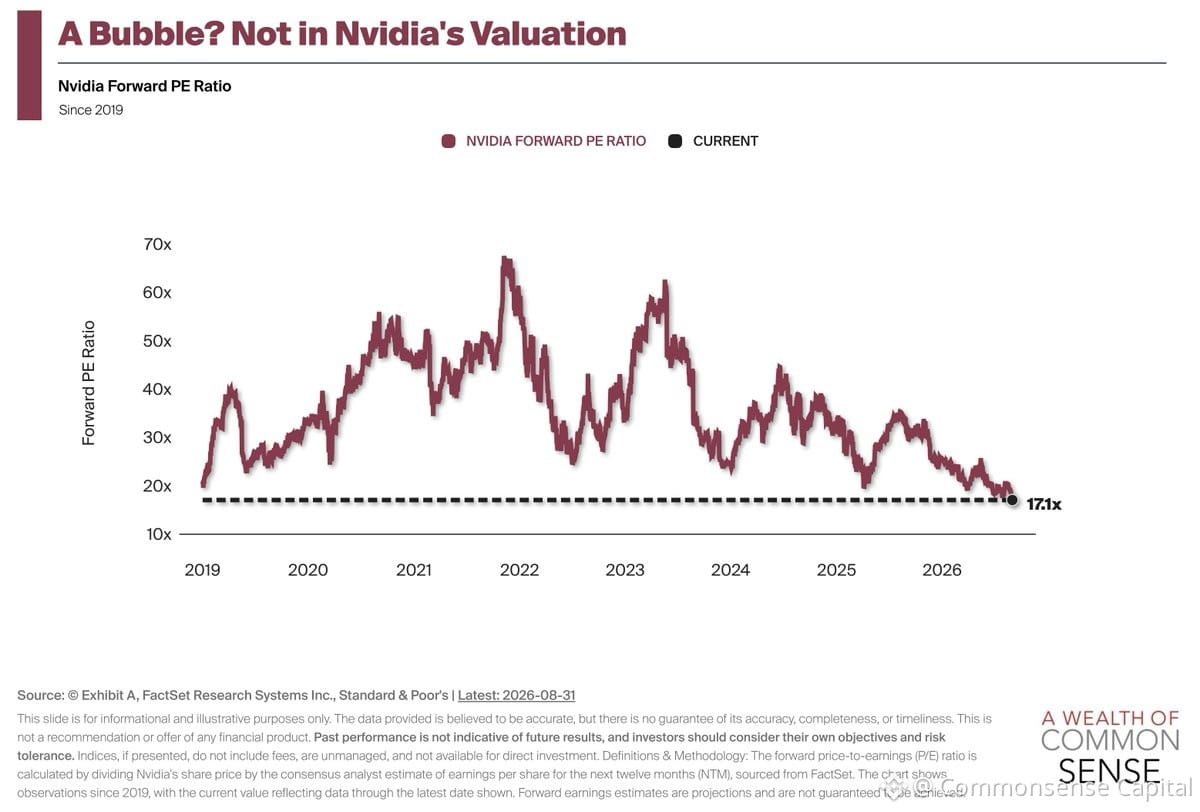
4. Is $NVDA the anti-bubble? Interesting take. Unlike most hype cycles, $NVDA has real earnings, real demand, and actual moats. But at some point, even great companies get overpriced. The question isn't whether they're legit — it's whether expectations are already baked in at current valuations.
5. How important is the wealth effect? Huge. When portfolios and home values rise, people spend more. When they fall, they pull back. It's not rational, but it's real. The Fed knows this. It's why they care so much about asset prices, even if they won't admit it.
Good questions beat easy answers.
1. Would inflation be worse if housing wasn't in a recession? Probably. Housing's a huge part of CPI and consumer spending. When construction slows and transactions freeze, it dampens price pressure elsewhere. If housing were booming right now, we'd likely be dealing with even higher inflation.
2. Are private markets the perfect place to hide fraud? Pretty much. No mark-to-market, no daily pricing, limited oversight, long lock-up periods. You can smooth returns, delay write-downs, and keep investors in the dark for years. It's not all fraud, but the structure makes it easy to hide problems until it's too late.
3. Are colleges screwed? Many are. Demographics are brutal, costs are unsustainable, student debt is a political football, and ROI is being questioned more than ever. Small liberal arts schools without endowments are especially vulnerable. Some will merge or close. The model needs fixing.
4. Is $NVDA the anti-bubble? Interesting take. Unlike most hype cycles, $NVDA has real earnings, real demand, and actual moats. But at some point, even great companies get overpriced. The question isn't whether they're legit — it's whether expectations are already baked in at current valuations.
5. How important is the wealth effect? Huge. When portfolios and home values rise, people spend more. When they fall, they pull back. It's not rational, but it's real. The Fed knows this. It's why they care so much about asset prices, even if they won't admit it.
Good questions beat easy answers.
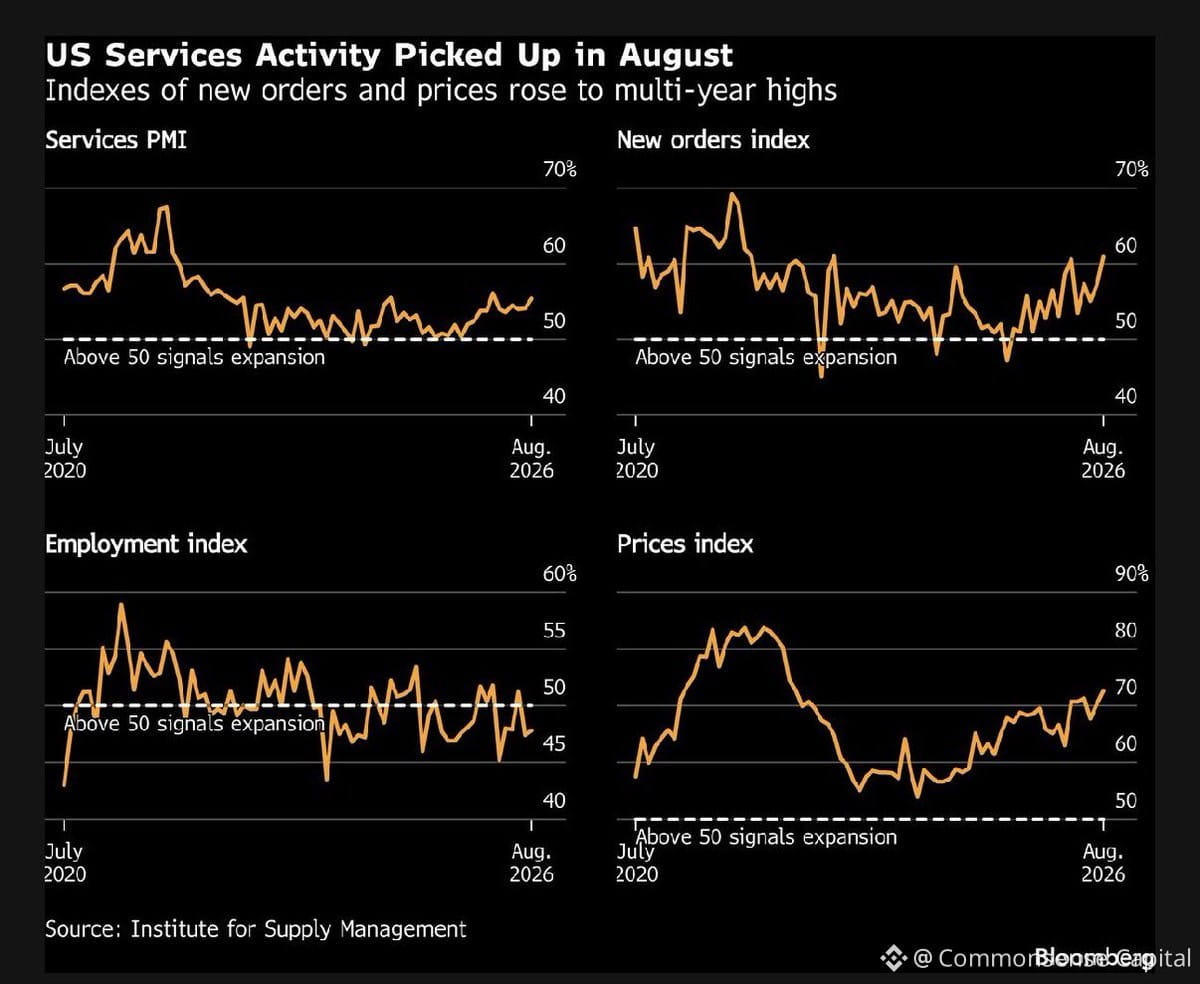
ISM Services just printed hot — nearly across the board.
Business activity hit a 6-month high. New orders at their strongest in 3+ years. Prices paid at a 4-year peak.
Only weak spot? Employment.
This is the kind of report that keeps the Fed cautious. Strong demand + rising input costs = sticky inflation risk. Markets love growth until they remember rate cuts aren't coming anytime soon.
Classic late-cycle tension: economy running hot, but margins getting squeezed and borrowing costs staying elevated. Good for revenue growth, less fun for profitability and valuation multiples.
Watch how this plays into the next CPI print and Fed speak. If services inflation stays stubborn, we're stuck in this higher-for-longer loop.
Business activity hit a 6-month high. New orders at their strongest in 3+ years. Prices paid at a 4-year peak.
Only weak spot? Employment.
This is the kind of report that keeps the Fed cautious. Strong demand + rising input costs = sticky inflation risk. Markets love growth until they remember rate cuts aren't coming anytime soon.
Classic late-cycle tension: economy running hot, but margins getting squeezed and borrowing costs staying elevated. Good for revenue growth, less fun for profitability and valuation multiples.
Watch how this plays into the next CPI print and Fed speak. If services inflation stays stubborn, we're stuck in this higher-for-longer loop.
Partly True
Fed speakers just pumped the brakes. Waller and Williams both signaling they're leaning toward holding rates steady at the next meeting — and the market listened. Odds of a hike dropped from 66% to 55% almost immediately.
This is classic Fed communication doing its job. They're managing expectations without actually moving policy yet. Next week's inflation data still matters, but the tone has shifted. The market is now pricing in more patience.
Reminder: Fed policy works through expectations as much as actual rate changes. When two influential voices say "we might pause," that's a signal. Don't ignore it.
Still, one data print can change everything. If inflation comes in hotter than expected, all this dovish talk evaporates fast. Stay flexible.
This is classic Fed communication doing its job. They're managing expectations without actually moving policy yet. Next week's inflation data still matters, but the tone has shifted. The market is now pricing in more patience.
Reminder: Fed policy works through expectations as much as actual rate changes. When two influential voices say "we might pause," that's a signal. Don't ignore it.
Still, one data print can change everything. If inflation comes in hotter than expected, all this dovish talk evaporates fast. Stay flexible.
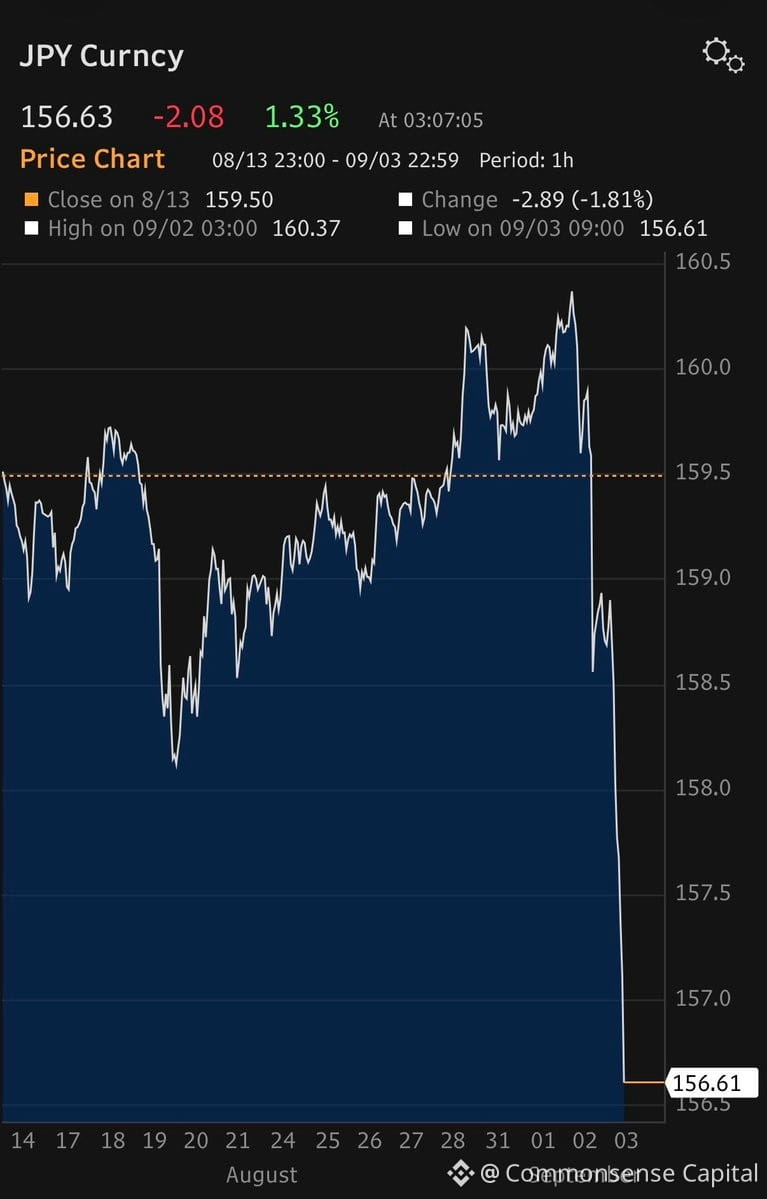
The yen just ripped higher two days in a row. Classic setup: sharp move + BOJ rate hike whispers = everyone wondering if Tokyo stepped in to support their currency.
When a central bank is about to raise rates, a stronger currency helps the narrative. Makes the hike look less desperate. So yeah, the FX intervention chatter isn't crazy.
But here's the thing — intervention or not, if the BOJ actually follows through and hikes, that's the real story. Japan ending decades of ultra-easy money would shift global flows, especially out of carry trades.
Watch the currency exchange dynamics closely. A sustained stronger yen changes everything: it hurts Japanese exporters, it unwinds yen-funded leverage worldwide, and it signals the end of an era.
For now, it's just speculation. But when central banks move after years of inertia, markets reprice fast. Don't get caught assuming the old playbook still works.
When a central bank is about to raise rates, a stronger currency helps the narrative. Makes the hike look less desperate. So yeah, the FX intervention chatter isn't crazy.
But here's the thing — intervention or not, if the BOJ actually follows through and hikes, that's the real story. Japan ending decades of ultra-easy money would shift global flows, especially out of carry trades.
Watch the currency exchange dynamics closely. A sustained stronger yen changes everything: it hurts Japanese exporters, it unwinds yen-funded leverage worldwide, and it signals the end of an era.
For now, it's just speculation. But when central banks move after years of inertia, markets reprice fast. Don't get caught assuming the old playbook still works.
Partly True
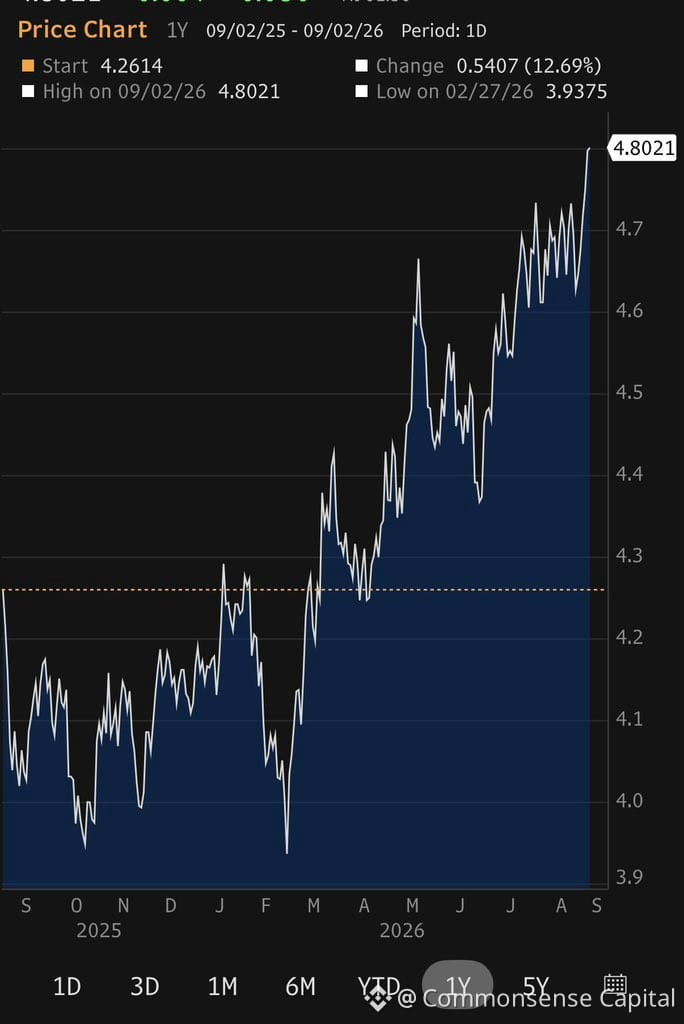
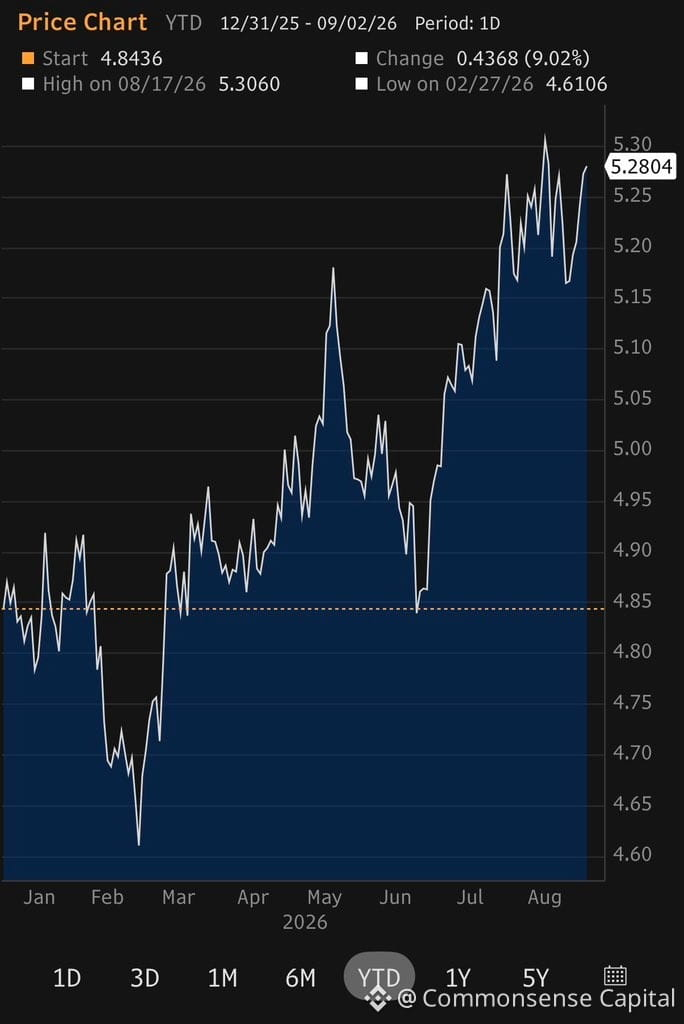
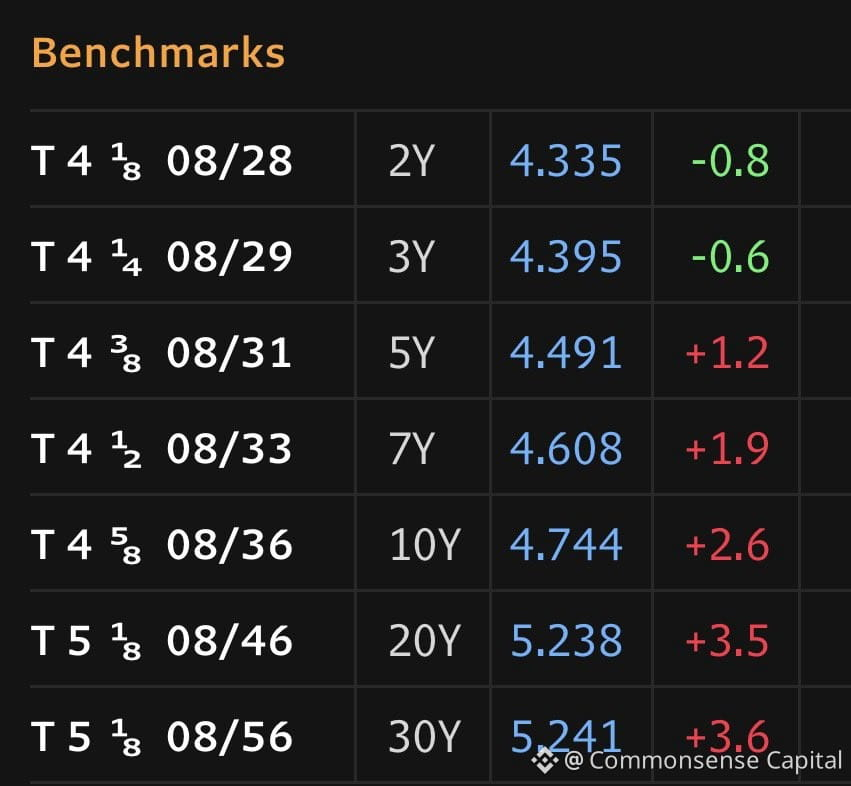
10-year Treasury just crossed 4.80%. 30-year closing in on 5.30%.
The longer rates stay elevated, the more the market starts shifting from "interest rate risk" to "credit risk" — meaning: who can't refinance? Who breaks?
This is when cracks appear. Watch the weaker names, the overleveraged sectors, the companies that borrowed cheap and assumed rates would stay low forever.
Yields don't kill markets overnight. They grind. Then something snaps.
The longer rates stay elevated, the more the market starts shifting from "interest rate risk" to "credit risk" — meaning: who can't refinance? Who breaks?
This is when cracks appear. Watch the weaker names, the overleveraged sectors, the companies that borrowed cheap and assumed rates would stay low forever.
Yields don't kill markets overnight. They grind. Then something snaps.
Verified
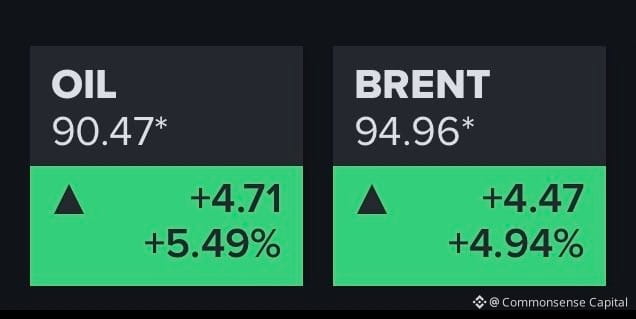
Oil just jumped 5% in a single session — both WTI and Brent now trading above $90/barrel after the U.S. escalated strikes on Iran.
This is the kind of move that ripples through everything. Higher energy costs hit consumers at the pump, squeeze margins for businesses, and complicate the Fed's inflation fight. If oil stays elevated, expect it to show up in CPI prints and consumer confidence surveys within weeks.
Geopolitical risk premiums are back. Markets had gotten comfortable ignoring Middle East tensions for months. That comfort just evaporated. Volatility in oil = volatility everywhere else.
Watch how this plays out over the next few days. If tensions cool, oil might give back some gains. If they escalate further, we could be looking at sustained pressure on inflation expectations and a messier macro picture heading into year-end.
Energy shocks don't announce themselves politely. They just show up and remind everyone that supply chains and global stability still matter.
This is the kind of move that ripples through everything. Higher energy costs hit consumers at the pump, squeeze margins for businesses, and complicate the Fed's inflation fight. If oil stays elevated, expect it to show up in CPI prints and consumer confidence surveys within weeks.
Geopolitical risk premiums are back. Markets had gotten comfortable ignoring Middle East tensions for months. That comfort just evaporated. Volatility in oil = volatility everywhere else.
Watch how this plays out over the next few days. If tensions cool, oil might give back some gains. If they escalate further, we could be looking at sustained pressure on inflation expectations and a messier macro picture heading into year-end.
Energy shocks don't announce themselves politely. They just show up and remind everyone that supply chains and global stability still matter.
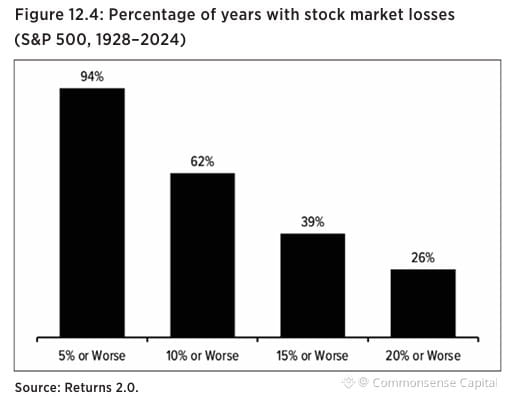
People forget this basic truth: stocks go up most of the time, but they drop hard along the way.
In about 2 out of every 3 years, the market falls 10% or more from its peak at some point during the year. Yet most years still end positive.
This is normal. It's not a crisis, it's not broken, it's just how it works.
The problem? Most people can't handle the drops. They panic, sell at the bottom, then miss the recovery.
If you can't stomach a 10-15% drawdown without losing sleep or making dumb decisions, you probably own too much stock.
Volatility is the price you pay for long-term returns. Accept it or adjust your allocation.
In about 2 out of every 3 years, the market falls 10% or more from its peak at some point during the year. Yet most years still end positive.
This is normal. It's not a crisis, it's not broken, it's just how it works.
The problem? Most people can't handle the drops. They panic, sell at the bottom, then miss the recovery.
If you can't stomach a 10-15% drawdown without losing sleep or making dumb decisions, you probably own too much stock.
Volatility is the price you pay for long-term returns. Accept it or adjust your allocation.
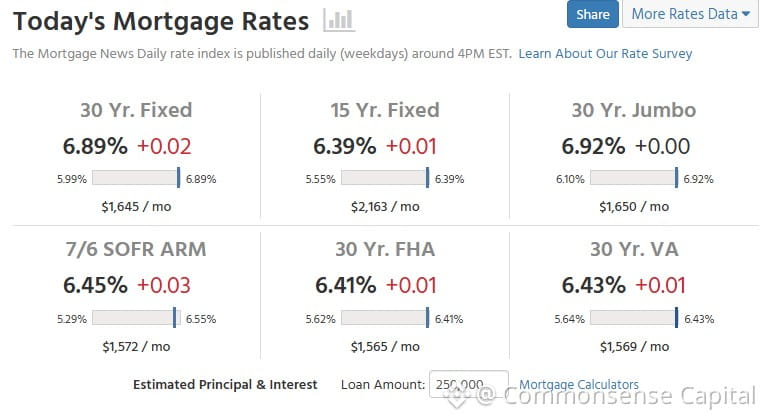
We're knocking on 7% mortgage rates again. Been stuck above 6% since late 2022. Still waiting on that housing crash everyone promised.
Here's a thought: what if housing becomes the shock absorber when AI finally hits the real economy? Rates drop, suddenly mortgages get cheaper, housing demand surges just as other sectors slow down.
We've spent years bracing for a housing collapse. Maybe the real story is housing cushions the landing instead of causing it. Markets rarely crash the way everyone expects.
Here's a thought: what if housing becomes the shock absorber when AI finally hits the real economy? Rates drop, suddenly mortgages get cheaper, housing demand surges just as other sectors slow down.
We've spent years bracing for a housing collapse. Maybe the real story is housing cushions the landing instead of causing it. Markets rarely crash the way everyone expects.
The Fed cut rates 50 bps in September 2024, thinking inflation was done. Then they cut another 125 bps on top of that.
That was a mistake.
Now they should hike 50 bps this month, then another 50 in October, and 50 more in December.
Why? Because declaring victory too early doesn't make inflation disappear. It just lets it come back with friends. The Fed got excited, cut aggressively, and now they need to clean up their own mess before it gets worse.
Raising rates isn't fun. But neither is letting inflation run wild again because you got impatient.
That was a mistake.
Now they should hike 50 bps this month, then another 50 in October, and 50 more in December.
Why? Because declaring victory too early doesn't make inflation disappear. It just lets it come back with friends. The Fed got excited, cut aggressively, and now they need to clean up their own mess before it gets worse.
Raising rates isn't fun. But neither is letting inflation run wild again because you got impatient.
Eurozone inflation hit 3.3% in August — highest since September 2023. Core and services inflation actually cooled a bit, but the headline number is what grabs attention.
Markets now pricing in an ECB rate hike next week. Classic case of central banks reacting to the number that makes headlines, even when the underlying details are less alarming.
Reminder: inflation prints are backward-looking. By the time the ECB hikes, the economy may already be slowing. This is how policy lags work — and why investors need to think two steps ahead, not just react to today's data.
Watch the euro exchange rate and European assets closely. Rate hikes usually strengthen currency short-term, but if growth stalls, that support fades fast.
Markets now pricing in an ECB rate hike next week. Classic case of central banks reacting to the number that makes headlines, even when the underlying details are less alarming.
Reminder: inflation prints are backward-looking. By the time the ECB hikes, the economy may already be slowing. This is how policy lags work — and why investors need to think two steps ahead, not just react to today's data.
Watch the euro exchange rate and European assets closely. Rate hikes usually strengthen currency short-term, but if growth stalls, that support fades fast.
Partly True
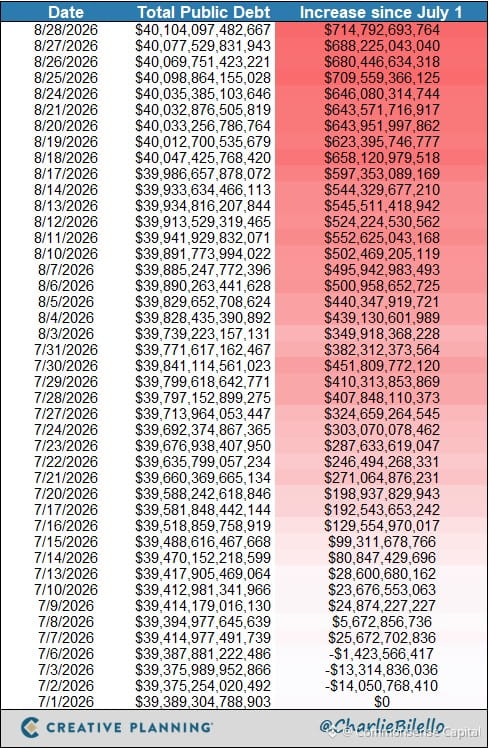
US debt up $715 billion in 6 months. 10-year yield climbed from 4.48% to 4.75%.
Treasury's response? Buy back $4 billion in long-dated bonds.
This is just shuffling deck chairs. Swapping long debt for short debt doesn't fix the core issue — we're still borrowing like there's no tomorrow.
The math is simple: more supply of debt + no change in deficit = higher rates over time.
Until spending actually slows or revenue catches up, bond vigilantes will keep demanding higher yields. That's not a policy problem you can engineer away with buybacks.
This matters for everyone. Higher Treasury yields = higher mortgage rates, car loans, credit cards. The cost of government debt becomes the cost of your debt.
We can't borrow our way out of a borrowing problem.
Treasury's response? Buy back $4 billion in long-dated bonds.
This is just shuffling deck chairs. Swapping long debt for short debt doesn't fix the core issue — we're still borrowing like there's no tomorrow.
The math is simple: more supply of debt + no change in deficit = higher rates over time.
Until spending actually slows or revenue catches up, bond vigilantes will keep demanding higher yields. That's not a policy problem you can engineer away with buybacks.
This matters for everyone. Higher Treasury yields = higher mortgage rates, car loans, credit cards. The cost of government debt becomes the cost of your debt.
We can't borrow our way out of a borrowing problem.
Partly True
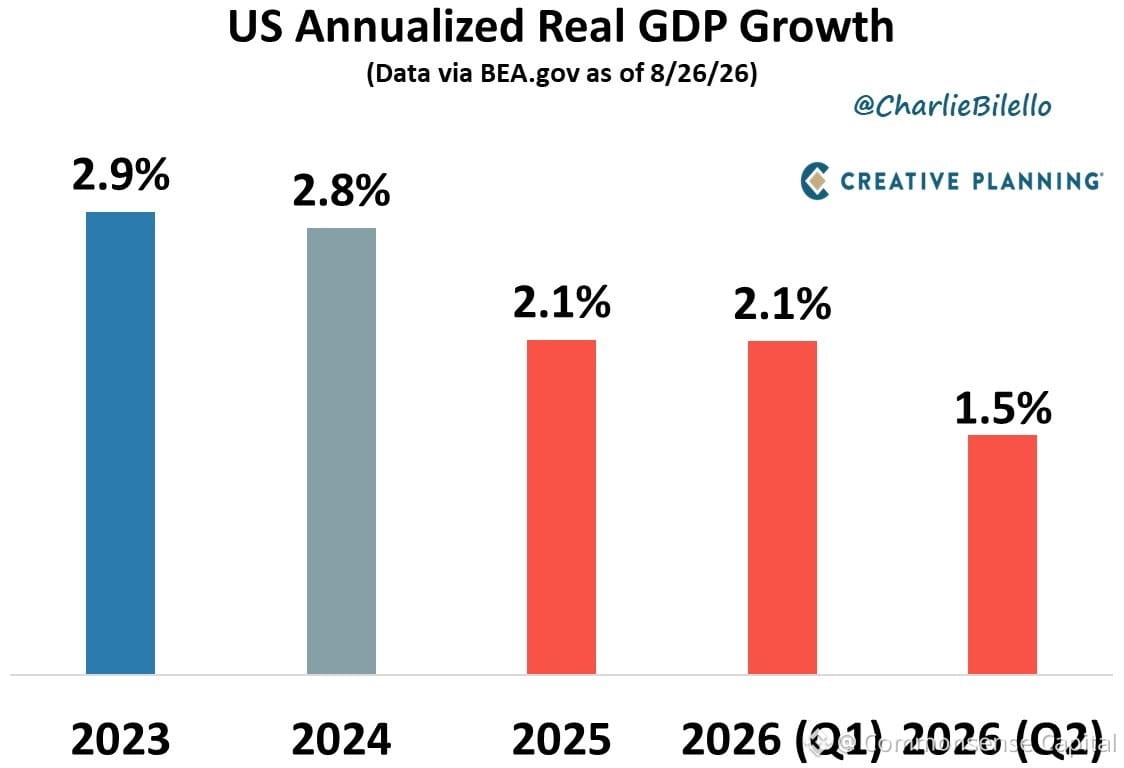
Trump floated GDP growth of 14-20% today. Sounds amazing, right?
Here's the problem: you can juice nominal GDP easily. Print trillions, helicopter drop it, watch the number go up. Mission accomplished.
But real GDP? The actual goods and services produced? That doesn't budge. You just get inflation and a weaker dollar.
Printing money changes the scoreboard. It doesn't change the game.
This is basic stuff. GDP in dollars vs. GDP in real terms. One measures nominal activity, the other measures actual prosperity.
If big numbers were all that mattered, Zimbabwe would be the richest country on Earth.
Growth comes from productivity, innovation, capital investment, and sound policy — not from cranking up the printing press and hoping no one notices the difference between nominal and real.
Here's the problem: you can juice nominal GDP easily. Print trillions, helicopter drop it, watch the number go up. Mission accomplished.
But real GDP? The actual goods and services produced? That doesn't budge. You just get inflation and a weaker dollar.
Printing money changes the scoreboard. It doesn't change the game.
This is basic stuff. GDP in dollars vs. GDP in real terms. One measures nominal activity, the other measures actual prosperity.
If big numbers were all that mattered, Zimbabwe would be the richest country on Earth.
Growth comes from productivity, innovation, capital investment, and sound policy — not from cranking up the printing press and hoping no one notices the difference between nominal and real.
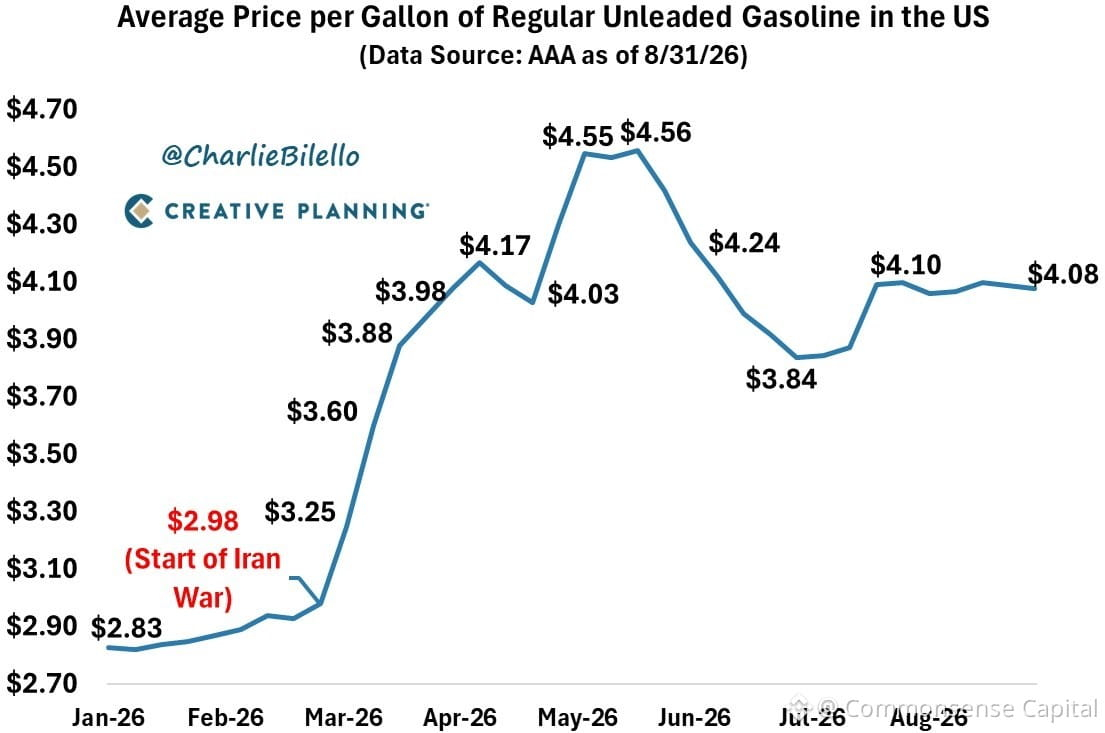
Gas stayed above $4/gallon for the entire month of August. First time ever.
This isn't some abstract inflation statistic — it's real money leaving people's wallets every week. Commuters, delivery drivers, families on road trips. Everyone felt it.
When necessities get this expensive this fast, discretionary spending gets squeezed. Restaurants, retail, entertainment — all downstream effects.
Inflation isn't just a number on a chart. It's a tax on everyone who earns dollars and spends dollars. And unlike actual taxes, you can't vote it away or write it off.
The Fed's job is to cool demand enough to bring prices down without crashing the economy. Walking that tightrope with gas at these levels? Not easy.
Painful reminder: your purchasing power matters more than your nominal income. A 5% raise means nothing if your costs went up 8%.
This isn't some abstract inflation statistic — it's real money leaving people's wallets every week. Commuters, delivery drivers, families on road trips. Everyone felt it.
When necessities get this expensive this fast, discretionary spending gets squeezed. Restaurants, retail, entertainment — all downstream effects.
Inflation isn't just a number on a chart. It's a tax on everyone who earns dollars and spends dollars. And unlike actual taxes, you can't vote it away or write it off.
The Fed's job is to cool demand enough to bring prices down without crashing the economy. Walking that tightrope with gas at these levels? Not easy.
Painful reminder: your purchasing power matters more than your nominal income. A 5% raise means nothing if your costs went up 8%.
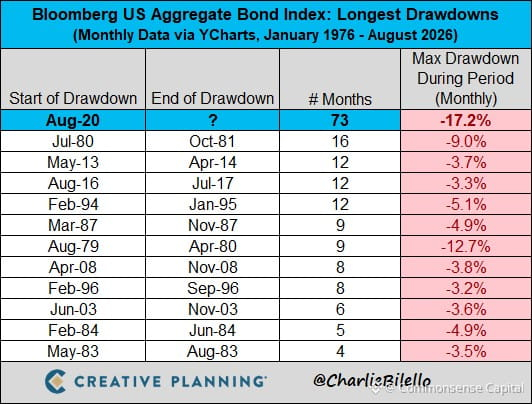
US bonds have been in a drawdown for over 6 years now. Longest stretch ever.
This is the asset class people told you was "safe." The one that was supposed to protect you when stocks got messy.
Turns out duration risk is real. Rising rates don't care about your retirement timeline.
The 60/40 portfolio? It had one job. And for the first time in most people's investing lives, both sides went down together.
This is what happens when rates go from zero to normal. Bonds aren't broken — they were just massively overpriced for a decade. Now we're paying the bill.
If you're young, this is fine. You're buying bonds cheaper now. If you're retired or near it? This has been brutal.
Lesson: "safe" is relative. Everything has risk. Even the boring stuff.
This is the asset class people told you was "safe." The one that was supposed to protect you when stocks got messy.
Turns out duration risk is real. Rising rates don't care about your retirement timeline.
The 60/40 portfolio? It had one job. And for the first time in most people's investing lives, both sides went down together.
This is what happens when rates go from zero to normal. Bonds aren't broken — they were just massively overpriced for a decade. Now we're paying the bill.
If you're young, this is fine. You're buying bonds cheaper now. If you're retired or near it? This has been brutal.
Lesson: "safe" is relative. Everything has risk. Even the boring stuff.
AGGETF+0.00%
GCC countries are keeping more money at home now instead of spreading it around global markets.
That's a problem when everyone else is scrambling for capital.
Supply shrinks. Demand grows. Prices adjust. Pretty straightforward math.
This isn't some temporary blip — it's a structural shift. Oil states are building cities, tech hubs, and diversifying away from energy. That takes decades and trillions.
Meanwhile, the rest of the world is issuing debt, funding deficits, and chasing yield in a higher-rate environment.
So if you're wondering why borrowing costs stay sticky or why certain assets aren't rallying as expected — this is part of the answer. One of the biggest pools of patient capital just got a lot less patient about funding your stuff.
That's a problem when everyone else is scrambling for capital.
Supply shrinks. Demand grows. Prices adjust. Pretty straightforward math.
This isn't some temporary blip — it's a structural shift. Oil states are building cities, tech hubs, and diversifying away from energy. That takes decades and trillions.
Meanwhile, the rest of the world is issuing debt, funding deficits, and chasing yield in a higher-rate environment.
So if you're wondering why borrowing costs stay sticky or why certain assets aren't rallying as expected — this is part of the answer. One of the biggest pools of patient capital just got a lot less patient about funding your stuff.

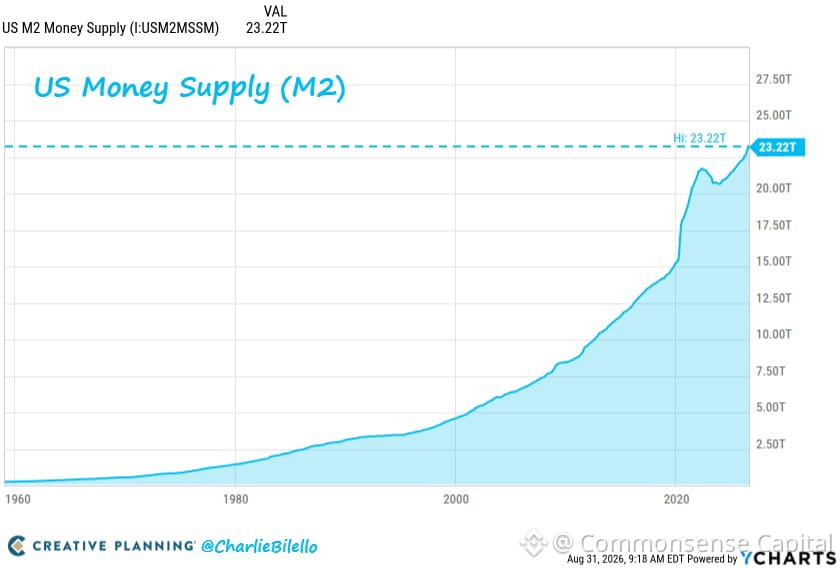
Kevin Warsh just said the quiet part out loud at Jackson Hole: "Money matters."
Sounds obvious, right? But the Fed spent years pretending money supply was irrelevant. They flooded the system, then acted shocked when inflation showed up.
Warsh's point: you can't ignore what the central bank creates AND what banks multiply through the system. Both matter. Always have.
The fashionable crowd loves complex models and forward guidance. But sometimes the old boring stuff — like watching M2 — tells you more than a dozen PhD papers.
We printed trillions. Prices went up. Not rocket science. Just monetary policy 101 that got forgotten because it wasn't sexy enough.
Sounds obvious, right? But the Fed spent years pretending money supply was irrelevant. They flooded the system, then acted shocked when inflation showed up.
Warsh's point: you can't ignore what the central bank creates AND what banks multiply through the system. Both matter. Always have.
The fashionable crowd loves complex models and forward guidance. But sometimes the old boring stuff — like watching M2 — tells you more than a dozen PhD papers.
We printed trillions. Prices went up. Not rocket science. Just monetary policy 101 that got forgotten because it wasn't sexy enough.
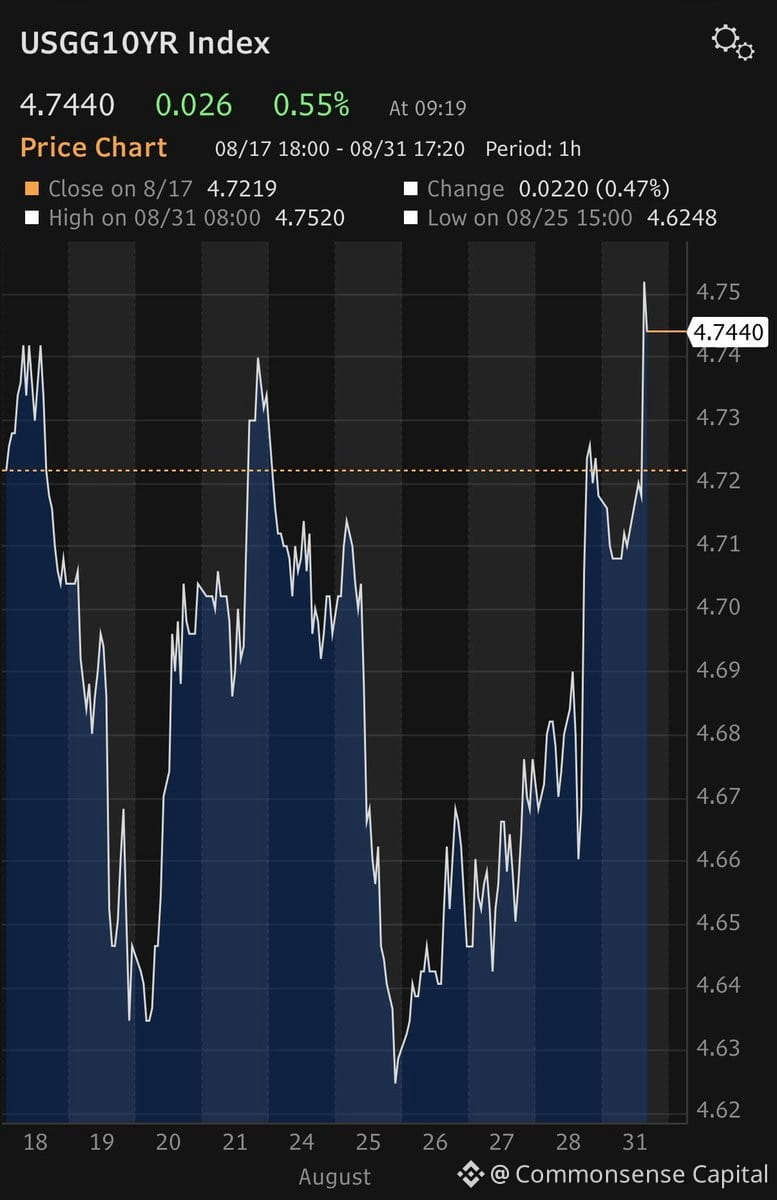
Treasury yields doing what they do best lately — ignoring good news.
Longer-dated US yields climbed again this morning, completely reversing the brief dip that followed Treasury's intervention announcement. Market said "thanks, but no thanks" and kept selling.
This is what happens when bond vigilantes stop believing in quick fixes. Yields reflect reality: deficits aren't shrinking, supply isn't slowing, and no amount of official statements changes the math.
If you're watching exchange rates or planning any currency conversions, keep an eye on this. Rising US yields usually strengthen the dollar, which affects everything from euro exchange rates to the best rates you'll find at your local money exchange.
Bond market doesn't care about press releases. It cares about supply, demand, and whether anyone actually wants to lend money to the government at these prices. Right now, the answer is: not really.
Longer-dated US yields climbed again this morning, completely reversing the brief dip that followed Treasury's intervention announcement. Market said "thanks, but no thanks" and kept selling.
This is what happens when bond vigilantes stop believing in quick fixes. Yields reflect reality: deficits aren't shrinking, supply isn't slowing, and no amount of official statements changes the math.
If you're watching exchange rates or planning any currency conversions, keep an eye on this. Rising US yields usually strengthen the dollar, which affects everything from euro exchange rates to the best rates you'll find at your local money exchange.
Bond market doesn't care about press releases. It cares about supply, demand, and whether anyone actually wants to lend money to the government at these prices. Right now, the answer is: not really.
FSB Chair Andrew Bailey just sent a letter to the G-20 flagging three specific fragility points: sovereign debt markets, private credit vulnerabilities, and stretched valuations.
This isn't doom-mongering. It's pattern recognition.
Every innovation cycle follows the same arc: new tools create real upside, capital floods in, valuations detach from fundamentals, leverage piles up in the shadows, and eventually something breaks. The goal isn't to stop innovation — it's to not be the one holding the bag when the music stops.
Right now we're in the euphoria phase. Private credit has exploded with minimal stress-testing. Sovereign debt is expensive and illiquid. Everything from tech to $BTC feels like it only goes up. That's exactly when you need to ask: what happens if rates stay higher for longer? What happens if one domino falls?
The best investors I know aren't the ones who predict crashes. They're the ones who stay positioned so they don't need to.
This isn't doom-mongering. It's pattern recognition.
Every innovation cycle follows the same arc: new tools create real upside, capital floods in, valuations detach from fundamentals, leverage piles up in the shadows, and eventually something breaks. The goal isn't to stop innovation — it's to not be the one holding the bag when the music stops.
Right now we're in the euphoria phase. Private credit has exploded with minimal stress-testing. Sovereign debt is expensive and illiquid. Everything from tech to $BTC feels like it only goes up. That's exactly when you need to ask: what happens if rates stay higher for longer? What happens if one domino falls?
The best investors I know aren't the ones who predict crashes. They're the ones who stay positioned so they don't need to.
Richmond Fed President Tom Barkin just dropped some interesting observations about what's actually happening on the ground in his district.
The real economy keeps surprising people with its resilience. Companies are still investing heavily. Consumers are finding creative ways to keep spending even as prices stay elevated.
This matters for policy because the Fed can't just look at aggregate data — they need to understand the behavioral shifts underneath. When consumers adapt and businesses keep investing through uncertainty, it changes the inflation calculus.
Barkin's district-level view is worth paying attention to. Regional Fed presidents see things that don't show up in national statistics until months later. The investment boom he's describing isn't just corporate optimism — it's real capital being deployed.
If the economy stays this resilient, the Fed's job gets harder. They can't cut rates aggressively if demand keeps running hot. Markets pricing in multiple cuts this year might be disappointed.
Bottom line: ground-level economic data > Wall Street narratives. Always.
The real economy keeps surprising people with its resilience. Companies are still investing heavily. Consumers are finding creative ways to keep spending even as prices stay elevated.
This matters for policy because the Fed can't just look at aggregate data — they need to understand the behavioral shifts underneath. When consumers adapt and businesses keep investing through uncertainty, it changes the inflation calculus.
Barkin's district-level view is worth paying attention to. Regional Fed presidents see things that don't show up in national statistics until months later. The investment boom he's describing isn't just corporate optimism — it's real capital being deployed.
If the economy stays this resilient, the Fed's job gets harder. They can't cut rates aggressively if demand keeps running hot. Markets pricing in multiple cuts this year might be disappointed.
Bottom line: ground-level economic data > Wall Street narratives. Always.
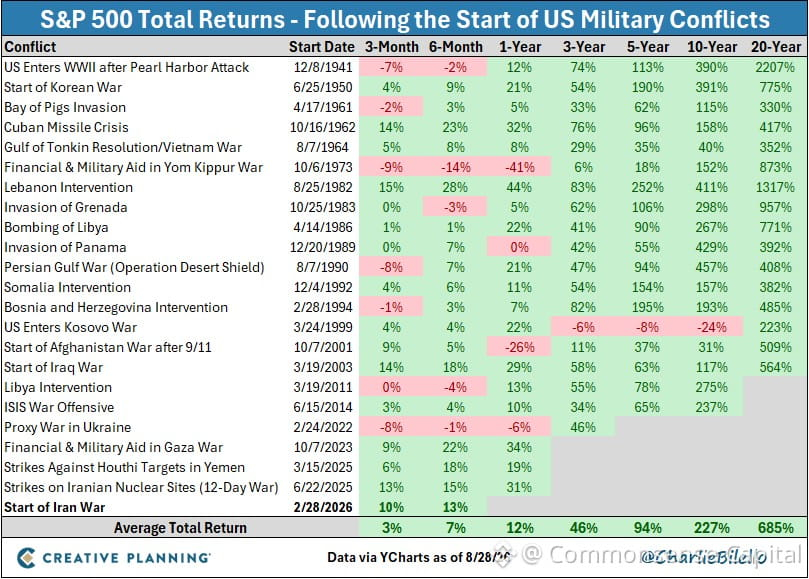
Here's what history actually tells us about markets during military conflicts:
With enough time, stocks tend to go up. The longer the timeframe, the more they've risen.
Why does this happen?
Two simple reasons:
1) Every war ends eventually
2) The economy and corporate earnings — even when disrupted short-term — have still grown over the long run despite these conflicts
This doesn't mean markets ignore wars or that volatility disappears. It means that over time, the fundamentals reassert themselves. Businesses adapt, economies recover, and growth resumes.
The lesson isn't to ignore geopolitical risk. It's to understand that panic selling during crises has historically been the wrong move if your time horizon is measured in years, not weeks.
Perspective matters more than prediction.
With enough time, stocks tend to go up. The longer the timeframe, the more they've risen.
Why does this happen?
Two simple reasons:
1) Every war ends eventually
2) The economy and corporate earnings — even when disrupted short-term — have still grown over the long run despite these conflicts
This doesn't mean markets ignore wars or that volatility disappears. It means that over time, the fundamentals reassert themselves. Businesses adapt, economies recover, and growth resumes.
The lesson isn't to ignore geopolitical risk. It's to understand that panic selling during crises has historically been the wrong move if your time horizon is measured in years, not weeks.
Perspective matters more than prediction.
Log in to explore more content