
B L A I S E
5.7k Posts

B L A I S E
Report
Block User
Calm mind. Loud dreams.Finding beauty in stillness.
Open Trade
Frequent Trader
7.6 Months
490 Following
12.3K+ Followers
3.1K+ Liked
Posts
Portfolio
All
Quotes
Live
·
--
$KII — Breakout Watch
KII is around $0.07074, showing a strong 4.83% move. This is the kind of momentum that deserves attention if volume continues supporting it.
EP: $0.0705–$0.0710
TP1: $0.0745
TP2: $0.0780
TP3: $0.0820
SL: $0.0675
Holding the entry zone keeps the bullish structure intact. Losing the stop level invalidates the setup.
Let's go $KII
$KII — Breakout Watch
KII is around $0.07074, showing a strong 4.83% move. This is the kind of momentum that deserves attention if volume continues supporting it.
EP: $0.0705–$0.0710
TP1: $0.0745
TP2: $0.0780
TP3: $0.0820
SL: $0.0675
Holding the entry zone keeps the bullish structure intact. Losing the stop level invalidates the setup.
Let's go $KII
KII is around $0.07074, showing a strong 4.83% move. This is the kind of momentum that deserves attention if volume continues supporting it.
EP: $0.0705–$0.0710
TP1: $0.0745
TP2: $0.0780
TP3: $0.0820
SL: $0.0675
Holding the entry zone keeps the bullish structure intact. Losing the stop level invalidates the setup.
Let's go $KII
176
·
--
$AIR.US — Short Momentum Setup
AIR is trading around $0.001, down 4.47%. Sellers currently have the advantage, so a continuation setup makes more sense while price remains weak.
EP: $0.00099–$0.00101
TP1: $0.00095
TP2: $0.00091
TP3: $0.00087
SL: $0.00104
If resistance continues rejecting price, downside targets become the focus. A reclaim above the stop zone would weaken the setup.
Let's go $AIR.US
$AIR.US — Short Momentum Setup
AIR is trading around $0.001, down 4.47%. Sellers currently have the advantage, so a continuation setup makes more sense while price remains weak.
EP: $0.00099–$0.00101
TP1: $0.00095
TP2: $0.00091
TP3: $0.00087
SL: $0.00104
If resistance continues rejecting price, downside targets become the focus. A reclaim above the stop zone would weaken the setup.
Let's go $AIR.US
AIR is trading around $0.001, down 4.47%. Sellers currently have the advantage, so a continuation setup makes more sense while price remains weak.
EP: $0.00099–$0.00101
TP1: $0.00095
TP2: $0.00091
TP3: $0.00087
SL: $0.00104
If resistance continues rejecting price, downside targets become the focus. A reclaim above the stop zone would weaken the setup.
Let's go $AIR.US
AIRUS+1.34%
81
·
--
$DOS — Bearish Continuation Setup
DOS is around $0.2141, down 6.41%, making it the weakest mover on the list. The setup remains bearish while sellers control the range.
EP: $0.2135–$0.2150
TP1: $0.2070
TP2: $0.2000
TP3: $0.1930
SL: $0.2220
Failure to reclaim the entry zone could open the path toward the lower targets. If price breaks above the stop, step aside.
Let's go $DOS
$DOS — Bearish Continuation Setup
DOS is around $0.2141, down 6.41%, making it the weakest mover on the list. The setup remains bearish while sellers control the range.
EP: $0.2135–$0.2150
TP1: $0.2070
TP2: $0.2000
TP3: $0.1930
SL: $0.2220
Failure to reclaim the entry zone could open the path toward the lower targets. If price breaks above the stop, step aside.
Let's go $DOS
DOS is around $0.2141, down 6.41%, making it the weakest mover on the list. The setup remains bearish while sellers control the range.
EP: $0.2135–$0.2150
TP1: $0.2070
TP2: $0.2000
TP3: $0.1930
SL: $0.2220
Failure to reclaim the entry zone could open the path toward the lower targets. If price breaks above the stop, step aside.
Let's go $DOS
401
·
--
DEBIT is sitting around $1.6173, down 9.26%. After this sharp pullback, this is the zone I’d watch for a recovery attempt rather than chasing the move.
EP: $1.60–$1.63
TP1: $1.70
TP2: $1.82
TP3: $1.95
SL: $1.52
A clean reclaim above the entry zone could bring buyers back quickly.
Let's go $DEBIT
DEBIT is sitting around $1.6173, down 9.26%. After this sharp pullback, this is the zone I’d watch for a recovery attempt rather than chasing the move.
EP: $1.60–$1.63
TP1: $1.70
TP2: $1.82
TP3: $1.95
SL: $1.52
A clean reclaim above the entry zone could bring buyers back quickly.
Let's go $DEBIT
EP: $1.60–$1.63
TP1: $1.70
TP2: $1.82
TP3: $1.95
SL: $1.52
A clean reclaim above the entry zone could bring buyers back quickly.
Let's go $DEBIT
1
173
·
--
TMX has taken a serious hit, trading near $0.05703 and down 21.94%. That makes this a high-risk setup, but a strong bounce from support could turn the momentum around.
EP: $0.0565–$0.0580
TP1: $0.0610
TP2: $0.0660
TP3: $0.0720
SL: $0.0520
Volatility is high here, so risk management matters.
Let's go $TMX
TMX has taken a serious hit, trading near $0.05703 and down 21.94%. That makes this a high-risk setup, but a strong bounce from support could turn the momentum around.
EP: $0.0565–$0.0580
TP1: $0.0610
TP2: $0.0660
TP3: $0.0720
SL: $0.0520
Volatility is high here, so risk management matters.
Let's go $TMX
EP: $0.0565–$0.0580
TP1: $0.0610
TP2: $0.0660
TP3: $0.0720
SL: $0.0520
Volatility is high here, so risk management matters.
Let's go $TMX
2
345
·
--
$MOVR is catching attention with a 4.34% move and trading around 0.8503. This is the kind of momentum setup where continuation could push price toward the next resistance zones.
EP: 0.8503
TP1: 0.8850
TP2: 0.9200
TP3: 0.9600
SL: 0.8150
As long as the entry zone holds, buyers still have room to drive this higher.
Let's go MOVR.#YenBreaks155NearingYearHigh #CanadaToImpose15%To50%TariffsOnUSGoods #IMFSaysElSalvadorBTCNoPublicFunds
$MOVR is catching attention with a 4.34% move and trading around 0.8503. This is the kind of momentum setup where continuation could push price toward the next resistance zones.
EP: 0.8503
TP1: 0.8850
TP2: 0.9200
TP3: 0.9600
SL: 0.8150
As long as the entry zone holds, buyers still have room to drive this higher.
Let's go MOVR.#YenBreaks155NearingYearHigh #CanadaToImpose15%To50%TariffsOnUSGoods #IMFSaysElSalvadorBTCNoPublicFunds
EP: 0.8503
TP1: 0.8850
TP2: 0.9200
TP3: 0.9600
SL: 0.8150
As long as the entry zone holds, buyers still have room to drive this higher.
Let's go MOVR.#YenBreaks155NearingYearHigh #CanadaToImpose15%To50%TariffsOnUSGoods #IMFSaysElSalvadorBTCNoPublicFunds
291
·
--
$ZRO is pushing higher with a 4.28% move and sitting around 1.1276. Buyers are clearly active, and a continuation above the current zone could open the way toward the next targets.
EP: 1.1276
TP1: 1.1700
TP2: 1.2150
TP3: 1.2600
SL: 1.0850
The setup stays interesting while price respects the entry area. Let the market confirm the move rather than chasing a sudden candle.
Let's go ZRO.#YenBreaks155NearingYearHigh #ZcashRises45%WeeklyToHighestSince2016 #RussiaUkraineTradeStrikesKushnerWitkoffToKyiv
$ZRO is pushing higher with a 4.28% move and sitting around 1.1276. Buyers are clearly active, and a continuation above the current zone could open the way toward the next targets.
EP: 1.1276
TP1: 1.1700
TP2: 1.2150
TP3: 1.2600
SL: 1.0850
The setup stays interesting while price respects the entry area. Let the market confirm the move rather than chasing a sudden candle.
Let's go ZRO.#YenBreaks155NearingYearHigh #ZcashRises45%WeeklyToHighestSince2016 #RussiaUkraineTradeStrikesKushnerWitkoffToKyiv
EP: 1.1276
TP1: 1.1700
TP2: 1.2150
TP3: 1.2600
SL: 1.0850
The setup stays interesting while price respects the entry area. Let the market confirm the move rather than chasing a sudden candle.
Let's go ZRO.#YenBreaks155NearingYearHigh #ZcashRises45%WeeklyToHighestSince2016 #RussiaUkraineTradeStrikesKushnerWitkoffToKyiv
103
·
--
$USTC is also showing solid momentum, up around 4.25% and trading near 0.00563. If buyers maintain control, this could attempt another push toward the higher levels.
EP: 0.00563
TP1: 0.00585
TP2: 0.00610
TP3: 0.00640
SL: 0.00542
Momentum is the trigger here. Hold the structure, respect the stop, and let the trade develop.
Let's go USTC.#USIranTradeTankerStrikesEscalate
$USTC is also showing solid momentum, up around 4.25% and trading near 0.00563. If buyers maintain control, this could attempt another push toward the higher levels.
EP: 0.00563
TP1: 0.00585
TP2: 0.00610
TP3: 0.00640
SL: 0.00542
Momentum is the trigger here. Hold the structure, respect the stop, and let the trade develop.
Let's go USTC.#USIranTradeTankerStrikesEscalate
EP: 0.00563
TP1: 0.00585
TP2: 0.00610
TP3: 0.00640
SL: 0.00542
Momentum is the trigger here. Hold the structure, respect the stop, and let the trade develop.
Let's go USTC.#USIranTradeTankerStrikesEscalate
203
·
--
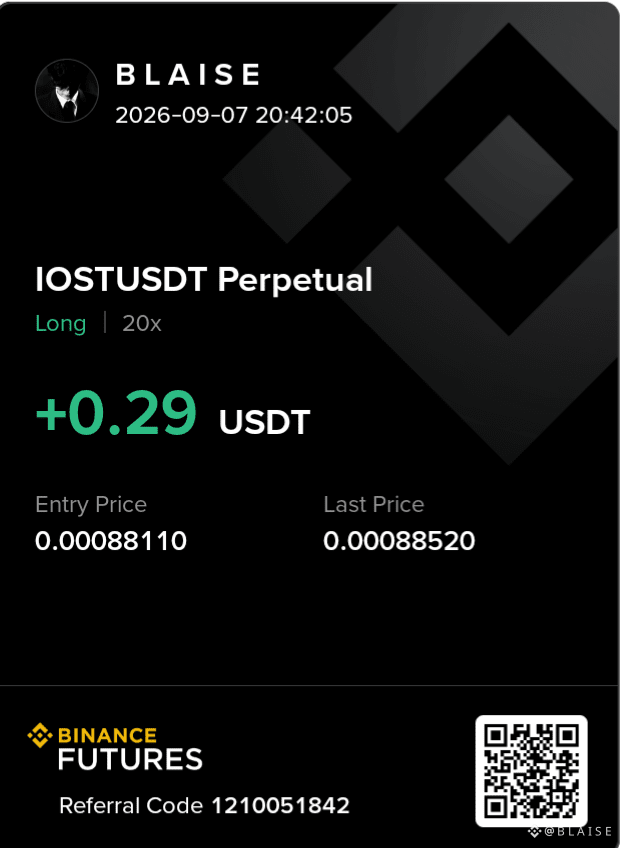
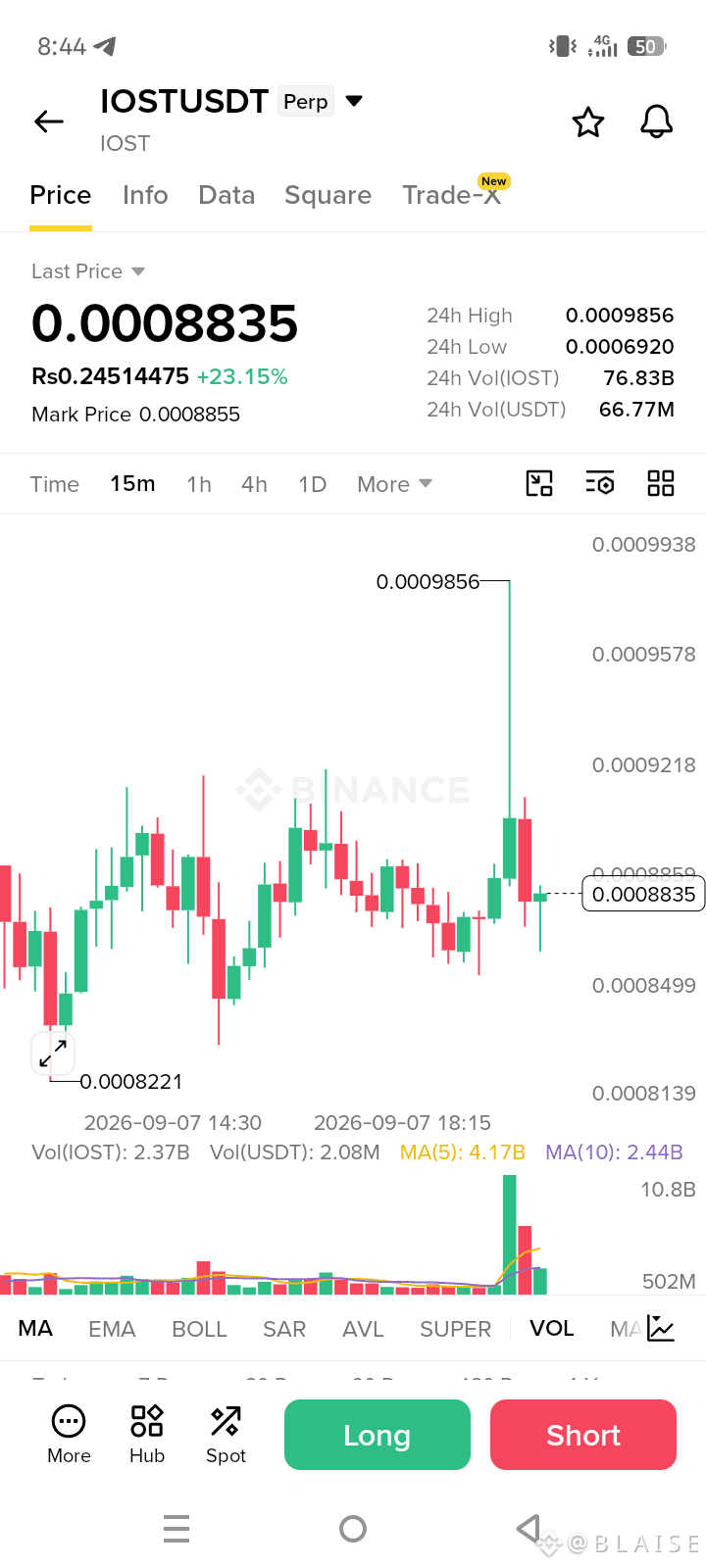
$IOST PERP — REJECTION SETUP
IOST just made a sharp volume spike toward 0.0009856 and got rejected hard. Price is back near 0.0008835, so the key is whether resistance holds.
EP: 0.0008800–0.0008900
TP1: 0.0008600
TP2: 0.0008400
TP3: 0.0008200
SL: 0.0009050
Trade the confirmation, not the excitement. If 0.0009050 breaks and holds, invalidate the short idea.
Let's go $IOST
{future}(IOSTUSDT)
$IOST PERP — REJECTION SETUP
IOST just made a sharp volume spike toward 0.0009856 and got rejected hard. Price is back near 0.0008835, so the key is whether resistance holds.
EP: 0.0008800–0.0008900
TP1: 0.0008600
TP2: 0.0008400
TP3: 0.0008200
SL: 0.0009050
Trade the confirmation, not the excitement. If 0.0009050 breaks and holds, invalidate the short idea.
Let's go $IOST
IOST just made a sharp volume spike toward 0.0009856 and got rejected hard. Price is back near 0.0008835, so the key is whether resistance holds.
EP: 0.0008800–0.0008900
TP1: 0.0008600
TP2: 0.0008400
TP3: 0.0008200
SL: 0.0009050
Trade the confirmation, not the excitement. If 0.0009050 breaks and holds, invalidate the short idea.
Let's go $IOST
69
·
--
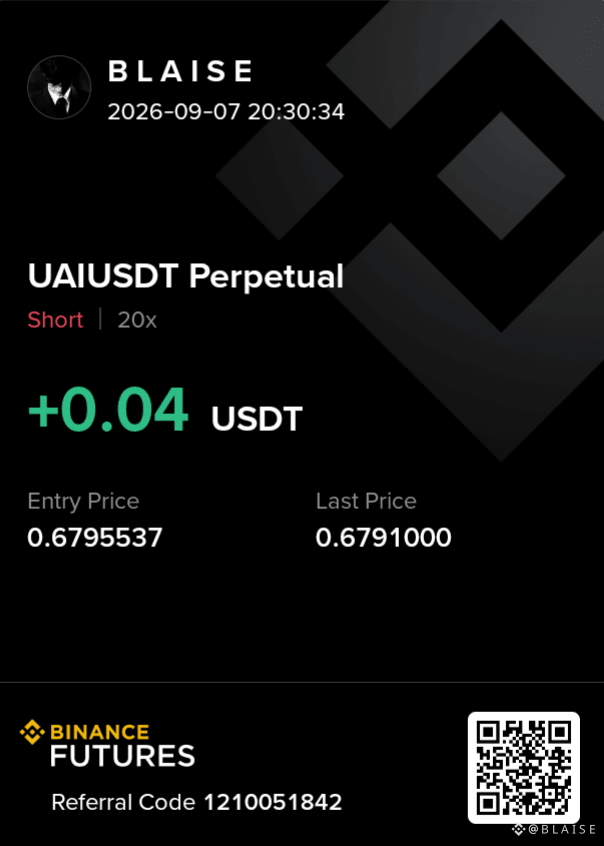
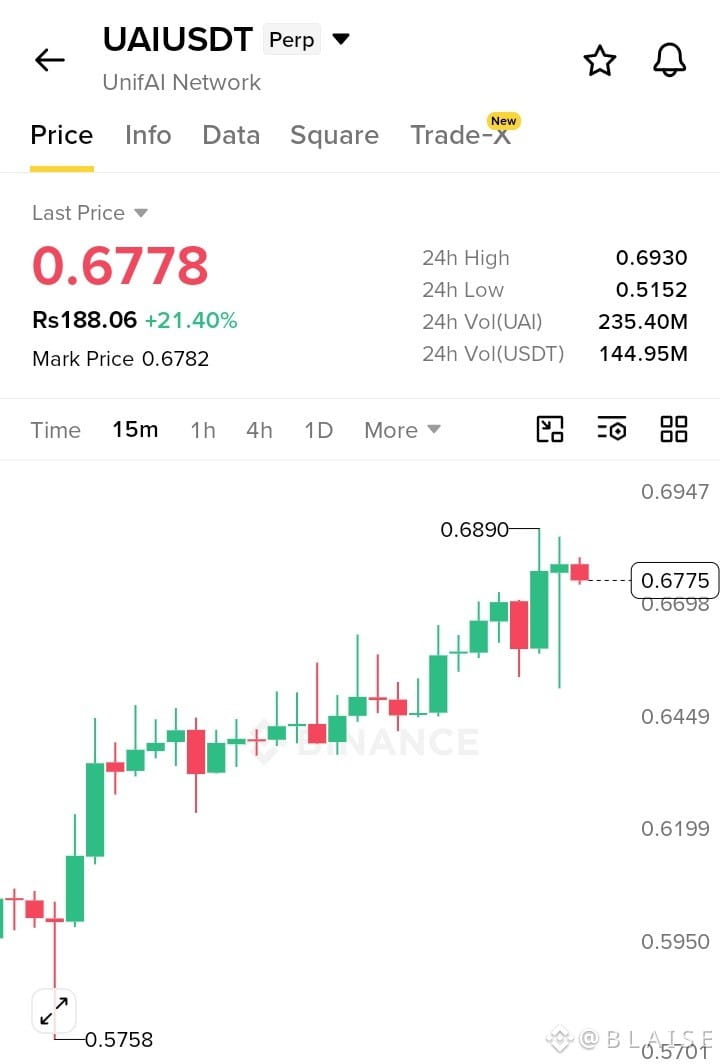
$UAI USDT looks ready for another push after strong 15M momentum.
EP: 0.672–0.678
TP1: 0.689
TP2: 0.700
TP3: 0.715
SL: 0.655
Hold above 0.672 and bulls stay in control.
Let's go $UAI
#USIranTradeTankerStrikesEscalate #IMFSaysElSalvadorBTCNoPublicFunds #SideSwapSuspendsLiquidServices
$UAI USDT looks ready for another push after strong 15M momentum.
EP: 0.672–0.678
TP1: 0.689
TP2: 0.700
TP3: 0.715
SL: 0.655
Hold above 0.672 and bulls stay in control.
Let's go $UAI
#USIranTradeTankerStrikesEscalate #IMFSaysElSalvadorBTCNoPublicFunds #SideSwapSuspendsLiquidServices
EP: 0.672–0.678
TP1: 0.689
TP2: 0.700
TP3: 0.715
SL: 0.655
Hold above 0.672 and bulls stay in control.
Let's go $UAI
#USIranTradeTankerStrikesEscalate #IMFSaysElSalvadorBTCNoPublicFunds #SideSwapSuspendsLiquidServices
103
·
--
Bullish
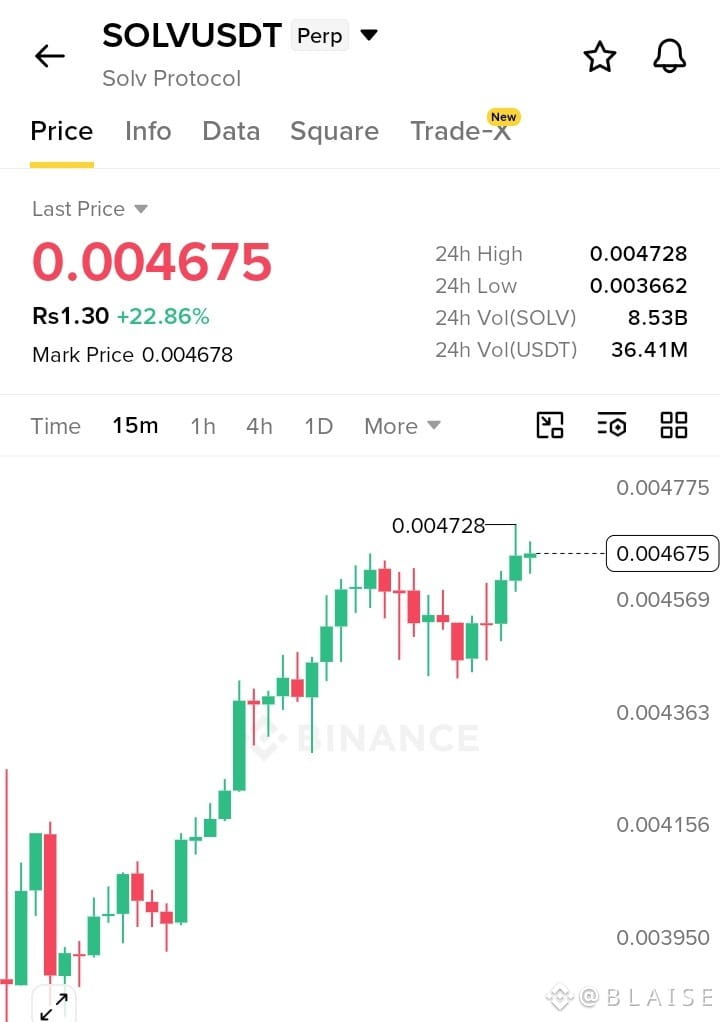
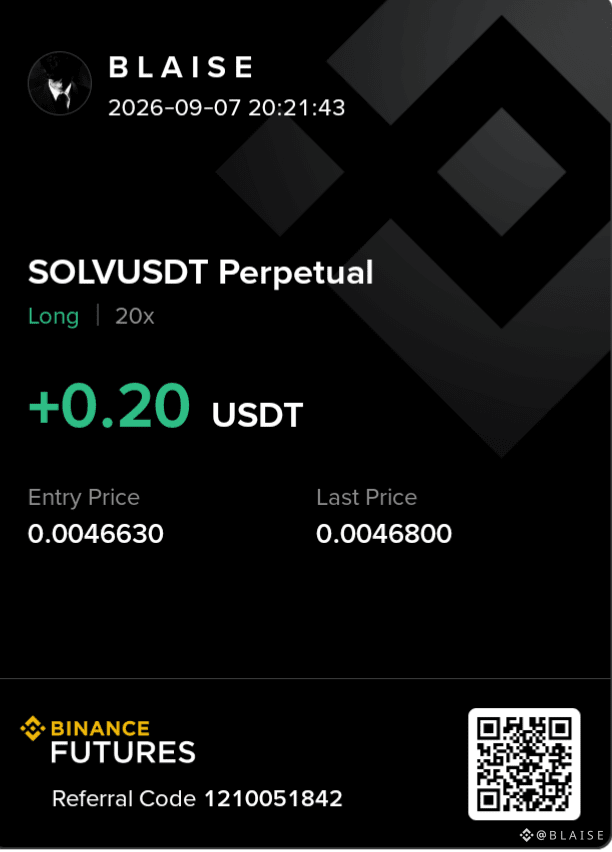
$SOLV is pushing hard after a strong breakout, now trading near 0.004675 with buyers defending the higher levels. Price is testing the 0.004728 resistance, and a clean breakout could trigger another momentum leg.
SOLV LONG SETUP
EP: 0.00462–0.00468
TP1: 0.004728
TP2: 0.00485
TP3: 0.00500
SL: 0.00445
Momentum is strong. Let’s go $SOLV
#USIranTradeTankerStrikesEscalate #ZcashRises45%WeeklyToHighestSince2016
{future}(SOLVUSDT)
$SOLV is pushing hard after a strong breakout, now trading near 0.004675 with buyers defending the higher levels. Price is testing the 0.004728 resistance, and a clean breakout could trigger another momentum leg.
SOLV LONG SETUP
EP: 0.00462–0.00468
TP1: 0.004728
TP2: 0.00485
TP3: 0.00500
SL: 0.00445
Momentum is strong. Let’s go $SOLV
#USIranTradeTankerStrikesEscalate #ZcashRises45%WeeklyToHighestSince2016
SOLV LONG SETUP
EP: 0.00462–0.00468
TP1: 0.004728
TP2: 0.00485
TP3: 0.00500
SL: 0.00445
Momentum is strong. Let’s go $SOLV
#USIranTradeTankerStrikesEscalate #ZcashRises45%WeeklyToHighestSince2016
41
·
--
RNBW is up +39.60% and showing serious momentum. The key is whether buyers can hold the breakout zone.
EP: 0.03550
TP: 0.03850 / 0.04150 / 0.04500
SL: 0.03280
A strong hold could trigger another leg higher. Watch volume.
Let's go $RNBW
{alpha}(84530xa53887f7e7c1bf5010b8627f1c1ba94fe7a5d6e0)
#USIranTradeTankerStrikesEscalate #SideSwapSuspendsLiquidServices #USStrikesIranTankersTehranRestrictsHormuz
RNBW is up +39.60% and showing serious momentum. The key is whether buyers can hold the breakout zone.
EP: 0.03550
TP: 0.03850 / 0.04150 / 0.04500
SL: 0.03280
A strong hold could trigger another leg higher. Watch volume.
Let's go $RNBW
#USIranTradeTankerStrikesEscalate #SideSwapSuspendsLiquidServices #USStrikesIranTankersTehranRestrictsHormuz
EP: 0.03550
TP: 0.03850 / 0.04150 / 0.04500
SL: 0.03280
A strong hold could trigger another leg higher. Watch volume.
Let's go $RNBW
#USIranTradeTankerStrikesEscalate #SideSwapSuspendsLiquidServices #USStrikesIranTankersTehranRestrictsHormuz
94
·
--
$NYM is gaining +38.02% with aggressive buying pressure. The trend remains bullish while support holds.
EP: 0.02780
TP: 0.03000 / 0.03250 / 0.03500
SL: 0.02580
If buyers maintain control, another breakout attempt could come.
Let's go $NYM.ETF
{etf_us}(NYM.ETF)
#USIranTradeTankerStrikesEscalate #SideSwapSuspendsLiquidServices
$NYM is gaining +38.02% with aggressive buying pressure. The trend remains bullish while support holds.
EP: 0.02780
TP: 0.03000 / 0.03250 / 0.03500
SL: 0.02580
If buyers maintain control, another breakout attempt could come.
Let's go $NYM.ETF
#USIranTradeTankerStrikesEscalate #SideSwapSuspendsLiquidServices
EP: 0.02780
TP: 0.03000 / 0.03250 / 0.03500
SL: 0.02580
If buyers maintain control, another breakout attempt could come.
Let's go $NYM.ETF
#USIranTradeTankerStrikesEscalate #SideSwapSuspendsLiquidServices
NYMETF+0.16%
57
·
--
$PRAI is up +36.96% and catching momentum traders' attention. Buyers need to defend the current zone.
EP: 0.000704
TP: 0.000760 / 0.000820 / 0.000900
SL: 0.000660
Hold support and continuation remains possible. Risk management is key.
Let's go $PRAI #ZcashRises45%WeeklyToHighestSince2016 #SideSwapSuspendsLiquidServices
$PRAI is up +36.96% and catching momentum traders' attention. Buyers need to defend the current zone.
EP: 0.000704
TP: 0.000760 / 0.000820 / 0.000900
SL: 0.000660
Hold support and continuation remains possible. Risk management is key.
Let's go $PRAI #ZcashRises45%WeeklyToHighestSince2016 #SideSwapSuspendsLiquidServices
EP: 0.000704
TP: 0.000760 / 0.000820 / 0.000900
SL: 0.000660
Hold support and continuation remains possible. Risk management is key.
Let's go $PRAI #ZcashRises45%WeeklyToHighestSince2016 #SideSwapSuspendsLiquidServices
74
·
--
Bullish
#TermMax @termmax
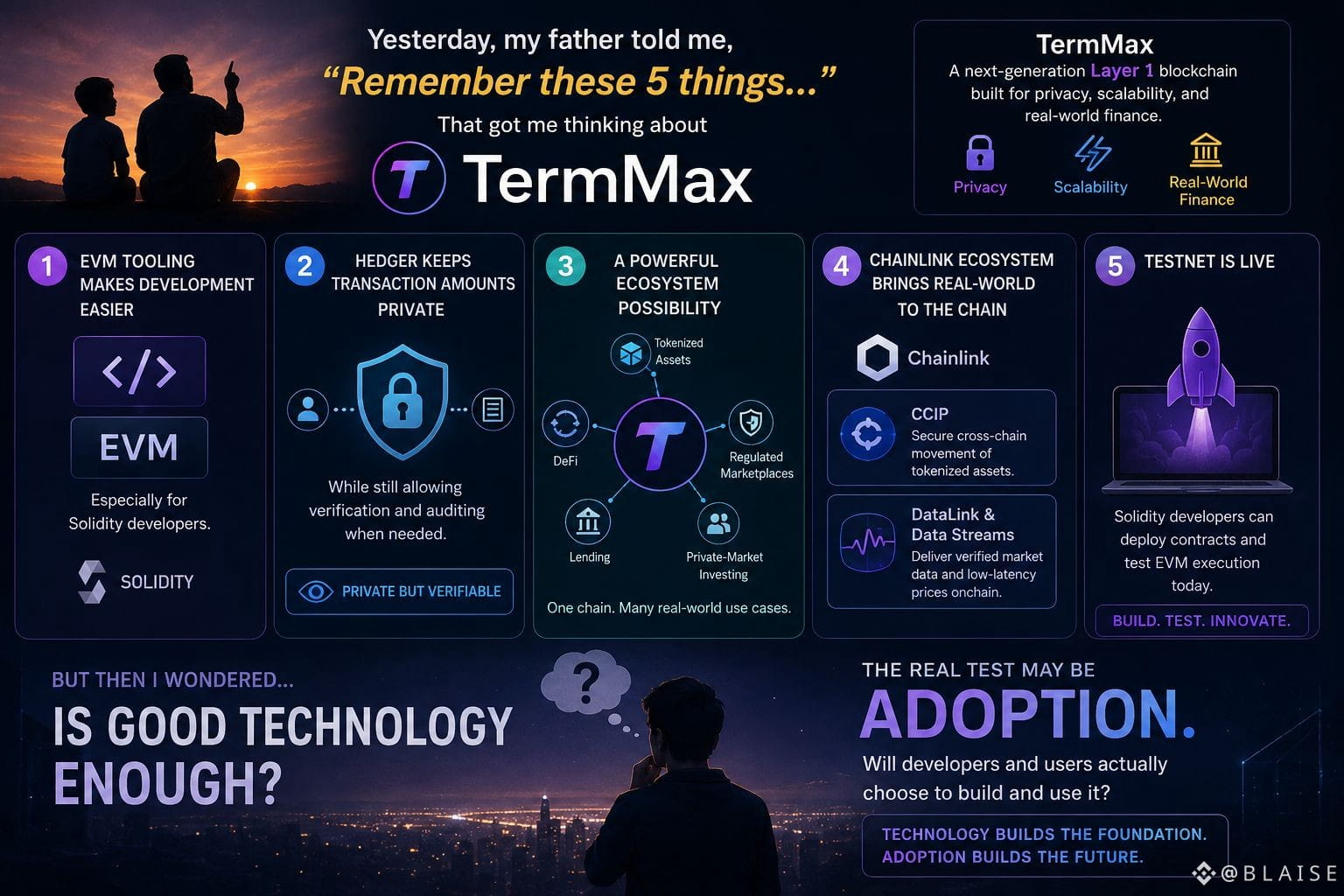
Yesterday, my father told me, “Remember these 5 things…”
That got me thinking about TermMax.
1. EVM tooling makes development easier, especially for Solidity developers.
#TermMax
2. Hedger keeps transaction amounts private while still allowing verification and auditing when needed.
3. The ecosystem could support tokenized assets, regulated marketplaces, private-market investing, DeFi, and lending.@termmax
4. Chainlink CCIP is intended for secure cross-chain movement of tokenized assets, while DataLink and Data Streams can provide verified market data and low-latency prices onchain.
5. The testnet is live, letting Solidity developers deploy contracts and test EVM execution.
But then I wondered: is good technology enough?
The real test may be adoption. Will developers and users actually choose to build and use it?
#TermMax @termmax
$ETH
#TermMax @TermMax
Yesterday, my father told me, “Remember these 5 things…”
That got me thinking about TermMax.
1. EVM tooling makes development easier, especially for Solidity developers.
#TermMax
2. Hedger keeps transaction amounts private while still allowing verification and auditing when needed.
3. The ecosystem could support tokenized assets, regulated marketplaces, private-market investing, DeFi, and lending.@TermMax
4. Chainlink CCIP is intended for secure cross-chain movement of tokenized assets, while DataLink and Data Streams can provide verified market data and low-latency prices onchain.
5. The testnet is live, letting Solidity developers deploy contracts and test EVM execution.
But then I wondered: is good technology enough?
The real test may be adoption. Will developers and users actually choose to build and use it?
#TermMax @TermMax
$ETH
Yesterday, my father told me, “Remember these 5 things…”
That got me thinking about TermMax.
1. EVM tooling makes development easier, especially for Solidity developers.
#TermMax
2. Hedger keeps transaction amounts private while still allowing verification and auditing when needed.
3. The ecosystem could support tokenized assets, regulated marketplaces, private-market investing, DeFi, and lending.@TermMax
4. Chainlink CCIP is intended for secure cross-chain movement of tokenized assets, while DataLink and Data Streams can provide verified market data and low-latency prices onchain.
5. The testnet is live, letting Solidity developers deploy contracts and test EVM execution.
But then I wondered: is good technology enough?
The real test may be adoption. Will developers and users actually choose to build and use it?
#TermMax @TermMax
$ETH
2
3
101
·
--
Bullish
I’ve been looking at Dusk differently lately.
#dusk @Dusk_Foundation
At first, I thought DuskEVM was mainly about bringing EVM compatibility to Dusk. But the more I looked, the more interesting the bigger picture became.
Crypto already has enough “next big L1” projects claiming to be faster, cheaper and more scalable. The real test starts when actual users and traffic arrive.
That’s why Dusk stands out to me.
It’s not just chasing TPS. The focus is on privacy and financial infrastructure, with use cases around tokenized assets, DeFi, lending and regulated financial applications.
DuskEVM also lets developers use familiar Solidity and EVM tools, while Hedger enables private yet verifiable transaction amounts. Chainlink CCIP can further help connect assets across different chains.
I’m still skeptical because good technology doesn’t guarantee adoption.
But the thesis is interesting.
Now I’m more curious about one thing:
What will people actually build on DuskEVM once mainnet arrives?
$ONG
{future}(ONGUSDT)
$NEIRO
{future}(NEIROUSDT)
$DUSK #dusk @Dusk_Foundation
I’ve been looking at Dusk differently lately.
#dusk @Dusk
At first, I thought DuskEVM was mainly about bringing EVM compatibility to Dusk. But the more I looked, the more interesting the bigger picture became.
Crypto already has enough “next big L1” projects claiming to be faster, cheaper and more scalable. The real test starts when actual users and traffic arrive.
That’s why Dusk stands out to me.
It’s not just chasing TPS. The focus is on privacy and financial infrastructure, with use cases around tokenized assets, DeFi, lending and regulated financial applications.
DuskEVM also lets developers use familiar Solidity and EVM tools, while Hedger enables private yet verifiable transaction amounts. Chainlink CCIP can further help connect assets across different chains.
I’m still skeptical because good technology doesn’t guarantee adoption.
But the thesis is interesting.
Now I’m more curious about one thing:
What will people actually build on DuskEVM once mainnet arrives?
$ONG
$NEIRO
$DUSK #dusk @Dusk
#dusk @Dusk
At first, I thought DuskEVM was mainly about bringing EVM compatibility to Dusk. But the more I looked, the more interesting the bigger picture became.
Crypto already has enough “next big L1” projects claiming to be faster, cheaper and more scalable. The real test starts when actual users and traffic arrive.
That’s why Dusk stands out to me.
It’s not just chasing TPS. The focus is on privacy and financial infrastructure, with use cases around tokenized assets, DeFi, lending and regulated financial applications.
DuskEVM also lets developers use familiar Solidity and EVM tools, while Hedger enables private yet verifiable transaction amounts. Chainlink CCIP can further help connect assets across different chains.
I’m still skeptical because good technology doesn’t guarantee adoption.
But the thesis is interesting.
Now I’m more curious about one thing:
What will people actually build on DuskEVM once mainnet arrives?
$ONG
$NEIRO
$DUSK #dusk @Dusk
🟢Yes_NPEX is real traction
0%
🔴No_thin proo, high risk
100%
🟡Too early to call
0%
1 votes • Voting closed
1
4
92
·
--
Bullish
#dusk @Dusk_Foundation
I’m honestly tired of the “next big Layer 1” narrative.
Every new chain promises faster, cheaper, scalable infrastructure, but the real test starts when actual users and liquidity show up.@Dusk_Foundation
That’s why Dusk catches my attention. It’s not trying to be another generic everything-chain. It’s focused on privacy and financial applications, with confidential smart contracts and its XSC standard.
But the January incident is also worth watching. Dusk’s Jan. 17 notice said monitoring flagged unusual activity involving a team-managed wallet, bridge services were paused, addresses were recycled, and no user funds were impacted. Other trackers described unauthorized activity draining DUSK through the Dusk-to-EVM bridge.
Same event, very different framing.
For me, the interesting part isn’t just the incident. It’s how a privacy-focused Layer 1 handles disclosure when the bridge—the least core part of the stack—gets touched.
I’m cautiously interested in Dusk, but adoption is the real test.
Good infrastructure only matters if people actually show up.
$AVAAI
{alpha}(CT_501DKu9kykSfbN5LBfFXtNNDPaX35o4Fv6vJ9FKk7pZpump)
$VELO
{alpha}(560xf486ad071f3bee968384d2e39e2d8af0fcf6fd46)
$DUSK
{future}(DUSKUSDT)
#dusk @Dusk_Foundation
#dusk @Dusk
I’m honestly tired of the “next big Layer 1” narrative.
Every new chain promises faster, cheaper, scalable infrastructure, but the real test starts when actual users and liquidity show up.@Dusk
That’s why Dusk catches my attention. It’s not trying to be another generic everything-chain. It’s focused on privacy and financial applications, with confidential smart contracts and its XSC standard.
But the January incident is also worth watching. Dusk’s Jan. 17 notice said monitoring flagged unusual activity involving a team-managed wallet, bridge services were paused, addresses were recycled, and no user funds were impacted. Other trackers described unauthorized activity draining DUSK through the Dusk-to-EVM bridge.
Same event, very different framing.
For me, the interesting part isn’t just the incident. It’s how a privacy-focused Layer 1 handles disclosure when the bridge—the least core part of the stack—gets touched.
I’m cautiously interested in Dusk, but adoption is the real test.
Good infrastructure only matters if people actually show up.
$AVAAI
$VELO
$DUSK
#dusk @Dusk
I’m honestly tired of the “next big Layer 1” narrative.
Every new chain promises faster, cheaper, scalable infrastructure, but the real test starts when actual users and liquidity show up.@Dusk
That’s why Dusk catches my attention. It’s not trying to be another generic everything-chain. It’s focused on privacy and financial applications, with confidential smart contracts and its XSC standard.
But the January incident is also worth watching. Dusk’s Jan. 17 notice said monitoring flagged unusual activity involving a team-managed wallet, bridge services were paused, addresses were recycled, and no user funds were impacted. Other trackers described unauthorized activity draining DUSK through the Dusk-to-EVM bridge.
Same event, very different framing.
For me, the interesting part isn’t just the incident. It’s how a privacy-focused Layer 1 handles disclosure when the bridge—the least core part of the stack—gets touched.
I’m cautiously interested in Dusk, but adoption is the real test.
Good infrastructure only matters if people actually show up.
$AVAAI
$VELO
$DUSK
#dusk @Dusk
MRNAon Takes Lead
0%
牛来 Shows Strength
80%
Biggest Winner Today
20%
Who Wins Next
0%
5 votes • Voting closed
3
1.1k
·
--
#TermMax @termmax
Another day, another “next big chain.” Crypto$SKYAI really knows how to recycle the same story.
TermMax catches my attention, but I’m not buying the hype blindly. As a decentralized fixed-rate borrowing, lending and options protocol,@termmax the idea makes sense. Real financial tools matter more than another AI buzzword or anime yield farm.
And scalability isn’t only about bad technology. $MRNAon Traffic breaks blockchains too. Solana often feels smooth, but heavy demand can still expose limits. That’s why spreading activity across multiple chains makes sense.
Still, the hard part is adoption. Users and liquidity don’t move just because infrastructure exists. TermMax has to prove people actually want to use it.
I’m cautiously optimistic, but crypto has taught me to wait for execution, not promises.
It might work. Or nobody shows up.
$CYS
{future}(CYSUSDT)
#TermMax @TermMax
Another day, another “next big chain.” Crypto$SKYAI really knows how to recycle the same story.
TermMax catches my attention, but I’m not buying the hype blindly. As a decentralized fixed-rate borrowing, lending and options protocol,@TermMax the idea makes sense. Real financial tools matter more than another AI buzzword or anime yield farm.
And scalability isn’t only about bad technology. $MRNAon Traffic breaks blockchains too. Solana often feels smooth, but heavy demand can still expose limits. That’s why spreading activity across multiple chains makes sense.
Still, the hard part is adoption. Users and liquidity don’t move just because infrastructure exists. TermMax has to prove people actually want to use it.
I’m cautiously optimistic, but crypto has taught me to wait for execution, not promises.
It might work. Or nobody shows up.
$CYS
Another day, another “next big chain.” Crypto$SKYAI really knows how to recycle the same story.
TermMax catches my attention, but I’m not buying the hype blindly. As a decentralized fixed-rate borrowing, lending and options protocol,@TermMax the idea makes sense. Real financial tools matter more than another AI buzzword or anime yield farm.
And scalability isn’t only about bad technology. $MRNAon Traffic breaks blockchains too. Solana often feels smooth, but heavy demand can still expose limits. That’s why spreading activity across multiple chains makes sense.
Still, the hard part is adoption. Users and liquidity don’t move just because infrastructure exists. TermMax has to prove people actually want to use it.
I’m cautiously optimistic, but crypto has taught me to wait for execution, not promises.
It might work. Or nobody shows up.
$CYS
Higher TVL🔘
33%
More active loans🔘
0%
Stronger protocol revenue🔘
50%
All three growing together🔘
17%
6 votes • Voting closed
4
10
915
·
--
Bullish
@Dusk_Foundation #dusk
Another day, another “next big chain.” Crypto keeps recycling the same narrative with a fresh logo.
Dusk Network feels different because it’s a Layer 1 focused on privacy and financial applications, not another AI buzzword machine.
The bigger issue is infrastructure. Traffic can break blockchains just as easily as bad tech. Solana usually feels smooth, but heavy demand can expose limits. That’s why spreading ecosystem activity across multiple chains makes sense.
But adoption is the hard part. Users and liquidity don’t magically move just because a chain exists.
Dusk is interesting, especially if private financial infrastructure becomes more important.
Still cautious. No hype.
It might work. Or nobody shows up.
$HEMI
{future}(HEMIUSDT)
$VELVET
{alpha}(560x8b194370825e37b33373e74a41009161808c1488)
$DUSK
{future}(DUSKUSDT)
@Dusk #dusk
Another day, another “next big chain.” Crypto keeps recycling the same narrative with a fresh logo.
Dusk Network feels different because it’s a Layer 1 focused on privacy and financial applications, not another AI buzzword machine.
The bigger issue is infrastructure. Traffic can break blockchains just as easily as bad tech. Solana usually feels smooth, but heavy demand can expose limits. That’s why spreading ecosystem activity across multiple chains makes sense.
But adoption is the hard part. Users and liquidity don’t magically move just because a chain exists.
Dusk is interesting, especially if private financial infrastructure becomes more important.
Still cautious. No hype.
It might work. Or nobody shows up.
$HEMI
$VELVET
$DUSK
Another day, another “next big chain.” Crypto keeps recycling the same narrative with a fresh logo.
Dusk Network feels different because it’s a Layer 1 focused on privacy and financial applications, not another AI buzzword machine.
The bigger issue is infrastructure. Traffic can break blockchains just as easily as bad tech. Solana usually feels smooth, but heavy demand can expose limits. That’s why spreading ecosystem activity across multiple chains makes sense.
But adoption is the hard part. Users and liquidity don’t magically move just because a chain exists.
Dusk is interesting, especially if private financial infrastructure becomes more important.
Still cautious. No hype.
It might work. Or nobody shows up.
$HEMI
$VELVET
$DUSK
🔄 Trade before maturity
25%
💰 Hold to maturity
50%
$DUSK💚
25%
4 votes • Voting closed
2
423
·
--
Bullish
#TermMax Crypto fatigue is real. Every week it’s another “next big chain” with crazy speed, huge TPS, and a revolutionary ecosystem. @termmax Then reality arrives: no users, thin liquidity, and everyone moves to the next shiny narrative.
One correction though: TermMax isn’t a Layer 1. @termmax It’s a decentralized DeFi protocol focused on fixed-rate borrowing, lending, and options trading.
That actually makes the idea more interesting to me.
Traffic can break blockchains just as easily as bad technolo Solana often feels smooth, but heavy demand can still expose limits. Spreading activity across multiple chains is a logical way to reduce that pressure.
The hard part is adoption. Liquidity doesn’t magically move because infrastructure looks good.
I’m cautiously interested in TermMax because it’s focused on useful financial infrastructure instead of another “everything chain.”
Still, crypto has taught us one thing: good ideas need users.
It might work. Or nobody shows up.
$RICE
{alpha}(560xb5761f36fdfe2892f1b54bc8ee8babb2a1b698d3)
$BTW
{alpha}(560x444045b0ee1ee319a660a5e3d604ca0ffa35acaa)
$VELVET
{alpha}(560x8b194370825e37b33373e74a41009161808c1488)
#TermMax Crypto fatigue is real. Every week it’s another “next big chain” with crazy speed, huge TPS, and a revolutionary ecosystem. @TermMax Then reality arrives: no users, thin liquidity, and everyone moves to the next shiny narrative.
One correction though: TermMax isn’t a Layer 1. @TermMax It’s a decentralized DeFi protocol focused on fixed-rate borrowing, lending, and options trading.
That actually makes the idea more interesting to me.
Traffic can break blockchains just as easily as bad technolo Solana often feels smooth, but heavy demand can still expose limits. Spreading activity across multiple chains is a logical way to reduce that pressure.
The hard part is adoption. Liquidity doesn’t magically move because infrastructure looks good.
I’m cautiously interested in TermMax because it’s focused on useful financial infrastructure instead of another “everything chain.”
Still, crypto has taught us one thing: good ideas need users.
It might work. Or nobody shows up.
$RICE
$BTW
$VELVET
One correction though: TermMax isn’t a Layer 1. @TermMax It’s a decentralized DeFi protocol focused on fixed-rate borrowing, lending, and options trading.
That actually makes the idea more interesting to me.
Traffic can break blockchains just as easily as bad technolo Solana often feels smooth, but heavy demand can still expose limits. Spreading activity across multiple chains is a logical way to reduce that pressure.
The hard part is adoption. Liquidity doesn’t magically move because infrastructure looks good.
I’m cautiously interested in TermMax because it’s focused on useful financial infrastructure instead of another “everything chain.”
Still, crypto has taught us one thing: good ideas need users.
It might work. Or nobody shows up.
$RICE
$BTW
$VELVET
$RICE
12%
$BTW
64%
$VELVET
15%
#TermMax
9%
34 votes • Voting closed
14
10
2.6k
Log in to explore more content
Join global crypto users on Binance Square
⚡️ Get latest and useful information about crypto.
💬 Trusted by the world’s largest crypto exchange.
👍 Discover real insights from verified creators.
Email / Phone number
Trending Topics
CPIWatch
86.4M views
500,794 Discussing
Share & Win Traffic Reward in our Trending Hashtag Campaign
✨Topic: Will CPI Trigger Rate Hike?
👉How to Join:
Publish a short post or article with hashtag #CPIWatch
Create content based on the below two angles:
- Nonfarm payrolls beat expectations and CPI is around the corner, do you think the Fed will hike or hold the rate?
- Bullish or bearish? Share your take and showcase your stocks or gold trade/holdings with our trade sharing widget.
🚀Campaign Period:
- 2026-09-11 3:00 - 2026-09-12 9:00 UTC
🎁Reward:
- Qualified posts that comply with the above guidelines and contain more than 100 words will be reviewed and may receive a random traffic boost of 500 to 3,000 views. You will receive a notification from your feed secretary if your post is selected.
- Get a chance to have your article featured on Binance Square Official
Need ideas for your post? Visit the topic page #CPIWatch or the Square Guide on How to Post for Better Reach.
Binance Square Official
·366 Likes
·789.6k views
BitcoinFallsTo$77KAfterGoldenCross
823 views
37 Discussing
OracleJumpsOver6%OnEarningsBeat
3,912 views
201 Discussing