
AREWA CRYPTO
2.6k Posts

AREWA CRYPTO
 Square Verified+
Trusted Voice that Connect Projects with People, Helping Crypto Projects Grow & Engage Communities | Verified on Binance, CMC & Bitgét.

Level 2 Creator
Open Trade

AMB Holder
Frequent Trader
5.8 Years
100 Following
53.8K+ Followers
92.8K+ Liked
1 Badges
Posts
Portfolio
All
Quotes
Videos
Live
PINNED
“I lost everything…
From something Nothing
Futures trading wiped my portfolio…
Future finishes me
No stop loss….”
😭😭😭
😭😭😭
😭😭😭
Not me Ooo. . . .
Honestly, this is the kind of story I keep seeing over and over again 😂🤣
Market moves small… account goes to zero.
Leverage high… discipline low… outcome predictable 😹
Couldn’t be me though.
I stay on SPOT — simple, controlled, and most importantly… protected.
Every trade has a plan, every entry has a stop loss.
Because in this market, survival isn’t luck… it’s structure.
Trade smart… or learn the hard way 😂📉
From something Nothing
Futures trading wiped my portfolio…
Future finishes me
No stop loss….”
😭😭😭
😭😭😭
😭😭😭
Not me Ooo. . . .
Honestly, this is the kind of story I keep seeing over and over again 😂🤣
Market moves small… account goes to zero.
Leverage high… discipline low… outcome predictable 😹
Couldn’t be me though.
I stay on SPOT — simple, controlled, and most importantly… protected.
Every trade has a plan, every entry has a stop loss.
Because in this market, survival isn’t luck… it’s structure.
Trade smart… or learn the hard way 😂📉

PINNED

📊 Bitcoin remains range-bound as long-term holder supply continues to cap upside momentum.
Glassnode data shows heavy supply between $83K–$86K, creating a major resistance zone after the recent short squeeze. Until this supply is absorbed, BTC may continue to consolidate within the broader range.
Key Market Boundaries:
• 🔴 Overhead Resistance: $83K–$86K
• 🟢 Macro Support: $62K–$65K
• 📅 Options Catalyst: ~$14B OI expiring Sept. 25
👉 A clean breakout above $86K could unlock the next major leg higher, while losing the support zone would significantly weaken the structure.
Glassnode data shows heavy supply between $83K–$86K, creating a major resistance zone after the recent short squeeze. Until this supply is absorbed, BTC may continue to consolidate within the broader range.
Key Market Boundaries:
• 🔴 Overhead Resistance: $83K–$86K
• 🟢 Macro Support: $62K–$65K
• 📅 Options Catalyst: ~$14B OI expiring Sept. 25
👉 A clean breakout above $86K could unlock the next major leg higher, while losing the support zone would significantly weaken the structure.
📊 US strikes on Iran send crypto markets lower
US forces struck Iranian targets near the Strait of Hormuz, triggering a broad risk-off selloff across global markets. Bitcoin fell 2.2% to $76,926, with Ethereum and XRP declining alongside it. Oil prices surged to their highest level in 40 days on the news.
President Trump confirmed the strikes, which rattled investors across equities, crypto and commodities simultaneously. The move reflects crypto's increasing correlation with macro risk sentiment — when geopolitical shocks hit, digital assets are selling off alongside traditional markets rather than acting as a safe haven.
US forces struck Iranian targets near the Strait of Hormuz, triggering a broad risk-off selloff across global markets. Bitcoin fell 2.2% to $76,926, with Ethereum and XRP declining alongside it. Oil prices surged to their highest level in 40 days on the news.
President Trump confirmed the strikes, which rattled investors across equities, crypto and commodities simultaneously. The move reflects crypto's increasing correlation with macro risk sentiment — when geopolitical shocks hit, digital assets are selling off alongside traditional markets rather than acting as a safe haven.
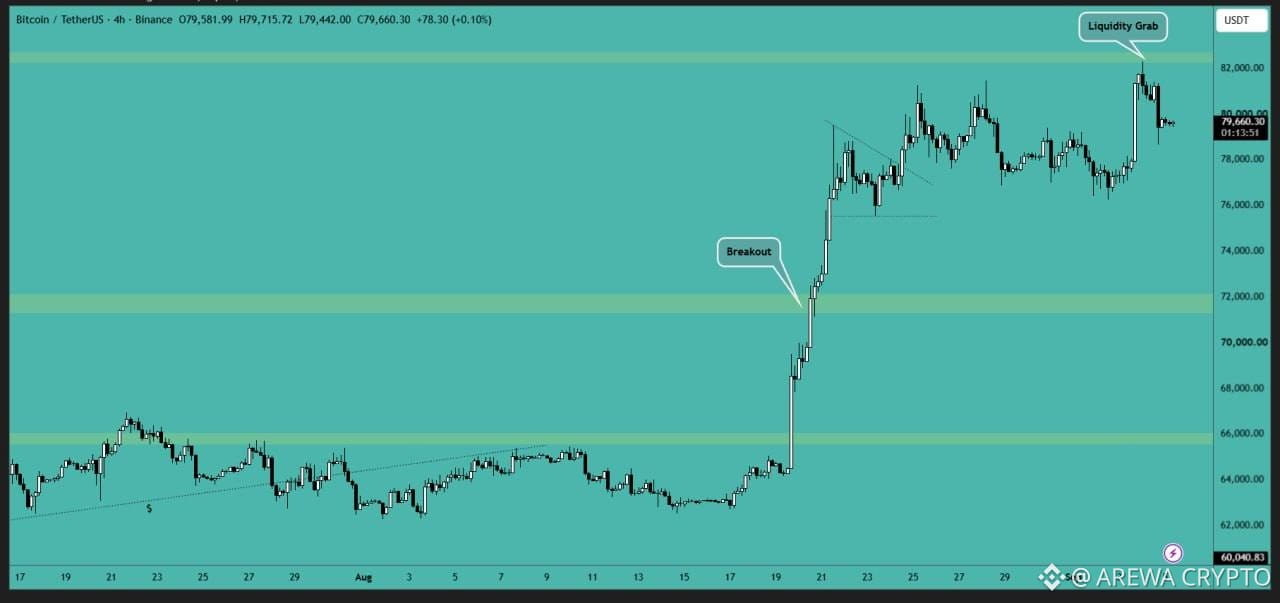
Bitcoin faced rejection from the resistance area after testing it. The price collected liquidity from that zone, and we may see another attempt to break this level. This is a crucial zone for the continuation of the upward movement.
🟠 Bitcoin drops below $80,000 on strong US jobs data
Bitcoin fell under the $80,000 level after US payroll data showed a 162,000 jobs gain, reigniting concerns that the Federal Reserve may keep rates elevated for longer.
The stronger-than-expected employment figure lifted Treasury yields and the dollar — both headwinds for risk assets including crypto. The initial selloff was uneven across the market, with the decline not holding uniformly across assets.
Rate expectations remain a key macro driver for Bitcoin, as tighter monetary policy tends to pressure speculative assets by raising the opportunity cost of holding them.
Bitcoin fell under the $80,000 level after US payroll data showed a 162,000 jobs gain, reigniting concerns that the Federal Reserve may keep rates elevated for longer.
The stronger-than-expected employment figure lifted Treasury yields and the dollar — both headwinds for risk assets including crypto. The initial selloff was uneven across the market, with the decline not holding uniformly across assets.
Rate expectations remain a key macro driver for Bitcoin, as tighter monetary policy tends to pressure speculative assets by raising the opportunity cost of holding them.
Bitcoin is currently trapped between two major on-chain zones.
The $62K–$65K area acts as a strong accumulation floor, while heavy Long-Term Holder supply between $83K–$86K creates major overhead resistance.
👉 As long as BTC remains between these zones, choppy or range-bound movement is possible. A breakout above $83K–$86K could open the door to further upside, while losing $62K–$65K would weaken the structure significantly. 📊
The $62K–$65K area acts as a strong accumulation floor, while heavy Long-Term Holder supply between $83K–$86K creates major overhead resistance.
👉 As long as BTC remains between these zones, choppy or range-bound movement is possible. A breakout above $83K–$86K could open the door to further upside, while losing $62K–$65K would weaken the structure significantly. 📊
₿ Bitcoin clears $82K, drags crypto stocks higher
Bitcoin pushed back above $82,000 on Thursday, and the ripple effect hit crypto-related equities too — because apparently everything is correlated until it isn't. No surprise that BTC-linked stocks tend to move in lockstep when Bitcoin catches a bid; the real question is whether this bounce has legs or is just the market catching its breath.
Bitcoin pushed back above $82,000 on Thursday, and the ripple effect hit crypto-related equities too — because apparently everything is correlated until it isn't. No surprise that BTC-linked stocks tend to move in lockstep when Bitcoin catches a bid; the real question is whether this bounce has legs or is just the market catching its breath.
The market is bullish Cancel your short positions
🪙 Solana posts first monthly gain in nearly a year
SOL closed August above $100 for the first time in roughly 10 months, trading near $106 on Sunday after hitting a monthly high of $110.38 on August 27.
The rally was driven by three converging factors: rising institutional inflows, a reduction in future token supply, and record network activity. The combination reversed a losing streak that had stretched back nearly a year.
SOL remains one of the most actively watched Layer-1 assets among institutional allocators, and August's performance marks a notable shift in sentiment heading into Q4.
SOL closed August above $100 for the first time in roughly 10 months, trading near $106 on Sunday after hitting a monthly high of $110.38 on August 27.
The rally was driven by three converging factors: rising institutional inflows, a reduction in future token supply, and record network activity. The combination reversed a losing streak that had stretched back nearly a year.
SOL remains one of the most actively watched Layer-1 assets among institutional allocators, and August's performance marks a notable shift in sentiment heading into Q4.
$1,000 invested 15 years ago today would be worth:
• Bitcoin: $8,970,000
• Nvidia: $735,000
• Tesla: $231,000
• Apple: $29,000
• S&P: $8,400
• Gold: $2,150
#CFTCScrutinizesPredictionMarketAffiliates #EtherXRPETFInflowStreaksEnd #PredictionMarketsPutCLARITYAct2026OddsAt15%
• Bitcoin: $8,970,000
• Nvidia: $735,000
• Tesla: $231,000
• Apple: $29,000
• S&P: $8,400
• Gold: $2,150
#CFTCScrutinizesPredictionMarketAffiliates #EtherXRPETFInflowStreaksEnd #PredictionMarketsPutCLARITYAct2026OddsAt15%
$ETH ANALYSIS
$ETH /USDT trades at $2,468, punching straight into the year long descending trendline from $3,530 after a steep run off the rising trendline near $1,530. Both structures converge right at this level.
Break and hold above $2,600 and this becomes a real trend reversal with room to run higher. Lose $2,300 and price falls back toward the rising trendline near $2,050. Major resistance right here, a clean break is a big statement.
$ETH /USDT trades at $2,468, punching straight into the year long descending trendline from $3,530 after a steep run off the rising trendline near $1,530. Both structures converge right at this level.
Break and hold above $2,600 and this becomes a real trend reversal with room to run higher. Lose $2,300 and price falls back toward the rising trendline near $2,050. Major resistance right here, a clean break is a big statement.
Partly True
#termmax @TermMax
DeFi Has a Rate Problem
One thing becomes obvious when you spend enough time looking at DeFi lending: the interest rate itself is part of the risk.
A floating rate can change because liquidity changes, demand increases, or market conditions become stressed. That flexibility is useful, but it also creates uncertainty for anyone planning capital over a longer horizon.
@TermMax approaches the problem differently.
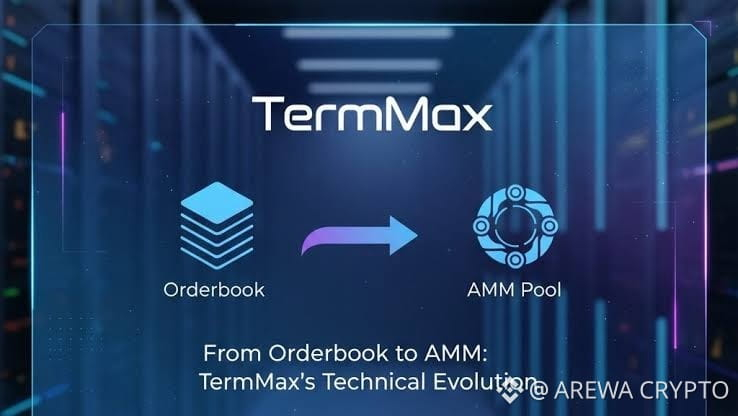
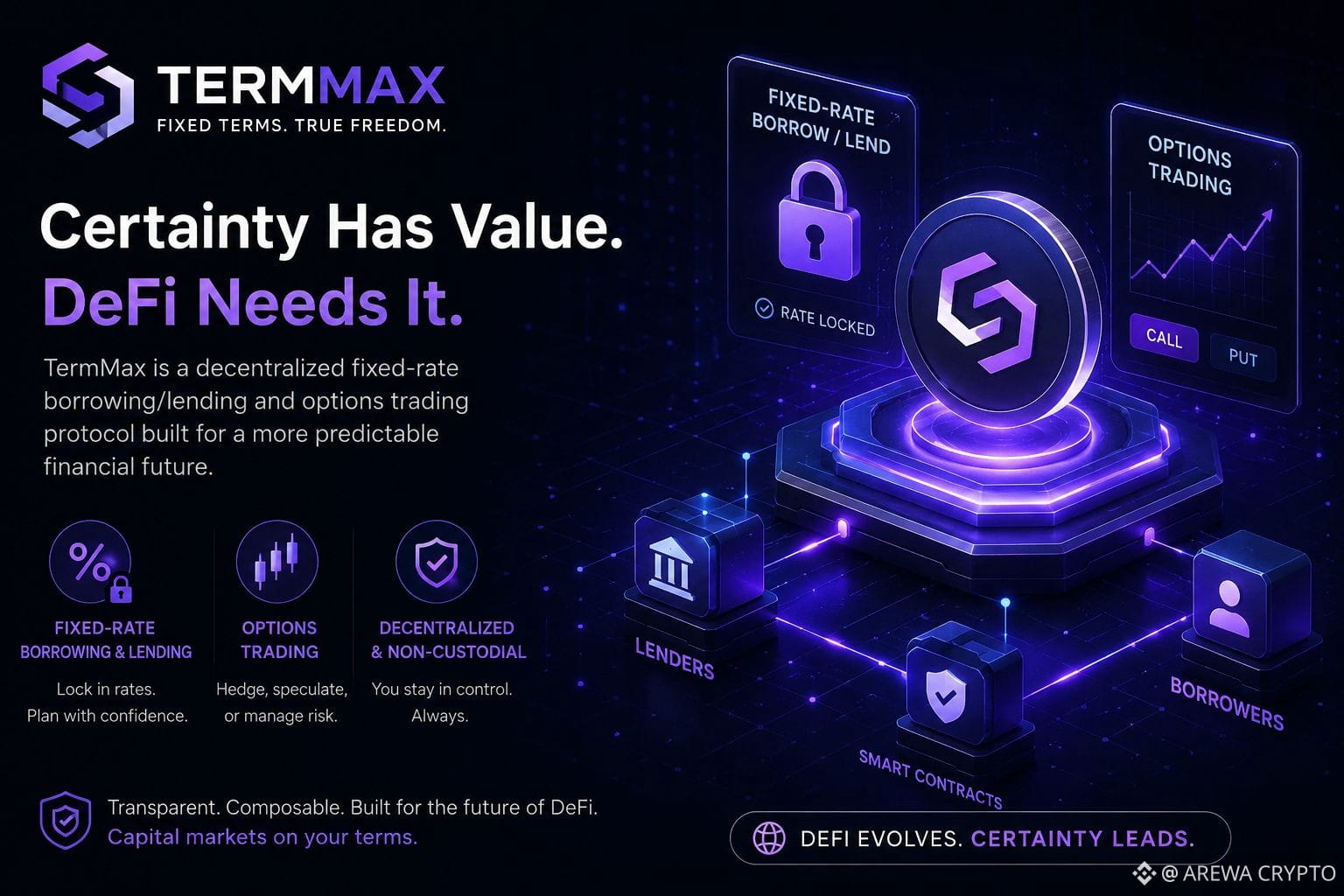
$TermMax is a decentralized fixed-rate borrowing and lending protocol that also incorporates options trading. The interesting idea is not simply replacing variable rates with fixed ones.
It is creating a more structured environment where the cost and duration of capital can become explicit components of a decentralized financial contract.
Think about the difference between saying, I can borrow at approximately this rate, and saying, I know the contractual rate for this defined period. The second model can make financial planning easier because the borrower is less exposed to short-term fluctuations in lending demand.
For lenders, the equation changes as well. Instead of chasing whatever floating yield happens to be available, they can participate in a market where duration and pricing are more clearly defined.
The options component makes the design even more interesting. Options can provide ways to structure exposure to future price movements, meaning the protocol is moving beyond basic lending toward a broader set of financial primitives.
Still, sophistication introduces its own risks. Fixed-rate markets require credible pricing, sufficient liquidity and reliable settlement. Options add additional complexity, while smart-contract vulnerabilities remain a fundamental concern across DeFi.
The bigger question is therefore not whether fixed-rate lending sounds attractive. It is whether decentralized markets can build enough liquidity and infrastructure around predictable financial contracts to make them genuinely useful at scale.
That is the experiment $TermMax represents.
#TermMax #DollarHits3MonthLow
DeFi Has a Rate Problem
One thing becomes obvious when you spend enough time looking at DeFi lending: the interest rate itself is part of the risk.
A floating rate can change because liquidity changes, demand increases, or market conditions become stressed. That flexibility is useful, but it also creates uncertainty for anyone planning capital over a longer horizon.
@TermMax approaches the problem differently.
$TermMax is a decentralized fixed-rate borrowing and lending protocol that also incorporates options trading. The interesting idea is not simply replacing variable rates with fixed ones.
It is creating a more structured environment where the cost and duration of capital can become explicit components of a decentralized financial contract.
Think about the difference between saying, I can borrow at approximately this rate, and saying, I know the contractual rate for this defined period. The second model can make financial planning easier because the borrower is less exposed to short-term fluctuations in lending demand.
For lenders, the equation changes as well. Instead of chasing whatever floating yield happens to be available, they can participate in a market where duration and pricing are more clearly defined.
The options component makes the design even more interesting. Options can provide ways to structure exposure to future price movements, meaning the protocol is moving beyond basic lending toward a broader set of financial primitives.
Still, sophistication introduces its own risks. Fixed-rate markets require credible pricing, sufficient liquidity and reliable settlement. Options add additional complexity, while smart-contract vulnerabilities remain a fundamental concern across DeFi.
The bigger question is therefore not whether fixed-rate lending sounds attractive. It is whether decentralized markets can build enough liquidity and infrastructure around predictable financial contracts to make them genuinely useful at scale.
That is the experiment $TermMax represents.
#TermMax #DollarHits3MonthLow
#termmax @TermMax
Fixed Rates Change the Conversation
One thing I’ve learned from following DeFi closely is that the cost of capital can sometimes matter just as much as the asset itself.
For a long time, much of DeFi lending has revolved around variable rates. They make sense because markets can reprice continuously as supply, demand and liquidity change. But I’ve also seen how quickly that flexibility can become uncertainty. A borrowing rate that looks manageable today can change significantly when market conditions shift, making it harder to plan a position with confidence.
That is what makes @TermMax interesting to me.
$TermMax is a decentralized protocol focused on fixed-rate borrowing and lending, while supporting options trading. Rather than leaving the economics of borrowing completely exposed to constantly changing rates, the model introduces a defined period in which the cost of capital can be established more predictably.
I think that distinction deserves more attention.
From a borrower’s perspective, knowing the financing cost for a specific period can make it easier to evaluate the economics of a strategy. For lenders, fixed-rate markets provide another way to think about capital allocation, where rate and duration become clearer parts of the equation.
The options component adds another layer I find particularly interesting. Options allow participants to structure exposure around future price movements instead of relying solely on spot markets. That moves the conversation beyond basic lending and toward a more structured financial environment.
I wouldn’t interpret fixed rates as removing risk. They simply change where the risk sits.
Liquidity, pricing efficiency, collateral quality, maturity, smart-contract security and market conditions still matter. A fixed rate provides predictability, but predictability itself has trade-offs. If market rates move significantly, either the borrower or lender may find the original agreement less attractive relative to new opportunities.
For me, that is the bigger story behind $TermMax.
#TermMax
Fixed Rates Change the Conversation
One thing I’ve learned from following DeFi closely is that the cost of capital can sometimes matter just as much as the asset itself.
For a long time, much of DeFi lending has revolved around variable rates. They make sense because markets can reprice continuously as supply, demand and liquidity change. But I’ve also seen how quickly that flexibility can become uncertainty. A borrowing rate that looks manageable today can change significantly when market conditions shift, making it harder to plan a position with confidence.
That is what makes @TermMax interesting to me.
$TermMax is a decentralized protocol focused on fixed-rate borrowing and lending, while supporting options trading. Rather than leaving the economics of borrowing completely exposed to constantly changing rates, the model introduces a defined period in which the cost of capital can be established more predictably.
I think that distinction deserves more attention.
From a borrower’s perspective, knowing the financing cost for a specific period can make it easier to evaluate the economics of a strategy. For lenders, fixed-rate markets provide another way to think about capital allocation, where rate and duration become clearer parts of the equation.
The options component adds another layer I find particularly interesting. Options allow participants to structure exposure around future price movements instead of relying solely on spot markets. That moves the conversation beyond basic lending and toward a more structured financial environment.
I wouldn’t interpret fixed rates as removing risk. They simply change where the risk sits.
Liquidity, pricing efficiency, collateral quality, maturity, smart-contract security and market conditions still matter. A fixed rate provides predictability, but predictability itself has trade-offs. If market rates move significantly, either the borrower or lender may find the original agreement less attractive relative to new opportunities.
For me, that is the bigger story behind $TermMax.
#TermMax
#dusk $DUSK @Dusk
Why Tokenization Alone Is Not Enough
I’ve been watching the real-world asset narrative in crypto for a while, and one thought keeps coming back to me: putting an asset on-chain is only the beginning.
We hear it everywhere tokenize bonds, funds, real estate and securities. It sounds revolutionary, and I genuinely believe tokenization could reshape finance. But I keep asking myself: what happens after the asset becomes a token?
A financial market needs much more than a token contract. It needs ownership rules, investor eligibility, transfers, settlement, compliance and, importantly, protection for sensitive financial information.
This is where @Dusk catches my attention.
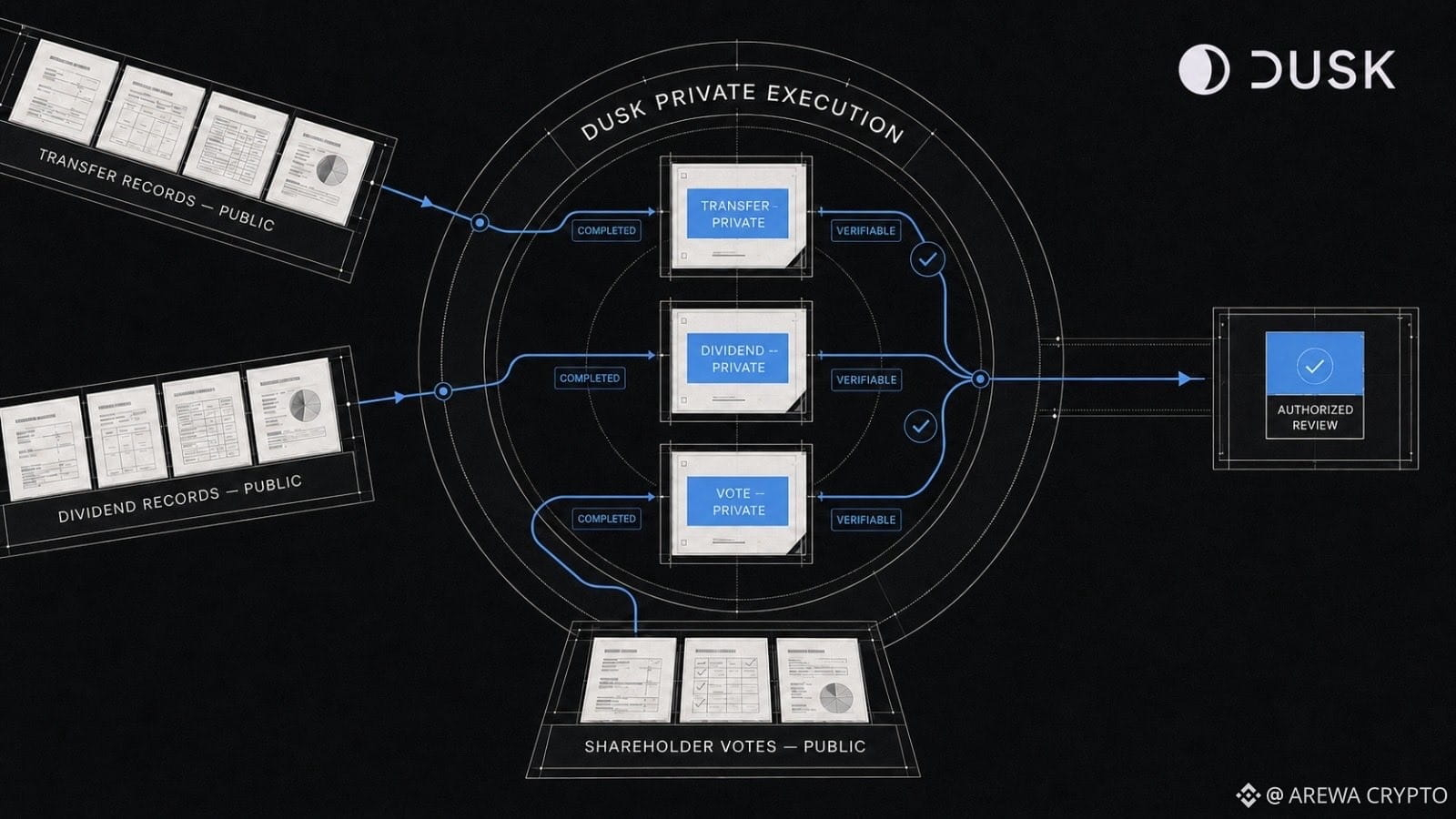
Dusk is building a Layer-1 focused on regulated digital assets and financial applications, combining privacy, deterministic settlement, zero-knowledge technology and controlled disclosure.
What I find particularly interesting is its Confidential Security Contract (XSC) standard, designed for privacy-enabled tokenized securities. A security token can represent financial rights, but the infrastructure underneath still needs to enforce the rules governing those rights.
Imagine buying a tokenized bond on a public blockchain. The network should be able to verify that ownership changed correctly. But should every participant also know the buyer’s portfolio size or trading strategy? Probably not.
At the same time, a regulator may still need to verify compliance.
That is the balance Dusk is exploring: verifiable finance without unnecessary exposure.
Personally, I think this is a more mature way to look at blockchain transparency. Privacy does not have to mean hiding everything, and transparency does not have to mean revealing everything.
Still, the technology is only one part of the story. Financial institutions move carefully, regulations vary, developers need practical tools, and adoption must come from real users.
That is why I’m watching $DUSK with curiosity.
@Dusk #dusk #USJulyRetailSalesFall0.6%
#DollarFallsToMayLow
Why Tokenization Alone Is Not Enough
I’ve been watching the real-world asset narrative in crypto for a while, and one thought keeps coming back to me: putting an asset on-chain is only the beginning.
We hear it everywhere tokenize bonds, funds, real estate and securities. It sounds revolutionary, and I genuinely believe tokenization could reshape finance. But I keep asking myself: what happens after the asset becomes a token?
A financial market needs much more than a token contract. It needs ownership rules, investor eligibility, transfers, settlement, compliance and, importantly, protection for sensitive financial information.
This is where @Dusk catches my attention.
Dusk is building a Layer-1 focused on regulated digital assets and financial applications, combining privacy, deterministic settlement, zero-knowledge technology and controlled disclosure.
What I find particularly interesting is its Confidential Security Contract (XSC) standard, designed for privacy-enabled tokenized securities. A security token can represent financial rights, but the infrastructure underneath still needs to enforce the rules governing those rights.
Imagine buying a tokenized bond on a public blockchain. The network should be able to verify that ownership changed correctly. But should every participant also know the buyer’s portfolio size or trading strategy? Probably not.
At the same time, a regulator may still need to verify compliance.
That is the balance Dusk is exploring: verifiable finance without unnecessary exposure.
Personally, I think this is a more mature way to look at blockchain transparency. Privacy does not have to mean hiding everything, and transparency does not have to mean revealing everything.
Still, the technology is only one part of the story. Financial institutions move carefully, regulations vary, developers need practical tools, and adoption must come from real users.
That is why I’m watching $DUSK with curiosity.
@Dusk #dusk #USJulyRetailSalesFall0.6%
#DollarFallsToMayLow
$DUSK UP 🚀🔥🚀
100%
$DUSK DOWN 🐻🐻
0%
3 votes • Voting closed
#dusk $DUSK @Dusk
The Blockchain Problem Nobody Talks About Enough
Imagine building a financial application where every customer balance, trading position and transaction is permanently visible to competitors. The network may be decentralized, but that level of transparency can create serious commercial limitations.
That is why I find @Dusk worth watching.
This distinction matters.
Financial institutions do not necessarily want invisible markets. They need markets where authorized participants can verify ownership, execute transactions and satisfy compliance requirements without exposing commercially sensitive information to everyone.
This is where Dusk’s Confidential Security Contract (XSC) standard becomes particularly interesting. XSC is designed for privacy-enabled tokenized securities, bringing programmable financial rules together with confidentiality around sensitive activity.
The underlying idea is simple but powerful: privacy does not have to mean the absence of accountability.
A regulator may need access to specific information. An issuer may need to confirm investor eligibility. A participant may need to prove a requirement without revealing unrelated financial details.
That creates a middle ground between total transparency and complete secrecy.
For $DUSK , this makes the thesis different from simply building another general-purpose Layer-1. The bigger question is whether confidential infrastructure can make blockchain-based financial markets more practical.
But the real test is adoption.
Can developers build useful applications? Can institutions integrate the technology? Can privacy and compliance work together without creating unnecessary complexity? And can Dusk generate sustainable network activity rather than remaining technically impressive but underused?
Those questions matter more than short-term market excitement.
If blockchain finance is going to mature, privacy and transparency may not need to be opposites.
The future could be verifiable finance with controlled visibility.
The Blockchain Problem Nobody Talks About Enough
Imagine building a financial application where every customer balance, trading position and transaction is permanently visible to competitors. The network may be decentralized, but that level of transparency can create serious commercial limitations.
That is why I find @Dusk worth watching.
This distinction matters.
Financial institutions do not necessarily want invisible markets. They need markets where authorized participants can verify ownership, execute transactions and satisfy compliance requirements without exposing commercially sensitive information to everyone.
This is where Dusk’s Confidential Security Contract (XSC) standard becomes particularly interesting. XSC is designed for privacy-enabled tokenized securities, bringing programmable financial rules together with confidentiality around sensitive activity.
The underlying idea is simple but powerful: privacy does not have to mean the absence of accountability.
A regulator may need access to specific information. An issuer may need to confirm investor eligibility. A participant may need to prove a requirement without revealing unrelated financial details.
That creates a middle ground between total transparency and complete secrecy.
For $DUSK , this makes the thesis different from simply building another general-purpose Layer-1. The bigger question is whether confidential infrastructure can make blockchain-based financial markets more practical.
But the real test is adoption.
Can developers build useful applications? Can institutions integrate the technology? Can privacy and compliance work together without creating unnecessary complexity? And can Dusk generate sustainable network activity rather than remaining technically impressive but underused?
Those questions matter more than short-term market excitement.
If blockchain finance is going to mature, privacy and transparency may not need to be opposites.
The future could be verifiable finance with controlled visibility.
🔥 WHY IS EVERYONE WATCHING $MMT RIGHT NOW?
Something interesting is happening around $MMT (Momentum) on Binance.
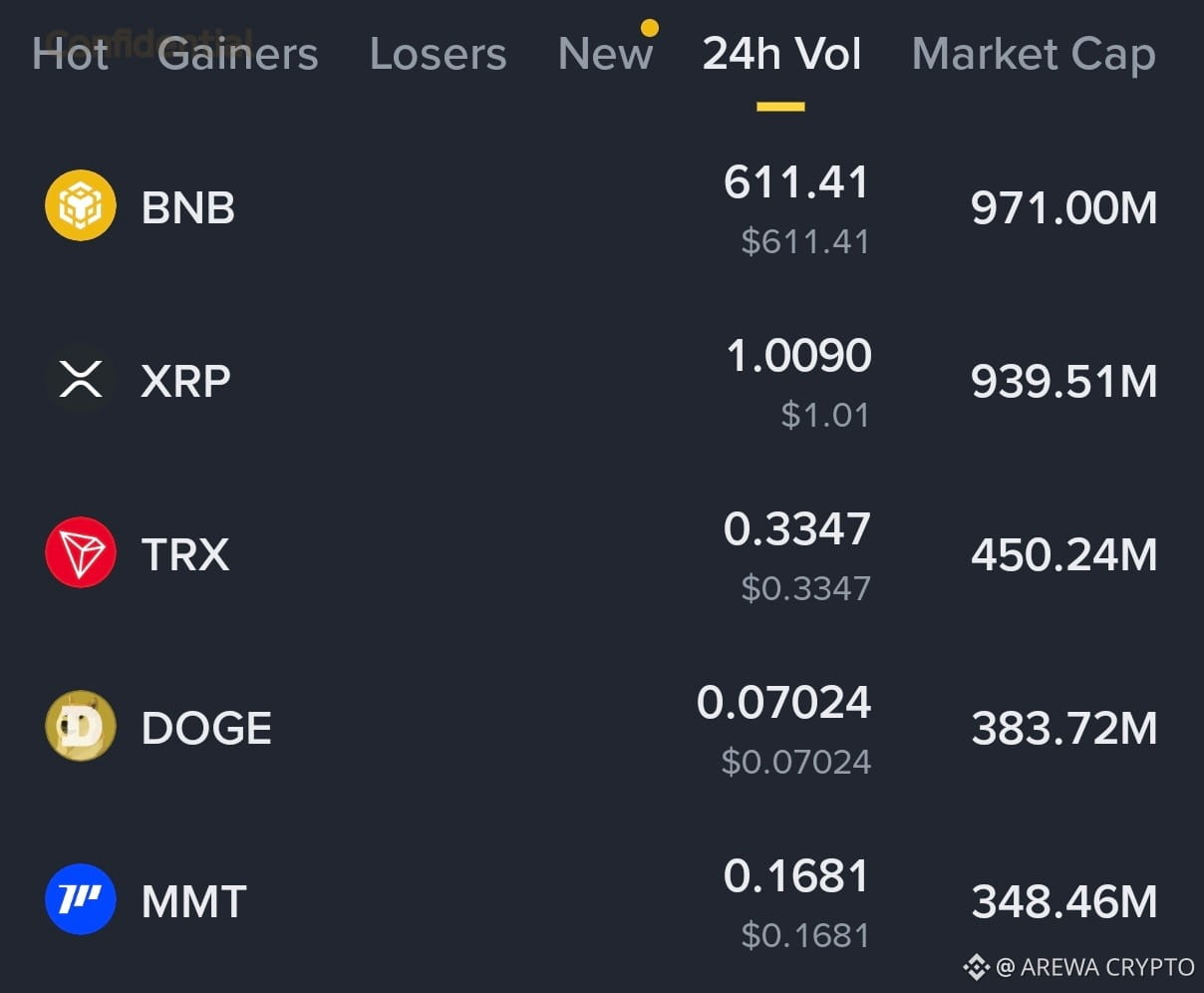
Over the past few days, MMT has experienced a massive increase in trading activity, with reported 24-hour volume surging by roughly 451% to more than $318M during the recent move. At the same time, the token recorded a sharp price rally.
But here's the part I find more interesting…
This isn't happening in isolation.
Binance launched an MMT spot trading campaign with a prize pool of up to 2,000,000 MMT, creating an additional incentive for traders to participate and increasing attention around the token.
And Binance recently completed its BNB Smart Chain integration for MMT, opening deposits and withdrawals through BEP-20.
So we're seeing several catalysts collide:
📈 Huge trading volume
🔥 Increased trader attention
🏆 Binance trading incentives
🔗 Expanded BNB Chain accessibility
However, this is exactly where I become cautious.
High volume doesn't automatically mean “BUY.”
Sometimes huge volume confirms genuine interest. Other times, it represents short-term speculation, aggressive traders rotating in and out, or simply a campaign-driven surge.
For me, the question isn't:
“How high can $MMT go?”
The better question is:
“Can this volume remain after the excitement cools down?”
If volume stays elevated while price structure remains healthy, that could be a signal worth watching.
If volume disappears and price starts losing key support, the story could change quickly.
I'm watching $MMT closely. 👀
Do you think this volume is the beginning of a bigger move, or just Binance campaign-driven hype?
👇 Bullish or Bearish on $MMT?
#MMT #Momentum #Binance #Crypto #Altcoins #Trading
Something interesting is happening around $MMT (Momentum) on Binance.
Over the past few days, MMT has experienced a massive increase in trading activity, with reported 24-hour volume surging by roughly 451% to more than $318M during the recent move. At the same time, the token recorded a sharp price rally.
But here's the part I find more interesting…
This isn't happening in isolation.
Binance launched an MMT spot trading campaign with a prize pool of up to 2,000,000 MMT, creating an additional incentive for traders to participate and increasing attention around the token.
And Binance recently completed its BNB Smart Chain integration for MMT, opening deposits and withdrawals through BEP-20.
So we're seeing several catalysts collide:
📈 Huge trading volume
🔥 Increased trader attention
🏆 Binance trading incentives
🔗 Expanded BNB Chain accessibility
However, this is exactly where I become cautious.
High volume doesn't automatically mean “BUY.”
Sometimes huge volume confirms genuine interest. Other times, it represents short-term speculation, aggressive traders rotating in and out, or simply a campaign-driven surge.
For me, the question isn't:
“How high can $MMT go?”
The better question is:
“Can this volume remain after the excitement cools down?”
If volume stays elevated while price structure remains healthy, that could be a signal worth watching.
If volume disappears and price starts losing key support, the story could change quickly.
I'm watching $MMT closely. 👀
Do you think this volume is the beginning of a bigger move, or just Binance campaign-driven hype?
👇 Bullish or Bearish on $MMT?
#MMT #Momentum #Binance #Crypto #Altcoins #Trading
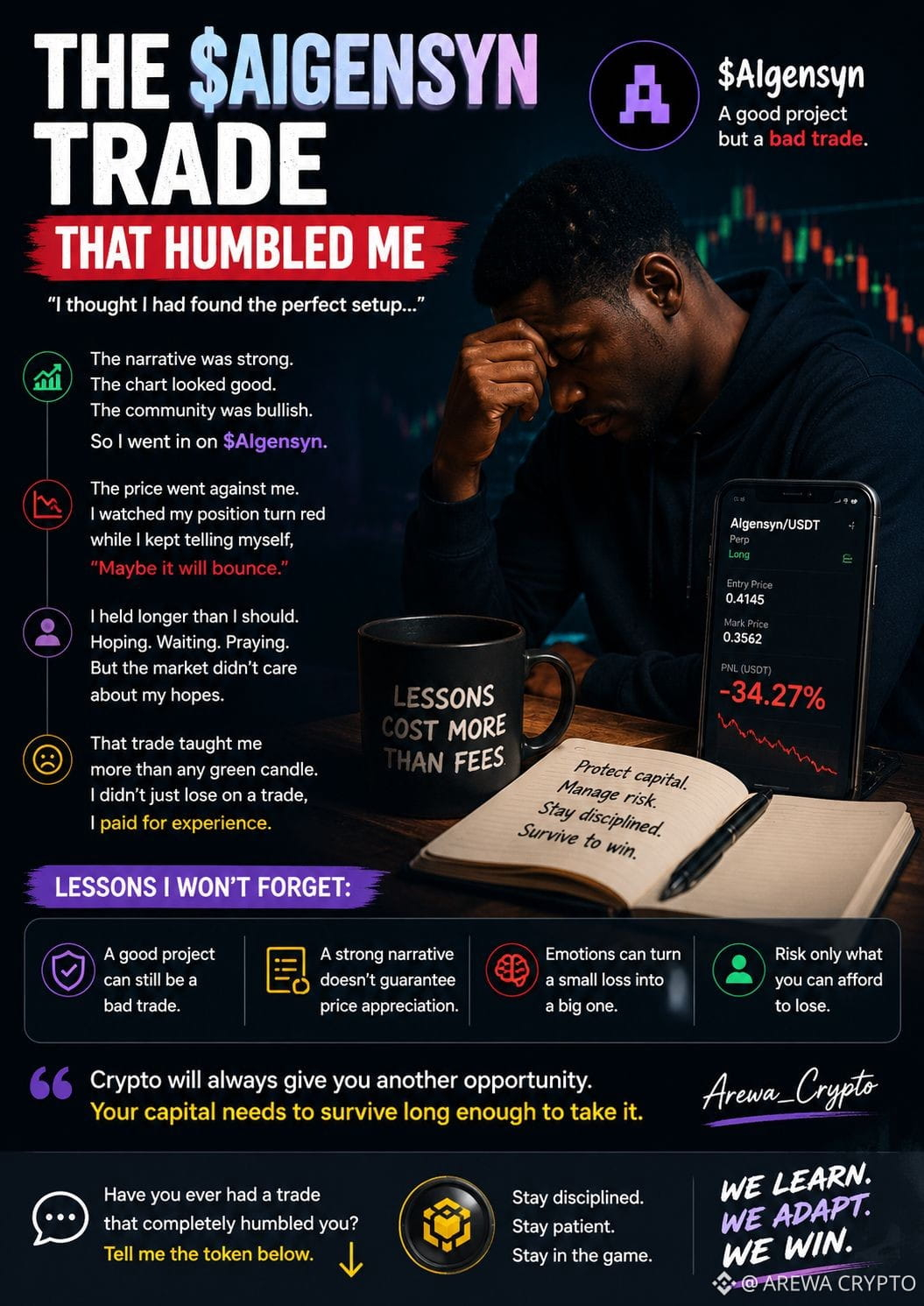
THE $AIGENSYN TRADE THAT HUMBLED ME 😔📉
I thought I had found the perfect setup.
The chart looked interesting. The narrative was strong, the community was active, and I convinced myself:
“This could be the one.”
So I entered $AIgensyn.
At that moment, I wasn't thinking about what could go wrong. I was thinking about how much profit I could make if the price moved in my direction.
Then crypto did what crypto does best…
It humbled me.
The trade went against me.
I watched my position turn red while I kept telling myself:
“Maybe it will bounce.”
“Let me wait a little longer.”
“Buyers will come back.”
But sometimes the hardest part of trading isn't knowing when to enter.
It's knowing when you're wrong.
That $AIgensyn is one of the trade that taught me some lessons I'll never forget:
📌 A good project can still be a bad trade.
📌 A strong narrative doesn't guarantee price appreciation.
📌 Being bullish doesn't mean the market has to agree with you.
📌 And emotions can turn a small loss into a much bigger one.
I've had winning trades, but honestly, some of my biggest lessons came from the losing ones.
When you're winning, you feel like a genius.
When you're losing, the market reminds you that you're still a student.
That's what $AIgensyn did to me.
I didn't just lose on a trade.
I paid for experience.
Now I remind myself before every entry:
Don't chase because you're afraid of missing the pump.
Don't hold blindly because you don't want to accept a loss.
And never risk more than you can afford to lose.
Crypto will always create another opportunity.
Your capital needs to survive long enough to take it. 🧠
Have you ever had a trade that completely humbled you?
Tell me the token below. 👇
#AIgensyn #Crypto #CryptoTrading #Trading #Binance #Web3
I thought I had found the perfect setup.
The chart looked interesting. The narrative was strong, the community was active, and I convinced myself:
“This could be the one.”
So I entered $AIgensyn.
At that moment, I wasn't thinking about what could go wrong. I was thinking about how much profit I could make if the price moved in my direction.
Then crypto did what crypto does best…
It humbled me.
The trade went against me.
I watched my position turn red while I kept telling myself:
“Maybe it will bounce.”
“Let me wait a little longer.”
“Buyers will come back.”
But sometimes the hardest part of trading isn't knowing when to enter.
It's knowing when you're wrong.
That $AIgensyn is one of the trade that taught me some lessons I'll never forget:
📌 A good project can still be a bad trade.
📌 A strong narrative doesn't guarantee price appreciation.
📌 Being bullish doesn't mean the market has to agree with you.
📌 And emotions can turn a small loss into a much bigger one.
I've had winning trades, but honestly, some of my biggest lessons came from the losing ones.
When you're winning, you feel like a genius.
When you're losing, the market reminds you that you're still a student.
That's what $AIgensyn did to me.
I didn't just lose on a trade.
I paid for experience.
Now I remind myself before every entry:
Don't chase because you're afraid of missing the pump.
Don't hold blindly because you don't want to accept a loss.
And never risk more than you can afford to lose.
Crypto will always create another opportunity.
Your capital needs to survive long enough to take it. 🧠
Have you ever had a trade that completely humbled you?
Tell me the token below. 👇
#AIgensyn #Crypto #CryptoTrading #Trading #Binance #Web3
Log in to explore more content