
Ahmady20
10 Posts
Ahmady20
Report
Block User
Web3 marketer||Content writer||Ambassador||Blockchain enthusiast||Crypto trader||CM||MOD
Open Trade
3.6 Years
7 Following
0 Followers
0 Liked
Posts
Portfolio
·
--
Article
The Future of DeFi Is Chain-Agnostic: How STONfi Is Simplifying Cross-Chain FinanceThe Future of DeFi Is Chain-Agnostic: How STONfi Is Simplifying Cross-Chain Finance
"Technology reaches its highest potential when complexity disappears for the user."
For years, decentralized finance has promised an open, permissionless financial system. Yet one challenge continues to stand in the way of mainstream adoption: fragmentation.
Every blockchain brings new opportunities, but it also introduces new wallets, bridges, interfaces, and liquidity pools. Instead of creating a unified financial ecosystem, users often find themselves navigating disconnected networks.
The next chapter of DeFi won't be defined by launching another blockchain. It will be defined by making every blockchain work together seamlessly.
That is exactly the direction @stonfi is taking.
Community First, Growth Second
Technology alone doesn't build successful ecosystems. Communities do.
The Stonbassadors program continues to demonstrate how empowering creators can accelerate adoption while educating users across the Web3 space.
June highlighted another impressive month of community-driven growth.
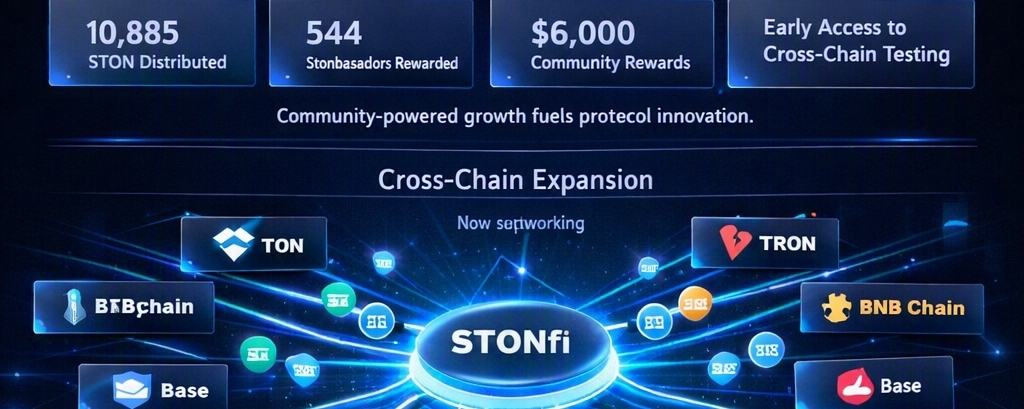
The program distributed 10,885 STON, worth approximately $6,000, to 544 contributors who consistently created educational content about STONfi.
Participants also gained early access to test cross-chain swaps before their official release, allowing valuable community feedback to shape the product before launch.
To further improve content quality, STONfi introduced a community-created footage kit, making it easier for creators to produce engaging visual content while personalized feedback helps contributors continuously improve.
This approach transforms community members into ecosystem builders rather than passive supporters.
Connecting TON and TRON
Perhaps the most significant milestone was the launch of TRON cross-chain swaps on STONfi.
With this integration, users can seamlessly move supported stablecoins between TON, TRON, and several major EVM ecosystems through a single self-custodial experience.
Supported networks now include:
🔹 TON
🔹 TRON
🔹 Ethereum
🔹 BNB Chain
🔹 Base
🔹 Avalanche
🔹 Arbitrum
🔹 Polygon
🔹 Robinhood Chain
Instead of navigating multiple bridges or exchanging assets through several platforms, users complete everything within one streamlined flow.
This represents a major improvement in both convenience and accessibility.
Omniston: The Infrastructure Behind the Experience
Every seamless user experience depends on powerful infrastructure operating behind the scenes.
For STONfi, that infrastructure is Omniston.
Rather than simply routing transactions, Omniston coordinates every stage of the cross-chain process—from obtaining the best quote to final settlement.
Before confirming a transaction, users know exactly how much they will receive.
There are no unexpected outcomes after execution.
Most transactions are completed within 15–40 seconds, delivering a fast, transparent, and predictable experience while maintaining full self-custody of user assets.
This is the type of infrastructure required for cross-chain finance to become accessible to everyday users.
Better Decisions Through Better Tools
Access to liquidity is only one part of successful DeFi participation.
Users also need reliable data to evaluate opportunities and manage risk.
STONfi addresses this by offering several practical tools designed for liquidity providers and DeFi participants.
The APR Calculator allows users to compare simple and compound returns over different investment periods.
STONfi Pools Updates provide daily snapshots of the platform's highest-performing liquidity pools directly through Telegram.
The Impermanent Loss Calculator helps liquidity providers estimate how changing token prices could affect their positions compared to simply holding their assets.
While these tools provide valuable insights, they reinforce an essential principle of decentralized finance.
No calculator replaces independent research.
Successful investing always begins with understanding risk.
Building Toward Invisible Cross-Chain Finance
Cross-chain technology has traditionally been viewed as a technical feature.
Increasingly, it is becoming a user experience problem.
Users don't want to think about bridges, routes, or blockchain compatibility.
They simply want transactions to work quickly, securely, and transparently.
Every new network integrated into STONfi expands available liquidity while reducing the complexity users face when moving capital across ecosystems.
The long-term objective isn't simply connecting more chains.
It's making the concept of "cross-chain" almost invisible.
When users stop thinking about which blockchain they're using, decentralized finance will have taken a significant step toward mainstream adoption.
Final Thoughts
"The strongest infrastructure is the one users never have to think about."
STONfi's recent progress reflects a broader shift occurring across Web3.
Community incentives, seamless cross-chain infrastructure, transparent execution, and practical DeFi tools are converging to create an ecosystem that prioritizes usability without compromising decentralization.
As TON, TRON, and other blockchain ecosystems become increasingly interconnected, the future of DeFi will belong to platforms capable of removing friction rather than adding complexity.
@stonfi is steadily moving in that direction—one integration, one innovation, and one community contribution at a time.
#STONfi #TON
The Future of DeFi Is Chain-Agnostic: How STONfi Is Simplifying Cross-Chain Finance
The Future of DeFi Is Chain-Agnostic: How STONfi Is Simplifying Cross-Chain Finance
"Technology reaches its highest potential when complexity disappears for the user."
For years, decentralized finance has promised an open, permissionless financial system. Yet one challenge continues to stand in the way of mainstream adoption: fragmentation.
Every blockchain brings new opportunities, but it also introduces new wallets, bridges, interfaces, and liquidity pools. Instead of creating a unified financial ecosystem, users often find themselves navigating disconnected networks.
The next chapter of DeFi won't be defined by launching another blockchain. It will be defined by making every blockchain work together seamlessly.
That is exactly the direction @STONfi DEX is taking.
Community First, Growth Second
Technology alone doesn't build successful ecosystems. Communities do.
The Stonbassadors program continues to demonstrate how empowering creators can accelerate adoption while educating users across the Web3 space.
June highlighted another impressive month of community-driven growth.
The program distributed 10,885 STON, worth approximately $6,000, to 544 contributors who consistently created educational content about STONfi.
Participants also gained early access to test cross-chain swaps before their official release, allowing valuable community feedback to shape the product before launch.
To further improve content quality, STONfi introduced a community-created footage kit, making it easier for creators to produce engaging visual content while personalized feedback helps contributors continuously improve.
This approach transforms community members into ecosystem builders rather than passive supporters.
Connecting TON and TRON
Perhaps the most significant milestone was the launch of TRON cross-chain swaps on STONfi.
With this integration, users can seamlessly move supported stablecoins between TON, TRON, and several major EVM ecosystems through a single self-custodial experience.
Supported networks now include:
🔹 TON
🔹 TRON
🔹 Ethereum
🔹 BNB Chain
🔹 Base
🔹 Avalanche
🔹 Arbitrum
🔹 Polygon
🔹 Robinhood Chain
Instead of navigating multiple bridges or exchanging assets through several platforms, users complete everything within one streamlined flow.
This represents a major improvement in both convenience and accessibility.
Omniston: The Infrastructure Behind the Experience
Every seamless user experience depends on powerful infrastructure operating behind the scenes.
For STONfi, that infrastructure is Omniston.
Rather than simply routing transactions, Omniston coordinates every stage of the cross-chain process—from obtaining the best quote to final settlement.
Before confirming a transaction, users know exactly how much they will receive.
There are no unexpected outcomes after execution.
Most transactions are completed within 15–40 seconds, delivering a fast, transparent, and predictable experience while maintaining full self-custody of user assets.
This is the type of infrastructure required for cross-chain finance to become accessible to everyday users.
Better Decisions Through Better Tools
Access to liquidity is only one part of successful DeFi participation.
Users also need reliable data to evaluate opportunities and manage risk.
STONfi addresses this by offering several practical tools designed for liquidity providers and DeFi participants.
The APR Calculator allows users to compare simple and compound returns over different investment periods.
STONfi Pools Updates provide daily snapshots of the platform's highest-performing liquidity pools directly through Telegram.
The Impermanent Loss Calculator helps liquidity providers estimate how changing token prices could affect their positions compared to simply holding their assets.
While these tools provide valuable insights, they reinforce an essential principle of decentralized finance.
No calculator replaces independent research.
Successful investing always begins with understanding risk.
Building Toward Invisible Cross-Chain Finance
Cross-chain technology has traditionally been viewed as a technical feature.
Increasingly, it is becoming a user experience problem.
Users don't want to think about bridges, routes, or blockchain compatibility.
They simply want transactions to work quickly, securely, and transparently.
Every new network integrated into STONfi expands available liquidity while reducing the complexity users face when moving capital across ecosystems.
The long-term objective isn't simply connecting more chains.
It's making the concept of "cross-chain" almost invisible.
When users stop thinking about which blockchain they're using, decentralized finance will have taken a significant step toward mainstream adoption.
Final Thoughts
"The strongest infrastructure is the one users never have to think about."
STONfi's recent progress reflects a broader shift occurring across Web3.
Community incentives, seamless cross-chain infrastructure, transparent execution, and practical DeFi tools are converging to create an ecosystem that prioritizes usability without compromising decentralization.
As TON, TRON, and other blockchain ecosystems become increasingly interconnected, the future of DeFi will belong to platforms capable of removing friction rather than adding complexity.
@STONfi DEX is steadily moving in that direction—one integration, one innovation, and one community contribution at a time.
#STONfi #TON
"Technology reaches its highest potential when complexity disappears for the user."
For years, decentralized finance has promised an open, permissionless financial system. Yet one challenge continues to stand in the way of mainstream adoption: fragmentation.
Every blockchain brings new opportunities, but it also introduces new wallets, bridges, interfaces, and liquidity pools. Instead of creating a unified financial ecosystem, users often find themselves navigating disconnected networks.
The next chapter of DeFi won't be defined by launching another blockchain. It will be defined by making every blockchain work together seamlessly.
That is exactly the direction @STONfi DEX is taking.
Community First, Growth Second
Technology alone doesn't build successful ecosystems. Communities do.
The Stonbassadors program continues to demonstrate how empowering creators can accelerate adoption while educating users across the Web3 space.
June highlighted another impressive month of community-driven growth.
The program distributed 10,885 STON, worth approximately $6,000, to 544 contributors who consistently created educational content about STONfi.
Participants also gained early access to test cross-chain swaps before their official release, allowing valuable community feedback to shape the product before launch.
To further improve content quality, STONfi introduced a community-created footage kit, making it easier for creators to produce engaging visual content while personalized feedback helps contributors continuously improve.
This approach transforms community members into ecosystem builders rather than passive supporters.
Connecting TON and TRON
Perhaps the most significant milestone was the launch of TRON cross-chain swaps on STONfi.
With this integration, users can seamlessly move supported stablecoins between TON, TRON, and several major EVM ecosystems through a single self-custodial experience.
Supported networks now include:
🔹 TON
🔹 TRON
🔹 Ethereum
🔹 BNB Chain
🔹 Base
🔹 Avalanche
🔹 Arbitrum
🔹 Polygon
🔹 Robinhood Chain
Instead of navigating multiple bridges or exchanging assets through several platforms, users complete everything within one streamlined flow.
This represents a major improvement in both convenience and accessibility.
Omniston: The Infrastructure Behind the Experience
Every seamless user experience depends on powerful infrastructure operating behind the scenes.
For STONfi, that infrastructure is Omniston.
Rather than simply routing transactions, Omniston coordinates every stage of the cross-chain process—from obtaining the best quote to final settlement.
Before confirming a transaction, users know exactly how much they will receive.
There are no unexpected outcomes after execution.
Most transactions are completed within 15–40 seconds, delivering a fast, transparent, and predictable experience while maintaining full self-custody of user assets.
This is the type of infrastructure required for cross-chain finance to become accessible to everyday users.
Better Decisions Through Better Tools
Access to liquidity is only one part of successful DeFi participation.
Users also need reliable data to evaluate opportunities and manage risk.
STONfi addresses this by offering several practical tools designed for liquidity providers and DeFi participants.
The APR Calculator allows users to compare simple and compound returns over different investment periods.
STONfi Pools Updates provide daily snapshots of the platform's highest-performing liquidity pools directly through Telegram.
The Impermanent Loss Calculator helps liquidity providers estimate how changing token prices could affect their positions compared to simply holding their assets.
While these tools provide valuable insights, they reinforce an essential principle of decentralized finance.
No calculator replaces independent research.
Successful investing always begins with understanding risk.
Building Toward Invisible Cross-Chain Finance
Cross-chain technology has traditionally been viewed as a technical feature.
Increasingly, it is becoming a user experience problem.
Users don't want to think about bridges, routes, or blockchain compatibility.
They simply want transactions to work quickly, securely, and transparently.
Every new network integrated into STONfi expands available liquidity while reducing the complexity users face when moving capital across ecosystems.
The long-term objective isn't simply connecting more chains.
It's making the concept of "cross-chain" almost invisible.
When users stop thinking about which blockchain they're using, decentralized finance will have taken a significant step toward mainstream adoption.
Final Thoughts
"The strongest infrastructure is the one users never have to think about."
STONfi's recent progress reflects a broader shift occurring across Web3.
Community incentives, seamless cross-chain infrastructure, transparent execution, and practical DeFi tools are converging to create an ecosystem that prioritizes usability without compromising decentralization.
As TON, TRON, and other blockchain ecosystems become increasingly interconnected, the future of DeFi will belong to platforms capable of removing friction rather than adding complexity.
@STONfi DEX is steadily moving in that direction—one integration, one innovation, and one community contribution at a time.
#STONfi #TON
99
·
--
Article
Why STONfi Is Emerging as One of TON's Most Important DeFi BuildersWhy STONfi Is Emerging as One of TON's Most Important DeFi Builders
The decentralized finance industry is entering a new phase. The conversation is no longer centered on who has the highest TVL or the loudest marketing campaign. Instead, success is increasingly measured by usability, interoperability, education, and consistent product execution.
@stonfi is positioning itself at the center of that evolution.
Rather than focusing solely on growth metrics, the protocol continues to expand the infrastructure that makes decentralized finance more accessible for both newcomers and experienced users.
Cross-Chain Is Becoming the New Standard
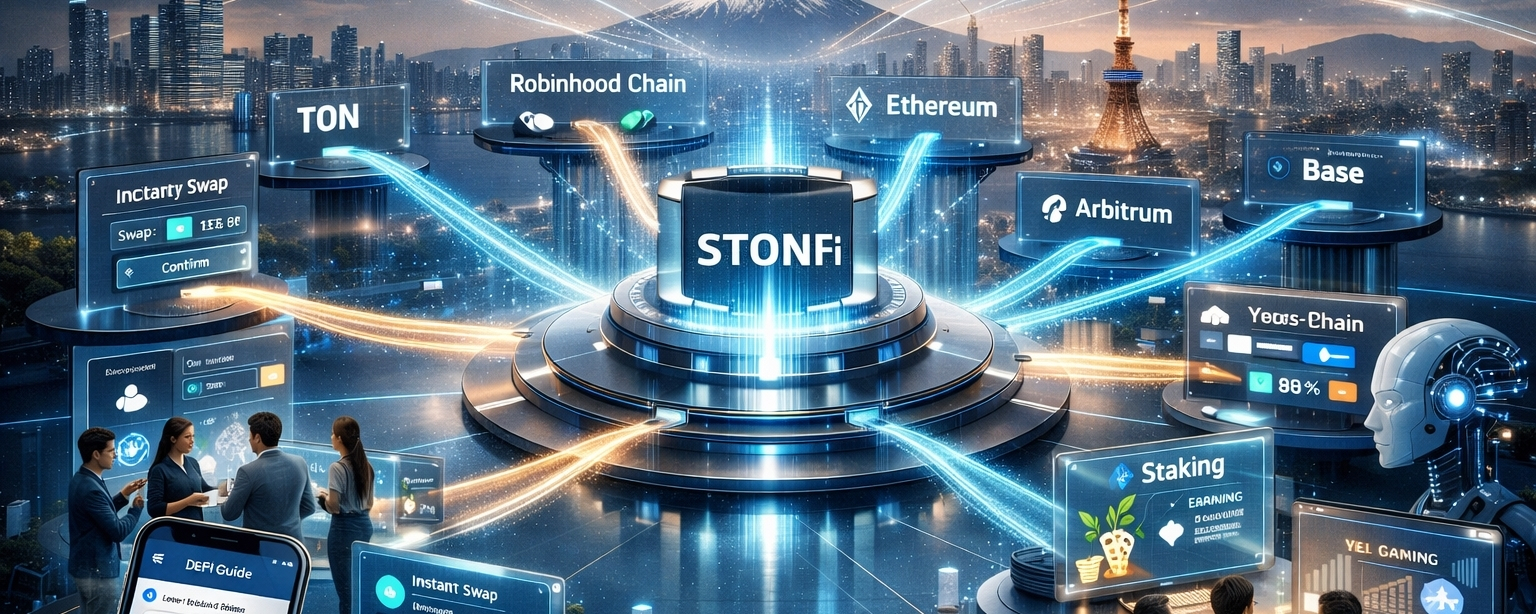
One of STONfi's latest milestones is its integration with Robinhood Chain, allowing users to move USDG across TON and multiple supported networks through a unified experience.
Powered by Omniston, the process simplifies what has traditionally been one of DeFi's biggest pain points. Users receive a transparent quote before confirming their transaction, while most transfers are completed within 15 to 40 seconds.
As blockchain ecosystems become increasingly interconnected, seamless cross-chain infrastructure is no longer a luxury. It is becoming a necessity.
Real Adoption Is Measured by Usage
Strong infrastructure is valuable only if people actually use it.
STONfi's June performance demonstrates growing ecosystem engagement:
🔹More than 882,000 swaps
🔹Over 87,000 active wallets
These figures represent real users interacting with decentralized finance on TON every day. Every swap reflects increasing confidence in the protocol and growing activity within the broader ecosystem.
Education Drives Long-Term Adoption
Technology alone cannot bring millions of users into Web3.
Education is equally important.
STONfi recently introduced STONfi.pools, an interactive Telegram learning experience that allows users to simulate swaps, liquidity provision, farming, and staking without connecting a wallet or risking real assets.
For newcomers, this creates a safe environment to understand DeFi before committing capital. Removing fear and complexity is one of the most effective ways to accelerate adoption.
Building Beyond Products
STONfi is also expanding its presence beyond the blockchain itself.
The team's participation in Japan Blockchain Week 2026, including WebX Asia and the AI Economic Forum Tokyo, highlights its commitment to engaging developers, founders, investors, and industry leaders from around the world.
During the event, Ethan Clime, Head of DevRel at STONfi Dev, will discuss how artificial intelligence and Web3 are beginning to reshape one another.
As AI-powered applications continue to evolve, conversations like these will influence the next generation of decentralized infrastructure.
The Bigger Picture
Looking across these developments, a clear strategy emerges.
STONfi is simultaneously:
🔹 Expanding cross-chain interoperability.
🔹 Improving user experience.
🔹 Investing in education.
🔹 Supporting developers.
🔹 Strengthening global ecosystem partnerships.
This combination creates a stronger foundation than chasing short-term hype cycles.
Final Thoughts
The next wave of DeFi growth will not be driven solely by speculation.
It will be driven by protocols that remove friction, simplify onboarding, educate users, and build infrastructure capable of supporting millions of transactions across multiple blockchain ecosystems.
STONfi's recent progress suggests it is focused on exactly that mission.
As Web3 continues to mature, the projects that consistently build useful products will define the industry's future.
What do you believe will be the biggest catalyst for mainstream DeFi adoption over the next few years: seamless cross-chain interoperability, AI integration, better user education, or something else? Share your thoughts below and join the conversation.
#BTC #TON #STONfi
Why STONfi Is Emerging as One of TON's Most Important DeFi Builders
Why STONfi Is Emerging as One of TON's Most Important DeFi Builders
The decentralized finance industry is entering a new phase. The conversation is no longer centered on who has the highest TVL or the loudest marketing campaign. Instead, success is increasingly measured by usability, interoperability, education, and consistent product execution.
@STONfi DEX is positioning itself at the center of that evolution.
Rather than focusing solely on growth metrics, the protocol continues to expand the infrastructure that makes decentralized finance more accessible for both newcomers and experienced users.
Cross-Chain Is Becoming the New Standard
One of STONfi's latest milestones is its integration with Robinhood Chain, allowing users to move USDG across TON and multiple supported networks through a unified experience.
Powered by Omniston, the process simplifies what has traditionally been one of DeFi's biggest pain points. Users receive a transparent quote before confirming their transaction, while most transfers are completed within 15 to 40 seconds.
As blockchain ecosystems become increasingly interconnected, seamless cross-chain infrastructure is no longer a luxury. It is becoming a necessity.
Real Adoption Is Measured by Usage
Strong infrastructure is valuable only if people actually use it.
STONfi's June performance demonstrates growing ecosystem engagement:
🔹More than 882,000 swaps
🔹Over 87,000 active wallets
These figures represent real users interacting with decentralized finance on TON every day. Every swap reflects increasing confidence in the protocol and growing activity within the broader ecosystem.
Education Drives Long-Term Adoption
Technology alone cannot bring millions of users into Web3.
Education is equally important.
STONfi recently introduced STONfi.pools, an interactive Telegram learning experience that allows users to simulate swaps, liquidity provision, farming, and staking without connecting a wallet or risking real assets.
For newcomers, this creates a safe environment to understand DeFi before committing capital. Removing fear and complexity is one of the most effective ways to accelerate adoption.
Building Beyond Products
STONfi is also expanding its presence beyond the blockchain itself.
The team's participation in Japan Blockchain Week 2026, including WebX Asia and the AI Economic Forum Tokyo, highlights its commitment to engaging developers, founders, investors, and industry leaders from around the world.
During the event, Ethan Clime, Head of DevRel at STONfi Dev, will discuss how artificial intelligence and Web3 are beginning to reshape one another.
As AI-powered applications continue to evolve, conversations like these will influence the next generation of decentralized infrastructure.
The Bigger Picture
Looking across these developments, a clear strategy emerges.
STONfi is simultaneously:
🔹 Expanding cross-chain interoperability.
🔹 Improving user experience.
🔹 Investing in education.
🔹 Supporting developers.
🔹 Strengthening global ecosystem partnerships.
This combination creates a stronger foundation than chasing short-term hype cycles.
Final Thoughts
The next wave of DeFi growth will not be driven solely by speculation.
It will be driven by protocols that remove friction, simplify onboarding, educate users, and build infrastructure capable of supporting millions of transactions across multiple blockchain ecosystems.
STONfi's recent progress suggests it is focused on exactly that mission.
As Web3 continues to mature, the projects that consistently build useful products will define the industry's future.
What do you believe will be the biggest catalyst for mainstream DeFi adoption over the next few years: seamless cross-chain interoperability, AI integration, better user education, or something else? Share your thoughts below and join the conversation.
#BTC #TON #STONfi
The decentralized finance industry is entering a new phase. The conversation is no longer centered on who has the highest TVL or the loudest marketing campaign. Instead, success is increasingly measured by usability, interoperability, education, and consistent product execution.
@STONfi DEX is positioning itself at the center of that evolution.
Rather than focusing solely on growth metrics, the protocol continues to expand the infrastructure that makes decentralized finance more accessible for both newcomers and experienced users.
Cross-Chain Is Becoming the New Standard
One of STONfi's latest milestones is its integration with Robinhood Chain, allowing users to move USDG across TON and multiple supported networks through a unified experience.
Powered by Omniston, the process simplifies what has traditionally been one of DeFi's biggest pain points. Users receive a transparent quote before confirming their transaction, while most transfers are completed within 15 to 40 seconds.
As blockchain ecosystems become increasingly interconnected, seamless cross-chain infrastructure is no longer a luxury. It is becoming a necessity.
Real Adoption Is Measured by Usage
Strong infrastructure is valuable only if people actually use it.
STONfi's June performance demonstrates growing ecosystem engagement:
🔹More than 882,000 swaps
🔹Over 87,000 active wallets
These figures represent real users interacting with decentralized finance on TON every day. Every swap reflects increasing confidence in the protocol and growing activity within the broader ecosystem.
Education Drives Long-Term Adoption
Technology alone cannot bring millions of users into Web3.
Education is equally important.
STONfi recently introduced STONfi.pools, an interactive Telegram learning experience that allows users to simulate swaps, liquidity provision, farming, and staking without connecting a wallet or risking real assets.
For newcomers, this creates a safe environment to understand DeFi before committing capital. Removing fear and complexity is one of the most effective ways to accelerate adoption.
Building Beyond Products
STONfi is also expanding its presence beyond the blockchain itself.
The team's participation in Japan Blockchain Week 2026, including WebX Asia and the AI Economic Forum Tokyo, highlights its commitment to engaging developers, founders, investors, and industry leaders from around the world.
During the event, Ethan Clime, Head of DevRel at STONfi Dev, will discuss how artificial intelligence and Web3 are beginning to reshape one another.
As AI-powered applications continue to evolve, conversations like these will influence the next generation of decentralized infrastructure.
The Bigger Picture
Looking across these developments, a clear strategy emerges.
STONfi is simultaneously:
🔹 Expanding cross-chain interoperability.
🔹 Improving user experience.
🔹 Investing in education.
🔹 Supporting developers.
🔹 Strengthening global ecosystem partnerships.
This combination creates a stronger foundation than chasing short-term hype cycles.
Final Thoughts
The next wave of DeFi growth will not be driven solely by speculation.
It will be driven by protocols that remove friction, simplify onboarding, educate users, and build infrastructure capable of supporting millions of transactions across multiple blockchain ecosystems.
STONfi's recent progress suggests it is focused on exactly that mission.
As Web3 continues to mature, the projects that consistently build useful products will define the industry's future.
What do you believe will be the biggest catalyst for mainstream DeFi adoption over the next few years: seamless cross-chain interoperability, AI integration, better user education, or something else? Share your thoughts below and join the conversation.
#BTC #TON #STONfi
93
·
--
Article
The Future of Web3 Will Be Built on Infrastructure, Not HypeThe Future of Web3 Will Be Built on Infrastructure, Not Hype
For years, the crypto industry has been dominated by discussions around token prices, market cycles, and speculative narratives. While these topics generate attention, they rarely create lasting adoption.
The real transformation is happening beneath the surface.
As Web3 matures, infrastructure—not speculation—is becoming the industry's greatest competitive advantage.
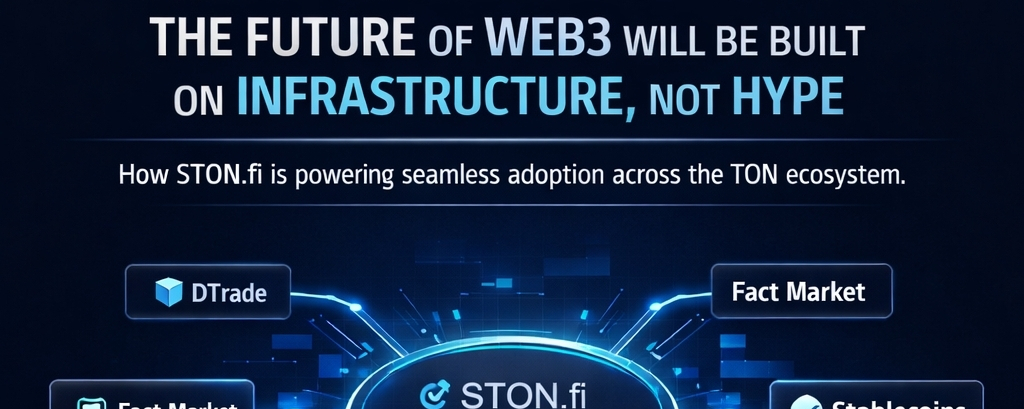
A clear example is @stonfi which continues expanding the TON ecosystem through developer-focused infrastructure. Rather than requiring every project to build swap mechanisms and liquidity solutions from scratch, STON.fi provides its SDK, Omniston, and aggregated liquidity, enabling developers to launch faster and deliver seamless on-chain experiences.
Recent integrations with DTrade and Fact Market highlight this evolution. Instead of solving the same infrastructure challenges repeatedly, builders can integrate proven tools and focus on creating products that users actually need. This approach shortens development cycles, improves efficiency, and accelerates innovation across the ecosystem.
The same principle is reshaping digital payments.
Stablecoins are rapidly becoming the preferred rails for cross-border settlements, contractor payroll, business transactions, and global payouts. Their growing adoption is driven by real-world utility, offering faster settlements, lower costs, and greater accessibility than many traditional payment systems.
However, stablecoins alone are not enough.
Without reliable liquidity, intuitive developer tools, and seamless user experiences, even the most widely adopted digital assets cannot deliver mass adoption.
This is where infrastructure providers become indispensable.
STON.fi's $7.5B+ in all-time swap volume reflects more than an impressive milestone. It represents consistent execution, growing developer confidence, and an ecosystem built on reliability. Combined with expanding integrations and developer-focused solutions, STON.fi is helping create the foundation for scalable decentralized applications on TON.
As blockchain technology becomes increasingly integrated into everyday applications, users shouldn't need to understand bridges, gas fees, routing, or token standards. They should simply complete a transaction while the infrastructure quietly handles the complexity behind the scenes.
That is what real Web3 adoption looks like.
The next generation of industry leaders may not be the projects making the loudest headlines. They will be the infrastructure providers enabling thousands of applications, millions of users, and billions of transactions behind the scenes.
@stonfi is demonstrating that this future is already taking shape within the TON ecosystem.
What do you think will accelerate the next billion Web3 users: stronger infrastructure, better user experience, or wider stablecoin adoption? Share your thoughts in the comments.
#Web3 #STONfi #crypto
The Future of Web3 Will Be Built on Infrastructure, Not Hype
The Future of Web3 Will Be Built on Infrastructure, Not Hype
For years, the crypto industry has been dominated by discussions around token prices, market cycles, and speculative narratives. While these topics generate attention, they rarely create lasting adoption.
The real transformation is happening beneath the surface.
As Web3 matures, infrastructure—not speculation—is becoming the industry's greatest competitive advantage.
A clear example is @STONfi DEX which continues expanding the TON ecosystem through developer-focused infrastructure. Rather than requiring every project to build swap mechanisms and liquidity solutions from scratch, STON.fi provides its SDK, Omniston, and aggregated liquidity, enabling developers to launch faster and deliver seamless on-chain experiences.
Recent integrations with DTrade and Fact Market highlight this evolution. Instead of solving the same infrastructure challenges repeatedly, builders can integrate proven tools and focus on creating products that users actually need. This approach shortens development cycles, improves efficiency, and accelerates innovation across the ecosystem.
The same principle is reshaping digital payments.
Stablecoins are rapidly becoming the preferred rails for cross-border settlements, contractor payroll, business transactions, and global payouts. Their growing adoption is driven by real-world utility, offering faster settlements, lower costs, and greater accessibility than many traditional payment systems.
However, stablecoins alone are not enough.
Without reliable liquidity, intuitive developer tools, and seamless user experiences, even the most widely adopted digital assets cannot deliver mass adoption.
This is where infrastructure providers become indispensable.
STON.fi's $7.5B+ in all-time swap volume reflects more than an impressive milestone. It represents consistent execution, growing developer confidence, and an ecosystem built on reliability. Combined with expanding integrations and developer-focused solutions, STON.fi is helping create the foundation for scalable decentralized applications on TON.
As blockchain technology becomes increasingly integrated into everyday applications, users shouldn't need to understand bridges, gas fees, routing, or token standards. They should simply complete a transaction while the infrastructure quietly handles the complexity behind the scenes.
That is what real Web3 adoption looks like.
The next generation of industry leaders may not be the projects making the loudest headlines. They will be the infrastructure providers enabling thousands of applications, millions of users, and billions of transactions behind the scenes.
@STONfi DEX is demonstrating that this future is already taking shape within the TON ecosystem.
What do you think will accelerate the next billion Web3 users: stronger infrastructure, better user experience, or wider stablecoin adoption? Share your thoughts in the comments.
#Web3 #STONfi #crypto
For years, the crypto industry has been dominated by discussions around token prices, market cycles, and speculative narratives. While these topics generate attention, they rarely create lasting adoption.
The real transformation is happening beneath the surface.
As Web3 matures, infrastructure—not speculation—is becoming the industry's greatest competitive advantage.
A clear example is @STONfi DEX which continues expanding the TON ecosystem through developer-focused infrastructure. Rather than requiring every project to build swap mechanisms and liquidity solutions from scratch, STON.fi provides its SDK, Omniston, and aggregated liquidity, enabling developers to launch faster and deliver seamless on-chain experiences.
Recent integrations with DTrade and Fact Market highlight this evolution. Instead of solving the same infrastructure challenges repeatedly, builders can integrate proven tools and focus on creating products that users actually need. This approach shortens development cycles, improves efficiency, and accelerates innovation across the ecosystem.
The same principle is reshaping digital payments.
Stablecoins are rapidly becoming the preferred rails for cross-border settlements, contractor payroll, business transactions, and global payouts. Their growing adoption is driven by real-world utility, offering faster settlements, lower costs, and greater accessibility than many traditional payment systems.
However, stablecoins alone are not enough.
Without reliable liquidity, intuitive developer tools, and seamless user experiences, even the most widely adopted digital assets cannot deliver mass adoption.
This is where infrastructure providers become indispensable.
STON.fi's $7.5B+ in all-time swap volume reflects more than an impressive milestone. It represents consistent execution, growing developer confidence, and an ecosystem built on reliability. Combined with expanding integrations and developer-focused solutions, STON.fi is helping create the foundation for scalable decentralized applications on TON.
As blockchain technology becomes increasingly integrated into everyday applications, users shouldn't need to understand bridges, gas fees, routing, or token standards. They should simply complete a transaction while the infrastructure quietly handles the complexity behind the scenes.
That is what real Web3 adoption looks like.
The next generation of industry leaders may not be the projects making the loudest headlines. They will be the infrastructure providers enabling thousands of applications, millions of users, and billions of transactions behind the scenes.
@STONfi DEX is demonstrating that this future is already taking shape within the TON ecosystem.
What do you think will accelerate the next billion Web3 users: stronger infrastructure, better user experience, or wider stablecoin adoption? Share your thoughts in the comments.
#Web3 #STONfi #crypto
313
·
--
Article
The Biggest Breakthrough in Web3 Won't Be a New Blockchain—It Will Be InvisibleThe Biggest Breakthrough in Web3 Won't Be a New Blockchain—It Will Be Invisible
The blockchain industry has spent years improving scalability, reducing transaction costs, and increasing throughput. While these milestones have strengthened Web3 infrastructure, one challenge continues to limit mainstream adoption: user experience.
Today's users still navigate multiple wallets, switch networks, manage different gas tokens, and rely on bridges to move assets across ecosystems. For experienced crypto users, these steps may seem routine. For newcomers, they're unnecessary barriers.
The future of Web3 isn't about adding more complexity—it's about removing it.
This is where chain abstraction is reshaping the industry.
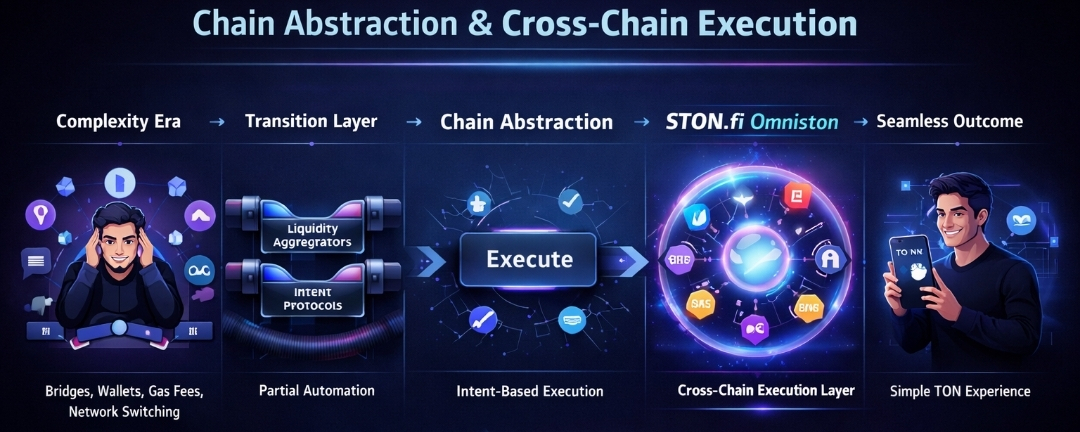
Instead of asking users to understand blockchain architecture, chain abstraction allows them to focus on outcomes while the infrastructure handles execution. Whether swapping assets, providing liquidity, or accessing decentralized applications, users simply interact with the application—not the underlying chains.
The evolution of cross-chain infrastructure reflects this shift. Bridges enabled asset transfers. Liquidity aggregators optimized execution. Intent-based protocols introduced outcome-driven interactions. Now, cross-chain execution layers are taking the next step by coordinating the entire transaction flow behind the scenes.
A strong example of this evolution is @stonfi 's Omniston. Originally developed as a liquidity aggregation protocol on TON, Omniston has grown into a cross-chain execution layer designed to fulfill user intent rather than simply move assets. By coordinating transactions across ecosystems such as Ethereum, Base, Avalanche, Arbitrum, Polygon, and BNB Chain, it reduces friction while preserving self-custody and decentralization.
This shift represents more than a technical upgrade. It creates a foundation for applications that feel as intuitive as traditional internet services while maintaining the transparency and security of decentralized finance.
The future of Web3 won't be defined by who builds the most bridges or supports the most blockchains. It will be defined by the protocols that make blockchain infrastructure virtually invisible, allowing users to focus on outcomes instead of technical processes.
Mass adoption will happen when blockchain becomes a seamless part of the user experience rather than an obstacle to it.
What do you think? Will chain abstraction become the defining innovation of the next Web3 cycle, or is another breakthrough still needed before decentralized technology reaches the next billion users?
#STONfi #Omniston #Web3
The Biggest Breakthrough in Web3 Won't Be a New Blockchain—It Will Be Invisible
The Biggest Breakthrough in Web3 Won't Be a New Blockchain—It Will Be Invisible
The blockchain industry has spent years improving scalability, reducing transaction costs, and increasing throughput. While these milestones have strengthened Web3 infrastructure, one challenge continues to limit mainstream adoption: user experience.
Today's users still navigate multiple wallets, switch networks, manage different gas tokens, and rely on bridges to move assets across ecosystems. For experienced crypto users, these steps may seem routine. For newcomers, they're unnecessary barriers.
The future of Web3 isn't about adding more complexity—it's about removing it.
This is where chain abstraction is reshaping the industry.
Instead of asking users to understand blockchain architecture, chain abstraction allows them to focus on outcomes while the infrastructure handles execution. Whether swapping assets, providing liquidity, or accessing decentralized applications, users simply interact with the application—not the underlying chains.
The evolution of cross-chain infrastructure reflects this shift. Bridges enabled asset transfers. Liquidity aggregators optimized execution. Intent-based protocols introduced outcome-driven interactions. Now, cross-chain execution layers are taking the next step by coordinating the entire transaction flow behind the scenes.
A strong example of this evolution is @STONfi DEX 's Omniston. Originally developed as a liquidity aggregation protocol on TON, Omniston has grown into a cross-chain execution layer designed to fulfill user intent rather than simply move assets. By coordinating transactions across ecosystems such as Ethereum, Base, Avalanche, Arbitrum, Polygon, and BNB Chain, it reduces friction while preserving self-custody and decentralization.
This shift represents more than a technical upgrade. It creates a foundation for applications that feel as intuitive as traditional internet services while maintaining the transparency and security of decentralized finance.
The future of Web3 won't be defined by who builds the most bridges or supports the most blockchains. It will be defined by the protocols that make blockchain infrastructure virtually invisible, allowing users to focus on outcomes instead of technical processes.
Mass adoption will happen when blockchain becomes a seamless part of the user experience rather than an obstacle to it.
What do you think? Will chain abstraction become the defining innovation of the next Web3 cycle, or is another breakthrough still needed before decentralized technology reaches the next billion users?
#STONfi #Omniston #Web3
The blockchain industry has spent years improving scalability, reducing transaction costs, and increasing throughput. While these milestones have strengthened Web3 infrastructure, one challenge continues to limit mainstream adoption: user experience.
Today's users still navigate multiple wallets, switch networks, manage different gas tokens, and rely on bridges to move assets across ecosystems. For experienced crypto users, these steps may seem routine. For newcomers, they're unnecessary barriers.
The future of Web3 isn't about adding more complexity—it's about removing it.
This is where chain abstraction is reshaping the industry.
Instead of asking users to understand blockchain architecture, chain abstraction allows them to focus on outcomes while the infrastructure handles execution. Whether swapping assets, providing liquidity, or accessing decentralized applications, users simply interact with the application—not the underlying chains.
The evolution of cross-chain infrastructure reflects this shift. Bridges enabled asset transfers. Liquidity aggregators optimized execution. Intent-based protocols introduced outcome-driven interactions. Now, cross-chain execution layers are taking the next step by coordinating the entire transaction flow behind the scenes.
A strong example of this evolution is @STONfi DEX 's Omniston. Originally developed as a liquidity aggregation protocol on TON, Omniston has grown into a cross-chain execution layer designed to fulfill user intent rather than simply move assets. By coordinating transactions across ecosystems such as Ethereum, Base, Avalanche, Arbitrum, Polygon, and BNB Chain, it reduces friction while preserving self-custody and decentralization.
This shift represents more than a technical upgrade. It creates a foundation for applications that feel as intuitive as traditional internet services while maintaining the transparency and security of decentralized finance.
The future of Web3 won't be defined by who builds the most bridges or supports the most blockchains. It will be defined by the protocols that make blockchain infrastructure virtually invisible, allowing users to focus on outcomes instead of technical processes.
Mass adoption will happen when blockchain becomes a seamless part of the user experience rather than an obstacle to it.
What do you think? Will chain abstraction become the defining innovation of the next Web3 cycle, or is another breakthrough still needed before decentralized technology reaches the next billion users?
#STONfi #Omniston #Web3
146
·
--
Article
The Invisible Engine Behind TON's Growing DeFi Ecosystem:The Invisible Engine Behind TON's Growing DeFi Ecosystem:
What if the most important innovation in Web3 isn't the application you use, but the infrastructure you never see?
Every successful blockchain ecosystem is built on more than attractive user interfaces and feature-rich decentralized applications. Behind every seamless swap, fast transaction, and frictionless on-chain experience lies an execution layer responsible for routing liquidity, coordinating settlements, and removing complexity from the user journey. As the TON ecosystem continues to expand, Omniston is emerging as one of those foundational infrastructure layers quietly powering the next generation of decentralized applications.
Infrastructure is the backbone of every successful blockchain ecosystem:
Without efficient liquidity routing, reliable execution, and seamless interoperability, even the most innovative applications struggle to deliver a compelling user experience. Users don't want to think about fragmented liquidity, multiple bridges, or complex transaction paths—they simply expect blockchain applications to work.That's where Omniston creates value.
Rather than functioning as another standalone DeFi protocol, Omniston acts as a shared execution layer that connects applications with liquidity across the TON ecosystem, reducing friction for both developers and end users.
Powering Multiple Use Cases Across TON:
Recent integrations demonstrate how Omniston is becoming shared infrastructure instead of powering a single application.
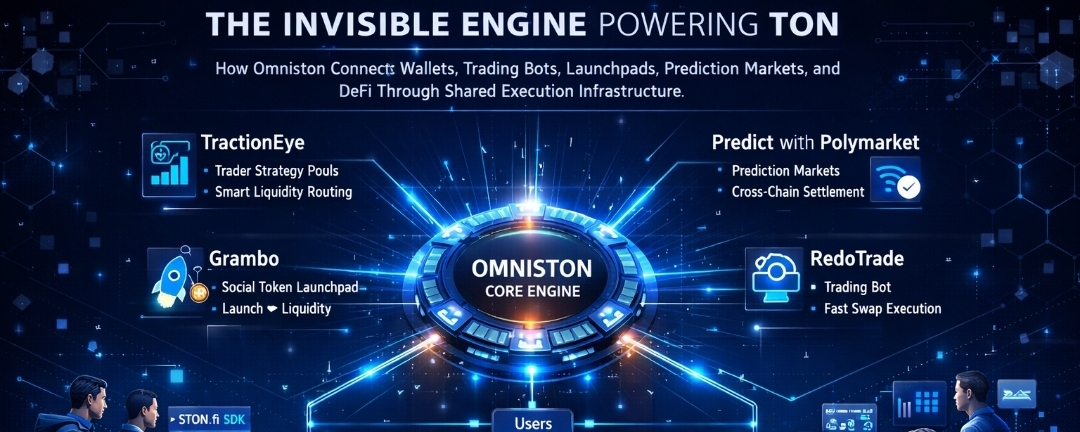
TractionEye leverages Omniston to route swaps across TON liquidity sources, enabling users to participate in trader-managed strategy pools while benefiting from efficient execution and competitive pricing.
Meanwhile, Predict with Polymarket delivers a Telegram-native prediction market experience. Users connect a TON wallet, fund with USDT on TON, and interact with prediction markets while Omniston quietly coordinates cross-chain settlement in the background.
The ecosystem continues expanding through Grambo and RedoTrade:
Grambo enables users to launch and trade memecoins through a social-first experience, while RedoTrade simplifies execution through an integrated trading bot. Although these platforms serve different audiences, they all rely on the same execution infrastructure to provide seamless swaps and efficient liquidity access.
What This Means for Developers:
For developers, shared infrastructure changes the development process.
Instead of investing months building liquidity aggregation, swap routing, and cross-chain execution systems from scratch, builders can integrate the @stonfi SDK and Omniston to access production-ready infrastructure.
This reduces engineering overhead, shortens development cycles, and allows teams to focus on creating innovative products rather than rebuilding backend systems.
As more developers adopt common execution layers, the TON ecosystem becomes increasingly composable. Applications can interoperate more efficiently while benefiting from shared liquidity and standardized execution.
A Better Experience for Users:
Infrastructure improvements may be invisible, but their impact is immediate.
Users benefit from:
🔹 Faster transaction execution
🔹 Better liquidity access
🔹 Reduced cross-chain complexity
🔹 More intuitive decentralized applications
🔹 A smoother and more reliable Web3 experience
These improvements are essential for accelerating mainstream blockchain adoption.
The Bigger Picture:
Every successful technology ecosystem eventually reaches a point where infrastructure becomes more valuable than individual applications.
Cloud computing transformed software development. Payment networks accelerated digital commerce. Likewise, shared blockchain infrastructure is laying the foundation for the next generation of decentralized applications.
Omniston is not simply enabling swaps—it's helping build the execution layer that allows wallets, launchpads, trading bots, prediction markets, and DeFi applications to work together seamlessly.
As adoption grows, the protocols that quietly eliminate friction will become just as valuable as the applications users interact with daily. If the current trajectory continues, Omniston is well positioned to become one of the foundational execution layers driving the next phase of innovation across the TON ecosystem.
#TON #STONfi #Omniston #DeFi
The Invisible Engine Behind TON's Growing DeFi Ecosystem:
The Invisible Engine Behind TON's Growing DeFi Ecosystem:
What if the most important innovation in Web3 isn't the application you use, but the infrastructure you never see?
Every successful blockchain ecosystem is built on more than attractive user interfaces and feature-rich decentralized applications. Behind every seamless swap, fast transaction, and frictionless on-chain experience lies an execution layer responsible for routing liquidity, coordinating settlements, and removing complexity from the user journey. As the TON ecosystem continues to expand, Omniston is emerging as one of those foundational infrastructure layers quietly powering the next generation of decentralized applications.
Infrastructure is the backbone of every successful blockchain ecosystem:
Without efficient liquidity routing, reliable execution, and seamless interoperability, even the most innovative applications struggle to deliver a compelling user experience. Users don't want to think about fragmented liquidity, multiple bridges, or complex transaction paths—they simply expect blockchain applications to work.That's where Omniston creates value.
Rather than functioning as another standalone DeFi protocol, Omniston acts as a shared execution layer that connects applications with liquidity across the TON ecosystem, reducing friction for both developers and end users.
Powering Multiple Use Cases Across TON:
Recent integrations demonstrate how Omniston is becoming shared infrastructure instead of powering a single application.
TractionEye leverages Omniston to route swaps across TON liquidity sources, enabling users to participate in trader-managed strategy pools while benefiting from efficient execution and competitive pricing.
Meanwhile, Predict with Polymarket delivers a Telegram-native prediction market experience. Users connect a TON wallet, fund with USDT on TON, and interact with prediction markets while Omniston quietly coordinates cross-chain settlement in the background.
The ecosystem continues expanding through Grambo and RedoTrade:
Grambo enables users to launch and trade memecoins through a social-first experience, while RedoTrade simplifies execution through an integrated trading bot. Although these platforms serve different audiences, they all rely on the same execution infrastructure to provide seamless swaps and efficient liquidity access.
What This Means for Developers:
For developers, shared infrastructure changes the development process.
Instead of investing months building liquidity aggregation, swap routing, and cross-chain execution systems from scratch, builders can integrate the @STONfi DEX SDK and Omniston to access production-ready infrastructure.
This reduces engineering overhead, shortens development cycles, and allows teams to focus on creating innovative products rather than rebuilding backend systems.
As more developers adopt common execution layers, the TON ecosystem becomes increasingly composable. Applications can interoperate more efficiently while benefiting from shared liquidity and standardized execution.
A Better Experience for Users:
Infrastructure improvements may be invisible, but their impact is immediate.
Users benefit from:
🔹 Faster transaction execution
🔹 Better liquidity access
🔹 Reduced cross-chain complexity
🔹 More intuitive decentralized applications
🔹 A smoother and more reliable Web3 experience
These improvements are essential for accelerating mainstream blockchain adoption.
The Bigger Picture:
Every successful technology ecosystem eventually reaches a point where infrastructure becomes more valuable than individual applications.
Cloud computing transformed software development. Payment networks accelerated digital commerce. Likewise, shared blockchain infrastructure is laying the foundation for the next generation of decentralized applications.
Omniston is not simply enabling swaps—it's helping build the execution layer that allows wallets, launchpads, trading bots, prediction markets, and DeFi applications to work together seamlessly.
As adoption grows, the protocols that quietly eliminate friction will become just as valuable as the applications users interact with daily. If the current trajectory continues, Omniston is well positioned to become one of the foundational execution layers driving the next phase of innovation across the TON ecosystem.
#TON #STONfi #Omniston #DeFi
What if the most important innovation in Web3 isn't the application you use, but the infrastructure you never see?
Every successful blockchain ecosystem is built on more than attractive user interfaces and feature-rich decentralized applications. Behind every seamless swap, fast transaction, and frictionless on-chain experience lies an execution layer responsible for routing liquidity, coordinating settlements, and removing complexity from the user journey. As the TON ecosystem continues to expand, Omniston is emerging as one of those foundational infrastructure layers quietly powering the next generation of decentralized applications.
Infrastructure is the backbone of every successful blockchain ecosystem:
Without efficient liquidity routing, reliable execution, and seamless interoperability, even the most innovative applications struggle to deliver a compelling user experience. Users don't want to think about fragmented liquidity, multiple bridges, or complex transaction paths—they simply expect blockchain applications to work.That's where Omniston creates value.
Rather than functioning as another standalone DeFi protocol, Omniston acts as a shared execution layer that connects applications with liquidity across the TON ecosystem, reducing friction for both developers and end users.
Powering Multiple Use Cases Across TON:
Recent integrations demonstrate how Omniston is becoming shared infrastructure instead of powering a single application.
TractionEye leverages Omniston to route swaps across TON liquidity sources, enabling users to participate in trader-managed strategy pools while benefiting from efficient execution and competitive pricing.
Meanwhile, Predict with Polymarket delivers a Telegram-native prediction market experience. Users connect a TON wallet, fund with USDT on TON, and interact with prediction markets while Omniston quietly coordinates cross-chain settlement in the background.
The ecosystem continues expanding through Grambo and RedoTrade:
Grambo enables users to launch and trade memecoins through a social-first experience, while RedoTrade simplifies execution through an integrated trading bot. Although these platforms serve different audiences, they all rely on the same execution infrastructure to provide seamless swaps and efficient liquidity access.
What This Means for Developers:
For developers, shared infrastructure changes the development process.
Instead of investing months building liquidity aggregation, swap routing, and cross-chain execution systems from scratch, builders can integrate the @STONfi DEX SDK and Omniston to access production-ready infrastructure.
This reduces engineering overhead, shortens development cycles, and allows teams to focus on creating innovative products rather than rebuilding backend systems.
As more developers adopt common execution layers, the TON ecosystem becomes increasingly composable. Applications can interoperate more efficiently while benefiting from shared liquidity and standardized execution.
A Better Experience for Users:
Infrastructure improvements may be invisible, but their impact is immediate.
Users benefit from:
🔹 Faster transaction execution
🔹 Better liquidity access
🔹 Reduced cross-chain complexity
🔹 More intuitive decentralized applications
🔹 A smoother and more reliable Web3 experience
These improvements are essential for accelerating mainstream blockchain adoption.
The Bigger Picture:
Every successful technology ecosystem eventually reaches a point where infrastructure becomes more valuable than individual applications.
Cloud computing transformed software development. Payment networks accelerated digital commerce. Likewise, shared blockchain infrastructure is laying the foundation for the next generation of decentralized applications.
Omniston is not simply enabling swaps—it's helping build the execution layer that allows wallets, launchpads, trading bots, prediction markets, and DeFi applications to work together seamlessly.
As adoption grows, the protocols that quietly eliminate friction will become just as valuable as the applications users interact with daily. If the current trajectory continues, Omniston is well positioned to become one of the foundational execution layers driving the next phase of innovation across the TON ecosystem.
#TON #STONfi #Omniston #DeFi
137
·
--
Article
FROM TON TO GRAM: HOW STON.fi IS HELPING BUILD A CONNECTED DEFI FUTUREFROM TON TO GRAM: HOW STON.fi IS HELPING BUILD A CONNECTED DEFI FUTURE
The crypto industry has spent years solving scalability, security, and decentralization challenges. Yet one major problem has remained: moving assets across blockchains is still far more complicated than it should be.
For many users, transferring funds between ecosystems often requires multiple wallets, bridges, interfaces, and transaction confirmations. This complexity has led countless users to rely on centralized exchanges as an easier way to move liquidity.
The TON ecosystem is now taking meaningful steps toward changing that experience.
One of the most discussed updates is the transition of Toncoin (TON) to GRAM (GRAM) as its user-facing ticker and display name. Importantly, this is not a token migration. Wallet addresses, balances, private keys, NFTs, staking positions, smart contracts, and blockchain infrastructure remain unchanged. Users do not need to take any action.
Beyond the branding update, the bigger story is the growing focus on interoperability.
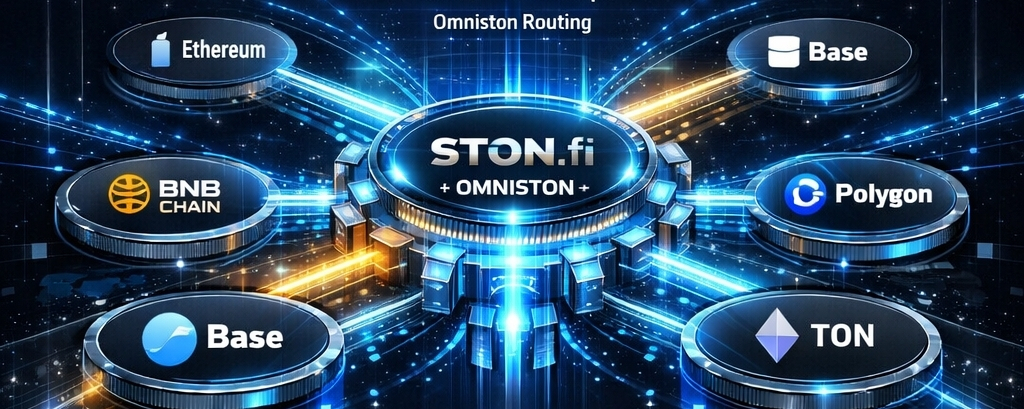
@stonfi recently launched TON ↔ EVM swaps powered by Omniston, enabling users to access liquidity across Ethereum, Base, BNB Chain, Polygon, and TON through a unified experience. Instead of navigating multiple tools and bridges, users can perform cross-chain swaps directly within a single platform.
This development reflects a broader trend across Web3: reducing friction while improving access to liquidity.
The market response has been encouraging. In May, STON.fi reported approximately $331 million in swap volume, representing a 4.7x increase compared to the previous month. At the same time, tsTON liquidity pools have benefited from stronger reward dynamics driven by network improvements and increased DeFi activity.
Innovation is also expanding beyond traditional crypto assets. Through integrations such as Gramstox, users can access tokenized stock products within Telegram-native applications powered by TON infrastructure.
The future of Web3 will not be defined by isolated blockchains competing for attention. Instead, it will be shaped by ecosystems that make value, liquidity, and opportunities flow seamlessly across networks.
The transition from TON to GRAM may capture headlines, but the real story is the infrastructure being built underneath—a connected, interoperable, and user-friendly DeFi ecosystem designed for the next generation of crypto adoption.
As cross-chain technology continues to mature, TON and STON.fi are positioning themselves at the center of a future where blockchain boundaries become increasingly invisible.
#GRAM #STONfi #Omniston #DeFi #BinanceSquare
FROM TON TO GRAM: HOW STON.fi IS HELPING BUILD A CONNECTED DEFI FUTURE
FROM TON TO GRAM: HOW STON.fi IS HELPING BUILD A CONNECTED DEFI FUTURE
The crypto industry has spent years solving scalability, security, and decentralization challenges. Yet one major problem has remained: moving assets across blockchains is still far more complicated than it should be.
For many users, transferring funds between ecosystems often requires multiple wallets, bridges, interfaces, and transaction confirmations. This complexity has led countless users to rely on centralized exchanges as an easier way to move liquidity.
The TON ecosystem is now taking meaningful steps toward changing that experience.
One of the most discussed updates is the transition of Toncoin (TON) to GRAM (GRAM) as its user-facing ticker and display name. Importantly, this is not a token migration. Wallet addresses, balances, private keys, NFTs, staking positions, smart contracts, and blockchain infrastructure remain unchanged. Users do not need to take any action.
Beyond the branding update, the bigger story is the growing focus on interoperability.
@STONfi DEX recently launched TON ↔ EVM swaps powered by Omniston, enabling users to access liquidity across Ethereum, Base, BNB Chain, Polygon, and TON through a unified experience. Instead of navigating multiple tools and bridges, users can perform cross-chain swaps directly within a single platform.
This development reflects a broader trend across Web3: reducing friction while improving access to liquidity.
The market response has been encouraging. In May, STON.fi reported approximately $331 million in swap volume, representing a 4.7x increase compared to the previous month. At the same time, tsTON liquidity pools have benefited from stronger reward dynamics driven by network improvements and increased DeFi activity.
Innovation is also expanding beyond traditional crypto assets. Through integrations such as Gramstox, users can access tokenized stock products within Telegram-native applications powered by TON infrastructure.
The future of Web3 will not be defined by isolated blockchains competing for attention. Instead, it will be shaped by ecosystems that make value, liquidity, and opportunities flow seamlessly across networks.
The transition from TON to GRAM may capture headlines, but the real story is the infrastructure being built underneath—a connected, interoperable, and user-friendly DeFi ecosystem designed for the next generation of crypto adoption.
As cross-chain technology continues to mature, TON and STON.fi are positioning themselves at the center of a future where blockchain boundaries become increasingly invisible.
#GRAM #STONfi #Omniston #DeFi #BinanceSquare
The crypto industry has spent years solving scalability, security, and decentralization challenges. Yet one major problem has remained: moving assets across blockchains is still far more complicated than it should be.
For many users, transferring funds between ecosystems often requires multiple wallets, bridges, interfaces, and transaction confirmations. This complexity has led countless users to rely on centralized exchanges as an easier way to move liquidity.
The TON ecosystem is now taking meaningful steps toward changing that experience.
One of the most discussed updates is the transition of Toncoin (TON) to GRAM (GRAM) as its user-facing ticker and display name. Importantly, this is not a token migration. Wallet addresses, balances, private keys, NFTs, staking positions, smart contracts, and blockchain infrastructure remain unchanged. Users do not need to take any action.
Beyond the branding update, the bigger story is the growing focus on interoperability.
@STONfi DEX recently launched TON ↔ EVM swaps powered by Omniston, enabling users to access liquidity across Ethereum, Base, BNB Chain, Polygon, and TON through a unified experience. Instead of navigating multiple tools and bridges, users can perform cross-chain swaps directly within a single platform.
This development reflects a broader trend across Web3: reducing friction while improving access to liquidity.
The market response has been encouraging. In May, STON.fi reported approximately $331 million in swap volume, representing a 4.7x increase compared to the previous month. At the same time, tsTON liquidity pools have benefited from stronger reward dynamics driven by network improvements and increased DeFi activity.
Innovation is also expanding beyond traditional crypto assets. Through integrations such as Gramstox, users can access tokenized stock products within Telegram-native applications powered by TON infrastructure.
The future of Web3 will not be defined by isolated blockchains competing for attention. Instead, it will be shaped by ecosystems that make value, liquidity, and opportunities flow seamlessly across networks.
The transition from TON to GRAM may capture headlines, but the real story is the infrastructure being built underneath—a connected, interoperable, and user-friendly DeFi ecosystem designed for the next generation of crypto adoption.
As cross-chain technology continues to mature, TON and STON.fi are positioning themselves at the center of a future where blockchain boundaries become increasingly invisible.
#GRAM #STONfi #Omniston #DeFi #BinanceSquare
157
·
--
Article
THE CROSS-CHAIN PARADOX: WHY WEB3 STILL FEELS FRAGMENTEDTHE CROSS-CHAIN PARADOX: WHY WEB3 STILL FEELS FRAGMENTED
“THE FUTURE OF CRYPTO WAS MEANT TO FEEL BORDERLESS.”
That promise defined the early vision of blockchain.
A world where value moves freely across networks, liquidity is always accessible, and users interact with decentralized systems without friction or technical barriers.
Years later, the infrastructure has advanced significantly—but the user experience has not kept pace.
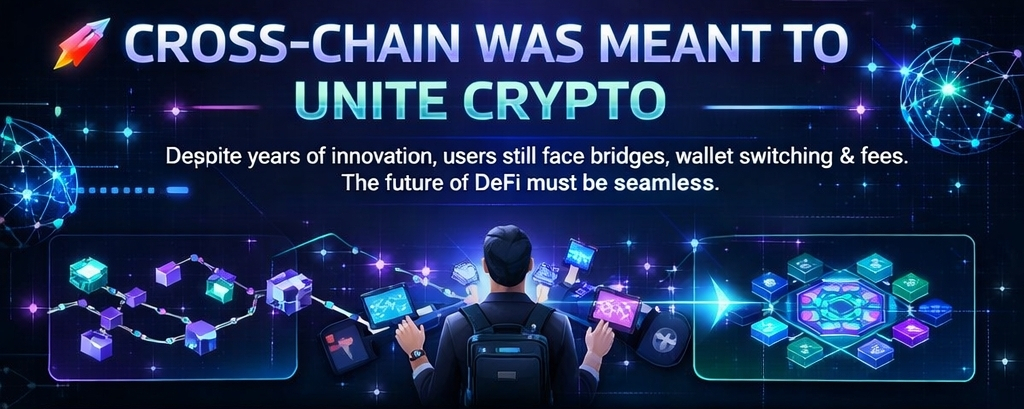
Cross-chain activity today often still feels like a sequence of manual steps rather than a seamless flow: Bridge → Wait → Swap → Switch Wallets → Pay Fees → Hope Nothing Breaks
Despite the sophistication behind the scenes, this remains the default experience for many users. Somewhere along the way, complexity became normalized.
THE REAL PROBLEM IS NOT CONNECTIVITY—IT’S EXPERIENCE
Interoperability is no longer a theoretical concept. It is a working reality. The industry has built bridges, routing systems, liquidity networks, aggregators, and cross-chain messaging protocols. From a technical standpoint, ecosystems are more connected than ever before.
Yet from a user standpoint, fragmentation still dominates.
Common friction points include:
🔹 Multiple wallet approvals
🔹 Network switching between transactions
🔹 Unclear routing paths
🔹 Delays and failed transactions
🔹 Unpredictable fees
For experienced DeFi users, this may feel manageable. For new users, it is a significant barrier to entry. The core issue is no longer whether cross-chain systems function.
It is whether they feel seamless.
“SIMPLICITY IS WHAT USERS VALUE MOST—NOT THE UNDERLYING ARCHITECTURE.”
Despite the growth of decentralized finance, centralized exchanges remain the default solution for many cross-chain movements.
This is not because they are more decentralized or technologically advanced.
It is because they are simpler.
Users prefer predictable flows over complex interactions. They want outcomes, not processes. They care about speed, reliability, and clarity—not infrastructure diagrams.
For DeFi to compete at scale, it must match this level of simplicity without sacrificing decentralization.
BUILDERS ARE ALREADY SHAPING THE NEXT PHASE
Progress is not theoretical—it is already underway.
The STON.fi Vibe Coding Hackathon Wave 2 demonstrated strong momentum across the ecosystem, showcasing how builders are actively addressing real usability challenges in cross-chain finance.
Key highlights include:
🔹 30 valid project submissions
🔹 27 integrations with STON.fi infrastructure
🔹 4 projects using the Omniston cross-chain SDK
🔹 15 projects integrating the Mira AI agent
The range of projects reflects a shift in focus—from infrastructure expansion to user-centric design.
Solutions included cross-chain wallet analytics tools, payment systems, Telegram-native NFT experiences, and liquidity routing applications.
These are not just technical experiments. They are early signals of a more usable DeFi future.
GROWTH IS ACCELERATING
Beyond developer activity, ecosystem usage continues to expand.
@stonfi recently processed approximately $64 million in weekly swap volume, representing around 68% growth week-over-week.
This level of activity reflects growing confidence, deeper liquidity, and increasing real-world usage of decentralized infrastructure.
Sustained growth of this nature suggests that demand for efficient, accessible DeFi systems is accelerating—not slowing down.
“THE FUTURE OF DEFI WILL NOT BE DEFINED BY MORE COMPLEXITY, BUT BY ITS DISAPPEARANCE.”
The next evolution of cross-chain finance will not be about adding more bridges, more layers, or more routing systems.
It will be about abstraction.
Users should not need to understand how value moves between chains. They should simply experience it moving.
The most successful products in Web3 will not be the ones that expose the most infrastructure.
They will be the ones that hide it entirely.
Because the real milestone for interoperability is not connectivity.
It is invisibility.
THE CROSS-CHAIN PARADOX: WHY WEB3 STILL FEELS FRAGMENTED
THE CROSS-CHAIN PARADOX: WHY WEB3 STILL FEELS FRAGMENTED
“THE FUTURE OF CRYPTO WAS MEANT TO FEEL BORDERLESS.”
That promise defined the early vision of blockchain.
A world where value moves freely across networks, liquidity is always accessible, and users interact with decentralized systems without friction or technical barriers.
Years later, the infrastructure has advanced significantly—but the user experience has not kept pace.
Cross-chain activity today often still feels like a sequence of manual steps rather than a seamless flow: Bridge → Wait → Swap → Switch Wallets → Pay Fees → Hope Nothing Breaks
Despite the sophistication behind the scenes, this remains the default experience for many users. Somewhere along the way, complexity became normalized.
THE REAL PROBLEM IS NOT CONNECTIVITY—IT’S EXPERIENCE
Interoperability is no longer a theoretical concept. It is a working reality. The industry has built bridges, routing systems, liquidity networks, aggregators, and cross-chain messaging protocols. From a technical standpoint, ecosystems are more connected than ever before.
Yet from a user standpoint, fragmentation still dominates.
Common friction points include:
🔹 Multiple wallet approvals
🔹 Network switching between transactions
🔹 Unclear routing paths
🔹 Delays and failed transactions
🔹 Unpredictable fees
For experienced DeFi users, this may feel manageable. For new users, it is a significant barrier to entry. The core issue is no longer whether cross-chain systems function.
It is whether they feel seamless.
“SIMPLICITY IS WHAT USERS VALUE MOST—NOT THE UNDERLYING ARCHITECTURE.”
Despite the growth of decentralized finance, centralized exchanges remain the default solution for many cross-chain movements.
This is not because they are more decentralized or technologically advanced.
It is because they are simpler.
Users prefer predictable flows over complex interactions. They want outcomes, not processes. They care about speed, reliability, and clarity—not infrastructure diagrams.
For DeFi to compete at scale, it must match this level of simplicity without sacrificing decentralization.
BUILDERS ARE ALREADY SHAPING THE NEXT PHASE
Progress is not theoretical—it is already underway.
The STON.fi Vibe Coding Hackathon Wave 2 demonstrated strong momentum across the ecosystem, showcasing how builders are actively addressing real usability challenges in cross-chain finance.
Key highlights include:
🔹 30 valid project submissions
🔹 27 integrations with STON.fi infrastructure
🔹 4 projects using the Omniston cross-chain SDK
🔹 15 projects integrating the Mira AI agent
The range of projects reflects a shift in focus—from infrastructure expansion to user-centric design.
Solutions included cross-chain wallet analytics tools, payment systems, Telegram-native NFT experiences, and liquidity routing applications.
These are not just technical experiments. They are early signals of a more usable DeFi future.
GROWTH IS ACCELERATING
Beyond developer activity, ecosystem usage continues to expand.
@STONfi DEX recently processed approximately $64 million in weekly swap volume, representing around 68% growth week-over-week.
This level of activity reflects growing confidence, deeper liquidity, and increasing real-world usage of decentralized infrastructure.
Sustained growth of this nature suggests that demand for efficient, accessible DeFi systems is accelerating—not slowing down.
“THE FUTURE OF DEFI WILL NOT BE DEFINED BY MORE COMPLEXITY, BUT BY ITS DISAPPEARANCE.”
The next evolution of cross-chain finance will not be about adding more bridges, more layers, or more routing systems.
It will be about abstraction.
Users should not need to understand how value moves between chains. They should simply experience it moving.
The most successful products in Web3 will not be the ones that expose the most infrastructure.
They will be the ones that hide it entirely.
Because the real milestone for interoperability is not connectivity.
It is invisibility.
“THE FUTURE OF CRYPTO WAS MEANT TO FEEL BORDERLESS.”
That promise defined the early vision of blockchain.
A world where value moves freely across networks, liquidity is always accessible, and users interact with decentralized systems without friction or technical barriers.
Years later, the infrastructure has advanced significantly—but the user experience has not kept pace.
Cross-chain activity today often still feels like a sequence of manual steps rather than a seamless flow: Bridge → Wait → Swap → Switch Wallets → Pay Fees → Hope Nothing Breaks
Despite the sophistication behind the scenes, this remains the default experience for many users. Somewhere along the way, complexity became normalized.
THE REAL PROBLEM IS NOT CONNECTIVITY—IT’S EXPERIENCE
Interoperability is no longer a theoretical concept. It is a working reality. The industry has built bridges, routing systems, liquidity networks, aggregators, and cross-chain messaging protocols. From a technical standpoint, ecosystems are more connected than ever before.
Yet from a user standpoint, fragmentation still dominates.
Common friction points include:
🔹 Multiple wallet approvals
🔹 Network switching between transactions
🔹 Unclear routing paths
🔹 Delays and failed transactions
🔹 Unpredictable fees
For experienced DeFi users, this may feel manageable. For new users, it is a significant barrier to entry. The core issue is no longer whether cross-chain systems function.
It is whether they feel seamless.
“SIMPLICITY IS WHAT USERS VALUE MOST—NOT THE UNDERLYING ARCHITECTURE.”
Despite the growth of decentralized finance, centralized exchanges remain the default solution for many cross-chain movements.
This is not because they are more decentralized or technologically advanced.
It is because they are simpler.
Users prefer predictable flows over complex interactions. They want outcomes, not processes. They care about speed, reliability, and clarity—not infrastructure diagrams.
For DeFi to compete at scale, it must match this level of simplicity without sacrificing decentralization.
BUILDERS ARE ALREADY SHAPING THE NEXT PHASE
Progress is not theoretical—it is already underway.
The STON.fi Vibe Coding Hackathon Wave 2 demonstrated strong momentum across the ecosystem, showcasing how builders are actively addressing real usability challenges in cross-chain finance.
Key highlights include:
🔹 30 valid project submissions
🔹 27 integrations with STON.fi infrastructure
🔹 4 projects using the Omniston cross-chain SDK
🔹 15 projects integrating the Mira AI agent
The range of projects reflects a shift in focus—from infrastructure expansion to user-centric design.
Solutions included cross-chain wallet analytics tools, payment systems, Telegram-native NFT experiences, and liquidity routing applications.
These are not just technical experiments. They are early signals of a more usable DeFi future.
GROWTH IS ACCELERATING
Beyond developer activity, ecosystem usage continues to expand.
@STONfi DEX recently processed approximately $64 million in weekly swap volume, representing around 68% growth week-over-week.
This level of activity reflects growing confidence, deeper liquidity, and increasing real-world usage of decentralized infrastructure.
Sustained growth of this nature suggests that demand for efficient, accessible DeFi systems is accelerating—not slowing down.
“THE FUTURE OF DEFI WILL NOT BE DEFINED BY MORE COMPLEXITY, BUT BY ITS DISAPPEARANCE.”
The next evolution of cross-chain finance will not be about adding more bridges, more layers, or more routing systems.
It will be about abstraction.
Users should not need to understand how value moves between chains. They should simply experience it moving.
The most successful products in Web3 will not be the ones that expose the most infrastructure.
They will be the ones that hide it entirely.
Because the real milestone for interoperability is not connectivity.
It is invisibility.
266
·
--
Article
The Era of "Trust Me" Is Ending: Why Transparency Is Becoming Web3's Most Valuable AssetThe Era of "Trust Me" Is Ending: Why Transparency Is Becoming Web3's Most Valuable Asset
Blockchain was created to solve a fundamental problem: trust.
For decades, users have relied on institutions, intermediaries, and centralized organizations to verify transactions and manage financial systems. Blockchain introduced a different model, one where verification could replace blind trust.
Yet despite this technological breakthrough, many Web3 projects still struggle with transparency.
Treasury management, fee allocation, and ecosystem growth metrics are often communicated through announcements and reports that require users to trust the information being presented. While these updates are valuable, they do not always provide the level of visibility that blockchain technology makes possible.
As the industry matures, expectations are changing. Users increasingly want access to verifiable data, transparent treasury operations, and real-time insights into protocol activity. Projects that embrace this shift are likely to build stronger communities and more sustainable ecosystems.
Transparency as Infrastructure:
One project demonstrating this approach is STON$.fi. Rather than treating transparency as a marketing initiative, the protocol is integrating it directly into its operational framework through a dedicated transparency page that tracks DAO-approved fee conversions. This allows community members to monitor treasury accumulation activities in real time.
Every STON and GEMSTON acquisition is publicly recorded, creating an auditable trail that users can independently verify on-chain. The significance of this development extends beyond a single protocol. It reflects a broader trend across Web3: moving from narrative-based trust toward data-driven accountability.
The Importance of Verifiable Treasury Activity:
Treasury management plays a critical role in the long-term sustainability of decentralized ecosystems. Protocol fees, treasury reserves, and token acquisitions influence governance decisions, ecosystem incentives, and future development initiatives.
When treasury operations are transparent, users gain greater confidence in how resources are being managed.
According to publicly available data, STON.fi has already recorded:
🔹 More than $335,000 in converted protocol fees
🔹 Over 438,000 STON acquired
🔹 More than 2.29 million GEMSTON acquired
🔹 More than 3,100 completed conversions
While these figures highlight protocol activity, the more important factor is that each transaction can be independently verified. This aligns closely with the foundational principles that originally drove blockchain adoption.
Transparency Alone Is Not Enough:
However, transparency by itself does not guarantee success.
A healthy ecosystem requires adoption, liquidity, developer participation, and sustained user engagement. Recent activity suggests that STON.fi is focusing on these areas as well.
The protocol reported approximately $331 million in swap volume during May, representing roughly five times the volume recorded in April.
Although growth metrics should always be evaluated within broader market conditions, the increase indicates rising activity across the ecosystem.
This relationship between transparency and growth is particularly important. Transparent systems can strengthen user confidence, while growing adoption validates the utility and relevance of the protocol. The combination of both creates a stronger foundation for long-term development.
Builders Remain the Core of Every Ecosystem:
No blockchain ecosystem can thrive without builders. Developers create the applications, tools, and infrastructure that transform protocols into vibrant ecosystems.
Recognizing this reality, STON.fi recently launched Wave 2 of its Vibe Coding Hackathon, bringing together 25 builders who are leveraging AI-powered coding agents to develop applications within the TON ecosystem.
This initiative highlights another important trend shaping the future of Web3: the convergence of artificial intelligence and blockchain technology.
AI-assisted development has the potential to reduce barriers to entry, accelerate innovation, and enable developers to bring products to market more efficiently than ever before.
Projects that successfully attract and support builders are likely to gain a significant competitive advantage in the years ahead.
What Defines a Mature Web3 Ecosystem?
As the industry evolves, four key pillars increasingly define ecosystem maturity:
🔹Transparency – Open and verifiable operations.
🔹Governance – Community participation in decision-making.
🔹Builders – Continuous innovation and ecosystem expansion.
🔹Growth – Sustainable adoption and economic activity.
The strongest ecosystems are not those that excel in only one category. They are the ones that successfully balance all four.
For Web3 to reach mainstream adoption, projects must move beyond promises and demonstrate accountability through transparent systems, active communities, and measurable growth.
The future of decentralized finance will likely belong to protocols that empower users to verify rather than simply trust.
And in many ways, that future is already beginning to take shape.
#STONfi #TonChain
The Era of "Trust Me" Is Ending: Why Transparency Is Becoming Web3's Most Valuable Asset
The Era of "Trust Me" Is Ending: Why Transparency Is Becoming Web3's Most Valuable Asset
Blockchain was created to solve a fundamental problem: trust.
For decades, users have relied on institutions, intermediaries, and centralized organizations to verify transactions and manage financial systems. Blockchain introduced a different model, one where verification could replace blind trust.
Yet despite this technological breakthrough, many Web3 projects still struggle with transparency.
Treasury management, fee allocation, and ecosystem growth metrics are often communicated through announcements and reports that require users to trust the information being presented. While these updates are valuable, they do not always provide the level of visibility that blockchain technology makes possible.
As the industry matures, expectations are changing. Users increasingly want access to verifiable data, transparent treasury operations, and real-time insights into protocol activity. Projects that embrace this shift are likely to build stronger communities and more sustainable ecosystems.
Transparency as Infrastructure:
One project demonstrating this approach is STON$.fi. Rather than treating transparency as a marketing initiative, the protocol is integrating it directly into its operational framework through a dedicated transparency page that tracks DAO-approved fee conversions. This allows community members to monitor treasury accumulation activities in real time.
Every STON and GEMSTON acquisition is publicly recorded, creating an auditable trail that users can independently verify on-chain. The significance of this development extends beyond a single protocol. It reflects a broader trend across Web3: moving from narrative-based trust toward data-driven accountability.
The Importance of Verifiable Treasury Activity:
Treasury management plays a critical role in the long-term sustainability of decentralized ecosystems. Protocol fees, treasury reserves, and token acquisitions influence governance decisions, ecosystem incentives, and future development initiatives.
When treasury operations are transparent, users gain greater confidence in how resources are being managed.
According to publicly available data, STON.fi has already recorded:
🔹 More than $335,000 in converted protocol fees
🔹 Over 438,000 STON acquired
🔹 More than 2.29 million GEMSTON acquired
🔹 More than 3,100 completed conversions
While these figures highlight protocol activity, the more important factor is that each transaction can be independently verified. This aligns closely with the foundational principles that originally drove blockchain adoption.
Transparency Alone Is Not Enough:
However, transparency by itself does not guarantee success.
A healthy ecosystem requires adoption, liquidity, developer participation, and sustained user engagement. Recent activity suggests that STON.fi is focusing on these areas as well.
The protocol reported approximately $331 million in swap volume during May, representing roughly five times the volume recorded in April.
Although growth metrics should always be evaluated within broader market conditions, the increase indicates rising activity across the ecosystem.
This relationship between transparency and growth is particularly important. Transparent systems can strengthen user confidence, while growing adoption validates the utility and relevance of the protocol. The combination of both creates a stronger foundation for long-term development.
Builders Remain the Core of Every Ecosystem:
No blockchain ecosystem can thrive without builders. Developers create the applications, tools, and infrastructure that transform protocols into vibrant ecosystems.
Recognizing this reality, STON.fi recently launched Wave 2 of its Vibe Coding Hackathon, bringing together 25 builders who are leveraging AI-powered coding agents to develop applications within the TON ecosystem.
This initiative highlights another important trend shaping the future of Web3: the convergence of artificial intelligence and blockchain technology.
AI-assisted development has the potential to reduce barriers to entry, accelerate innovation, and enable developers to bring products to market more efficiently than ever before.
Projects that successfully attract and support builders are likely to gain a significant competitive advantage in the years ahead.
What Defines a Mature Web3 Ecosystem?
As the industry evolves, four key pillars increasingly define ecosystem maturity:
🔹Transparency – Open and verifiable operations.
🔹Governance – Community participation in decision-making.
🔹Builders – Continuous innovation and ecosystem expansion.
🔹Growth – Sustainable adoption and economic activity.
The strongest ecosystems are not those that excel in only one category. They are the ones that successfully balance all four.
For Web3 to reach mainstream adoption, projects must move beyond promises and demonstrate accountability through transparent systems, active communities, and measurable growth.
The future of decentralized finance will likely belong to protocols that empower users to verify rather than simply trust.
And in many ways, that future is already beginning to take shape.
#STONfi #TonChain
Blockchain was created to solve a fundamental problem: trust.
For decades, users have relied on institutions, intermediaries, and centralized organizations to verify transactions and manage financial systems. Blockchain introduced a different model, one where verification could replace blind trust.
Yet despite this technological breakthrough, many Web3 projects still struggle with transparency.
Treasury management, fee allocation, and ecosystem growth metrics are often communicated through announcements and reports that require users to trust the information being presented. While these updates are valuable, they do not always provide the level of visibility that blockchain technology makes possible.
As the industry matures, expectations are changing. Users increasingly want access to verifiable data, transparent treasury operations, and real-time insights into protocol activity. Projects that embrace this shift are likely to build stronger communities and more sustainable ecosystems.
Transparency as Infrastructure:
One project demonstrating this approach is STON$.fi. Rather than treating transparency as a marketing initiative, the protocol is integrating it directly into its operational framework through a dedicated transparency page that tracks DAO-approved fee conversions. This allows community members to monitor treasury accumulation activities in real time.
Every STON and GEMSTON acquisition is publicly recorded, creating an auditable trail that users can independently verify on-chain. The significance of this development extends beyond a single protocol. It reflects a broader trend across Web3: moving from narrative-based trust toward data-driven accountability.
The Importance of Verifiable Treasury Activity:
Treasury management plays a critical role in the long-term sustainability of decentralized ecosystems. Protocol fees, treasury reserves, and token acquisitions influence governance decisions, ecosystem incentives, and future development initiatives.
When treasury operations are transparent, users gain greater confidence in how resources are being managed.
According to publicly available data, STON.fi has already recorded:
🔹 More than $335,000 in converted protocol fees
🔹 Over 438,000 STON acquired
🔹 More than 2.29 million GEMSTON acquired
🔹 More than 3,100 completed conversions
While these figures highlight protocol activity, the more important factor is that each transaction can be independently verified. This aligns closely with the foundational principles that originally drove blockchain adoption.
Transparency Alone Is Not Enough:
However, transparency by itself does not guarantee success.
A healthy ecosystem requires adoption, liquidity, developer participation, and sustained user engagement. Recent activity suggests that STON.fi is focusing on these areas as well.
The protocol reported approximately $331 million in swap volume during May, representing roughly five times the volume recorded in April.
Although growth metrics should always be evaluated within broader market conditions, the increase indicates rising activity across the ecosystem.
This relationship between transparency and growth is particularly important. Transparent systems can strengthen user confidence, while growing adoption validates the utility and relevance of the protocol. The combination of both creates a stronger foundation for long-term development.
Builders Remain the Core of Every Ecosystem:
No blockchain ecosystem can thrive without builders. Developers create the applications, tools, and infrastructure that transform protocols into vibrant ecosystems.
Recognizing this reality, STON.fi recently launched Wave 2 of its Vibe Coding Hackathon, bringing together 25 builders who are leveraging AI-powered coding agents to develop applications within the TON ecosystem.
This initiative highlights another important trend shaping the future of Web3: the convergence of artificial intelligence and blockchain technology.
AI-assisted development has the potential to reduce barriers to entry, accelerate innovation, and enable developers to bring products to market more efficiently than ever before.
Projects that successfully attract and support builders are likely to gain a significant competitive advantage in the years ahead.
What Defines a Mature Web3 Ecosystem?
As the industry evolves, four key pillars increasingly define ecosystem maturity:
🔹Transparency – Open and verifiable operations.
🔹Governance – Community participation in decision-making.
🔹Builders – Continuous innovation and ecosystem expansion.
🔹Growth – Sustainable adoption and economic activity.
The strongest ecosystems are not those that excel in only one category. They are the ones that successfully balance all four.
For Web3 to reach mainstream adoption, projects must move beyond promises and demonstrate accountability through transparent systems, active communities, and measurable growth.
The future of decentralized finance will likely belong to protocols that empower users to verify rather than simply trust.
And in many ways, that future is already beginning to take shape.
#STONfi #TonChain
192
Log in to explore more content
Join global crypto users on Binance Square
⚡️ Get latest and useful information about crypto.
💬 Trusted by the world’s largest crypto exchange.
👍 Discover real insights from verified creators.
Email / Phone number
Trending Topics
BOJRaisesRatesTo31YearHigh
82,298 views
1,286 Discussing
#bojraisesratesto31yearhigh
🇯🇵 BOJ Raised Rates. So Why Did the Yen FALL?
Imagine borrowing a currency whose central bank just raised rates…
…and that currency still gets weaker. 😂
On Sept. 18, the BOJ raised rates 25bp to 1.25%, the highest level in 31 years.
The vote? 7–2.
But USD/JPY jumped as high as 158.05 as traders questioned how aggressive the next hikes will be.
BUT HERE’S WHAT MANY PEOPLE MISS 👀
The market wasn't simply trading the hike.
It was trading the guidance gap.
The 25bp move was widely expected. What mattered was whether BOJ Governor Ueda would signal a clear path for more tightening.
He didn't commit to a preset pace.
Meanwhile, the U.S.–Japan rate gap remains wide enough to keep the carry-trade story alive: cheap-yen funding can still compete with higher-yielding assets elsewhere.
And then came the crypto twist:
BTC rebounded ~5.9% toward $81K after the BOJ decision.
So:
BOJ tightening ≠ automatic crypto selloff.
But there is another risk.
If USD/JPY pushes higher, intervention concerns can intensify. If the yen suddenly strengthens, crowded carry positions could unwind quickly.
🧠 Square Insight:
Markets don't trade the rate hike. They trade the gap between what was expected and what was delivered.
Do you think the next BOJ move will finally break the carry trade?
Market commentary only. Not financial advice.
#BOJ #JapaneseYen #CarryTrade
$BTC
TuilaNamKy
·3 Likes
·4k views
BuffettStepsDownAsBerkshireChairman
37,179 views
602 Discussing
XRPExchangeReservesHitSevenYearLow
42,307 views
567 Discussing