
Zartasha Gul
13.8k Posts

Zartasha Gul
 Square Verified+
a little linguistics, a little market madness romanticising web3 charts @aashee7890
Open Trade
Frequent Trader
2.8 Years
158 Following
40.9K+ Followers
37.6K+ Liked
Posts
Portfolio
All
Quotes
Live
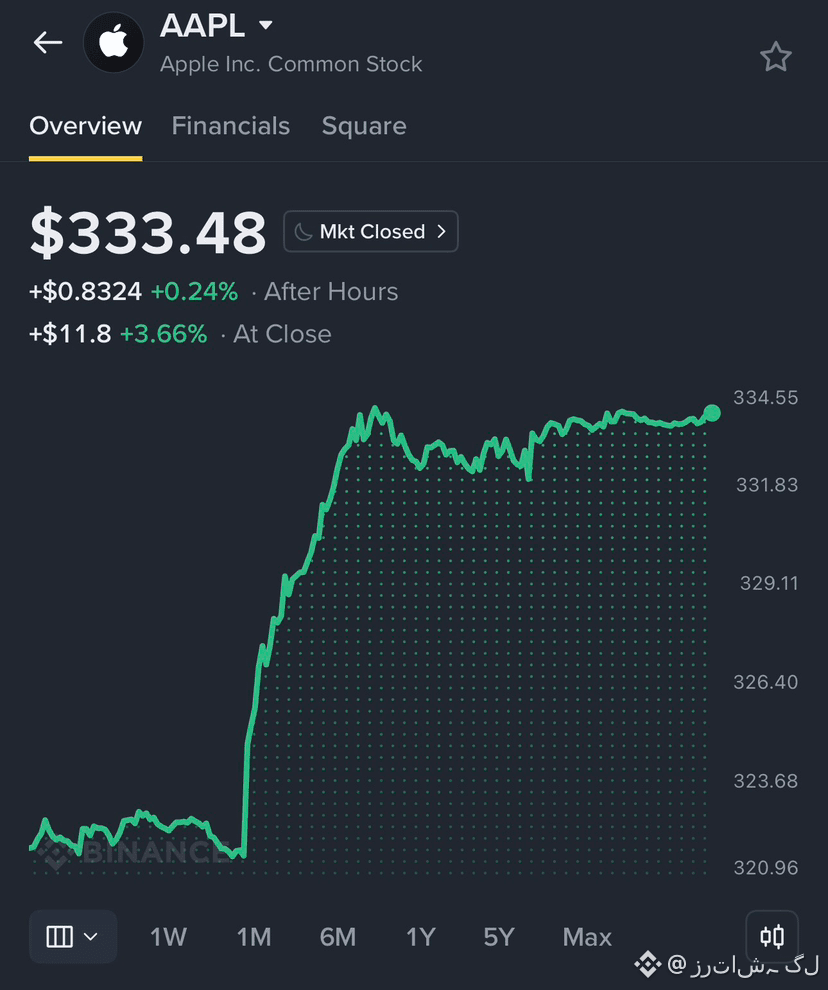
🍎 Apple ($AAPL ) enters a key week as the next earnings season begins.
AAPL shares climbed 3.57% ahead of the Federal Reserve meeting, showing renewed investor interest as markets prepare for one of the most closely watched earnings reports of the quarter.
Apple’s results matter far beyond one company. Investors are looking for answers on three major questions:
• Is consumer demand for iPhones, Macs, and services still strong?
• Can Apple maintain healthy profit margins in a challenging economic environment?
• How will Apple position itself in the growing AI race?
With Big Tech spending billions on AI infrastructure, markets want to see real returns, not just future promises. Apple’s strong ecosystem, services business, and loyal customer base make it an important indicator for the broader technology sector.
This week’s Federal Reserve decision and global events, including energy market developments, could also influence investor sentiment and market valuations.
All eyes are now on Apple’s earnings report and conference call on Thursday. Revenue growth, services performance, share buybacks, and updates on AI-powered products will be the key areas to watch.
A solid report could strengthen confidence that mega-cap tech leaders can continue driving markets, even as investors reassess AI spending across the industry.
#Apple #AAPL #stockmarket #TechStocks #AI
AAPL shares climbed 3.57% ahead of the Federal Reserve meeting, showing renewed investor interest as markets prepare for one of the most closely watched earnings reports of the quarter.
Apple’s results matter far beyond one company. Investors are looking for answers on three major questions:
• Is consumer demand for iPhones, Macs, and services still strong?
• Can Apple maintain healthy profit margins in a challenging economic environment?
• How will Apple position itself in the growing AI race?
With Big Tech spending billions on AI infrastructure, markets want to see real returns, not just future promises. Apple’s strong ecosystem, services business, and loyal customer base make it an important indicator for the broader technology sector.
This week’s Federal Reserve decision and global events, including energy market developments, could also influence investor sentiment and market valuations.
All eyes are now on Apple’s earnings report and conference call on Thursday. Revenue growth, services performance, share buybacks, and updates on AI-powered products will be the key areas to watch.
A solid report could strengthen confidence that mega-cap tech leaders can continue driving markets, even as investors reassess AI spending across the industry.
#Apple #AAPL #stockmarket #TechStocks #AI
$SUI Expands Into Real-World Infrastructure as Gorae Connects EV Charging to Blockchain
Blockchain is moving beyond finance and into everyday infrastructure.
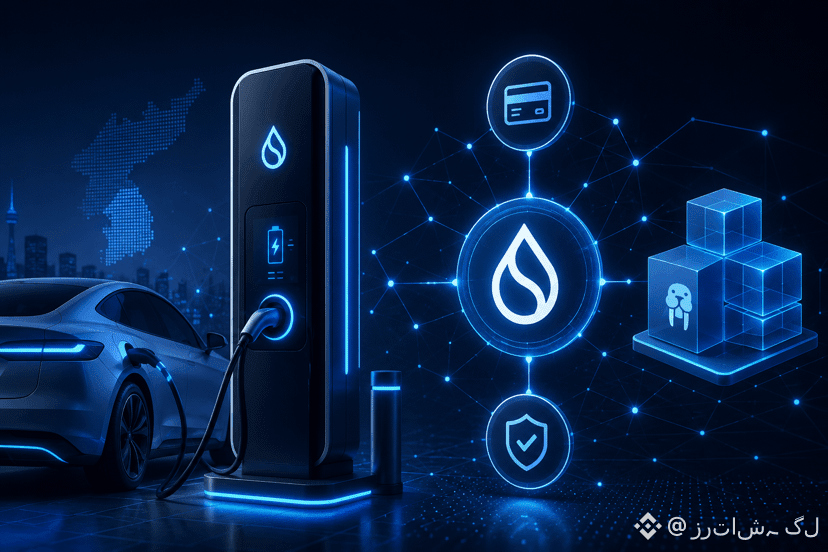
Gorae has announced plans to connect more than 50,000 electric vehicle (EV) charging stations across South Korea to the Sui Network, with Walrus providing decentralized storage for charging records. The rollout is scheduled to begin in the second half of 2026, with future expansion planned across the Asia-Pacific region, Europe, and North America.
Here’s why this matters:
⚡ Smart EV Payments: Sui’s high-throughput network enables fast, low-cost payments and near-instant settlement between users, charging operators, and service providers.
📊 Verifiable Charging Data: Every charging session can be securely recorded and stored through Walrus, creating an immutable audit trail for energy usage, billing, and operational data.
🌍 Real-World Blockchain Adoption: This is more than another Web3 partnership. It demonstrates how blockchain can support critical infrastructure by improving transparency, automation, and trust in the growing EV ecosystem.
As electric vehicle adoption accelerates worldwide, combining blockchain, IoT, and decentralized storage could reshape how charging networks manage payments, carbon reporting, maintenance records, and cross-border interoperability.
If executed successfully, this initiative could become one of the strongest examples of blockchain delivering value outside traditional crypto markets.
What do you think is blockchain ready to become the backbone of next-generation smart infrastructure and mobility?
This post is for informational purposes only and should not be considered financial or investment advice. Always conduct your own research before making investment decisions.
$WAL
$DEXE
@Sui #sui #SUI🔥
Blockchain is moving beyond finance and into everyday infrastructure.
Gorae has announced plans to connect more than 50,000 electric vehicle (EV) charging stations across South Korea to the Sui Network, with Walrus providing decentralized storage for charging records. The rollout is scheduled to begin in the second half of 2026, with future expansion planned across the Asia-Pacific region, Europe, and North America.
Here’s why this matters:
⚡ Smart EV Payments: Sui’s high-throughput network enables fast, low-cost payments and near-instant settlement between users, charging operators, and service providers.
📊 Verifiable Charging Data: Every charging session can be securely recorded and stored through Walrus, creating an immutable audit trail for energy usage, billing, and operational data.
🌍 Real-World Blockchain Adoption: This is more than another Web3 partnership. It demonstrates how blockchain can support critical infrastructure by improving transparency, automation, and trust in the growing EV ecosystem.
As electric vehicle adoption accelerates worldwide, combining blockchain, IoT, and decentralized storage could reshape how charging networks manage payments, carbon reporting, maintenance records, and cross-border interoperability.
If executed successfully, this initiative could become one of the strongest examples of blockchain delivering value outside traditional crypto markets.
What do you think is blockchain ready to become the backbone of next-generation smart infrastructure and mobility?
This post is for informational purposes only and should not be considered financial or investment advice. Always conduct your own research before making investment decisions.
$WAL
$DEXE
@Sui #sui #SUI🔥
🚨 Worldcoin Under the Spotlight
Grayscale’s latest SEC filing reveals that around 90% of WLD’s circulating supply is held by just 100 wallets, raising fresh concerns about token concentration.
For a project built around the idea of a “coin for every human,” this level of centralization has sparked debate. The filing also notes that key parts of the network, including governance and infrastructure, still rely on centralized oversight as decentralization remains a work in progress.
With $WLD still trading far below its all-time high, investors are asking whether the project’s long-term vision can match its current structure.
What matters more to you: innovative identity technology or truly decentralized token ownership? 👇
Always do your own research. This is not financial advice.
#WLD #WLD #WorldToken
Grayscale’s latest SEC filing reveals that around 90% of WLD’s circulating supply is held by just 100 wallets, raising fresh concerns about token concentration.
For a project built around the idea of a “coin for every human,” this level of centralization has sparked debate. The filing also notes that key parts of the network, including governance and infrastructure, still rely on centralized oversight as decentralization remains a work in progress.
With $WLD still trading far below its all-time high, investors are asking whether the project’s long-term vision can match its current structure.
What matters more to you: innovative identity technology or truly decentralized token ownership? 👇
Always do your own research. This is not financial advice.
#WLD #WLD #WorldToken

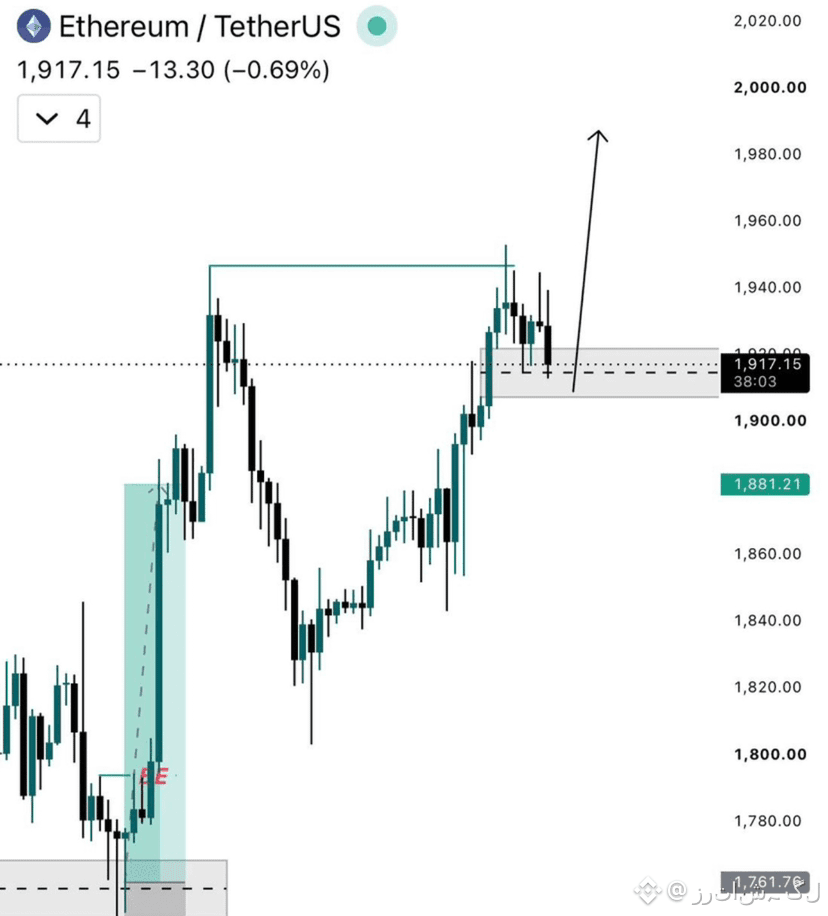
$ETH Update
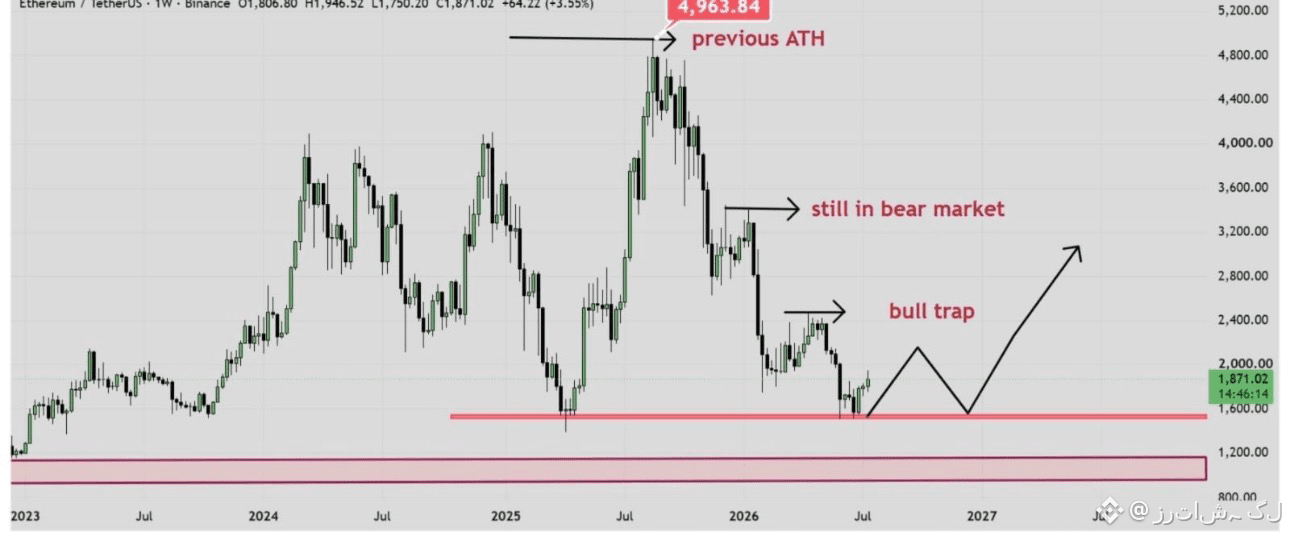
The pullback into my highlighted demand zone is playing out just as expected.
Now I’m waiting to see if buyers defend this area. If lower time frame confirmation appears, I’ll be looking for a long setup with $2,000 as the first target.
No rush patience, confirmation, then execution.
Good Evening 🌷💗
#ETH #GulGains
The pullback into my highlighted demand zone is playing out just as expected.
Now I’m waiting to see if buyers defend this area. If lower time frame confirmation appears, I’ll be looking for a long setup with $2,000 as the first target.
No rush patience, confirmation, then execution.
Good Evening 🌷💗
#ETH #GulGains

🚨 A bold Bitcoin prediction is making the rounds and it’s challenging the current market narrative.
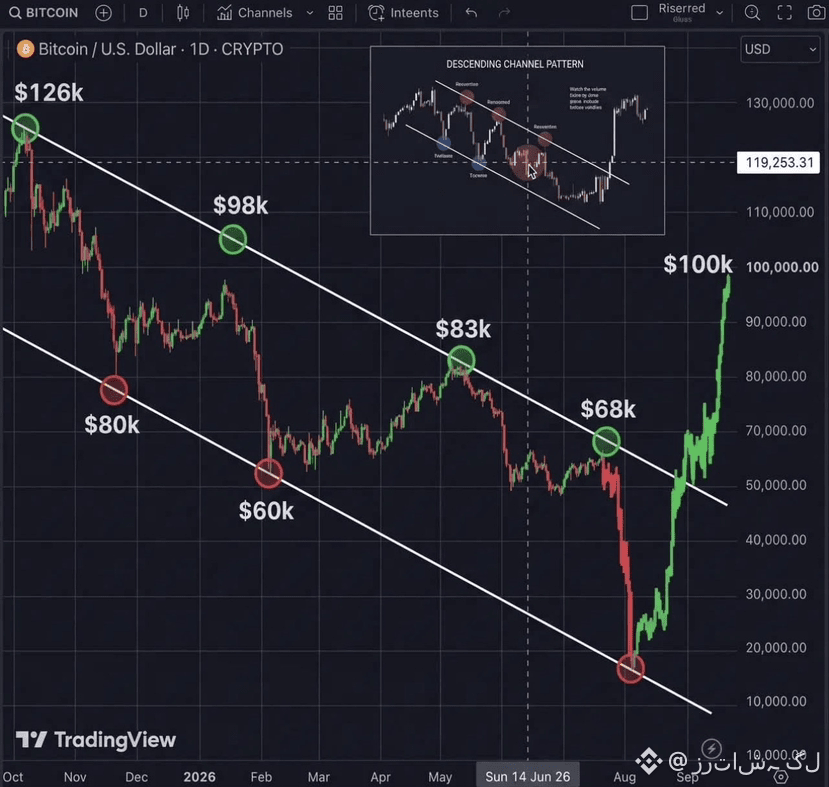
One market analyst believes $BTC could experience several sharp swings before the cycle reaches its peak, outlining a path of:
$83K → $58K → $68K → $40K → $70K → $108K
The idea is that volatility will shake out both bulls and bears before the next major move.
No one knows if this scenario will play out, so treat it as one perspective not a certainty. Always manage risk and do your own research.
$BTC #bitcoin #Crypto
$DEXE
One market analyst believes $BTC could experience several sharp swings before the cycle reaches its peak, outlining a path of:
$83K → $58K → $68K → $40K → $70K → $108K
The idea is that volatility will shake out both bulls and bears before the next major move.
No one knows if this scenario will play out, so treat it as one perspective not a certainty. Always manage risk and do your own research.
$BTC #bitcoin #Crypto
$DEXE
Partly True
🚨 From a $3B valuation to bankruptcy in just 18 months.
Movement Labs, once one of the most talked-about Layer 2 projects, has filed for Chapter 11 bankruptcy, with court filings showing liabilities exceeding its remaining assets. Meanwhile, $MOVE has lost around 94% of its value from last year.
The biggest turning point wasn’t the technology it was token distribution. A large allocation released to a market maker created heavy selling pressure early on, damaging confidence and making recovery difficult.
One lesson stands out: always study tokenomics before investing. Check who controls the supply, when tokens unlock, and whether early holders can flood the market. Strong technology alone doesn’t guarantee a successful token.
What crypto project changed the way you evaluate new investments? 👇
#crypto $BTC $ETH
Movement Labs, once one of the most talked-about Layer 2 projects, has filed for Chapter 11 bankruptcy, with court filings showing liabilities exceeding its remaining assets. Meanwhile, $MOVE has lost around 94% of its value from last year.
The biggest turning point wasn’t the technology it was token distribution. A large allocation released to a market maker created heavy selling pressure early on, damaging confidence and making recovery difficult.
One lesson stands out: always study tokenomics before investing. Check who controls the supply, when tokens unlock, and whether early holders can flood the market. Strong technology alone doesn’t guarantee a successful token.
What crypto project changed the way you evaluate new investments? 👇
#crypto $BTC $ETH
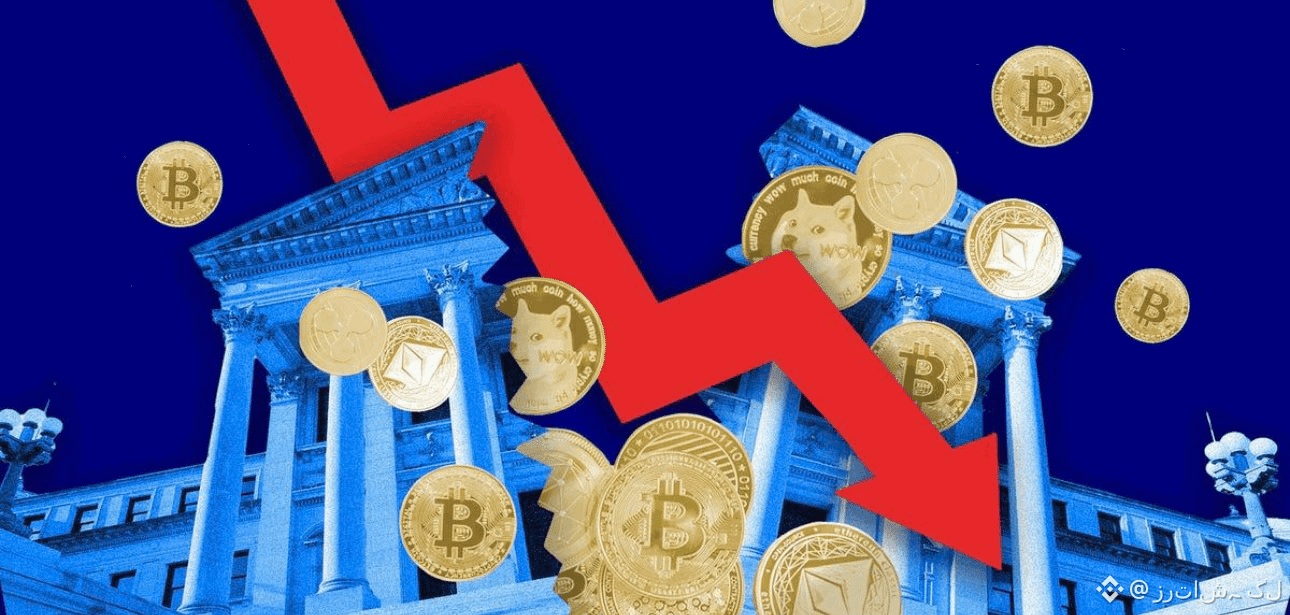
🇺🇸 The first-ever Fan Tokens for US college sports are here and this feels like a defining moment for SportFi.
Chiliz is turning its long-term vision into real adoption, bringing blockchain closer to millions of passionate sports fans through major university programs. If this rollout continues as planned, it could become one of the biggest mainstream use cases for Fan Tokens yet.
#Chiliz #CHZ #SportFi $CHZ
@Chiliz
Chiliz is turning its long-term vision into real adoption, bringing blockchain closer to millions of passionate sports fans through major university programs. If this rollout continues as planned, it could become one of the biggest mainstream use cases for Fan Tokens yet.
#Chiliz #CHZ #SportFi $CHZ
@Chiliz

Chiliz
·
--
BullishThe US Just Got Its First Fan Tokens. How Chiliz is turning its 2030 Vision into Reality.
A few months ago, Chiliz laid out a manifesto for the next phase of Fan Tokens – go omnichain, unlock the US market, and turn the promises of SportFi into shipped products.
This week, one of the biggest pieces of that plan lands.
Socios.com, through Fan Token Management (FTM) US (part of The Chiliz Group), has partnered with Playfly Sports to launch the first-ever Fan Tokens in US college sports. Five programs are in at launch: LSU, Maryland, Michigan State, Penn State, and Texas A&M.
Thirty university athletic departments are targeted within the next 12 months. It’s a major first for US sports and the clearest proof yet that the Chiliz 2030 roadmap isn’t just a slide deck.
This is a major milestone with massive potential.
Read more 👇
chiliz.com/chiliz-2030-vision-us-fan-tokens-launch/
$CHZ
A few months ago, Chiliz laid out a manifesto for the next phase of Fan Tokens – go omnichain, unlock the US market, and turn the promises of SportFi into shipped products.
This week, one of the biggest pieces of that plan lands.
Socios.com, through Fan Token Management (FTM) US (part of The Chiliz Group), has partnered with Playfly Sports to launch the first-ever Fan Tokens in US college sports. Five programs are in at launch: LSU, Maryland, Michigan State, Penn State, and Texas A&M.
Thirty university athletic departments are targeted within the next 12 months. It’s a major first for US sports and the clearest proof yet that the Chiliz 2030 roadmap isn’t just a slide deck.
This is a major milestone with massive potential.
Read more 👇
chiliz.com/chiliz-2030-vision-us-fan-tokens-launch/
$CHZ

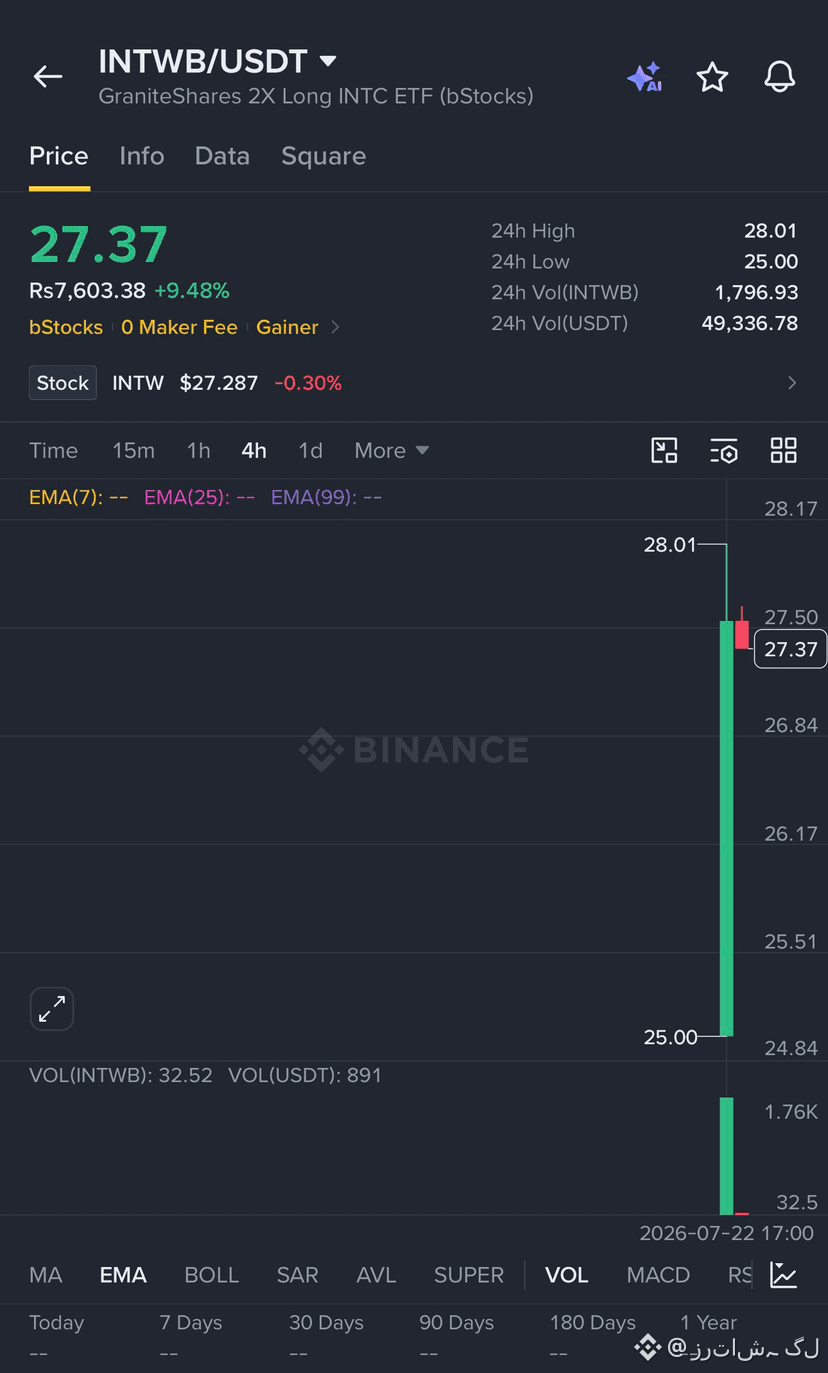
🚨$INTWB is showing strong momentum after a sharp breakout, gaining nearly 10% and testing $28.01 before pulling back slightly to $27.37.
Key Levels
🟢 Support: $27.00 / $25.00
🔴 Resistance: $28.00 / $28.20
A sustained move above $28.00 could open the door for further upside, while holding above $27.00 keeps the short-term bullish structure intact. Due to relatively low trading volume, risk management remains essential as volatility may stay elevated.
#GulGains 🌷
Key Levels
🟢 Support: $27.00 / $25.00
🔴 Resistance: $28.00 / $28.20
A sustained move above $28.00 could open the door for further upside, while holding above $27.00 keeps the short-term bullish structure intact. Due to relatively low trading volume, risk management remains essential as volatility may stay elevated.
#GulGains 🌷
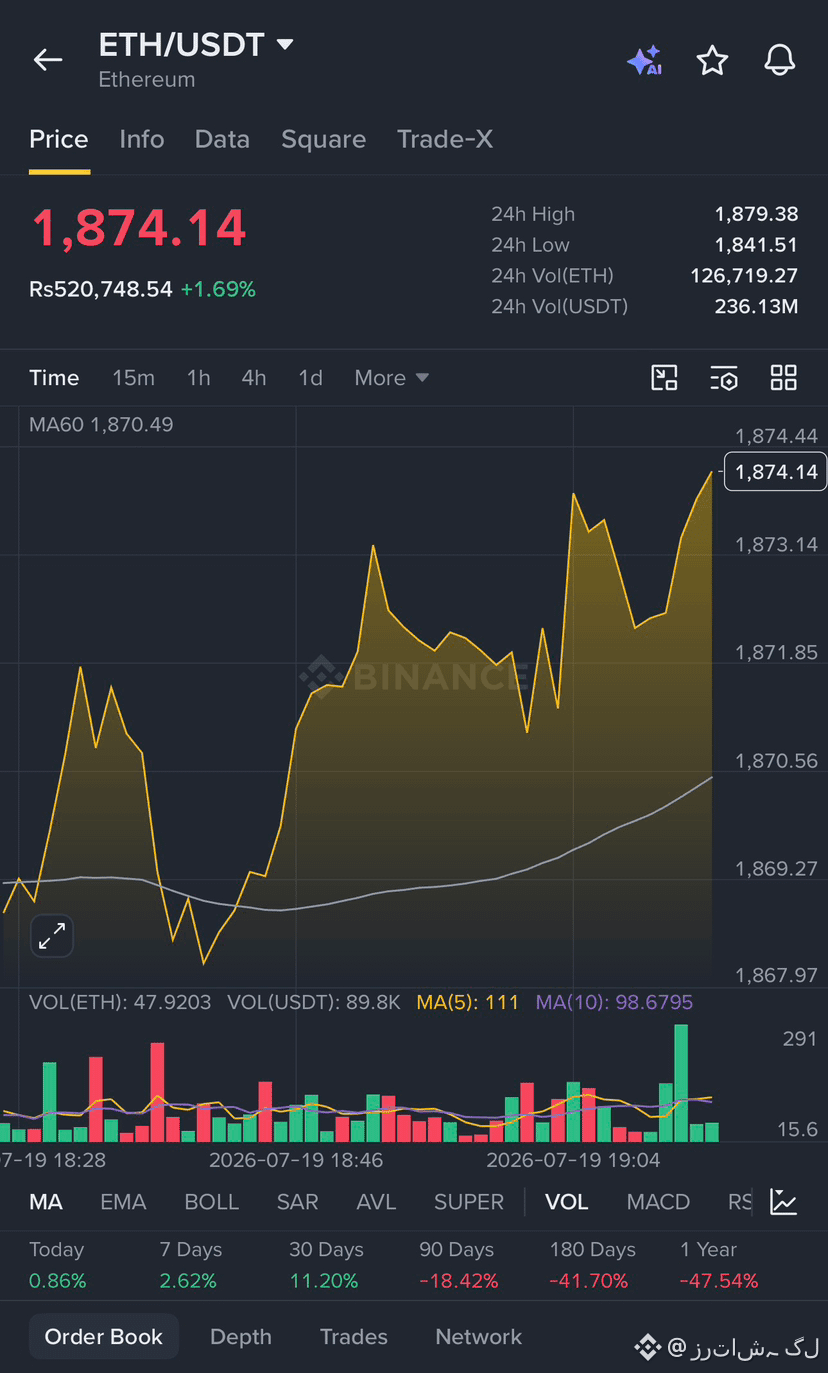
Don’t be too quick to short $ETH .
After a strong correction, Ethereum is sitting in a key long-term support zone. We might still see a small shakeout, but this area looks like it could become the foundation for the next major move higher.
I’m keeping an eye on the $2,800–$3,200 range as the first recovery target. If buying momentum keeps building, the upside could extend well beyond that.
What’s your view?
Does the next ETH bull run start from here, or do we get one final dip before the real breakout? 🚀
#Ethereum #ETH
After a strong correction, Ethereum is sitting in a key long-term support zone. We might still see a small shakeout, but this area looks like it could become the foundation for the next major move higher.
I’m keeping an eye on the $2,800–$3,200 range as the first recovery target. If buying momentum keeps building, the upside could extend well beyond that.
What’s your view?
Does the next ETH bull run start from here, or do we get one final dip before the real breakout? 🚀
#Ethereum #ETH
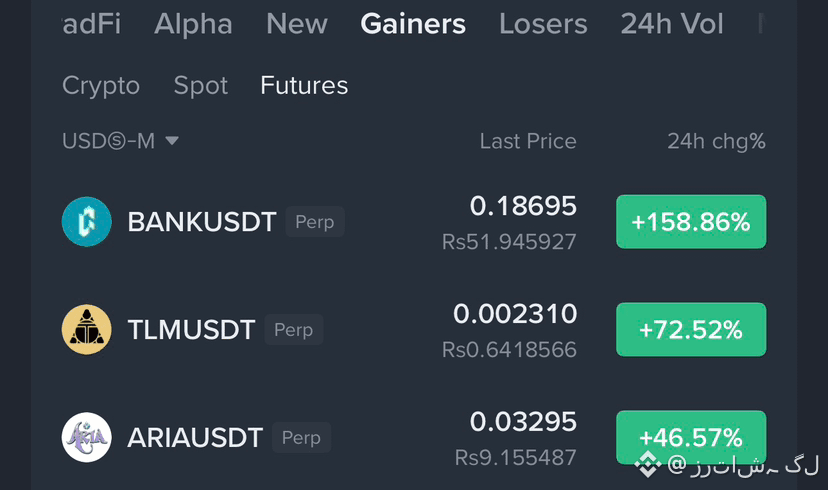
That’s a spicy top 3 on the gainers list rn 🔥
- $BANK USDT : $0.18695 | +158.86% 24h huge pump
- $TLM USDT : $0.002310 | +72.52% 24h
- $ARIA USDT : $0.03295 | +46.57% 24h
All 3 are on USDⓈ-M Futures Perps, so that’s leveraged moves.
1. Big moves = big risk . +150% days often come with news, listings, or low liquidity.
2. Futures : Gains look nice but funding + liquidation risk is real on perps.
3. DYOR : Check what’s driving BANK/TLM/ARIA today announcements, volume, or just rotation.
You watching any of these, or just vibing the green candles? 👀
- $BANK USDT : $0.18695 | +158.86% 24h huge pump
- $TLM USDT : $0.002310 | +72.52% 24h
- $ARIA USDT : $0.03295 | +46.57% 24h
All 3 are on USDⓈ-M Futures Perps, so that’s leveraged moves.
1. Big moves = big risk . +150% days often come with news, listings, or low liquidity.
2. Futures : Gains look nice but funding + liquidation risk is real on perps.
3. DYOR : Check what’s driving BANK/TLM/ARIA today announcements, volume, or just rotation.
You watching any of these, or just vibing the green candles? 👀
Solana is entering a whole new phase.
For a long time, most people connected Solana with memecoins, NFTs, and fast, low-cost transactions.
But I think the story is changing.
Real-world assets are starting to become a big part of the ecosystem.
In Q2 2026, Solana processed around $5.77B in tokenized stock trading, making up nearly 95% of on-chain equity volume. That’s a huge jump compared to last year.
One thing that caught my attention was seeing tokenized shares become available on Solana as soon as $SPCXB went public. It shows how blockchain can make access to traditional markets faster and more open.
We’re also moving beyond synthetic assets.
Today, more projects are bringing fully backed tokenized equities, giving users exposure to real underlying assets instead of just price tracking.
With low fees and fast transactions, it’s easy to see why over 90,000 wallets have already traded tokenized stocks on Solana.
To me, this isn’t just about bigger numbers.
It’s a sign that blockchain is slowly becoming part of everyday finance.
If this continues, Solana may be remembered not just for memecoins, but as one of the networks helping bring traditional financial markets on-chain.
#solana #sol #spcxb #SpaceXShortInterestHits29%OfFloat
For a long time, most people connected Solana with memecoins, NFTs, and fast, low-cost transactions.
But I think the story is changing.
Real-world assets are starting to become a big part of the ecosystem.
In Q2 2026, Solana processed around $5.77B in tokenized stock trading, making up nearly 95% of on-chain equity volume. That’s a huge jump compared to last year.
One thing that caught my attention was seeing tokenized shares become available on Solana as soon as $SPCXB went public. It shows how blockchain can make access to traditional markets faster and more open.
We’re also moving beyond synthetic assets.
Today, more projects are bringing fully backed tokenized equities, giving users exposure to real underlying assets instead of just price tracking.
With low fees and fast transactions, it’s easy to see why over 90,000 wallets have already traded tokenized stocks on Solana.
To me, this isn’t just about bigger numbers.
It’s a sign that blockchain is slowly becoming part of everyday finance.
If this continues, Solana may be remembered not just for memecoins, but as one of the networks helping bring traditional financial markets on-chain.
#solana #sol #spcxb #SpaceXShortInterestHits29%OfFloat
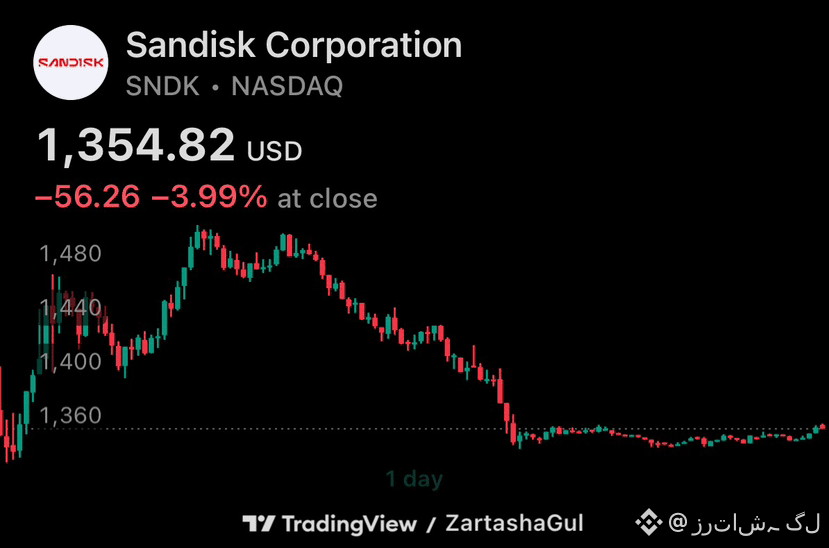
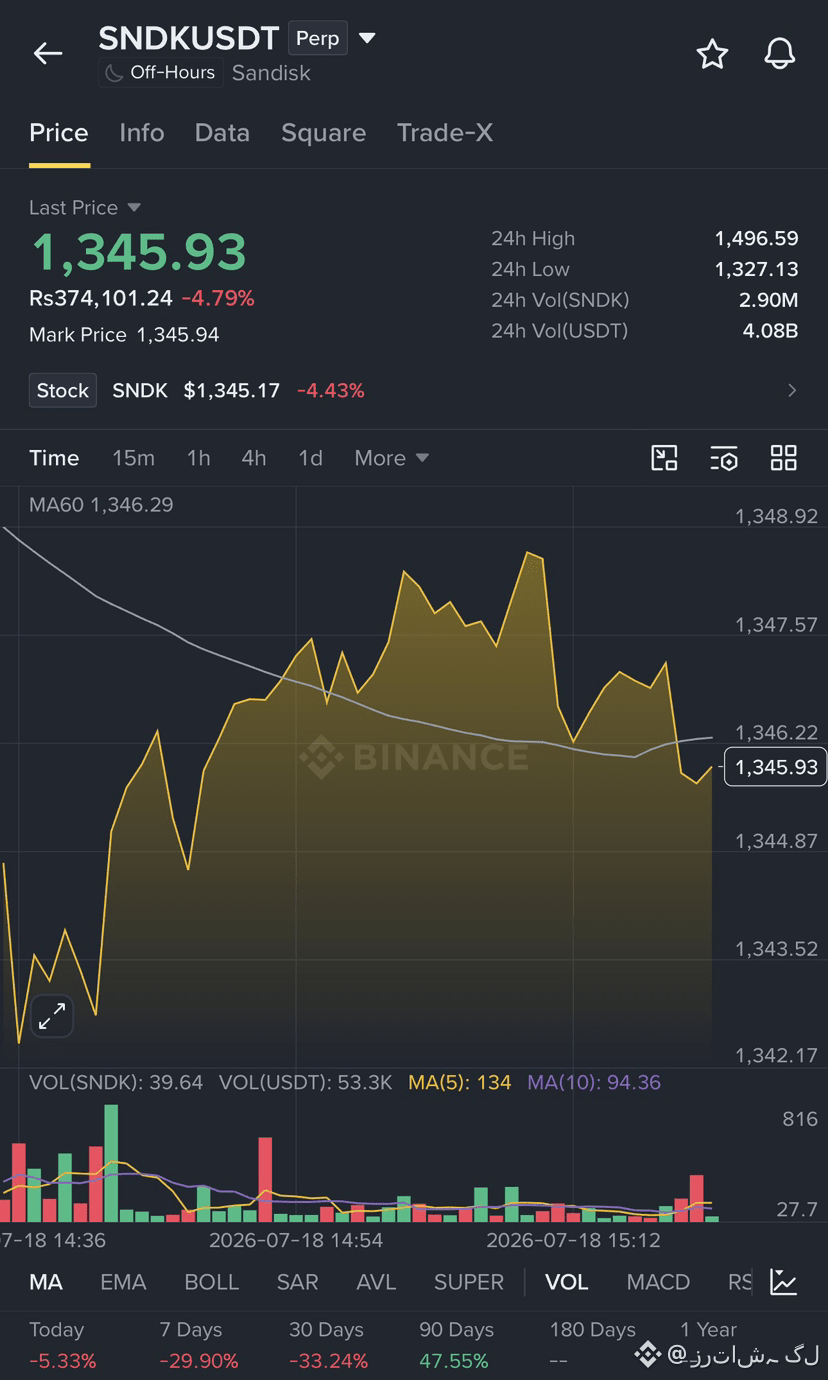
$SNDK really tested my patience today. 🥲
Just when it looked like the bulls were taking control, the price dropped right back to where it started. Now I’m stuck wondering… do I buy the dip, stay patient, or step aside and wait for confirmation?
Anyone else watching $SNDK ? I’d love to hear how you’re playing this one. Share your thoughts before I make my next move. 👇
#SNDK #NASDAQ
Just when it looked like the bulls were taking control, the price dropped right back to where it started. Now I’m stuck wondering… do I buy the dip, stay patient, or step aside and wait for confirmation?
Anyone else watching $SNDK ? I’d love to hear how you’re playing this one. Share your thoughts before I make my next move. 👇
#SNDK #NASDAQ
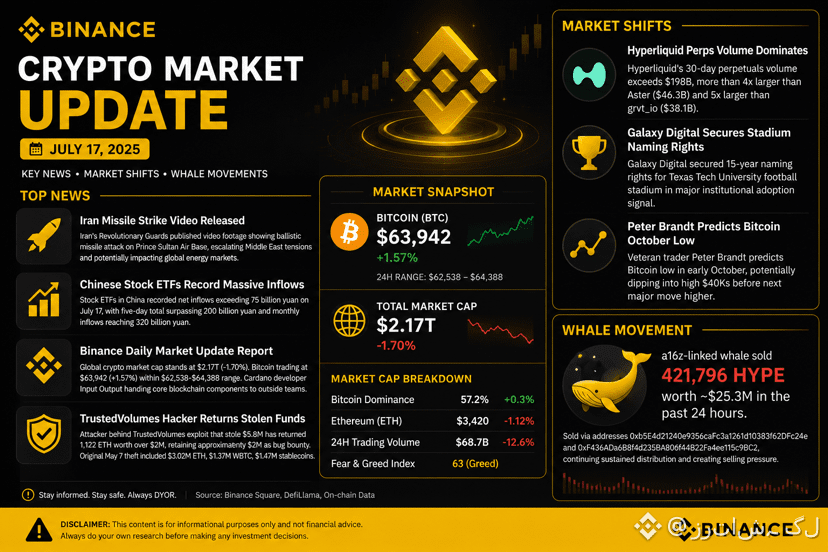
Crypto Market Update | What I’m Watching Today
Markets remain cautious as macro headlines continue to drive sentiment.
Bitcoin is trading around $63.9K, holding above key support after a volatile session. The total crypto market cap is near $2.17T, showing that risk appetite remains fragile despite BTC’s resilience.
Developments:
• Iran released footage of its missile strike on Prince Sultan Air Base, keeping geopolitical risks elevated. Any further escalation could impact oil prices and broader financial markets.
• Chinese equity ETFs attracted over ¥75B in net inflows on July 17, pushing the five-day total above ¥200B. Strong capital inflows into traditional markets are worth watching alongside crypto.
• Hyperliquid continues to dominate the on-chain perpetuals market with roughly $198B in 30-day trading volume, highlighting continued demand for decentralized derivatives.
• The attacker behind the TrustedVolumes exploit has returned part of the stolen funds, but retained a portion as a claimed “bug bounty” another reminder that DeFi security remains a major focus.
🐋 Whale Watch
An address linked to a16z sold around 421,796 HYPE (about $25.3M) over the past 24 hours. Large VC-linked transfers don’t always signal a bearish trend, but they can increase short-term selling pressure and volatility.
The market is balancing three major forces right now: geopolitical uncertainty, growing institutional participation, and strong on-chain activity. Short-term volatility is likely to continue, but capital is still flowing into both traditional finance and crypto infrastructure.
Always follow risk management and avoid making decisions based on a single headline.
#bitcoin #crypto #Hyperliquid #hype #MarketUpdate
Markets remain cautious as macro headlines continue to drive sentiment.
Bitcoin is trading around $63.9K, holding above key support after a volatile session. The total crypto market cap is near $2.17T, showing that risk appetite remains fragile despite BTC’s resilience.
Developments:
• Iran released footage of its missile strike on Prince Sultan Air Base, keeping geopolitical risks elevated. Any further escalation could impact oil prices and broader financial markets.
• Chinese equity ETFs attracted over ¥75B in net inflows on July 17, pushing the five-day total above ¥200B. Strong capital inflows into traditional markets are worth watching alongside crypto.
• Hyperliquid continues to dominate the on-chain perpetuals market with roughly $198B in 30-day trading volume, highlighting continued demand for decentralized derivatives.
• The attacker behind the TrustedVolumes exploit has returned part of the stolen funds, but retained a portion as a claimed “bug bounty” another reminder that DeFi security remains a major focus.
🐋 Whale Watch
An address linked to a16z sold around 421,796 HYPE (about $25.3M) over the past 24 hours. Large VC-linked transfers don’t always signal a bearish trend, but they can increase short-term selling pressure and volatility.
The market is balancing three major forces right now: geopolitical uncertainty, growing institutional participation, and strong on-chain activity. Short-term volatility is likely to continue, but capital is still flowing into both traditional finance and crypto infrastructure.
Always follow risk management and avoid making decisions based on a single headline.
#bitcoin #crypto #Hyperliquid #hype #MarketUpdate
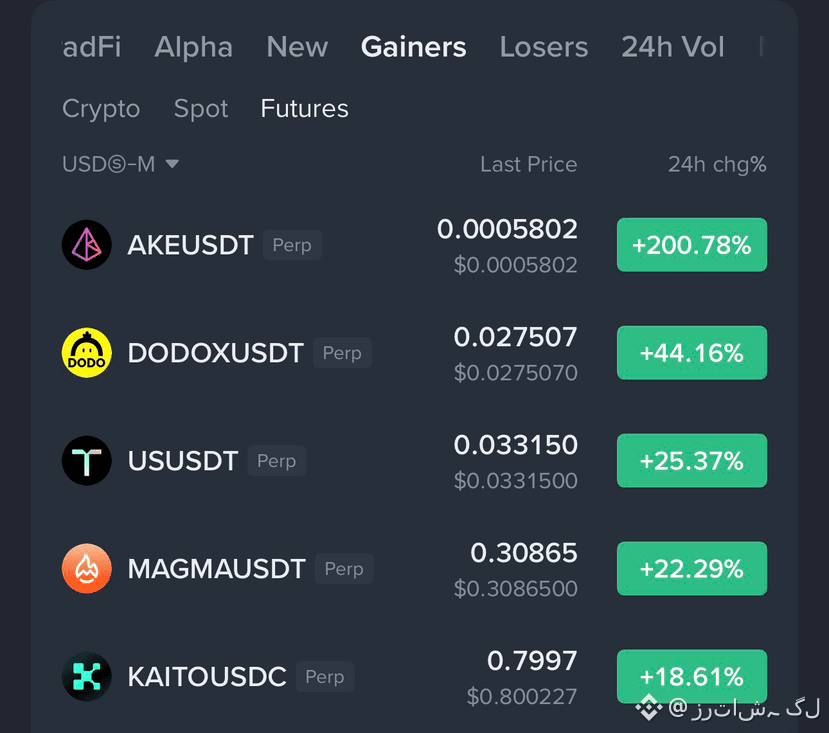
Today’s USDⓈ-M Futures top gainers are showing low-cap volatility + rotation:
- $AKE USDT +200.78% — Massive spike. Likely news/catalyst driven. High risk, watch for dump.
- $DODOX USDT +44.16% — DODO ecosystem getting momentum. Strong follow-through.
- $US USDT +25.37% & MAGMAUSDT +22.29% — Mid-tier movers. Rotation into narrative tokens.
- #KAITO USDC +18.61% — AI/data sector still attracting flows.
Risk-on sentiment in perps. Volume rotating into small caps.
Leverage amplifies these moves both ways, so manage risk.
Educational content only. Not financial advice. DYOR.
- $AKE USDT +200.78% — Massive spike. Likely news/catalyst driven. High risk, watch for dump.
- $DODOX USDT +44.16% — DODO ecosystem getting momentum. Strong follow-through.
- $US USDT +25.37% & MAGMAUSDT +22.29% — Mid-tier movers. Rotation into narrative tokens.
- #KAITO USDC +18.61% — AI/data sector still attracting flows.
Risk-on sentiment in perps. Volume rotating into small caps.
Leverage amplifies these moves both ways, so manage risk.
Educational content only. Not financial advice. DYOR.
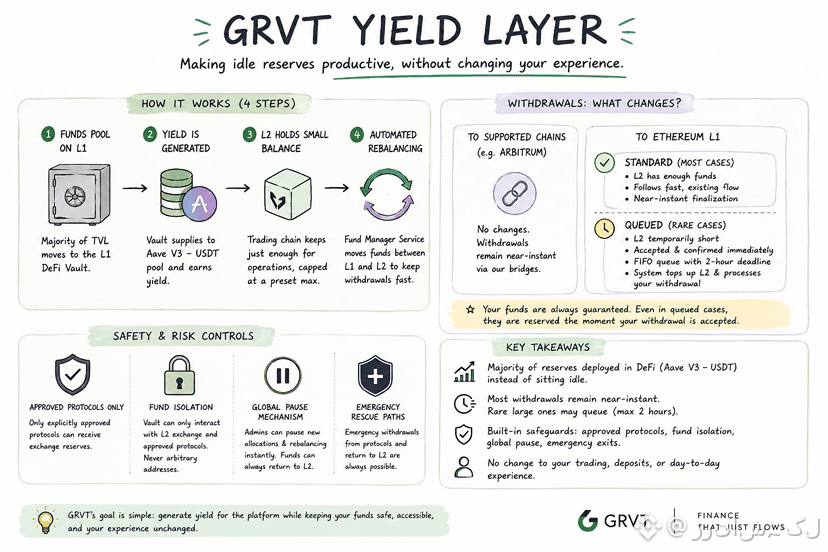
@grvt_io had me going down another rabbit hole today. I opened the new Yield Layer docs expecting a simple "earn yield on idle assets" update. Instead, one design choice kept pulling my attention back: GRVT is moving the majority of exchange reserves into Ethereum DeFi while deliberately keeping only a small operational balance on its L2.
Sounds risky at first.
But the interesting part isn't the yield. It's how they designed withdrawals around it.
Most reserves now sit in an L1 DeFi Vault, earning yield through Aave V3's USDT pool, while an automated Fund Manager continuously rebalances liquidity between Ethereum and GRVT's Validium chain. Trading doesn't change, deposits don't change, and most withdrawals remain near-instant.
The catch?
Very large withdrawals can occasionally enter a FIFO queue with a guaranteed 2-hour maximum processing window if the L2 balance needs topping up.
That's a subtle shift.
Most exchanges keep idle reserves sitting around just to guarantee instant liquidity. #grvt is trying to make those assets productive instead, then engineering the withdrawal flow so users rarely notice the difference.
The security model caught my eye even more than the yield.
The DeFi Vault can only interact with approved protocols, starting with Aave V3. It cannot send funds to arbitrary wallets. There's also a global pause mechanism that stops new allocations while still allowing funds to flow back to the exchange if needed.
Grabbed a coffee halfway through reading and kept wondering whether this is where exchange infrastructure is quietly heading. Instead of leaving billions idle for liquidity, capital keeps working in DeFi while automation handles the balancing behind the scenes.
Not saying every exchange should copy the model.
Just noticing that the conversation seems to be shifting from "Can exchanges generate yield?" to "Can they generate yield without changing the user experience?"
That feels like the more interesting question.
$BSB #grvt
$ALCH
Sounds risky at first.
But the interesting part isn't the yield. It's how they designed withdrawals around it.
Most reserves now sit in an L1 DeFi Vault, earning yield through Aave V3's USDT pool, while an automated Fund Manager continuously rebalances liquidity between Ethereum and GRVT's Validium chain. Trading doesn't change, deposits don't change, and most withdrawals remain near-instant.
The catch?
Very large withdrawals can occasionally enter a FIFO queue with a guaranteed 2-hour maximum processing window if the L2 balance needs topping up.
That's a subtle shift.
Most exchanges keep idle reserves sitting around just to guarantee instant liquidity. #grvt is trying to make those assets productive instead, then engineering the withdrawal flow so users rarely notice the difference.
The security model caught my eye even more than the yield.
The DeFi Vault can only interact with approved protocols, starting with Aave V3. It cannot send funds to arbitrary wallets. There's also a global pause mechanism that stops new allocations while still allowing funds to flow back to the exchange if needed.
Grabbed a coffee halfway through reading and kept wondering whether this is where exchange infrastructure is quietly heading. Instead of leaving billions idle for liquidity, capital keeps working in DeFi while automation handles the balancing behind the scenes.
Not saying every exchange should copy the model.
Just noticing that the conversation seems to be shifting from "Can exchanges generate yield?" to "Can they generate yield without changing the user experience?"
That feels like the more interesting question.
$BSB #grvt
$ALCH
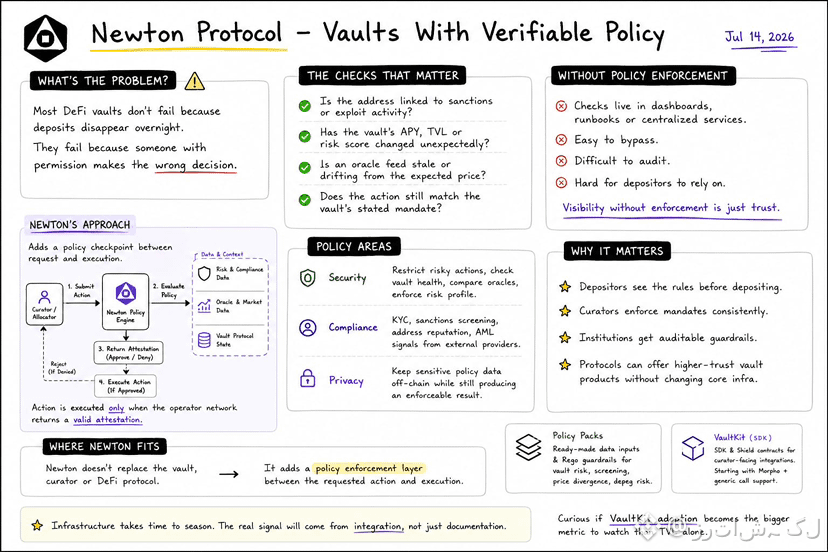
@NewtonProtocol quick notes. Ended up reading the VaultKit docs instead of just skimming the overview and one thing kept coming up.
Most DeFi vaults don't actually fail because deposits disappear overnight. They fail because someone with permission makes the wrong decision.
Newton's approach is to put a policy checkpoint between the request and the execution. Sounds simple, but it's a different security model.
The docs list the kinds of checks that can happen before a vault action goes through:
• Is the depositing address linked to sanctions or exploit activity?
• Has the vault's APY, TVL or risk score changed unexpectedly?
• Is an oracle feed stale or drifting from the expected price?
• Does the action still match the vault's stated mandate?
Without that layer, most of these decisions live in dashboards, internal runbooks or centralized services. They can be bypassed, and depositors usually have no visibility into how they're enforced.
The interesting part is Newton isn't trying to replace existing vault infrastructure.
It sits between the action request and execution, evaluates the policy, collects off-chain risk or compliance data, and only returns an attestation if the rules are satisfied.
The docs also split policy into practical categories instead of one generic "security" feature:
• Security → restrict risky vault actions.
• Compliance → KYC, AML and sanctions screening.
• Privacy → keep sensitive policy logic off-chain while still producing an enforceable authorization result.
Feels less like another yield product and more like infrastructure for making vault decisions auditable.
Still early, though.
A policy engine is only as useful as the protocols that actually integrate it. Curious whether VaultKit adoption becomes the bigger metric to watch than TVL alone.
#Newt #NewtonProtocol $NEWT
$ALCH
$BILL
Most DeFi vaults don't actually fail because deposits disappear overnight. They fail because someone with permission makes the wrong decision.
Newton's approach is to put a policy checkpoint between the request and the execution. Sounds simple, but it's a different security model.
The docs list the kinds of checks that can happen before a vault action goes through:
• Is the depositing address linked to sanctions or exploit activity?
• Has the vault's APY, TVL or risk score changed unexpectedly?
• Is an oracle feed stale or drifting from the expected price?
• Does the action still match the vault's stated mandate?
Without that layer, most of these decisions live in dashboards, internal runbooks or centralized services. They can be bypassed, and depositors usually have no visibility into how they're enforced.
The interesting part is Newton isn't trying to replace existing vault infrastructure.
It sits between the action request and execution, evaluates the policy, collects off-chain risk or compliance data, and only returns an attestation if the rules are satisfied.
The docs also split policy into practical categories instead of one generic "security" feature:
• Security → restrict risky vault actions.
• Compliance → KYC, AML and sanctions screening.
• Privacy → keep sensitive policy logic off-chain while still producing an enforceable authorization result.
Feels less like another yield product and more like infrastructure for making vault decisions auditable.
Still early, though.
A policy engine is only as useful as the protocols that actually integrate it. Curious whether VaultKit adoption becomes the bigger metric to watch than TVL alone.
#Newt #NewtonProtocol $NEWT
$ALCH
$BILL
When I looked closer, this changed my view of GRVT
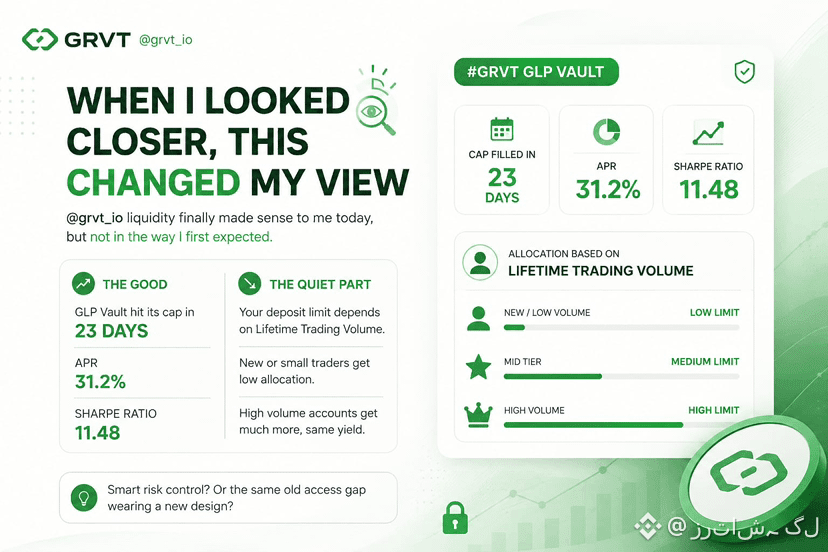
@grvt_io liquidity finally made sense to me today, but not in the way I first expected.
I was checking the #grvt GLP Vault while doing another task. The numbers looked great at first. The vault reached its cap in 23 days, shows a 31.2% APR, and a Sharpe ratio of 11.48. It feels like anyone can join.
Then I noticed something.
The amount you can deposit depends on your Lifetime Trading Volume. If you're a new user or trade less, your deposit limit stays small. I even tried it myself and the allocation was much lower than I expected.
People with a long trading history get larger limits from the start. Same vault. Same yield. Just more room to earn.
I finished my tea around here...
The system itself is simple. It rewards users who have already been active. That probably helps keep the liquidity more stable and reduces short-term farming. But watching it work in practice gave me a different view.
Maybe this is smart risk control. Or maybe it's another way of giving bigger opportunities to traders who were already ahead. Still thinking about that one.
#grvt
@grvt_io liquidity finally made sense to me today, but not in the way I first expected.
I was checking the #grvt GLP Vault while doing another task. The numbers looked great at first. The vault reached its cap in 23 days, shows a 31.2% APR, and a Sharpe ratio of 11.48. It feels like anyone can join.
Then I noticed something.
The amount you can deposit depends on your Lifetime Trading Volume. If you're a new user or trade less, your deposit limit stays small. I even tried it myself and the allocation was much lower than I expected.
People with a long trading history get larger limits from the start. Same vault. Same yield. Just more room to earn.
I finished my tea around here...
The system itself is simple. It rewards users who have already been active. That probably helps keep the liquidity more stable and reduces short-term farming. But watching it work in practice gave me a different view.
Maybe this is smart risk control. Or maybe it's another way of giving bigger opportunities to traders who were already ahead. Still thinking about that one.
#grvt
Log in to explore more content