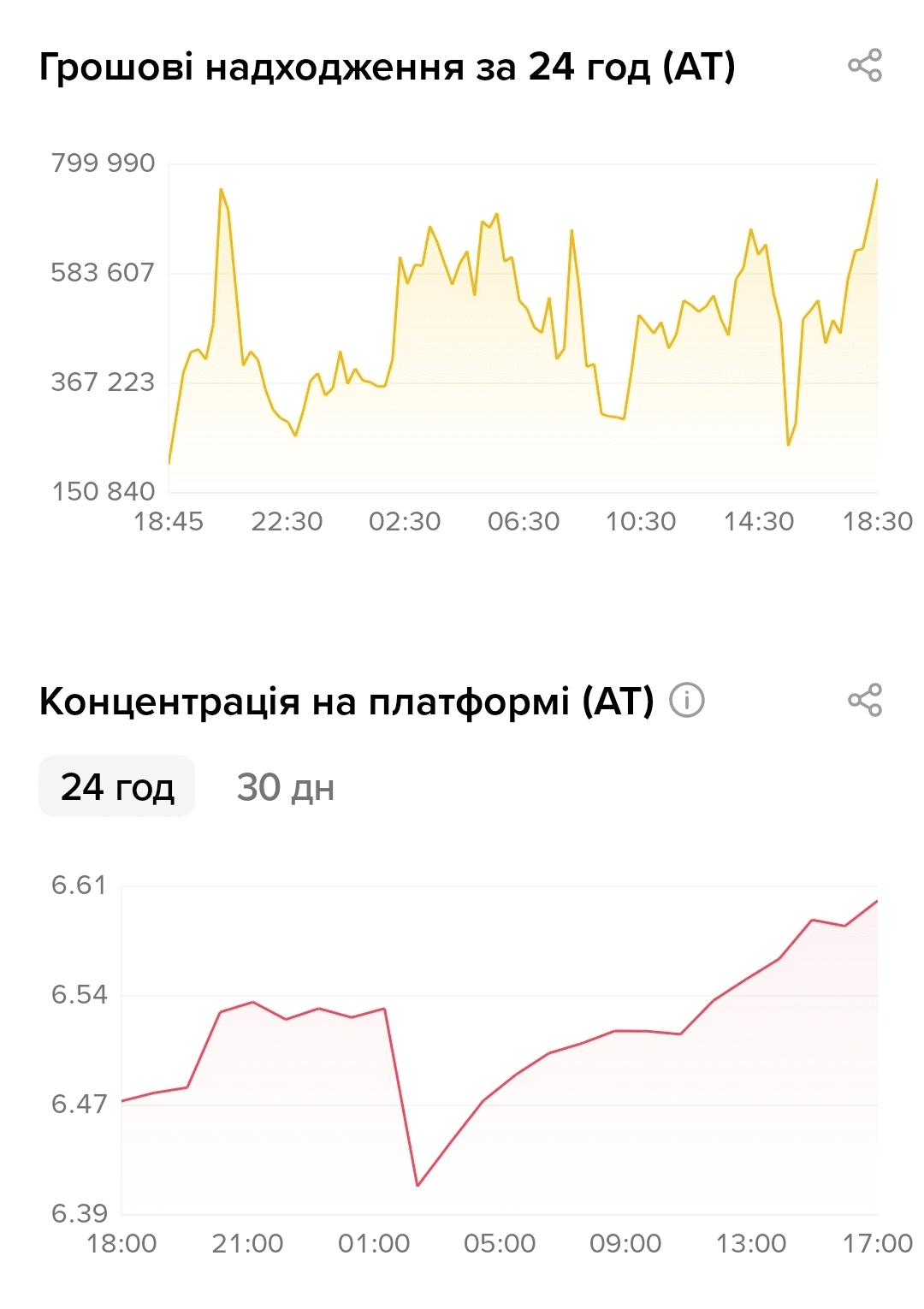
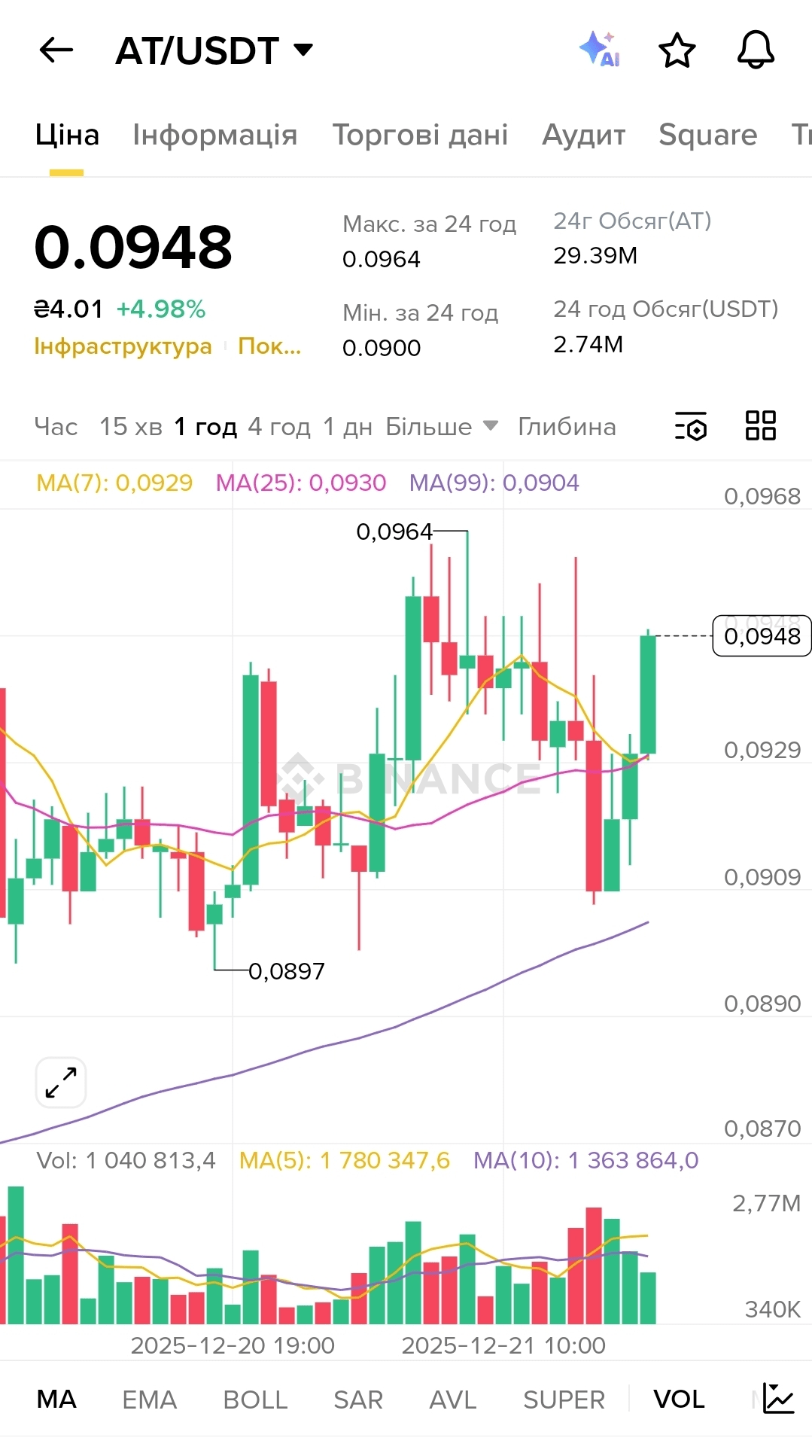
This morning I made coffee, sat down to check $AT — price 0.0948, plus five percent per day, not bad. And suddenly I thought about a strange thing that has been bothering me for a long time. We constantly talk about decentralization, about how oracles should be independent and objective. But who checks the checkers themselves? Who verifies the verifiers? It's like that old philosophical riddle — who watches the watchers?
You know, @APRO Oracle works with data verification. There are nodes that check the information before writing it to the blockchain. Sounds reliable. But what if these nodes are wrong themselves? Or collude? Or just have different ideas about what constitutes "correct" data? Who verifies them?
One might say — well, let’s create another level of verification. A meta-oracle that verifies oracles. But then who verifies the meta-oracle? Create a meta-meta-oracle? And then a meta-meta-meta? This is an infinite regression that makes your head spin.
This is called the bootstrap problem of trust. To trust a system, you need to have some initial point of trust that cannot be verified by the system itself. It's like in mathematics — there are axioms that are accepted without proof, because otherwise nothing can be proven. In physics — fundamental constants. And in oracles, what?
I look at the trading volume — over a million a day — and I wonder how many people even think about this? Most just see the numbers on the screen and believe they are correct. But where does this belief come from? From the fact that #APRO says "we use decentralized verification"? But decentralization alone does not guarantee correctness.
Imagine a specific scenario. There are ten independent oracles supplying data about the price of Bitcoin. Nine show $42,000, one shows $50,000. Which is correct? Logically — the one that matches the majority. But what if all nine are getting data from one hidden source that is wrong? And the tenth is the only correct one?
Here arises a paradox: to verify an oracle, you need to have an independent source of truth. But if it exists, then why an oracle? An oracle exists precisely because there is no universally accepted independent source of truth for off-chain data. It’s a closed loop.
@APRO-Oracle can say: "We use multiple data sources and compare them." Good. But who chose these sources? By what criteria? If I, as a user, want to verify the correctness of the source selection, do I need to... become an oracle myself? Gather my own data and compare? But then why do I need an external oracle?
There is an even worse problem — circular dependencies between oracles. Suppose oracle A verifies its data by comparing it with oracle B. Oracle B does the same with oracle C. And oracle C — with oracle A. They all refer to each other, creating the illusion of independent verification. But in reality, this is a closed system that can collectively be wrong.
This reminds me of the situation with rating agencies before the 2008 crisis. Banks relied on the ratings of agencies. Agencies relied on data from banks. Regulators relied on both. And together they created a huge financial bubble because no one checked the fundamental assumptions of the system.
Are we not creating something similar with oracles? Everyone trusts $AT because it is "verified". But verified by whom? Other oracles? Audit firms that do not have an independent way to verify off-chain data? By a community that simply checks the code but cannot verify reality?
One possible solution is the use of crypto-economic incentives. The idea is that verifiers stake tokens, and if they confirm incorrect data, they lose their stake. This should motivate honesty. But here again, there is a problem: who determines that the data was incorrect? We need independent verification... and we are back in a closed circle.
Maybe the solution lies in the multiplicity of oracles without claiming absolute truth? Like, instead of seeking the "correct" oracle, acknowledge that each oracle is one of the possible interpretations of reality. And smart contracts choose which to trust, or aggregate several sources.
But this creates a new problem — how should the smart contract choose between the oracles? By reputation? But reputation is based on past correctness, which... again, someone has to have verified. By price? But why does a higher price mean more correctness? By popularity? But the majority can be wrong.
I thought about this and came to an unpleasant conclusion: perhaps ideal verification does not exist in principle. Perhaps any verification system has some axiomatic basis that cannot be proven within the system itself. Like Gödel's theorem of incompleteness — no sufficiently complex system can prove its own consistency.
For oracles, this means: there will always be some level of basic trust that cannot be verified. The question is only where to place this trust. In the developers of @APRO-Oracle? In cryptography? In economic incentives? In the community? In some combination of all?
Honestly, this makes me a little uneasy. Because we are building critical infrastructure for the future on a foundation that cannot be fully verified. Billions of dollars in DeFi depend on oracles. Perhaps one day elections, court decisions, resource distribution will depend on them. And at the core — an unverified axiom of trust.
Maybe I'm being too philosophical. Maybe in practice it's not such a big problem. If there are enough independent verifiers, if the incentives are set correctly, if there are mechanisms for appeals — perhaps the system will work well enough, even without absolute verification.
But "good enough" is not the same as "guaranteed correct". And as the stakes rise, as more critical systems start to rely on oracles, this difference becomes important. One big mistake, one failure in verification — and a cascading collapse can occur.
I look at this graph of $AT, I see growth, and part of me is happy — the project is developing, the market trusts. But another part is cautious — is this trust growing faster than the system's ability to justify it? Are we not creating the illusion of verified truth where there is only a consensus of unverified assumptions?
Perhaps the industry needs greater epistemological humility. Instead of saying "we guarantee the correctness of the data", say "we provide the best available verification with these limitations and assumptions". But who would want to use an oracle that openly acknowledges its inability to achieve absolute verification?
This is not only a #APRO problem, it is a problem for the entire concept of oracles. We are trying to transfer the uncertain, controversial, complex real world into a clear, deterministic, simple world of blockchain. And in the process, we inevitably lose something important. Nuances. Context. The possibility of revision. Acknowledgment of uncertainty.
Sometimes I think — maybe the solution is not in improving verification, but in building systems that can work with unverified information. That embed uncertainty into their logic. That do not break when it turns out that the "guaranteed correct" data was wrong.
But this means giving up many advantages of deterministic smart contracts. From the idea that "code is law". From automation that works without human intervention. It's a return to a world where arbiters, appeals, interpretations are needed. And isn't this what we fled to blockchain from?
I sit with coffee that has already cooled and realize — I have asked myself a question that has no simple answer. Who verifies the verifiers? No one. Or everyone. Or it’s the wrong question, and another approach to the problem of trust in decentralized systems needs to be sought.
So far @APRO Oracle does what it can — multiple sources, economic incentives, transparent algorithms. This is the best possible in the current situation. But we, as an industry, need to honestly acknowledge the limitations. Not to sell the illusion of absolute verification. Not to promise what we cannot guarantee.
Because when a promise is broken, trust is shattered forever. And then no verification will help.