Institutions are taking over while Asia is offloading.
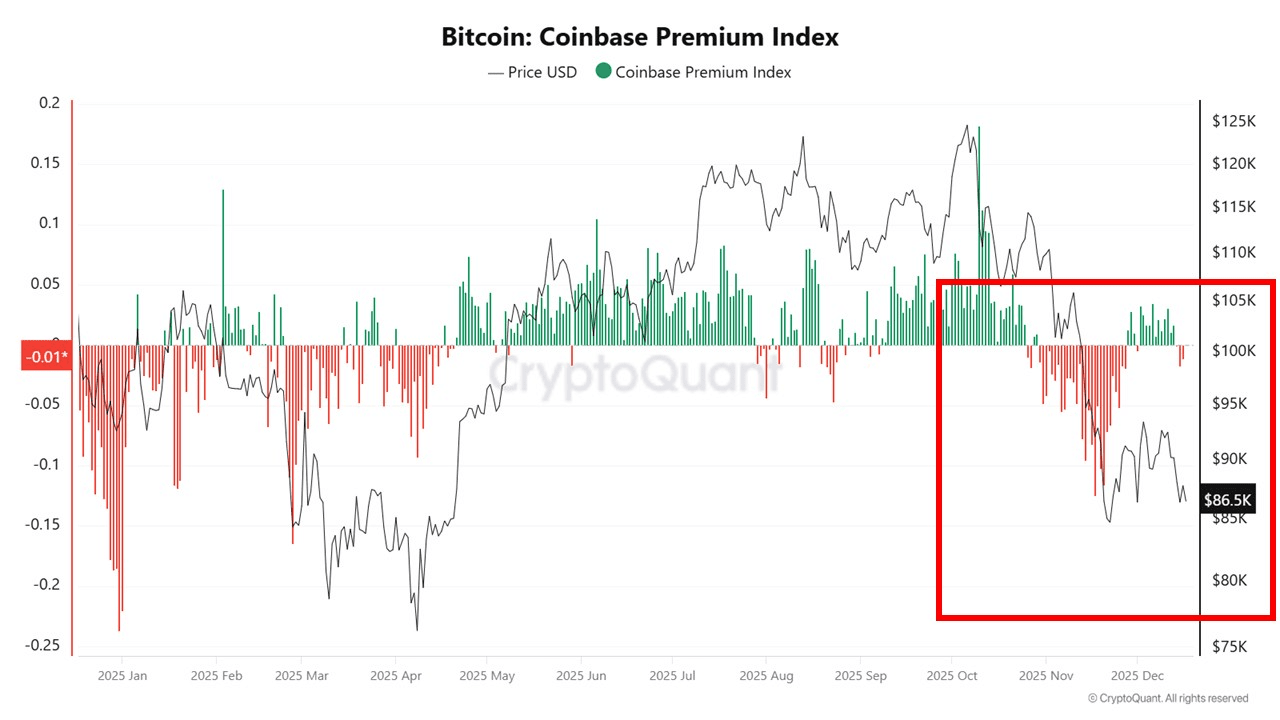
Bitcoin is currently stagnant, it's really not that American institutions are fleeing. The Coinbase Premium Index has either been at a premium or close to neutral, ETF.
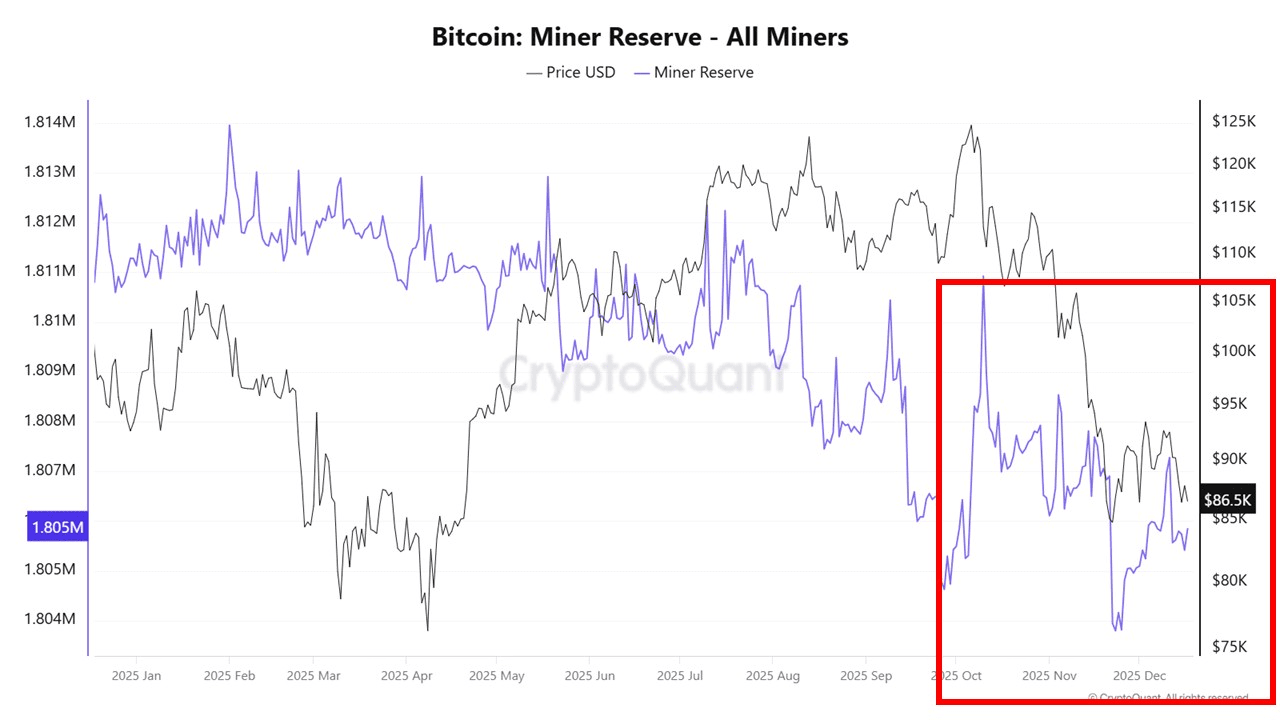
And institutional money is still slowly flowing in, the demand side hasn't collapsed at all. What's really holding up the price is that there are quite a few sellers, and they are concentrated in Asia. Binance, Bybit, OKX, these major battlefields in Asia, have basically been selling spot every day in the fourth quarter, with substantial selling pressure. To add to this, miners are also being forced to sell. Hashrate has recently dropped by about 8%, and miner reserves are going down simultaneously, meaning simply: electricity and operating costs need to be paid; without selling coins, they can't survive. This kind of selling isn't 'I'm bearish', but rather 'I have no money left', belonging to inelastic supply, which is particularly exhausting. Even more subtly, some old coin holders in Asia are also starting to let go, mainly those with extremely low-cost chips from early years, doing a round of redistribution before the macro and regulatory uncertainties heat up, which is not new at all in history. So you see the current scene: on one side, American institutions are slowly taking over, and on the other side, Asia is selling off and miners are continuously clearing out. Before this phase of 'buying pressure absorbing forced selling' is over, it's basically unrealistic for the market to take off in one go. It's not that there’s no demand for Bitcoin now, but that the sellers haven’t sold out yet. The real turning point depends on one thing: when these involuntary sellers will exit.
Ethereum's popularity has hit rock bottom
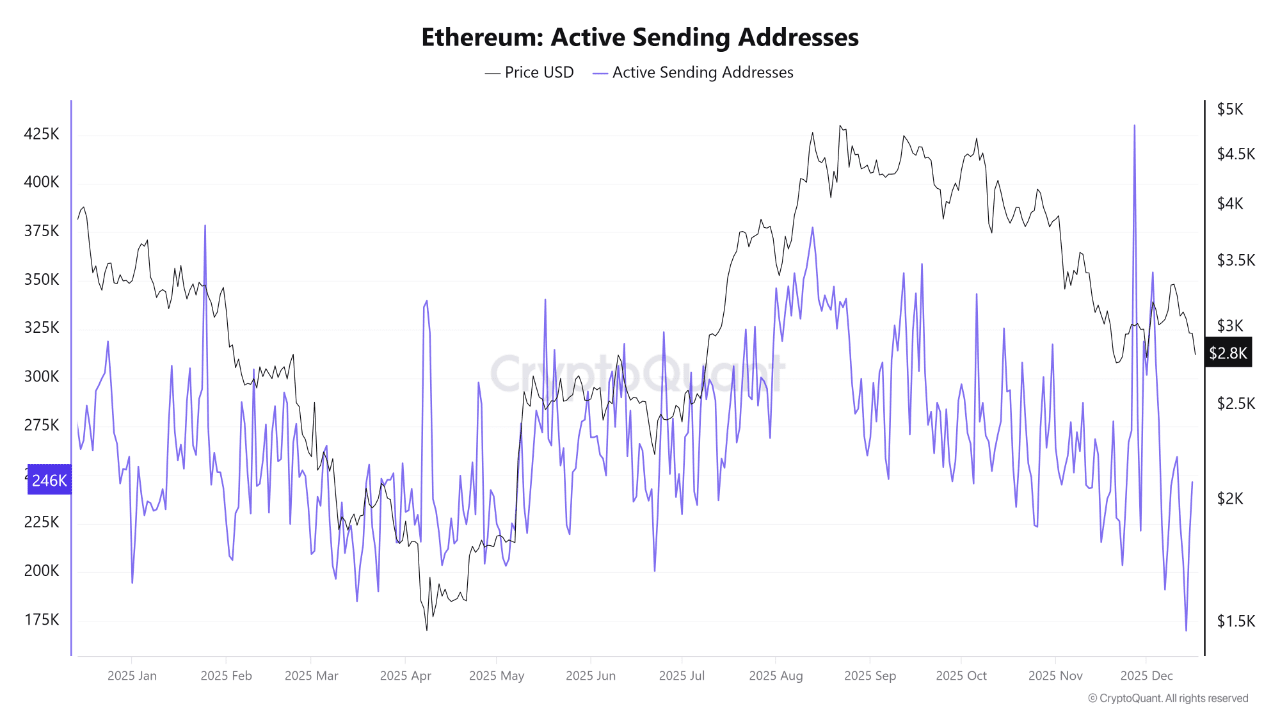
Currently, Ethereum, to put it bluntly, is "no one is coming anymore." The number of active sending addresses has dropped to about 170,000, directly hitting a nearly one-year low, and retail investors have basically chosen to shut down and lie flat. The previous fluctuations took too long, and short-term funds have lost their patience, so naturally, fewer people are using it on-chain. However, this is not a collective dump and run; it feels more like the sellers have mostly sold out, but there is a vacuum period where new buyers have not entered the market. The result is: the selling pressure is not great, but no one is pushing the price up, and the market can only fluctuate sideways. Historically, such stages are often "the calm before the storm," and medium to long-term funds often slowly ambush during this quiet time. The real turning signal is also very simple: the number of addresses starts to climb again, and the price stabilizes at a low level. Before that, Ethereum will likely have to continue to grind.
Ethereum has bottomed out on exchanges
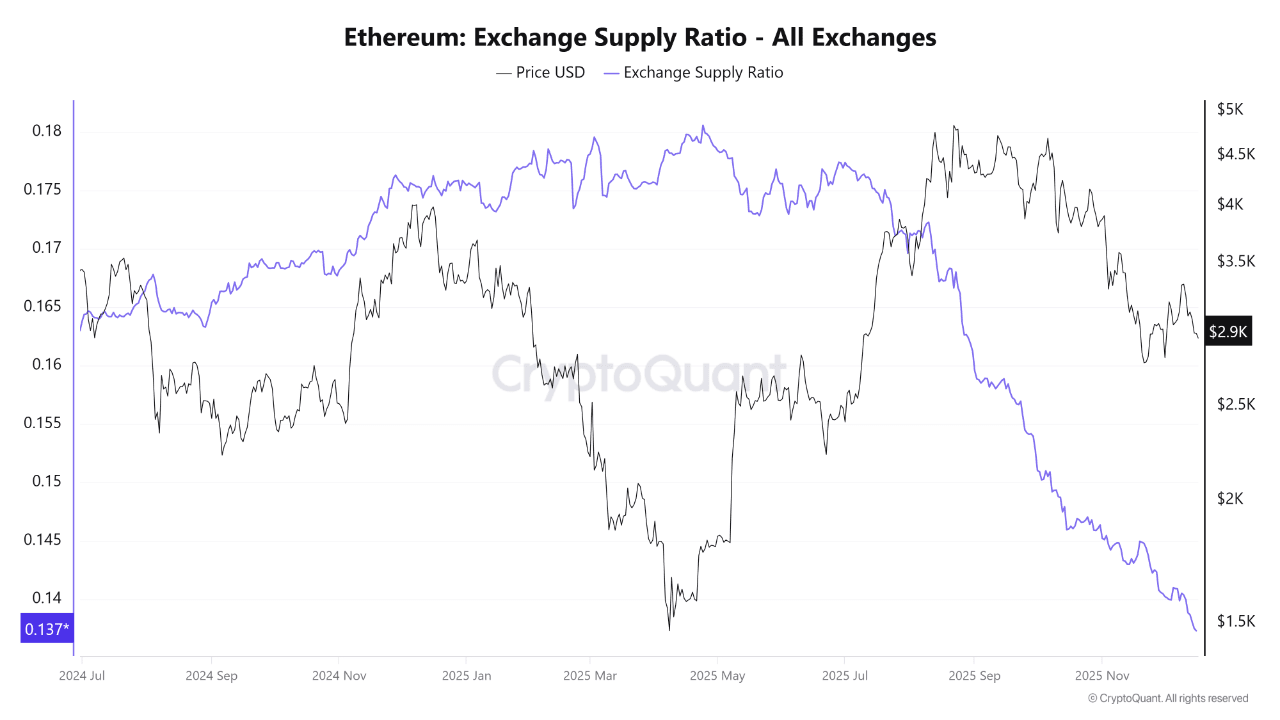
Currently, Ethereum is somewhat like "everyone has moved their coins back home from exchanges." On-chain data shows that the supply ratio of ETH on exchanges, ESR, has dropped to 0.137, which is the lowest range since 2016. This means quite clearly: the spot chips that can be casually dumped are clearly becoming less. Looking at the most critical point, Binance, the ESR of ETH has dropped to 0.0325, and large withdrawals are still ongoing. This indicates that the market is not thinking about "finding opportunities to sell," but rather "taking it away first, don't leave it on the table." The price is also quite interesting; Ethereum is currently hovering around $2960, and it hasn't suddenly soared due to the decrease in supply, nor has it dropped in panic. It looks more like it's silently digesting positions and rearranging the order. In simple terms, it may still have to grind sideways in the short term, but whether it can break out in the medium term no longer depends on who wants to sell, but rather when someone is willing to start buying with real money.