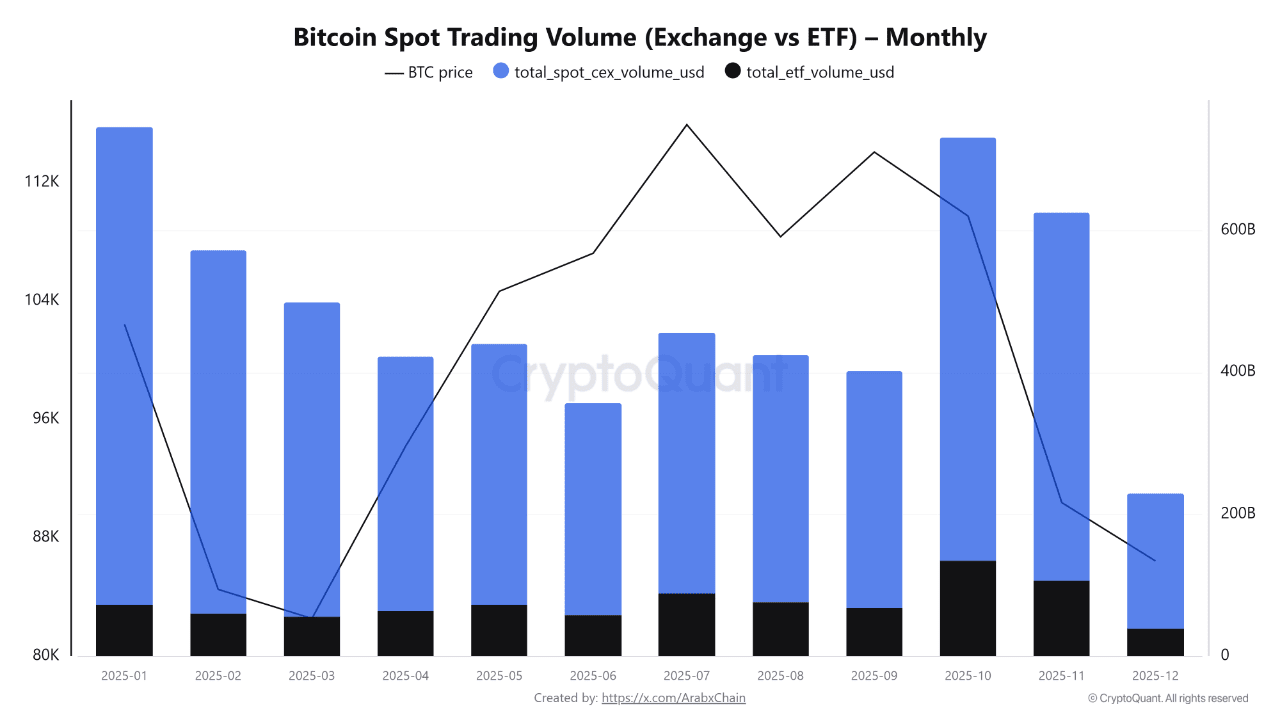
Bitcoin trading volume is cooling down.
As of today at 12:30 PM, Bitcoin has dropped below $87,000, with a 24-hour increase of 1.49%. The Bitcoin market in December can be summed up in one sentence: there are fewer people, and the volume has also been turned down. On the exchange side, the total CEX trading volume for the month is about $191 billion, with Binance still firmly in the center, handling over 50 billion alone; however, the ETF side has clearly cooled down, with only about $39 billion left. In comparison to the 'standing ovation' state in the first half of November, CEX was at $263 billion, ETF.
Over 50 billion, this is clearly a retreat now. What does it mean? It's not that everyone suddenly lost faith, but rather that risk appetite is decreasing, and money is taking a pause to wait and see. The market has switched from 'pushing up with volume' to 'grinding sideways, slowly consuming.' However, don't rush to conclusions; this reduced volume seems more like a normal breather after being too excited, rather than a sign of a trend breaking down. The old rule still stands: once funds come back, the first to heat up will still be Binance's trading volume.
Panic has filled the market but it’s not dead
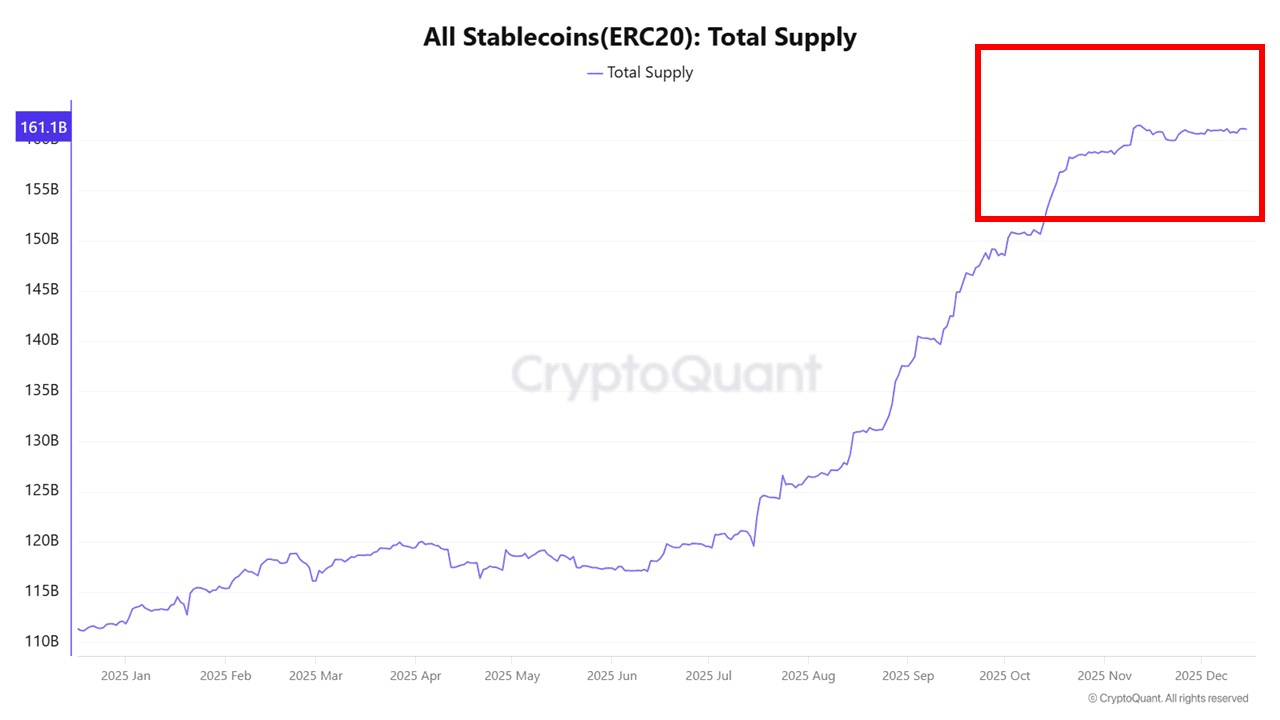
The current cryptocurrency market, to put it bluntly, is like a collective emergency brake being pulled. The Bitcoin Fear and Greed Index has dropped to 11, directly entering the 'extreme fear zone,' and the sentiment of short-term funds is basically 'run if you can.' But seasoned players know that such positions are often not the starting point for a new round of plummeting, but more like the tail end of panic selling winding down. Looking at where the money is coming from is also very honest. In the second half of the year, the total volume of ERC-20 stablecoins is indeed still increasing, but the speed at which new money enters the market has noticeably slowed, especially for Tether, which saw its market cap increase from $15.38 billion in November to a direct shrink to $4.83 billion within 60 days, with marginal funds nearly hitting the brakes. On-chain activity is also cooling down, with the number of active Bitcoin addresses having fallen back to a one-year low, indicating that the group of people making short-term trades is retreating, leaving behind more who plan to hold for a longer time. In this 'few people, slow money' environment, prices will be more sensitive to news, but the benefit is that there is less noise, and the supply-demand relationship begins to reveal its true form. On the surface, it looks quiet, but it’s actually more like making room for the next market phase and slowing down, rather than directly announcing the end.
Slowing down is not a reversal
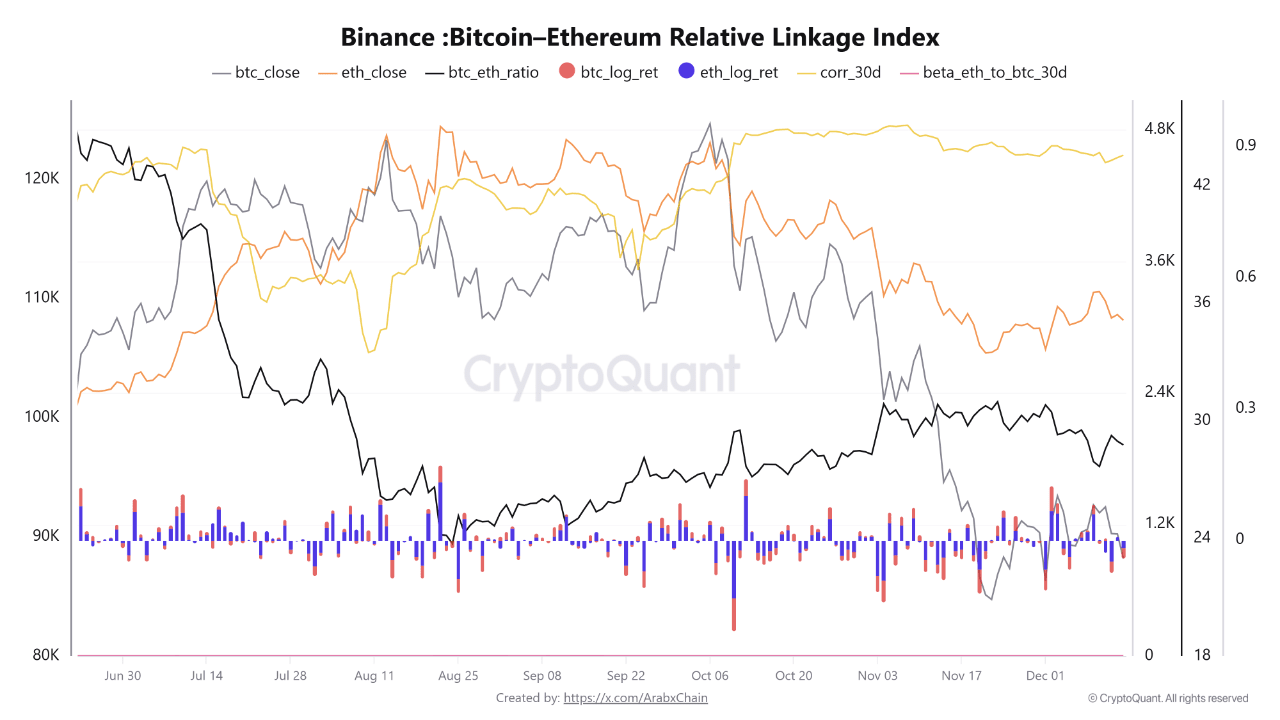
The latest data shows that the short-term returns of Bitcoin and Ethereum have turned negative together, indicating that this surge was too strong, and the market has begun to hit the brakes. Bitcoin is hovering around $87,000, while Ethereum is running around $3,000, and this time it’s mainly Bitcoin that is turning first, bringing the momentum down with it. But this feels more like a pause after a rise, rather than a collapse of the market. Structurally, the 30-day correlation between the two brothers is still above 0.85, indicating they are still in the same boat; it’s just that they are not holding on tighter and are starting to go their separate ways. Ethereum's temperament hasn’t changed either, with a beta coefficient close to 1.3, meaning whenever Bitcoin moves, it gets more excited, rising more fiercely and falling harder. So the current state, rather than being bearish, is more about digesting the gains and slowing down the pace; the next likelihood is still to be dominated by fluctuations, waiting for the market to clarify its next steps.