
Azu has always felt that the term 'partner' is the easiest to be 'blown out of proportion' in the public chain ecosystem. The logos on the poster are lined up like graduation photos, but the real report card is not on the poster, but in the mainnet: Are there real contracts reading your data? Are there real positions relying on your prices to survive? Has anyone been saved or harmed by you during extreme volatility? The 'official exposure' about APRO in the BNB Chain ecosystem is worth presenting as the theme for Day 19, because it doesn't just talk about vision like marketing fluff, but rather puts you in an exam room: Can you run long-term in the ecosystem? Can developers repeatedly call upon you? Can you stand firm in risk-sensitive businesses?
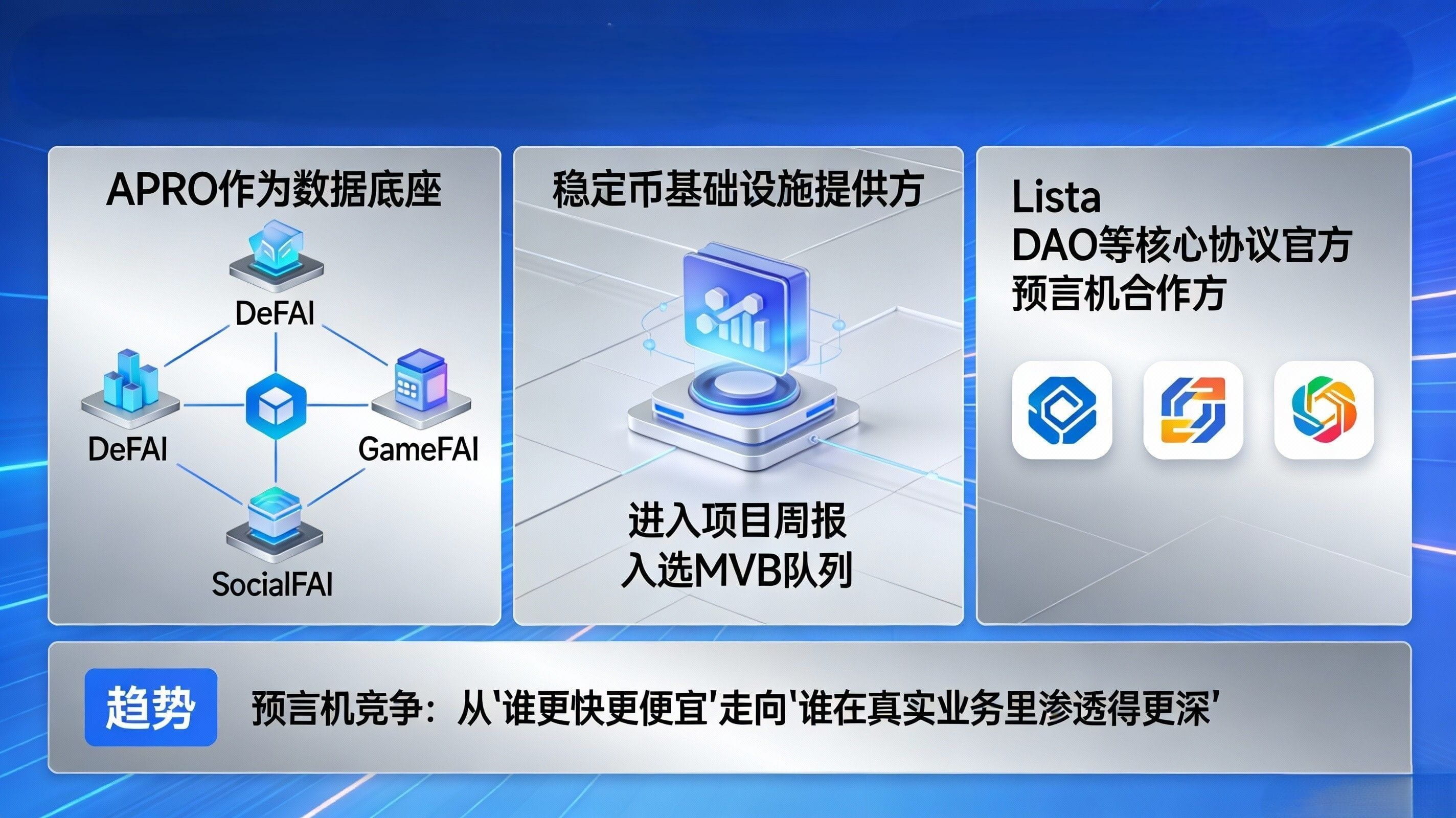
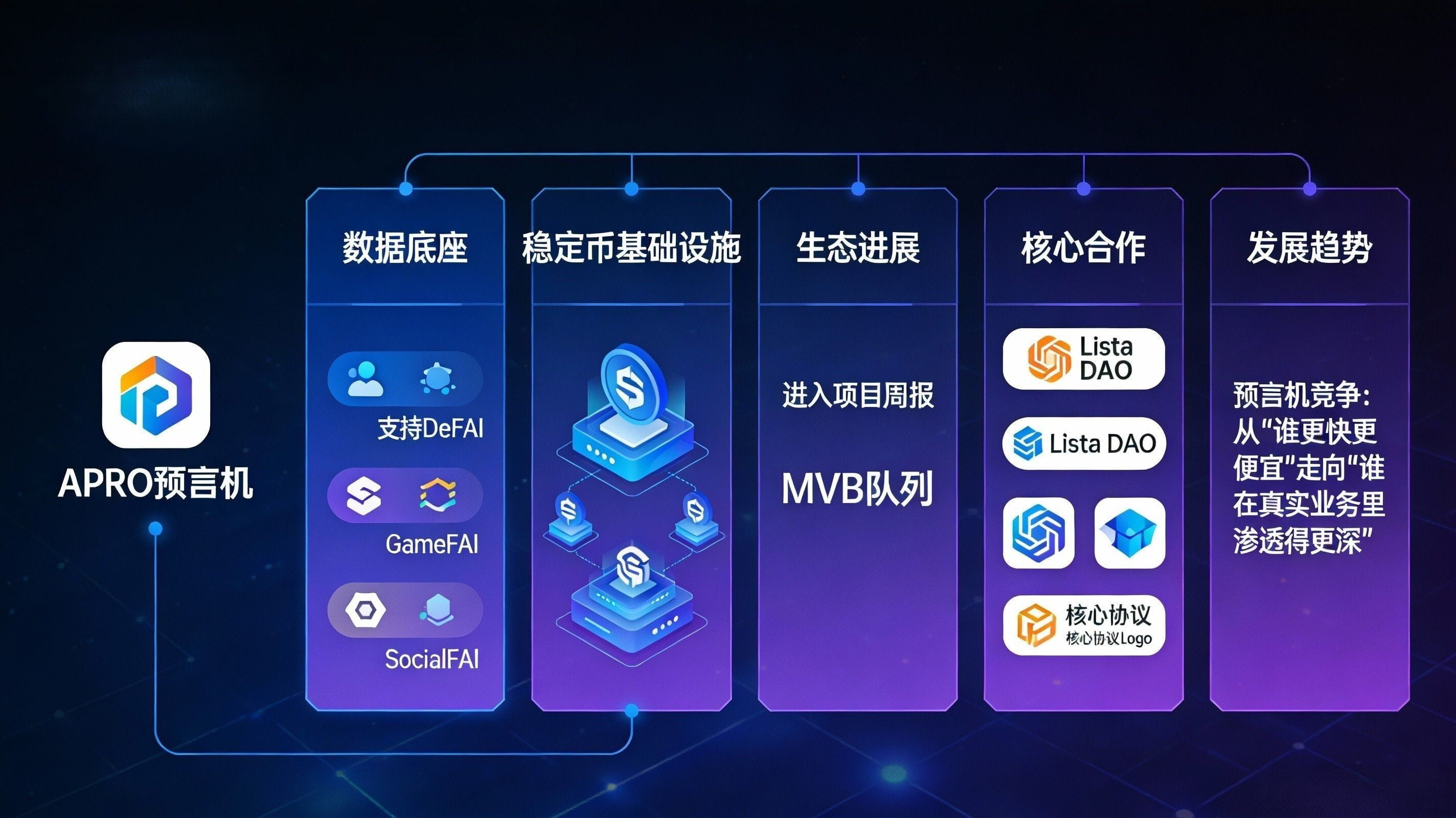
Look at BNB Chain's DappBay, which directly describes APRO as 'a secure data transfer layer for AI agents and BTCFi,' and specifically mentions that ATTPs are a set of protocols that make data transfer 'tamper-proof and verifiable'; the subtext of this statement is that BNB Chain does not see APRO as 'just another price feed source,' but as a data foundation capable of supporting more complex applications like DeFAI, GameFAI, and SocialFAI. Additionally, in BNB Chain's ecosystem articles, APRO is also listed among the providers of stablecoin infrastructure, alongside custodians, wallets, bridges, and other roles—this is not a context of 'comparing technical parameters,' but rather 'comparing business penetration': can you become an indispensable part of others' product chains?
What resembles a 'report card' is that BNB Chain repeatedly includes APRO in various ecosystem mechanisms. For instance, in BNB Chain's project weekly reports, APRO is listed as an infrastructure project, describing its narrative of extending the asset prices of BNB Chain to multiple BTC L2s; another example is that APRO's name has also appeared in the MVB (Most Valuable Builder) queue, emphasizing its positioning of 'Bitcoin-level security.' This kind of 'official directory-style appearance' is crucial because directories are not for storytelling, but for helping developers find tools and users find entry points. Being included means you must accept a broader range of calls and scrutiny.
Thus, today's rule changes have emerged along this 'report card': the competition among oracles is shifting from 'who is faster and cheaper' to 'who penetrates deeper into real business.' When the ecosystem starts to compare you with stablecoins, lending, payments, RWA, and AI Agents in these main channels, merely discussing price feed delays is no longer sufficient; everyone will ask more practical questions: have you established a foothold in liquidation-type businesses? Can you maintain consistent data standards in multi-chain scenarios? Can you deliver auditable outputs for 'more challenging inputs' like unstructured information, compliance data, and PoR?
And 'real competition happens in mainnet businesses'; the most intuitive example is the core protocols of BNBFi like Lista DAO. Modular combinations like lending, staking, and CDP stablecoins essentially use oracles as a risk control hub: price stability determines whether the trigger for liquidation is reasonable, and data continuity in extreme market conditions determines whether the system will experience bad debt diffusion. Public reports mention that APRO has become one of the official oracle partners of Lista DAO, providing safer, more stable, and verifiable price feeds for its lending, staking, and other modules, covering the BNB Chain mainnet. You can understand this as an upgrade from 'technical benchmarking to business entry': when you can enter such liquidation-sensitive scenarios, your competitors are no longer PPTs, but mainnet volatility.
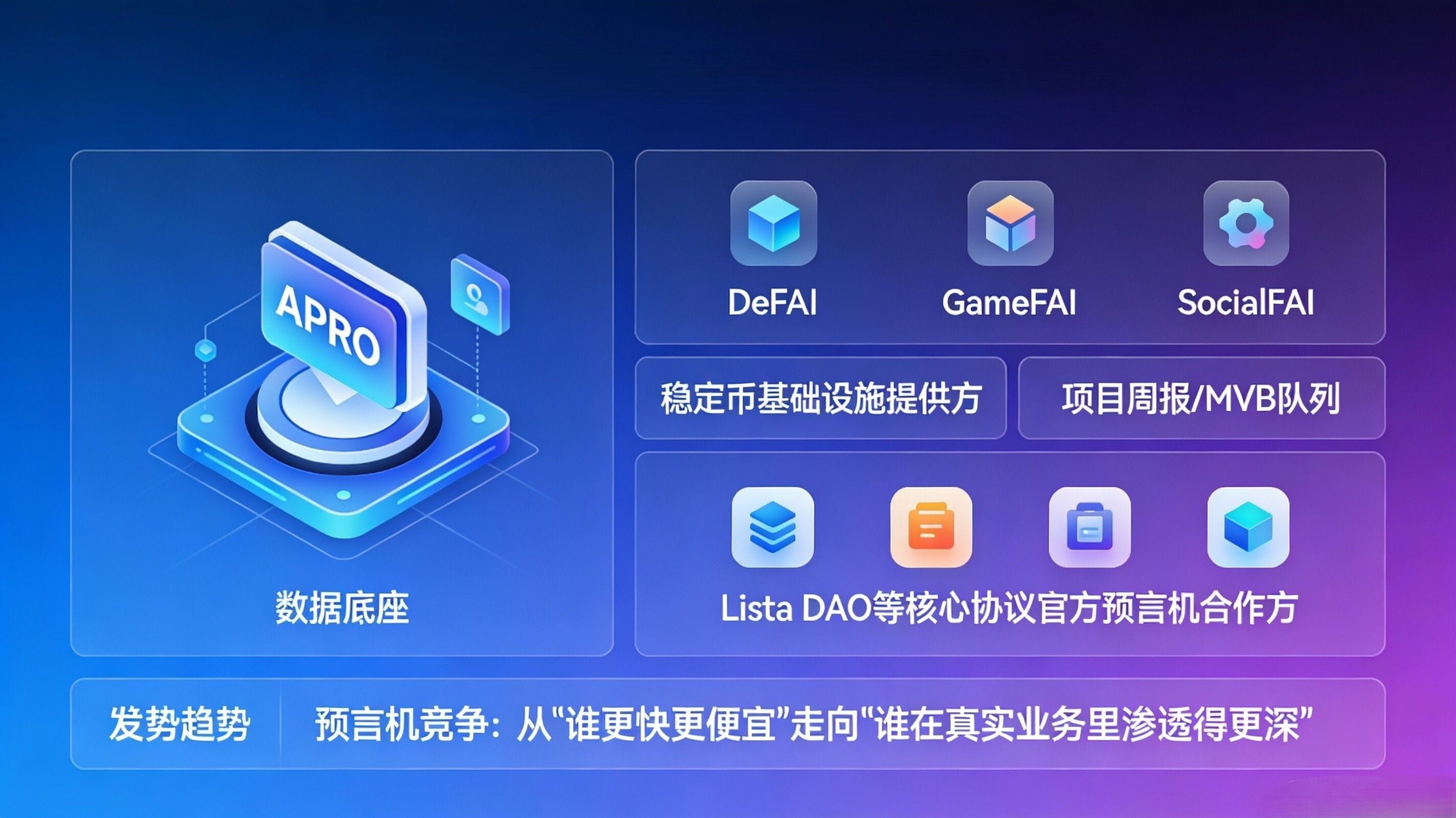
The impact on regular users can be summarized in one sentence: what BNBFi users should truly expect is not 'another yield play,' but 'more stable prices and a solid data foundation.' When oracles in the ecosystem become as essential as utilities like water, electricity, and gas, users will have the opportunity to refocus on strategies themselves instead of worrying daily about whether 'this time it's an abnormal liquidation caused by a slight fluctuation in the price feed.' Stablecoins, lending, RWA vaults, and even future more automated Agent trading strategies all rely on this 'trustworthy data.' The more stable the infrastructure, the bolder BNBFi's strategies can venture into complexity.
Finally, for today's action guidance, I do not want to teach everyone to 'watch the excitement'; I want to teach everyone to 'track practical combat.' You can treat APRO's progress in the BNB Chain ecosystem as a long-term observation line: on one hand, monitor its cooperative activities and integration announcements with core DeFi, LSDfi, and RWA projects, like collaborations similar to Lista DAO that directly affect liquidation and collateral; on the other hand, verify whether the 'mainstream price feed pairs' and contract entrances are complete at the developer entry of the chains you commonly use, such as directly checking the actual integration paths from the BNB Chain's DappBay project page or APRO's documentation entrance. This way, you are not just looking at whether the 'partner list has grown,' but whether 'the scores on the report card have improved in the mainnet data.'


