
#p2p
p2p
7.5M views
5,384 Discussing
Hot
Latest

Holding $USDT 37.8 USDT
🇳🇵 NEPALI P2P USERS
Don't just chase the cheapest rate. ⚠️
Safety > a few rupees difference.
Check my ads for secure P2P trading and never worry about bank freezes🔒
$USDT
#USDT. #P2PScamAwareness #P2P
🇳🇵 NEPALI P2P USERS
Don't just chase the cheapest rate. ⚠️
Safety > a few rupees difference.
Check my ads for secure P2P trading and never worry about bank freezes🔒
$USDT
#USDT. #P2PScamAwareness #P2P
Don't just chase the cheapest rate. ⚠️
Safety > a few rupees difference.
Check my ads for secure P2P trading and never worry about bank freezes🔒
$USDT
#USDT. #P2PScamAwareness #P2P
78

P2P trading taught me something important:
Volume looks impressive. Profit discipline is what actually matters.
A trader doing 100 transactions isn't automatically better than someone doing 20.
What matters is:
• Safe transactions
• Consistent spreads
• Fast execution
• Good counterparties
• Proper risk management
Chasing every deal can turn a profitable strategy into an expensive mistake.
Trade less if necessary.
Trade better.
What matters more to you: volume or consistency?
#P2P #CryptoTrading #Binance ce #USDT DT #BinanceSquare #Crypto #BTC #BNB
P2P trading taught me something important:
Volume looks impressive. Profit discipline is what actually matters.
A trader doing 100 transactions isn't automatically better than someone doing 20.
What matters is:
• Safe transactions
• Consistent spreads
• Fast execution
• Good counterparties
• Proper risk management
Chasing every deal can turn a profitable strategy into an expensive mistake.
Trade less if necessary.
Trade better.
What matters more to you: volume or consistency?
#P2P #CryptoTrading #Binance ce #USDT DT #BinanceSquare #Crypto #BTC #BNB
Volume looks impressive. Profit discipline is what actually matters.
A trader doing 100 transactions isn't automatically better than someone doing 20.
What matters is:
• Safe transactions
• Consistent spreads
• Fast execution
• Good counterparties
• Proper risk management
Chasing every deal can turn a profitable strategy into an expensive mistake.
Trade less if necessary.
Trade better.
What matters more to you: volume or consistency?
#P2P #CryptoTrading #Binance ce #USDT DT #BinanceSquare #Crypto #BTC #BNB
1
37

·
--
Weekend on Binance Se 25$ Profit? 😱 Just start with 10$ !
**Weekend on Binance P2P profit? 😱 Simple way to understand the P2P market by starting with just $10! 💰**
In this video, I will explain **step-by-step** how to compare P2P rates on the weekend, **what to keep in mind when buying/selling USDT**, and how to calculate potential profit. 📊
💵 **Starting Amount:** $10
🔥 **Focus:** Binance P2P + USDT
🎯 **Level:** Simple guide for beginners
⚠️ **Important:** $25 profit is not guaranteed. Depending on P2P rates, fees, demand, and market conditions, there can be either profit or loss. Be sure to do your own research.
If you want to **properly understand online earning and crypto in Pakistan**, then:
[Join Binance Via Link:](https://web3.binance.com/referral?ref=ANJY6WDJ)
👍 **LIKE** करें
💬 **COMMENT** करें
**EARN • LEARN • GROW 🇵🇰🔥**
#Binance #P2P #USDT。 #cryptoearning
#OnlineEarnings
Weekend on Binance Se 25$ Profit? 😱 Just start with 10$ !
**Weekend on Binance P2P profit? 😱 Simple way to understand the P2P market by starting with just $10! 💰**
In this video, I will explain **step-by-step** how to compare P2P rates on the weekend, **what to keep in mind when buying/selling USDT**, and how to calculate potential profit. 📊
💵 **Starting Amount:** $10
🔥 **Focus:** Binance P2P + USDT
🎯 **Level:** Simple guide for beginners
⚠️ **Important:** $25 profit is not guaranteed. Depending on P2P rates, fees, demand, and market conditions, there can be either profit or loss. Be sure to do your own research.
If you want to **properly understand online earning and crypto in Pakistan**, then:
Join Binance Via Link:
👍 **LIKE** करें
💬 **COMMENT** करें
**EARN • LEARN • GROW 🇵🇰🔥**
#Binance #P2P #USDT。 #cryptoearning
#OnlineEarnings
**Weekend on Binance P2P profit? 😱 Simple way to understand the P2P market by starting with just $10! 💰**
In this video, I will explain **step-by-step** how to compare P2P rates on the weekend, **what to keep in mind when buying/selling USDT**, and how to calculate potential profit. 📊
💵 **Starting Amount:** $10
🔥 **Focus:** Binance P2P + USDT
🎯 **Level:** Simple guide for beginners
⚠️ **Important:** $25 profit is not guaranteed. Depending on P2P rates, fees, demand, and market conditions, there can be either profit or loss. Be sure to do your own research.
If you want to **properly understand online earning and crypto in Pakistan**, then:
Join Binance Via Link:
👍 **LIKE** करें
💬 **COMMENT** करें
**EARN • LEARN • GROW 🇵🇰🔥**
#Binance #P2P #USDT。 #cryptoearning
#OnlineEarnings

2
·
--
Bullish
Wow, that’s odd — the P2P buy and sell prices are inverted, guys 🤔
This morning I opened the app to check how the long orders $ZEC and $BTC were doing, and while I was at it I glanced at the P2P price board and was honestly surprised.
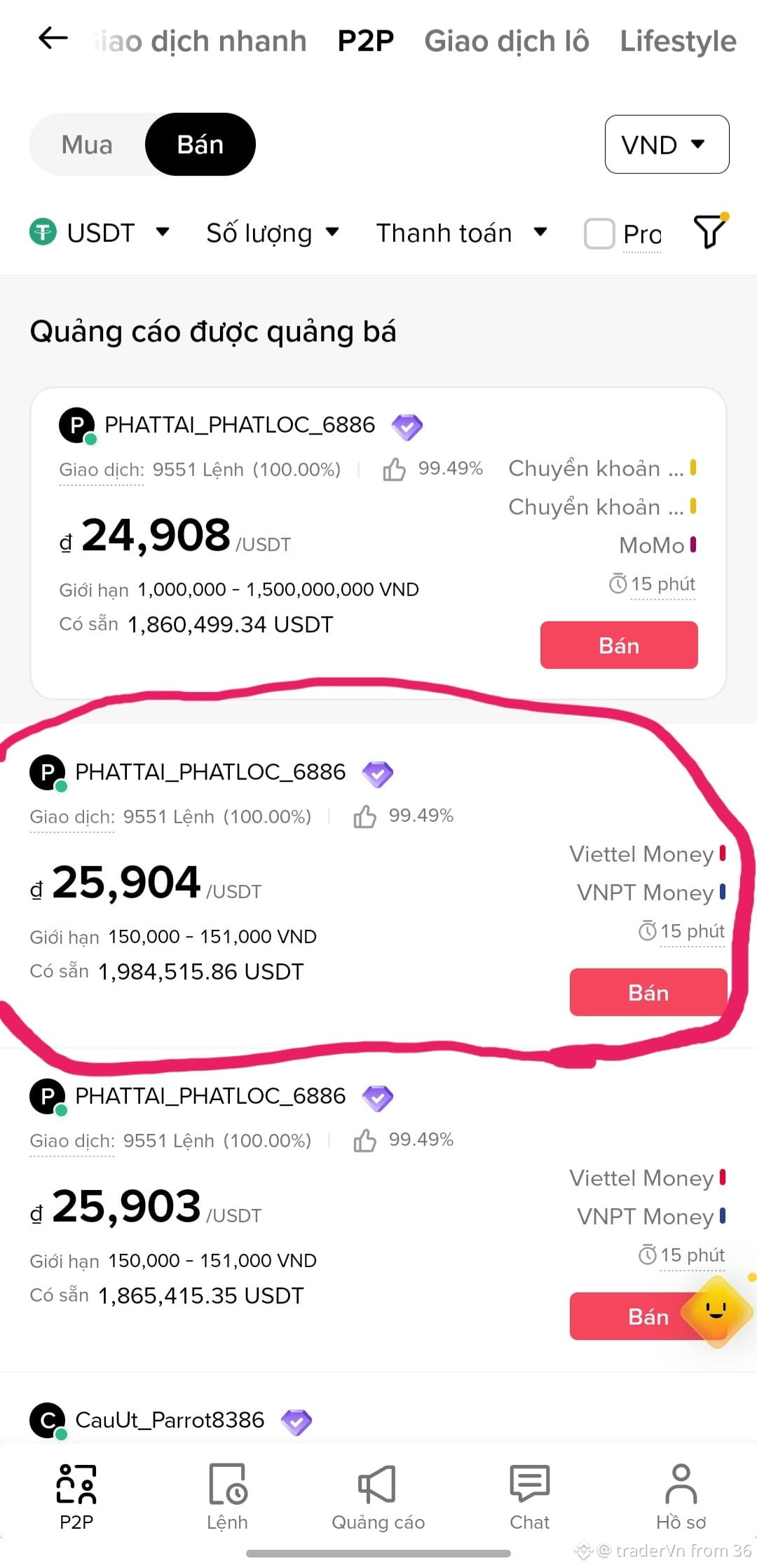
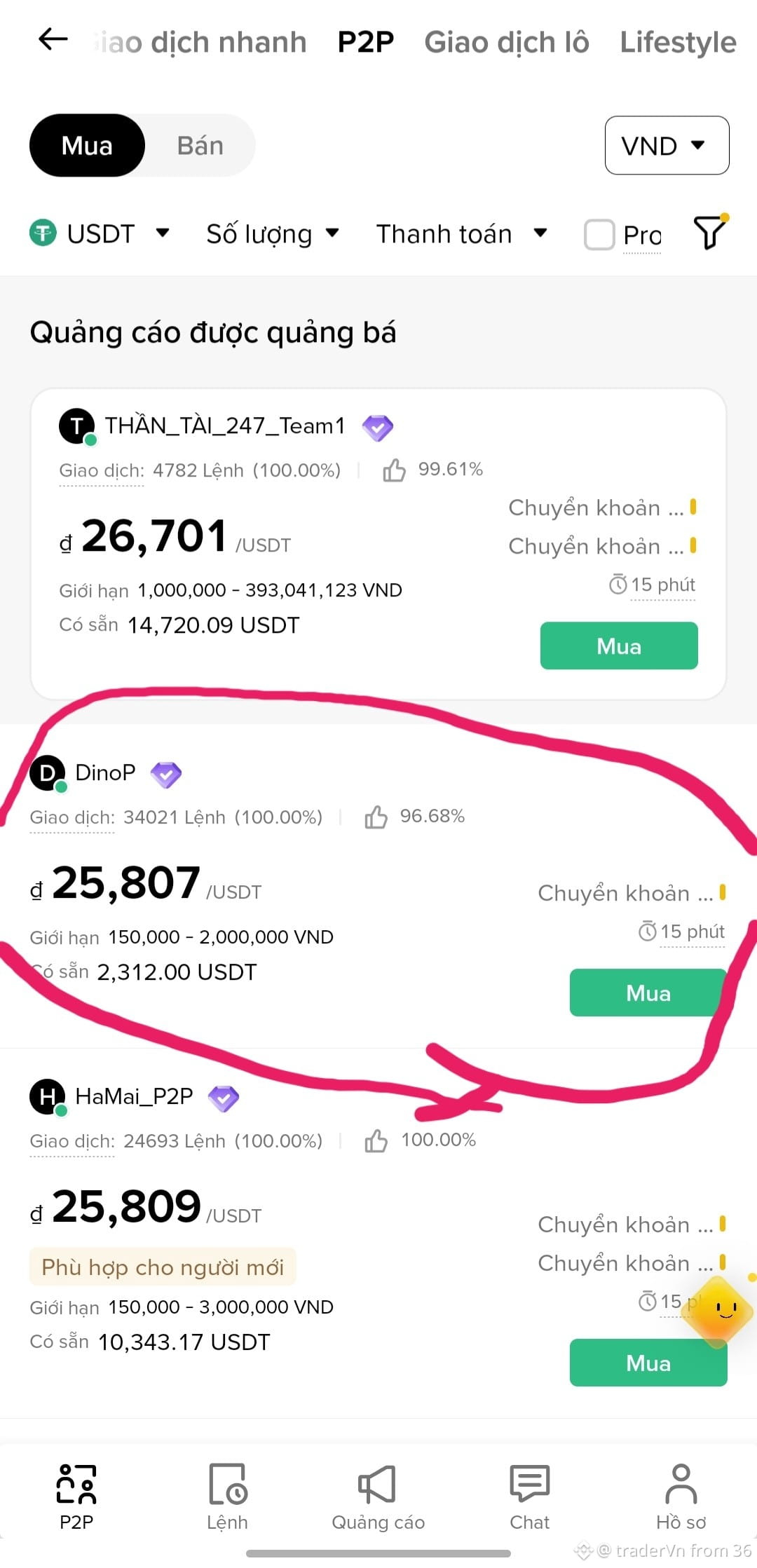
I hadn’t paid attention to P2P prices in a while, but after looking closely, I wasn’t seeing things wrong at all — the Sell price (25,904 VND/USDT) is really higher than the Buy price (25,809 VND/USDT).
Normally, the sell price should be lower than the buy price for it to make sense, but right now it’s completely reversed.
Let’s try calculating it with 1000$:
- Buying 1000 USDT costs about 25,809,000 VND
- Selling that same 1000 USDT right away gets about 25,904,000 VND
- Gross profit: ~95,000 VND (before fees)
- Minimum exchange fee is about 0.07 USDT ~ 1,800 VND
- Net profit is still around ~93,000 VND for turning over 1000$ one time
It’s not a huge amount, but it’s still a rare chance to see the spread reversed like this. If anyone has been watching the board regularly, you’ve probably seen this before; for me, I haven’t checked in a long time so it was a bit surprising 😄
⚠️ Additional note: as of 9/1, crypto-related laws in Vietnam have taken effect. For anyone trading P2P, be careful about where the money comes from and avoid getting involved with accounts or funds that may have issues (money laundering, scams, etc.), because the controls are much tighter than before. Choose reputable buyers/sellers, high completion rates, and fully verified accounts.
What do you think — is anyone else trading and seeing the same situation?
#P2P #zec
---
Note: this is a personal observation at a specific point in time, not investment advice — P2P prices move very quickly, so you should double-check before trading.
Wow, that’s odd — the P2P buy and sell prices are inverted, guys 🤔
This morning I opened the app to check how the long orders $ZEC and $BTC were doing, and while I was at it I glanced at the P2P price board and was honestly surprised.
I hadn’t paid attention to P2P prices in a while, but after looking closely, I wasn’t seeing things wrong at all — the Sell price (25,904 VND/USDT) is really higher than the Buy price (25,809 VND/USDT).
Normally, the sell price should be lower than the buy price for it to make sense, but right now it’s completely reversed.
Let’s try calculating it with 1000$:
- Buying 1000 USDT costs about 25,809,000 VND
- Selling that same 1000 USDT right away gets about 25,904,000 VND
- Gross profit: ~95,000 VND (before fees)
- Minimum exchange fee is about 0.07 USDT ~ 1,800 VND
- Net profit is still around ~93,000 VND for turning over 1000$ one time
It’s not a huge amount, but it’s still a rare chance to see the spread reversed like this. If anyone has been watching the board regularly, you’ve probably seen this before; for me, I haven’t checked in a long time so it was a bit surprising 😄
⚠️ Additional note: as of 9/1, crypto-related laws in Vietnam have taken effect. For anyone trading P2P, be careful about where the money comes from and avoid getting involved with accounts or funds that may have issues (money laundering, scams, etc.), because the controls are much tighter than before. Choose reputable buyers/sellers, high completion rates, and fully verified accounts.
What do you think — is anyone else trading and seeing the same situation?
#P2P #zec
---
Note: this is a personal observation at a specific point in time, not investment advice — P2P prices move very quickly, so you should double-check before trading.
This morning I opened the app to check how the long orders $ZEC and $BTC were doing, and while I was at it I glanced at the P2P price board and was honestly surprised.
I hadn’t paid attention to P2P prices in a while, but after looking closely, I wasn’t seeing things wrong at all — the Sell price (25,904 VND/USDT) is really higher than the Buy price (25,809 VND/USDT).
Normally, the sell price should be lower than the buy price for it to make sense, but right now it’s completely reversed.
Let’s try calculating it with 1000$:
- Buying 1000 USDT costs about 25,809,000 VND
- Selling that same 1000 USDT right away gets about 25,904,000 VND
- Gross profit: ~95,000 VND (before fees)
- Minimum exchange fee is about 0.07 USDT ~ 1,800 VND
- Net profit is still around ~93,000 VND for turning over 1000$ one time
It’s not a huge amount, but it’s still a rare chance to see the spread reversed like this. If anyone has been watching the board regularly, you’ve probably seen this before; for me, I haven’t checked in a long time so it was a bit surprising 😄
⚠️ Additional note: as of 9/1, crypto-related laws in Vietnam have taken effect. For anyone trading P2P, be careful about where the money comes from and avoid getting involved with accounts or funds that may have issues (money laundering, scams, etc.), because the controls are much tighter than before. Choose reputable buyers/sellers, high completion rates, and fully verified accounts.
What do you think — is anyone else trading and seeing the same situation?
#P2P #zec
---
Note: this is a personal observation at a specific point in time, not investment advice — P2P prices move very quickly, so you should double-check before trading.
1
485

·
--

Article
Agricultural unions call for oil investment: P2P and the dollar take over## An agreement with the scent of reactivation but a taste of doubt
The oil agreement between Venezuela and the United States is once again stirring economic expectations. For the agricultural sector, however, it is not just a matter of seeing crude exports grow. Fedenaga and Fedeagro have shared a direct message: if those dollars do not reach food production, the multiplier effect will fall short.
The request is clear and forceful. The unions are asking the government to prioritize the injection of direct resources into agricultural and livestock activity. They are not asking for subsidies or handouts, but for a true investment strategy that allows Venezuela's countryside to overcome the paralysis it has been dragging on for years. But as always happens in Venezuela, the gap between rhetoric and reality is measured in bolivars, or better yet, in dollars and cryptocurrencies.
Agricultural unions call for oil investment: P2P and the dollar take over
## An agreement with the scent of reactivation but a taste of doubt
The oil agreement between Venezuela and the United States is once again stirring economic expectations. For the agricultural sector, however, it is not just a matter of seeing crude exports grow. Fedenaga and Fedeagro have shared a direct message: if those dollars do not reach food production, the multiplier effect will fall short.
The request is clear and forceful. The unions are asking the government to prioritize the injection of direct resources into agricultural and livestock activity. They are not asking for subsidies or handouts, but for a true investment strategy that allows Venezuela's countryside to overcome the paralysis it has been dragging on for years. But as always happens in Venezuela, the gap between rhetoric and reality is measured in bolivars, or better yet, in dollars and cryptocurrencies.
The oil agreement between Venezuela and the United States is once again stirring economic expectations. For the agricultural sector, however, it is not just a matter of seeing crude exports grow. Fedenaga and Fedeagro have shared a direct message: if those dollars do not reach food production, the multiplier effect will fall short.
The request is clear and forceful. The unions are asking the government to prioritize the injection of direct resources into agricultural and livestock activity. They are not asking for subsidies or handouts, but for a true investment strategy that allows Venezuela's countryside to overcome the paralysis it has been dragging on for years. But as always happens in Venezuela, the gap between rhetoric and reality is measured in bolivars, or better yet, in dollars and cryptocurrencies.
23
·
--
Article
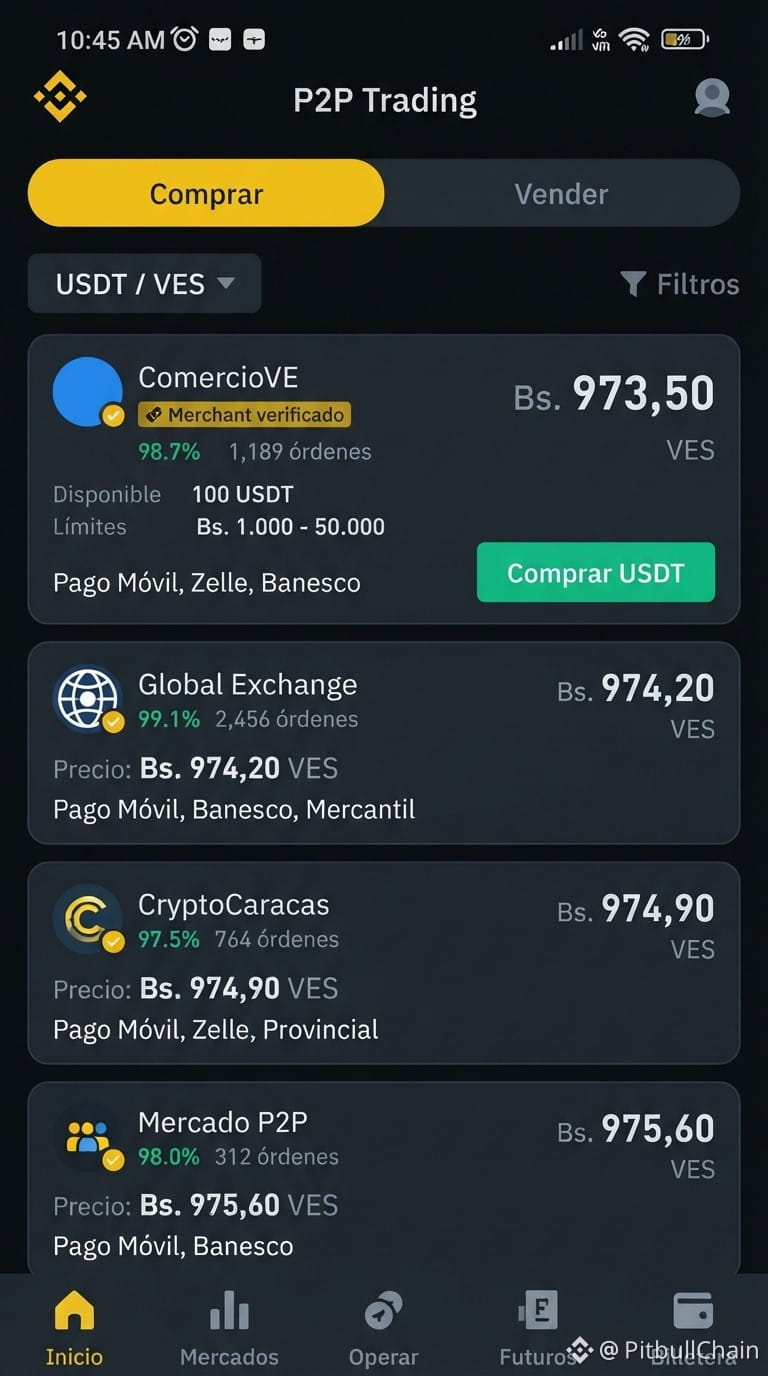
6% Spread in P2P: Warning Sign or Just a Sunday?Today the P2P spread in Venezuela exceeds 6%. 🔍 Buying USDT is at Bs. 973,50 and selling at Bs. 916,51. That gap of nearly 57 bolivars is not normal… and it’s worth understanding.
While the world watches $BTC, in Venezuela the king is $USDT. The recent tensions over the seismic activity and politics have made the market nervous. But be careful: this is not a reason to panic. It’s an unusual Sunday, with a supply of 244 active trades on Binance. There is liquidity, but market makers are protecting their inventories by widening the spread. That is caution, not collapse.
6% Spread in P2P: Warning Sign or Just a Sunday?
Today the P2P spread in Venezuela exceeds 6%. 🔍 Buying USDT is at Bs. 973,50 and selling at Bs. 916,51. That gap of nearly 57 bolivars is not normal… and it’s worth understanding.
While the world watches $BTC , in Venezuela the king is $USDT. The recent tensions over the seismic activity and politics have made the market nervous. But be careful: this is not a reason to panic. It’s an unusual Sunday, with a supply of 244 active trades on Binance. There is liquidity, but market makers are protecting their inventories by widening the spread. That is caution, not collapse.
While the world watches $BTC , in Venezuela the king is $USDT. The recent tensions over the seismic activity and politics have made the market nervous. But be careful: this is not a reason to panic. It’s an unusual Sunday, with a supply of 244 active trades on Binance. There is liquidity, but market makers are protecting their inventories by widening the spread. That is caution, not collapse.
30
·
--
Article
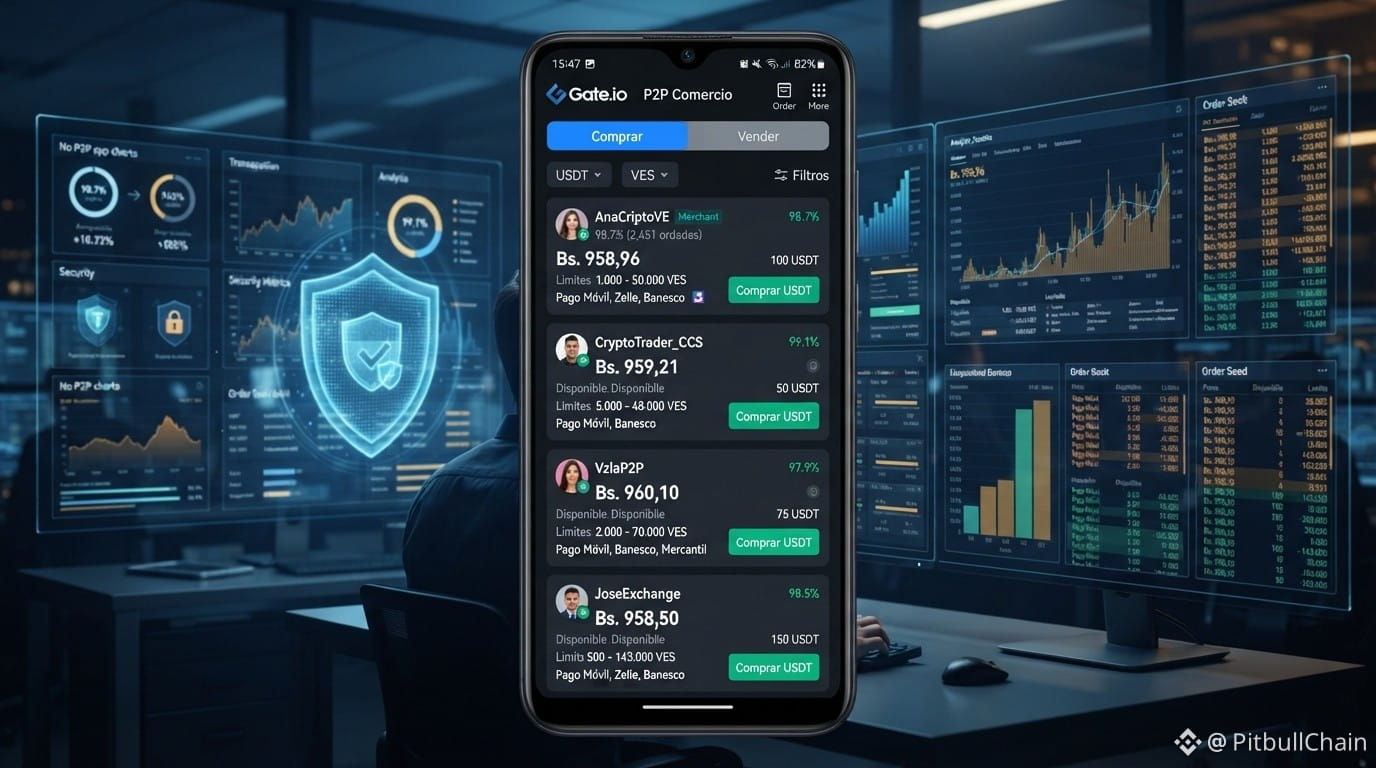
Verify P2P banks and counterparties with a yellow traffic light: a 5-step guideOperating in the peer-to-peer (P2P) market in Venezuela requires methodological rigor, especially when macro and liquidity indicators enter transition phases. At PitbullChain, the Market Traffic Light evaluates critical variables of liquidity, depth, spread, and banking stability in real time to classify exchange conditions. When the traffic light emits an alert in yellow status (Moderate caution), it means positive signals coexist with operational warnings. In this scenario, malicious operators often take advantage of price dispersion and payment friction to carry out scam attempts or triangulation. Below, we break down how to interpret this data and execute a strict 5-step protocol to secure your operations. What the yellow traffic light means (Score 71/100) in the current market PitbullChain’s live monitor records an overall score of 71/100, classified as Moderate caution. The metric breakdown reveals an important contrast: High liquidity and operational health: The liquidity score stands at 95/100 and banking availability at 95/100, with 236 active offers tracked. Spread friction: The spread indicator drops to 20/100 due to a wide gap. In the overall radar, the buy rate is 980.41 VES/USDT versus a sell rate of 928.34 VES/USDT, representing a spread of 52.07 VES (5.61%). Exchange premium: The buy quote reflects a 20.48% premium over the official rate of the Central Bank of Venezuela (BCV), set at 813.74 VES/USD, while the parallel dollar trades at 960.37 VES. Moderate depth: The depth score is 45/100, indicating that orders are concentrated at certain specific volume levels. In practical terms, there is enough volume available in national banks, but price dispersion is high. This imbalance encourages the appearance of ads with anomalous prices or misleading conditions on platforms such as Binance or other platforms. Order Book Analysis: detection of liquidity and spread traps The multi-provider order book shows an interesting dynamic: the best ask registered is 916.75 VES and the best bid is 956.00 VES, with a mid price of 936.38 VES and a volume imbalance of 75.56% (700,869.60 USDT on the buy side versus 97,549.97 USDT on the sell side). Regarding banking entities, liquidity is not distributed evenly: Banesco: Leads stability with a score of 89/100, 21.5% of total liquidity, average buy price of 959.31 VES and sell price of 950.54 VES (spread of 0.92%). Pago Móvil: Concentrates 25.6% of liquidity with a score of 86/100, but with greater dispersion (average spread of 1.48%). Banco de Venezuela: Records a score of 58/100 and 9.9% participation, with a tight spread of 0.49% (average buy 958.68 VES, sell 954.00 VES). Other entities: Bancamiga (score 48), Mercantil (score 46), and Provincial (score 45) show a lower number of active ads in this snapshot, which increases matching time. When an ad deviates sharply from the average range (for example, buy offers excessively above 960 VES or sells below 920 VES without volume justification), counterparty risk increases exponentially. 5-step protocol to verify counterparties and payments To operate safely under yellow traffic light conditions, apply this procedure before releasing cryptocurrency or transferring bolívares: Step 1: Filter out atypical prices and verify the real spread Always compare the ad price with the order book’s mid price (936.38 VES) and the banking averages. Be wary of any trader offering to pay rates significantly above the market average. Scammers often place attractive prices to lure unsuspecting users and then use fake receipts or reversible payments. Step 2: Audit the counterparty profile on the platform Review the user’s historical statistics on Binance or another exchange: Completion rate: Must be above 98% over the last 30 days. Number of completed orders: Prioritize counterparties with more than 100 executed orders. Account age: Accounts created a few days ago with high volume represent a warning sign. Negative reviews: Read recent feedback looking for mentions of delays, attempts to pay through third parties, or blocked transfers. Step 3: Demand and strictly verify bank account ownership (zero third parties) The golden rule of P2P trading is exact identity matching. The name and ID number of the holder on the sending (or receiving) bank account must match 100% with the verified (KYC) data on Binance. Never accept payments from accounts belonging to family members, friends, or companies not registered in the order, as this opens the door to impersonation fraud and bank fund freezes. Step 4: Validate the availability of the selected banking channel Since liquidity varies by bank (Banesco and Pago Móvil concentrate more than 47% of the active share), make sure the selected payment method is operating normally. For transfers between different banks, confirm whether the crediting is immediate or whether it will go through interbank clearing. Do not mark or confirm the transaction until the funds are available in your liquid balance. Step 5: Direct online banking check before releasing Never rely exclusively on screenshots, SMS messages, or email notifications. Go directly into your bank’s web or mobile app, review account movements, and verify that the exact amount in bolívares has been credited and is available. Only after confirming the balance in your online banking should you proceed to release the USDT on the platform. Preventive measures against irregularities If the counterparty claims to have transferred but the money does not appear in your account, or if you receive a payment from an unauthorized holder: Keep communication within the official chat: Do not continue the conversation via WhatsApp, Telegram, or phone calls. Do not release under pressure: No legitimate support agent will ask you to release funds before the money is in your account. Open a dispute: If the order time runs out or the counterparty insists on a non-verifiable payment, start the dispute process in the exchange and attach your bank statement in PDF format or a reliable screenshot. The combination of PitbullChain’s risk traffic light with strict operational discipline minimizes the chances of fraud, protecting your capital in every P2P transaction in Venezuela.
Verify P2P banks and counterparties with a yellow traffic light: a 5-step guide
Operating in the peer-to-peer (P2P) market in Venezuela requires methodological rigor, especially when macro and liquidity indicators enter transition phases. At PitbullChain, the Market Traffic Light evaluates critical variables of liquidity, depth, spread, and banking stability in real time to classify exchange conditions. When the traffic light emits an alert in yellow status (Moderate caution), it means positive signals coexist with operational warnings. In this scenario, malicious operators often take advantage of price dispersion and payment friction to carry out scam attempts or triangulation. Below, we break down how to interpret this data and execute a strict 5-step protocol to secure your operations. What the yellow traffic light means (Score 71/100) in the current market PitbullChain’s live monitor records an overall score of 71/100, classified as Moderate caution. The metric breakdown reveals an important contrast: High liquidity and operational health: The liquidity score stands at 95/100 and banking availability at 95/100, with 236 active offers tracked. Spread friction: The spread indicator drops to 20/100 due to a wide gap. In the overall radar, the buy rate is 980.41 VES/USDT versus a sell rate of 928.34 VES/USDT, representing a spread of 52.07 VES (5.61%). Exchange premium: The buy quote reflects a 20.48% premium over the official rate of the Central Bank of Venezuela (BCV), set at 813.74 VES/USD, while the parallel dollar trades at 960.37 VES. Moderate depth: The depth score is 45/100, indicating that orders are concentrated at certain specific volume levels. In practical terms, there is enough volume available in national banks, but price dispersion is high. This imbalance encourages the appearance of ads with anomalous prices or misleading conditions on platforms such as Binance or other platforms. Order Book Analysis: detection of liquidity and spread traps The multi-provider order book shows an interesting dynamic: the best ask registered is 916.75 VES and the best bid is 956.00 VES, with a mid price of 936.38 VES and a volume imbalance of 75.56% (700,869.60 USDT on the buy side versus 97,549.97 USDT on the sell side). Regarding banking entities, liquidity is not distributed evenly: Banesco: Leads stability with a score of 89/100, 21.5% of total liquidity, average buy price of 959.31 VES and sell price of 950.54 VES (spread of 0.92%). Pago Móvil: Concentrates 25.6% of liquidity with a score of 86/100, but with greater dispersion (average spread of 1.48%). Banco de Venezuela: Records a score of 58/100 and 9.9% participation, with a tight spread of 0.49% (average buy 958.68 VES, sell 954.00 VES). Other entities: Bancamiga (score 48), Mercantil (score 46), and Provincial (score 45) show a lower number of active ads in this snapshot, which increases matching time. When an ad deviates sharply from the average range (for example, buy offers excessively above 960 VES or sells below 920 VES without volume justification), counterparty risk increases exponentially. 5-step protocol to verify counterparties and payments To operate safely under yellow traffic light conditions, apply this procedure before releasing cryptocurrency or transferring bolívares: Step 1: Filter out atypical prices and verify the real spread Always compare the ad price with the order book’s mid price (936.38 VES) and the banking averages. Be wary of any trader offering to pay rates significantly above the market average. Scammers often place attractive prices to lure unsuspecting users and then use fake receipts or reversible payments. Step 2: Audit the counterparty profile on the platform Review the user’s historical statistics on Binance or another exchange: Completion rate: Must be above 98% over the last 30 days. Number of completed orders: Prioritize counterparties with more than 100 executed orders. Account age: Accounts created a few days ago with high volume represent a warning sign. Negative reviews: Read recent feedback looking for mentions of delays, attempts to pay through third parties, or blocked transfers. Step 3: Demand and strictly verify bank account ownership (zero third parties) The golden rule of P2P trading is exact identity matching. The name and ID number of the holder on the sending (or receiving) bank account must match 100% with the verified (KYC) data on Binance. Never accept payments from accounts belonging to family members, friends, or companies not registered in the order, as this opens the door to impersonation fraud and bank fund freezes. Step 4: Validate the availability of the selected banking channel Since liquidity varies by bank (Banesco and Pago Móvil concentrate more than 47% of the active share), make sure the selected payment method is operating normally. For transfers between different banks, confirm whether the crediting is immediate or whether it will go through interbank clearing. Do not mark or confirm the transaction until the funds are available in your liquid balance. Step 5: Direct online banking check before releasing Never rely exclusively on screenshots, SMS messages, or email notifications. Go directly into your bank’s web or mobile app, review account movements, and verify that the exact amount in bolívares has been credited and is available. Only after confirming the balance in your online banking should you proceed to release the USDT on the platform. Preventive measures against irregularities If the counterparty claims to have transferred but the money does not appear in your account, or if you receive a payment from an unauthorized holder: Keep communication within the official chat: Do not continue the conversation via WhatsApp, Telegram, or phone calls. Do not release under pressure: No legitimate support agent will ask you to release funds before the money is in your account. Open a dispute: If the order time runs out or the counterparty insists on a non-verifiable payment, start the dispute process in the exchange and attach your bank statement in PDF format or a reliable screenshot. The combination of PitbullChain’s risk traffic light with strict operational discipline minimizes the chances of fraud, protecting your capital in every P2P transaction in Venezuela.
9
·
--
Article
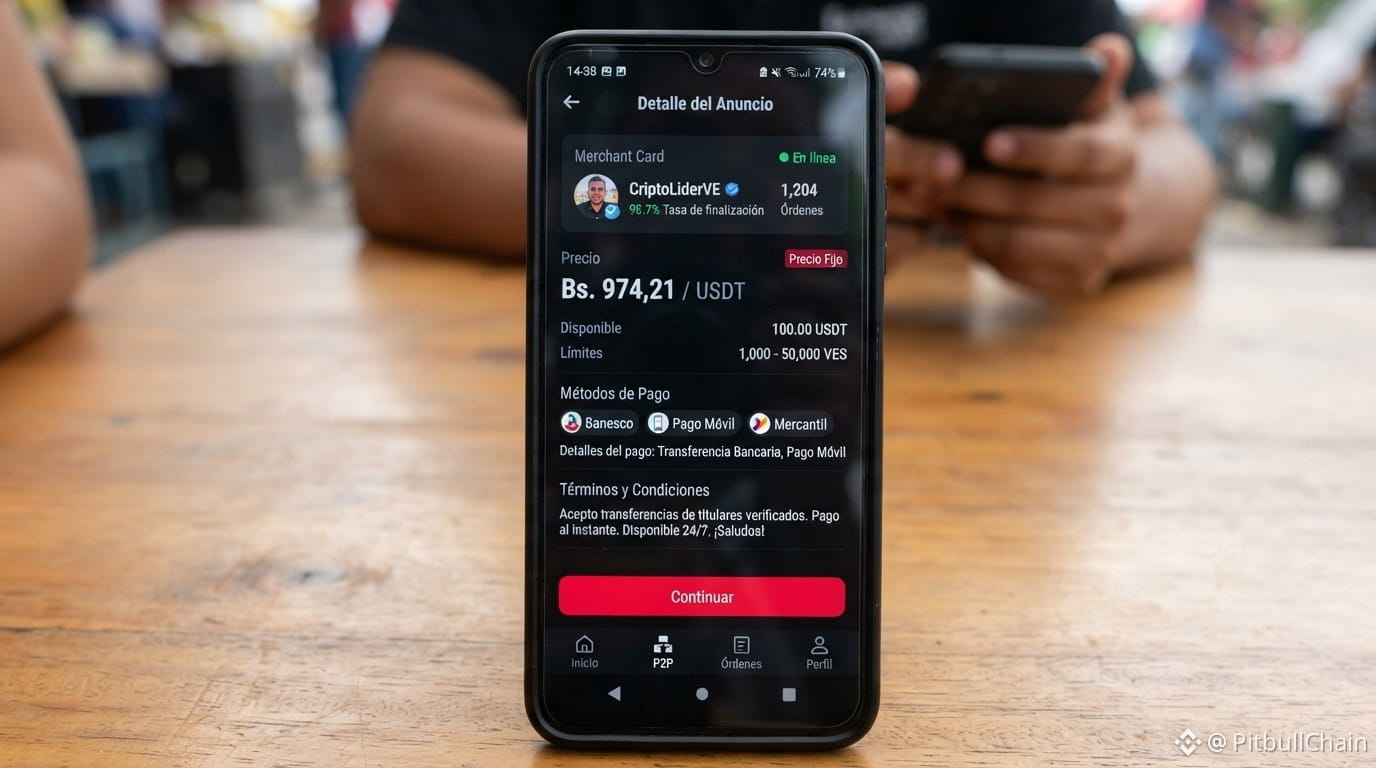
4% Spread: Sign of Liquidity or Warning in P2P?This Saturday, P2P opens with a spread of Bs. 37.54 (4.01%). At first glance it seems high, but is it a sign of low liquidity or of a market looking for equilibrium? While the BCV does not publish a rate, the real reference is set by active offers: 253. That number tells me there is movement, but also that amounts are being handled more cautiously. Ecoanalítica’s data points to $44 million daily on Binance P2P; that does not drop suddenly. What has changed is execution: now speed and trust in the counterparty matter more than making 2 or 3 bolívares per dollar. Binance has put the focus on liquidity and on ensuring transactions close without surprises. My recommendation as an expert: do not marry a single price. Check the trend, compare the spread, and always verify the buyer’s or seller’s profile before hitting confirm. The Venezuelan P2P market is maturing, and those who understand the flow gain an advantage over those who only chase the highest number. How are you trading this weekend: with limit orders or do you accept the best available offer? I’m reading you.
4% Spread: Sign of Liquidity or Warning in P2P?
This Saturday, P2P opens with a spread of Bs. 37.54 (4.01%). At first glance it seems high, but is it a sign of low liquidity or of a market looking for equilibrium? While the BCV does not publish a rate, the real reference is set by active offers: 253. That number tells me there is movement, but also that amounts are being handled more cautiously. Ecoanalítica’s data points to $44 million daily on Binance P2P; that does not drop suddenly. What has changed is execution: now speed and trust in the counterparty matter more than making 2 or 3 bolívares per dollar. Binance has put the focus on liquidity and on ensuring transactions close without surprises. My recommendation as an expert: do not marry a single price. Check the trend, compare the spread, and always verify the buyer’s or seller’s profile before hitting confirm. The Venezuelan P2P market is maturing, and those who understand the flow gain an advantage over those who only chase the highest number. How are you trading this weekend: with limit orders or do you accept the best available offer? I’m reading you.
36
·
--
Article
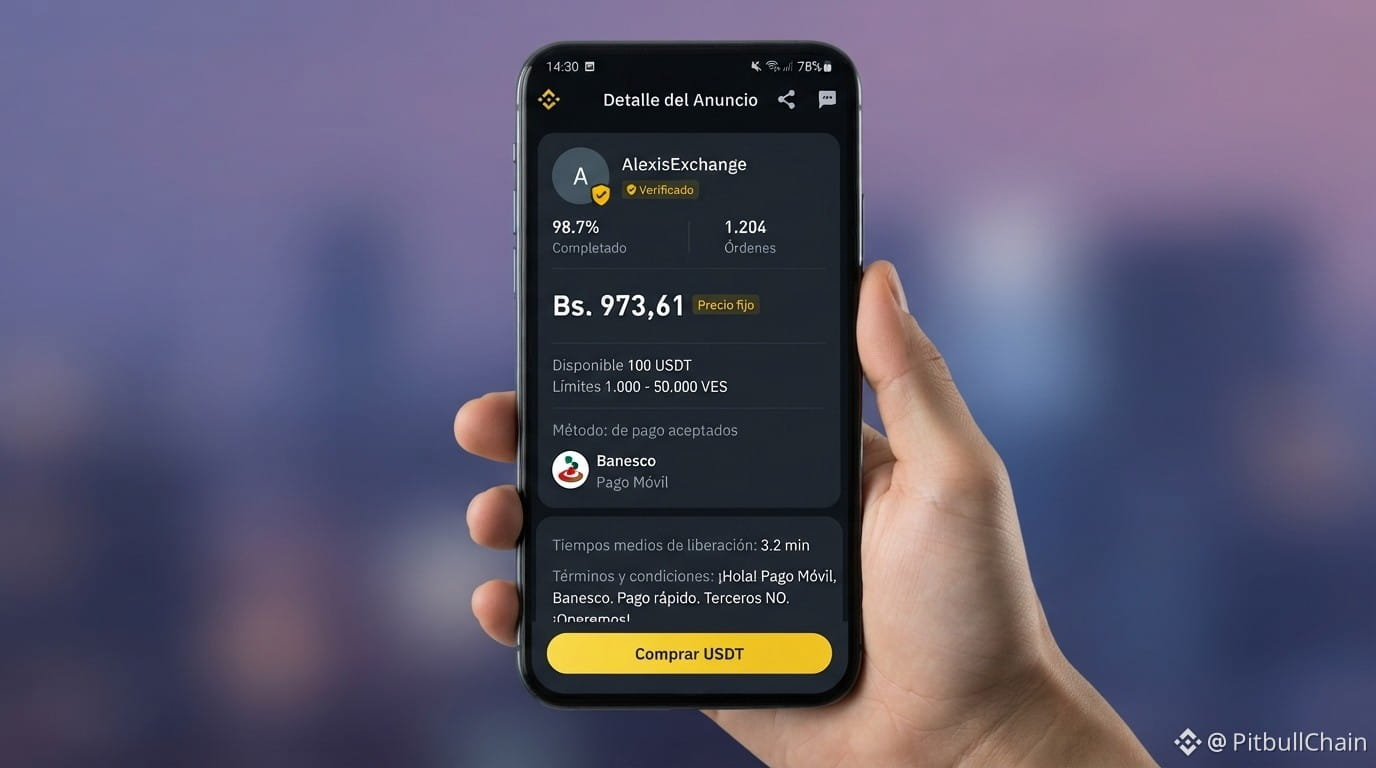
P2P Spread: What Does Today’s 4.95% Tell Us?🚨 Watch the spread! Today the Venezuelan P2P market opened with a 4.95% gap between buying and selling $USDT. On Binance, it’s different: buy at 962.45 Bs. and sell at 958.77 Bs. (just a 0.38% difference!)
What does this mean? That the wide spread you see in some ads is not the norm on the world’s largest platform. A healthy spread is usually below 1%. When you see differences of 40 or 50 bolivars, there is a risk that the seller won’t fulfill the trade or that the price is being artificially inflated.
P2P Spread: What Does Today’s 4.95% Tell Us?
🚨 Watch the spread! Today the Venezuelan P2P market opened with a 4.95% gap between buying and selling $USDT. On Binance, it’s different: buy at 962.45 Bs. and sell at 958.77 Bs. (just a 0.38% difference!)
What does this mean? That the wide spread you see in some ads is not the norm on the world’s largest platform. A healthy spread is usually below 1%. When you see differences of 40 or 50 bolivars, there is a risk that the seller won’t fulfill the trade or that the price is being artificially inflated.
What does this mean? That the wide spread you see in some ads is not the norm on the world’s largest platform. A healthy spread is usually below 1%. When you see differences of 40 or 50 bolivars, there is a risk that the seller won’t fulfill the trade or that the price is being artificially inflated.
20

·
--
Binance p2p: do you know it?
P2P allows you to buy or sell cryptocurrencies directly with other people through the platform.
⚠️Some important rules:
✅ check the merchant's history✅ confirm the amount before releasing the funds✅ Never do deals outside the platform ✅ Do not share security codes.
🔐 Security comes first.
#Binance p2p#p2p #Binance square
Binance p2p: do you know it?
P2P allows you to buy or sell cryptocurrencies directly with other people through the platform.
⚠️Some important rules:
✅ check the merchant's history✅ confirm the amount before releasing the funds✅ Never do deals outside the platform ✅ Do not share security codes.
🔐 Security comes first.
#Binance p2p#p2p #Binance square
P2P allows you to buy or sell cryptocurrencies directly with other people through the platform.
⚠️Some important rules:
✅ check the merchant's history✅ confirm the amount before releasing the funds✅ Never do deals outside the platform ✅ Do not share security codes.
🔐 Security comes first.
#Binance p2p#p2p #Binance square
117
·
--
Article
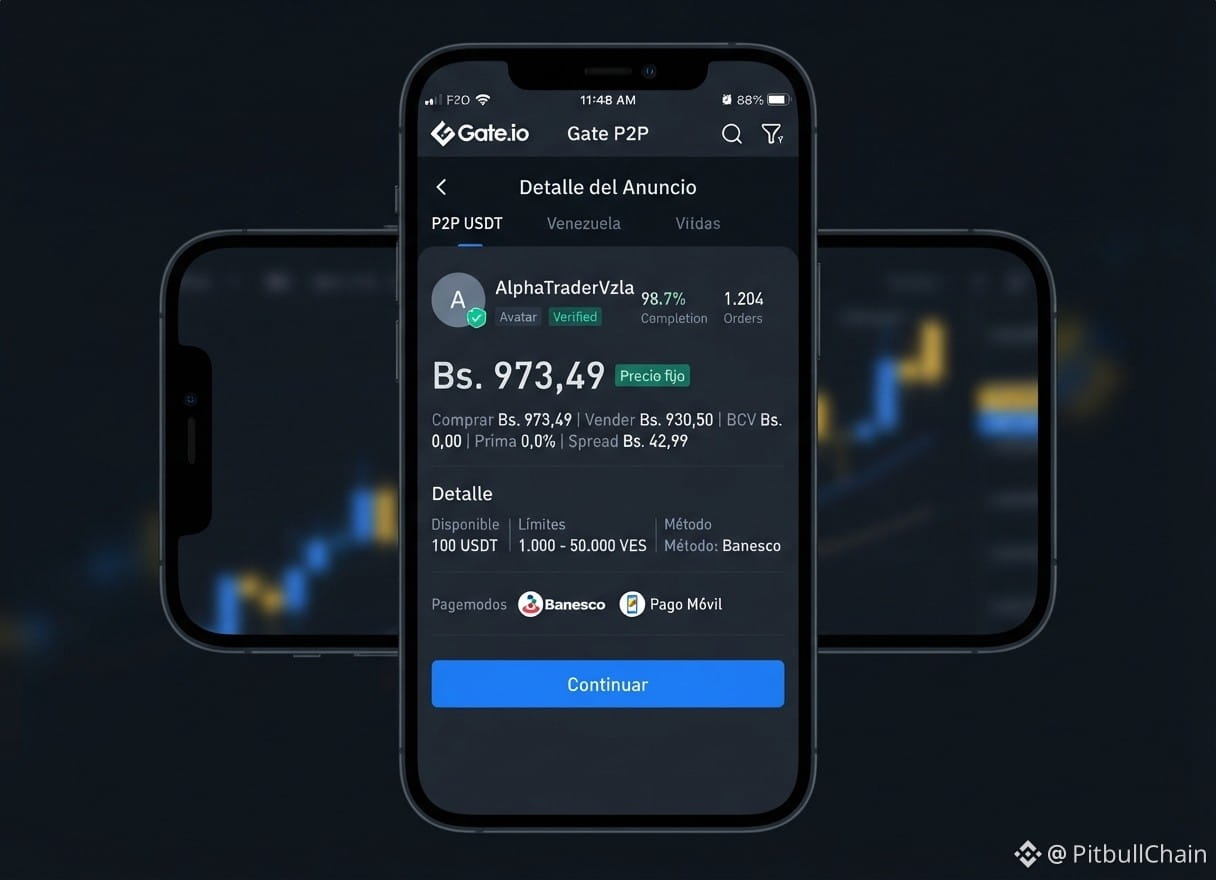
BCV with no rate and P2P with a 4.62% spread: what is happening this Saturday?This Saturday the BCV did not publish an exchange rate, but P2P is speaking more clearly than ever: buying USDT is at Bs. 973.49 and selling at Bs. 930.50. The 4.62% spread is no coincidence: with 272 active offers on Binance, there is liquidity, but the market is protecting itself.
Why is the spread so wide? The week brought news that continues to resonate: the exchange-rate gap has been narrowing, but recent events (including even seismic movements mentioned by Bloomberg) are creating caution. Asdrúbal Oliveros put it clearly: patience. Anyone operating in $USDT as a reseller knows that a spread like this can be either an opportunity or a trap.
BCV with no rate and P2P with a 4.62% spread: what is happening this Saturday?
This Saturday the BCV did not publish an exchange rate, but P2P is speaking more clearly than ever: buying USDT is at Bs. 973.49 and selling at Bs. 930.50. The 4.62% spread is no coincidence: with 272 active offers on Binance, there is liquidity, but the market is protecting itself.
Why is the spread so wide? The week brought news that continues to resonate: the exchange-rate gap has been narrowing, but recent events (including even seismic movements mentioned by Bloomberg) are creating caution. Asdrúbal Oliveros put it clearly: patience. Anyone operating in $USDT as a reseller knows that a spread like this can be either an opportunity or a trap.
Why is the spread so wide? The week brought news that continues to resonate: the exchange-rate gap has been narrowing, but recent events (including even seismic movements mentioned by Bloomberg) are creating caution. Asdrúbal Oliveros put it clearly: patience. Anyone operating in $USDT as a reseller knows that a spread like this can be either an opportunity or a trap.
19
·
--
P2P Banks today: liquidity and methods for trading USDT## P2P Banks today: liquidity and methods for trading USDT
**Date:** Saturday, September 5, 2026 · **Live data from P2P Radar:** buy Bs. 984.05 · sell Bs. 928.86 · BCV Bs. N/A · premium N/A%
This Saturday, the P2P market opens with a spread of Bs. 55.19 between USDT buy and sell prices, forcing traders to fine-tune their banking strategy. Although the BCV rate is without a reference, exchanges show clear divergences: Binance and other platforms operate around Bs. 965, while other platforms push the buy side up to Bs. 1,028.
P2P Banks today: liquidity and methods for trading USDT
## P2P Banks today: liquidity and methods for trading USDT
**Date:** Saturday, September 5, 2026 · **Live data from P2P Radar:** buy Bs. 984.05 · sell Bs. 928.86 · BCV Bs. N/A · premium N/A%
This Saturday, the P2P market opens with a spread of Bs. 55.19 between USDT buy and sell prices, forcing traders to fine-tune their banking strategy. Although the BCV rate is without a reference, exchanges show clear divergences: Binance and other platforms operate around Bs. 965, while other platforms push the buy side up to Bs. 1,028.
**Date:** Saturday, September 5, 2026 · **Live data from P2P Radar:** buy Bs. 984.05 · sell Bs. 928.86 · BCV Bs. N/A · premium N/A%
This Saturday, the P2P market opens with a spread of Bs. 55.19 between USDT buy and sell prices, forcing traders to fine-tune their banking strategy. Although the BCV rate is without a reference, exchanges show clear divergences: Binance and other platforms operate around Bs. 965, while other platforms push the buy side up to Bs. 1,028.
32
·
--
Article
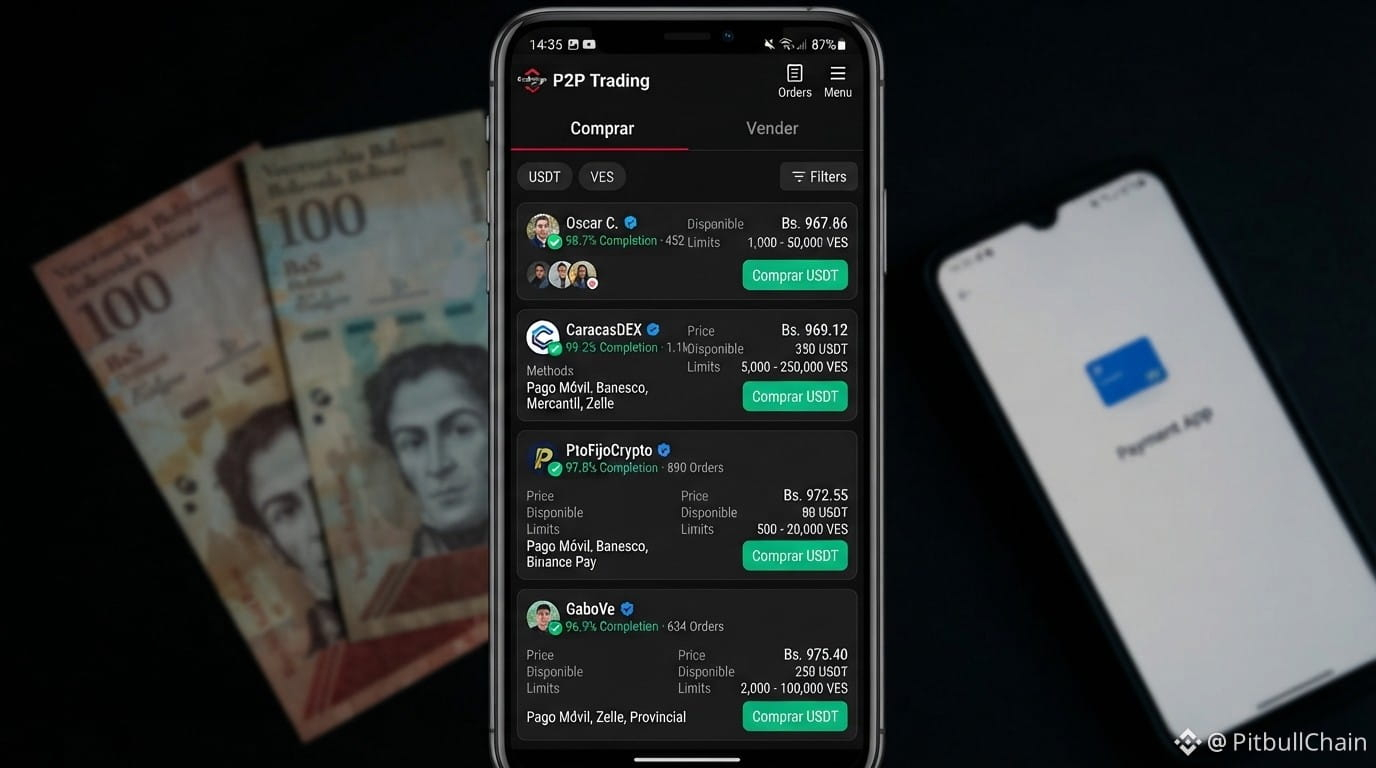
4.03% spread and P2P liquidity in Venezuela: a radiography of the USDT/VES marketThe USDT P2P market in Venezuela is consolidating as the main channel for accessing digital dollars. As of September 5, 2026, PitbullChain’s P2P Radar recorded a USDT buy rate of 977.34 bolívars and a sell rate of 939.44, resulting in a spread of 37.91 bolívars, equivalent to 4.03%. This gap is wide when compared with the usual levels in deeper markets, and its impact extends to all operators who need to move between bolívars and stablecoins. To gauge the effect, a user who buys 100 USDT will have to pay 97,734.45 bolívars; if they then sell those same 100 USDT, they will receive only 93,943.76 bolívars. The difference, 3,790.69 bolívars, is lost in the full cycle. This percentage loss becomes a determining factor in arbitrage strategies, supplier payments, or simply saving in cryptoassets. Spread radiography: more than a simple number The 4.03% spread is not a uniform value. PitbullChain data indicates that the average buy rate comes from the most competitive offers on each platform, while the sell rate reflects the bids of those looking to liquidate USDT. Between these two extremes lies a range that reflects market fragmentation: different banks, payment methods, and execution times impose differentiated premiums and discounts. Comparison with the official BCV rate adds another layer of analysis. The BCV quotes the dollar at 813.74 bolívars, while the USDT P2P rate is around 977.34 for buying. This implies a premium of 20.11% versus the official exchange rate. That premium is not exclusive to USDT: the parallel dollar is around 964.83 according to the Binance P2P marker, indicating a structural gap between the official system and the free market. USDT, due to its nature as a cryptoasset and its demand for digital transactions, is often traded even above the traditional parallel rate. However, the internal USDT spread (the difference between buying and selling) is what most affects day-to-day operations. In highly liquid markets, that spread is usually below 1%. A 4.03% spread reveals inefficiencies: scattered offers, high minimum limits, banks with lower presence, and disparities among the exchanges operating in the country. Order book depth: little mass behind the prices The P2P order book for USDT/VES, captured at 12:00 UTC, shows a mixed scenario. On one hand, the spread between the best bid and the best ask is only 1.49 bolívars (0.15%): the bid sits at 965.00 and the ask at 966.49. This suggests that, for small amounts, execution can be very favorable. The problem appears when depth is required. The total volume of buy orders (bid) amounts to 433,118.79 USDT, distributed across 30 offers, while sell orders (ask) total 174,944.93 USDT in 34 offers. The asymmetry reaches 42.46%, indicating a greater number of offers to sell USDT than to buy it. But that liquidity is concentrated in the first levels: beyond 5,000 USDT, the book loses density and available prices deteriorate noticeably. PitbullChain’s traffic-light indicator illustrates this situation: while bank availability scores 95/100 and overall liquidity reaches 95/100, order book depth scores only 45/100. In other words, there are enough offers in aggregate, but not at the best prices or with amounts attractive for institutional or high-volume operations. This is a warning sign for those moving significant sums and needing to execute without moving the market. Banks and payment methods: where friction becomes real Radar P2P data breaks activity down by entity. Banesco leads with 21.8% of liquidity and an average spread of 1.19%, making it the most balanced option between availability and cost. It is followed by Pago Móvil, with 20.3% liquidity and a spread of 1.46%, slightly higher. Banks such as Provincial, Banco de Venezuela, and BBVA show reduced spreads (between 0.5% and 0.6%), but their participation does not exceed 8.3%, limiting the number of counterparties. In the exchange breakdown, Binance shows the best buy prices in Provincial and Banco de Venezuela, with a rate of 963.5 for the best bid; other platforms, meanwhile, concentrate their offers in Pago Móvil and Banesco, with an average bid of 957.7. The coexistence of both exchanges broadens alternatives, but also creates price dispersion, which contributes to the overall spread. As for the traffic-light signals, liquidity is sufficient in several banks (a positive signal), but the elevated spread invites price comparison before trading. The traffic light remains yellow, with a score of 69, implying moderate caution, not a market shutdown. External factors explaining the situation The economic context and recent reports help interpret these numbers. Finanzas Digital has reported that digital remittances and exchange-rate volatility are driving the use of P2P channels in Venezuela. Meanwhile, El Impulso highlights that millions of people depend on the digital dollar for daily transactions and to protect their savings from the bolívar’s depreciation. Both phenomena are reflected in the high volume of operations and the persistent demand for USDT. The difference between the BCV rate and the P2P rate is not simply a market whim; it stems from restricted access to official dollars and the need for a digital asset that can be transferred and used on international platforms. As long as that gap persists, USDT will maintain a premium over the official dollar, and the spread between buy and sell will be the short-term barometer of confidence and liquidity. Strategies for operating in this environment If the traffic light is yellow and the spread exceeds 4%, the recommendation is to be extremely cautious. These practical actions can help minimize losses: Compare prices in the order book: reviewing the best bid and ask levels on each exchange helps avoid overpriced offers. Prioritize banks with lower spreads: if the operation allows it, Banesco or Provincial may offer more favorable conditions than Pago Móvil, which usually has more distant bids. Break up large transactions: the shallow depth in amounts above 5,000 USDT creates slippage; splitting into smaller orders can reduce the extra cost. Verify the counterparty’s reputation: liquidity does not equal safety; reviewing the advertiser’s history and limits is essential. Use analysis tools: PitbullChain’s P2P Calculator and Bank Comparator allow you to simulate scenarios before committing funds. In short, the 4.03% spread and the current order book depth paint an active P2P market, but one with frictions that make conversion between bolívars and USDT more expensive. Safe operation requires close analysis of real-time data, something PitbullChain makes available to all Venezuelan operators. The information presented is educational and informational in nature and does not constitute financial advice or an invitation to buy or sell assets.
4.03% spread and P2P liquidity in Venezuela: a radiography of the USDT/VES market
The USDT P2P market in Venezuela is consolidating as the main channel for accessing digital dollars. As of September 5, 2026, PitbullChain’s P2P Radar recorded a USDT buy rate of 977.34 bolívars and a sell rate of 939.44, resulting in a spread of 37.91 bolívars, equivalent to 4.03%. This gap is wide when compared with the usual levels in deeper markets, and its impact extends to all operators who need to move between bolívars and stablecoins. To gauge the effect, a user who buys 100 USDT will have to pay 97,734.45 bolívars; if they then sell those same 100 USDT, they will receive only 93,943.76 bolívars. The difference, 3,790.69 bolívars, is lost in the full cycle. This percentage loss becomes a determining factor in arbitrage strategies, supplier payments, or simply saving in cryptoassets. Spread radiography: more than a simple number The 4.03% spread is not a uniform value. PitbullChain data indicates that the average buy rate comes from the most competitive offers on each platform, while the sell rate reflects the bids of those looking to liquidate USDT. Between these two extremes lies a range that reflects market fragmentation: different banks, payment methods, and execution times impose differentiated premiums and discounts. Comparison with the official BCV rate adds another layer of analysis. The BCV quotes the dollar at 813.74 bolívars, while the USDT P2P rate is around 977.34 for buying. This implies a premium of 20.11% versus the official exchange rate. That premium is not exclusive to USDT: the parallel dollar is around 964.83 according to the Binance P2P marker, indicating a structural gap between the official system and the free market. USDT, due to its nature as a cryptoasset and its demand for digital transactions, is often traded even above the traditional parallel rate. However, the internal USDT spread (the difference between buying and selling) is what most affects day-to-day operations. In highly liquid markets, that spread is usually below 1%. A 4.03% spread reveals inefficiencies: scattered offers, high minimum limits, banks with lower presence, and disparities among the exchanges operating in the country. Order book depth: little mass behind the prices The P2P order book for USDT/VES, captured at 12:00 UTC, shows a mixed scenario. On one hand, the spread between the best bid and the best ask is only 1.49 bolívars (0.15%): the bid sits at 965.00 and the ask at 966.49. This suggests that, for small amounts, execution can be very favorable. The problem appears when depth is required. The total volume of buy orders (bid) amounts to 433,118.79 USDT, distributed across 30 offers, while sell orders (ask) total 174,944.93 USDT in 34 offers. The asymmetry reaches 42.46%, indicating a greater number of offers to sell USDT than to buy it. But that liquidity is concentrated in the first levels: beyond 5,000 USDT, the book loses density and available prices deteriorate noticeably. PitbullChain’s traffic-light indicator illustrates this situation: while bank availability scores 95/100 and overall liquidity reaches 95/100, order book depth scores only 45/100. In other words, there are enough offers in aggregate, but not at the best prices or with amounts attractive for institutional or high-volume operations. This is a warning sign for those moving significant sums and needing to execute without moving the market. Banks and payment methods: where friction becomes real Radar P2P data breaks activity down by entity. Banesco leads with 21.8% of liquidity and an average spread of 1.19%, making it the most balanced option between availability and cost. It is followed by Pago Móvil, with 20.3% liquidity and a spread of 1.46%, slightly higher. Banks such as Provincial, Banco de Venezuela, and BBVA show reduced spreads (between 0.5% and 0.6%), but their participation does not exceed 8.3%, limiting the number of counterparties. In the exchange breakdown, Binance shows the best buy prices in Provincial and Banco de Venezuela, with a rate of 963.5 for the best bid; other platforms, meanwhile, concentrate their offers in Pago Móvil and Banesco, with an average bid of 957.7. The coexistence of both exchanges broadens alternatives, but also creates price dispersion, which contributes to the overall spread. As for the traffic-light signals, liquidity is sufficient in several banks (a positive signal), but the elevated spread invites price comparison before trading. The traffic light remains yellow, with a score of 69, implying moderate caution, not a market shutdown. External factors explaining the situation The economic context and recent reports help interpret these numbers. Finanzas Digital has reported that digital remittances and exchange-rate volatility are driving the use of P2P channels in Venezuela. Meanwhile, El Impulso highlights that millions of people depend on the digital dollar for daily transactions and to protect their savings from the bolívar’s depreciation. Both phenomena are reflected in the high volume of operations and the persistent demand for USDT. The difference between the BCV rate and the P2P rate is not simply a market whim; it stems from restricted access to official dollars and the need for a digital asset that can be transferred and used on international platforms. As long as that gap persists, USDT will maintain a premium over the official dollar, and the spread between buy and sell will be the short-term barometer of confidence and liquidity. Strategies for operating in this environment If the traffic light is yellow and the spread exceeds 4%, the recommendation is to be extremely cautious. These practical actions can help minimize losses: Compare prices in the order book: reviewing the best bid and ask levels on each exchange helps avoid overpriced offers. Prioritize banks with lower spreads: if the operation allows it, Banesco or Provincial may offer more favorable conditions than Pago Móvil, which usually has more distant bids. Break up large transactions: the shallow depth in amounts above 5,000 USDT creates slippage; splitting into smaller orders can reduce the extra cost. Verify the counterparty’s reputation: liquidity does not equal safety; reviewing the advertiser’s history and limits is essential. Use analysis tools: PitbullChain’s P2P Calculator and Bank Comparator allow you to simulate scenarios before committing funds. In short, the 4.03% spread and the current order book depth paint an active P2P market, but one with frictions that make conversion between bolívars and USDT more expensive. Safe operation requires close analysis of real-time data, something PitbullChain makes available to all Venezuelan operators. The information presented is educational and informational in nature and does not constitute financial advice or an invitation to buy or sell assets.
32
·
--
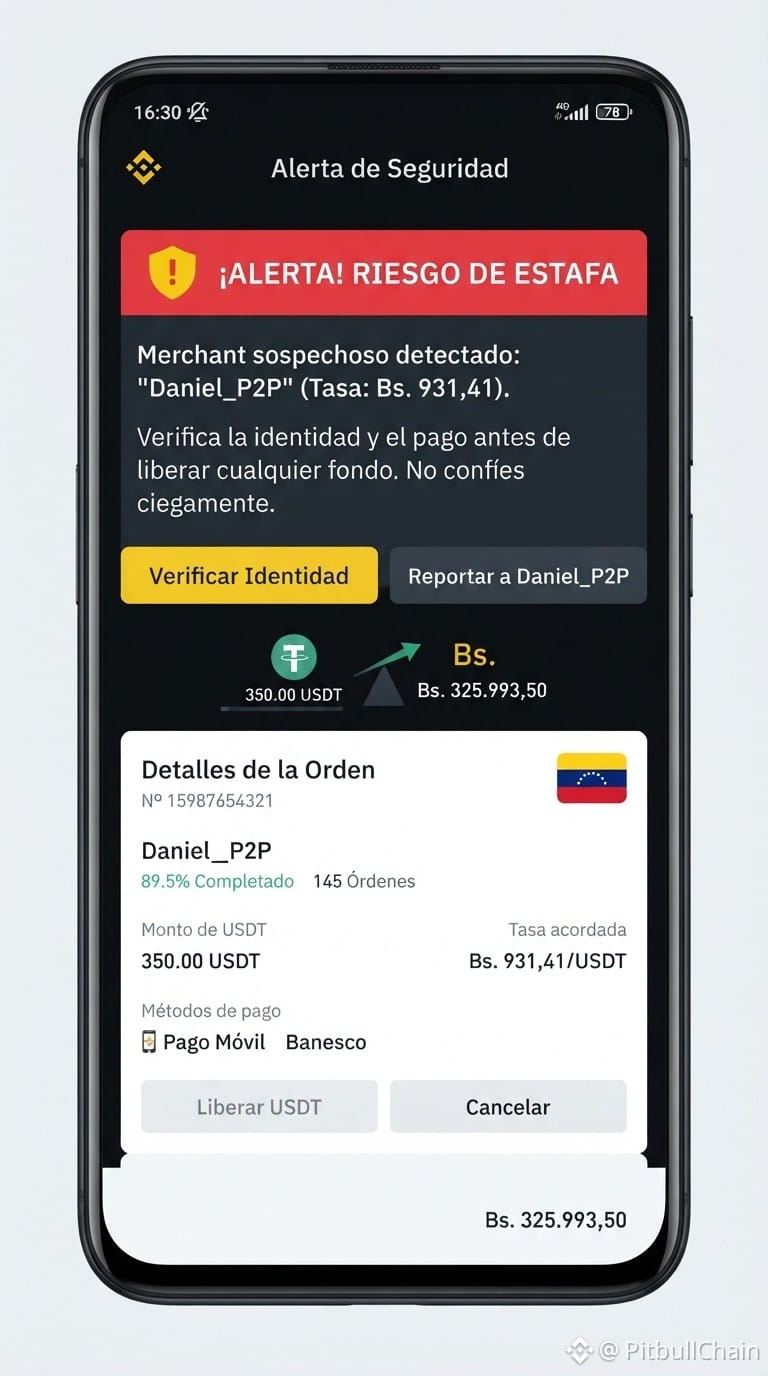
Article
55 Bs Spread: the hidden face of P2P you must masterDid you know that today moving USDT on Binance P2P costs you more than 50 bolivars per unit if you only look at the marked price? 💸
This is how the market looks at this hour (Saturday, September 5):
🟢 Buy USDT: Bs. 984,05
🔴 Sell USDT: Bs. 928,86
📊 Spread: Bs. 55,19 (5,94%)
That is: if you buy and sell instantly, you lose almost 6% in the attempt. That is not a mistake, it is the real economy of P2P.
While the news talks about the exchange rate gap narrowing, Binance’s internal spread remains wide. Why? Because there are 246 active offers, but the pressure between those who want to buy cheap and sell high remains strong. Those of us who understand this know that the spread is your best indicator of when to enter or wait.
55 Bs Spread: the hidden face of P2P you must master
Did you know that today moving USDT on Binance P2P costs you more than 50 bolivars per unit if you only look at the marked price? 💸
This is how the market looks at this hour (Saturday, September 5):
🟢 Buy USDT: Bs. 984,05
🔴 Sell USDT: Bs. 928,86
📊 Spread: Bs. 55,19 (5,94%)
That is: if you buy and sell instantly, you lose almost 6% in the attempt. That is not a mistake, it is the real economy of P2P.
While the news talks about the exchange rate gap narrowing, Binance’s internal spread remains wide. Why? Because there are 246 active offers, but the pressure between those who want to buy cheap and sell high remains strong. Those of us who understand this know that the spread is your best indicator of when to enter or wait.
This is how the market looks at this hour (Saturday, September 5):
🟢 Buy USDT: Bs. 984,05
🔴 Sell USDT: Bs. 928,86
📊 Spread: Bs. 55,19 (5,94%)
That is: if you buy and sell instantly, you lose almost 6% in the attempt. That is not a mistake, it is the real economy of P2P.
While the news talks about the exchange rate gap narrowing, Binance’s internal spread remains wide. Why? Because there are 246 active offers, but the pressure between those who want to buy cheap and sell high remains strong. Those of us who understand this know that the spread is your best indicator of when to enter or wait.
23

Check the balance, not the notificationA payment alert is not money. Before releasing crypto, open your banking app and confirm the amount has actually landed in the account balance. Screenshots, SMS alerts and "sent" messages can all be faked or reversed. The balance cannot.
Trading crypto from Dubai since 2019.
$BTC $ETH $USDT
#P2P #CryptoSecurity #SafeTrading
Check the balance, not the notification
A payment alert is not money. Before releasing crypto, open your banking app and confirm the amount has actually landed in the account balance. Screenshots, SMS alerts and "sent" messages can all be faked or reversed. The balance cannot.
Trading crypto from Dubai since 2019.
$BTC $ETH $USDT
#P2P #CryptoSecurity #SafeTrading
Trading crypto from Dubai since 2019.
$BTC $ETH $USDT
#P2P #CryptoSecurity #SafeTrading
2
292
·
--
Article
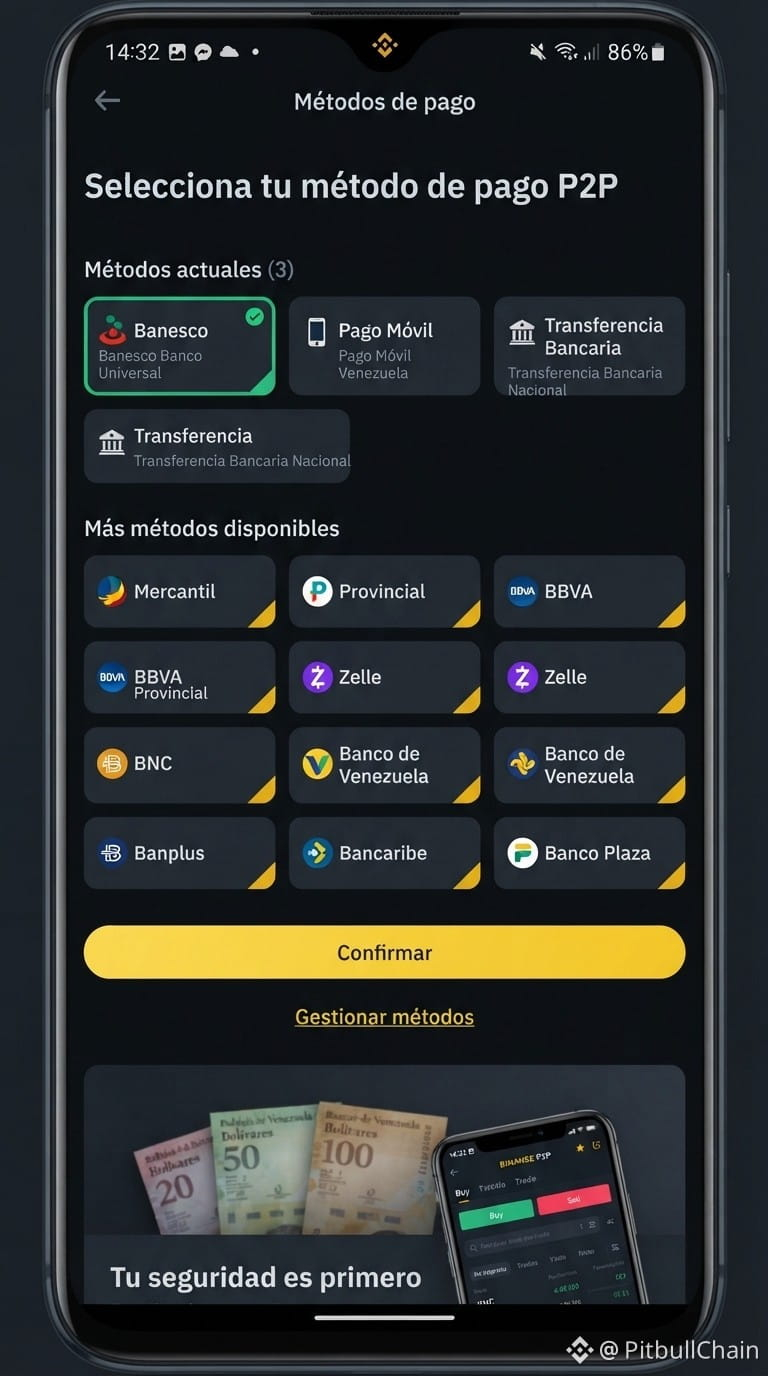
263 offers and a spread of 4.18%: This is how P2P moved today in VenezuelaMy people, today the P2P market in Venezuela spoke with clear numbers: 263 active offers and a spread that remains at 4.18%. What does this mean for you who trade day by day?
First, the practical part: to buy USDT on Binance P2P, the price is around Bs. 975.66. If you are going to sell, they pay you around Bs. 936.51. That difference of Bs. 39.15 is the cost of immediacy, of liquidity.
There are no miracles here: the market is deep, with enough flow to execute medium-sized trades without moving the price too much. But be careful: when the spread stays above 4%, it means buyers and sellers are not reaching an agreement quickly. There is liquidity, but there is also a floor.
263 offers and a spread of 4.18%: This is how P2P moved today in Venezuela
My people, today the P2P market in Venezuela spoke with clear numbers: 263 active offers and a spread that remains at 4.18%. What does this mean for you who trade day by day?
First, the practical part: to buy USDT on Binance P2P, the price is around Bs. 975.66. If you are going to sell, they pay you around Bs. 936.51. That difference of Bs. 39.15 is the cost of immediacy, of liquidity.
There are no miracles here: the market is deep, with enough flow to execute medium-sized trades without moving the price too much. But be careful: when the spread stays above 4%, it means buyers and sellers are not reaching an agreement quickly. There is liquidity, but there is also a floor.
First, the practical part: to buy USDT on Binance P2P, the price is around Bs. 975.66. If you are going to sell, they pay you around Bs. 936.51. That difference of Bs. 39.15 is the cost of immediacy, of liquidity.
There are no miracles here: the market is deep, with enough flow to execute medium-sized trades without moving the price too much. But be careful: when the spread stays above 4%, it means buyers and sellers are not reaching an agreement quickly. There is liquidity, but there is also a floor.
172
·
--
Article
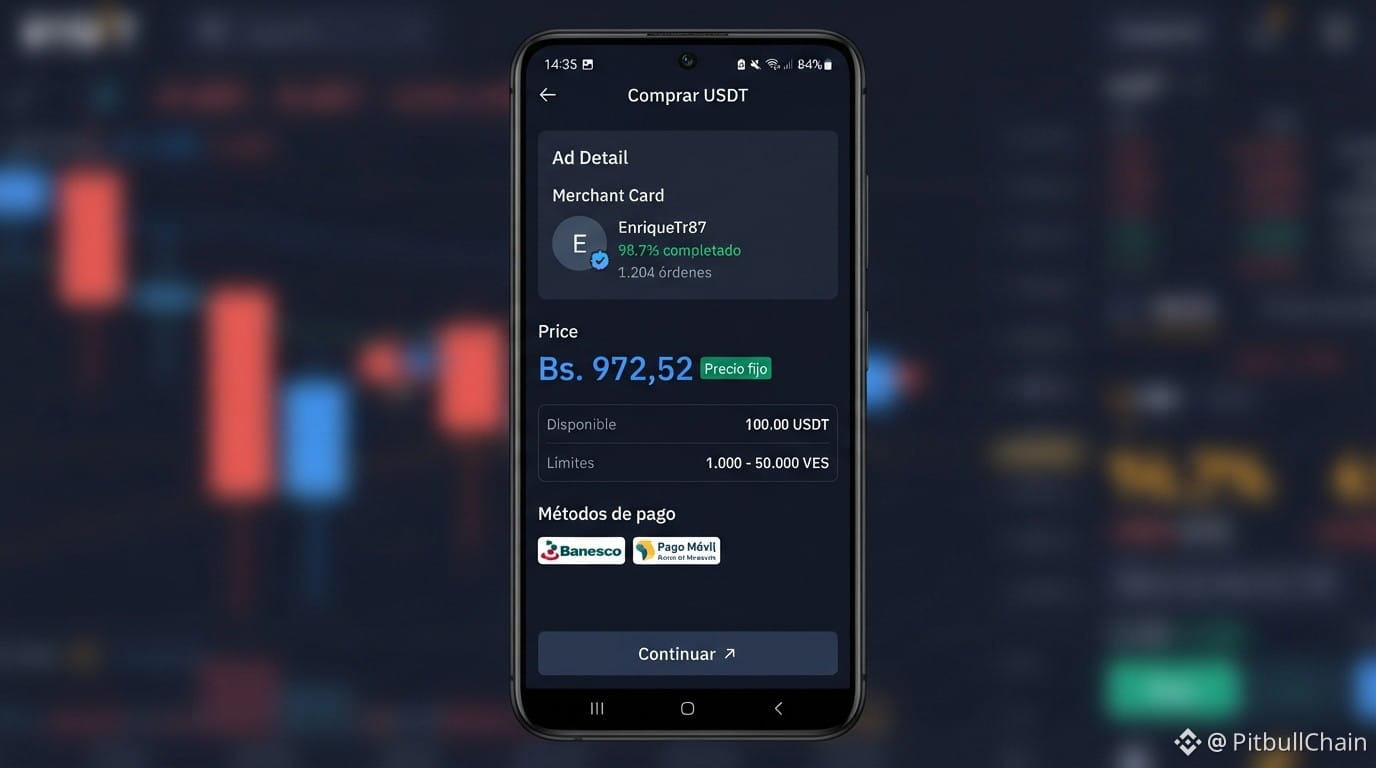
The 3.98% spread that nobody explains to you in Venezuelan P2P📊 Today I’m not going to talk to you about the terror rate or the gap with the BCV. I’m going to show you a detail that slips into every transaction and that few people take into account: the P2P spread is Bs. 37.25, that is, 3.98%.
If you go into Binance P2P right now, buying $USDT is at Bs. 972.52 and selling at Bs. 935.27. That difference of Bs. 37 is not an hidden fee: it’s the real cost of liquidity in a market that continues to consolidate in Venezuela.
With 262 active offers, the depth is there, but there’s a clear phenomenon: the buy side and the sell side are moving apart. That leaves us with two markets in one. The one who buys in a hurry pays the price of immediacy; the one who waits finds better entry points. There isn’t just one P2P rate, there’s a moving range.
The 3.98% spread that nobody explains to you in Venezuelan P2P
📊 Today I’m not going to talk to you about the terror rate or the gap with the BCV. I’m going to show you a detail that slips into every transaction and that few people take into account: the P2P spread is Bs. 37.25, that is, 3.98%.
If you go into Binance P2P right now, buying $USDT is at Bs. 972.52 and selling at Bs. 935.27. That difference of Bs. 37 is not an hidden fee: it’s the real cost of liquidity in a market that continues to consolidate in Venezuela.
With 262 active offers, the depth is there, but there’s a clear phenomenon: the buy side and the sell side are moving apart. That leaves us with two markets in one. The one who buys in a hurry pays the price of immediacy; the one who waits finds better entry points. There isn’t just one P2P rate, there’s a moving range.
If you go into Binance P2P right now, buying $USDT is at Bs. 972.52 and selling at Bs. 935.27. That difference of Bs. 37 is not an hidden fee: it’s the real cost of liquidity in a market that continues to consolidate in Venezuela.
With 262 active offers, the depth is there, but there’s a clear phenomenon: the buy side and the sell side are moving apart. That leaves us with two markets in one. The one who buys in a hurry pays the price of immediacy; the one who waits finds better entry points. There isn’t just one P2P rate, there’s a moving range.
55

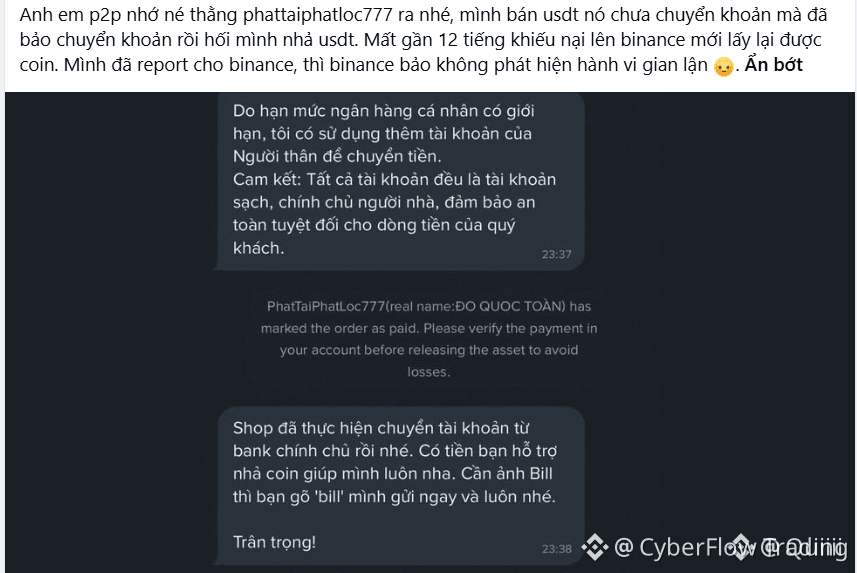
🚨 PHANTOM P2P PAYMENT TRAPS ARE FREEZING $USDT CAPITAL FOR HOURS! ⚠️
Imagine getting your $USDT locked in escrow limbo for twelve grueling hours because a counterparty marked payment completed without transferring a single cent. The appeal desk eventually unlocked the assets, but platform support somehow missed the obvious malicious intent behind the fake payment flag. ⏱️
In live trading, capital efficiency is everything, and frozen liquidity kills market momentum faster than a sudden pullback. 🛡️ True risk management extends beyond chart setups right down to your fiat off-ramp execution. 💡
💬 Have you ever encountered phantom payment flags while offramping funds on P2P desks? 👇
⚠️ Not financial advice. Always manage your risk. 🛡️
🏷️ #USDT #P2P #TradingSafety #RiskManagement
🛡️ 💎
🚨 PHANTOM P2P PAYMENT TRAPS ARE FREEZING $USDT CAPITAL FOR HOURS! ⚠️
Imagine getting your $USDT locked in escrow limbo for twelve grueling hours because a counterparty marked payment completed without transferring a single cent. The appeal desk eventually unlocked the assets, but platform support somehow missed the obvious malicious intent behind the fake payment flag. ⏱️
In live trading, capital efficiency is everything, and frozen liquidity kills market momentum faster than a sudden pullback. 🛡️ True risk management extends beyond chart setups right down to your fiat off-ramp execution. 💡
💬 Have you ever encountered phantom payment flags while offramping funds on P2P desks? 👇
⚠️ Not financial advice. Always manage your risk. 🛡️
🏷️ #USDT #P2P #TradingSafety #RiskManagement
🛡️ 💎
Imagine getting your $USDT locked in escrow limbo for twelve grueling hours because a counterparty marked payment completed without transferring a single cent. The appeal desk eventually unlocked the assets, but platform support somehow missed the obvious malicious intent behind the fake payment flag. ⏱️
In live trading, capital efficiency is everything, and frozen liquidity kills market momentum faster than a sudden pullback. 🛡️ True risk management extends beyond chart setups right down to your fiat off-ramp execution. 💡
💬 Have you ever encountered phantom payment flags while offramping funds on P2P desks? 👇
⚠️ Not financial advice. Always manage your risk. 🛡️
🏷️ #USDT #P2P #TradingSafety #RiskManagement
🛡️ 💎
95
·
--
Article
4.32% spread? Key P2P insights this #4Sep🚨 Today the spread surged to Bs. 40.08: while the market shows 967.81 to buy and 927.74 to sell, the number of active offers is 275. But what does this mean for your operation?
On Binance, the reality is different: buying and selling $USDT moves between 958.64 and 956.18, very close to each other. That stark difference from the market average is no coincidence. It is the exact snapshot of how liquidity is distributed according to the payment method and time of day.
When you see a wide spread, there are usually two explanations:
4.32% spread? Key P2P insights this #4Sep
🚨 Today the spread surged to Bs. 40.08: while the market shows 967.81 to buy and 927.74 to sell, the number of active offers is 275. But what does this mean for your operation?
On Binance, the reality is different: buying and selling $USDT moves between 958.64 and 956.18, very close to each other. That stark difference from the market average is no coincidence. It is the exact snapshot of how liquidity is distributed according to the payment method and time of day.
When you see a wide spread, there are usually two explanations:
On Binance, the reality is different: buying and selling $USDT moves between 958.64 and 956.18, very close to each other. That stark difference from the market average is no coincidence. It is the exact snapshot of how liquidity is distributed according to the payment method and time of day.
When you see a wide spread, there are usually two explanations:
24
·
--
Article
Spread at 5.01%: This is how the Venezuelan P2P is moving🔹 The P2P spread in Venezuela stands at 5.01% and 266 active offers. It is not just a simple figure: it is a thermometer that gives you a preview of how the market is doing today.
When you see a Bs. 47.19 spread between buying and selling $USDT, it means there is liquidity, but it also means that every transaction has a cost. Unlike previous sessions with a spread above 8%, today we are in the middle range. Is it an opportunity or a risk? It depends on how you trade.
🔸 The 266 active offers indicate there is movement. But be careful, not all of them have the same conditions. In this environment, my operational recommendation is:
Spread at 5.01%: This is how the Venezuelan P2P is moving
🔹 The P2P spread in Venezuela stands at 5.01% and 266 active offers. It is not just a simple figure: it is a thermometer that gives you a preview of how the market is doing today.
When you see a Bs. 47.19 spread between buying and selling $USDT, it means there is liquidity, but it also means that every transaction has a cost. Unlike previous sessions with a spread above 8%, today we are in the middle range. Is it an opportunity or a risk? It depends on how you trade.
🔸 The 266 active offers indicate there is movement. But be careful, not all of them have the same conditions. In this environment, my operational recommendation is:
When you see a Bs. 47.19 spread between buying and selling $USDT, it means there is liquidity, but it also means that every transaction has a cost. Unlike previous sessions with a spread above 8%, today we are in the middle range. Is it an opportunity or a risk? It depends on how you trade.
🔸 The 266 active offers indicate there is movement. But be careful, not all of them have the same conditions. In this environment, my operational recommendation is:
22
Log in to explore more content
Join global crypto users on Binance Square
⚡️ Get latest and useful information about crypto.
💬 Trusted by the world’s largest crypto exchange.
👍 Discover real insights from verified creators.
Email / Phone number
Trending Topics
1
#IMFSaysElSalvadorBTCNoPublicFunds
13,394 views
459 Discussing
2
#IranSaysItHit3USShips3Tankers
9,632 views
326 Discussing
3
#SideSwapSuspendsLiquidServices
11,932 views
278 Discussing
4
#RussiaUkraineTradeStrikesKushnerWitkoffToKyiv
15,643 views
320 Discussing
5
#EightChineseFinancialFirmsRaise360BYuan
8,572 views
264 Discussing
6
#USIranTradeTankerStrikesEscalate
13,351 views
228 Discussing
7
#IranToSetRestrictedZoneNearHormuz
12,272 views
221 Discussing
8
#USStrikesIranTankersTehranRestrictsHormuz
12,426 views
204 Discussing
9
#SamsungSKHynixLeadKoreanSharesHigher
9,055 views
138 Discussing
10
#RussiaUkraine72-hourCeasefire
220,294 views
2,547 Discussing