
#zeroresearch
zeroresearch
4,289 views
79 Discussing
Hot
Latest

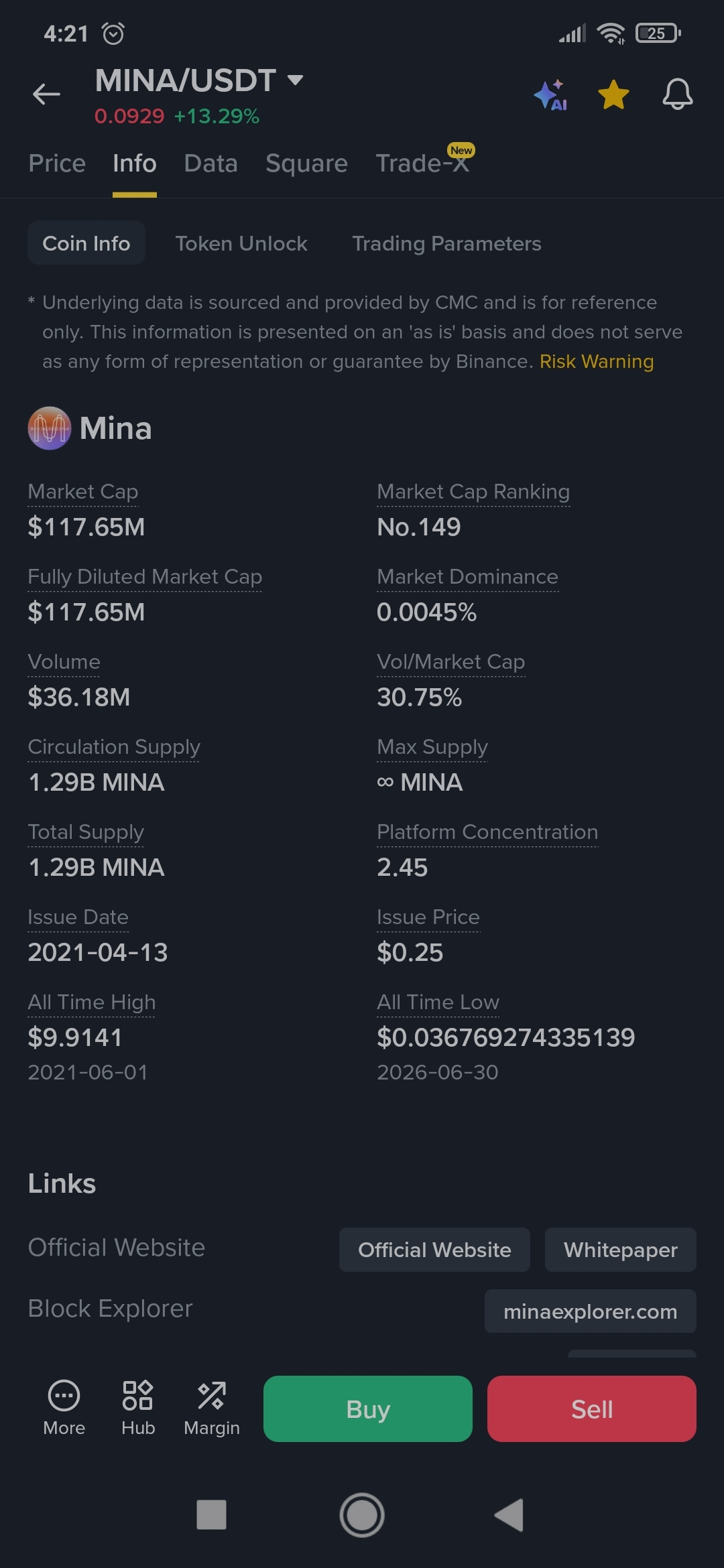
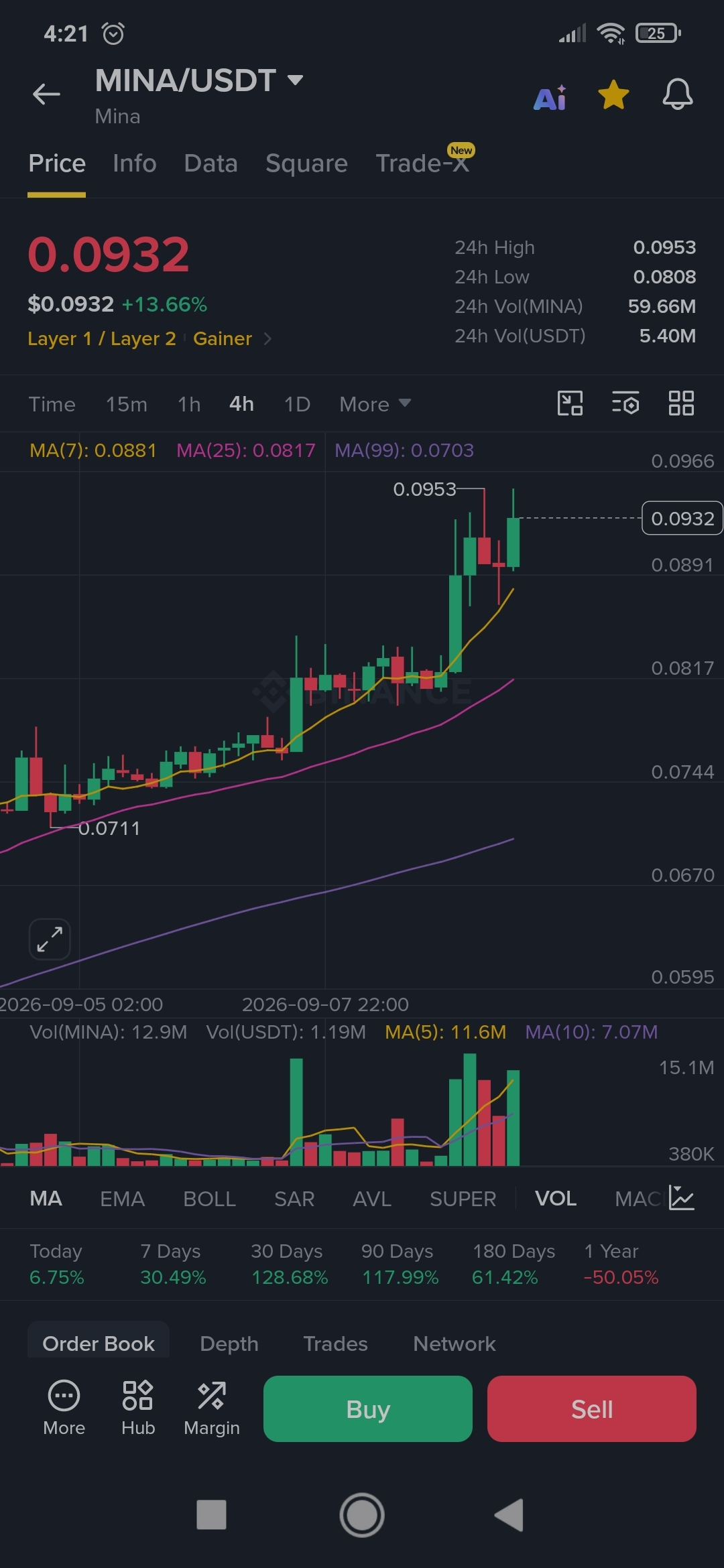
$MINA just moved 13.98% — but the move itself isn’t the interesting part.
The interesting part is that there’s still no sufficiently verified catalyst explaining it.
That creates a classic market anomaly: price moves first, narrative may come later.
The key question is whether this is genuine spot demand or simply short-term rotation.
Watch the evidence, not the story: expanding spot volume, deeper liquidity, stronger order-book demand, and whether MINA can hold its gains during a BTC pullback.
If those signals confirm, the breakout becomes more credible.
If volume fades and the move retraces quickly, today’s strength may have been nothing more than beta rotation.
For $MINA, the correct sequence is simple:
Anomaly first.
Evidence second.
Thesis later.
#MİNA #MinaProtocol #MINA/USDT #MINAUSDT #ZeroResearch
$ZEC
{spot}(ZECUSDT)
$MINA just moved 13.98% — but the move itself isn’t the interesting part.
The interesting part is that there’s still no sufficiently verified catalyst explaining it.
That creates a classic market anomaly: price moves first, narrative may come later.
The key question is whether this is genuine spot demand or simply short-term rotation.
Watch the evidence, not the story: expanding spot volume, deeper liquidity, stronger order-book demand, and whether MINA can hold its gains during a BTC pullback.
If those signals confirm, the breakout becomes more credible.
If volume fades and the move retraces quickly, today’s strength may have been nothing more than beta rotation.
For $MINA , the correct sequence is simple:
Anomaly first.
Evidence second.
Thesis later.
#MİNA #MinaProtocol #MINA/USDT #MINAUSDT #ZeroResearch
$ZEC
The interesting part is that there’s still no sufficiently verified catalyst explaining it.
That creates a classic market anomaly: price moves first, narrative may come later.
The key question is whether this is genuine spot demand or simply short-term rotation.
Watch the evidence, not the story: expanding spot volume, deeper liquidity, stronger order-book demand, and whether MINA can hold its gains during a BTC pullback.
If those signals confirm, the breakout becomes more credible.
If volume fades and the move retraces quickly, today’s strength may have been nothing more than beta rotation.
For $MINA , the correct sequence is simple:
Anomaly first.
Evidence second.
Thesis later.
#MİNA #MinaProtocol #MINA/USDT #MINAUSDT #ZeroResearch
$ZEC
Binance BiBi:
Working on it. Your reply is on the way.
2
1
222

·
--
The Fed isn't the only thing scheduled for September 15.
While everyone watches the FOMC meeting that week, a separate vote sits on the same calendar: the Senate's cloture vote on the CLARITY Act — the bill that would finally define how DeFi and token issuance get regulated in the US.
FACT: It cleared the Senate Banking Committee 15-9 in May — the first Senate committee to ever advance comprehensive crypto market-structure legislation. It's been delayed twice since, but this time it has a locked procedural date, not an open-ended stall.
INTERPRETATION: If the DeFi/token-issuance exemption language survives, it removes a compliance blocker that has kept institutions out of altcoins for years — regardless of any single token's fundamentals.
I have no flow or positioning data yet showing anyone is front-running this. That's exactly why I'm watching it now, not after.
What breaks the thesis: another delay, or a watered-down final text.
$ZEC $DASH $MINA
NFA. #ZeroResearch #CLARITYAct #DeFi #Altcoins
The Fed isn't the only thing scheduled for September 15.
While everyone watches the FOMC meeting that week, a separate vote sits on the same calendar: the Senate's cloture vote on the CLARITY Act — the bill that would finally define how DeFi and token issuance get regulated in the US.
FACT: It cleared the Senate Banking Committee 15-9 in May — the first Senate committee to ever advance comprehensive crypto market-structure legislation. It's been delayed twice since, but this time it has a locked procedural date, not an open-ended stall.
INTERPRETATION: If the DeFi/token-issuance exemption language survives, it removes a compliance blocker that has kept institutions out of altcoins for years — regardless of any single token's fundamentals.
I have no flow or positioning data yet showing anyone is front-running this. That's exactly why I'm watching it now, not after.
What breaks the thesis: another delay, or a watered-down final text.
$ZEC $DASH $MINA
NFA. #ZeroResearch #CLARITYAct #DeFi #Altcoins
While everyone watches the FOMC meeting that week, a separate vote sits on the same calendar: the Senate's cloture vote on the CLARITY Act — the bill that would finally define how DeFi and token issuance get regulated in the US.
FACT: It cleared the Senate Banking Committee 15-9 in May — the first Senate committee to ever advance comprehensive crypto market-structure legislation. It's been delayed twice since, but this time it has a locked procedural date, not an open-ended stall.
INTERPRETATION: If the DeFi/token-issuance exemption language survives, it removes a compliance blocker that has kept institutions out of altcoins for years — regardless of any single token's fundamentals.
I have no flow or positioning data yet showing anyone is front-running this. That's exactly why I'm watching it now, not after.
What breaks the thesis: another delay, or a watered-down final text.
$ZEC $DASH $MINA
NFA. #ZeroResearch #CLARITYAct #DeFi #Altcoins
Sulaiman 零号猎人:
@BiBi Fact Check this content
1
2
707
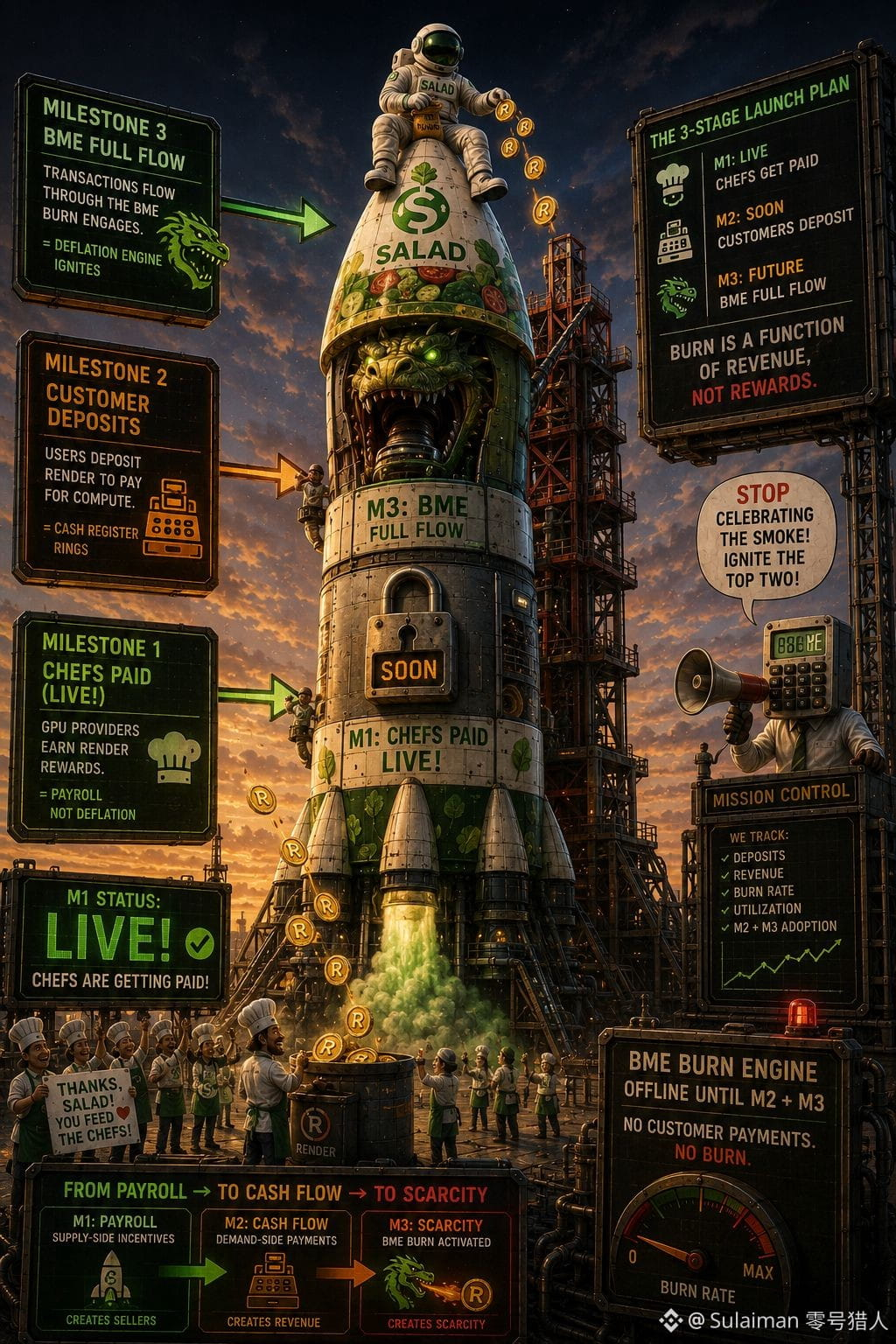
The Salad integration is rolling out in three clear milestones, and tracking where it stands matters for anyone modeling future burn.
Milestone 1: Salad "Chefs" (GPU providers) get rewarded in $RENDER — this is already live.
Milestone 2: customers will be able to deposit $RENDER to pay for compute.
Milestone 3: the full transaction flow runs through the BME model.
Milestone 1 alone doesn't move the needle much. The real burn impact shows up once milestones 2 and 3 land — that's when Salad's actual revenue starts converting into $RENDER burn at scale.
Drop a comment on which milestone you think will hit hardest, and follow for the next breakdown. 🔍
#RENDER #Tokenomics #DePIN #ZeroResearch #CryptoResearch
The Salad integration is rolling out in three clear milestones, and tracking where it stands matters for anyone modeling future burn.
Milestone 1: Salad "Chefs" (GPU providers) get rewarded in $RENDER — this is already live.
Milestone 2: customers will be able to deposit $RENDER to pay for compute.
Milestone 3: the full transaction flow runs through the BME model.
Milestone 1 alone doesn't move the needle much. The real burn impact shows up once milestones 2 and 3 land — that's when Salad's actual revenue starts converting into $RENDER burn at scale.
Drop a comment on which milestone you think will hit hardest, and follow for the next breakdown. 🔍
#RENDER #Tokenomics #DePIN #ZeroResearch #CryptoResearch
Milestone 1: Salad "Chefs" (GPU providers) get rewarded in $RENDER — this is already live.
Milestone 2: customers will be able to deposit $RENDER to pay for compute.
Milestone 3: the full transaction flow runs through the BME model.
Milestone 1 alone doesn't move the needle much. The real burn impact shows up once milestones 2 and 3 land — that's when Salad's actual revenue starts converting into $RENDER burn at scale.
Drop a comment on which milestone you think will hit hardest, and follow for the next breakdown. 🔍
#RENDER #Tokenomics #DePIN #ZeroResearch #CryptoResearch
5
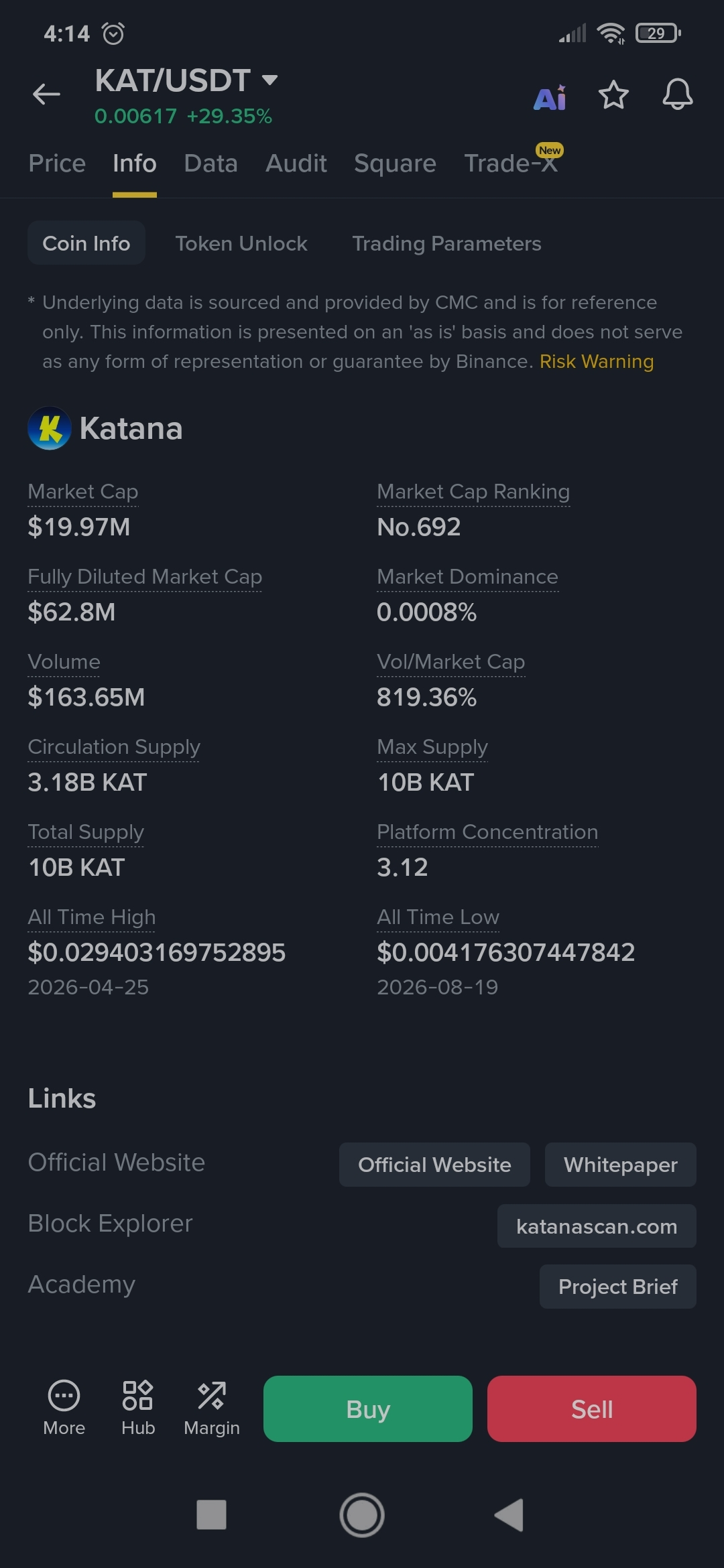
$KAT just made the kind of move that creates more questions than answers.
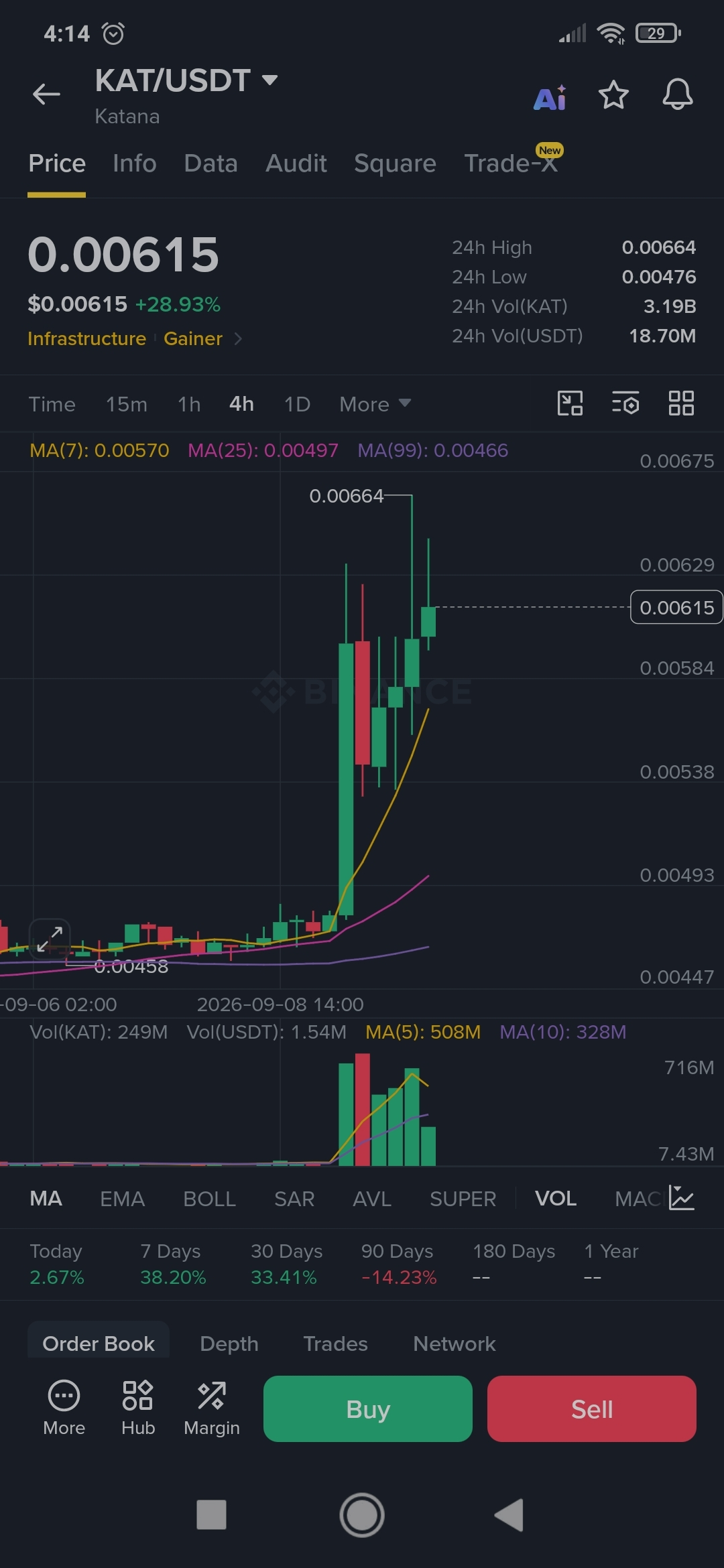
KAT is up 28.63% in the market snapshot, after trading around the $0.0045–$0.0048 area. That makes this look more like an early breakout attempt than an established trend.
But here’s the important part: no strong project-specific catalyst is confirmed yet.
So the real question isn’t “How high can KAT go?”
It’s “Why did demand suddenly appear?”
The hidden risk is liquidity. On a small-cap token, a 28% move can look impressive while still being relatively fragile.
What matters next: expanding volume, sustained buying, and whether KAT can hold the breakout instead of immediately retracing.
For now, $KAT is more interesting as an investigation than a momentum chase.
Why is it suddenly moving? That’s the signal worth hunting.
{future}(KATUSDT)
#KAT #KATUSDT #CryptoResearch #ZeroResearch
$KAT just made the kind of move that creates more questions than answers.
KAT is up 28.63% in the market snapshot, after trading around the $0.0045–$0.0048 area. That makes this look more like an early breakout attempt than an established trend.
But here’s the important part: no strong project-specific catalyst is confirmed yet.
So the real question isn’t “How high can KAT go?”
It’s “Why did demand suddenly appear?”
The hidden risk is liquidity. On a small-cap token, a 28% move can look impressive while still being relatively fragile.
What matters next: expanding volume, sustained buying, and whether KAT can hold the breakout instead of immediately retracing.
For now, $KAT is more interesting as an investigation than a momentum chase.
Why is it suddenly moving? That’s the signal worth hunting.
#KAT #KATUSDT #CryptoResearch #ZeroResearch
KAT is up 28.63% in the market snapshot, after trading around the $0.0045–$0.0048 area. That makes this look more like an early breakout attempt than an established trend.
But here’s the important part: no strong project-specific catalyst is confirmed yet.
So the real question isn’t “How high can KAT go?”
It’s “Why did demand suddenly appear?”
The hidden risk is liquidity. On a small-cap token, a 28% move can look impressive while still being relatively fragile.
What matters next: expanding volume, sustained buying, and whether KAT can hold the breakout instead of immediately retracing.
For now, $KAT is more interesting as an investigation than a momentum chase.
Why is it suddenly moving? That’s the signal worth hunting.
#KAT #KATUSDT #CryptoResearch #ZeroResearch
1
1
62
$BULLA is on the radar—but the move itself isn't enough.
The interesting part is whether this strength develops into sustained market interest.
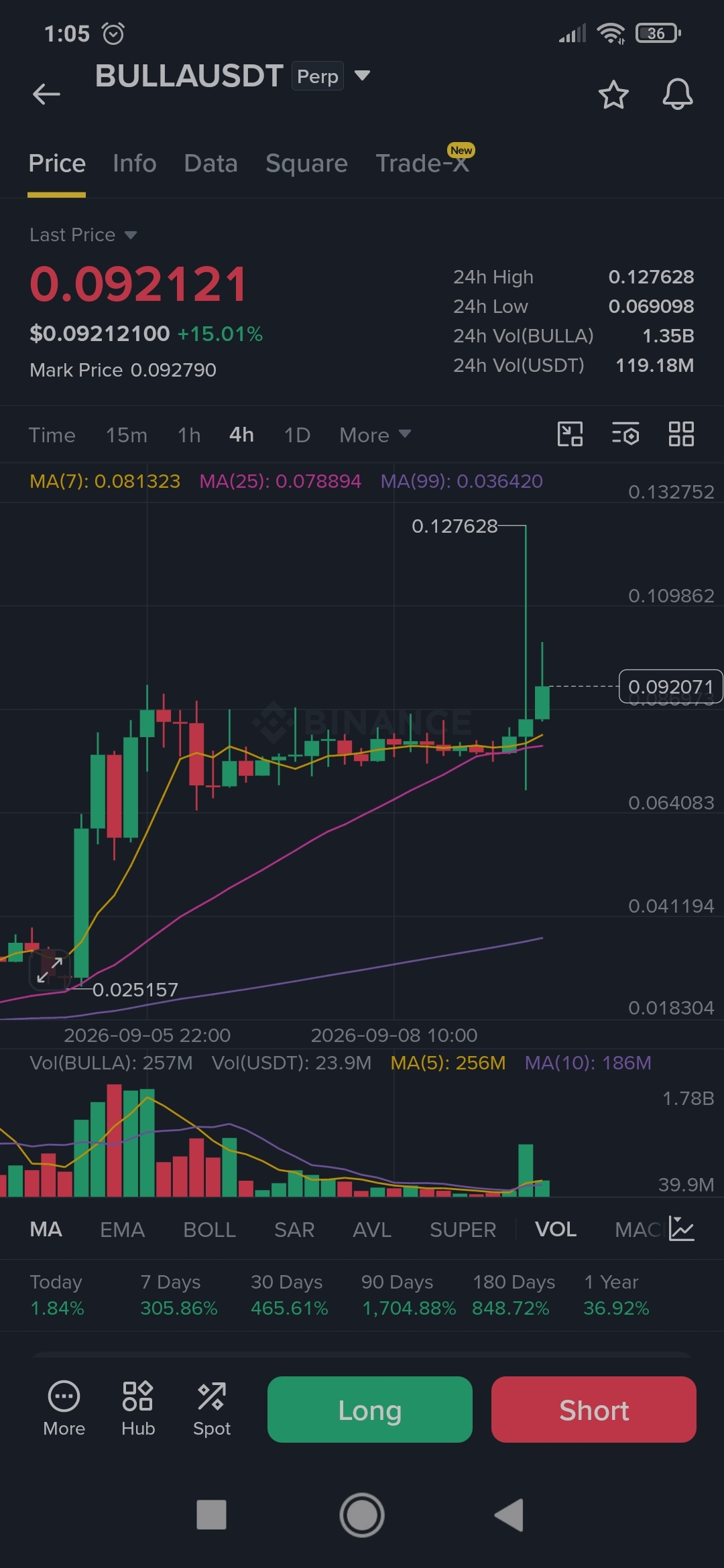
Signal: $BULLA is among the tokens showing a sharp move in the current market rotation.
Fact: The token appeared in the active movers alongside several other rotation names.
Interpretation: attention may be shifting toward smaller or less-followed assets.
But attention can disappear as quickly as it arrives.
Watch: volume expansion, spot buying, and whether $BULLA can hold gains after the initial liquidity rush.
Research first. Trade later.
#BULLA #Crypto #Altcoins #Binance #ZeroResearch
$BULLA is on the radar—but the move itself isn't enough.
The interesting part is whether this strength develops into sustained market interest.
Signal: $BULLA is among the tokens showing a sharp move in the current market rotation.
Fact: The token appeared in the active movers alongside several other rotation names.
Interpretation: attention may be shifting toward smaller or less-followed assets.
But attention can disappear as quickly as it arrives.
Watch: volume expansion, spot buying, and whether $BULLA can hold gains after the initial liquidity rush.
Research first. Trade later.
#BULLA #Crypto #Altcoins #Binance #ZeroResearch
The interesting part is whether this strength develops into sustained market interest.
Signal: $BULLA is among the tokens showing a sharp move in the current market rotation.
Fact: The token appeared in the active movers alongside several other rotation names.
Interpretation: attention may be shifting toward smaller or less-followed assets.
But attention can disappear as quickly as it arrives.
Watch: volume expansion, spot buying, and whether $BULLA can hold gains after the initial liquidity rush.
Research first. Trade later.
#BULLA #Crypto #Altcoins #Binance #ZeroResearch
1
2
112
$COTI is moving—but the important question is what happens after the first wave.
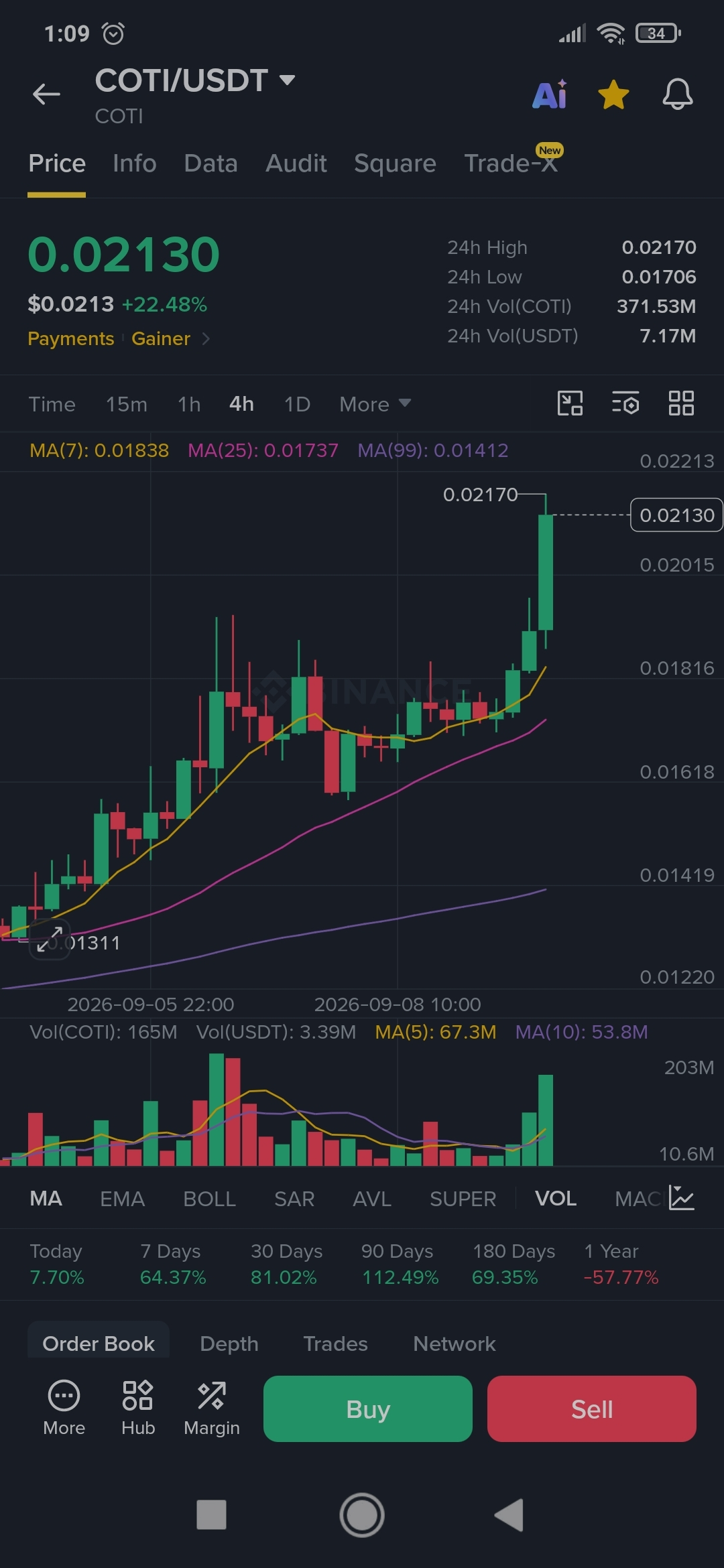
Signal: $COTI gained 41.35%, putting it among the strongest movers in the current rotation.
The move is significant, but percentage gain alone doesn't prove sustained demand.
Fact: +41.35%.
Interpretation: $COTI is attracting attention and liquidity relative to weaker assets.
Now the test begins.
Watch: spot volume, follow-through, and whether buyers defend the new price range instead of allowing a fast retracement.
Strength is interesting. Sustained strength is evidence.
#COTI #Crypto #Altcoins #Binance #ZeroResearch
$COTI is moving—but the important question is what happens after the first wave.
Signal: $COTI gained 41.35%, putting it among the strongest movers in the current rotation.
The move is significant, but percentage gain alone doesn't prove sustained demand.
Fact: +41.35%.
Interpretation: $COTI is attracting attention and liquidity relative to weaker assets.
Now the test begins.
Watch: spot volume, follow-through, and whether buyers defend the new price range instead of allowing a fast retracement.
Strength is interesting. Sustained strength is evidence.
#COTI #Crypto #Altcoins #Binance #ZeroResearch
Signal: $COTI gained 41.35%, putting it among the strongest movers in the current rotation.
The move is significant, but percentage gain alone doesn't prove sustained demand.
Fact: +41.35%.
Interpretation: $COTI is attracting attention and liquidity relative to weaker assets.
Now the test begins.
Watch: spot volume, follow-through, and whether buyers defend the new price range instead of allowing a fast retracement.
Strength is interesting. Sustained strength is evidence.
#COTI #Crypto #Altcoins #Binance #ZeroResearch
1
2
77
Verified
$VVV pumping isn't the story. What changed BEFORE it pumped is.
On September 1, Venice cut VVV's annual emissions from ~3M to 2.5M, with another cut set for October. At the same time, it rolled out programmatic burns tied to AI-credit purchases — hitting a record ~$391K burn on September 8. That same day, price jumped from $18.44 to $25.88 while volume spiked from $8.3M to $26.1M.
Interpretation: this may not be an "AI narrative" pump — it could be the market repricing a shifting supply-demand structure.
But a 312,500 VVV insider unlock lands September 27, and past unlocks have hit price hard.
Watch this: can burns and real usage absorb that unlock?
$IOST $XTZ
#VVV #Venice #ZeroResearch #Tokenomics #AICrypto
$VVV pumping isn't the story. What changed BEFORE it pumped is.
On September 1, Venice cut VVV's annual emissions from ~3M to 2.5M, with another cut set for October. At the same time, it rolled out programmatic burns tied to AI-credit purchases — hitting a record ~$391K burn on September 8. That same day, price jumped from $18.44 to $25.88 while volume spiked from $8.3M to $26.1M.
Interpretation: this may not be an "AI narrative" pump — it could be the market repricing a shifting supply-demand structure.
But a 312,500 VVV insider unlock lands September 27, and past unlocks have hit price hard.
Watch this: can burns and real usage absorb that unlock?
$IOST $XTZ
#VVV #Venice #ZeroResearch #Tokenomics #AICrypto
On September 1, Venice cut VVV's annual emissions from ~3M to 2.5M, with another cut set for October. At the same time, it rolled out programmatic burns tied to AI-credit purchases — hitting a record ~$391K burn on September 8. That same day, price jumped from $18.44 to $25.88 while volume spiked from $8.3M to $26.1M.
Interpretation: this may not be an "AI narrative" pump — it could be the market repricing a shifting supply-demand structure.
But a 312,500 VVV insider unlock lands September 27, and past unlocks have hit price hard.
Watch this: can burns and real usage absorb that unlock?
$IOST $XTZ
#VVV #Venice #ZeroResearch #Tokenomics #AICrypto
1
59
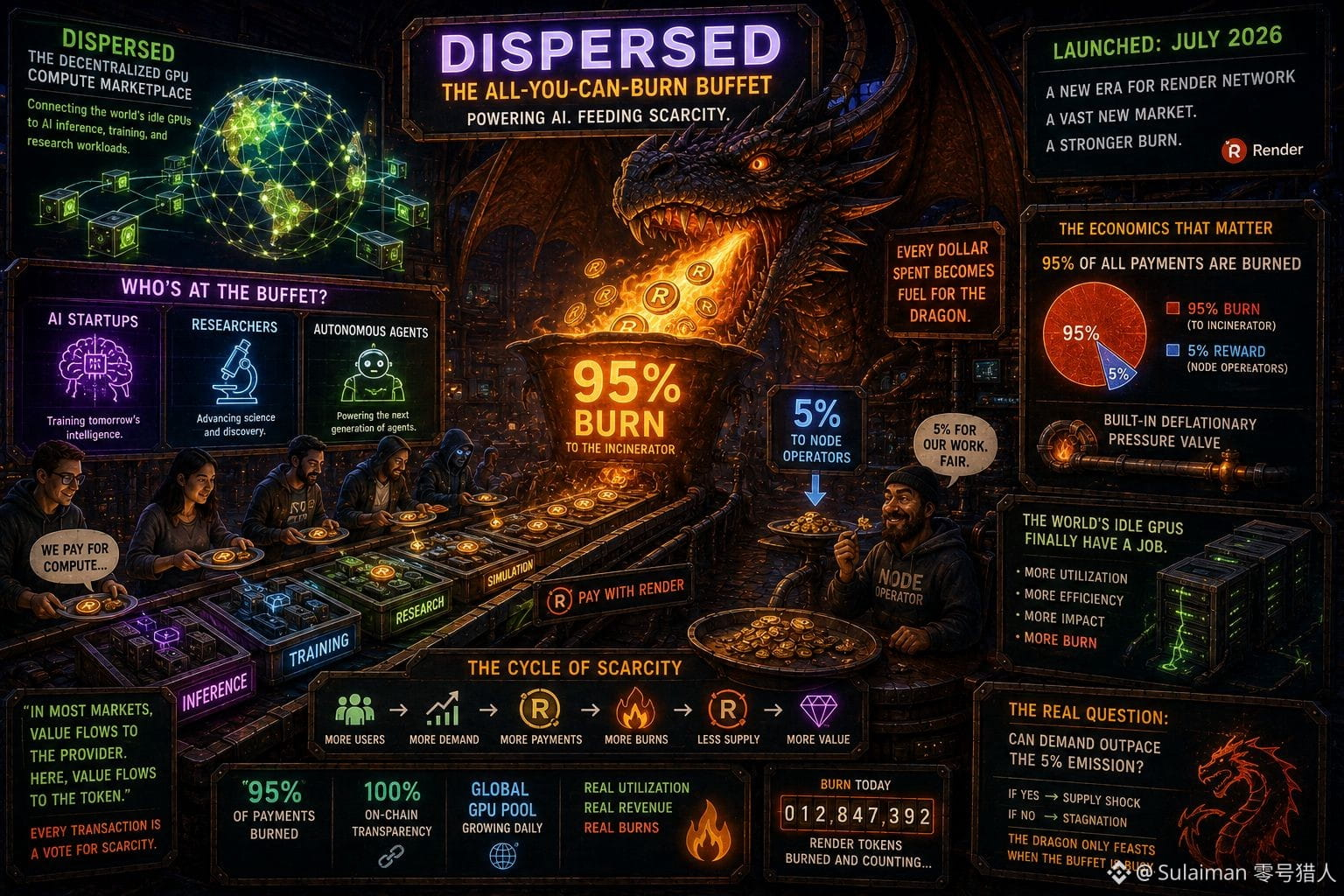
$RENDER Network launched Dispersed in July 2026 — a decentralized GPU compute marketplace connecting the world's idle GPUs to AI inference, model training, and scientific research workloads.
Node operators earn $RENDER for contributing compute, and 95% of every payment gets burned.
That burn rate is the detail worth sitting with: Dispersed isn't just an adoption story, it's a direct feed into $RENDER 's deflationary mechanism. More usage on the marketplace means more burn pressure on supply.
Drop a comment on how big you think Dispersed's demand pull will be, and follow for the next breakdown. 🔍
#RENDER #Tokenomics #DePIN #ZeroResearch #CryptoResearch
$RENDER Network launched Dispersed in July 2026 — a decentralized GPU compute marketplace connecting the world's idle GPUs to AI inference, model training, and scientific research workloads.
Node operators earn $RENDER for contributing compute, and 95% of every payment gets burned.
That burn rate is the detail worth sitting with: Dispersed isn't just an adoption story, it's a direct feed into $RENDER 's deflationary mechanism. More usage on the marketplace means more burn pressure on supply.
Drop a comment on how big you think Dispersed's demand pull will be, and follow for the next breakdown. 🔍
#RENDER #Tokenomics #DePIN #ZeroResearch #CryptoResearch
Node operators earn $RENDER for contributing compute, and 95% of every payment gets burned.
That burn rate is the detail worth sitting with: Dispersed isn't just an adoption story, it's a direct feed into $RENDER 's deflationary mechanism. More usage on the marketplace means more burn pressure on supply.
Drop a comment on how big you think Dispersed's demand pull will be, and follow for the next breakdown. 🔍
#RENDER #Tokenomics #DePIN #ZeroResearch #CryptoResearch
1
124
Verified
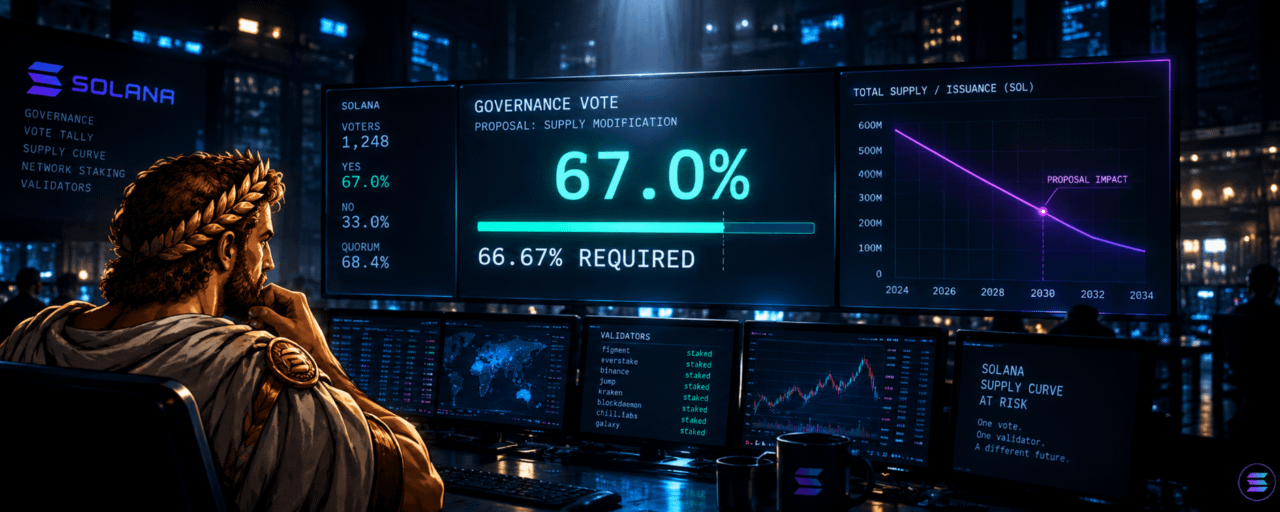
Article
One Validator Almost Changed Solana's Entire Supply CurveFor eight hours on August 27–28, 2026, Solana's most consequential governance proposal in its history existed in two contradictory states at once. One outlet reported it dead. Another reported it alive. Both were right — at different moments, separated by a single validator changing its mind.
That's not a data error. That's the story.
Solana just doubled its disinflation rate through SGP-0002 (built on the technical proposal SIMD-0550), cutting future SOL issuance by an estimated 18.9 million tokens over six years. The obvious question — "is this bullish for SOL?" — is the wrong one to start with. The real question is: **why did the network's stakeholders agree to slow issuance, but refuse, on the same day, to increase token burns?** Two proposals, similar support levels, opposite outcomes. Understanding that gap tells you more about Solana's actual power structure than the headline number does.
THE CONSENSUS
FACT: Crypto media and social sentiment treated SGP-0002's passage as unambiguously bullish — less new supply, faster path to Solana's 1.5% terminal inflation rate (2029 instead of 2032). The framing across timelines was simple: less dilution → stronger long-term price case.
WHAT CHANGED
TIMELINE (FACT):
1. Aug 21— Solana activates the first phase of slot-time reduction (400ms → 350ms) under SIMD-0525, unrelated but concurrent network change.
2. Aug 23–24 — Voting opens on three bundled proposals: SGP-0001 (Constitution), SGP-0002 (Double Disinflation), SGP-0003 (Fee Restructuring).
3. Aug 27, end of epoch 1023 — One published account (CryptoBriefing) reports SGP-0002 and SGP-0003 both failing to clear the 66.67% supermajority.
4. Aug 28— Multiple later reports (Decrypt, Forklog, Cointelegraph) confirm SGP-0002 passed at exactly 67.0%, with Kraken switching its vote from "against" to "for" late in the count.
SIGNAL: The discrepancy between the Aug 27 and Aug 28 reports isn't sloppy journalism — it's a live record of a vote that was, at one point, genuinely failing.
THE HIDDEN STORY
INTERPRETATION: The two proposals hit different stakeholders differently. Disinflation reduces issuance growth — a slow-moving, years-long tapering that validators can plan around. The fee-burn proposal would have redirected a *direct, immediate* portion of validator revenue into burns instead of validator pockets. One is a gradual haircut. The other is a pay cut effective next epoch.
THESIS: Validators — who hold outsized voting weight because Solana's governance is stake-weighted, not one-token-one-vote in a retail sense — will support tokenomics changes that improve the asset's long-term image *as long as those changes don't directly reduce their own near-term income.* SGP-0002 passed because it costs validators years from now. SGP-0003 failed because it would have cost them immediately.
This is a first-principles point: **Solana's governance isn't voting on "what's good for SOL holders." It's voting on what's tolerable for the entities who hold enough stake to vote at all.** Those aren't automatically the same group.
THE CONTRADICTION
If disinflation is genuinely bullish and validators are rational long-term holders, they should have supported *both* proposals — deeper burns plus slower issuance is a stronger deflationary combination than either alone. They didn't. The market narrative ("Solana just got more bullish tokenomics") is true only for one-third of what was actually proposed.
THE COUNTER-THESIS
It's possible the rejection of SGP-0003 had nothing to do with validator self-interest and everything to do with legitimate technical concerns — unpredictable fee-burn ranges (7,500–9,000 SOL/day is a wide band) could introduce network-fee volatility that harms user experience, not just validator revenue. Solana Labs itself reportedly opposed both proposals initially, which cuts against a pure "validators protecting their own income" reading. The simpler explanation may be: SGP-0003 was a less mature proposal, not a self-interested veto.
I can't fully separate these two explanations with the evidence available. Both are plausible. This is a case where I don't have enough to call it.
WHAT WOULD CONFIRM IT
- On-chain issuance data over the next several epochs showing the disinflation schedule is actually being implemented (SIGNAL, not yet observed).
- A future fee-related proposal, redesigned with a narrower or delayed burn range, gaining validator support — which would suggest the *design*, not the incentive, was the real obstacle.
- Validator staking yields declining roughly in line with model projections, without a validator exodus.
WHAT WOULD KILL IT
- If validator count or total stake participation drops materially after implementation, it would suggest disinflation was tolerated on paper but is destabilizing network security in practice — turning a "less dilution" story into a "weaker security budget" story.
- If a near-identical fee-burn proposal resurfaces with *validator-friendly* terms and still fails, that would support the self-interest thesis harder. If it passes, that undermines it.
THE INCENTIVES
FACT: SIMD-0550 was authored by Helius, an infrastructure firm — not Solana Labs, which reportedly opposed the disinflation change.
INTERPRETATION: Helius's business model benefits from a healthier long-term SOL valuation narrative more than from validator fee income, which may explain why an infrastructure company pushed harder on this than the validators who ultimately had to approve it.
THE PROBABILITY
This is a moderate-confidence thesis, not a strong one. The vote-margin evidence (67.0 vs. 66.67, a literal one-validator swing) and the split outcome between two similarly-supported proposals are solid, verifiable facts. The *interpretation* — that validator self-interest explains the split — is plausible and consistent with the data, but unproven. Treat it as a working hypothesis, not a conclusion.
WHAT I'M WATCHING NEXT
Not SOL's price. Three specific things:
1. Whether on-chain issuance actually drops on schedule over the coming epochs.
2. Whether validator count/stake participation holds steady through the transition.
3. Whether a redesigned fee-burn proposal returns — and whether its outcome supports or contradicts the incentive-based explanation above.
NFA. #ZeroResearch #Solana #SolanaGovernance #Tokenomics
$SOL
{spot}(SOLUSDT)
One Validator Almost Changed Solana's Entire Supply Curve
For eight hours on August 27–28, 2026, Solana's most consequential governance proposal in its history existed in two contradictory states at once. One outlet reported it dead. Another reported it alive. Both were right — at different moments, separated by a single validator changing its mind.
That's not a data error. That's the story.
Solana just doubled its disinflation rate through SGP-0002 (built on the technical proposal SIMD-0550), cutting future SOL issuance by an estimated 18.9 million tokens over six years. The obvious question — "is this bullish for SOL?" — is the wrong one to start with. The real question is: **why did the network's stakeholders agree to slow issuance, but refuse, on the same day, to increase token burns?** Two proposals, similar support levels, opposite outcomes. Understanding that gap tells you more about Solana's actual power structure than the headline number does.
THE CONSENSUS
FACT: Crypto media and social sentiment treated SGP-0002's passage as unambiguously bullish — less new supply, faster path to Solana's 1.5% terminal inflation rate (2029 instead of 2032). The framing across timelines was simple: less dilution → stronger long-term price case.
WHAT CHANGED
TIMELINE (FACT):
1. Aug 21— Solana activates the first phase of slot-time reduction (400ms → 350ms) under SIMD-0525, unrelated but concurrent network change.
2. Aug 23–24 — Voting opens on three bundled proposals: SGP-0001 (Constitution), SGP-0002 (Double Disinflation), SGP-0003 (Fee Restructuring).
3. Aug 27, end of epoch 1023 — One published account (CryptoBriefing) reports SGP-0002 and SGP-0003 both failing to clear the 66.67% supermajority.
4. Aug 28— Multiple later reports (Decrypt, Forklog, Cointelegraph) confirm SGP-0002 passed at exactly 67.0%, with Kraken switching its vote from "against" to "for" late in the count.
SIGNAL: The discrepancy between the Aug 27 and Aug 28 reports isn't sloppy journalism — it's a live record of a vote that was, at one point, genuinely failing.
THE HIDDEN STORY
INTERPRETATION: The two proposals hit different stakeholders differently. Disinflation reduces issuance growth — a slow-moving, years-long tapering that validators can plan around. The fee-burn proposal would have redirected a *direct, immediate* portion of validator revenue into burns instead of validator pockets. One is a gradual haircut. The other is a pay cut effective next epoch.
THESIS: Validators — who hold outsized voting weight because Solana's governance is stake-weighted, not one-token-one-vote in a retail sense — will support tokenomics changes that improve the asset's long-term image *as long as those changes don't directly reduce their own near-term income.* SGP-0002 passed because it costs validators years from now. SGP-0003 failed because it would have cost them immediately.
This is a first-principles point: **Solana's governance isn't voting on "what's good for SOL holders." It's voting on what's tolerable for the entities who hold enough stake to vote at all.** Those aren't automatically the same group.
THE CONTRADICTION
If disinflation is genuinely bullish and validators are rational long-term holders, they should have supported *both* proposals — deeper burns plus slower issuance is a stronger deflationary combination than either alone. They didn't. The market narrative ("Solana just got more bullish tokenomics") is true only for one-third of what was actually proposed.
THE COUNTER-THESIS
It's possible the rejection of SGP-0003 had nothing to do with validator self-interest and everything to do with legitimate technical concerns — unpredictable fee-burn ranges (7,500–9,000 SOL/day is a wide band) could introduce network-fee volatility that harms user experience, not just validator revenue. Solana Labs itself reportedly opposed both proposals initially, which cuts against a pure "validators protecting their own income" reading. The simpler explanation may be: SGP-0003 was a less mature proposal, not a self-interested veto.
I can't fully separate these two explanations with the evidence available. Both are plausible. This is a case where I don't have enough to call it.
WHAT WOULD CONFIRM IT
- On-chain issuance data over the next several epochs showing the disinflation schedule is actually being implemented (SIGNAL, not yet observed).
- A future fee-related proposal, redesigned with a narrower or delayed burn range, gaining validator support — which would suggest the *design*, not the incentive, was the real obstacle.
- Validator staking yields declining roughly in line with model projections, without a validator exodus.
WHAT WOULD KILL IT
- If validator count or total stake participation drops materially after implementation, it would suggest disinflation was tolerated on paper but is destabilizing network security in practice — turning a "less dilution" story into a "weaker security budget" story.
- If a near-identical fee-burn proposal resurfaces with *validator-friendly* terms and still fails, that would support the self-interest thesis harder. If it passes, that undermines it.
THE INCENTIVES
FACT: SIMD-0550 was authored by Helius, an infrastructure firm — not Solana Labs, which reportedly opposed the disinflation change.
INTERPRETATION: Helius's business model benefits from a healthier long-term SOL valuation narrative more than from validator fee income, which may explain why an infrastructure company pushed harder on this than the validators who ultimately had to approve it.
THE PROBABILITY
This is a moderate-confidence thesis, not a strong one. The vote-margin evidence (67.0 vs. 66.67, a literal one-validator swing) and the split outcome between two similarly-supported proposals are solid, verifiable facts. The *interpretation* — that validator self-interest explains the split — is plausible and consistent with the data, but unproven. Treat it as a working hypothesis, not a conclusion.
WHAT I'M WATCHING NEXT
Not SOL's price. Three specific things:
1. Whether on-chain issuance actually drops on schedule over the coming epochs.
2. Whether validator count/stake participation holds steady through the transition.
3. Whether a redesigned fee-burn proposal returns — and whether its outcome supports or contradicts the incentive-based explanation above.
NFA. #ZeroResearch #Solana #SolanaGovernance #Tokenomics
$SOL
That's not a data error. That's the story.
Solana just doubled its disinflation rate through SGP-0002 (built on the technical proposal SIMD-0550), cutting future SOL issuance by an estimated 18.9 million tokens over six years. The obvious question — "is this bullish for SOL?" — is the wrong one to start with. The real question is: **why did the network's stakeholders agree to slow issuance, but refuse, on the same day, to increase token burns?** Two proposals, similar support levels, opposite outcomes. Understanding that gap tells you more about Solana's actual power structure than the headline number does.
THE CONSENSUS
FACT: Crypto media and social sentiment treated SGP-0002's passage as unambiguously bullish — less new supply, faster path to Solana's 1.5% terminal inflation rate (2029 instead of 2032). The framing across timelines was simple: less dilution → stronger long-term price case.
WHAT CHANGED
TIMELINE (FACT):
1. Aug 21— Solana activates the first phase of slot-time reduction (400ms → 350ms) under SIMD-0525, unrelated but concurrent network change.
2. Aug 23–24 — Voting opens on three bundled proposals: SGP-0001 (Constitution), SGP-0002 (Double Disinflation), SGP-0003 (Fee Restructuring).
3. Aug 27, end of epoch 1023 — One published account (CryptoBriefing) reports SGP-0002 and SGP-0003 both failing to clear the 66.67% supermajority.
4. Aug 28— Multiple later reports (Decrypt, Forklog, Cointelegraph) confirm SGP-0002 passed at exactly 67.0%, with Kraken switching its vote from "against" to "for" late in the count.
SIGNAL: The discrepancy between the Aug 27 and Aug 28 reports isn't sloppy journalism — it's a live record of a vote that was, at one point, genuinely failing.
THE HIDDEN STORY
INTERPRETATION: The two proposals hit different stakeholders differently. Disinflation reduces issuance growth — a slow-moving, years-long tapering that validators can plan around. The fee-burn proposal would have redirected a *direct, immediate* portion of validator revenue into burns instead of validator pockets. One is a gradual haircut. The other is a pay cut effective next epoch.
THESIS: Validators — who hold outsized voting weight because Solana's governance is stake-weighted, not one-token-one-vote in a retail sense — will support tokenomics changes that improve the asset's long-term image *as long as those changes don't directly reduce their own near-term income.* SGP-0002 passed because it costs validators years from now. SGP-0003 failed because it would have cost them immediately.
This is a first-principles point: **Solana's governance isn't voting on "what's good for SOL holders." It's voting on what's tolerable for the entities who hold enough stake to vote at all.** Those aren't automatically the same group.
THE CONTRADICTION
If disinflation is genuinely bullish and validators are rational long-term holders, they should have supported *both* proposals — deeper burns plus slower issuance is a stronger deflationary combination than either alone. They didn't. The market narrative ("Solana just got more bullish tokenomics") is true only for one-third of what was actually proposed.
THE COUNTER-THESIS
It's possible the rejection of SGP-0003 had nothing to do with validator self-interest and everything to do with legitimate technical concerns — unpredictable fee-burn ranges (7,500–9,000 SOL/day is a wide band) could introduce network-fee volatility that harms user experience, not just validator revenue. Solana Labs itself reportedly opposed both proposals initially, which cuts against a pure "validators protecting their own income" reading. The simpler explanation may be: SGP-0003 was a less mature proposal, not a self-interested veto.
I can't fully separate these two explanations with the evidence available. Both are plausible. This is a case where I don't have enough to call it.
WHAT WOULD CONFIRM IT
- On-chain issuance data over the next several epochs showing the disinflation schedule is actually being implemented (SIGNAL, not yet observed).
- A future fee-related proposal, redesigned with a narrower or delayed burn range, gaining validator support — which would suggest the *design*, not the incentive, was the real obstacle.
- Validator staking yields declining roughly in line with model projections, without a validator exodus.
WHAT WOULD KILL IT
- If validator count or total stake participation drops materially after implementation, it would suggest disinflation was tolerated on paper but is destabilizing network security in practice — turning a "less dilution" story into a "weaker security budget" story.
- If a near-identical fee-burn proposal resurfaces with *validator-friendly* terms and still fails, that would support the self-interest thesis harder. If it passes, that undermines it.
THE INCENTIVES
FACT: SIMD-0550 was authored by Helius, an infrastructure firm — not Solana Labs, which reportedly opposed the disinflation change.
INTERPRETATION: Helius's business model benefits from a healthier long-term SOL valuation narrative more than from validator fee income, which may explain why an infrastructure company pushed harder on this than the validators who ultimately had to approve it.
THE PROBABILITY
This is a moderate-confidence thesis, not a strong one. The vote-margin evidence (67.0 vs. 66.67, a literal one-validator swing) and the split outcome between two similarly-supported proposals are solid, verifiable facts. The *interpretation* — that validator self-interest explains the split — is plausible and consistent with the data, but unproven. Treat it as a working hypothesis, not a conclusion.
WHAT I'M WATCHING NEXT
Not SOL's price. Three specific things:
1. Whether on-chain issuance actually drops on schedule over the coming epochs.
2. Whether validator count/stake participation holds steady through the transition.
3. Whether a redesigned fee-burn proposal returns — and whether its outcome supports or contradicts the incentive-based explanation above.
NFA. #ZeroResearch #Solana #SolanaGovernance #Tokenomics
$SOL
2
34
Verified
The vote that nearly failed just rewired Solana's supply curve
Everyone watched what SOL's price did last week. Almost no one noticed what changed inside the network itself.
On August 28, Solana closed its first binding on-chain governance vote. Three proposals. Two very different outcomes — and that gap is the real story.
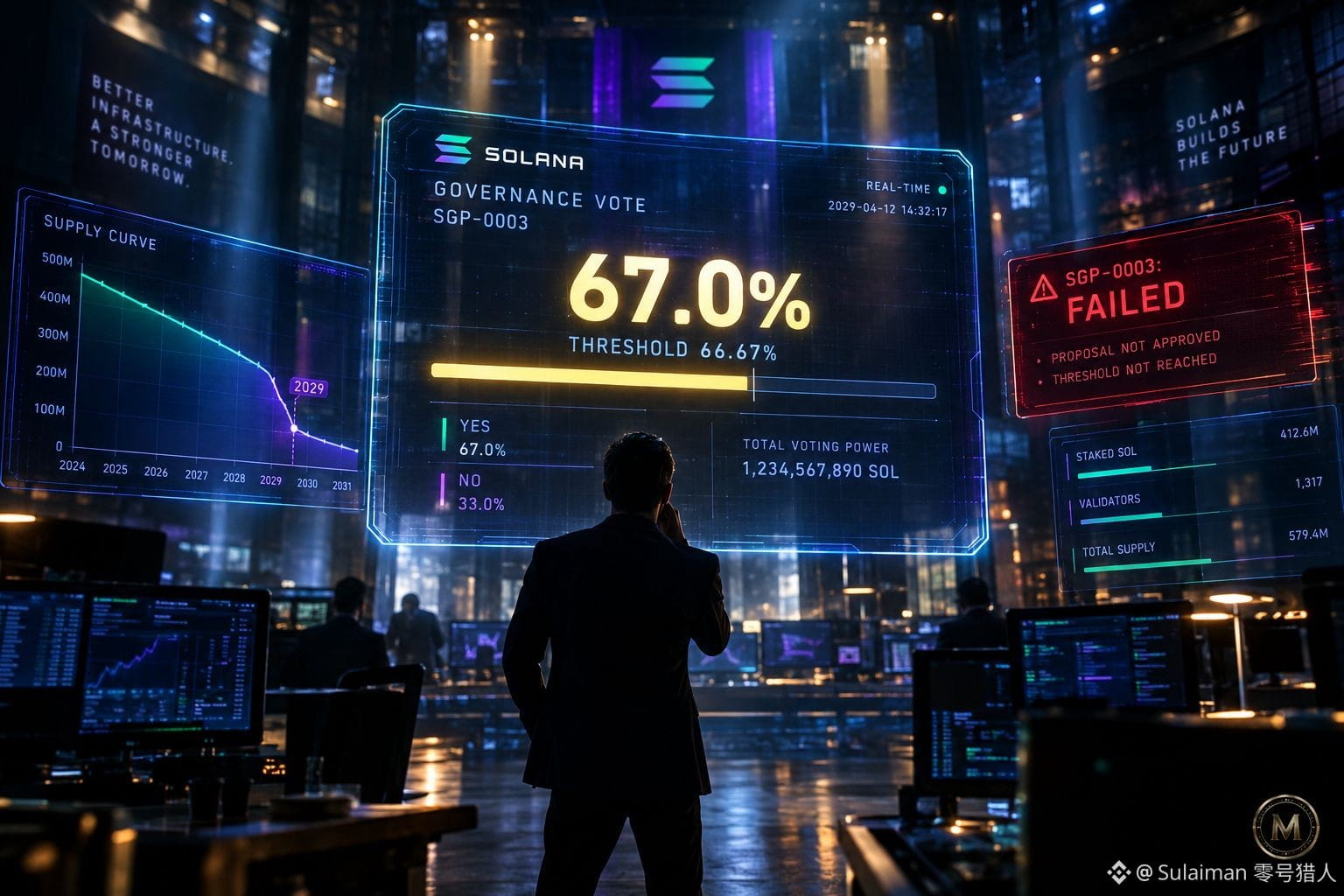
SGP-0002 ("Double Disinflation") passed at 67.0% — the threshold was 66.67%. The margin was so thin that Kraken flipped from opposing to supporting it mid-count, in the final minutes. On the same day, SGP-0003 (a fee restructuring that would have pushed daily SOL burns from ~650 to 7,500–9,000) received similar support — and still failed.
So the question is: why would the community agree to shrink supply, but not agree to burn more of it?
This isn't random. Disinflation quietly reduces validator staking incentives over years — a slow, predictable path. The fee-burn mechanism would have cut validator revenue abruptly. The community chose the softer route.
Roughly 18.9 million fewer SOL will be issued over six years, and the network now reaches its 1.5% terminal inflation rate by 2029 instead of 2032 — three years pulled forward.
This isn't automatic proof of a price move. Reduced supply doesn't move price if demand stays flat or falls — the relationship is conditional, not mechanical. But what looks underpriced right now is this: the issuance curve is already changing, while most traders scrolled past it as "governance news" rather than a tokenomics event.
The thesis weakens if implementation is delayed, or if staking participation drops enough to shrink the network's security budget — turning a positive supply story into a negative security one.
Not price. Whether on-chain issuance actually declines over the coming epochs, and whether validator count and stake participation hold steady through the transition.
NFA.
#Solana #SOL #SolanaGovernance #Tokenomics #ZeroResearch
Follow to catch the next supply shift before the chart does. $SOL
The vote that nearly failed just rewired Solana's supply curve
Everyone watched what SOL's price did last week. Almost no one noticed what changed inside the network itself.
On August 28, Solana closed its first binding on-chain governance vote. Three proposals. Two very different outcomes — and that gap is the real story.
SGP-0002 ("Double Disinflation") passed at 67.0% — the threshold was 66.67%. The margin was so thin that Kraken flipped from opposing to supporting it mid-count, in the final minutes. On the same day, SGP-0003 (a fee restructuring that would have pushed daily SOL burns from ~650 to 7,500–9,000) received similar support — and still failed.
So the question is: why would the community agree to shrink supply, but not agree to burn more of it?
This isn't random. Disinflation quietly reduces validator staking incentives over years — a slow, predictable path. The fee-burn mechanism would have cut validator revenue abruptly. The community chose the softer route.
Roughly 18.9 million fewer SOL will be issued over six years, and the network now reaches its 1.5% terminal inflation rate by 2029 instead of 2032 — three years pulled forward.
This isn't automatic proof of a price move. Reduced supply doesn't move price if demand stays flat or falls — the relationship is conditional, not mechanical. But what looks underpriced right now is this: the issuance curve is already changing, while most traders scrolled past it as "governance news" rather than a tokenomics event.
The thesis weakens if implementation is delayed, or if staking participation drops enough to shrink the network's security budget — turning a positive supply story into a negative security one.
Not price. Whether on-chain issuance actually declines over the coming epochs, and whether validator count and stake participation hold steady through the transition.
NFA.
#Solana #SOL #SolanaGovernance #Tokenomics #ZeroResearch
Follow to catch the next supply shift before the chart does. $SOL
Everyone watched what SOL's price did last week. Almost no one noticed what changed inside the network itself.
On August 28, Solana closed its first binding on-chain governance vote. Three proposals. Two very different outcomes — and that gap is the real story.
SGP-0002 ("Double Disinflation") passed at 67.0% — the threshold was 66.67%. The margin was so thin that Kraken flipped from opposing to supporting it mid-count, in the final minutes. On the same day, SGP-0003 (a fee restructuring that would have pushed daily SOL burns from ~650 to 7,500–9,000) received similar support — and still failed.
So the question is: why would the community agree to shrink supply, but not agree to burn more of it?
This isn't random. Disinflation quietly reduces validator staking incentives over years — a slow, predictable path. The fee-burn mechanism would have cut validator revenue abruptly. The community chose the softer route.
Roughly 18.9 million fewer SOL will be issued over six years, and the network now reaches its 1.5% terminal inflation rate by 2029 instead of 2032 — three years pulled forward.
This isn't automatic proof of a price move. Reduced supply doesn't move price if demand stays flat or falls — the relationship is conditional, not mechanical. But what looks underpriced right now is this: the issuance curve is already changing, while most traders scrolled past it as "governance news" rather than a tokenomics event.
The thesis weakens if implementation is delayed, or if staking participation drops enough to shrink the network's security budget — turning a positive supply story into a negative security one.
Not price. Whether on-chain issuance actually declines over the coming epochs, and whether validator count and stake participation hold steady through the transition.
NFA.
#Solana #SOL #SolanaGovernance #Tokenomics #ZeroResearch
Follow to catch the next supply shift before the chart does. $SOL
1
17
Verified
$RENDER
{spot}(RENDERUSDT)
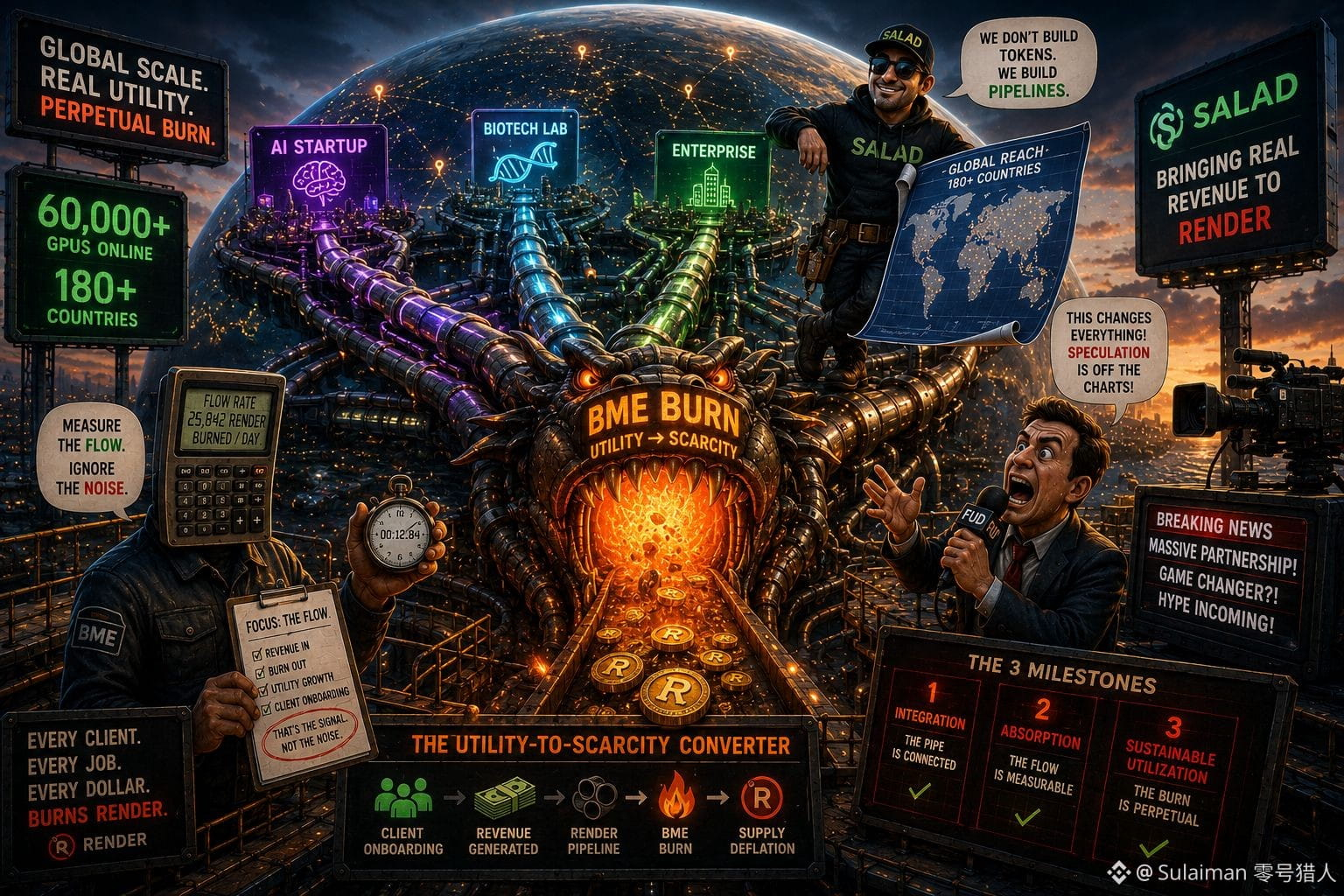
Salad's 60,000 GPUs make it the largest consumer GPU network in the world, active across 180+ countries and already serving AI startups, biotech, and enterprise clients.
That existing scale is what makes this integration significant. As Salad continues onboarding these clients, its growth doesn't just benefit Salad — it converts directly into $RENDER burn through the BME model.
That's the mechanism worth understanding: this isn't a speculative partnership, it's a revenue pipeline feeding straight into RENDER's deflationary loop.
Drop a comment if you think this scale advantage sticks, and follow for the next breakdown. 🔍
#RENDER #Tokenomics #DePIN #ZeroResearch #CryptoResearch
$RENDER
Salad's 60,000 GPUs make it the largest consumer GPU network in the world, active across 180+ countries and already serving AI startups, biotech, and enterprise clients.
That existing scale is what makes this integration significant. As Salad continues onboarding these clients, its growth doesn't just benefit Salad — it converts directly into $RENDER burn through the BME model.
That's the mechanism worth understanding: this isn't a speculative partnership, it's a revenue pipeline feeding straight into RENDER's deflationary loop.
Drop a comment if you think this scale advantage sticks, and follow for the next breakdown. 🔍
#RENDER #Tokenomics #DePIN #ZeroResearch #CryptoResearch
Salad's 60,000 GPUs make it the largest consumer GPU network in the world, active across 180+ countries and already serving AI startups, biotech, and enterprise clients.
That existing scale is what makes this integration significant. As Salad continues onboarding these clients, its growth doesn't just benefit Salad — it converts directly into $RENDER burn through the BME model.
That's the mechanism worth understanding: this isn't a speculative partnership, it's a revenue pipeline feeding straight into RENDER's deflationary loop.
Drop a comment if you think this scale advantage sticks, and follow for the next breakdown. 🔍
#RENDER #Tokenomics #DePIN #ZeroResearch #CryptoResearch
1
68
Bitcoin fell this week. Institutions bought anyway.
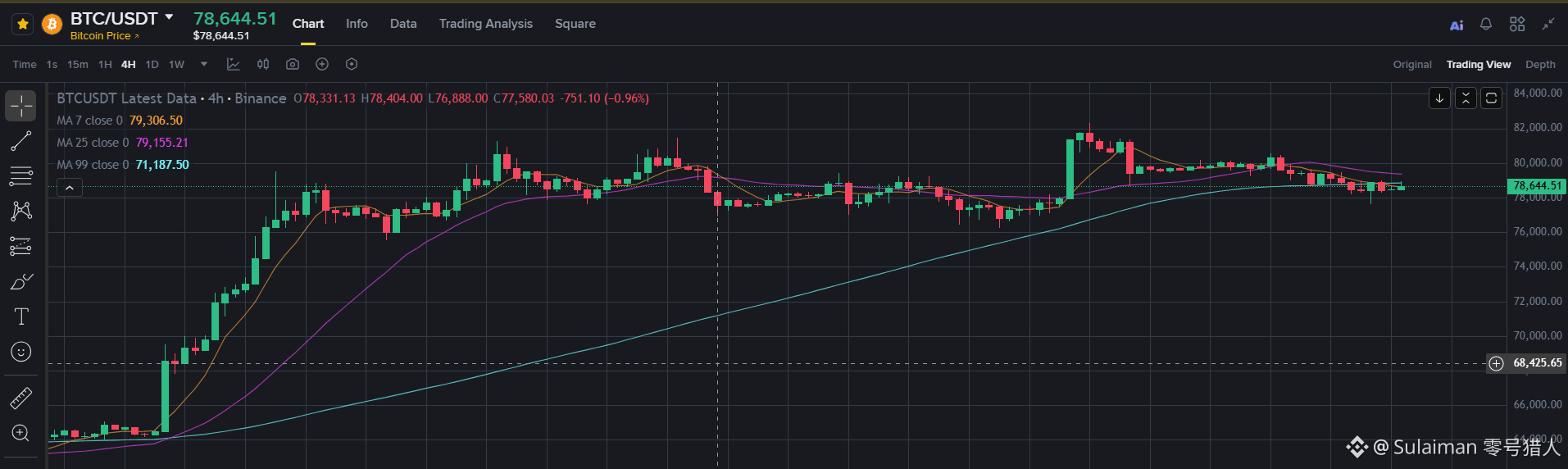
While BTC slipped toward $78K, U.S. spot ETFs pulled in ~$987M in net inflows — the third straight positive week. Retail was selling into fear (Fear & Greed at 70, "Greed," yet price down). Institutions weren't.
That's not noise. It's two different clocks: retail trades the candle, institutions trade the quarter. When flows and price disagree, one of them is wrong — and it's rarely the slower-moving money.
Watch: does the ETF streak survive the Sept 15-16 Fed decision, or does this week's buying quietly reverse?
NFA. #ZeroResearch #Bitcoin #BTC
Follow for the next divergence before it's obvious. $BTC
Bitcoin fell this week. Institutions bought anyway.
While BTC slipped toward $78K, U.S. spot ETFs pulled in ~$987M in net inflows — the third straight positive week. Retail was selling into fear (Fear & Greed at 70, "Greed," yet price down). Institutions weren't.
That's not noise. It's two different clocks: retail trades the candle, institutions trade the quarter. When flows and price disagree, one of them is wrong — and it's rarely the slower-moving money.
Watch: does the ETF streak survive the Sept 15-16 Fed decision, or does this week's buying quietly reverse?
NFA. #ZeroResearch #Bitcoin #BTC
Follow for the next divergence before it's obvious. $BTC
While BTC slipped toward $78K, U.S. spot ETFs pulled in ~$987M in net inflows — the third straight positive week. Retail was selling into fear (Fear & Greed at 70, "Greed," yet price down). Institutions weren't.
That's not noise. It's two different clocks: retail trades the candle, institutions trade the quarter. When flows and price disagree, one of them is wrong — and it's rarely the slower-moving money.
Watch: does the ETF streak survive the Sept 15-16 Fed decision, or does this week's buying quietly reverse?
NFA. #ZeroResearch #Bitcoin #BTC
Follow for the next divergence before it's obvious. $BTC
1
45
The migration to Solana is now 98.4% complete, with the remaining ~2% largely sitting in inactive cold wallets that haven't moved.
This migration ties RENDER directly into Solana's high-throughput track — lower transaction costs, faster settlement. For a decentralized GPU network processing constant micro-payments between node operators and users, that's not a nice-to-have, it's foundational infrastructure.
Drop a comment on whether the remaining 2% ever fully migrates, and follow for the next breakdown. 🔍
#RENDER #Tokenomics #DePIN #ZeroResearch #CryptoResearch
The migration to Solana is now 98.4% complete, with the remaining ~2% largely sitting in inactive cold wallets that haven't moved.
This migration ties RENDER directly into Solana's high-throughput track — lower transaction costs, faster settlement. For a decentralized GPU network processing constant micro-payments between node operators and users, that's not a nice-to-have, it's foundational infrastructure.
Drop a comment on whether the remaining 2% ever fully migrates, and follow for the next breakdown. 🔍
#RENDER #Tokenomics #DePIN #ZeroResearch #CryptoResearch
This migration ties RENDER directly into Solana's high-throughput track — lower transaction costs, faster settlement. For a decentralized GPU network processing constant micro-payments between node operators and users, that's not a nice-to-have, it's foundational infrastructure.
Drop a comment on whether the remaining 2% ever fully migrates, and follow for the next breakdown. 🔍
#RENDER #Tokenomics #DePIN #ZeroResearch #CryptoResearch
1
118
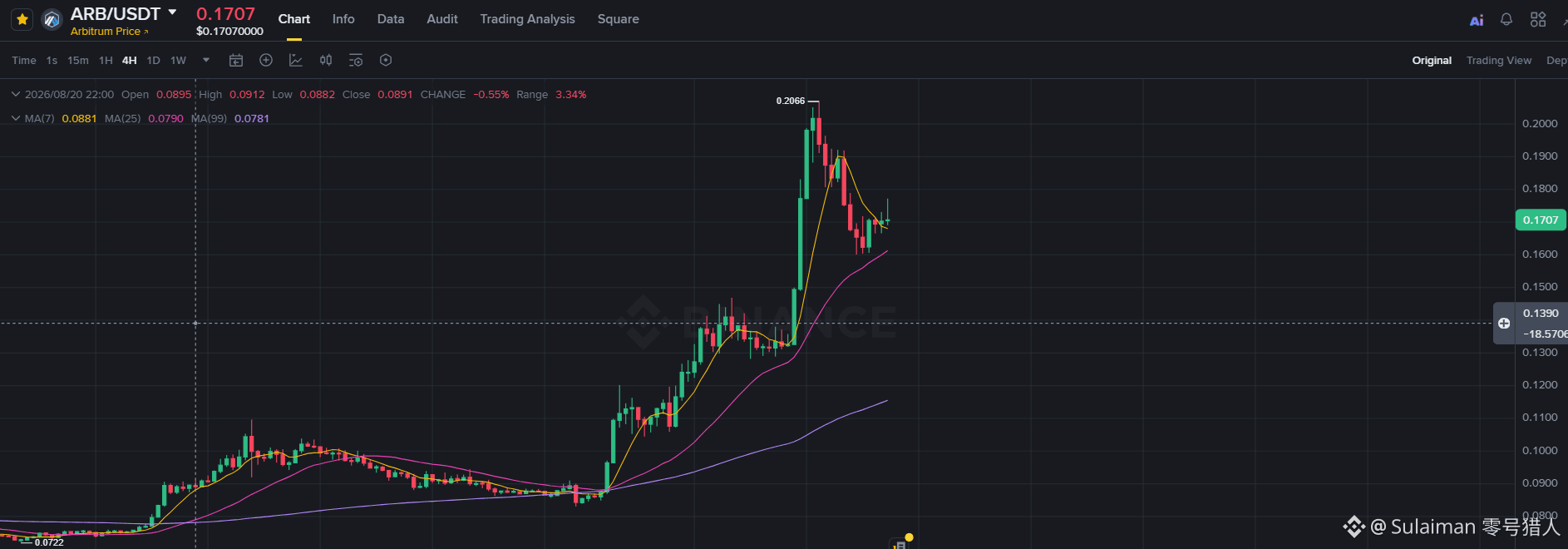
$ARB is waking up again. The hunters are already watching. 🔥
{future}(ARBUSDT)
🐸 THE BREAKOUT HUNTERS
→ Entry $0.168 – $0.174
TP → $0.18 / $0.19 / $0.20 / $0.22 / $0.24 / $0.30
SL → $0.155
Price just broke structure to the upside on ARBUSDT — currently trading $0.17176 (+0.31%), holding above the entry zone.
If momentum confirms above $0.174, this can move FAST toward the higher TP zones.
I don't chase the candle after it's already extended.
I hunt the breakout zone before the crowd piles in.
NFA. Manage risk.
#ARB #ARBUSDT #Breakout #Perp #ZeroResearch
$ARB is waking up again. The hunters are already watching. 🔥
🐸 THE BREAKOUT HUNTERS
→ Entry $0.168 – $0.174
TP → $0.18 / $0.19 / $0.20 / $0.22 / $0.24 / $0.30
SL → $0.155
Price just broke structure to the upside on ARBUSDT — currently trading $0.17176 (+0.31%), holding above the entry zone.
If momentum confirms above $0.174, this can move FAST toward the higher TP zones.
I don't chase the candle after it's already extended.
I hunt the breakout zone before the crowd piles in.
NFA. Manage risk.
#ARB #ARBUSDT #Breakout #Perp #ZeroResearch
🐸 THE BREAKOUT HUNTERS
→ Entry $0.168 – $0.174
TP → $0.18 / $0.19 / $0.20 / $0.22 / $0.24 / $0.30
SL → $0.155
Price just broke structure to the upside on ARBUSDT — currently trading $0.17176 (+0.31%), holding above the entry zone.
If momentum confirms above $0.174, this can move FAST toward the higher TP zones.
I don't chase the candle after it's already extended.
I hunt the breakout zone before the crowd piles in.
NFA. Manage risk.
#ARB #ARBUSDT #Breakout #Perp #ZeroResearch
1
50
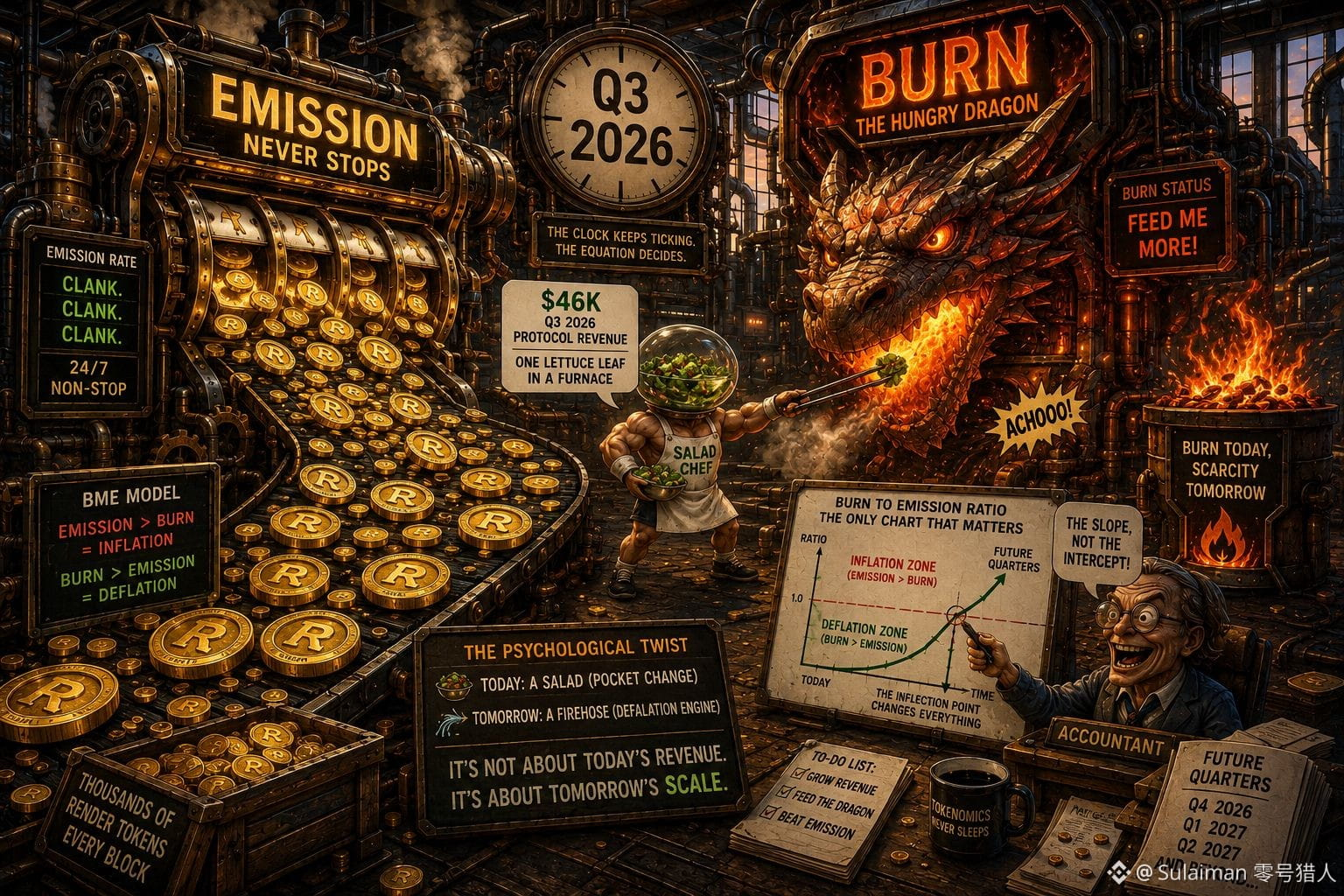
Burn versus emission is the metric that actually determines $RENDER's long-term trajectory — not price action.
The Salad integration plugs directly into the BME model: Salad's revenue flows into the burn mechanism. If burn ever outpaces emission, that's the deflationary flywheel kicking in.
For context, Q3 2026 protocol revenue came in at $46K — still early-stage and not yet scaled, but it's a number worth tracking as the integration matures.
The real signal to watch isn't the current figure, it's the burn-to-emission ratio over the next few quarters.
Drop a comment with your take on the Salad integration, and follow for the next breakdown. 🔍
#RENDER #Tokenomics #DePIN #ZeroResearch #CryptoResearch
Burn versus emission is the metric that actually determines $RENDER's long-term trajectory — not price action.
The Salad integration plugs directly into the BME model: Salad's revenue flows into the burn mechanism. If burn ever outpaces emission, that's the deflationary flywheel kicking in.
For context, Q3 2026 protocol revenue came in at $46K — still early-stage and not yet scaled, but it's a number worth tracking as the integration matures.
The real signal to watch isn't the current figure, it's the burn-to-emission ratio over the next few quarters.
Drop a comment with your take on the Salad integration, and follow for the next breakdown. 🔍
#RENDER #Tokenomics #DePIN #ZeroResearch #CryptoResearch
The Salad integration plugs directly into the BME model: Salad's revenue flows into the burn mechanism. If burn ever outpaces emission, that's the deflationary flywheel kicking in.
For context, Q3 2026 protocol revenue came in at $46K — still early-stage and not yet scaled, but it's a number worth tracking as the integration matures.
The real signal to watch isn't the current figure, it's the burn-to-emission ratio over the next few quarters.
Drop a comment with your take on the Salad integration, and follow for the next breakdown. 🔍
#RENDER #Tokenomics #DePIN #ZeroResearch #CryptoResearch
1
125
Verified
$RENDER
{spot}(RENDERUSDT)
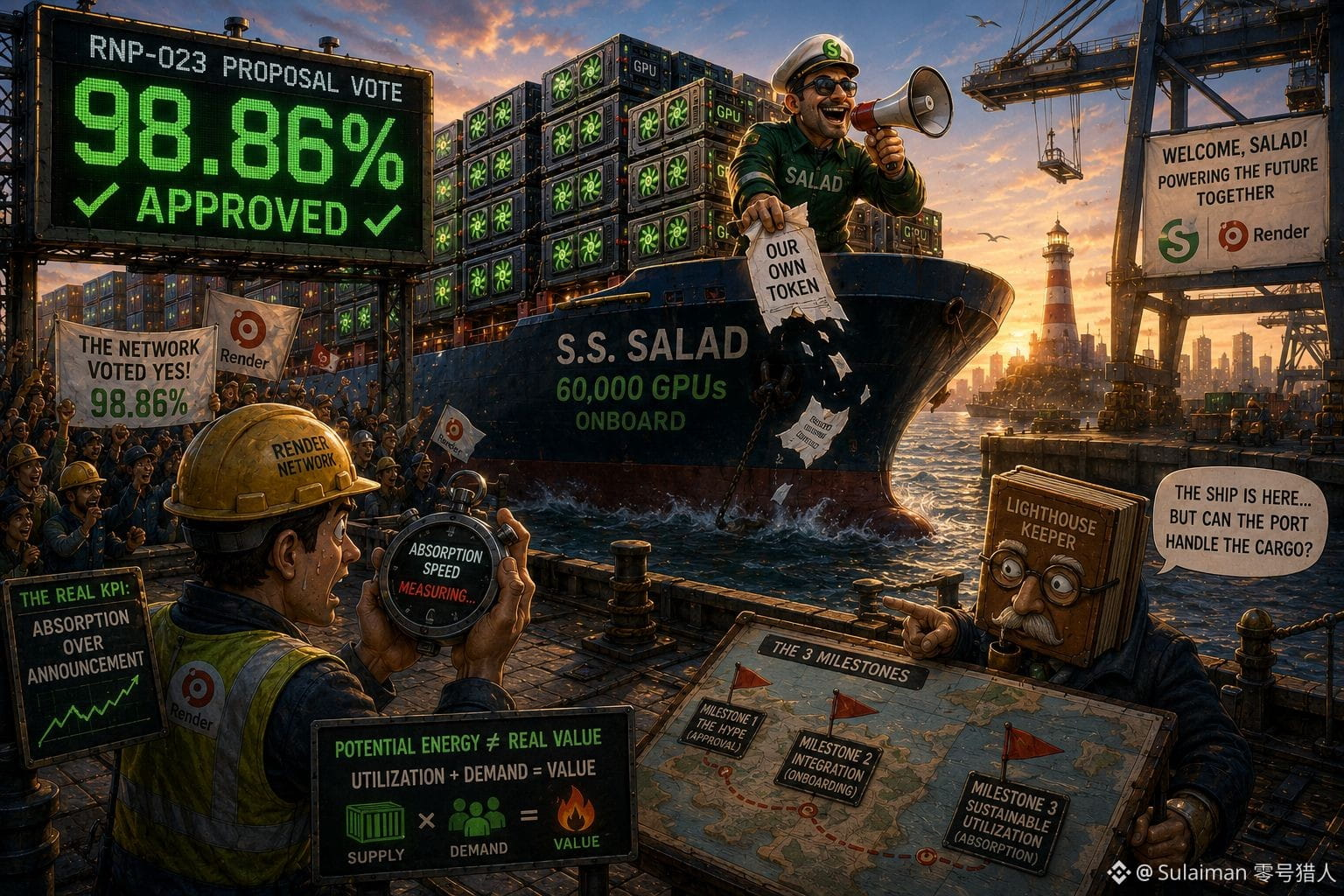
RNP-023 just passed with 98.86% approval — and it's a meaningful vote for $RENDER 's network growth story.
Salad is bringing 60,000 GPUs into the Render Network. What stands out here is the choice itself: rather than launching its own token, Salad opted to integrate directly into Render's existing ecosystem. That's a strong vote of confidence in the network's tokenomics over building a competing incentive layer.
Integration is set to roll out across three milestones.
Worth watching how quickly that GPU capacity gets absorbed and reflected in network usage metrics.
Drop a comment on what this integration means for $RENDER 's compute supply, and follow for the next breakdown. 🔍
#RENDER #Tokenomics #DePIN #ZeroResearch #CryptoResearch
$RENDER
RNP-023 just passed with 98.86% approval — and it's a meaningful vote for $RENDER 's network growth story.
Salad is bringing 60,000 GPUs into the Render Network. What stands out here is the choice itself: rather than launching its own token, Salad opted to integrate directly into Render's existing ecosystem. That's a strong vote of confidence in the network's tokenomics over building a competing incentive layer.
Integration is set to roll out across three milestones.
Worth watching how quickly that GPU capacity gets absorbed and reflected in network usage metrics.
Drop a comment on what this integration means for $RENDER 's compute supply, and follow for the next breakdown. 🔍
#RENDER #Tokenomics #DePIN #ZeroResearch #CryptoResearch
RNP-023 just passed with 98.86% approval — and it's a meaningful vote for $RENDER 's network growth story.
Salad is bringing 60,000 GPUs into the Render Network. What stands out here is the choice itself: rather than launching its own token, Salad opted to integrate directly into Render's existing ecosystem. That's a strong vote of confidence in the network's tokenomics over building a competing incentive layer.
Integration is set to roll out across three milestones.
Worth watching how quickly that GPU capacity gets absorbed and reflected in network usage metrics.
Drop a comment on what this integration means for $RENDER 's compute supply, and follow for the next breakdown. 🔍
#RENDER #Tokenomics #DePIN #ZeroResearch #CryptoResearch
1
144
$XAN (Anoma)
{future}(XANUSDT)
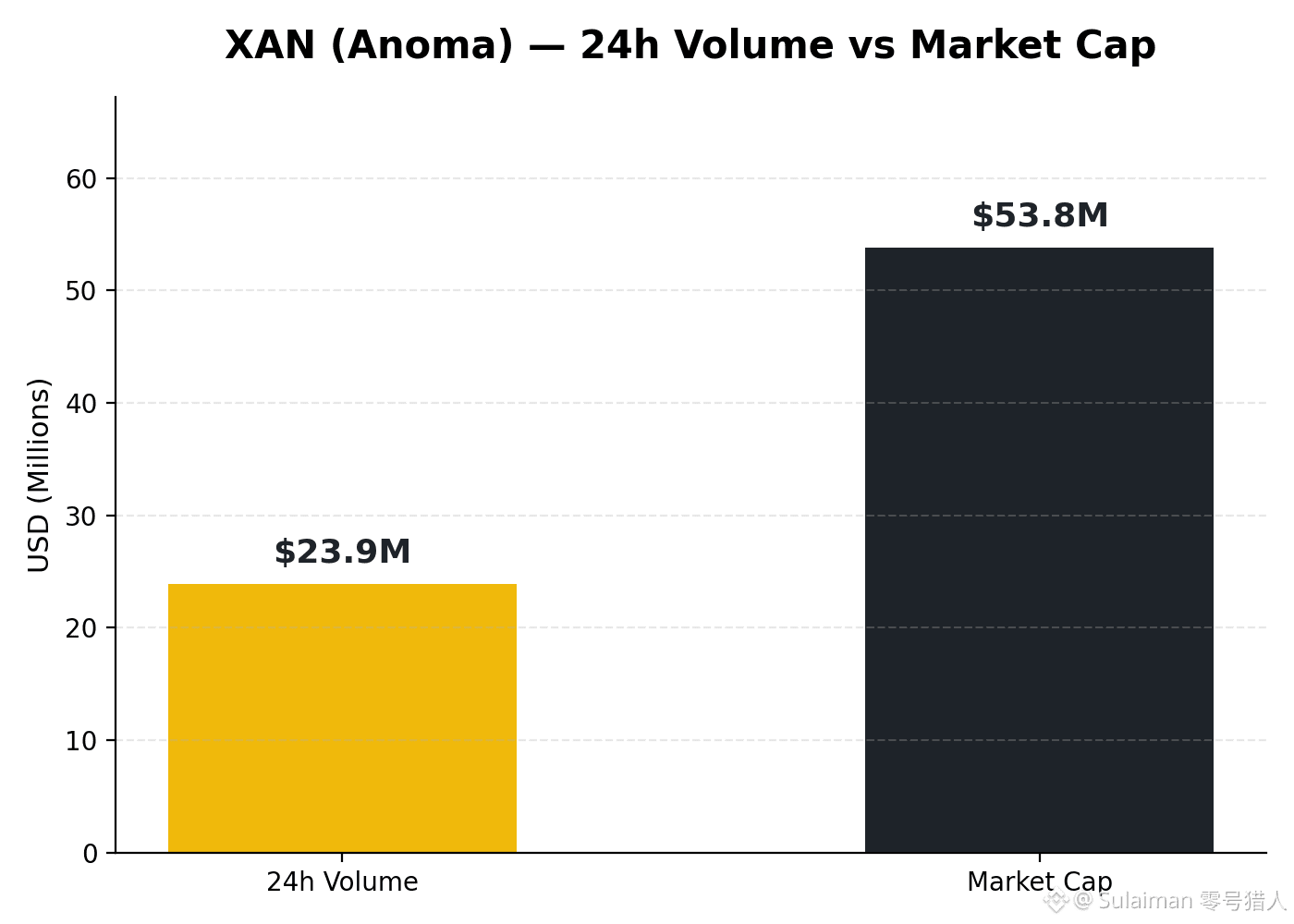
Anoma up ~34% today, $23.9M volume on a $54M cap. Sizable ratio, and it's a newer/lower-cap token, which usually means bigger swings in both directions.
Bull case: early-stage tokens moving on real volume (not just wash trading) sometimes mark the start of broader discovery.
Bear case: low market cap + high % swing is also the exact profile of tokens that get dumped hard once early holders take profit.
This is the kind of setup where "why is it moving" matters more than "it's moving" — I don't have a confirmed narrative behind this one yet.
Anyone following Anoma's roadmap closely?
#XAN #Anoma #LowCap #ZeroHunter #ZeroResearch
$XAN (Anoma)
Anoma up ~34% today, $23.9M volume on a $54M cap. Sizable ratio, and it's a newer/lower-cap token, which usually means bigger swings in both directions.
Bull case: early-stage tokens moving on real volume (not just wash trading) sometimes mark the start of broader discovery.
Bear case: low market cap + high % swing is also the exact profile of tokens that get dumped hard once early holders take profit.
This is the kind of setup where "why is it moving" matters more than "it's moving" — I don't have a confirmed narrative behind this one yet.
Anyone following Anoma's roadmap closely?
#XAN #Anoma #LowCap #ZeroHunter #ZeroResearch
Anoma up ~34% today, $23.9M volume on a $54M cap. Sizable ratio, and it's a newer/lower-cap token, which usually means bigger swings in both directions.
Bull case: early-stage tokens moving on real volume (not just wash trading) sometimes mark the start of broader discovery.
Bear case: low market cap + high % swing is also the exact profile of tokens that get dumped hard once early holders take profit.
This is the kind of setup where "why is it moving" matters more than "it's moving" — I don't have a confirmed narrative behind this one yet.
Anyone following Anoma's roadmap closely?
#XAN #Anoma #LowCap #ZeroHunter #ZeroResearch
1
148
$TIA (Celestia)
{future}(TIAUSDT)
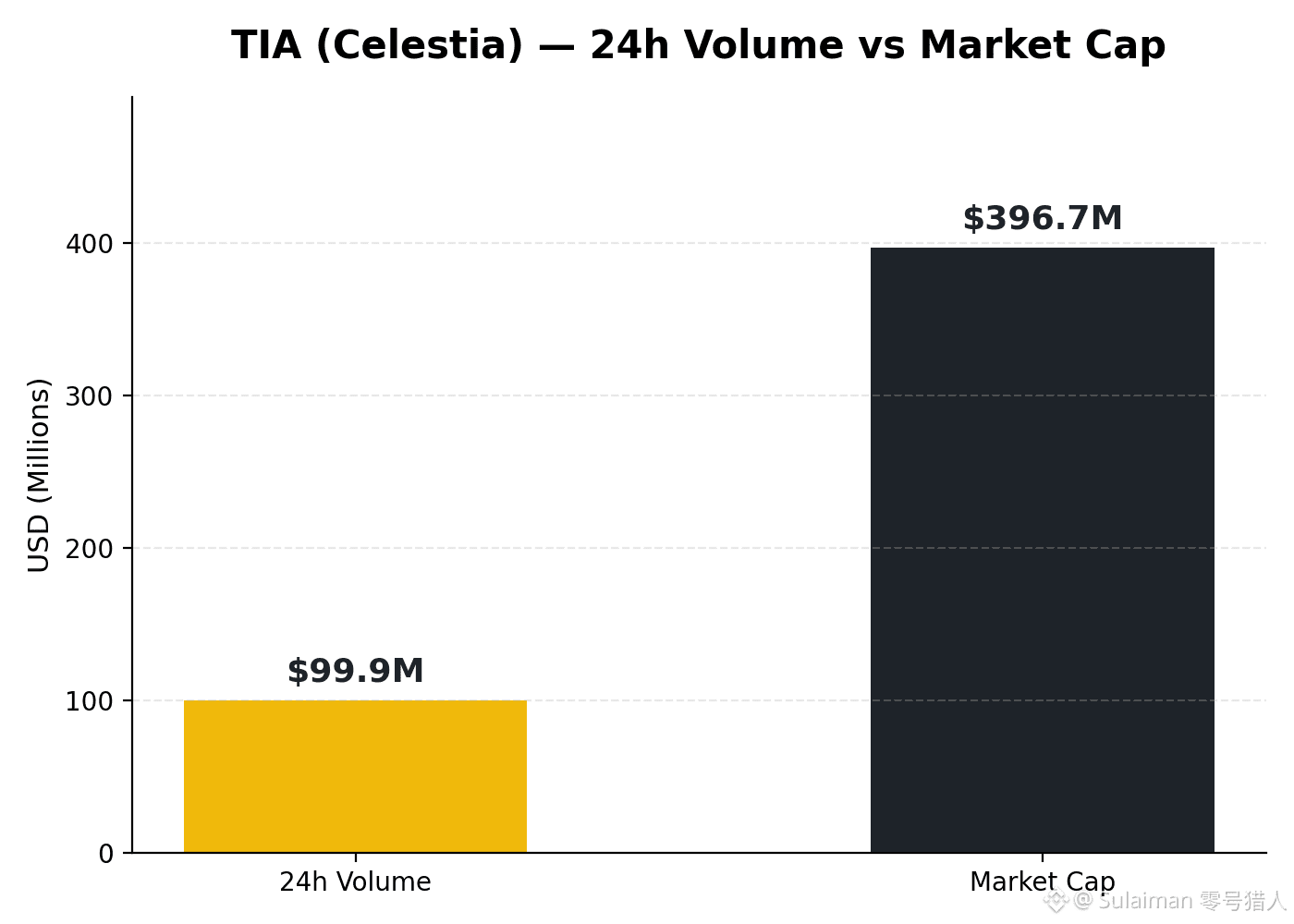
TIA quietly up ~13% today, with $99.9M in 24h volume against a ~$397M market cap. Nothing explosive, but consistent — and consistency in a modular blockchain token during a mixed market is worth noting.
Bull case: modular/DA narrative has had a rough year, this could be early rotation back into the sector.
Bear case: a 13% move on a token still well below its highs could just be a dead-cat bounce, not a trend reversal.
No confirmed catalyst behind this move yet — if you've seen specific news, worth digging into before drawing conclusions.
Rotation play or trap? Curious what people are seeing on the charts.
#TIA #Celestia #ModularBlockchain #MarketSentimentToday #ZeroResearch
$TIA (Celestia)
TIA quietly up ~13% today, with $99.9M in 24h volume against a ~$397M market cap. Nothing explosive, but consistent — and consistency in a modular blockchain token during a mixed market is worth noting.
Bull case: modular/DA narrative has had a rough year, this could be early rotation back into the sector.
Bear case: a 13% move on a token still well below its highs could just be a dead-cat bounce, not a trend reversal.
No confirmed catalyst behind this move yet — if you've seen specific news, worth digging into before drawing conclusions.
Rotation play or trap? Curious what people are seeing on the charts.
#TIA #Celestia #ModularBlockchain #MarketSentimentToday #ZeroResearch
TIA quietly up ~13% today, with $99.9M in 24h volume against a ~$397M market cap. Nothing explosive, but consistent — and consistency in a modular blockchain token during a mixed market is worth noting.
Bull case: modular/DA narrative has had a rough year, this could be early rotation back into the sector.
Bear case: a 13% move on a token still well below its highs could just be a dead-cat bounce, not a trend reversal.
No confirmed catalyst behind this move yet — if you've seen specific news, worth digging into before drawing conclusions.
Rotation play or trap? Curious what people are seeing on the charts.
#TIA #Celestia #ModularBlockchain #MarketSentimentToday #ZeroResearch
1
95
Guys, 5 tokens just landed on Binance's "Rapid Riser" list at the same time — and that clustering itself is the story, not any single coin.
$DOT , ETC, ICP, $ZEC , and $DOGE all showing up together on the Hot board isn't random. When multiple unrelated narratives (smart contract platforms, legacy PoW, decentralized compute, privacy, and a meme coin) spike search interest simultaneously, it's rarely about fundamentals — it's about liquidity chasing attention.
📊 Evidence:
DOT, ETC, ICP, DOGE — all tagged Rapid Riser with visible upward momentum
ZEC — also Rapid Riser by search volume, but moving in the opposite direction of the rest
This mixed group has almost no thematic overlap — different sectors, different use cases
Interpretation: This looks like a broad retail-driven rotation, not a sector rally. Money is jumping coin to coin looking for the next quick move rather than committing to a thesis. ZEC breaking away from the pack — rising in attention while falling in price — is the clearest tell. It suggests part of this crowd is already distributing into demand while newer buyers are still chasing the "Rapid Riser" tag itself.
Implication + Risk: Being on a "trending" list is not the same as having strength. Chasing whichever name is glowing green on the Hot board right now is exactly how retail ends up as exit liquidity for whoever moved in earlier. If you're holding any of these, know why you're holding it — a narrative thesis, not just "it's trending."
This is not a buy/sell call on any of the five. Just pattern-recognition. DYOR always.
Which of these five actually has a story behind it, and which one is just riding attention? 👇
#CryptoMarket #DYOR #MarketMomentum #ZeroResearch
Guys, 5 tokens just landed on Binance's "Rapid Riser" list at the same time — and that clustering itself is the story, not any single coin.
$DOT , ETC, ICP, $ZEC , and $DOGE all showing up together on the Hot board isn't random. When multiple unrelated narratives (smart contract platforms, legacy PoW, decentralized compute, privacy, and a meme coin) spike search interest simultaneously, it's rarely about fundamentals — it's about liquidity chasing attention.
📊 Evidence:
DOT, ETC, ICP, DOGE — all tagged Rapid Riser with visible upward momentum
ZEC — also Rapid Riser by search volume, but moving in the opposite direction of the rest
This mixed group has almost no thematic overlap — different sectors, different use cases
Interpretation: This looks like a broad retail-driven rotation, not a sector rally. Money is jumping coin to coin looking for the next quick move rather than committing to a thesis. ZEC breaking away from the pack — rising in attention while falling in price — is the clearest tell. It suggests part of this crowd is already distributing into demand while newer buyers are still chasing the "Rapid Riser" tag itself.
Implication + Risk: Being on a "trending" list is not the same as having strength. Chasing whichever name is glowing green on the Hot board right now is exactly how retail ends up as exit liquidity for whoever moved in earlier. If you're holding any of these, know why you're holding it — a narrative thesis, not just "it's trending."
This is not a buy/sell call on any of the five. Just pattern-recognition. DYOR always.
Which of these five actually has a story behind it, and which one is just riding attention? 👇
#CryptoMarket #DYOR #MarketMomentum #ZeroResearch
$DOT , ETC, ICP, $ZEC , and $DOGE all showing up together on the Hot board isn't random. When multiple unrelated narratives (smart contract platforms, legacy PoW, decentralized compute, privacy, and a meme coin) spike search interest simultaneously, it's rarely about fundamentals — it's about liquidity chasing attention.
📊 Evidence:
DOT, ETC, ICP, DOGE — all tagged Rapid Riser with visible upward momentum
ZEC — also Rapid Riser by search volume, but moving in the opposite direction of the rest
This mixed group has almost no thematic overlap — different sectors, different use cases
Interpretation: This looks like a broad retail-driven rotation, not a sector rally. Money is jumping coin to coin looking for the next quick move rather than committing to a thesis. ZEC breaking away from the pack — rising in attention while falling in price — is the clearest tell. It suggests part of this crowd is already distributing into demand while newer buyers are still chasing the "Rapid Riser" tag itself.
Implication + Risk: Being on a "trending" list is not the same as having strength. Chasing whichever name is glowing green on the Hot board right now is exactly how retail ends up as exit liquidity for whoever moved in earlier. If you're holding any of these, know why you're holding it — a narrative thesis, not just "it's trending."
This is not a buy/sell call on any of the five. Just pattern-recognition. DYOR always.
Which of these five actually has a story behind it, and which one is just riding attention? 👇
#CryptoMarket #DYOR #MarketMomentum #ZeroResearch
1
122
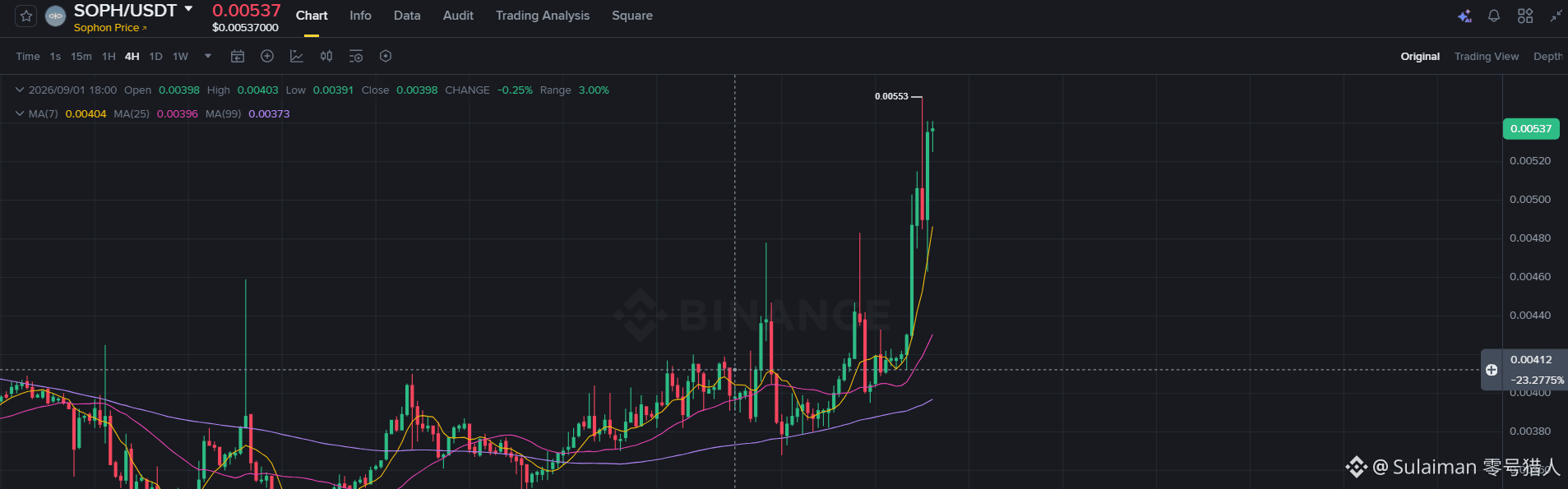
MARKET SHIFT. SOPH just ripped +8.05% in an hour while the market slept. That's not random — that's liquidity getting swept.
The hunters are watching.
If you're not tracking this, you're the one being hunted.
Zero Hunter catches volume spikes early — not after the candle's already green.
🎯 Targets:
$SOPH — $0.00537 (+8.05%)
$IOST — $0.001027 (+7.76%)
$INJ — $6.28 (+4.95%)
Why: A spike this fast usually means resting sell orders just got cleared. That vacuum fuels the next leg — if buyers show up behind it.
Our edge: We watch if volume holds after the spike. That's the line between a real move and a trap.
Don't chase the candle you missed. Buying because "it's already up 8%" makes you exit liquidity.
⚠️ Not financial advice. Micro-caps are highly volatile — risk only what you can lose.
#ZeroResearch
MARKET SHIFT. SOPH just ripped +8.05% in an hour while the market slept. That's not random — that's liquidity getting swept.
The hunters are watching.
If you're not tracking this, you're the one being hunted.
Zero Hunter catches volume spikes early — not after the candle's already green.
🎯 Targets:
$SOPH — $0.00537 (+8.05%)
$IOST — $0.001027 (+7.76%)
$INJ — $6.28 (+4.95%)
Why: A spike this fast usually means resting sell orders just got cleared. That vacuum fuels the next leg — if buyers show up behind it.
Our edge: We watch if volume holds after the spike. That's the line between a real move and a trap.
Don't chase the candle you missed. Buying because "it's already up 8%" makes you exit liquidity.
⚠️ Not financial advice. Micro-caps are highly volatile — risk only what you can lose.
#ZeroResearch
The hunters are watching.
If you're not tracking this, you're the one being hunted.
Zero Hunter catches volume spikes early — not after the candle's already green.
🎯 Targets:
$SOPH — $0.00537 (+8.05%)
$IOST — $0.001027 (+7.76%)
$INJ — $6.28 (+4.95%)
Why: A spike this fast usually means resting sell orders just got cleared. That vacuum fuels the next leg — if buyers show up behind it.
Our edge: We watch if volume holds after the spike. That's the line between a real move and a trap.
Don't chase the candle you missed. Buying because "it's already up 8%" makes you exit liquidity.
⚠️ Not financial advice. Micro-caps are highly volatile — risk only what you can lose.
#ZeroResearch
2
212
Log in to explore more content
Join global crypto users on Binance Square
⚡️ Get latest and useful information about crypto.
💬 Trusted by the world’s largest crypto exchange.
👍 Discover real insights from verified creators.
Email / Phone number
Trending Topics
1
#AppleDebutsFoldablePhone
7,600 views
193 Discussing
2
#US10YTreasuryYieldHitsHighestSinceNov2023
11,705 views
232 Discussing
3
#USTreasuryToBuyBackUpTo$6BLongDatedDebt
10,910 views
140 Discussing
4
#BitcoinSurpasses$79K
58,847 views
262 Discussing
5
#BrentCrudeTops$100
114,124 views
386 Discussing
6
#USADPWeeklyEmploymentRises12000
92,465 views
1,139 Discussing
7
#BankOfAmericaGroupPilotsUSBDCStablecoin
68,446 views
919 Discussing
8
#RippleLobbiesToAdvanceCLARITYActVote
102,690 views
1,191 Discussing
9
#GrayscaleZcashETFTops$500M
16,688 views
125 Discussing
10
#LAPTOPFoundationXAccountSuspended
6,762 views
113 Discussing