
#web3future
web3future
386,166 views
1,162 Discussing
Hot
Latest

·
--
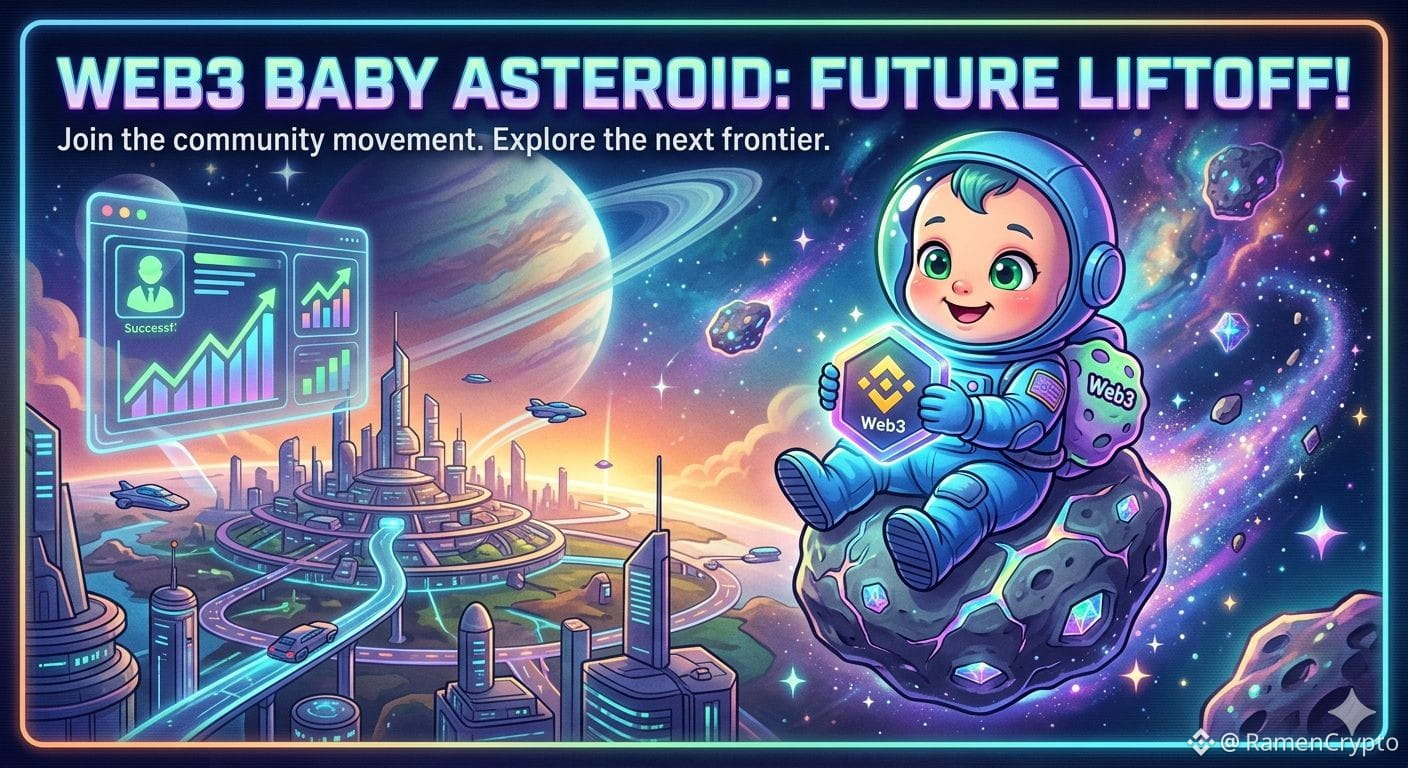
$BabyAsteroid 🚀 The Future of Web3 Belongs to the Bold: Is #BabyAsteroid Ready for Liftoff? 🌌
The Web3 space moves faster than a rocket, and right now, the community is looking towards the stars. With the talk around space exploration, upcoming milestones, and community-driven movements heating up, #BabyAsteroid is capturing the imagination of traders who believe in the power of narrative and unity! 🧑🚀💫
🌟 Why Web3 and Space Narratives are Primed for the Future:
The Power of Community: Just like the biggest meme-driven assets in history, success isn’t just about lines of code—it's about a relentless, united community pushing the boundary.
Massive Eyes on the Ecosystem: With major ecosystem developments and institutional interest in Web3 at an all-time high, unique cultural IPs and community tokens are catching massive waves of FOMO.
Charity & Vision: Projects linking cultural narratives with a vision for the future are changing how we look at digital assets.
The formula for the future remains simple: Stay united. Stay active. Keep building. 🤝🔥
What’s your take on the next big wave in the Web3 space? Let’s discuss below! 👇
#BinanceWeb3 #BabyAsteroid #CryptoCommunity #BullishNarrative #Web3Future
$BabyAsteroid 🚀 The Future of Web3 Belongs to the Bold: Is #BabyAsteroid Ready for Liftoff? 🌌
The Web3 space moves faster than a rocket, and right now, the community is looking towards the stars. With the talk around space exploration, upcoming milestones, and community-driven movements heating up, #BabyAsteroid is capturing the imagination of traders who believe in the power of narrative and unity! 🧑🚀💫
🌟 Why Web3 and Space Narratives are Primed for the Future:
The Power of Community: Just like the biggest meme-driven assets in history, success isn’t just about lines of code—it's about a relentless, united community pushing the boundary.
Massive Eyes on the Ecosystem: With major ecosystem developments and institutional interest in Web3 at an all-time high, unique cultural IPs and community tokens are catching massive waves of FOMO.
Charity & Vision: Projects linking cultural narratives with a vision for the future are changing how we look at digital assets.
The formula for the future remains simple: Stay united. Stay active. Keep building. 🤝🔥
What’s your take on the next big wave in the Web3 space? Let’s discuss below! 👇
#BinanceWeb3 #BabyAsteroid #CryptoCommunity #BullishNarrative #Web3Future
The Web3 space moves faster than a rocket, and right now, the community is looking towards the stars. With the talk around space exploration, upcoming milestones, and community-driven movements heating up, #BabyAsteroid is capturing the imagination of traders who believe in the power of narrative and unity! 🧑🚀💫
🌟 Why Web3 and Space Narratives are Primed for the Future:
The Power of Community: Just like the biggest meme-driven assets in history, success isn’t just about lines of code—it's about a relentless, united community pushing the boundary.
Massive Eyes on the Ecosystem: With major ecosystem developments and institutional interest in Web3 at an all-time high, unique cultural IPs and community tokens are catching massive waves of FOMO.
Charity & Vision: Projects linking cultural narratives with a vision for the future are changing how we look at digital assets.
The formula for the future remains simple: Stay united. Stay active. Keep building. 🤝🔥
What’s your take on the next big wave in the Web3 space? Let’s discuss below! 👇
#BinanceWeb3 #BabyAsteroid #CryptoCommunity #BullishNarrative #Web3Future
1
380

·
--
GM. While normies were busy doomscrolling about inflation, UK lawmakers were out here asking banks, "Why you gotta be so rude, don't you know I'm from the future?" Apparently, stonks aren't the only thing these institutions are gatekeeping.
THE ALPHA: Big Brains in the UK Parliament are finally realizing that refusing crypto accounts is basically slapping a "no fun allowed" sticker on Web3 innovation. They're telling banks that this attitude could be the single biggest roadblock to crypto growth. This is HUGE for mainstream adoption, folks. #CryptoRegulation #Web3Future #UKCrypto
THE PUNCHLINE INSIGHT: So, banks, you gonna be the Blockbuster of the financial world, or are you gonna learn to adapt before your business model becomes a meme? Hint: It involves more than just offering NFTs of your ATM machines.
What’s the funniest excuse you’ve ever heard from a bank for rejecting a crypto transaction? Let me know below!
GM. While normies were busy doomscrolling about inflation, UK lawmakers were out here asking banks, "Why you gotta be so rude, don't you know I'm from the future?" Apparently, stonks aren't the only thing these institutions are gatekeeping.
THE ALPHA: Big Brains in the UK Parliament are finally realizing that refusing crypto accounts is basically slapping a "no fun allowed" sticker on Web3 innovation. They're telling banks that this attitude could be the single biggest roadblock to crypto growth. This is HUGE for mainstream adoption, folks. #CryptoRegulation #Web3Future #UKCrypto
THE PUNCHLINE INSIGHT: So, banks, you gonna be the Blockbuster of the financial world, or are you gonna learn to adapt before your business model becomes a meme? Hint: It involves more than just offering NFTs of your ATM machines.
What’s the funniest excuse you’ve ever heard from a bank for rejecting a crypto transaction? Let me know below!
THE ALPHA: Big Brains in the UK Parliament are finally realizing that refusing crypto accounts is basically slapping a "no fun allowed" sticker on Web3 innovation. They're telling banks that this attitude could be the single biggest roadblock to crypto growth. This is HUGE for mainstream adoption, folks. #CryptoRegulation #Web3Future #UKCrypto
THE PUNCHLINE INSIGHT: So, banks, you gonna be the Blockbuster of the financial world, or are you gonna learn to adapt before your business model becomes a meme? Hint: It involves more than just offering NFTs of your ATM machines.
What’s the funniest excuse you’ve ever heard from a bank for rejecting a crypto transaction? Let me know below!
2

🚨 The Hidden Danger of AI in Web3 (And How to Fix It) 🚨
Yesterday, we talked about how @OpenGradient is making smart contracts TRULY smart by bringing AI on-chain. But there is a massive roadblock the industry must face first: The "Black Box" Problem. ⬛
In traditional Web2, we blindly trust corporate AI models. But in Web3, "Trust me, bro" doesn't work. If an AI model is dynamically adjusting risk for a multi-million dollar DeFi protocol, how do we mathematically prove the AI wasn't manipulated or hacked?
If we can't verify the AI's execution, we can't trust it with our money.
This is exactly why Verifiable AI Infrastructure is going to be the most important narrative of the next decade. Projects like $OPG aren't just running AI models; they are mathematically proving their outputs on-chain. This brings bulletproof security to AI-driven dApps. 🔐
Web3 is all about removing the need for blind trust. Verifiable AI is the missing puzzle piece. 🧩
Do you think AI will eventually replace human developers and traders in crypto, or will it remain just an advanced tool? Let me know your thoughts! 👇💬
$OPG #OPG #AIWeb3 #CryptoInnovation #DeFi #Web3Future
🚨 The Hidden Danger of AI in Web3 (And How to Fix It) 🚨
Yesterday, we talked about how @OpenGradient is making smart contracts TRULY smart by bringing AI on-chain. But there is a massive roadblock the industry must face first: The "Black Box" Problem. ⬛
In traditional Web2, we blindly trust corporate AI models. But in Web3, "Trust me, bro" doesn't work. If an AI model is dynamically adjusting risk for a multi-million dollar DeFi protocol, how do we mathematically prove the AI wasn't manipulated or hacked?
If we can't verify the AI's execution, we can't trust it with our money.
This is exactly why Verifiable AI Infrastructure is going to be the most important narrative of the next decade. Projects like $OPG aren't just running AI models; they are mathematically proving their outputs on-chain. This brings bulletproof security to AI-driven dApps. 🔐
Web3 is all about removing the need for blind trust. Verifiable AI is the missing puzzle piece. 🧩
Do you think AI will eventually replace human developers and traders in crypto, or will it remain just an advanced tool? Let me know your thoughts! 👇💬
$OPG #OPG #AIWeb3 #CryptoInnovation #DeFi #Web3Future
Yesterday, we talked about how @OpenGradient is making smart contracts TRULY smart by bringing AI on-chain. But there is a massive roadblock the industry must face first: The "Black Box" Problem. ⬛
In traditional Web2, we blindly trust corporate AI models. But in Web3, "Trust me, bro" doesn't work. If an AI model is dynamically adjusting risk for a multi-million dollar DeFi protocol, how do we mathematically prove the AI wasn't manipulated or hacked?
If we can't verify the AI's execution, we can't trust it with our money.
This is exactly why Verifiable AI Infrastructure is going to be the most important narrative of the next decade. Projects like $OPG aren't just running AI models; they are mathematically proving their outputs on-chain. This brings bulletproof security to AI-driven dApps. 🔐
Web3 is all about removing the need for blind trust. Verifiable AI is the missing puzzle piece. 🧩
Do you think AI will eventually replace human developers and traders in crypto, or will it remain just an advanced tool? Let me know your thoughts! 👇💬
$OPG #OPG #AIWeb3 #CryptoInnovation #DeFi #Web3Future
2
1
110

·
--
Article
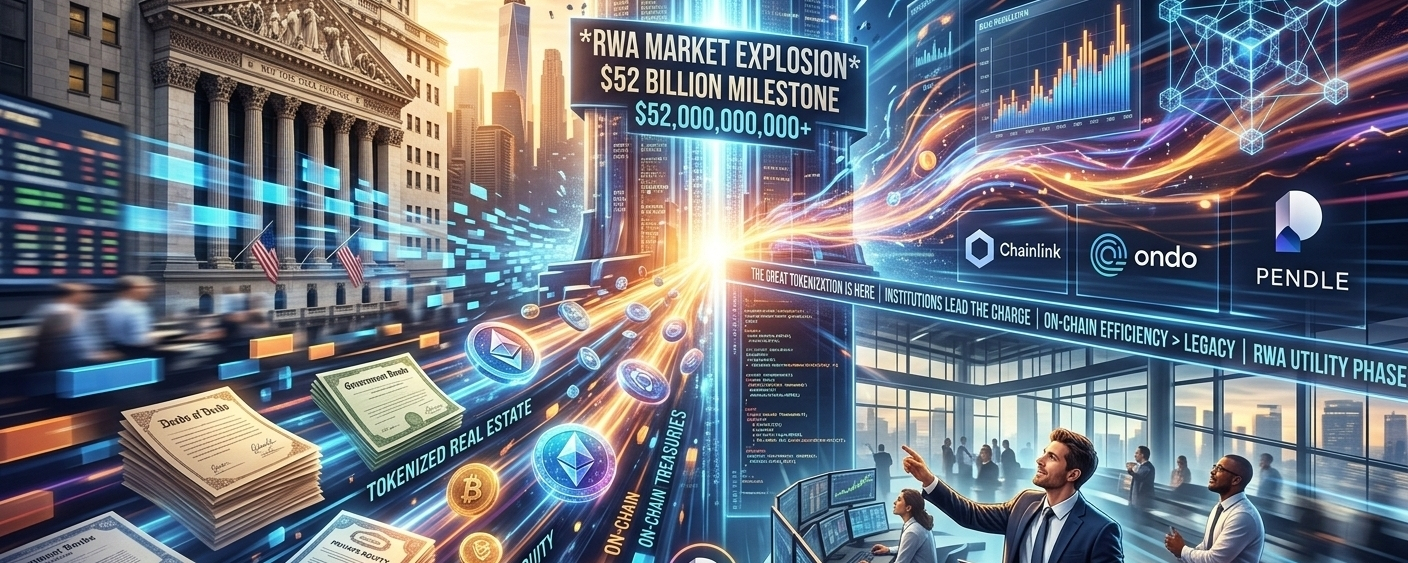
🚀 THE $52 BILLION RWA EXPLOSION: WALL STREET IS NO LONGER JUST "WATCHING"! 🏦💎The "Global Financial Reset" isn't a conspiracy anymore—it’s happening in real-time on the blockchain. While the retail crowd is distracted by meme coin volatility, the world’s biggest institutions just pushed the Real World Asset (RWA) sector to a staggering $52 Billion milestone. 📈
2. Main News Breakdown 📉
We are witnessing the "Great Tokenization." Major banks and asset managers are moving legacy finance—real estate, private equity, and treasury bills—directly onto decentralized rails.
Institutional Adoption: BlackRock and Franklin Templeton aren't just experimenting; they are leading the charge, proving that the efficiency of 24/7 on-chain settlement is superior to T+2 legacy systems.
The Yield Shift: Investors are fleeing traditional low-yield environments for "Tokenized Yield," where transparency meets institutional-grade security.
Regulatory Clarity: With the recent progress on crypto market structure bills, the "Fear of the Unknown" is being replaced by the "Fear of Missing Out" (FOMO) from Wall Street.
3. Market Impact Analysis 🧠
The psychological shift in the market is palpable. We are moving from the "Speculative Phase" into the "Utility Phase" of the 2026 cycle.
Trader Psychology: The Fear & Greed Index is currently hovering around 68 (Greed). Traders are pivoting away from pure hype and rotating capital into "Infrastructure Plays" like $LINK , $ONDO , and $PENDLE
Bullish Implication: As more trillions in global assets look for a home on-chain, the demand for underlying L1/L2 gas tokens will create a supply shock unlike anything we've seen. 🚀
Bearish Caution: Watch the $72,500 level for Bitcoin. If macro liquidity tightens, we might see a final "shakeout" of weak hands before the RWA-driven super-leg begins.
4. Community Engagement Ending 🎤
The era of "Crypto as a Toy" is over. We are now building the plumbing for the future of global finance. The only question left is: Which side of history are you on?
Are you betting on the AI + RWA Convergence, or are you still waiting for a "dip" that might never come? 🧐
Drop your top RWA pick for 2026 in the comments! 👇 Is it Chainlink, Ondo, or a dark horse we haven't noticed yet? 🐎
{future}(LINKUSDT)
{future}(PENDLEUSDT)
{spot}(ONDOUSDT)
#RWA #bitcoin #InstitutionalCrypto #Web3Future
🚀 THE $52 BILLION RWA EXPLOSION: WALL STREET IS NO LONGER JUST "WATCHING"! 🏦💎
The "Global Financial Reset" isn't a conspiracy anymore—it’s happening in real-time on the blockchain. While the retail crowd is distracted by meme coin volatility, the world’s biggest institutions just pushed the Real World Asset (RWA) sector to a staggering $52 Billion milestone. 📈
2. Main News Breakdown 📉
We are witnessing the "Great Tokenization." Major banks and asset managers are moving legacy finance—real estate, private equity, and treasury bills—directly onto decentralized rails.
Institutional Adoption: BlackRock and Franklin Templeton aren't just experimenting; they are leading the charge, proving that the efficiency of 24/7 on-chain settlement is superior to T+2 legacy systems.
The Yield Shift: Investors are fleeing traditional low-yield environments for "Tokenized Yield," where transparency meets institutional-grade security.
Regulatory Clarity: With the recent progress on crypto market structure bills, the "Fear of the Unknown" is being replaced by the "Fear of Missing Out" (FOMO) from Wall Street.
3. Market Impact Analysis 🧠
The psychological shift in the market is palpable. We are moving from the "Speculative Phase" into the "Utility Phase" of the 2026 cycle.
Trader Psychology: The Fear & Greed Index is currently hovering around 68 (Greed). Traders are pivoting away from pure hype and rotating capital into "Infrastructure Plays" like $LINK , $ONDO , and $PENDLE
Bullish Implication: As more trillions in global assets look for a home on-chain, the demand for underlying L1/L2 gas tokens will create a supply shock unlike anything we've seen. 🚀
Bearish Caution: Watch the $72,500 level for Bitcoin. If macro liquidity tightens, we might see a final "shakeout" of weak hands before the RWA-driven super-leg begins.
4. Community Engagement Ending 🎤
The era of "Crypto as a Toy" is over. We are now building the plumbing for the future of global finance. The only question left is: Which side of history are you on?
Are you betting on the AI + RWA Convergence, or are you still waiting for a "dip" that might never come? 🧐
Drop your top RWA pick for 2026 in the comments! 👇 Is it Chainlink, Ondo, or a dark horse we haven't noticed yet? 🐎
#RWA #bitcoin #InstitutionalCrypto #Web3Future
2. Main News Breakdown 📉
We are witnessing the "Great Tokenization." Major banks and asset managers are moving legacy finance—real estate, private equity, and treasury bills—directly onto decentralized rails.
Institutional Adoption: BlackRock and Franklin Templeton aren't just experimenting; they are leading the charge, proving that the efficiency of 24/7 on-chain settlement is superior to T+2 legacy systems.
The Yield Shift: Investors are fleeing traditional low-yield environments for "Tokenized Yield," where transparency meets institutional-grade security.
Regulatory Clarity: With the recent progress on crypto market structure bills, the "Fear of the Unknown" is being replaced by the "Fear of Missing Out" (FOMO) from Wall Street.
3. Market Impact Analysis 🧠
The psychological shift in the market is palpable. We are moving from the "Speculative Phase" into the "Utility Phase" of the 2026 cycle.
Trader Psychology: The Fear & Greed Index is currently hovering around 68 (Greed). Traders are pivoting away from pure hype and rotating capital into "Infrastructure Plays" like $LINK , $ONDO , and $PENDLE
Bullish Implication: As more trillions in global assets look for a home on-chain, the demand for underlying L1/L2 gas tokens will create a supply shock unlike anything we've seen. 🚀
Bearish Caution: Watch the $72,500 level for Bitcoin. If macro liquidity tightens, we might see a final "shakeout" of weak hands before the RWA-driven super-leg begins.
4. Community Engagement Ending 🎤
The era of "Crypto as a Toy" is over. We are now building the plumbing for the future of global finance. The only question left is: Which side of history are you on?
Are you betting on the AI + RWA Convergence, or are you still waiting for a "dip" that might never come? 🧐
Drop your top RWA pick for 2026 in the comments! 👇 Is it Chainlink, Ondo, or a dark horse we haven't noticed yet? 🐎
#RWA #bitcoin #InstitutionalCrypto #Web3Future
1
3
998

·
--
🚀 Binance AI & Agentic Wallets: The Trading Revolution is Here!
Fellow Binancians,
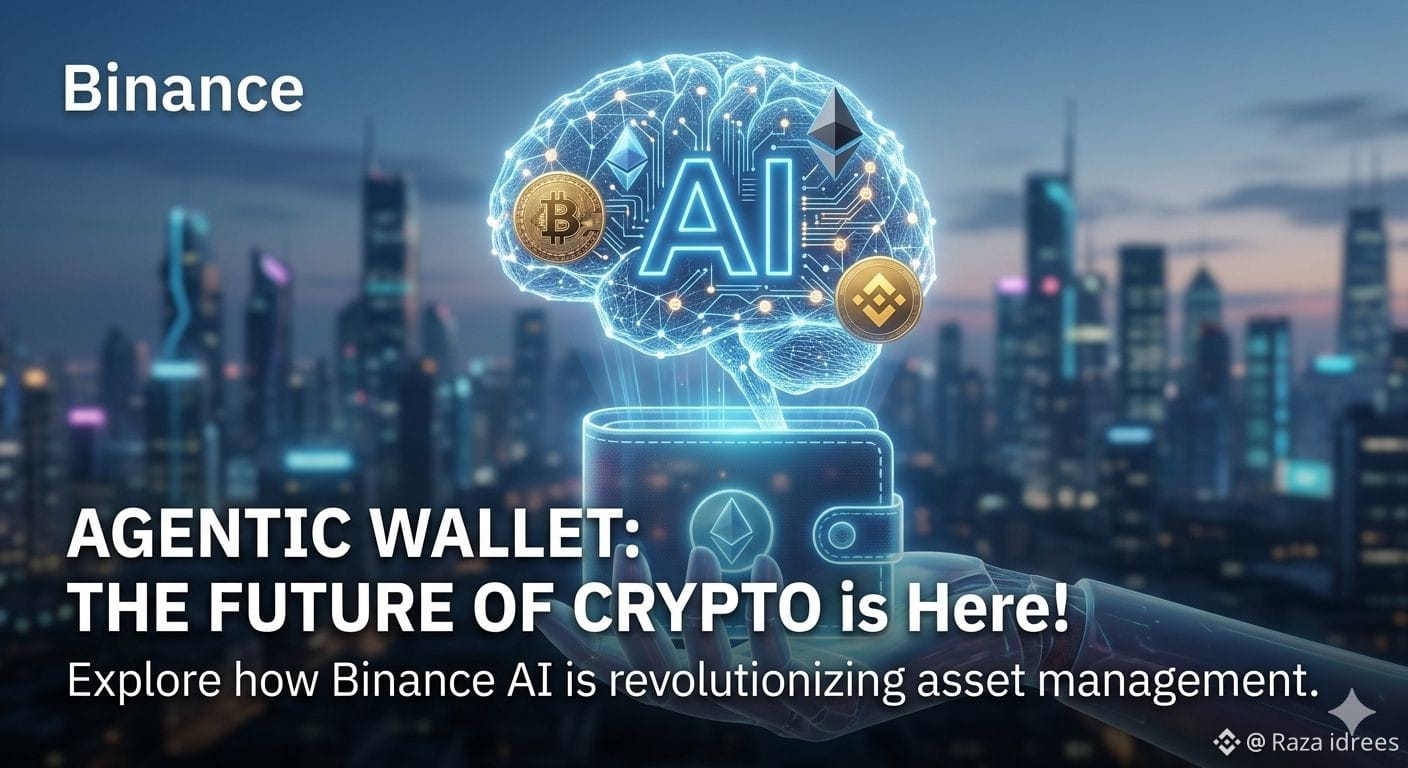
We just witnessed the future during the Binance Discord AMA! We are officially moving beyond simple wallets to 'Agentic Wallets'—a revolutionary shift where AI isn’t just an assistant, but an active partner in managing and optimizing our crypto portfolios. 🤖📈
For a technical analyst, this is a massive leap forward. Imagine an ecosystem where AI can:
✅ Identify real-time support/resistance levels.
✅ Automate complex trading strategies with unprecedented precision.
✅ Enhance security using predictive modeling.
Binance is leading the charge in fusing AI and Blockchain. The future of decentralized finance is intelligent, adaptive, and efficient. This is not just technology; it’s an evolution of the entire trading paradigm.
Are you ready to embrace the AI-driven future? What are you most excited about? Let me know in the comments! 👇
#BinanceAI #AgenticWallet #CryptoRevolution #TradingAI #Web3Future
🚀 Binance AI & Agentic Wallets: The Trading Revolution is Here!
Fellow Binancians,
We just witnessed the future during the Binance Discord AMA! We are officially moving beyond simple wallets to 'Agentic Wallets'—a revolutionary shift where AI isn’t just an assistant, but an active partner in managing and optimizing our crypto portfolios. 🤖📈
For a technical analyst, this is a massive leap forward. Imagine an ecosystem where AI can:
✅ Identify real-time support/resistance levels.
✅ Automate complex trading strategies with unprecedented precision.
✅ Enhance security using predictive modeling.
Binance is leading the charge in fusing AI and Blockchain. The future of decentralized finance is intelligent, adaptive, and efficient. This is not just technology; it’s an evolution of the entire trading paradigm.
Are you ready to embrace the AI-driven future? What are you most excited about? Let me know in the comments! 👇
#BinanceAI #AgenticWallet #CryptoRevolution #TradingAI #Web3Future
Fellow Binancians,
We just witnessed the future during the Binance Discord AMA! We are officially moving beyond simple wallets to 'Agentic Wallets'—a revolutionary shift where AI isn’t just an assistant, but an active partner in managing and optimizing our crypto portfolios. 🤖📈
For a technical analyst, this is a massive leap forward. Imagine an ecosystem where AI can:
✅ Identify real-time support/resistance levels.
✅ Automate complex trading strategies with unprecedented precision.
✅ Enhance security using predictive modeling.
Binance is leading the charge in fusing AI and Blockchain. The future of decentralized finance is intelligent, adaptive, and efficient. This is not just technology; it’s an evolution of the entire trading paradigm.
Are you ready to embrace the AI-driven future? What are you most excited about? Let me know in the comments! 👇
#BinanceAI #AgenticWallet #CryptoRevolution #TradingAI #Web3Future
96

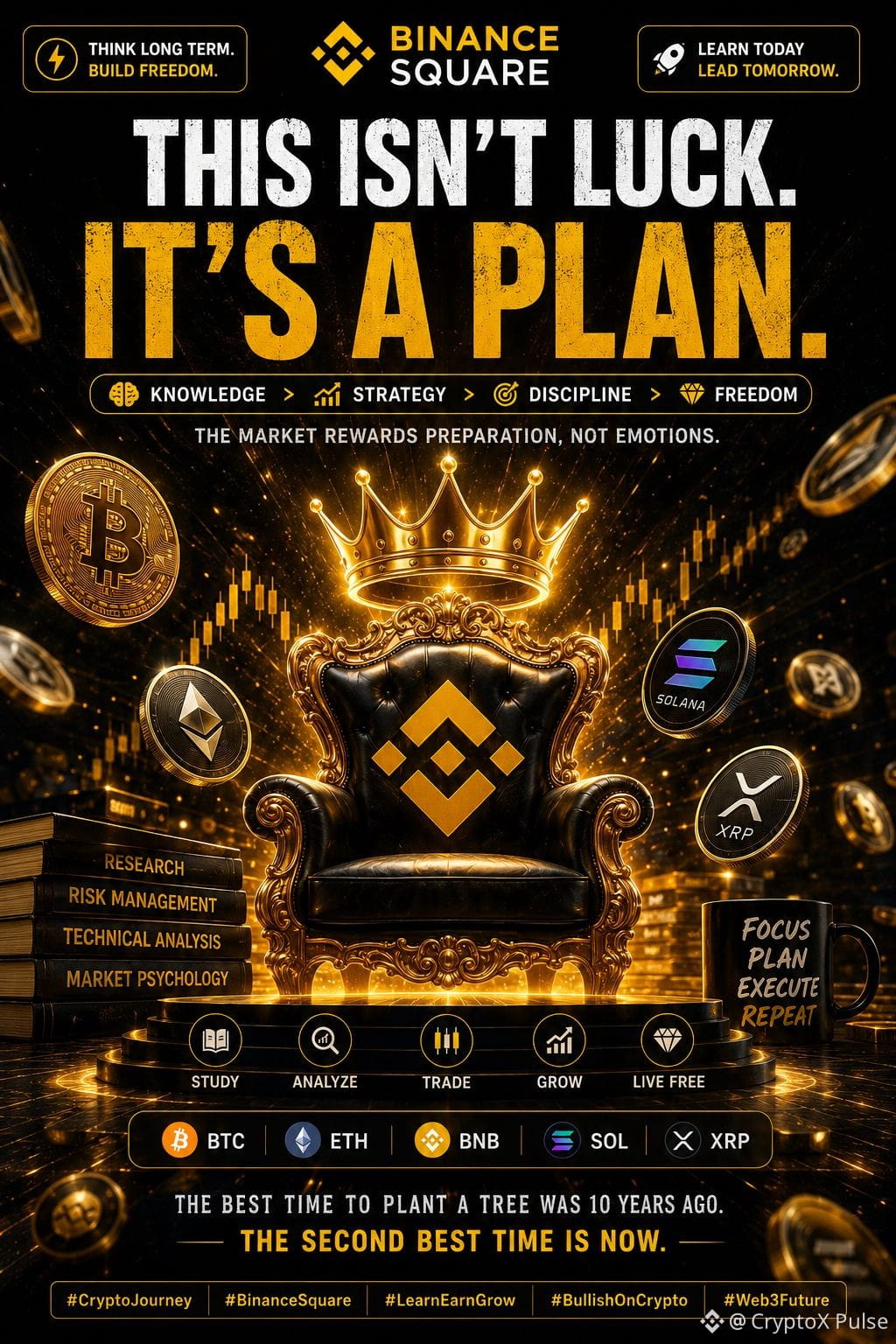
Most people enter crypto looking for fast profits…
But the real edge comes from knowledge, patience, and understanding how the market actually moves.
The SEC & CFTC finally creating clearer boundaries for crypto is another reminder that this industry is maturing fast. $BTC , ETH, $SOL , $XRP and other major assets are slowly becoming part of the global financial conversation.
That’s why learning matters now more than ever.
This masterclass is not about hype.
It’s about understanding market psychology, risk management, narratives, and how smart money positions early.
Every cycle creates new winners.
Usually, the people who learn before the crowd arrives.
Still bullish on the future of crypto adoption. 🚀
{spot}(SOLUSDT)
{spot}(XRPUSDT)
{spot}(BTCUSDT)
#CryptoMasterclass #BinanceSquare #LearnEarnGrow #cryptotrading #Web3Future
Most people enter crypto looking for fast profits…
But the real edge comes from knowledge, patience, and understanding how the market actually moves.
The SEC & CFTC finally creating clearer boundaries for crypto is another reminder that this industry is maturing fast. $BTC , ETH, $SOL , $XRP and other major assets are slowly becoming part of the global financial conversation.
That’s why learning matters now more than ever.
This masterclass is not about hype.
It’s about understanding market psychology, risk management, narratives, and how smart money positions early.
Every cycle creates new winners.
Usually, the people who learn before the crowd arrives.
Still bullish on the future of crypto adoption. 🚀
#CryptoMasterclass #BinanceSquare #LearnEarnGrow #cryptotrading #Web3Future
But the real edge comes from knowledge, patience, and understanding how the market actually moves.
The SEC & CFTC finally creating clearer boundaries for crypto is another reminder that this industry is maturing fast. $BTC , ETH, $SOL , $XRP and other major assets are slowly becoming part of the global financial conversation.
That’s why learning matters now more than ever.
This masterclass is not about hype.
It’s about understanding market psychology, risk management, narratives, and how smart money positions early.
Every cycle creates new winners.
Usually, the people who learn before the crowd arrives.
Still bullish on the future of crypto adoption. 🚀
#CryptoMasterclass #BinanceSquare #LearnEarnGrow #cryptotrading #Web3Future
148

The TRON Ecosystem as a Living System
Nothing here exists in isolation.
Each protocol strengthens the others.
Together, they form a living system designed for continuous economic activity, not short-lived attention 🌱
That is how long-term adoption is built.
#TRONEcosystem #BlockchainInfrastructure #Web3Future @TRONDAO @JustinSun
The TRON Ecosystem as a Living System
Nothing here exists in isolation.
Each protocol strengthens the others.
Together, they form a living system designed for continuous economic activity, not short-lived attention 🌱
That is how long-term adoption is built.
#TRONEcosystem #BlockchainInfrastructure #Web3Future @TRON DAO @Justin Sun孙宇晨
Nothing here exists in isolation.
Each protocol strengthens the others.
Together, they form a living system designed for continuous economic activity, not short-lived attention 🌱
That is how long-term adoption is built.
#TRONEcosystem #BlockchainInfrastructure #Web3Future @TRON DAO @Justin Sun孙宇晨
12


·
--
🌐 Lagrange: Unlocking the Next Era of Web3 Interoperability
As blockchain ecosystems expand, interoperability and scalability are no longer just nice-to-have—they’re essential. Lagrange is tackling this challenge head-on with its modular zero-knowledge (ZK) infrastructure, enabling seamless communication and computation across chains.
🔹 What makes Lagrange stand out?
ZK Coprocessing → Offloads heavy computation with zero-knowledge proofs, bringing both efficiency and trust.
Modular Design → Works as a plug-and-play layer for multiple blockchains, without compromising decentralization.
Cross-Chain Data Availability → Ensures reliable, verifiable data flows between ecosystems.
Scalability + Security → Combines speed with the cryptographic guarantees of ZK proofs.
With Web3 evolving into a multi-chain future, Lagrange is positioning itself as the infrastructure backbone for developers building cross-chain dApps, finance protocols, and scalable solutions.
The vision? A frictionless, composable, and secure blockchain universe.
#Lagrange #Interoperability #ZKTech #Web3Future
@lagrangedev
$LA
{spot}(LAUSDT)
🌐 Lagrange: Unlocking the Next Era of Web3 Interoperability
As blockchain ecosystems expand, interoperability and scalability are no longer just nice-to-have—they’re essential. Lagrange is tackling this challenge head-on with its modular zero-knowledge (ZK) infrastructure, enabling seamless communication and computation across chains.
🔹 What makes Lagrange stand out?
ZK Coprocessing → Offloads heavy computation with zero-knowledge proofs, bringing both efficiency and trust.
Modular Design → Works as a plug-and-play layer for multiple blockchains, without compromising decentralization.
Cross-Chain Data Availability → Ensures reliable, verifiable data flows between ecosystems.
Scalability + Security → Combines speed with the cryptographic guarantees of ZK proofs.
With Web3 evolving into a multi-chain future, Lagrange is positioning itself as the infrastructure backbone for developers building cross-chain dApps, finance protocols, and scalable solutions.
The vision? A frictionless, composable, and secure blockchain universe.
#Lagrange #Interoperability #ZKTech #Web3Future
@Lagrange Official
$LA
As blockchain ecosystems expand, interoperability and scalability are no longer just nice-to-have—they’re essential. Lagrange is tackling this challenge head-on with its modular zero-knowledge (ZK) infrastructure, enabling seamless communication and computation across chains.
🔹 What makes Lagrange stand out?
ZK Coprocessing → Offloads heavy computation with zero-knowledge proofs, bringing both efficiency and trust.
Modular Design → Works as a plug-and-play layer for multiple blockchains, without compromising decentralization.
Cross-Chain Data Availability → Ensures reliable, verifiable data flows between ecosystems.
Scalability + Security → Combines speed with the cryptographic guarantees of ZK proofs.
With Web3 evolving into a multi-chain future, Lagrange is positioning itself as the infrastructure backbone for developers building cross-chain dApps, finance protocols, and scalable solutions.
The vision? A frictionless, composable, and secure blockchain universe.
#Lagrange #Interoperability #ZKTech #Web3Future
@Lagrange Official
$LA

1.4k
725
80
1.4k

·
--
Bullish
Strong technology, active development, and a clear vision are helping position $NEAR as one of the blockchain ecosystems to watch. No one can predict markets with certainty, but consistent building is often the foundation for long-term growth.
@Square-Creator-b82000397
#NEAR #CryptoNews #BlockchainTech #Web3Future #NEARProtocol
Strong technology, active development, and a clear vision are helping position $NEAR as one of the blockchain ecosystems to watch. No one can predict markets with certainty, but consistent building is often the foundation for long-term growth.
@NearProtocol
#NEAR #CryptoNews #BlockchainTech #Web3Future #NEARProtocol
@NearProtocol
#NEAR #CryptoNews #BlockchainTech #Web3Future #NEARProtocol
1
92

·
--
Article
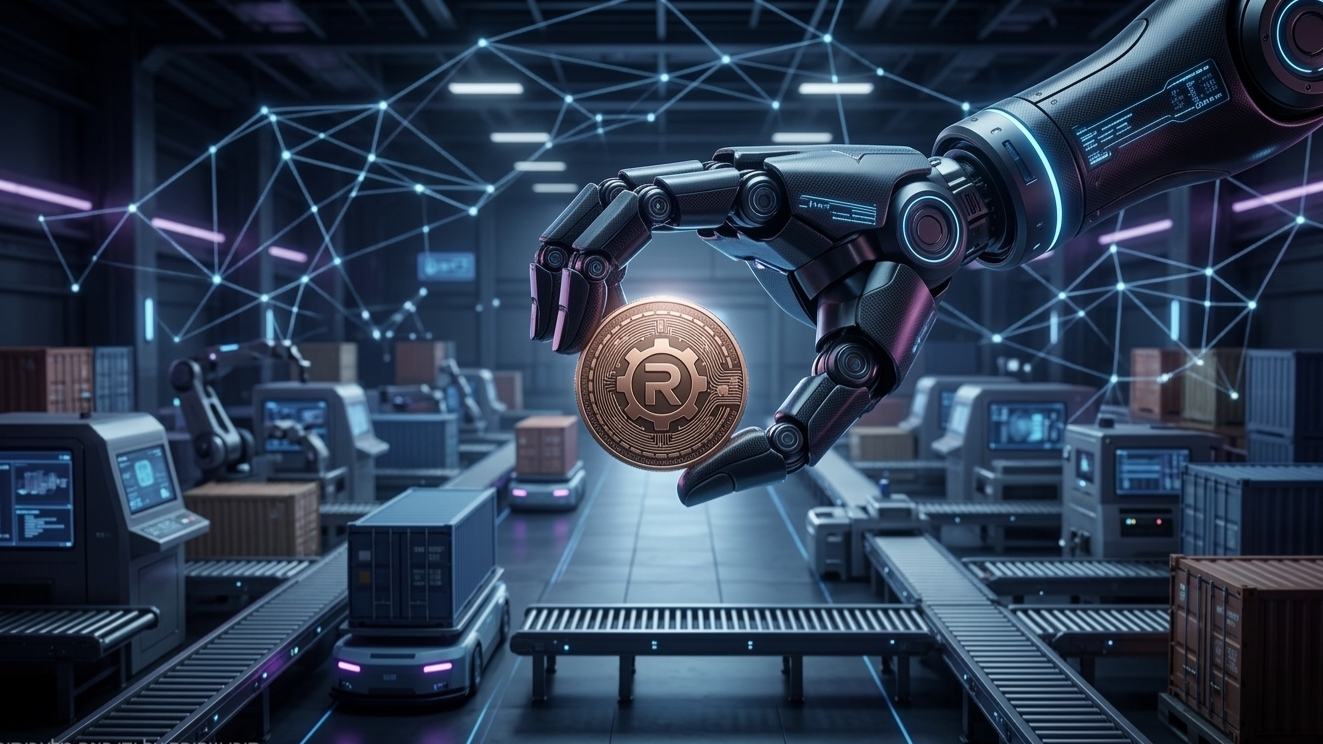
$ROBO: Beyond the Charts – Where Code Meets Physical Reality 🤖⛓️While the market is distracted by fleeting Memecoin narratives, a real revolution is brewing under the radar with $ROBO. If yesterday we analyzed the logistics solutions in Southeast Asian ports, today it’s time to understand why $ROBO is becoming the "spine" of the DePIN (Decentralized Physical Infrastructure) movement. 🌍🚀
The Automation Paradox: Why Now? 🛠️
The world is moving toward total automation, but the bottleneck has always been centralization. When a factory or a logistics hub relies on a single central server, one glitch shuts down the entire operation. This is where the RoboNet Protocol changes the game. $ROBO isn't just a "coin"; it's the fuel for a decentralized coordination network.
The "Hidden Value" of $ROBO: 💎
• Peer-to-Machine (P2M): Enabling machines to transact autonomously without human middlemen. With Robo, on-chain settlement slashes overhead costs for industrial giants. 🤖💸
• Infrastructure Resilience: In the event of a regional network failure, the RoboNet protocol allows systems to continue P2P communication, using the token as a trust layer for data integrity. 🛡️📡
• Circular Economy Model: As more "physical nodes" (warehouses, drones, shipping hubs) join the network, token demand scales based on operational necessity, not just speculation. 📈⚙️
The Bottom Line for Strategic Investors: 🎯
We are reaching the tipping point where Utility meets Price. The successful pilots in Tokyo and major Asian ports were just the beginning. When you view Robo as the foundational layer for the automated world of 2027-2030, you realize the current valuation is just the tip of the iceberg. ❄️🏔️
Are you holding for the Hype, or for the Infrastructure? Let’s discuss in the comments! 👇
$ROBO
#ROBO #DePIN #Web3Future #BinanceSquare @FabricFND
$ROBO: Beyond the Charts – Where Code Meets Physical Reality 🤖⛓️
While the market is distracted by fleeting Memecoin narratives, a real revolution is brewing under the radar with $ROBO . If yesterday we analyzed the logistics solutions in Southeast Asian ports, today it’s time to understand why $ROBO is becoming the "spine" of the DePIN (Decentralized Physical Infrastructure) movement. 🌍🚀
The Automation Paradox: Why Now? 🛠️
The world is moving toward total automation, but the bottleneck has always been centralization. When a factory or a logistics hub relies on a single central server, one glitch shuts down the entire operation. This is where the RoboNet Protocol changes the game. $ROBO isn't just a "coin"; it's the fuel for a decentralized coordination network.
The "Hidden Value" of $ROBO : 💎
• Peer-to-Machine (P2M): Enabling machines to transact autonomously without human middlemen. With Robo, on-chain settlement slashes overhead costs for industrial giants. 🤖💸
• Infrastructure Resilience: In the event of a regional network failure, the RoboNet protocol allows systems to continue P2P communication, using the token as a trust layer for data integrity. 🛡️📡
• Circular Economy Model: As more "physical nodes" (warehouses, drones, shipping hubs) join the network, token demand scales based on operational necessity, not just speculation. 📈⚙️
The Bottom Line for Strategic Investors: 🎯
We are reaching the tipping point where Utility meets Price. The successful pilots in Tokyo and major Asian ports were just the beginning. When you view Robo as the foundational layer for the automated world of 2027-2030, you realize the current valuation is just the tip of the iceberg. ❄️🏔️
Are you holding for the Hype, or for the Infrastructure? Let’s discuss in the comments! 👇
$ROBO
#ROBO #DePIN #Web3Future #BinanceSquare @FabricFND
The Automation Paradox: Why Now? 🛠️
The world is moving toward total automation, but the bottleneck has always been centralization. When a factory or a logistics hub relies on a single central server, one glitch shuts down the entire operation. This is where the RoboNet Protocol changes the game. $ROBO isn't just a "coin"; it's the fuel for a decentralized coordination network.
The "Hidden Value" of $ROBO : 💎
• Peer-to-Machine (P2M): Enabling machines to transact autonomously without human middlemen. With Robo, on-chain settlement slashes overhead costs for industrial giants. 🤖💸
• Infrastructure Resilience: In the event of a regional network failure, the RoboNet protocol allows systems to continue P2P communication, using the token as a trust layer for data integrity. 🛡️📡
• Circular Economy Model: As more "physical nodes" (warehouses, drones, shipping hubs) join the network, token demand scales based on operational necessity, not just speculation. 📈⚙️
The Bottom Line for Strategic Investors: 🎯
We are reaching the tipping point where Utility meets Price. The successful pilots in Tokyo and major Asian ports were just the beginning. When you view Robo as the foundational layer for the automated world of 2027-2030, you realize the current valuation is just the tip of the iceberg. ❄️🏔️
Are you holding for the Hype, or for the Infrastructure? Let’s discuss in the comments! 👇
$ROBO
#ROBO #DePIN #Web3Future #BinanceSquare @FabricFND
2
8
691


Article
The Decentralized AI Revolution (DeAI) – When Transparent Data Meets Smart Models 🧠⚡The crypto market is entering an unprecedented era driven by the convergence of artificial intelligence (AI) and blockchain technologies. Conversation is no longer just about speculation on “meme” coins or startups; it has turned into a real race to build decentralized AI infrastructure that guarantees privacy, removes control by big corporations, and paves the way for AI agents capable of autonomously conducting financial transactions on Web3 networks.
The Decentralized AI Revolution (DeAI) – When Transparent Data Meets Smart Models 🧠⚡
The crypto market is entering an unprecedented era driven by the convergence of artificial intelligence (AI) and blockchain technologies. Conversation is no longer just about speculation on “meme” coins or startups; it has turned into a real race to build decentralized AI infrastructure that guarantees privacy, removes control by big corporations, and paves the way for AI agents capable of autonomously conducting financial transactions on Web3 networks.
69

·
--
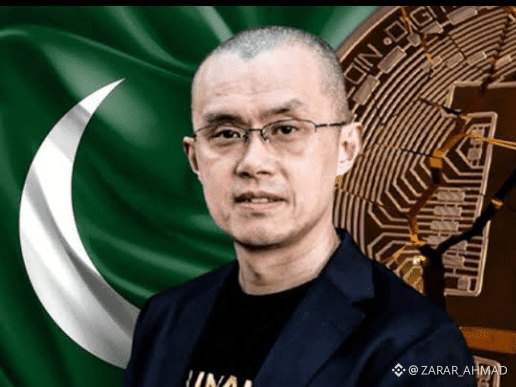
If the current pace continues, CZ believes Pakistan has the potential to become a global crypto leader by 2030 🇵🇰
With fast-growing adoption, a tech-savvy youth population, and strong digital momentum, the country’s crypto landscape is evolving rapidly.
#CryptoPakistan
#Web3Future
#DigitalPakistan
#BlockchainNews
#FutureOfFinance
If the current pace continues, CZ believes Pakistan has the potential to become a global crypto leader by 2030 🇵🇰
With fast-growing adoption, a tech-savvy youth population, and strong digital momentum, the country’s crypto landscape is evolving rapidly.
#CryptoPakistan
#Web3Future
#DigitalPakistan
#BlockchainNews
#FutureOfFinance
With fast-growing adoption, a tech-savvy youth population, and strong digital momentum, the country’s crypto landscape is evolving rapidly.
#CryptoPakistan
#Web3Future
#DigitalPakistan
#BlockchainNews
#FutureOfFinance
1
76

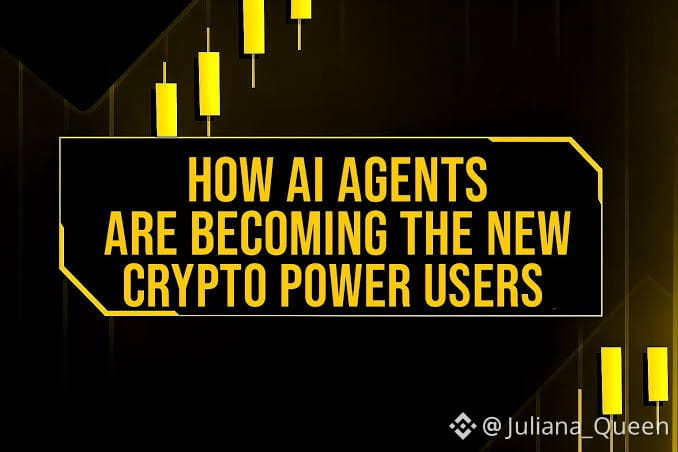
AI Agents: The New Power Users
$ETH
Have you noticed that the "users" on the blockchain are starting to look less like people and more like code? "Agentic Commerce" is officially here. This May, we’re seeing a surge in AI agents autonomously buying compute power and managing portfolios. Projects like Bittensor and Render aren't just for humans anymore—they are the fuel for an automated digital economy. It’s a bit sci-fi, but it’s happening right now on-chain. The future isn't just "smart"; it’s autonomous.
$TAO
Follow Me for the latest in AI-crypto tech!
$STO
Sources: Wired Tech
CoinDesk AI Focus.
#AI #DePIN #Web3Future #U.S.SenatorsBarredfromTradingonPredictionMarkets #FedRatesUnchanged
AI Agents: The New Power Users
$ETH
Have you noticed that the "users" on the blockchain are starting to look less like people and more like code? "Agentic Commerce" is officially here. This May, we’re seeing a surge in AI agents autonomously buying compute power and managing portfolios. Projects like Bittensor and Render aren't just for humans anymore—they are the fuel for an automated digital economy. It’s a bit sci-fi, but it’s happening right now on-chain. The future isn't just "smart"; it’s autonomous.
$TAO
Follow Me for the latest in AI-crypto tech!
$STO
Sources: Wired Tech
CoinDesk AI Focus.
#AI #DePIN #Web3Future #U.S.SenatorsBarredfromTradingonPredictionMarkets #FedRatesUnchanged
$ETH
Have you noticed that the "users" on the blockchain are starting to look less like people and more like code? "Agentic Commerce" is officially here. This May, we’re seeing a surge in AI agents autonomously buying compute power and managing portfolios. Projects like Bittensor and Render aren't just for humans anymore—they are the fuel for an automated digital economy. It’s a bit sci-fi, but it’s happening right now on-chain. The future isn't just "smart"; it’s autonomous.
$TAO
Follow Me for the latest in AI-crypto tech!
$STO
Sources: Wired Tech
CoinDesk AI Focus.
#AI #DePIN #Web3Future #U.S.SenatorsBarredfromTradingonPredictionMarkets #FedRatesUnchanged
1
278
·
--
🗳️ Dash DAO: Power to the People! 🌐
Dash is a true pioneer in the world of Decentralized Autonomous Organizations. 🏛️
$ZEC
{future}(ZECUSDT)
Unlike traditional models, the project's direction is decided by the community through a transparent voting system. 🗳️
$SOL
{future}(SOLUSDT)
Anyone can propose innovative ideas to grow the ecosystem and receive funding if approved! 💰
$DASH
{future}(DASHUSDT)
This democratic approach ensures long-term sustainability and keeps the power where it belongs—with the users. It's the future of financial governance! 🚀✨
#Dash #DAO #DecentralizedGovernance #Web3Future
🗳️ Dash DAO: Power to the People! 🌐
Dash is a true pioneer in the world of Decentralized Autonomous Organizations. 🏛️
$ZEC
Unlike traditional models, the project's direction is decided by the community through a transparent voting system. 🗳️
$SOL
Anyone can propose innovative ideas to grow the ecosystem and receive funding if approved! 💰
$DASH
This democratic approach ensures long-term sustainability and keeps the power where it belongs—with the users. It's the future of financial governance! 🚀✨
#Dash #DAO #DecentralizedGovernance #Web3Future
Dash is a true pioneer in the world of Decentralized Autonomous Organizations. 🏛️
$ZEC
Unlike traditional models, the project's direction is decided by the community through a transparent voting system. 🗳️
$SOL
Anyone can propose innovative ideas to grow the ecosystem and receive funding if approved! 💰
$DASH
This democratic approach ensures long-term sustainability and keeps the power where it belongs—with the users. It's the future of financial governance! 🚀✨
#Dash #DAO #DecentralizedGovernance #Web3Future

2
275

·
--
Article
Why the Wealthy Donate to Museums & Charity — And Why Crypto Is Quietly Rewriting the GameThe idea that rich people give away money out of pure kindness is comforting—but incomplete. The truth is far more strategic, psychological, and increasingly… blockchain-driven.
1. Wealth Isn’t Just Money — It’s Identity
Studies show that wealthy individuals often donate when it aligns with how they see themselves—independent, impactful, and legacy-driven (Scientific American).
When a billionaire funds a museum wing or donates millions to charity, they’re not just giving money—they’re engineering identity.
They become patrons of cultureArchitects of legacyGuardians of history
In fact, major donations can reshape how donors view themselves, boosting psychological fulfillment and purpose (Chronicle of Philanthropy).
👉 Translation: Giving is not loss—it’s status transformation.
2. Museums: The Ultimate Legacy Machines
Museums are not random charity targets—they are immortality vaults.
Up to 85% of museum collections come from private donors (Psychology Today)Donations preserve history—and attach the donor’s name to it
When you fund a museum:
You don’t just give moneyYou embed yourself into civilization
That’s why museums attract elite donors—they convert wealth into permanent cultural relevance.
3. The Hidden Drivers of Elite Giving
Let’s strip away the myths. Wealthy philanthropy is driven by a mix of:
Legacy building (being remembered)Social responsibility (giving back) (Chronicle of Philanthropy)Personal fulfillment (psychological reward) (Peter T. Waldron)Influence & narrative control (shaping culture, institutions) (Forbes)
And sometimes:
Reputation laundering (repairing public image) (Vox)
👉 Philanthropy is both altruism and strategy.
4. Enter Crypto: The New Age of Transparent Philanthropy
Now here’s where it gets interesting.
Crypto is doing to philanthropy what the internet did to information: removing gatekeepers.
Why Crypto Changes Everything
Radical transparency → every donation can be tracked on-chainGlobal access → anyone can donate, not just billionairesProgrammable giving → smart contracts ensure funds are used as intended
Even crypto-based charity models (like NFTs and token fundraising) are reshaping donor behavior—where visibility and reputation directly affect value (arXiv).
👉 In crypto, your wallet is your reputation.
5. From Museum Wings to Blockchain Wallets
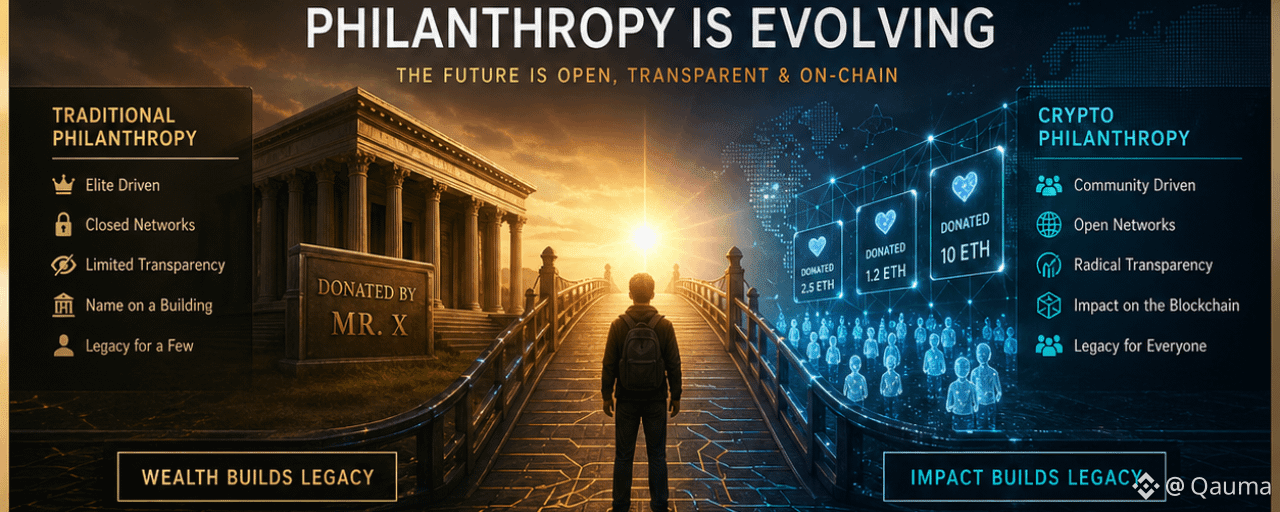
Traditional philanthropy:
Closed networksElite-drivenLegacy = name on a building
Crypto philanthropy:
Open networksCommunity-drivenLegacy = on-chain proof of impact
Instead of:
“Donated by Mr. X”
We now have:
Public wallet addresses proving impact forever
6. The Power Shift: From Billionaires to Communities
Museums once depended on a few wealthy donors—but that model is shifting toward collective giving (Forbes).
Crypto accelerates this:
Thousands of small donors = one massive impactDAOs funding public goodsCommunities acting like decentralized philanthropists
👉 The crowd is becoming the new billionaire.
7. The Final Insight (Genius Layer)
Here’s the deeper truth:
Old wealth used philanthropy to buy legacyCrypto allows anyone to build legacy transparently
The game has changed from:
“Who has the most money?”
to:
“Who creates the most visible impact?”
Conclusion
Wealthy people donate not just to help—but to define themselves, shape society, and outlive their money.
But crypto is rewriting that script.
Now, legacy isn’t reserved for the elite.
It’s open, trackable, and programmable.
👉 The future of philanthropy isn’t just generosity.
👉 It’s on-chain legacy engineering.
#CryptoPhilanthropy #BlockchainImpact #Web3Future #DecentralizedGiving #CryptoWealth
Why the Wealthy Donate to Museums & Charity — And Why Crypto Is Quietly Rewriting the Game
The idea that rich people give away money out of pure kindness is comforting—but incomplete. The truth is far more strategic, psychological, and increasingly… blockchain-driven.
1. Wealth Isn’t Just Money — It’s Identity
Studies show that wealthy individuals often donate when it aligns with how they see themselves—independent, impactful, and legacy-driven (Scientific American).
When a billionaire funds a museum wing or donates millions to charity, they’re not just giving money—they’re engineering identity.
They become patrons of cultureArchitects of legacyGuardians of history
In fact, major donations can reshape how donors view themselves, boosting psychological fulfillment and purpose (Chronicle of Philanthropy).
👉 Translation: Giving is not loss—it’s status transformation.
2. Museums: The Ultimate Legacy Machines
Museums are not random charity targets—they are immortality vaults.
Up to 85% of museum collections come from private donors (Psychology Today)Donations preserve history—and attach the donor’s name to it
When you fund a museum:
You don’t just give moneyYou embed yourself into civilization
That’s why museums attract elite donors—they convert wealth into permanent cultural relevance.
3. The Hidden Drivers of Elite Giving
Let’s strip away the myths. Wealthy philanthropy is driven by a mix of:
Legacy building (being remembered)Social responsibility (giving back) (Chronicle of Philanthropy)Personal fulfillment (psychological reward) (Peter T. Waldron)Influence & narrative control (shaping culture, institutions) (Forbes)
And sometimes:
Reputation laundering (repairing public image) (Vox)
👉 Philanthropy is both altruism and strategy.
4. Enter Crypto: The New Age of Transparent Philanthropy
Now here’s where it gets interesting.
Crypto is doing to philanthropy what the internet did to information: removing gatekeepers.
Why Crypto Changes Everything
Radical transparency → every donation can be tracked on-chainGlobal access → anyone can donate, not just billionairesProgrammable giving → smart contracts ensure funds are used as intended
Even crypto-based charity models (like NFTs and token fundraising) are reshaping donor behavior—where visibility and reputation directly affect value (arXiv).
👉 In crypto, your wallet is your reputation.
5. From Museum Wings to Blockchain Wallets
Traditional philanthropy:
Closed networksElite-drivenLegacy = name on a building
Crypto philanthropy:
Open networksCommunity-drivenLegacy = on-chain proof of impact
Instead of:
“Donated by Mr. X”
We now have:
Public wallet addresses proving impact forever
6. The Power Shift: From Billionaires to Communities
Museums once depended on a few wealthy donors—but that model is shifting toward collective giving (Forbes).
Crypto accelerates this:
Thousands of small donors = one massive impactDAOs funding public goodsCommunities acting like decentralized philanthropists
👉 The crowd is becoming the new billionaire.
7. The Final Insight (Genius Layer)
Here’s the deeper truth:
Old wealth used philanthropy to buy legacyCrypto allows anyone to build legacy transparently
The game has changed from:
“Who has the most money?”
to:
“Who creates the most visible impact?”
Conclusion
Wealthy people donate not just to help—but to define themselves, shape society, and outlive their money.
But crypto is rewriting that script.
Now, legacy isn’t reserved for the elite.
It’s open, trackable, and programmable.
👉 The future of philanthropy isn’t just generosity.
👉 It’s on-chain legacy engineering.
#CryptoPhilanthropy #BlockchainImpact #Web3Future #DecentralizedGiving #CryptoWealth
1. Wealth Isn’t Just Money — It’s Identity
Studies show that wealthy individuals often donate when it aligns with how they see themselves—independent, impactful, and legacy-driven (Scientific American).
When a billionaire funds a museum wing or donates millions to charity, they’re not just giving money—they’re engineering identity.
They become patrons of cultureArchitects of legacyGuardians of history
In fact, major donations can reshape how donors view themselves, boosting psychological fulfillment and purpose (Chronicle of Philanthropy).
👉 Translation: Giving is not loss—it’s status transformation.
2. Museums: The Ultimate Legacy Machines
Museums are not random charity targets—they are immortality vaults.
Up to 85% of museum collections come from private donors (Psychology Today)Donations preserve history—and attach the donor’s name to it
When you fund a museum:
You don’t just give moneyYou embed yourself into civilization
That’s why museums attract elite donors—they convert wealth into permanent cultural relevance.
3. The Hidden Drivers of Elite Giving
Let’s strip away the myths. Wealthy philanthropy is driven by a mix of:
Legacy building (being remembered)Social responsibility (giving back) (Chronicle of Philanthropy)Personal fulfillment (psychological reward) (Peter T. Waldron)Influence & narrative control (shaping culture, institutions) (Forbes)
And sometimes:
Reputation laundering (repairing public image) (Vox)
👉 Philanthropy is both altruism and strategy.
4. Enter Crypto: The New Age of Transparent Philanthropy
Now here’s where it gets interesting.
Crypto is doing to philanthropy what the internet did to information: removing gatekeepers.
Why Crypto Changes Everything
Radical transparency → every donation can be tracked on-chainGlobal access → anyone can donate, not just billionairesProgrammable giving → smart contracts ensure funds are used as intended
Even crypto-based charity models (like NFTs and token fundraising) are reshaping donor behavior—where visibility and reputation directly affect value (arXiv).
👉 In crypto, your wallet is your reputation.
5. From Museum Wings to Blockchain Wallets
Traditional philanthropy:
Closed networksElite-drivenLegacy = name on a building
Crypto philanthropy:
Open networksCommunity-drivenLegacy = on-chain proof of impact
Instead of:
“Donated by Mr. X”
We now have:
Public wallet addresses proving impact forever
6. The Power Shift: From Billionaires to Communities
Museums once depended on a few wealthy donors—but that model is shifting toward collective giving (Forbes).
Crypto accelerates this:
Thousands of small donors = one massive impactDAOs funding public goodsCommunities acting like decentralized philanthropists
👉 The crowd is becoming the new billionaire.
7. The Final Insight (Genius Layer)
Here’s the deeper truth:
Old wealth used philanthropy to buy legacyCrypto allows anyone to build legacy transparently
The game has changed from:
“Who has the most money?”
to:
“Who creates the most visible impact?”
Conclusion
Wealthy people donate not just to help—but to define themselves, shape society, and outlive their money.
But crypto is rewriting that script.
Now, legacy isn’t reserved for the elite.
It’s open, trackable, and programmable.
👉 The future of philanthropy isn’t just generosity.
👉 It’s on-chain legacy engineering.
#CryptoPhilanthropy #BlockchainImpact #Web3Future #DecentralizedGiving #CryptoWealth
68
🤖 THE AI-CRYPTO CONVERGENCE IS MANDATORY 🤖
The convergence of AI and blockchain is the single greatest technology shift since the internet. $FET isn't just an asset; it’s infrastructure. In 2026, every successful app will have an AI backend and a crypto wallet. If your portfolio doesn't have AI exposure, you are investing in the past. Buy the future. 🦾💻
What is your price prediction for $FET ?
A) $4
B) $15
C) $75
#FET #AI #artificialintelligence #Web3Future #CryptoGems $LUNC
🤖 THE AI-CRYPTO CONVERGENCE IS MANDATORY 🤖
The convergence of AI and blockchain is the single greatest technology shift since the internet. $FET isn't just an asset; it’s infrastructure. In 2026, every successful app will have an AI backend and a crypto wallet. If your portfolio doesn't have AI exposure, you are investing in the past. Buy the future. 🦾💻
What is your price prediction for $FET ?
A) $4
B) $15
C) $75
#FET #AI #artificialintelligence #Web3Future #CryptoGems $LUNC
The convergence of AI and blockchain is the single greatest technology shift since the internet. $FET isn't just an asset; it’s infrastructure. In 2026, every successful app will have an AI backend and a crypto wallet. If your portfolio doesn't have AI exposure, you are investing in the past. Buy the future. 🦾💻
What is your price prediction for $FET ?
A) $4
B) $15
C) $75
#FET #AI #artificialintelligence #Web3Future #CryptoGems $LUNC

1
282

·
--
Article
AI Is Taking Over DeFi: How Smart Bots Are Changing Crypto Forever🚨What if DeFi never sleeps, never forgets and never needs a human again? Welcome to 2025, where AI bots aren’t just helping you trade they’re running the entire crypto economy.
Introduction:
In 2025, a quiet revolution is happening in crypto and it’s not coming from a new meme coin or layer-2 hype. It’s coming from artificial intelligence. Not the kind writing essays or making art but the kind that’s trading, farming, lending, and managing risk better than most people can.
We’ve officially entered the age of AI-powered DeFi, where autonomous agents make decisions, move money, and build strategies without a single line of human code being touched. And yes, it’s real, live, and changing everything.
👉 What’s Actually Happening?
DeFi protocols are now running on AI brains-smart bots that can:
• Trade crypto using live market data.
• Jump between chains to find the highest yield.
• Score credit based on on-chain behavior
• Predict prices using real-time machine learning.
• Automatically rebalance portfolios
• Even respond to natural language (you talk, they act)
In simple terms: bots are now doing the thinking and the doing.
Real Examples You Can Explore Right Now:
Here are some live AI-DeFi projects that are making headlines (and money):
Polana.ai – Helps you invest smarter by using AI to predict prices and build custom portfolios.
Fetch.ai – Uses AI agents to optimize crypto trades peer-to-peer, cutting out middlemen.
SingularityDAO – Runs "Dynasets," portfolios that automatically shift based on AI predictions.
Mozaic Finance – An AI yield farming bot that jumps between chains to maximize returns.
Zotto.ai – Lets AI bots trade for you using strategies it creates itself (on-chain).
Numerai – A crowdsourced AI fund that uses thousands of models to predict markets.
So... What Now?
The real question is: If AI can trade, lend, farm, and decide risk better than you—why would it need you at all?
Are we heading toward truly autonomous finance, where protocols evolve and grow without permission or pause? Or are we building a system that we no longer fully understand or control?
🔺CTA: FOLLOW FOR MORE AI X CRYPTO NARRATIVES.
#AlinCrypto #autonomousfinance #CryptoNarratives #Web3Future #binancesquare
@CoinVoice @Web3_Insider @AICrypto1983 @Shreyansh_eth @BinanceResearch @Binance_Margin @DeFiOfficial @Square-Creator-5a4eb7dc4ae09
AI Is Taking Over DeFi: How Smart Bots Are Changing Crypto Forever🚨
What if DeFi never sleeps, never forgets and never needs a human again? Welcome to 2025, where AI bots aren’t just helping you trade they’re running the entire crypto economy.
Introduction:
In 2025, a quiet revolution is happening in crypto and it’s not coming from a new meme coin or layer-2 hype. It’s coming from artificial intelligence. Not the kind writing essays or making art but the kind that’s trading, farming, lending, and managing risk better than most people can.
We’ve officially entered the age of AI-powered DeFi, where autonomous agents make decisions, move money, and build strategies without a single line of human code being touched. And yes, it’s real, live, and changing everything.
👉 What’s Actually Happening?
DeFi protocols are now running on AI brains-smart bots that can:
• Trade crypto using live market data.
• Jump between chains to find the highest yield.
• Score credit based on on-chain behavior
• Predict prices using real-time machine learning.
• Automatically rebalance portfolios
• Even respond to natural language (you talk, they act)
In simple terms: bots are now doing the thinking and the doing.
Real Examples You Can Explore Right Now:
Here are some live AI-DeFi projects that are making headlines (and money):
Polana.ai – Helps you invest smarter by using AI to predict prices and build custom portfolios.
Fetch.ai – Uses AI agents to optimize crypto trades peer-to-peer, cutting out middlemen.
SingularityDAO – Runs "Dynasets," portfolios that automatically shift based on AI predictions.
Mozaic Finance – An AI yield farming bot that jumps between chains to maximize returns.
Zotto.ai – Lets AI bots trade for you using strategies it creates itself (on-chain).
Numerai – A crowdsourced AI fund that uses thousands of models to predict markets.
So... What Now?
The real question is: If AI can trade, lend, farm, and decide risk better than you—why would it need you at all?
Are we heading toward truly autonomous finance, where protocols evolve and grow without permission or pause? Or are we building a system that we no longer fully understand or control?
🔺CTA: FOLLOW FOR MORE AI X CRYPTO NARRATIVES.
#AlinCrypto #autonomousfinance #CryptoNarratives #Web3Future #binancesquare
@CoinVoice @Web3 Insider @AI CRYPTO PROTRADE @Square-Creator-35bd53669 @Polaris_xbt 1 @Binance Margin @i_am_btc_lover @Definerd
Introduction:
In 2025, a quiet revolution is happening in crypto and it’s not coming from a new meme coin or layer-2 hype. It’s coming from artificial intelligence. Not the kind writing essays or making art but the kind that’s trading, farming, lending, and managing risk better than most people can.
We’ve officially entered the age of AI-powered DeFi, where autonomous agents make decisions, move money, and build strategies without a single line of human code being touched. And yes, it’s real, live, and changing everything.
👉 What’s Actually Happening?
DeFi protocols are now running on AI brains-smart bots that can:
• Trade crypto using live market data.
• Jump between chains to find the highest yield.
• Score credit based on on-chain behavior
• Predict prices using real-time machine learning.
• Automatically rebalance portfolios
• Even respond to natural language (you talk, they act)
In simple terms: bots are now doing the thinking and the doing.
Real Examples You Can Explore Right Now:
Here are some live AI-DeFi projects that are making headlines (and money):
Polana.ai – Helps you invest smarter by using AI to predict prices and build custom portfolios.
Fetch.ai – Uses AI agents to optimize crypto trades peer-to-peer, cutting out middlemen.
SingularityDAO – Runs "Dynasets," portfolios that automatically shift based on AI predictions.
Mozaic Finance – An AI yield farming bot that jumps between chains to maximize returns.
Zotto.ai – Lets AI bots trade for you using strategies it creates itself (on-chain).
Numerai – A crowdsourced AI fund that uses thousands of models to predict markets.
So... What Now?
The real question is: If AI can trade, lend, farm, and decide risk better than you—why would it need you at all?
Are we heading toward truly autonomous finance, where protocols evolve and grow without permission or pause? Or are we building a system that we no longer fully understand or control?
🔺CTA: FOLLOW FOR MORE AI X CRYPTO NARRATIVES.
#AlinCrypto #autonomousfinance #CryptoNarratives #Web3Future #binancesquare
@CoinVoice @Web3 Insider @AI CRYPTO PROTRADE @Square-Creator-35bd53669 @Polaris_xbt 1 @Binance Margin @i_am_btc_lover @Definerd
1
3
209

·
--
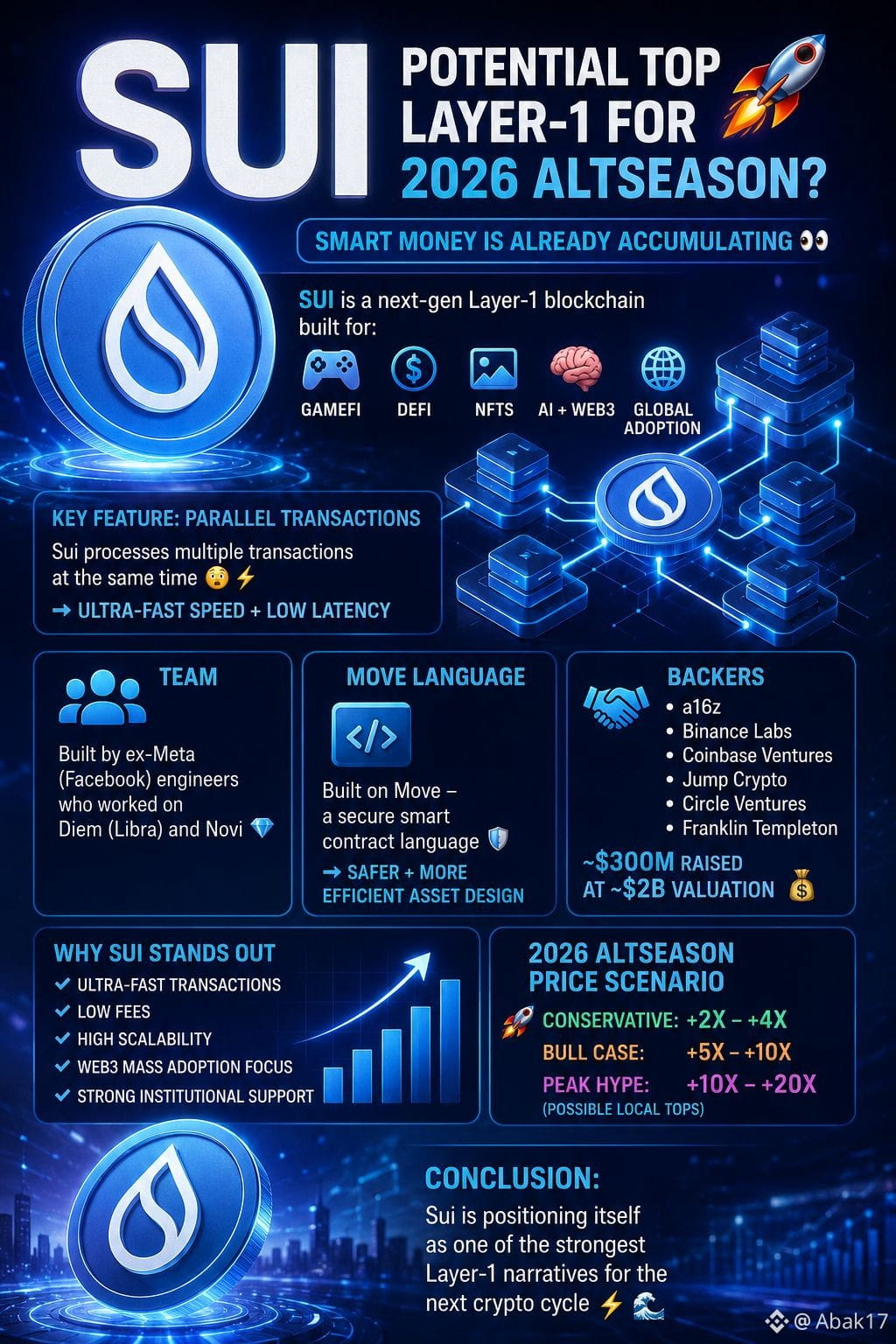
🚨🔥 SUI — POTENTIAL TOP LAYER-1 FOR THE 2026 ALTSEASON? 🔥🚨
While the market is still quiet 😴
smart money is already accumulating 👀⚡️
💥 Sui is a next-gen Layer-1 blockchain built for: 🎮 GameFi
💸 DeFi
🖼 NFTs
🤖 AI + Web3
🌍 global adoption
⚡️ KEY FEATURE: PARALLEL TRANSACTIONS
Sui processes multiple transactions at the same time 😳🔥
👉 ultra-fast speed + low latency
👨💻 TEAM
Built by ex-Meta (Facebook) engineers who worked on Diem (Libra) and Novi 💎
🧠 MOVE LANGUAGE
Built on Move — a secure smart contract language 🛡
👉 safer + more efficient asset design
💰 BACKERS
🔥 a16z
🔥 Binance Labs
🔥 Coinbase Ventures
🔥 Jump Crypto
🔥 Circle Ventures
🔥 Franklin Templeton
💸 ~$300M raised at ~$2B valuation 😳
🚀 WHY SUI STANDS OUT
⚡️ ultra-fast transactions
💸 low fees
📈 high scalability
🌍 Web3 mass adoption focus
🔥 strong institutional support
📊🔥 2026 ALTSEASON PRICE SCENARIO
📈 Conservative: +2x – +4x
📈 Bull case: +5x – +10x
🚀 Peak hype: +10x – +20x (possible local tops)
💡 CONCLUSION:
Sui is positioning itself as one of the strongest Layer-1 narratives for the next crypto cycle ⚡️🌊
#SUI #Crypto #Altseason2026 #Web3 #Web3Future $SUI
{future}(SUIUSDT)
🚨🔥 SUI — POTENTIAL TOP LAYER-1 FOR THE 2026 ALTSEASON? 🔥🚨
While the market is still quiet 😴
smart money is already accumulating 👀⚡️
💥 Sui is a next-gen Layer-1 blockchain built for: 🎮 GameFi
💸 DeFi
🖼 NFTs
🤖 AI + Web3
🌍 global adoption
⚡️ KEY FEATURE: PARALLEL TRANSACTIONS
Sui processes multiple transactions at the same time 😳🔥
👉 ultra-fast speed + low latency
👨💻 TEAM
Built by ex-Meta (Facebook) engineers who worked on Diem (Libra) and Novi 💎
🧠 MOVE LANGUAGE
Built on Move — a secure smart contract language 🛡
👉 safer + more efficient asset design
💰 BACKERS
🔥 a16z
🔥 Binance Labs
🔥 Coinbase Ventures
🔥 Jump Crypto
🔥 Circle Ventures
🔥 Franklin Templeton
💸 ~$300M raised at ~$2B valuation 😳
🚀 WHY SUI STANDS OUT
⚡️ ultra-fast transactions
💸 low fees
📈 high scalability
🌍 Web3 mass adoption focus
🔥 strong institutional support
📊🔥 2026 ALTSEASON PRICE SCENARIO
📈 Conservative: +2x – +4x
📈 Bull case: +5x – +10x
🚀 Peak hype: +10x – +20x (possible local tops)
💡 CONCLUSION:
Sui is positioning itself as one of the strongest Layer-1 narratives for the next crypto cycle ⚡️🌊
#SUI #Crypto #Altseason2026 #Web3 #Web3Future $SUI
While the market is still quiet 😴
smart money is already accumulating 👀⚡️
💥 Sui is a next-gen Layer-1 blockchain built for: 🎮 GameFi
💸 DeFi
🖼 NFTs
🤖 AI + Web3
🌍 global adoption
⚡️ KEY FEATURE: PARALLEL TRANSACTIONS
Sui processes multiple transactions at the same time 😳🔥
👉 ultra-fast speed + low latency
👨💻 TEAM
Built by ex-Meta (Facebook) engineers who worked on Diem (Libra) and Novi 💎
🧠 MOVE LANGUAGE
Built on Move — a secure smart contract language 🛡
👉 safer + more efficient asset design
💰 BACKERS
🔥 a16z
🔥 Binance Labs
🔥 Coinbase Ventures
🔥 Jump Crypto
🔥 Circle Ventures
🔥 Franklin Templeton
💸 ~$300M raised at ~$2B valuation 😳
🚀 WHY SUI STANDS OUT
⚡️ ultra-fast transactions
💸 low fees
📈 high scalability
🌍 Web3 mass adoption focus
🔥 strong institutional support
📊🔥 2026 ALTSEASON PRICE SCENARIO
📈 Conservative: +2x – +4x
📈 Bull case: +5x – +10x
🚀 Peak hype: +10x – +20x (possible local tops)
💡 CONCLUSION:
Sui is positioning itself as one of the strongest Layer-1 narratives for the next crypto cycle ⚡️🌊
#SUI #Crypto #Altseason2026 #Web3 #Web3Future $SUI
4
1.4k

·
--
$HBAR Review: The Sleeping Giant is Waking Up💎✨
There’s a certain feeling you get when you see a project finally "click." With FedEx now steering the Governing Council and JPMorgan choosing Hedera for its tokenized funds, the "Enterprise Coin" narrative has evolved into an "Institutional Standard."
The recent integration with Copper.co for institutional staking was the final piece of the puzzle, signaling that the big money is no longer just watching—they are participating. Technically, HBAR is like a coiled spring. It’s been consolidating, absorbing the sell pressure, and waiting for that one spark. With the Hedera Agent Lab making AI agents accessible to everyone, the utility is exploding. We aren't just trading a token; we are trading the future of automated finance. 🚀
The "Institutional Breakout" Setup: $HBAR /USDT
This is for those who have the patience to wait for the real move. We are entering the zone where the "Smart Money" accumulates.
{future}(HBARUSDT)
💥Direction: BUY (LONG) 📈
💥Entry Zone: $0.0760 – $0.0815 (Don't wait for the perfect bottom; scale in while it's quiet)
💥Take Profit 1: $0.0880 (The first wall—once we break this, the FOMO begins)
💥Take Profit 2: $0.0965 (The gateway to the $0.10 dream)
💥Stop Loss: $0.0710 (Protect your capital, but give the trade room to breathe)
💥Leverage: 2x – 3x (Keep it classy. We are here for the trend, not the gamble)
Why this trade? The RSI is sitting in that "sweet spot" of neutrality, and the fundamental news flow is overwhelmingly bullish. We are betting on the fact that the market cannot ignore FedEx and JPMorgan forever. When the rotation back into utility happens, HBAR will be leading the charge. 🛡️
#hbar #hedera #CryptoAnalysis #InstitutionalAdoption #Web3Future
$HBAR Review: The Sleeping Giant is Waking Up💎✨
There’s a certain feeling you get when you see a project finally "click." With FedEx now steering the Governing Council and JPMorgan choosing Hedera for its tokenized funds, the "Enterprise Coin" narrative has evolved into an "Institutional Standard."
The recent integration with Copper.co for institutional staking was the final piece of the puzzle, signaling that the big money is no longer just watching—they are participating. Technically, HBAR is like a coiled spring. It’s been consolidating, absorbing the sell pressure, and waiting for that one spark. With the Hedera Agent Lab making AI agents accessible to everyone, the utility is exploding. We aren't just trading a token; we are trading the future of automated finance. 🚀
The "Institutional Breakout" Setup: $HBAR /USDT
This is for those who have the patience to wait for the real move. We are entering the zone where the "Smart Money" accumulates.
💥Direction: BUY (LONG) 📈
💥Entry Zone: $0.0760 – $0.0815 (Don't wait for the perfect bottom; scale in while it's quiet)
💥Take Profit 1: $0.0880 (The first wall—once we break this, the FOMO begins)
💥Take Profit 2: $0.0965 (The gateway to the $0.10 dream)
💥Stop Loss: $0.0710 (Protect your capital, but give the trade room to breathe)
💥Leverage: 2x – 3x (Keep it classy. We are here for the trend, not the gamble)
Why this trade? The RSI is sitting in that "sweet spot" of neutrality, and the fundamental news flow is overwhelmingly bullish. We are betting on the fact that the market cannot ignore FedEx and JPMorgan forever. When the rotation back into utility happens, HBAR will be leading the charge. 🛡️
#hbar #hedera #CryptoAnalysis #InstitutionalAdoption #Web3Future
There’s a certain feeling you get when you see a project finally "click." With FedEx now steering the Governing Council and JPMorgan choosing Hedera for its tokenized funds, the "Enterprise Coin" narrative has evolved into an "Institutional Standard."
The recent integration with Copper.co for institutional staking was the final piece of the puzzle, signaling that the big money is no longer just watching—they are participating. Technically, HBAR is like a coiled spring. It’s been consolidating, absorbing the sell pressure, and waiting for that one spark. With the Hedera Agent Lab making AI agents accessible to everyone, the utility is exploding. We aren't just trading a token; we are trading the future of automated finance. 🚀
The "Institutional Breakout" Setup: $HBAR /USDT
This is for those who have the patience to wait for the real move. We are entering the zone where the "Smart Money" accumulates.
💥Direction: BUY (LONG) 📈
💥Entry Zone: $0.0760 – $0.0815 (Don't wait for the perfect bottom; scale in while it's quiet)
💥Take Profit 1: $0.0880 (The first wall—once we break this, the FOMO begins)
💥Take Profit 2: $0.0965 (The gateway to the $0.10 dream)
💥Stop Loss: $0.0710 (Protect your capital, but give the trade room to breathe)
💥Leverage: 2x – 3x (Keep it classy. We are here for the trend, not the gamble)
Why this trade? The RSI is sitting in that "sweet spot" of neutrality, and the fundamental news flow is overwhelmingly bullish. We are betting on the fact that the market cannot ignore FedEx and JPMorgan forever. When the rotation back into utility happens, HBAR will be leading the charge. 🛡️
#hbar #hedera #CryptoAnalysis #InstitutionalAdoption #Web3Future
40

·
--
💪 #BinanceHODLerSOPH is more than a hashtag — it’s a mindset.
In a world of quick flips and panic sells, true HODLers stand strong. Binance believers don’t just chase trends — they build legacies. 🔥 Whether markets rise or dip, SOPH (Strategy, Opportunity, Persistence, Holding) reminds us why we started. 📊
Together, we HODL. Together, we thrive. 💥
Tag your fellow diamond hands 💎 and let’s celebrate the power of patience, purpose, and progress.
#HODL #BinanceStrong #CryptoFamily #Web3Future
$BTC $BNB $SOL
{future}(BTCUSDT)
{future}(BNBUSDT)
{future}(SOLUSDT)
💪 #BinanceHODLerSOPH is more than a hashtag — it’s a mindset.
In a world of quick flips and panic sells, true HODLers stand strong. Binance believers don’t just chase trends — they build legacies. 🔥 Whether markets rise or dip, SOPH (Strategy, Opportunity, Persistence, Holding) reminds us why we started. 📊
Together, we HODL. Together, we thrive. 💥
Tag your fellow diamond hands 💎 and let’s celebrate the power of patience, purpose, and progress.
#HODL #BinanceStrong #CryptoFamily #Web3Future
$BTC $BNB $SOL
In a world of quick flips and panic sells, true HODLers stand strong. Binance believers don’t just chase trends — they build legacies. 🔥 Whether markets rise or dip, SOPH (Strategy, Opportunity, Persistence, Holding) reminds us why we started. 📊
Together, we HODL. Together, we thrive. 💥
Tag your fellow diamond hands 💎 and let’s celebrate the power of patience, purpose, and progress.
#HODL #BinanceStrong #CryptoFamily #Web3Future
$BTC $BNB $SOL
3.6k
1.9k
307
3.6k
Log in to explore more content
Join global crypto users on Binance Square
⚡️ Get latest and useful information about crypto.
💬 Trusted by the world’s largest crypto exchange.
👍 Discover real insights from verified creators.
Email / Phone number
Trending Topics
1
#FedRateWatch
778,308 views
3,685 Discussing
2
#BitcoinFalls4%
82 views
25 Discussing
3
#ArgentinaCommitsToOECDCryptoReportingBy2029
4,115 views
135 Discussing
4
#EthereumFallsBelow$2400
2,366 views
62 Discussing
5
#USDTLaunchesOnZamaPrivacyProtocol
1,324 views
65 Discussing
6
#USSenateBlocksClarityAct
18,737 views
304 Discussing
7
#BitcoinSlidesTo$76000
34,775 views
158 Discussing
8
#BitcoinReboundsTo$79K
66,791 views
430 Discussing
9
#StrategyMarketCapPassesFord
60,643 views
884 Discussing
10
#ClarityActOddsHalveOnPolymarket
101,235 views
805 Discussing