Binance Square
#play2earn

play2earn

441,174 views
504 Discussing
Feed-Creator-2f21bde2b
·
--
Web3 Gaming in 2026: the scams are gone—only strong projects remain? A couple of years ago, 90% of Web3 games were simple “clickers” without proper mechanics. Today the trend is shifting: projects with full-fledged gameplay on Unreal Engine, a well-thought-out in-game economy, and support from major communities are entering the market. What I pay attention to when choosing a Web3 game: Economy and tokens: The token should have real use within the game—not just a button to “withdraw.” Team events: A full Game Night, tournaments, and active Discord communities. Balance and replayability: The game should be interesting on its own, even if you remove the financial component. Farming and participation in early tests of such projects often offer a better risk/reward than trying to guess the movement of sh*tcoin on an exchange. 👇 Are you playing something from Web3, or do you think gaming in crypto is still raw? Share your top projects. #web3gaming #BinanceSquare #Play2Earn #nft
Web3 Gaming in 2026: the scams are gone—only strong projects remain?

A couple of years ago, 90% of Web3 games were simple “clickers” without proper mechanics. Today the trend is shifting: projects with full-fledged gameplay on Unreal Engine, a well-thought-out in-game economy, and support from major communities are entering the market.
What I pay attention to when choosing a Web3 game:
Economy and tokens: The token should have real use within the game—not just a button to “withdraw.”
Team events: A full Game Night, tournaments, and active Discord communities.
Balance and replayability: The game should be interesting on its own, even if you remove the financial component.
Farming and participation in early tests of such projects often offer a better risk/reward than trying to guess the movement of sh*tcoin on an exchange.
👇 Are you playing something from Web3, or do you think gaming in crypto is still raw? Share your top projects.
#web3gaming #BinanceSquare #Play2Earn #nft

Article
Pixels Game$Pixels world: How have pixel games turned free time into digital profits? The world of digital games has undergone a radical transformation in recent years, as the traditional concept shifted from simply spending leisure time for entertainment to a "Play-to-Earn" model. At the forefront of this new generation of games, Pixels emerged as one of the most successful and widely adopted games in the Web3 environment.

Pixels Game

$Pixels world: How have pixel games turned free time into digital profits?
The world of digital games has undergone a radical transformation in recent years, as the traditional concept shifted from simply spending leisure time for entertainment to a "Play-to-Earn" model. At the forefront of this new generation of games, Pixels emerged as one of the most successful and widely adopted games in the Web3 environment.
·
--
Bullish
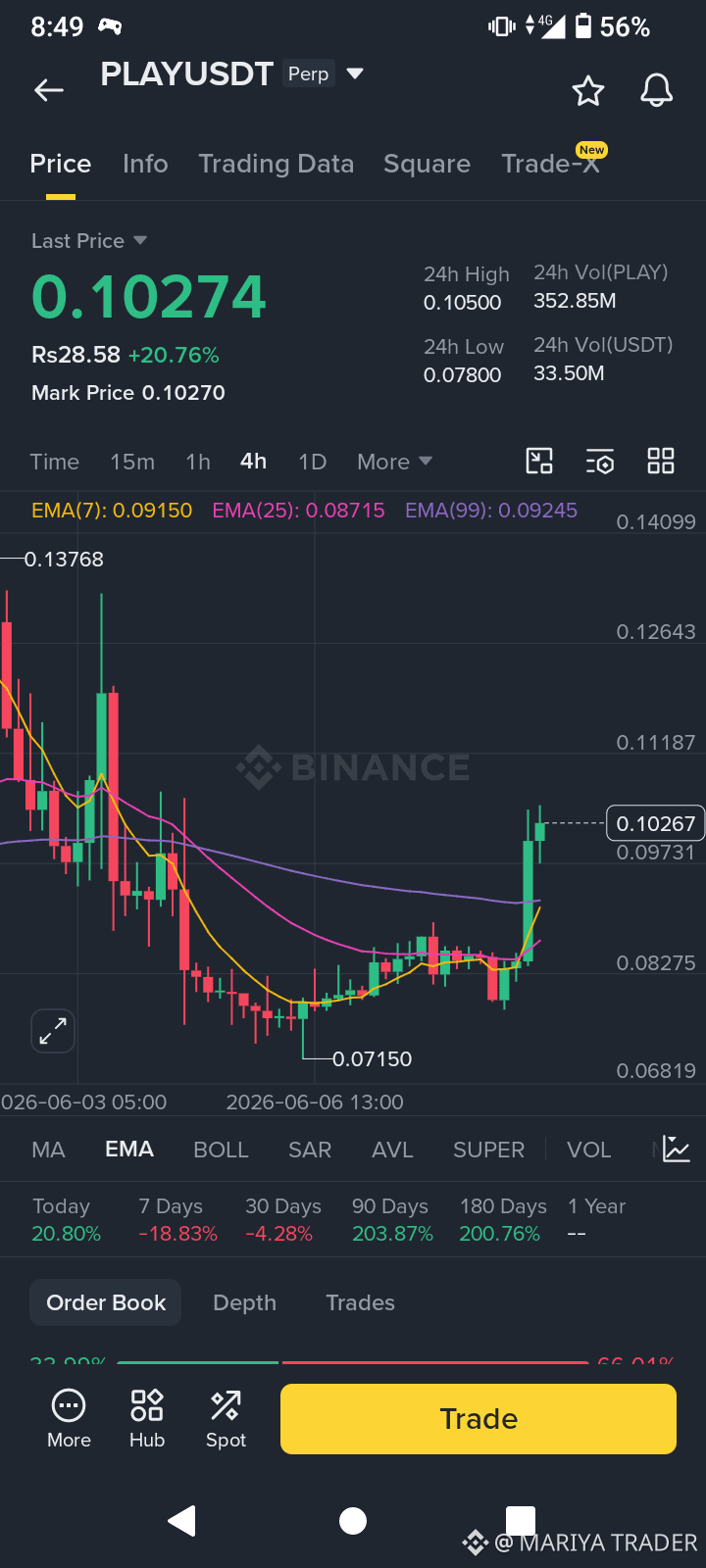
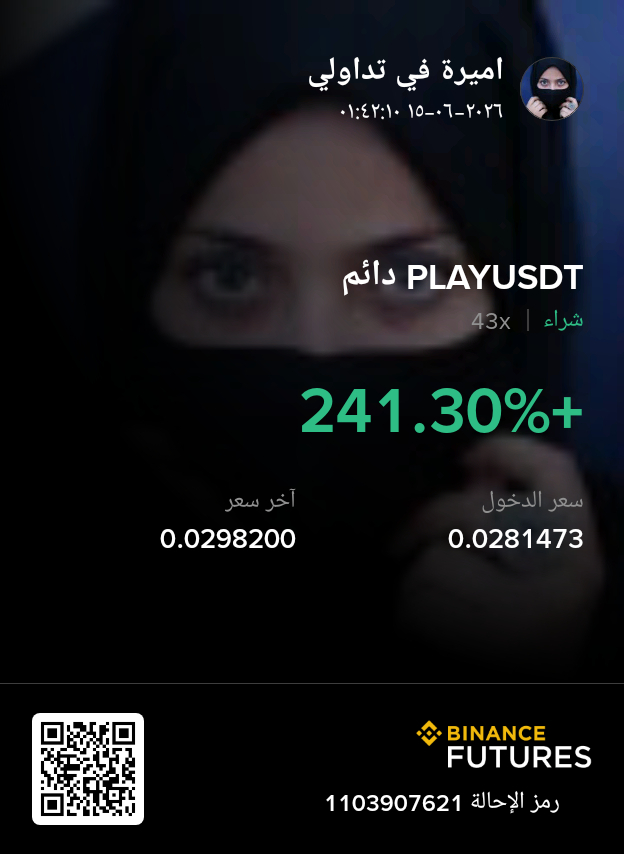
Oh man, oh man! Congrats to those who rode the wave, first target at 0.0331! $PLAY $SIREN SIREN CryptoCrash BinanceSquare Altcoins TradingTips BNBChai #SİREN #siren #Play2Earn #play
Oh man, oh man! Congrats to those who rode the wave, first target at 0.0331!
$PLAY
$SIREN
SIREN CryptoCrash BinanceSquare Altcoins TradingTips BNBChai
#SİREN
#siren
#Play2Earn
#play
·
--
Bullish
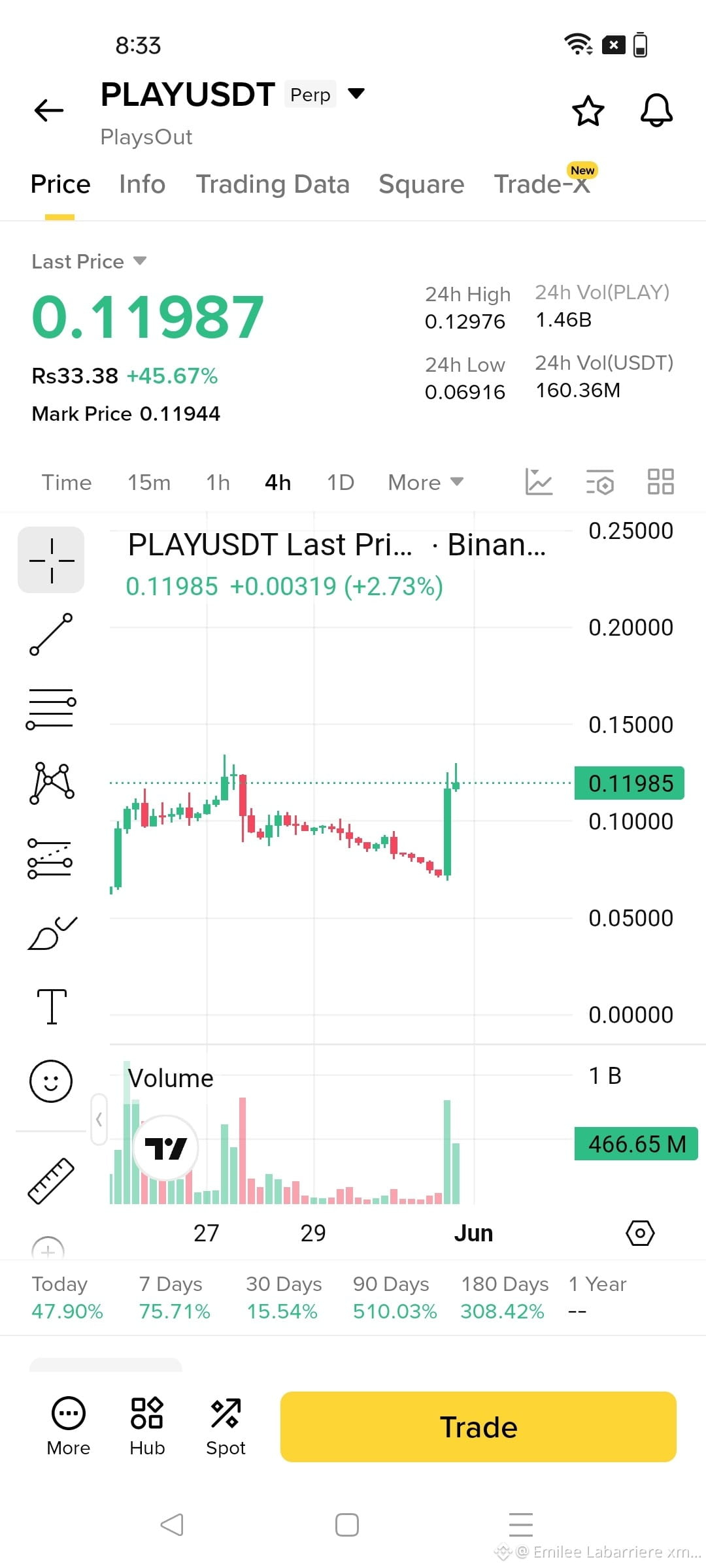
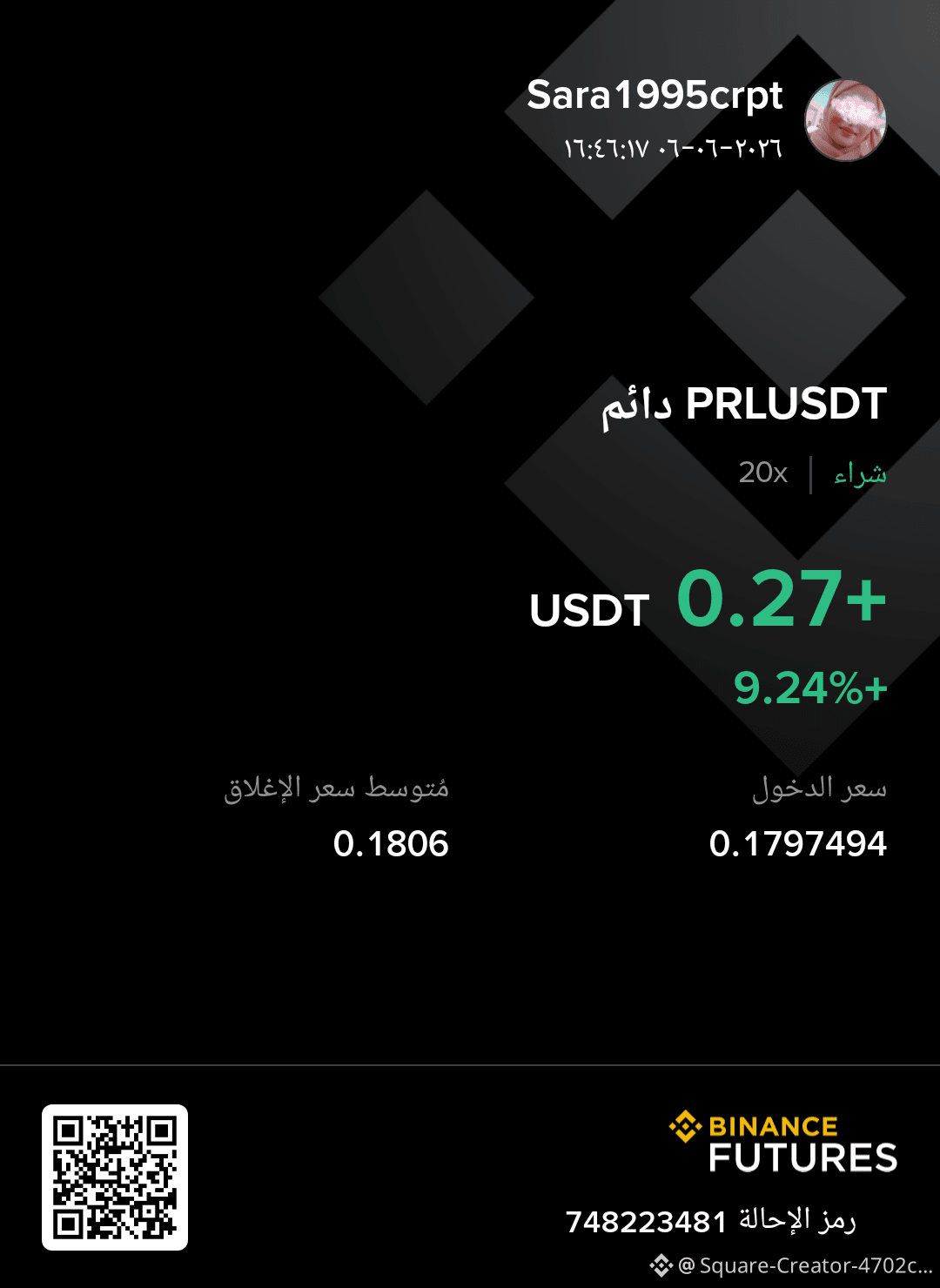
Get in on the buy $PLAY #Play2Earn , a crazy spike is coming! Jump in now, the sell-off time is over, it's time to ride the wave up $PLAY #Playdapp .

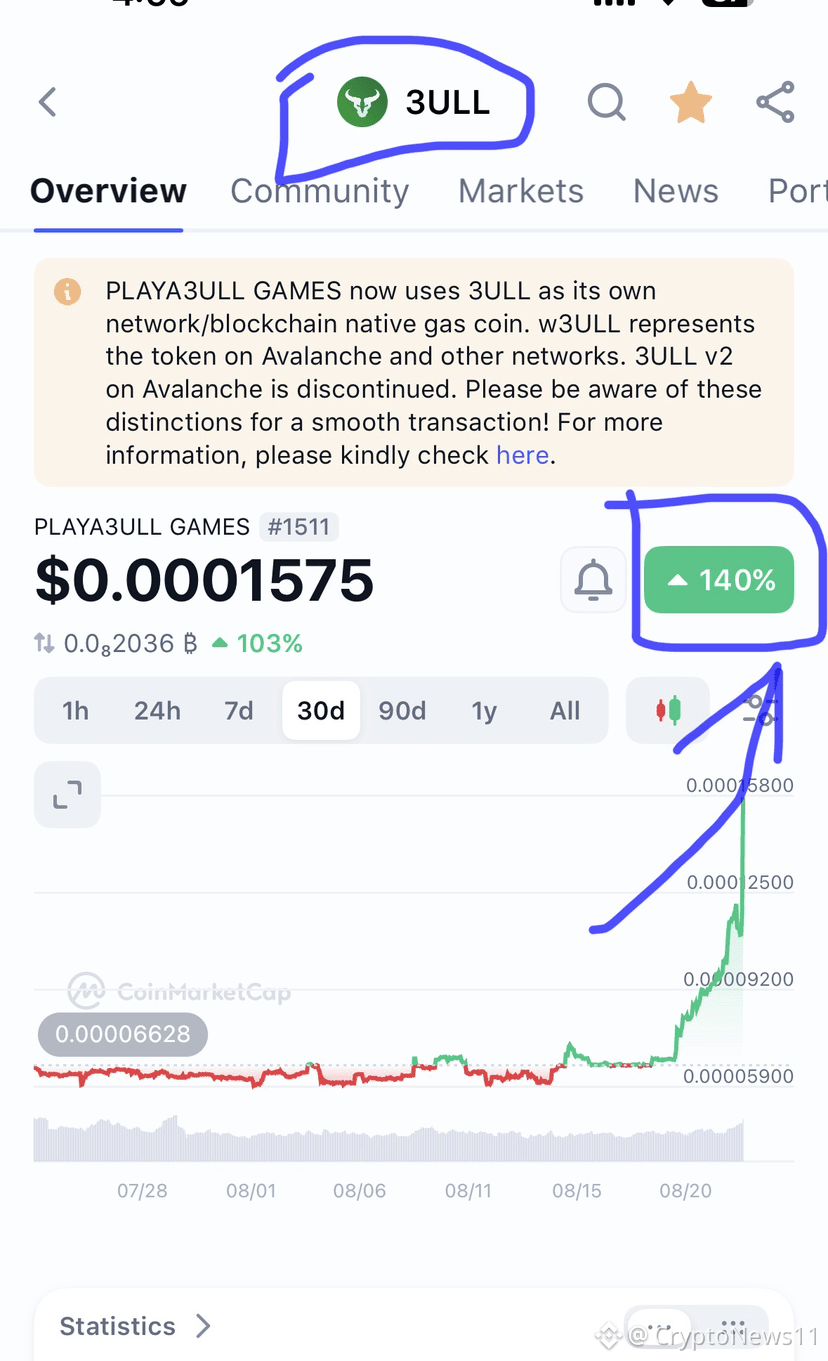
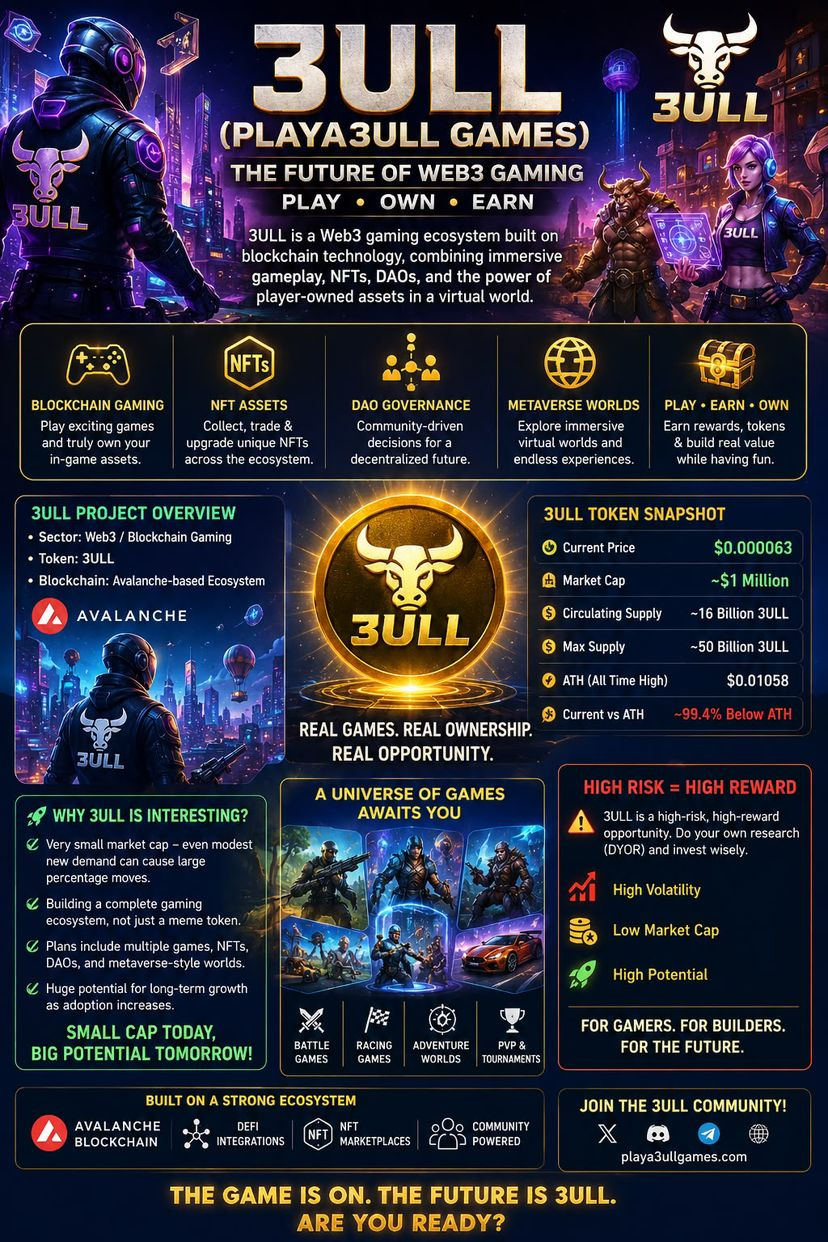
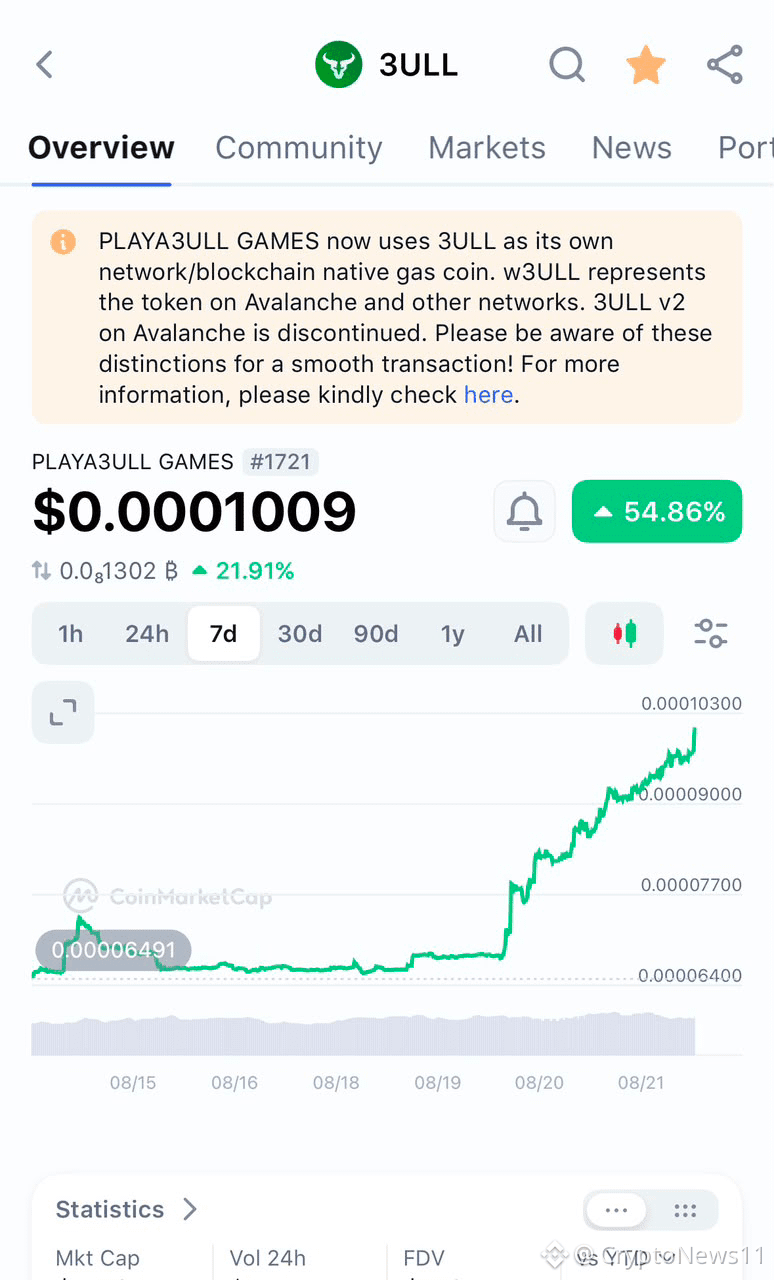
#Play2Earn Dont Miss 100x to 1000x🔥 #3ULL GAMING CRYPTO Price: about $0.00011$ 👉🏼 Market cap: $1.3M
#Play2Earn
Dont Miss 100x to 1000x🔥
#3ULL GAMING CRYPTO
Price: about $0.00011$
👉🏼 Market cap: $1.3M
Article
Stacked positioned itself against ad platforms and its own documentation describes an ad platform@pixels There is a diagram on Stacked's consumer-facing website that is worth looking at before reading anything else the platform has published about itself. On one side of the diagram sits the conventional model: Games pay Big Tech Ads, Big Tech Ads finds Users, and the User receives nothing. On the other side sits Stacked's proposed alternative, in which the value flows directly to the player rather than being captured by an intermediary. The framing is clean and the critique it makes of the existing model is not wrong. Ad platforms do extract value that never reaches the people whose attention made it possible. That is a fair observation about how the digital advertising economy works. The difficulty arrives when you open Stacked's own product documentation and read how the platform describes itself to the studios considering integration. The phrase that appears there is "all-in-one data platform." The documentation describes advanced user profiling, behavioural segmentation, audience targeting, and campaign optimisation. It describes a system that ingests player signals, builds models of player behaviour, and uses those models to determine which players receive which rewards at which moments. This is not a description of a neutral payment rail. It is a description of a data platform that monitors, classifies, and acts on user behaviour at scale. The question worth asking is what the meaningful difference is between that and the thing the consumer website diagram is positioned against. I want to think through this carefully rather than reach for an easy conclusion, because the distinction the platform is drawing is real even if the framing around it is strained. The difference between a system that extracts attention and sells it to advertisers and a system that uses behavioural data to deliver rewards to players is not nothing. The direction of value flow genuinely matters. But the direction of value flow is not the only dimension worth examining when you are thinking about what a behavioural data platform actually does and who it serves. It’s actually simpler to follow than it first sounds. A studio brings in the SDK. From that point, the platform is watching collecting signals about how players move through the game, what they buy, how long they stay, where they drop off. Those signals get sorted into audience groups. Someone flagged as a high-value spender sits in a different bucket than someone the model thinks is about to leave. The platform then uses those buckets to decide who gets a reward, when, and at what level. A player who falls into a high-value segment receives a different intervention than one flagged as at-risk of churning. The platform's AI layer is making decisions, in real time, about which players deserve which treatment based on a model of their behaviour that the player did not consent to, cannot inspect, and may not know exists. Now consider how a conventional ad platform works at each equivalent stage. A publisher integrates a tracking SDK. The platform ingests behavioural signals from users across its publisher network. It builds audience segments based on browsing behaviour, purchase history, and engagement patterns. It uses those segments to determine which ads to serve, at what price, to which users. The advertiser pays for access to the segment. The user receives the ad. The distinction the Stacked diagram is drawing is that in the conventional model the user receives nothing, while in the Stacked model the user receives a reward. That is a genuine distinction. What the diagram does not acknowledge is that both systems are doing the same thing to the user's behavioural data in the process of arriving at that different outcome. The argument Stacked might reasonably make is that being profiled in exchange for a reward is a better deal than being profiled in exchange for an ad, and this argument is not without merit. If the player is going to be profiled regardless of which platform they interact with, then receiving value from the profiling is better than receiving nothing. That is a coherent position. The problem is that it is a different argument from the one the consumer website is making. The website is positioning Stacked as an alternative to the extractive model. The documentation is describing a system that participates in the same data economy while redirecting a portion of the captured value downward rather than upward. These are not equivalent claims and they are not aimed at the same audience, which is itself worth noting. There is a further layer worth being direct about. The value of a behavioural data platform increases with the granularity and volume of the data it holds. A platform that profiles players across a single game is useful. A platform that profiles players across every game studio that has integrated its SDK, building a cross-game behavioural record tied to a wallet identity that persists across the ecosystem, is considerably more powerful. The Pixels reputation system, the cross-game identity layer, and the AI-driven segmentation that Stacked's documentation describes are all working toward that second kind of platform. The players receiving USDC rewards from this system are the data source that makes the platform valuable to the studios paying for it. The reward and the extraction are happening simultaneously rather than sequentially. I am not suggesting that this makes Stacked a bad product or a dishonest one. A platform that returns value to players while building a data asset is doing something genuinely different from one that returns nothing. The players inside the ecosystem are materially better off receiving rewards than they would be receiving ads. But the consumer website framing, which positions the platform as an escape from the attention economy rather than a reformed participation in it, is doing more rhetorical work than the product architecture can support. The meaningful difference between an extractive ad platform and a behavioural data platform that pays players is real but narrower than the diagram implies, and the narrowness of that gap is worth understanding before deciding how much weight to give the positioning. What I keep returning to is a question about who the consumer website is actually written for. Studios reading Stacked's technical documentation understand they are buying a data platform with targeting capabilities. Players reading the consumer positioning are being told they are escaping a system that exploited them. Whether those two descriptions of the same product can both be accurate at the same time, and what it means for the players' understanding of their own role in the economy they have been invited to join, is something the platform's current framing does not address directly.$PIXEL #pixel #stacked #Play2Earn #creatorpad

Stacked positioned itself against ad platforms and its own documentation describes an ad platform

@Pixels
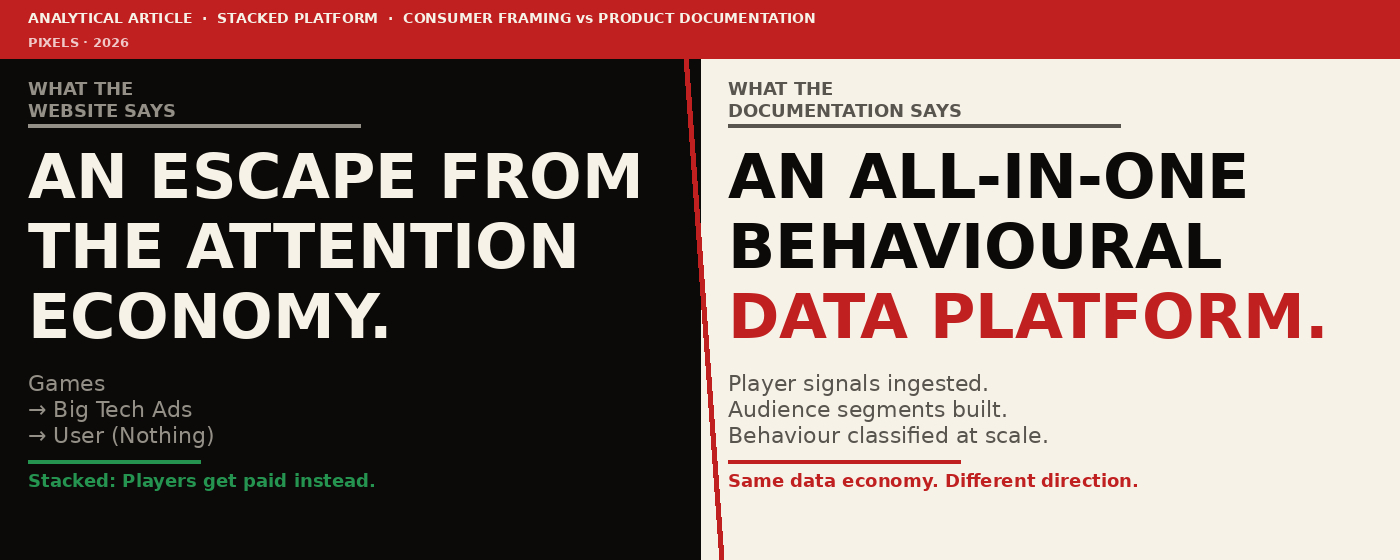
There is a diagram on Stacked's consumer-facing website that is worth looking at before reading anything else the platform has published about itself. On one side of the diagram sits the conventional model: Games pay Big Tech Ads, Big Tech Ads finds Users, and the User receives nothing. On the other side sits Stacked's proposed alternative, in which the value flows directly to the player rather than being captured by an intermediary. The framing is clean and the critique it makes of the existing model is not wrong. Ad platforms do extract value that never reaches the people whose attention made it possible. That is a fair observation about how the digital advertising economy works.
The difficulty arrives when you open Stacked's own product documentation and read how the platform describes itself to the studios considering integration. The phrase that appears there is "all-in-one data platform." The documentation describes advanced user profiling, behavioural segmentation, audience targeting, and campaign optimisation. It describes a system that ingests player signals, builds models of player behaviour, and uses those models to determine which players receive which rewards at which moments. This is not a description of a neutral payment rail. It is a description of a data platform that monitors, classifies, and acts on user behaviour at scale. The question worth asking is what the meaningful difference is between that and the thing the consumer website diagram is positioned against.
I want to think through this carefully rather than reach for an easy conclusion, because the distinction the platform is drawing is real even if the framing around it is strained. The difference between a system that extracts attention and sells it to advertisers and a system that uses behavioural data to deliver rewards to players is not nothing. The direction of value flow genuinely matters. But the direction of value flow is not the only dimension worth examining when you are thinking about what a behavioural data platform actually does and who it serves.
It’s actually simpler to follow than it first sounds. A studio brings in the SDK. From that point, the platform is watching collecting signals about how players move through the game, what they buy, how long they stay, where they drop off. Those signals get sorted into audience groups. Someone flagged as a high-value spender sits in a different bucket than someone the model thinks is about to leave. The platform then uses those buckets to decide who gets a reward, when, and at what level. A player who falls into a high-value segment receives a different intervention than one flagged as at-risk of churning. The platform's AI layer is making decisions, in real time, about which players deserve which treatment based on a model of their behaviour that the player did not consent to, cannot inspect, and may not know exists.
Now consider how a conventional ad platform works at each equivalent stage. A publisher integrates a tracking SDK. The platform ingests behavioural signals from users across its publisher network. It builds audience segments based on browsing behaviour, purchase history, and engagement patterns. It uses those segments to determine which ads to serve, at what price, to which users. The advertiser pays for access to the segment. The user receives the ad. The distinction the Stacked diagram is drawing is that in the conventional model the user receives nothing, while in the Stacked model the user receives a reward. That is a genuine distinction. What the diagram does not acknowledge is that both systems are doing the same thing to the user's behavioural data in the process of arriving at that different outcome.
The argument Stacked might reasonably make is that being profiled in exchange for a reward is a better deal than being profiled in exchange for an ad, and this argument is not without merit. If the player is going to be profiled regardless of which platform they interact with, then receiving value from the profiling is better than receiving nothing. That is a coherent position. The problem is that it is a different argument from the one the consumer website is making. The website is positioning Stacked as an alternative to the extractive model. The documentation is describing a system that participates in the same data economy while redirecting a portion of the captured value downward rather than upward. These are not equivalent claims and they are not aimed at the same audience, which is itself worth noting.
There is a further layer worth being direct about. The value of a behavioural data platform increases with the granularity and volume of the data it holds. A platform that profiles players across a single game is useful. A platform that profiles players across every game studio that has integrated its SDK, building a cross-game behavioural record tied to a wallet identity that persists across the ecosystem, is considerably more powerful. The Pixels reputation system, the cross-game identity layer, and the AI-driven segmentation that Stacked's documentation describes are all working toward that second kind of platform. The players receiving USDC rewards from this system are the data source that makes the platform valuable to the studios paying for it. The reward and the extraction are happening simultaneously rather than sequentially.
I am not suggesting that this makes Stacked a bad product or a dishonest one. A platform that returns value to players while building a data asset is doing something genuinely different from one that returns nothing. The players inside the ecosystem are materially better off receiving rewards than they would be receiving ads. But the consumer website framing, which positions the platform as an escape from the attention economy rather than a reformed participation in it, is doing more rhetorical work than the product architecture can support. The meaningful difference between an extractive ad platform and a behavioural data platform that pays players is real but narrower than the diagram implies, and the narrowness of that gap is worth understanding before deciding how much weight to give the positioning.
What I keep returning to is a question about who the consumer website is actually written for. Studios reading Stacked's technical documentation understand they are buying a data platform with targeting capabilities. Players reading the consumer positioning are being told they are escaping a system that exploited them. Whether those two descriptions of the same product can both be accurate at the same time, and what it means for the players' understanding of their own role in the economy they have been invited to join, is something the platform's current framing does not address directly.$PIXEL
#pixel #stacked #Play2Earn
#creatorpad
Everyone chased play-to-earn… then most gave up. But something different is happening with Pixels$PIXEL isn’t built for quick flips—it’s built for compounding. The Stacked ecosystem changes how value flows: you play, you earn, then you reinvest and scale. Farming, crafting, trading—every move feeds a loop designed for long-term growth, not short-term hype. The real shift? Players becoming builders. Instead of extracting value, they’re stacking it. And early participants are already seeing the advantage of positioning before the crowd catches on. @pixels isn’t loud… it’s strategic. And in this game, strategy wins. #pixel #Play2Earn #CreaterPadChallenge {spot}(PIXELUSDT)

Everyone chased play-to-earn… then most gave up. But something different is happening with Pixels

$PIXEL isn’t built for quick flips—it’s built for compounding. The Stacked ecosystem changes how value flows: you play, you earn, then you reinvest and scale. Farming, crafting, trading—every move feeds a loop designed for long-term growth, not short-term hype.
The real shift? Players becoming builders. Instead of extracting value, they’re stacking it. And early participants are already seeing the advantage of positioning before the crowd catches on.
@Pixels isn’t loud… it’s strategic.
And in this game, strategy wins.
#pixel #Play2Earn #CreaterPadChallenge
·
--
Bearish
·
--
Bearish
Market remains highly reactive as liquidity sweeps continue across multiple mid-cap assets 💥 Fast moves are dominating price action, leaving little room for hesitation 👀 $PLAY {future}(PLAYUSDT) 🔴 LIQUIDITY ZONE HIT 🔴 Long liquidation spotted 🧨 $3.0686K cleared at $0.0738 Downside liquidity swept — react NOW or watch the market shift 👀 🎯 TP Targets: TP1: ~$0.0733 TP2: ~$0.0728 TP3: ~$0.0722 #Play2Earn
Market remains highly reactive as liquidity sweeps continue across multiple mid-cap assets 💥
Fast moves are dominating price action, leaving little room for hesitation 👀
$PLAY
🔴 LIQUIDITY ZONE HIT 🔴
Long liquidation spotted 🧨
$3.0686K cleared at $0.0738
Downside liquidity swept — react NOW or watch the market shift 👀
🎯 TP Targets:
TP1: ~$0.0733
TP2: ~$0.0728
TP3: ~$0.0722
#Play2Earn

Article
Is $PIXEL Still a Game… or the Start of a Player-Owned Economy?I’ve been thinking about my small position in $PIXEL , not the price, but what this thing is actually becoming. I didn’t go heavy in, just tested a bit after reading through their docs, because honestly I wasn’t sure if it’s still “just a game” or something bigger. After spending time digging into @pixels , it stopped looking like a typical Web3 game to me. It feels more like an ecosystem trying to turn player activity into real value. That shift is subtle, but important. Most games chase attention and sell it somewhere else. Pixels is trying to route that value back to players directly. Play, engage, contribute, and you earn. Simple on the surface, but structurally different. One thing that stood out to me is how much they rely on data. The system tracks behavior, retention, spending patterns | not just for analytics, but to actually shape rewards and outcomes. That’s powerful because it makes the economy less random. But yeah, I did hesitate here… if everything becomes too optimized, does the “game” part lose its unpredictability? From a builder perspective, it’s even more interesting. Their infrastructure lets other games plug in, almost like joining a shared economy. That’s where I think the real upside is. It’s not one game trying to win, it’s a network effect forming. I won’t pretend I’m fully convinced yet. My position is still small, and I’ve been wrong before chasing “big narratives.” But this doesn’t feel like pure hype. It feels like an experiment in turning games into engagement economies. If it works, growth won’t come from ads or inflated metrics — it’ll come from players who actually stay. And that’s much harder to fake. #Pixel #NFT #web3gaming #play2earn #PIXEL📈

Is $PIXEL Still a Game… or the Start of a Player-Owned Economy?

I’ve been thinking about my small position in $PIXEL , not the price, but what this thing is actually becoming. I didn’t go heavy in, just tested a bit after reading through their docs, because honestly I wasn’t sure if it’s still “just a game” or something bigger.
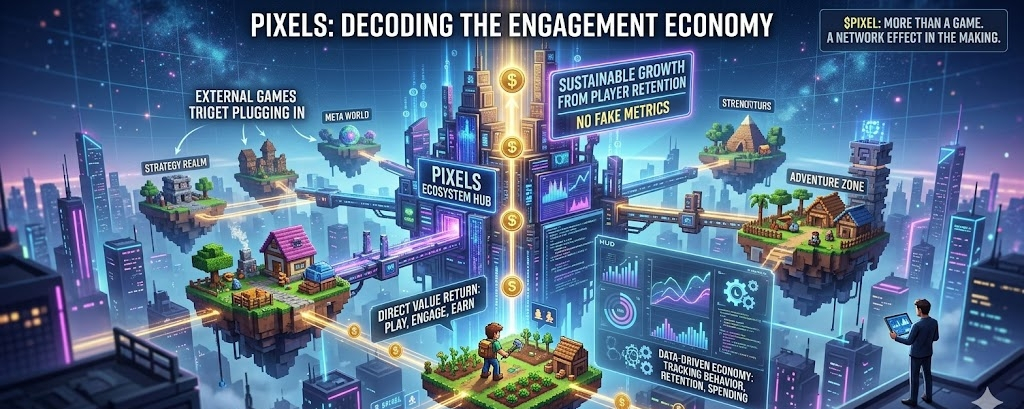
After spending time digging into @Pixels , it stopped looking like a typical Web3 game to me. It feels more like an ecosystem trying to turn player activity into real value. That shift is subtle, but important. Most games chase attention and sell it somewhere else. Pixels is trying to route that value back to players directly. Play, engage, contribute, and you earn. Simple on the surface, but structurally different.
One thing that stood out to me is how much they rely on data. The system tracks behavior, retention, spending patterns | not just for analytics, but to actually shape rewards and outcomes. That’s powerful because it makes the economy less random. But yeah, I did hesitate here… if everything becomes too optimized, does the “game” part lose its unpredictability?
From a builder perspective, it’s even more interesting. Their infrastructure lets other games plug in, almost like joining a shared economy. That’s where I think the real upside is. It’s not one game trying to win, it’s a network effect forming.
I won’t pretend I’m fully convinced yet. My position is still small, and I’ve been wrong before chasing “big narratives.” But this doesn’t feel like pure hype. It feels like an experiment in turning games into engagement economies.
If it works, growth won’t come from ads or inflated metrics — it’ll come from players who actually stay. And that’s much harder to fake.
#Pixel #NFT #web3gaming #play2earn #PIXEL📈
·
--
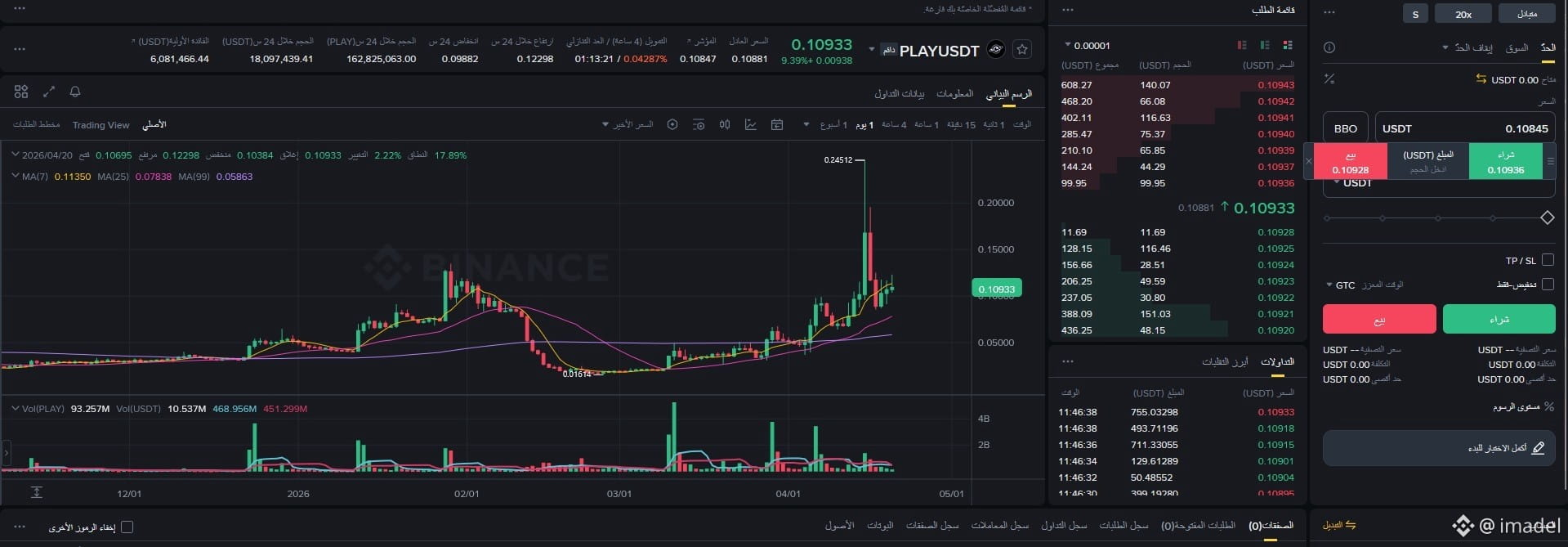
$PLAY PLAY currency in April 2026: Liquidity Challenges and Geopolitical Pressures of "Hormuz" On this day, Monday, April 20, 2026, PLAY currency holders are facing a day full of challenges with the opening of weekly trading. While digital gaming projects (GameFi) are trying to regain momentum, the escalating tensions in the Strait of Hormuz have cast a shadow over high-risk assets, pushing liquidity towards safe havens and directly impacting the performance of small altcoins. Current Market Situation (Update April 20) Live data today shows that PLAY currency is undergoing a technical correction due to the general market anxiety: Current Price: The currency is trading at levels close to $0.00017377. Daily Performance: The currency recorded a decline of 4.08% over the past 24 hours, touching its lowest levels in two days. Liquidity and Market Capitalization: The project's market capitalization has stabilized at around $129.30 thousand, with low trading volume reflecting the "wait and see" stance adopted by investors today. Technical Outlook: Traders are monitoring the critical support level at $0.00017301; this level represents the last floor preventing the currency from slipping towards uncharted lower levels. $PLAY #play #Play-To-Earn #Play2Earn
$PLAY PLAY currency in April 2026: Liquidity Challenges and Geopolitical Pressures of "Hormuz"
On this day, Monday, April 20, 2026, PLAY currency holders are facing a day full of challenges with the opening of weekly trading. While digital gaming projects (GameFi) are trying to regain momentum, the escalating tensions in the Strait of Hormuz have cast a shadow over high-risk assets, pushing liquidity towards safe havens and directly impacting the performance of small altcoins.
Current Market Situation (Update April 20)
Live data today shows that PLAY currency is undergoing a technical correction due to the general market anxiety:
Current Price: The currency is trading at levels close to $0.00017377.
Daily Performance: The currency recorded a decline of 4.08% over the past 24 hours, touching its lowest levels in two days.
Liquidity and Market Capitalization: The project's market capitalization has stabilized at around $129.30 thousand, with low trading volume reflecting the "wait and see" stance adopted by investors today.
Technical Outlook: Traders are monitoring the critical support level at $0.00017301; this level represents the last floor preventing the currency from slipping towards uncharted lower levels.
$PLAY #play #Play-To-Earn #Play2Earn
·
--
Bullish
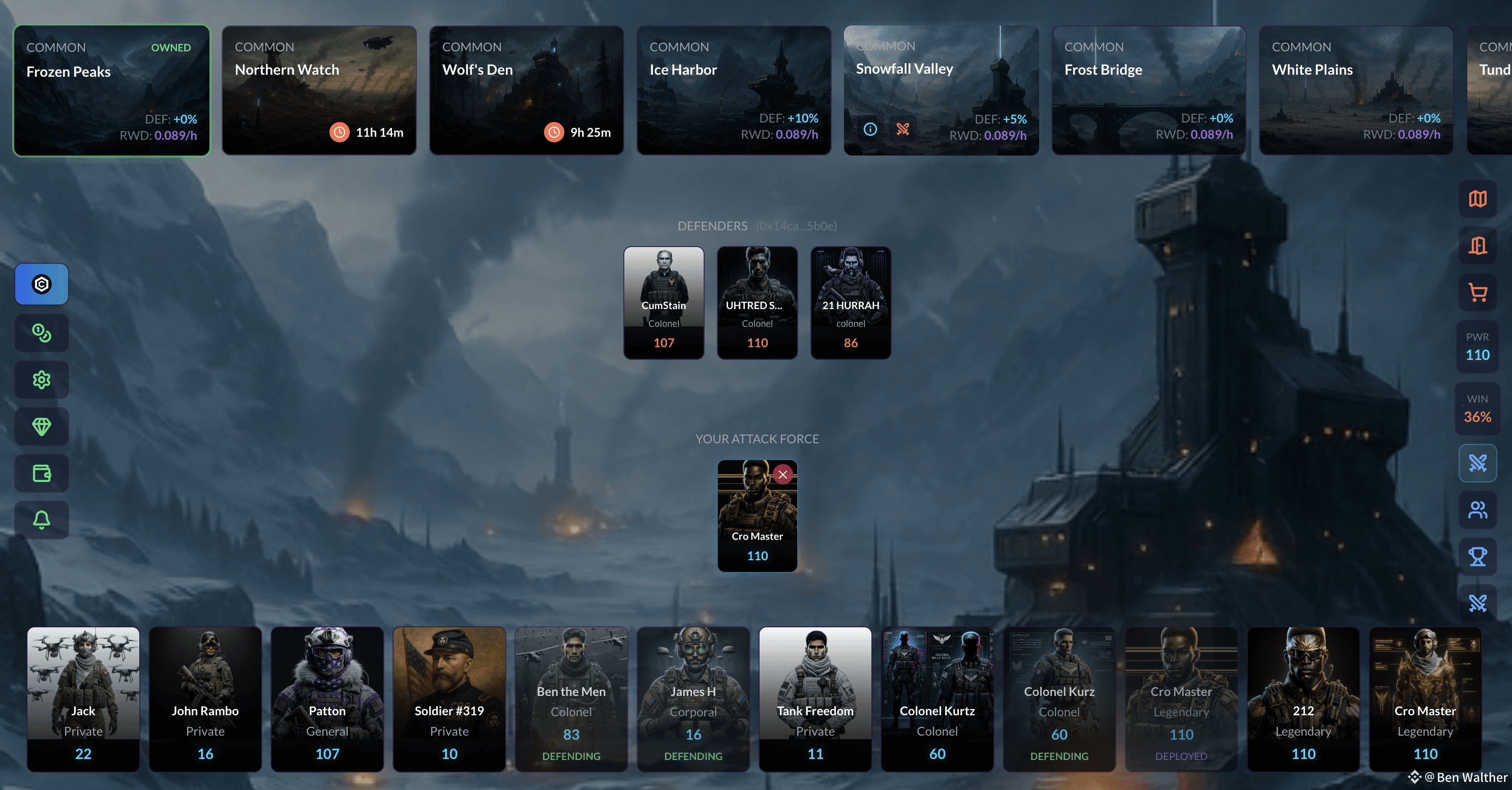
🚨 It’s LIVE — and it changes everything. We just launched the new Cronos Army gameplay UI, and it completely transforms the on-chain gaming experience: 🎮 A full battlefield redesign — immersive, dark, futuristic ⚡ Lightning-fast gameplay & smoother player experience 🧠 Built as the foundation for AI-driven Soldiers (next update) 🌍 Structured for cross-chain expansion —> BNB Chain 💡 Why this matters for Binance users: We’re not just launching another game — we’re building a full AI-powered, P2E strategy universe that will land on BNBChain next. ✅ Players will be able to: 🔥 Play directly from the Binance App 🪙 Use $BNB to mint, train, and conquer 🎯 Earn, fight, and progress inside a living AI-NFT ecosystem 💥 All fueled by our CA token Next milestones: ✅ AI Soldiers (first AI-driven NFTs that fight & evolve) ✅ BNB Chain expansion ✅ Wallet-less onboarding ✅ New gameplay leagues & commander mode 🚀 We’re entering the next phase — and soon, the BNB community will too. #GamingRevolution #Play2Earn @BSCDaily @Binance_Square_Official
🚨 It’s LIVE — and it changes everything.

We just launched the new Cronos Army gameplay UI, and it completely transforms the on-chain gaming experience:

🎮 A full battlefield redesign — immersive, dark, futuristic
⚡ Lightning-fast gameplay & smoother player experience
🧠 Built as the foundation for AI-driven Soldiers (next update)
🌍 Structured for cross-chain expansion —> BNB Chain

💡 Why this matters for Binance users:
We’re not just launching another game — we’re building a full AI-powered, P2E strategy universe that will land on BNBChain next.

✅ Players will be able to:
🔥 Play directly from the Binance App
🪙 Use $BNB to mint, train, and conquer
🎯 Earn, fight, and progress inside a living AI-NFT ecosystem
💥 All fueled by our CA token

Next milestones:
✅ AI Soldiers (first AI-driven NFTs that fight & evolve)
✅ BNB Chain expansion
✅ Wallet-less onboarding
✅ New gameplay leagues & commander mode

🚀 We’re entering the next phase — and soon, the BNB community will too.

#GamingRevolution #Play2Earn @BSCDaily @Binance Square Official
I just finished playing pixel games again. But... one thing still lingers. I see a sea of avatars bustling. Thousands of people running. Left and right. But I feel chills. It feels so lonely. Silent. Strange. I try to greet. "Hello guys" I said. No one answers. No reaction. They just pass through me like hungry ghosts. Hungry for yield. Thirsty for tokens. This is a social game. Open world. That's what the developer @pixels said. But where's the social aspect???? Where's the warm laughter?? Everyone has become robots. Time has become a burden. I feel that chatting there is a waste. Typing just wastes seconds. Those seconds are $PIXEL . That game used to be fun. A place to find friends. Now? It's an office. An office without a boss. But full of pressure. I look around. Many names. Numbers. Random letter combinations. Maybe they are bots. Or humans??? It's hard for me to distinguish. I feel they are no longer playing. But just working. Digital slave labor. Without retirement security. The world $PIXEL is cool. The graphics are really cute. But the soul is gone. Swallowed by FOMO. Swallowed by the thirst for profit. We exchange energy. Not stories. We exchange items. Not laughter. I take a breath. Turn off the screen for a moment. I ask myself again. Did I come here to find new friends? Or to make a living? #pixel #web3gaming #Play2Earn #GamingTokens
I just finished playing pixel games again. But... one thing still lingers.

I see a sea of avatars bustling. Thousands of people running. Left and right.

But I feel chills. It feels so lonely. Silent. Strange.

I try to greet. "Hello guys" I said. No one answers. No reaction.

They just pass through me like hungry ghosts. Hungry for yield. Thirsty for tokens.

This is a social game. Open world. That's what the developer @Pixels said.

But where's the social aspect???? Where's the warm laughter?? Everyone has become robots.

Time has become a burden.

I feel that chatting there is a waste. Typing just wastes seconds. Those seconds are $PIXEL .

That game used to be fun. A place to find friends.

Now? It's an office. An office without a boss. But full of pressure.

I look around. Many names. Numbers. Random letter combinations. Maybe they are bots. Or humans??? It's hard for me to distinguish.

I feel they are no longer playing. But just working. Digital slave labor. Without retirement security.

The world $PIXEL is cool. The graphics are really cute. But the soul is gone.

Swallowed by FOMO. Swallowed by the thirst for profit.

We exchange energy. Not stories.
We exchange items. Not laughter.

I take a breath. Turn off the screen for a moment.

I ask myself again. Did I come here to find new friends? Or to make a living?

#pixel #web3gaming #Play2Earn #GamingTokens

Article
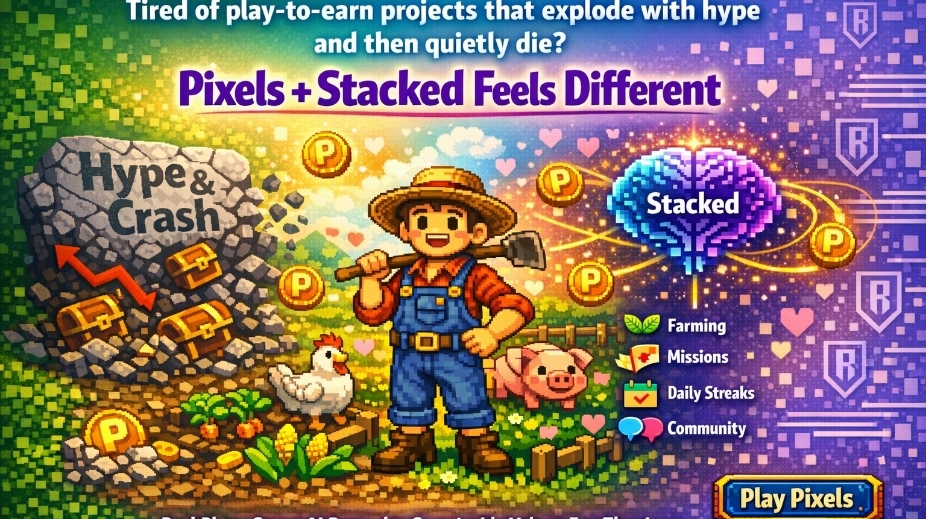
Tired of those play-to-earn projects that explode with hype and then quietly die? I get it. Most ofBut Pixels + Stacked feels genuinely different — and way more promising. Stacked is the clever AI brain behind the rewards. It doesn’t shower you with tokens for mindless grinding. Instead, it smartly rewards real play: farming your land, completing fun missions, keeping daily streaks, and actually contributing to the community. The result? Meaningful $PIXEL earnings that don’t vanish after a week. Inside Pixels’ cozy pixel world on Ronin, you grow crops, raise animals, explore, and hang out with friends. It feels like the relaxing farming games we grew up loving — except this time your progress and assets are truly yours. No forced hustle. No collapsing economy. Just fun gameplay with sustainable rewards baked in through Stacked. If you’re craving web3 gaming that’s enjoyable today and still rewarding months from now, this might be exactly what you’ve been waiting for. Ready to grow something real? {spot}(PIXELUSDT) @pixels $PIXEL #pixel #Web3 #Play2Earn

Tired of those play-to-earn projects that explode with hype and then quietly die? I get it. Most of

But Pixels + Stacked feels genuinely different — and way more promising.
Stacked is the clever AI brain behind the rewards. It doesn’t shower you with tokens for mindless grinding. Instead, it smartly rewards real play: farming your land, completing fun missions, keeping daily streaks, and actually contributing to the community. The result? Meaningful $PIXEL earnings that don’t vanish after a week.
Inside Pixels’ cozy pixel world on Ronin, you grow crops, raise animals, explore, and hang out with friends. It feels like the relaxing farming games we grew up loving — except this time your progress and assets are truly yours.
No forced hustle. No collapsing economy. Just fun gameplay with sustainable rewards baked in through Stacked.
If you’re craving web3 gaming that’s enjoyable today and still rewarding months from now, this might be exactly what you’ve been waiting for.
Ready to grow something real?
@Pixels $PIXEL #pixel #Web3 #Play2Earn
🎮 Pixels is way more than just a game — it’s a living economy. On @Pixels, every action counts: farming, building, trading... everything generates real value thanks to $PIXEL. The Stacked ecosystem takes this logic further by allowing players to grow their assets directly within the game. What fascinates me? We’re no longer just players — we become economic actors in a virtual world that has very real rules. The $PIXEL isn’t just a token, it’s the fuel for a new way to play AND earn. If you haven’t explored Pixels yet, now’s the time. 👉 https://www.binance.com/fr/square/profile #pixels #PIXEL📈 #Pixels‬⁩ #GAMEFI: #Play2Earn #BinanceSquare
🎮 Pixels is way more than just a game — it’s a living economy.
On @Pixels, every action counts: farming, building, trading... everything generates real value thanks to $PIXEL . The Stacked ecosystem takes this logic further by allowing players to grow their assets directly within the game.
What fascinates me? We’re no longer just players — we become economic actors in a virtual world that has very real rules. The $PIXEL isn’t just a token, it’s the fuel for a new way to play AND earn.
If you haven’t explored Pixels yet, now’s the time. 👉 https://www.binance.com/fr/square/profile

#pixels
#PIXEL📈 #Pixels‬⁩ #GAMEFI: #Play2Earn #BinanceSquare
Article
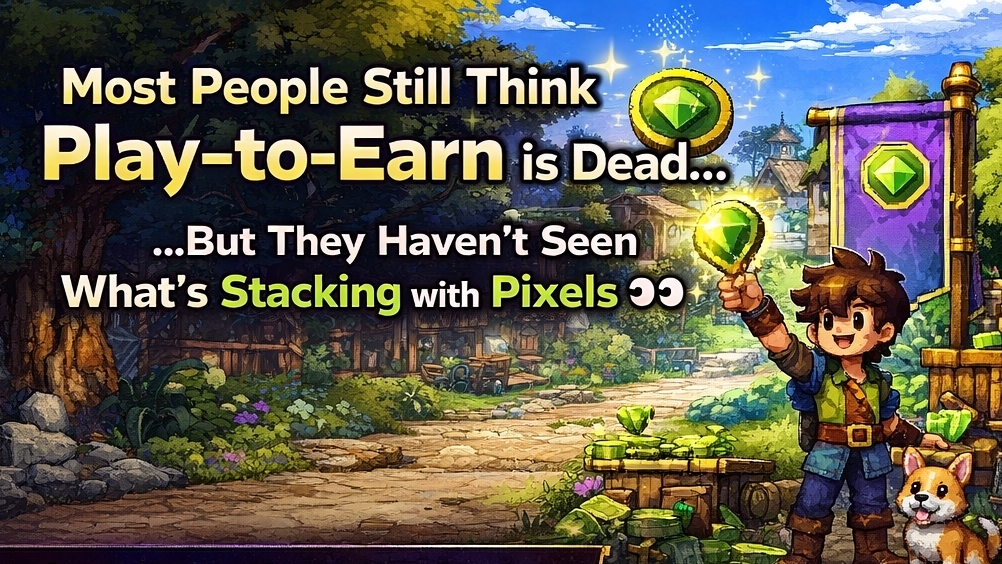
Most people still think play-to-earn is dead… but they haven’t seen what Pixels is building 👀$PIXEL flips the script. This isn’t just “play and cash out”—it’s a full Stacked ecosystem where you earn, reinvest, and compound like a real economy. Every action in-game has purpose: farming, building, trading all feeding into long term growth. The smartest players aren’t chasing quick wins… they’re stacking rewards and positioning early. That’s the real edge. @pixels is quietly turning gamers into strategists. This isn’t hype. It’s a system. #pixel #Web3 #Play2Earn

Most people still think play-to-earn is dead… but they haven’t seen what Pixels is building 👀

$PIXEL flips the script. This isn’t just “play and cash out”—it’s a full Stacked ecosystem where you earn, reinvest, and compound like a real economy. Every action in-game has purpose: farming, building, trading all feeding into long term growth.
The smartest players aren’t chasing quick wins… they’re stacking rewards and positioning early. That’s the real edge.
@Pixels is quietly turning gamers into strategists.
This isn’t hype. It’s a system. #pixel #Web3 #Play2Earn
Log in to explore more content
Join global crypto users on Binance Square
⚡️ Get latest and useful information about crypto.
💬 Trusted by the world’s largest crypto exchange.
👍 Discover real insights from verified creators.
Email / Phone number