

#bitcoinetf
bitcoinetf
1.9M views
4,770 Discussing
Hot
Latest

Is Bitcoin cooling down after a huge Q3?
Just saw this data: $6.34B flowed into Bitcoin ETFs in Q3, pushing BTC up 42.7%! 🚀
But September inflows dropped by 25% compared to August. Does this mean the bull run is slowing down, or is this just a healthy pause before the next big move?
What do you think? Are we heading for another leg up or a cooldown? 👇
$BTC #bitcoin #BitcoinETF
Is Bitcoin cooling down after a huge Q3?
Just saw this data: $6.34B flowed into Bitcoin ETFs in Q3, pushing BTC up 42.7%! 🚀
But September inflows dropped by 25% compared to August. Does this mean the bull run is slowing down, or is this just a healthy pause before the next big move?
What do you think? Are we heading for another leg up or a cooldown? 👇
$BTC #bitcoin #BitcoinETF
Just saw this data: $6.34B flowed into Bitcoin ETFs in Q3, pushing BTC up 42.7%! 🚀
But September inflows dropped by 25% compared to August. Does this mean the bull run is slowing down, or is this just a healthy pause before the next big move?
What do you think? Are we heading for another leg up or a cooldown? 👇
$BTC #bitcoin #BitcoinETF
I am pro 2:
I follow you please follow back broo
1
1
292

ETF Outflows Signal Temporary Cooling
Spot Bitcoin ETFs saw $90M in outflows as BTC slipped below $86,000, leaving the price roughly 32% below its October 2025 peak.
#BitcoinETF #ETFOutflows
ETF Outflows Signal Temporary Cooling
Spot Bitcoin ETFs saw $90M in outflows as BTC slipped below $86,000, leaving the price roughly 32% below its October 2025 peak.
#BitcoinETF #ETFOutflows
Spot Bitcoin ETFs saw $90M in outflows as BTC slipped below $86,000, leaving the price roughly 32% below its October 2025 peak.
#BitcoinETF #ETFOutflows

14

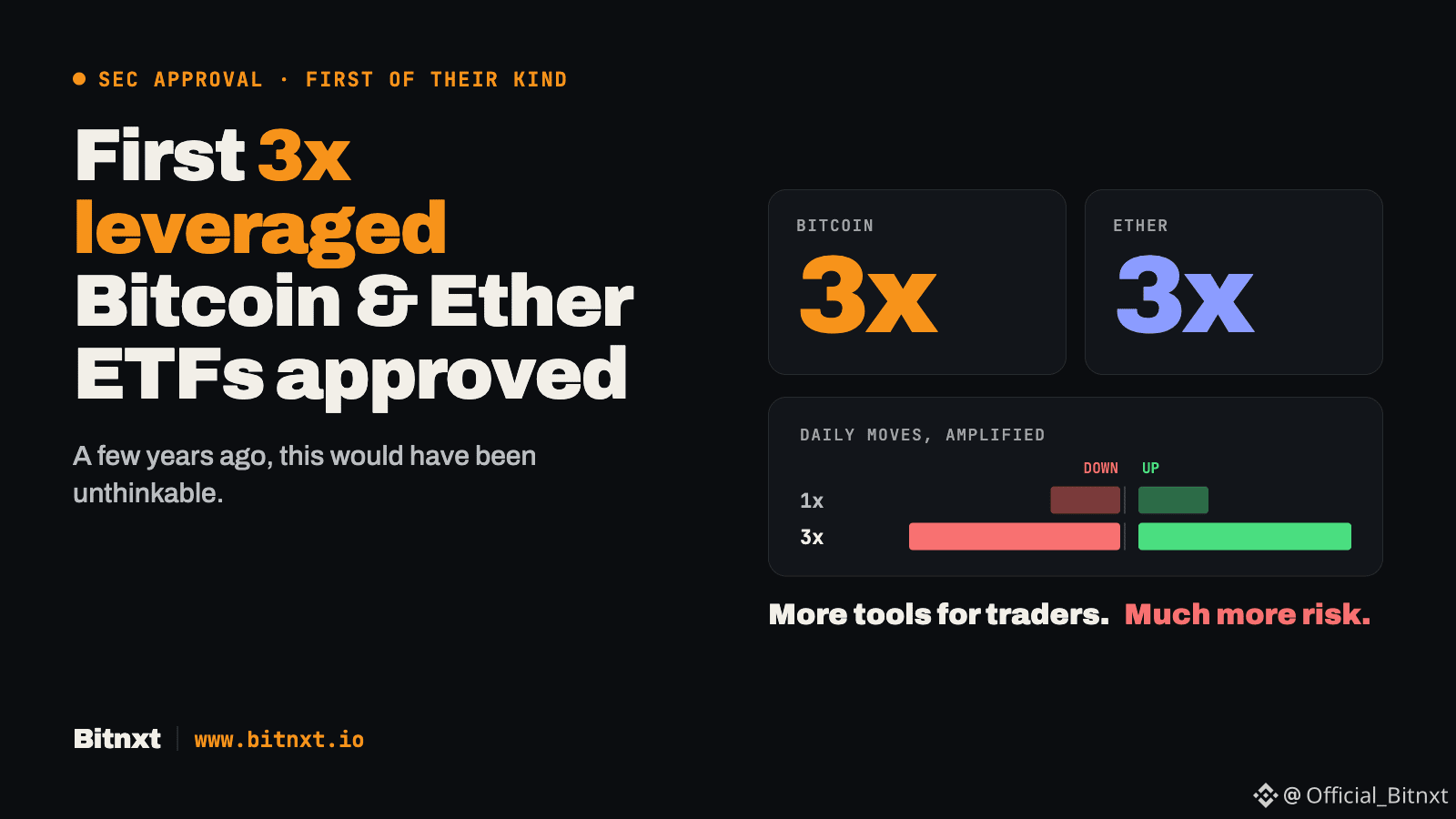
The SEC has approved listings for the first 3x leveraged Bitcoin and Ether ETFs ⚡
A few years ago, this would have been unthinkable.
More tools for traders, and much more risk.
#BitcoinETF #SEC #crypto
The SEC has approved listings for the first 3x leveraged Bitcoin and Ether ETFs ⚡
A few years ago, this would have been unthinkable.
More tools for traders, and much more risk.
#BitcoinETF #SEC #crypto
A few years ago, this would have been unthinkable.
More tools for traders, and much more risk.
#BitcoinETF #SEC #crypto
1
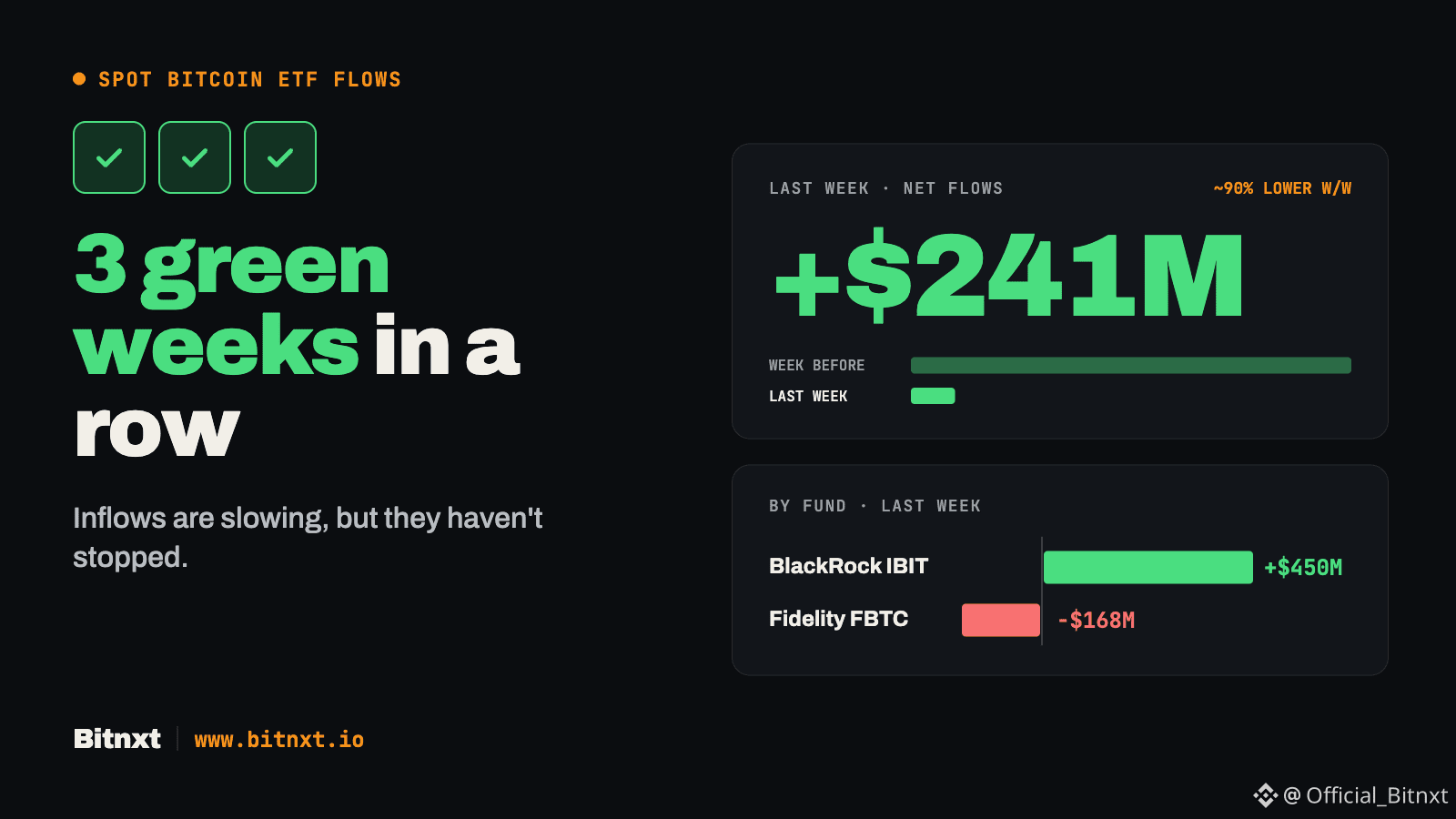
Bitcoin ETFs: 3 green weeks in a row ✅
+$241M last week, about 90% less than the week before BlackRock's IBIT: +$450M Fidelity's FBTC: −$168M
Inflows are slowing, but they haven't stopped.
#BitcoinETF #IBIT #bitcoin
$BTC
{spot}(BTCUSDT)
Bitcoin ETFs: 3 green weeks in a row ✅
+$241M last week, about 90% less than the week before BlackRock's IBIT: +$450M Fidelity's FBTC: −$168M
Inflows are slowing, but they haven't stopped.
#BitcoinETF #IBIT #bitcoin
$BTC
+$241M last week, about 90% less than the week before BlackRock's IBIT: +$450M Fidelity's FBTC: −$168M
Inflows are slowing, but they haven't stopped.
#BitcoinETF #IBIT #bitcoin
$BTC
100

·
--
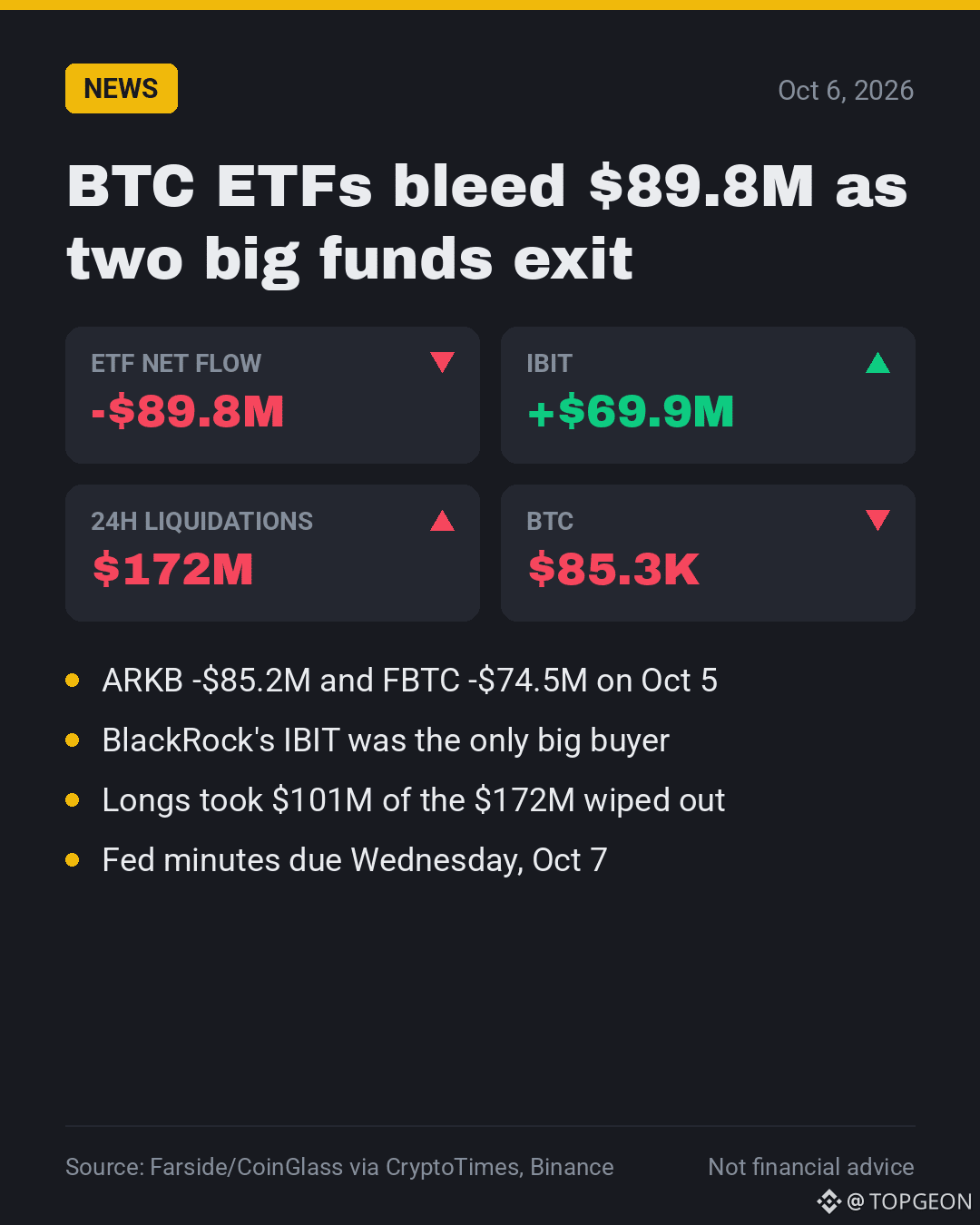
📊 $BTC ETFs lost $89.8M yesterday, yet IBIT kept buying
1️⃣ ARKB -$85.2M and FBTC -$74.5M on Oct 5
2️⃣ BlackRock's IBIT took in +$69.9M against the tide
3️⃣ $172M liquidated in 24h, $101M of it longs
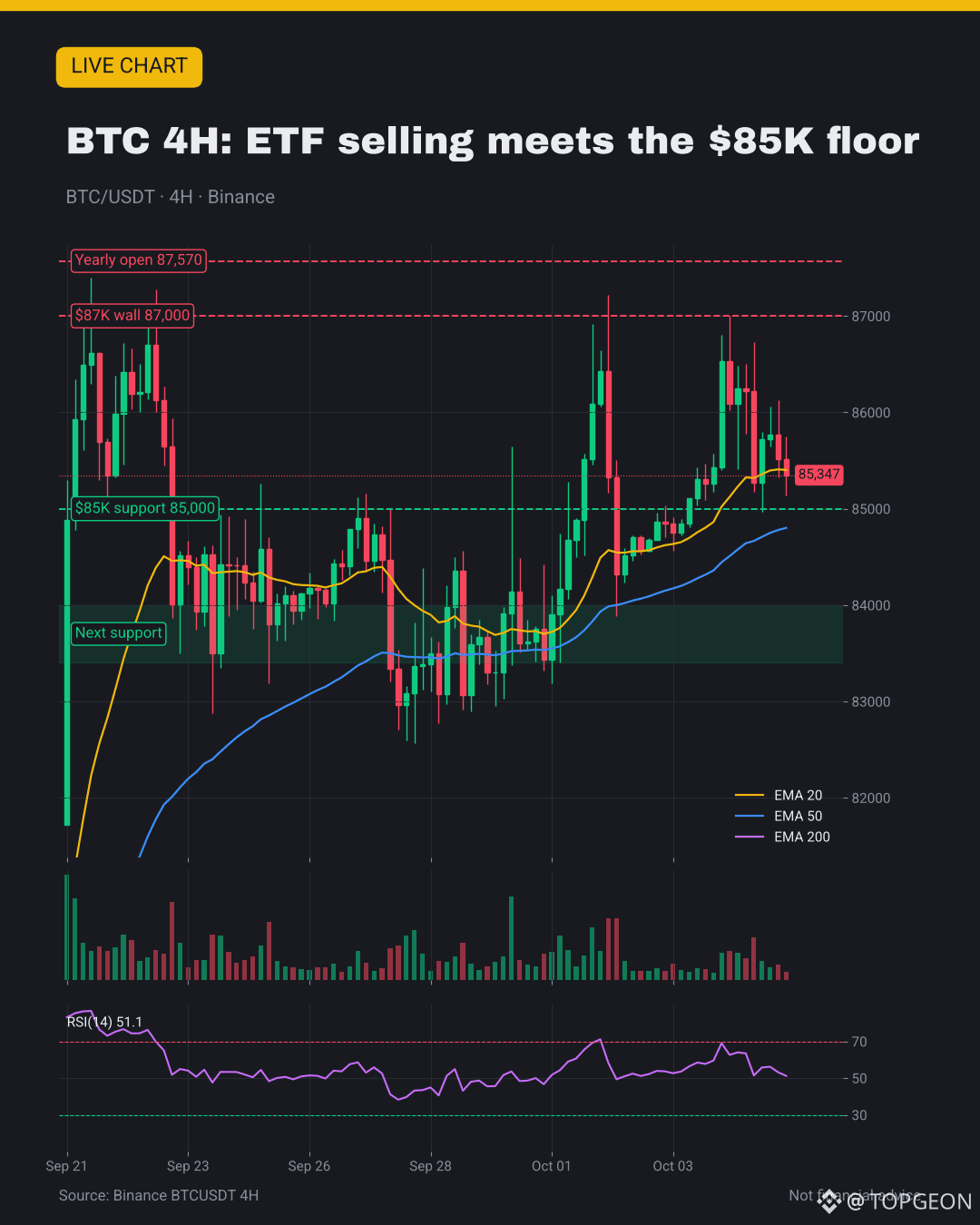
📍 BTC $85.4K, -0.9% · 4H RSI 51, sitting on the 20 EMA
🗓️ Next catalyst: Fed minutes on Wednesday
🎯 My take: $85K holds = range intact; lose it → $83.4–84K
💬 Is IBIT buying enough to offset the exits? 👇
#Bitcoin #BitcoinETF #BTC
📊 $BTC ETFs lost $89.8M yesterday, yet IBIT kept buying
1️⃣ ARKB -$85.2M and FBTC -$74.5M on Oct 5
2️⃣ BlackRock's IBIT took in +$69.9M against the tide
3️⃣ $172M liquidated in 24h, $101M of it longs
📍 BTC $85.4K, -0.9% · 4H RSI 51, sitting on the 20 EMA
🗓️ Next catalyst: Fed minutes on Wednesday
🎯 My take: $85K holds = range intact; lose it → $83.4–84K
💬 Is IBIT buying enough to offset the exits? 👇
#Bitcoin #BitcoinETF #BTC
1️⃣ ARKB -$85.2M and FBTC -$74.5M on Oct 5
2️⃣ BlackRock's IBIT took in +$69.9M against the tide
3️⃣ $172M liquidated in 24h, $101M of it longs
📍 BTC $85.4K, -0.9% · 4H RSI 51, sitting on the 20 EMA
🗓️ Next catalyst: Fed minutes on Wednesday
🎯 My take: $85K holds = range intact; lose it → $83.4–84K
💬 Is IBIT buying enough to offset the exits? 👇
#Bitcoin #BitcoinETF #BTC
176

·
--
Institutional dominance is the main theme right now. Seeing BlackRock and Fidelity stack massive AUM as spot ETF inflows stay consistent. While $SOL sits at 119.99 and $BTC holds steady, the real move depends on regulatory clarity from the SEC and MiCA. Sovereign adoption is the long game we are playing. It is no longer just about retail. _
#BitcoinETF #CryptoNews #SOL
Institutional dominance is the main theme right now. Seeing BlackRock and Fidelity stack massive AUM as spot ETF inflows stay consistent. While $SOL sits at 119.99 and $BTC holds steady, the real move depends on regulatory clarity from the SEC and MiCA. Sovereign adoption is the long game we are playing. It is no longer just about retail. _
#BitcoinETF #CryptoNews #SOL
#BitcoinETF #CryptoNews #SOL

awais123magsi1:
sun
2
1
1
68

Bitcoin ETFs
$6.34B JUST FLOWED IN
into Bitcoin ETFs in Q3.
BTC UP 42.7% ↑
SEPTEMBER
ETF INFLOWS
~25% ↓
vs August
SO WHAT COMES NEXT?
🟢 Another BTC leg up?
OR
🔴 A cooldown?
$BTC #Bitcoin #BitcoinETF
Bitcoin ETFs
$6.34B JUST FLOWED IN
into Bitcoin ETFs in Q3.
BTC UP 42.7% ↑
SEPTEMBER
ETF INFLOWS
~25% ↓
vs August
SO WHAT COMES NEXT?
🟢 Another BTC leg up?
OR
🔴 A cooldown?
$BTC #Bitcoin #BitcoinETF
$6.34B JUST FLOWED IN
into Bitcoin ETFs in Q3.
BTC UP 42.7% ↑
SEPTEMBER
ETF INFLOWS
~25% ↓
vs August
SO WHAT COMES NEXT?
🟢 Another BTC leg up?
OR
🔴 A cooldown?
$BTC #Bitcoin #BitcoinETF

2
28

·
--
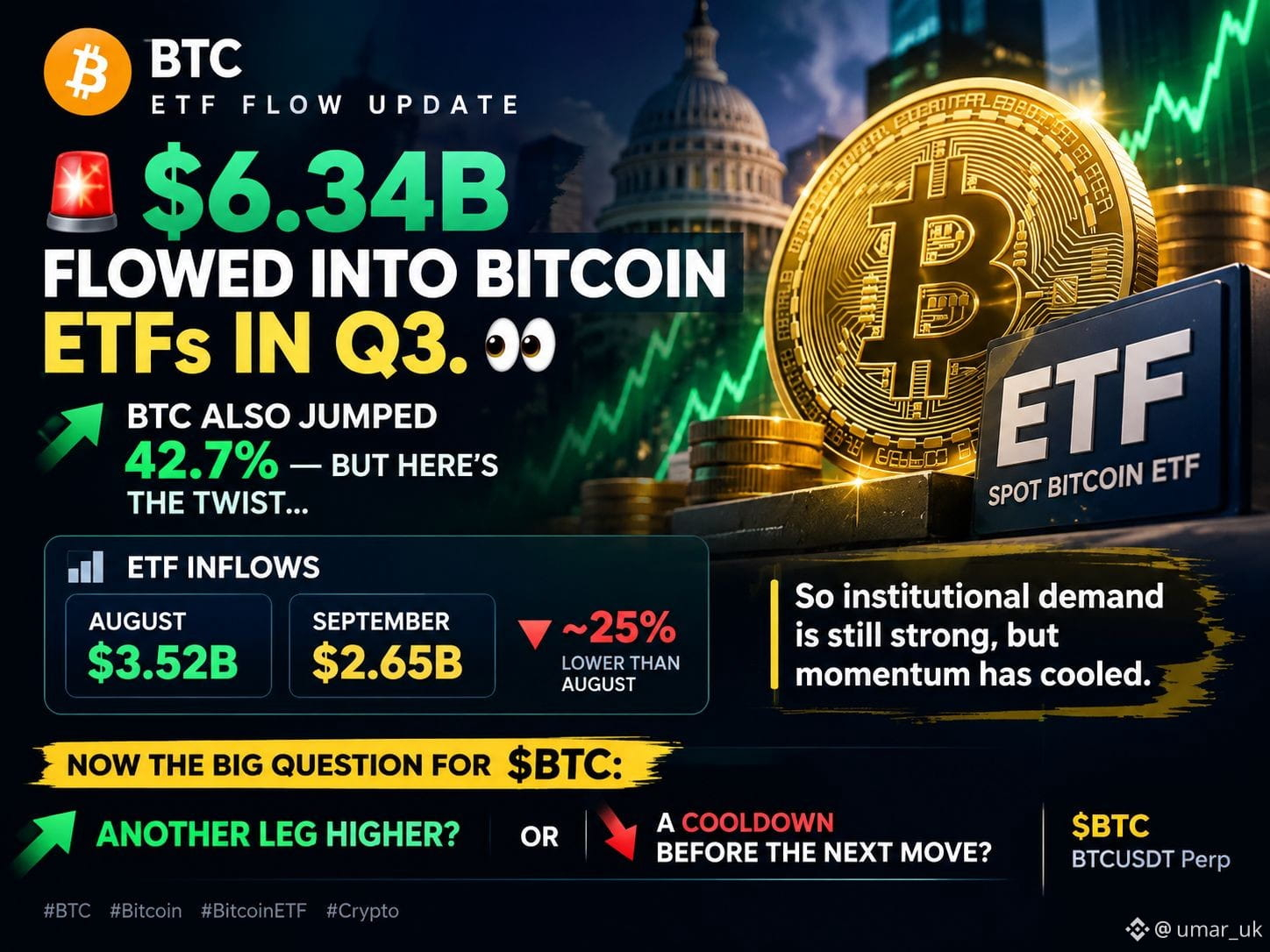
🚨 $6.34B FLOWED INTO BITCOIN ETFs IN Q3 👀
BTC delivered a 42.7% quarterly gain as institutional ETF demand returned strongly. 🔥
But here’s the twist:
📉 August ETF inflows: $3.52B
📉 September: $2.65B — ~25% lower
So institutional demand is still strong, but momentum has cooled.
Now the big question for $BTC:
🔥 Another leg higher?
❄️ Or a cooldown before the next move?
$BTC
{future}(BTCUSDT)
#BTC #Bitcoin #BitcoinETF
🚨 $6.34B FLOWED INTO BITCOIN ETFs IN Q3 👀
BTC delivered a 42.7% quarterly gain as institutional ETF demand returned strongly. 🔥
But here’s the twist:
📉 August ETF inflows: $3.52B
📉 September: $2.65B — ~25% lower
So institutional demand is still strong, but momentum has cooled.
Now the big question for $BTC :
🔥 Another leg higher?
❄️ Or a cooldown before the next move?
$BTC
#BTC #Bitcoin #BitcoinETF
BTC delivered a 42.7% quarterly gain as institutional ETF demand returned strongly. 🔥
But here’s the twist:
📉 August ETF inflows: $3.52B
📉 September: $2.65B — ~25% lower
So institutional demand is still strong, but momentum has cooled.
Now the big question for $BTC :
🔥 Another leg higher?
❄️ Or a cooldown before the next move?
$BTC
#BTC #Bitcoin #BitcoinETF
28

·
--
#BitcoinSpotETFsDraw$6.34BInflowsInQ3
🚀 U.S. Bitcoin ETFs See $6.34B Inflows in Q3
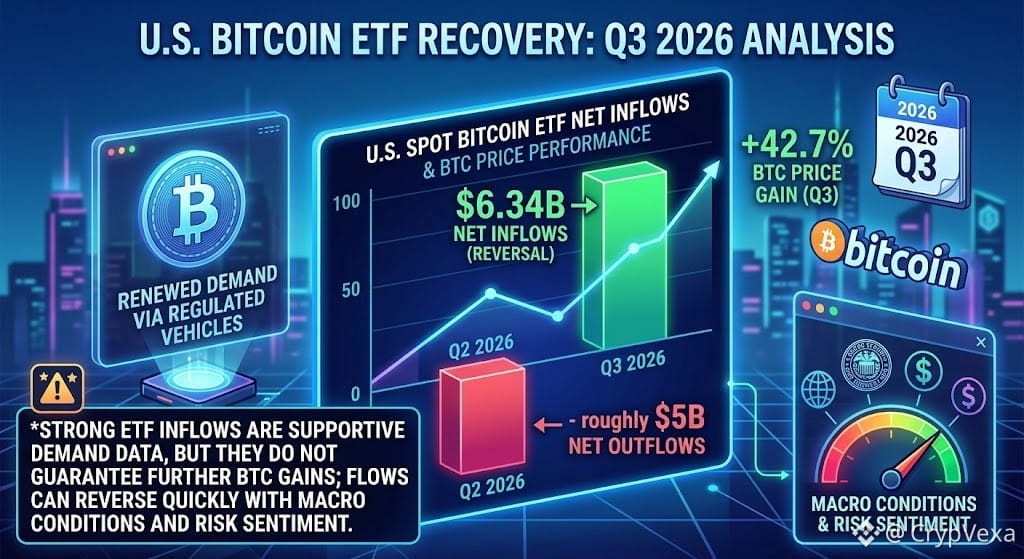
₿ U.S. spot Bitcoin ETFs recorded around $6.34B in net inflows during Q3 2026, reversing roughly $5B of outflows in Q2.
📈 BTC also gained about 42.7% in Q3, alongside renewed demand through regulated ETF vehicles.
⚠️ Strong ETF inflows are supportive demand data, but they don't guarantee further BTC gains. Flows can reverse quickly as macro conditions and risk sentiment change.
👀 Can ETF demand stay strong into Q4?
#Bitcoin #BTC #BitcoinETF #CryptoMarket
#BitcoinSpotETFsDraw$6.34BInflowsInQ3
🚀 U.S. Bitcoin ETFs See $6.34B Inflows in Q3
₿ U.S. spot Bitcoin ETFs recorded around $6.34B in net inflows during Q3 2026, reversing roughly $5B of outflows in Q2.
📈 BTC also gained about 42.7% in Q3, alongside renewed demand through regulated ETF vehicles.
⚠️ Strong ETF inflows are supportive demand data, but they don't guarantee further BTC gains. Flows can reverse quickly as macro conditions and risk sentiment change.
👀 Can ETF demand stay strong into Q4?
#Bitcoin #BTC #BitcoinETF #CryptoMarket
🚀 U.S. Bitcoin ETFs See $6.34B Inflows in Q3
₿ U.S. spot Bitcoin ETFs recorded around $6.34B in net inflows during Q3 2026, reversing roughly $5B of outflows in Q2.
📈 BTC also gained about 42.7% in Q3, alongside renewed demand through regulated ETF vehicles.
⚠️ Strong ETF inflows are supportive demand data, but they don't guarantee further BTC gains. Flows can reverse quickly as macro conditions and risk sentiment change.
👀 Can ETF demand stay strong into Q4?
#Bitcoin #BTC #BitcoinETF #CryptoMarket
1
6


Article
Bitcoin ETF MomentumU.S. spot Bitcoin ETFs recorded around $241M in net inflows last week, extending the inflow streak to three weeks.
That doesn't guarantee BTC will go higher.
But it does show that institutional demand remains an important part of the market story.
Are ETFs becoming one of the biggest drivers of BTC?
#BTC #BitcoinETF #Crypto #InstitutionalInvestors #Binance
Not financial advice. DYOR.
Bitcoin ETF Momentum
U.S. spot Bitcoin ETFs recorded around $241M in net inflows last week, extending the inflow streak to three weeks.
That doesn't guarantee BTC will go higher.
But it does show that institutional demand remains an important part of the market story.
Are ETFs becoming one of the biggest drivers of BTC?
#BTC #BitcoinETF #Crypto #InstitutionalInvestors #Binance
Not financial advice. DYOR.
That doesn't guarantee BTC will go higher.
But it does show that institutional demand remains an important part of the market story.
Are ETFs becoming one of the biggest drivers of BTC?
#BTC #BitcoinETF #Crypto #InstitutionalInvestors #Binance
Not financial advice. DYOR.
71

·
--
Bullish
the best bitcoin ETF quarter of 2026 was mostly a refill
#BitcoinSpotETFsDraw$6.34BInflowsInQ3 , sure. now put Q2 next to it:
🔸 Q2: about 5 billion dollars out
🔸 Q3: 6.34 billion back in
🔸 2026 so far: roughly 930 million net
cumulative flows sit around 57.7 billion, still under the 62.8 billion peak from October 10, 2025
and look at when it came
July: 172 million
August: 3.52 billion
September: 2.65 billion
$BTC rose 42.71% on the quarter. the money arrived after the move
so I don't read Q3 as new money. it reads like buying back what got sold in Q2
for the record, I'm not in BTC
when October closes I'm posting its flow total here, follow along if you want to see whether buyers keep chasing
#BitcoinETF #InstitutionalFlows #CryptoFlows
the best bitcoin ETF quarter of 2026 was mostly a refill
#BitcoinSpotETFsDraw$6.34BInflowsInQ3 , sure. now put Q2 next to it:
🔸 Q2: about 5 billion dollars out
🔸 Q3: 6.34 billion back in
🔸 2026 so far: roughly 930 million net
cumulative flows sit around 57.7 billion, still under the 62.8 billion peak from October 10, 2025
and look at when it came
July: 172 million
August: 3.52 billion
September: 2.65 billion
$BTC rose 42.71% on the quarter. the money arrived after the move
so I don't read Q3 as new money. it reads like buying back what got sold in Q2
for the record, I'm not in BTC
when October closes I'm posting its flow total here, follow along if you want to see whether buyers keep chasing
#BitcoinETF #InstitutionalFlows #CryptoFlows
#BitcoinSpotETFsDraw$6.34BInflowsInQ3 , sure. now put Q2 next to it:
🔸 Q2: about 5 billion dollars out
🔸 Q3: 6.34 billion back in
🔸 2026 so far: roughly 930 million net
cumulative flows sit around 57.7 billion, still under the 62.8 billion peak from October 10, 2025
and look at when it came
July: 172 million
August: 3.52 billion
September: 2.65 billion
$BTC rose 42.71% on the quarter. the money arrived after the move
so I don't read Q3 as new money. it reads like buying back what got sold in Q2
for the record, I'm not in BTC
when October closes I'm posting its flow total here, follow along if you want to see whether buyers keep chasing
#BitcoinETF #InstitutionalFlows #CryptoFlows

3
106

🚨 BITCOIN ETF FLOWS ARE GREEN AGAIN
After a negative finish to September, U.S. spot Bitcoin ETFs started October with renewed inflows. 👀
💰 $134.4M net inflow came in during the first two trading days of October:
• Oct 2: +$102.7M
• Oct 3: +$31.7M
September was also strong, with around $2.65B in total net inflows.
But there’s an important detail:
📉 On September 30, Bitcoin ETFs recorded $148.7M in net outflows, showing that institutional flows can change quickly.
What does this mean? 🧠
The return of positive ETF flows could point to renewed institutional demand for Bitcoin.
But I wouldn’t call it a confirmed bullish trend yet.
The real signal will be whether ETF inflows continue over the coming sessions.
📌 Bottom line:
Don’t trade one green day. Watch the flow trend.
Is Bitcoin heading toward another strong October? 👀
#Bitcoin #BitcoinETF #Crypto #CryptoNews #BinanceSquare
{spot}(BTCUSDT)
{spot}(ETHUSDT)
🚨 BITCOIN ETF FLOWS ARE GREEN AGAIN
After a negative finish to September, U.S. spot Bitcoin ETFs started October with renewed inflows. 👀
💰 $134.4M net inflow came in during the first two trading days of October:
• Oct 2: +$102.7M
• Oct 3: +$31.7M
September was also strong, with around $2.65B in total net inflows.
But there’s an important detail:
📉 On September 30, Bitcoin ETFs recorded $148.7M in net outflows, showing that institutional flows can change quickly.
What does this mean? 🧠
The return of positive ETF flows could point to renewed institutional demand for Bitcoin.
But I wouldn’t call it a confirmed bullish trend yet.
The real signal will be whether ETF inflows continue over the coming sessions.
📌 Bottom line:
Don’t trade one green day. Watch the flow trend.
Is Bitcoin heading toward another strong October? 👀
#Bitcoin #BitcoinETF #Crypto #CryptoNews #BinanceSquare
After a negative finish to September, U.S. spot Bitcoin ETFs started October with renewed inflows. 👀
💰 $134.4M net inflow came in during the first two trading days of October:
• Oct 2: +$102.7M
• Oct 3: +$31.7M
September was also strong, with around $2.65B in total net inflows.
But there’s an important detail:
📉 On September 30, Bitcoin ETFs recorded $148.7M in net outflows, showing that institutional flows can change quickly.
What does this mean? 🧠
The return of positive ETF flows could point to renewed institutional demand for Bitcoin.
But I wouldn’t call it a confirmed bullish trend yet.
The real signal will be whether ETF inflows continue over the coming sessions.
📌 Bottom line:
Don’t trade one green day. Watch the flow trend.
Is Bitcoin heading toward another strong October? 👀
#Bitcoin #BitcoinETF #Crypto #CryptoNews #BinanceSquare

56

·
--
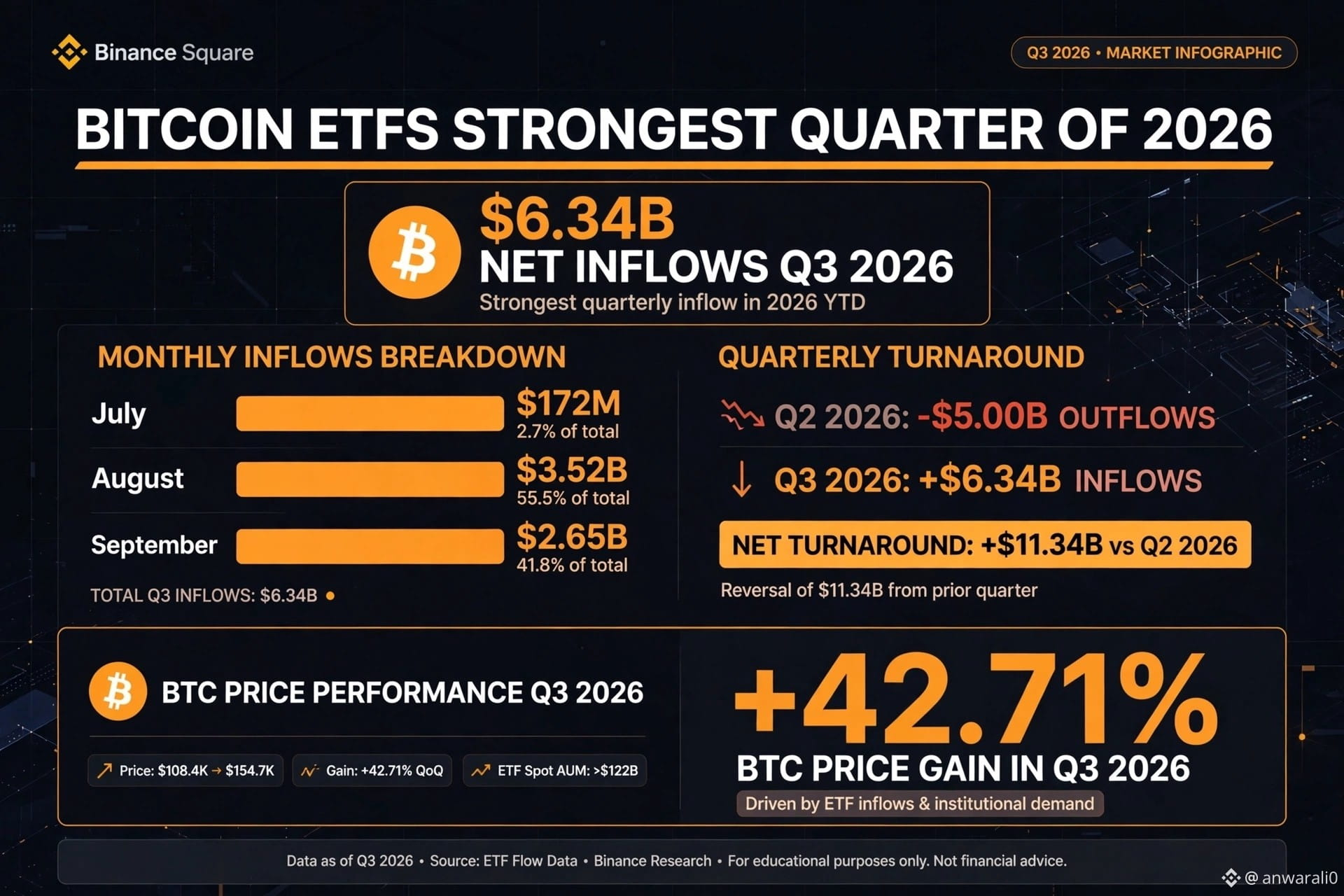
#BitcoinSpotETFsDraw$6.34BInflowsInQ3📈 BITCOIN ETFs JUST HAD THEIR STRONGEST QUARTER OF 2026
US spot Bitcoin ETFs reportedly attracted around $6.34B in net inflows during Q3, a major turnaround from the estimated $5B of outflows in Q2.
🔹 July: $172M inflows
🔹 August: $3.52B inflows
🔹 September: $2.65B inflows
🔹 Q3 BTC performance: nearly +43%
The shift suggests institutional demand returned strongly during the quarter, helping improve liquidity across the crypto market.
The bigger question now is whether this ETF demand can continue into Q4. 👀
Institutional flows remain one of the key signals to watch for Bitcoin’s next major move.
#Bitcoin #BitcoinETF #BTC #Crypto #InstitutionalInvestors #Blockchain #Binance #WriteToEarn$BTC $SOL
#BitcoinSpotETFsDraw$6.34BInflowsInQ3📈 BITCOIN ETFs JUST HAD THEIR STRONGEST QUARTER OF 2026
US spot Bitcoin ETFs reportedly attracted around $6.34B in net inflows during Q3, a major turnaround from the estimated $5B of outflows in Q2.
🔹 July: $172M inflows
🔹 August: $3.52B inflows
🔹 September: $2.65B inflows
🔹 Q3 BTC performance: nearly +43%
The shift suggests institutional demand returned strongly during the quarter, helping improve liquidity across the crypto market.
The bigger question now is whether this ETF demand can continue into Q4. 👀
Institutional flows remain one of the key signals to watch for Bitcoin’s next major move.
#Bitcoin #BitcoinETF #BTC #Crypto #InstitutionalInvestors #Blockchain #Binance #WriteToEarn$BTC $SOL
US spot Bitcoin ETFs reportedly attracted around $6.34B in net inflows during Q3, a major turnaround from the estimated $5B of outflows in Q2.
🔹 July: $172M inflows
🔹 August: $3.52B inflows
🔹 September: $2.65B inflows
🔹 Q3 BTC performance: nearly +43%
The shift suggests institutional demand returned strongly during the quarter, helping improve liquidity across the crypto market.
The bigger question now is whether this ETF demand can continue into Q4. 👀
Institutional flows remain one of the key signals to watch for Bitcoin’s next major move.
#Bitcoin #BitcoinETF #BTC #Crypto #InstitutionalInvestors #Blockchain #Binance #WriteToEarn$BTC $SOL
23

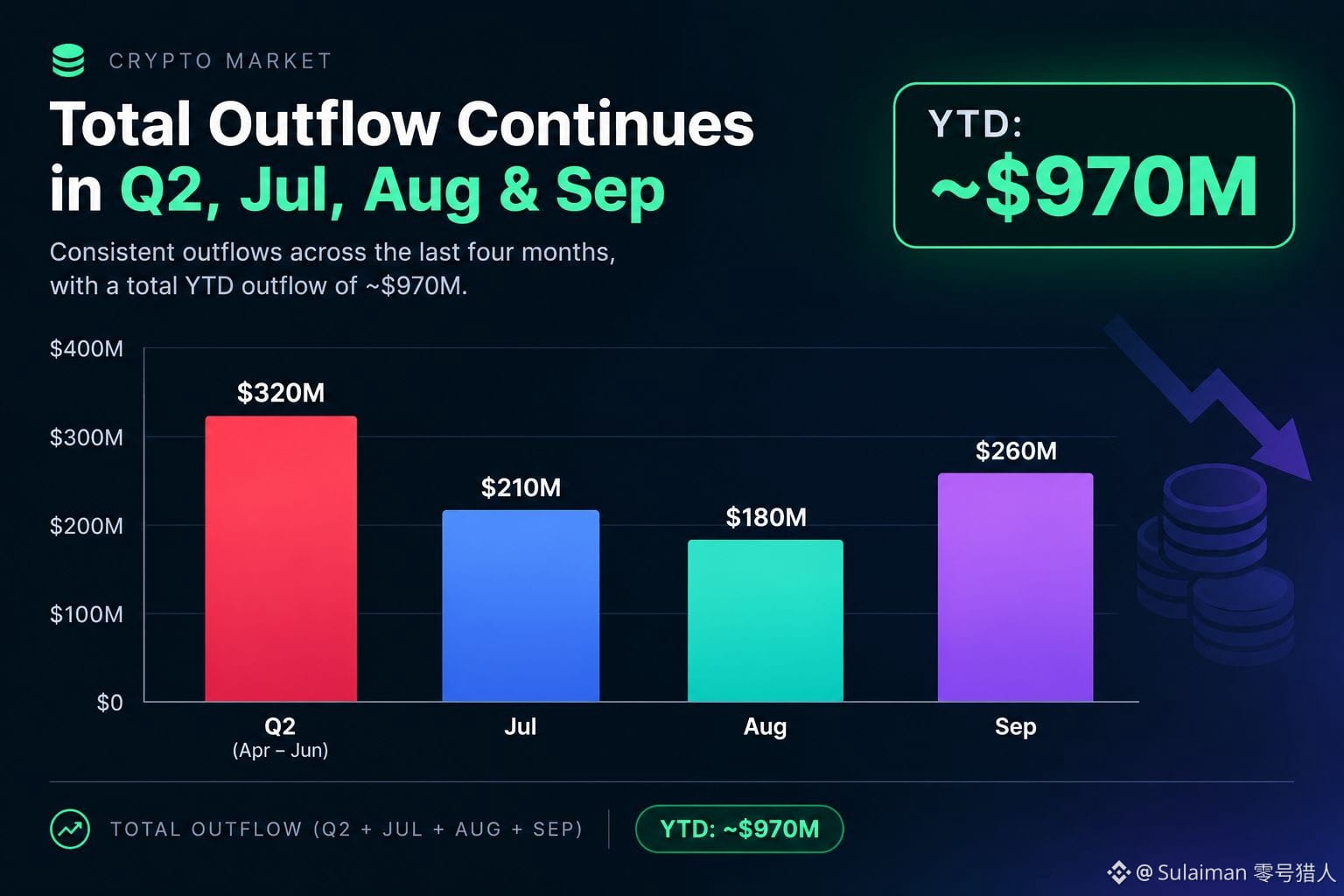
Bitcoin ETFs pulled in $6.34B last quarter. For all of 2026 so far, they're up only about $970M.
$BTC spot ETFs had their best quarter of the year. Q3 inflows: $6.34B. Bitcoin itself rose 42.71%.
But Q2 lost about $5B. So Q3 mostly repaired the damage.
And the quarter faded at the end:
July: $172M
August: $3.52B
September: $2.65B
Nine straight inflow days ended on Sept 30 with a $149M outflow day.
My read: Q3 looks like a repair quarter, not a new regime.
✅ Stronger if October holds near September's pace
⚠️ Weaker if a second outflow quarter follows
Do ETF flows lead the Bitcoin price, or follow it?
Not financial advice. DYOR.
#BitcoinSpotETFsDrawInflowsInQ3 #BTC #BitcoinETF
$BTC
{spot}(BTCUSDT)
$ETH
{spot}(ETHUSDT)
#CryptoResearch
Bitcoin ETFs pulled in $6.34B last quarter. For all of 2026 so far, they're up only about $970M.
$BTC spot ETFs had their best quarter of the year. Q3 inflows: $6.34B. Bitcoin itself rose 42.71%.
But Q2 lost about $5B. So Q3 mostly repaired the damage.
And the quarter faded at the end:
July: $172M
August: $3.52B
September: $2.65B
Nine straight inflow days ended on Sept 30 with a $149M outflow day.
My read: Q3 looks like a repair quarter, not a new regime.
✅ Stronger if October holds near September's pace
⚠️ Weaker if a second outflow quarter follows
Do ETF flows lead the Bitcoin price, or follow it?
Not financial advice. DYOR.
#BitcoinSpotETFsDrawInflowsInQ3 #BTC #BitcoinETF
$BTC
$ETH
#CryptoResearch
$BTC spot ETFs had their best quarter of the year. Q3 inflows: $6.34B. Bitcoin itself rose 42.71%.
But Q2 lost about $5B. So Q3 mostly repaired the damage.
And the quarter faded at the end:
July: $172M
August: $3.52B
September: $2.65B
Nine straight inflow days ended on Sept 30 with a $149M outflow day.
My read: Q3 looks like a repair quarter, not a new regime.
✅ Stronger if October holds near September's pace
⚠️ Weaker if a second outflow quarter follows
Do ETF flows lead the Bitcoin price, or follow it?
Not financial advice. DYOR.
#BitcoinSpotETFsDrawInflowsInQ3 #BTC #BitcoinETF
$BTC
$ETH
#CryptoResearch
1
16

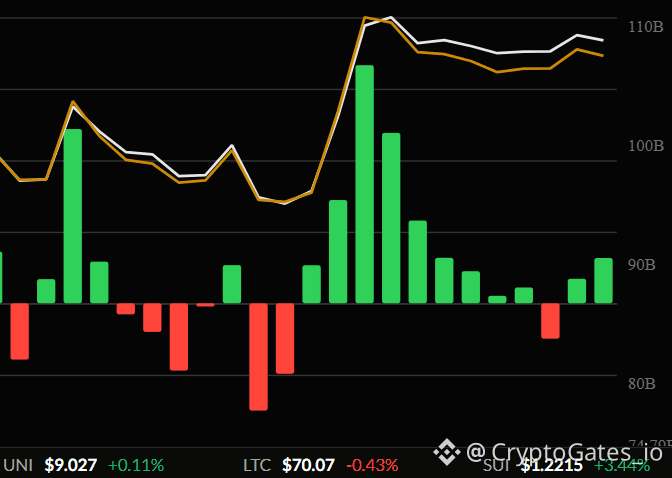
$BTC : US spot ETFs recorded a $189.84M daily net inflow, with total net assets at $108.89B.
What the chart shows:
Inflows were choppy for a while, with a few red days mixed in. The latest bars are turning green again.
What it means:
ETF flows reflect how institutions are positioning, not where price goes next. One strong day does not make a trend. Consistency over several sessions is what matters.
The lesson:
Flow data is slow-moving and noisy day to day. That is why rules-based approaches like DCA are built around process, not prediction.
verify first. risk later. scale slowly...
#BTC #ETFFlows #BitcoinETF
$BTC : US spot ETFs recorded a $189.84M daily net inflow, with total net assets at $108.89B.
What the chart shows:
Inflows were choppy for a while, with a few red days mixed in. The latest bars are turning green again.
What it means:
ETF flows reflect how institutions are positioning, not where price goes next. One strong day does not make a trend. Consistency over several sessions is what matters.
The lesson:
Flow data is slow-moving and noisy day to day. That is why rules-based approaches like DCA are built around process, not prediction.
verify first. risk later. scale slowly...
#BTC #ETFFlows #BitcoinETF
What the chart shows:
Inflows were choppy for a while, with a few red days mixed in. The latest bars are turning green again.
What it means:
ETF flows reflect how institutions are positioning, not where price goes next. One strong day does not make a trend. Consistency over several sessions is what matters.
The lesson:
Flow data is slow-moving and noisy day to day. That is why rules-based approaches like DCA are built around process, not prediction.
verify first. risk later. scale slowly...
#BTC #ETFFlows #BitcoinETF
64

·
--
Bullish
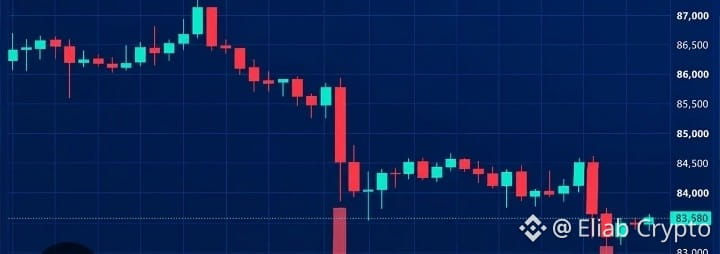
Bitcoin is starting the week around the $83,000 area, while ETF flows remain positive but significantly weaker than during the previous week
U.S. spot Bitcoin ETFs reportedly recorded approximately $82.9 million in net inflows between September 28 and October 2
The figure remains provisional because some Friday data was incomplete when the weekly report was published
The contrast is important: Bitcoin is still holding a constructive structure, but institutional inflows have slowed sharply compared with the $2.4 billion recorded the previous week
So today’s question is not simply whether BTC is bullish. The key is whether ETF demand can continue supporting price after the late-September slowdown
#bitcoin #BitcoinETF
Bitcoin is starting the week around the $83,000 area, while ETF flows remain positive but significantly weaker than during the previous week
U.S. spot Bitcoin ETFs reportedly recorded approximately $82.9 million in net inflows between September 28 and October 2
The figure remains provisional because some Friday data was incomplete when the weekly report was published
The contrast is important: Bitcoin is still holding a constructive structure, but institutional inflows have slowed sharply compared with the $2.4 billion recorded the previous week
So today’s question is not simply whether BTC is bullish. The key is whether ETF demand can continue supporting price after the late-September slowdown
#bitcoin #BitcoinETF
U.S. spot Bitcoin ETFs reportedly recorded approximately $82.9 million in net inflows between September 28 and October 2
The figure remains provisional because some Friday data was incomplete when the weekly report was published
The contrast is important: Bitcoin is still holding a constructive structure, but institutional inflows have slowed sharply compared with the $2.4 billion recorded the previous week
So today’s question is not simply whether BTC is bullish. The key is whether ETF demand can continue supporting price after the late-September slowdown
#bitcoin #BitcoinETF
1
83

·
--
$BTC | Square is buzzing about a SEC funding lapse freezing new crypto ETF reviews. Different story: the three spot Bitcoin ETFs already trading do not care about pending applications. On the desk we split flow from news noise as a rule.
SatoshiMacro's IBIT vs FBTC vs GBTC chart shows IBIT past USD 60 billion in cumulative inflows since the 11 January 2024 launch. GBTC has bled USD 20-23 billion rotating out of its 1.50% fee into 0.25% alternatives, an USD 80 billion swing.
My read: a review freeze changes next year's launches, not this year's fee arbitrage. Allocator flow, not a price call. ASX's four spot BTC ETFs run the same fee spread. Pick on cost.
https://satoshimacro.com/tools/crypto/etf-flows/ibit-vs-fbtc-vs-gbtc/?utm_source=binance_square&utm_medium=social&utm_campaign=autopilot_short-1
#SatoshiMacro #SECHaltsCryptoETFReviewsAmidFundingLapse #BitcoinETF #Bitcoin
$BTC | Square is buzzing about a SEC funding lapse freezing new crypto ETF reviews. Different story: the three spot Bitcoin ETFs already trading do not care about pending applications. On the desk we split flow from news noise as a rule.
SatoshiMacro's IBIT vs FBTC vs GBTC chart shows IBIT past USD 60 billion in cumulative inflows since the 11 January 2024 launch. GBTC has bled USD 20-23 billion rotating out of its 1.50% fee into 0.25% alternatives, an USD 80 billion swing.
My read: a review freeze changes next year's launches, not this year's fee arbitrage. Allocator flow, not a price call. ASX's four spot BTC ETFs run the same fee spread. Pick on cost.
https://satoshimacro.com/tools/crypto/etf-flows/ibit-vs-fbtc-vs-gbtc/?utm_source=binance_square&utm_medium=social&utm_campaign=autopilot_short-1
#SatoshiMacro #SECHaltsCryptoETFReviewsAmidFundingLapse #BitcoinETF #Bitcoin
SatoshiMacro's IBIT vs FBTC vs GBTC chart shows IBIT past USD 60 billion in cumulative inflows since the 11 January 2024 launch. GBTC has bled USD 20-23 billion rotating out of its 1.50% fee into 0.25% alternatives, an USD 80 billion swing.
My read: a review freeze changes next year's launches, not this year's fee arbitrage. Allocator flow, not a price call. ASX's four spot BTC ETFs run the same fee spread. Pick on cost.
https://satoshimacro.com/tools/crypto/etf-flows/ibit-vs-fbtc-vs-gbtc/?utm_source=binance_square&utm_medium=social&utm_campaign=autopilot_short-1
#SatoshiMacro #SECHaltsCryptoETFReviewsAmidFundingLapse #BitcoinETF #Bitcoin
70

·
--
Bullish
#Bitcoin Spot ETFs See $6.34B in Q3 Inflows
Bitcoin spot ETFs recorded around $6.34 billion in net inflows during Q3, showing continued interest in Bitcoin through regulated investment products.
Spot ETFs give investors a way to gain exposure to Bitcoin through traditional financial markets without directly holding the cryptocurrency.
The size of the inflows is worth watching, but ETF flows alone do not determine Bitcoin’s price direction. Market liquidity, trading activity, macroeconomic conditions and investor sentiment can also influence the market.
#bitcoin #BTC #BitcoinETF #Binance #CryptoNews #CryptoMarket
#Bitcoin Spot ETFs See $6.34B in Q3 Inflows
Bitcoin spot ETFs recorded around $6.34 billion in net inflows during Q3, showing continued interest in Bitcoin through regulated investment products.
Spot ETFs give investors a way to gain exposure to Bitcoin through traditional financial markets without directly holding the cryptocurrency.
The size of the inflows is worth watching, but ETF flows alone do not determine Bitcoin’s price direction. Market liquidity, trading activity, macroeconomic conditions and investor sentiment can also influence the market.
#bitcoin #BTC #BitcoinETF #Binance #CryptoNews #CryptoMarket
Bitcoin spot ETFs recorded around $6.34 billion in net inflows during Q3, showing continued interest in Bitcoin through regulated investment products.
Spot ETFs give investors a way to gain exposure to Bitcoin through traditional financial markets without directly holding the cryptocurrency.
The size of the inflows is worth watching, but ETF flows alone do not determine Bitcoin’s price direction. Market liquidity, trading activity, macroeconomic conditions and investor sentiment can also influence the market.
#bitcoin #BTC #BitcoinETF #Binance #CryptoNews #CryptoMarket
1
1
146


Partly True
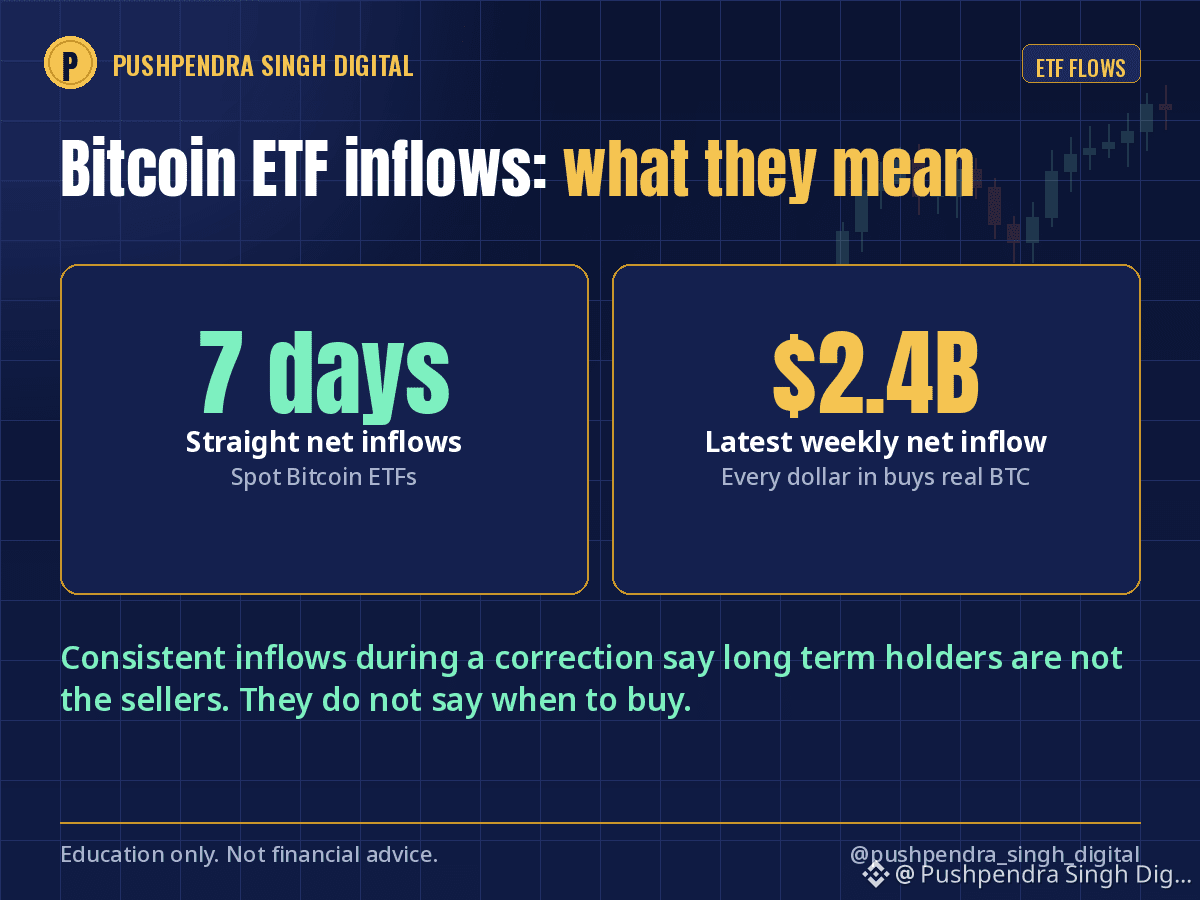
Spot Bitcoin ETFs just logged seven straight days of net inflows, around $2.4 billion in the latest week. Here is what that actually means, and what it does not.
What it means: regulated money, meaning pensions, advisors and funds, is buying $BTC exposure through the stock market. Every dollar in requires the ETF to buy real Bitcoin.
What it does not mean: it is not a guarantee of price going up. In 2025 we saw weeks of inflows while price still fell, because ETFs are one buyer among many.
How I use the data: consistent inflows during a correction tell me long term holders are not the ones selling. That helps me sit still. It does not tell me when to buy.
One number, one context, no story. That is how you read flows.
Do you track ETF flows, or is this new to you?
Education only, not financial advice.
#BitcoinSpotETFs #BitcoinETF #Bitcoin
Spot Bitcoin ETFs just logged seven straight days of net inflows, around $2.4 billion in the latest week. Here is what that actually means, and what it does not.
What it means: regulated money, meaning pensions, advisors and funds, is buying $BTC exposure through the stock market. Every dollar in requires the ETF to buy real Bitcoin.
What it does not mean: it is not a guarantee of price going up. In 2025 we saw weeks of inflows while price still fell, because ETFs are one buyer among many.
How I use the data: consistent inflows during a correction tell me long term holders are not the ones selling. That helps me sit still. It does not tell me when to buy.
One number, one context, no story. That is how you read flows.
Do you track ETF flows, or is this new to you?
Education only, not financial advice.
#BitcoinSpotETFs #BitcoinETF #Bitcoin
What it means: regulated money, meaning pensions, advisors and funds, is buying $BTC exposure through the stock market. Every dollar in requires the ETF to buy real Bitcoin.
What it does not mean: it is not a guarantee of price going up. In 2025 we saw weeks of inflows while price still fell, because ETFs are one buyer among many.
How I use the data: consistent inflows during a correction tell me long term holders are not the ones selling. That helps me sit still. It does not tell me when to buy.
One number, one context, no story. That is how you read flows.
Do you track ETF flows, or is this new to you?
Education only, not financial advice.
#BitcoinSpotETFs #BitcoinETF #Bitcoin
2k

🚨 $6.34B FLOWED INTO BITCOIN ETFs… 👀
Bitcoin is entering October with something bulls can’t ignore. 🟠
Spot Bitcoin ETFs reportedly saw $6.34B in Q3 inflows. 💰
Now the big question:
🐂 Are institutions preparing for another BTC move?
📈 Can Bitcoin reclaim $87K+?
🚀 Or is the market already pricing in the bullish news?
What comes first? 👇
🔥 $90K BTC
🐻 Below $80K
🦀 Sideways
Drop your prediction 👇
$BTC
#bitcoin #BTC #BitcoinETF #cryptouniverseofficial #BinanceSquareFamily
{spot}(BTCUSDT)
🚨 $6.34B FLOWED INTO BITCOIN ETFs… 👀
Bitcoin is entering October with something bulls can’t ignore. 🟠
Spot Bitcoin ETFs reportedly saw $6.34B in Q3 inflows. 💰
Now the big question:
🐂 Are institutions preparing for another BTC move?
📈 Can Bitcoin reclaim $87K+?
🚀 Or is the market already pricing in the bullish news?
What comes first? 👇
🔥 $90K BTC
🐻 Below $80K
🦀 Sideways
Drop your prediction 👇
$BTC
#bitcoin #BTC #BitcoinETF #cryptouniverseofficial #BinanceSquareFamily
Bitcoin is entering October with something bulls can’t ignore. 🟠
Spot Bitcoin ETFs reportedly saw $6.34B in Q3 inflows. 💰
Now the big question:
🐂 Are institutions preparing for another BTC move?
📈 Can Bitcoin reclaim $87K+?
🚀 Or is the market already pricing in the bullish news?
What comes first? 👇
🔥 $90K BTC
🐻 Below $80K
🦀 Sideways
Drop your prediction 👇
$BTC
#bitcoin #BTC #BitcoinETF #cryptouniverseofficial #BinanceSquareFamily

1
112
Log in to explore more content
Join global crypto users on Binance Square
⚡️ Get latest and useful information about crypto.
💬 Trusted by the world’s largest crypto exchange.
👍 Discover real insights from verified creators.
Email / Phone number
Trending Topics
1
#BinanceLaunchesBinanceIntelligence
492,063 views
3,347 Discussing
2
#BitcoinTargets2026OpenAt$87570
3,467 views
92 Discussing
3
#BitcoinRejectedAt$87KThirdTime
3,175 views
75 Discussing
4
#StrategyMarketCapSurpassesRumble
21,342 views
535 Discussing
5
#StriveBuys2000BTCFor$169M
15,164 views
143 Discussing
6
#EvernorthXRPTreasuryCompletesSPACMerger
199,858 views
1,757 Discussing
7
#ADAGains10%Above$0.27
72,065 views
262 Discussing
8
#ETHUp70%InQ3ButLiquidityFalls
399,295 views
2,718 Discussing
9
#EthStakingExitQueueHits2026High
170,761 views
1,771 Discussing
10
#FedOctoberHoldOdds82.3%
192,079 views
1,706 Discussing