
A Y L A A
10.3k Posts

A Y L A A
Don't be Perfect,be real 🤞X:Kainat64640
Open Trade
Frequent Trader
8.4 Months
574 Following
29.7K+ Followers
9.9K+ Liked
Posts
Portfolio
All
Quotes
Live
PINNED
#dusk $DUSK @Dusk ok so....i finally sat down and actually read through how XSC handles cap tables instead of just skimming the docs like i usually do, and it's genuinely different from what i expected....🤔
the thing that's been bugging me for a while tokenize company shares on basically any public chain and every wallet balance is just... there. anyone can see it. which is kind of wild when you think about it, because real securities aren't supposed to work that way. investor identities, position sizes, none of that's public info normally. there's actual insider trading law built around keeping that stuff quiet....
XSC handles the compliance check inside the contract itself. zero knowledge proofs confirm a transfer is allowed right holder, right rules, right timing without putting who did what on display for the whole chain to see. kind of like a transfer agent, except nobody's manually approving anything.
honestly the part that stuck with me....🫣is that the privacy isn't there to look good, it's load bearing. take it away and the compliance logic just stops working.....
what i keep coming back to though none of this matters if actual securities never show up and use it. the tech being solid doesn't guarantee adoption. that gap is still wide open....⛓️💥
anyone actually seen real issuers testing this, or is it still mostly theoretical right now?
the thing that's been bugging me for a while tokenize company shares on basically any public chain and every wallet balance is just... there. anyone can see it. which is kind of wild when you think about it, because real securities aren't supposed to work that way. investor identities, position sizes, none of that's public info normally. there's actual insider trading law built around keeping that stuff quiet....
XSC handles the compliance check inside the contract itself. zero knowledge proofs confirm a transfer is allowed right holder, right rules, right timing without putting who did what on display for the whole chain to see. kind of like a transfer agent, except nobody's manually approving anything.
honestly the part that stuck with me....🫣is that the privacy isn't there to look good, it's load bearing. take it away and the compliance logic just stops working.....
what i keep coming back to though none of this matters if actual securities never show up and use it. the tech being solid doesn't guarantee adoption. that gap is still wide open....⛓️💥
anyone actually seen real issuers testing this, or is it still mostly theoretical right now?
🏦 issuers use it now
🧪 still just testing
🤷 not sure yet
18 hr(s) left
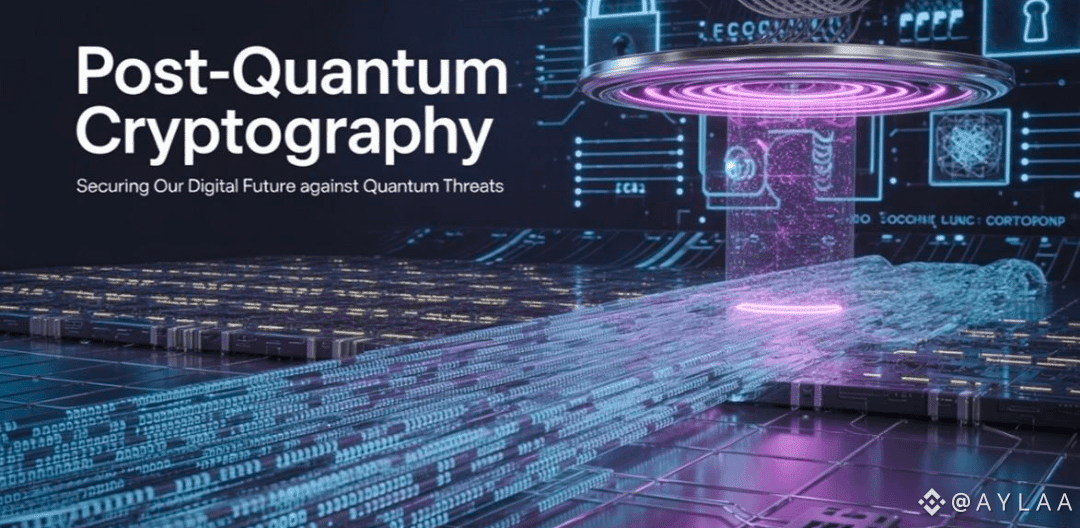
#USTreasuryLaunchesQuantumReadinessWorkingGroup 🇺🇸🔐 U.S. Treasury Goes Quantum-Ready
The U.S. Treasury is launching a quantum-readiness working group to prepare the financial system for future quantum computing threats.
A major step toward stronger post-quantum cybersecurity. ⚛️🛡️
#QuantumComputing #Cybersecurity #FinTech #US #PostQuantum
The U.S. Treasury is launching a quantum-readiness working group to prepare the financial system for future quantum computing threats.
A major step toward stronger post-quantum cybersecurity. ⚛️🛡️
#QuantumComputing #Cybersecurity #FinTech #US #PostQuantum
Breaking ⛓️💥
US–Iran Ceasefire Talks: A Possible Breakthrough? 🇺🇸🇮🇷
Reports circulating today suggest the United States and Iran may have reached a preliminary consensus on a ceasefire framework. However, independent confirmation and the final terms remain unclear.
After months of conflict and tensions surrounding the Strait of Hormuz, any genuine agreement could mark an important step toward de-escalation and regional stability. The key question now is whether both sides can turn reported consensus into a durable agreement.
#USIran #Ceasefire #MiddleEast #Diplomacy #USIranReportedlyReachCeasefireConsensus #Iran #UnitedStates
US–Iran Ceasefire Talks: A Possible Breakthrough? 🇺🇸🇮🇷
Reports circulating today suggest the United States and Iran may have reached a preliminary consensus on a ceasefire framework. However, independent confirmation and the final terms remain unclear.
After months of conflict and tensions surrounding the Strait of Hormuz, any genuine agreement could mark an important step toward de-escalation and regional stability. The key question now is whether both sides can turn reported consensus into a durable agreement.
#USIran #Ceasefire #MiddleEast #Diplomacy #USIranReportedlyReachCeasefireConsensus #Iran #UnitedStates

#dusk $DUSK @Dusk
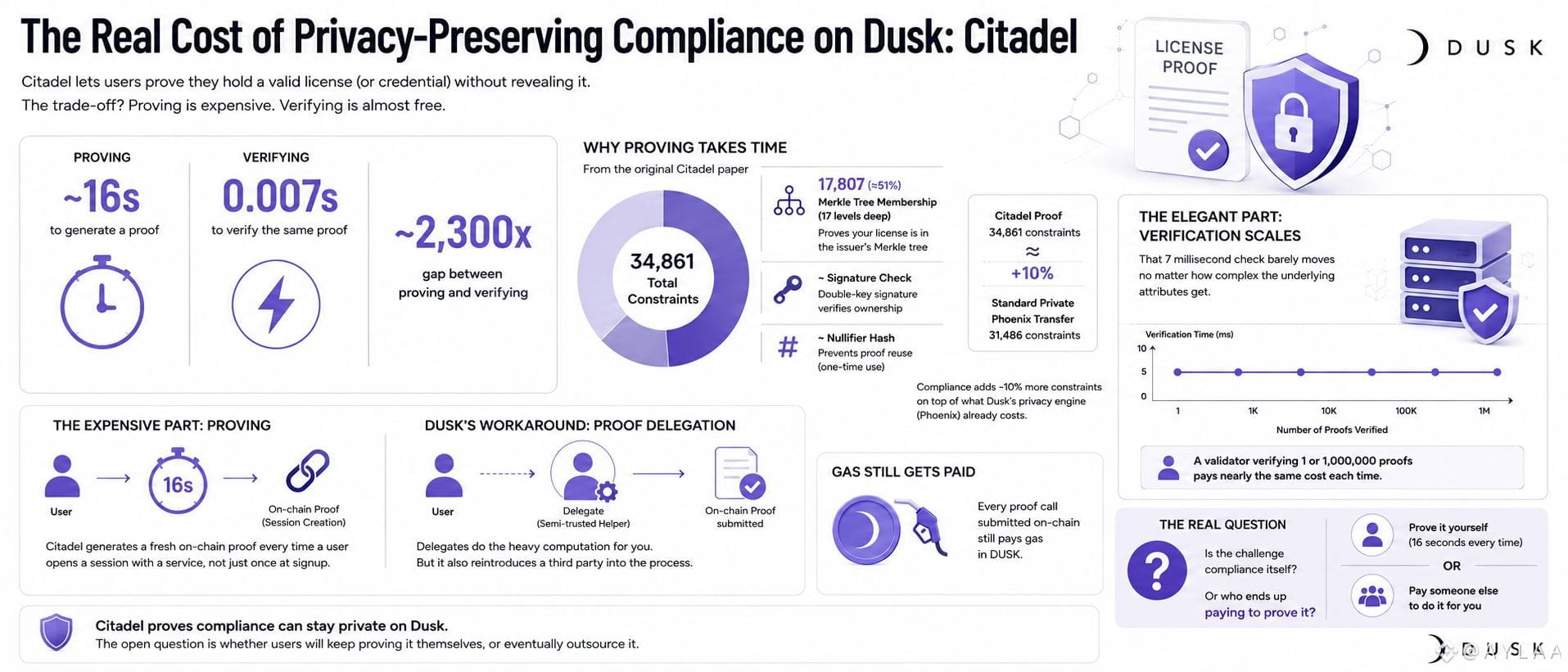
A Citadel license proof takes about 16 seconds to generate. < cite index="62-1">Checking that same proof takes 0.007 seconds.</cite> That's roughly a 2,300x gap between proving and verifying the identical statement.
I went back to the original Citadel paper to see why. < cite index="62-1">The full circuit runs about 34,861 constraints, and just over half of that, 17,807, goes toward proving your license sits inside a Merkle tree 17 levels deep.</cite> Layer in a double-key signature check for ownership and a nullifier hash to block reuse, and you land only about 10% heavier than < cite index="62-1">what a standard private Phoenix transfer already costs on its own, roughly 31,486 constraints.</cite> Compliance rides mostly on privacy machinery Dusk was already paying for.
What's genuinely elegant is the verifier side. That 7 millisecond check barely moves no matter how complex the underlying attributes get, so a validator confirming a million of these a day pays close to the same cost each time. That part scales the way people assume ZK systems scale.
The 16 seconds doesn't. That cost sits with whoever's proving, and < cite index="58-1,59-1">Citadel is built around generating a fresh on-chain proof each time a user opens a session with a service, not once at signup.</cite> < cite index="62-1">Dusk's own workaround is proof delegation, letting a semi-trusted helper do the heavy computation for you.</cite> Which quietly reopens the third party this system exists to remove.
Every one of those proof calls still pays gas in DUSK. So the real question isn't whether compliance can stay private on Dusk. It's whether people keep proving it themselves, or eventually just pay someone else to.
A Citadel license proof takes about 16 seconds to generate. < cite index="62-1">Checking that same proof takes 0.007 seconds.</cite> That's roughly a 2,300x gap between proving and verifying the identical statement.
I went back to the original Citadel paper to see why. < cite index="62-1">The full circuit runs about 34,861 constraints, and just over half of that, 17,807, goes toward proving your license sits inside a Merkle tree 17 levels deep.</cite> Layer in a double-key signature check for ownership and a nullifier hash to block reuse, and you land only about 10% heavier than < cite index="62-1">what a standard private Phoenix transfer already costs on its own, roughly 31,486 constraints.</cite> Compliance rides mostly on privacy machinery Dusk was already paying for.
What's genuinely elegant is the verifier side. That 7 millisecond check barely moves no matter how complex the underlying attributes get, so a validator confirming a million of these a day pays close to the same cost each time. That part scales the way people assume ZK systems scale.
The 16 seconds doesn't. That cost sits with whoever's proving, and < cite index="58-1,59-1">Citadel is built around generating a fresh on-chain proof each time a user opens a session with a service, not once at signup.</cite> < cite index="62-1">Dusk's own workaround is proof delegation, letting a semi-trusted helper do the heavy computation for you.</cite> Which quietly reopens the third party this system exists to remove.
Every one of those proof calls still pays gas in DUSK. So the real question isn't whether compliance can stay private on Dusk. It's whether people keep proving it themselves, or eventually just pay someone else to.
🛢️ Oil Holds Losses as Markets Weigh Iran Risks
#OilHoldsLosses
Oil prices are struggling to recover after Monday’s sharp decline, with Brent hovering around $92 and WTI near $85. Investors are weighing the impact of expanded U.S. sanctions on Iran against the possibility of reduced disruption to Middle East supplies.
With the Strait of Hormuz still a major supply-risk factor, volatility could remain high. 📉🌍
#Oil #CrudeOil #Brent #WTI #Energy #Markets #Commodities
#OilHoldsLosses
Oil prices are struggling to recover after Monday’s sharp decline, with Brent hovering around $92 and WTI near $85. Investors are weighing the impact of expanded U.S. sanctions on Iran against the possibility of reduced disruption to Middle East supplies.
With the Strait of Hormuz still a major supply-risk factor, volatility could remain high. 📉🌍
#Oil #CrudeOil #Brent #WTI #Energy #Markets #Commodities

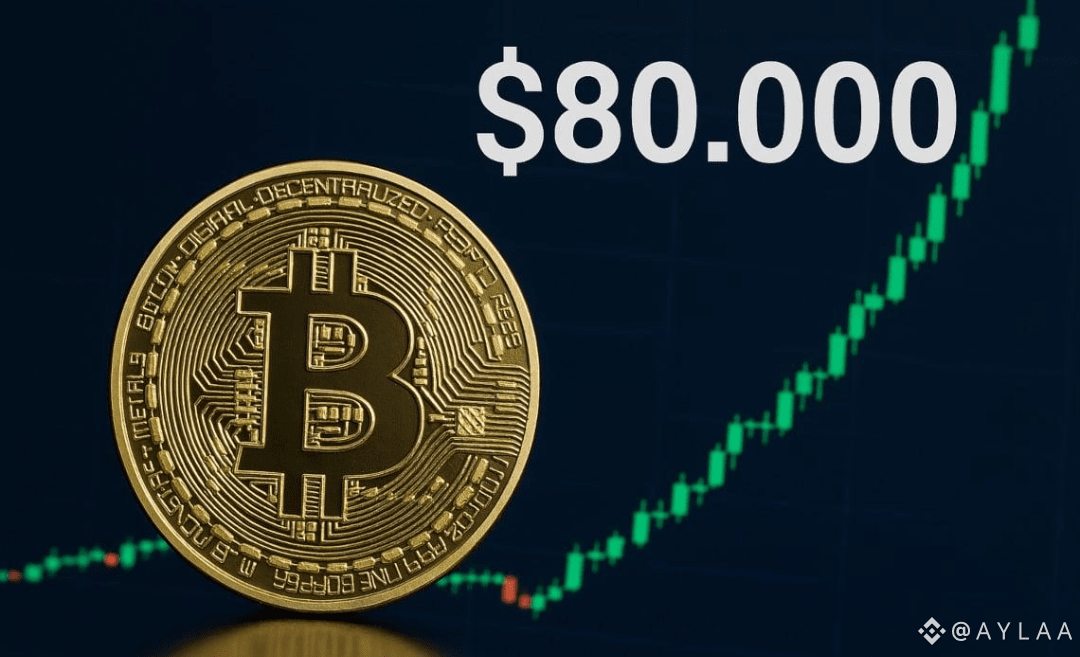
🚀 Bitcoin Reclaims $80,000! ₿
#BTCReaches$80000
Bitcoin has surged back above the $80,000 milestone, reaching a three-month high of around $81,238 on August 25. The rally has been fueled by renewed investor demand, a weaker U.S. dollar, and growing optimism around crypto regulation.
The big question now: Can BTC hold above $80K and make a run toward $90K–$100K? 👀
#Bitcoin #BTC #Crypto #BitcoinPrice #CryptoMarket
#BTCReaches$80000
Bitcoin has surged back above the $80,000 milestone, reaching a three-month high of around $81,238 on August 25. The rally has been fueled by renewed investor demand, a weaker U.S. dollar, and growing optimism around crypto regulation.
The big question now: Can BTC hold above $80K and make a run toward $90K–$100K? 👀
#Bitcoin #BTC #Crypto #BitcoinPrice #CryptoMarket
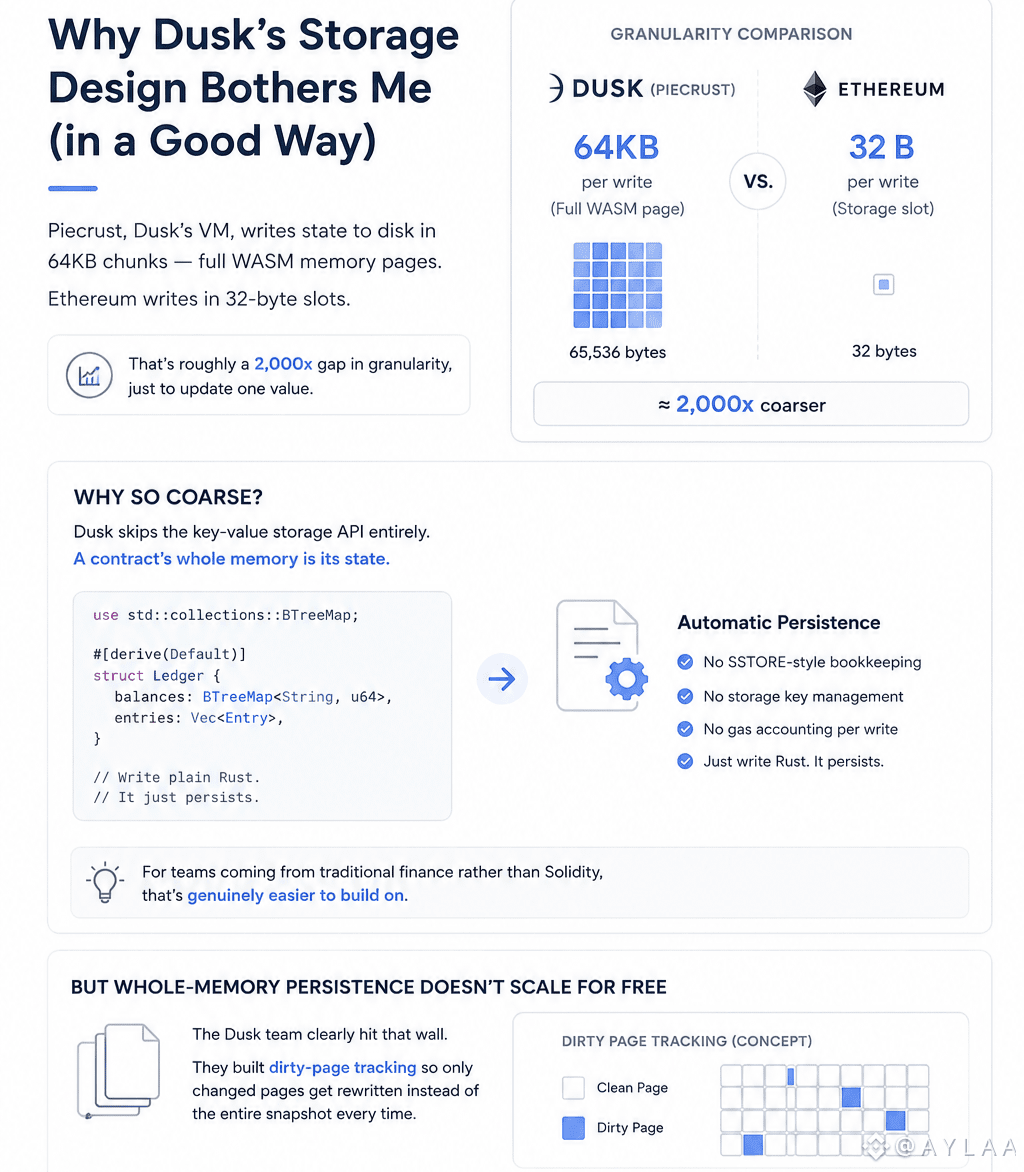
#dusk $DUSK @Dusk Something about Dusk's storage design bugs me, in a good way. Piecrust, their VM, writes state to disk in 64KB chunks full WASM memory pages. Ethereum writes in 32-byte slots. That's roughly a 2,000x gap in granularity, just to update one value.
Why so coarse? Dusk skips the key value storage API entirely. A contract's whole memory is its state. Write a plain Rust struct, use a BTreeMap, and it persists automatically no SSTORE-style bookkeeping. For teams coming from traditional finance rather than Solidity, that's genuinely easier to build on.
But whole-memory persistence doesn't scale for free, and the team clearly hit that wall. They built dirty-page tracking so only changed pages get rewritten instead of the entire snapshot every time. Smart fix. Still, the unit of "changed" is a 64KB page, not a few bytes. A ledger with thousands of entries, touched by one transaction, could still dirty several scattered pages just from how the allocator lays memory out. Feels like a real tradeoff, not a solved problem.
I haven't seen load benchmarks on this yet. So genuinely curious has anyone pressure-tested Piecrust under actual high-frequency settlement traffic?
Why so coarse? Dusk skips the key value storage API entirely. A contract's whole memory is its state. Write a plain Rust struct, use a BTreeMap, and it persists automatically no SSTORE-style bookkeeping. For teams coming from traditional finance rather than Solidity, that's genuinely easier to build on.
But whole-memory persistence doesn't scale for free, and the team clearly hit that wall. They built dirty-page tracking so only changed pages get rewritten instead of the entire snapshot every time. Smart fix. Still, the unit of "changed" is a 64KB page, not a few bytes. A ledger with thousands of entries, touched by one transaction, could still dirty several scattered pages just from how the allocator lays memory out. Feels like a real tradeoff, not a solved problem.
I haven't seen load benchmarks on this yet. So genuinely curious has anyone pressure-tested Piecrust under actual high-frequency settlement traffic?
🚀 #BitcoinStrongestWeekSinceMarch2023
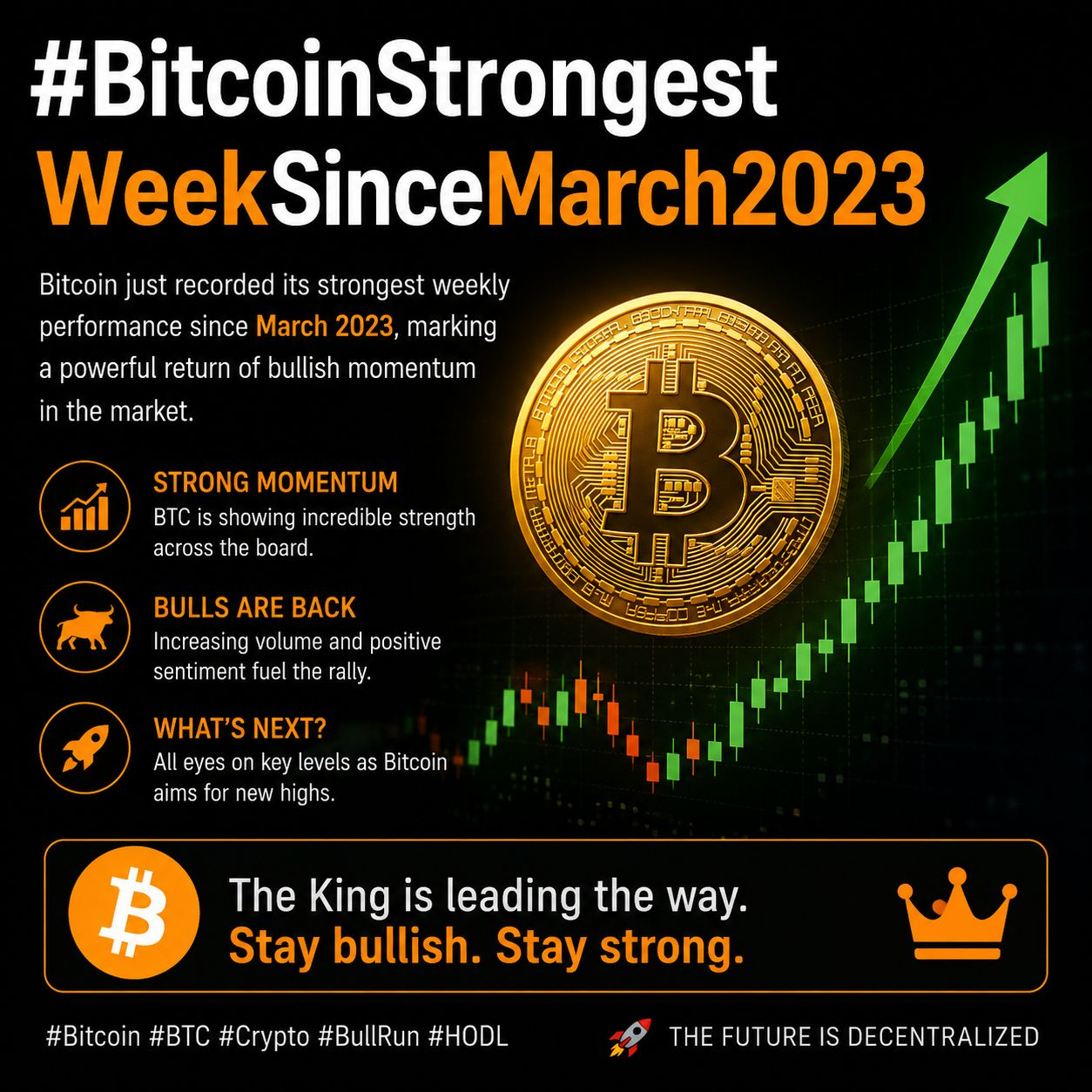
Bitcoin just delivered its strongest weekly performance since March 2023, surging roughly 22–24% and pushing toward the $80K level.
The rally shows how quickly momentum can return when liquidity, policy optimism, and short covering align. 🔥📈
The king is back in the spotlight. 👑₿
#Bitcoin #BTC #Crypto #BullRun #HODL
Bitcoin just delivered its strongest weekly performance since March 2023, surging roughly 22–24% and pushing toward the $80K level.
The rally shows how quickly momentum can return when liquidity, policy optimism, and short covering align. 🔥📈
The king is back in the spotlight. 👑₿
#Bitcoin #BTC #Crypto #BullRun #HODL
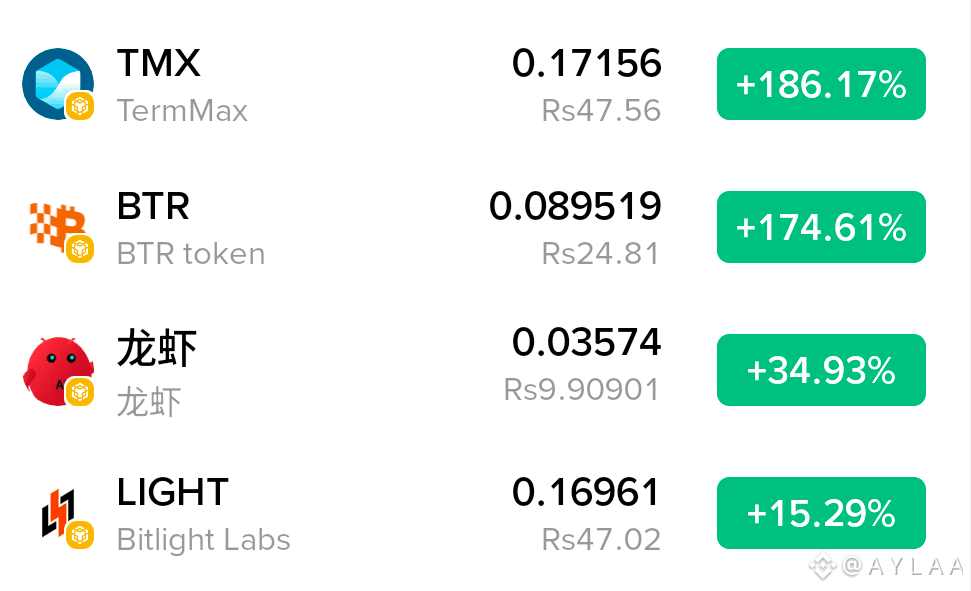
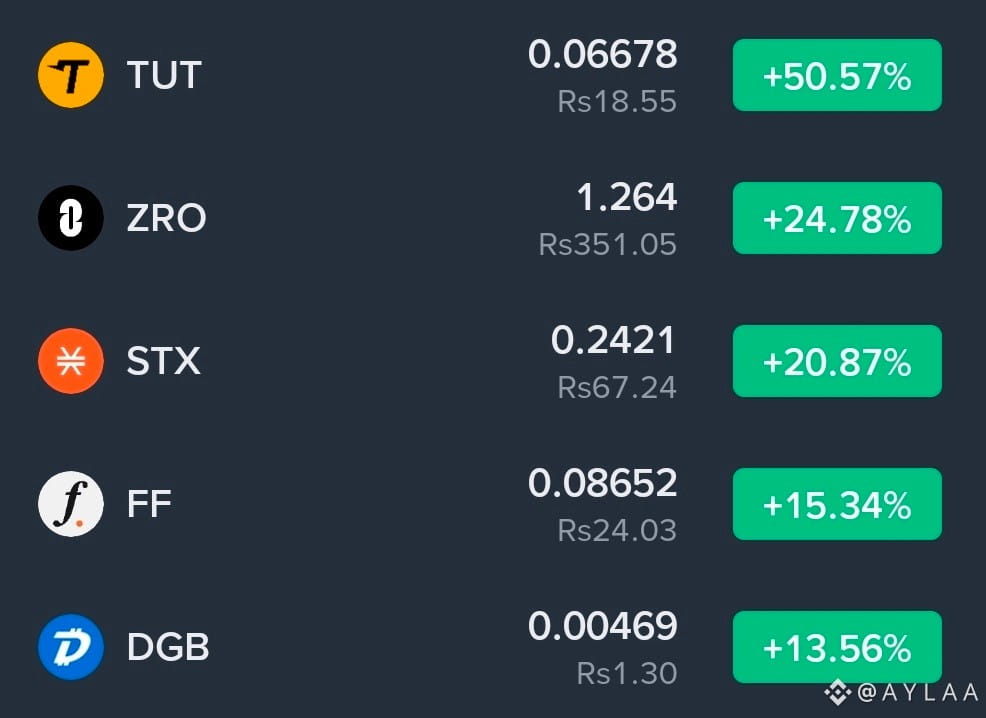
🚀 Crypto is heating up! $TUT leads the pack with a massive +50.57%, followed by $ZRO , $STX , FF, and DGB posting strong gains.
Green candles everywhere — but remember, momentum can move fast in both directions. 📈🔥
#Crypto #Altcoins #Bitcoin #Trading #CryptoMarket
Green candles everywhere — but remember, momentum can move fast in both directions. 📈🔥
#Crypto #Altcoins #Bitcoin #Trading #CryptoMarket
NVIDIA AI Server Prices Rise Over 15%
🚨 AI infrastructure is getting more expensive.
Some of NVIDIA’s biggest customers have reportedly been notified that prices for servers containing its AI chips could rise more than 15%, with higher memory-chip costs driving much of the increase.
The hikes are expected to affect systems featuring Vera Rubin and Grace Blackwell chips shipping early next year.
For AI companies and data-center operators, the message is clear: the AI boom is pushing demand — and hardware costs — higher. 📈
#NVIDIA #AI #NvidiaAIServerPricesRiseOver15% #ArtificialIntelligence #Semiconductors #NVDA #TechNews
🚨 AI infrastructure is getting more expensive.
Some of NVIDIA’s biggest customers have reportedly been notified that prices for servers containing its AI chips could rise more than 15%, with higher memory-chip costs driving much of the increase.
The hikes are expected to affect systems featuring Vera Rubin and Grace Blackwell chips shipping early next year.
For AI companies and data-center operators, the message is clear: the AI boom is pushing demand — and hardware costs — higher. 📈
#NVIDIA #AI #NvidiaAIServerPricesRiseOver15% #ArtificialIntelligence #Semiconductors #NVDA #TechNews

#dusk $DUSK @Dusk
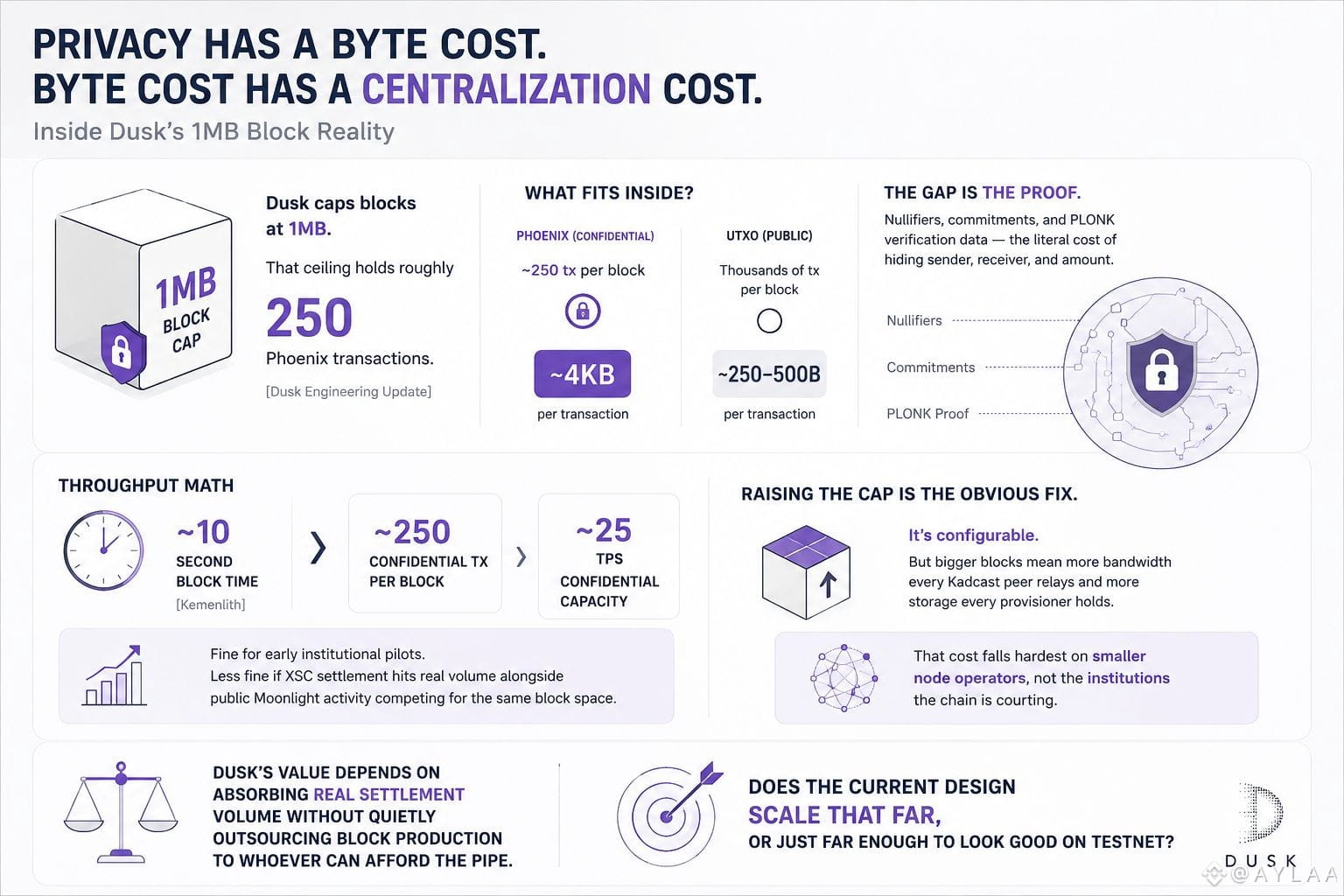
Dusk caps blocks at 1MB.....Sounds almost quaint next to chains bragging about gigabyte blocks until you run the math on what actually fits inside.👀
That ceiling holds roughly 250 Phoenix transactions . Divide it out and each confidential transfer eats close to 4KB, while a plain UTXO transfer elsewhere fits in a few hundred bytes. The gap is the ZK proof itself nullifiers, commitments, PLONK verification data the literal cost of hiding sender, receiver, and amount.
Run the throughput math against Dusk's roughly 10-second block time and confidential capacity lands around 25 TPS. Fine for early institutional pilots. Less fine if XSC securities settlement ever hits real volume alongside public Moonlight activity competing for the same block space.
Raising the cap is the obvious fix, and it's configurable. But bigger blocks mean more bandwidth every Kadcast peer relays and more storage every provisioner holds a cost that falls hardest on smaller node operators, not the institutions the chain is courting.
Privacy has a byte cost, and byte cost has a centralization cost. DUSK's value depends on absorbing real settlement volume without quietly outsourcing block production to whoever can afford the pipe.
Does the current design scale that far, or just far enough to look good on testnet?
Dusk caps blocks at 1MB.....Sounds almost quaint next to chains bragging about gigabyte blocks until you run the math on what actually fits inside.👀
That ceiling holds roughly 250 Phoenix transactions . Divide it out and each confidential transfer eats close to 4KB, while a plain UTXO transfer elsewhere fits in a few hundred bytes. The gap is the ZK proof itself nullifiers, commitments, PLONK verification data the literal cost of hiding sender, receiver, and amount.
Run the throughput math against Dusk's roughly 10-second block time and confidential capacity lands around 25 TPS. Fine for early institutional pilots. Less fine if XSC securities settlement ever hits real volume alongside public Moonlight activity competing for the same block space.
Raising the cap is the obvious fix, and it's configurable. But bigger blocks mean more bandwidth every Kadcast peer relays and more storage every provisioner holds a cost that falls hardest on smaller node operators, not the institutions the chain is courting.
Privacy has a byte cost, and byte cost has a centralization cost. DUSK's value depends on absorbing real settlement volume without quietly outsourcing block production to whoever can afford the pipe.
Does the current design scale that far, or just far enough to look good on testnet?

🚀 Crypto is heating up!
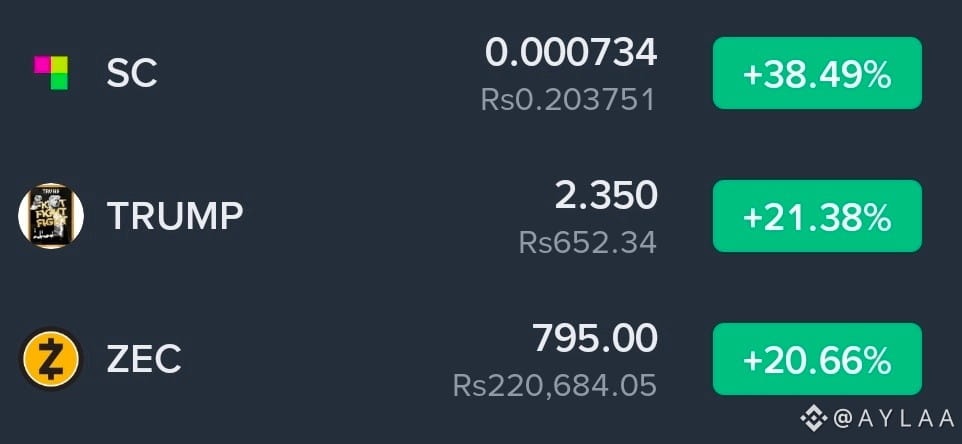
$SC is leading the move with an impressive +38.49%, while $TRUMP gains +21.38% and $ZEC jumps +20.66%.
Big moves, big momentum — but remember, volatility cuts both ways. 📈⚡
#Crypto #Bitcoin #Altcoins #Trading #CryptoMarket
$SC is leading the move with an impressive +38.49%, while $TRUMP gains +21.38% and $ZEC jumps +20.66%.
Big moves, big momentum — but remember, volatility cuts both ways. 📈⚡
#Crypto #Bitcoin #Altcoins #Trading #CryptoMarket
📉 S&P 500 Ends Weekly Win Streak
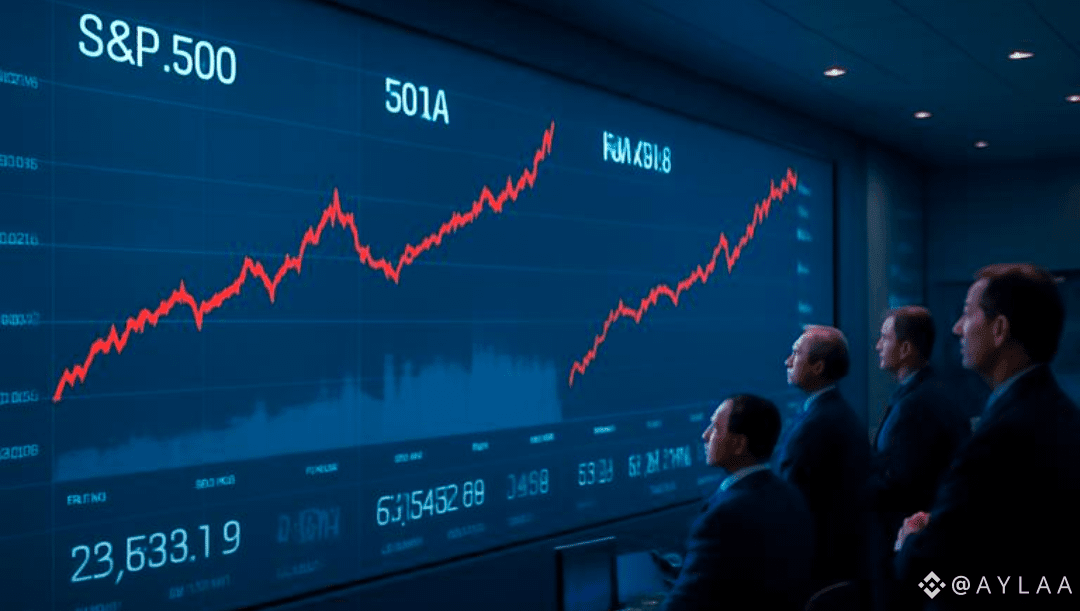
The S&P 500 snapped a three-week winning streak, falling 1.4% for the week despite a 0.4% rebound on Friday.
Rising Treasury yields, inflation concerns and geopolitical tensions kept investors cautious. Still, the index remains up about 12% year to date.
Markets now turn to next week’s Nvidia earnings and the Jackson Hole economic symposium. 👀
#SP500 #SP500EndsWeeklyWinStreak #Investing #WallStreet #Markets
The S&P 500 snapped a three-week winning streak, falling 1.4% for the week despite a 0.4% rebound on Friday.
Rising Treasury yields, inflation concerns and geopolitical tensions kept investors cautious. Still, the index remains up about 12% year to date.
Markets now turn to next week’s Nvidia earnings and the Jackson Hole economic symposium. 👀
#SP500 #SP500EndsWeeklyWinStreak #Investing #WallStreet #Markets
🚀 $TRUMP is making noise again!
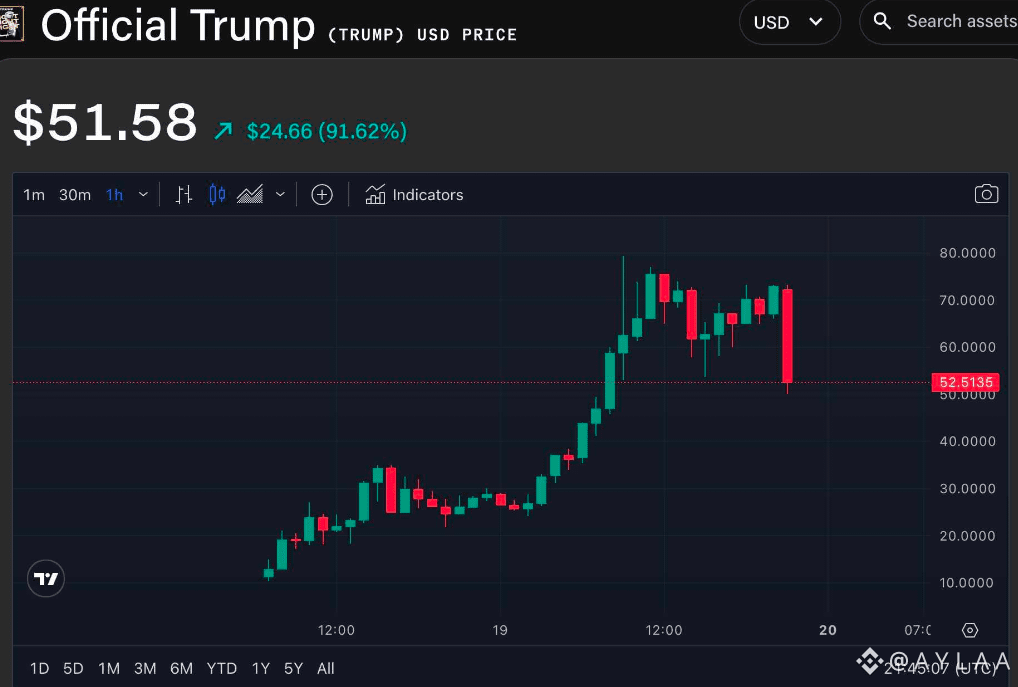
🔥 The token briefly broke above $3.40, marking its highest level since March 21, with a surge of nearly 100% over 24 hours.
📈 Momentum is heating up fast—but after such a sharp move, volatility could stay high.
👀 Is $TRUMP just getting started, or is a pullback coming?
#TRUMP #Crypto #MemeCoin #Solana
🔥 The token briefly broke above $3.40, marking its highest level since March 21, with a surge of nearly 100% over 24 hours.
📈 Momentum is heating up fast—but after such a sharp move, volatility could stay high.
👀 Is $TRUMP just getting started, or is a pullback coming?
#TRUMP #Crypto #MemeCoin #Solana

Verified
#dusk $DUSK @Dusk
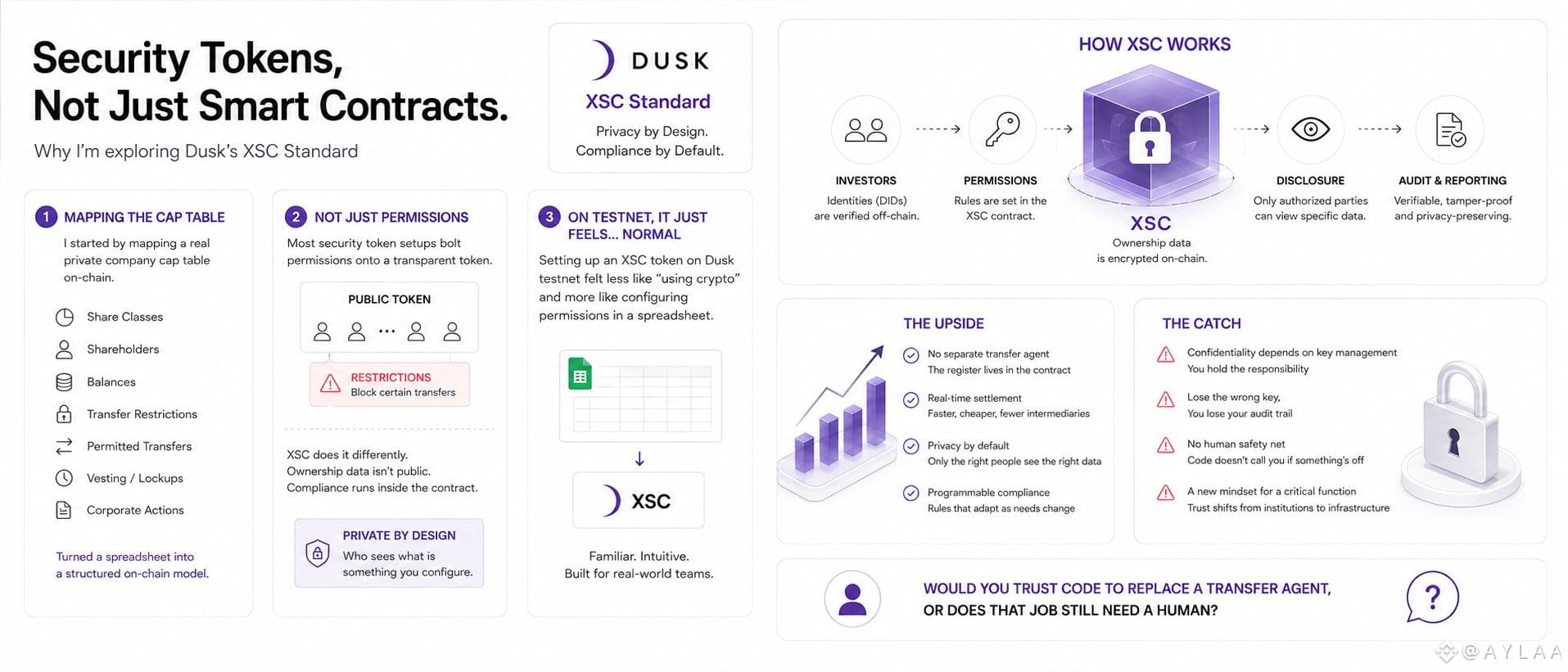
Ok so ....A few weeks back I tried sketching out what it'd take to move a small private company's cap table onto a blockchain. Not as a thought experiment actually mapping the fields. Names, share classes, transfer restrictions, who's allowed to buy from whom. That exercise is what got me into Dusk's XSC Standard.
Most security token setups I've looked at bolt permissions onto a transparent token. You can see every balance, every holder, every transfer the restrictions just stop certain wallets from moving funds. XSC does something different. The ownership data itself isn't sitting there in plain view. Compliance rules run inside the contract, and who gets to see what is something you actually configure, not something the chain forces on everyone by default.
Running through Dusk's testnet, what got me wasn't some flashy feature. It was how normal the process felt — closer to setting up permissions in a spreadsheet than "using crypto." That's honestly reassuring for something meant to hold real securities.
The upside is real: no separate transfer agent keeping a private ledger somewhere else. The register lives in the contract. The catch is that your confidentiality now depends on you managing keys properly — lose the wrong key and you've lost your own audit trail, something a traditional registrar would never let happen.
Would you trust code to replace a transfer agent, or does that job still need a human?
Ok so ....A few weeks back I tried sketching out what it'd take to move a small private company's cap table onto a blockchain. Not as a thought experiment actually mapping the fields. Names, share classes, transfer restrictions, who's allowed to buy from whom. That exercise is what got me into Dusk's XSC Standard.
Most security token setups I've looked at bolt permissions onto a transparent token. You can see every balance, every holder, every transfer the restrictions just stop certain wallets from moving funds. XSC does something different. The ownership data itself isn't sitting there in plain view. Compliance rules run inside the contract, and who gets to see what is something you actually configure, not something the chain forces on everyone by default.
Running through Dusk's testnet, what got me wasn't some flashy feature. It was how normal the process felt — closer to setting up permissions in a spreadsheet than "using crypto." That's honestly reassuring for something meant to hold real securities.
The upside is real: no separate transfer agent keeping a private ledger somewhere else. The register lives in the contract. The catch is that your confidentiality now depends on you managing keys properly — lose the wrong key and you've lost your own audit trail, something a traditional registrar would never let happen.
Would you trust code to replace a transfer agent, or does that job still need a human?
Log in to explore more content