

#bitcoin
bitcoin
338.9M views
768,285 Discussing
Hot
Latest

·
--
🪙 The Citi research team, led by Alex Saunders, has officially raised its base target for the flagship cryptocurrency to $113,000.
The primary focus is on the continued expansion of institutional capital. According to the bank's estimates, net inflows into spot Bitcoin ETFs will reach around $5 billion over the next 12 months, creating sustained buying pressure.
Analysts' confidence was bolstered by Bitcoin successfully breaking and holding above the 200-day moving average. This is a crucial long-term trend indicator; breaking through it traditionally triggers a sharp improvement in market sentiment.
The forecast is perfectly timed at the start of the historically strong fourth quarter for crypto (the so-called "Uptober"), a period when digital assets statistically deliver their highest returns.
This report is yet another clear confirmation that major Wall Street players no longer view levels above $100,000 as a fantasy. Instead, they are systematically factoring six-figure BTC prices into their baseline investment scenarios.
#BTC #BITCOIN #ETF $BTC
{future}(BTCUSDT)
🪙 The Citi research team, led by Alex Saunders, has officially raised its base target for the flagship cryptocurrency to $113,000.
The primary focus is on the continued expansion of institutional capital. According to the bank's estimates, net inflows into spot Bitcoin ETFs will reach around $5 billion over the next 12 months, creating sustained buying pressure.
Analysts' confidence was bolstered by Bitcoin successfully breaking and holding above the 200-day moving average. This is a crucial long-term trend indicator; breaking through it traditionally triggers a sharp improvement in market sentiment.
The forecast is perfectly timed at the start of the historically strong fourth quarter for crypto (the so-called "Uptober"), a period when digital assets statistically deliver their highest returns.
This report is yet another clear confirmation that major Wall Street players no longer view levels above $100,000 as a fantasy. Instead, they are systematically factoring six-figure BTC prices into their baseline investment scenarios.
#BTC #BITCOIN #ETF $BTC
The primary focus is on the continued expansion of institutional capital. According to the bank's estimates, net inflows into spot Bitcoin ETFs will reach around $5 billion over the next 12 months, creating sustained buying pressure.
Analysts' confidence was bolstered by Bitcoin successfully breaking and holding above the 200-day moving average. This is a crucial long-term trend indicator; breaking through it traditionally triggers a sharp improvement in market sentiment.
The forecast is perfectly timed at the start of the historically strong fourth quarter for crypto (the so-called "Uptober"), a period when digital assets statistically deliver their highest returns.
This report is yet another clear confirmation that major Wall Street players no longer view levels above $100,000 as a fantasy. Instead, they are systematically factoring six-figure BTC prices into their baseline investment scenarios.
#BTC #BITCOIN #ETF $BTC
ViktoriaG:
значит жди падения раз кто то что то закладывает😁
1
2
758

·
--
🔥 Three projects. Three different ecosystems. One question… 👀
Which one has the strongest upside potential?
⚡ $STX — Bitcoin Layer narrative with smart contracts and BTC ecosystem growth.
🌐 $BTW — Emerging project watched by traders for momentum and community growth.
🌙 $MOVR — Moonriver ecosystem token focused on cross-chain Web3 development and infrastructure.
👇 Which coin are you choosing?
#Crypto #Altcoins #Bitcoin #Web3
⚠️ DYOR — Crypto investments carry risk.
🔥 Three projects. Three different ecosystems. One question… 👀
Which one has the strongest upside potential?
⚡ $STX — Bitcoin Layer narrative with smart contracts and BTC ecosystem growth.
🌐 $BTW — Emerging project watched by traders for momentum and community growth.
🌙 $MOVR — Moonriver ecosystem token focused on cross-chain Web3 development and infrastructure.
👇 Which coin are you choosing?
#Crypto #Altcoins #Bitcoin #Web3
⚠️ DYOR — Crypto investments carry risk.
Which one has the strongest upside potential?
⚡ $STX — Bitcoin Layer narrative with smart contracts and BTC ecosystem growth.
🌐 $BTW — Emerging project watched by traders for momentum and community growth.
🌙 $MOVR — Moonriver ecosystem token focused on cross-chain Web3 development and infrastructure.
👇 Which coin are you choosing?
#Crypto #Altcoins #Bitcoin #Web3
⚠️ DYOR — Crypto investments carry risk.
🟠 $STX — Bitcoin Power
🔥 $BTW — Hidden Potential
🚀 $MOVR — Ecosystem Comeback
18 hr(s) left

Follow 🎁
From MaheshJBG
3
1.9k


·
--
Bullish
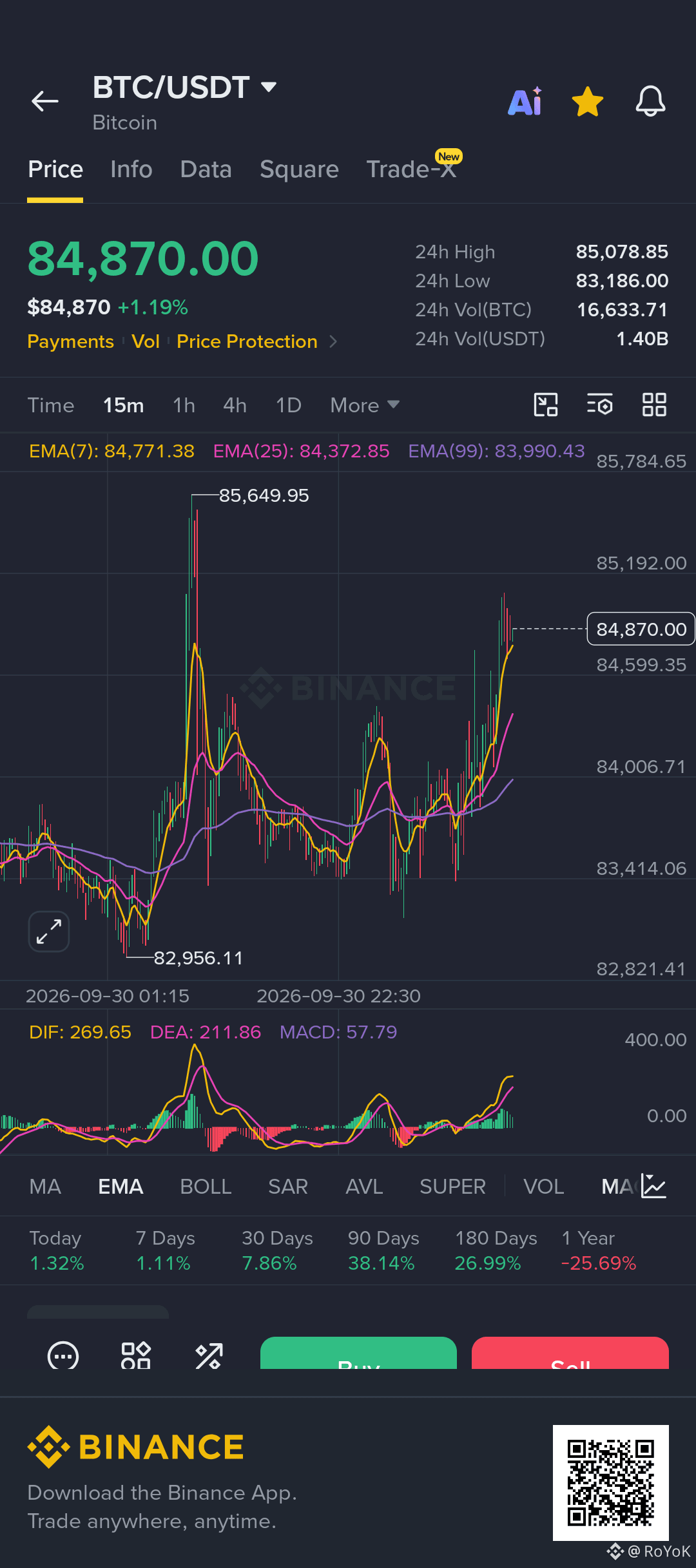
☝️ Look at the calendar. Q4 has just opened, historically the hunting season for the bulls, and BTC is sitting right on the knife's edge at 83,550
After an epic +42.7% Q3, the best since 2017, the post-PCE rally (3.4% vs 3.7% expected) shamefully stalled at 85.6K, leaving a trail of broken dreams and a return to the suffocating 82K-85K range
🤔 But do not let the stale price action fool you. Right now, a microscopic 3% dip is all it takes to test two completely different groups of holders.
Around 60M in estimated long liquidations is clustered near 83K, just begging to be swept. Meanwhile, the smart money ETF cost basis is comfortably sitting at 81.7K-82.2K.
This is a textbook liquidity trap. If you panic sell here, you are the exit liquidity. The institutional floor is lower, waiting to catch the falling knives.
TRADE PARAMETERS
Pair: BTCUSDT (1D Timeframe)
Bias: Bullish Discount Re-accumulation / Liquidation Sweep
Buy Zone: 80,800 to 82,500
Stop Loss: 79,500 (1D close below the ETF cost basis floor)
PROFIT TARGETS
Target 1: 85,600 (Sweep of PCE rally peak for immediate risk neutralization)
Target 2: 87,000 (Local liquidity sweep and psychological expansion block)
Target 3: 90,000 (Full liquidity takeover and macro psychological milestone)
TECHNICAL CONFLUENCES
1. Q4 Seasonality and ETF Floor Defense at 81.7K-82.2K
The average ETF cost basis provides a massive institutional defense line. A flush down to 81K is a calculated gift for smart money, not a structural crash.
2. Liquidation Cluster at 83K
Roughly 60M in long liquidations sit right here, acting as a massive magnet for a quick lower-wick hunt to clear retail stops before the real Q4 expansion begins.
3. Stalled PCE Rally at 85.6K
The failure to hold the 3.4% PCE pump has created a dense volatility coil at the top of the range, setting the stage for a violent buy-side expansion once the weak hands are flushed out
DYOR + NFA
#bitcoin #tradingtechnique $BTC
{future}(BTCUSDT)
☝️ Look at the calendar. Q4 has just opened, historically the hunting season for the bulls, and BTC is sitting right on the knife's edge at 83,550
After an epic +42.7% Q3, the best since 2017, the post-PCE rally (3.4% vs 3.7% expected) shamefully stalled at 85.6K, leaving a trail of broken dreams and a return to the suffocating 82K-85K range
🤔 But do not let the stale price action fool you. Right now, a microscopic 3% dip is all it takes to test two completely different groups of holders.
Around 60M in estimated long liquidations is clustered near 83K, just begging to be swept. Meanwhile, the smart money ETF cost basis is comfortably sitting at 81.7K-82.2K.
This is a textbook liquidity trap. If you panic sell here, you are the exit liquidity. The institutional floor is lower, waiting to catch the falling knives.
TRADE PARAMETERS
Pair: BTCUSDT (1D Timeframe)
Bias: Bullish Discount Re-accumulation / Liquidation Sweep
Buy Zone: 80,800 to 82,500
Stop Loss: 79,500 (1D close below the ETF cost basis floor)
PROFIT TARGETS
Target 1: 85,600 (Sweep of PCE rally peak for immediate risk neutralization)
Target 2: 87,000 (Local liquidity sweep and psychological expansion block)
Target 3: 90,000 (Full liquidity takeover and macro psychological milestone)
TECHNICAL CONFLUENCES
1. Q4 Seasonality and ETF Floor Defense at 81.7K-82.2K
The average ETF cost basis provides a massive institutional defense line. A flush down to 81K is a calculated gift for smart money, not a structural crash.
2. Liquidation Cluster at 83K
Roughly 60M in long liquidations sit right here, acting as a massive magnet for a quick lower-wick hunt to clear retail stops before the real Q4 expansion begins.
3. Stalled PCE Rally at 85.6K
The failure to hold the 3.4% PCE pump has created a dense volatility coil at the top of the range, setting the stage for a violent buy-side expansion once the weak hands are flushed out
DYOR + NFA
#bitcoin #tradingtechnique $BTC
After an epic +42.7% Q3, the best since 2017, the post-PCE rally (3.4% vs 3.7% expected) shamefully stalled at 85.6K, leaving a trail of broken dreams and a return to the suffocating 82K-85K range
🤔 But do not let the stale price action fool you. Right now, a microscopic 3% dip is all it takes to test two completely different groups of holders.
Around 60M in estimated long liquidations is clustered near 83K, just begging to be swept. Meanwhile, the smart money ETF cost basis is comfortably sitting at 81.7K-82.2K.
This is a textbook liquidity trap. If you panic sell here, you are the exit liquidity. The institutional floor is lower, waiting to catch the falling knives.
TRADE PARAMETERS
Pair: BTCUSDT (1D Timeframe)
Bias: Bullish Discount Re-accumulation / Liquidation Sweep
Buy Zone: 80,800 to 82,500
Stop Loss: 79,500 (1D close below the ETF cost basis floor)
PROFIT TARGETS
Target 1: 85,600 (Sweep of PCE rally peak for immediate risk neutralization)
Target 2: 87,000 (Local liquidity sweep and psychological expansion block)
Target 3: 90,000 (Full liquidity takeover and macro psychological milestone)
TECHNICAL CONFLUENCES
1. Q4 Seasonality and ETF Floor Defense at 81.7K-82.2K
The average ETF cost basis provides a massive institutional defense line. A flush down to 81K is a calculated gift for smart money, not a structural crash.
2. Liquidation Cluster at 83K
Roughly 60M in long liquidations sit right here, acting as a massive magnet for a quick lower-wick hunt to clear retail stops before the real Q4 expansion begins.
3. Stalled PCE Rally at 85.6K
The failure to hold the 3.4% PCE pump has created a dense volatility coil at the top of the range, setting the stage for a violent buy-side expansion once the weak hands are flushed out
DYOR + NFA
#bitcoin #tradingtechnique $BTC

2
200

·
--
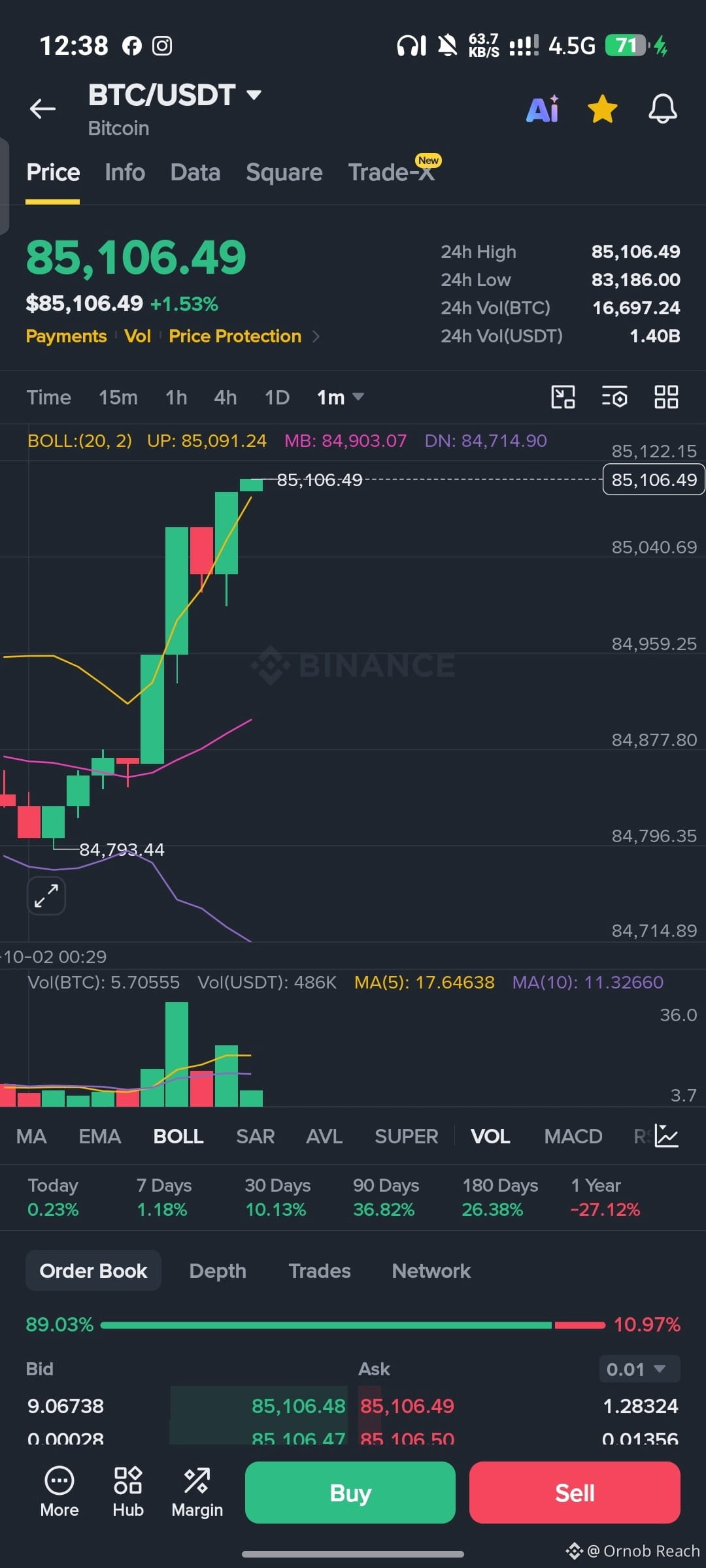
$BTC broke past $85,100 to hit a new 24-hour high! 🚀
Showing strong bullish momentum on the 1-minute chart. What do you think the next target for Bitcoin could be?
#Bitcoin #BTC #Crypto #BinanceSquareBTC
$BTC broke past $85,100 to hit a new 24-hour high! 🚀
Showing strong bullish momentum on the 1-minute chart. What do you think the next target for Bitcoin could be?
#Bitcoin #BTC #Crypto #BinanceSquareBTC
Showing strong bullish momentum on the 1-minute chart. What do you think the next target for Bitcoin could be?
#Bitcoin #BTC #Crypto #BinanceSquareBTC
eddo meddo:
Back to 82k
1
1
285

·
--
Bullish
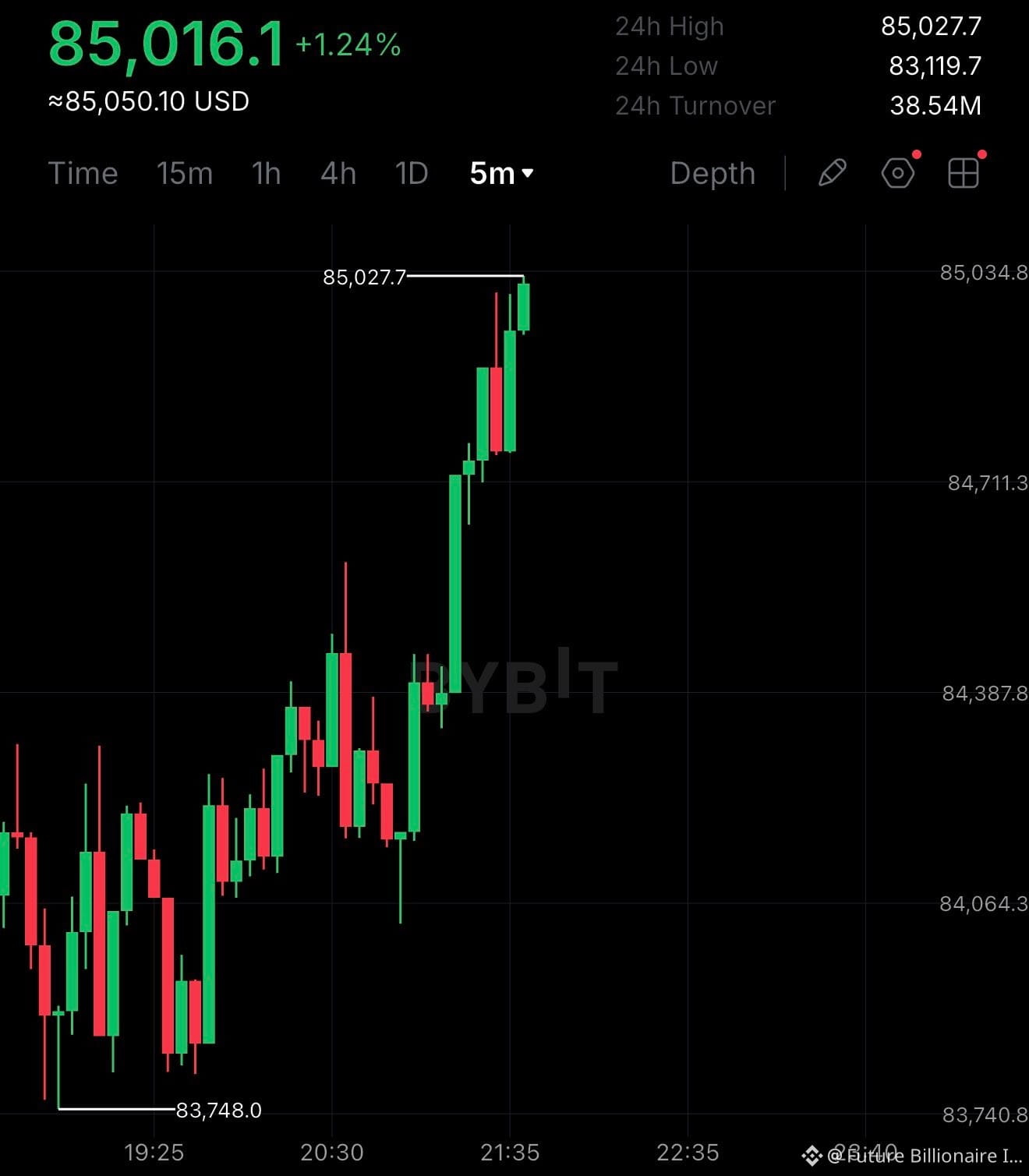
🚨 BITCOIN $BTC IS ON THE MOVE AGAIN: $85,000 BROKEN! 🚀
The bulls are back in full control, and momentum is building FAST! 🔥
💥 Key Levels to Watch:
🎯 Current Target: Reclaiming $87,000+
🛡️ Major Support Zone: $82,000 – $83,000
🚀 Next Big Milestone: The road to $90,000
#BTC #Crypto #BinanceSquare #bitcoin
{spot}(BTCUSDT)
🚨 BITCOIN $BTC IS ON THE MOVE AGAIN: $85,000 BROKEN! 🚀
The bulls are back in full control, and momentum is building FAST! 🔥
💥 Key Levels to Watch:
🎯 Current Target: Reclaiming $87,000+
🛡️ Major Support Zone: $82,000 – $83,000
🚀 Next Big Milestone: The road to $90,000
#BTC #Crypto #BinanceSquare #bitcoin
The bulls are back in full control, and momentum is building FAST! 🔥
💥 Key Levels to Watch:
🎯 Current Target: Reclaiming $87,000+
🛡️ Major Support Zone: $82,000 – $83,000
🚀 Next Big Milestone: The road to $90,000
#BTC #Crypto #BinanceSquare #bitcoin
1
37
🚨 TRADING LESSON #07 | @Adan_ProTrader
🎯 RISK-REWARD RATIO — BEFORE YOU ENTER, KNOW YOUR UPSIDE & DOWNSIDE
A common mistake is focusing only on how much you can make.
Professional risk planning starts with:
“How much am I risking to make how much?” 📊
🔎 WHAT IS RISK/REWARD?
If you risk $10 to potentially make $20:
🛑 Risk = $10
🎯 Potential Reward = $20
That is:
1 : 2 RISK/REWARD
Other examples:
❌ Risk $20 → Reward $20 = 1:1
✅ Risk $10 → Reward $20 = 1:2
📈 Risk $10 → Reward $30 = 1:3
🧠 SIMPLE RULE
Before entering a $BTC trade, define:
🟢 Entry
🛑 Stop-Loss
🎯 Take-Profit
📊 Risk/Reward
A good-looking setup can still be a poor trade if the potential reward doesn't justify the risk.
💡 PRO TIP:
Don't chase trades.
Wait for setups where the potential reward and your planned risk make sense for your strategy.
💬 YOUR TURN:
Which Risk/Reward do you usually look for?
A) 1:1
B) 1:2
C) 1:3+
D) It depends on the setup
👇 Comment your answer!
$BTC $ETH $ADA
⚠️ Educational content only — not financial advice. Crypto is highly volatile. Do your own research and manage your risk.
#Binance #BTC #Bitcoin #Adan_ProTrader
🚨 TRADING LESSON #07 | @Adan_ProTrader
🎯 RISK-REWARD RATIO — BEFORE YOU ENTER, KNOW YOUR UPSIDE & DOWNSIDE
A common mistake is focusing only on how much you can make.
Professional risk planning starts with:
“How much am I risking to make how much?” 📊
🔎 WHAT IS RISK/REWARD?
If you risk $10 to potentially make $20:
🛑 Risk = $10
🎯 Potential Reward = $20
That is:
1 : 2 RISK/REWARD
Other examples:
❌ Risk $20 → Reward $20 = 1:1
✅ Risk $10 → Reward $20 = 1:2
📈 Risk $10 → Reward $30 = 1:3
🧠 SIMPLE RULE
Before entering a $BTC trade, define:
🟢 Entry
🛑 Stop-Loss
🎯 Take-Profit
📊 Risk/Reward
A good-looking setup can still be a poor trade if the potential reward doesn't justify the risk.
💡 PRO TIP:
Don't chase trades.
Wait for setups where the potential reward and your planned risk make sense for your strategy.
💬 YOUR TURN:
Which Risk/Reward do you usually look for?
A) 1:1
B) 1:2
C) 1:3+
D) It depends on the setup
👇 Comment your answer!
$BTC $ETH $ADA
⚠️ Educational content only — not financial advice. Crypto is highly volatile. Do your own research and manage your risk.
#Binance #BTC #Bitcoin #Adan_ProTrader
🎯 RISK-REWARD RATIO — BEFORE YOU ENTER, KNOW YOUR UPSIDE & DOWNSIDE
A common mistake is focusing only on how much you can make.
Professional risk planning starts with:
“How much am I risking to make how much?” 📊
🔎 WHAT IS RISK/REWARD?
If you risk $10 to potentially make $20:
🛑 Risk = $10
🎯 Potential Reward = $20
That is:
1 : 2 RISK/REWARD
Other examples:
❌ Risk $20 → Reward $20 = 1:1
✅ Risk $10 → Reward $20 = 1:2
📈 Risk $10 → Reward $30 = 1:3
🧠 SIMPLE RULE
Before entering a $BTC trade, define:
🟢 Entry
🛑 Stop-Loss
🎯 Take-Profit
📊 Risk/Reward
A good-looking setup can still be a poor trade if the potential reward doesn't justify the risk.
💡 PRO TIP:
Don't chase trades.
Wait for setups where the potential reward and your planned risk make sense for your strategy.
💬 YOUR TURN:
Which Risk/Reward do you usually look for?
A) 1:1
B) 1:2
C) 1:3+
D) It depends on the setup
👇 Comment your answer!
$BTC $ETH $ADA
⚠️ Educational content only — not financial advice. Crypto is highly volatile. Do your own research and manage your risk.
#Binance #BTC #Bitcoin #Adan_ProTrader
111

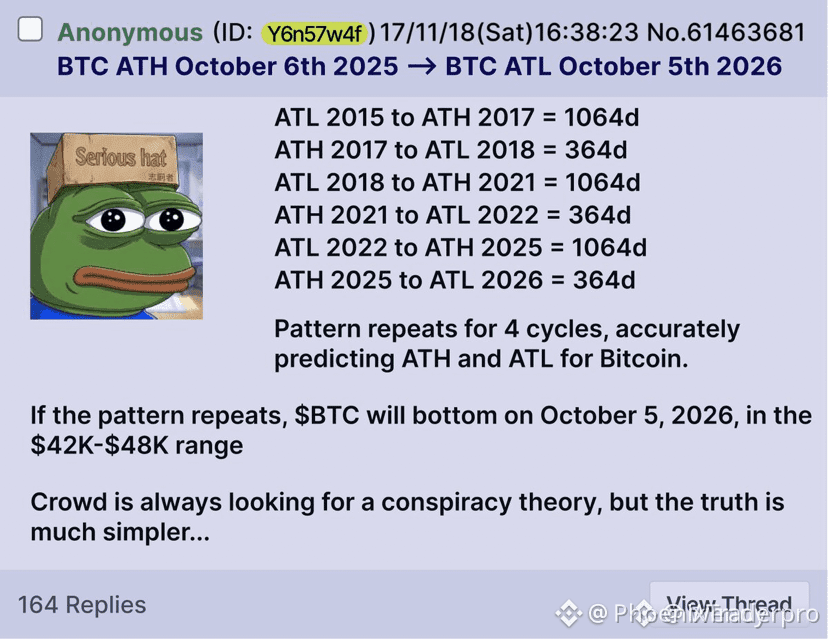
🚨 HISTORICAL CYCLE TIMING WARNS $BTC IS APPROACHING A FINAL LIQUIDITY FLUSH! 📉
Macro historical timing has repeatedly caught over-leveraged traders off guard 12 to 13 months post-peak. Every major macro bottom since 2015 has concluded with a swift capitulation wick to clean the order book before structural expansion begins. 📊
With $BTC holding the mid-80Ks after bouncing off the 61.5K June low, market structure suggests this move could be a temporary relief bounce before smart money executes one last sweep. 🔍 Legendary cycle fractal windows indicate volatility is loading right as consensus turns bullish. ⚡
💬 Are you holding cash for one final capitulation wick, or is the bottom already in? 👇
⚠️ Not financial advice. Always manage your risk. 🛡️
🏷️ #BTC #Bitcoin #Crypto #Macro
🎯 👁️
🚨 HISTORICAL CYCLE TIMING WARNS $BTC IS APPROACHING A FINAL LIQUIDITY FLUSH! 📉
Macro historical timing has repeatedly caught over-leveraged traders off guard 12 to 13 months post-peak. Every major macro bottom since 2015 has concluded with a swift capitulation wick to clean the order book before structural expansion begins. 📊
With $BTC holding the mid-80Ks after bouncing off the 61.5K June low, market structure suggests this move could be a temporary relief bounce before smart money executes one last sweep. 🔍 Legendary cycle fractal windows indicate volatility is loading right as consensus turns bullish. ⚡
💬 Are you holding cash for one final capitulation wick, or is the bottom already in? 👇
⚠️ Not financial advice. Always manage your risk. 🛡️
🏷️ #BTC #Bitcoin #Crypto #Macro
🎯 👁️
Macro historical timing has repeatedly caught over-leveraged traders off guard 12 to 13 months post-peak. Every major macro bottom since 2015 has concluded with a swift capitulation wick to clean the order book before structural expansion begins. 📊
With $BTC holding the mid-80Ks after bouncing off the 61.5K June low, market structure suggests this move could be a temporary relief bounce before smart money executes one last sweep. 🔍 Legendary cycle fractal windows indicate volatility is loading right as consensus turns bullish. ⚡
💬 Are you holding cash for one final capitulation wick, or is the bottom already in? 👇
⚠️ Not financial advice. Always manage your risk. 🛡️
🏷️ #BTC #Bitcoin #Crypto #Macro
🎯 👁️
22

·
--
Bullish
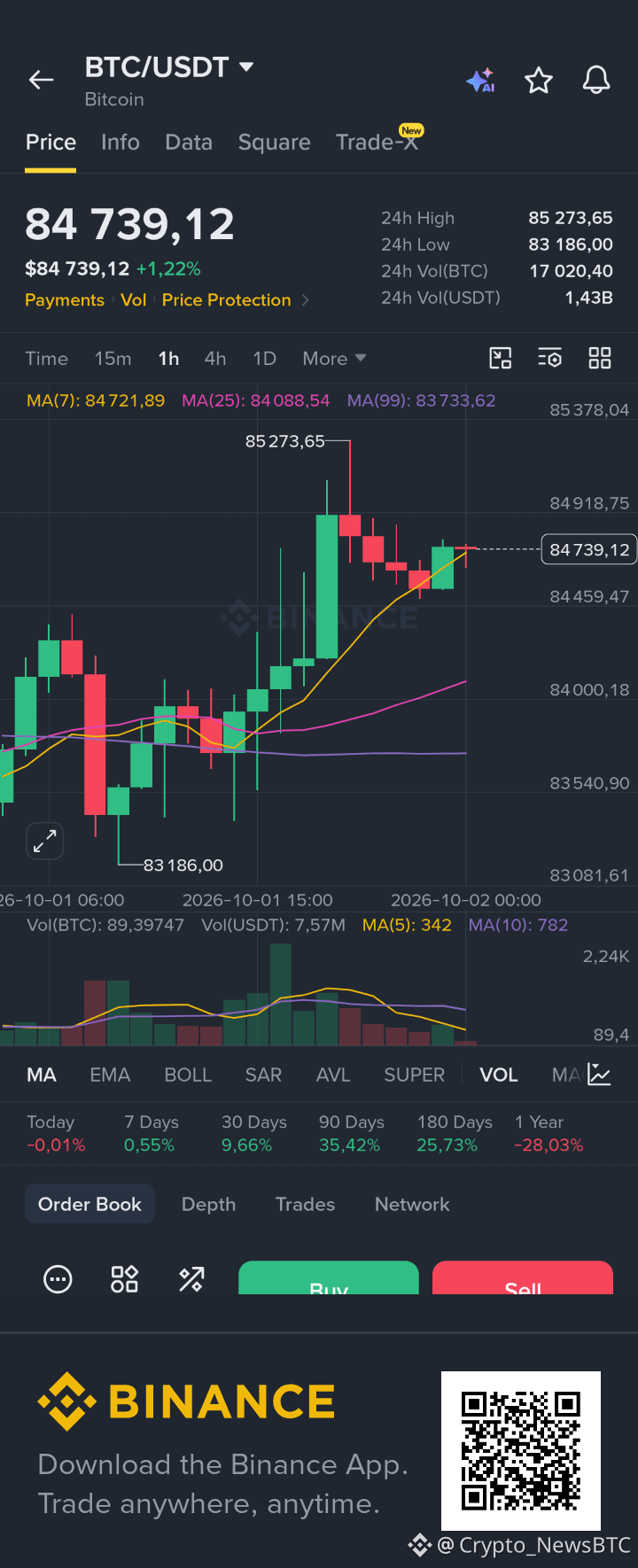
📊 Why I'm watching the85,600 zone this week
Bitcoin just flipped green for 2026 and is holding above 84,500 after a strong Q3 (+43%, best since 2017). Price bounced twice off the82,900 support, and spot ETF flows are stabilizing a healthy structure, not euphoria.
My scenarios: 🟢 Daily close above 85,600 (Sept high) → targeting88,000–90,000
🔴 Break below82,900 → I cut, reassess at $80,000
Risk management: never more than 2% of the portfolio per trade, no matter how convicted I am.
Bullish or bearish this week? Drop your reasoning below 👇 I read every comment.
#bitcoin #BTC #crypto #TechnicalAnalysis
$BTC
{spot}(BTCUSDT)
📊 Why I'm watching the85,600 zone this week
Bitcoin just flipped green for 2026 and is holding above 84,500 after a strong Q3 (+43%, best since 2017). Price bounced twice off the82,900 support, and spot ETF flows are stabilizing a healthy structure, not euphoria.
My scenarios: 🟢 Daily close above 85,600 (Sept high) → targeting88,000–90,000
🔴 Break below82,900 → I cut, reassess at $80,000
Risk management: never more than 2% of the portfolio per trade, no matter how convicted I am.
Bullish or bearish this week? Drop your reasoning below 👇 I read every comment.
#bitcoin #BTC #crypto #TechnicalAnalysis
$BTC
Bitcoin just flipped green for 2026 and is holding above 84,500 after a strong Q3 (+43%, best since 2017). Price bounced twice off the82,900 support, and spot ETF flows are stabilizing a healthy structure, not euphoria.
My scenarios: 🟢 Daily close above 85,600 (Sept high) → targeting88,000–90,000
🔴 Break below82,900 → I cut, reassess at $80,000
Risk management: never more than 2% of the portfolio per trade, no matter how convicted I am.
Bullish or bearish this week? Drop your reasoning below 👇 I read every comment.
#bitcoin #BTC #crypto #TechnicalAnalysis
$BTC
59
·
--
Bullish
Verified
Bitcoin finished October green in 10 of the past 13 years. So why not just buy and wait?
Because “Uptober” won’t pay your liquidation bill. This October brings a Fed decision, inflation data and Japan risk. Here’s my $BTC roadmap. 🍂
September delivered a 6.33% gain and a third consecutive positive month. That gives bulls momentum—but the next move still needs buyers.
The levels I’m watching:
→ $82,000: support bulls need to defend.
→ $80,000: a sustained break below would weaken the bullish setup.
→ $85,000–$85,500: the first resistance zone to reclaim.
→ $87,500: turning this into support would strengthen the case for $90,000–$95,000.
Those are conditional scenarios. A wick through resistance isn’t confirmation.
📅 October’s key dates:
• Oct. 2: US jobs report—payrolls and unemployment.
• Oct. 7: Fed meeting minutes.
• Oct. 14: CPI inflation.
• Oct. 15: PPI inflation.
• Oct. 28: Fed rate decision and press conference.
• Oct. 29: PCE inflation.
• Oct. 30: Bank of Japan policy decision.
Notice the order: the Fed decides BEFORE the next PCE release. Then Japan closes the month with another potential volatility catalyst.
My take: history gives us context, not a trading signal.
I want renewed ETF buying and a breakout that holds after the initial excitement fades. Hotter inflation or a sudden strengthening of the yen could pressure leveraged positions. Softer data would help, but buyers still have to follow through.
Ten green Octobers out of thirteen is a historical record—not a guaranteed 77% chance of profit this time.
I’m watching the evidence. The nickname can wait.
What would make you trust this rally: BTC holding above $87,500 or a less hawkish Fed?
#Uptober
{future}(BTCUSDT)
#bitcoin #fomc
Bitcoin finished October green in 10 of the past 13 years. So why not just buy and wait?
Because “Uptober” won’t pay your liquidation bill. This October brings a Fed decision, inflation data and Japan risk. Here’s my $BTC roadmap. 🍂
September delivered a 6.33% gain and a third consecutive positive month. That gives bulls momentum—but the next move still needs buyers.
The levels I’m watching:
→ $82,000: support bulls need to defend.
→ $80,000: a sustained break below would weaken the bullish setup.
→ $85,000–$85,500: the first resistance zone to reclaim.
→ $87,500: turning this into support would strengthen the case for $90,000–$95,000.
Those are conditional scenarios. A wick through resistance isn’t confirmation.
📅 October’s key dates:
• Oct. 2: US jobs report—payrolls and unemployment.
• Oct. 7: Fed meeting minutes.
• Oct. 14: CPI inflation.
• Oct. 15: PPI inflation.
• Oct. 28: Fed rate decision and press conference.
• Oct. 29: PCE inflation.
• Oct. 30: Bank of Japan policy decision.
Notice the order: the Fed decides BEFORE the next PCE release. Then Japan closes the month with another potential volatility catalyst.
My take: history gives us context, not a trading signal.
I want renewed ETF buying and a breakout that holds after the initial excitement fades. Hotter inflation or a sudden strengthening of the yen could pressure leveraged positions. Softer data would help, but buyers still have to follow through.
Ten green Octobers out of thirteen is a historical record—not a guaranteed 77% chance of profit this time.
I’m watching the evidence. The nickname can wait.
What would make you trust this rally: BTC holding above $87,500 or a less hawkish Fed?
#Uptober
#bitcoin #fomc
Because “Uptober” won’t pay your liquidation bill. This October brings a Fed decision, inflation data and Japan risk. Here’s my $BTC roadmap. 🍂
September delivered a 6.33% gain and a third consecutive positive month. That gives bulls momentum—but the next move still needs buyers.
The levels I’m watching:
→ $82,000: support bulls need to defend.
→ $80,000: a sustained break below would weaken the bullish setup.
→ $85,000–$85,500: the first resistance zone to reclaim.
→ $87,500: turning this into support would strengthen the case for $90,000–$95,000.
Those are conditional scenarios. A wick through resistance isn’t confirmation.
📅 October’s key dates:
• Oct. 2: US jobs report—payrolls and unemployment.
• Oct. 7: Fed meeting minutes.
• Oct. 14: CPI inflation.
• Oct. 15: PPI inflation.
• Oct. 28: Fed rate decision and press conference.
• Oct. 29: PCE inflation.
• Oct. 30: Bank of Japan policy decision.
Notice the order: the Fed decides BEFORE the next PCE release. Then Japan closes the month with another potential volatility catalyst.
My take: history gives us context, not a trading signal.
I want renewed ETF buying and a breakout that holds after the initial excitement fades. Hotter inflation or a sudden strengthening of the yen could pressure leveraged positions. Softer data would help, but buyers still have to follow through.
Ten green Octobers out of thirteen is a historical record—not a guaranteed 77% chance of profit this time.
I’m watching the evidence. The nickname can wait.
What would make you trust this rally: BTC holding above $87,500 or a less hawkish Fed?
#Uptober
#bitcoin #fomc

GastonCanda:
Uptoberfest !! 🤑🥳
2
5
910

·
--
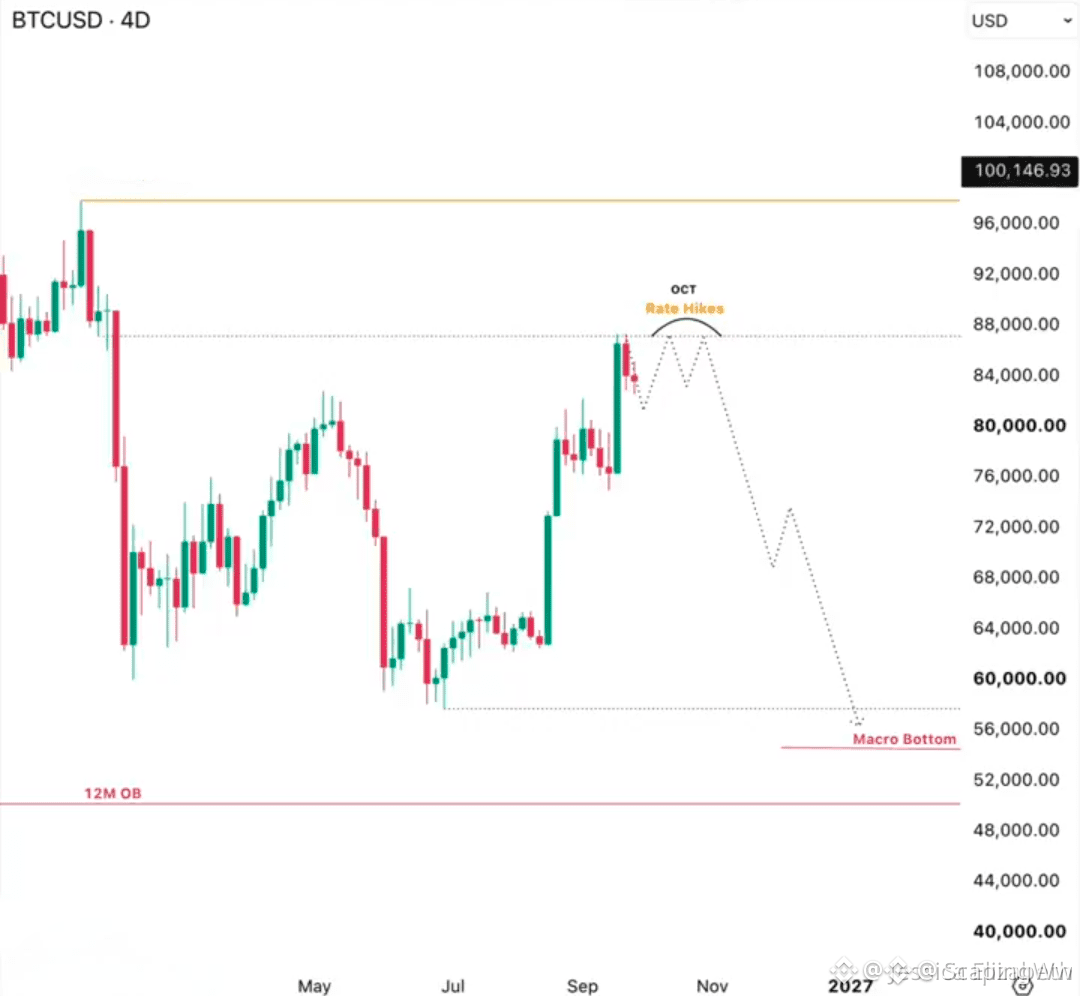
🚨 $BTC BULL TRAP SET ABOVE 87K AS SMART MONEY EYES THE 75K LIQUIDITY FLUSH! 🦈
Entry: 75,000 ⚡
Target: 100,000 🚀
📌 The push past 87K trapped overeager breakout buyers, setting up a classic sideways compression before the real move unlocks. 🌊 Liquidity resting beneath current price action around 75K is simply too deep for market makers to ignore, pointing to an imminent Fair Value Gap fill to reset order flow.
⚡ Once that sweep clears late longs, momentum should pivot aggressively toward 80K before staging the macro push to 100K. 📊 Smart money patient bids are already stacking in the discount zone. 💬 Are you waiting for the 75K liquidity sweep or front-running the bounce? 👇
⚠️ Not financial advice. Always manage your risk. 🛡️
🏷️ #BTC #Bitcoin #LiquiditySweep #Crypto
🔥 💎
🚨 $BTC BULL TRAP SET ABOVE 87K AS SMART MONEY EYES THE 75K LIQUIDITY FLUSH! 🦈
Entry: 75,000 ⚡
Target: 100,000 🚀
📌 The push past 87K trapped overeager breakout buyers, setting up a classic sideways compression before the real move unlocks. 🌊 Liquidity resting beneath current price action around 75K is simply too deep for market makers to ignore, pointing to an imminent Fair Value Gap fill to reset order flow.
⚡ Once that sweep clears late longs, momentum should pivot aggressively toward 80K before staging the macro push to 100K. 📊 Smart money patient bids are already stacking in the discount zone. 💬 Are you waiting for the 75K liquidity sweep or front-running the bounce? 👇
⚠️ Not financial advice. Always manage your risk. 🛡️
🏷️ #BTC #Bitcoin #LiquiditySweep #Crypto
🔥 💎
Entry: 75,000 ⚡
Target: 100,000 🚀
📌 The push past 87K trapped overeager breakout buyers, setting up a classic sideways compression before the real move unlocks. 🌊 Liquidity resting beneath current price action around 75K is simply too deep for market makers to ignore, pointing to an imminent Fair Value Gap fill to reset order flow.
⚡ Once that sweep clears late longs, momentum should pivot aggressively toward 80K before staging the macro push to 100K. 📊 Smart money patient bids are already stacking in the discount zone. 💬 Are you waiting for the 75K liquidity sweep or front-running the bounce? 👇
⚠️ Not financial advice. Always manage your risk. 🛡️
🏷️ #BTC #Bitcoin #LiquiditySweep #Crypto
🔥 💎
38

·
--
If you are rotating heavy into low-cap altcoins right now, you might be walking straight into a liquidity trap.
Too many traders keep FOMO buying every minor breakout only to watch their portfolio bleed against Bitcoin. It is exhausting to sit on stagnant bags while waiting for a market rotation that keeps getting delayed.
The timeline is convinced altseason is already underway, but the data tells a completely different story. The Altcoin Season Index sat at 64 on September 28, well below the 75 threshold needed to confirm a real market-wide expansion. Meanwhile, $BTC dominance continues to hover stubbornly between 58.6% and 59%, proving that capital is still locked at the top.
Bulls argue that majors like $ETH and $SOL are setting the groundwork for the next leg up, and that front-running the crowd is the only way to maximize returns. But small-cap beta has not expanded anywhere near what we saw during genuine altcoin phases. Until Bitcoin dominance breaks down decisively, going all-in on high-risk alts is just handing over your satoshis.
Are we actually on the brink of a real altseason, or is Bitcoin going to keep sucking the liquidity out of the room?
#Altseason #CryptoTrading #Bitcoin
If you are rotating heavy into low-cap altcoins right now, you might be walking straight into a liquidity trap.
Too many traders keep FOMO buying every minor breakout only to watch their portfolio bleed against Bitcoin. It is exhausting to sit on stagnant bags while waiting for a market rotation that keeps getting delayed.
The timeline is convinced altseason is already underway, but the data tells a completely different story. The Altcoin Season Index sat at 64 on September 28, well below the 75 threshold needed to confirm a real market-wide expansion. Meanwhile, $BTC dominance continues to hover stubbornly between 58.6% and 59%, proving that capital is still locked at the top.
Bulls argue that majors like $ETH and $SOL are setting the groundwork for the next leg up, and that front-running the crowd is the only way to maximize returns. But small-cap beta has not expanded anywhere near what we saw during genuine altcoin phases. Until Bitcoin dominance breaks down decisively, going all-in on high-risk alts is just handing over your satoshis.
Are we actually on the brink of a real altseason, or is Bitcoin going to keep sucking the liquidity out of the room?
#Altseason #CryptoTrading #Bitcoin
Too many traders keep FOMO buying every minor breakout only to watch their portfolio bleed against Bitcoin. It is exhausting to sit on stagnant bags while waiting for a market rotation that keeps getting delayed.
The timeline is convinced altseason is already underway, but the data tells a completely different story. The Altcoin Season Index sat at 64 on September 28, well below the 75 threshold needed to confirm a real market-wide expansion. Meanwhile, $BTC dominance continues to hover stubbornly between 58.6% and 59%, proving that capital is still locked at the top.
Bulls argue that majors like $ETH and $SOL are setting the groundwork for the next leg up, and that front-running the crowd is the only way to maximize returns. But small-cap beta has not expanded anywhere near what we saw during genuine altcoin phases. Until Bitcoin dominance breaks down decisively, going all-in on high-risk alts is just handing over your satoshis.
Are we actually on the brink of a real altseason, or is Bitcoin going to keep sucking the liquidity out of the room?
#Altseason #CryptoTrading #Bitcoin
37

·
--
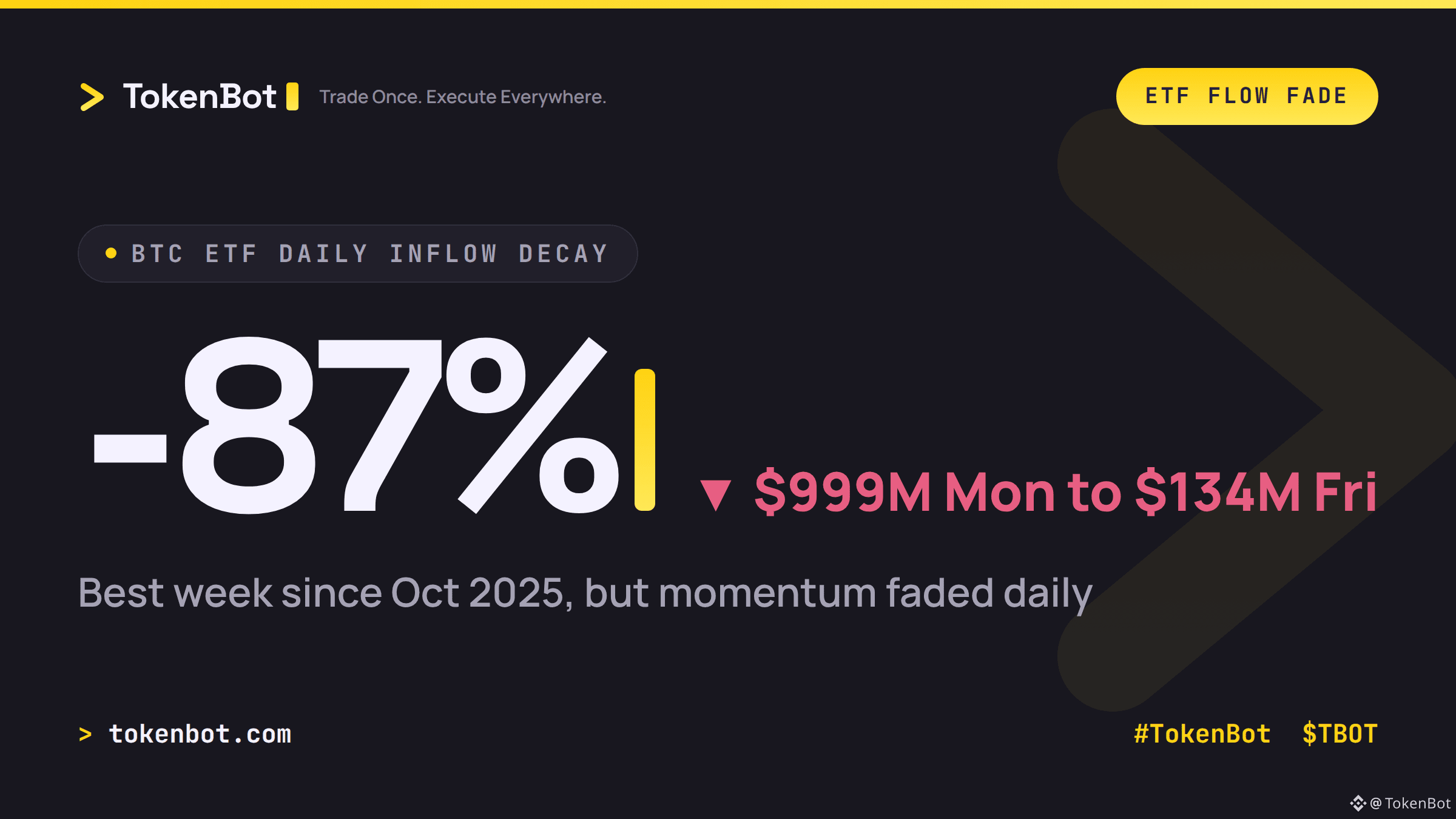
Bitcoin ETFs just flipped their 2026 flows positive, posting $2.4B in net inflows for the week ending Sept 25 — the strongest week since October 2025. Headlines are calling it a turning point.
Look at the daily breakdown and the story changes. Monday alone brought in $999M. By Friday that had decayed to $134.5M — an 87% drop across five sessions, with inflows shrinking every single day. The weekly total is a lagging number; the real signal is a flow curve that had already rolled over before the aggregate even printed.
That matters because Citi just raised its 12-month BTC price target to $113K (from $82K) and its ETH target to $3,028, leaning partly on an "ETF inflows resuming" thesis. If the underlying daily trend is already fading, the thesis is riding a number that's stale by the time it's cited.
Anyone here tracking ETF flows day-over-day instead of weekly? Curious whether daily decay has been a useful leading signal in your models, or if it's just noise around a single large Monday print.
#Bitcoin #TradingSignals #TokenBot $BTC $TBOT
tokenbot.com
Bitcoin ETFs just flipped their 2026 flows positive, posting $2.4B in net inflows for the week ending Sept 25 — the strongest week since October 2025. Headlines are calling it a turning point.
Look at the daily breakdown and the story changes. Monday alone brought in $999M. By Friday that had decayed to $134.5M — an 87% drop across five sessions, with inflows shrinking every single day. The weekly total is a lagging number; the real signal is a flow curve that had already rolled over before the aggregate even printed.
That matters because Citi just raised its 12-month BTC price target to $113K (from $82K) and its ETH target to $3,028, leaning partly on an "ETF inflows resuming" thesis. If the underlying daily trend is already fading, the thesis is riding a number that's stale by the time it's cited.
Anyone here tracking ETF flows day-over-day instead of weekly? Curious whether daily decay has been a useful leading signal in your models, or if it's just noise around a single large Monday print.
#Bitcoin #TradingSignals #TokenBot $BTC $TBOT
tokenbot.com
Look at the daily breakdown and the story changes. Monday alone brought in $999M. By Friday that had decayed to $134.5M — an 87% drop across five sessions, with inflows shrinking every single day. The weekly total is a lagging number; the real signal is a flow curve that had already rolled over before the aggregate even printed.
That matters because Citi just raised its 12-month BTC price target to $113K (from $82K) and its ETH target to $3,028, leaning partly on an "ETF inflows resuming" thesis. If the underlying daily trend is already fading, the thesis is riding a number that's stale by the time it's cited.
Anyone here tracking ETF flows day-over-day instead of weekly? Curious whether daily decay has been a useful leading signal in your models, or if it's just noise around a single large Monday print.
#Bitcoin #TradingSignals #TokenBot $BTC $TBOT
tokenbot.com
1
718

📰 Citi Raises Bitcoin and Ethereum Price Forecasts
Citigroup has raised its 12-month price forecast for Bitcoin (BTC) to $113,000, up from $82,000. The bank also increased its Ethereum (ETH) forecast to $3,028 from $2,240.
The revised projections come amid increased crypto market activity, renewed ETF inflows, and a more supportive macroeconomic outlook.
The move puts institutional expectations for the two largest cryptocurrencies back in focus. 👀
What do you think about Citi’s latest projections?
#bitcoin #Ethereum #CryptoNews #BinanceSquare
📰 Citi Raises Bitcoin and Ethereum Price Forecasts
Citigroup has raised its 12-month price forecast for Bitcoin (BTC) to $113,000, up from $82,000. The bank also increased its Ethereum (ETH) forecast to $3,028 from $2,240.
The revised projections come amid increased crypto market activity, renewed ETF inflows, and a more supportive macroeconomic outlook.
The move puts institutional expectations for the two largest cryptocurrencies back in focus. 👀
What do you think about Citi’s latest projections?
#bitcoin #Ethereum #CryptoNews #BinanceSquare
Citigroup has raised its 12-month price forecast for Bitcoin (BTC) to $113,000, up from $82,000. The bank also increased its Ethereum (ETH) forecast to $3,028 from $2,240.
The revised projections come amid increased crypto market activity, renewed ETF inflows, and a more supportive macroeconomic outlook.
The move puts institutional expectations for the two largest cryptocurrencies back in focus. 👀
What do you think about Citi’s latest projections?
#bitcoin #Ethereum #CryptoNews #BinanceSquare
68

·
--
A major shift is underway in the Real World Assets (RWA) sector. New data from Dune Analytics indicates that tokenized markets are no longer simply mirroring traditional finance; they are developing distinct, independent trading behaviors. With the total value of RWA reaching a staggering $34.5 billion, this divergence signals a maturation of the crypto ecosystem where on-chain assets are finding their own unique price discovery mechanisms, separate from legacy market structures.
• RWA market cap has surged to $34.5B, cementing its status as a major asset class.
• Trading patterns in tokenized markets show significant divergence from traditional equities and bonds.
• This decoupling suggests that crypto-native liquidity is driving independent price action.
For traders, this means that macroeconomic events affecting traditional markets may not immediately or identically impact tokenized assets. As $BTC stabilizes near 83,966, the broader narrative is shifting toward the utility and independent value of on-chain real-world assets. This structural change could lead to new alpha opportunities for those who understand the nuances of on-chain liquidity versus off-chain volatility. The separation of these markets implies that crypto is becoming a self-sustaining economic engine rather than just a high-beta proxy for tech stocks.
Do you believe tokenized assets will continue to decouple from traditional markets, or will they eventually resynchronize? Drop your analysis below! 👇
#BinanceSquare #CryptoNews #Bitcoin
A major shift is underway in the Real World Assets (RWA) sector. New data from Dune Analytics indicates that tokenized markets are no longer simply mirroring traditional finance; they are developing distinct, independent trading behaviors. With the total value of RWA reaching a staggering $34.5 billion, this divergence signals a maturation of the crypto ecosystem where on-chain assets are finding their own unique price discovery mechanisms, separate from legacy market structures.
• RWA market cap has surged to $34.5B, cementing its status as a major asset class.
• Trading patterns in tokenized markets show significant divergence from traditional equities and bonds.
• This decoupling suggests that crypto-native liquidity is driving independent price action.
For traders, this means that macroeconomic events affecting traditional markets may not immediately or identically impact tokenized assets. As $BTC stabilizes near 83,966, the broader narrative is shifting toward the utility and independent value of on-chain real-world assets. This structural change could lead to new alpha opportunities for those who understand the nuances of on-chain liquidity versus off-chain volatility. The separation of these markets implies that crypto is becoming a self-sustaining economic engine rather than just a high-beta proxy for tech stocks.
Do you believe tokenized assets will continue to decouple from traditional markets, or will they eventually resynchronize? Drop your analysis below! 👇
#BinanceSquare #CryptoNews #Bitcoin
• RWA market cap has surged to $34.5B, cementing its status as a major asset class.
• Trading patterns in tokenized markets show significant divergence from traditional equities and bonds.
• This decoupling suggests that crypto-native liquidity is driving independent price action.
For traders, this means that macroeconomic events affecting traditional markets may not immediately or identically impact tokenized assets. As $BTC stabilizes near 83,966, the broader narrative is shifting toward the utility and independent value of on-chain real-world assets. This structural change could lead to new alpha opportunities for those who understand the nuances of on-chain liquidity versus off-chain volatility. The separation of these markets implies that crypto is becoming a self-sustaining economic engine rather than just a high-beta proxy for tech stocks.
Do you believe tokenized assets will continue to decouple from traditional markets, or will they eventually resynchronize? Drop your analysis below! 👇
#BinanceSquare #CryptoNews #Bitcoin

1
53


⚔️ $OP P is on a knife-edge right now — after a 71% September rally, it's clinging to the $0.13 pivot
Two clear paths ahead: break above opens $0.15–$0.16 targets, break below risks a flush to $0.11. Bollinger Bands show momentum at a crossroads, with sell-side aggression rising
This $0.13/$0.14 range resolution isn't just about OP — it's become a credibility test for the entire L2 sector heading into Q4
Will $OP hold the pivot and continue the rally, or is a correction coming?
#Bitcoin #Optimism #L2 #BinanceSquare
⚔️ $OP P is on a knife-edge right now — after a 71% September rally, it's clinging to the $0.13 pivot
Two clear paths ahead: break above opens $0.15–$0.16 targets, break below risks a flush to $0.11. Bollinger Bands show momentum at a crossroads, with sell-side aggression rising
This $0.13/$0.14 range resolution isn't just about OP — it's become a credibility test for the entire L2 sector heading into Q4
Will $OP hold the pivot and continue the rally, or is a correction coming?
#Bitcoin #Optimism #L2 #BinanceSquare
Two clear paths ahead: break above opens $0.15–$0.16 targets, break below risks a flush to $0.11. Bollinger Bands show momentum at a crossroads, with sell-side aggression rising
This $0.13/$0.14 range resolution isn't just about OP — it's become a credibility test for the entire L2 sector heading into Q4
Will $OP hold the pivot and continue the rally, or is a correction coming?
#Bitcoin #Optimism #L2 #BinanceSquare
231

·
--
🚨 $BTC DEFENDING CRITICAL 80K ZONE AS LIQUIDITY STACKS TOWARD 94K! 💥
Entry: 80,000 - 84,000 ⚡
Target: 88,000 - 94,000 🚀
📌 The $80K–$84K demand zone remains the primary line in the sand for buyers, consistently absorbing sell-side pressure. 🌊 As long as this structural foundation holds, order flow indicates a heavy liquidity magnet sitting higher up between $88K and $94K.
💡 Precision matters here, with $82K acting as the decisive pivot level for immediate directional clarity. 📊 Momentum is coiling fast inside this range while spot absorption continues to protect the lower boundaries.
💬 Are you bidding this structural support zone, or waiting for a clean reclaim above $82K before scaling in? 👇
⚠️ Not financial advice. Always manage your risk. 🛡️
🏷️ #BTC #Bitcoin #LongSetup #MarketAnalysis
🔥 ⚡
🚨 $BTC DEFENDING CRITICAL 80K ZONE AS LIQUIDITY STACKS TOWARD 94K! 💥
Entry: 80,000 - 84,000 ⚡
Target: 88,000 - 94,000 🚀
📌 The $80K–$84K demand zone remains the primary line in the sand for buyers, consistently absorbing sell-side pressure. 🌊 As long as this structural foundation holds, order flow indicates a heavy liquidity magnet sitting higher up between $88K and $94K.
💡 Precision matters here, with $82K acting as the decisive pivot level for immediate directional clarity. 📊 Momentum is coiling fast inside this range while spot absorption continues to protect the lower boundaries.
💬 Are you bidding this structural support zone, or waiting for a clean reclaim above $82K before scaling in? 👇
⚠️ Not financial advice. Always manage your risk. 🛡️
🏷️ #BTC #Bitcoin #LongSetup #MarketAnalysis
🔥 ⚡
Entry: 80,000 - 84,000 ⚡
Target: 88,000 - 94,000 🚀
📌 The $80K–$84K demand zone remains the primary line in the sand for buyers, consistently absorbing sell-side pressure. 🌊 As long as this structural foundation holds, order flow indicates a heavy liquidity magnet sitting higher up between $88K and $94K.
💡 Precision matters here, with $82K acting as the decisive pivot level for immediate directional clarity. 📊 Momentum is coiling fast inside this range while spot absorption continues to protect the lower boundaries.
💬 Are you bidding this structural support zone, or waiting for a clean reclaim above $82K before scaling in? 👇
⚠️ Not financial advice. Always manage your risk. 🛡️
🏷️ #BTC #Bitcoin #LongSetup #MarketAnalysis
🔥 ⚡
38

BREAKING | Bitcoin and Ethereum Hit Their Highest Monthly Closings of 2026 !
Bitcoin ( $BTC ): It gained $25,800 over the past three months, rising 44%. It posted its third-strongest quarterly performance since 2017.
Ethereum ( $ETH ): It surged 71.2% over the same period, marking its strongest quarter on record.
#Bitcoin #Ethereum
BREAKING | Bitcoin and Ethereum Hit Their Highest Monthly Closings of 2026 !
Bitcoin ( $BTC ): It gained $25,800 over the past three months, rising 44%. It posted its third-strongest quarterly performance since 2017.
Ethereum ( $ETH ): It surged 71.2% over the same period, marking its strongest quarter on record.
#Bitcoin #Ethereum
Bitcoin ( $BTC ): It gained $25,800 over the past three months, rising 44%. It posted its third-strongest quarterly performance since 2017.
Ethereum ( $ETH ): It surged 71.2% over the same period, marking its strongest quarter on record.
#Bitcoin #Ethereum
AngelOfCrypto_-:
nice
1
1
455

·
--
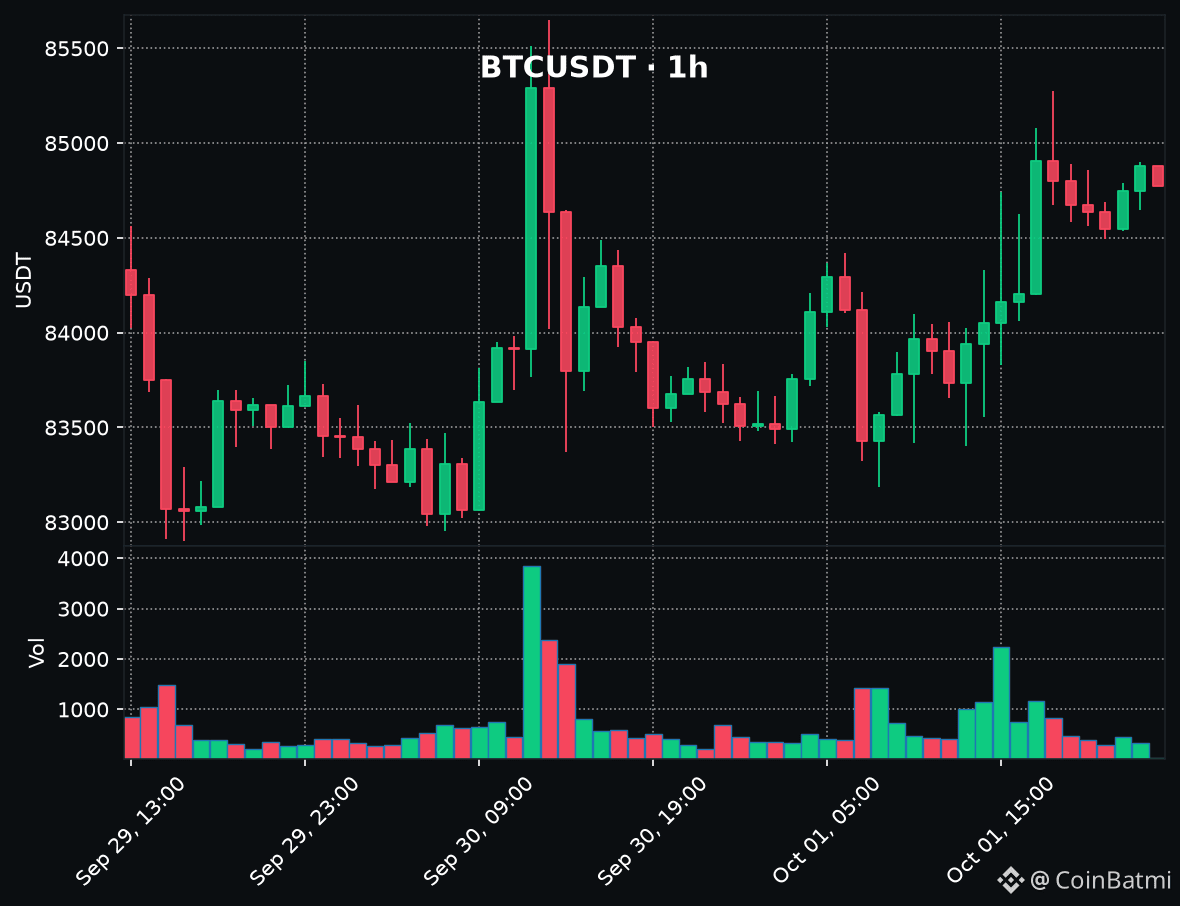
$BTC - Bitcoin closed September at 83,563 USDT, clearing key on‑chain and technical thresholds.
October opens with a historically bullish seasonal pattern.
Analysts say ETF inflows, upcoming jobs data, and broader demand may drive the next move more than the so‑called "Uptober" narrative.
If ETF applications gain traction, renewed buying pressure could follow; otherwise the market may stall pending macro data.
#Bitcoin #BTC
$BTC - Bitcoin closed September at 83,563 USDT, clearing key on‑chain and technical thresholds.
October opens with a historically bullish seasonal pattern.
Analysts say ETF inflows, upcoming jobs data, and broader demand may drive the next move more than the so‑called "Uptober" narrative.
If ETF applications gain traction, renewed buying pressure could follow; otherwise the market may stall pending macro data.
#Bitcoin #BTC
October opens with a historically bullish seasonal pattern.
Analysts say ETF inflows, upcoming jobs data, and broader demand may drive the next move more than the so‑called "Uptober" narrative.
If ETF applications gain traction, renewed buying pressure could follow; otherwise the market may stall pending macro data.
#Bitcoin #BTC
8

·
--
Crypto Market UpdateOfficial Trump (TRUMPUSDT) is trending right now!
Rank: #107
**BTC BOUNCES BACK!** BTC today **pumped 1.48%** to 4,765! 📈 I'm thinking this is a strong sign of market resilience. With 2.9B in volume, buyers are back in control. ETH also seeing steady gains, up **0.61%** to ,703. The question is, can this momentum carry into the weekend? Will we see a new ATH soon? 🤔
#bitcoin #ethereum #crypto
Crypto Market Update
Official Trump (TRUMPUSDT) is trending right now!
Rank: #107
**BTC BOUNCES BACK!** BTC today **pumped 1.48%** to 4,765! 📈 I'm thinking this is a strong sign of market resilience. With 2.9B in volume, buyers are back in control. ETH also seeing steady gains, up **0.61%** to ,703. The question is, can this momentum carry into the weekend? Will we see a new ATH soon? 🤔
#bitcoin #ethereum #crypto
Rank: #107
**BTC BOUNCES BACK!** BTC today **pumped 1.48%** to 4,765! 📈 I'm thinking this is a strong sign of market resilience. With 2.9B in volume, buyers are back in control. ETH also seeing steady gains, up **0.61%** to ,703. The question is, can this momentum carry into the weekend? Will we see a new ATH soon? 🤔
#bitcoin #ethereum #crypto
22
Log in to explore more content
Join global crypto users on Binance Square
⚡️ Get latest and useful information about crypto.
💬 Trusted by the world’s largest crypto exchange.
👍 Discover real insights from verified creators.
Email / Phone number
Trending Topics
1
#EtherGains70.9%InQ3
165,008 views
1,163 Discussing
2
#TreasuryLetsStatesFileStablecoinCertificationsEarly
10,221 views
88 Discussing
3
#US10YearYieldNears5.3%
155,340 views
1,147 Discussing
4
#DollarIndexHitsHighestSinceMay2025
42,852 views
610 Discussing
5
#USWeeklyJoblessClaimsFallTo197000
36,720 views
504 Discussing
6
#BitcoinETFsTake$6.34BillionInQ3
10,204 views
77 Discussing
7
#KoreaProposesTokenizingStocksAndBonds
73,971 views
825 Discussing
8
#MetaMaskExitsLidoValidatorsAfterSecurityIncident
173,099 views
1,554 Discussing
9
#MicronBeatsEarningsLiftsGuidance
87,896 views
1,118 Discussing
10
#CFTCSubmitsTwoEventContractRulesToWhiteHouse
60,445 views
833 Discussing