

#riskmanagement
riskmanagement
17.2M views
62,771 Discussing
Hot
Latest

The spread is visible. Market impact is the hidden bill.
Before trading a thinly traded altcoin, check more than 24-hour volume:
• Spread: how far apart are the best bid and ask?
• Depth: how much liquidity sits within 1% of the current price?
• Order size: would your trade consume several price levels?
Example: a token shows a last price of $1.00, but your buy fills at an average of $1.03. That is 3% above the displayed last trade—before fees. The last price was never a promise of your execution price.
A limit order caps your purchase price, but may fill only partly or not at all. Visible order-book liquidity can also disappear before execution.
Plan the exit as carefully as the entry: could you sell the same size if liquidity thins out?
A good thesis cannot cancel bad execution.
#CryptoEducation #Altcoins #RiskManagement
The spread is visible. Market impact is the hidden bill.
Before trading a thinly traded altcoin, check more than 24-hour volume:
• Spread: how far apart are the best bid and ask?
• Depth: how much liquidity sits within 1% of the current price?
• Order size: would your trade consume several price levels?
Example: a token shows a last price of $1.00, but your buy fills at an average of $1.03. That is 3% above the displayed last trade—before fees. The last price was never a promise of your execution price.
A limit order caps your purchase price, but may fill only partly or not at all. Visible order-book liquidity can also disappear before execution.
Plan the exit as carefully as the entry: could you sell the same size if liquidity thins out?
A good thesis cannot cancel bad execution.
#CryptoEducation #Altcoins #RiskManagement
Before trading a thinly traded altcoin, check more than 24-hour volume:
• Spread: how far apart are the best bid and ask?
• Depth: how much liquidity sits within 1% of the current price?
• Order size: would your trade consume several price levels?
Example: a token shows a last price of $1.00, but your buy fills at an average of $1.03. That is 3% above the displayed last trade—before fees. The last price was never a promise of your execution price.
A limit order caps your purchase price, but may fill only partly or not at all. Visible order-book liquidity can also disappear before execution.
Plan the exit as carefully as the entry: could you sell the same size if liquidity thins out?
A good thesis cannot cancel bad execution.
#CryptoEducation #Altcoins #RiskManagement
5

·
--
Chasing green candles is one of the quickest ways to drain your portfolio. When an asset pumps aggressively, FOMO kicks in, leading many to buy right at the local top.
Successful market participants rely on patience, clear invalidation levels, and disciplined risk management rather than raw emotion. Always have an exit plan before opening a position.
#CryptoTrading #RiskManagement #BinanceSquare
Chasing green candles is one of the quickest ways to drain your portfolio. When an asset pumps aggressively, FOMO kicks in, leading many to buy right at the local top.
Successful market participants rely on patience, clear invalidation levels, and disciplined risk management rather than raw emotion. Always have an exit plan before opening a position.
#CryptoTrading #RiskManagement #BinanceSquare
Successful market participants rely on patience, clear invalidation levels, and disciplined risk management rather than raw emotion. Always have an exit plan before opening a position.
#CryptoTrading #RiskManagement #BinanceSquare
6

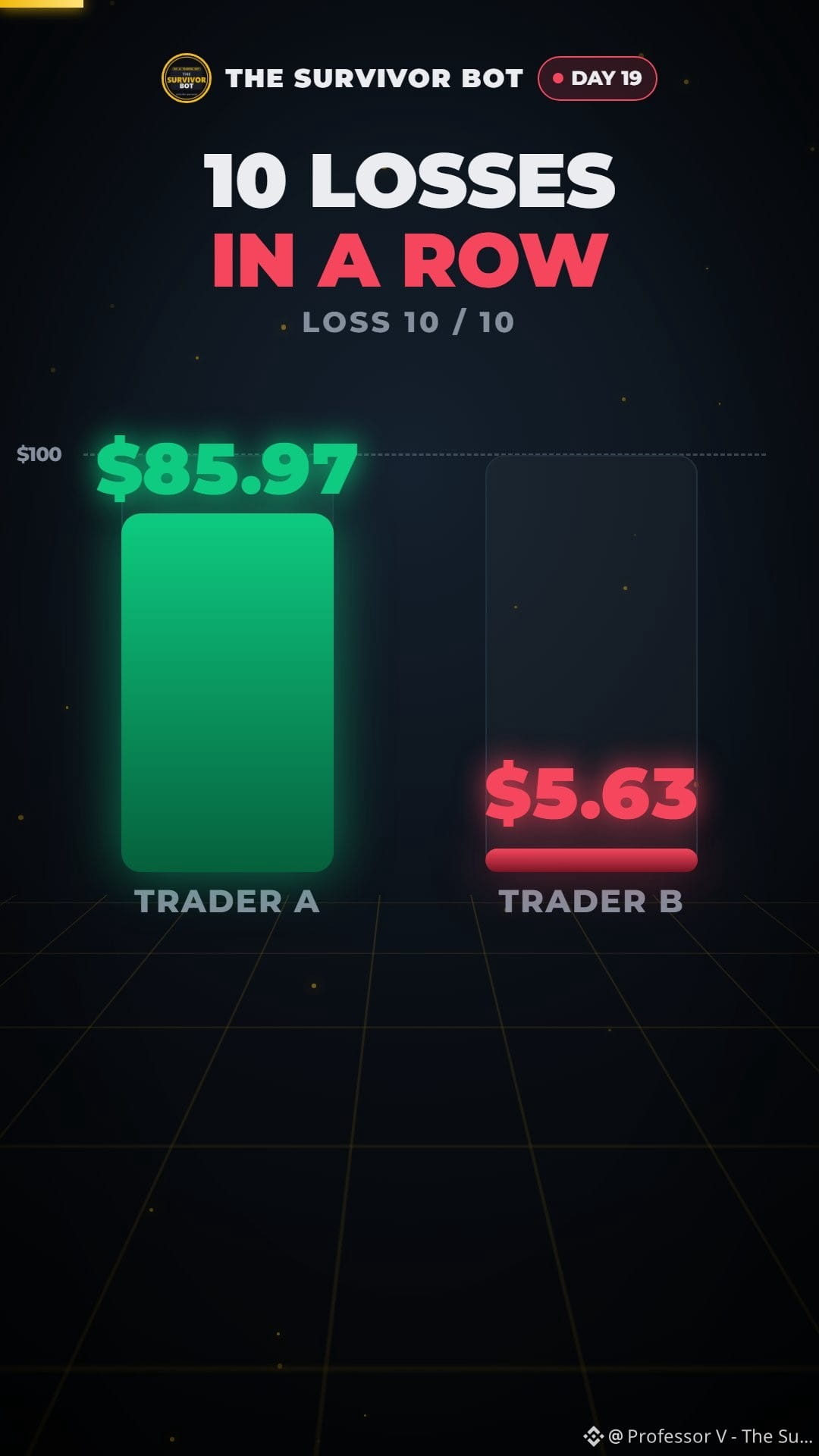
10 losses in a row. Same strategy, two traders:
Trader A risks 1.5% per trade: $85.97 left.
Trader B risks 25% per trade: $5.63 left, and needs +1,676% just to get back to $100.
The formula that keeps an account alive:
Position size = what you can afford to lose ÷ your stop distance.
Example: $100 account, 1.5% risk = $1.50. Stop 3% away: $1.50 ÷ 3% = $50 position. If the stop hits, you lose $1.50, not the account.
My bot sizes every real-money trade this way. Day 19 of 30, 43 trades.
How much do you risk per trade? 1%, 5% or all in? Tell me below 👇
Not financial advice.
#TheSurvivorBot #RiskManagement #Bitcoin
10 losses in a row. Same strategy, two traders:
Trader A risks 1.5% per trade: $85.97 left.
Trader B risks 25% per trade: $5.63 left, and needs +1,676% just to get back to $100.
The formula that keeps an account alive:
Position size = what you can afford to lose ÷ your stop distance.
Example: $100 account, 1.5% risk = $1.50. Stop 3% away: $1.50 ÷ 3% = $50 position. If the stop hits, you lose $1.50, not the account.
My bot sizes every real-money trade this way. Day 19 of 30, 43 trades.
How much do you risk per trade? 1%, 5% or all in? Tell me below 👇
Not financial advice.
#TheSurvivorBot #RiskManagement #Bitcoin
Trader A risks 1.5% per trade: $85.97 left.
Trader B risks 25% per trade: $5.63 left, and needs +1,676% just to get back to $100.
The formula that keeps an account alive:
Position size = what you can afford to lose ÷ your stop distance.
Example: $100 account, 1.5% risk = $1.50. Stop 3% away: $1.50 ÷ 3% = $50 position. If the stop hits, you lose $1.50, not the account.
My bot sizes every real-money trade this way. Day 19 of 30, 43 trades.
How much do you risk per trade? 1%, 5% or all in? Tell me below 👇
Not financial advice.
#TheSurvivorBot #RiskManagement #Bitcoin
18
·
--
The biggest mistake beginners make in crypto isn't buying the wrong coin—it's having zero exit strategy.
It is easy to get excited when prices go up, but without a clear plan for taking profits, your gains are just numbers on a screen. Decide your targets before you enter a trade, not while emotions are running high. Protect your capital and stay disciplined.
#CryptoEducation #RiskManagement #TradingTips
The biggest mistake beginners make in crypto isn't buying the wrong coin—it's having zero exit strategy.
It is easy to get excited when prices go up, but without a clear plan for taking profits, your gains are just numbers on a screen. Decide your targets before you enter a trade, not while emotions are running high. Protect your capital and stay disciplined.
#CryptoEducation #RiskManagement #TradingTips
It is easy to get excited when prices go up, but without a clear plan for taking profits, your gains are just numbers on a screen. Decide your targets before you enter a trade, not while emotions are running high. Protect your capital and stay disciplined.
#CryptoEducation #RiskManagement #TradingTips
24
·
--
The biggest mistake beginners make in crypto isn't buying the wrong coin—it's ignoring risk management. No strategy works 100% of the time, which is why protecting your capital comes before chasing gains. Always define your risk tolerance and have an exit plan before entering any position. Surviving the market cycles is the real key to long-term progress.
#CryptoEducation #RiskManagement #TradingWisdom
The biggest mistake beginners make in crypto isn't buying the wrong coin—it's ignoring risk management. No strategy works 100% of the time, which is why protecting your capital comes before chasing gains. Always define your risk tolerance and have an exit plan before entering any position. Surviving the market cycles is the real key to long-term progress.
#CryptoEducation #RiskManagement #TradingWisdom
#CryptoEducation #RiskManagement #TradingWisdom
47

Educational & Security Focus (High Engagement)
Tie into current platform themes like proactive security to build trust.
Title: 🛡️ 3 Critical Security Settings Every Crypto Trader Needs Right Now
Content:
Many traders lose funds not to market dips, but to simple security oversights. Being proactive about your security is the single most profitable strategy in Web3.
Here are 3 non-negotiable security steps to enable today:
Passkeys over SMS 2FA: SIM swaps remain a top vector. Switch to hardware keys or Google Authenticator.
Anti-Phishing Code: Always verify that official Binance emails show your customized code.
Whitelist Withdrawal Addresses: Restrict withdrawals strictly to verified personal wallets.
💡 Rule #1 of crypto: Protecting your capital comes before making gains.
What security layer saved you in the past? Let’s discuss below! 👇
#CryptoSecurity #BinanceSquare #RiskManagement
Market Analysis & Trading Discipline (High Conversion)
Focus on risk management to encourage disciplined spot/futures activity.
Title: 📊 Why 90% of Retail Traders Lose Money (And How to Fix It)
Content:
Most market losses don't come from bad entries—they come from poor risk-to-reward ratios and emotional leverage.
My 3-step checklist before opening any trade:
Risk Per Trade: Never risk more than 1-2% of total account balance.
Defined Exit: Set both Stop-Loss and Take-Profit BEFORE entering the order.
Trend Alignment: Trade with the higher time-frame trend (4H / Daily) rather than micro-scalping noise.
💬 Keep your strategy simple and clear.
Are you currently bullish or neutral on this weekly close? Share your charts! 👇
#TradingTips #TechnicalAnalysis #Binance
Educational & Security Focus (High Engagement)
Tie into current platform themes like proactive security to build trust.
Title: 🛡️ 3 Critical Security Settings Every Crypto Trader Needs Right Now
Content:
Many traders lose funds not to market dips, but to simple security oversights. Being proactive about your security is the single most profitable strategy in Web3.
Here are 3 non-negotiable security steps to enable today:
Passkeys over SMS 2FA: SIM swaps remain a top vector. Switch to hardware keys or Google Authenticator.
Anti-Phishing Code: Always verify that official Binance emails show your customized code.
Whitelist Withdrawal Addresses: Restrict withdrawals strictly to verified personal wallets.
💡 Rule #1 of crypto: Protecting your capital comes before making gains.
What security layer saved you in the past? Let’s discuss below! 👇
#CryptoSecurity #BinanceSquare #RiskManagement
Market Analysis & Trading Discipline (High Conversion)
Focus on risk management to encourage disciplined spot/futures activity.
Title: 📊 Why 90% of Retail Traders Lose Money (And How to Fix It)
Content:
Most market losses don't come from bad entries—they come from poor risk-to-reward ratios and emotional leverage.
My 3-step checklist before opening any trade:
Risk Per Trade: Never risk more than 1-2% of total account balance.
Defined Exit: Set both Stop-Loss and Take-Profit BEFORE entering the order.
Trend Alignment: Trade with the higher time-frame trend (4H / Daily) rather than micro-scalping noise.
💬 Keep your strategy simple and clear.
Are you currently bullish or neutral on this weekly close? Share your charts! 👇
#TradingTips #TechnicalAnalysis #Binance
Tie into current platform themes like proactive security to build trust.
Title: 🛡️ 3 Critical Security Settings Every Crypto Trader Needs Right Now
Content:
Many traders lose funds not to market dips, but to simple security oversights. Being proactive about your security is the single most profitable strategy in Web3.
Here are 3 non-negotiable security steps to enable today:
Passkeys over SMS 2FA: SIM swaps remain a top vector. Switch to hardware keys or Google Authenticator.
Anti-Phishing Code: Always verify that official Binance emails show your customized code.
Whitelist Withdrawal Addresses: Restrict withdrawals strictly to verified personal wallets.
💡 Rule #1 of crypto: Protecting your capital comes before making gains.
What security layer saved you in the past? Let’s discuss below! 👇
#CryptoSecurity #BinanceSquare #RiskManagement
Market Analysis & Trading Discipline (High Conversion)
Focus on risk management to encourage disciplined spot/futures activity.
Title: 📊 Why 90% of Retail Traders Lose Money (And How to Fix It)
Content:
Most market losses don't come from bad entries—they come from poor risk-to-reward ratios and emotional leverage.
My 3-step checklist before opening any trade:
Risk Per Trade: Never risk more than 1-2% of total account balance.
Defined Exit: Set both Stop-Loss and Take-Profit BEFORE entering the order.
Trend Alignment: Trade with the higher time-frame trend (4H / Daily) rather than micro-scalping noise.
💬 Keep your strategy simple and clear.
Are you currently bullish or neutral on this weekly close? Share your charts! 👇
#TradingTips #TechnicalAnalysis #Binance
1
69

·
--
🚨 LIQUIDITY MAP & MACRO LEVELS: Are We Set for a Squeeze? 📊⚡
Institutional order flow is actively sweeping liquidity pools while retail chases breakout candles. Before opening any high-leverage positions today, keep these key structural zones on your radar:
1️⃣ Bitcoin (Structural Range)
Price is coiling within a tightening consolidation range with open interest shifting fast.
• Bullish trigger: A clean 4H candle close above local range resistance with expanding volume signals continuation.
• Invalidation: A loss of the local swing low invalidates the setup and points toward a deeper re-accumulation zone.
2️⃣ Ethereum (Momentum Pivot)
Consolidating near key structural support along the multi-day trendline.
• Bullish trigger: A reclaim of immediate resistance with volume confirmation opens the door for a retest of local highs.
• Invalidation: A sustained 4H close below support confirms momentum exhaustion.
3️⃣ Solana (Relative Strength)
Continuing to show solid resilience against the broader market.
• Strategy: Watch for disciplined pullback entries into 4H demand zones instead of FOMO-buying extended green candles.
• Risk Rule: Set your stop-loss right below the local structure invalidation level.
🎯 Execution Protocol:
✅ Minimum 1:2 Risk-to-Reward ratio on all setups.
✅ Always wait for hourly candle closes for entry confirmation.
✅ Never risk more than 1-2% of your total capital on a single trade.
💬 What is your primary bias heading into this session—Accumulating dips or waiting on the sidelines in USDT? Drop your setup below! 👇
$BTC $ETH $SOL
#BinanceSquare #CryptoTrading #Bitcoin #Ethereum✅ #solana #RiskManagement
Disclaimer: Educational analysis only, not financial advice. Always do your own research (DYOR).
🚨 LIQUIDITY MAP & MACRO LEVELS: Are We Set for a Squeeze? 📊⚡
Institutional order flow is actively sweeping liquidity pools while retail chases breakout candles. Before opening any high-leverage positions today, keep these key structural zones on your radar:
1️⃣ Bitcoin (Structural Range)
Price is coiling within a tightening consolidation range with open interest shifting fast.
• Bullish trigger: A clean 4H candle close above local range resistance with expanding volume signals continuation.
• Invalidation: A loss of the local swing low invalidates the setup and points toward a deeper re-accumulation zone.
2️⃣ Ethereum (Momentum Pivot)
Consolidating near key structural support along the multi-day trendline.
• Bullish trigger: A reclaim of immediate resistance with volume confirmation opens the door for a retest of local highs.
• Invalidation: A sustained 4H close below support confirms momentum exhaustion.
3️⃣ Solana (Relative Strength)
Continuing to show solid resilience against the broader market.
• Strategy: Watch for disciplined pullback entries into 4H demand zones instead of FOMO-buying extended green candles.
• Risk Rule: Set your stop-loss right below the local structure invalidation level.
🎯 Execution Protocol:
✅ Minimum 1:2 Risk-to-Reward ratio on all setups.
✅ Always wait for hourly candle closes for entry confirmation.
✅ Never risk more than 1-2% of your total capital on a single trade.
💬 What is your primary bias heading into this session—Accumulating dips or waiting on the sidelines in USDT? Drop your setup below! 👇
$BTC $ETH $SOL
#BinanceSquare #CryptoTrading #Bitcoin #Ethereum✅ #solana #RiskManagement
Disclaimer: Educational analysis only, not financial advice. Always do your own research (DYOR).
Institutional order flow is actively sweeping liquidity pools while retail chases breakout candles. Before opening any high-leverage positions today, keep these key structural zones on your radar:
1️⃣ Bitcoin (Structural Range)
Price is coiling within a tightening consolidation range with open interest shifting fast.
• Bullish trigger: A clean 4H candle close above local range resistance with expanding volume signals continuation.
• Invalidation: A loss of the local swing low invalidates the setup and points toward a deeper re-accumulation zone.
2️⃣ Ethereum (Momentum Pivot)
Consolidating near key structural support along the multi-day trendline.
• Bullish trigger: A reclaim of immediate resistance with volume confirmation opens the door for a retest of local highs.
• Invalidation: A sustained 4H close below support confirms momentum exhaustion.
3️⃣ Solana (Relative Strength)
Continuing to show solid resilience against the broader market.
• Strategy: Watch for disciplined pullback entries into 4H demand zones instead of FOMO-buying extended green candles.
• Risk Rule: Set your stop-loss right below the local structure invalidation level.
🎯 Execution Protocol:
✅ Minimum 1:2 Risk-to-Reward ratio on all setups.
✅ Always wait for hourly candle closes for entry confirmation.
✅ Never risk more than 1-2% of your total capital on a single trade.
💬 What is your primary bias heading into this session—Accumulating dips or waiting on the sidelines in USDT? Drop your setup below! 👇
$BTC $ETH $SOL
#BinanceSquare #CryptoTrading #Bitcoin #Ethereum✅ #solana #RiskManagement
Disclaimer: Educational analysis only, not financial advice. Always do your own research (DYOR).
79
·
--
One of the biggest mistakes in crypto is confusing a bull market with skill. When prices are rising, it is easy to assume every trade is genius. But true resilience is built during sideways or declining markets through strict risk management. Protect your capital first, and let your strategy matter more than luck.
#CryptoEducation #RiskManagement #TradingWisdom
One of the biggest mistakes in crypto is confusing a bull market with skill. When prices are rising, it is easy to assume every trade is genius. But true resilience is built during sideways or declining markets through strict risk management. Protect your capital first, and let your strategy matter more than luck.
#CryptoEducation #RiskManagement #TradingWisdom
#CryptoEducation #RiskManagement #TradingWisdom
71

Drawdown Mathematics: Why We Cap Maximum Risk at 8 to 12 PercentPortfolio losses operate asymmetrically against remaining equity. A 10 percent loss requires an 11.1 percent gain to reach breakeven. If a loss expands to 50 percent, the portfolio requires a 100 percent gain just to recover principal.
This basic arithmetic underpins why our structural cut-offs are strictly enforced on daily candle closes 8 to 12 percent below entry. Cutting invalidated setups early preserves USDT cash for subsequent high-probability structures.
#RiskManagement #TradingMath #CapitalPreservation #BinanceSquare #DYOR
Drawdown Mathematics: Why We Cap Maximum Risk at 8 to 12 Percent
Portfolio losses operate asymmetrically against remaining equity. A 10 percent loss requires an 11.1 percent gain to reach breakeven. If a loss expands to 50 percent, the portfolio requires a 100 percent gain just to recover principal.
This basic arithmetic underpins why our structural cut-offs are strictly enforced on daily candle closes 8 to 12 percent below entry. Cutting invalidated setups early preserves USDT cash for subsequent high-probability structures.
#RiskManagement #TradingMath #CapitalPreservation #BinanceSquare #DYOR
This basic arithmetic underpins why our structural cut-offs are strictly enforced on daily candle closes 8 to 12 percent below entry. Cutting invalidated setups early preserves USDT cash for subsequent high-probability structures.
#RiskManagement #TradingMath #CapitalPreservation #BinanceSquare #DYOR
·
--
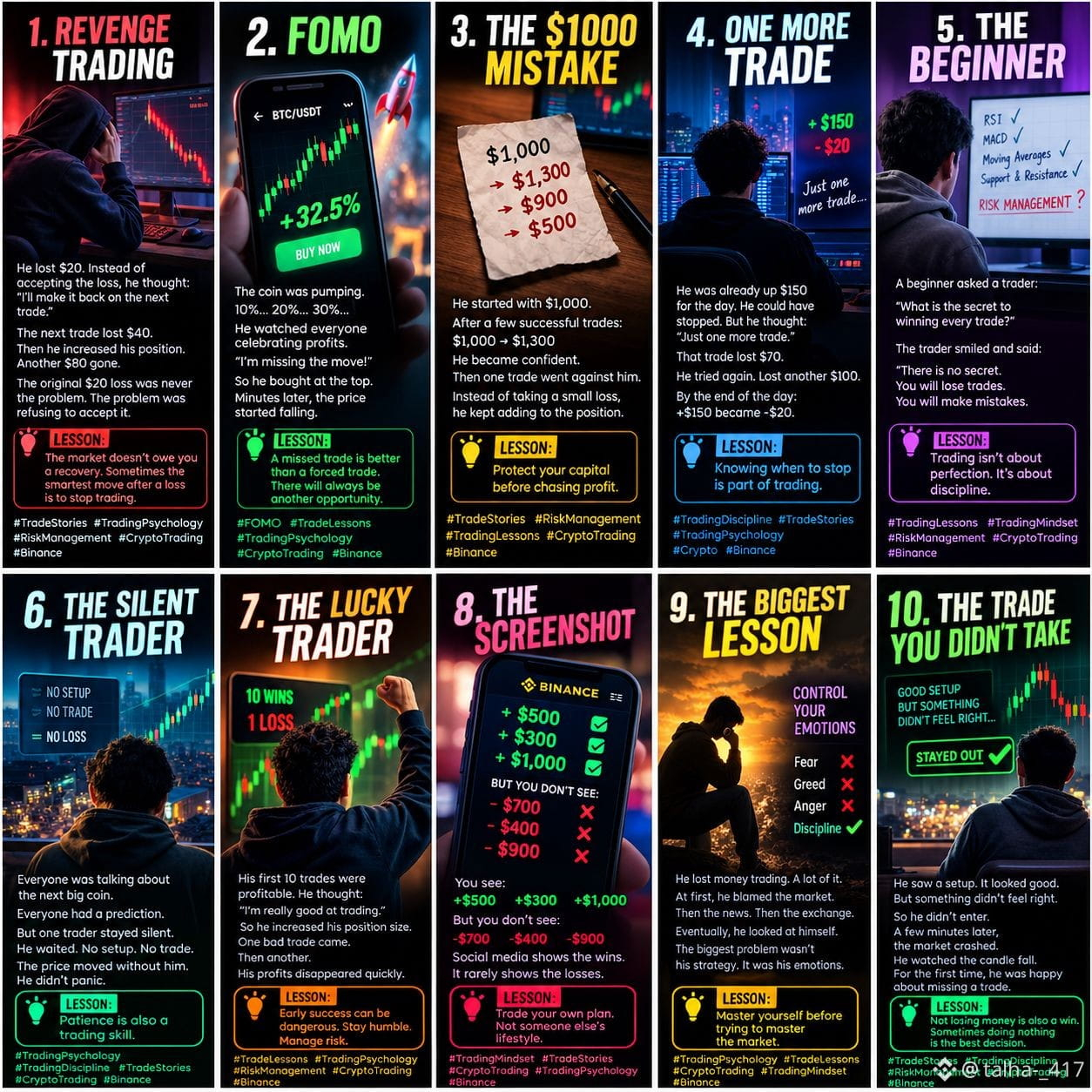
He started with $1,000 and thought trading would change his life.
The first few trades went perfectly.
$1,000 → $1,150 → $1,320.
Confidence quickly turned into overconfidence.
Then came one losing trade.
Instead of accepting the loss, he increased his position to recover it.
The loss became bigger.
He increased the position again.
By the end of the day, most of his account was gone.
The biggest lesson wasn't about technical analysis.
It was about controlling emotions.
In trading, protecting your capital is sometimes more important than making a profit.
One bad trade shouldn't be allowed to become a life-changing loss.
#TradeStories #TradeLessons #TradingPsychology #RiskManagement #CryptoTrading
He started with $1,000 and thought trading would change his life.
The first few trades went perfectly.
$1,000 → $1,150 → $1,320.
Confidence quickly turned into overconfidence.
Then came one losing trade.
Instead of accepting the loss, he increased his position to recover it.
The loss became bigger.
He increased the position again.
By the end of the day, most of his account was gone.
The biggest lesson wasn't about technical analysis.
It was about controlling emotions.
In trading, protecting your capital is sometimes more important than making a profit.
One bad trade shouldn't be allowed to become a life-changing loss.
#TradeStories #TradeLessons #TradingPsychology #RiskManagement #CryptoTrading
The first few trades went perfectly.
$1,000 → $1,150 → $1,320.
Confidence quickly turned into overconfidence.
Then came one losing trade.
Instead of accepting the loss, he increased his position to recover it.
The loss became bigger.
He increased the position again.
By the end of the day, most of his account was gone.
The biggest lesson wasn't about technical analysis.
It was about controlling emotions.
In trading, protecting your capital is sometimes more important than making a profit.
One bad trade shouldn't be allowed to become a life-changing loss.
#TradeStories #TradeLessons #TradingPsychology #RiskManagement #CryptoTrading
1
68

·
--
Risk Management Is the Edge Nobody Talks About
Most traders obsess over entries. The real alpha lives in how much you size.
The Kelly Criterion — a formula from information theory — tells you the mathematically optimal fraction of your bankroll to risk per trade. Full Kelly = maximizing long-run geometric growth. But in crypto, full Kelly is brutal. Volatility is high, edge estimates are imprecise, and a string of bad trades can devastate an over-sized portfolio. Most professional traders use half-Kelly or quarter-Kelly precisely because survival matters more than theoretical maximum growth.
Practical position sizing in crypto:
• Risk 1–2% of portfolio per trade, not 10–20%
• Scale position size inversely with volatility — a $BTC trade and a $ETH trade at equal conviction are NOT the same size
• Correlated positions add up: holding $BTC and $SOL long simultaneously is largely one macro bet
• Drawdown math is unforgiving: a 50% loss requires a 100% gain just to break even
The traders who survive multiple cycles share one trait: they never let a single bad position blow their account. It does not matter how strong your conviction is if leverage and poor sizing wipe you out before the move arrives.
Protect the bankroll first. Returns follow.
#RiskManagement #CryptoTrading #PositionSizing #Crypto #BinanceSquare
Risk Management Is the Edge Nobody Talks About
Most traders obsess over entries. The real alpha lives in how much you size.
The Kelly Criterion — a formula from information theory — tells you the mathematically optimal fraction of your bankroll to risk per trade. Full Kelly = maximizing long-run geometric growth. But in crypto, full Kelly is brutal. Volatility is high, edge estimates are imprecise, and a string of bad trades can devastate an over-sized portfolio. Most professional traders use half-Kelly or quarter-Kelly precisely because survival matters more than theoretical maximum growth.
Practical position sizing in crypto:
• Risk 1–2% of portfolio per trade, not 10–20%
• Scale position size inversely with volatility — a $BTC trade and a $ETH trade at equal conviction are NOT the same size
• Correlated positions add up: holding $BTC and $SOL long simultaneously is largely one macro bet
• Drawdown math is unforgiving: a 50% loss requires a 100% gain just to break even
The traders who survive multiple cycles share one trait: they never let a single bad position blow their account. It does not matter how strong your conviction is if leverage and poor sizing wipe you out before the move arrives.
Protect the bankroll first. Returns follow.
#RiskManagement #CryptoTrading #PositionSizing #Crypto #BinanceSquare
Most traders obsess over entries. The real alpha lives in how much you size.
The Kelly Criterion — a formula from information theory — tells you the mathematically optimal fraction of your bankroll to risk per trade. Full Kelly = maximizing long-run geometric growth. But in crypto, full Kelly is brutal. Volatility is high, edge estimates are imprecise, and a string of bad trades can devastate an over-sized portfolio. Most professional traders use half-Kelly or quarter-Kelly precisely because survival matters more than theoretical maximum growth.
Practical position sizing in crypto:
• Risk 1–2% of portfolio per trade, not 10–20%
• Scale position size inversely with volatility — a $BTC trade and a $ETH trade at equal conviction are NOT the same size
• Correlated positions add up: holding $BTC and $SOL long simultaneously is largely one macro bet
• Drawdown math is unforgiving: a 50% loss requires a 100% gain just to break even
The traders who survive multiple cycles share one trait: they never let a single bad position blow their account. It does not matter how strong your conviction is if leverage and poor sizing wipe you out before the move arrives.
Protect the bankroll first. Returns follow.
#RiskManagement #CryptoTrading #PositionSizing #Crypto #BinanceSquare
48
·
--
Most people fail in crypto not because they pick the wrong coins, but because they completely ignore risk management.
Before you enter any trade, you should already know your exact exit point if things go south. Hope is not a strategy. Protect your capital first, and let the profits take care of themselves.
#CryptoEducation #RiskManagement #TradingTips
Most people fail in crypto not because they pick the wrong coins, but because they completely ignore risk management.
Before you enter any trade, you should already know your exact exit point if things go south. Hope is not a strategy. Protect your capital first, and let the profits take care of themselves.
#CryptoEducation #RiskManagement #TradingTips
Before you enter any trade, you should already know your exact exit point if things go south. Hope is not a strategy. Protect your capital first, and let the profits take care of themselves.
#CryptoEducation #RiskManagement #TradingTips
71

·
--
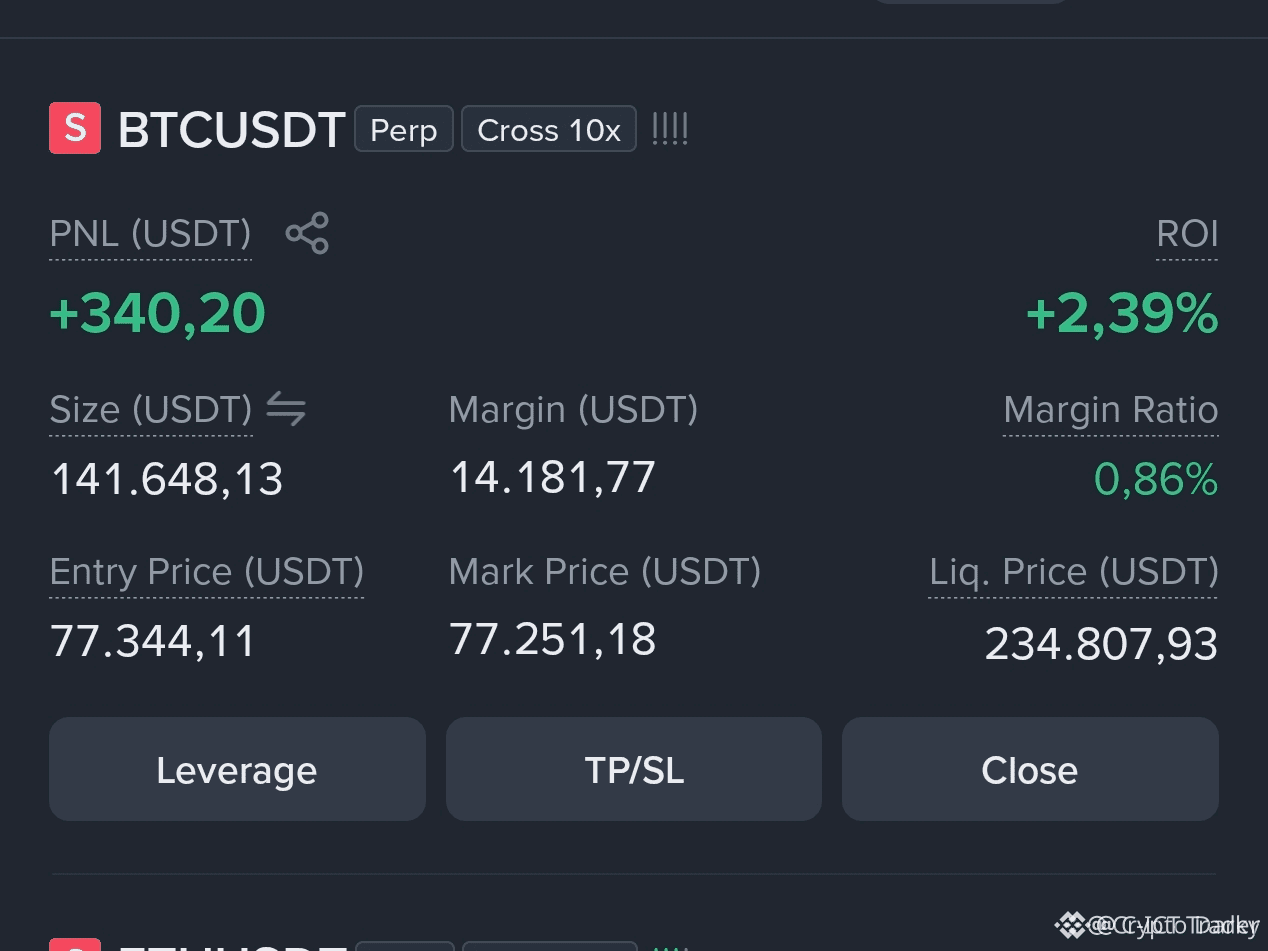
🚨 $BTC POSITION RESET: CUTTING INEFFICIENCIES TO ROTATE INTO INSTITUTIONAL FLOW! 🦈
Accepting a calculated $20,000 loss on $BTC is not defeat; it is disciplined capital reallocation. 🔍 Holding a compromised position against shifted market structure wastes both margin and opportunity when institutional liquidity calls for a fresh setup.
By neutralizing invalid risk, we free up capital to align directly with the next high-probability order block. 📊 Smart money prioritizes structure over sentiment, ensuring exposure is held only where edge truly resides.
💬 Are you holding invalidated positions out of hope, or actively managing risk when market structure shifts? 👇
⚠️ Not financial advice. Always manage your risk. 🛡️
🏷️ #BTC #RiskManagement #MarketStructure #CryptoTrading
🎯 🦈
🚨 $BTC POSITION RESET: CUTTING INEFFICIENCIES TO ROTATE INTO INSTITUTIONAL FLOW! 🦈
Accepting a calculated $20,000 loss on $BTC is not defeat; it is disciplined capital reallocation. 🔍 Holding a compromised position against shifted market structure wastes both margin and opportunity when institutional liquidity calls for a fresh setup.
By neutralizing invalid risk, we free up capital to align directly with the next high-probability order block. 📊 Smart money prioritizes structure over sentiment, ensuring exposure is held only where edge truly resides.
💬 Are you holding invalidated positions out of hope, or actively managing risk when market structure shifts? 👇
⚠️ Not financial advice. Always manage your risk. 🛡️
🏷️ #BTC #RiskManagement #MarketStructure #CryptoTrading
🎯 🦈
Accepting a calculated $20,000 loss on $BTC is not defeat; it is disciplined capital reallocation. 🔍 Holding a compromised position against shifted market structure wastes both margin and opportunity when institutional liquidity calls for a fresh setup.
By neutralizing invalid risk, we free up capital to align directly with the next high-probability order block. 📊 Smart money prioritizes structure over sentiment, ensuring exposure is held only where edge truly resides.
💬 Are you holding invalidated positions out of hope, or actively managing risk when market structure shifts? 👇
⚠️ Not financial advice. Always manage your risk. 🛡️
🏷️ #BTC #RiskManagement #MarketStructure #CryptoTrading
🎯 🦈
12

·
--
Bullish
{spot}(BTCUSDT)
To succeed in crypto trading, along with technical analysis, risk management is extremely important. Always diversify your portfolio and don't forget to use stop-loss. Remember, maintaining discipline without being overly greedy is the key to long-term success."
#CryptoTrading #RiskManagement #TradingTips
To succeed in crypto trading, along with technical analysis, risk management is extremely important. Always diversify your portfolio and don't forget to use stop-loss. Remember, maintaining discipline without being overly greedy is the key to long-term success."
#CryptoTrading #RiskManagement #TradingTips
#CryptoTrading #RiskManagement #TradingTips

109

🎉🎉📝 Before entering a crypto trade, have a simple plan.
Sometimes we buy a coin because the price is moving fast. At that moment, we only think about profit. We don't think much about what we will do if the price goes up or down.
Then the problem starts after entering the trade.
If the price goes up, we think, “Maybe it will go higher.”
If the price goes down, we think, “Maybe it will come back soon.”
So we keep waiting without any clear plan.
I think having a simple plan before buying can make things easier.
First, know why you are buying the coin. Then decide how much money you are comfortable using. Think about where you may take profit and how much loss you can accept.
Nobody can predict the exact top or bottom. So the plan does not need to be perfect. It just needs to help us control our emotions.
Another important thing is position size. Even if we are very confident about a coin, putting too much money into one trade can create unnecessary pressure.
When too much money is involved, even a small price movement can make us nervous.
📌 For me, a good trade is not only about making profit. It is also about following a plan and managing risk.
If the trade works, good. If it does not work, I can learn from it and move forward.
We don't need to win every trade. We just need to avoid letting one bad trade create a big problem.
Crypto gives us many opportunities. There is no need to rush.
💬 Do you make a plan before entering a trade, or do you decide after seeing the market movement?
Share your experience below. 👇
#Crypto #Bitcoin #cryptotrading #TradingTips #RiskManagement
$BTC
{spot}(BTCUSDT)
🎉🎉📝 Before entering a crypto trade, have a simple plan.
Sometimes we buy a coin because the price is moving fast. At that moment, we only think about profit. We don't think much about what we will do if the price goes up or down.
Then the problem starts after entering the trade.
If the price goes up, we think, “Maybe it will go higher.”
If the price goes down, we think, “Maybe it will come back soon.”
So we keep waiting without any clear plan.
I think having a simple plan before buying can make things easier.
First, know why you are buying the coin. Then decide how much money you are comfortable using. Think about where you may take profit and how much loss you can accept.
Nobody can predict the exact top or bottom. So the plan does not need to be perfect. It just needs to help us control our emotions.
Another important thing is position size. Even if we are very confident about a coin, putting too much money into one trade can create unnecessary pressure.
When too much money is involved, even a small price movement can make us nervous.
📌 For me, a good trade is not only about making profit. It is also about following a plan and managing risk.
If the trade works, good. If it does not work, I can learn from it and move forward.
We don't need to win every trade. We just need to avoid letting one bad trade create a big problem.
Crypto gives us many opportunities. There is no need to rush.
💬 Do you make a plan before entering a trade, or do you decide after seeing the market movement?
Share your experience below. 👇
#Crypto #Bitcoin #cryptotrading #TradingTips #RiskManagement
$BTC
Sometimes we buy a coin because the price is moving fast. At that moment, we only think about profit. We don't think much about what we will do if the price goes up or down.
Then the problem starts after entering the trade.
If the price goes up, we think, “Maybe it will go higher.”
If the price goes down, we think, “Maybe it will come back soon.”
So we keep waiting without any clear plan.
I think having a simple plan before buying can make things easier.
First, know why you are buying the coin. Then decide how much money you are comfortable using. Think about where you may take profit and how much loss you can accept.
Nobody can predict the exact top or bottom. So the plan does not need to be perfect. It just needs to help us control our emotions.
Another important thing is position size. Even if we are very confident about a coin, putting too much money into one trade can create unnecessary pressure.
When too much money is involved, even a small price movement can make us nervous.
📌 For me, a good trade is not only about making profit. It is also about following a plan and managing risk.
If the trade works, good. If it does not work, I can learn from it and move forward.
We don't need to win every trade. We just need to avoid letting one bad trade create a big problem.
Crypto gives us many opportunities. There is no need to rush.
💬 Do you make a plan before entering a trade, or do you decide after seeing the market movement?
Share your experience below. 👇
#Crypto #Bitcoin #cryptotrading #TradingTips #RiskManagement
$BTC

Luetta Schatzel NIrh:
Lilith
4
1
1
31

·
--
Picture this: a trader closes a $BTW short with over +7,629 USDT in profit, yet walks away feeling uneasy about the entire setup.
Most traders see a token hovering around 0.8 and immediately assume it is too late to short or too cheap to ignore, leading to messy sizing and catastrophic liquidations when volatility spikes.
The post from Oct 4 shows a disciplined trader securing a clean 7.6k USDT gain on BTWUSDT Perp, but explicitly noting they did not dare to size up just because the price sat at 0.8. When low-liquidity assets like $BTW or volatile pairs like $NEIRO grind near psychological levels, chasing oversized momentum without defined invalidation is how accounts get wiped out on a single wick.
Sizing defensively on extended moves protects capital far better than trying to squeeze every last pip out of a crowded trade.
How do you manage position sizing when trading high-volatility perps near key psychological levels?
#CryptoTrading #RiskManagement #FuturesTrading
Picture this: a trader closes a $BTW short with over +7,629 USDT in profit, yet walks away feeling uneasy about the entire setup.
Most traders see a token hovering around 0.8 and immediately assume it is too late to short or too cheap to ignore, leading to messy sizing and catastrophic liquidations when volatility spikes.
The post from Oct 4 shows a disciplined trader securing a clean 7.6k USDT gain on BTWUSDT Perp, but explicitly noting they did not dare to size up just because the price sat at 0.8. When low-liquidity assets like $BTW or volatile pairs like $NEIRO grind near psychological levels, chasing oversized momentum without defined invalidation is how accounts get wiped out on a single wick.
Sizing defensively on extended moves protects capital far better than trying to squeeze every last pip out of a crowded trade.
How do you manage position sizing when trading high-volatility perps near key psychological levels?
#CryptoTrading #RiskManagement #FuturesTrading
Most traders see a token hovering around 0.8 and immediately assume it is too late to short or too cheap to ignore, leading to messy sizing and catastrophic liquidations when volatility spikes.
The post from Oct 4 shows a disciplined trader securing a clean 7.6k USDT gain on BTWUSDT Perp, but explicitly noting they did not dare to size up just because the price sat at 0.8. When low-liquidity assets like $BTW or volatile pairs like $NEIRO grind near psychological levels, chasing oversized momentum without defined invalidation is how accounts get wiped out on a single wick.
Sizing defensively on extended moves protects capital far better than trying to squeeze every last pip out of a crowded trade.
How do you manage position sizing when trading high-volatility perps near key psychological levels?
#CryptoTrading #RiskManagement #FuturesTrading

59
·
--
Everyone thinks a cheap unit price means safety, but actually low nominal price is where most traders blow up their accounts.
When a coin looks cheap, the urge to size up heavily kicks in, and before you know it, a minor market wick wipes out weeks of disciplined gains.
Think of position sizing like buying discount items in bulk. Just because an asset costs under a dollar does not mean you should back up the truck and fill your entire garage. A trader recently locked in a clean +7,629.47 $USDT profit shorting $BTW, yet openly admitted they refused to oversize simply because the token traded around 0.8.
That restraint is what separates long-term survivors from liquidated accounts. A low nominal price creates a psychological illusion of safety, but percentage moves hit your margin the exact same way whether you trade $BTC or a volatile low-cap contract. Surviving the market comes down to keeping your size proportional to your risk tolerance every single time.
How do you adjust your position sizing when trading sub-dollar tokens?
#CryptoTrading #RiskManagement #BinanceSquare
Everyone thinks a cheap unit price means safety, but actually low nominal price is where most traders blow up their accounts.
When a coin looks cheap, the urge to size up heavily kicks in, and before you know it, a minor market wick wipes out weeks of disciplined gains.
Think of position sizing like buying discount items in bulk. Just because an asset costs under a dollar does not mean you should back up the truck and fill your entire garage. A trader recently locked in a clean +7,629.47 $USDT profit shorting $BTW , yet openly admitted they refused to oversize simply because the token traded around 0.8.
That restraint is what separates long-term survivors from liquidated accounts. A low nominal price creates a psychological illusion of safety, but percentage moves hit your margin the exact same way whether you trade $BTC or a volatile low-cap contract. Surviving the market comes down to keeping your size proportional to your risk tolerance every single time.
How do you adjust your position sizing when trading sub-dollar tokens?
#CryptoTrading #RiskManagement #BinanceSquare
When a coin looks cheap, the urge to size up heavily kicks in, and before you know it, a minor market wick wipes out weeks of disciplined gains.
Think of position sizing like buying discount items in bulk. Just because an asset costs under a dollar does not mean you should back up the truck and fill your entire garage. A trader recently locked in a clean +7,629.47 $USDT profit shorting $BTW , yet openly admitted they refused to oversize simply because the token traded around 0.8.
That restraint is what separates long-term survivors from liquidated accounts. A low nominal price creates a psychological illusion of safety, but percentage moves hit your margin the exact same way whether you trade $BTC or a volatile low-cap contract. Surviving the market comes down to keeping your size proportional to your risk tolerance every single time.
How do you adjust your position sizing when trading sub-dollar tokens?
#CryptoTrading #RiskManagement #BinanceSquare

53

Most traders blow up their accounts not because they picked the wrong direction, but because their risk-to-reward ratio is mathematically stacked against them from day one.
Watching everyone rush into an $ADA long trade right after a 7.3% pump might look tempting, but jumping in between 0.27 and 0.28 with a first target at 0.28 means risking a drop to 0.22 just to make pocket change. When your potential downside is over 18% and your first profit target is essentially break-even, you are setting yourself up for unnecessary liquidation.
Even if wider targets stretch up to 0.30 or 0.33, the market rarely moves in a straight line. If $BTC takes a quick liquidity dip, these wide stops get hunted fast while tight targets leave you with zero room for error. A viable swing setup needs clear invalidation that makes sense relative to what you actually stand to gain.
How do you usually structure your invalidation levels when longing a fast pump?
#Cardano #CryptoTrading #RiskManagement
Most traders blow up their accounts not because they picked the wrong direction, but because their risk-to-reward ratio is mathematically stacked against them from day one.
Watching everyone rush into an $ADA long trade right after a 7.3% pump might look tempting, but jumping in between 0.27 and 0.28 with a first target at 0.28 means risking a drop to 0.22 just to make pocket change. When your potential downside is over 18% and your first profit target is essentially break-even, you are setting yourself up for unnecessary liquidation.
Even if wider targets stretch up to 0.30 or 0.33, the market rarely moves in a straight line. If $BTC takes a quick liquidity dip, these wide stops get hunted fast while tight targets leave you with zero room for error. A viable swing setup needs clear invalidation that makes sense relative to what you actually stand to gain.
How do you usually structure your invalidation levels when longing a fast pump?
#Cardano #CryptoTrading #RiskManagement
Watching everyone rush into an $ADA long trade right after a 7.3% pump might look tempting, but jumping in between 0.27 and 0.28 with a first target at 0.28 means risking a drop to 0.22 just to make pocket change. When your potential downside is over 18% and your first profit target is essentially break-even, you are setting yourself up for unnecessary liquidation.
Even if wider targets stretch up to 0.30 or 0.33, the market rarely moves in a straight line. If $BTC takes a quick liquidity dip, these wide stops get hunted fast while tight targets leave you with zero room for error. A viable swing setup needs clear invalidation that makes sense relative to what you actually stand to gain.
How do you usually structure your invalidation levels when longing a fast pump?
#Cardano #CryptoTrading #RiskManagement

30
Picture this: a feed flooded with calls promising the next massive green candle within hours, while the asset is sitting at just +1.32%.
Most traders rush in right at these moments out of pure FOMO, only to end up providing exit liquidity when the momentum stalls. The instinct to blindly trust sudden setups without checking real market depth has drained more accounts than standard pullbacks ever did.
Looking at the recent volume spikes around $4, activity from top 30-day volume traders often signals a trap rather than organic demand. When aggressive hype generates over 111.6k views around a modest 1.3% move, larger players are frequently looking for late buyers to absorb their distribution. We have seen similar distribution patterns play out across $BTC and $SOL before sharp corrective sweeps.
Chasing promised breakouts after hours of retail excitement rarely offers a safe risk-to-reward ratio. When leverage piles up on thin order books, the downside cascade happens much faster than the climb.
How do you usually filter out distribution traps when high-volume calls start flooding your feed?
#CryptoTrading #RiskManagement #BinanceSquare
Picture this: a feed flooded with calls promising the next massive green candle within hours, while the asset is sitting at just +1.32%.
Most traders rush in right at these moments out of pure FOMO, only to end up providing exit liquidity when the momentum stalls. The instinct to blindly trust sudden setups without checking real market depth has drained more accounts than standard pullbacks ever did.
Looking at the recent volume spikes around $4, activity from top 30-day volume traders often signals a trap rather than organic demand. When aggressive hype generates over 111.6k views around a modest 1.3% move, larger players are frequently looking for late buyers to absorb their distribution. We have seen similar distribution patterns play out across $BTC and $SOL before sharp corrective sweeps.
Chasing promised breakouts after hours of retail excitement rarely offers a safe risk-to-reward ratio. When leverage piles up on thin order books, the downside cascade happens much faster than the climb.
How do you usually filter out distribution traps when high-volume calls start flooding your feed?
#CryptoTrading #RiskManagement #BinanceSquare
Most traders rush in right at these moments out of pure FOMO, only to end up providing exit liquidity when the momentum stalls. The instinct to blindly trust sudden setups without checking real market depth has drained more accounts than standard pullbacks ever did.
Looking at the recent volume spikes around $4, activity from top 30-day volume traders often signals a trap rather than organic demand. When aggressive hype generates over 111.6k views around a modest 1.3% move, larger players are frequently looking for late buyers to absorb their distribution. We have seen similar distribution patterns play out across $BTC and $SOL before sharp corrective sweeps.
Chasing promised breakouts after hours of retail excitement rarely offers a safe risk-to-reward ratio. When leverage piles up on thin order books, the downside cascade happens much faster than the climb.
How do you usually filter out distribution traps when high-volume calls start flooding your feed?
#CryptoTrading #RiskManagement #BinanceSquare

19


·
--
$GTC - Chasing 80% candles in greed territory is how accounts blow up.
Volume confirms interest, but 40M USDT on a micro-cap means thin liquidity - exits vanish faster than entries appear.
Live example: $GTC +79.4% on 40.4M USDT volume.
Tape now: $BTC 85,270 USDT (+0.0%) · $ETH 2,697 USDT (-0.1%)
#TradingTips #RiskManagement
$GTC - Chasing 80% candles in greed territory is how accounts blow up.
Volume confirms interest, but 40M USDT on a micro-cap means thin liquidity - exits vanish faster than entries appear.
Live example: $GTC +79.4% on 40.4M USDT volume.
Tape now: $BTC 85,270 USDT (+0.0%) · $ETH 2,697 USDT (-0.1%)
#TradingTips #RiskManagement
Volume confirms interest, but 40M USDT on a micro-cap means thin liquidity - exits vanish faster than entries appear.
Live example: $GTC +79.4% on 40.4M USDT volume.
Tape now: $BTC 85,270 USDT (+0.0%) · $ETH 2,697 USDT (-0.1%)
#TradingTips #RiskManagement
1
240
Log in to explore more content
Join global crypto users on Binance Square
⚡️ Get latest and useful information about crypto.
💬 Trusted by the world’s largest crypto exchange.
👍 Discover real insights from verified creators.
Email / Phone number
Trending Topics
1
#BinanceLaunchesBinanceIntelligence
75,221 views
923 Discussing
2
#StriveBuys2000BTCFor$169M
890 views
35 Discussing
3
#EvernorthXRPTreasuryCompletesSPACMerger
58,238 views
646 Discussing
4
#ADAGains10%Above$0.27
36,101 views
224 Discussing
5
#ETHUp70%InQ3ButLiquidityFalls
247,114 views
1,711 Discussing
6
#EthStakingExitQueueHits2026High
93,897 views
1,154 Discussing
7
#FedOctoberHoldOdds82.3%
98,203 views
1,100 Discussing
8
#Nikkei225Jumps2.5%ToThreeMonthHigh
102,291 views
1,329 Discussing
9
#CircleMints$2.75BUSDCOnSolanaIn7Days
2,698 views
59 Discussing
10
#DriftHackVictimsBeginClaims
212,789 views
1,985 Discussing