
CRYPTO BUY1
2.3k Beiträge

CRYPTO BUY1
Melden
Nutzer blockieren
CRYPTO Expert
Trade eröffnen
Hochfrequenz-Trader
1.9 Jahre
1.6K+ Following
10.7K+ Follower
1.9K+ Like gegeben
Beiträge
Portfolio
Alle
Zitierungen
Live
·
--
Bullisch
Zcash ($ZEC) Heute-Update
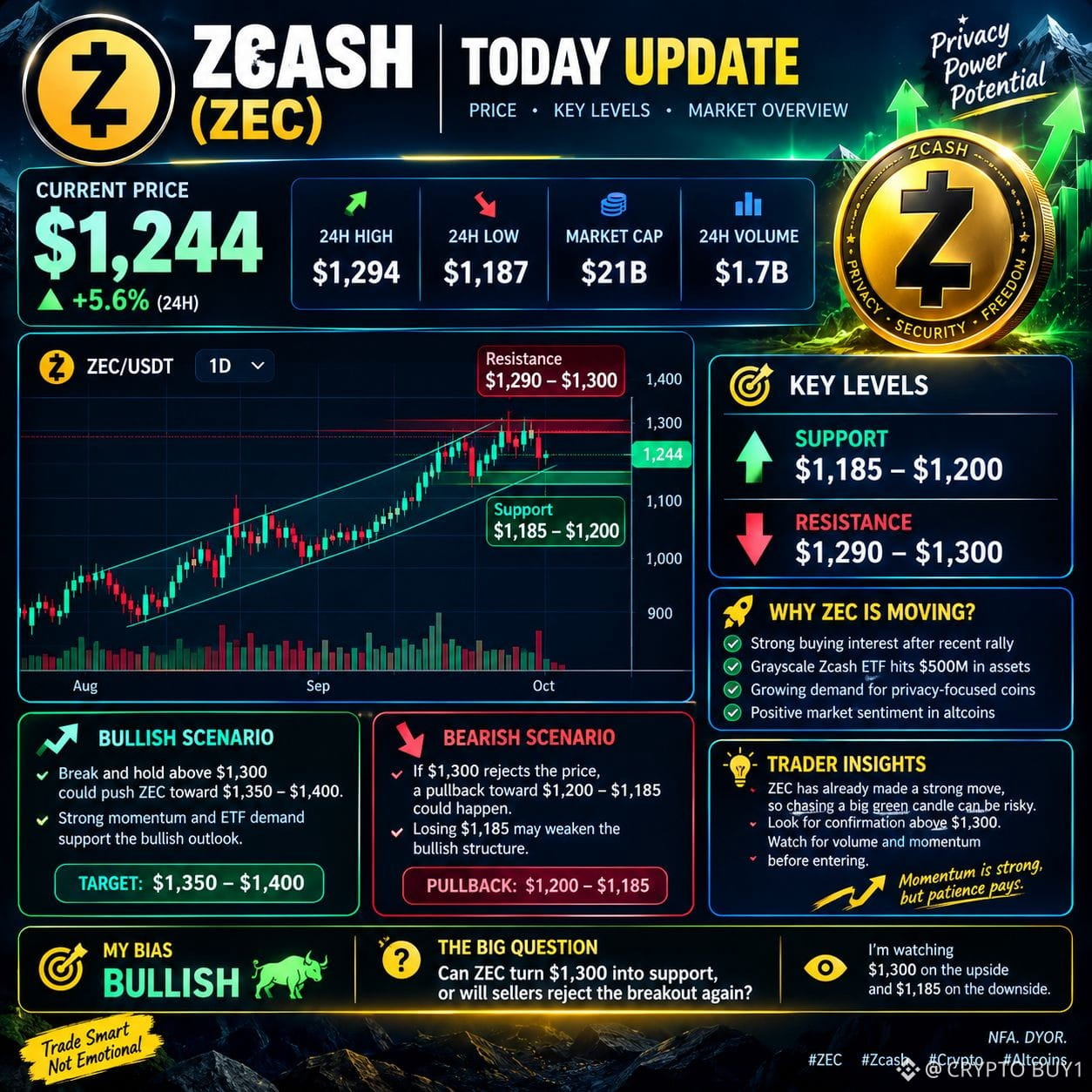
ZEC zeigt heute eine starke Dynamik und handelt nahe $1.244 nach einem weiteren starken Anstieg.
📌 Aktueller Preis: ~ $1.244
📈 24H-Hoch: ~ $1.294
📉 24H-Tief: ~ $1.187
📊 Marktkapitalisierung: ~ $21B
💰 24H-Volumen: ~ $1.7B
📈 24H-Änderung: etwa +5,6%
🔥 Wichtige Kursmarken, die man im Blick behalten sollte:
🟢 Unterstützung: $1.185–$1.200
🔴 Widerstand: $1.290–$1.300
ZEC testet jetzt die wichtige $1.300-Zone.
Wenn Käufer über $1.300 ausbrechen und es als Unterstützung halten, könnte der nächste Kursanstiegsbereich bei etwa $1.350–$1.400 liegen.
Wenn $1.300 den Kurs jedoch erneut nach unten abweist, könnte ein Rücksetzer in Richtung $1.200–$1.185 passieren, bevor es zu einem weiteren Versuch nach oben kommt.
Das größere Bild bleibt jedoch bullisch. ZEC hat in der vergangenen Woche stark zugelegt, während der neue Grayscale Zcash ETF bereits die Schwelle von $500M an Assets überschritten hat und damit die aktuelle Nachfrage-Story weiter stützt.
⚠️ Aber die Dynamik ist bereits stark, daher kann das Jagen einer großen grünen Kerze riskant sein.
📊 Tendenz: BULLISCH 🟢
Bestätigung:
Über $1.300 = stärkeres bullisches Setup
Unter $1.185 = bullische Struktur beginnt zu schwächen
Die große Frage:
Kann ZEC $1.300 in Unterstützung verwandeln, oder werden Verkäufer den Breakout erneut ablehnen?
Ich beobachte $1.300 nach oben und $1.185 nach unten.
NFA. DYOR.
#zec #ZECUSDT #BinnanceSquare #crypto #binnance
$ZEC
{future}(ZECUSDT)
Zcash ($ZEC ) Heute-Update
ZEC zeigt heute eine starke Dynamik und handelt nahe $1.244 nach einem weiteren starken Anstieg.
📌 Aktueller Preis: ~ $1.244
📈 24H-Hoch: ~ $1.294
📉 24H-Tief: ~ $1.187
📊 Marktkapitalisierung: ~ $21B
💰 24H-Volumen: ~ $1.7B
📈 24H-Änderung: etwa +5,6%
🔥 Wichtige Kursmarken, die man im Blick behalten sollte:
🟢 Unterstützung: $1.185–$1.200
🔴 Widerstand: $1.290–$1.300
ZEC testet jetzt die wichtige $1.300-Zone.
Wenn Käufer über $1.300 ausbrechen und es als Unterstützung halten, könnte der nächste Kursanstiegsbereich bei etwa $1.350–$1.400 liegen.
Wenn $1.300 den Kurs jedoch erneut nach unten abweist, könnte ein Rücksetzer in Richtung $1.200–$1.185 passieren, bevor es zu einem weiteren Versuch nach oben kommt.
Das größere Bild bleibt jedoch bullisch. ZEC hat in der vergangenen Woche stark zugelegt, während der neue Grayscale Zcash ETF bereits die Schwelle von $500M an Assets überschritten hat und damit die aktuelle Nachfrage-Story weiter stützt.
⚠️ Aber die Dynamik ist bereits stark, daher kann das Jagen einer großen grünen Kerze riskant sein.
📊 Tendenz: BULLISCH 🟢
Bestätigung:
Über $1.300 = stärkeres bullisches Setup
Unter $1.185 = bullische Struktur beginnt zu schwächen
Die große Frage:
Kann ZEC $1.300 in Unterstützung verwandeln, oder werden Verkäufer den Breakout erneut ablehnen?
Ich beobachte $1.300 nach oben und $1.185 nach unten.
NFA. DYOR.
#zec #ZECUSDT #BinnanceSquare #crypto #binnance
$ZEC
ZEC zeigt heute eine starke Dynamik und handelt nahe $1.244 nach einem weiteren starken Anstieg.
📌 Aktueller Preis: ~ $1.244
📈 24H-Hoch: ~ $1.294
📉 24H-Tief: ~ $1.187
📊 Marktkapitalisierung: ~ $21B
💰 24H-Volumen: ~ $1.7B
📈 24H-Änderung: etwa +5,6%
🔥 Wichtige Kursmarken, die man im Blick behalten sollte:
🟢 Unterstützung: $1.185–$1.200
🔴 Widerstand: $1.290–$1.300
ZEC testet jetzt die wichtige $1.300-Zone.
Wenn Käufer über $1.300 ausbrechen und es als Unterstützung halten, könnte der nächste Kursanstiegsbereich bei etwa $1.350–$1.400 liegen.
Wenn $1.300 den Kurs jedoch erneut nach unten abweist, könnte ein Rücksetzer in Richtung $1.200–$1.185 passieren, bevor es zu einem weiteren Versuch nach oben kommt.
Das größere Bild bleibt jedoch bullisch. ZEC hat in der vergangenen Woche stark zugelegt, während der neue Grayscale Zcash ETF bereits die Schwelle von $500M an Assets überschritten hat und damit die aktuelle Nachfrage-Story weiter stützt.
⚠️ Aber die Dynamik ist bereits stark, daher kann das Jagen einer großen grünen Kerze riskant sein.
📊 Tendenz: BULLISCH 🟢
Bestätigung:
Über $1.300 = stärkeres bullisches Setup
Unter $1.185 = bullische Struktur beginnt zu schwächen
Die große Frage:
Kann ZEC $1.300 in Unterstützung verwandeln, oder werden Verkäufer den Breakout erneut ablehnen?
Ich beobachte $1.300 nach oben und $1.185 nach unten.
NFA. DYOR.
#zec #ZECUSDT #BinnanceSquare #crypto #binnance
$ZEC
1
67
·
--
Bullisch
Bitcoin ($BTC) Heute-Update
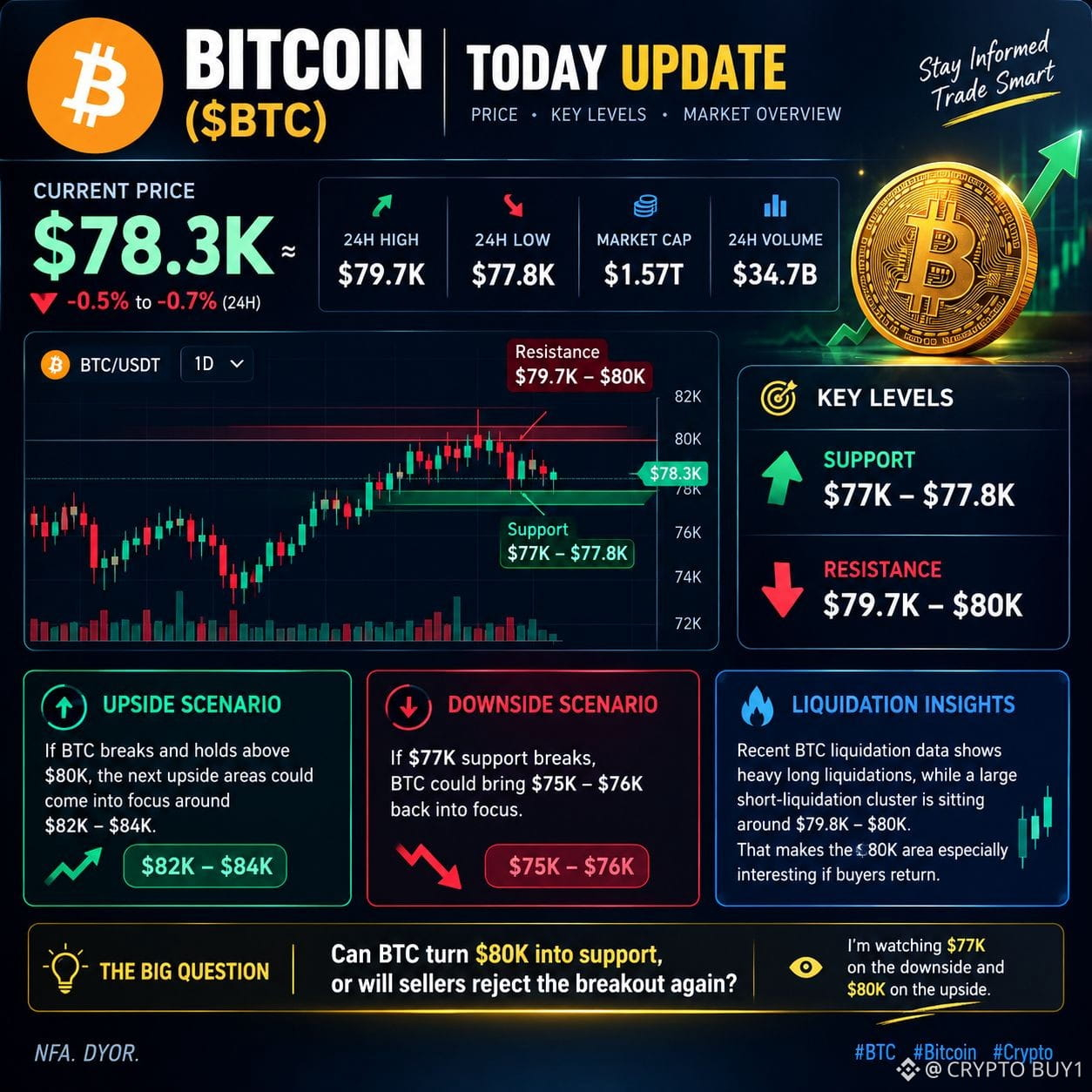
BTC handelt heute bei rund 78.000 $, wobei der Kurs sich in einer relativ engen Spanne bewegt, während Trader auf den nächsten großen Auslöser warten.
📌 Aktueller Preis: ~78,3K
📈 24H-Hoch: ~79,7K
📉 24H-Tief: ~77,8K
📊 Marktkapitalisierung: ~1,57T
💰 24H-Volumen: ~34,7B
📉 24H-Änderung: etwa -0,5% bis -0,7%
Wichtige Levels, die man im Blick behalten sollte:
🟢 Support: 77K–77,8K
🔴 Widerstand: 79,7K–80K
BTC liegt aktuell knapp unter der 80K-Region. Ein sauberer Ausbruch und ein anschließender Halt über 80K könnte den Weg Richtung 82K–84K öffnen.
Andererseits könnte der Verlust der 77K-Supportzone dazu führen, dass wieder 75K–76K ins Blickfeld rückt.
Außerdem gibt es rund um den aktuellen Preis eine erhebliche Hebelwirkung. Jüngste Daten zu BTC-Liquidationen zeigen starke Long-Liquidationen, während sich ein großer Cluster an Short-Liquidationen im Bereich 79,8K–80K befindet. Das macht die 80K-Region besonders spannend, falls Käufer zurückkommen. 1
Für den Moment ist die wichtigste Frage ganz einfach:
Kann BTC 80K in einen Support umwandeln, oder werden Verkäufer den Ausbruch erneut zurückweisen?
Ich beobachte 77K nach unten und 80K nach oben.
NFA. DYOR.
#BTC #bitcoin #crypto #BinnanceSquare #BinanceSquareFamily
$BTC
{future}(BTCUSDT)
Bitcoin ($BTC ) Heute-Update
BTC handelt heute bei rund 78.000 $, wobei der Kurs sich in einer relativ engen Spanne bewegt, während Trader auf den nächsten großen Auslöser warten.
📌 Aktueller Preis: ~78,3K
📈 24H-Hoch: ~79,7K
📉 24H-Tief: ~77,8K
📊 Marktkapitalisierung: ~1,57T
💰 24H-Volumen: ~34,7B
📉 24H-Änderung: etwa -0,5% bis -0,7%
Wichtige Levels, die man im Blick behalten sollte:
🟢 Support: 77K–77,8K
🔴 Widerstand: 79,7K–80K
BTC liegt aktuell knapp unter der 80K-Region. Ein sauberer Ausbruch und ein anschließender Halt über 80K könnte den Weg Richtung 82K–84K öffnen.
Andererseits könnte der Verlust der 77K-Supportzone dazu führen, dass wieder 75K–76K ins Blickfeld rückt.
Außerdem gibt es rund um den aktuellen Preis eine erhebliche Hebelwirkung. Jüngste Daten zu BTC-Liquidationen zeigen starke Long-Liquidationen, während sich ein großer Cluster an Short-Liquidationen im Bereich 79,8K–80K befindet. Das macht die 80K-Region besonders spannend, falls Käufer zurückkommen. 1
Für den Moment ist die wichtigste Frage ganz einfach:
Kann BTC 80K in einen Support umwandeln, oder werden Verkäufer den Ausbruch erneut zurückweisen?
Ich beobachte 77K nach unten und 80K nach oben.
NFA. DYOR.
#BTC #bitcoin #crypto #BinnanceSquare #BinanceSquareFamily
$BTC
BTC handelt heute bei rund 78.000 $, wobei der Kurs sich in einer relativ engen Spanne bewegt, während Trader auf den nächsten großen Auslöser warten.
📌 Aktueller Preis: ~78,3K
📈 24H-Hoch: ~79,7K
📉 24H-Tief: ~77,8K
📊 Marktkapitalisierung: ~1,57T
💰 24H-Volumen: ~34,7B
📉 24H-Änderung: etwa -0,5% bis -0,7%
Wichtige Levels, die man im Blick behalten sollte:
🟢 Support: 77K–77,8K
🔴 Widerstand: 79,7K–80K
BTC liegt aktuell knapp unter der 80K-Region. Ein sauberer Ausbruch und ein anschließender Halt über 80K könnte den Weg Richtung 82K–84K öffnen.
Andererseits könnte der Verlust der 77K-Supportzone dazu führen, dass wieder 75K–76K ins Blickfeld rückt.
Außerdem gibt es rund um den aktuellen Preis eine erhebliche Hebelwirkung. Jüngste Daten zu BTC-Liquidationen zeigen starke Long-Liquidationen, während sich ein großer Cluster an Short-Liquidationen im Bereich 79,8K–80K befindet. Das macht die 80K-Region besonders spannend, falls Käufer zurückkommen. 1
Für den Moment ist die wichtigste Frage ganz einfach:
Kann BTC 80K in einen Support umwandeln, oder werden Verkäufer den Ausbruch erneut zurückweisen?
Ich beobachte 77K nach unten und 80K nach oben.
NFA. DYOR.
#BTC #bitcoin #crypto #BinnanceSquare #BinanceSquareFamily
$BTC
67
·
--
Bullisch
Stell dir vor, man fordert dich auf, die komplette Bilanz deines Unternehmens zu veröffentlichen, nur um deine Compliance zu beweisen.
Die meisten Unternehmen würden damit nie einverstanden sein.
Doch viele Blockchain-Diskussionen gehen immer noch davon aus, dass mehr Transparenz automatisch auch mehr Vertrauen bedeutet.
Ich bin mir nicht sicher, ob das im Finanzbereich wirklich stimmt.
Ein Kreditgeber braucht nicht jedes Detail.
Ein Investor braucht keinen unbegrenzten Zugriff.
Eine Regulierungsbehörde braucht nicht die Daten von allen.
Sie brauchen einen Nachweis.
Das ist eine ganz andere Anforderung.
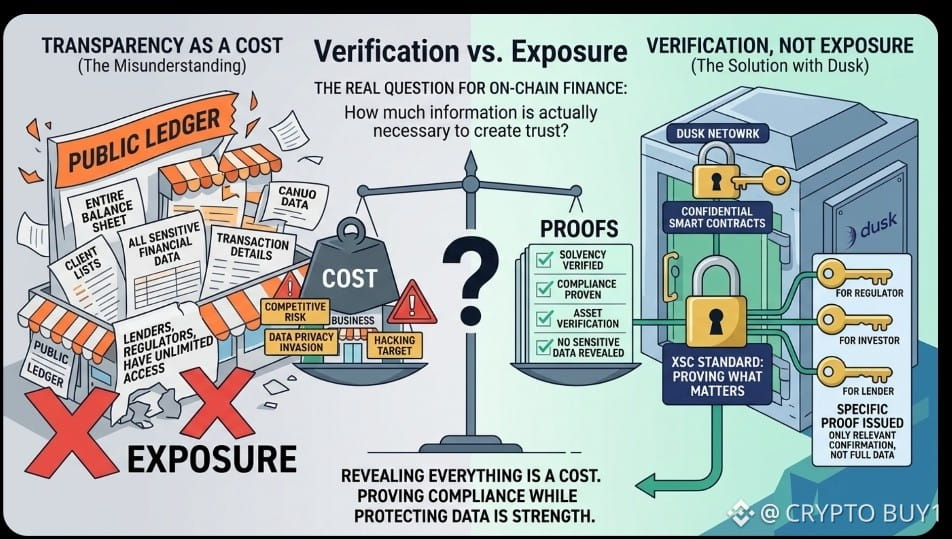
Je mehr ich darüber nachdenke, desto mehr fühlt es sich an wie eines der größten Missverständnisse im Krypto-Bereich: Verifikation mit Offenlegung zu verwechseln.
Echte Finanzsysteme funktionieren mit kontrolliertem Zugriff auf Informationen.
Nicht, weil man etwas versteckt.
Sondern weil sensible Daten einen Wert haben.
Deshalb ist mir Dusk aufgefallen.
Dusk behandelt Privatsphäre nicht als optionale Funktion, sondern ist um Finanz-Workflows herum gebaut, in denen Vertraulichkeit und Verifikation gleichzeitig existieren müssen. Mit vertraulichen Smart Contracts und dem XSC-Standard liegt der Fokus nicht darauf, alles offenzulegen – sondern darauf, das Relevante zu beweisen und gleichzeitig das zu schützen, was nicht offenbart werden sollte.
Die eigentliche Frage für On-Chain-Finanzierung lautet vielleicht nicht:
„Wie transparent kann eine Blockchain werden?“
Sondern:
„Wie viele Informationen sind tatsächlich nötig, um Vertrauen zu schaffen?“
Denn wenn jeder Teilnehmer gezwungen ist, mehr offenzulegen als nötig, wird Transparenz nicht zur Stärke.
Sie wird zum Kostenfaktor.
#dusk $DUSK @Dusk_Foundation
$DUSK
{future}(DUSKUSDT)
Stell dir vor, man fordert dich auf, die komplette Bilanz deines Unternehmens zu veröffentlichen, nur um deine Compliance zu beweisen.
Die meisten Unternehmen würden damit nie einverstanden sein.
Doch viele Blockchain-Diskussionen gehen immer noch davon aus, dass mehr Transparenz automatisch auch mehr Vertrauen bedeutet.
Ich bin mir nicht sicher, ob das im Finanzbereich wirklich stimmt.
Ein Kreditgeber braucht nicht jedes Detail.
Ein Investor braucht keinen unbegrenzten Zugriff.
Eine Regulierungsbehörde braucht nicht die Daten von allen.
Sie brauchen einen Nachweis.
Das ist eine ganz andere Anforderung.
Je mehr ich darüber nachdenke, desto mehr fühlt es sich an wie eines der größten Missverständnisse im Krypto-Bereich: Verifikation mit Offenlegung zu verwechseln.
Echte Finanzsysteme funktionieren mit kontrolliertem Zugriff auf Informationen.
Nicht, weil man etwas versteckt.
Sondern weil sensible Daten einen Wert haben.
Deshalb ist mir Dusk aufgefallen.
Dusk behandelt Privatsphäre nicht als optionale Funktion, sondern ist um Finanz-Workflows herum gebaut, in denen Vertraulichkeit und Verifikation gleichzeitig existieren müssen. Mit vertraulichen Smart Contracts und dem XSC-Standard liegt der Fokus nicht darauf, alles offenzulegen – sondern darauf, das Relevante zu beweisen und gleichzeitig das zu schützen, was nicht offenbart werden sollte.
Die eigentliche Frage für On-Chain-Finanzierung lautet vielleicht nicht:
„Wie transparent kann eine Blockchain werden?“
Sondern:
„Wie viele Informationen sind tatsächlich nötig, um Vertrauen zu schaffen?“
Denn wenn jeder Teilnehmer gezwungen ist, mehr offenzulegen als nötig, wird Transparenz nicht zur Stärke.
Sie wird zum Kostenfaktor.
#dusk $DUSK @Dusk
$DUSK
Die meisten Unternehmen würden damit nie einverstanden sein.
Doch viele Blockchain-Diskussionen gehen immer noch davon aus, dass mehr Transparenz automatisch auch mehr Vertrauen bedeutet.
Ich bin mir nicht sicher, ob das im Finanzbereich wirklich stimmt.
Ein Kreditgeber braucht nicht jedes Detail.
Ein Investor braucht keinen unbegrenzten Zugriff.
Eine Regulierungsbehörde braucht nicht die Daten von allen.
Sie brauchen einen Nachweis.
Das ist eine ganz andere Anforderung.
Je mehr ich darüber nachdenke, desto mehr fühlt es sich an wie eines der größten Missverständnisse im Krypto-Bereich: Verifikation mit Offenlegung zu verwechseln.
Echte Finanzsysteme funktionieren mit kontrolliertem Zugriff auf Informationen.
Nicht, weil man etwas versteckt.
Sondern weil sensible Daten einen Wert haben.
Deshalb ist mir Dusk aufgefallen.
Dusk behandelt Privatsphäre nicht als optionale Funktion, sondern ist um Finanz-Workflows herum gebaut, in denen Vertraulichkeit und Verifikation gleichzeitig existieren müssen. Mit vertraulichen Smart Contracts und dem XSC-Standard liegt der Fokus nicht darauf, alles offenzulegen – sondern darauf, das Relevante zu beweisen und gleichzeitig das zu schützen, was nicht offenbart werden sollte.
Die eigentliche Frage für On-Chain-Finanzierung lautet vielleicht nicht:
„Wie transparent kann eine Blockchain werden?“
Sondern:
„Wie viele Informationen sind tatsächlich nötig, um Vertrauen zu schaffen?“
Denn wenn jeder Teilnehmer gezwungen ist, mehr offenzulegen als nötig, wird Transparenz nicht zur Stärke.
Sie wird zum Kostenfaktor.
#dusk $DUSK @Dusk
$DUSK
99
·
--
Bullisch
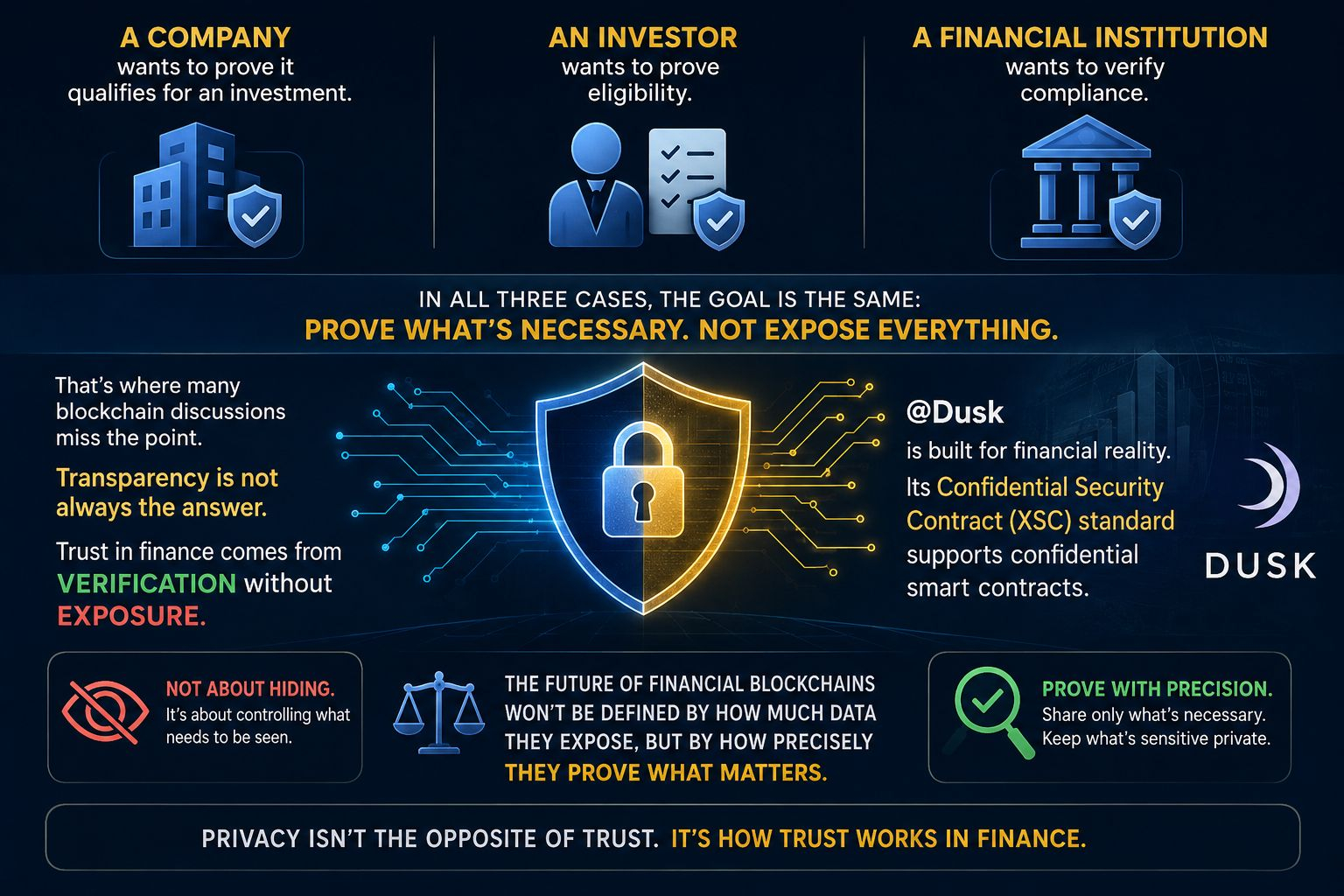
Ein Unternehmen möchte nachweisen, dass es sich für eine Investition qualifiziert.
Ein Investor möchte seine Eignung nachweisen.
Eine Finanzinstitution möchte die Einhaltung überprüfen.
In allen drei Fällen ist das Ziel dasselbe:
Nachweisen, was notwendig ist. Nicht alles offenlegen.
Genau da, denke ich, verfehlen viele Diskussionen über Blockchain den Punkt.
Wir haben jahrelang Transparenz als die Standardantwort auf Vertrauen behandelt. Aber im Finanzwesen entsteht Vertrauen nicht immer dadurch, dass jede Einzelheit öffentlich gemacht wird.
Manchmal entsteht Vertrauen dadurch, dass man eine Behauptung verifizieren kann, ohne die Informationen dahinter preiszugeben.
Das ist ein subtiler Unterschied, aber ein wichtiger.
Was mich an @Dusk besonders angesprochen hat, ist, dass es von dieser finanziellen Realität ausgeht. Anstatt anzunehmen, dass jeder Smart Contract in voller öffentlicher Sicht operieren sollte, ist #Dusk für finanzielle Anwendungen entworfen, bei denen Vertraulichkeit genauso wichtig sein kann wie die Verifikation.
Sein Confidential Security Contract (XSC)-Standard unterstützt vertrauliche Smart Contracts und zielt darauf ab, Privatsphäre als festen Bestandteil in die Ausführung finanzieller Logik einzubauen.
Natürlich garantiert allein die Technologie keine Akzeptanz. Finanzinstitutionen und Märkte brauchen weiterhin Lösungen, die zu echten Arbeitsabläufen passen.
Aber die große Idee lohnt sich, darüber nachzudenken:
Die Zukunft finanzieller Blockchains könnte nicht dadurch definiert werden, wie viel Daten sie offenlegen können.
Sie könnte dadurch definiert werden, wie präzise sie entscheiden können, was nachgewiesen werden muss – und was nie erst öffentlich sein sollte.
#dusk $DUSK @Dusk_Foundation
$DUSK
{future}(DUSKUSDT)
Ein Unternehmen möchte nachweisen, dass es sich für eine Investition qualifiziert.
Ein Investor möchte seine Eignung nachweisen.
Eine Finanzinstitution möchte die Einhaltung überprüfen.
In allen drei Fällen ist das Ziel dasselbe:
Nachweisen, was notwendig ist. Nicht alles offenlegen.
Genau da, denke ich, verfehlen viele Diskussionen über Blockchain den Punkt.
Wir haben jahrelang Transparenz als die Standardantwort auf Vertrauen behandelt. Aber im Finanzwesen entsteht Vertrauen nicht immer dadurch, dass jede Einzelheit öffentlich gemacht wird.
Manchmal entsteht Vertrauen dadurch, dass man eine Behauptung verifizieren kann, ohne die Informationen dahinter preiszugeben.
Das ist ein subtiler Unterschied, aber ein wichtiger.
Was mich an @Dusk besonders angesprochen hat, ist, dass es von dieser finanziellen Realität ausgeht. Anstatt anzunehmen, dass jeder Smart Contract in voller öffentlicher Sicht operieren sollte, ist #Dusk für finanzielle Anwendungen entworfen, bei denen Vertraulichkeit genauso wichtig sein kann wie die Verifikation.
Sein Confidential Security Contract (XSC)-Standard unterstützt vertrauliche Smart Contracts und zielt darauf ab, Privatsphäre als festen Bestandteil in die Ausführung finanzieller Logik einzubauen.
Natürlich garantiert allein die Technologie keine Akzeptanz. Finanzinstitutionen und Märkte brauchen weiterhin Lösungen, die zu echten Arbeitsabläufen passen.
Aber die große Idee lohnt sich, darüber nachzudenken:
Die Zukunft finanzieller Blockchains könnte nicht dadurch definiert werden, wie viel Daten sie offenlegen können.
Sie könnte dadurch definiert werden, wie präzise sie entscheiden können, was nachgewiesen werden muss – und was nie erst öffentlich sein sollte.
#dusk $DUSK @Dusk
$DUSK
Ein Investor möchte seine Eignung nachweisen.
Eine Finanzinstitution möchte die Einhaltung überprüfen.
In allen drei Fällen ist das Ziel dasselbe:
Nachweisen, was notwendig ist. Nicht alles offenlegen.
Genau da, denke ich, verfehlen viele Diskussionen über Blockchain den Punkt.
Wir haben jahrelang Transparenz als die Standardantwort auf Vertrauen behandelt. Aber im Finanzwesen entsteht Vertrauen nicht immer dadurch, dass jede Einzelheit öffentlich gemacht wird.
Manchmal entsteht Vertrauen dadurch, dass man eine Behauptung verifizieren kann, ohne die Informationen dahinter preiszugeben.
Das ist ein subtiler Unterschied, aber ein wichtiger.
Was mich an @Dusk besonders angesprochen hat, ist, dass es von dieser finanziellen Realität ausgeht. Anstatt anzunehmen, dass jeder Smart Contract in voller öffentlicher Sicht operieren sollte, ist #Dusk für finanzielle Anwendungen entworfen, bei denen Vertraulichkeit genauso wichtig sein kann wie die Verifikation.
Sein Confidential Security Contract (XSC)-Standard unterstützt vertrauliche Smart Contracts und zielt darauf ab, Privatsphäre als festen Bestandteil in die Ausführung finanzieller Logik einzubauen.
Natürlich garantiert allein die Technologie keine Akzeptanz. Finanzinstitutionen und Märkte brauchen weiterhin Lösungen, die zu echten Arbeitsabläufen passen.
Aber die große Idee lohnt sich, darüber nachzudenken:
Die Zukunft finanzieller Blockchains könnte nicht dadurch definiert werden, wie viel Daten sie offenlegen können.
Sie könnte dadurch definiert werden, wie präzise sie entscheiden können, was nachgewiesen werden muss – und was nie erst öffentlich sein sollte.
#dusk $DUSK @Dusk
$DUSK
77
·
--
Bullisch
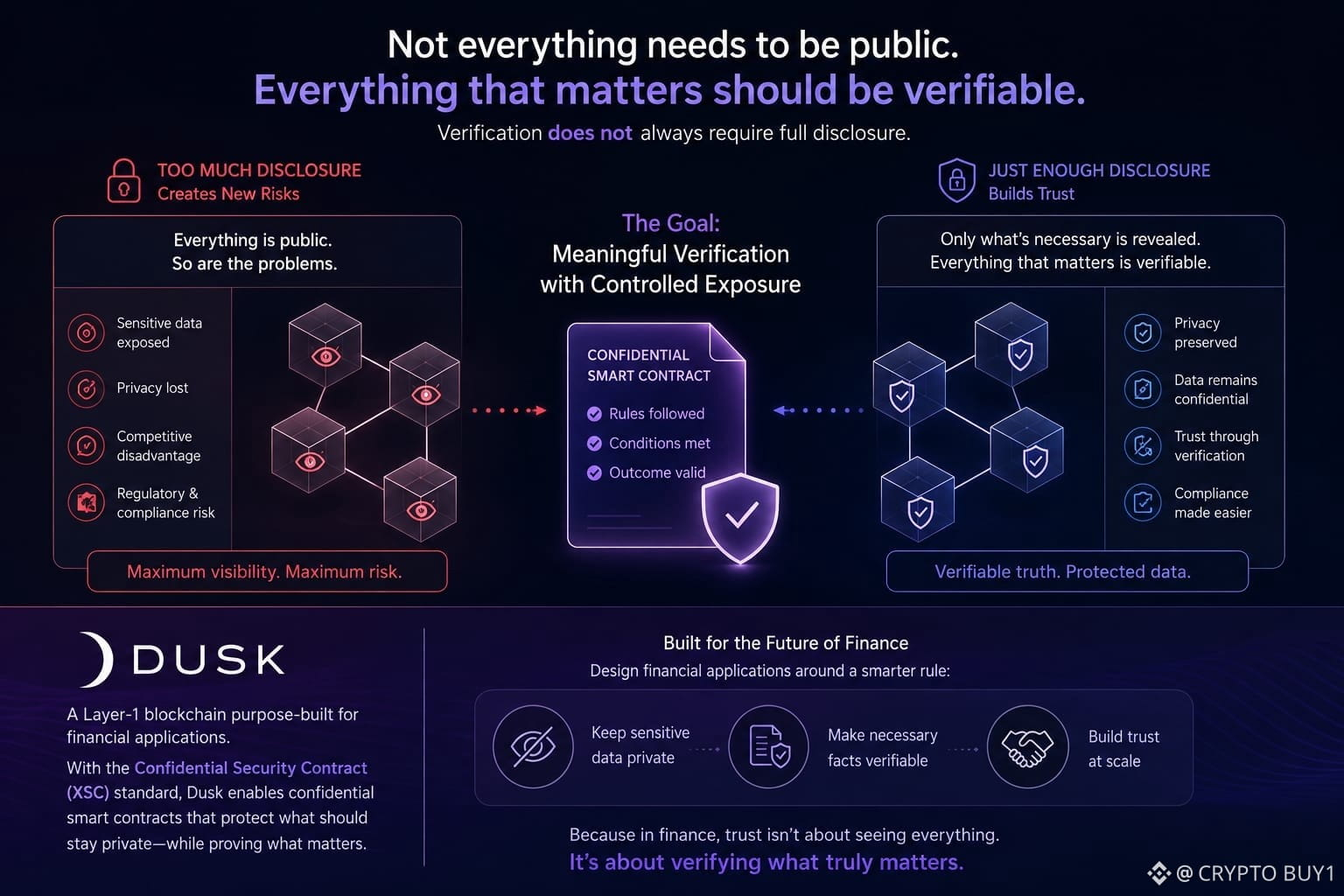
Ein finanzieller Smart Contract muss möglicherweise etwas beweisen, ohne alles preiszugeben, was dahinter steckt.
Das klingt nach einer kleinen Unterscheidung.
Ist es nicht.
Stellen Sie sich eine Finanzanwendung vor, bei der die Beteiligten darauf vertrauen müssen, dass die Regeln eingehalten wurden, aber die verarbeiteten Informationen sensibel sind.
Wenn man alles öffentlich macht, kann ein Problem gelöst werden, indem man ein anderes erzeugt.
Und genau dort braucht die Blockchain-Finanzbranche eine präzisere Vorstellung von Transparenz:
Zur Verifizierung ist nicht immer eine vollständige Offenlegung erforderlich.
Ein finanzieller Smart Contract sollte nicht nur danach beurteilt werden, ob er Logik On-Chain ausführen kann. Es gibt eine weitere Frage:
Was sollte diese Anwendung tatsächlich offenlegen, während sie betrieben wird?
Das ist es, was für mich Dusk interessant macht.
Dusk ist eine Layer-1-Blockchain, die für Finanzanwendungen entwickelt wurde, wobei der Confidential Security Contract (XSC)-Standard vertrauliche Smart Contracts unterstützt.
Der interessante Teil ist nicht einfach „Finanzen auf eine private Blockchain setzen“.
Es ist die Idee, Finanzanwendungen um eine nuanciertere Regel herum zu entwerfen:
die notwendigen Fakten überprüfbar zu machen, ohne jede sensible Einzelheit sichtbar zu machen.
Wenn die Blockchain Teil realer Finanz-Workflows werden soll, war das Ziel vielleicht nie maximale Sichtbarkeit.
Vielleicht ist das klügere Ziel eine sinnvolle Verifizierung mit kontrollierter Offenlegung.
#dusk $DUSK @Dusk_Foundation
$DUSK
{future}(DUSKUSDT)
Ein finanzieller Smart Contract muss möglicherweise etwas beweisen, ohne alles preiszugeben, was dahinter steckt.
Das klingt nach einer kleinen Unterscheidung.
Ist es nicht.
Stellen Sie sich eine Finanzanwendung vor, bei der die Beteiligten darauf vertrauen müssen, dass die Regeln eingehalten wurden, aber die verarbeiteten Informationen sensibel sind.
Wenn man alles öffentlich macht, kann ein Problem gelöst werden, indem man ein anderes erzeugt.
Und genau dort braucht die Blockchain-Finanzbranche eine präzisere Vorstellung von Transparenz:
Zur Verifizierung ist nicht immer eine vollständige Offenlegung erforderlich.
Ein finanzieller Smart Contract sollte nicht nur danach beurteilt werden, ob er Logik On-Chain ausführen kann. Es gibt eine weitere Frage:
Was sollte diese Anwendung tatsächlich offenlegen, während sie betrieben wird?
Das ist es, was für mich Dusk interessant macht.
Dusk ist eine Layer-1-Blockchain, die für Finanzanwendungen entwickelt wurde, wobei der Confidential Security Contract (XSC)-Standard vertrauliche Smart Contracts unterstützt.
Der interessante Teil ist nicht einfach „Finanzen auf eine private Blockchain setzen“.
Es ist die Idee, Finanzanwendungen um eine nuanciertere Regel herum zu entwerfen:
die notwendigen Fakten überprüfbar zu machen, ohne jede sensible Einzelheit sichtbar zu machen.
Wenn die Blockchain Teil realer Finanz-Workflows werden soll, war das Ziel vielleicht nie maximale Sichtbarkeit.
Vielleicht ist das klügere Ziel eine sinnvolle Verifizierung mit kontrollierter Offenlegung.
#dusk $DUSK @Dusk
$DUSK
Das klingt nach einer kleinen Unterscheidung.
Ist es nicht.
Stellen Sie sich eine Finanzanwendung vor, bei der die Beteiligten darauf vertrauen müssen, dass die Regeln eingehalten wurden, aber die verarbeiteten Informationen sensibel sind.
Wenn man alles öffentlich macht, kann ein Problem gelöst werden, indem man ein anderes erzeugt.
Und genau dort braucht die Blockchain-Finanzbranche eine präzisere Vorstellung von Transparenz:
Zur Verifizierung ist nicht immer eine vollständige Offenlegung erforderlich.
Ein finanzieller Smart Contract sollte nicht nur danach beurteilt werden, ob er Logik On-Chain ausführen kann. Es gibt eine weitere Frage:
Was sollte diese Anwendung tatsächlich offenlegen, während sie betrieben wird?
Das ist es, was für mich Dusk interessant macht.
Dusk ist eine Layer-1-Blockchain, die für Finanzanwendungen entwickelt wurde, wobei der Confidential Security Contract (XSC)-Standard vertrauliche Smart Contracts unterstützt.
Der interessante Teil ist nicht einfach „Finanzen auf eine private Blockchain setzen“.
Es ist die Idee, Finanzanwendungen um eine nuanciertere Regel herum zu entwerfen:
die notwendigen Fakten überprüfbar zu machen, ohne jede sensible Einzelheit sichtbar zu machen.
Wenn die Blockchain Teil realer Finanz-Workflows werden soll, war das Ziel vielleicht nie maximale Sichtbarkeit.
Vielleicht ist das klügere Ziel eine sinnvolle Verifizierung mit kontrollierter Offenlegung.
#dusk $DUSK @Dusk
$DUSK
4
1
135
·
--
Bullisch
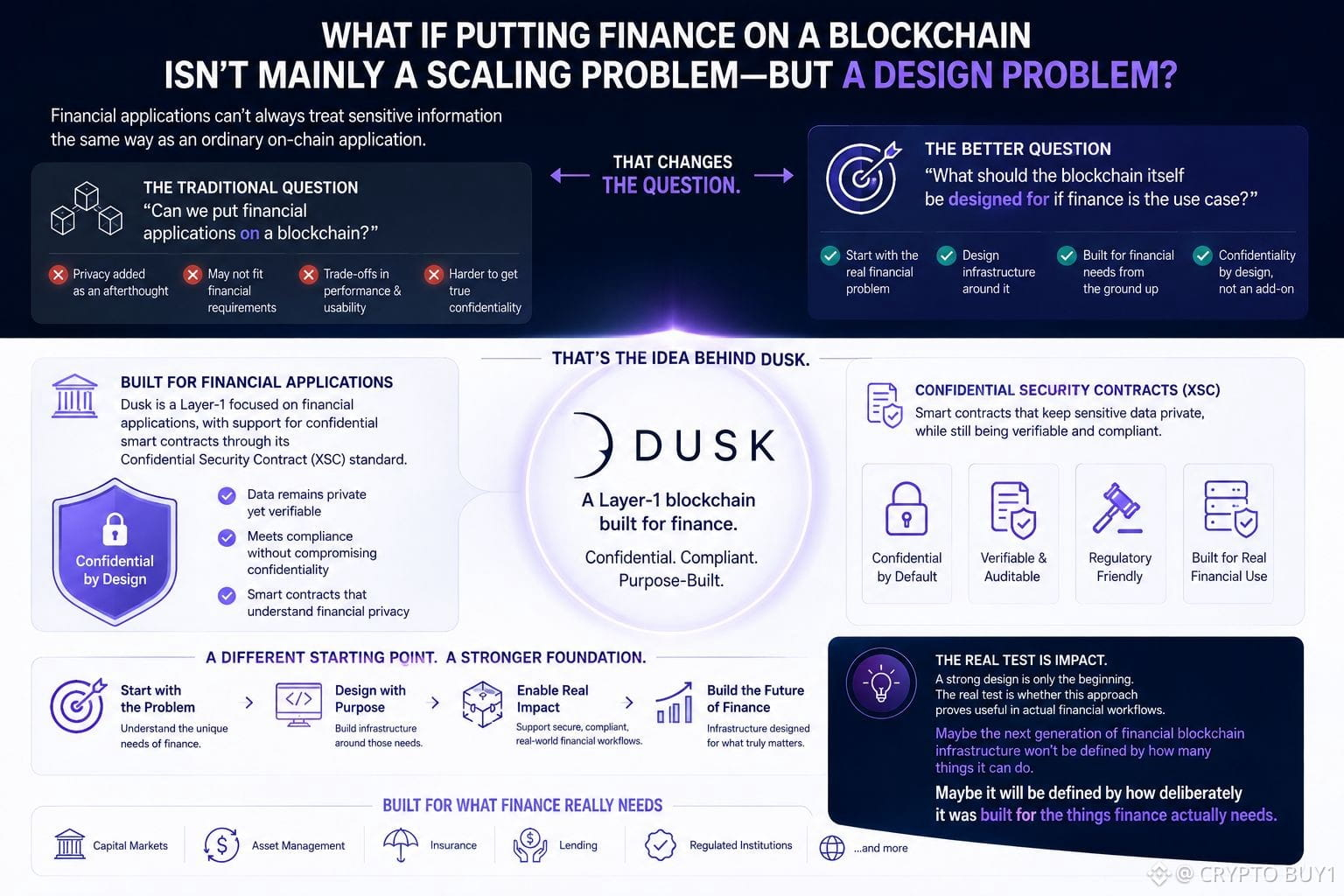
Was wäre, wenn die Frage „Finanzen auf einer Blockchain zu bringen“ nicht in erster Linie ein Skalierungsproblem ist –
sondern ein Designproblem?
Eine Finanzanwendung kann sensible Informationen nicht immer so behandeln wie eine gewöhnliche On-Chain-Anwendung.
Damit ändert sich die Frage.
Statt zu fragen, „Können wir Finanzanwendungen auf eine Blockchain bringen?“
halte ich die viel spannendere Frage für diese:
„Wofür sollte die Blockchain selbst entworfen sein, wenn Finanzen der Anwendungsfall sind?“
Genau dort hat Dusk meine Aufmerksamkeit erregt.
Dusk ist eine Layer-1, die auf Finanzanwendungen ausgerichtet ist und mit vertraulichen Smart Contracts durch seinen Confidential Security Contract (XSC)-Standard unterstützt.
Und dieser Fokus ist wichtig.
Denn Vertraulichkeit sollte nicht zwangsläufig etwas sein, das man erst nach dem Aufbau der Infrastruktur „draufsetzt“. Wenn Finanzanwendungen unterschiedliche Anforderungen haben, können diese Anforderungen beeinflussen, wie die zugrunde liegende Blockchain überhaupt erst entworfen wird.
Das ist die interessante Idee, die ich aus Dusk mitnehme.
Nicht einfach „Blockchain + Privatsphäre“.
Sondern ein anderer Ausgangspunkt:
Zuerst mit dem finanziellen Problem beginnen und dann die Infrastruktur darum herum entwerfen.
Natürlich ist ein starkes Design nur der Anfang. Der echte Test ist, ob dieser Ansatz sich in tatsächlichen Finanz-Workflows als nützlich erweist.
Aber genau das macht Dusk so spannend, um es im Blick zu behalten.
Vielleicht wird die nächste Generation der finanziellen Blockchain-Infrastruktur nicht dadurch definiert, wie viele Dinge sie tun kann.
Vielleicht wird sie dadurch definiert, wie bewusst sie für genau die Dinge gebaut wurde, die Finanzen tatsächlich brauchen.
#dusk $DUSK @Dusk_Foundation
$DUSK
{future}(DUSKUSDT)
Was wäre, wenn die Frage „Finanzen auf einer Blockchain zu bringen“ nicht in erster Linie ein Skalierungsproblem ist –
sondern ein Designproblem?
Eine Finanzanwendung kann sensible Informationen nicht immer so behandeln wie eine gewöhnliche On-Chain-Anwendung.
Damit ändert sich die Frage.
Statt zu fragen, „Können wir Finanzanwendungen auf eine Blockchain bringen?“
halte ich die viel spannendere Frage für diese:
„Wofür sollte die Blockchain selbst entworfen sein, wenn Finanzen der Anwendungsfall sind?“
Genau dort hat Dusk meine Aufmerksamkeit erregt.
Dusk ist eine Layer-1, die auf Finanzanwendungen ausgerichtet ist und mit vertraulichen Smart Contracts durch seinen Confidential Security Contract (XSC)-Standard unterstützt.
Und dieser Fokus ist wichtig.
Denn Vertraulichkeit sollte nicht zwangsläufig etwas sein, das man erst nach dem Aufbau der Infrastruktur „draufsetzt“. Wenn Finanzanwendungen unterschiedliche Anforderungen haben, können diese Anforderungen beeinflussen, wie die zugrunde liegende Blockchain überhaupt erst entworfen wird.
Das ist die interessante Idee, die ich aus Dusk mitnehme.
Nicht einfach „Blockchain + Privatsphäre“.
Sondern ein anderer Ausgangspunkt:
Zuerst mit dem finanziellen Problem beginnen und dann die Infrastruktur darum herum entwerfen.
Natürlich ist ein starkes Design nur der Anfang. Der echte Test ist, ob dieser Ansatz sich in tatsächlichen Finanz-Workflows als nützlich erweist.
Aber genau das macht Dusk so spannend, um es im Blick zu behalten.
Vielleicht wird die nächste Generation der finanziellen Blockchain-Infrastruktur nicht dadurch definiert, wie viele Dinge sie tun kann.
Vielleicht wird sie dadurch definiert, wie bewusst sie für genau die Dinge gebaut wurde, die Finanzen tatsächlich brauchen.
#dusk $DUSK @Dusk
$DUSK
sondern ein Designproblem?
Eine Finanzanwendung kann sensible Informationen nicht immer so behandeln wie eine gewöhnliche On-Chain-Anwendung.
Damit ändert sich die Frage.
Statt zu fragen, „Können wir Finanzanwendungen auf eine Blockchain bringen?“
halte ich die viel spannendere Frage für diese:
„Wofür sollte die Blockchain selbst entworfen sein, wenn Finanzen der Anwendungsfall sind?“
Genau dort hat Dusk meine Aufmerksamkeit erregt.
Dusk ist eine Layer-1, die auf Finanzanwendungen ausgerichtet ist und mit vertraulichen Smart Contracts durch seinen Confidential Security Contract (XSC)-Standard unterstützt.
Und dieser Fokus ist wichtig.
Denn Vertraulichkeit sollte nicht zwangsläufig etwas sein, das man erst nach dem Aufbau der Infrastruktur „draufsetzt“. Wenn Finanzanwendungen unterschiedliche Anforderungen haben, können diese Anforderungen beeinflussen, wie die zugrunde liegende Blockchain überhaupt erst entworfen wird.
Das ist die interessante Idee, die ich aus Dusk mitnehme.
Nicht einfach „Blockchain + Privatsphäre“.
Sondern ein anderer Ausgangspunkt:
Zuerst mit dem finanziellen Problem beginnen und dann die Infrastruktur darum herum entwerfen.
Natürlich ist ein starkes Design nur der Anfang. Der echte Test ist, ob dieser Ansatz sich in tatsächlichen Finanz-Workflows als nützlich erweist.
Aber genau das macht Dusk so spannend, um es im Blick zu behalten.
Vielleicht wird die nächste Generation der finanziellen Blockchain-Infrastruktur nicht dadurch definiert, wie viele Dinge sie tun kann.
Vielleicht wird sie dadurch definiert, wie bewusst sie für genau die Dinge gebaut wurde, die Finanzen tatsächlich brauchen.
#dusk $DUSK @Dusk
$DUSK
2
1
87
·
--
Bullisch
Der schwierigste Teil, Finanzdaten auf eine Blockchain zu bringen, könnte nicht das Verschieben der Daten sein.
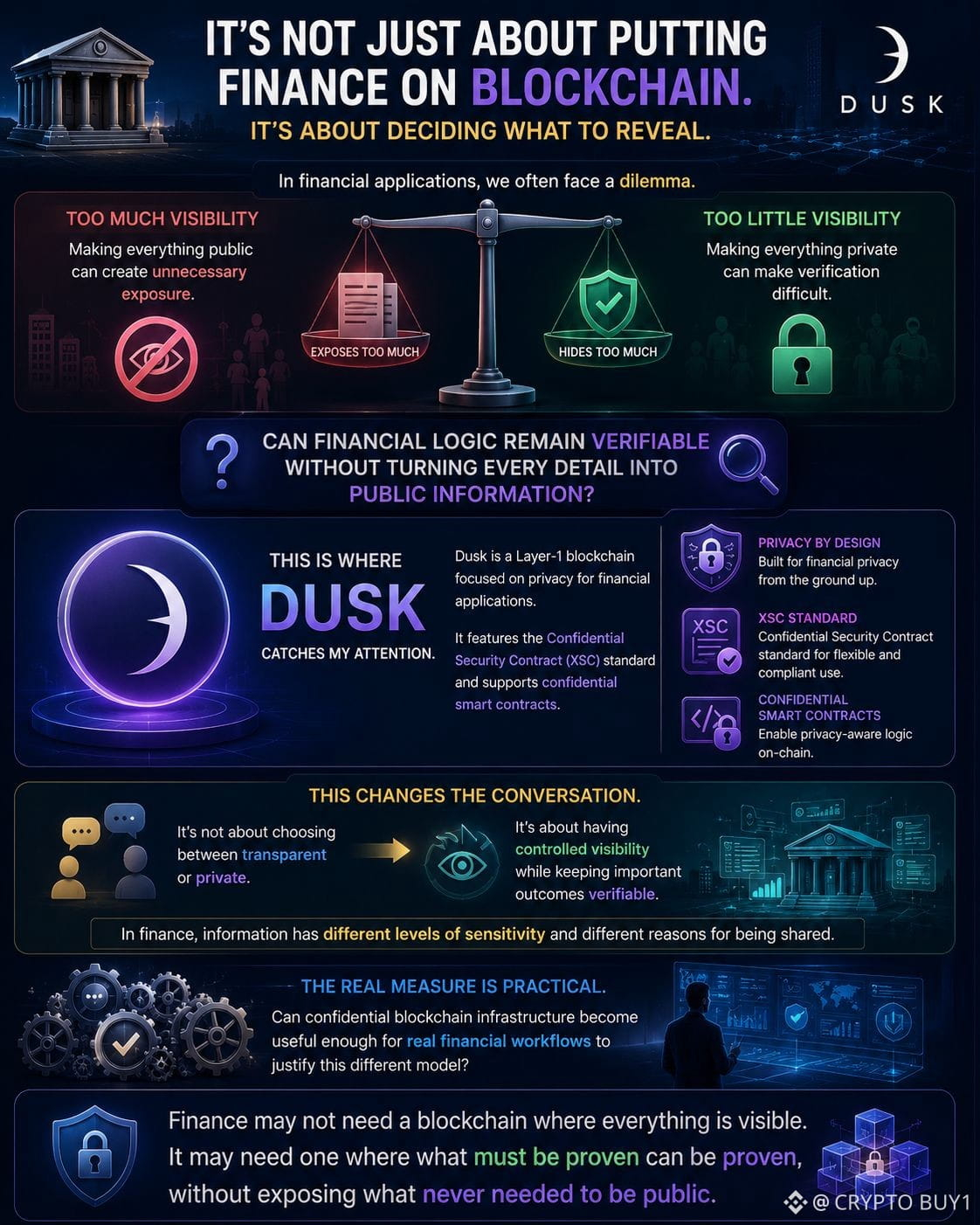
Es könnte vielmehr die Entscheidung sein, was die Blockchain tatsächlich offenlegen sollte.
Stell dir eine Finanzanwendung vor, in der bestimmte Fakten verifiziert werden müssen, während die zugrunde liegenden Details sensibel bleiben. Alles öffentlich zu machen, könnte unnötige Offenlegung schaffen. Alles privat zu machen, könnte die Verifikation erschweren.
Das ergibt ein spannenderes Designproblem:
Kann finanzielle Logik verifizierbar bleiben, ohne jedes Detail in öffentliche Informationen zu verwandeln?
An dieser Stelle weckt Dusk mein Interesse.
Dusk ist eine Layer-1-Blockchain mit Fokus auf Privatsphäre für Finanzanwendungen, mit dem Standard für den Confidential Security Contract (XSC) und Unterstützung für vertrauliche Smart Contracts.
Was mir dabei wichtig ist, ist nicht einfach das Wort „Privatsphäre“.
Es geht um die Idee, Vertraulichkeit direkt in die Art einzubauen, wie Finanzanwendungen funktionieren.
Das verändert das Gespräch.
Anstatt zu fragen, ob eine Blockchain transparent oder privat sein sollte, könnte die bessere Frage sein, ob Finanzanwendungen eine kontrollierte Sichtbarkeit haben können, während wichtige Ergebnisse dennoch verifizierbar bleiben.
Dieser Unterschied könnte im Finanzwesen sehr viel bedeuten, wo Informationen oft unterschiedliche Ebenen der Sensibilität haben und aus unterschiedlichen Gründen geteilt werden.
Dusk geht das Problem mit einem technologieorientierten Ansatz an.
Aber der eigentliche Maßstab wird praktisch sein: Kann eine vertrauliche Blockchain-Infrastruktur so nützlich werden, dass sie für echte Finanz-Workflows rechtfertigt, dass dieses andere Modell verfolgt wird?
Denn das Finanzwesen braucht möglicherweise keine Blockchain, in der alles sichtbar ist.
Es braucht vielleicht eine, bei der das, was bewiesen werden muss, bewiesen werden kann – ohne offenzulegen, was niemals hätte öffentlich sein müssen.
@Dusk_Foundation #dusk $DUSK
$DUSK
{future}(DUSKUSDT)
Der schwierigste Teil, Finanzdaten auf eine Blockchain zu bringen, könnte nicht das Verschieben der Daten sein.
Es könnte vielmehr die Entscheidung sein, was die Blockchain tatsächlich offenlegen sollte.
Stell dir eine Finanzanwendung vor, in der bestimmte Fakten verifiziert werden müssen, während die zugrunde liegenden Details sensibel bleiben. Alles öffentlich zu machen, könnte unnötige Offenlegung schaffen. Alles privat zu machen, könnte die Verifikation erschweren.
Das ergibt ein spannenderes Designproblem:
Kann finanzielle Logik verifizierbar bleiben, ohne jedes Detail in öffentliche Informationen zu verwandeln?
An dieser Stelle weckt Dusk mein Interesse.
Dusk ist eine Layer-1-Blockchain mit Fokus auf Privatsphäre für Finanzanwendungen, mit dem Standard für den Confidential Security Contract (XSC) und Unterstützung für vertrauliche Smart Contracts.
Was mir dabei wichtig ist, ist nicht einfach das Wort „Privatsphäre“.
Es geht um die Idee, Vertraulichkeit direkt in die Art einzubauen, wie Finanzanwendungen funktionieren.
Das verändert das Gespräch.
Anstatt zu fragen, ob eine Blockchain transparent oder privat sein sollte, könnte die bessere Frage sein, ob Finanzanwendungen eine kontrollierte Sichtbarkeit haben können, während wichtige Ergebnisse dennoch verifizierbar bleiben.
Dieser Unterschied könnte im Finanzwesen sehr viel bedeuten, wo Informationen oft unterschiedliche Ebenen der Sensibilität haben und aus unterschiedlichen Gründen geteilt werden.
Dusk geht das Problem mit einem technologieorientierten Ansatz an.
Aber der eigentliche Maßstab wird praktisch sein: Kann eine vertrauliche Blockchain-Infrastruktur so nützlich werden, dass sie für echte Finanz-Workflows rechtfertigt, dass dieses andere Modell verfolgt wird?
Denn das Finanzwesen braucht möglicherweise keine Blockchain, in der alles sichtbar ist.
Es braucht vielleicht eine, bei der das, was bewiesen werden muss, bewiesen werden kann – ohne offenzulegen, was niemals hätte öffentlich sein müssen.
@Dusk #dusk $DUSK
$DUSK
Es könnte vielmehr die Entscheidung sein, was die Blockchain tatsächlich offenlegen sollte.
Stell dir eine Finanzanwendung vor, in der bestimmte Fakten verifiziert werden müssen, während die zugrunde liegenden Details sensibel bleiben. Alles öffentlich zu machen, könnte unnötige Offenlegung schaffen. Alles privat zu machen, könnte die Verifikation erschweren.
Das ergibt ein spannenderes Designproblem:
Kann finanzielle Logik verifizierbar bleiben, ohne jedes Detail in öffentliche Informationen zu verwandeln?
An dieser Stelle weckt Dusk mein Interesse.
Dusk ist eine Layer-1-Blockchain mit Fokus auf Privatsphäre für Finanzanwendungen, mit dem Standard für den Confidential Security Contract (XSC) und Unterstützung für vertrauliche Smart Contracts.
Was mir dabei wichtig ist, ist nicht einfach das Wort „Privatsphäre“.
Es geht um die Idee, Vertraulichkeit direkt in die Art einzubauen, wie Finanzanwendungen funktionieren.
Das verändert das Gespräch.
Anstatt zu fragen, ob eine Blockchain transparent oder privat sein sollte, könnte die bessere Frage sein, ob Finanzanwendungen eine kontrollierte Sichtbarkeit haben können, während wichtige Ergebnisse dennoch verifizierbar bleiben.
Dieser Unterschied könnte im Finanzwesen sehr viel bedeuten, wo Informationen oft unterschiedliche Ebenen der Sensibilität haben und aus unterschiedlichen Gründen geteilt werden.
Dusk geht das Problem mit einem technologieorientierten Ansatz an.
Aber der eigentliche Maßstab wird praktisch sein: Kann eine vertrauliche Blockchain-Infrastruktur so nützlich werden, dass sie für echte Finanz-Workflows rechtfertigt, dass dieses andere Modell verfolgt wird?
Denn das Finanzwesen braucht möglicherweise keine Blockchain, in der alles sichtbar ist.
Es braucht vielleicht eine, bei der das, was bewiesen werden muss, bewiesen werden kann – ohne offenzulegen, was niemals hätte öffentlich sein müssen.
@Dusk #dusk $DUSK
$DUSK
3
1
2
94
·
--
Bullisch
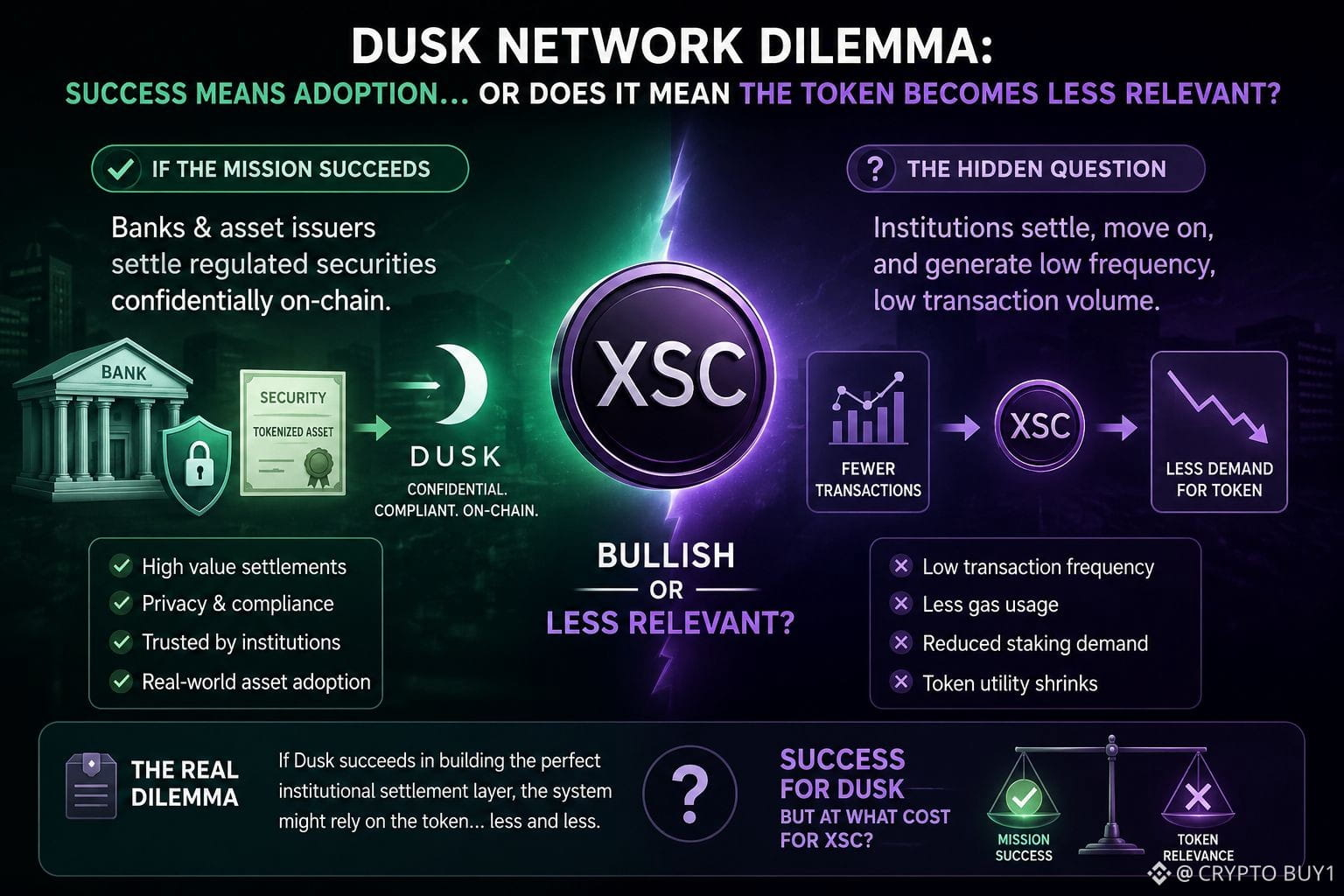
Kurze Frage, die ich beim Lesen über das Dusk Network nicht loswerden konnte: Wenn die Mission tatsächlich erfolgreich ist, wird der Token dann wertvoller oder weniger relevant?
Das ist die Sache. Dusk will, dass Banken und Emittenten regulierter Assets vertrauliche, regulierte Wertpapiere On-Chain abwickeln. Das ist der ganze Pitch. Aber Institutionen verhalten sich nicht wie Privatanleger. Sie erzeugen kein ständiges Transaktionsvolumen. Sie emittieren ein Asset, wickeln es ab und machen weiter. Niedrige Frequenz, hoher Wert, minimale Störungen.
Die meisten L1-Tokens leiten ihren Wert daraus ab, dass sie unvermeidlich sind: Gas, Staking, Sicherheit. Der Token von Dusk passt technisch gesehen auf Papier zu diesem Modell. Aber wenn der echte Use Case darin besteht, dass ein paar große Institutionen im Hintergrund leise Wertpapiere abwickeln, könnte die Rolle des Tokens genau dann schrumpfen, wenn die Mission erfolgreich ist. Weniger Transaktionen, weniger Reibung, weniger Gründe, den Token überhaupt anzufassen.
Also hier ist, was ich nicht auflösen kann: Ist die institutionelle Übernahme tatsächlich bullish für XSC, oder bedeutet „es richtig zu machen“ für Unternehmen, ein System aufzubauen, bei dem der Token im Laufe der Zeit immer weniger zählt?
Ich denke noch darüber nach.
@Dusk_Foundation #dusk $DUSK
$DUSK
{future}(DUSKUSDT)
Kurze Frage, die ich beim Lesen über das Dusk Network nicht loswerden konnte: Wenn die Mission tatsächlich erfolgreich ist, wird der Token dann wertvoller oder weniger relevant?
Das ist die Sache. Dusk will, dass Banken und Emittenten regulierter Assets vertrauliche, regulierte Wertpapiere On-Chain abwickeln. Das ist der ganze Pitch. Aber Institutionen verhalten sich nicht wie Privatanleger. Sie erzeugen kein ständiges Transaktionsvolumen. Sie emittieren ein Asset, wickeln es ab und machen weiter. Niedrige Frequenz, hoher Wert, minimale Störungen.
Die meisten L1-Tokens leiten ihren Wert daraus ab, dass sie unvermeidlich sind: Gas, Staking, Sicherheit. Der Token von Dusk passt technisch gesehen auf Papier zu diesem Modell. Aber wenn der echte Use Case darin besteht, dass ein paar große Institutionen im Hintergrund leise Wertpapiere abwickeln, könnte die Rolle des Tokens genau dann schrumpfen, wenn die Mission erfolgreich ist. Weniger Transaktionen, weniger Reibung, weniger Gründe, den Token überhaupt anzufassen.
Also hier ist, was ich nicht auflösen kann: Ist die institutionelle Übernahme tatsächlich bullish für XSC, oder bedeutet „es richtig zu machen“ für Unternehmen, ein System aufzubauen, bei dem der Token im Laufe der Zeit immer weniger zählt?
Ich denke noch darüber nach.
@Dusk #dusk $DUSK
$DUSK
Das ist die Sache. Dusk will, dass Banken und Emittenten regulierter Assets vertrauliche, regulierte Wertpapiere On-Chain abwickeln. Das ist der ganze Pitch. Aber Institutionen verhalten sich nicht wie Privatanleger. Sie erzeugen kein ständiges Transaktionsvolumen. Sie emittieren ein Asset, wickeln es ab und machen weiter. Niedrige Frequenz, hoher Wert, minimale Störungen.
Die meisten L1-Tokens leiten ihren Wert daraus ab, dass sie unvermeidlich sind: Gas, Staking, Sicherheit. Der Token von Dusk passt technisch gesehen auf Papier zu diesem Modell. Aber wenn der echte Use Case darin besteht, dass ein paar große Institutionen im Hintergrund leise Wertpapiere abwickeln, könnte die Rolle des Tokens genau dann schrumpfen, wenn die Mission erfolgreich ist. Weniger Transaktionen, weniger Reibung, weniger Gründe, den Token überhaupt anzufassen.
Also hier ist, was ich nicht auflösen kann: Ist die institutionelle Übernahme tatsächlich bullish für XSC, oder bedeutet „es richtig zu machen“ für Unternehmen, ein System aufzubauen, bei dem der Token im Laufe der Zeit immer weniger zählt?
Ich denke noch darüber nach.
@Dusk #dusk $DUSK
$DUSK
6
2
93
·
--
Bullisch
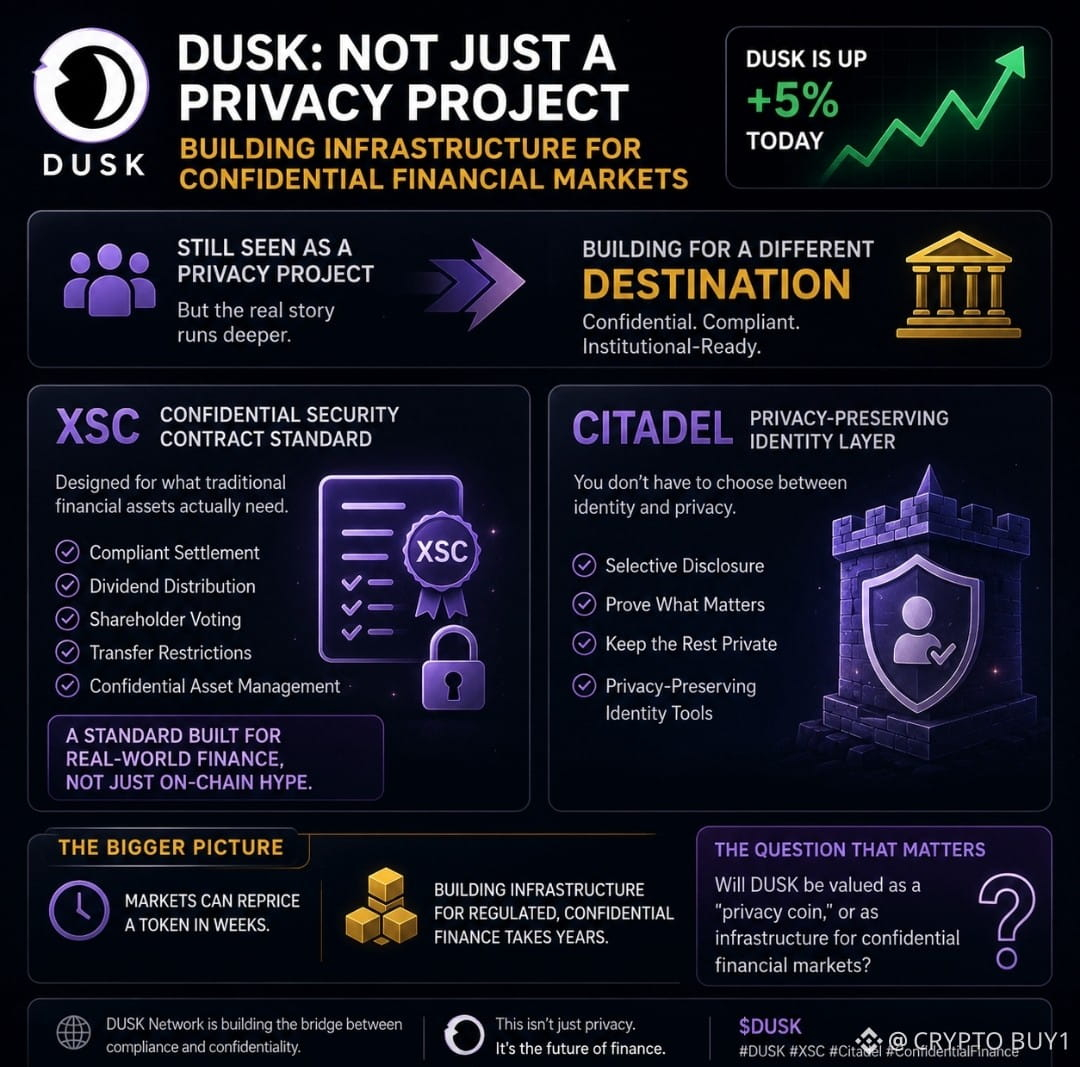
DUSK ist heute mehr als 5 % gestiegen, aber das ist nicht die Zahl, an die ich gerade gedacht habe.
Was meine Aufmerksamkeit auf sich gezogen hat, ist, wie viele Menschen DUSK immer noch als Datenschutzprojekt beschreiben, obwohl das Netzwerk offenbar für eine ganz andere Zielsetzung aufgebaut wird.
Ich habe etwas Zeit damit verbracht, in XSC einzutauchen – den Confidential Security Contract-Standard, der im Zentrum des Ökosystems steht. Das Interessante daran ist nicht der Datenschutz. Es ist die Tatsache, dass XSC für genau die Dinge entwickelt wurde, die traditionelle Finanzwerte tatsächlich benötigen: konforme Abwicklung, Dividendenverteilung, Aktionärsabstimmungen, Übertragungsbeschränkungen und vertrauliches Asset-Management. Das ist ein viel konkreteres Ziel als nur das Verbergen von Transaktionsdaten.
Dann gibt es noch Citadel.
Die meisten Krypto-Projekte sprechen über Identität und Datenschutz, als müsste man sich für das eine oder das andere entscheiden. Citadel geht einen anderen Weg. Es ermöglicht Nutzern, bestimmte Informationen nachzuweisen, ohne alles über sich selbst offenzulegen – mithilfe von selektiver Offenlegung und identity-Tools, die Datenschutz wahren.
Deshalb wirkt die jüngste Kursbewegung für mich weniger spannend als die Richtung, in die sich die Architektur entwickelt.
Märkte können einen Token innerhalb weniger Wochen neu bewerten.
Der Aufbau von Infrastruktur für reguliertes, vertrauliches Finanzwesen dauert Jahre.
Die Frage, die ich im Blick habe, ist, ob DUSK weiterhin als „Privacy Coin“ bewertet wird – oder ob der Markt es irgendwann beginnt, als Infrastruktur für vertrauliche Finanzmärkte zu betrachten.
@Dusk_Foundation #dusk $DUSK
$DUSK
{future}(DUSKUSDT)
DUSK ist heute mehr als 5 % gestiegen, aber das ist nicht die Zahl, an die ich gerade gedacht habe.
Was meine Aufmerksamkeit auf sich gezogen hat, ist, wie viele Menschen DUSK immer noch als Datenschutzprojekt beschreiben, obwohl das Netzwerk offenbar für eine ganz andere Zielsetzung aufgebaut wird.
Ich habe etwas Zeit damit verbracht, in XSC einzutauchen – den Confidential Security Contract-Standard, der im Zentrum des Ökosystems steht. Das Interessante daran ist nicht der Datenschutz. Es ist die Tatsache, dass XSC für genau die Dinge entwickelt wurde, die traditionelle Finanzwerte tatsächlich benötigen: konforme Abwicklung, Dividendenverteilung, Aktionärsabstimmungen, Übertragungsbeschränkungen und vertrauliches Asset-Management. Das ist ein viel konkreteres Ziel als nur das Verbergen von Transaktionsdaten.
Dann gibt es noch Citadel.
Die meisten Krypto-Projekte sprechen über Identität und Datenschutz, als müsste man sich für das eine oder das andere entscheiden. Citadel geht einen anderen Weg. Es ermöglicht Nutzern, bestimmte Informationen nachzuweisen, ohne alles über sich selbst offenzulegen – mithilfe von selektiver Offenlegung und identity-Tools, die Datenschutz wahren.
Deshalb wirkt die jüngste Kursbewegung für mich weniger spannend als die Richtung, in die sich die Architektur entwickelt.
Märkte können einen Token innerhalb weniger Wochen neu bewerten.
Der Aufbau von Infrastruktur für reguliertes, vertrauliches Finanzwesen dauert Jahre.
Die Frage, die ich im Blick habe, ist, ob DUSK weiterhin als „Privacy Coin“ bewertet wird – oder ob der Markt es irgendwann beginnt, als Infrastruktur für vertrauliche Finanzmärkte zu betrachten.
@Dusk #dusk $DUSK
$DUSK
Was meine Aufmerksamkeit auf sich gezogen hat, ist, wie viele Menschen DUSK immer noch als Datenschutzprojekt beschreiben, obwohl das Netzwerk offenbar für eine ganz andere Zielsetzung aufgebaut wird.
Ich habe etwas Zeit damit verbracht, in XSC einzutauchen – den Confidential Security Contract-Standard, der im Zentrum des Ökosystems steht. Das Interessante daran ist nicht der Datenschutz. Es ist die Tatsache, dass XSC für genau die Dinge entwickelt wurde, die traditionelle Finanzwerte tatsächlich benötigen: konforme Abwicklung, Dividendenverteilung, Aktionärsabstimmungen, Übertragungsbeschränkungen und vertrauliches Asset-Management. Das ist ein viel konkreteres Ziel als nur das Verbergen von Transaktionsdaten.
Dann gibt es noch Citadel.
Die meisten Krypto-Projekte sprechen über Identität und Datenschutz, als müsste man sich für das eine oder das andere entscheiden. Citadel geht einen anderen Weg. Es ermöglicht Nutzern, bestimmte Informationen nachzuweisen, ohne alles über sich selbst offenzulegen – mithilfe von selektiver Offenlegung und identity-Tools, die Datenschutz wahren.
Deshalb wirkt die jüngste Kursbewegung für mich weniger spannend als die Richtung, in die sich die Architektur entwickelt.
Märkte können einen Token innerhalb weniger Wochen neu bewerten.
Der Aufbau von Infrastruktur für reguliertes, vertrauliches Finanzwesen dauert Jahre.
Die Frage, die ich im Blick habe, ist, ob DUSK weiterhin als „Privacy Coin“ bewertet wird – oder ob der Markt es irgendwann beginnt, als Infrastruktur für vertrauliche Finanzmärkte zu betrachten.
@Dusk #dusk $DUSK
$DUSK
2
1
81
·
--
Bullisch
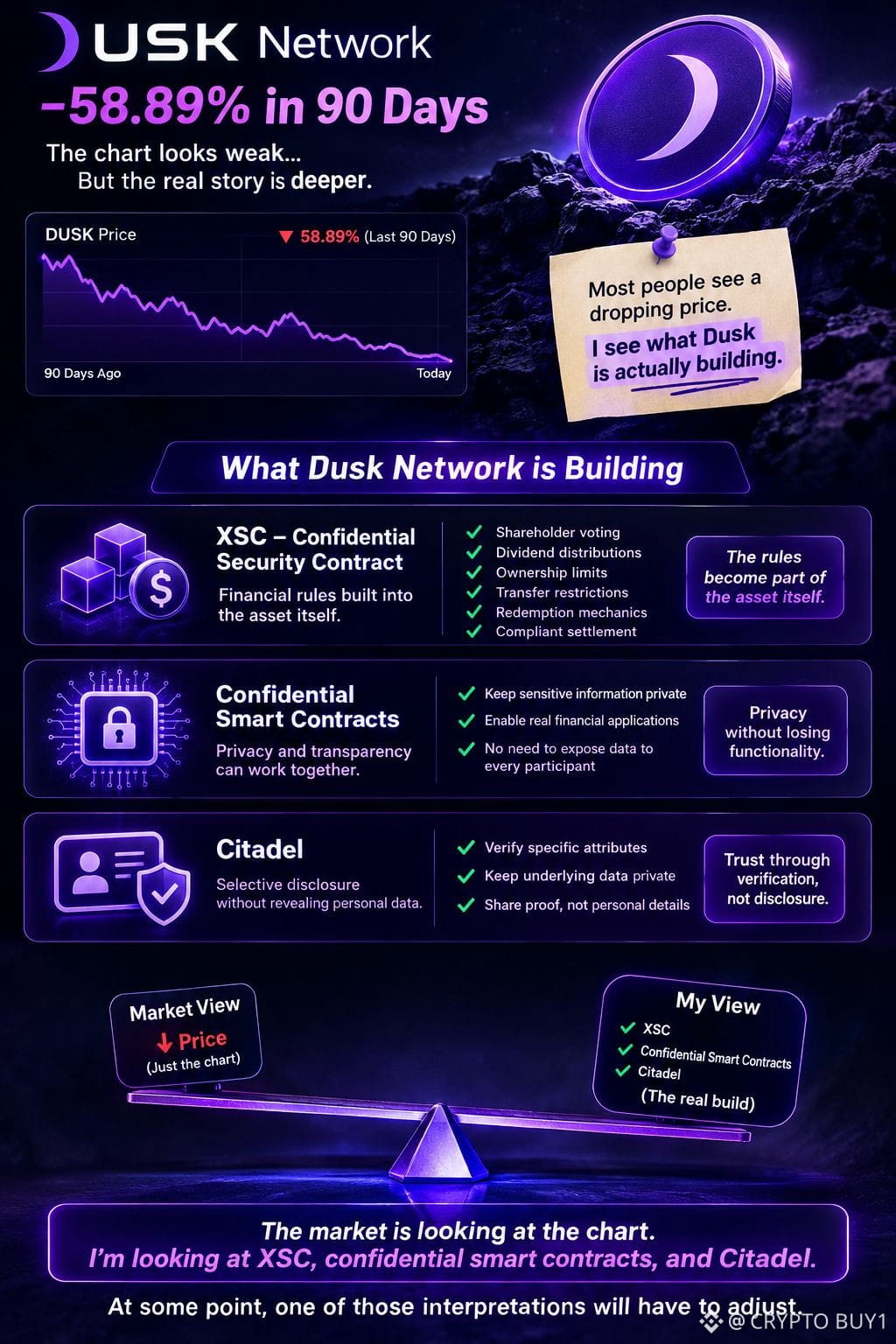
DUSK ist in den letzten 90 Tagen um 58,89% gefallen.
Das ist die Art von Diagramm, die normalerweise Menschen davon überzeugt, dass sie die ganze Geschichte bereits gesehen haben.
Ich dachte dasselbe.
Dann begann ich mir anzusehen, was Dusk Network tatsächlich aufbaut, und die Diskrepanz wurde schwierig zu ignorieren.
Die meisten Projekte, die als „Privacy Chains“ bezeichnet werden, konzentrieren sich darauf, Informationen verborgen zu halten. Duses Architektur zielt auf eine andere Herausforderung: Wie Finanzwerte vertraulich bleiben können, während sie gleichzeitig innerhalb klarer Regeln und Anforderungen betrieben werden.
Das beste Beispiel ist XSC.
Dusk möchte dafür sorgen, dass der „Confidential Security Contract“-Standard nicht um einfache Token-Transfers herum gebaut wurde. Er unterstützt Aktionärsabstimmungen, Dividendenausschüttungen, Eigentumsgrenzen, Übertragungsbeschränkungen, Rückkaufmechaniken und eine rechtskonforme Abwicklung direkt auf der Ebene des Assets. Mit anderen Worten: Die Regeln werden Teil des Assets selbst.
Dann gibt es die vertraulichen Smart Contracts.
Seit Jahren müssen Blockchain-Nutzer sich zwischen Transparenz und Privatsphäre entscheiden. Dusk versucht, diese Kluft zu überbrücken, indem es Finanzanwendungen ermöglicht, bei denen sensible Informationen nicht öffentlich für jeden Teilnehmer im Netzwerk offengelegt werden müssen.
Citadel legt noch eine weitere Schicht obendrauf.
Anstatt persönliche Informationen offenzulegen, um die Berechtigung zu belegen, können bestimmte Attribute verifiziert werden, während die zugrunde liegenden Daten privat bleiben. Der Nachweis wird geteilt. Die persönlichen Details nicht.
Das macht die aktuelle Erzählung für mich interessant.
Ein Projekt, das in den letzten 90 Tagen fast 59% verloren hat, baut dennoch weiterhin Infrastruktur für vertrauliche Finanzen, regulierte Assets und programmierbare Compliance. Und trotzdem geht ein Großteil der Diskussion weiterhin davon aus, dass Dusk so ziemlich ausschließlich Privatsphäre als ganze Geschichte hat.
Der Markt betrachtet das Diagramm.
Ich betrachte XSC, vertrauliche Smart Contracts und Citadel.
Irgendwann wird eine dieser Interpretationen sich anpassen müssen.
@Dusk_Foundation $DUSK #dusk
{future}(DUSKUSDT)
DUSK ist in den letzten 90 Tagen um 58,89% gefallen.
Das ist die Art von Diagramm, die normalerweise Menschen davon überzeugt, dass sie die ganze Geschichte bereits gesehen haben.
Ich dachte dasselbe.
Dann begann ich mir anzusehen, was Dusk Network tatsächlich aufbaut, und die Diskrepanz wurde schwierig zu ignorieren.
Die meisten Projekte, die als „Privacy Chains“ bezeichnet werden, konzentrieren sich darauf, Informationen verborgen zu halten. Duses Architektur zielt auf eine andere Herausforderung: Wie Finanzwerte vertraulich bleiben können, während sie gleichzeitig innerhalb klarer Regeln und Anforderungen betrieben werden.
Das beste Beispiel ist XSC.
Dusk möchte dafür sorgen, dass der „Confidential Security Contract“-Standard nicht um einfache Token-Transfers herum gebaut wurde. Er unterstützt Aktionärsabstimmungen, Dividendenausschüttungen, Eigentumsgrenzen, Übertragungsbeschränkungen, Rückkaufmechaniken und eine rechtskonforme Abwicklung direkt auf der Ebene des Assets. Mit anderen Worten: Die Regeln werden Teil des Assets selbst.
Dann gibt es die vertraulichen Smart Contracts.
Seit Jahren müssen Blockchain-Nutzer sich zwischen Transparenz und Privatsphäre entscheiden. Dusk versucht, diese Kluft zu überbrücken, indem es Finanzanwendungen ermöglicht, bei denen sensible Informationen nicht öffentlich für jeden Teilnehmer im Netzwerk offengelegt werden müssen.
Citadel legt noch eine weitere Schicht obendrauf.
Anstatt persönliche Informationen offenzulegen, um die Berechtigung zu belegen, können bestimmte Attribute verifiziert werden, während die zugrunde liegenden Daten privat bleiben. Der Nachweis wird geteilt. Die persönlichen Details nicht.
Das macht die aktuelle Erzählung für mich interessant.
Ein Projekt, das in den letzten 90 Tagen fast 59% verloren hat, baut dennoch weiterhin Infrastruktur für vertrauliche Finanzen, regulierte Assets und programmierbare Compliance. Und trotzdem geht ein Großteil der Diskussion weiterhin davon aus, dass Dusk so ziemlich ausschließlich Privatsphäre als ganze Geschichte hat.
Der Markt betrachtet das Diagramm.
Ich betrachte XSC, vertrauliche Smart Contracts und Citadel.
Irgendwann wird eine dieser Interpretationen sich anpassen müssen.
@Dusk $DUSK #dusk
Das ist die Art von Diagramm, die normalerweise Menschen davon überzeugt, dass sie die ganze Geschichte bereits gesehen haben.
Ich dachte dasselbe.
Dann begann ich mir anzusehen, was Dusk Network tatsächlich aufbaut, und die Diskrepanz wurde schwierig zu ignorieren.
Die meisten Projekte, die als „Privacy Chains“ bezeichnet werden, konzentrieren sich darauf, Informationen verborgen zu halten. Duses Architektur zielt auf eine andere Herausforderung: Wie Finanzwerte vertraulich bleiben können, während sie gleichzeitig innerhalb klarer Regeln und Anforderungen betrieben werden.
Das beste Beispiel ist XSC.
Dusk möchte dafür sorgen, dass der „Confidential Security Contract“-Standard nicht um einfache Token-Transfers herum gebaut wurde. Er unterstützt Aktionärsabstimmungen, Dividendenausschüttungen, Eigentumsgrenzen, Übertragungsbeschränkungen, Rückkaufmechaniken und eine rechtskonforme Abwicklung direkt auf der Ebene des Assets. Mit anderen Worten: Die Regeln werden Teil des Assets selbst.
Dann gibt es die vertraulichen Smart Contracts.
Seit Jahren müssen Blockchain-Nutzer sich zwischen Transparenz und Privatsphäre entscheiden. Dusk versucht, diese Kluft zu überbrücken, indem es Finanzanwendungen ermöglicht, bei denen sensible Informationen nicht öffentlich für jeden Teilnehmer im Netzwerk offengelegt werden müssen.
Citadel legt noch eine weitere Schicht obendrauf.
Anstatt persönliche Informationen offenzulegen, um die Berechtigung zu belegen, können bestimmte Attribute verifiziert werden, während die zugrunde liegenden Daten privat bleiben. Der Nachweis wird geteilt. Die persönlichen Details nicht.
Das macht die aktuelle Erzählung für mich interessant.
Ein Projekt, das in den letzten 90 Tagen fast 59% verloren hat, baut dennoch weiterhin Infrastruktur für vertrauliche Finanzen, regulierte Assets und programmierbare Compliance. Und trotzdem geht ein Großteil der Diskussion weiterhin davon aus, dass Dusk so ziemlich ausschließlich Privatsphäre als ganze Geschichte hat.
Der Markt betrachtet das Diagramm.
Ich betrachte XSC, vertrauliche Smart Contracts und Citadel.
Irgendwann wird eine dieser Interpretationen sich anpassen müssen.
@Dusk $DUSK #dusk
2
2
53
·
--
Bullisch
BNB-Markupdate
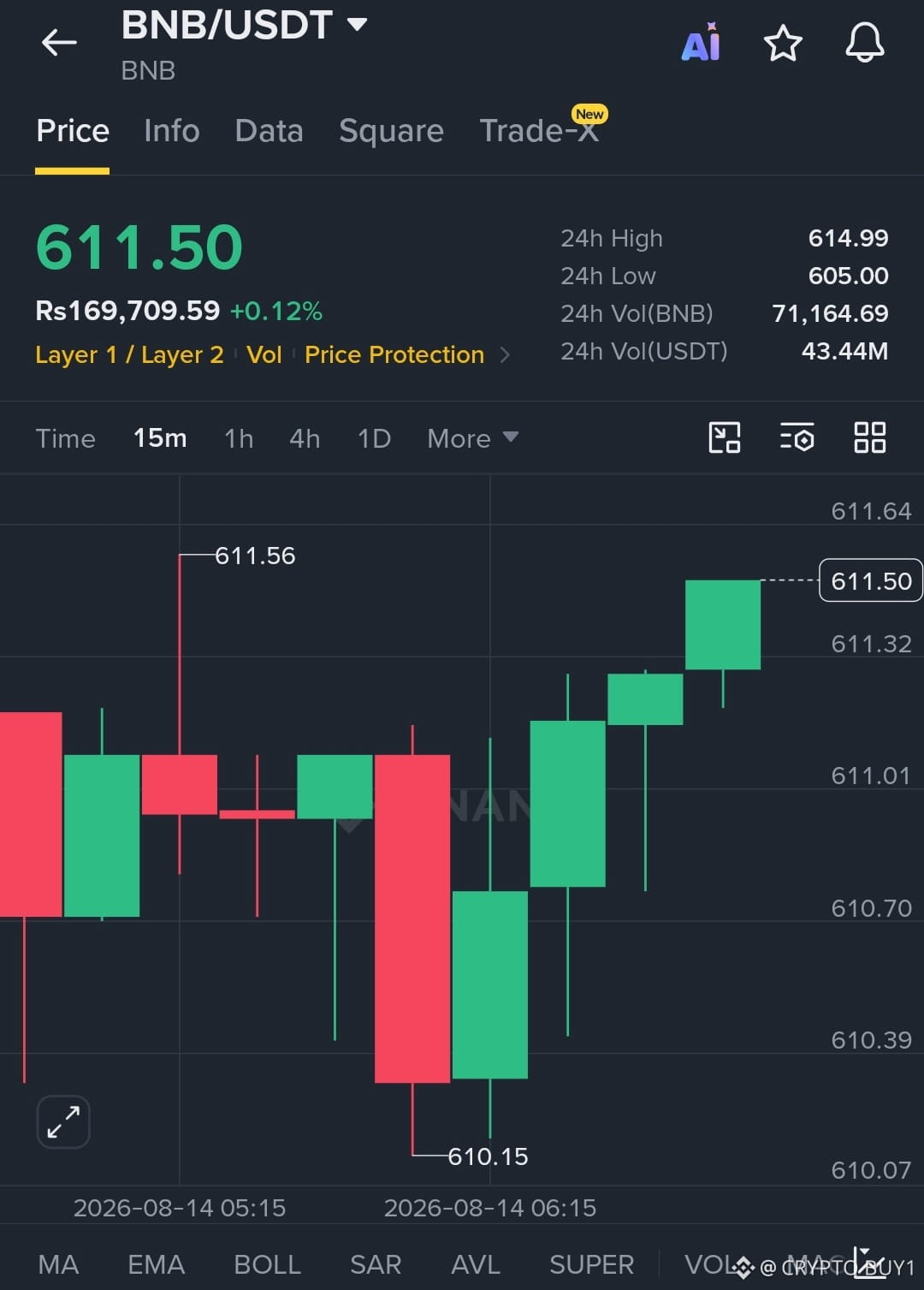
BNB wird derzeit bei etwa 611,50 $ gehandelt und zeigt trotz eines vergleichsweise ruhigen Marktes eine gewisse Widerstandsfähigkeit.
📈 24h-Hoch: 614,99 $
📉 24h-Tief: 605,00 $
🟢 24h-Veränderung: +0,12%
Das Diagramm bildet eine Reihe höherer Tiefs, was auf stetigen Kaufdruck hindeutet. Die Bullen verteidigen weiterhin wichtige Unterstützungsniveaus, während ein entscheidender Ausbruch über 615 $ den Weg für die nächste Aufwärtsbewegung öffnen könnte.
🔥 „Smart Money“ beobachtet die Stärke, wenn die Menge abgelenkt ist. BNB baut still und leise Momentum auf.
#bnb #BNBUSDT #CryptoNewss #BinnanceSquare #treading
$BNB
{future}(BNBUSDT)
BNB-Markupdate
BNB wird derzeit bei etwa 611,50 $ gehandelt und zeigt trotz eines vergleichsweise ruhigen Marktes eine gewisse Widerstandsfähigkeit.
📈 24h-Hoch: 614,99 $
📉 24h-Tief: 605,00 $
🟢 24h-Veränderung: +0,12%
Das Diagramm bildet eine Reihe höherer Tiefs, was auf stetigen Kaufdruck hindeutet. Die Bullen verteidigen weiterhin wichtige Unterstützungsniveaus, während ein entscheidender Ausbruch über 615 $ den Weg für die nächste Aufwärtsbewegung öffnen könnte.
🔥 „Smart Money“ beobachtet die Stärke, wenn die Menge abgelenkt ist. BNB baut still und leise Momentum auf.
#bnb #BNBUSDT #CryptoNewss #BinnanceSquare #treading
$BNB
BNB wird derzeit bei etwa 611,50 $ gehandelt und zeigt trotz eines vergleichsweise ruhigen Marktes eine gewisse Widerstandsfähigkeit.
📈 24h-Hoch: 614,99 $
📉 24h-Tief: 605,00 $
🟢 24h-Veränderung: +0,12%
Das Diagramm bildet eine Reihe höherer Tiefs, was auf stetigen Kaufdruck hindeutet. Die Bullen verteidigen weiterhin wichtige Unterstützungsniveaus, während ein entscheidender Ausbruch über 615 $ den Weg für die nächste Aufwärtsbewegung öffnen könnte.
🔥 „Smart Money“ beobachtet die Stärke, wenn die Menge abgelenkt ist. BNB baut still und leise Momentum auf.
#bnb #BNBUSDT #CryptoNewss #BinnanceSquare #treading
$BNB
60
·
--
Bärisch
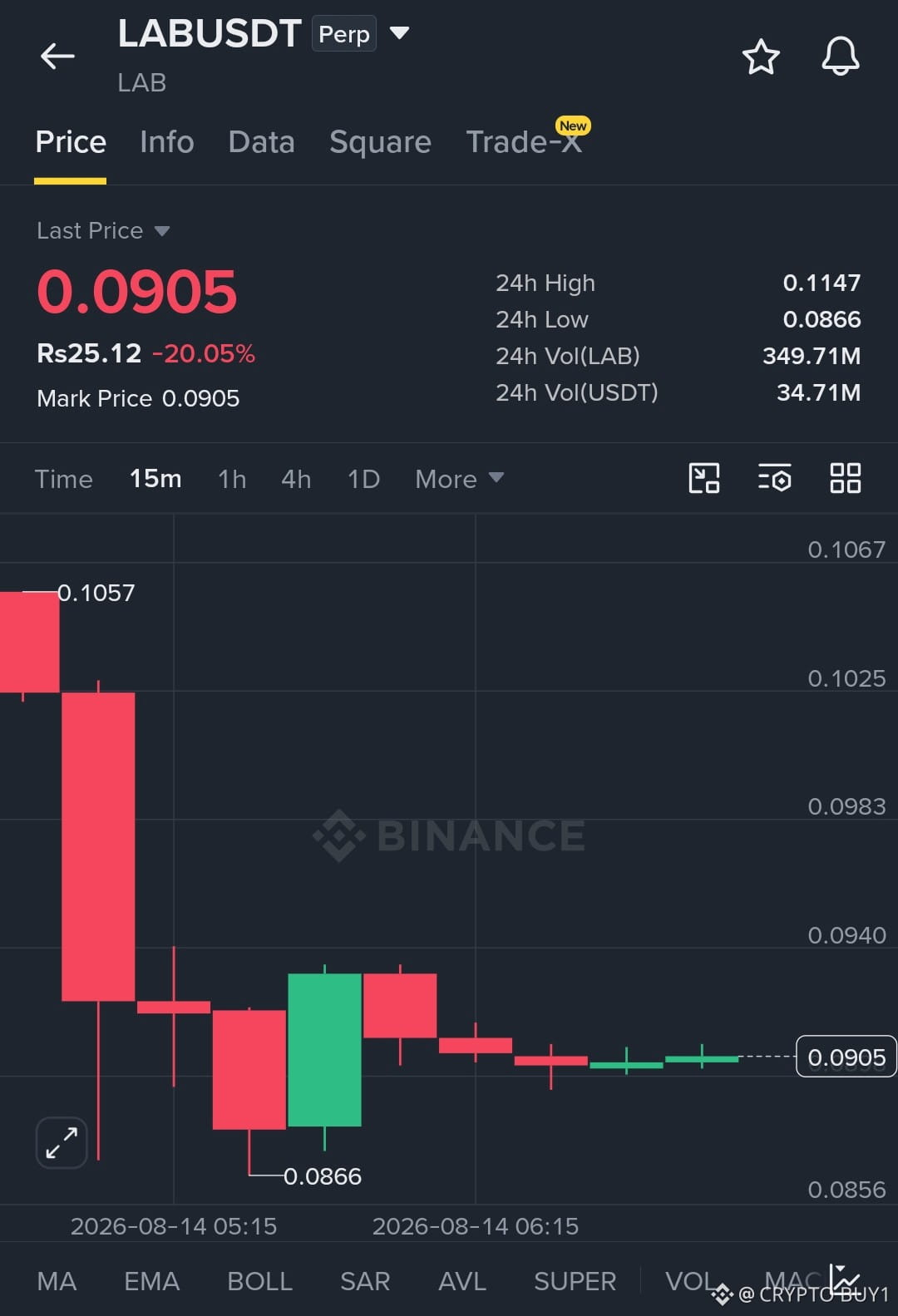
🚨 $LAB ist gerade über 20% abgestürzt.
Panik ist laut. Chancen sind still.
Nach einem brutalen Ausverkauf stabilisiert sich der Kurs nahe den Tiefs und die Volatilität steigt. Genau hier verlassen die schwachen Hände den Markt und kluge Trader fangen an, genauer hinzuschauen.
🔥 Die nächste große Bewegung beginnt oft dann, wenn die Angst ihren Höhepunkt erreicht.
#Labs #LABUSDT #binnace #CryptoNewss #treading
$LAB
{future}(LABUSDT)
🚨 $LAB ist gerade über 20% abgestürzt.
Panik ist laut. Chancen sind still.
Nach einem brutalen Ausverkauf stabilisiert sich der Kurs nahe den Tiefs und die Volatilität steigt. Genau hier verlassen die schwachen Hände den Markt und kluge Trader fangen an, genauer hinzuschauen.
🔥 Die nächste große Bewegung beginnt oft dann, wenn die Angst ihren Höhepunkt erreicht.
#Labs #LABUSDT #binnace #CryptoNewss #treading
$LAB
Panik ist laut. Chancen sind still.
Nach einem brutalen Ausverkauf stabilisiert sich der Kurs nahe den Tiefs und die Volatilität steigt. Genau hier verlassen die schwachen Hände den Markt und kluge Trader fangen an, genauer hinzuschauen.
🔥 Die nächste große Bewegung beginnt oft dann, wenn die Angst ihren Höhepunkt erreicht.
#Labs #LABUSDT #binnace #CryptoNewss #treading
$LAB
371
·
--
Bullisch
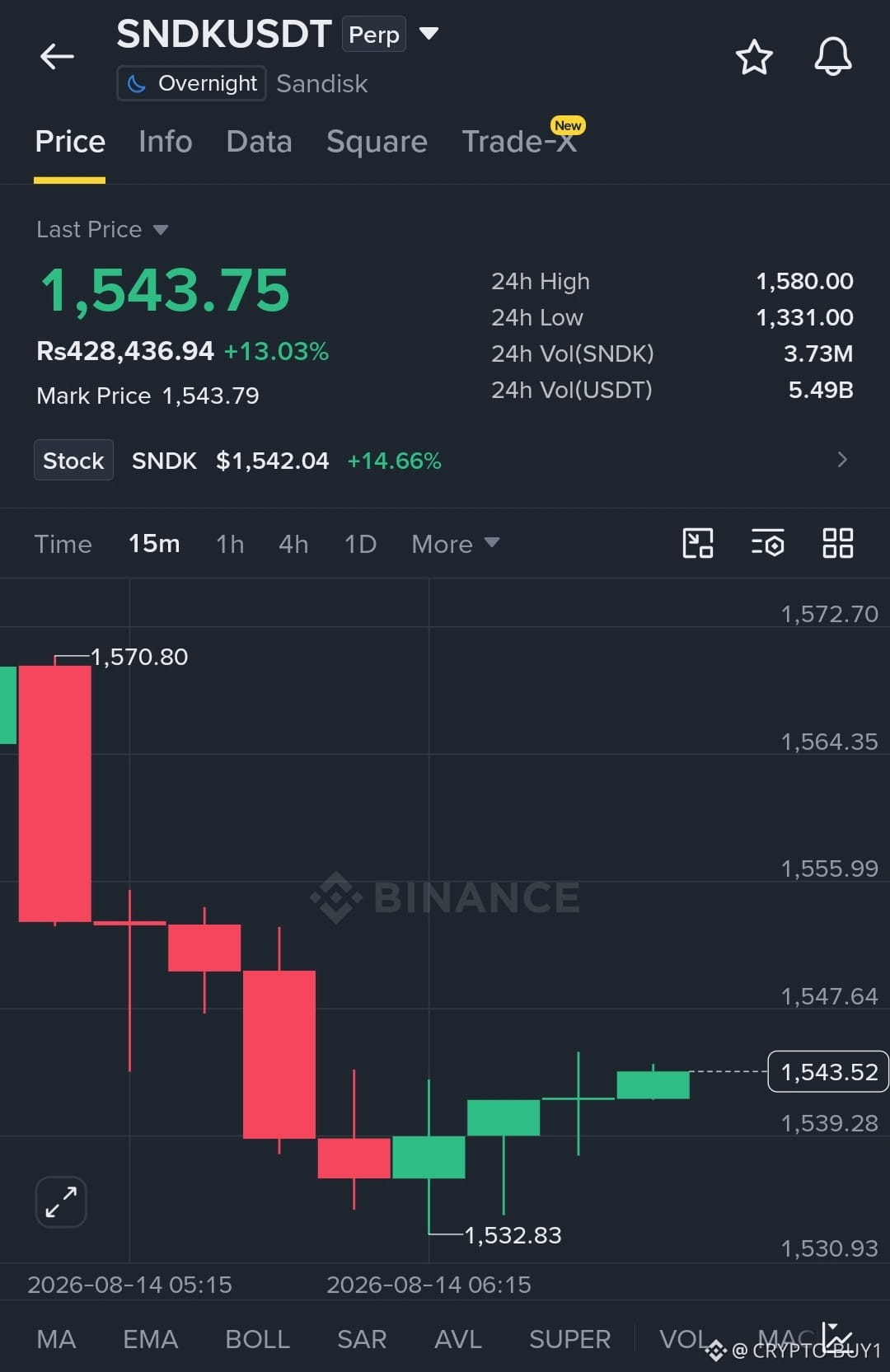
🚨 Alle waren auf den Dump fokussiert.
Fast niemand bemerkte die Erholung.
$SNDK just druckte einen starken Rebound von den Tiefs und Käufer übernehmen wieder leise die Kontrolle.
Die stärksten Bewegungen beginnen oft dann, wenn die Angst noch im Raum ist.
🔥 Der Momentum-Kurs dreht sich. Nicht blinzeln.
#SNDK #SNDKUSDT #CryptoNewss #treading #binnace
$SNDK
{future}(SNDKUSDT)
🚨 Alle waren auf den Dump fokussiert.
Fast niemand bemerkte die Erholung.
$SNDK just druckte einen starken Rebound von den Tiefs und Käufer übernehmen wieder leise die Kontrolle.
Die stärksten Bewegungen beginnen oft dann, wenn die Angst noch im Raum ist.
🔥 Der Momentum-Kurs dreht sich. Nicht blinzeln.
#SNDK #SNDKUSDT #CryptoNewss #treading #binnace
$SNDK
Fast niemand bemerkte die Erholung.
$SNDK just druckte einen starken Rebound von den Tiefs und Käufer übernehmen wieder leise die Kontrolle.
Die stärksten Bewegungen beginnen oft dann, wenn die Angst noch im Raum ist.
🔥 Der Momentum-Kurs dreht sich. Nicht blinzeln.
#SNDK #SNDKUSDT #CryptoNewss #treading #binnace
$SNDK
252
·
--
Bullisch
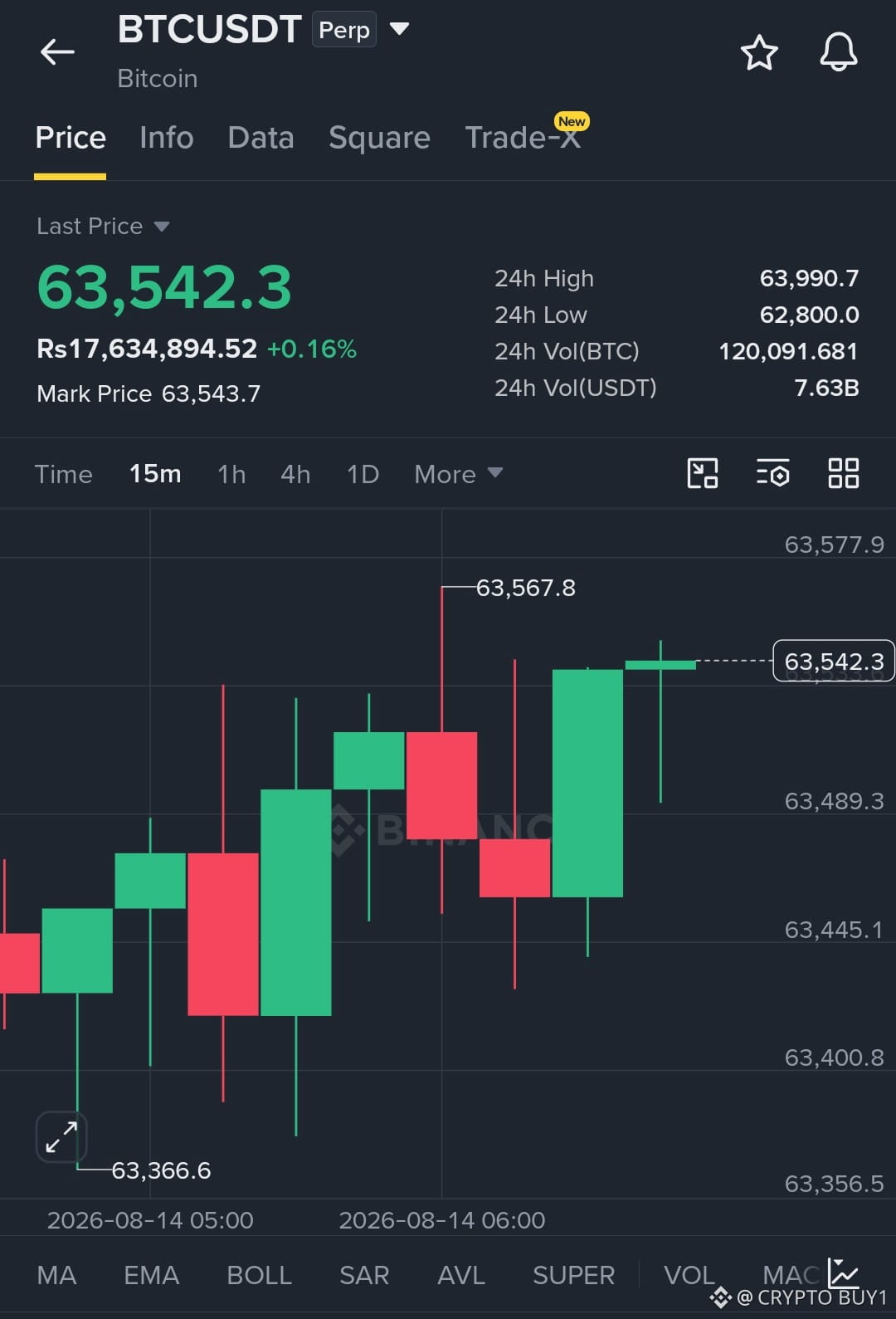
🚨 Bitcoin klopft an die Tür eines Ausbruchs.
$63.5K hält sich stark, Käufer absorbieren weiterhin jede Delle, und der Impuls baut sich Kerze für Kerze auf.
Die Menge wartet auf eine Bestätigung.
Smart Money positioniert sich vorher.
🔥 Eine explosive Bewegung über dem Widerstand – und der nächste Schub könnte schnell kommen.
#BTC #bitcoin #binnace #CryptoNewss #treading
$BTC
{future}(BTCUSDT)
🚨 Bitcoin klopft an die Tür eines Ausbruchs.
$63.5K hält sich stark, Käufer absorbieren weiterhin jede Delle, und der Impuls baut sich Kerze für Kerze auf.
Die Menge wartet auf eine Bestätigung.
Smart Money positioniert sich vorher.
🔥 Eine explosive Bewegung über dem Widerstand – und der nächste Schub könnte schnell kommen.
#BTC #bitcoin #binnace #CryptoNewss #treading
$BTC
$63.5K hält sich stark, Käufer absorbieren weiterhin jede Delle, und der Impuls baut sich Kerze für Kerze auf.
Die Menge wartet auf eine Bestätigung.
Smart Money positioniert sich vorher.
🔥 Eine explosive Bewegung über dem Widerstand – und der nächste Schub könnte schnell kommen.
#BTC #bitcoin #binnace #CryptoNewss #treading
$BTC
88
·
--
Bullisch
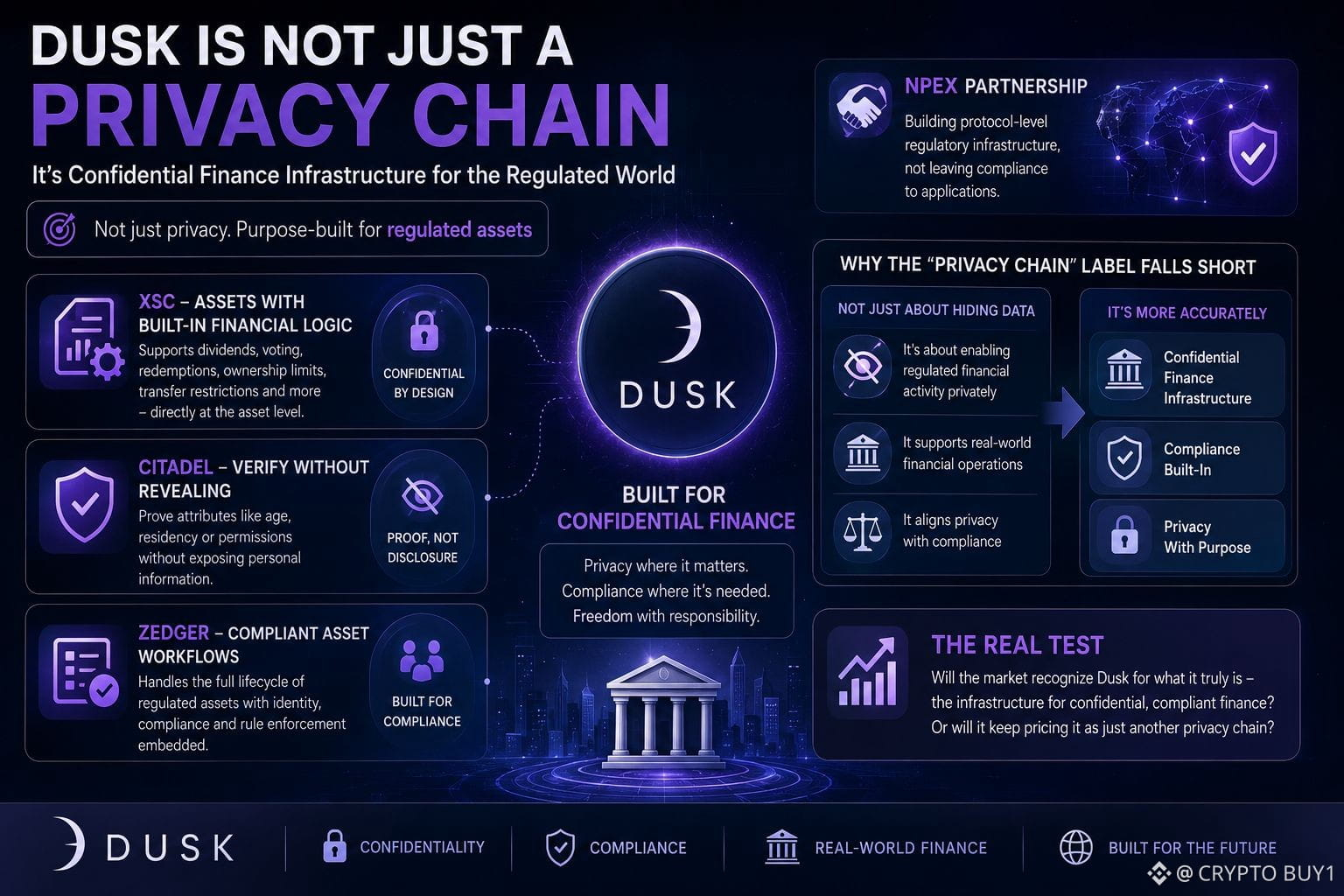
Warum wird Dusk ständig mit Privacy-Chains in eine Schublade gesteckt, obwohl so viel seiner Architektur auf regulierte Assets ausgelegt ist?
Je tiefer ich in den Stack eingestiegen bin, desto weniger ergab diese Bezeichnung Sinn.
XSC wurde nicht für einfache Token-Transfers entwickelt. Es wurde gebaut, um Dinge wie Dividendenausschüttungen, Abstimmungen der Aktionäre, konforme Abwicklung, Rücknahme, Eigentumsgrenzen und Übertragungsbeschränkungen direkt auf Ebene des Assets zu unterstützen — und dabei die Vertraulichkeit zu bewahren.
Dann gibt es da Citadel.
Citadel stellt statt personenbezogene Daten offenzulegen, um die Berechtigung zu beweisen, bestimmte Attribute zur Verifizierung bereit, ohne die zugrunde liegenden Daten preiszugeben. Wohnsitz, Altersgrenzen, Zugriffsberechtigungen — der Nachweis zählt, nicht die Offenlegung.
Was meine Sicht wirklich verändert hat, war das Zusammensetzen dieser Bausteine.
Zedger übernimmt die konformen Asset-Workflows. XSC bettet finanzielle Regeln direkt in das Asset ein. Citadel ermöglicht selektive Offenlegung. Und über die NPEX-Partnerschaft treibt Dusk in Richtung einer regulatorischen Infrastruktur auf Protokollebene — statt die Compliance komplett bei Anwendungen zu belassen.
Ab diesem Punkt wirkt es wie ein Fehlschluss, Dusk eine Privacy-Blockchain zu nennen, wenn man es mit der Beschreibung einer Börse vergleicht, die lediglich eine Login-Seite hat.
Der eigentliche Test ist, ob der Markt Dusk irgendwann für vertrauliche Finanz-Infrastruktur höher bewertet — oder es weiterhin als deutlich engere Kategorie einpreist.
@Dusk_Foundation #dusk $DUSK
$DUSK
{future}(DUSKUSDT)
Warum wird Dusk ständig mit Privacy-Chains in eine Schublade gesteckt, obwohl so viel seiner Architektur auf regulierte Assets ausgelegt ist?
Je tiefer ich in den Stack eingestiegen bin, desto weniger ergab diese Bezeichnung Sinn.
XSC wurde nicht für einfache Token-Transfers entwickelt. Es wurde gebaut, um Dinge wie Dividendenausschüttungen, Abstimmungen der Aktionäre, konforme Abwicklung, Rücknahme, Eigentumsgrenzen und Übertragungsbeschränkungen direkt auf Ebene des Assets zu unterstützen — und dabei die Vertraulichkeit zu bewahren.
Dann gibt es da Citadel.
Citadel stellt statt personenbezogene Daten offenzulegen, um die Berechtigung zu beweisen, bestimmte Attribute zur Verifizierung bereit, ohne die zugrunde liegenden Daten preiszugeben. Wohnsitz, Altersgrenzen, Zugriffsberechtigungen — der Nachweis zählt, nicht die Offenlegung.
Was meine Sicht wirklich verändert hat, war das Zusammensetzen dieser Bausteine.
Zedger übernimmt die konformen Asset-Workflows. XSC bettet finanzielle Regeln direkt in das Asset ein. Citadel ermöglicht selektive Offenlegung. Und über die NPEX-Partnerschaft treibt Dusk in Richtung einer regulatorischen Infrastruktur auf Protokollebene — statt die Compliance komplett bei Anwendungen zu belassen.
Ab diesem Punkt wirkt es wie ein Fehlschluss, Dusk eine Privacy-Blockchain zu nennen, wenn man es mit der Beschreibung einer Börse vergleicht, die lediglich eine Login-Seite hat.
Der eigentliche Test ist, ob der Markt Dusk irgendwann für vertrauliche Finanz-Infrastruktur höher bewertet — oder es weiterhin als deutlich engere Kategorie einpreist.
@Dusk #dusk $DUSK
$DUSK
Je tiefer ich in den Stack eingestiegen bin, desto weniger ergab diese Bezeichnung Sinn.
XSC wurde nicht für einfache Token-Transfers entwickelt. Es wurde gebaut, um Dinge wie Dividendenausschüttungen, Abstimmungen der Aktionäre, konforme Abwicklung, Rücknahme, Eigentumsgrenzen und Übertragungsbeschränkungen direkt auf Ebene des Assets zu unterstützen — und dabei die Vertraulichkeit zu bewahren.
Dann gibt es da Citadel.
Citadel stellt statt personenbezogene Daten offenzulegen, um die Berechtigung zu beweisen, bestimmte Attribute zur Verifizierung bereit, ohne die zugrunde liegenden Daten preiszugeben. Wohnsitz, Altersgrenzen, Zugriffsberechtigungen — der Nachweis zählt, nicht die Offenlegung.
Was meine Sicht wirklich verändert hat, war das Zusammensetzen dieser Bausteine.
Zedger übernimmt die konformen Asset-Workflows. XSC bettet finanzielle Regeln direkt in das Asset ein. Citadel ermöglicht selektive Offenlegung. Und über die NPEX-Partnerschaft treibt Dusk in Richtung einer regulatorischen Infrastruktur auf Protokollebene — statt die Compliance komplett bei Anwendungen zu belassen.
Ab diesem Punkt wirkt es wie ein Fehlschluss, Dusk eine Privacy-Blockchain zu nennen, wenn man es mit der Beschreibung einer Börse vergleicht, die lediglich eine Login-Seite hat.
Der eigentliche Test ist, ob der Markt Dusk irgendwann für vertrauliche Finanz-Infrastruktur höher bewertet — oder es weiterhin als deutlich engere Kategorie einpreist.
@Dusk #dusk $DUSK
$DUSK
6
1
2
136
·
--
Bullisch
🚨 Die Strategie pausiert den Bitcoin-Kauf für 7 Wochen.
Die meisten haben Schwäche gesehen.
Ich sehe, wie sich ein Riese auf seinen nächsten Zug vorbereitet.
Die Strategie gilt noch über 840.000 BTC hinaus und plant, die Akkumulation später in diesem Jahr wieder aufzunehmen.
Denk mal darüber nach.
Der größte institutionelle Bitcoin-Inhaber steigt nicht aus.
Er lädt nach.
Wenn Käufer in Milliardenhöhe zurückkehren, verschwindet das Angebot schnell.
Der Markt konzentriert sich auf den Preis von heute.
Kluge Anleger richten den Blick auf die Knappheit von morgen. 👀🔥
#BTC #bitcoin #crypto #binnance #Treanding
$BTC
{future}(BTCUSDT)
🚨 Die Strategie pausiert den Bitcoin-Kauf für 7 Wochen.
Die meisten haben Schwäche gesehen.
Ich sehe, wie sich ein Riese auf seinen nächsten Zug vorbereitet.
Die Strategie gilt noch über 840.000 BTC hinaus und plant, die Akkumulation später in diesem Jahr wieder aufzunehmen.
Denk mal darüber nach.
Der größte institutionelle Bitcoin-Inhaber steigt nicht aus.
Er lädt nach.
Wenn Käufer in Milliardenhöhe zurückkehren, verschwindet das Angebot schnell.
Der Markt konzentriert sich auf den Preis von heute.
Kluge Anleger richten den Blick auf die Knappheit von morgen. 👀🔥
#BTC #bitcoin #crypto #binnance #Treanding
$BTC
Die meisten haben Schwäche gesehen.
Ich sehe, wie sich ein Riese auf seinen nächsten Zug vorbereitet.
Die Strategie gilt noch über 840.000 BTC hinaus und plant, die Akkumulation später in diesem Jahr wieder aufzunehmen.
Denk mal darüber nach.
Der größte institutionelle Bitcoin-Inhaber steigt nicht aus.
Er lädt nach.
Wenn Käufer in Milliardenhöhe zurückkehren, verschwindet das Angebot schnell.
Der Markt konzentriert sich auf den Preis von heute.
Kluge Anleger richten den Blick auf die Knappheit von morgen. 👀🔥
#BTC #bitcoin #crypto #binnance #Treanding
$BTC
48
·
--
Bärisch
🚨 Während die meisten Anleger Schlagzeilen jagen, kaufen Zentralbanken still und leise Gold.
📈 Die Goldkäufe im Q2 stiegen auf 289 Tonnen — ein Rekord für das zweite Quartal.
Zinssenkungen stehen wieder zur Debatte.
Die Liquidität könnte erneut wachsen.
Schulden und Defizite steigen weiter.
Der Markt sieht ein Metall.
Smartes Geld sieht einen Währungssystem-Reset.
Gold braucht keinen Hype.
Es braucht Zeit.
Und vielleicht läuft die Zeit für diejenigen, die es immer noch unterschätzen, bereits ab. 🏆🔥
#XAU #xauusdt #GOLD #binnance #Treanding
$XAU
{future}(XAUUSDT)
🚨 Während die meisten Anleger Schlagzeilen jagen, kaufen Zentralbanken still und leise Gold.
📈 Die Goldkäufe im Q2 stiegen auf 289 Tonnen — ein Rekord für das zweite Quartal.
Zinssenkungen stehen wieder zur Debatte.
Die Liquidität könnte erneut wachsen.
Schulden und Defizite steigen weiter.
Der Markt sieht ein Metall.
Smartes Geld sieht einen Währungssystem-Reset.
Gold braucht keinen Hype.
Es braucht Zeit.
Und vielleicht läuft die Zeit für diejenigen, die es immer noch unterschätzen, bereits ab. 🏆🔥
#XAU #xauusdt #GOLD #binnance #Treanding
$XAU
📈 Die Goldkäufe im Q2 stiegen auf 289 Tonnen — ein Rekord für das zweite Quartal.
Zinssenkungen stehen wieder zur Debatte.
Die Liquidität könnte erneut wachsen.
Schulden und Defizite steigen weiter.
Der Markt sieht ein Metall.
Smartes Geld sieht einen Währungssystem-Reset.
Gold braucht keinen Hype.
Es braucht Zeit.
Und vielleicht läuft die Zeit für diejenigen, die es immer noch unterschätzen, bereits ab. 🏆🔥
#XAU #xauusdt #GOLD #binnance #Treanding
$XAU
91
·
--
Bärisch
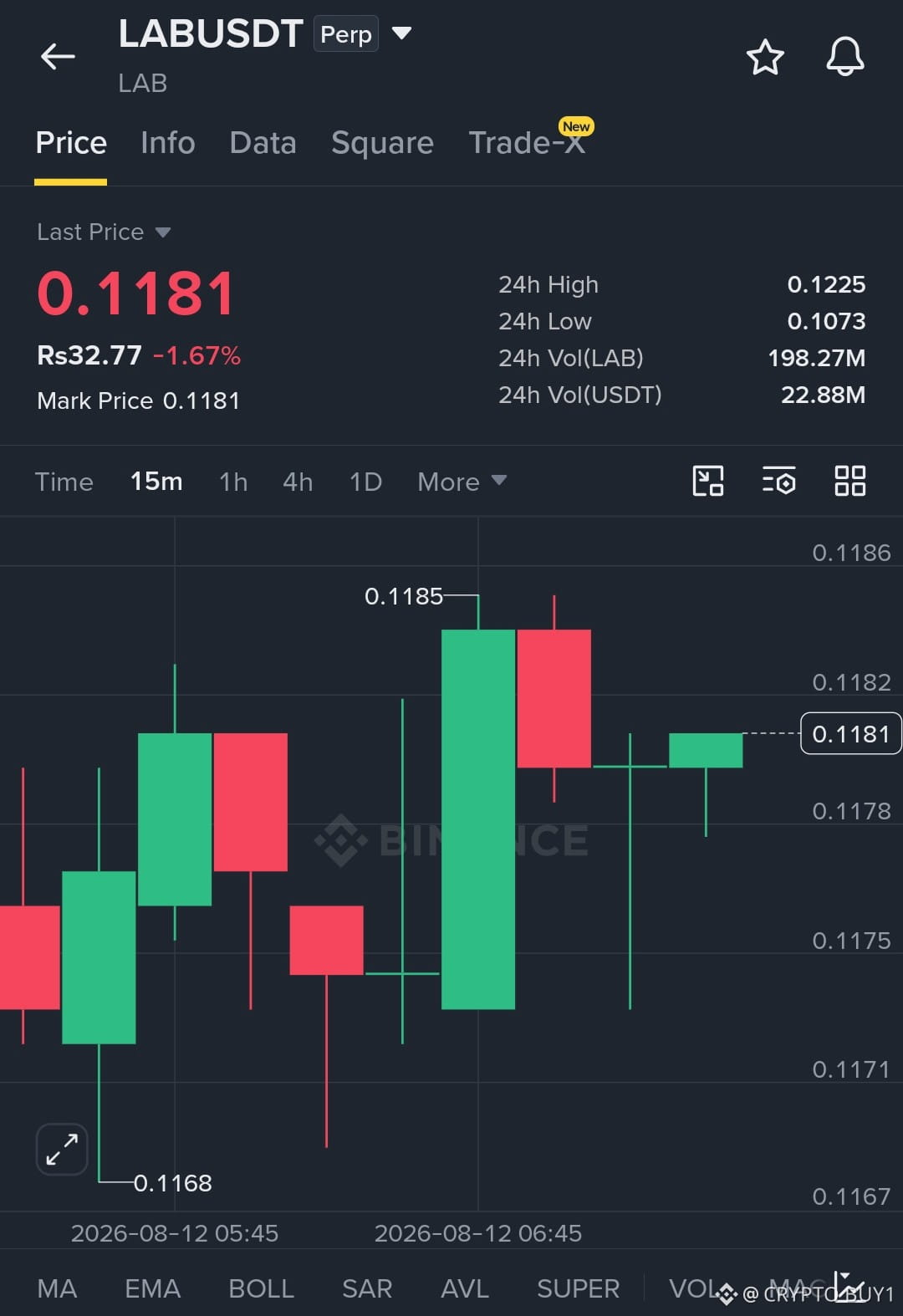
🚨 LAB wacht auf.
Der Preis hält sich nahe $0.118, nachdem es nach dem Tief stark erholt hat.
Schwache Hände haben verkauft.
Käufer sind eingesprungen.
Jetzt baut der Chart Druck unterhalb des Widerstands auf.
Ein starker Schub könnte einen Ausbruch auslösen.
Ein Ausbruch könnte ernsthafte Aufmerksamkeit bringen. ⚡
#Labs #LABUSDT #binnance #CryptoNewss #Treanding
$LAB
{future}(LABUSDT)
🚨 LAB wacht auf.
Der Preis hält sich nahe $0.118, nachdem es nach dem Tief stark erholt hat.
Schwache Hände haben verkauft.
Käufer sind eingesprungen.
Jetzt baut der Chart Druck unterhalb des Widerstands auf.
Ein starker Schub könnte einen Ausbruch auslösen.
Ein Ausbruch könnte ernsthafte Aufmerksamkeit bringen. ⚡
#Labs #LABUSDT #binnance #CryptoNewss #Treanding
$LAB
Der Preis hält sich nahe $0.118, nachdem es nach dem Tief stark erholt hat.
Schwache Hände haben verkauft.
Käufer sind eingesprungen.
Jetzt baut der Chart Druck unterhalb des Widerstands auf.
Ein starker Schub könnte einen Ausbruch auslösen.
Ein Ausbruch könnte ernsthafte Aufmerksamkeit bringen. ⚡
#Labs #LABUSDT #binnance #CryptoNewss #Treanding
$LAB
208
·
--
Bullisch
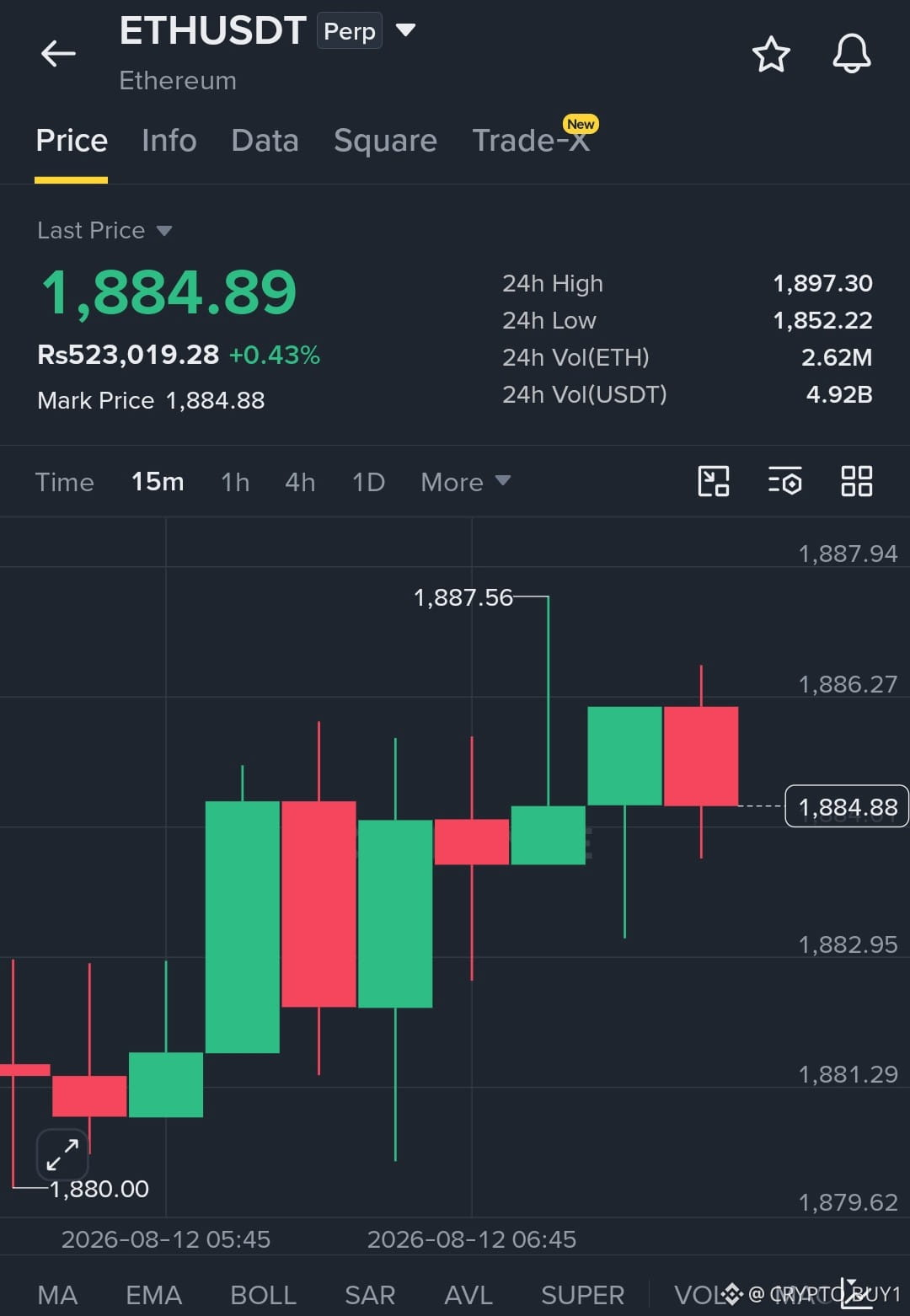
🚨 ETH steht vor der Tür mit $1.900.
Verkäufer wehren sich weiter.
Käufer drücken weiter.
Jede Zurückweisung wird schwächer.
Jeder Rücksetzer wird gekauft.
Ein Ausbruch über $1.900 könnte eine schnelle Momentum-Welle auslösen.
Verpasse die Bewegung nicht, jage die Kerze.
Ethereum wirkt bereit für den Einsatz. ⚡👀
#ETH #Etherum #ETHUSDT💰 #binnance #CryptoNewss
$ETH
{future}(ETHUSDT)
🚨 ETH steht vor der Tür mit $1.900.
Verkäufer wehren sich weiter.
Käufer drücken weiter.
Jede Zurückweisung wird schwächer.
Jeder Rücksetzer wird gekauft.
Ein Ausbruch über $1.900 könnte eine schnelle Momentum-Welle auslösen.
Verpasse die Bewegung nicht, jage die Kerze.
Ethereum wirkt bereit für den Einsatz. ⚡👀
#ETH #Etherum #ETHUSDT💰 #binnance #CryptoNewss
$ETH
Verkäufer wehren sich weiter.
Käufer drücken weiter.
Jede Zurückweisung wird schwächer.
Jeder Rücksetzer wird gekauft.
Ein Ausbruch über $1.900 könnte eine schnelle Momentum-Welle auslösen.
Verpasse die Bewegung nicht, jage die Kerze.
Ethereum wirkt bereit für den Einsatz. ⚡👀
#ETH #Etherum #ETHUSDT💰 #binnance #CryptoNewss
$ETH
75
·
--
Bärisch
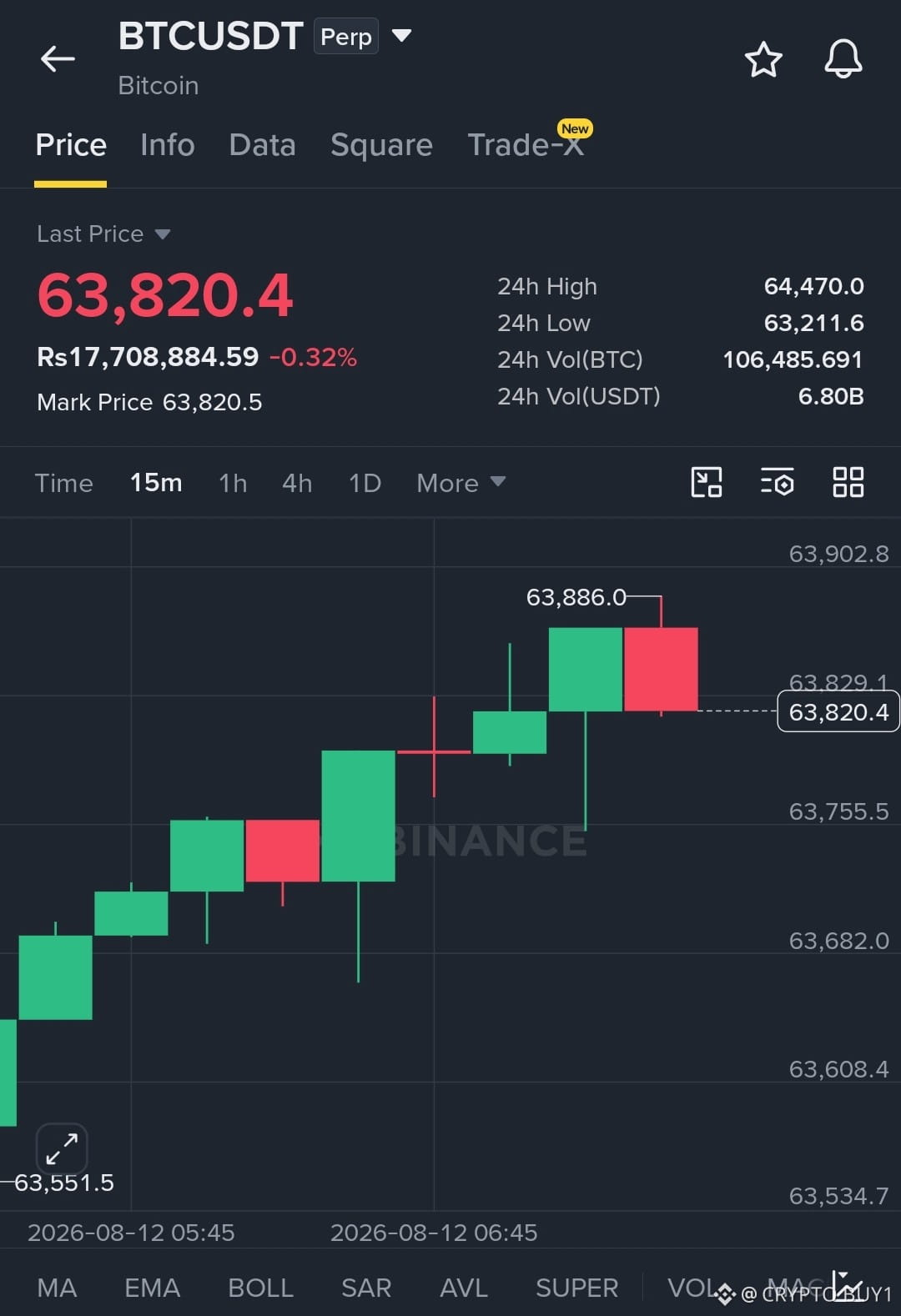
🚨 BTC quetscht sich nahe $63,8K.
Die Bären wollten eine Aufschlüsselung.
Die Bullen verteidigten jede Delle.
Jetzt ist der Markt zwischen Angst und FOMO gefangen.
Ein sauberer Ausbruch über $64K könnte die Dynamik schnell entfachen.
Eine Abweisung könnte eine weitere Volatilitätswelle auslösen.
Der nächste Schritt wird nicht um Erlaubnis bitten. 👀
#BTC #bitcoin #binnance #treading #CryptoNewss
$BTC
{future}(BTCUSDT)
🚨 BTC quetscht sich nahe $63,8K.
Die Bären wollten eine Aufschlüsselung.
Die Bullen verteidigten jede Delle.
Jetzt ist der Markt zwischen Angst und FOMO gefangen.
Ein sauberer Ausbruch über $64K könnte die Dynamik schnell entfachen.
Eine Abweisung könnte eine weitere Volatilitätswelle auslösen.
Der nächste Schritt wird nicht um Erlaubnis bitten. 👀
#BTC #bitcoin #binnance #treading #CryptoNewss
$BTC
Die Bären wollten eine Aufschlüsselung.
Die Bullen verteidigten jede Delle.
Jetzt ist der Markt zwischen Angst und FOMO gefangen.
Ein sauberer Ausbruch über $64K könnte die Dynamik schnell entfachen.
Eine Abweisung könnte eine weitere Volatilitätswelle auslösen.
Der nächste Schritt wird nicht um Erlaubnis bitten. 👀
#BTC #bitcoin #binnance #treading #CryptoNewss
$BTC
95
Anmelden und weiter Inhalte entdecken
Krypto-Nutzer weltweit auf Binance Square kennenlernen
⚡️ Bleib in Sachen Krypto stets am Puls.
💬 Die weltgrößte Kryptobörse vertraut darauf.
👍 Erhalte verlässliche Einblicke von verifizierten Creators.
E-Mail-Adresse/Telefonnummer
Trendthemen
FedRateWatch
1.1M Aufrufe
5,350 Kommentare
Teile & gewinne Traffic-Belohnungen in unserer Kampagne mit angesagtem Hashtag
✨Thema: FOMC September, Was ist der nächste Schritt der Fed?
👉So nimmst du teil:
Veröffentliche einen kurzen Beitrag oder Artikel mit dem Hashtag #FedRateWatch
Erstelle Inhalte basierend auf den folgenden Blickwinkeln:
- Der August-Core-CPI stieg um 0,3% im Monatsvergleich, und die Wahrscheinlichkeit für eine 25bp-Erhöhung diese Woche liegt nun bei fast 90%. Erwartest du diese Woche eine Zinserhöhung? Handelt es sich um einen einmaligen Schritt oder den Beginn eines längeren Zinserhöhungszyklus?
- Wenn die Erhöhung erfolgt: Wie entwickelt sich das für BTC, Tech-Aktien und Gold? Aufwärts- oder abwärtsgerichtet?
- Wie planst du als Nächstes zu handeln? Teile deinen BTC-, Aktien- oder Gold-Trade/Bestände mit unserem Trade-Sharing-Widget.
⏰Kampagnenzeitraum:
- 2026-09-15 11:00 - 2026-09-17 3:00 UTC
🎁Belohnung:
- Qualifizierte Beiträge, die die oben genannten Richtlinien erfüllen und mehr als 100 Wörter enthalten, werden überprüft und erhalten möglicherweise einen zufälligen Traffic-Boost von 500 bis 3.000 Aufrufen. Du erhältst eine Benachrichtigung von deiner Feed-Secretary, wenn dein Beitrag ausgewählt wird.
- Erhalte die Chance, dass dein Artikel auf Binance Square Official vorgestellt wird
Du brauchst Ideen für deinen Beitrag? Besuche die Themenseite #FedRateWatch oder die Square Guide on How to Post for Better Reach.
Binance Square Official
·583 Likes
·1.4M Aufrufe
ZcashRises6%
2,341 Aufrufe
67 Kommentare
XRPSinks10%
460 Aufrufe
46 Kommentare