

Zarrar_X 1
903 Beiträge

Zarrar_X 1
Melden
Nutzer blockieren
DeFi Researcher || Crypto Analyst || Web3 explorer || one chart at a time.
0 Following
60 Follower
121 Like gegeben
Beiträge
·
--
Übersetzung ansehen
$XRP FEE DEBATE ERUPTS OVER A POTENTIAL 100X BURN BOOST
A proposal to significantly increase XRP Ledger transaction fees has sparked debate, with one suggestion calling for a 10x to 100x increase to accelerate the amount of $XRP permanently burned. Even at higher rates, the proposed fees could remain below one cent per transaction.
Ripple CTO emeritus David Schwartz pushed back on the idea, arguing that fee revenue or fee burning should not be treated as a simple measure of blockchain performance. XRPL transaction fees are permanently destroyed rather than distributed to validators, meaning higher fees would increase the burn rate.
Schwartz noted, however, that increasing fees also means increasing the cost for users. He argued that the people actually paying those fees deserve consideration, particularly if higher costs could discourage usage and ultimately hurt adoption.
The debate highlights a broader question for XRPL: should maximizing XRP burns take priority, or should keeping transactions extremely cheap remain the bigger goal for network growth?
#Macro Insights# #Crypto #XRP
$XRP FEE DEBATE ERUPTS OVER A POTENTIAL 100X BURN BOOST
A proposal to significantly increase XRP Ledger transaction fees has sparked debate, with one suggestion calling for a 10x to 100x increase to accelerate the amount of $XRP permanently burned. Even at higher rates, the proposed fees could remain below one cent per transaction.
Ripple CTO emeritus David Schwartz pushed back on the idea, arguing that fee revenue or fee burning should not be treated as a simple measure of blockchain performance. XRPL transaction fees are permanently destroyed rather than distributed to validators, meaning higher fees would increase the burn rate.
Schwartz noted, however, that increasing fees also means increasing the cost for users. He argued that the people actually paying those fees deserve consideration, particularly if higher costs could discourage usage and ultimately hurt adoption.
The debate highlights a broader question for XRPL: should maximizing XRP burns take priority, or should keeping transactions extremely cheap remain the bigger goal for network growth?
#Macro Insights# #Crypto #XRP
A proposal to significantly increase XRP Ledger transaction fees has sparked debate, with one suggestion calling for a 10x to 100x increase to accelerate the amount of $XRP permanently burned. Even at higher rates, the proposed fees could remain below one cent per transaction.
Ripple CTO emeritus David Schwartz pushed back on the idea, arguing that fee revenue or fee burning should not be treated as a simple measure of blockchain performance. XRPL transaction fees are permanently destroyed rather than distributed to validators, meaning higher fees would increase the burn rate.
Schwartz noted, however, that increasing fees also means increasing the cost for users. He argued that the people actually paying those fees deserve consideration, particularly if higher costs could discourage usage and ultimately hurt adoption.
The debate highlights a broader question for XRPL: should maximizing XRP burns take priority, or should keeping transactions extremely cheap remain the bigger goal for network growth?
#Macro Insights# #Crypto #XRP
15
·
--
Übersetzung ansehen
Euro Falls to Its Lowest Level Since May 2025
The euro has fallen to its lowest level since May 2025, marking a notable decline for the currency as markets reassess the outlook for European growth, inflation and monetary policy.
The move comes as investors weigh the region’s economic outlook against developments in global markets, with shifting interest-rate expectations continuing to influence major currencies. A weaker euro can also affect the cost of imports, particularly energy and other commodities priced in foreign currencies, potentially adding another layer of pressure to the European economy.
For markets, the euro’s continued weakness will remain an important signal to watch as traders assess whether the decline is a temporary move or the beginning of a broader trend in the currency.
$BTC $ETH #Europe #Macro Insights#
Euro Falls to Its Lowest Level Since May 2025
The euro has fallen to its lowest level since May 2025, marking a notable decline for the currency as markets reassess the outlook for European growth, inflation and monetary policy.
The move comes as investors weigh the region’s economic outlook against developments in global markets, with shifting interest-rate expectations continuing to influence major currencies. A weaker euro can also affect the cost of imports, particularly energy and other commodities priced in foreign currencies, potentially adding another layer of pressure to the European economy.
For markets, the euro’s continued weakness will remain an important signal to watch as traders assess whether the decline is a temporary move or the beginning of a broader trend in the currency.
$BTC $ETH #Europe #Macro Insights#
The euro has fallen to its lowest level since May 2025, marking a notable decline for the currency as markets reassess the outlook for European growth, inflation and monetary policy.
The move comes as investors weigh the region’s economic outlook against developments in global markets, with shifting interest-rate expectations continuing to influence major currencies. A weaker euro can also affect the cost of imports, particularly energy and other commodities priced in foreign currencies, potentially adding another layer of pressure to the European economy.
For markets, the euro’s continued weakness will remain an important signal to watch as traders assess whether the decline is a temporary move or the beginning of a broader trend in the currency.
$BTC $ETH #Europe #Macro Insights#
73
·
--
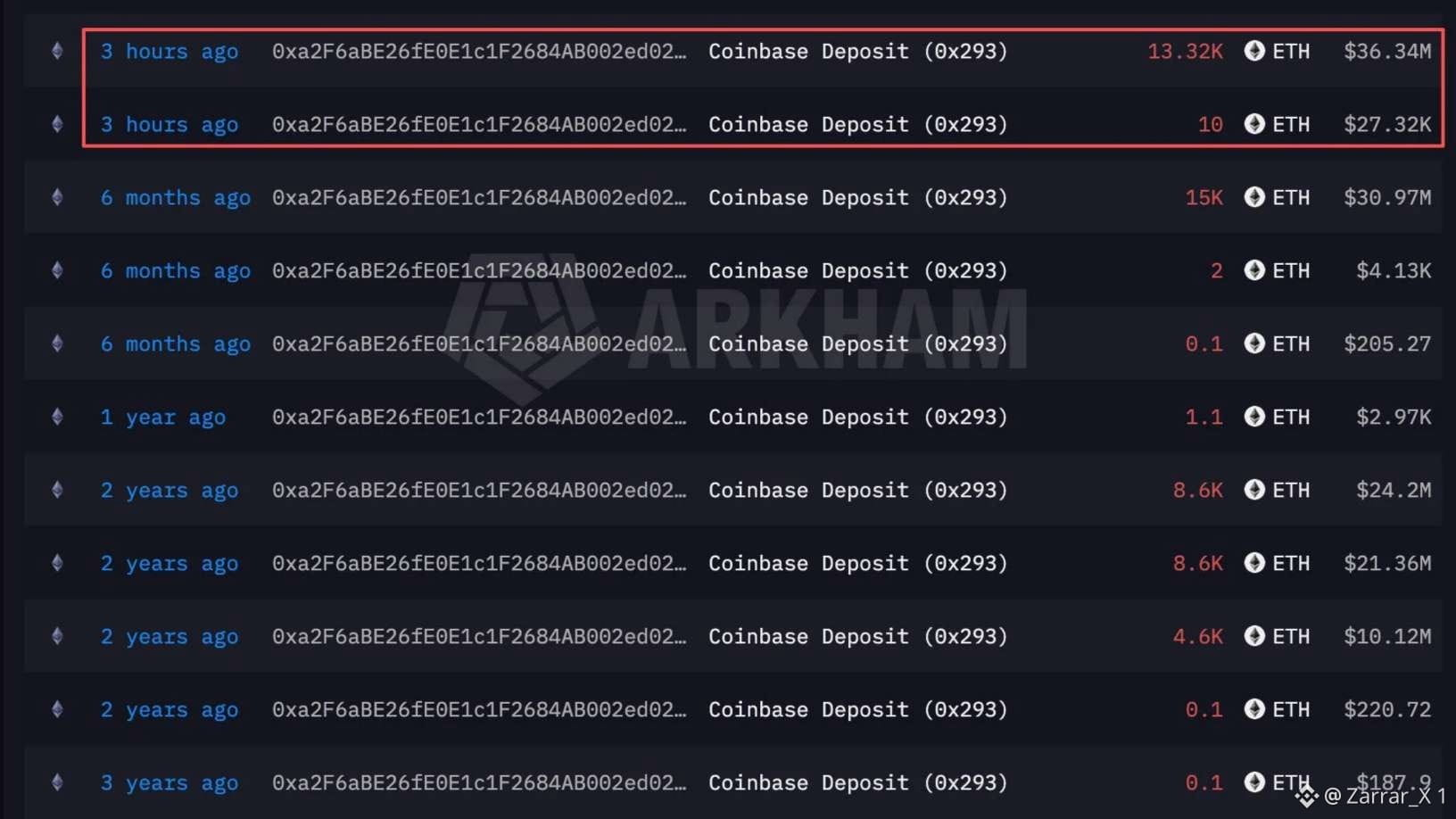
Ethereum-OG „0xa2F6“ verkauft weitere 13.330 ETH
Der Ethereum-OG hat weitere 13.330 ETH im Wert von rund 36,37 Millionen US-Dollar verkauft. Damit tätigte er einen weiteren großen Verkauf, nachdem er die Token sechs Monate lang gehalten hatte.
Die Wallet erwarb Berichten zufolge während des Ethereum-ICO 170.000 ETH zu einem Preis von nur 0,31 US-Dollar pro ETH und gab dafür rund 52.700 US-Dollar aus. Zu den aktuellen Kursen sind die verbleibenden Bestände immer noch rund 461,4 Millionen US-Dollar wert. Das verdeutlicht die enormen Gewinne, die einigen der frühesten Ethereum-Teilnehmern zugutekommen.
$ETH #ETH #Makro-Insights# #Krypto
Ethereum-OG „0xa2F6“ verkauft weitere 13.330 ETH
Der Ethereum-OG hat weitere 13.330 ETH im Wert von rund 36,37 Millionen US-Dollar verkauft. Damit tätigte er einen weiteren großen Verkauf, nachdem er die Token sechs Monate lang gehalten hatte.
Die Wallet erwarb Berichten zufolge während des Ethereum-ICO 170.000 ETH zu einem Preis von nur 0,31 US-Dollar pro ETH und gab dafür rund 52.700 US-Dollar aus. Zu den aktuellen Kursen sind die verbleibenden Bestände immer noch rund 461,4 Millionen US-Dollar wert. Das verdeutlicht die enormen Gewinne, die einigen der frühesten Ethereum-Teilnehmern zugutekommen.
$ETH #ETH #Makro-Insights# #Krypto
Der Ethereum-OG hat weitere 13.330 ETH im Wert von rund 36,37 Millionen US-Dollar verkauft. Damit tätigte er einen weiteren großen Verkauf, nachdem er die Token sechs Monate lang gehalten hatte.
Die Wallet erwarb Berichten zufolge während des Ethereum-ICO 170.000 ETH zu einem Preis von nur 0,31 US-Dollar pro ETH und gab dafür rund 52.700 US-Dollar aus. Zu den aktuellen Kursen sind die verbleibenden Bestände immer noch rund 461,4 Millionen US-Dollar wert. Das verdeutlicht die enormen Gewinne, die einigen der frühesten Ethereum-Teilnehmern zugutekommen.
$ETH #ETH #Makro-Insights# #Krypto
23
·
--
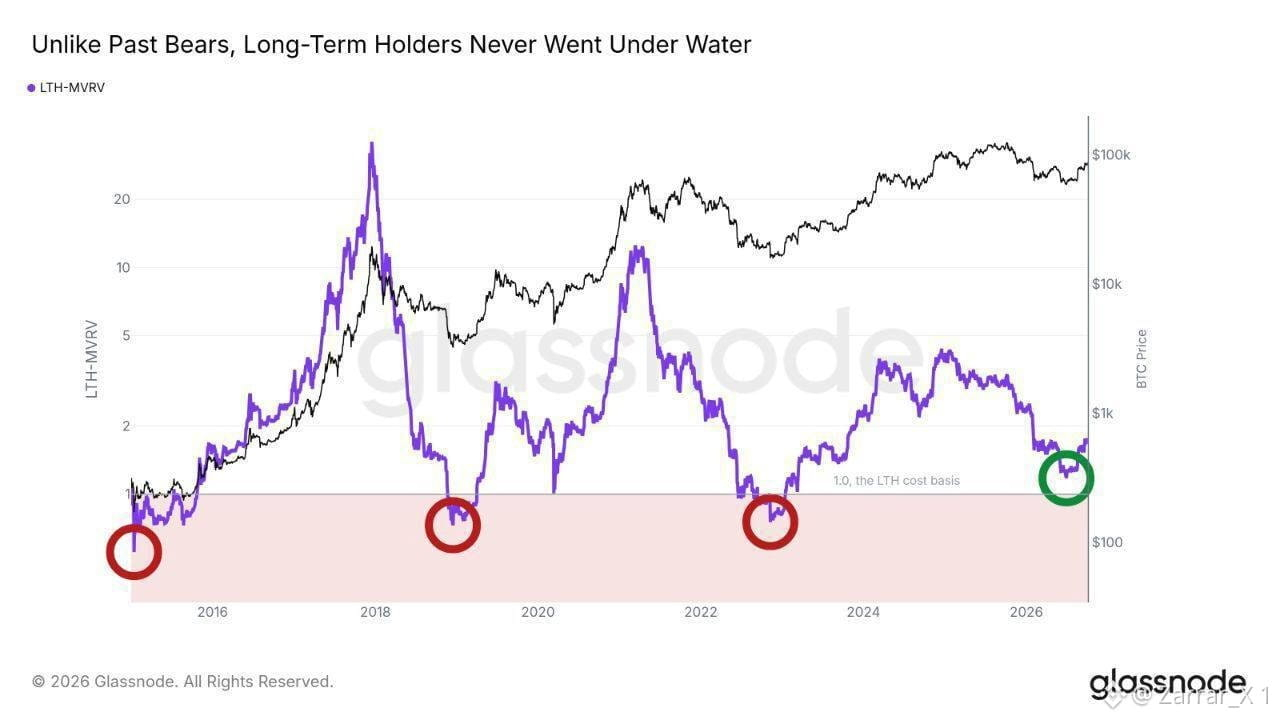
NEU: Bitcoins moderate Korrektur hielt langfristige Anleger in der Gewinnzone
Laut Glassnode hat Bitcoins relativ moderate Korrektur in diesem Zyklus langfristigen Anlegern ermöglicht, weiterhin im Gewinn zu bleiben und so die stärkeren Kursverluste zu vermeiden, die typischerweise bei größeren Marktkorrekturen auftreten.
Die Daten deuten darauf hin, dass die Gruppe der langfristigen Anleger trotz der jüngsten Volatilität insgesamt besser aufgestellt ist als bei Korrekturen in früheren Zyklen.
$BTC #BTC Preisanalyse# #Makroeinblicke# #Krypto
NEU: Bitcoins moderate Korrektur hielt langfristige Anleger in der Gewinnzone
Laut Glassnode hat Bitcoins relativ moderate Korrektur in diesem Zyklus langfristigen Anlegern ermöglicht, weiterhin im Gewinn zu bleiben und so die stärkeren Kursverluste zu vermeiden, die typischerweise bei größeren Marktkorrekturen auftreten.
Die Daten deuten darauf hin, dass die Gruppe der langfristigen Anleger trotz der jüngsten Volatilität insgesamt besser aufgestellt ist als bei Korrekturen in früheren Zyklen.
$BTC #BTC Preisanalyse# #Makroeinblicke# #Krypto
Laut Glassnode hat Bitcoins relativ moderate Korrektur in diesem Zyklus langfristigen Anlegern ermöglicht, weiterhin im Gewinn zu bleiben und so die stärkeren Kursverluste zu vermeiden, die typischerweise bei größeren Marktkorrekturen auftreten.
Die Daten deuten darauf hin, dass die Gruppe der langfristigen Anleger trotz der jüngsten Volatilität insgesamt besser aufgestellt ist als bei Korrekturen in früheren Zyklen.
$BTC #BTC Preisanalyse# #Makroeinblicke# #Krypto
28
·
--
Vitalik stellt den Datenschutz von KI auf die Probe.
Ethereum-Mitgründer Vitalik Buterin sagt, er habe KI-Empfehlungen anhand sensibler persönlicher Daten getestet, darunter Gesundheits- und Reiseinformationen. Ein lokales Modell bearbeitete die ersten Anfragen, bevor nur begrenzte Anfragen an führende externe Modelle gesendet wurden.
Bei dem Experiment kam zkAPI zum Schutz der Zahlungsidentität und Tor für zusätzlichen Datenschutz auf Netzwerkebene zum Einsatz. Buterin sagte, die Lösung habe funktioniert, doch der Kompromiss sei deutlich gewesen: Mehr Datenschutz bedeutete auch, dass externe KI-Modelle auf weniger Informationen zugreifen konnten, wodurch ihre Fähigkeiten teilweise eingeschränkt wurden.
$ETH #ETH #Makroeinblicke# #BTC-Preisanalyse#
Vitalik stellt den Datenschutz von KI auf die Probe.
Ethereum-Mitgründer Vitalik Buterin sagt, er habe KI-Empfehlungen anhand sensibler persönlicher Daten getestet, darunter Gesundheits- und Reiseinformationen. Ein lokales Modell bearbeitete die ersten Anfragen, bevor nur begrenzte Anfragen an führende externe Modelle gesendet wurden.
Bei dem Experiment kam zkAPI zum Schutz der Zahlungsidentität und Tor für zusätzlichen Datenschutz auf Netzwerkebene zum Einsatz. Buterin sagte, die Lösung habe funktioniert, doch der Kompromiss sei deutlich gewesen: Mehr Datenschutz bedeutete auch, dass externe KI-Modelle auf weniger Informationen zugreifen konnten, wodurch ihre Fähigkeiten teilweise eingeschränkt wurden.
$ETH #ETH #Makroeinblicke# #BTC-Preisanalyse#
Ethereum-Mitgründer Vitalik Buterin sagt, er habe KI-Empfehlungen anhand sensibler persönlicher Daten getestet, darunter Gesundheits- und Reiseinformationen. Ein lokales Modell bearbeitete die ersten Anfragen, bevor nur begrenzte Anfragen an führende externe Modelle gesendet wurden.
Bei dem Experiment kam zkAPI zum Schutz der Zahlungsidentität und Tor für zusätzlichen Datenschutz auf Netzwerkebene zum Einsatz. Buterin sagte, die Lösung habe funktioniert, doch der Kompromiss sei deutlich gewesen: Mehr Datenschutz bedeutete auch, dass externe KI-Modelle auf weniger Informationen zugreifen konnten, wodurch ihre Fähigkeiten teilweise eingeschränkt wurden.
$ETH #ETH #Makroeinblicke# #BTC-Preisanalyse#

47
·
--
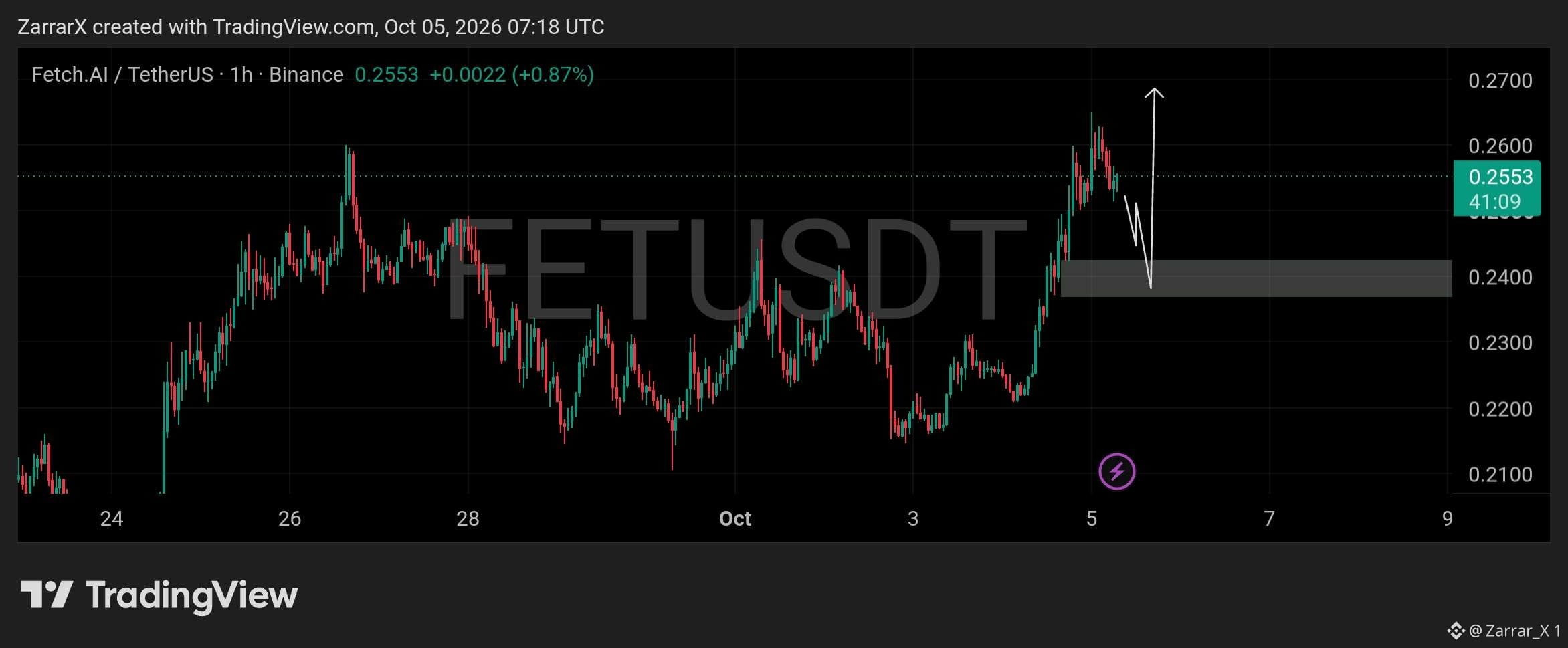
$FET ist im 1-Stunden-Chart kräftig gestiegen und kletterte aus dem Bereich um $0.2250 auf ein jüngstes Hoch bei etwa $0.2630, bevor der Kurs wieder in Richtung $0.2553 nachgab.
Der aktuelle Rücksetzer nähert sich der markierten Nachfragezone bei etwa $0.2370 – $0.2420. Sie liegt unterhalb des Ausbruchs und könnte als wichtige Retest-Zone dienen, falls der Verkaufsdruck anhält.
Ein tieferer Rücksetzer in diese Zone würde dem Markt nach der starken Aufwärtsbewegung Raum geben, sich neu auszurichten. Verteidigen die Käufer den Nachfragebereich, bleibt die Struktur günstig für einen weiteren Anstieg in Richtung der jüngsten Hochs und möglicherweise bis in den Bereich um $0.2700.
Ein anhaltender Rückgang unter $0.2380 würde die bullische Struktur schwächen und darauf hindeuten, dass der Ausbruch vor einem erneuten Anlauf nach oben eine tiefere Korrektur benötigt.
#FET #AI #MakroEinblicke#
$FET ist im 1-Stunden-Chart kräftig gestiegen und kletterte aus dem Bereich um $0.2250 auf ein jüngstes Hoch bei etwa $0.2630, bevor der Kurs wieder in Richtung $0.2553 nachgab.
Der aktuelle Rücksetzer nähert sich der markierten Nachfragezone bei etwa $0.2370 – $0.2420. Sie liegt unterhalb des Ausbruchs und könnte als wichtige Retest-Zone dienen, falls der Verkaufsdruck anhält.
Ein tieferer Rücksetzer in diese Zone würde dem Markt nach der starken Aufwärtsbewegung Raum geben, sich neu auszurichten. Verteidigen die Käufer den Nachfragebereich, bleibt die Struktur günstig für einen weiteren Anstieg in Richtung der jüngsten Hochs und möglicherweise bis in den Bereich um $0.2700.
Ein anhaltender Rückgang unter $0.2380 würde die bullische Struktur schwächen und darauf hindeuten, dass der Ausbruch vor einem erneuten Anlauf nach oben eine tiefere Korrektur benötigt.
#FET #AI #MakroEinblicke#
Der aktuelle Rücksetzer nähert sich der markierten Nachfragezone bei etwa $0.2370 – $0.2420. Sie liegt unterhalb des Ausbruchs und könnte als wichtige Retest-Zone dienen, falls der Verkaufsdruck anhält.
Ein tieferer Rücksetzer in diese Zone würde dem Markt nach der starken Aufwärtsbewegung Raum geben, sich neu auszurichten. Verteidigen die Käufer den Nachfragebereich, bleibt die Struktur günstig für einen weiteren Anstieg in Richtung der jüngsten Hochs und möglicherweise bis in den Bereich um $0.2700.
Ein anhaltender Rückgang unter $0.2380 würde die bullische Struktur schwächen und darauf hindeuten, dass der Ausbruch vor einem erneuten Anlauf nach oben eine tiefere Korrektur benötigt.
#FET #AI #MakroEinblicke#
46
·
--
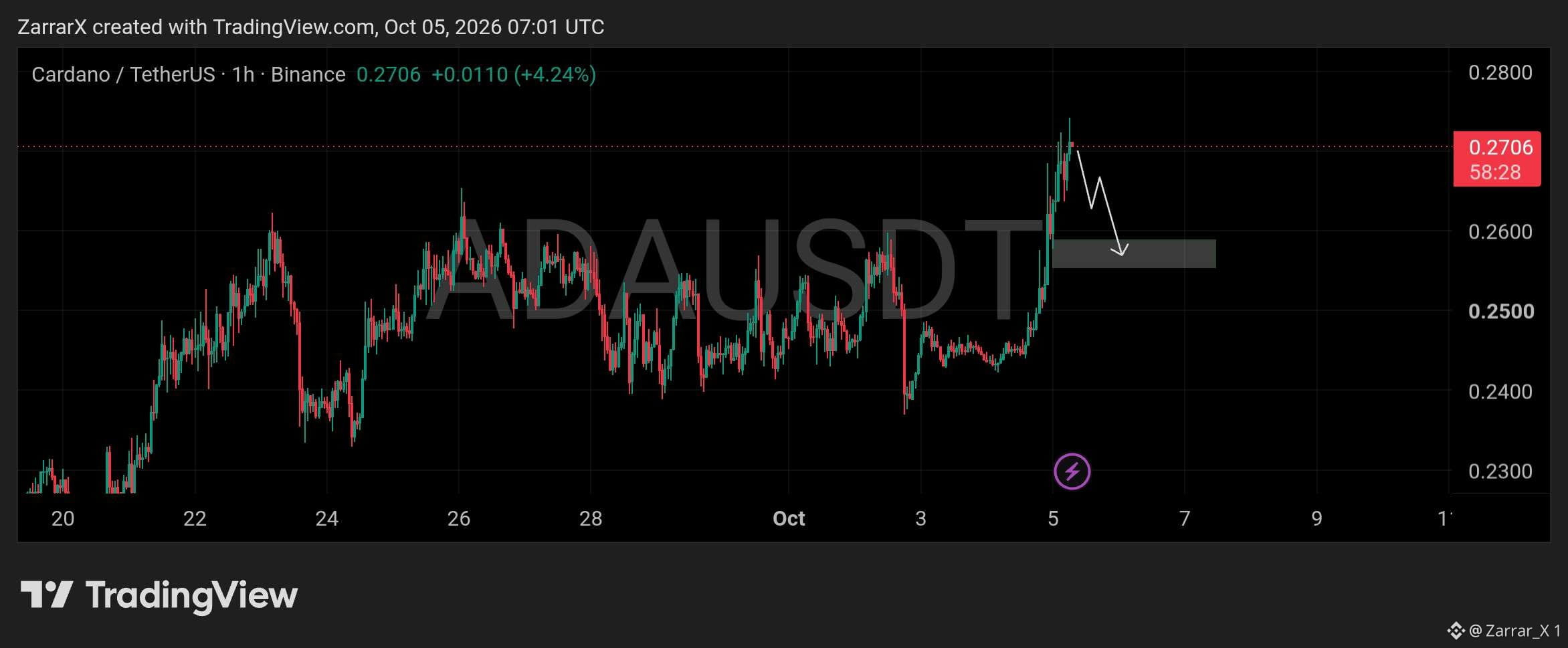
$ADA hat im 1-Stunden-Chart den oberen Bereich seiner vorherigen Handelsspanne durchbrochen und ist stark von etwa $0.2450 auf rund $0.2706 gestiegen.
Nach dieser starken Ausweitung zeigt der Kurs Anzeichen eines kurzfristigen Rücksetzers. Die markierte Nachfragezone um $0.255 – $0.260 ist dabei der wichtigste Bereich, den es im Hinblick auf einen möglichen erneuten Test zu beobachten gilt.
Ein kontrollierter Rücksetzer in diese Zone würde dem Markt eine Abkühlung ermöglichen und zeigen, ob der Ausbruch ausreichend Unterstützung hat. Hält die Zone, bleibt die bullische Struktur intakt.
Verteidigen die Käufer den Nachfragebereich, könnte die nächste Aufwärtsbewegung den Kurs zurück in Richtung $0.2750 und möglicherweise darüber hinaus treiben. Ein anhaltender Bruch unter die Zone würde hingegen die aktuelle Ausbruchsstruktur schwächen.
#ADA #Cardano #MakroEinblicke#
$ADA hat im 1-Stunden-Chart den oberen Bereich seiner vorherigen Handelsspanne durchbrochen und ist stark von etwa $0.2450 auf rund $0.2706 gestiegen.
Nach dieser starken Ausweitung zeigt der Kurs Anzeichen eines kurzfristigen Rücksetzers. Die markierte Nachfragezone um $0.255 – $0.260 ist dabei der wichtigste Bereich, den es im Hinblick auf einen möglichen erneuten Test zu beobachten gilt.
Ein kontrollierter Rücksetzer in diese Zone würde dem Markt eine Abkühlung ermöglichen und zeigen, ob der Ausbruch ausreichend Unterstützung hat. Hält die Zone, bleibt die bullische Struktur intakt.
Verteidigen die Käufer den Nachfragebereich, könnte die nächste Aufwärtsbewegung den Kurs zurück in Richtung $0.2750 und möglicherweise darüber hinaus treiben. Ein anhaltender Bruch unter die Zone würde hingegen die aktuelle Ausbruchsstruktur schwächen.
#ADA #Cardano #MakroEinblicke#
Nach dieser starken Ausweitung zeigt der Kurs Anzeichen eines kurzfristigen Rücksetzers. Die markierte Nachfragezone um $0.255 – $0.260 ist dabei der wichtigste Bereich, den es im Hinblick auf einen möglichen erneuten Test zu beobachten gilt.
Ein kontrollierter Rücksetzer in diese Zone würde dem Markt eine Abkühlung ermöglichen und zeigen, ob der Ausbruch ausreichend Unterstützung hat. Hält die Zone, bleibt die bullische Struktur intakt.
Verteidigen die Käufer den Nachfragebereich, könnte die nächste Aufwärtsbewegung den Kurs zurück in Richtung $0.2750 und möglicherweise darüber hinaus treiben. Ein anhaltender Bruch unter die Zone würde hingegen die aktuelle Ausbruchsstruktur schwächen.
#ADA #Cardano #MakroEinblicke#
63
·
--
NAHE INTENTS REKONSTRUIERT $3,8 MIO. NACH 48-STÜNDIGEM ULTIMATUM.
NEAR Intents sagt, dass die rund 3,8 Millionen Dollar, die bei dem Exploit am Donnerstag abgezogen wurden, vollständig zurückgegeben worden seien – nur einen Tag, nachdem der General Manager Alex Shevchenko dem Angreifer öffentlich mitgeteilt hatte: „Wir haben Sie identifiziert, Sir“, und ihm 48 Stunden Zeit gegeben hatte, die Gelder zurückzuerstatten.
Der Angreifer habe anschließend eine On-Chain-Nachricht gesendet, in der er erklärte, sie hätten „alle Gelder zurückgegeben“, und eingeräumt, dass sie im Unrecht waren, während sie andere dazu drängten, Bug-Bounties zu nutzen statt Schwachstellen auszunutzen.
NEAR Intents hatte seinen Dienst nach einem Fehler gestoppt, bei dem eine Schwachstelle in seiner Omni-Ein- und Auszahlungs-Layer dem Angreifer erlaubte, Gelder abzuziehen. Das Team sagte, es würde die betroffenen Nutzer vollständig entschädigen, und habe die Untersuchung nun nach der Wiedererlangung beendet.
$NEAR $BEAM #NEAR #Macro Insights# #Crypto
NAHE INTENTS REKONSTRUIERT $3,8 MIO. NACH 48-STÜNDIGEM ULTIMATUM.
NEAR Intents sagt, dass die rund 3,8 Millionen Dollar, die bei dem Exploit am Donnerstag abgezogen wurden, vollständig zurückgegeben worden seien – nur einen Tag, nachdem der General Manager Alex Shevchenko dem Angreifer öffentlich mitgeteilt hatte: „Wir haben Sie identifiziert, Sir“, und ihm 48 Stunden Zeit gegeben hatte, die Gelder zurückzuerstatten.
Der Angreifer habe anschließend eine On-Chain-Nachricht gesendet, in der er erklärte, sie hätten „alle Gelder zurückgegeben“, und eingeräumt, dass sie im Unrecht waren, während sie andere dazu drängten, Bug-Bounties zu nutzen statt Schwachstellen auszunutzen.
NEAR Intents hatte seinen Dienst nach einem Fehler gestoppt, bei dem eine Schwachstelle in seiner Omni-Ein- und Auszahlungs-Layer dem Angreifer erlaubte, Gelder abzuziehen. Das Team sagte, es würde die betroffenen Nutzer vollständig entschädigen, und habe die Untersuchung nun nach der Wiedererlangung beendet.
$NEAR $BEAM #NEAR #Macro Insights# #Crypto
NEAR Intents sagt, dass die rund 3,8 Millionen Dollar, die bei dem Exploit am Donnerstag abgezogen wurden, vollständig zurückgegeben worden seien – nur einen Tag, nachdem der General Manager Alex Shevchenko dem Angreifer öffentlich mitgeteilt hatte: „Wir haben Sie identifiziert, Sir“, und ihm 48 Stunden Zeit gegeben hatte, die Gelder zurückzuerstatten.
Der Angreifer habe anschließend eine On-Chain-Nachricht gesendet, in der er erklärte, sie hätten „alle Gelder zurückgegeben“, und eingeräumt, dass sie im Unrecht waren, während sie andere dazu drängten, Bug-Bounties zu nutzen statt Schwachstellen auszunutzen.
NEAR Intents hatte seinen Dienst nach einem Fehler gestoppt, bei dem eine Schwachstelle in seiner Omni-Ein- und Auszahlungs-Layer dem Angreifer erlaubte, Gelder abzuziehen. Das Team sagte, es würde die betroffenen Nutzer vollständig entschädigen, und habe die Untersuchung nun nach der Wiedererlangung beendet.
$NEAR $BEAM #NEAR #Macro Insights# #Crypto

50
·
--
BITCOIN VS. DAS iPHONE.
Wenn du seit 2016 jedes Jahr statt des neuesten iPhones Bitcoin gekauft hättest, wären die ungefähr 7.590 US-Dollar, die für diese Handys ausgegeben wurden, heute etwa 137.000 US-Dollar wert.
Ein einfacher Vergleich, aber er zeigt, wie drastisch Bitcoin eines der beliebtesten Konsumprodukte des vergangenen Jahrzehnts übertroffen hat.
$BTC $XDP #BTC Price Analysis# #Macro Insights# #Crypto
BITCOIN VS. DAS iPHONE.
Wenn du seit 2016 jedes Jahr statt des neuesten iPhones Bitcoin gekauft hättest, wären die ungefähr 7.590 US-Dollar, die für diese Handys ausgegeben wurden, heute etwa 137.000 US-Dollar wert.
Ein einfacher Vergleich, aber er zeigt, wie drastisch Bitcoin eines der beliebtesten Konsumprodukte des vergangenen Jahrzehnts übertroffen hat.
$BTC $XDP #BTC Price Analysis# #Macro Insights# #Crypto
Wenn du seit 2016 jedes Jahr statt des neuesten iPhones Bitcoin gekauft hättest, wären die ungefähr 7.590 US-Dollar, die für diese Handys ausgegeben wurden, heute etwa 137.000 US-Dollar wert.
Ein einfacher Vergleich, aber er zeigt, wie drastisch Bitcoin eines der beliebtesten Konsumprodukte des vergangenen Jahrzehnts übertroffen hat.
$BTC $XDP #BTC Price Analysis# #Macro Insights# #Crypto


65
·
--
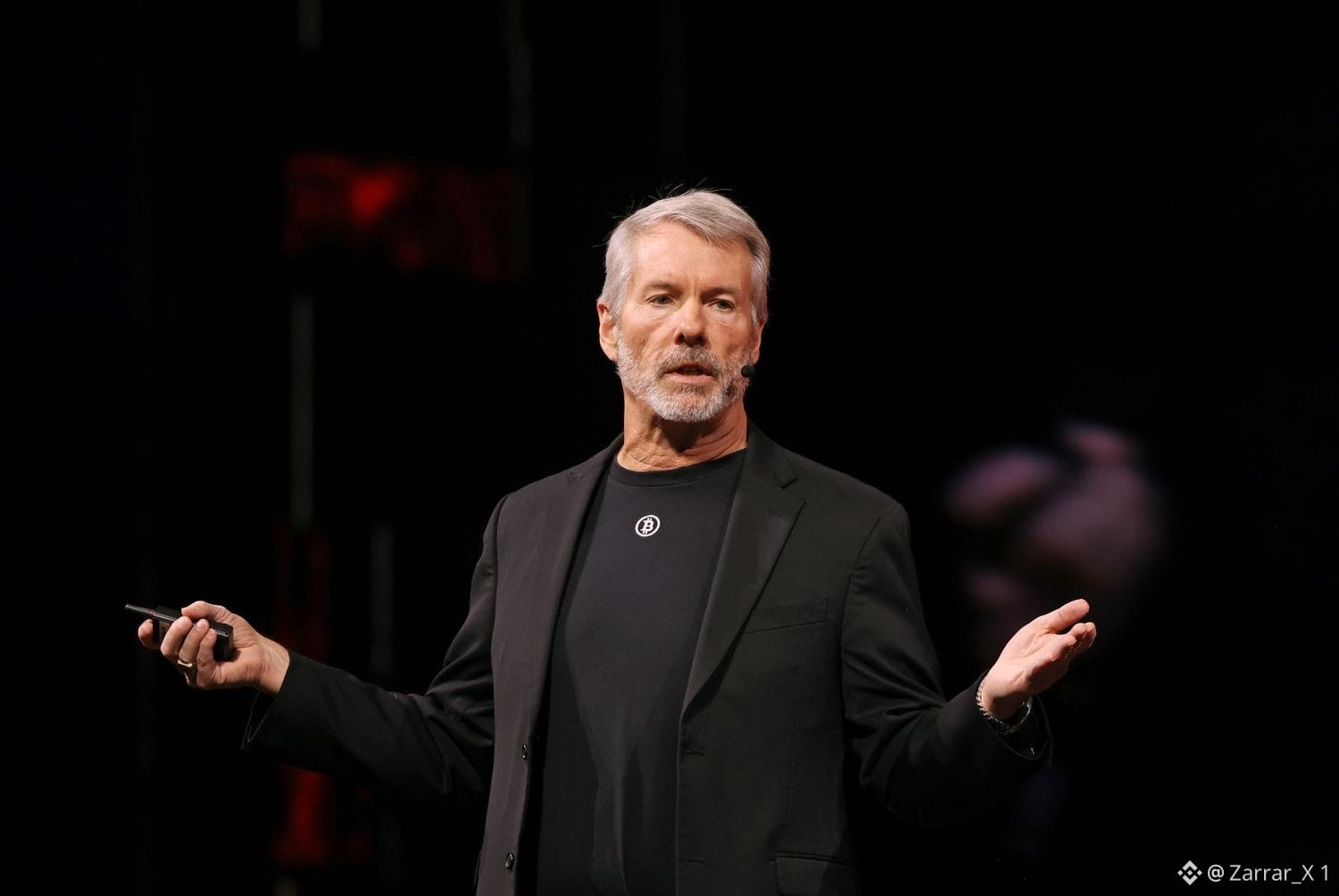
Saylor denkt, dass das Kapital möglicherweise wieder in Richtung Krypto rotiert.
Im Sommer investierten Institutionen einen großen Teil ihres Kapitals in den KI-Boom – mit Namen wie SpaceX, OpenAI, Anthropic, Nvidia und Rechenzentren, die massive Investitionen anziehen, während Krypto in den Hintergrund rückte.
Doch Kapital ist nicht unbegrenzt. Wenn selbst ein Bruchteil dieses institutionellen Geldes wieder in digitale Vermögenswerte fließt, könnte sich die Verschiebung der Liquidität zunehmend in den Kryptomärkten bemerkbar machen.
Für den Moment ist die entscheidende Frage, ob der KI-getriebene Kapitalzyklus anfängt abzukühlen und ob Krypto zur nächsten Destination für institutionelle Zuflüsse wird.
$BTC $STRK #BTC Price Analysis# #STRK #Macro Insights#
Saylor denkt, dass das Kapital möglicherweise wieder in Richtung Krypto rotiert.
Im Sommer investierten Institutionen einen großen Teil ihres Kapitals in den KI-Boom – mit Namen wie SpaceX, OpenAI, Anthropic, Nvidia und Rechenzentren, die massive Investitionen anziehen, während Krypto in den Hintergrund rückte.
Doch Kapital ist nicht unbegrenzt. Wenn selbst ein Bruchteil dieses institutionellen Geldes wieder in digitale Vermögenswerte fließt, könnte sich die Verschiebung der Liquidität zunehmend in den Kryptomärkten bemerkbar machen.
Für den Moment ist die entscheidende Frage, ob der KI-getriebene Kapitalzyklus anfängt abzukühlen und ob Krypto zur nächsten Destination für institutionelle Zuflüsse wird.
$BTC $STRK #BTC Price Analysis# #STRK #Macro Insights#
Im Sommer investierten Institutionen einen großen Teil ihres Kapitals in den KI-Boom – mit Namen wie SpaceX, OpenAI, Anthropic, Nvidia und Rechenzentren, die massive Investitionen anziehen, während Krypto in den Hintergrund rückte.
Doch Kapital ist nicht unbegrenzt. Wenn selbst ein Bruchteil dieses institutionellen Geldes wieder in digitale Vermögenswerte fließt, könnte sich die Verschiebung der Liquidität zunehmend in den Kryptomärkten bemerkbar machen.
Für den Moment ist die entscheidende Frage, ob der KI-getriebene Kapitalzyklus anfängt abzukühlen und ob Krypto zur nächsten Destination für institutionelle Zuflüsse wird.
$BTC $STRK #BTC Price Analysis# #STRK #Macro Insights#
28
·
--
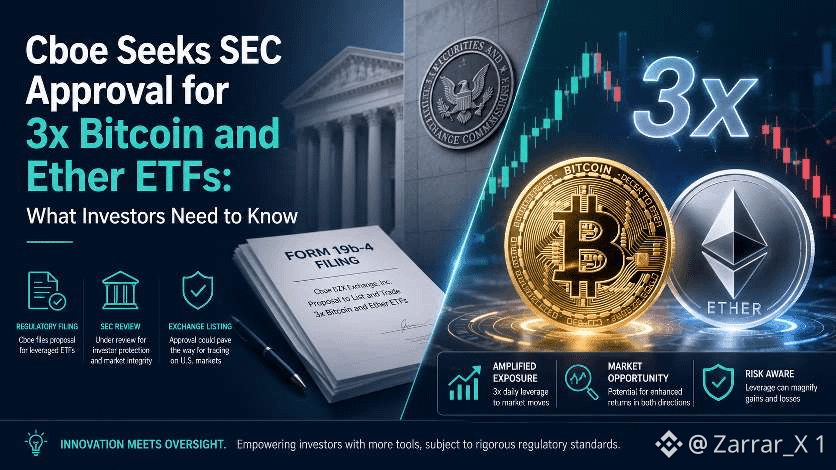
SOFORT: SEC genehmigt 3x gehebelte ETPs für Bitcoin, Ethereum und Rohstoffe
Die US-SEC hat die Regeländerung von Cboe BZX genehmigt, um sechs 3x gehebelte börsengehandelte Produkte (ETPs) zu listen, die an Bitcoin, Ethereum, Gold, Silber, Rohöl und Erdgas gekoppelt sind. Die Genehmigung wurde am 2. Oktober erteilt, wobei der Bloomberg-ETF-Analyst Eric Balchunas die Entscheidung hervorhob.
Die Bitcoin- und Ethereum-Produkte sind darauf ausgelegt, das Dreifache der täglichen Wertentwicklung ihrer jeweiligen Benchmarks abzubilden – mithilfe eines futuresbasierten Exposures statt durch den direkten Besitz der zugrunde liegenden Vermögenswerte. Die Genehmigung bedeutet jedoch nicht zwangsläufig, dass der Handel sofort startet; die zugehörige Registrierungsanmeldung muss erst wirksam werden, bevor die Produkte mit dem Handel beginnen können.
$XDP $BTC #BTC Preisanalyse# #Makro-Insights# #Krypto
SOFORT: SEC genehmigt 3x gehebelte ETPs für Bitcoin, Ethereum und Rohstoffe
Die US-SEC hat die Regeländerung von Cboe BZX genehmigt, um sechs 3x gehebelte börsengehandelte Produkte (ETPs) zu listen, die an Bitcoin, Ethereum, Gold, Silber, Rohöl und Erdgas gekoppelt sind. Die Genehmigung wurde am 2. Oktober erteilt, wobei der Bloomberg-ETF-Analyst Eric Balchunas die Entscheidung hervorhob.
Die Bitcoin- und Ethereum-Produkte sind darauf ausgelegt, das Dreifache der täglichen Wertentwicklung ihrer jeweiligen Benchmarks abzubilden – mithilfe eines futuresbasierten Exposures statt durch den direkten Besitz der zugrunde liegenden Vermögenswerte. Die Genehmigung bedeutet jedoch nicht zwangsläufig, dass der Handel sofort startet; die zugehörige Registrierungsanmeldung muss erst wirksam werden, bevor die Produkte mit dem Handel beginnen können.
$XDP $BTC #BTC Preisanalyse# #Makro-Insights# #Krypto
Die US-SEC hat die Regeländerung von Cboe BZX genehmigt, um sechs 3x gehebelte börsengehandelte Produkte (ETPs) zu listen, die an Bitcoin, Ethereum, Gold, Silber, Rohöl und Erdgas gekoppelt sind. Die Genehmigung wurde am 2. Oktober erteilt, wobei der Bloomberg-ETF-Analyst Eric Balchunas die Entscheidung hervorhob.
Die Bitcoin- und Ethereum-Produkte sind darauf ausgelegt, das Dreifache der täglichen Wertentwicklung ihrer jeweiligen Benchmarks abzubilden – mithilfe eines futuresbasierten Exposures statt durch den direkten Besitz der zugrunde liegenden Vermögenswerte. Die Genehmigung bedeutet jedoch nicht zwangsläufig, dass der Handel sofort startet; die zugehörige Registrierungsanmeldung muss erst wirksam werden, bevor die Produkte mit dem Handel beginnen können.
$XDP $BTC #BTC Preisanalyse# #Makro-Insights# #Krypto
32
·
--
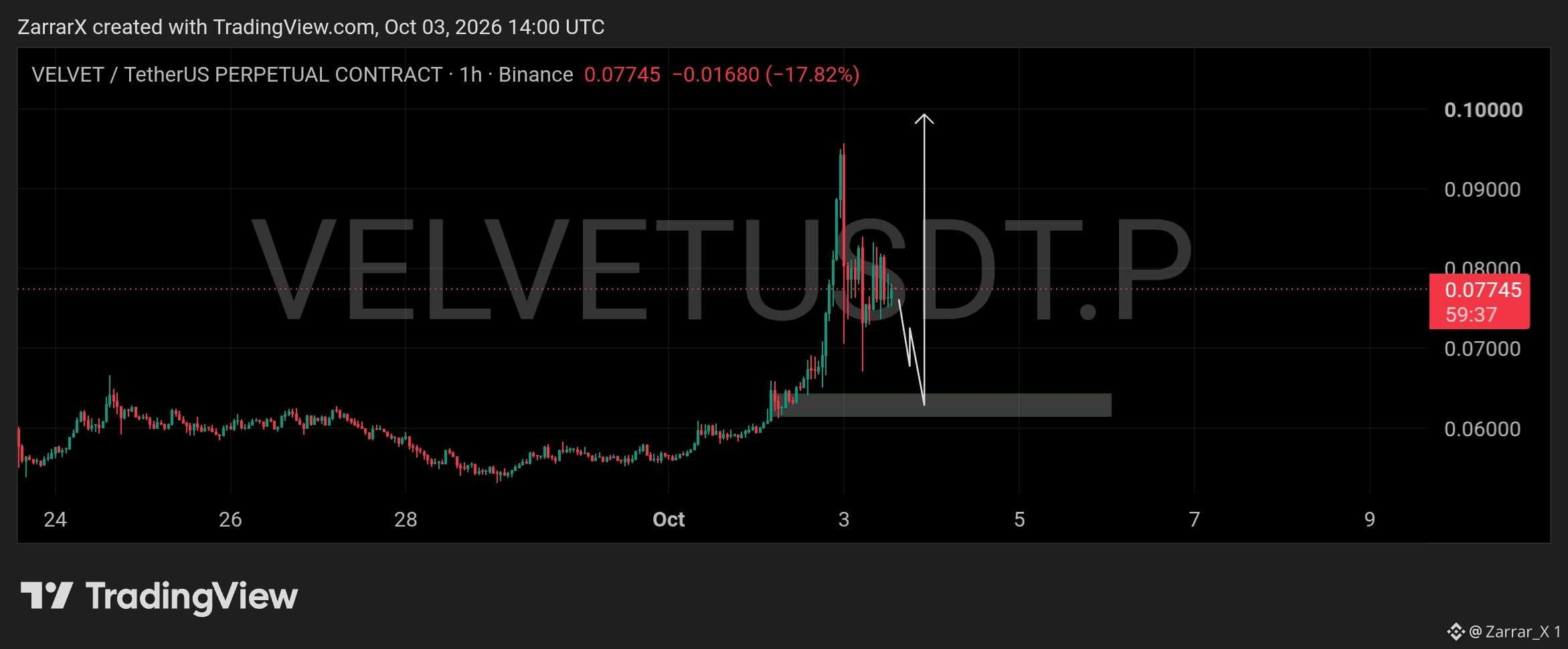
$VELVET hat sich nach seinem scharfen 1-Stunden-Ausbruch abgekühlt, wobei der Kurs nun um $0.0775 herum konsolidiert, nachdem die Abweisung aus dem Bereich $0.0950 erfolgt ist.
Der Rücksetzer bringt den Kurs näher an die markierte Nachfragespanne bei etwa $0.0615 – $0.0640, die unterhalb der aktuellen Konsolidierung liegt und bei Fortsetzung des Retracements zum Hauptfokus werden könnte.
Ein tieferer Abtastversuch in diese Nachfragespanne würde es dem Markt ermöglichen, die Ausbruch-Basis erneut zu testen und möglicherweise genug Unterstützung aufzubauen, um eine weitere Aufwärtsausdehnung zu ermöglichen.
Wenn Käufer die Zone verteidigen, könnte der nächste Aufwärtsimpuls das vorherige Spike-Niveau um $0.0950 anpeilen; ein Break über diese Marke würde den Weg in Richtung der $0.1000-Region eröffnen.
#VelvetFoundersClub #Macro Insights# #Altcoin Season#
$VELVET hat sich nach seinem scharfen 1-Stunden-Ausbruch abgekühlt, wobei der Kurs nun um $0.0775 herum konsolidiert, nachdem die Abweisung aus dem Bereich $0.0950 erfolgt ist.
Der Rücksetzer bringt den Kurs näher an die markierte Nachfragespanne bei etwa $0.0615 – $0.0640, die unterhalb der aktuellen Konsolidierung liegt und bei Fortsetzung des Retracements zum Hauptfokus werden könnte.
Ein tieferer Abtastversuch in diese Nachfragespanne würde es dem Markt ermöglichen, die Ausbruch-Basis erneut zu testen und möglicherweise genug Unterstützung aufzubauen, um eine weitere Aufwärtsausdehnung zu ermöglichen.
Wenn Käufer die Zone verteidigen, könnte der nächste Aufwärtsimpuls das vorherige Spike-Niveau um $0.0950 anpeilen; ein Break über diese Marke würde den Weg in Richtung der $0.1000-Region eröffnen.
#VelvetFoundersClub #Macro Insights# #Altcoin Season#
Der Rücksetzer bringt den Kurs näher an die markierte Nachfragespanne bei etwa $0.0615 – $0.0640, die unterhalb der aktuellen Konsolidierung liegt und bei Fortsetzung des Retracements zum Hauptfokus werden könnte.
Ein tieferer Abtastversuch in diese Nachfragespanne würde es dem Markt ermöglichen, die Ausbruch-Basis erneut zu testen und möglicherweise genug Unterstützung aufzubauen, um eine weitere Aufwärtsausdehnung zu ermöglichen.
Wenn Käufer die Zone verteidigen, könnte der nächste Aufwärtsimpuls das vorherige Spike-Niveau um $0.0950 anpeilen; ein Break über diese Marke würde den Weg in Richtung der $0.1000-Region eröffnen.
#VelvetFoundersClub #Macro Insights# #Altcoin Season#
39
·
--
SOFORT: Ein Bundesrichter blockiert Illinois vorübergehend daran, Sports-Betting-Regeln gegen Kalshi durchzusetzen
Ein Bundesrichter hat Kalshis Antrag auf eine einstweilige Verfügung teilweise stattgegeben und Illinois vorübergehend daran gehindert, seine Sportwetten-Lizenzanforderungen sowie damit verbundene strafrechtliche Sanktionen gegen Kalshis Sportereignis-Verträge durchzusetzen. In der Entscheidung wurde festgestellt, dass die Verträge voraussichtlich vom Bundesrecht für Rohstoffe erfasst sind und dass die staatlichen Anforderungen möglicherweise verdrängt werden.
Das Gericht hat jedoch nicht alle Fragen abschließend geklärt. Illinois’ Gebühren und bestimmte andere Abgaben bleiben weiterhin in Prüfung, was bedeutet, dass der umfassendere Rechtsstreit darüber, ob Bundesstaaten Vorhersagemarkt-Sportverträge regulieren können, noch andauert.
$BTC #BTC Price Analysis# #Macro Insights# #Crypto
SOFORT: Ein Bundesrichter blockiert Illinois vorübergehend daran, Sports-Betting-Regeln gegen Kalshi durchzusetzen
Ein Bundesrichter hat Kalshis Antrag auf eine einstweilige Verfügung teilweise stattgegeben und Illinois vorübergehend daran gehindert, seine Sportwetten-Lizenzanforderungen sowie damit verbundene strafrechtliche Sanktionen gegen Kalshis Sportereignis-Verträge durchzusetzen. In der Entscheidung wurde festgestellt, dass die Verträge voraussichtlich vom Bundesrecht für Rohstoffe erfasst sind und dass die staatlichen Anforderungen möglicherweise verdrängt werden.
Das Gericht hat jedoch nicht alle Fragen abschließend geklärt. Illinois’ Gebühren und bestimmte andere Abgaben bleiben weiterhin in Prüfung, was bedeutet, dass der umfassendere Rechtsstreit darüber, ob Bundesstaaten Vorhersagemarkt-Sportverträge regulieren können, noch andauert.
$BTC #BTC Price Analysis# #Macro Insights# #Crypto
Ein Bundesrichter hat Kalshis Antrag auf eine einstweilige Verfügung teilweise stattgegeben und Illinois vorübergehend daran gehindert, seine Sportwetten-Lizenzanforderungen sowie damit verbundene strafrechtliche Sanktionen gegen Kalshis Sportereignis-Verträge durchzusetzen. In der Entscheidung wurde festgestellt, dass die Verträge voraussichtlich vom Bundesrecht für Rohstoffe erfasst sind und dass die staatlichen Anforderungen möglicherweise verdrängt werden.
Das Gericht hat jedoch nicht alle Fragen abschließend geklärt. Illinois’ Gebühren und bestimmte andere Abgaben bleiben weiterhin in Prüfung, was bedeutet, dass der umfassendere Rechtsstreit darüber, ob Bundesstaaten Vorhersagemarkt-Sportverträge regulieren können, noch andauert.
$BTC #BTC Price Analysis# #Macro Insights# #Crypto


56
·
--
SOFORT: Trump sagt, die USA werden kein Diesel-Exportverbot verhängen
Präsident Donald Trump erklärte am Freitag, die USA würden kein Verbot für Diesel-Exporte verhängen und damit wochenlange Unsicherheit rückgängig machen, ob Washington Auslandsverladungen einschränken würde, während die Treibstoffpreise stark anstiegen.
Die Ankündigung erfolgte, nachdem die G7-Staaten vereinbart hatten, 100 Millionen Barrel Rohöl und Diesel aus Notreserven freizugeben, wobei ein erheblicher Teil des Diesels in den ersten 20 Tagen freigegeben werden soll. Die G7 sagte außerdem zu, auf Energien exportbezogene Einschränkungen zwischen den Mitgliedsländern zu verzichten.
$XAUt $BTC #BTC Price Analysis# #Macro Insights# #diesel
SOFORT: Trump sagt, die USA werden kein Diesel-Exportverbot verhängen
Präsident Donald Trump erklärte am Freitag, die USA würden kein Verbot für Diesel-Exporte verhängen und damit wochenlange Unsicherheit rückgängig machen, ob Washington Auslandsverladungen einschränken würde, während die Treibstoffpreise stark anstiegen.
Die Ankündigung erfolgte, nachdem die G7-Staaten vereinbart hatten, 100 Millionen Barrel Rohöl und Diesel aus Notreserven freizugeben, wobei ein erheblicher Teil des Diesels in den ersten 20 Tagen freigegeben werden soll. Die G7 sagte außerdem zu, auf Energien exportbezogene Einschränkungen zwischen den Mitgliedsländern zu verzichten.
$XAUt $BTC #BTC Price Analysis# #Macro Insights# #diesel
Präsident Donald Trump erklärte am Freitag, die USA würden kein Verbot für Diesel-Exporte verhängen und damit wochenlange Unsicherheit rückgängig machen, ob Washington Auslandsverladungen einschränken würde, während die Treibstoffpreise stark anstiegen.
Die Ankündigung erfolgte, nachdem die G7-Staaten vereinbart hatten, 100 Millionen Barrel Rohöl und Diesel aus Notreserven freizugeben, wobei ein erheblicher Teil des Diesels in den ersten 20 Tagen freigegeben werden soll. Die G7 sagte außerdem zu, auf Energien exportbezogene Einschränkungen zwischen den Mitgliedsländern zu verzichten.
$XAUt $BTC #BTC Price Analysis# #Macro Insights# #diesel
62
·
--
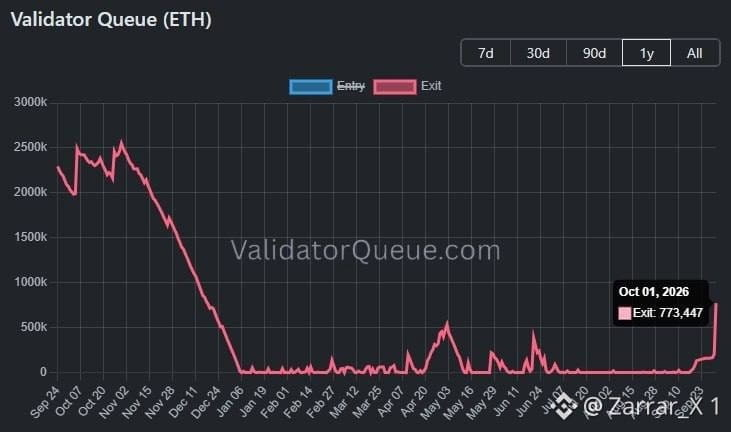
Ethiereums Exit-Queue erreicht 2026er-Hoch.
Die Ethereum-Staking-Exit-Queue ist auf 773.447 ETH gestiegen, den höchsten Stand in diesem Jahr bisher. Das signalisiert einen deutlichen Anstieg der Menge an ETH, die darauf wartet, aus dem Staking zurückgezogen zu werden.
Diese Zahl bedeutet nicht, dass all diese ETH sofort verkauft wird. Validatoren müssen noch immer den Exit- und Auszahlungsprozess von Ethereum durchlaufen, das heißt: Die Queue steht für ETH, das das Staking verlassen möchte – nicht für bestätigtes Marktselling.
$ETH $BTC. #BTC Price Analysis# #ETH #Macro Insights#
Ethiereums Exit-Queue erreicht 2026er-Hoch.
Die Ethereum-Staking-Exit-Queue ist auf 773.447 ETH gestiegen, den höchsten Stand in diesem Jahr bisher. Das signalisiert einen deutlichen Anstieg der Menge an ETH, die darauf wartet, aus dem Staking zurückgezogen zu werden.
Diese Zahl bedeutet nicht, dass all diese ETH sofort verkauft wird. Validatoren müssen noch immer den Exit- und Auszahlungsprozess von Ethereum durchlaufen, das heißt: Die Queue steht für ETH, das das Staking verlassen möchte – nicht für bestätigtes Marktselling.
$ETH $BTC. #BTC Price Analysis# #ETH #Macro Insights#
Die Ethereum-Staking-Exit-Queue ist auf 773.447 ETH gestiegen, den höchsten Stand in diesem Jahr bisher. Das signalisiert einen deutlichen Anstieg der Menge an ETH, die darauf wartet, aus dem Staking zurückgezogen zu werden.
Diese Zahl bedeutet nicht, dass all diese ETH sofort verkauft wird. Validatoren müssen noch immer den Exit- und Auszahlungsprozess von Ethereum durchlaufen, das heißt: Die Queue steht für ETH, das das Staking verlassen möchte – nicht für bestätigtes Marktselling.
$ETH $BTC. #BTC Price Analysis# #ETH #Macro Insights#
·
--
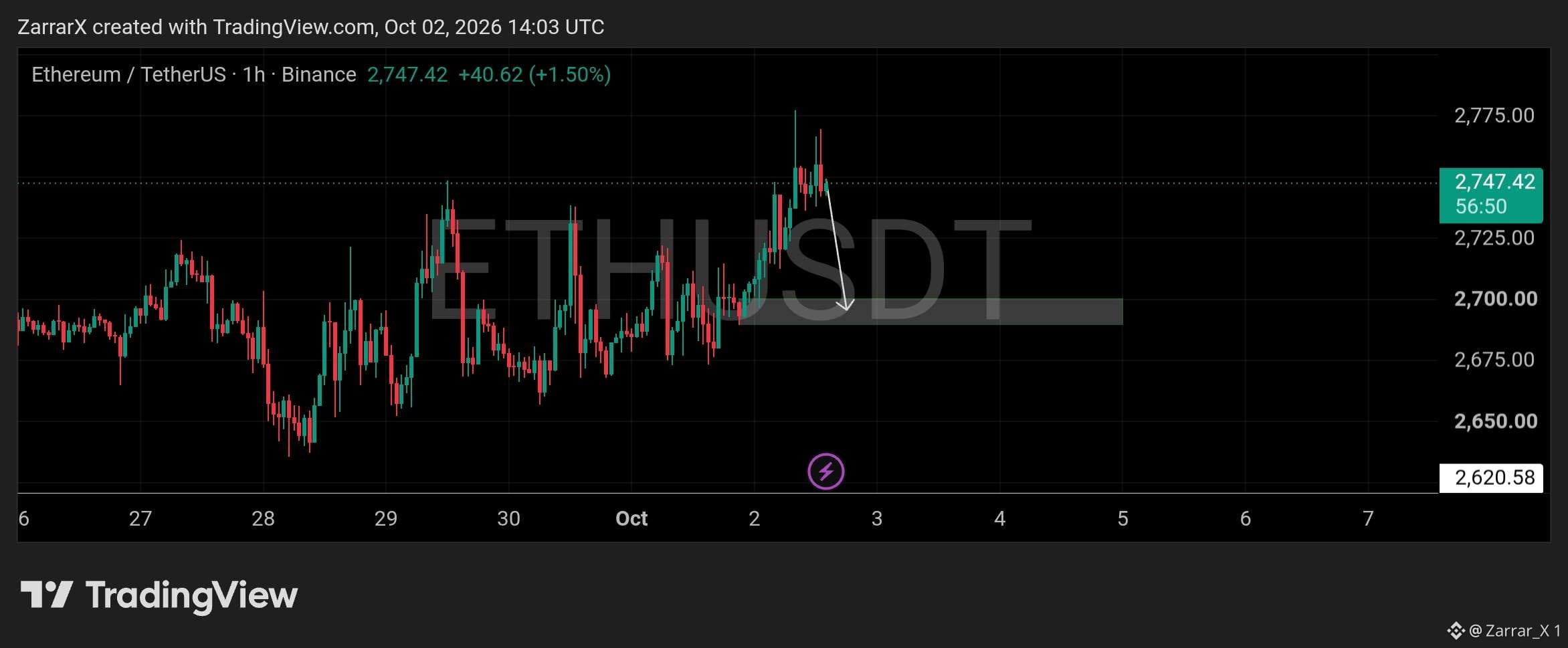
$ETH hat den jüngsten 1-Stunden-Bereich durchbrochen und sich in Richtung der $2.775-Region bewegt, bevor es leicht zurückkam. Der Ausbruch hat den kurzfristigen Schwung nach oben verlagert, aber der Kurs befindet sich nun in einer Pullback-Phase.
Die markierte Nachfragezone um $2.690 – $2.700 ist der entscheidende Bereich, den man beim Rücklauf beobachten sollte. Ein Anlaufen dieser Stufe würde die Ausbruchsstruktur erneut testen und könnte die Liquidität liefern, die für einen weiteren Anstieg nötig ist.
Wenn Käufer die Zone verteidigen, lässt die aktuelle Struktur Raum für einen weiteren Vorstoß in Richtung der $2.775-Region und möglicherweise darüber hinaus. Ein anhaltender Verlust von $2.690 würde die unmittelbare bullische Struktur schwächen.
#ETH #Macro Insights# #BTC Price Analysis#
$ETH hat den jüngsten 1-Stunden-Bereich durchbrochen und sich in Richtung der $2.775-Region bewegt, bevor es leicht zurückkam. Der Ausbruch hat den kurzfristigen Schwung nach oben verlagert, aber der Kurs befindet sich nun in einer Pullback-Phase.
Die markierte Nachfragezone um $2.690 – $2.700 ist der entscheidende Bereich, den man beim Rücklauf beobachten sollte. Ein Anlaufen dieser Stufe würde die Ausbruchsstruktur erneut testen und könnte die Liquidität liefern, die für einen weiteren Anstieg nötig ist.
Wenn Käufer die Zone verteidigen, lässt die aktuelle Struktur Raum für einen weiteren Vorstoß in Richtung der $2.775-Region und möglicherweise darüber hinaus. Ein anhaltender Verlust von $2.690 würde die unmittelbare bullische Struktur schwächen.
#ETH #Macro Insights# #BTC Price Analysis#
Die markierte Nachfragezone um $2.690 – $2.700 ist der entscheidende Bereich, den man beim Rücklauf beobachten sollte. Ein Anlaufen dieser Stufe würde die Ausbruchsstruktur erneut testen und könnte die Liquidität liefern, die für einen weiteren Anstieg nötig ist.
Wenn Käufer die Zone verteidigen, lässt die aktuelle Struktur Raum für einen weiteren Vorstoß in Richtung der $2.775-Region und möglicherweise darüber hinaus. Ein anhaltender Verlust von $2.690 würde die unmittelbare bullische Struktur schwächen.
#ETH #Macro Insights# #BTC Price Analysis#
25
·
--
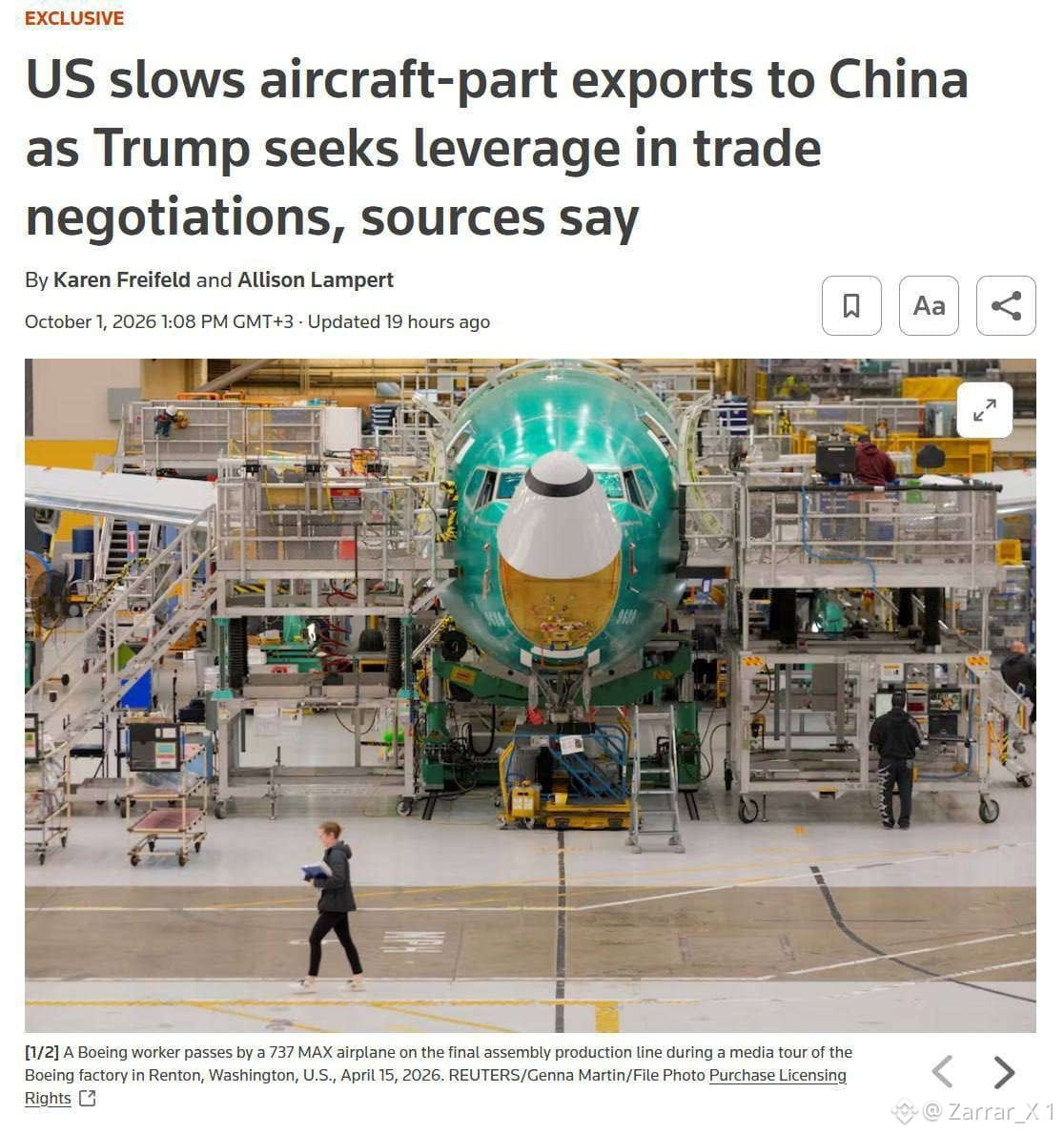
Die USA bremsen Ausfuhr von Flugzeugteilen nach China ab, während die Handelsspannungen steigen
Das US-Handelsministerium hat Berichten zufolge die Exportgenehmigungen für Flugzeugteile, die nach China gehen, verlangsamt. Betroffen sind demnach unter anderem Komponenten wie Fahrwerke und Luftfahrt-Hydraulikflüssigkeit; die Maßnahmen sollen außerdem darauf abzielen, zu verhindern, dass der chinesische staatseigene Flugzeughersteller COMAC Teile auf Vorrat anlegt.
Der Schritt wird als Druckmittel in umfassenderen US-Chinaverhandlungen im Handel genutzt, insbesondere während Washington einen besseren Zugang zu Chinas Seltenen-Erden-Rohstoffen anstrebt. Er fügt eine weitere Ebene zur anhaltenden Handelsstreitigkeit zwischen den beiden Ländern hinzu, wobei der Luftfahrtsektor inzwischen Teil des Verhandlungsschwerpunkts wird.
$BTC #BTC Price Analysis# #Macro Insights# #Crypto
Die USA bremsen Ausfuhr von Flugzeugteilen nach China ab, während die Handelsspannungen steigen
Das US-Handelsministerium hat Berichten zufolge die Exportgenehmigungen für Flugzeugteile, die nach China gehen, verlangsamt. Betroffen sind demnach unter anderem Komponenten wie Fahrwerke und Luftfahrt-Hydraulikflüssigkeit; die Maßnahmen sollen außerdem darauf abzielen, zu verhindern, dass der chinesische staatseigene Flugzeughersteller COMAC Teile auf Vorrat anlegt.
Der Schritt wird als Druckmittel in umfassenderen US-Chinaverhandlungen im Handel genutzt, insbesondere während Washington einen besseren Zugang zu Chinas Seltenen-Erden-Rohstoffen anstrebt. Er fügt eine weitere Ebene zur anhaltenden Handelsstreitigkeit zwischen den beiden Ländern hinzu, wobei der Luftfahrtsektor inzwischen Teil des Verhandlungsschwerpunkts wird.
$BTC #BTC Price Analysis# #Macro Insights# #Crypto
Das US-Handelsministerium hat Berichten zufolge die Exportgenehmigungen für Flugzeugteile, die nach China gehen, verlangsamt. Betroffen sind demnach unter anderem Komponenten wie Fahrwerke und Luftfahrt-Hydraulikflüssigkeit; die Maßnahmen sollen außerdem darauf abzielen, zu verhindern, dass der chinesische staatseigene Flugzeughersteller COMAC Teile auf Vorrat anlegt.
Der Schritt wird als Druckmittel in umfassenderen US-Chinaverhandlungen im Handel genutzt, insbesondere während Washington einen besseren Zugang zu Chinas Seltenen-Erden-Rohstoffen anstrebt. Er fügt eine weitere Ebene zur anhaltenden Handelsstreitigkeit zwischen den beiden Ländern hinzu, wobei der Luftfahrtsektor inzwischen Teil des Verhandlungsschwerpunkts wird.
$BTC #BTC Price Analysis# #Macro Insights# #Crypto
25
·
--
NEAR Intents wurde Berichten zufolge ausgenutzt.
Der On-Chain-Ermittler ZachXBT sagt, dass NEAR Intents ausgenutzt wurde. Auf der Statusseite des Projekts ist ein laufender Vorfall zu sehen, der mehrere EVM-Ketten betrifft.
Das Ausmaß des Vorfalls, der Angriffspfad und die Höhe der betroffenen Gelder wurden bislang noch nicht vollständig bestätigt. Nutzer sollten die Aktivitäten von NEAR Intents während der laufenden Untersuchung mit Vorsicht behandeln.
$NEAR $ZEC #Macro Insights# #NEAR #Altcoin Season#
NEAR Intents wurde Berichten zufolge ausgenutzt.
Der On-Chain-Ermittler ZachXBT sagt, dass NEAR Intents ausgenutzt wurde. Auf der Statusseite des Projekts ist ein laufender Vorfall zu sehen, der mehrere EVM-Ketten betrifft.
Das Ausmaß des Vorfalls, der Angriffspfad und die Höhe der betroffenen Gelder wurden bislang noch nicht vollständig bestätigt. Nutzer sollten die Aktivitäten von NEAR Intents während der laufenden Untersuchung mit Vorsicht behandeln.
$NEAR $ZEC #Macro Insights# #NEAR #Altcoin Season#
Der On-Chain-Ermittler ZachXBT sagt, dass NEAR Intents ausgenutzt wurde. Auf der Statusseite des Projekts ist ein laufender Vorfall zu sehen, der mehrere EVM-Ketten betrifft.
Das Ausmaß des Vorfalls, der Angriffspfad und die Höhe der betroffenen Gelder wurden bislang noch nicht vollständig bestätigt. Nutzer sollten die Aktivitäten von NEAR Intents während der laufenden Untersuchung mit Vorsicht behandeln.
$NEAR $ZEC #Macro Insights# #NEAR #Altcoin Season#

41
·
--
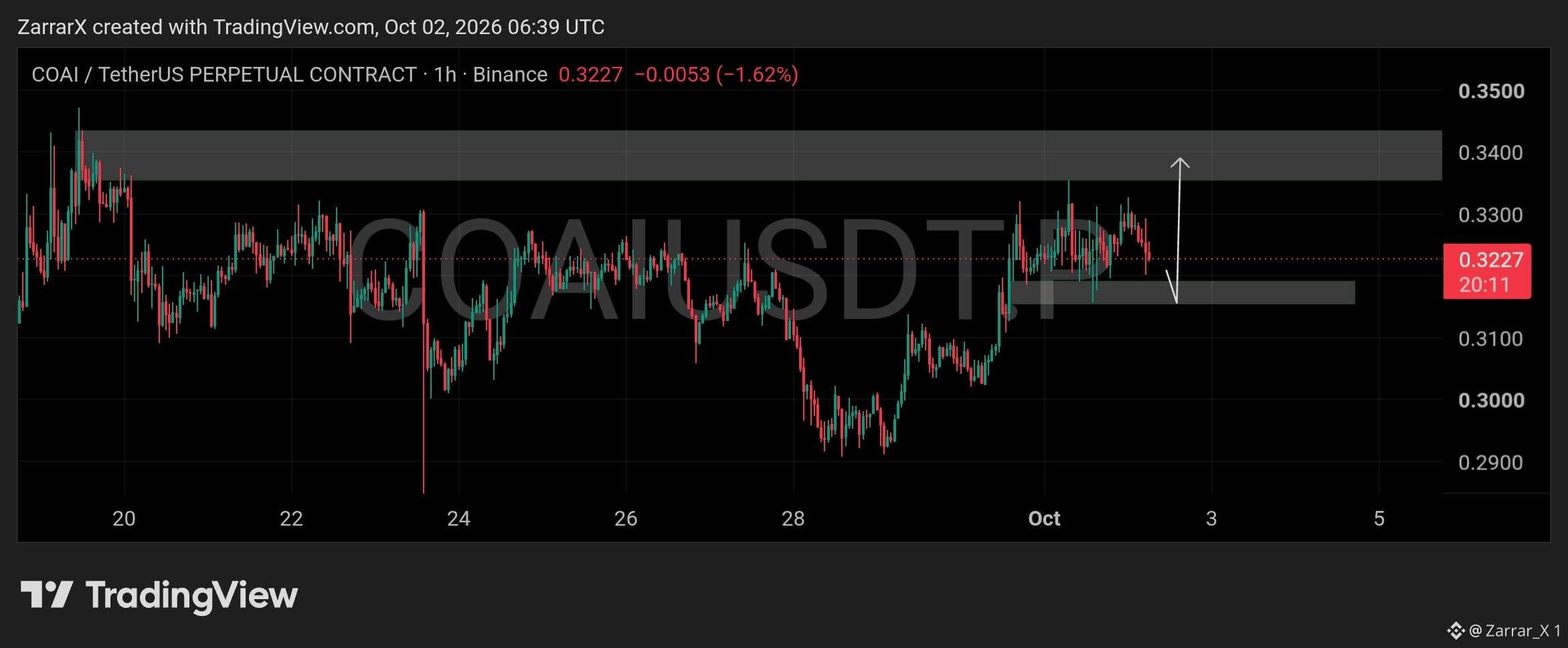
$COAI bewegt sich seit einiger Zeit innerhalb einer definierten 1-Stunden-Spanne und prallt vom $0.2900-Swing-Tief ab, bevor es nach oben Richtung $0.3227 drückt. Der Kurs kühlt sich jetzt nach dieser Bewegung ab.
Der aktuelle Rücksetzer nähert sich der markierten Nachfragespanne bei etwa $0.3150 – $0.3180, während das größere Aufwärtspotenzial weiterhin durch ein Angebot bei $0.3380 – $0.3450 gedeckelt bleibt.
Ein Sweep in die Zone $0.3150 – $0.3190 könnte den nächsten Liquiditätstest auslösen, bevor es zu einem weiteren Anstieg kommt. Wenn Käufer diesen Bereich verteidigen, zeigt der Fahrplan zurück in Richtung der $0.3400-Resistance-Region.
#Altcoin Season# #BNBChain# #Crypto
$COAI bewegt sich seit einiger Zeit innerhalb einer definierten 1-Stunden-Spanne und prallt vom $0.2900-Swing-Tief ab, bevor es nach oben Richtung $0.3227 drückt. Der Kurs kühlt sich jetzt nach dieser Bewegung ab.
Der aktuelle Rücksetzer nähert sich der markierten Nachfragespanne bei etwa $0.3150 – $0.3180, während das größere Aufwärtspotenzial weiterhin durch ein Angebot bei $0.3380 – $0.3450 gedeckelt bleibt.
Ein Sweep in die Zone $0.3150 – $0.3190 könnte den nächsten Liquiditätstest auslösen, bevor es zu einem weiteren Anstieg kommt. Wenn Käufer diesen Bereich verteidigen, zeigt der Fahrplan zurück in Richtung der $0.3400-Resistance-Region.
#Altcoin Season# #BNBChain# #Crypto
Der aktuelle Rücksetzer nähert sich der markierten Nachfragespanne bei etwa $0.3150 – $0.3180, während das größere Aufwärtspotenzial weiterhin durch ein Angebot bei $0.3380 – $0.3450 gedeckelt bleibt.
Ein Sweep in die Zone $0.3150 – $0.3190 könnte den nächsten Liquiditätstest auslösen, bevor es zu einem weiteren Anstieg kommt. Wenn Käufer diesen Bereich verteidigen, zeigt der Fahrplan zurück in Richtung der $0.3400-Resistance-Region.
#Altcoin Season# #BNBChain# #Crypto
66
·
--
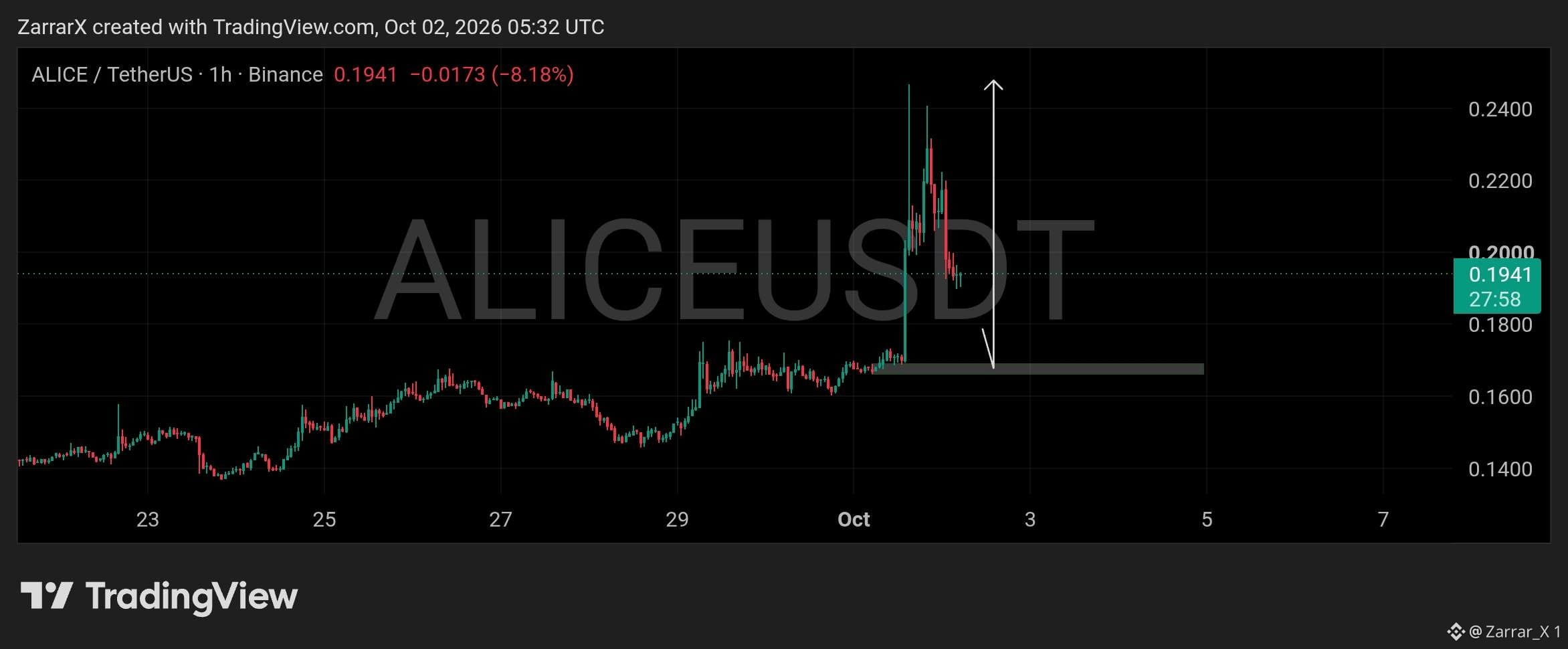
$ALICE drückte sich durch einen scharfen 1-Stunden-Breakout und erreichte etwa $0.2450, bevor es zu einem Pullback kam, der den Kurs nun in Richtung $0.1941 zurückgebracht hat.
Die Retracement-Bewegung kommt näher an die wichtige Demand-Zone bei etwa $0.1650 – $0.1700, aus der die vorherige Expansion entstanden ist und in der Käufer starkes Interesse zeigten.
Wenn diese Demand-Plattform nach einem Liquidity-Sweep hält, könnte die Struktur eine weitere bullische Expansion unterstützen, wobei der nächste größere Upside-Bereich bei etwa $0.2400 liegt.
#Alice #Altcoin Season# #Crypto
$ALICE drückte sich durch einen scharfen 1-Stunden-Breakout und erreichte etwa $0.2450, bevor es zu einem Pullback kam, der den Kurs nun in Richtung $0.1941 zurückgebracht hat.
Die Retracement-Bewegung kommt näher an die wichtige Demand-Zone bei etwa $0.1650 – $0.1700, aus der die vorherige Expansion entstanden ist und in der Käufer starkes Interesse zeigten.
Wenn diese Demand-Plattform nach einem Liquidity-Sweep hält, könnte die Struktur eine weitere bullische Expansion unterstützen, wobei der nächste größere Upside-Bereich bei etwa $0.2400 liegt.
#Alice #Altcoin Season# #Crypto
Die Retracement-Bewegung kommt näher an die wichtige Demand-Zone bei etwa $0.1650 – $0.1700, aus der die vorherige Expansion entstanden ist und in der Käufer starkes Interesse zeigten.
Wenn diese Demand-Plattform nach einem Liquidity-Sweep hält, könnte die Struktur eine weitere bullische Expansion unterstützen, wobei der nächste größere Upside-Bereich bei etwa $0.2400 liegt.
#Alice #Altcoin Season# #Crypto
68
Anmelden und weiter Inhalte entdecken
Krypto-Nutzer weltweit auf Binance Square kennenlernen
⚡️ Bleib in Sachen Krypto stets am Puls.
💬 Die weltgrößte Kryptobörse vertraut darauf.
👍 Erhalte verlässliche Einblicke von verifizierten Creators.
E-Mail-Adresse/Telefonnummer
Trendthemen
BinanceLaunchesBinanceIntelligence
78,164 Aufrufe
934 Kommentare
🚨 BINANCE HAT KI DIREKT IN DIE BÖRSE INTEGRIERT — UND DAS KÖNNTE DEN PRIVATEN HANDEL VERÄNDERN.
Binance hat offiziell Binance Intelligence eingeführt, eine neue KI-Ebene, die in das Binance-Ökosystem integriert ist. Sie vereint drei Produkte:
Binance AI für den Alltag,
Binance AI Pro für automatisierte Trading-Workflows
und Agent OS für Entwickler, die Finanzagenten entwickeln.
Was Trader interessieren sollte?
Binance AI kann Marktbriefings, intelligente Warnmeldungen, PnL-Zusammenfassungen und personalisierte Informationen bereitstellen. AI Pro wiederum soll eine Trading-Idee in einfachem Englisch in einen visuellen Strategie-Workflow verwandeln.
Das bedeutet, dass es in der nächsten Phase des Börsenwettbewerbs vielleicht nicht mehr um Folgendes geht:
niedrigste Gebühren vs. größte Liquidität.
Sondern darum:
Wer bietet Tradern die beste KI-Ausführungsebene?
Wenn Binance Intelligence tatsächlich für mehr Nutzeraktivität, automatisierte Strategien und häufigeres Trading sorgt, solltest du zuerst $BNB im Blick behalten.
KI-Nutzung ↑
→ Interaktion mit Binance ↑
→ Handelsaktivität ↑
→ Die Story rund um das Ökosystem gewinnt an Stärke.
Der Katalysator, den ich jetzt beobachten würde:
globaler Rollout + Start von AI Pro + messbare Nutzerakzeptanz.
Denn sobald KI dir nicht mehr nur sagt, was am Markt passiert …
… sondern dir hilft, den Trade selbst aufzubauen?
Dann wird das Ganze deutlich mehr als nur ein weiterer Chatbot. 👀
#binancelaunchesbinanceintelligence #EvernorthXRPTreasuryCompletesSPACMerger #ADAGains10%Above$0.27 #ETHUp70%InQ3ButLiquidityFalls #EthStakingExitQueueHits2026High
KimHotbae
·24 Likes
·32.4k Aufrufe
StriveBuys2000BTCFor$169M
1,161 Aufrufe
35 Kommentare
EvernorthXRPTreasuryCompletesSPACMerger
58,238 Aufrufe
651 Kommentare