
Jennifer Zynn
8.1k Beiträge

Jennifer Zynn
 Square Verified+
Melden
Nutzer blockieren
Crypto Expert , Trader , Sharing Market Insights, Trends / Twitter, X @JenniferZynn
98 Following
30.3K+ Follower
27.9K+ Like gegeben
Beiträge
Alle
Zitierungen
Videos
Live
Artikel
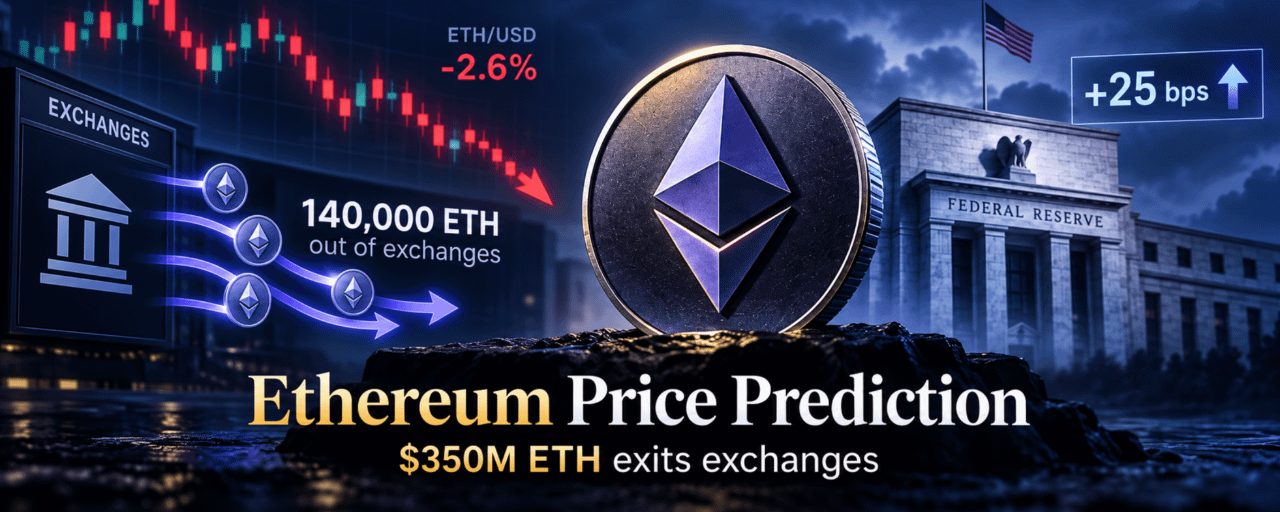
Ethereum-Preisprognose: 350 Mio. ETH verlassen Börsen, während die Chancen auf eine Fed-Zinsanhebung steigenDer Preis von Ethereum (ETH) ist um 2,6% gefallen und liegt derzeit bei 2.446 US-Dollar, wie Daten von Coinbase zeigen. Dieser Rückgang kommt vor der Entscheidung der US-Notenbank (Federal Reserve) zu den Zinsen.
CoinGape-Wettmärkte zeigen, dass es eine 80%ige Wahrscheinlichkeit gibt, dass die Fed die Zinsen um 25 Basispunkte anheben wird. Dieser Anstieg könnte bereits im Kurs eingepreist worden sein, nachdem ETH-Trader einen Anstieg der Abflüsse von Börsen beobachtet haben, was auf eine Zurückhaltung beim Verkauf im kurzfristigen Bereich hindeutet.
Die Abflüsse von Ethereum-Börsen sind über das FOMC hinaus angestiegen.
Ethereum-Preisprognose: 350 Mio. ETH verlassen Börsen, während die Chancen auf eine Fed-Zinsanhebung steigen
Der Preis von Ethereum (ETH) ist um 2,6% gefallen und liegt derzeit bei 2.446 US-Dollar, wie Daten von Coinbase zeigen. Dieser Rückgang kommt vor der Entscheidung der US-Notenbank (Federal Reserve) zu den Zinsen.
CoinGape-Wettmärkte zeigen, dass es eine 80%ige Wahrscheinlichkeit gibt, dass die Fed die Zinsen um 25 Basispunkte anheben wird. Dieser Anstieg könnte bereits im Kurs eingepreist worden sein, nachdem ETH-Trader einen Anstieg der Abflüsse von Börsen beobachtet haben, was auf eine Zurückhaltung beim Verkauf im kurzfristigen Bereich hindeutet.
Die Abflüsse von Ethereum-Börsen sind über das FOMC hinaus angestiegen.
CoinGape-Wettmärkte zeigen, dass es eine 80%ige Wahrscheinlichkeit gibt, dass die Fed die Zinsen um 25 Basispunkte anheben wird. Dieser Anstieg könnte bereits im Kurs eingepreist worden sein, nachdem ETH-Trader einen Anstieg der Abflüsse von Börsen beobachtet haben, was auf eine Zurückhaltung beim Verkauf im kurzfristigen Bereich hindeutet.
Die Abflüsse von Ethereum-Börsen sind über das FOMC hinaus angestiegen.
1
228
Verifiziert
Artikel
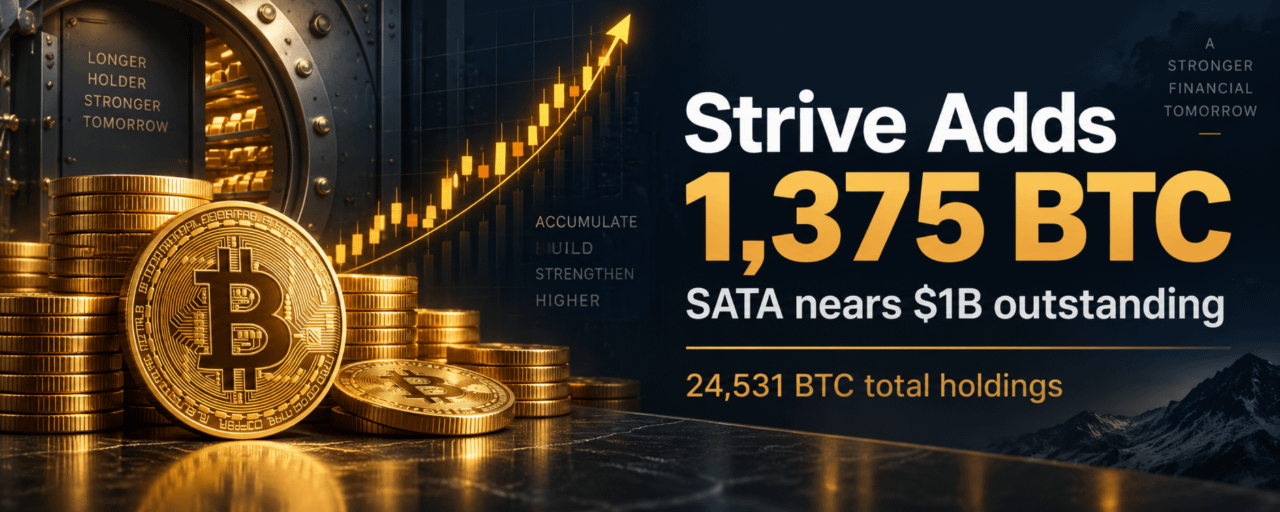
Strive fügt 1.375 BTC hinzu, während die SATA-Aktie nahezu 1 Mrd. US-Dollar an ausstehenden Nominalwerten erreichtDie Bitcoin-Treasury-Firma Strive, die kürzlich zum 5.-größten BTC-Treasury-Anbieter aufstieg, hat in der vergangenen Woche weitere BTC hinzugefügt, während sie darauf abzielt, bis zum Jahresende an andere Firmen unter den Top 5 heranzukommen. Die bevorzugte Sicherheit des Unternehmens, SATA, machte den Großteil des Kapitals aus, das es letzte Woche aufgebracht hat, um diese Coins zu kaufen; die Aktie erreichte dabei fast 1 Milliarde US-Dollar an ausstehenden Nominalwerten.
Strive kauft 1.375 BTC für 109 Mio. US-Dollar
Eine SEC-Einreichung zeigt, dass die Bitcoin-Treasury-Firma 1.375 BTC zu einem durchschnittlichen Preis von fast 79.281 US-Dollar pro BTC gekauft hat und damit ihre gesamten Bestände auf 24.531 BTC erhöht. Das Unternehmen erhöhte außerdem seine Barmittel und Zahlungsmitteläquivalente auf 202.600 US-Dollar.
Strive fügt 1.375 BTC hinzu, während die SATA-Aktie nahezu 1 Mrd. US-Dollar an ausstehenden Nominalwerten erreicht
Die Bitcoin-Treasury-Firma Strive, die kürzlich zum 5.-größten BTC-Treasury-Anbieter aufstieg, hat in der vergangenen Woche weitere BTC hinzugefügt, während sie darauf abzielt, bis zum Jahresende an andere Firmen unter den Top 5 heranzukommen. Die bevorzugte Sicherheit des Unternehmens, SATA, machte den Großteil des Kapitals aus, das es letzte Woche aufgebracht hat, um diese Coins zu kaufen; die Aktie erreichte dabei fast 1 Milliarde US-Dollar an ausstehenden Nominalwerten.
Strive kauft 1.375 BTC für 109 Mio. US-Dollar
Eine SEC-Einreichung zeigt, dass die Bitcoin-Treasury-Firma 1.375 BTC zu einem durchschnittlichen Preis von fast 79.281 US-Dollar pro BTC gekauft hat und damit ihre gesamten Bestände auf 24.531 BTC erhöht. Das Unternehmen erhöhte außerdem seine Barmittel und Zahlungsmitteläquivalente auf 202.600 US-Dollar.
Strive kauft 1.375 BTC für 109 Mio. US-Dollar
Eine SEC-Einreichung zeigt, dass die Bitcoin-Treasury-Firma 1.375 BTC zu einem durchschnittlichen Preis von fast 79.281 US-Dollar pro BTC gekauft hat und damit ihre gesamten Bestände auf 24.531 BTC erhöht. Das Unternehmen erhöhte außerdem seine Barmittel und Zahlungsmitteläquivalente auf 202.600 US-Dollar.
20
9
808
Teilweise korrekt
Artikel
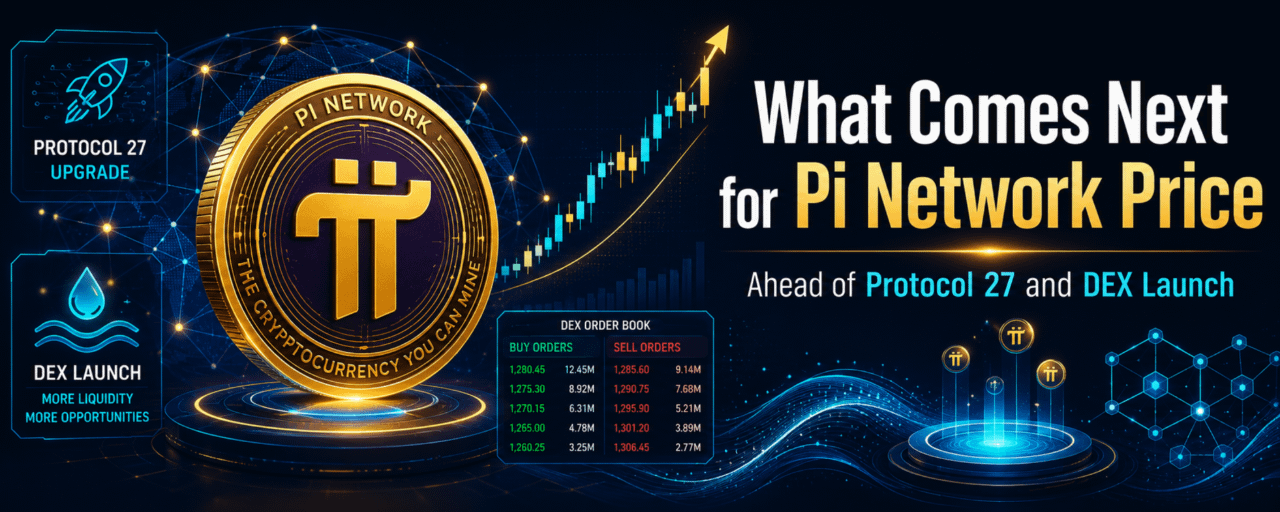
Was als Nächstes für den Pi-Network-Preis kommt, vor Protokoll 27 und dem Start der DEXDer Pi-Network-Preis stieg innerhalb von 24 Stunden um 3% auf 0,0964 $ , nachdem Händler die Protokoll-27- und seine native DEX erwarteten.
Der Bitcoin-Preis sprang um 5% über 81.200 $ , während Ethereum die Marke von 2.500 $ überschritt und XRP nach der Erholung des Kryptomarkts 10% zulegte.
Der kleinere Anstieg bei PI deutet darauf hin, dass Händler vor dem Upgrade am 15. September weiterhin vorsichtig bleiben. Das Rollout könnte testen, ob die verifizierte Community von Pi bedeutende Aktivitäten unterstützen kann.
Mainnet-Upgrade von Pi Network Protokoll 27 zielt auf den 15. September ab
Der Pi-Network-Preis hat sein Hauptnetz-Upgrade von Protokoll 26 am 11. August abgeschlossen und stärkte damit die Sicherheit von Smart Contracts, das Zustandsmanagement und kryptografische Funktionen.
Was als Nächstes für den Pi-Network-Preis kommt, vor Protokoll 27 und dem Start der DEX
Der Pi-Network-Preis stieg innerhalb von 24 Stunden um 3% auf 0,0964 $ , nachdem Händler die Protokoll-27- und seine native DEX erwarteten.
Der Bitcoin-Preis sprang um 5% über 81.200 $ , während Ethereum die Marke von 2.500 $ überschritt und XRP nach der Erholung des Kryptomarkts 10% zulegte.
Der kleinere Anstieg bei PI deutet darauf hin, dass Händler vor dem Upgrade am 15. September weiterhin vorsichtig bleiben. Das Rollout könnte testen, ob die verifizierte Community von Pi bedeutende Aktivitäten unterstützen kann.
Mainnet-Upgrade von Pi Network Protokoll 27 zielt auf den 15. September ab
Der Pi-Network-Preis hat sein Hauptnetz-Upgrade von Protokoll 26 am 11. August abgeschlossen und stärkte damit die Sicherheit von Smart Contracts, das Zustandsmanagement und kryptografische Funktionen.
Der Bitcoin-Preis sprang um 5% über 81.200 $ , während Ethereum die Marke von 2.500 $ überschritt und XRP nach der Erholung des Kryptomarkts 10% zulegte.
Der kleinere Anstieg bei PI deutet darauf hin, dass Händler vor dem Upgrade am 15. September weiterhin vorsichtig bleiben. Das Rollout könnte testen, ob die verifizierte Community von Pi bedeutende Aktivitäten unterstützen kann.
Mainnet-Upgrade von Pi Network Protokoll 27 zielt auf den 15. September ab
Der Pi-Network-Preis hat sein Hauptnetz-Upgrade von Protokoll 26 am 11. August abgeschlossen und stärkte damit die Sicherheit von Smart Contracts, das Zustandsmanagement und kryptografische Funktionen.
26
18
995
Verifiziert

Artikel
Goldman Sachs, Citi, BofA unter 21 globalen Unternehmen, die im H1 2027 einen USD-Stablecoin starten wollenGoldman Sachs, Citi, Bank of America und 18 weitere globale Finanzinstitute planen, in der zweiten Hälfte des Jahres 2026 ein neues Unternehmen zu gründen, um einen USD-Stablecoin auszugeben; als Ziel gilt ein Launch in der ersten Hälfte des Jahres 2027.
21 globale Finanzinstitute wollen 2027 einen USD-Stablecoin starten
Laut einer offiziellen Ankündigung haben führende internationale Finanzinstitute die Einrichtung eines neuen Unternehmens zugesagt, um gemeinsam einen Stablecoin herauszugeben. Das neue Unternehmen wird weltweit tätig sein und sich zunächst auf einen USD-Stablecoin konzentrieren, gefolgt von anderen G7-Währungen wie EUR.
Goldman Sachs, Citi, BofA unter 21 globalen Unternehmen, die im H1 2027 einen USD-Stablecoin starten wollen
Goldman Sachs, Citi, Bank of America und 18 weitere globale Finanzinstitute planen, in der zweiten Hälfte des Jahres 2026 ein neues Unternehmen zu gründen, um einen USD-Stablecoin auszugeben; als Ziel gilt ein Launch in der ersten Hälfte des Jahres 2027.
21 globale Finanzinstitute wollen 2027 einen USD-Stablecoin starten
Laut einer offiziellen Ankündigung haben führende internationale Finanzinstitute die Einrichtung eines neuen Unternehmens zugesagt, um gemeinsam einen Stablecoin herauszugeben. Das neue Unternehmen wird weltweit tätig sein und sich zunächst auf einen USD-Stablecoin konzentrieren, gefolgt von anderen G7-Währungen wie EUR.
21 globale Finanzinstitute wollen 2027 einen USD-Stablecoin starten
Laut einer offiziellen Ankündigung haben führende internationale Finanzinstitute die Einrichtung eines neuen Unternehmens zugesagt, um gemeinsam einen Stablecoin herauszugeben. Das neue Unternehmen wird weltweit tätig sein und sich zunächst auf einen USD-Stablecoin konzentrieren, gefolgt von anderen G7-Währungen wie EUR.
21
12
460
Artikel
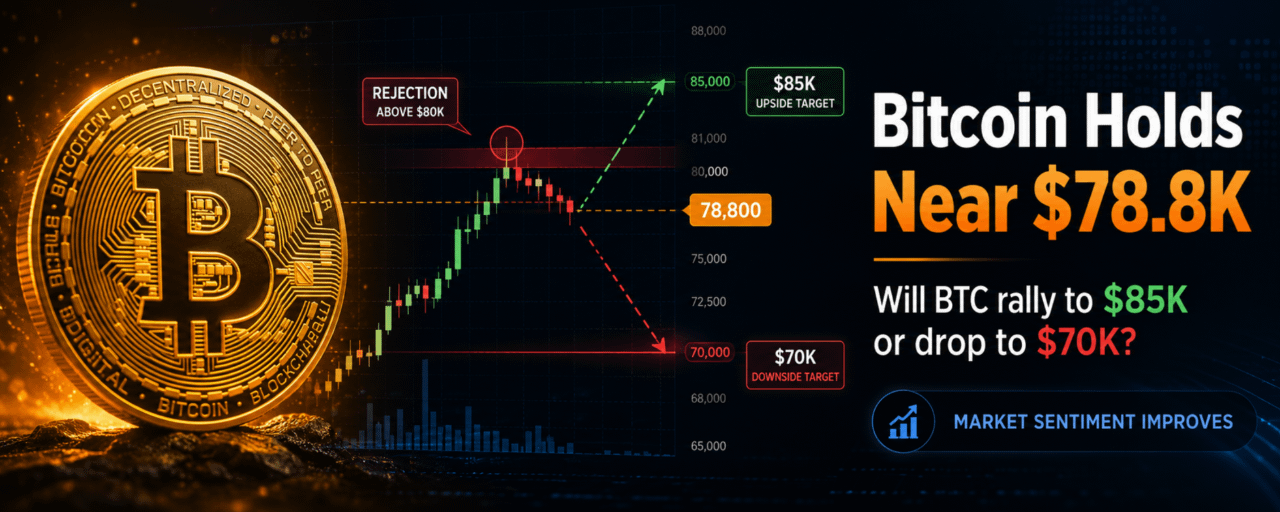
Bitcoin-Preisprognose diese Woche: Wird BTC auf 85.000 US-Dollar steigen oder auf 70.000 US-Dollar fallen?Der Bitcoin-Kurs pendelte am 30. August nahe 78.800 US-Dollar, nachdem eine weitere Zurückweisung oberhalb von 80.000 US-Dollar die Händler auf zwei entscheidende Grenzen blicken ließ.
Der breitere Kryptomarkt stieg um 1,33 % auf 2,65 Billionen US-Dollar, während der Fear-and-Greed-Index 72 erreichte. Verbesserte Stimmung, starke wöchentliche Gewinne und anhaltendes institutionelles Interesse sprechen für ein Aufwärtsszenario.
Bitcoin-Preis hält sich über 78.800 US-Dollar, während sich die Marktlage verbessert
Der Bitcoin-Kurs hielt sich bei rund 78.800 US-Dollar, nachdem es nicht gelungen war, den Anstieg über 80.000 US-Dollar hinaus zu halten. Zudem blieb er unter dem jüngsten Hoch bei 81.265 US-Dollar, wodurch der Widerstand weiterhin klar im Fokus blieb.
Bitcoin-Preisprognose diese Woche: Wird BTC auf 85.000 US-Dollar steigen oder auf 70.000 US-Dollar fallen?
Der Bitcoin-Kurs pendelte am 30. August nahe 78.800 US-Dollar, nachdem eine weitere Zurückweisung oberhalb von 80.000 US-Dollar die Händler auf zwei entscheidende Grenzen blicken ließ.
Der breitere Kryptomarkt stieg um 1,33 % auf 2,65 Billionen US-Dollar, während der Fear-and-Greed-Index 72 erreichte. Verbesserte Stimmung, starke wöchentliche Gewinne und anhaltendes institutionelles Interesse sprechen für ein Aufwärtsszenario.
Bitcoin-Preis hält sich über 78.800 US-Dollar, während sich die Marktlage verbessert
Der Bitcoin-Kurs hielt sich bei rund 78.800 US-Dollar, nachdem es nicht gelungen war, den Anstieg über 80.000 US-Dollar hinaus zu halten. Zudem blieb er unter dem jüngsten Hoch bei 81.265 US-Dollar, wodurch der Widerstand weiterhin klar im Fokus blieb.
Der breitere Kryptomarkt stieg um 1,33 % auf 2,65 Billionen US-Dollar, während der Fear-and-Greed-Index 72 erreichte. Verbesserte Stimmung, starke wöchentliche Gewinne und anhaltendes institutionelles Interesse sprechen für ein Aufwärtsszenario.
Bitcoin-Preis hält sich über 78.800 US-Dollar, während sich die Marktlage verbessert
Der Bitcoin-Kurs hielt sich bei rund 78.800 US-Dollar, nachdem es nicht gelungen war, den Anstieg über 80.000 US-Dollar hinaus zu halten. Zudem blieb er unter dem jüngsten Hoch bei 81.265 US-Dollar, wodurch der Widerstand weiterhin klar im Fokus blieb.
3
7
459
Teilweise korrekt
Artikel
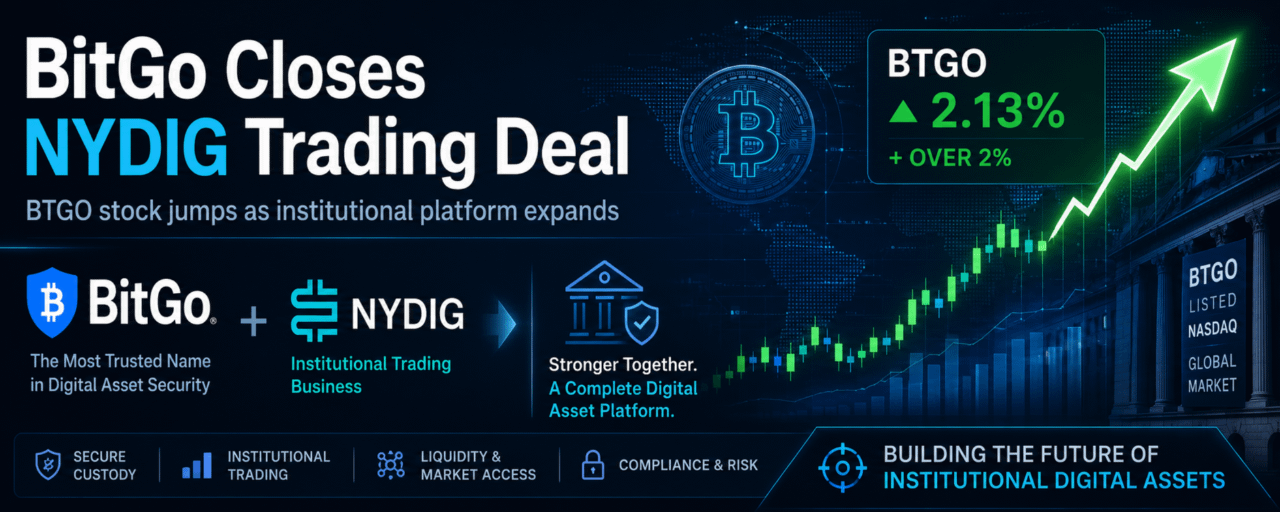
BitGo erwirbt das institutionelle Trading-Geschäft des Bitcoin-Minings NYDIG – BTGO-Aktie springtHeute gab BitGo bekannt, dass es den Verkauf des institutionellen Trading-Geschäfts von NYDIG sowie der damit verbundenen Vermögenswerte abgeschlossen hat – eine Transaktion, die seine Akquisition des Bitcoin-Mining-Unternehmens NYDIG bestätigt. Die Investition stärkt zudem weiter den Krypto-Custodian und etabliert ihn als vollständige Plattform für digitale Vermögenswerte. In der Folge sprang der Kurs der BTGO-Aktie um mehr als 2%.
BitGo schließt Akquisition des institutionellen Trading-Geschäfts von NYDIG ab.
Laut der offiziellen Mitteilung hat der Krypto-Custodian BitGo eine verbindliche Vereinbarung getroffen, um das institutionelle Trading-Geschäft von NYDIG zu kaufen. Damit wurden die Derivate, strukturierten Produkte und Finanzierungsmöglichkeiten des regulierten Krypto-Custodians erweitert.
BitGo erwirbt das institutionelle Trading-Geschäft des Bitcoin-Minings NYDIG – BTGO-Aktie springt
Heute gab BitGo bekannt, dass es den Verkauf des institutionellen Trading-Geschäfts von NYDIG sowie der damit verbundenen Vermögenswerte abgeschlossen hat – eine Transaktion, die seine Akquisition des Bitcoin-Mining-Unternehmens NYDIG bestätigt. Die Investition stärkt zudem weiter den Krypto-Custodian und etabliert ihn als vollständige Plattform für digitale Vermögenswerte. In der Folge sprang der Kurs der BTGO-Aktie um mehr als 2%.
BitGo schließt Akquisition des institutionellen Trading-Geschäfts von NYDIG ab.
Laut der offiziellen Mitteilung hat der Krypto-Custodian BitGo eine verbindliche Vereinbarung getroffen, um das institutionelle Trading-Geschäft von NYDIG zu kaufen. Damit wurden die Derivate, strukturierten Produkte und Finanzierungsmöglichkeiten des regulierten Krypto-Custodians erweitert.
BitGo schließt Akquisition des institutionellen Trading-Geschäfts von NYDIG ab.
Laut der offiziellen Mitteilung hat der Krypto-Custodian BitGo eine verbindliche Vereinbarung getroffen, um das institutionelle Trading-Geschäft von NYDIG zu kaufen. Damit wurden die Derivate, strukturierten Produkte und Finanzierungsmöglichkeiten des regulierten Krypto-Custodians erweitert.
1
5
181
NEUESTE: 🇺🇸Präsident Trump hat den Ontariosee offiziell in „Lake of America“ umbenannt.
Trump sagte, er erwäge auch, den Namen des Atlantiks oder des Pazifiks zu ändern.
Trump sagte, seine Verwaltung habe die erforderlichen Unterlagen eingereicht und die zuständigen Behörden benachrichtigt.
Die Maßnahme folgt auf seine frühere Umbenennung des Golfs von Mexiko in den „Gulf of America“.
$MOVR $VET $ENA
NEUESTE: 🇺🇸Präsident Trump hat den Ontariosee offiziell in „Lake of America“ umbenannt.
Trump sagte, er erwäge auch, den Namen des Atlantiks oder des Pazifiks zu ändern.
Trump sagte, seine Verwaltung habe die erforderlichen Unterlagen eingereicht und die zuständigen Behörden benachrichtigt.
Die Maßnahme folgt auf seine frühere Umbenennung des Golfs von Mexiko in den „Gulf of America“.
$MOVR $VET $ENA
Trump sagte, er erwäge auch, den Namen des Atlantiks oder des Pazifiks zu ändern.
Trump sagte, seine Verwaltung habe die erforderlichen Unterlagen eingereicht und die zuständigen Behörden benachrichtigt.
Die Maßnahme folgt auf seine frühere Umbenennung des Golfs von Mexiko in den „Gulf of America“.
$MOVR $VET $ENA
4
271
$SNDK long setup 👇
Ich beobachte die Einstiegszone von 1470–1440.
Einstieg: 1470–1440
SL: 1430
TP1: 1505
TP2: 1540
Wenn diese Zone hält, suche ich zuerst den Ausbruch/Push in Richtung 1505 und danach 1540. Das Risiko bleibt wie unten definiert (unter 1430).
$SNDK long setup 👇
Ich beobachte die Einstiegszone von 1470–1440.
Einstieg: 1470–1440
SL: 1430
TP1: 1505
TP2: 1540
Wenn diese Zone hält, suche ich zuerst den Ausbruch/Push in Richtung 1505 und danach 1540. Das Risiko bleibt wie unten definiert (unter 1430).
Ich beobachte die Einstiegszone von 1470–1440.
Einstieg: 1470–1440
SL: 1430
TP1: 1505
TP2: 1540
Wenn diese Zone hält, suche ich zuerst den Ausbruch/Push in Richtung 1505 und danach 1540. Das Risiko bleibt wie unten definiert (unter 1430).
2
509
·
--
Bullisch
2
146
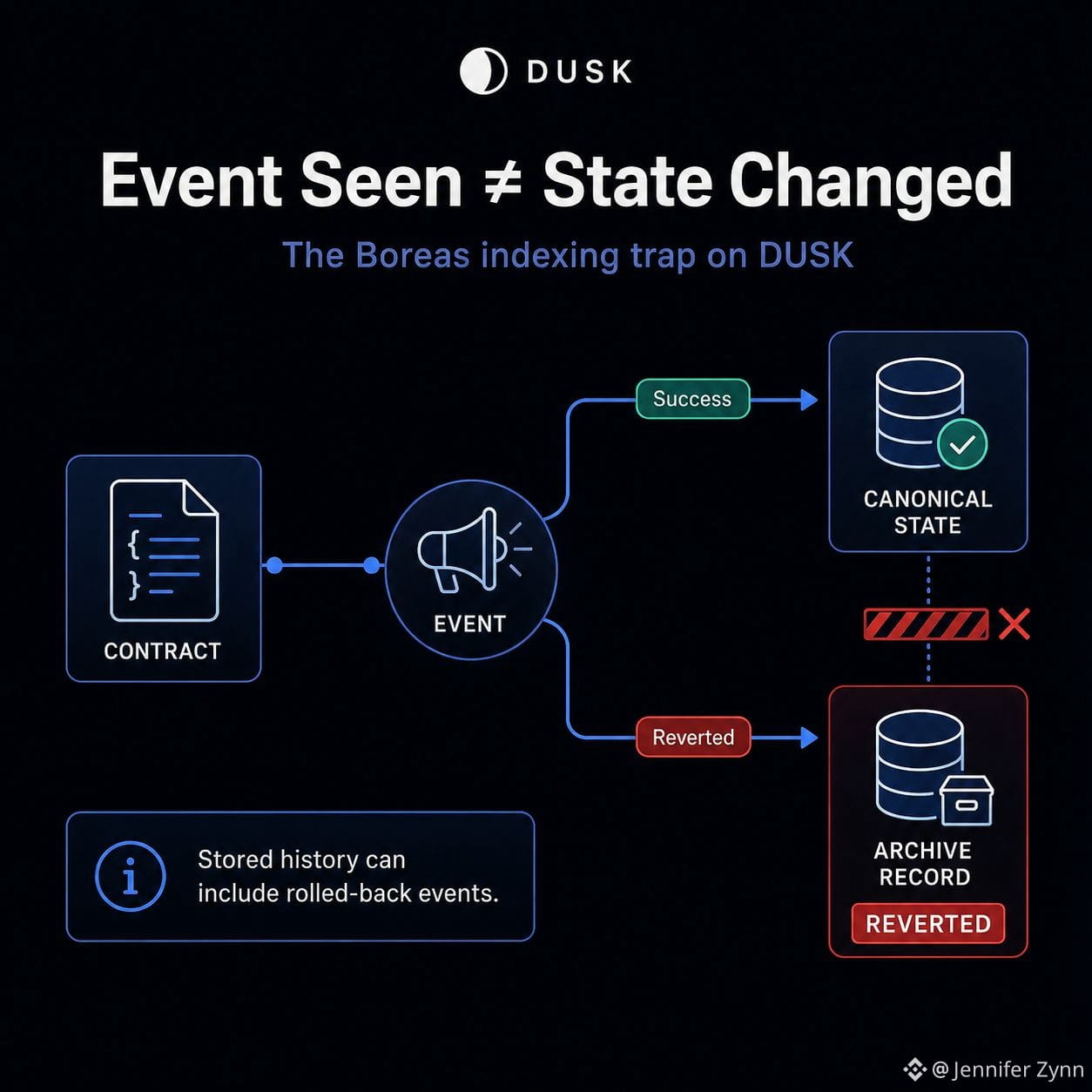
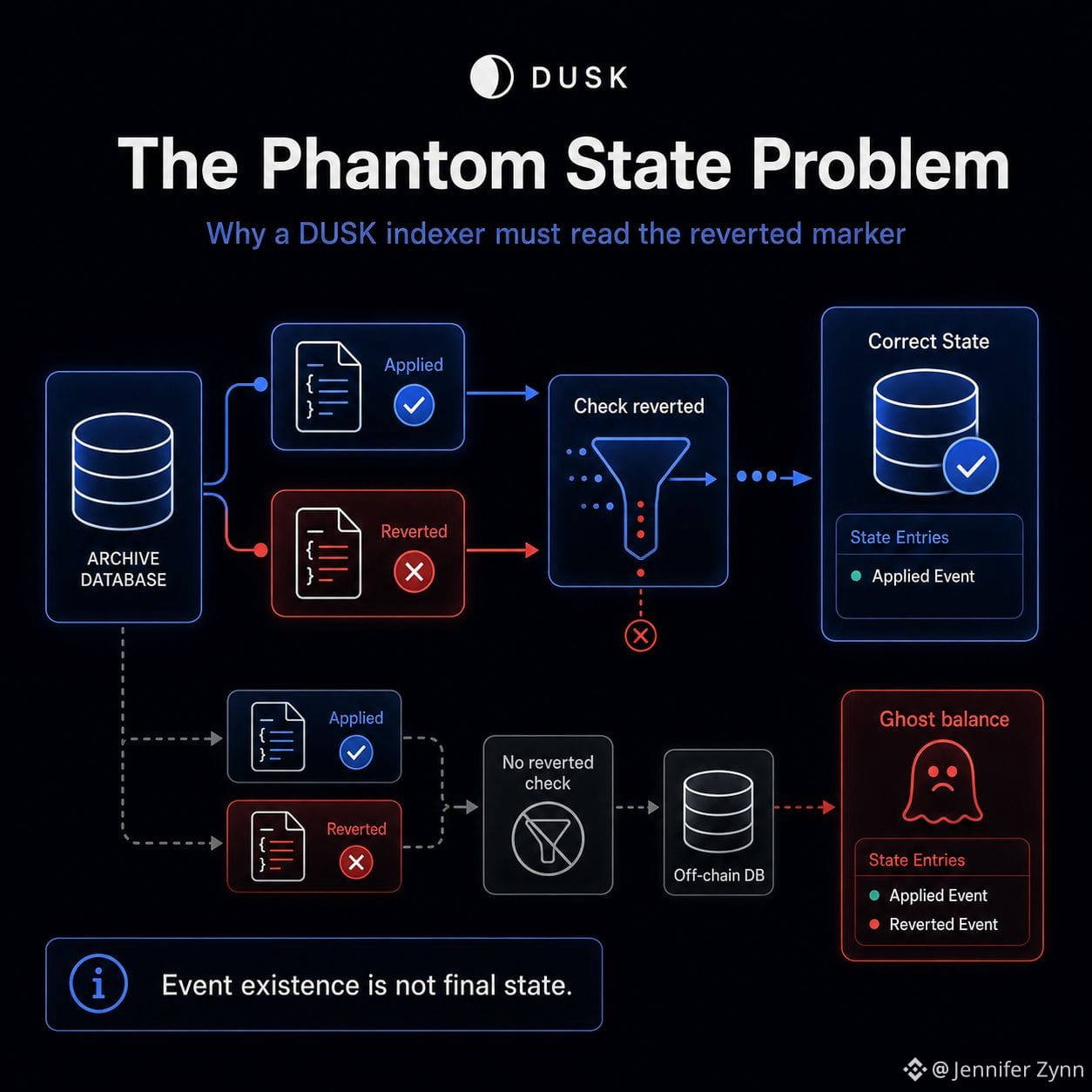
Ich habe eine DUSK-Indexing-Falle gefunden, die eine Off-Chain-Datenbank glauben lassen kann, dass etwas passiert ist, obwohl die Transaktion es zurückgerollt hat.
Nach Boreas verschwindet ein revertiertes Contract-Event nicht einfach. Rusk behält es in der Archivhistorie, markiert es aber als revertiert. Gleichzeitig wird dieses Event aus dem kanonischen Block-Bloom entfernt, und ein revertiertes Staking-Event darf nicht den Provisioner-Set ändern.
Wenn ich also einen Indexer baue, der „Event existiert“ als „Zustand hat sich geändert“ behandelt, kann ich Phantomaktivität aus vollständig gültigen On-Chain-Daten erzeugen. Ein fehlgeschlagener Contract-Call kann trotzdem einen Eintrag für das Event hinterlassen, während der kanonische Zustand korrekt sagt, dass nichts passiert ist.
Das bedeutet: Wiederherstellungslogik ist genauso wichtig wie Live-Ingestion. Wenn mein Dienst neu startet und von der Archivhistorie nachlädt, muss er das revertierte Marker-Flag anwenden, bevor er Bilanzen, Positionen oder stake-bezogene Ansichten neu aufbaut. Andernfalls kann der Neustart selbst eine Unstimmigkeit erzeugen, die vorher nicht da war.
Ich würde DUSK-Indexer testen, indem ich erfolgreiche und revertierte Events durch dieselbe Pipeline erneut abspiele und den gleichen Endzustand wie bei Rusk fordere.
Ein Event-Record ist ein Beleg dafür, dass die Ausführung einen bestimmten Punkt erreicht hat. Er ist kein Beweis dafür, dass der Zustand überlebt hat.
#dusk $DUSK @Dusk_Foundation
Ich habe eine DUSK-Indexing-Falle gefunden, die eine Off-Chain-Datenbank glauben lassen kann, dass etwas passiert ist, obwohl die Transaktion es zurückgerollt hat.
Nach Boreas verschwindet ein revertiertes Contract-Event nicht einfach. Rusk behält es in der Archivhistorie, markiert es aber als revertiert. Gleichzeitig wird dieses Event aus dem kanonischen Block-Bloom entfernt, und ein revertiertes Staking-Event darf nicht den Provisioner-Set ändern.
Wenn ich also einen Indexer baue, der „Event existiert“ als „Zustand hat sich geändert“ behandelt, kann ich Phantomaktivität aus vollständig gültigen On-Chain-Daten erzeugen. Ein fehlgeschlagener Contract-Call kann trotzdem einen Eintrag für das Event hinterlassen, während der kanonische Zustand korrekt sagt, dass nichts passiert ist.
Das bedeutet: Wiederherstellungslogik ist genauso wichtig wie Live-Ingestion. Wenn mein Dienst neu startet und von der Archivhistorie nachlädt, muss er das revertierte Marker-Flag anwenden, bevor er Bilanzen, Positionen oder stake-bezogene Ansichten neu aufbaut. Andernfalls kann der Neustart selbst eine Unstimmigkeit erzeugen, die vorher nicht da war.
Ich würde DUSK-Indexer testen, indem ich erfolgreiche und revertierte Events durch dieselbe Pipeline erneut abspiele und den gleichen Endzustand wie bei Rusk fordere.
Ein Event-Record ist ein Beleg dafür, dass die Ausführung einen bestimmten Punkt erreicht hat. Er ist kein Beweis dafür, dass der Zustand überlebt hat.
#dusk $DUSK @Dusk
Nach Boreas verschwindet ein revertiertes Contract-Event nicht einfach. Rusk behält es in der Archivhistorie, markiert es aber als revertiert. Gleichzeitig wird dieses Event aus dem kanonischen Block-Bloom entfernt, und ein revertiertes Staking-Event darf nicht den Provisioner-Set ändern.
Wenn ich also einen Indexer baue, der „Event existiert“ als „Zustand hat sich geändert“ behandelt, kann ich Phantomaktivität aus vollständig gültigen On-Chain-Daten erzeugen. Ein fehlgeschlagener Contract-Call kann trotzdem einen Eintrag für das Event hinterlassen, während der kanonische Zustand korrekt sagt, dass nichts passiert ist.
Das bedeutet: Wiederherstellungslogik ist genauso wichtig wie Live-Ingestion. Wenn mein Dienst neu startet und von der Archivhistorie nachlädt, muss er das revertierte Marker-Flag anwenden, bevor er Bilanzen, Positionen oder stake-bezogene Ansichten neu aufbaut. Andernfalls kann der Neustart selbst eine Unstimmigkeit erzeugen, die vorher nicht da war.
Ich würde DUSK-Indexer testen, indem ich erfolgreiche und revertierte Events durch dieselbe Pipeline erneut abspiele und den gleichen Endzustand wie bei Rusk fordere.
Ein Event-Record ist ein Beleg dafür, dass die Ausführung einen bestimmten Punkt erreicht hat. Er ist kein Beweis dafür, dass der Zustand überlebt hat.
#dusk $DUSK @Dusk
4
184
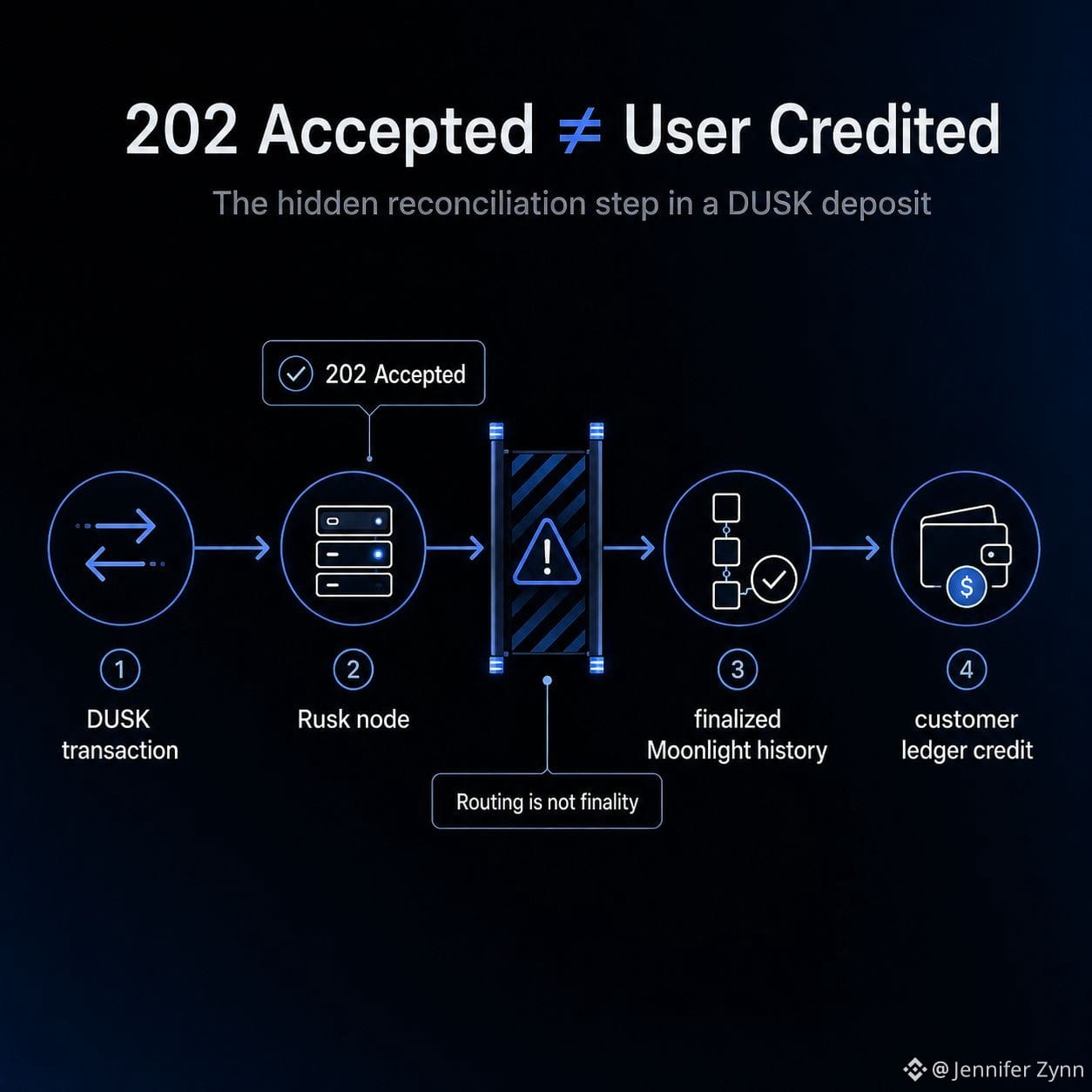
Ich komme immer wieder auf eine hässliche Einzelheit in DUSK-Integrationen zurück: „202 Accepted“ ist nicht der Moment, in dem ich einem Nutzer Glauben schenken würde.
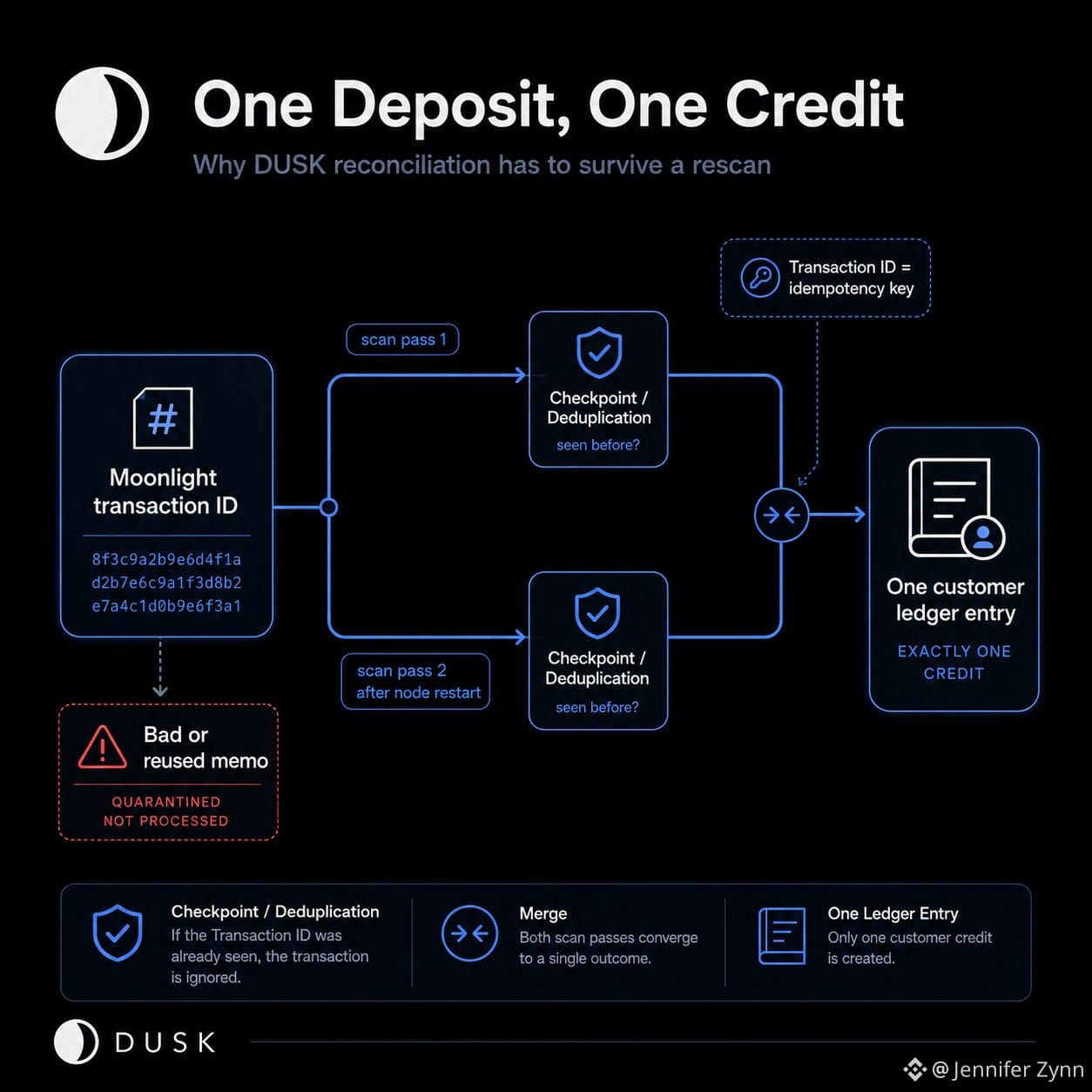
Diese Antwort sagt mir lediglich, dass ein Rusk-Node die Transaktion zur Weiterleitung akzeptiert hat. Der Betreiber muss weiterhin den finalisierten Moonlight-Verlauf einhalten, die Einzahlung korrekt zuordnen und sicherstellen, dass dieselbe Transaktion nicht zu zwei Buchungskrediten werden kann.
Das, was ich dabei interessanter fand, ist die Art, wie explizit das Fehlerhandling ausfällt. Ein gemeinsames Einzahlungskonto kann Memos für die Zuordnung zu Kunden verwenden, aber fehlende, fehlerhaft formatierte, unbekannte oder wiederverwendete Metadaten sollen quarantänisiert werden. Dann wird die Dusk-Transaktions-ID zum Idempotenzschlüssel, sodass ein erneut abgescanntes Replay nicht still und leise einen Kontostand doppelt.
Das ist kein besonders glamouröser Ablauf. Es ist genau die Art von Prozess, die darüber entscheidet, ob eine Exchange-Integration einen Neustart eines Nodes, einen Backfill oder eine chaotische Kundeneinzahlung überlebt, ohne dass die Abstimmung in manuelle Schadensbegrenzung abdriftet.
Für mich ist der eigentliche Test nicht, ob sich ein DUSK-Transfer fortpflanzt. Entscheidend ist, ob der Betreiber seinen Platz verlieren kann, den finalisierten Verlauf erneut scannen und dennoch beim selben Kunden-Ledger ankommen kann.
Wenn diese Invariante bricht, kann die Kette zwar korrekt sein, aber der Kontostand des Nutzers ist trotzdem falsch.
#dusk $DUSK @Dusk_Foundation
Ich komme immer wieder auf eine hässliche Einzelheit in DUSK-Integrationen zurück: „202 Accepted“ ist nicht der Moment, in dem ich einem Nutzer Glauben schenken würde.
Diese Antwort sagt mir lediglich, dass ein Rusk-Node die Transaktion zur Weiterleitung akzeptiert hat. Der Betreiber muss weiterhin den finalisierten Moonlight-Verlauf einhalten, die Einzahlung korrekt zuordnen und sicherstellen, dass dieselbe Transaktion nicht zu zwei Buchungskrediten werden kann.
Das, was ich dabei interessanter fand, ist die Art, wie explizit das Fehlerhandling ausfällt. Ein gemeinsames Einzahlungskonto kann Memos für die Zuordnung zu Kunden verwenden, aber fehlende, fehlerhaft formatierte, unbekannte oder wiederverwendete Metadaten sollen quarantänisiert werden. Dann wird die Dusk-Transaktions-ID zum Idempotenzschlüssel, sodass ein erneut abgescanntes Replay nicht still und leise einen Kontostand doppelt.
Das ist kein besonders glamouröser Ablauf. Es ist genau die Art von Prozess, die darüber entscheidet, ob eine Exchange-Integration einen Neustart eines Nodes, einen Backfill oder eine chaotische Kundeneinzahlung überlebt, ohne dass die Abstimmung in manuelle Schadensbegrenzung abdriftet.
Für mich ist der eigentliche Test nicht, ob sich ein DUSK-Transfer fortpflanzt. Entscheidend ist, ob der Betreiber seinen Platz verlieren kann, den finalisierten Verlauf erneut scannen und dennoch beim selben Kunden-Ledger ankommen kann.
Wenn diese Invariante bricht, kann die Kette zwar korrekt sein, aber der Kontostand des Nutzers ist trotzdem falsch.
#dusk $DUSK @Dusk
Diese Antwort sagt mir lediglich, dass ein Rusk-Node die Transaktion zur Weiterleitung akzeptiert hat. Der Betreiber muss weiterhin den finalisierten Moonlight-Verlauf einhalten, die Einzahlung korrekt zuordnen und sicherstellen, dass dieselbe Transaktion nicht zu zwei Buchungskrediten werden kann.
Das, was ich dabei interessanter fand, ist die Art, wie explizit das Fehlerhandling ausfällt. Ein gemeinsames Einzahlungskonto kann Memos für die Zuordnung zu Kunden verwenden, aber fehlende, fehlerhaft formatierte, unbekannte oder wiederverwendete Metadaten sollen quarantänisiert werden. Dann wird die Dusk-Transaktions-ID zum Idempotenzschlüssel, sodass ein erneut abgescanntes Replay nicht still und leise einen Kontostand doppelt.
Das ist kein besonders glamouröser Ablauf. Es ist genau die Art von Prozess, die darüber entscheidet, ob eine Exchange-Integration einen Neustart eines Nodes, einen Backfill oder eine chaotische Kundeneinzahlung überlebt, ohne dass die Abstimmung in manuelle Schadensbegrenzung abdriftet.
Für mich ist der eigentliche Test nicht, ob sich ein DUSK-Transfer fortpflanzt. Entscheidend ist, ob der Betreiber seinen Platz verlieren kann, den finalisierten Verlauf erneut scannen und dennoch beim selben Kunden-Ledger ankommen kann.
Wenn diese Invariante bricht, kann die Kette zwar korrekt sein, aber der Kontostand des Nutzers ist trotzdem falsch.
#dusk $DUSK @Dusk
1
1
172
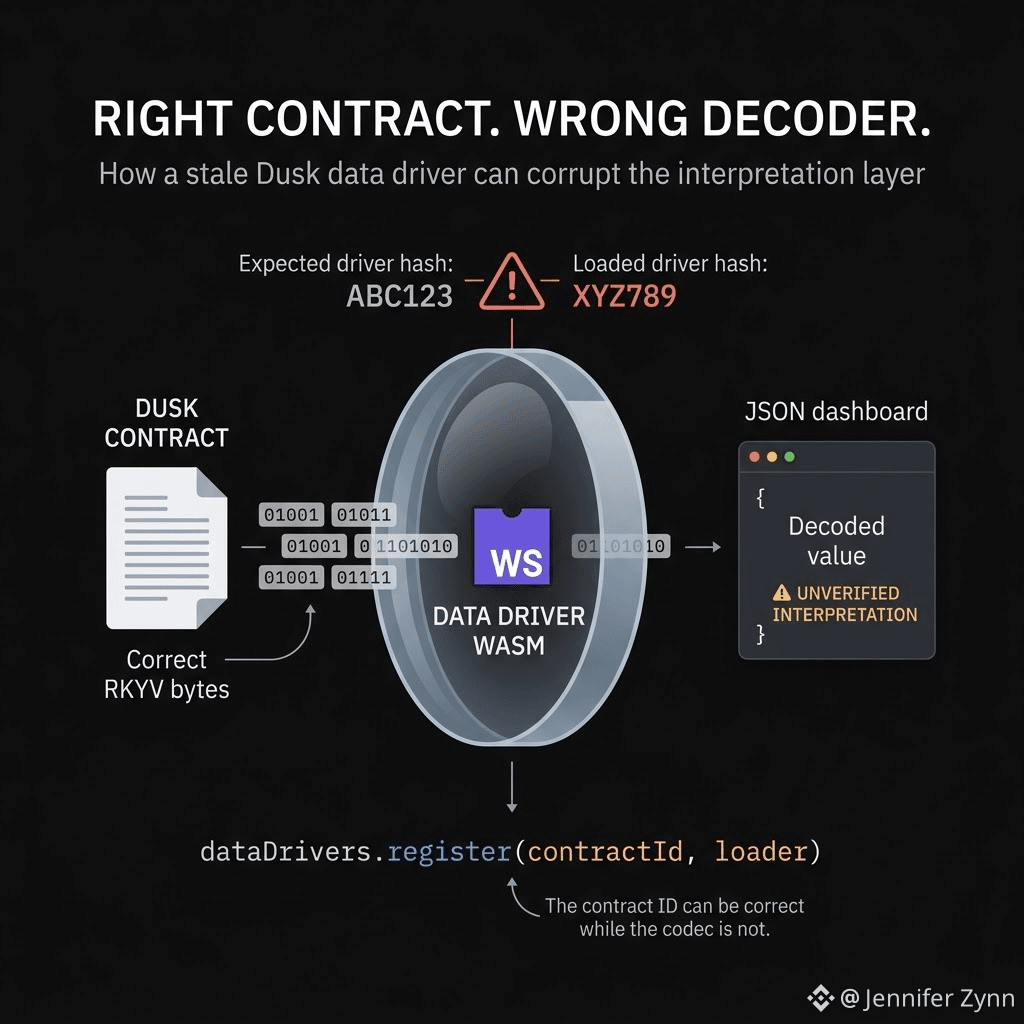
Die Kette kann richtig sein und meine Dusk-App kann mich trotzdem anlügen, weil ich den falschen Data-Driver registriert habe.
Dusk Data Driver sind WASM-Codecs, die die RKYV-Bytes eines Vertrags in das JSON übersetzen, das meine App liest und schreibt. In W3sper bindet dataDrivers.register(contractId, loader) diesen Codec an eine Contract-ID, aber es gibt keine integrierte Versions- oder Hash-Pinning-Funktion, die den Loader an das Schema bindet, das meine Integration erwartet.
So kann ein veralteter oder nicht passender Driver vor dem richtigen Vertrag sitzen. Rusk ist gesund. Die Contract-ID ist korrekt. Die Anfrage kann erfolgreich abgeschlossen werden. Meine Interpretationsschicht ist der Teil, der möglicherweise falsch ist.
Für einen Auditor oder Operator ist das hässlicher als ein lauter Fehlschlag. Ein sauber dekodierter Wert kann maßgeblich wirken, obwohl der Codec, der ihn erzeugt hat, nie gegen die erwartete Driver-Binärdatei verifiziert wurde.
Ich würde den Driver-Hash für jede Vertragsintegration pinnen, ihn vor der Registrierung verifizieren und das Dekodieren verweigern, wenn das geladene WASM nicht mit meinem Manifest übereinstimmt.
Auf Dusk reicht lesbares JSON nicht als Beleg dafür aus, dass ich den Vertrag korrekt gelesen habe.
#dusk $DUSK @Dusk_Foundation
Die Kette kann richtig sein und meine Dusk-App kann mich trotzdem anlügen, weil ich den falschen Data-Driver registriert habe.
Dusk Data Driver sind WASM-Codecs, die die RKYV-Bytes eines Vertrags in das JSON übersetzen, das meine App liest und schreibt. In W3sper bindet dataDrivers.register(contractId, loader) diesen Codec an eine Contract-ID, aber es gibt keine integrierte Versions- oder Hash-Pinning-Funktion, die den Loader an das Schema bindet, das meine Integration erwartet.
So kann ein veralteter oder nicht passender Driver vor dem richtigen Vertrag sitzen. Rusk ist gesund. Die Contract-ID ist korrekt. Die Anfrage kann erfolgreich abgeschlossen werden. Meine Interpretationsschicht ist der Teil, der möglicherweise falsch ist.
Für einen Auditor oder Operator ist das hässlicher als ein lauter Fehlschlag. Ein sauber dekodierter Wert kann maßgeblich wirken, obwohl der Codec, der ihn erzeugt hat, nie gegen die erwartete Driver-Binärdatei verifiziert wurde.
Ich würde den Driver-Hash für jede Vertragsintegration pinnen, ihn vor der Registrierung verifizieren und das Dekodieren verweigern, wenn das geladene WASM nicht mit meinem Manifest übereinstimmt.
Auf Dusk reicht lesbares JSON nicht als Beleg dafür aus, dass ich den Vertrag korrekt gelesen habe.
#dusk $DUSK @Dusk
Dusk Data Driver sind WASM-Codecs, die die RKYV-Bytes eines Vertrags in das JSON übersetzen, das meine App liest und schreibt. In W3sper bindet dataDrivers.register(contractId, loader) diesen Codec an eine Contract-ID, aber es gibt keine integrierte Versions- oder Hash-Pinning-Funktion, die den Loader an das Schema bindet, das meine Integration erwartet.
So kann ein veralteter oder nicht passender Driver vor dem richtigen Vertrag sitzen. Rusk ist gesund. Die Contract-ID ist korrekt. Die Anfrage kann erfolgreich abgeschlossen werden. Meine Interpretationsschicht ist der Teil, der möglicherweise falsch ist.
Für einen Auditor oder Operator ist das hässlicher als ein lauter Fehlschlag. Ein sauber dekodierter Wert kann maßgeblich wirken, obwohl der Codec, der ihn erzeugt hat, nie gegen die erwartete Driver-Binärdatei verifiziert wurde.
Ich würde den Driver-Hash für jede Vertragsintegration pinnen, ihn vor der Registrierung verifizieren und das Dekodieren verweigern, wenn das geladene WASM nicht mit meinem Manifest übereinstimmt.
Auf Dusk reicht lesbares JSON nicht als Beleg dafür aus, dass ich den Vertrag korrekt gelesen habe.
#dusk $DUSK @Dusk
1
3
246
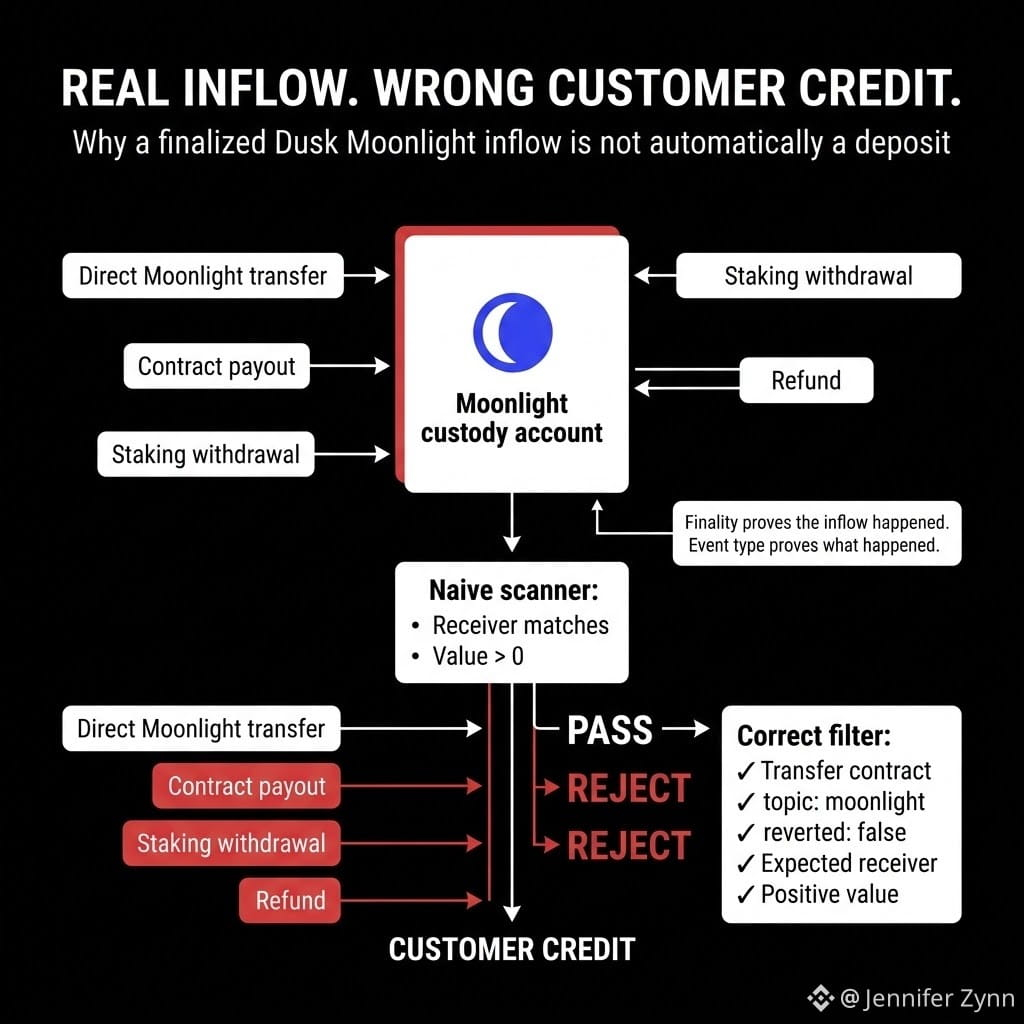
Es ist möglich, dass ein abgeschlossener Zufluss in ein Dusk-Treuhandkonto echtes Geld ist und dennoch nicht korrekt sein kann, um es einem Kunden gutzuschreiben.
Das würde mein Scannerfehler sein, dem man sich schützen müsste. moonlightHistory bedeutet nicht „Kundeneinlagen“. Es ist möglich, direkte Überweisungen, Vertragsauszahlungen, Rückerstattungen, Staking-Auszahlungen und Konvertierungen von Phoenix zu moonlight so in einer gemeinsamen öffentlichen Adresse zusammenzuführen, die alle zum gleichen öffentlichen Konto hinzugefügt wurden.
Damit es eine direkte Moonlight-Einzahlung akzeptiert, muss ich aber eine viel geringere Übereinstimmung haben: der Transfer-Vertrag, das Thema moonlight, reverted auf false gesetzt, der erwartete Empfänger und ein positiver Wert. Es gibt andere Ereignisse, bei denen weitere Zuflüsse empfangen werden, z. B. convert, withdraw und contract_to_account.
Das Ergebnis ist nicht leicht erkennbar. Mit meinem Custody-Scanner wird nur gefragt: „Erhöhte diese finalisierte Transaktion dieses Konto?“ Und so würde eine Staking-Auszahlung oder eine Vertragsrückerstattung diesen Test bestehen und als Kunden-Gutschrift gelten, auch wenn der Kunde es tatsächlich nicht eingezahlt hat.
Ich würde das Ereignis lieber beschreiben, bevor ich das Geld beschreibe. Wenn es echt ist, sagt mir das Finality so. Der Ereignistyp ist für mich ein Hinweis darauf, welcher Ablauf vorlag.
Bei Dusk geht es nicht so sehr darum, wer das Geld eingezahlt hat, sondern vielmehr um eine Erhöhung des Saldos.
#dusk $DUSK @Dusk_Foundation
Es ist möglich, dass ein abgeschlossener Zufluss in ein Dusk-Treuhandkonto echtes Geld ist und dennoch nicht korrekt sein kann, um es einem Kunden gutzuschreiben.
Das würde mein Scannerfehler sein, dem man sich schützen müsste. moonlightHistory bedeutet nicht „Kundeneinlagen“. Es ist möglich, direkte Überweisungen, Vertragsauszahlungen, Rückerstattungen, Staking-Auszahlungen und Konvertierungen von Phoenix zu moonlight so in einer gemeinsamen öffentlichen Adresse zusammenzuführen, die alle zum gleichen öffentlichen Konto hinzugefügt wurden.
Damit es eine direkte Moonlight-Einzahlung akzeptiert, muss ich aber eine viel geringere Übereinstimmung haben: der Transfer-Vertrag, das Thema moonlight, reverted auf false gesetzt, der erwartete Empfänger und ein positiver Wert. Es gibt andere Ereignisse, bei denen weitere Zuflüsse empfangen werden, z. B. convert, withdraw und contract_to_account.
Das Ergebnis ist nicht leicht erkennbar. Mit meinem Custody-Scanner wird nur gefragt: „Erhöhte diese finalisierte Transaktion dieses Konto?“ Und so würde eine Staking-Auszahlung oder eine Vertragsrückerstattung diesen Test bestehen und als Kunden-Gutschrift gelten, auch wenn der Kunde es tatsächlich nicht eingezahlt hat.
Ich würde das Ereignis lieber beschreiben, bevor ich das Geld beschreibe. Wenn es echt ist, sagt mir das Finality so. Der Ereignistyp ist für mich ein Hinweis darauf, welcher Ablauf vorlag.
Bei Dusk geht es nicht so sehr darum, wer das Geld eingezahlt hat, sondern vielmehr um eine Erhöhung des Saldos.
#dusk $DUSK @Dusk
Das würde mein Scannerfehler sein, dem man sich schützen müsste. moonlightHistory bedeutet nicht „Kundeneinlagen“. Es ist möglich, direkte Überweisungen, Vertragsauszahlungen, Rückerstattungen, Staking-Auszahlungen und Konvertierungen von Phoenix zu moonlight so in einer gemeinsamen öffentlichen Adresse zusammenzuführen, die alle zum gleichen öffentlichen Konto hinzugefügt wurden.
Damit es eine direkte Moonlight-Einzahlung akzeptiert, muss ich aber eine viel geringere Übereinstimmung haben: der Transfer-Vertrag, das Thema moonlight, reverted auf false gesetzt, der erwartete Empfänger und ein positiver Wert. Es gibt andere Ereignisse, bei denen weitere Zuflüsse empfangen werden, z. B. convert, withdraw und contract_to_account.
Das Ergebnis ist nicht leicht erkennbar. Mit meinem Custody-Scanner wird nur gefragt: „Erhöhte diese finalisierte Transaktion dieses Konto?“ Und so würde eine Staking-Auszahlung oder eine Vertragsrückerstattung diesen Test bestehen und als Kunden-Gutschrift gelten, auch wenn der Kunde es tatsächlich nicht eingezahlt hat.
Ich würde das Ereignis lieber beschreiben, bevor ich das Geld beschreibe. Wenn es echt ist, sagt mir das Finality so. Der Ereignistyp ist für mich ein Hinweis darauf, welcher Ablauf vorlag.
Bei Dusk geht es nicht so sehr darum, wer das Geld eingezahlt hat, sondern vielmehr um eine Erhöhung des Saldos.
#dusk $DUSK @Dusk
251
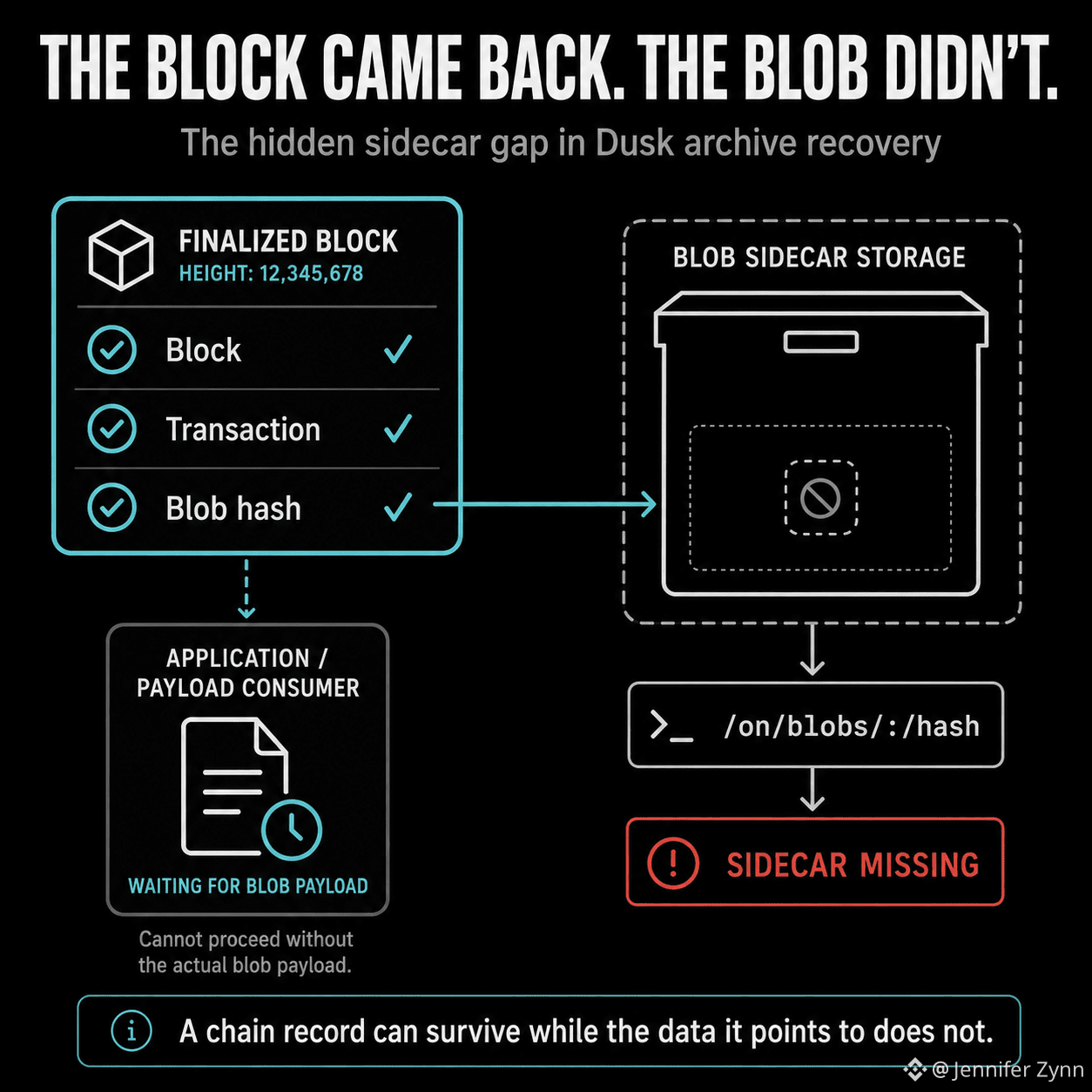
Ein Dusk-Archiv kann zur richtigen Blockhöhe zurückkommen und dennoch bei der einen Anfrage scheitern, die meine Blob-App tatsächlich benötigt: gib mir den Sidecar.
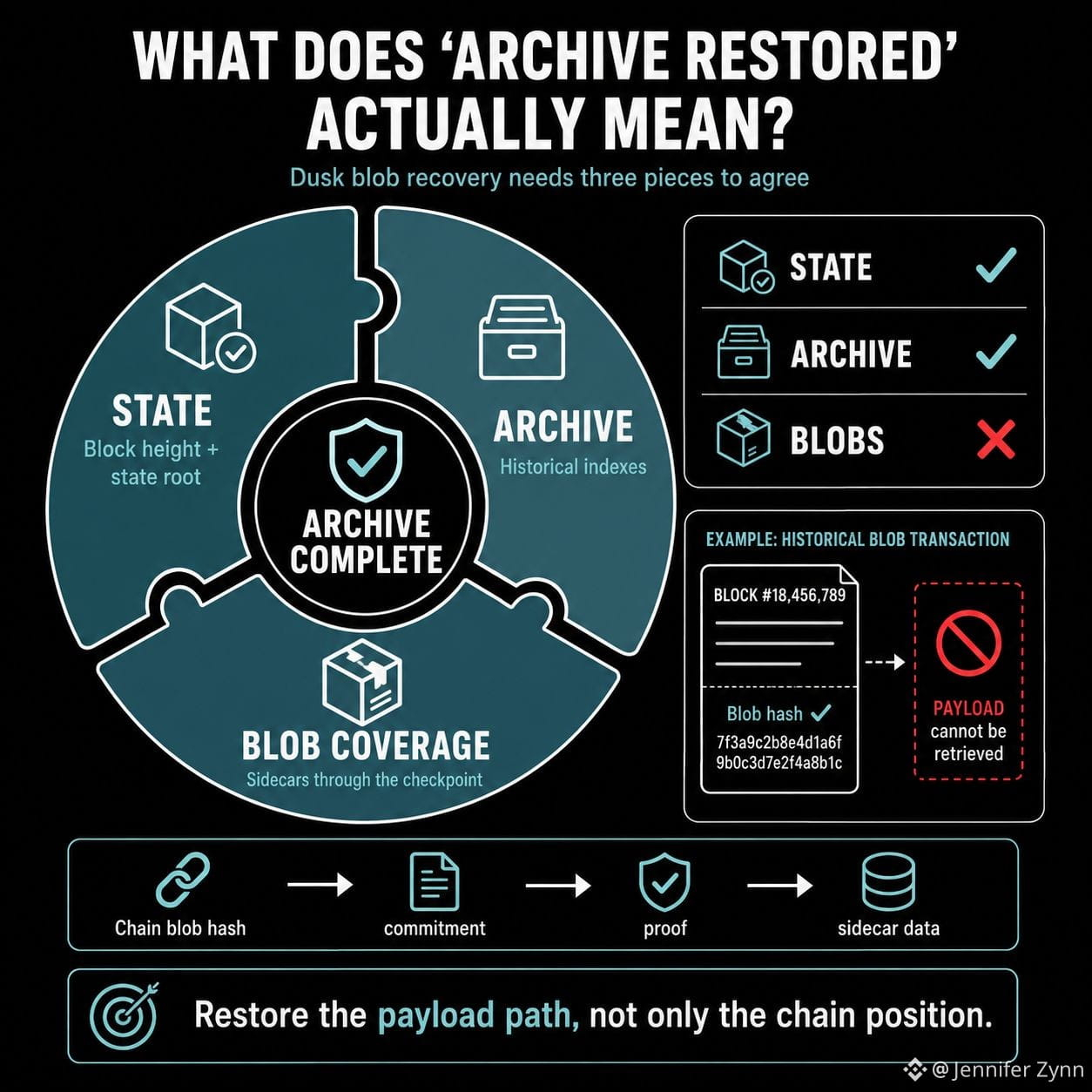
Blob-Transaktionen hinterlassen einen versionierten KZG-Blob-Hash on-chain, aber die Nutzdaten werden separat über Rusk anhand des Blob-Hashes oder des Commitments abgerufen. Das bedeutet, dass der Ketteneintrag und der Blob-Body nicht in derselben Wiederherstellungsannahme liegen.
Das Archiv-Tooling macht die Trennung explizit. Blob-Objekte werden separat gespeichert, die Abdeckung wird über zusammenhängende Blockbereiche hinweg nachgewiesen, und ein Archiv-Checkpoint ist erst vollständig, wenn sein passender Zustand, die Archivdaten und die Blob-Abdeckung zusammenpassen.
Wenn ich also den Kettenzustand und die Archivindizes sichere, aber die Blob-Speicherung wie einen wegwerfbaren Cache behandle, kann die Wiederherstellung gesund aussehen. Die Blöcke sind da. Die Transaktionshashes sind da. Meine Anwendung fragt nach einem alten Sidecar und bekommt nichts.
Das ist der Fehler, den ich testen würde, bevor ich ein wiederhergestelltes Dusk-Archiv als wiederhergestellt betrachte. Wähle einen finalisierten historischen Blob, löse seinen Ketten-berichteten Hash auf, hole den Sidecar und überprüfe dann Commitment und Proof.
Für mich bedeutet „Block wiederhergestellt“ nicht „Daten wiederhergestellt“, wenn die Anwendung von Dusk-Blob-Nutzdaten abhängt.
#dusk $DUSK @Dusk_Foundation
Ein Dusk-Archiv kann zur richtigen Blockhöhe zurückkommen und dennoch bei der einen Anfrage scheitern, die meine Blob-App tatsächlich benötigt: gib mir den Sidecar.
Blob-Transaktionen hinterlassen einen versionierten KZG-Blob-Hash on-chain, aber die Nutzdaten werden separat über Rusk anhand des Blob-Hashes oder des Commitments abgerufen. Das bedeutet, dass der Ketteneintrag und der Blob-Body nicht in derselben Wiederherstellungsannahme liegen.
Das Archiv-Tooling macht die Trennung explizit. Blob-Objekte werden separat gespeichert, die Abdeckung wird über zusammenhängende Blockbereiche hinweg nachgewiesen, und ein Archiv-Checkpoint ist erst vollständig, wenn sein passender Zustand, die Archivdaten und die Blob-Abdeckung zusammenpassen.
Wenn ich also den Kettenzustand und die Archivindizes sichere, aber die Blob-Speicherung wie einen wegwerfbaren Cache behandle, kann die Wiederherstellung gesund aussehen. Die Blöcke sind da. Die Transaktionshashes sind da. Meine Anwendung fragt nach einem alten Sidecar und bekommt nichts.
Das ist der Fehler, den ich testen würde, bevor ich ein wiederhergestelltes Dusk-Archiv als wiederhergestellt betrachte. Wähle einen finalisierten historischen Blob, löse seinen Ketten-berichteten Hash auf, hole den Sidecar und überprüfe dann Commitment und Proof.
Für mich bedeutet „Block wiederhergestellt“ nicht „Daten wiederhergestellt“, wenn die Anwendung von Dusk-Blob-Nutzdaten abhängt.
#dusk $DUSK @Dusk
Blob-Transaktionen hinterlassen einen versionierten KZG-Blob-Hash on-chain, aber die Nutzdaten werden separat über Rusk anhand des Blob-Hashes oder des Commitments abgerufen. Das bedeutet, dass der Ketteneintrag und der Blob-Body nicht in derselben Wiederherstellungsannahme liegen.
Das Archiv-Tooling macht die Trennung explizit. Blob-Objekte werden separat gespeichert, die Abdeckung wird über zusammenhängende Blockbereiche hinweg nachgewiesen, und ein Archiv-Checkpoint ist erst vollständig, wenn sein passender Zustand, die Archivdaten und die Blob-Abdeckung zusammenpassen.
Wenn ich also den Kettenzustand und die Archivindizes sichere, aber die Blob-Speicherung wie einen wegwerfbaren Cache behandle, kann die Wiederherstellung gesund aussehen. Die Blöcke sind da. Die Transaktionshashes sind da. Meine Anwendung fragt nach einem alten Sidecar und bekommt nichts.
Das ist der Fehler, den ich testen würde, bevor ich ein wiederhergestelltes Dusk-Archiv als wiederhergestellt betrachte. Wähle einen finalisierten historischen Blob, löse seinen Ketten-berichteten Hash auf, hole den Sidecar und überprüfe dann Commitment und Proof.
Für mich bedeutet „Block wiederhergestellt“ nicht „Daten wiederhergestellt“, wenn die Anwendung von Dusk-Blob-Nutzdaten abhängt.
#dusk $DUSK @Dusk
2
2
326
Anmelden und weiter Inhalte entdecken
Krypto-Nutzer weltweit auf Binance Square kennenlernen
⚡️ Bleib in Sachen Krypto stets am Puls.
💬 Die weltgrößte Kryptobörse vertraut darauf.
👍 Erhalte verlässliche Einblicke von verifizierten Creators.
E-Mail-Adresse/Telefonnummer
Trendthemen
NEARRisesNearly80%InAWeek
6,860 Aufrufe
447 Kommentare
#nearrisesnearly80%inaweek
🚨 FAST GEHÄUFTES RALLYE-INTERESSE NÄCHSTE 80% IN EINER WOCHE
Der native Token von NEAR hat eine deutliche Wochenbewegung hingelegt, mit einem Plus von rund 78% in den vergangenen sieben Tagen und einem Handelspreis von etwa 4,29 $ am 21. September, laut gemeldeten CoinGecko-Daten.
📊 WAS LENKT DIE AUFMERKSAMKEIT?
• NEAR stieg in etwa einer Woche von rund 2,20 $ auf über 4,20 $
• Das kumulierte Volumen der NEAR Intents nähert sich 30 Mrd. $
• Jüngste Aktivitäten rund um geheime Perpetual-Futures-Trades haben eine weitere große Story rund um das Ökosystem ergänzt
• Die wöchentliche Performance von NEAR hat die breitere Krypto-Marktbewegung deutlich übertroffen, der im selben Zeitraum etwa 6% zulegte
🔎 WARUM DAS WICHTIG IST
Die Rally sorgt für neuen Fokus auf NEARs plattformübergreifende Liquiditätsinfrastruktur, das Intents-Ökosystem und Entwicklungen im bereich datenschutzorientierten Trading.
Doch nach einem so schnellen Move sind Volatilität und Gewinnmitnahmen ebenfalls wichtige Risiken, die man im Blick behalten sollte. Ein starker Wochengewinn garantiert nicht, dass der Schwung anhält.
📌 ALS NÄCHSTES ZU BEOBACHTEN
Händler könnten beobachten, ob NEAR den jüngsten Ausbruch halten kann und ob die Netzwerkaktivität weiterhin die Markterzählung stützt.
Der Kursimpuls von NEAR ist stark — aber der nächste Test ist, ob die Ökosystem-Aktivität mit den Spekulationen Schritt halten kann.
$MUBARAK $PHA $NIL
顾清妍
·1 Likes
·1.4k Aufrufe
MultiversXPlansHardForkRecovery
8,079 Aufrufe
393 Kommentare
CircleLaunchesInstitutionalBTCBackedBorrowing
10,306 Aufrufe
526 Kommentare