

Most crypto communities treat risk talk as FUD. I disagree — projects worth holding are ones where concerns get discussed without panic. Here's my monthly radar for @Fogo Official : five items I'm tracking, what would raise a red flag for each, and what would calm me.
Fogo is a purpose-built L1 on the SVM with sub-40ms blocks, enshrined MEV protections, and gas-free Sessions. I find the architecture compelling. But conviction without monitoring is just faith. I'd rather earn confidence through evidence than assume it.
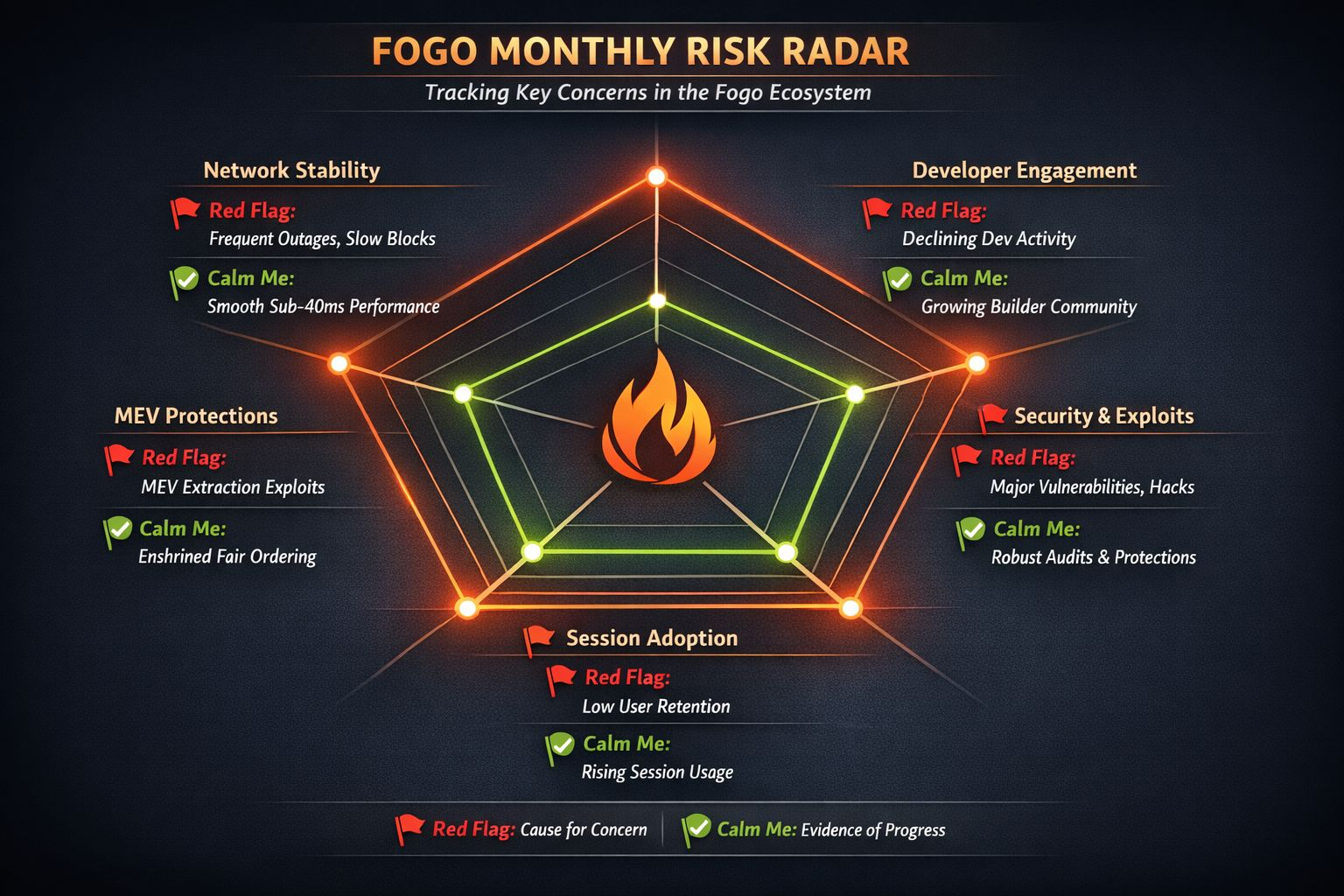
1. Validator Set: Movement or Stagnation?
Fogo launched with curated validators for performance. The claim that curation equals centralization oversimplifies — but the counter only holds if the set evolves over time.
I want a published expansion framework the community can learn from. One new validator with transparent benchmarks beats ten added quietly. The challenge is expanding without degrading sub-40ms consistency.
2. Builder Pipeline Beyond Launch Day
Valiant, Pyron, Fogolend, Moonit — a solid launch cohort. But every L1 has its day-one partners. The real question: are second-wave builders choosing Fogo independently?
Each new unaffiliated deployment is a packet of signal — it means a team compared alternatives and picked Fogo's architecture. If no fresh entrants appear by month three, competition from other execution-focused chains makes that silence concerning.
3. Sessions Adoption: Feature or Shelf Code?
Fogo Sessions — the gas-free, single-sign-in model — is the most differentiated feature. But features only matter if they change behavior. I'm tracking the ratio of Session-based transactions to standard ones across live dApps.
Higher per-wallet activity would be a reward for the UX-first design philosophy. If adoption stays flat, I'll need to learn whether the problem is awareness, integration friction, or genuine lack of demand. The code powering Sessions is novel enough that it needs stress-testing under real conditions before I tick the confidence box.
4. Community Signal Quality
The word "FUD" gets weaponized to shut down legitimate questions. I monitor the ratio between substantive discussion and empty hype. A community where every post screams moonshots is a red line for me — it means critical thinking got crowded out.
Honest self-assessment is the box that separates maturing ecosystems from echo chambers. The claim I test monthly: is the $FOGO community getting smarter, or just louder?
5. Team Communication Cadence
Douro Labs has strong technical credentials. But credentials alone don't earn ongoing trust — consistent, substantive communication does. I track engineering posts, governance proposals, and incident post-mortems. Each packet of real technical detail builds credibility over marketing polish.
The reward for transparency is community patience — arguably the scarcest resource any early-stage project can receive.
My Decision Framework
For each item I ask two questions:
Is there measurable evidence trending in the right direction? Data over narrative.
Has the team acknowledged this area publicly? Silence isn't neutral — it's a negative signal.
If three or more items show positive movement, conviction holds. If two or more go silent, I reassess regardless of price action.
The Honest Caveat
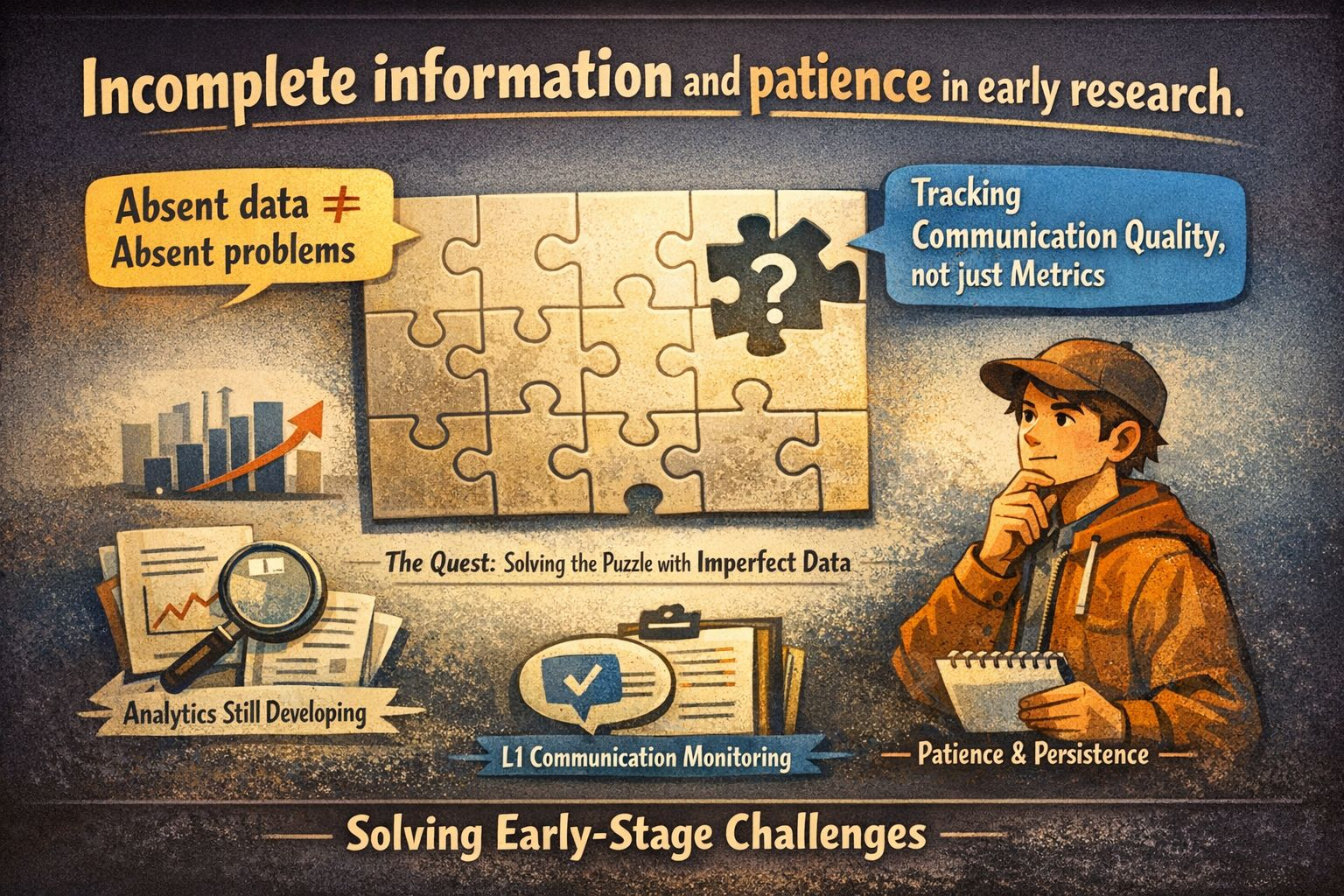
Some items can't be fully measured yet — Fogo is weeks post-mainnet with analytics still developing. Normal. But the challenge for any early L1 is that absent data gets mistaken for absent problems. I solve for this by tracking communication quality, not just metrics. The quest for perfect data shouldn't block disciplined monitoring. Every puzzle in early-stage research has this shape: incomplete information and patience.
Risks I'm Watching
Monitoring fatigue. If data stays sparse, it's tempting to stop tracking and rely on faith.
Narrative takeover. If trading volume chatter drowns infrastructure analysis, signal quality degrades.
Competitor acceleration. Purpose-built execution chains are a growing category. #fogo lead must be maintained, not assumed.
Information asymmetry. The team controls most meaningful data until third-party dashboards emerge.
Practical Takeaways
Build a monthly monitoring habit. Five items keeps you honest.
Separate conviction from complacency. Strong architecture doesn't mean zero risk.
Attention won at launch must be kept through execution. Every L1 faces this test eventually.
