
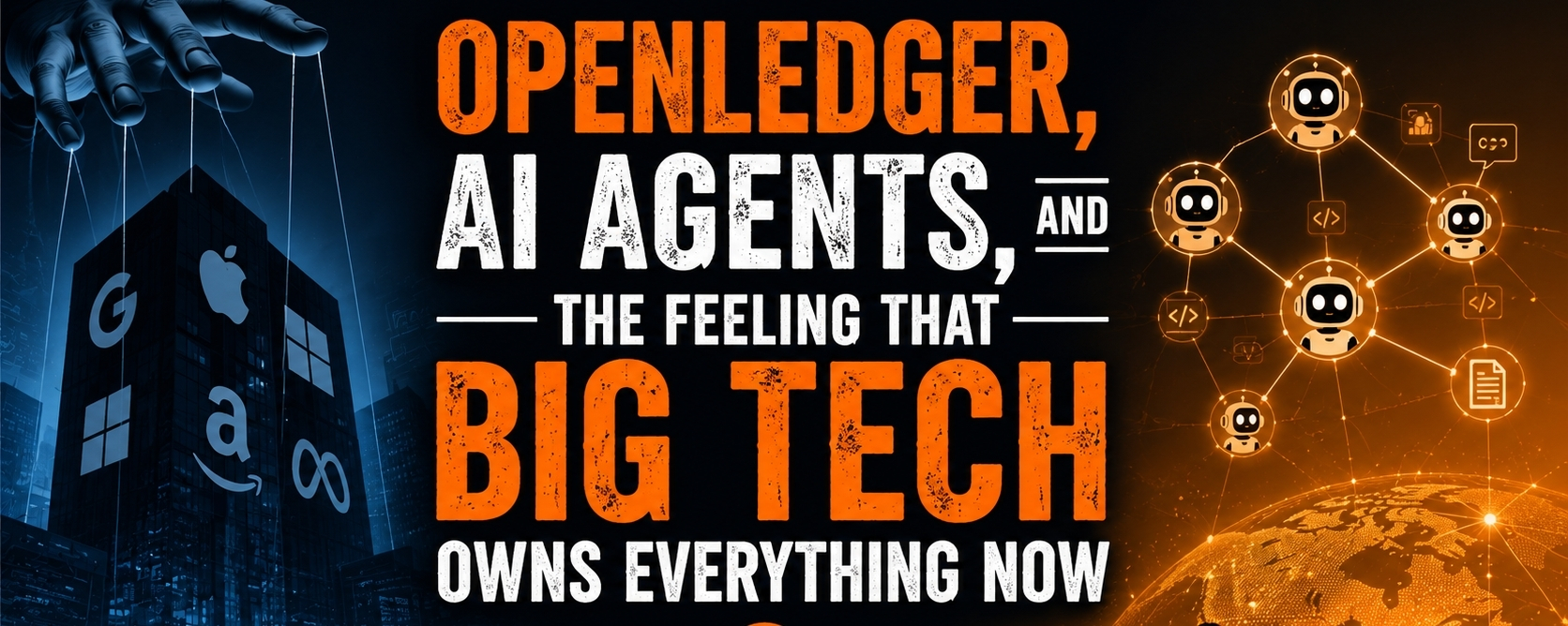

What makes this whole thing even more frustrating is how quickly people fall back into cult behavior every single cycle. Doesn’t matter how many projects fail. Doesn’t matter how many exchanges collapse or how many influencers get exposed. The second a new narrative shows up, everybody acts like this time will be different. AI just became the latest religion for tech people who need something to believe in.
You can already see it happening.
Every startup suddenly claims it’s building “AI infrastructure.” Every blockchain project adds the word agent somewhere in the roadmap. Half the people talking about autonomous AI online barely understand what the systems even do, but they still speak with absolute confidence because confidence gets engagement now. Nobody gets rewarded for saying “maybe.” The internet rewards certainty even when the certainty is fake.
That’s another reason OpenLedger gets mixed reactions.
Some people genuinely think decentralized AI is important. Others just see another token trying to ride the AI wave before retail money floods in again. And honestly both groups probably exist at the same time. That’s the weird thing about crypto. Real ideas and pure nonsense are always mixed together until nobody can tell the difference anymore.
But if you ignore the noise for a second, there’s still a serious issue sitting underneath everything.
AI models need data constantly. Not just huge amounts of data. Fresh data. Human behavior changes. Language changes. Trends change. Markets change. Culture changes. AI systems become outdated fast if they stop learning from real interactions. That means the companies building these systems need continuous access to human input forever.
Which means people are basically becoming unpaid infrastructure.
That sounds dramatic but look around. Everyone online is already producing training material nonstop. Forums. Videos. Comments. Reviews. Voice recordings. Art. Code. Conversations. Humans are feeding machine intelligence every hour of every day without even thinking about it anymore.
And the compensation model is still terrible.
Most people get nothing.
Meanwhile a few companies are building massive competitive advantages from collective human behavior. That imbalance is eventually going to create backlash. Feels inevitable honestly. Maybe not today. Maybe not next year. But eventually people will start asking harder questions about ownership and value extraction in AI systems.
OpenLedger seems built around that exact future tension.
The idea is that contributors should have a way to participate economically instead of acting like invisible labor feeding centralized AI engines. So instead of one corporation locking everything inside private systems, you create open marketplaces for data and models where value flows between participants directly.
Again, sounds good in theory.
The problem is theory doesn’t survive contact with real users most of the time.
Regular people want simple products. Fast products. Cheap products. They do not want to manage wallets and private keys and governance proposals just to use AI tools. Crypto people underestimate this constantly because they spend too much time around other crypto people. Outside those circles, most users barely care how the backend works as long as the app functions properly.
That’s why centralized platforms keep winning.
Convenience beats ideology.
Every time.
Even people screaming about privacy still use apps that track everything because the apps are easier. Human behavior is predictable like that. So decentralized AI projects have to compete against giant corporations with unlimited money and smoother user experience. That’s not impossible, but it’s brutal.
Then there’s regulation.
Governments are absolutely not going to ignore AI mixed with decentralized finance forever. No chance. Once AI agents start handling money or making autonomous decisions at scale, regulators will move in hard. Especially if these systems start affecting labor markets or financial systems directly. Governments tolerate innovation until innovation starts touching power structures. Then suddenly the rules appear overnight.
Crypto people still act surprised by this somehow.
And AI itself already has enough controversy attached to it. Copyright fights. Deepfakes. surveillance concerns. Job displacement fears. Bias problems. Security risks. Now add blockchain economics into the mix and regulators are going to look at projects like OpenLedger very carefully whether the community likes it or not.
Still, despite all the problems, there’s a reason these ideas keep resurfacing.
People know something feels broken online.
The internet used to feel more open. Messier maybe, but more human. Now everything feels optimized for extraction. Algorithms squeeze engagement. Platforms chase data. AI companies scrape the web endlessly while calling it innovation. Users create enormous value but own almost none of the infrastructure surrounding them.
That resentment keeps building quietly underneath modern tech culture.
OpenLedger taps into it whether intentionally or not.
Because at its core the project is asking a simple question nobody really solved yet: if human knowledge and behavior are training AI systems worth billions, why are ordinary people completely cut out of ownership?
That question is hard to ignore once you really sit with it.
Especially now. Because AI isn’t slowing down. Every month the systems get better. More integrated. More normalized. At some point society will stop viewing AI as just software and start viewing it as infrastructure. And whoever owns infrastructure usually ends up with enormous power over everybody else.
That’s why this stuff matters beyond crypto speculation.
Even if OpenLedger itself fails, the bigger issue remains. The fight over AI ownership is coming either way. Open systems versus centralized systems. Public infrastructure versus corporate control. Collective contribution versus private extraction.
That battle is only starting.