
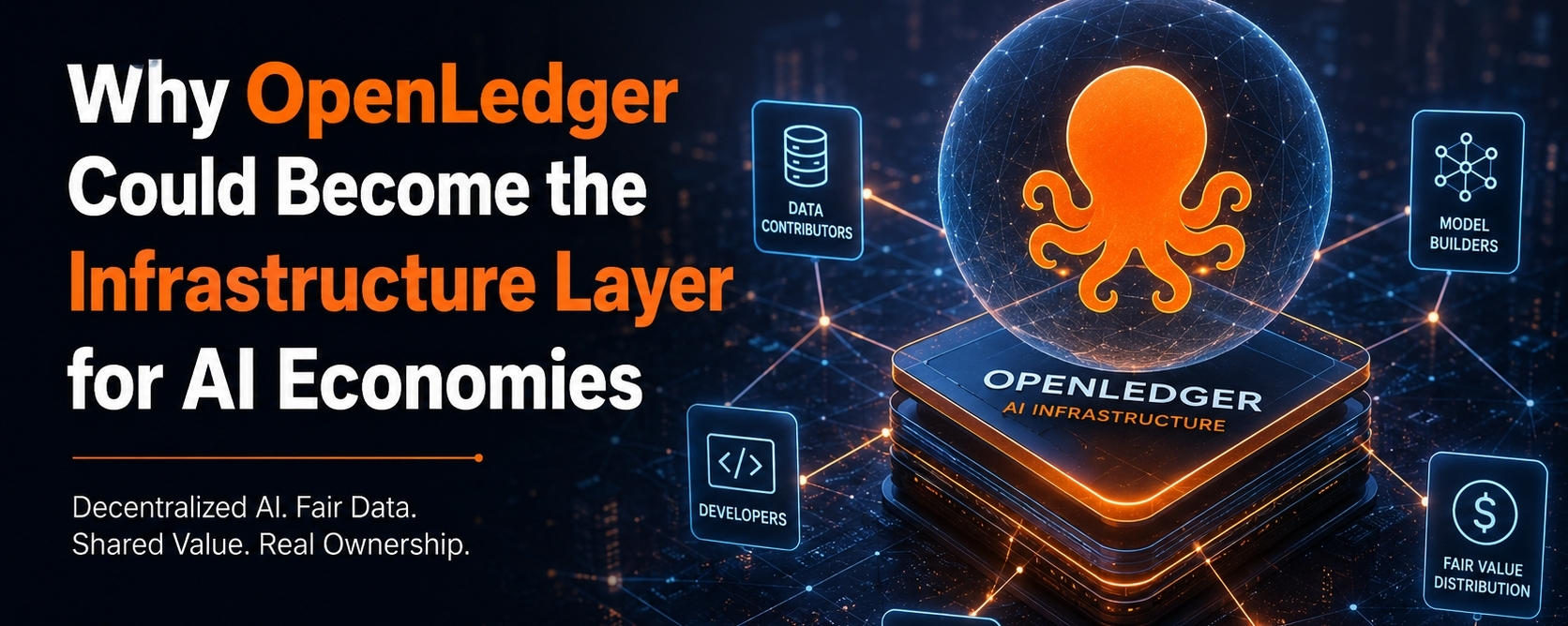

The first time I seriously thought about the future of AI economies, it wasn’t because of a breakthrough model or some major announcement. It was because I started noticing how fragmented everything already felt. One platform controlled the models, another controlled the data, and somewhere in between, users were constantly generating value without really owning any part of the system.
That imbalance keeps showing up across AI.
The companies building models need data.
The people providing that data rarely benefit fairly.
And the infrastructure connecting everything is still surprisingly centralized.
That’s probably why projects like OpenLedger are starting to get attention.
Not because they’re trying to become “another AI project,” but because they’re targeting something deeper:
becoming infrastructure for how AI economies function.
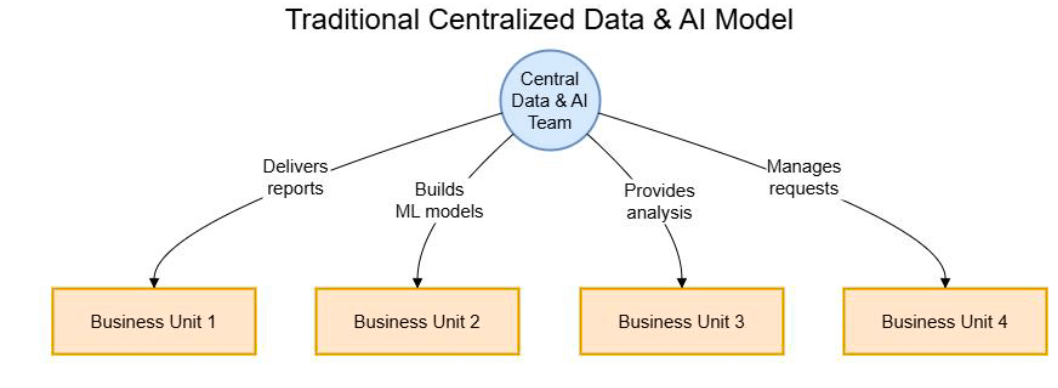
The Bigger Problem Behind AI Right Now
A lot of the current AI boom is built around concentration. A small number of companies control:
large-scale compute
proprietary models
massive datasets
That has made AI incredibly powerful, but also heavily dependent on centralized systems.And as AI becomes more integrated into:
finance
content
applications
automation
The question becomes harder to ignore:
Who actually owns the value AI creates? Right now, the answer is usually the platform itself. That’s where OpenLedger’s positioning starts becoming more interesting.
What OpenLedger Is Actually Trying to Build
At its core, OpenLedger is focused on decentralized AI infrastructure. The idea isn’t simply to host models on-chain or attach tokens to AI tools. It’s trying to create a framework where:
data contributors
model builders
developers
users can all participate within the same economic system. That matters because AI economies depend heavily on coordination. Models need high-quality data. Applications need accessible models.Contributors need incentives. Without infrastructure connecting those layers properly, the entire system stays fragmented. OpenLedger is essentially trying to build:
A shared network where AI value moves more openly.

Why Data Ownership Matters More Than Ever
One of the strongest narratives around OpenLedger is data attribution. Most AI systems today absorb enormous amounts of information, but contributors rarely know:
how their data is being used
whether it improves models
or whether they receive any value from it
That creates a very one-sided economy. OpenLedger’s approach pushes toward something different:
tracking contributions
verifying participation
distributing value more transparently
If AI economies continue growing the way many people expect, this becomes extremely important. Because eventually, data itself becomes an economic asset not just a background resource companies quietly collect.
Infrastructure Usually Wins Quietly
What makes OpenLedger interesting is that it’s targeting infrastructure rather than attention. And historically, infrastructure layers tend to matter more over time than the applications built on top of them. Most users never think about:
cloud architecture
internet protocols
payment rails
But those systems quietly determine how entire ecosystems function. OpenLedger seems to be positioning itself in a similar way not necessarily as the “face” of AI, but as part of the underlying layer supporting it. That’s a very different strategy from projects chasing short-term AI hype.
The AI + Blockchain Narrative Is Finally Maturing
For a while, many AI-crypto projects felt disconnected from real utility.Either:
AI was mostly marketing
or blockchain didn’t meaningfully improve the product
But now the conversation is starting to shift. People are paying more attention to:
ownership
attribution
decentralized coordination
monetization of contributions
And these are areas where blockchain actually makes practical sense. OpenLedger fits this newer direction better than many earlier projects because it’s addressing an economic coordination problem—not just a technical one.
My Take After Looking Into It
The part that feels most interesting to me is that OpenLedger seems less focused on individual AI models and more focused on how value moves around AI systems. A lot of AI projects focus on:
building a better assistant
launching another model
improving inference
OpenLedger appears more focused on:
The infrastructure connecting contributors, data, and incentives together. That feels like a stronger long-term angle.Because eventually, models can become commoditized. Infrastructure and coordination layers are usually much harder to replace. Still, there are obvious challenges. The project depends heavily on adoption. Infrastructure only matters if developers and contributors actually use it. And AI moves extremely fast. Systems designed today can become outdated quickly if they don’t evolve aggressively.
The Risks Are Real
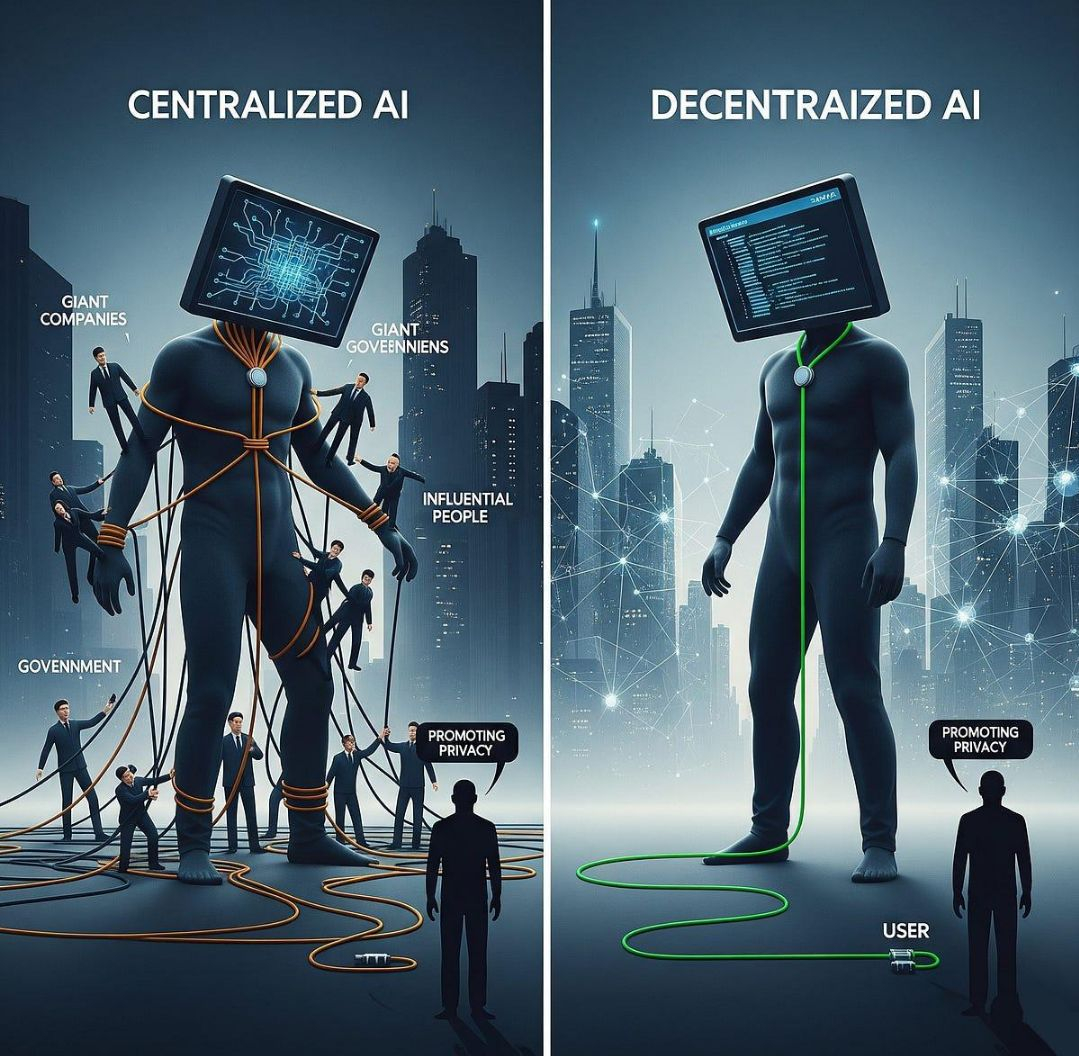
There’s also the issue of competition. OpenLedger isn’t operating in an empty market. Large centralized companies already dominate AI infrastructure, and they have:
funding
compute
established ecosystems
Convincing developers to move toward decentralized alternatives won’t be easy. There’s also a usability problem. Decentralized systems often struggle with:
complexity
scalability
onboarding friction
And most AI developers prioritize efficiency and speed over ideology. So OpenLedger has to prove that decentralization isn’t just philosophically attractive it needs to be practically useful.
The Bigger Shift Happening Underneath
Even with those risks, I think the broader direction still matters. AI is slowly becoming an economy of its own. Not just software an actual economic system involving:
data providers
model creators
AI agents
applications
marketplaces
All interacting continuously. And economies eventually require infrastructure:
standards
coordination
ownership systems
incentive layers
That’s the space OpenLedger is trying to occupy. Not necessarily the most visible layer, but potentially one of the most important.

Final Thought
Most people are focused on which AI model will win. But over time, the bigger question may become:
who builds the systems connecting all of them?That’s where OpenLedger becomes interesting. Because if AI economies continue expanding, the real value may not sit only inside the models themselves. It may exist in the infrastructure layer underneath the part that decides
who contributes
who earns
and how value moves across the network
And right now, that layer is still very much up for grabs.