

Sulaiman 零号猎人
2.5k Bài đăng

Sulaiman 零号猎人
Báo cáo
Chặn người dùng
ZeroHunter | Hunting 10X potential in micro-caps & RWA with on-chain research. I show how I check a project's data before I trust it. NFA. #ZeroResearch
Giao dịch mở
Trader thường xuyên
{thời gian} năm
141 Đang theo dõi
966 Người theo dõi
2.3K+ Đã thích
Bài đăng
Danh mục đầu tư
Tất cả
Trích dẫn
Live
PINNED
Bài viết
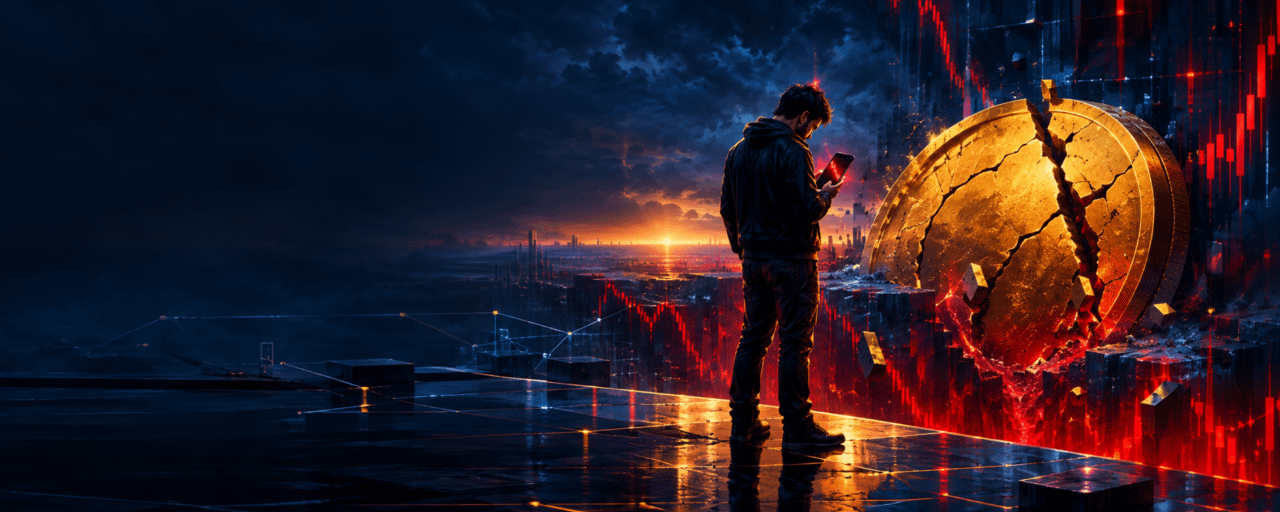
Tôi đã mất 750 USDT trên LUNA vì tôi đã bỏ qua một bướcCông bố: Tôi không nắm giữ bất kỳ đồng Terra nào (LUNA hay LUNC).
Tôi đã lỗ khoảng 750 USDT trên một đồng, và đó là lỗi của chính tôi.
Phần tệ nhất? Tôi đã mua mà không kiểm tra bất cứ điều gì.
LUNA (Terra cũ) ngày trước là một anh hùng. Nhiều người, trong đó có tôi, đã muốn đưa nó vào danh mục đầu tư của mình.
Vào một buổi sáng tháng 5 năm 2022, tôi tỉnh dậy và thấy nó ở mức 3,5 USDT. Tôi không xem tin tức. Tôi cũng không hỏi tại sao. Tôi chỉ mua vào khoảng 350 USDT, nhanh gọn.
Sau đó tôi mở X và xem bài đăng của CZ. Anh ấy nói rằng một số người dùng vẫn tiếp tục mua LUNA mà không hiểu rủi ro.
Tôi đã mất 750 USDT trên LUNA vì tôi đã bỏ qua một bước
Công bố: Tôi không nắm giữ bất kỳ đồng Terra nào (LUNA hay LUNC).
Tôi đã lỗ khoảng 750 USDT trên một đồng, và đó là lỗi của chính tôi.
Phần tệ nhất? Tôi đã mua mà không kiểm tra bất cứ điều gì.
LUNA (Terra cũ) ngày trước là một anh hùng. Nhiều người, trong đó có tôi, đã muốn đưa nó vào danh mục đầu tư của mình.
Vào một buổi sáng tháng 5 năm 2022, tôi tỉnh dậy và thấy nó ở mức 3,5 USDT. Tôi không xem tin tức. Tôi cũng không hỏi tại sao. Tôi chỉ mua vào khoảng 350 USDT, nhanh gọn.
Sau đó tôi mở X và xem bài đăng của CZ. Anh ấy nói rằng một số người dùng vẫn tiếp tục mua LUNA mà không hiểu rủi ro.
Tôi đã lỗ khoảng 750 USDT trên một đồng, và đó là lỗi của chính tôi.
Phần tệ nhất? Tôi đã mua mà không kiểm tra bất cứ điều gì.
LUNA (Terra cũ) ngày trước là một anh hùng. Nhiều người, trong đó có tôi, đã muốn đưa nó vào danh mục đầu tư của mình.
Vào một buổi sáng tháng 5 năm 2022, tôi tỉnh dậy và thấy nó ở mức 3,5 USDT. Tôi không xem tin tức. Tôi cũng không hỏi tại sao. Tôi chỉ mua vào khoảng 350 USDT, nhanh gọn.
Sau đó tôi mở X và xem bài đăng của CZ. Anh ấy nói rằng một số người dùng vẫn tiếp tục mua LUNA mà không hiểu rủi ro.
2
5
9
983
Xem bản dịch
🚨 $AIN — LONG SIGNAL
{future}(AINUSDT)
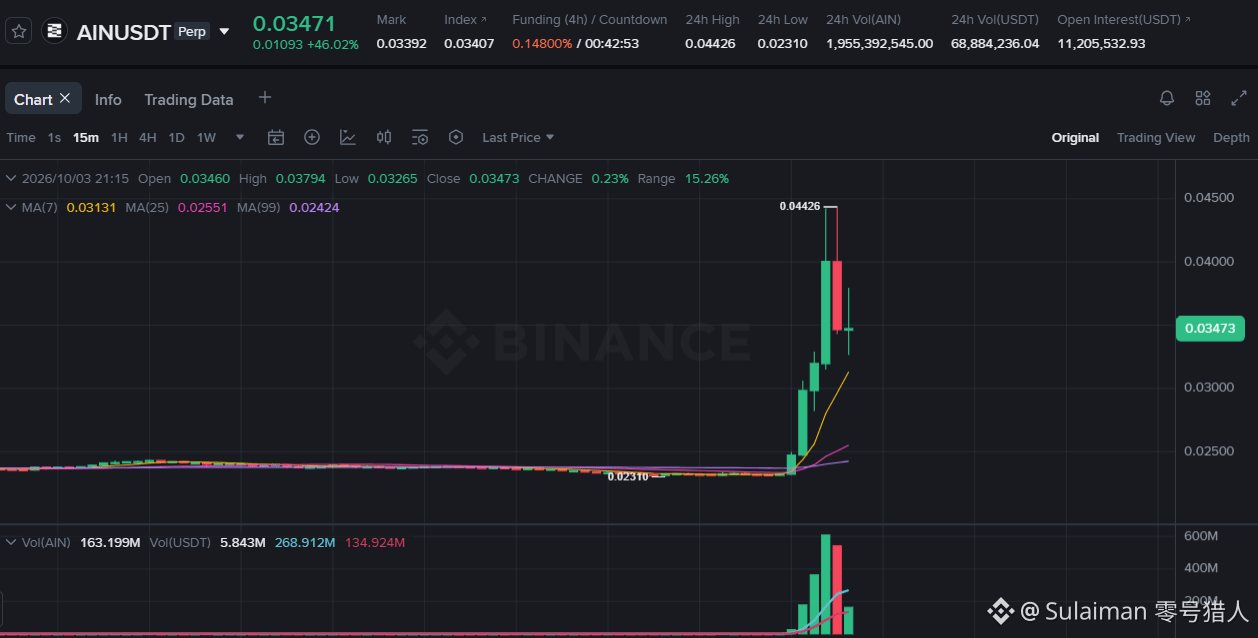
AIN is showing a strong momentum breakout on the 15M chart.
Current: 0.04325
24H High: 0.04414
Key Support: 0.03660
24H Turnover: $2.23M
15M: +21.23%
The move is backed by a sharp volume expansion, not just a slow grind higher.
Trade Setup
🟢 Bias: LONG
🎯 Entry: 0.0420–0.0433
🎯 TP1: 0.0441
🎯 TP2: 0.0470
🎯 TP3: 0.0500
🛑 Invalidation: Sustained 15M weakness below 0.0366
The key now is whether AIN can hold the breakout instead of immediately giving back the move.
Momentum is strong. Risk management stays mandatory.
Signal: LONG 🔥
#AIN #AINUSDT #TradingSignal #CryptoTrading #Perpetuals
🚨 $AIN — LONG SIGNAL
AIN is showing a strong momentum breakout on the 15M chart.
Current: 0.04325
24H High: 0.04414
Key Support: 0.03660
24H Turnover: $2.23M
15M: +21.23%
The move is backed by a sharp volume expansion, not just a slow grind higher.
Trade Setup
🟢 Bias: LONG
🎯 Entry: 0.0420–0.0433
🎯 TP1: 0.0441
🎯 TP2: 0.0470
🎯 TP3: 0.0500
🛑 Invalidation: Sustained 15M weakness below 0.0366
The key now is whether AIN can hold the breakout instead of immediately giving back the move.
Momentum is strong. Risk management stays mandatory.
Signal: LONG 🔥
#AIN #AINUSDT #TradingSignal #CryptoTrading #Perpetuals
AIN is showing a strong momentum breakout on the 15M chart.
Current: 0.04325
24H High: 0.04414
Key Support: 0.03660
24H Turnover: $2.23M
15M: +21.23%
The move is backed by a sharp volume expansion, not just a slow grind higher.
Trade Setup
🟢 Bias: LONG
🎯 Entry: 0.0420–0.0433
🎯 TP1: 0.0441
🎯 TP2: 0.0470
🎯 TP3: 0.0500
🛑 Invalidation: Sustained 15M weakness below 0.0366
The key now is whether AIN can hold the breakout instead of immediately giving back the move.
Momentum is strong. Risk management stays mandatory.
Signal: LONG 🔥
#AIN #AINUSDT #TradingSignal #CryptoTrading #Perpetuals
213
Xem bản dịch
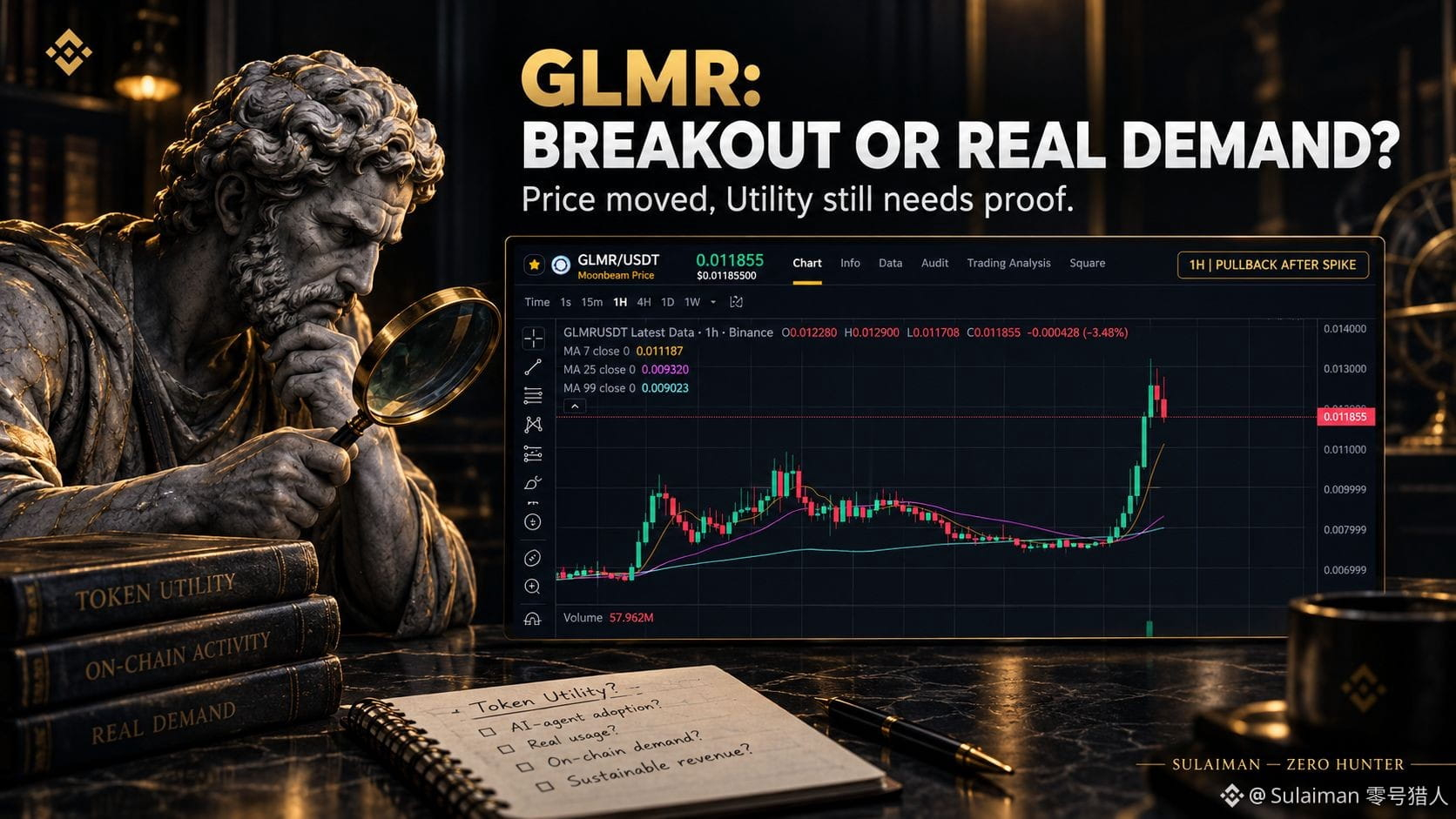
Moonbeam ($GLMR ): Can an AI pivot create real token demand?
Moonbeam’s shift toward AI-agent settlement on Base introduces a new thesis. But a new narrative does not automatically create token value.
The proposed model lets AI agents coordinate jobs and settle payments. GLMR’s planned role includes backing assurance pools that could earn a share of fees.
The critical distinction: proposed utility is not proven demand.
Before treating this as a fundamental turnaround, I want to see three things:
Assurance pools actually live.
Verifiable agent activity generating fees.
Recurring GLMR demand tied to real usage.
The strongest counterargument is straightforward: the product may attract attention without generating enough activity to support its token economics.
What would change my view? Evidence that real users are paying for the service and that activity translates into measurable GLMR demand.
Are you watching GLMR for its new utility, or waiting for usage data first?
Position: Researching only. Not financial advice.
#GLMR #Moonbeam #ZeroResearch
Moonbeam ($GLMR ): Can an AI pivot create real token demand?
Moonbeam’s shift toward AI-agent settlement on Base introduces a new thesis. But a new narrative does not automatically create token value.
The proposed model lets AI agents coordinate jobs and settle payments. GLMR’s planned role includes backing assurance pools that could earn a share of fees.
The critical distinction: proposed utility is not proven demand.
Before treating this as a fundamental turnaround, I want to see three things:
Assurance pools actually live.
Verifiable agent activity generating fees.
Recurring GLMR demand tied to real usage.
The strongest counterargument is straightforward: the product may attract attention without generating enough activity to support its token economics.
What would change my view? Evidence that real users are paying for the service and that activity translates into measurable GLMR demand.
Are you watching GLMR for its new utility, or waiting for usage data first?
Position: Researching only. Not financial advice.
#GLMR #Moonbeam #ZeroResearch
Moonbeam’s shift toward AI-agent settlement on Base introduces a new thesis. But a new narrative does not automatically create token value.
The proposed model lets AI agents coordinate jobs and settle payments. GLMR’s planned role includes backing assurance pools that could earn a share of fees.
The critical distinction: proposed utility is not proven demand.
Before treating this as a fundamental turnaround, I want to see three things:
Assurance pools actually live.
Verifiable agent activity generating fees.
Recurring GLMR demand tied to real usage.
The strongest counterargument is straightforward: the product may attract attention without generating enough activity to support its token economics.
What would change my view? Evidence that real users are paying for the service and that activity translates into measurable GLMR demand.
Are you watching GLMR for its new utility, or waiting for usage data first?
Position: Researching only. Not financial advice.
#GLMR #Moonbeam #ZeroResearch
16
🎙️ 🎉2026狂暴牛市,号角已吹响,行情尽在BSC链!!11月1号马斯克将为火星狗Marvin庆祝生日,这波链上行情一定要抓住!
Kết thúc
02 giờ 19 phút 52 giây
5.3k
13
41
Đã xác minh
Xem bản dịch
Do The Bank Need the Token?
Everyone is watching the bank deal. I wanted to know one thing first. Do the banks need the token?
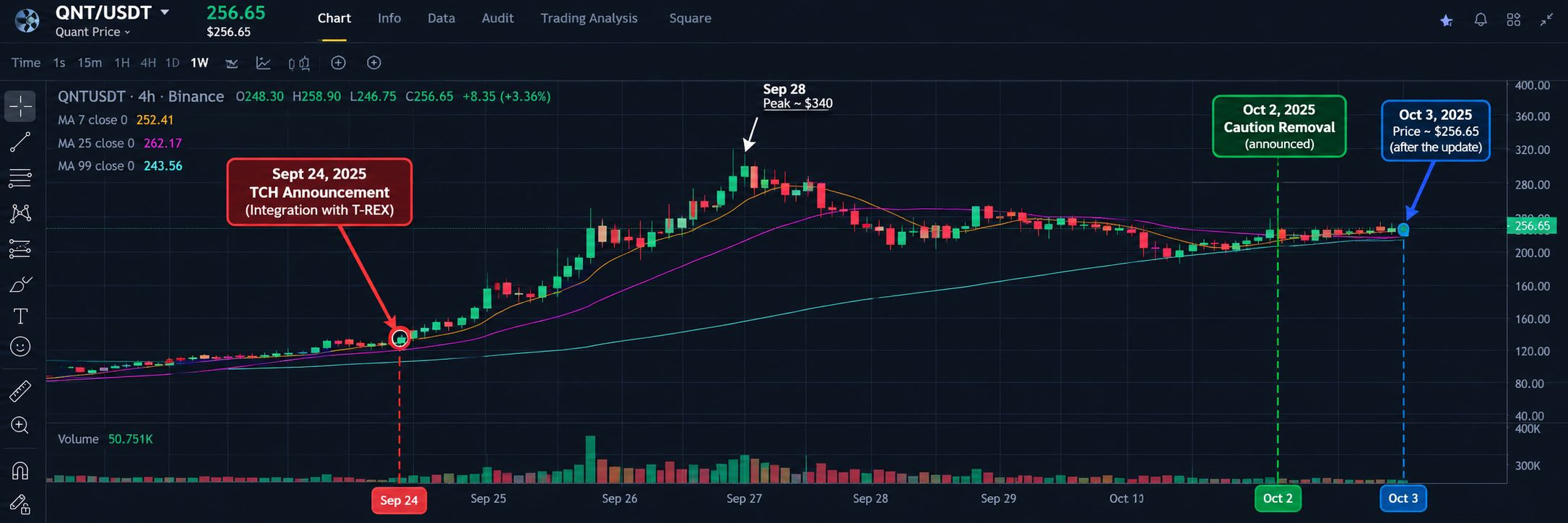
The deal is real. On Sept 24, The Clearing House picked Quant to build the tech for its On-Chain Money Initiative. TCH networks clear more than $2T a day. Institutions are expected to get access in the first half of 2027.
That is a big win for the company. But company success and token success are two different things.
Here is what I found. Quant's FAQ says platform fees can be paid in US dollars. QNT is one option for subscriptions. A report says the deal does not require banks to hold or pay in QNT. The actual terms are private, so I'm saying "not shown," not "doesn't exist." The token's role could be bigger than the public papers suggest.
Now the price. QNT went from about $60-70 to a peak near $372 on Sept 27. It is now back below $300, and my screenshot shows $256.88. That is a big move in about two weeks, with the launch still months away. Part of the rally also looked like a futures short squeeze.
What would make me more interested is Quant or TCH publishing a fee model that requires or favors QNT. What would make me back off is confirmation that fees are paid in fiat only.
I also haven't verified the supply numbers. The 14.9M max and 12M+ circulating figures came from a commentator, so check them against official data.
Has anyone seen a contract or term sheet that names QNT as required? That one document would settle most of this.
NFA
#ZeroResearch #ZeroHunter #QNT #RWA
Do The Bank Need the Token?
Everyone is watching the bank deal. I wanted to know one thing first. Do the banks need the token?
The deal is real. On Sept 24, The Clearing House picked Quant to build the tech for its On-Chain Money Initiative. TCH networks clear more than $2T a day. Institutions are expected to get access in the first half of 2027.
That is a big win for the company. But company success and token success are two different things.
Here is what I found. Quant's FAQ says platform fees can be paid in US dollars. QNT is one option for subscriptions. A report says the deal does not require banks to hold or pay in QNT. The actual terms are private, so I'm saying "not shown," not "doesn't exist." The token's role could be bigger than the public papers suggest.
Now the price. QNT went from about $60-70 to a peak near $372 on Sept 27. It is now back below $300, and my screenshot shows $256.88. That is a big move in about two weeks, with the launch still months away. Part of the rally also looked like a futures short squeeze.
What would make me more interested is Quant or TCH publishing a fee model that requires or favors QNT. What would make me back off is confirmation that fees are paid in fiat only.
I also haven't verified the supply numbers. The 14.9M max and 12M+ circulating figures came from a commentator, so check them against official data.
Has anyone seen a contract or term sheet that names QNT as required? That one document would settle most of this.
NFA
#ZeroResearch #ZeroHunter #QNT #RWA
Everyone is watching the bank deal. I wanted to know one thing first. Do the banks need the token?
The deal is real. On Sept 24, The Clearing House picked Quant to build the tech for its On-Chain Money Initiative. TCH networks clear more than $2T a day. Institutions are expected to get access in the first half of 2027.
That is a big win for the company. But company success and token success are two different things.
Here is what I found. Quant's FAQ says platform fees can be paid in US dollars. QNT is one option for subscriptions. A report says the deal does not require banks to hold or pay in QNT. The actual terms are private, so I'm saying "not shown," not "doesn't exist." The token's role could be bigger than the public papers suggest.
Now the price. QNT went from about $60-70 to a peak near $372 on Sept 27. It is now back below $300, and my screenshot shows $256.88. That is a big move in about two weeks, with the launch still months away. Part of the rally also looked like a futures short squeeze.
What would make me more interested is Quant or TCH publishing a fee model that requires or favors QNT. What would make me back off is confirmation that fees are paid in fiat only.
I also haven't verified the supply numbers. The 14.9M max and 12M+ circulating figures came from a commentator, so check them against official data.
Has anyone seen a contract or term sheet that names QNT as required? That one document would settle most of this.
NFA
#ZeroResearch #ZeroHunter #QNT #RWA
70
Đã xác minh
Xem bản dịch
I got one $SAND number wrong. The corrected story is more useful.
Yesterday $SAND had a huge day. In my earlier post I used a supply number that I have now replaced.
What I got wrong
I said about 500M extra coins appeared, roughly one in six. That came from an early alert. Later counts were much higher. PeckShield reported about 14.9B unbacked coins minted. But they were trapped on Base and BNB Chain after the bridges were shut. Ethereum supply stayed at 3B. The real drain was about 14.75M SAND, around 0.5% of max supply.
The 3 checks I use now
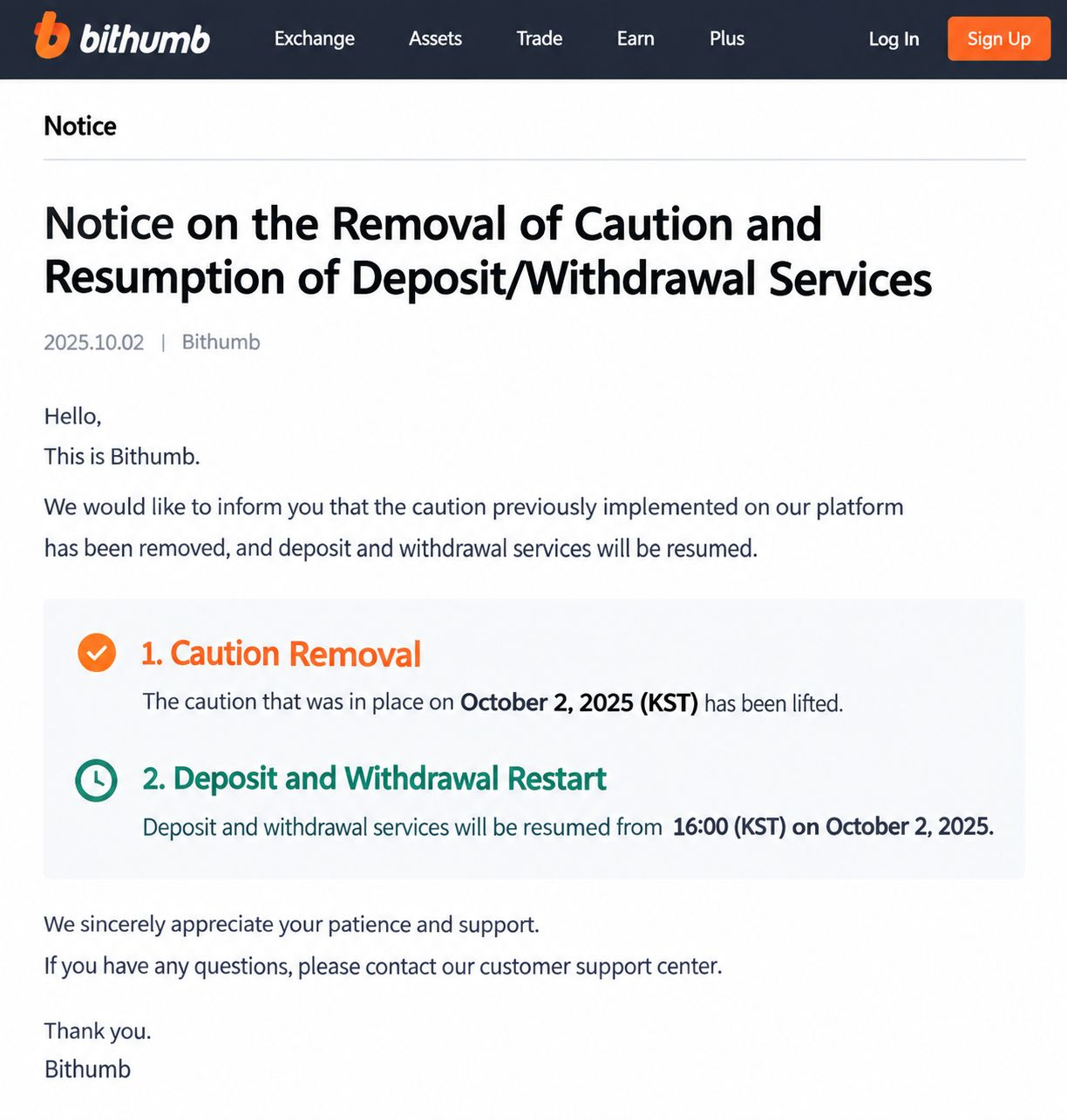
Access. Bithumb's own notice says the Korean caution was lifted on 2 Oct, with deposits and withdrawals set to resume at 16:00. Upbit's notice says the same for SAND/KRW and SAND/BTC, but I only saw it reproduced by a news site. Access came back. That is a real change.
Supply. The Sandbox is repaying affected holders 1:1 from its treasury, with no new tokens minted. That fixes a past problem. It does not create new demand.
Leverage. A 3 Oct report puts open interest near $1.46B across exchanges, about 6.4x the market cap, with about $13.5M in liquidations. Open interest is the total size of open futures bets. When it is that big, a news event can turn into a squeeze.
Not checked yet: where the attacker wallets hold coins today, and Binance-only funding and open interest.
What would change my view: open interest rising while volume fades, the caution returning, or attacker wallets sending coins to exchanges.
A 60%+ day shows attention. It does not show the project got stronger. No price levels from me.
Which of the three checks do you run first on a pumping coin?
I don't hold $SAND
{future}(SANDUSDT)
NFA
#ZeroResearch #ZeroHunter #SAND
I got one $SAND number wrong. The corrected story is more useful.
Yesterday $SAND had a huge day. In my earlier post I used a supply number that I have now replaced.
What I got wrong
I said about 500M extra coins appeared, roughly one in six. That came from an early alert. Later counts were much higher. PeckShield reported about 14.9B unbacked coins minted. But they were trapped on Base and BNB Chain after the bridges were shut. Ethereum supply stayed at 3B. The real drain was about 14.75M SAND, around 0.5% of max supply.
The 3 checks I use now
Access. Bithumb's own notice says the Korean caution was lifted on 2 Oct, with deposits and withdrawals set to resume at 16:00. Upbit's notice says the same for SAND/KRW and SAND/BTC, but I only saw it reproduced by a news site. Access came back. That is a real change.
Supply. The Sandbox is repaying affected holders 1:1 from its treasury, with no new tokens minted. That fixes a past problem. It does not create new demand.
Leverage. A 3 Oct report puts open interest near $1.46B across exchanges, about 6.4x the market cap, with about $13.5M in liquidations. Open interest is the total size of open futures bets. When it is that big, a news event can turn into a squeeze.
Not checked yet: where the attacker wallets hold coins today, and Binance-only funding and open interest.
What would change my view: open interest rising while volume fades, the caution returning, or attacker wallets sending coins to exchanges.
A 60%+ day shows attention. It does not show the project got stronger. No price levels from me.
Which of the three checks do you run first on a pumping coin?
I don't hold $SAND
NFA
#ZeroResearch #ZeroHunter #SAND
Yesterday $SAND had a huge day. In my earlier post I used a supply number that I have now replaced.
What I got wrong
I said about 500M extra coins appeared, roughly one in six. That came from an early alert. Later counts were much higher. PeckShield reported about 14.9B unbacked coins minted. But they were trapped on Base and BNB Chain after the bridges were shut. Ethereum supply stayed at 3B. The real drain was about 14.75M SAND, around 0.5% of max supply.
The 3 checks I use now
Access. Bithumb's own notice says the Korean caution was lifted on 2 Oct, with deposits and withdrawals set to resume at 16:00. Upbit's notice says the same for SAND/KRW and SAND/BTC, but I only saw it reproduced by a news site. Access came back. That is a real change.
Supply. The Sandbox is repaying affected holders 1:1 from its treasury, with no new tokens minted. That fixes a past problem. It does not create new demand.
Leverage. A 3 Oct report puts open interest near $1.46B across exchanges, about 6.4x the market cap, with about $13.5M in liquidations. Open interest is the total size of open futures bets. When it is that big, a news event can turn into a squeeze.
Not checked yet: where the attacker wallets hold coins today, and Binance-only funding and open interest.
What would change my view: open interest rising while volume fades, the caution returning, or attacker wallets sending coins to exchanges.
A 60%+ day shows attention. It does not show the project got stronger. No price levels from me.
Which of the three checks do you run first on a pumping coin?
I don't hold $SAND
NFA
#ZeroResearch #ZeroHunter #SAND
1
149
Đã xác minh
Xem bản dịch
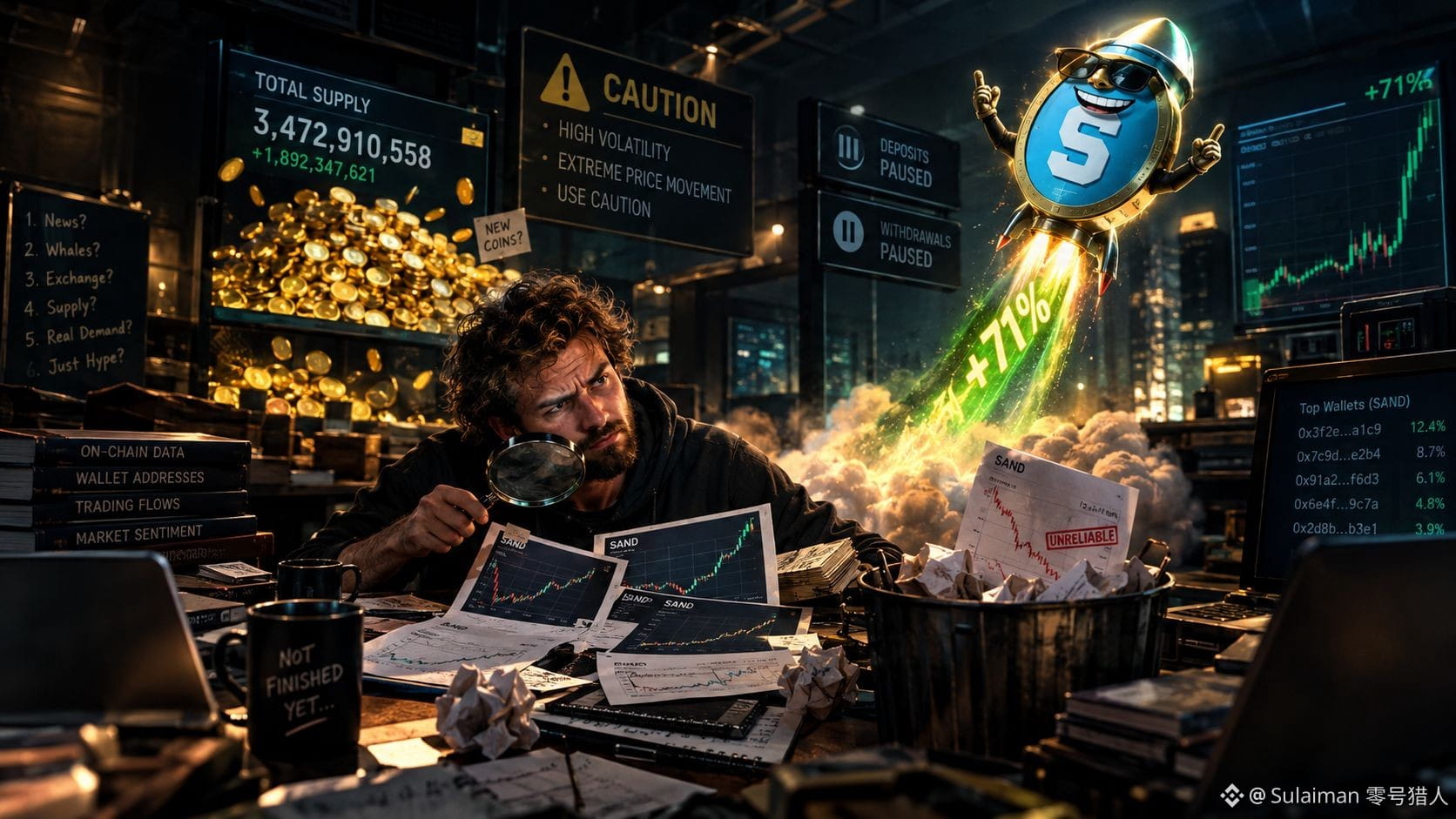
How I checked why $SAND jumped 71% today
About one in six. That is how many extra SAND coins appeared after an exploit in late August. Lookonchain, a public tracker, reported more than 500 million new coins. The most SAND can ever exist is 3 billion.
Those coins were not supposed to exist. Soon after, Upbit put a trading caution on SAND, and Bithumb paused deposits and withdrawals. Both are big Korean exchanges. Upbit's review window ran into this week. Today SAND is up about 71%.
So I tried to find out why. I read the exchange notices as reported by news sites. I checked the dates against the price jump on the chart. I also tried to compare price levels from a summary site against the live price. They did not match, so I threw that page out.
Here is what looks odd to me. Some people say the caution was lifted on 2 October. I could not confirm that. I only found the review window. The news sites do not show where the 500 million new coins went either. If they sit untouched, fine. If they move to exchanges, that is a lot of coins that could be sold. I have not yet looked at the public wallet records for this. That is my next check.
One more thing. A 71% day tells you people are excited. It does not tell you the project got stronger.
If you are thinking about trading it, here is how I would think. It only makes sense to me if the exchanges' own notices show the caution is gone. You also need to be able to sell without pushing the price down, and I have not verified that for SAND. I would stay out if trading volume fades fast, if the caution comes back, or if the new coins start moving to exchanges. I have no price levels for you, because the only ones I found were unreliable. Keep the size small enough that losing all of it would not hurt. Borrowed money (leverage) on a day like this is dangerous, because a sharp drop can wipe the trade before you react.
Has anyone seen the official Upbit or Bithumb notice saying the caution was lifted?
I watching $SAND NFA
#sand #ZeroResearch #ZeroHunter
How I checked why $SAND jumped 71% today
About one in six. That is how many extra SAND coins appeared after an exploit in late August. Lookonchain, a public tracker, reported more than 500 million new coins. The most SAND can ever exist is 3 billion.
Those coins were not supposed to exist. Soon after, Upbit put a trading caution on SAND, and Bithumb paused deposits and withdrawals. Both are big Korean exchanges. Upbit's review window ran into this week. Today SAND is up about 71%.
So I tried to find out why. I read the exchange notices as reported by news sites. I checked the dates against the price jump on the chart. I also tried to compare price levels from a summary site against the live price. They did not match, so I threw that page out.
Here is what looks odd to me. Some people say the caution was lifted on 2 October. I could not confirm that. I only found the review window. The news sites do not show where the 500 million new coins went either. If they sit untouched, fine. If they move to exchanges, that is a lot of coins that could be sold. I have not yet looked at the public wallet records for this. That is my next check.
One more thing. A 71% day tells you people are excited. It does not tell you the project got stronger.
If you are thinking about trading it, here is how I would think. It only makes sense to me if the exchanges' own notices show the caution is gone. You also need to be able to sell without pushing the price down, and I have not verified that for SAND. I would stay out if trading volume fades fast, if the caution comes back, or if the new coins start moving to exchanges. I have no price levels for you, because the only ones I found were unreliable. Keep the size small enough that losing all of it would not hurt. Borrowed money (leverage) on a day like this is dangerous, because a sharp drop can wipe the trade before you react.
Has anyone seen the official Upbit or Bithumb notice saying the caution was lifted?
I watching $SAND NFA
#sand #ZeroResearch #ZeroHunter
About one in six. That is how many extra SAND coins appeared after an exploit in late August. Lookonchain, a public tracker, reported more than 500 million new coins. The most SAND can ever exist is 3 billion.
Those coins were not supposed to exist. Soon after, Upbit put a trading caution on SAND, and Bithumb paused deposits and withdrawals. Both are big Korean exchanges. Upbit's review window ran into this week. Today SAND is up about 71%.
So I tried to find out why. I read the exchange notices as reported by news sites. I checked the dates against the price jump on the chart. I also tried to compare price levels from a summary site against the live price. They did not match, so I threw that page out.
Here is what looks odd to me. Some people say the caution was lifted on 2 October. I could not confirm that. I only found the review window. The news sites do not show where the 500 million new coins went either. If they sit untouched, fine. If they move to exchanges, that is a lot of coins that could be sold. I have not yet looked at the public wallet records for this. That is my next check.
One more thing. A 71% day tells you people are excited. It does not tell you the project got stronger.
If you are thinking about trading it, here is how I would think. It only makes sense to me if the exchanges' own notices show the caution is gone. You also need to be able to sell without pushing the price down, and I have not verified that for SAND. I would stay out if trading volume fades fast, if the caution comes back, or if the new coins start moving to exchanges. I have no price levels for you, because the only ones I found were unreliable. Keep the size small enough that losing all of it would not hurt. Borrowed money (leverage) on a day like this is dangerous, because a sharp drop can wipe the trade before you react.
Has anyone seen the official Upbit or Bithumb notice saying the caution was lifted?
I watching $SAND NFA
#sand #ZeroResearch #ZeroHunter
2
60
Đã xác minh
TSLAB thực sự là gì, trước khi ai đó nhìn vào giá
Tôi đã tìm hiểu TSLAB là gì trước khi xem giá của nó. TSLAB được ra mắt trên Binance vào ngày 12 tháng 6 năm 2026, nằm trong nhóm năm bStock đầu tiên, được hỗ trợ theo tỷ lệ 1:1 bằng một cổ phần do một bên lưu ký được quản lý nắm giữ. Tổ chức phát hành là BTECH Holdings tại ADGM. Người nắm giữ nhận một chứng chỉ kèm mức độ tiếp xúc kinh tế, không phải cổ phiếu, và người Mỹ bị loại trừ. Tôi không thể xác nhận thêm bất kỳ khu vực nào bị loại trừ khác hay liệu nó vẫn còn được niêm yết đến hôm nay hay không.
Một rủi ro là rủi ro mang tính đặc thù cho loại sản phẩm này. Token giao dịch 24/7 trong khi thị trường Mỹ thì không, nên có thể xuất hiện khoảng trống (gap) và mức chênh lệch premium hoặc discount so với Tesla. Ngoài ra còn có rủi ro về cấu trúc của tổ chức phát hành và việc lưu ký. Mức giá duy nhất tôi tìm được, từ DefiLlama, không có dấu thời gian, vì vậy tôi sẽ không đưa vào.
TSLAB thực sự là gì, trước khi ai đó nhìn vào giá
Tôi đã tìm hiểu TSLAB là gì trước khi xem giá của nó. TSLAB được ra mắt trên Binance vào ngày 12 tháng 6 năm 2026, nằm trong nhóm năm bStock đầu tiên, được hỗ trợ theo tỷ lệ 1:1 bằng một cổ phần do một bên lưu ký được quản lý nắm giữ. Tổ chức phát hành là BTECH Holdings tại ADGM. Người nắm giữ nhận một chứng chỉ kèm mức độ tiếp xúc kinh tế, không phải cổ phiếu, và người Mỹ bị loại trừ. Tôi không thể xác nhận thêm bất kỳ khu vực nào bị loại trừ khác hay liệu nó vẫn còn được niêm yết đến hôm nay hay không.
Một rủi ro là rủi ro mang tính đặc thù cho loại sản phẩm này. Token giao dịch 24/7 trong khi thị trường Mỹ thì không, nên có thể xuất hiện khoảng trống (gap) và mức chênh lệch premium hoặc discount so với Tesla. Ngoài ra còn có rủi ro về cấu trúc của tổ chức phát hành và việc lưu ký. Mức giá duy nhất tôi tìm được, từ DefiLlama, không có dấu thời gian, vì vậy tôi sẽ không đưa vào.
Tôi đã tìm hiểu TSLAB là gì trước khi xem giá của nó. TSLAB được ra mắt trên Binance vào ngày 12 tháng 6 năm 2026, nằm trong nhóm năm bStock đầu tiên, được hỗ trợ theo tỷ lệ 1:1 bằng một cổ phần do một bên lưu ký được quản lý nắm giữ. Tổ chức phát hành là BTECH Holdings tại ADGM. Người nắm giữ nhận một chứng chỉ kèm mức độ tiếp xúc kinh tế, không phải cổ phiếu, và người Mỹ bị loại trừ. Tôi không thể xác nhận thêm bất kỳ khu vực nào bị loại trừ khác hay liệu nó vẫn còn được niêm yết đến hôm nay hay không.
Một rủi ro là rủi ro mang tính đặc thù cho loại sản phẩm này. Token giao dịch 24/7 trong khi thị trường Mỹ thì không, nên có thể xuất hiện khoảng trống (gap) và mức chênh lệch premium hoặc discount so với Tesla. Ngoài ra còn có rủi ro về cấu trúc của tổ chức phát hành và việc lưu ký. Mức giá duy nhất tôi tìm được, từ DefiLlama, không có dấu thời gian, vì vậy tôi sẽ không đưa vào.
1
38
Đã xác minh
Bài viết
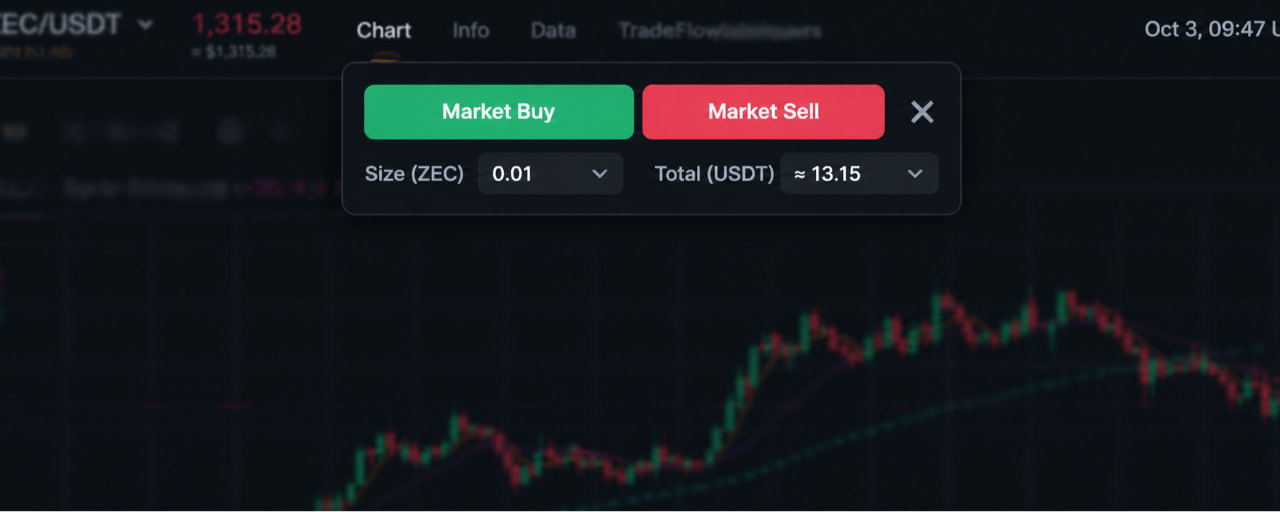
Vì sao tôi không đuổi theo ZEC sau khi Grayscale chuyển đổiSáng nay tôi đã mở biểu đồ khung 4 giờ của Binance cặp ZEC/USDT và hiện nó đang giao dịch quanh mức 1.323, thấp hơn cả ba đường trung bình động. Đường 99 nằm gần 1.486, còn đường 25 gần 1.386. Trên biểu đồ, đỉnh cao cuối tháng 9 trông vào khoảng 1.650, vậy hiện tại nó đang thấp hơn chừng 20% so với mức đó.
Nền tảng thì đơn giản. Grayscale đã chuyển Zcash Trust của mình thành một sản phẩm giao ngay trên NYSE Arca với mã giao dịch ZCSH, theo một bài nghiên cứu đăng vào cuối tháng 8. Một trang tin tức về crypto cho biết mức tăng của ZEC trong năm qua vào khoảng 2.300%. Đó là một biến động rất lớn kèm theo chất xúc tác rõ ràng.
Vì sao tôi không đuổi theo ZEC sau khi Grayscale chuyển đổi
Sáng nay tôi đã mở biểu đồ khung 4 giờ của Binance cặp ZEC/USDT và hiện nó đang giao dịch quanh mức 1.323, thấp hơn cả ba đường trung bình động. Đường 99 nằm gần 1.486, còn đường 25 gần 1.386. Trên biểu đồ, đỉnh cao cuối tháng 9 trông vào khoảng 1.650, vậy hiện tại nó đang thấp hơn chừng 20% so với mức đó.
Nền tảng thì đơn giản. Grayscale đã chuyển Zcash Trust của mình thành một sản phẩm giao ngay trên NYSE Arca với mã giao dịch ZCSH, theo một bài nghiên cứu đăng vào cuối tháng 8. Một trang tin tức về crypto cho biết mức tăng của ZEC trong năm qua vào khoảng 2.300%. Đó là một biến động rất lớn kèm theo chất xúc tác rõ ràng.
Nền tảng thì đơn giản. Grayscale đã chuyển Zcash Trust của mình thành một sản phẩm giao ngay trên NYSE Arca với mã giao dịch ZCSH, theo một bài nghiên cứu đăng vào cuối tháng 8. Một trang tin tức về crypto cho biết mức tăng của ZEC trong năm qua vào khoảng 2.300%. Đó là một biến động rất lớn kèm theo chất xúc tác rõ ràng.
1
138
Đã xác minh
Các hoạt động mua lại (buybacks) của Jupiter đã bắt đầu, nhưng liệu nguồn cung thực sự đang giảm không?
Quan điểm phổ biến về $JUP là việc buybacks đang diễn ra và nguồn cung đang đi xuống. Các bài thảo luận trên diễn đàn lại nói một điều hẹp hơn. Đề xuất Net-Zero nhằm cắt giảm phát thải ròng mới xuống gần như bằng 0 vào năm 2026, với 50% doanh thu onchain dùng để tài trợ cho việc buybacks. Các tài khoản cộng đồng cho biết đề xuất đã được thông qua vào cuối tháng Hai, nhưng tôi chưa xác nhận được số phiếu.
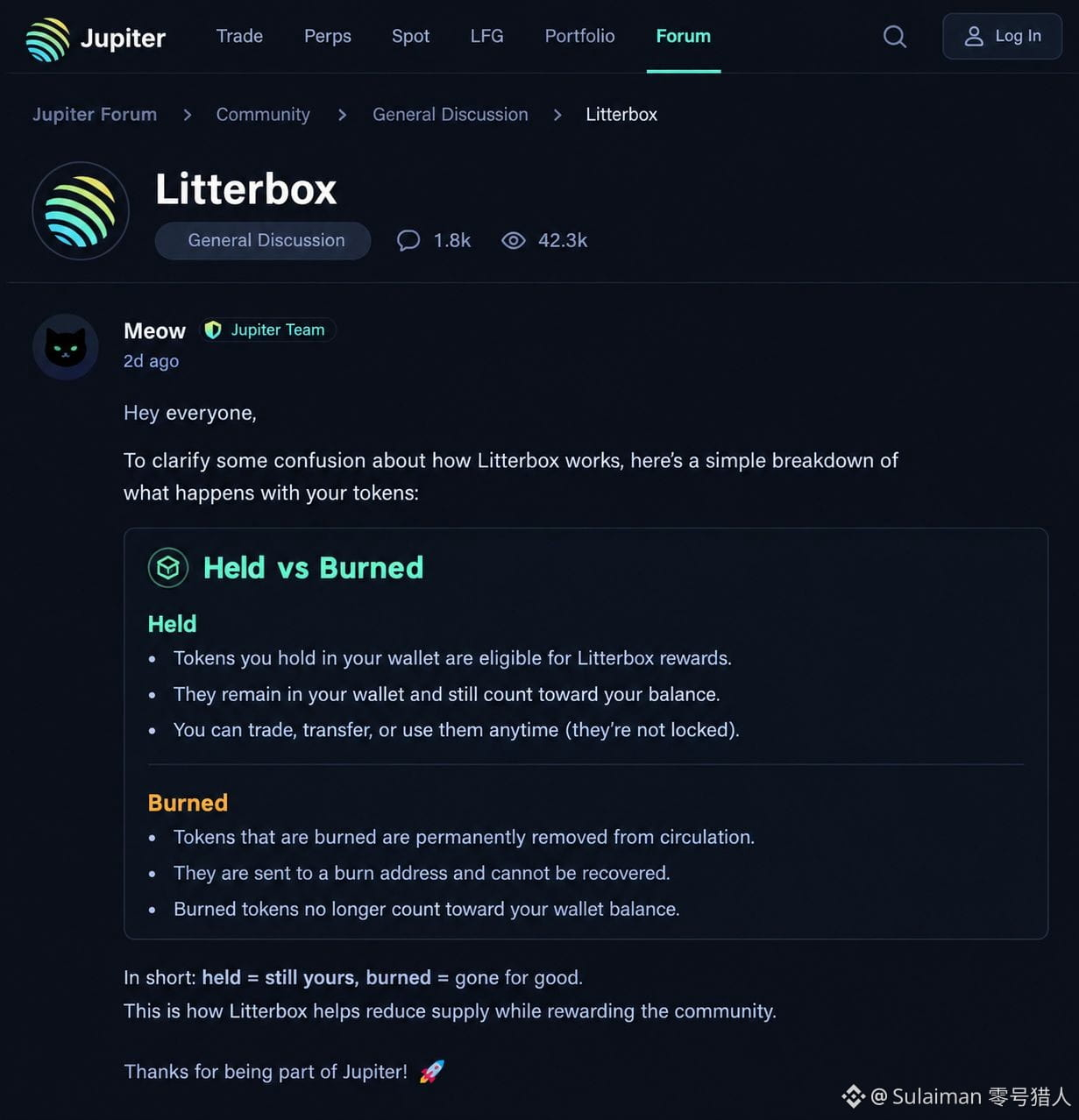
Điều làm tôi băn khoăn là lượng JUP được mua lại được giữ trong kho quỹ Litterbox và không bị đốt. Ý tưởng về tỷ lệ 70% chỉ là một bản thảo phản hồi chứ không phải là một cuộc bỏ phiếu. Tôi cũng không thể xác minh việc giải khóa hiện tại hoặc một mức giá theo mốc thời gian, nên tôi sẽ không đi xa hơn nữa.
Bạn có tính phần JUP được giữ trong một kho quỹ là nguồn cung đã bị loại bỏ không?
#JUP #jupiter #solana
Các hoạt động mua lại (buybacks) của Jupiter đã bắt đầu, nhưng liệu nguồn cung thực sự đang giảm không?
Quan điểm phổ biến về $JUP là việc buybacks đang diễn ra và nguồn cung đang đi xuống. Các bài thảo luận trên diễn đàn lại nói một điều hẹp hơn. Đề xuất Net-Zero nhằm cắt giảm phát thải ròng mới xuống gần như bằng 0 vào năm 2026, với 50% doanh thu onchain dùng để tài trợ cho việc buybacks. Các tài khoản cộng đồng cho biết đề xuất đã được thông qua vào cuối tháng Hai, nhưng tôi chưa xác nhận được số phiếu.
Điều làm tôi băn khoăn là lượng JUP được mua lại được giữ trong kho quỹ Litterbox và không bị đốt. Ý tưởng về tỷ lệ 70% chỉ là một bản thảo phản hồi chứ không phải là một cuộc bỏ phiếu. Tôi cũng không thể xác minh việc giải khóa hiện tại hoặc một mức giá theo mốc thời gian, nên tôi sẽ không đi xa hơn nữa.
Bạn có tính phần JUP được giữ trong một kho quỹ là nguồn cung đã bị loại bỏ không?
#JUP #jupiter #solana
Quan điểm phổ biến về $JUP là việc buybacks đang diễn ra và nguồn cung đang đi xuống. Các bài thảo luận trên diễn đàn lại nói một điều hẹp hơn. Đề xuất Net-Zero nhằm cắt giảm phát thải ròng mới xuống gần như bằng 0 vào năm 2026, với 50% doanh thu onchain dùng để tài trợ cho việc buybacks. Các tài khoản cộng đồng cho biết đề xuất đã được thông qua vào cuối tháng Hai, nhưng tôi chưa xác nhận được số phiếu.
Điều làm tôi băn khoăn là lượng JUP được mua lại được giữ trong kho quỹ Litterbox và không bị đốt. Ý tưởng về tỷ lệ 70% chỉ là một bản thảo phản hồi chứ không phải là một cuộc bỏ phiếu. Tôi cũng không thể xác minh việc giải khóa hiện tại hoặc một mức giá theo mốc thời gian, nên tôi sẽ không đi xa hơn nữa.
Bạn có tính phần JUP được giữ trong một kho quỹ là nguồn cung đã bị loại bỏ không?
#JUP #jupiter #solana
1
85
Xem bản dịch
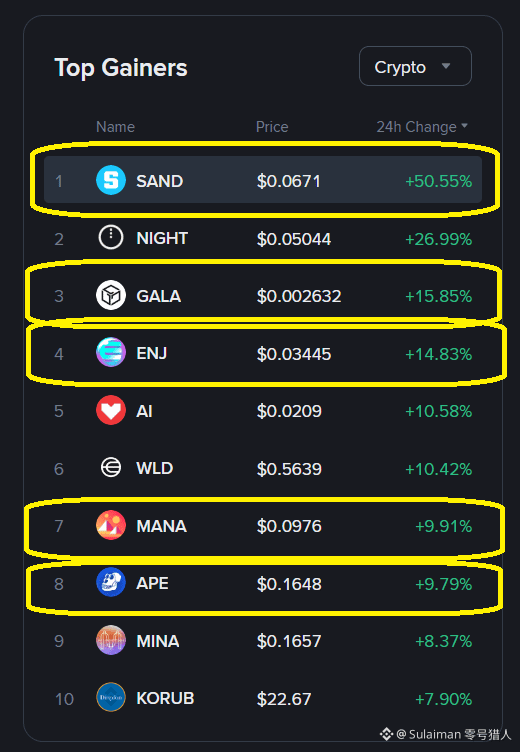
Friend Gaming/Metaverse Narrative Wake Up. Five of the top 10 gainers on my screen are gaming tokens. SAND leads at +50%, then GALA +15%, ENJ +14%, MANA +10%, APE +9%.
The gap bothers me. One token up 50% and the rest at 10 to 16% looks more like SAND leading and the others following than a clean sector move. I couldn't find the reason for SAND's jump yet.
I'd want volume and a second day of follow-through before calling it a narrative, and I'd stay out of the +50% candle itself.
Is volume following in anything besides SAND?
I'm watching $SAND $GALA $MANA NFA
#GamingTokens #SAND #Metaverse
Friend Gaming/Metaverse Narrative Wake Up. Five of the top 10 gainers on my screen are gaming tokens. SAND leads at +50%, then GALA +15%, ENJ +14%, MANA +10%, APE +9%.
The gap bothers me. One token up 50% and the rest at 10 to 16% looks more like SAND leading and the others following than a clean sector move. I couldn't find the reason for SAND's jump yet.
I'd want volume and a second day of follow-through before calling it a narrative, and I'd stay out of the +50% candle itself.
Is volume following in anything besides SAND?
I'm watching $SAND $GALA $MANA NFA
#GamingTokens #SAND #Metaverse
The gap bothers me. One token up 50% and the rest at 10 to 16% looks more like SAND leading and the others following than a clean sector move. I couldn't find the reason for SAND's jump yet.
I'd want volume and a second day of follow-through before calling it a narrative, and I'd stay out of the +50% candle itself.
Is volume following in anything besides SAND?
I'm watching $SAND $GALA $MANA NFA
#GamingTokens #SAND #Metaverse
2
147
Tại sao ZeroHunter? Tôi nhìn vào cách một token có thể về 0 trước khi nghĩ đến việc nó có thể tăng lên. Mở lịch trước, rồi xem chính xác ai đang nắm giữ nguồn cung.
Nó bắt đầu với LUNA, nơi tôi đã mất khoảng 750 USDT vì tôi đã bỏ qua một bước.
Một vài tuần, bài đăng trung thực là: Tôi sẽ đứng ngoài.
Token nào tôi nên kiểm tra tiếp theo?
#ZeroHunter #ZeroResearch #Sulaiman零号猎人 .
$SAND $ENJ $GALA
Tại sao ZeroHunter? Tôi nhìn vào cách một token có thể về 0 trước khi nghĩ đến việc nó có thể tăng lên. Mở lịch trước, rồi xem chính xác ai đang nắm giữ nguồn cung.
Nó bắt đầu với LUNA, nơi tôi đã mất khoảng 750 USDT vì tôi đã bỏ qua một bước.
Một vài tuần, bài đăng trung thực là: Tôi sẽ đứng ngoài.
Token nào tôi nên kiểm tra tiếp theo?
#ZeroHunter #ZeroResearch #Sulaiman零号猎人 .
$SAND $ENJ $GALA
Nó bắt đầu với LUNA, nơi tôi đã mất khoảng 750 USDT vì tôi đã bỏ qua một bước.
Một vài tuần, bài đăng trung thực là: Tôi sẽ đứng ngoài.
Token nào tôi nên kiểm tra tiếp theo?
#ZeroHunter #ZeroResearch #Sulaiman零号猎人 .
$SAND $ENJ $GALA
1
282
Danh sách theo dõi của tôi cho đến 16/10, và điều gì khiến từng cái tên bị loại
Bốn cái tên trong danh sách của tôi, không cái nào sẵn sàng để giao dịch.
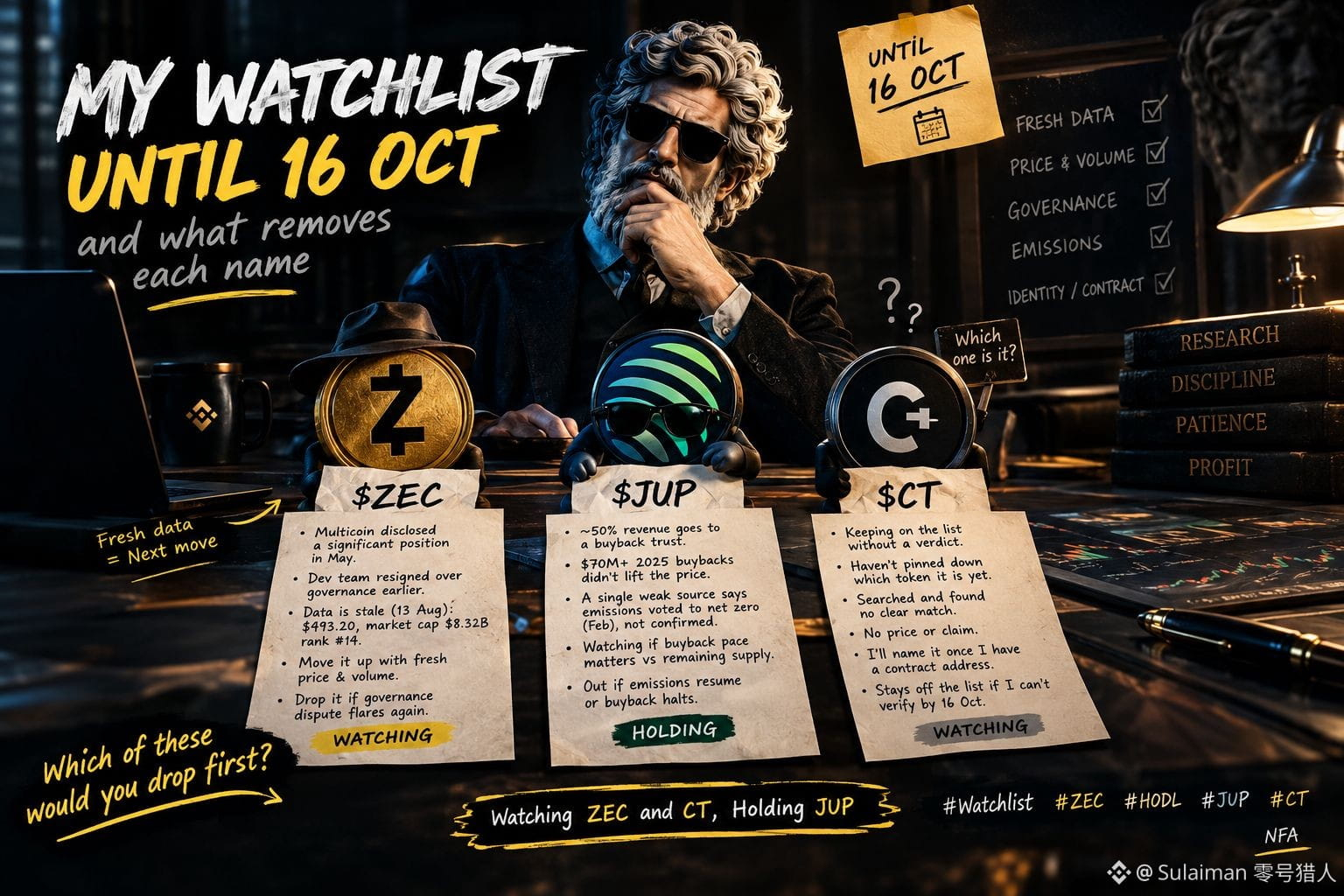
$ZEC . Multicoin đã công bố nắm giữ một vị thế đáng kể vào tháng Năm, và đội phát triển đã từ chức vì bất đồng quản trị trước đó. Dữ liệu của tôi đã cũ: $493.20 và vốn hóa $8.32B, hạng #14, tất cả đều từ 13/08. Tôi chỉ nâng nó lên khi tôi có giá và khối lượng cập nhật. Tôi sẽ loại nó nếu bất đồng quản trị lại bùng lên.
$JUP . Khoảng một nửa doanh thu được chuyển vào một quỹ tín thác mua lại (buyback), và hơn $70M đợt mua lại trong năm 2025 đã không giúp đẩy giá lên. Một tác giả nói rằng lượng phát thải đã được bỏ phiếu đưa về mức ròng bằng không (net zero) vào tháng Hai, nhưng đó chỉ là một nguồn yếu và tôi chưa xác nhận. Tôi đang theo dõi liệu tốc độ mua lại hiện tại có đáng kể so với phần cung còn lại hay không. Sẽ loại khỏi danh sách nếu phát thải tiếp tục hoặc nếu việc mua lại bị dừng.
$CT . Tôi giữ cái này trong danh sách mà chưa đưa ra phán quyết, vì tôi chưa xác định được chính xác token nào. Tôi đã tìm và không thấy đối chiếu rõ ràng, nên tôi không trích dẫn giá hay đưa ra bất kỳ tuyên bố nào. Tôi sẽ nêu tên khi tôi có được địa chỉ hợp đồng, và nó sẽ không còn trong danh sách nếu tôi không thể xác minh trước 16/10.
Trong các cái này, bạn sẽ loại bỏ cái nào đầu tiên?
Theo dõi ZEC và CT, Giữ JUP NFA
#Watchlist #ZEC #HODL #JUP #CT
Danh sách theo dõi của tôi cho đến 16/10, và điều gì khiến từng cái tên bị loại
Bốn cái tên trong danh sách của tôi, không cái nào sẵn sàng để giao dịch.
$ZEC . Multicoin đã công bố nắm giữ một vị thế đáng kể vào tháng Năm, và đội phát triển đã từ chức vì bất đồng quản trị trước đó. Dữ liệu của tôi đã cũ: $493.20 và vốn hóa $8.32B, hạng #14, tất cả đều từ 13/08. Tôi chỉ nâng nó lên khi tôi có giá và khối lượng cập nhật. Tôi sẽ loại nó nếu bất đồng quản trị lại bùng lên.
$JUP . Khoảng một nửa doanh thu được chuyển vào một quỹ tín thác mua lại (buyback), và hơn $70M đợt mua lại trong năm 2025 đã không giúp đẩy giá lên. Một tác giả nói rằng lượng phát thải đã được bỏ phiếu đưa về mức ròng bằng không (net zero) vào tháng Hai, nhưng đó chỉ là một nguồn yếu và tôi chưa xác nhận. Tôi đang theo dõi liệu tốc độ mua lại hiện tại có đáng kể so với phần cung còn lại hay không. Sẽ loại khỏi danh sách nếu phát thải tiếp tục hoặc nếu việc mua lại bị dừng.
$CT . Tôi giữ cái này trong danh sách mà chưa đưa ra phán quyết, vì tôi chưa xác định được chính xác token nào. Tôi đã tìm và không thấy đối chiếu rõ ràng, nên tôi không trích dẫn giá hay đưa ra bất kỳ tuyên bố nào. Tôi sẽ nêu tên khi tôi có được địa chỉ hợp đồng, và nó sẽ không còn trong danh sách nếu tôi không thể xác minh trước 16/10.
Trong các cái này, bạn sẽ loại bỏ cái nào đầu tiên?
Theo dõi ZEC và CT, Giữ JUP NFA
#Watchlist #ZEC #HODL #JUP #CT
Bốn cái tên trong danh sách của tôi, không cái nào sẵn sàng để giao dịch.
$ZEC . Multicoin đã công bố nắm giữ một vị thế đáng kể vào tháng Năm, và đội phát triển đã từ chức vì bất đồng quản trị trước đó. Dữ liệu của tôi đã cũ: $493.20 và vốn hóa $8.32B, hạng #14, tất cả đều từ 13/08. Tôi chỉ nâng nó lên khi tôi có giá và khối lượng cập nhật. Tôi sẽ loại nó nếu bất đồng quản trị lại bùng lên.
$JUP . Khoảng một nửa doanh thu được chuyển vào một quỹ tín thác mua lại (buyback), và hơn $70M đợt mua lại trong năm 2025 đã không giúp đẩy giá lên. Một tác giả nói rằng lượng phát thải đã được bỏ phiếu đưa về mức ròng bằng không (net zero) vào tháng Hai, nhưng đó chỉ là một nguồn yếu và tôi chưa xác nhận. Tôi đang theo dõi liệu tốc độ mua lại hiện tại có đáng kể so với phần cung còn lại hay không. Sẽ loại khỏi danh sách nếu phát thải tiếp tục hoặc nếu việc mua lại bị dừng.
$CT . Tôi giữ cái này trong danh sách mà chưa đưa ra phán quyết, vì tôi chưa xác định được chính xác token nào. Tôi đã tìm và không thấy đối chiếu rõ ràng, nên tôi không trích dẫn giá hay đưa ra bất kỳ tuyên bố nào. Tôi sẽ nêu tên khi tôi có được địa chỉ hợp đồng, và nó sẽ không còn trong danh sách nếu tôi không thể xác minh trước 16/10.
Trong các cái này, bạn sẽ loại bỏ cái nào đầu tiên?
Theo dõi ZEC và CT, Giữ JUP NFA
#Watchlist #ZEC #HODL #JUP #CT
1
78
Đã xác minh
Bài viết
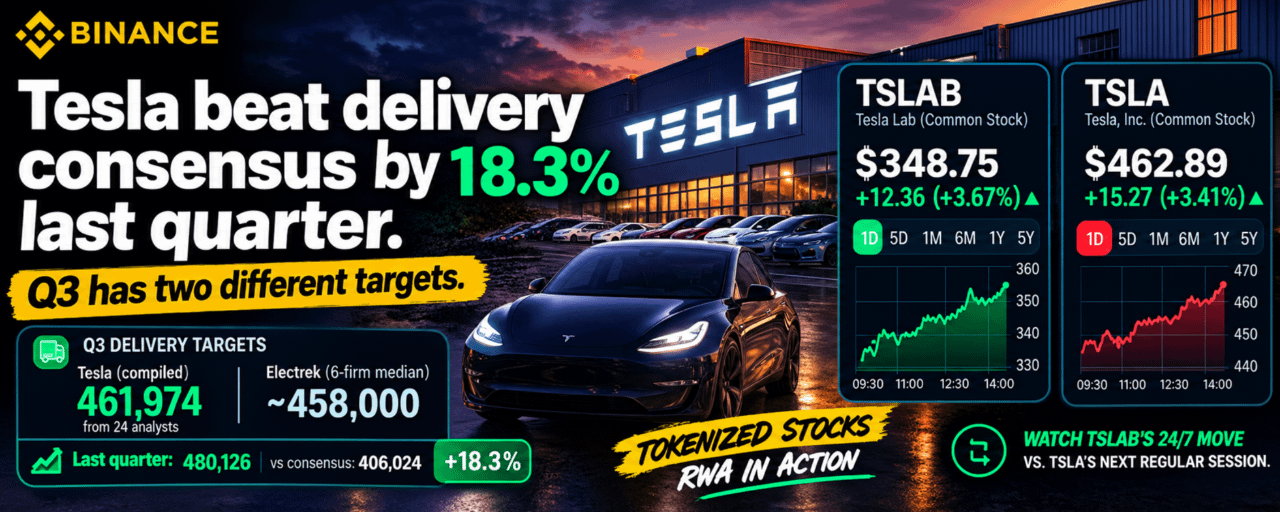
Tesla vượt kỳ vọng giao hàng 18,3% ở quý trước. Q3 có hai mục tiêu khác nhau.Tesla công bố kết quả giao hàng Q3 hôm nay, và việc bạn chọn theo đồng thuận (consensus) nào sẽ làm thay đổi việc tính được “đạt vượt” hay “không đạt”. Con số do chính Tesla tổng hợp là 461.974 theo 24 nhà phân tích. Mức trung vị của Electrek từ sáu công ty là khoảng 458k. Quý trước, Tesla giao 480.126 so với đồng thuận là 406.024, tương ứng mức “beat” 18,3%, nên Phố Wall đã bỏ lỡ khá nhiều trước đó.
TSLAB là một chứng chỉ do BTECH Holdings cấp tại ADGM, được bảo đảm 1:1 bằng các cổ phiếu Tesla do đơn vị lưu ký nắm giữ. Bạn sở hữu một quyền lợi đối với các cổ phiếu mà đơn vị phát hành đang nắm giữ, nhưng không có quyền sở hữu đã đăng ký. Các nguồn đưa ra thông tin không thống nhất về việc liệu bên lưu ký có được quản lý theo quy định của ADGM hay là một công ty môi giới-broker-dealer tại Mỹ, vì vậy tôi không thể nêu tên.
Tesla vượt kỳ vọng giao hàng 18,3% ở quý trước. Q3 có hai mục tiêu khác nhau.
Tesla công bố kết quả giao hàng Q3 hôm nay, và việc bạn chọn theo đồng thuận (consensus) nào sẽ làm thay đổi việc tính được “đạt vượt” hay “không đạt”. Con số do chính Tesla tổng hợp là 461.974 theo 24 nhà phân tích. Mức trung vị của Electrek từ sáu công ty là khoảng 458k. Quý trước, Tesla giao 480.126 so với đồng thuận là 406.024, tương ứng mức “beat” 18,3%, nên Phố Wall đã bỏ lỡ khá nhiều trước đó.
TSLAB là một chứng chỉ do BTECH Holdings cấp tại ADGM, được bảo đảm 1:1 bằng các cổ phiếu Tesla do đơn vị lưu ký nắm giữ. Bạn sở hữu một quyền lợi đối với các cổ phiếu mà đơn vị phát hành đang nắm giữ, nhưng không có quyền sở hữu đã đăng ký. Các nguồn đưa ra thông tin không thống nhất về việc liệu bên lưu ký có được quản lý theo quy định của ADGM hay là một công ty môi giới-broker-dealer tại Mỹ, vì vậy tôi không thể nêu tên.
TSLAB là một chứng chỉ do BTECH Holdings cấp tại ADGM, được bảo đảm 1:1 bằng các cổ phiếu Tesla do đơn vị lưu ký nắm giữ. Bạn sở hữu một quyền lợi đối với các cổ phiếu mà đơn vị phát hành đang nắm giữ, nhưng không có quyền sở hữu đã đăng ký. Các nguồn đưa ra thông tin không thống nhất về việc liệu bên lưu ký có được quản lý theo quy định của ADGM hay là một công ty môi giới-broker-dealer tại Mỹ, vì vậy tôi không thể nêu tên.
2
32
Bài viết
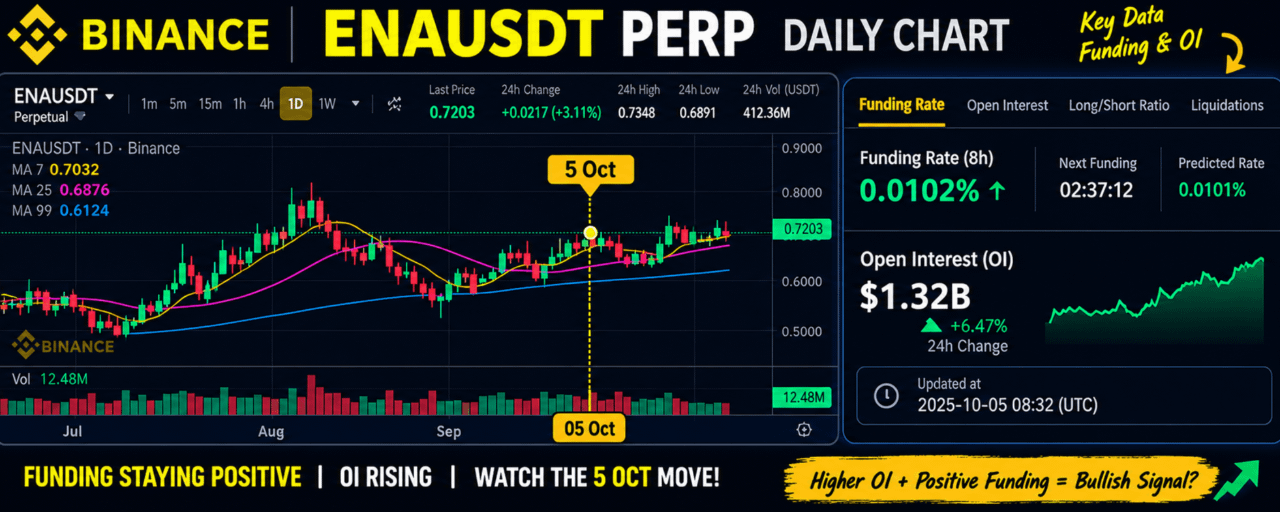
Công tắc phí của ENA không trả gì cho đến khi USDe tăng khoảng 84%Quan điểm phổ biến trong tuần này là công tắc phí của Ethena sẽ “làm dịu” đợt unlock ngày 5/10. Tôi đã xem lịch, và các con số vẫn chưa ủng hộ điều đó.
Ngày 27/8, Foundation cho biết toàn bộ token còn lại của nhà đầu tư sẽ được giải phóng vào 5/10. Ethena không nêu quy mô. Tokenomist tính ra khoảng 1,406B ENA, với một đợt phân bổ cho team 93,75M cũng diễn ra vào đúng ngày đó. Với giá khoảng 0,25 đến 0,27 USD thì tương đương khoảng 350M đến 380M USD, đáng chú ý là nhiều hơn con số 212M được nêu tiêu đề ở mức giá cũ 0,151 USD.
Đây là những gì tôi đã kiểm tra. Công tắc chỉ chuyển hướng doanh thu khi USDe đạt 7,5B USD. USDe vào cuối tháng 8 khoảng 4,07B USD, nên phép tính của tôi cho thấy cần tăng trưởng xấp xỉ 84% trước khi có bất kỳ dòng tiền nào chảy. Ngay cả bậc đầu tiên cũng là 22,5M USD/năm theo bảng của Ethena, trong khi việc vesting của team và Foundation chạy khoảng 134M ENA mỗi tháng, tương đương khoảng 20,3M USD mỗi tháng ở mức 0,151 USD. Mua lại ở bậc đầu tiên chi trả khoảng 9% của một năm vesting đó. Blockworks Advisory, đơn vị thuộc Ủy ban Rủi ro của Ethena, nói rằng lịch này không trả gì ở mức nguồn cung hiện tại. Ở nơi khác, Jupiter đã chi hơn 70M USD cho các đợt mua lại trong năm 2025 và JUP vẫn thấp hơn khoảng 89% so với đỉnh vào tháng 1.
Công tắc phí của ENA không trả gì cho đến khi USDe tăng khoảng 84%
Quan điểm phổ biến trong tuần này là công tắc phí của Ethena sẽ “làm dịu” đợt unlock ngày 5/10. Tôi đã xem lịch, và các con số vẫn chưa ủng hộ điều đó.
Ngày 27/8, Foundation cho biết toàn bộ token còn lại của nhà đầu tư sẽ được giải phóng vào 5/10. Ethena không nêu quy mô. Tokenomist tính ra khoảng 1,406B ENA, với một đợt phân bổ cho team 93,75M cũng diễn ra vào đúng ngày đó. Với giá khoảng 0,25 đến 0,27 USD thì tương đương khoảng 350M đến 380M USD, đáng chú ý là nhiều hơn con số 212M được nêu tiêu đề ở mức giá cũ 0,151 USD.
Đây là những gì tôi đã kiểm tra. Công tắc chỉ chuyển hướng doanh thu khi USDe đạt 7,5B USD. USDe vào cuối tháng 8 khoảng 4,07B USD, nên phép tính của tôi cho thấy cần tăng trưởng xấp xỉ 84% trước khi có bất kỳ dòng tiền nào chảy. Ngay cả bậc đầu tiên cũng là 22,5M USD/năm theo bảng của Ethena, trong khi việc vesting của team và Foundation chạy khoảng 134M ENA mỗi tháng, tương đương khoảng 20,3M USD mỗi tháng ở mức 0,151 USD. Mua lại ở bậc đầu tiên chi trả khoảng 9% của một năm vesting đó. Blockworks Advisory, đơn vị thuộc Ủy ban Rủi ro của Ethena, nói rằng lịch này không trả gì ở mức nguồn cung hiện tại. Ở nơi khác, Jupiter đã chi hơn 70M USD cho các đợt mua lại trong năm 2025 và JUP vẫn thấp hơn khoảng 89% so với đỉnh vào tháng 1.
Ngày 27/8, Foundation cho biết toàn bộ token còn lại của nhà đầu tư sẽ được giải phóng vào 5/10. Ethena không nêu quy mô. Tokenomist tính ra khoảng 1,406B ENA, với một đợt phân bổ cho team 93,75M cũng diễn ra vào đúng ngày đó. Với giá khoảng 0,25 đến 0,27 USD thì tương đương khoảng 350M đến 380M USD, đáng chú ý là nhiều hơn con số 212M được nêu tiêu đề ở mức giá cũ 0,151 USD.
Đây là những gì tôi đã kiểm tra. Công tắc chỉ chuyển hướng doanh thu khi USDe đạt 7,5B USD. USDe vào cuối tháng 8 khoảng 4,07B USD, nên phép tính của tôi cho thấy cần tăng trưởng xấp xỉ 84% trước khi có bất kỳ dòng tiền nào chảy. Ngay cả bậc đầu tiên cũng là 22,5M USD/năm theo bảng của Ethena, trong khi việc vesting của team và Foundation chạy khoảng 134M ENA mỗi tháng, tương đương khoảng 20,3M USD mỗi tháng ở mức 0,151 USD. Mua lại ở bậc đầu tiên chi trả khoảng 9% của một năm vesting đó. Blockworks Advisory, đơn vị thuộc Ủy ban Rủi ro của Ethena, nói rằng lịch này không trả gì ở mức nguồn cung hiện tại. Ở nơi khác, Jupiter đã chi hơn 70M USD cho các đợt mua lại trong năm 2025 và JUP vẫn thấp hơn khoảng 89% so với đỉnh vào tháng 1.
2
2
264
Khoảng 47% nhiều hơn $2Z đã đến thị trường vào ngày 2/10. Bước vách (cliff) ước tính khoảng 1,625B đến 1,655B token tùy theo tracker, và 1,225B trong số đó, chiếm 74%, nằm với Jump, Malbec, đội ngũ và các nhà xây dựng. Riêng Jump đã có 575M.
Một đợt mở khóa không phải là một đợt bán, và tôi không thể nhìn thấy ý định của ai. Điều làm tôi băn khoăn là một nguồn cũ hơn nói rằng 2,9B của Foundation đã được mở khóa rồi. Nếu đúng như vậy, "lưu hành" (circulating) sẽ làm phóng đại phần trôi nổi tự do và bức tranh thực tế là khác. Tôi không thể xác nhận điều đó.
Khối lượng giao dịch dao động từ 1,5M đến 45M USD tùy theo snapshot. Dù sao thì đều mỏng.
Tôi chưa kiểm tra các ví theo lô (tranche) kể từ 00:00 UTC. Bạn có theo dõi các ví vào ngày mở khóa không, và bằng công cụ nào?
NFA
Khoảng 47% nhiều hơn $2Z đã đến thị trường vào ngày 2/10. Bước vách (cliff) ước tính khoảng 1,625B đến 1,655B token tùy theo tracker, và 1,225B trong số đó, chiếm 74%, nằm với Jump, Malbec, đội ngũ và các nhà xây dựng. Riêng Jump đã có 575M.
Một đợt mở khóa không phải là một đợt bán, và tôi không thể nhìn thấy ý định của ai. Điều làm tôi băn khoăn là một nguồn cũ hơn nói rằng 2,9B của Foundation đã được mở khóa rồi. Nếu đúng như vậy, "lưu hành" (circulating) sẽ làm phóng đại phần trôi nổi tự do và bức tranh thực tế là khác. Tôi không thể xác nhận điều đó.
Khối lượng giao dịch dao động từ 1,5M đến 45M USD tùy theo snapshot. Dù sao thì đều mỏng.
Tôi chưa kiểm tra các ví theo lô (tranche) kể từ 00:00 UTC. Bạn có theo dõi các ví vào ngày mở khóa không, và bằng công cụ nào?
NFA
Một đợt mở khóa không phải là một đợt bán, và tôi không thể nhìn thấy ý định của ai. Điều làm tôi băn khoăn là một nguồn cũ hơn nói rằng 2,9B của Foundation đã được mở khóa rồi. Nếu đúng như vậy, "lưu hành" (circulating) sẽ làm phóng đại phần trôi nổi tự do và bức tranh thực tế là khác. Tôi không thể xác nhận điều đó.
Khối lượng giao dịch dao động từ 1,5M đến 45M USD tùy theo snapshot. Dù sao thì đều mỏng.
Tôi chưa kiểm tra các ví theo lô (tranche) kể từ 00:00 UTC. Bạn có theo dõi các ví vào ngày mở khóa không, và bằng công cụ nào?
NFA
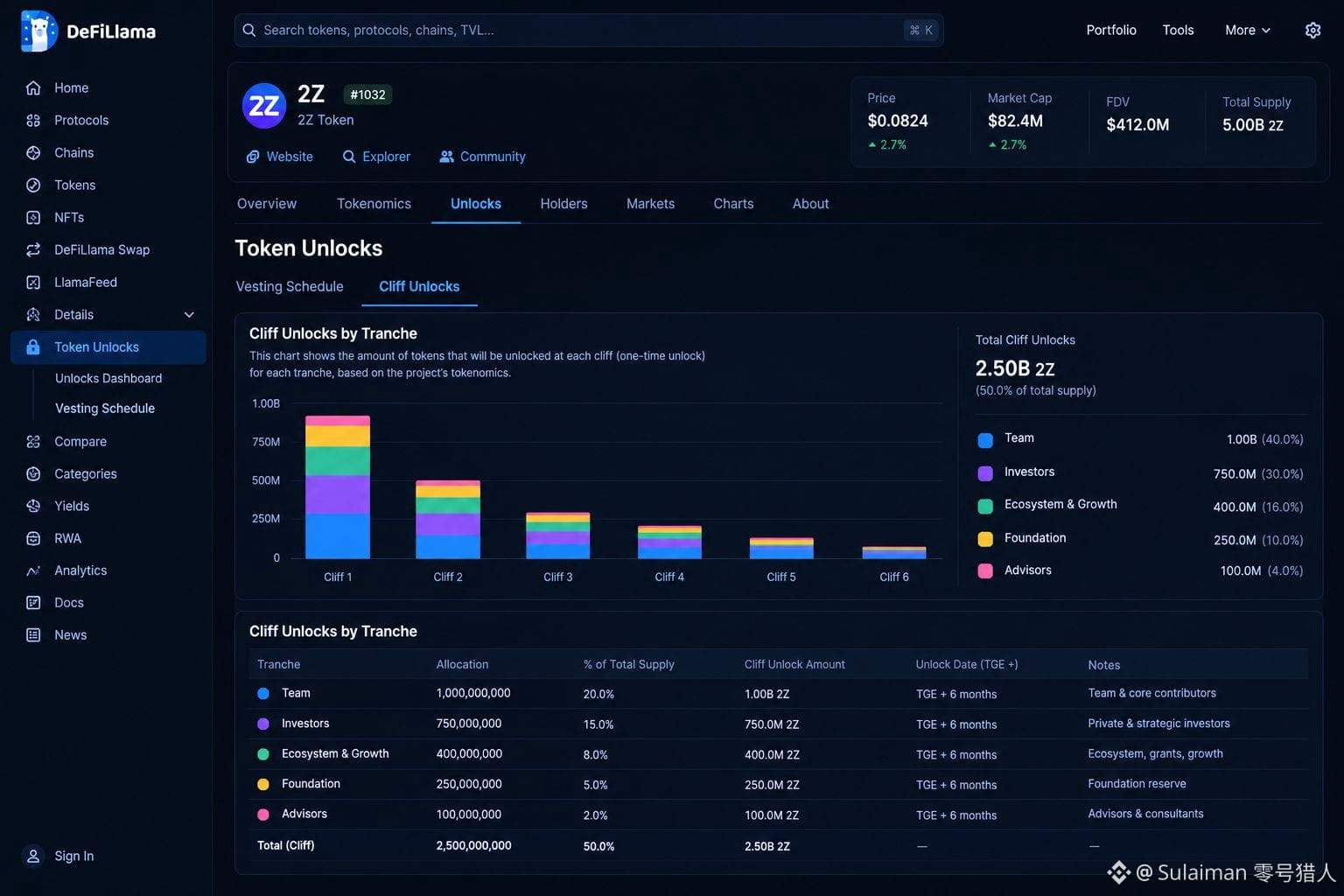
2
89
Đã xác minh
LayerZero đang thu hút sự chú ý của Phố Wall. $ZRO vẫn còn một công tắc mà chưa ai lật được. 🔌
LayerZero là hạ tầng đường ống giúp chuyển stablecoin giữa các blockchain, và mạng Zero mới của họ liệt kê DTCC, ICE, Citadel Securities, Tether và Google Cloud là các đối tác ra mắt. Đó là câu chuyện mà thị trường đang mua theo.
Token chính là chỗ “khoảng trống” nằm ở đó. Mọi lần biểu quyết bật công tắc tính phí cho đến nay đều kết thúc với việc công tắc vẫn tắt, và các đợt mua lại để lấp khoảng trống là lựa chọn của đội ngũ, không phải một quy tắc được viết sẵn trong hợp đồng.
Việc nhà đầu tư được mở khóa theo tháng cũng vẫn tiếp tục diễn ra, ngay cả sau khi đợt mua lại lớn của Foundation đã cắt giảm nó.
Không có lý do để hoảng sợ. Một ngày để kiểm chứng niềm tin của bạn.
Các trader kỳ cựu theo dõi cuộc bỏ phiếu sẽ lật công tắc, và họ điều chỉnh quy mô vị thế dựa theo lịch mở khóa.
DYOR 🚀
#ZRO #LayerZero #mostsearched #BinanceSquare #Sulaiman零号猎人
LayerZero đang thu hút sự chú ý của Phố Wall. $ZRO vẫn còn một công tắc mà chưa ai lật được. 🔌
LayerZero là hạ tầng đường ống giúp chuyển stablecoin giữa các blockchain, và mạng Zero mới của họ liệt kê DTCC, ICE, Citadel Securities, Tether và Google Cloud là các đối tác ra mắt. Đó là câu chuyện mà thị trường đang mua theo.
Token chính là chỗ “khoảng trống” nằm ở đó. Mọi lần biểu quyết bật công tắc tính phí cho đến nay đều kết thúc với việc công tắc vẫn tắt, và các đợt mua lại để lấp khoảng trống là lựa chọn của đội ngũ, không phải một quy tắc được viết sẵn trong hợp đồng.
Việc nhà đầu tư được mở khóa theo tháng cũng vẫn tiếp tục diễn ra, ngay cả sau khi đợt mua lại lớn của Foundation đã cắt giảm nó.
Không có lý do để hoảng sợ. Một ngày để kiểm chứng niềm tin của bạn.
Các trader kỳ cựu theo dõi cuộc bỏ phiếu sẽ lật công tắc, và họ điều chỉnh quy mô vị thế dựa theo lịch mở khóa.
DYOR 🚀
#ZRO #LayerZero #mostsearched #BinanceSquare #Sulaiman零号猎人
LayerZero là hạ tầng đường ống giúp chuyển stablecoin giữa các blockchain, và mạng Zero mới của họ liệt kê DTCC, ICE, Citadel Securities, Tether và Google Cloud là các đối tác ra mắt. Đó là câu chuyện mà thị trường đang mua theo.
Token chính là chỗ “khoảng trống” nằm ở đó. Mọi lần biểu quyết bật công tắc tính phí cho đến nay đều kết thúc với việc công tắc vẫn tắt, và các đợt mua lại để lấp khoảng trống là lựa chọn của đội ngũ, không phải một quy tắc được viết sẵn trong hợp đồng.
Việc nhà đầu tư được mở khóa theo tháng cũng vẫn tiếp tục diễn ra, ngay cả sau khi đợt mua lại lớn của Foundation đã cắt giảm nó.
Không có lý do để hoảng sợ. Một ngày để kiểm chứng niềm tin của bạn.
Các trader kỳ cựu theo dõi cuộc bỏ phiếu sẽ lật công tắc, và họ điều chỉnh quy mô vị thế dựa theo lịch mở khóa.
DYOR 🚀
#ZRO #LayerZero #mostsearched #BinanceSquare #Sulaiman零号猎人
2
188
Đã xác minh
Nến một giờ không phải là một bản luận. Đây là những gì thực sự quan trọng trong danh sách. 🕐
$XTZ đã tồn tại từ năm 2018, tự nâng cấp thông qua các cuộc bỏ phiếu on-chain trong khi những chuỗi khác thì ồn ào tranh cãi về các hard fork. Không ai tweet về sự kiên nhẫn như vậy, nhưng đó lại là lý do Tezos vẫn còn tồn tại.
$ALICE là một trò chơi vừa canh tác vừa xây dựng với đất NFT, biến động mạnh mà chẳng kèm theo bất kỳ tin tức nào. Biểu đồ của nó có thể tăng/giảm trước khi ai đó biết lý do, và chính vì thế một cú nhảy nhanh chẳng nói lên điều gì.
$STG là cái có ngày thật. LayerZero mua lại Stargate, và người nắm giữ STG chỉ có thể chuyển đổi sang ZRO cho đến ngày 15 tháng 12. Sau thời điểm đó, việc chuyển đổi sẽ dừng. Lịch này quan trọng hơn bất kỳ thanh nến theo giờ nào.
Kiên nhẫn, ồn ào, thời hạn: những bước di chuyển nhanh sẽ phai nhạt, còn ngày tháng và nền tảng thì tồn tại.
DYOR 🚀
#XTZ #ALICE #STG #BinanceSquare #Sulaiman零号猎人
Nến một giờ không phải là một bản luận. Đây là những gì thực sự quan trọng trong danh sách. 🕐
$XTZ đã tồn tại từ năm 2018, tự nâng cấp thông qua các cuộc bỏ phiếu on-chain trong khi những chuỗi khác thì ồn ào tranh cãi về các hard fork. Không ai tweet về sự kiên nhẫn như vậy, nhưng đó lại là lý do Tezos vẫn còn tồn tại.
$ALICE là một trò chơi vừa canh tác vừa xây dựng với đất NFT, biến động mạnh mà chẳng kèm theo bất kỳ tin tức nào. Biểu đồ của nó có thể tăng/giảm trước khi ai đó biết lý do, và chính vì thế một cú nhảy nhanh chẳng nói lên điều gì.
$STG là cái có ngày thật. LayerZero mua lại Stargate, và người nắm giữ STG chỉ có thể chuyển đổi sang ZRO cho đến ngày 15 tháng 12. Sau thời điểm đó, việc chuyển đổi sẽ dừng. Lịch này quan trọng hơn bất kỳ thanh nến theo giờ nào.
Kiên nhẫn, ồn ào, thời hạn: những bước di chuyển nhanh sẽ phai nhạt, còn ngày tháng và nền tảng thì tồn tại.
DYOR 🚀
#XTZ #ALICE #STG #BinanceSquare #Sulaiman零号猎人
$XTZ đã tồn tại từ năm 2018, tự nâng cấp thông qua các cuộc bỏ phiếu on-chain trong khi những chuỗi khác thì ồn ào tranh cãi về các hard fork. Không ai tweet về sự kiên nhẫn như vậy, nhưng đó lại là lý do Tezos vẫn còn tồn tại.
$ALICE là một trò chơi vừa canh tác vừa xây dựng với đất NFT, biến động mạnh mà chẳng kèm theo bất kỳ tin tức nào. Biểu đồ của nó có thể tăng/giảm trước khi ai đó biết lý do, và chính vì thế một cú nhảy nhanh chẳng nói lên điều gì.
$STG là cái có ngày thật. LayerZero mua lại Stargate, và người nắm giữ STG chỉ có thể chuyển đổi sang ZRO cho đến ngày 15 tháng 12. Sau thời điểm đó, việc chuyển đổi sẽ dừng. Lịch này quan trọng hơn bất kỳ thanh nến theo giờ nào.
Kiên nhẫn, ồn ào, thời hạn: những bước di chuyển nhanh sẽ phai nhạt, còn ngày tháng và nền tảng thì tồn tại.
DYOR 🚀
#XTZ #ALICE #STG #BinanceSquare #Sulaiman零号猎人
1
385
Đã xác minh
Ba đồng tiền, ba lần xây dựng lại. Chỉ một trong số đó đang xây dựng lại từ đống đổ nát. 🔧
$CKB đã dành nhiều năm để định vị mình cạnh Bitcoin. Mạng Fiber của nó mang đến các khoản thanh toán nhanh kiểu Lightning cho chuỗi, và bản cập nhật mới nhất cho phép người dùng chuyển đổi giữa thanh toán CKB và Bitcoin Lightning trực tiếp. Trong khi thị trường tranh luận về lợi suất BTC, Nervos đang xây phần “hạ tầng ống dẫn”.
$SUPER là một câu chuyện game và NFT của năm 2021 đã bị thị trường “gạt sang một bên”. Đội ngũ vẫn tiếp tục ra mắt: chế độ 100 người chơi trong game Impostors, một sàn marketplace NFT đang phát triển ở GigaMart, và một token có lịch vesting kết thúc vào năm 2024, nên không có “bảng lịch mở khóa cũ” nào treo lơ lửng phía trên nó.
$ONE mới là phần khó. Sau một lỗ hổng khai thác vào tháng 8 đã tạo ra một đợt token trái phép tràn lan, Harmony đã đề xuất đóng chính chuỗi của mình và phát hành lại ONE trên Ethereum cho một dự án video AI mới. Đó là một lời hứa, không phải bằng chứng; người nắm giữ cần hợp đồng cuối cùng và chi tiết sàn giao dịch trước khi tin vào bất cứ điều gì.
Một bước ngoặt chỉ là tiêu đề cho đến khi sản phẩm ra mắt. Hạ tầng Bitcoin, màn trở lại của game, và một lần reset hoàn toàn là ba canh bạc hoàn toàn khác nhau.
DYOR 🚀
#CKB #SUPER #ONE #BinanceSquare #Sulaiman零号猎人
Ba đồng tiền, ba lần xây dựng lại. Chỉ một trong số đó đang xây dựng lại từ đống đổ nát. 🔧
$CKB đã dành nhiều năm để định vị mình cạnh Bitcoin. Mạng Fiber của nó mang đến các khoản thanh toán nhanh kiểu Lightning cho chuỗi, và bản cập nhật mới nhất cho phép người dùng chuyển đổi giữa thanh toán CKB và Bitcoin Lightning trực tiếp. Trong khi thị trường tranh luận về lợi suất BTC, Nervos đang xây phần “hạ tầng ống dẫn”.
$SUPER là một câu chuyện game và NFT của năm 2021 đã bị thị trường “gạt sang một bên”. Đội ngũ vẫn tiếp tục ra mắt: chế độ 100 người chơi trong game Impostors, một sàn marketplace NFT đang phát triển ở GigaMart, và một token có lịch vesting kết thúc vào năm 2024, nên không có “bảng lịch mở khóa cũ” nào treo lơ lửng phía trên nó.
$ONE mới là phần khó. Sau một lỗ hổng khai thác vào tháng 8 đã tạo ra một đợt token trái phép tràn lan, Harmony đã đề xuất đóng chính chuỗi của mình và phát hành lại ONE trên Ethereum cho một dự án video AI mới. Đó là một lời hứa, không phải bằng chứng; người nắm giữ cần hợp đồng cuối cùng và chi tiết sàn giao dịch trước khi tin vào bất cứ điều gì.
Một bước ngoặt chỉ là tiêu đề cho đến khi sản phẩm ra mắt. Hạ tầng Bitcoin, màn trở lại của game, và một lần reset hoàn toàn là ba canh bạc hoàn toàn khác nhau.
DYOR 🚀
#CKB #SUPER #ONE #BinanceSquare #Sulaiman零号猎人
$CKB đã dành nhiều năm để định vị mình cạnh Bitcoin. Mạng Fiber của nó mang đến các khoản thanh toán nhanh kiểu Lightning cho chuỗi, và bản cập nhật mới nhất cho phép người dùng chuyển đổi giữa thanh toán CKB và Bitcoin Lightning trực tiếp. Trong khi thị trường tranh luận về lợi suất BTC, Nervos đang xây phần “hạ tầng ống dẫn”.
$SUPER là một câu chuyện game và NFT của năm 2021 đã bị thị trường “gạt sang một bên”. Đội ngũ vẫn tiếp tục ra mắt: chế độ 100 người chơi trong game Impostors, một sàn marketplace NFT đang phát triển ở GigaMart, và một token có lịch vesting kết thúc vào năm 2024, nên không có “bảng lịch mở khóa cũ” nào treo lơ lửng phía trên nó.
$ONE mới là phần khó. Sau một lỗ hổng khai thác vào tháng 8 đã tạo ra một đợt token trái phép tràn lan, Harmony đã đề xuất đóng chính chuỗi của mình và phát hành lại ONE trên Ethereum cho một dự án video AI mới. Đó là một lời hứa, không phải bằng chứng; người nắm giữ cần hợp đồng cuối cùng và chi tiết sàn giao dịch trước khi tin vào bất cứ điều gì.
Một bước ngoặt chỉ là tiêu đề cho đến khi sản phẩm ra mắt. Hạ tầng Bitcoin, màn trở lại của game, và một lần reset hoàn toàn là ba canh bạc hoàn toàn khác nhau.
DYOR 🚀
#CKB #SUPER #ONE #BinanceSquare #Sulaiman零号猎人
2
639
Đồng xu của nhà băng, trò đùa không bao giờ chết, và người mới với lịch diễn đã được đặt. 🎤
$XRP đã xuất hiện từ năm 2012 và trải qua nhiều năm trong các cuộc chiến pháp lý trong khi những đồng xu “ồn ào” hơn chiếm hết tiêu điểm. Giờ đây, các ETF giao ngay của Mỹ đang nắm giữ nó, và một nhà vận hành được quản lý tại Brazil đang đưa hồ sơ sở hữu quỹ lên sổ cái của mình.
$DOGE bắt đầu như một trò đùa vào năm 2013 và sống lâu hơn mọi người từng nói rằng nó nên chết đi. Tuần này, nó nhận được thứ mà nó chưa từng có: DogeOS mở public testnet, để các nhà phát triển cuối cùng có thể xây dựng ứng dụng trên Dogecoin với DOGE làm token phí.
$SUI là “cục” trẻ nhất trong ba, được xây dựng bởi các cựu kỹ sư Meta từ đội Diem. Hội nghị riêng của nó, Basecamp, diễn ra ngày 7–8/10 tại Singapore, nhắm thẳng vào các tác nhân AI khi di chuyển tiền. Một đợt “mở khóa” sẽ đến trước vào ngày 3/10—kiểu ngày thử thách sự kiên định, không phải ngày để hoảng loạn.
Niềm tin cũ, meme cũ, sân khấu mới: thị trường cứ tiếp tục trao chương tiếp theo cho ai là người triển khai.
DYOR 🚀 Theo dõi @SulemaOFCrypto
#XRP #DOGE #SUI #BinanceSquare #ZeroResearch
Đồng xu của nhà băng, trò đùa không bao giờ chết, và người mới với lịch diễn đã được đặt. 🎤
$XRP đã xuất hiện từ năm 2012 và trải qua nhiều năm trong các cuộc chiến pháp lý trong khi những đồng xu “ồn ào” hơn chiếm hết tiêu điểm. Giờ đây, các ETF giao ngay của Mỹ đang nắm giữ nó, và một nhà vận hành được quản lý tại Brazil đang đưa hồ sơ sở hữu quỹ lên sổ cái của mình.
$DOGE bắt đầu như một trò đùa vào năm 2013 và sống lâu hơn mọi người từng nói rằng nó nên chết đi. Tuần này, nó nhận được thứ mà nó chưa từng có: DogeOS mở public testnet, để các nhà phát triển cuối cùng có thể xây dựng ứng dụng trên Dogecoin với DOGE làm token phí.
$SUI là “cục” trẻ nhất trong ba, được xây dựng bởi các cựu kỹ sư Meta từ đội Diem. Hội nghị riêng của nó, Basecamp, diễn ra ngày 7–8/10 tại Singapore, nhắm thẳng vào các tác nhân AI khi di chuyển tiền. Một đợt “mở khóa” sẽ đến trước vào ngày 3/10—kiểu ngày thử thách sự kiên định, không phải ngày để hoảng loạn.
Niềm tin cũ, meme cũ, sân khấu mới: thị trường cứ tiếp tục trao chương tiếp theo cho ai là người triển khai.
DYOR 🚀 Theo dõi @Sulaiman 零号猎人
#XRP #DOGE #SUI #BinanceSquare #ZeroResearch
$XRP đã xuất hiện từ năm 2012 và trải qua nhiều năm trong các cuộc chiến pháp lý trong khi những đồng xu “ồn ào” hơn chiếm hết tiêu điểm. Giờ đây, các ETF giao ngay của Mỹ đang nắm giữ nó, và một nhà vận hành được quản lý tại Brazil đang đưa hồ sơ sở hữu quỹ lên sổ cái của mình.
$DOGE bắt đầu như một trò đùa vào năm 2013 và sống lâu hơn mọi người từng nói rằng nó nên chết đi. Tuần này, nó nhận được thứ mà nó chưa từng có: DogeOS mở public testnet, để các nhà phát triển cuối cùng có thể xây dựng ứng dụng trên Dogecoin với DOGE làm token phí.
$SUI là “cục” trẻ nhất trong ba, được xây dựng bởi các cựu kỹ sư Meta từ đội Diem. Hội nghị riêng của nó, Basecamp, diễn ra ngày 7–8/10 tại Singapore, nhắm thẳng vào các tác nhân AI khi di chuyển tiền. Một đợt “mở khóa” sẽ đến trước vào ngày 3/10—kiểu ngày thử thách sự kiên định, không phải ngày để hoảng loạn.
Niềm tin cũ, meme cũ, sân khấu mới: thị trường cứ tiếp tục trao chương tiếp theo cho ai là người triển khai.
DYOR 🚀 Theo dõi @Sulaiman 零号猎人
#XRP #DOGE #SUI #BinanceSquare #ZeroResearch
1
210
Đăng nhập để khám phá thêm nội dung
Tham gia cùng người dùng tiền mã hóa toàn cầu trên Binance Square
⚡️ Nhận thông tin mới nhất và hữu ích về tiền mã hóa.
💬 Được tin cậy bởi sàn giao dịch tiền mã hóa lớn nhất thế giới.
👍 Khám phá những thông tin chuyên sâu thực tế từ những nhà sáng tạo đã xác minh.
Email / Số điện thoại