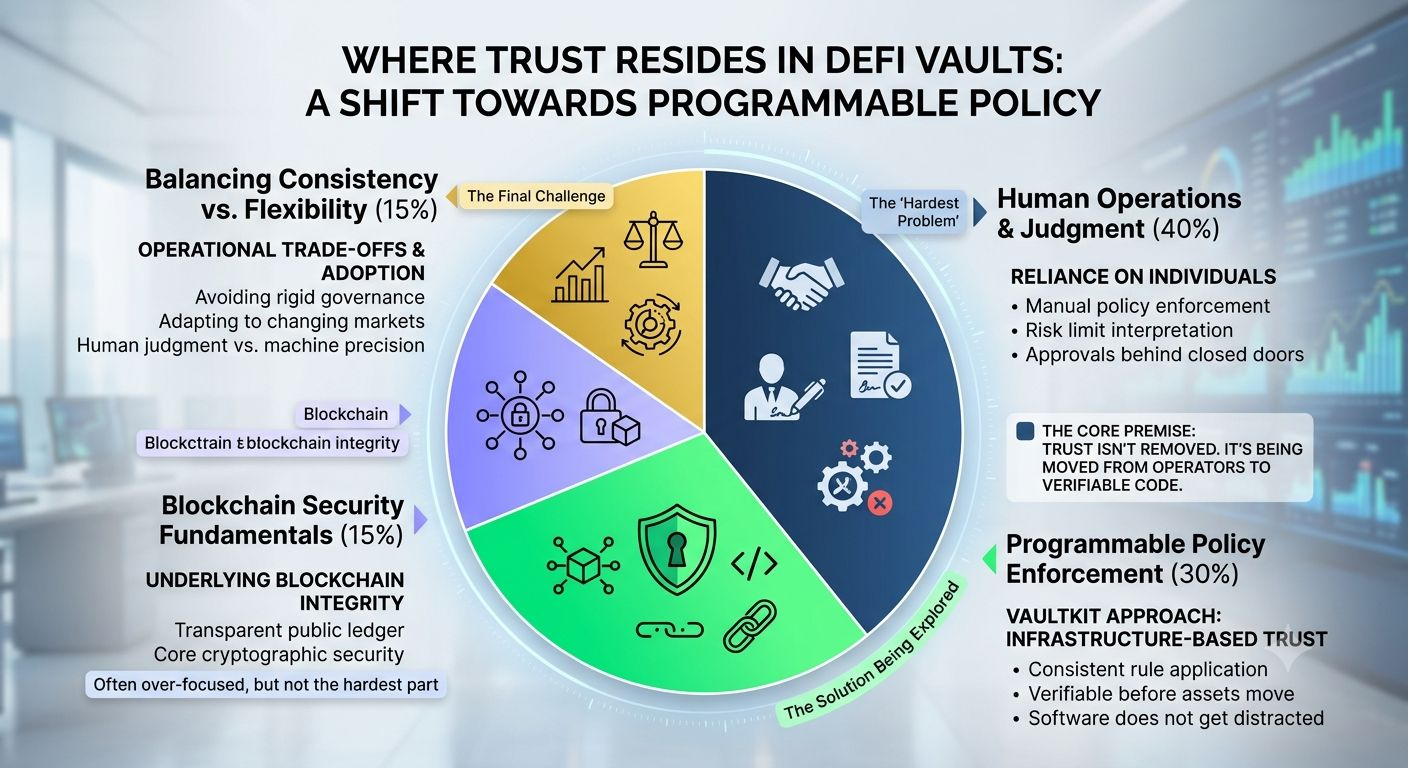
The more I think about onchain vaults, the more I realize the hardest problem isn't security. It's trust. Not trust in the blockchain itself, but trust in the people running the system.
That's always felt like an uncomfortable contradiction to me. We talk about transparent finance, yet many important decisions still happen behind the scenes. Someone decides whether a transaction fits the rules. Someone signs approvals. Someone interprets risk limits when markets become volatile. Even in systems built on smart contracts, people often remain the final layer of enforcement.
That works until it doesn't.
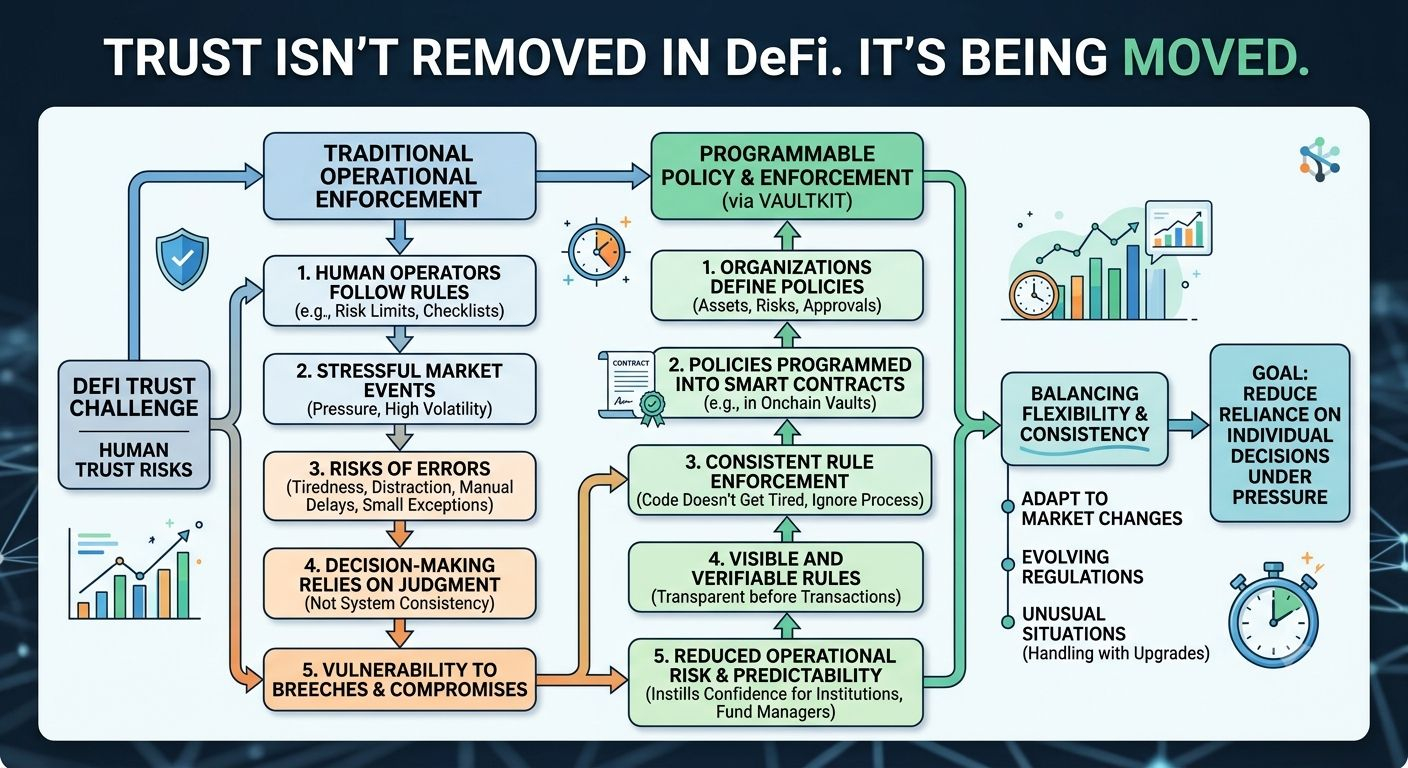
As more traditional financial firms start paying attention to digital assets, I don't think they're asking whether DeFi is fast enough or efficient enough anymore. They're asking a simpler question: can this operate in a way that's predictable? If a fund has strict investment policies or regulatory obligations, those rules can't depend on someone remembering a checklist during a stressful market event.
That's why VaultKit caught my attention. Not because it's another vault product, but because it seems to approach trust from a different angle. Instead of assuming people will always enforce policies correctly, it asks whether some of those responsibilities should be built directly into the infrastructure.
I actually think that's a more practical way to look at governance.
Most organizations already know what their policies are. They know how much risk they're willing to take, which assets they can hold, and what approvals are required. The difficult part has never been writing those rules. It's making sure they're applied consistently every single time, especially when markets are moving quickly and pressure is high.
I've seen enough systems over the years to know that failures usually don't begin with dramatic hacks. More often, they start with small exceptions. Someone skips a step because they're in a hurry. A manual review gets delayed. A decision that was supposed to follow a process ends up relying on judgment instead. Those little compromises don't always matter, but sometimes they're exactly where bigger problems begin.
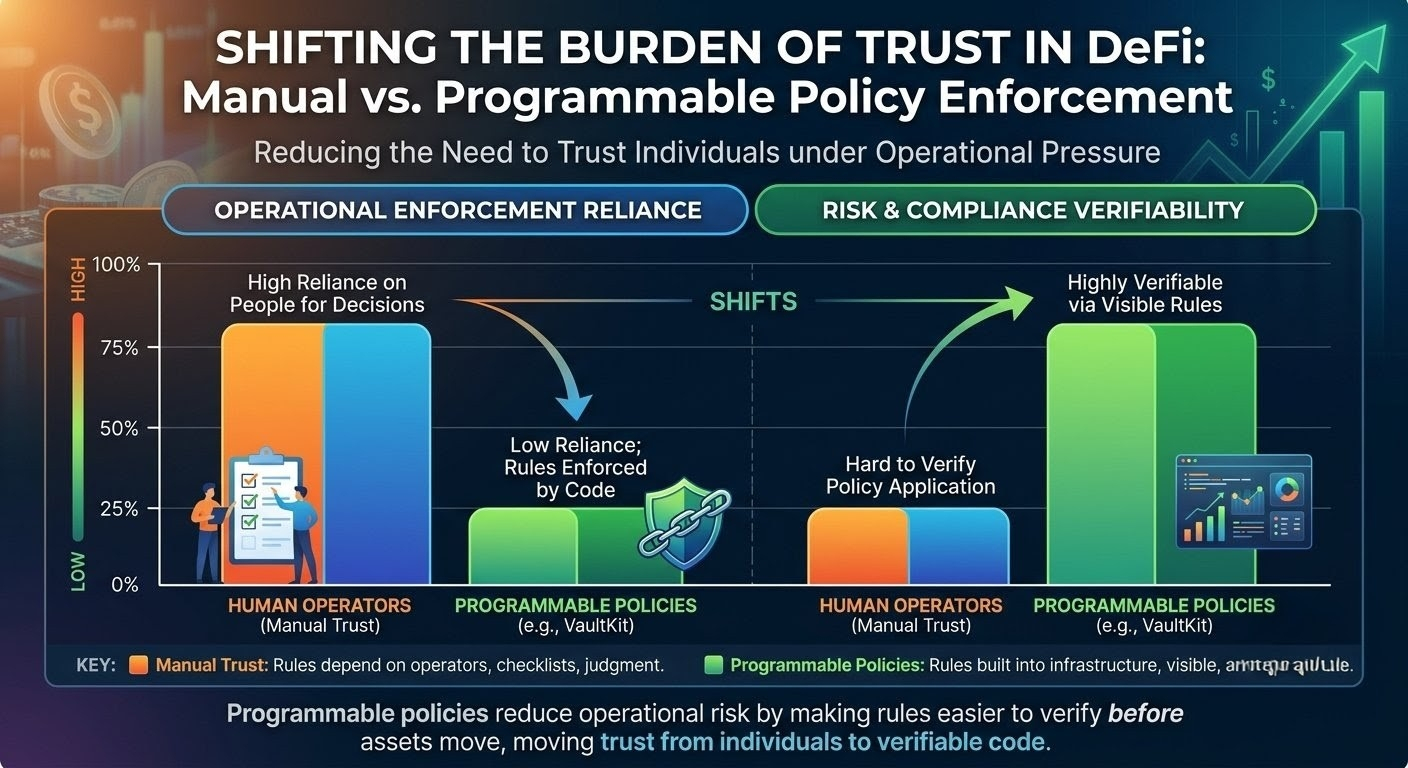
That's where programmable policy starts to make sense. Not because code is perfect, but because software doesn't get tired, distracted, or tempted to ignore a process for convenience. Of course, people still decide what the policies should be, and bad governance can still produce bad outcomes. No technology changes that.
What changes is the way those decisions are enforced. Instead of asking everyone to trust the operators, the rules themselves become visible and easier to verify before assets move. To me, that's a much stronger form of transparency than simply seeing transactions after they've already happened.
I also think the market sometimes overlooks infrastructure because it isn't exciting. New trading strategies and higher yields usually attract attention first. The systems that quietly reduce operational risk rarely become the center of the conversation, even though they're often the reason larger pools of capital feel comfortable participating in the first place.
None of this guarantees adoption. Building more rules into software also creates trade-offs. Markets change, regulations evolve, and governance can't become so rigid that every unusual situation turns into a lengthy upgrade process. Finding the right balance between flexibility and consistency is probably the real challenge.
My view is that VaultKit doesn't need to replace human judgment to be valuable. It only needs to reduce the number of situations where trust depends entirely on individuals making the right decision under pressure. If it can do that without making the system unnecessarily complex, I can see why institutions, professional asset managers, and regulated DeFi products would find it useful. If it can't, then it risks becoming another technically impressive solution looking for a problem. That's the balance I'll be watching.