
#biyapay
biyapay
645,488 lượt xem
3,535 đang thảo luận
Phổ biến
Mới nhất

Xem bản dịch
Managing Multiple Financial Accounts: Why a More Organized Approach MattersOne thing I gradually noticed as I became more interested in global investing was how quickly financial accounts could accumulate.
A brokerage account for U.S. stocks, another platform for Hong Kong stocks, and perhaps a separate wallet for digital assets. Before long, managing money across different applications can become just as time-consuming as following the markets themselves.
The challenge isn't necessarily the number of accounts. It's keeping track of balances, currencies, transaction records, and transfer arrangements without losing sight of the bigger picture.
This made me pay more attention to platforms that offer multiple financial services in one place.
One example is BiyaPay, a multi-asset wallet headquartered in Singapore. Its services include multi-currency wallet management, fiat and digital asset exchange, international transfers, and access to certain U.S. and Hong Kong stock trading services.
For people who regularly deal with different currencies or have an interest in both traditional financial markets and digital assets, these functions are worth exploring. Having access to several services through one platform may also make it easier to understand and organize different financial activities.
Of course, a unified platform doesn't automatically replace every brokerage account or payment service. Different products have different requirements, fees, and regulatory arrangements, so it's important to check the details before using them.
I've come to realize that managing investments isn't only about watching market movements. Keeping financial information organized, understanding where funds are held, and choosing suitable tools are also important parts of the process.
Sometimes, improving the way we manage money is just as valuable as learning how to invest it.#biyapay
Managing Multiple Financial Accounts: Why a More Organized Approach Matters
One thing I gradually noticed as I became more interested in global investing was how quickly financial accounts could accumulate.
A brokerage account for U.S. stocks, another platform for Hong Kong stocks, and perhaps a separate wallet for digital assets. Before long, managing money across different applications can become just as time-consuming as following the markets themselves.
The challenge isn't necessarily the number of accounts. It's keeping track of balances, currencies, transaction records, and transfer arrangements without losing sight of the bigger picture.
This made me pay more attention to platforms that offer multiple financial services in one place.
One example is BiyaPay, a multi-asset wallet headquartered in Singapore. Its services include multi-currency wallet management, fiat and digital asset exchange, international transfers, and access to certain U.S. and Hong Kong stock trading services.
For people who regularly deal with different currencies or have an interest in both traditional financial markets and digital assets, these functions are worth exploring. Having access to several services through one platform may also make it easier to understand and organize different financial activities.
Of course, a unified platform doesn't automatically replace every brokerage account or payment service. Different products have different requirements, fees, and regulatory arrangements, so it's important to check the details before using them.
I've come to realize that managing investments isn't only about watching market movements. Keeping financial information organized, understanding where funds are held, and choosing suitable tools are also important parts of the process.
Sometimes, improving the way we manage money is just as valuable as learning how to invest it.#biyapay
34
Từ USDT đến các thị trường truyền thống: Khám phá thêm những cách quản lý tài sản kỹ thuật sốVới những người đã tham gia thị trường tiền mã hóa một thời gian, USDT có lẽ là một trong những tài sản kỹ thuật số quen thuộc nhất. Đồng tiền này thường được dùng để giao dịch, chuyển giá trị và quản lý vốn trong hệ sinh thái tiền mã hóa.
Tuy nhiên, khi tìm hiểu thêm về đầu tư, tôi bắt đầu tò mò về một điều khác: người dùng tài sản kỹ thuật số có thể tìm hiểu các thị trường tài chính truyền thống tốt hơn bằng cách nào?
Thị trường chứng khoán Mỹ là một trong những lĩnh vực đầu tiên tôi bắt đầu tìm hiểu. Các công ty trong ngành công nghệ, trí tuệ nhân tạo, chăm sóc sức khỏe và những lĩnh vực khác mang đến nhiều cơ hội đầu tư khác nhau. Đồng thời, cổ phiếu Hồng Kông cũng là một thị trường đáng tìm hiểu.
Từ USDT đến các thị trường truyền thống: Khám phá thêm những cách quản lý tài sản kỹ thuật số
Với những người đã tham gia thị trường tiền mã hóa một thời gian, USDT có lẽ là một trong những tài sản kỹ thuật số quen thuộc nhất. Đồng tiền này thường được dùng để giao dịch, chuyển giá trị và quản lý vốn trong hệ sinh thái tiền mã hóa.
Tuy nhiên, khi tìm hiểu thêm về đầu tư, tôi bắt đầu tò mò về một điều khác: người dùng tài sản kỹ thuật số có thể tìm hiểu các thị trường tài chính truyền thống tốt hơn bằng cách nào?
Thị trường chứng khoán Mỹ là một trong những lĩnh vực đầu tiên tôi bắt đầu tìm hiểu. Các công ty trong ngành công nghệ, trí tuệ nhân tạo, chăm sóc sức khỏe và những lĩnh vực khác mang đến nhiều cơ hội đầu tư khác nhau. Đồng thời, cổ phiếu Hồng Kông cũng là một thị trường đáng tìm hiểu.
71
Vượt ra ngoài việc chọn cổ phiếu: Xây dựng thói quen đầu tư có tổ chức hơnKhi nói về đầu tư, mọi người thường tập trung vào việc nên mua gì, khi nào nên bán và thị trường nào có cơ hội tốt nhất. Nhưng sau khi dành nhiều thời gian hơn để tìm hiểu các thị trường tài chính khác nhau, tôi bắt đầu nhận ra rằng việc quản lý đầu tư không chỉ gói gọn trong các quyết định giao dịch.
Ví dụ, một người quan tâm đến cổ phiếu Mỹ cũng có thể nắm giữ cổ phiếu Hồng Kông hoặc tài sản kỹ thuật số. Mỗi thị trường có nền tảng giao dịch, yêu cầu tài khoản và phương thức nạp tiền riêng. Nếu không có một hệ thống rõ ràng, việc theo dõi mọi thứ có thể trở nên phức tạp không cần thiết.
Vượt ra ngoài việc chọn cổ phiếu: Xây dựng thói quen đầu tư có tổ chức hơn
Khi nói về đầu tư, mọi người thường tập trung vào việc nên mua gì, khi nào nên bán và thị trường nào có cơ hội tốt nhất. Nhưng sau khi dành nhiều thời gian hơn để tìm hiểu các thị trường tài chính khác nhau, tôi bắt đầu nhận ra rằng việc quản lý đầu tư không chỉ gói gọn trong các quyết định giao dịch.
Ví dụ, một người quan tâm đến cổ phiếu Mỹ cũng có thể nắm giữ cổ phiếu Hồng Kông hoặc tài sản kỹ thuật số. Mỗi thị trường có nền tảng giao dịch, yêu cầu tài khoản và phương thức nạp tiền riêng. Nếu không có một hệ thống rõ ràng, việc theo dõi mọi thứ có thể trở nên phức tạp không cần thiết.
58

·
--
Đã xác minh
Bài viết
Xem bản dịch
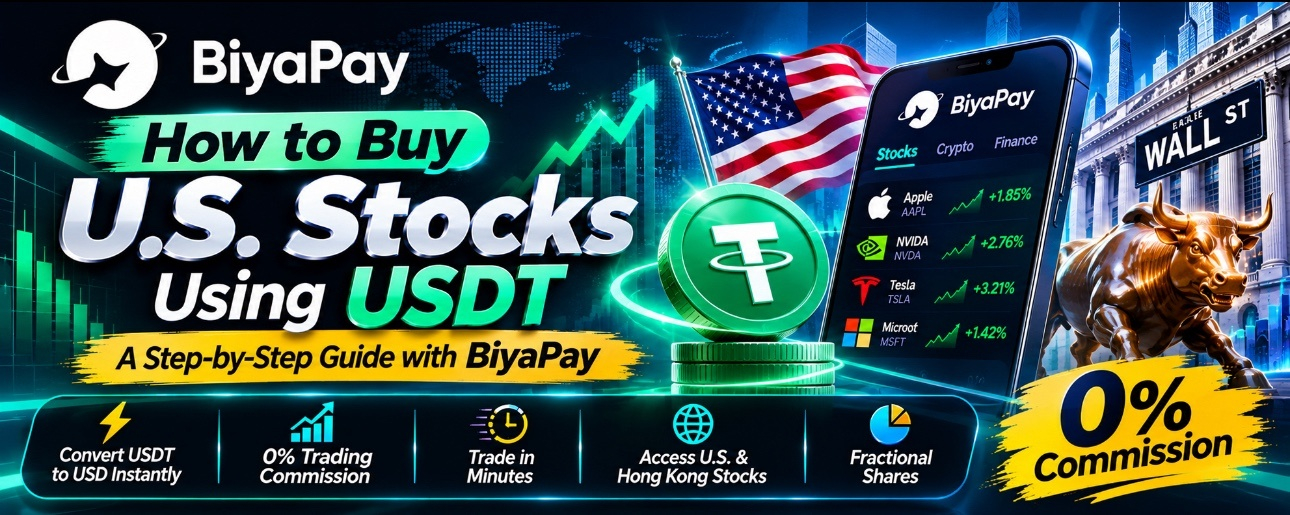
How to Buy U.S. Stocks Using USDT A Step-by-Step Guide with BiyaPayIf you hold stablecoins like USDT and want to buy shares of Apple, Nvidia, or an S&P 500 ETF, you have probably hit a frustrating wall. Moving capital from digital assets into traditional U.S. equities usually means cashing out to a local bank, losing money on steep foreign exchange spreads, paying international wire fees, and waiting days for a brokerage to clear your funds.
This brings up a practical question for modern retail investors: How can you buy U.S. stocks directly using USDT without losing money to endless conversion layers and banking delays?
Using BiyaPay as a unified multi-asset settlement bridge solves this bottleneck cleanly. Instead of routing cash through slow correspondent banks, you can convert stablecoins into U.S. dollars at a 1:1 rate and fund a stock trade in minutes. Here is how the process works in practice, what the actual fee structure looks like, and the key limitations to keep in mind before placing an order.
Why Traditional Cross-Border Stock Funding Is So Expensive
When investing in U.S. markets from outside the United States, your biggest hidden cost is rarely the stock trade itself, it is the capital routing.
Traditional international wire transfers typically carry flat fees ranging from $25 to $50 per transaction, plus intermediary bank deductions and unfavorable exchange rate markups of 1.5% to 3%. Even if a brokerage advertises zero-commission stock trades, losing 3% just to get your money onto the platform puts your portfolio at an immediate disadvantage.
How the USDT-to-Stock Workflow Operates
Rather than forcing you to bounce between a crypto exchange, a local bank, and an offshore brokerage, BiyaPay connects digital assets directly to U.S. and Hong Kong stock accounts inside one wallet.
You deposit stablecoins, swap them into USD at real-time market rates, and move the balance internally to your stock trading sub-account.
Step-by-Step Funding and Trading Process
Account Setup & Identity Verification: Create your account and complete standard KYC identity verification. Having a verified profile unlocks both fiat conversions and equity trading.Deposit USDT: Send USDT from your external wallet or exchange into your funding wallet. Always double-check the blockchain network (such as TRC20 or ERC20) and minimum deposit amounts so network gas fees do not leave your transfer short.Convert USDT to USD: Use the flash exchange feature to swap your USDT into U.S. dollars. In standard conditions, 1 USDT converts directly to 1 USD without hidden spread markups.Internal Transfer to Stock Account: Move your settled USD balance from your main wallet to your dedicated U.S. stock trading account.Execute Your Order: Search for your target U.S. ticker, check the live market depth, and place a market or limit order.
Comparing Traditional Bank Wires vs. USDT-to-Stock Routing
Understanding where you save and where costs still exist, is essential before moving capital. The table below compares a standard international bank wire to a traditional brokerage against routing USDT through BiyaPay.
Feature / Cost FactorTraditional International Bank WireBiyaPay (USDT-to-USD Route)Funding Speed2 to 5 business days (SWIFT network)Minutes for blockchain deposit + internal review bufferDeposit / Wire Fee$25 – $50 flat bank & intermediary fees$0 platform deposit fee (sender pays standard network gas)U.S. Stock Commission$0 – $10 per trade depending on broker$0 trading commissionPlatform & Regulatory FeesVaries by broker$0.005/share platform fee ($0.99 min, capped at 1% of trade value) + standard SEC/TAF/CAT regulatory feesFractional Shares (<1 share)Often unavailable to non-U.S. residentsSupported; 1% platform fee capped at $1
Key Findings and Practical Limitations to Keep in Mind
While routing USDT into U.S. stocks removes banking bottlenecks, there are four practical details every investor should plan around:
Zero Commission Does Not Mean Zero Cost: While trading commissions are $0, every standard U.S. stock order still carries a minimum platform fee of $0.99 (or $0.005 per share) alongside mandatory U.S. regulatory fees (SEC, TAF, and CAT fees) when selling. Making dozens of tiny $20 trades will trigger the $0.99 minimum repeatedly, eating into your returns.Weekend Deposits Are Not Instantly Tradable: Blockchain transfers run 24/7, but U.S. stock exchanges do not. If you deposit USDT on a Sunday night, your funds still need platform crediting, USD conversion, and internal account review before Monday's market open. Always leave a processing buffer.Strict Source-of-Funds Rules: You cannot have a friend or third party send USDT or fiat directly into your account to fund stock purchases. Deposits must come from wallets or accounts matching your verified identity to avoid compliance holds or returned funds.Market Risk Still Applies: Fast funding does not protect against stock market volatility, market holidays, or settlement rules. Always keep a cash buffer rather than putting your entire liquid balance into equities at once.
By planning your transfer frequency, batching smaller deposits to avoid repeated minimum fees, and tracking your conversion rates, bridging USDT into U.S. stocks is a straightforward and cost-effective way to diversify a global portfolio.
#Biyapay #USShares #CryptoToFiat #GlobalInvesting #PersonalFinance
How to Buy U.S. Stocks Using USDT A Step-by-Step Guide with BiyaPay
If you hold stablecoins like USDT and want to buy shares of Apple, Nvidia, or an S&P 500 ETF, you have probably hit a frustrating wall. Moving capital from digital assets into traditional U.S. equities usually means cashing out to a local bank, losing money on steep foreign exchange spreads, paying international wire fees, and waiting days for a brokerage to clear your funds.
This brings up a practical question for modern retail investors: How can you buy U.S. stocks directly using USDT without losing money to endless conversion layers and banking delays?
Using BiyaPay as a unified multi-asset settlement bridge solves this bottleneck cleanly. Instead of routing cash through slow correspondent banks, you can convert stablecoins into U.S. dollars at a 1:1 rate and fund a stock trade in minutes. Here is how the process works in practice, what the actual fee structure looks like, and the key limitations to keep in mind before placing an order.
Why Traditional Cross-Border Stock Funding Is So Expensive
When investing in U.S. markets from outside the United States, your biggest hidden cost is rarely the stock trade itself, it is the capital routing.
Traditional international wire transfers typically carry flat fees ranging from $25 to $50 per transaction, plus intermediary bank deductions and unfavorable exchange rate markups of 1.5% to 3%. Even if a brokerage advertises zero-commission stock trades, losing 3% just to get your money onto the platform puts your portfolio at an immediate disadvantage.
How the USDT-to-Stock Workflow Operates
Rather than forcing you to bounce between a crypto exchange, a local bank, and an offshore brokerage, BiyaPay connects digital assets directly to U.S. and Hong Kong stock accounts inside one wallet.
You deposit stablecoins, swap them into USD at real-time market rates, and move the balance internally to your stock trading sub-account.
Step-by-Step Funding and Trading Process
Account Setup & Identity Verification: Create your account and complete standard KYC identity verification. Having a verified profile unlocks both fiat conversions and equity trading.Deposit USDT: Send USDT from your external wallet or exchange into your funding wallet. Always double-check the blockchain network (such as TRC20 or ERC20) and minimum deposit amounts so network gas fees do not leave your transfer short.Convert USDT to USD: Use the flash exchange feature to swap your USDT into U.S. dollars. In standard conditions, 1 USDT converts directly to 1 USD without hidden spread markups.Internal Transfer to Stock Account: Move your settled USD balance from your main wallet to your dedicated U.S. stock trading account.Execute Your Order: Search for your target U.S. ticker, check the live market depth, and place a market or limit order.
Comparing Traditional Bank Wires vs. USDT-to-Stock Routing
Understanding where you save and where costs still exist, is essential before moving capital. The table below compares a standard international bank wire to a traditional brokerage against routing USDT through BiyaPay.
Feature / Cost FactorTraditional International Bank WireBiyaPay (USDT-to-USD Route)Funding Speed2 to 5 business days (SWIFT network)Minutes for blockchain deposit + internal review bufferDeposit / Wire Fee$25 – $50 flat bank & intermediary fees$0 platform deposit fee (sender pays standard network gas)U.S. Stock Commission$0 – $10 per trade depending on broker$0 trading commissionPlatform & Regulatory FeesVaries by broker$0.005/share platform fee ($0.99 min, capped at 1% of trade value) + standard SEC/TAF/CAT regulatory feesFractional Shares (<1 share)Often unavailable to non-U.S. residentsSupported; 1% platform fee capped at $1
Key Findings and Practical Limitations to Keep in Mind
While routing USDT into U.S. stocks removes banking bottlenecks, there are four practical details every investor should plan around:
Zero Commission Does Not Mean Zero Cost: While trading commissions are $0, every standard U.S. stock order still carries a minimum platform fee of $0.99 (or $0.005 per share) alongside mandatory U.S. regulatory fees (SEC, TAF, and CAT fees) when selling. Making dozens of tiny $20 trades will trigger the $0.99 minimum repeatedly, eating into your returns.Weekend Deposits Are Not Instantly Tradable: Blockchain transfers run 24/7, but U.S. stock exchanges do not. If you deposit USDT on a Sunday night, your funds still need platform crediting, USD conversion, and internal account review before Monday's market open. Always leave a processing buffer.Strict Source-of-Funds Rules: You cannot have a friend or third party send USDT or fiat directly into your account to fund stock purchases. Deposits must come from wallets or accounts matching your verified identity to avoid compliance holds or returned funds.Market Risk Still Applies: Fast funding does not protect against stock market volatility, market holidays, or settlement rules. Always keep a cash buffer rather than putting your entire liquid balance into equities at once.
By planning your transfer frequency, batching smaller deposits to avoid repeated minimum fees, and tracking your conversion rates, bridging USDT into U.S. stocks is a straightforward and cost-effective way to diversify a global portfolio.
#Biyapay #USShares #CryptoToFiat #GlobalInvesting #PersonalFinance
3
716

Bài viết
Tiền của bạn nằm ở nhiều loại tiền tệ khác nhau. Chiến lược tài chính của bạn có phản ánh điều đó không?Hãy nghĩ về cách tiền luân chuyển trong cuộc sống của một người bình thường.
Bạn có thể kiếm tiền bằng một loại tiền tệ, thanh toán các dịch vụ đăng ký bằng loại tiền tệ khác, hỗ trợ gia đình ở một quốc gia khác và đầu tư vào các tài sản được định giá bằng đô la Mỹ.
Đời sống tài chính của bạn có thể trở nên mang tính quốc tế từ lâu trước khi bạn tự xem mình là một nhà đầu tư toàn cầu.
Điều này tạo nên một thách thức thú vị: quản lý tiền bằng nhiều loại tiền tệ khác nhau trong khi cố gắng sắp xếp các quyết định tài chính của bạn.
Và đây là một thách thức đáng để bạn lưu tâm.
Sự chênh lệch tiền tệ mà hầu hết mọi người thường bỏ qua
Tiền của bạn nằm ở nhiều loại tiền tệ khác nhau. Chiến lược tài chính của bạn có phản ánh điều đó không?
Hãy nghĩ về cách tiền luân chuyển trong cuộc sống của một người bình thường.
Bạn có thể kiếm tiền bằng một loại tiền tệ, thanh toán các dịch vụ đăng ký bằng loại tiền tệ khác, hỗ trợ gia đình ở một quốc gia khác và đầu tư vào các tài sản được định giá bằng đô la Mỹ.
Đời sống tài chính của bạn có thể trở nên mang tính quốc tế từ lâu trước khi bạn tự xem mình là một nhà đầu tư toàn cầu.
Điều này tạo nên một thách thức thú vị: quản lý tiền bằng nhiều loại tiền tệ khác nhau trong khi cố gắng sắp xếp các quyết định tài chính của bạn.
Và đây là một thách thức đáng để bạn lưu tâm.
Sự chênh lệch tiền tệ mà hầu hết mọi người thường bỏ qua
106

·
--
Cách chuyển tiền toàn cầu với BiyaPay: Hướng dẫn đơn giản
Chuyển tiền quốc tế có thể gặp nhiều khó khănCách chuyển tiền toàn cầu với BiyaPay: Hướng dẫn đơn giản
Chuyển tiền quốc tế có thể gặp nhiều khó khăn do sự khác biệt về tiền tệ, phí chuyển tiền và các yêu cầu của ngân hàng. BiyaPay là một nền tảng tài chính số giúp người dùng đủ điều kiện quản lý các giao dịch chuyển tiền quốc tế, đổi tiền tệ và sử dụng các dịch vụ tiền mã hóa. Nền tảng này tích hợp nhiều công cụ tài chính, rất hữu ích cho những người thường xuyên thực hiện giao dịch quốc tế.
BiyaPay là gì?
BiyaPay là một nền tảng tài chính cung cấp các dịch vụ như chuyển tiền quốc tế, đổi tiền tệ, giao dịch tiền mã hóa và quyền truy cập vào một số thị trường tài chính nhất định.
Cách chuyển tiền toàn cầu với BiyaPay: Hướng dẫn đơn giản Chuyển tiền quốc tế có thể gặp nhiều khó khăn
Cách chuyển tiền toàn cầu với BiyaPay: Hướng dẫn đơn giản
Chuyển tiền quốc tế có thể gặp nhiều khó khăn do sự khác biệt về tiền tệ, phí chuyển tiền và các yêu cầu của ngân hàng. BiyaPay là một nền tảng tài chính số giúp người dùng đủ điều kiện quản lý các giao dịch chuyển tiền quốc tế, đổi tiền tệ và sử dụng các dịch vụ tiền mã hóa. Nền tảng này tích hợp nhiều công cụ tài chính, rất hữu ích cho những người thường xuyên thực hiện giao dịch quốc tế.
BiyaPay là gì?
BiyaPay là một nền tảng tài chính cung cấp các dịch vụ như chuyển tiền quốc tế, đổi tiền tệ, giao dịch tiền mã hóa và quyền truy cập vào một số thị trường tài chính nhất định.
139
Bài viết
BiyaPay Giúp Thanh Toán Xuyên Biên Giới Dễ Dàng Hơn Như Thế Nào?Chuyển tiền xuyên biên giới có thể gây nản lòng. Sự khác biệt về tiền tệ, yêu cầu của ngân hàng, tỷ giá và phí chuyển tiền có thể biến một khoản thanh toán đơn giản thành quy trình phức tạp.
Người làm việc tự do, gia đình và doanh nghiệp đều gặp phải những thách thức này. Các nền tảng tài chính số đang nỗ lực giúp việc quản lý những giao dịch này trở nên dễ dàng hơn.
BiyaPay tích hợp các dịch vụ chuyển tiền quốc tế và đổi tiền. Tùy thuộc vào vị trí và điều kiện của người dùng, nền tảng cung cấp các cách nạp tiền được hỗ trợ, đổi tiền và rút tiền vào tài khoản ngân hàng đủ điều kiện. Dưới đây là cách quy trình hoạt động và những điều cần kiểm tra trước tiên.
BiyaPay Giúp Thanh Toán Xuyên Biên Giới Dễ Dàng Hơn Như Thế Nào?
Chuyển tiền xuyên biên giới có thể gây nản lòng. Sự khác biệt về tiền tệ, yêu cầu của ngân hàng, tỷ giá và phí chuyển tiền có thể biến một khoản thanh toán đơn giản thành quy trình phức tạp.
Người làm việc tự do, gia đình và doanh nghiệp đều gặp phải những thách thức này. Các nền tảng tài chính số đang nỗ lực giúp việc quản lý những giao dịch này trở nên dễ dàng hơn.
BiyaPay tích hợp các dịch vụ chuyển tiền quốc tế và đổi tiền. Tùy thuộc vào vị trí và điều kiện của người dùng, nền tảng cung cấp các cách nạp tiền được hỗ trợ, đổi tiền và rút tiền vào tài khoản ngân hàng đủ điều kiện. Dưới đây là cách quy trình hoạt động và những điều cần kiểm tra trước tiên.
118
Kết hợp giao dịch cổ phiếu với việc quản lý tài chính hiệu quả hơnĐể chuyển đổi tiền tệ và quản lý các khoản tiền quốc tế, tôi cũng bắt đầu tìm hiểu BiyaPay.
Các dịch vụ của nền tảng này bao gồm ví kỹ thuật số, đổi nhiều loại tiền tệ, chuyển tiền quốc tế và quyền truy cập vào dịch vụ giao dịch cổ phiếu Mỹ và Hồng Kông. Nền tảng cũng hỗ trợ các chức năng chuyển đổi liên quan đến USDT, có thể hữu ích cho những người đã giao dịch tài sản kỹ thuật số.
Điều tôi thích nhất ở cách tiếp cận này là sự linh hoạt trong việc sắp xếp các hoạt động tài chính khác nhau theo mục đích của chúng.
Tất nhiên, sự tiện lợi không bao giờ nên thay thế việc tìm hiểu kỹ lưỡng. Trước khi sử dụng bất kỳ nền tảng nào, tôi luôn kiểm tra thông tin pháp lý, các khu vực được hỗ trợ, phí giao dịch và yêu cầu rút tiền.
Kết hợp giao dịch cổ phiếu với việc quản lý tài chính hiệu quả hơn
Để chuyển đổi tiền tệ và quản lý các khoản tiền quốc tế, tôi cũng bắt đầu tìm hiểu BiyaPay.
Các dịch vụ của nền tảng này bao gồm ví kỹ thuật số, đổi nhiều loại tiền tệ, chuyển tiền quốc tế và quyền truy cập vào dịch vụ giao dịch cổ phiếu Mỹ và Hồng Kông. Nền tảng cũng hỗ trợ các chức năng chuyển đổi liên quan đến USDT, có thể hữu ích cho những người đã giao dịch tài sản kỹ thuật số.
Điều tôi thích nhất ở cách tiếp cận này là sự linh hoạt trong việc sắp xếp các hoạt động tài chính khác nhau theo mục đích của chúng.
Tất nhiên, sự tiện lợi không bao giờ nên thay thế việc tìm hiểu kỹ lưỡng. Trước khi sử dụng bất kỳ nền tảng nào, tôi luôn kiểm tra thông tin pháp lý, các khu vực được hỗ trợ, phí giao dịch và yêu cầu rút tiền.
77
Vì sao việc quản lý vốn quan trọng trong giao dịch cổ phiếuCác nhà môi giới khác nhau có thể có phương thức nạp tiền, loại tiền tệ được hỗ trợ, thời gian xử lý và yêu cầu rút tiền khác nhau. Ngay cả khi trải nghiệm giao dịch suôn sẻ, các thủ tục tài chính liên quan vẫn có thể trở nên phức tạp.
Cuối cùng, tôi biết đến BiyaPay khi đang tìm cách quản lý các khoản tiền quốc tế ngăn nắp hơn. Nền tảng này hỗ trợ nhiều loại tiền pháp định và tài sản kỹ thuật số, với các tính năng như đổi tiền, chuyển tiền và quản lý ví.
Một điểm thú vị khác là nền tảng hỗ trợ một số dịch vụ giao dịch cổ phiếu tại Mỹ và Hồng Kông. Vì vậy, đây là lựa chọn đáng tìm hiểu đối với những ai muốn khám phá cách tài sản kỹ thuật số và thị trường tài chính truyền thống có thể kết hợp với nhau.
Vì sao việc quản lý vốn quan trọng trong giao dịch cổ phiếu
Các nhà môi giới khác nhau có thể có phương thức nạp tiền, loại tiền tệ được hỗ trợ, thời gian xử lý và yêu cầu rút tiền khác nhau. Ngay cả khi trải nghiệm giao dịch suôn sẻ, các thủ tục tài chính liên quan vẫn có thể trở nên phức tạp.
Cuối cùng, tôi biết đến BiyaPay khi đang tìm cách quản lý các khoản tiền quốc tế ngăn nắp hơn. Nền tảng này hỗ trợ nhiều loại tiền pháp định và tài sản kỹ thuật số, với các tính năng như đổi tiền, chuyển tiền và quản lý ví.
Một điểm thú vị khác là nền tảng hỗ trợ một số dịch vụ giao dịch cổ phiếu tại Mỹ và Hồng Kông. Vì vậy, đây là lựa chọn đáng tìm hiểu đối với những ai muốn khám phá cách tài sản kỹ thuật số và thị trường tài chính truyền thống có thể kết hợp với nhau.
9
Brokers, Futu và Webull: Những suy nghĩ cá nhân của tôiĐó là lúc tôi bắt đầu quan tâm đến BiyaPay. Nền tảng này cung cấp dịch vụ ví, chuyển đổi tiền tệ, chuyển tiền quốc tế và quyền truy cập vào một số dịch vụ liên quan đến đầu tư.
Tôi thấy ý tưởng quản lý quỹ và giao dịch cổ phiếu một cách có tổ chức đặc biệt hữu ích. Thay vì kỳ vọng một ứng dụng có thể xử lý mọi thứ, tôi thích chọn công cụ dựa trên chức năng thực tế của chúng.
Cuối cùng, việc so sánh các nền tảng không nên chỉ tập trung vào các ưu đãi quảng cáo. Trước khi đưa ra quyết định, nhà đầu tư nên xem xét kỹ các yêu cầu về tài khoản, những khoản phí áp dụng, quy định địa phương và các phương thức nạp tiền được hỗ trợ.#biyapay
Brokers, Futu và Webull: Những suy nghĩ cá nhân của tôi
Đó là lúc tôi bắt đầu quan tâm đến BiyaPay. Nền tảng này cung cấp dịch vụ ví, chuyển đổi tiền tệ, chuyển tiền quốc tế và quyền truy cập vào một số dịch vụ liên quan đến đầu tư.
Tôi thấy ý tưởng quản lý quỹ và giao dịch cổ phiếu một cách có tổ chức đặc biệt hữu ích. Thay vì kỳ vọng một ứng dụng có thể xử lý mọi thứ, tôi thích chọn công cụ dựa trên chức năng thực tế của chúng.
Cuối cùng, việc so sánh các nền tảng không nên chỉ tập trung vào các ưu đãi quảng cáo. Trước khi đưa ra quyết định, nhà đầu tư nên xem xét kỹ các yêu cầu về tài khoản, những khoản phí áp dụng, quy định địa phương và các phương thức nạp tiền được hỗ trợ.#biyapay
61
Cuối cùng, tôi tình cờ biết đến BiyaPay, một ví đa tài sản kết hợp dịch vụ đổi tiền, chuyển tiền và các dịch vụ tài chính khác. Điều khiến tôi chú ý là khả năng xem tỷ giá và quản lý nhiều loại tiền tệ trên cùng một nền tảng.
Với những người thường xuyên thực hiện giao dịch quốc tế, có một cách quản lý tiền bạc ngăn nắp hơn có thể giúp các công việc tài chính hằng ngày trở nên dễ dàng hơn.
Tôi vẫn tin rằng việc chọn một công ty môi giới đòi hỏi phải nghiên cứu kỹ lưỡng. Cần cân nhắc phí giao dịch, điều kiện mở tài khoản, tình trạng pháp lý và các thị trường hiện có. Với tôi, bài học lớn nhất là một thói quen đầu tư tốt không chỉ đơn thuần là mua và bán cổ phiếu. Một quy trình tài chính rõ ràng và được lên kế hoạch cẩn thận cũng quan trọng không kém.#biyapay
84

·
--
Bài viết
Xem bản dịch
What Do You Actually Pay to Send USDT to a Bank Account?Disclosure: It is not financial advice
A short line about a remittance fee can make the cost sound like one number. On BiyaPay, the remittance fee is tiered, and it changes with the size of the transfer.
This is not a recommendation to send funds. It is a worked walk-through of that fee schedule, and of what I would look at before I send.
Two routes, and they pay out the same
There are two ways to withdraw fiat currency, and the arrival amounts of these two methods are the same. I am using a USD withdrawal as the example, from guidance dated 28 February 2026.
The first method is to open Flash Exchange on the app homepage, or open My Assets, then Funds, then Flash Exchange on the web, exchange USDT to USD, and then go to the Remittance page. There you select USD, choose the recipient account, and enter an email verification code or a Biya authenticator code.
The second method skips the separate exchange step. On the Remittance page, you select USDT for remittance, with the actual remittance in USD, then choose the recipient account and enter the same kind of verification code.
Some older screens used the word Convert for that step. The February 2026 guidance calls it Flash Exchange. I would follow the labels on the screen I am looking at.
Before those steps: verification and a recipient account
The process starts earlier than the Remittance button. Complete identity verification and link a bank account, then deposit USDT, then exchange, then withdraw to the linked account.
The recipient account is the one that receives fiat withdrawn from BiyaPay. You can add one from Personal Center, under Recipient Management, or from the Remittance page, under Remit to Self or Remit to Others. That binding guidance is dated 28 February 2026.
You can choose Self, Others, or Business. A Self account needs bank and personal information. An Others account also requires the recipient's ID card or passport. A Business account needs bank and enterprise information.
The fee is tiered, not a single headline rate
If you deposit USDT and withdraw USD, USDT is exchanged 1:1 with USD. That fee guidance was updated on 28 February 2026.
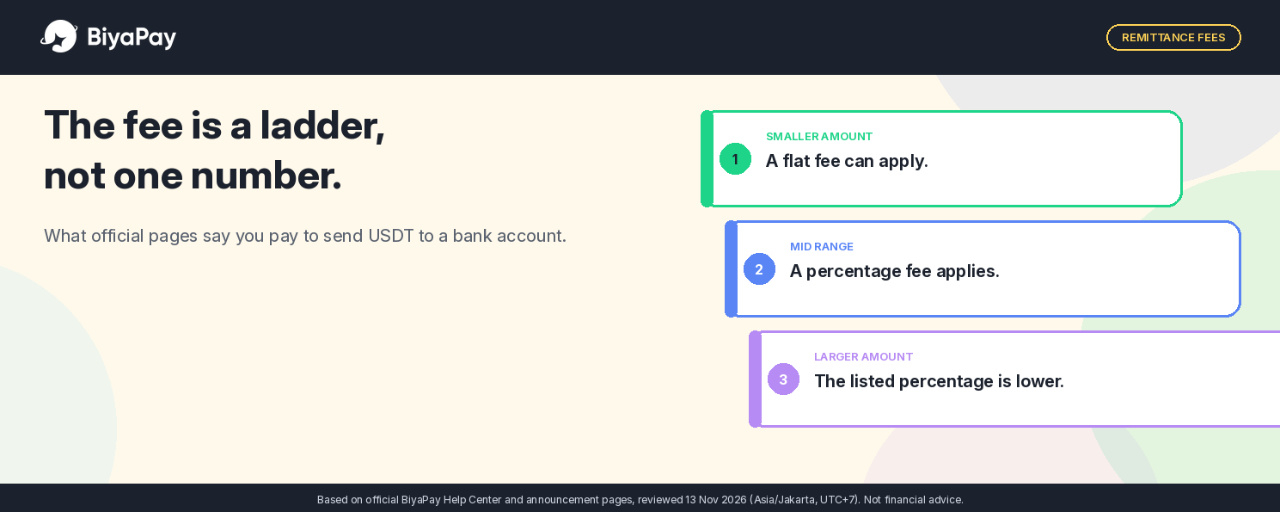
On the BiyaPay fee itself, the short summary is this. When the fiat withdrawal amount is between 200 USD and 2000 USD, the withdrawal fee is 20 USD. When the amount is greater than 2000 USD, the withdrawal fee is 1 percent, with a minimum fee of 0.5 percent available. Fees for other fiat currencies follow the equivalent amount in USD. A higher withdrawal amount has a lower fee percentage. Transferring fiat between BiyaPay wallets through a registered email has no handling fee.
A fuller table sits in a BiyaPay announcement titled Notice on the further reduction of the fee rate for BiyaPay remittance (fiat currency withdrawal), published on 28 November 2024. That table was still shown when I checked on 13 November 2026, after an update dated 15 October 2026.
Remittance still uses a tiered rate, taking a US dollar remittance as the example, with other fiat currencies calculated on the equivalent US dollar amount. The fee is deducted from the remittance amount. The published tiers, as a single remittance or withdrawal in US dollars, are:
200 up to but not including 2,000: a 20 US dollar fee, with no discount listed.
2,000 up to but not including 50,000: 1.00 percent, with no discount listed.
50,000 up to but not including 100,000: 0.90 percent, described as 10 percent off.
100,000 up to but not including 500,000: 0.80 percent, described as 20 percent off.
500,000 up to but not including 1 million: 0.70 percent, described as 30 percent off.
1 million up to but not including 2 million: 0.60 percent, described as 40 percent off.
2 million and above: 0.50 percent, described as 50 percent off.
I would treat that table as the published schedule for this article. The live figures I would use are the current Cost Center remittance table, and then the amount shown on the Remittance preview.
What the 0.1 percent headline does not replace
You may see a short line that remittance fees start from 0.1 percent. That is a headline floor. It is not what the published tier table above shows for ordinary sizes.
On that announcement table, the lowest listed rate is 0.50 percent, and only at 2 million US dollars and above. A 20 US dollar fee on a 200 US dollar transfer is 10 percent of the amount, not 0.1 percent. On a 2,000 US dollar transfer, the same 20 US dollar fee is 1 percent.
The useful question is which tier this amount falls into, and what the preview shows will be paid.
Other costs that are not on the BiyaPay fee line
The BiyaPay fee is not always the only deduction. A transfer in a home-country or local currency, such as US dollars to a US bank, Singapore dollars to a Singapore bank, or Hong Kong dollars to a Hong Kong bank, generally has no bank handling fee. That bank-charge guidance was last updated on 3 November 2024.
If the remittance is not in that local currency, the bank may charge a fee ranging from a few dollars to tens of dollars. Some banks charge even on a local-currency payment. A specific example is a US dollar transfer to US Wise, with a 10 US dollar fee per transaction. I would read the receiving bank's own fee, not only the BiyaPay tier.
Limits, cancellation, and what the transfer supports
A single remittance can be up to 5 million US dollars. To avoid bank scrutiny and a slower arrival, each remittance is better kept at or under 1 million US dollars, and an amount above that is best split into more than one transfer.
Fiat withdrawal currently supports over 30 currencies, including USD, HKD, and SGD. The currency selection page, when you bind a recipient on Remittance, shows the supported list. Remittances go to nearly 200 countries and regions, except countries or regions sanctioned by the United States or the international community. Only online bank transfers are supported, not cash.
Once funds have been remitted, they cannot be cancelled. There is a narrower exception: if the order status is under review, you can cancel that order yourself and then submit again.
Arrival time depends on more than the submit button
Funds will typically arrive within 1 to 3 business days, depending on the remittance country and currency, the payment method, working hours, and bank review. That arrival guidance was updated on 28 February 2026.
Local currencies are generally faster. USD to a US bank, SGD to a Singapore bank, and HKD to a Hong Kong bank generally arrive on the same working day. A cross-currency route, such as SGD to a US bank or USD to a Hong Kong bank, generally arrives on the same day or the next working day.
When you bind a bank account, the page also shows arrival times for the payment method. The examples are US SWIFT in 1 to 3 working days, and ABA or ACH in 0 to 1 working day.
If you submit before 5 PM Singapore time, the remittance is generally sent the same day. A later submission is likely sent on the next working day. Weekends and legal holidays in the destination country can extend arrival. If a bank review is extended, BiyaPay cannot confirm when the funds will arrive, because that depends on the recipient's bank. If a remittance has not arrived after more than 3 working days, contact BiyaPay so they can check the progress.
Flash Exchange itself is available 24 hours a day, and is completed in real time. That is the conversion step, not the bank arrival window.
A checklist I would use before I send
Finish identity verification and bind the correct recipient account, with the documents that account type requires.Decide the route: Flash Exchange into USD and then remit USD, or remit USDT as USD. The arrival amounts are the same.Read the current remittance fee table, not a headline rate I remember, and match the tier for this amount.Look at the preview of the amount to be received, including the BiyaPay fee that will be deducted.Check whether the receiving bank may add its own fee, especially if the currency is not local to that bank.Check the payment method's stated arrival window, and whether I am submitting before the 5 PM Singapore cutoff on a working day.Recheck the recipient details. After the funds have been remitted, the transfer cannot be cancelled.Complete the email or Biya authenticator verification only after those checks feel right.
Source: BiyaPay app and fee pages, and the remittance-fee announcement published on 28 November 2024, all checked on 13 November 2026 (Asia/Jakarta, UTC+7).
#BiyaPay #USDT #Remittance #BankTransfer
What Do You Actually Pay to Send USDT to a Bank Account?
Disclosure: It is not financial advice
A short line about a remittance fee can make the cost sound like one number. On BiyaPay, the remittance fee is tiered, and it changes with the size of the transfer.
This is not a recommendation to send funds. It is a worked walk-through of that fee schedule, and of what I would look at before I send.
Two routes, and they pay out the same
There are two ways to withdraw fiat currency, and the arrival amounts of these two methods are the same. I am using a USD withdrawal as the example, from guidance dated 28 February 2026.
The first method is to open Flash Exchange on the app homepage, or open My Assets, then Funds, then Flash Exchange on the web, exchange USDT to USD, and then go to the Remittance page. There you select USD, choose the recipient account, and enter an email verification code or a Biya authenticator code.
The second method skips the separate exchange step. On the Remittance page, you select USDT for remittance, with the actual remittance in USD, then choose the recipient account and enter the same kind of verification code.
Some older screens used the word Convert for that step. The February 2026 guidance calls it Flash Exchange. I would follow the labels on the screen I am looking at.
Before those steps: verification and a recipient account
The process starts earlier than the Remittance button. Complete identity verification and link a bank account, then deposit USDT, then exchange, then withdraw to the linked account.
The recipient account is the one that receives fiat withdrawn from BiyaPay. You can add one from Personal Center, under Recipient Management, or from the Remittance page, under Remit to Self or Remit to Others. That binding guidance is dated 28 February 2026.
You can choose Self, Others, or Business. A Self account needs bank and personal information. An Others account also requires the recipient's ID card or passport. A Business account needs bank and enterprise information.
The fee is tiered, not a single headline rate
If you deposit USDT and withdraw USD, USDT is exchanged 1:1 with USD. That fee guidance was updated on 28 February 2026.
On the BiyaPay fee itself, the short summary is this. When the fiat withdrawal amount is between 200 USD and 2000 USD, the withdrawal fee is 20 USD. When the amount is greater than 2000 USD, the withdrawal fee is 1 percent, with a minimum fee of 0.5 percent available. Fees for other fiat currencies follow the equivalent amount in USD. A higher withdrawal amount has a lower fee percentage. Transferring fiat between BiyaPay wallets through a registered email has no handling fee.
A fuller table sits in a BiyaPay announcement titled Notice on the further reduction of the fee rate for BiyaPay remittance (fiat currency withdrawal), published on 28 November 2024. That table was still shown when I checked on 13 November 2026, after an update dated 15 October 2026.
Remittance still uses a tiered rate, taking a US dollar remittance as the example, with other fiat currencies calculated on the equivalent US dollar amount. The fee is deducted from the remittance amount. The published tiers, as a single remittance or withdrawal in US dollars, are:
200 up to but not including 2,000: a 20 US dollar fee, with no discount listed.
2,000 up to but not including 50,000: 1.00 percent, with no discount listed.
50,000 up to but not including 100,000: 0.90 percent, described as 10 percent off.
100,000 up to but not including 500,000: 0.80 percent, described as 20 percent off.
500,000 up to but not including 1 million: 0.70 percent, described as 30 percent off.
1 million up to but not including 2 million: 0.60 percent, described as 40 percent off.
2 million and above: 0.50 percent, described as 50 percent off.
I would treat that table as the published schedule for this article. The live figures I would use are the current Cost Center remittance table, and then the amount shown on the Remittance preview.
What the 0.1 percent headline does not replace
You may see a short line that remittance fees start from 0.1 percent. That is a headline floor. It is not what the published tier table above shows for ordinary sizes.
On that announcement table, the lowest listed rate is 0.50 percent, and only at 2 million US dollars and above. A 20 US dollar fee on a 200 US dollar transfer is 10 percent of the amount, not 0.1 percent. On a 2,000 US dollar transfer, the same 20 US dollar fee is 1 percent.
The useful question is which tier this amount falls into, and what the preview shows will be paid.
Other costs that are not on the BiyaPay fee line
The BiyaPay fee is not always the only deduction. A transfer in a home-country or local currency, such as US dollars to a US bank, Singapore dollars to a Singapore bank, or Hong Kong dollars to a Hong Kong bank, generally has no bank handling fee. That bank-charge guidance was last updated on 3 November 2024.
If the remittance is not in that local currency, the bank may charge a fee ranging from a few dollars to tens of dollars. Some banks charge even on a local-currency payment. A specific example is a US dollar transfer to US Wise, with a 10 US dollar fee per transaction. I would read the receiving bank's own fee, not only the BiyaPay tier.
Limits, cancellation, and what the transfer supports
A single remittance can be up to 5 million US dollars. To avoid bank scrutiny and a slower arrival, each remittance is better kept at or under 1 million US dollars, and an amount above that is best split into more than one transfer.
Fiat withdrawal currently supports over 30 currencies, including USD, HKD, and SGD. The currency selection page, when you bind a recipient on Remittance, shows the supported list. Remittances go to nearly 200 countries and regions, except countries or regions sanctioned by the United States or the international community. Only online bank transfers are supported, not cash.
Once funds have been remitted, they cannot be cancelled. There is a narrower exception: if the order status is under review, you can cancel that order yourself and then submit again.
Arrival time depends on more than the submit button
Funds will typically arrive within 1 to 3 business days, depending on the remittance country and currency, the payment method, working hours, and bank review. That arrival guidance was updated on 28 February 2026.
Local currencies are generally faster. USD to a US bank, SGD to a Singapore bank, and HKD to a Hong Kong bank generally arrive on the same working day. A cross-currency route, such as SGD to a US bank or USD to a Hong Kong bank, generally arrives on the same day or the next working day.
When you bind a bank account, the page also shows arrival times for the payment method. The examples are US SWIFT in 1 to 3 working days, and ABA or ACH in 0 to 1 working day.
If you submit before 5 PM Singapore time, the remittance is generally sent the same day. A later submission is likely sent on the next working day. Weekends and legal holidays in the destination country can extend arrival. If a bank review is extended, BiyaPay cannot confirm when the funds will arrive, because that depends on the recipient's bank. If a remittance has not arrived after more than 3 working days, contact BiyaPay so they can check the progress.
Flash Exchange itself is available 24 hours a day, and is completed in real time. That is the conversion step, not the bank arrival window.
A checklist I would use before I send
Finish identity verification and bind the correct recipient account, with the documents that account type requires.Decide the route: Flash Exchange into USD and then remit USD, or remit USDT as USD. The arrival amounts are the same.Read the current remittance fee table, not a headline rate I remember, and match the tier for this amount.Look at the preview of the amount to be received, including the BiyaPay fee that will be deducted.Check whether the receiving bank may add its own fee, especially if the currency is not local to that bank.Check the payment method's stated arrival window, and whether I am submitting before the 5 PM Singapore cutoff on a working day.Recheck the recipient details. After the funds have been remitted, the transfer cannot be cancelled.Complete the email or Biya authenticator verification only after those checks feel right.
Source: BiyaPay app and fee pages, and the remittance-fee announcement published on 28 November 2024, all checked on 13 November 2026 (Asia/Jakarta, UTC+7).
#BiyaPay #USDT #Remittance #BankTransfer
337
·
--
Đã xác minh
Bài viết
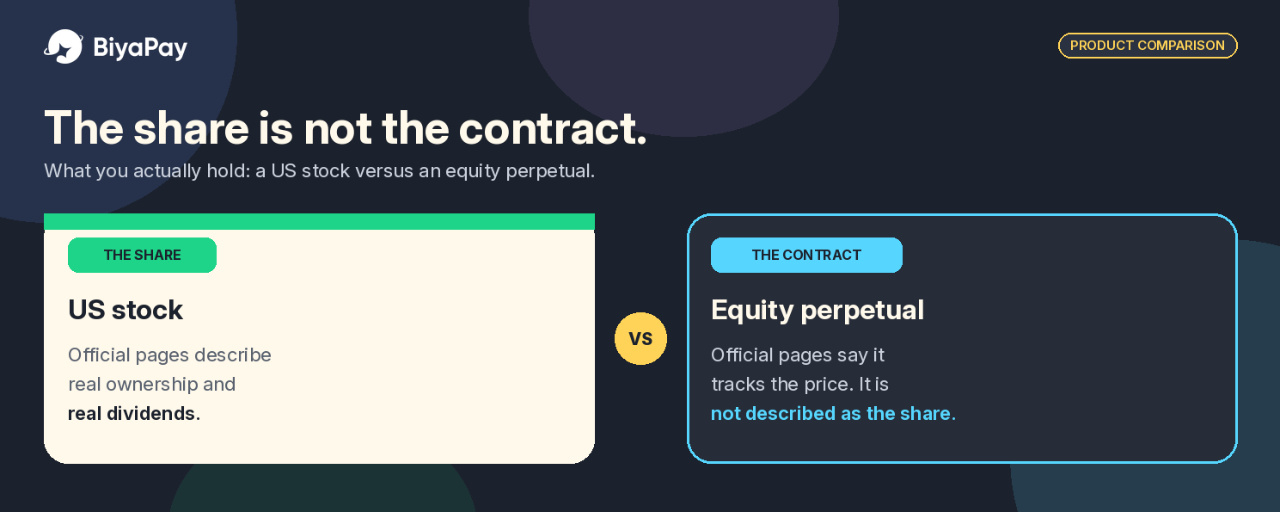
Bạn thực sự đang nắm giữ gì: Cổ phiếu Mỹ hay Hợp đồng vĩnh cửu cổ phiếu?Thông báo: Đây không phải là lời khuyên tài chính
Một mã giao dịch quen thuộc có thể xuất hiện trong nhiều sản phẩm. Điều đó không có nghĩa là bạn đang nắm giữ cùng một loại tài sản.
Trên BiyaPay, bạn có thể mua cổ phiếu Mỹ, đồng thời cũng có thể giao dịch hợp đồng vĩnh cửu cổ phiếu theo dõi giá cổ phiếu đó. Giao diện có thể trông liên quan đến nhau, nhưng tài sản bạn nắm giữ thì không giống nhau.
Tôi sẽ phân biệt các sản phẩm này trước khi quyết định sản phẩm nào phù hợp với mục đích của mình. Đây không phải là khuyến nghị sử dụng sản phẩm nào. Đây là phần so sánh những gì mỗi sản phẩm thực sự mang lại và những gì không.
Bạn thực sự đang nắm giữ gì: Cổ phiếu Mỹ hay Hợp đồng vĩnh cửu cổ phiếu?
Thông báo: Đây không phải là lời khuyên tài chính
Một mã giao dịch quen thuộc có thể xuất hiện trong nhiều sản phẩm. Điều đó không có nghĩa là bạn đang nắm giữ cùng một loại tài sản.
Trên BiyaPay, bạn có thể mua cổ phiếu Mỹ, đồng thời cũng có thể giao dịch hợp đồng vĩnh cửu cổ phiếu theo dõi giá cổ phiếu đó. Giao diện có thể trông liên quan đến nhau, nhưng tài sản bạn nắm giữ thì không giống nhau.
Tôi sẽ phân biệt các sản phẩm này trước khi quyết định sản phẩm nào phù hợp với mục đích của mình. Đây không phải là khuyến nghị sử dụng sản phẩm nào. Đây là phần so sánh những gì mỗi sản phẩm thực sự mang lại và những gì không.
1
1.3k
·
--
Bài viết
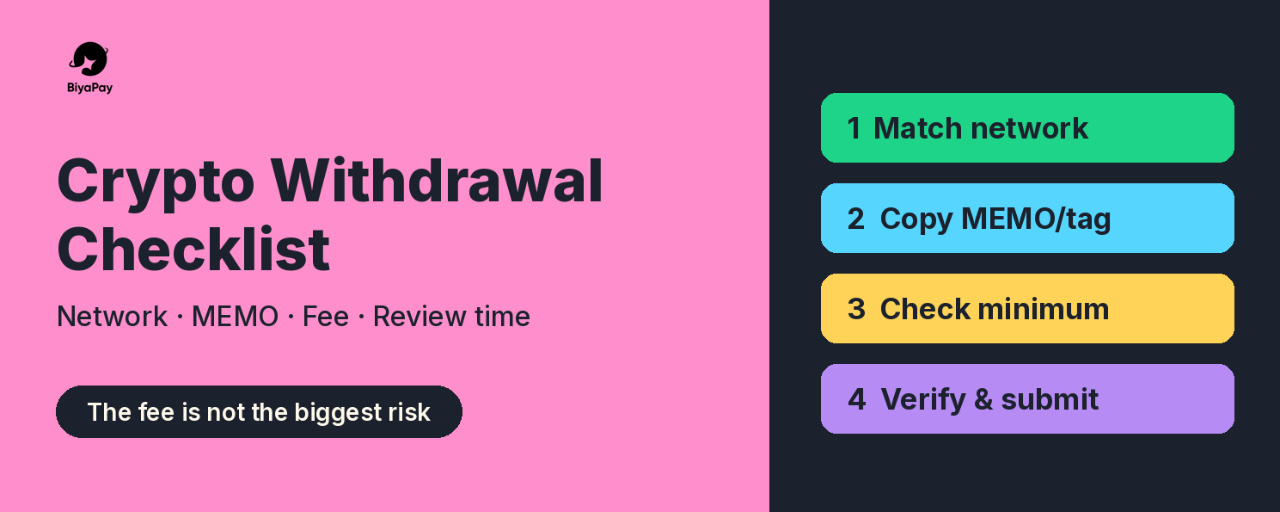
Danh sách kiểm tra khi rút tiền mã hóa trên BiyaPay: Mạng, thẻ MEMO, phí và thời gian xét duyệtTuyên bố miễn trừ trách nhiệm: Đây không phải là lời khuyên tài chính
Mức phí rút 1 USDT so với 10 USDT có thể khiến người ta nghĩ rằng đó là yếu tố quyết định duy nhất. Theo tôi thì không phải vậy.
Các ví dụ chính thức của Trung tâm trợ giúp BiyaPay cho biết phí on-chain khi rút USDT là 1 USDT trên TRC20 và 10 USDT trên ERC20. Chênh lệch là 9 USDT, và người ta rất dễ mặc định chọn mức phí thấp hơn. Trung tâm trợ giúp cũng nói rằng nếu mạng không khớp với bên nhận, hoặc thiếu MEMO hay thẻ bắt buộc, số tiền sẽ bị mất.
Đây không phải là khuyến nghị rút tiền. Đây là cách tôi hiểu những trang chính thức đó và đánh giá xem sai lầm nào thực sự tốn kém hơn khi tính toán cụ thể.
Danh sách kiểm tra khi rút tiền mã hóa trên BiyaPay: Mạng, thẻ MEMO, phí và thời gian xét duyệt
Tuyên bố miễn trừ trách nhiệm: Đây không phải là lời khuyên tài chính
Mức phí rút 1 USDT so với 10 USDT có thể khiến người ta nghĩ rằng đó là yếu tố quyết định duy nhất. Theo tôi thì không phải vậy.
Các ví dụ chính thức của Trung tâm trợ giúp BiyaPay cho biết phí on-chain khi rút USDT là 1 USDT trên TRC20 và 10 USDT trên ERC20. Chênh lệch là 9 USDT, và người ta rất dễ mặc định chọn mức phí thấp hơn. Trung tâm trợ giúp cũng nói rằng nếu mạng không khớp với bên nhận, hoặc thiếu MEMO hay thẻ bắt buộc, số tiền sẽ bị mất.
Đây không phải là khuyến nghị rút tiền. Đây là cách tôi hiểu những trang chính thức đó và đánh giá xem sai lầm nào thực sự tốn kém hơn khi tính toán cụ thể.
354
·
--
Bài viết
Xem bản dịch
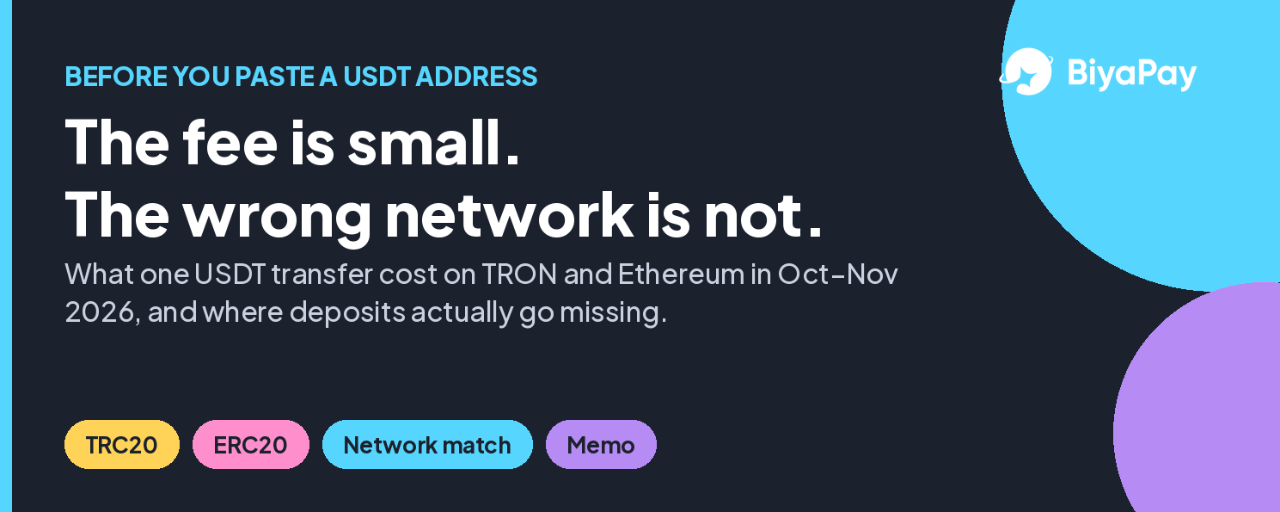
Before You Paste a USDT Address: My Network Checklist for BiyaPay DepositsDisclosure: It is not financial advice
The question everyone asks first
"Which network is cheapest for USDT?" In Indonesian crypto chats the answer is almost automatic: TRC20, because Ethereum is expensive.
I wanted to know if that answer still holds, so I looked at what a single USDT transfer actually cost on-chain in October and November 2026. The result surprised me, and it changed what I worry about before a deposit. The fee turned out to be the small problem. The network mismatch is the big one.
What one transfer actually cost this autumn
On TRON, a USDT transfer is a smart contract call, so it burns Energy. Energy has no free daily quota. You either stake TRX for it, rent it, or the network burns TRX from your balance at 100 sun per Energy.
An on-chain check by OrcaRail on 14 November 2026 put the cost at:
64,285 Energy (6.43 TRX, about $2.01) when the receiving address already holds USDT130,285 Energy (13.03 TRX, about $4.08) when the address has never held USDT
On Ethereum, the same check measured a USDT transfer at 64,031 gas to a new holder. At that day's base fee of 0.059 gwei, that is about 0.0000038 ETH, or under one US cent at ETH near $1,905.
A separate sample by TRXMAN on 27 October 2026 points the same way: a median of about $0.017 for 250 ERC20 USDT transfers, against a median of 6.77 TRX (about $2.22) for TRC20 transfers that had to burn TRX. TRC20 only becomes nearly free when the sender already has staked or rented Energy.
Here is what that means as a share of the amount, if you send from your own wallet without staked Energy:
20 USDT: TRC20 to a new address costs about 20.4%. ERC20 costs about 0.04%.100 USDT: TRC20 to a new address about 4.1%, to an existing holder about 2.0%. ERC20 under 0.01%.1,000 USDT: TRC20 about 0.41% or 0.20%. ERC20 is still a rounding error.
Two things follow. TRC20 is a flat fee in TRX, so it hurts small transfers most. And Ethereum's gas price moves with demand, so this snapshot can flip on a busy day. The fee is real, but it is measured in cents to a few dollars.
If you send from an exchange instead of your own wallet, the exchange charges its own flat withdrawal fee per network, and that number replaces the on-chain math above. Either way, the fee is something you can see before you press send.
Where deposits really go missing
The expensive mistake is choosing a different network on each side. Same token name, USDT, different blockchain. When the sending network and the receiving network do not match, the coins can be lost. That is a 100% loss, not a 4% fee.
Address formats explain why some mix-ups get caught and others do not. A TRON address starts with T and has 34 characters. An Ethereum address starts with 0x and has 42. Paste a TRON address into an Ethereum withdrawal field and the format check usually rejects it.
The dangerous case is between networks that share the 0x format. Several EVM chains use exactly the same address shape, so a withdrawal on the wrong one can look completely valid and go through. The wallet accepts it. The deposit never shows up where you expect it.
Memo coins are the second trap. For coins like XRP and EOS, the deposit needs both the address and a tag (MEMO), usually a string of numbers shown above the address. Skip the tag and the coins can be lost, even with a perfect address.
How I deposit USDT on BiyaPay
On BiyaPay, the deposit itself costs nothing. Crypto deposits are free on the receiving side; any fee comes from the sending wallet or exchange and the blockchain.
The path in the app is Deposit, then On-chain Deposit (Cryptocurrency), then pick USDT and the network, for example USDT-TRC20, and copy the address. On the web it starts from My Assets, then Funds, then Deposit, with the same network step.
The minimum depends on the network. USDT on TRC20 has a minimum of 1 USDT, and USDT on ERC20 has a minimum of 10 USDT. That matters for test transfers: a 5 USDT test on ERC20 sits below the minimum.
Each network also has its own confirmation requirement, shown on the network selection page. TRON blocks come about every 3 seconds, so TRC20 deposits usually confirm within minutes. Ethereum depends on congestion and the gas paid.
The deposit record icon in the upper right corner of the address page shows every deposit and its status. If a deposit is late, the transaction hash on a block explorer tells you whether it confirmed on-chain. If it confirmed and the balance has not updated, BiyaPay support needs the transaction hash, registered email, currency, deposit network, deposit address, transaction time, and a screenshot. Having those ready saves a lot of back and forth.
My checklist, in the order I use it
Pick the network on BiyaPay first, then select the exact same network on the sending side. Never the other way around.Read the first characters of the address: T for TRON, 0x for Ethereum. If it is 0x, double-check the chain name, not just the format.For memo coins, fill in both the address and the tag.Compare the total cost: the sender's withdrawal fee, or the on-chain cost from your own wallet. For small amounts from a wallet without staked Energy, ERC20 was the cheaper chain in this autumn's data.Stay above the network minimum: 1 USDT on TRC20, 10 USDT on ERC20.For a new route, send a small amount above the minimum first, then the rest.Keep the transaction hash until the balance shows up.
My take
The "TRC20 is always cheaper" rule is out of date for small transfers from a self-custody wallet. The October and November 2026 numbers show ERC20 costing a fraction of a cent while a TRC20 transfer burned $2 to $4 of TRX.
But I would not choose a network on fee alone. A few dollars of fee is a cost I can see in advance. A network mismatch is a full loss I cannot undo. So my order is fixed: match the network first, check the format and the memo, and only then compare fees.
Source: OrcaRail, "USDT TRC20 Fee vs ERC20 and Solana" (on-chain check, 14 Nov 2026); TRXMAN, "TRC20 vs ERC20: USDT fees measured on-chain" (updated 27 Oct 2026); TRON Developer Hub, "Bandwidth and Energy". Checked 21 Nov 2026.
#BiyaPay #USDT #CryptoDeposit #TRC20 #ERC20
Before You Paste a USDT Address: My Network Checklist for BiyaPay Deposits
Disclosure: It is not financial advice
The question everyone asks first
"Which network is cheapest for USDT?" In Indonesian crypto chats the answer is almost automatic: TRC20, because Ethereum is expensive.
I wanted to know if that answer still holds, so I looked at what a single USDT transfer actually cost on-chain in October and November 2026. The result surprised me, and it changed what I worry about before a deposit. The fee turned out to be the small problem. The network mismatch is the big one.
What one transfer actually cost this autumn
On TRON, a USDT transfer is a smart contract call, so it burns Energy. Energy has no free daily quota. You either stake TRX for it, rent it, or the network burns TRX from your balance at 100 sun per Energy.
An on-chain check by OrcaRail on 14 November 2026 put the cost at:
64,285 Energy (6.43 TRX, about $2.01) when the receiving address already holds USDT130,285 Energy (13.03 TRX, about $4.08) when the address has never held USDT
On Ethereum, the same check measured a USDT transfer at 64,031 gas to a new holder. At that day's base fee of 0.059 gwei, that is about 0.0000038 ETH, or under one US cent at ETH near $1,905.
A separate sample by TRXMAN on 27 October 2026 points the same way: a median of about $0.017 for 250 ERC20 USDT transfers, against a median of 6.77 TRX (about $2.22) for TRC20 transfers that had to burn TRX. TRC20 only becomes nearly free when the sender already has staked or rented Energy.
Here is what that means as a share of the amount, if you send from your own wallet without staked Energy:
20 USDT: TRC20 to a new address costs about 20.4%. ERC20 costs about 0.04%.100 USDT: TRC20 to a new address about 4.1%, to an existing holder about 2.0%. ERC20 under 0.01%.1,000 USDT: TRC20 about 0.41% or 0.20%. ERC20 is still a rounding error.
Two things follow. TRC20 is a flat fee in TRX, so it hurts small transfers most. And Ethereum's gas price moves with demand, so this snapshot can flip on a busy day. The fee is real, but it is measured in cents to a few dollars.
If you send from an exchange instead of your own wallet, the exchange charges its own flat withdrawal fee per network, and that number replaces the on-chain math above. Either way, the fee is something you can see before you press send.
Where deposits really go missing
The expensive mistake is choosing a different network on each side. Same token name, USDT, different blockchain. When the sending network and the receiving network do not match, the coins can be lost. That is a 100% loss, not a 4% fee.
Address formats explain why some mix-ups get caught and others do not. A TRON address starts with T and has 34 characters. An Ethereum address starts with 0x and has 42. Paste a TRON address into an Ethereum withdrawal field and the format check usually rejects it.
The dangerous case is between networks that share the 0x format. Several EVM chains use exactly the same address shape, so a withdrawal on the wrong one can look completely valid and go through. The wallet accepts it. The deposit never shows up where you expect it.
Memo coins are the second trap. For coins like XRP and EOS, the deposit needs both the address and a tag (MEMO), usually a string of numbers shown above the address. Skip the tag and the coins can be lost, even with a perfect address.
How I deposit USDT on BiyaPay
On BiyaPay, the deposit itself costs nothing. Crypto deposits are free on the receiving side; any fee comes from the sending wallet or exchange and the blockchain.
The path in the app is Deposit, then On-chain Deposit (Cryptocurrency), then pick USDT and the network, for example USDT-TRC20, and copy the address. On the web it starts from My Assets, then Funds, then Deposit, with the same network step.
The minimum depends on the network. USDT on TRC20 has a minimum of 1 USDT, and USDT on ERC20 has a minimum of 10 USDT. That matters for test transfers: a 5 USDT test on ERC20 sits below the minimum.
Each network also has its own confirmation requirement, shown on the network selection page. TRON blocks come about every 3 seconds, so TRC20 deposits usually confirm within minutes. Ethereum depends on congestion and the gas paid.
The deposit record icon in the upper right corner of the address page shows every deposit and its status. If a deposit is late, the transaction hash on a block explorer tells you whether it confirmed on-chain. If it confirmed and the balance has not updated, BiyaPay support needs the transaction hash, registered email, currency, deposit network, deposit address, transaction time, and a screenshot. Having those ready saves a lot of back and forth.
My checklist, in the order I use it
Pick the network on BiyaPay first, then select the exact same network on the sending side. Never the other way around.Read the first characters of the address: T for TRON, 0x for Ethereum. If it is 0x, double-check the chain name, not just the format.For memo coins, fill in both the address and the tag.Compare the total cost: the sender's withdrawal fee, or the on-chain cost from your own wallet. For small amounts from a wallet without staked Energy, ERC20 was the cheaper chain in this autumn's data.Stay above the network minimum: 1 USDT on TRC20, 10 USDT on ERC20.For a new route, send a small amount above the minimum first, then the rest.Keep the transaction hash until the balance shows up.
My take
The "TRC20 is always cheaper" rule is out of date for small transfers from a self-custody wallet. The October and November 2026 numbers show ERC20 costing a fraction of a cent while a TRC20 transfer burned $2 to $4 of TRX.
But I would not choose a network on fee alone. A few dollars of fee is a cost I can see in advance. A network mismatch is a full loss I cannot undo. So my order is fixed: match the network first, check the format and the memo, and only then compare fees.
Source: OrcaRail, "USDT TRC20 Fee vs ERC20 and Solana" (on-chain check, 14 Nov 2026); TRXMAN, "TRC20 vs ERC20: USDT fees measured on-chain" (updated 27 Oct 2026); TRON Developer Hub, "Bandwidth and Energy". Checked 21 Nov 2026.
#BiyaPay #USDT #CryptoDeposit #TRC20 #ERC20
132
·
--
Bài viết
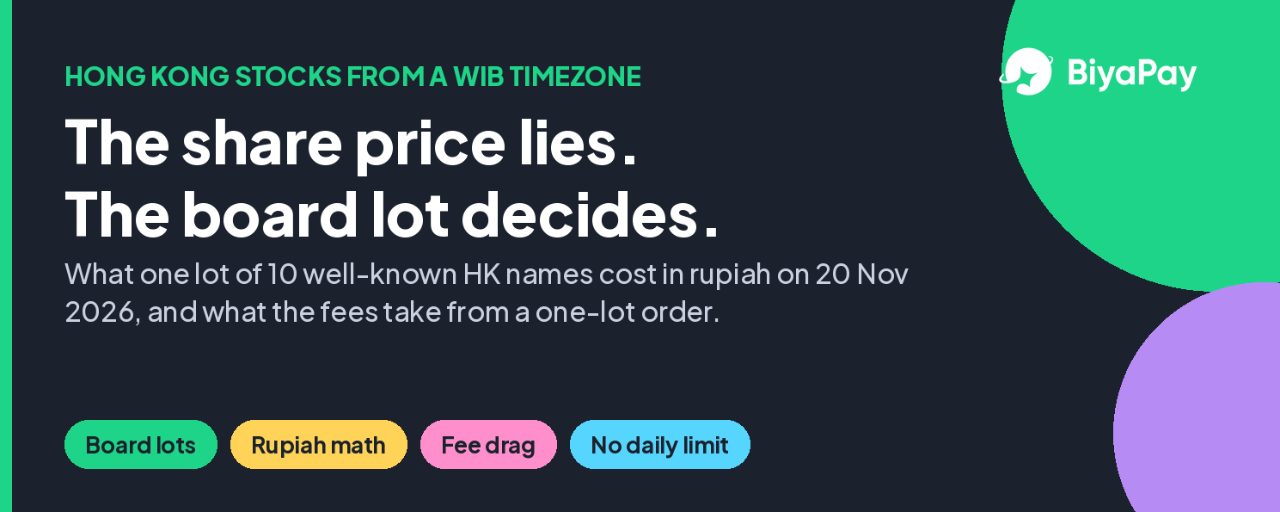
Cổ phiếu Hồng Kông theo múi giờ WIB: Giờ giao dịch, lô cổ phiếu và những hạn chế tôi sẽ tìm hiểu trướcThông tin công bố: Đây không phải là lời khuyên tài chính
Thực tế thì 10 triệu Rp mua được gì ở Hồng Kông?
Với những ai ở múi giờ WIB, Hồng Kông có giờ giao dịch thuận tiện nhất trong số các thị trường chứng khoán lớn. HKT luôn nhanh hơn đúng một giờ quanh năm, nên thị trường giao dịch từ 08:30–11:00 và 12:00–15:00 WIB, trong giờ làm việc của chúng ta chứ không phải lúc nửa đêm.
Sự tiện lợi đó khiến người ta dễ nghĩ rằng cổ phiếu Hồng Kông cũng giống cổ phiếu Mỹ, chỉ khác là giờ giao dịch thuận tiện hơn. Mở ứng dụng, chọn một cái tên nổi tiếng, mua một cổ phiếu. Chính bước cuối đó khiến kế hoạch đổ bể. Ở Hồng Kông, bạn không mua một cổ phiếu. Bạn mua một lô giao dịch.
Cổ phiếu Hồng Kông theo múi giờ WIB: Giờ giao dịch, lô cổ phiếu và những hạn chế tôi sẽ tìm hiểu trước
Thông tin công bố: Đây không phải là lời khuyên tài chính
Thực tế thì 10 triệu Rp mua được gì ở Hồng Kông?
Với những ai ở múi giờ WIB, Hồng Kông có giờ giao dịch thuận tiện nhất trong số các thị trường chứng khoán lớn. HKT luôn nhanh hơn đúng một giờ quanh năm, nên thị trường giao dịch từ 08:30–11:00 và 12:00–15:00 WIB, trong giờ làm việc của chúng ta chứ không phải lúc nửa đêm.
Sự tiện lợi đó khiến người ta dễ nghĩ rằng cổ phiếu Hồng Kông cũng giống cổ phiếu Mỹ, chỉ khác là giờ giao dịch thuận tiện hơn. Mở ứng dụng, chọn một cái tên nổi tiếng, mua một cổ phiếu. Chính bước cuối đó khiến kế hoạch đổ bể. Ở Hồng Kông, bạn không mua một cổ phiếu. Bạn mua một lô giao dịch.
1
156
·
--
Đã xác minh
Bài viết
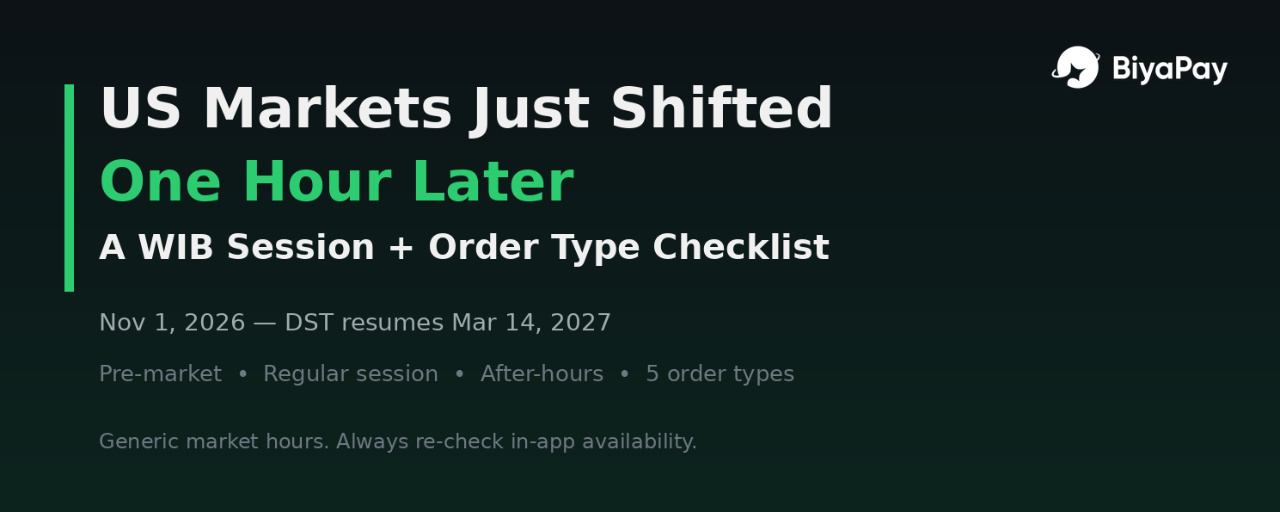
Thị trường Mỹ vừa đổi giờ một tiếng: Danh sách kiểm tra theo WIB về các phiên giao dịch và loại lệnhTuyên bố miễn trừ trách nhiệm: Đây không phải là lời khuyên tài chính
Nếu bạn theo dõi cổ phiếu Mỹ từ Indonesia, tháng 11 mang đến một thay đổi về lịch mà bạn nên kiểm tra trước khi mở phiếu đặt lệnh. Hoa Kỳ đã chuyển lại sang Giờ chuẩn. Phiên giao dịch thông thường vẫn mở cửa lúc 09:30 và đóng cửa lúc 16:00 theo Giờ miền Đông, nhưng giờ tương ứng ở WIB muộn hơn một tiếng so với thời gian áp dụng Giờ mùa hè.
Sau khi xem xét phí giao dịch, tôi nghĩ câu hỏi hữu ích tiếp theo là về thời gian: mỗi phiên diễn ra vào lúc nào ở Indonesia, và loại lệnh nào phù hợp với từng điều kiện?
Thị trường Mỹ vừa đổi giờ một tiếng: Danh sách kiểm tra theo WIB về các phiên giao dịch và loại lệnh
Tuyên bố miễn trừ trách nhiệm: Đây không phải là lời khuyên tài chính
Nếu bạn theo dõi cổ phiếu Mỹ từ Indonesia, tháng 11 mang đến một thay đổi về lịch mà bạn nên kiểm tra trước khi mở phiếu đặt lệnh. Hoa Kỳ đã chuyển lại sang Giờ chuẩn. Phiên giao dịch thông thường vẫn mở cửa lúc 09:30 và đóng cửa lúc 16:00 theo Giờ miền Đông, nhưng giờ tương ứng ở WIB muộn hơn một tiếng so với thời gian áp dụng Giờ mùa hè.
Sau khi xem xét phí giao dịch, tôi nghĩ câu hỏi hữu ích tiếp theo là về thời gian: mỗi phiên diễn ra vào lúc nào ở Indonesia, và loại lệnh nào phù hợp với từng điều kiện?
1
155
·
--
Đã xác minh
Bài viết
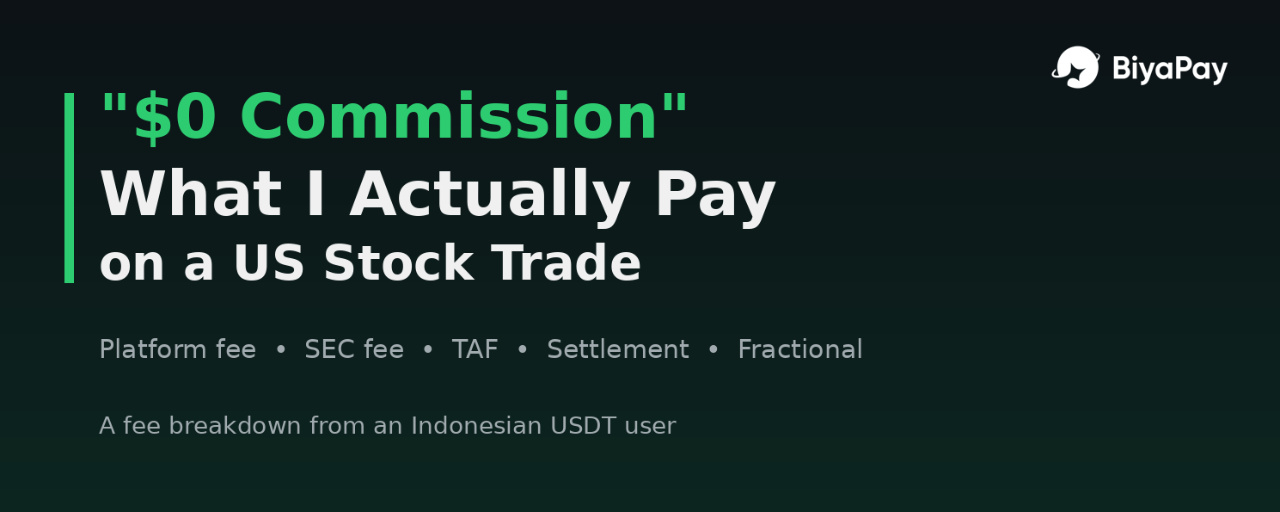
“Phí hoa hồng $0” không có nghĩa là không mất phí: Tôi thực sự phải trả bao nhiêu khi giao dịch cổ phiếu MỹLưu ý: Đây không phải là lời khuyên tài chính
Vài ngày trước, tôi đã viết về việc chuyển một phần USDT của mình sang cổ phiếu Mỹ mà không cần đổi sang Rupiah trước. Sau bài đăng đó, một người bạn hỏi tôi một câu đơn giản: “Nếu phí hoa hồng là $0, vậy thực tế bạn phải trả những khoản nào?”
Tôi nhận ra mình không có câu trả lời chính xác. Tôi thấy nhãn “phí hoa hồng $0” rồi dừng đọc ở đó. Vì vậy, lần này tôi mở trang phí, xem từng mục một và tính toán cho một vài lệnh giao dịch thực tế. Đây là những gì tôi tìm được.
Vì sao “phí hoa hồng $0” chỉ là một phần của câu chuyện
“Phí hoa hồng $0” không có nghĩa là không mất phí: Tôi thực sự phải trả bao nhiêu khi giao dịch cổ phiếu Mỹ
Lưu ý: Đây không phải là lời khuyên tài chính
Vài ngày trước, tôi đã viết về việc chuyển một phần USDT của mình sang cổ phiếu Mỹ mà không cần đổi sang Rupiah trước. Sau bài đăng đó, một người bạn hỏi tôi một câu đơn giản: “Nếu phí hoa hồng là $0, vậy thực tế bạn phải trả những khoản nào?”
Tôi nhận ra mình không có câu trả lời chính xác. Tôi thấy nhãn “phí hoa hồng $0” rồi dừng đọc ở đó. Vì vậy, lần này tôi mở trang phí, xem từng mục một và tính toán cho một vài lệnh giao dịch thực tế. Đây là những gì tôi tìm được.
Vì sao “phí hoa hồng $0” chỉ là một phần của câu chuyện
315
·
--
Bài viết
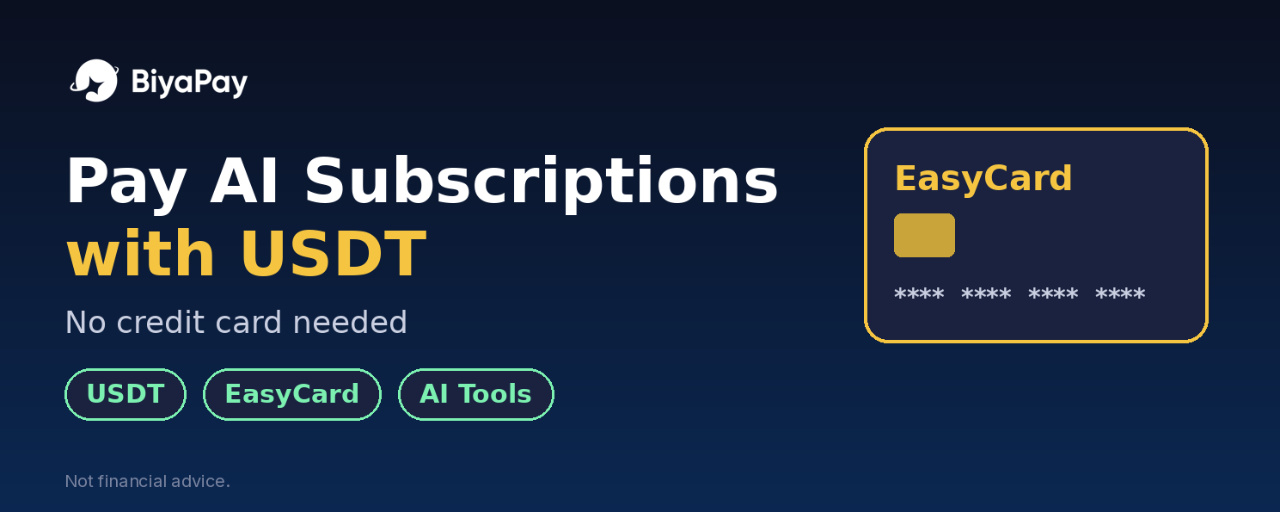
Không có thẻ tín dụng để dùng ChatGPT hay Claude? Tôi nghĩ thế nào về việc thanh toán các gói đăng ký AI bằng USDTLưu ý: Đây không phải là lời khuyên tài chính
Một vấn đề mà nhiều người trong chúng ta âm thầm gặp phải
Các công cụ AI đã trở thành một phần trong thói quen hằng ngày của tôi. Tôi dùng chúng để nghiên cứu, viết lách và kiểm tra ý tưởng trước khi đăng. Nhưng ngay khi muốn đăng ký gói trả phí, tôi lại gặp phải rào cản mà nhiều người ở Indonesia cũng gặp: trang thanh toán yêu cầu thẻ tín dụng.
Không phải ai cũng có thẻ. Một số thẻ ghi nợ nội địa bị từ chối trên các trang web nước ngoài. Một số người không muốn liên kết thẻ ngân hàng chính của mình với hàng tá gói đăng ký định kỳ. Trong khi đó, nhiều người dùng tiền mã hóa như tôi đã có sẵn USDT—một khoản tiền neo theo đồng đô la Mỹ đang nằm đó, nhưng lại không thể nhập vào biểu mẫu thanh toán.
Không có thẻ tín dụng để dùng ChatGPT hay Claude? Tôi nghĩ thế nào về việc thanh toán các gói đăng ký AI bằng USDT
Lưu ý: Đây không phải là lời khuyên tài chính
Một vấn đề mà nhiều người trong chúng ta âm thầm gặp phải
Các công cụ AI đã trở thành một phần trong thói quen hằng ngày của tôi. Tôi dùng chúng để nghiên cứu, viết lách và kiểm tra ý tưởng trước khi đăng. Nhưng ngay khi muốn đăng ký gói trả phí, tôi lại gặp phải rào cản mà nhiều người ở Indonesia cũng gặp: trang thanh toán yêu cầu thẻ tín dụng.
Không phải ai cũng có thẻ. Một số thẻ ghi nợ nội địa bị từ chối trên các trang web nước ngoài. Một số người không muốn liên kết thẻ ngân hàng chính của mình với hàng tá gói đăng ký định kỳ. Trong khi đó, nhiều người dùng tiền mã hóa như tôi đã có sẵn USDT—một khoản tiền neo theo đồng đô la Mỹ đang nằm đó, nhưng lại không thể nhập vào biểu mẫu thanh toán.
1
1.3k
·
--
Bài viết
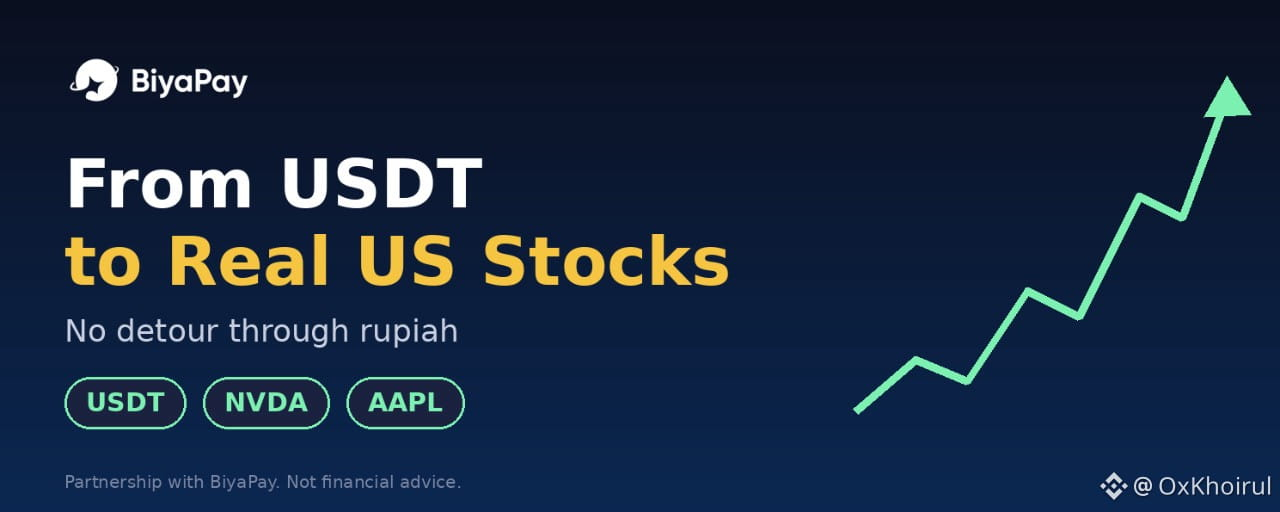
Tiền của tôi nằm trong USDT, nên tôi tìm cách đầu tư vào NVDA mà không cần qua rupiahTuyên bố miễn trừ trách nhiệm: Đây không phải là lời khuyên tài chính
Vấn đề tôi liên tục gặp phải
Là một người Indonesia hoạt động trong lĩnh vực tiền mã hóa, phần lớn số tiền nhàn rỗi của tôi đều nằm trong USDT. Đồng tiền này ổn định, dễ giao dịch và phù hợp để chờ thời điểm thích hợp. Nhưng mỗi lần thấy cổ phiếu như NVIDIA hay Apple biến động, tôi lại tự hỏi: làm sao để chuyển từ USDT sang cổ phiếu Mỹ thực sự, chứ không phải bản sao được token hóa hay CFD?
Cách truyền thống khá rườm rà. Tôi bán USDT để đổi lấy rupiah, rút rupiah về ngân hàng, mở tài khoản tại một công ty môi giới có cung cấp cổ phiếu Mỹ, nạp tiền vào tài khoản rồi đổi sang đô la. Mỗi bước đều phát sinh chênh lệch giá, phí và thời gian chờ đợi. Khi muốn đầu tư số tiền nhỏ theo lịch đều đặn, những trở ngại đó cộng dồn đáng kể.
Tiền của tôi nằm trong USDT, nên tôi tìm cách đầu tư vào NVDA mà không cần qua rupiah
Tuyên bố miễn trừ trách nhiệm: Đây không phải là lời khuyên tài chính
Vấn đề tôi liên tục gặp phải
Là một người Indonesia hoạt động trong lĩnh vực tiền mã hóa, phần lớn số tiền nhàn rỗi của tôi đều nằm trong USDT. Đồng tiền này ổn định, dễ giao dịch và phù hợp để chờ thời điểm thích hợp. Nhưng mỗi lần thấy cổ phiếu như NVIDIA hay Apple biến động, tôi lại tự hỏi: làm sao để chuyển từ USDT sang cổ phiếu Mỹ thực sự, chứ không phải bản sao được token hóa hay CFD?
Cách truyền thống khá rườm rà. Tôi bán USDT để đổi lấy rupiah, rút rupiah về ngân hàng, mở tài khoản tại một công ty môi giới có cung cấp cổ phiếu Mỹ, nạp tiền vào tài khoản rồi đổi sang đô la. Mỗi bước đều phát sinh chênh lệch giá, phí và thời gian chờ đợi. Khi muốn đầu tư số tiền nhỏ theo lịch đều đặn, những trở ngại đó cộng dồn đáng kể.
1
395
Đăng nhập để khám phá thêm nội dung
Tham gia cùng người dùng tiền mã hóa toàn cầu trên Binance Square
⚡️ Nhận thông tin mới nhất và hữu ích về tiền mã hóa.
💬 Được tin cậy bởi sàn giao dịch tiền mã hóa lớn nhất thế giới.
👍 Khám phá những thông tin chuyên sâu thực tế từ những nhà sáng tạo đã xác minh.
Email / Số điện thoại
Chủ đề thịnh hành
1
#TheoDõiFOMC
371,463 lượt xem
1,601 đang thảo luận
2
#TinFed
439,694 lượt xem
1,398 đang thảo luận
3
#NVIDIAReinstatesJensenHuangasCEO
1,415 lượt xem
191 đang thảo luận
4
#WillMarketsStageAThanksgivingReliefRally?
96,450 lượt xem
1,431 đang thảo luận
5
#WillOctCorePCEShiftFedHikeExpectations?
34,404 lượt xem
551 đang thảo luận
6
#BitcoinEndsRecord17DayStreakOfLowerHighs
58 lượt xem
52 đang thảo luận
7
#TradersPriceOut50bpDecemberFedHike
481 lượt xem
50 đang thảo luận
8
#EvolveAtBinanceBlockchainWeek
84,743 lượt xem
824 đang thảo luận
9
#BlackRockETHNetOutflowsReach$1.75BSinceOct1
286 lượt xem
10 đang thảo luận
10
#TrumpBackedAmericanBitcoinRaisesHoldingsToOver8500BTC
529 lượt xem
24 đang thảo luận