
#word
word
426,866 views
2,325 Discussing
Hot
Latest

·
--
🗿 I want Monday to look EXACTLY like this:
✅ Everything in green.
🪙 Cryptocurrencies flying high.
💥 Short positions destroyed.
💼 The portfolio finally breathing again.
😎 That’s the kind of Monday I’m hoping for.
#stockmarket #cryptouniverseofficial #WORD $DEXE $SUI $UNI
🗿 I want Monday to look EXACTLY like this:
✅ Everything in green.
🪙 Cryptocurrencies flying high.
💥 Short positions destroyed.
💼 The portfolio finally breathing again.
😎 That’s the kind of Monday I’m hoping for.
#stockmarket #cryptouniverseofficial #WORD $DEXE $SUI $UNI
✅ Everything in green.
🪙 Cryptocurrencies flying high.
💥 Short positions destroyed.
💼 The portfolio finally breathing again.
😎 That’s the kind of Monday I’m hoping for.
#stockmarket #cryptouniverseofficial #WORD $DEXE $SUI $UNI

9
3.5k

·
--
Bullish
Word of the day on Binance of 5 letters, transfer the word and put it in the answer box, congratulations
👇👇
TRUST
#WORDOFTHEDAY✅ ✅ ✅ #كلمة_اليوم #كلمةاليوم #WORD_OF_THE_DAY_BINANCE #WORD
$ETH
{future}(ETHUSDT)
$BNB
{future}(BNBUSDT)
$XRP
{future}(XRPUSDT)
Word of the day on Binance of 5 letters, transfer the word and put it in the answer box, congratulations
👇👇
TRUST
#WORDOFTHEDAY✅ ✅ ✅ #كلمة_اليوم #كلمةاليوم #WORD_OF_THE_DAY_BINANCE #WORD
$ETH
$BNB
$XRP
👇👇
TRUST
#WORDOFTHEDAY✅ ✅ ✅ #كلمة_اليوم #كلمةاليوم #WORD_OF_THE_DAY_BINANCE #WORD
$ETH
$BNB
$XRP

2
7
2.6k

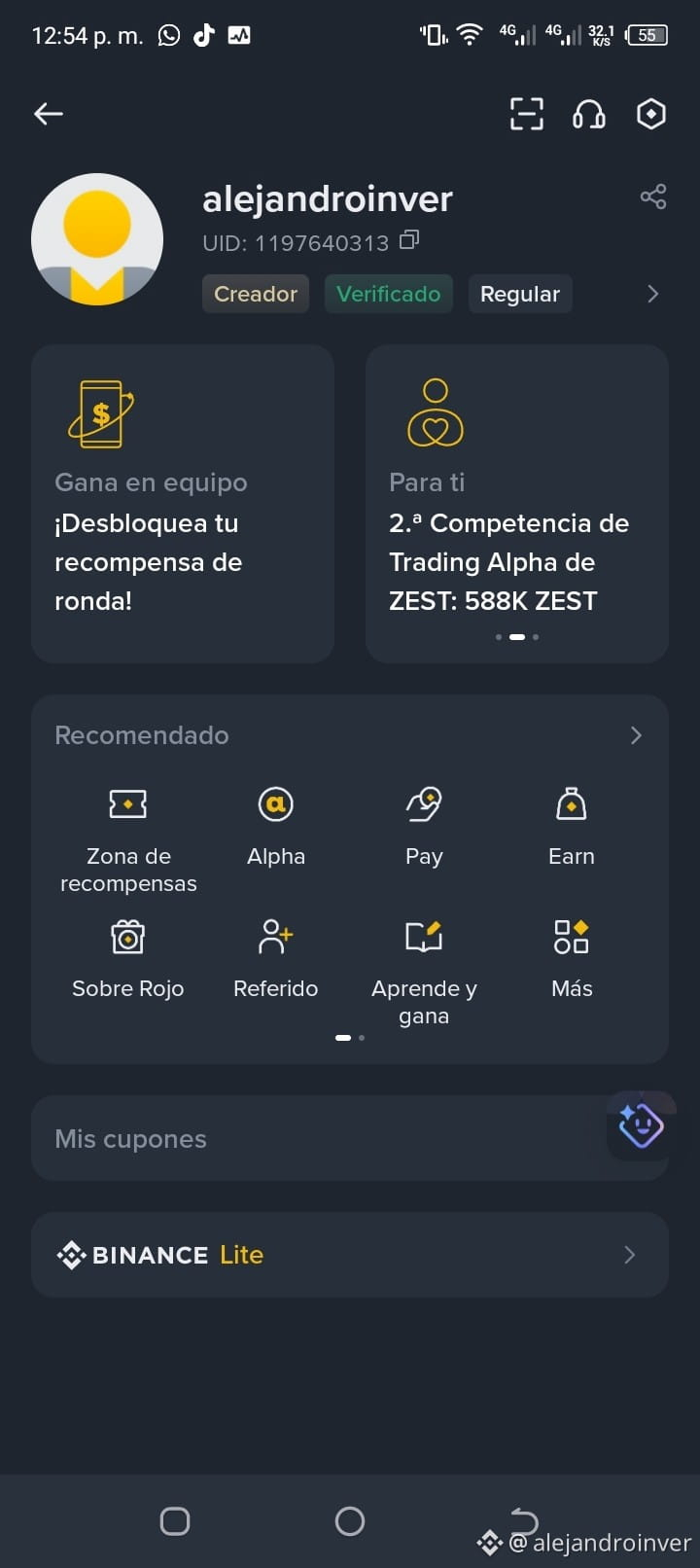
Yesterday, the section for #WORD was at least showing up, but today they've removed it; I think it was delisted for all of LATAM.
Yesterday, the section for #WORD was at least showing up, but today they've removed it; I think it was delisted for all of LATAM.
362

·
--

Article
Quantum Finance: The Next Frontier of Financial InnovationIntroduction
#Openledger $OPEN For decades, financial innovation has focused on faster payments, digital banking, and automated trading. Yet a new frontier is quietly emerging that could reshape how financial institutions analyze risk, optimize investments, and process vast amounts of data. This frontier is known as Quantum Finance.
While still in its early stages, quantum computing has the potential to solve financial problems that traditional computers struggle to handle. As markets become increasingly complex and interconnected, the ability to process enormous datasets and model countless outcomes could transform the future of global finance.
A). What Is Quantum Finance?
@Openledger ,Quantum Finance refers to the application of quantum computing principles to financial systems and decision-making.
Unlike classical computers that process information using bits represented as either 0 or 1, quantum computers use quantum bits, or qubits, which can exist in multiple states simultaneously. This capability enables quantum systems to evaluate many possible solutions at the same time.
In finance, this means faster calculations, deeper market analysis, and more accurate forecasting models.
A. Key areas include:
B. Portfolio optimization
C. Risk assessment
D. Fraud detection
E. Market simulation
F. Derivatives pricing
G.High-speed data added
B). Why It Matters:
@Openledger Modern financial markets generate massive amounts of information every second. Traders, banks, hedge funds, and regulators must analyze economic indicators, transaction flows, and market movements in real time.
Traditional computing systems often face limitations when handling highly complex calculations involving millions of variables.
👉Quantum computing could help by:
👉Improving investment allocation strategies
👉Enhancing risk management frameworks
👉Detecting hidden market patterns
👉Accelerating financial modeling
👉Increasing operational efficiency
👉The result could be smarter decision-making and more resilient financial systems.
👉Potential Applications
#Advanced Portfolio Optimization
Investors constantly seek the best balance between risk and return. Quantum algorithms may evaluate countless portfolio combinations simultaneously, identifying opportunities that traditional systems might overlook.
C). Financial Risk Modeling
Banks and institutions rely on risk models to prepare for market shocks. Quantum-powered simulations could provide more accurate predictions under multiple economic scenarios.
D). Fraud and Cybersecurity
Financial fraud continues to evolve alongside technology. $OPEN Quantum-enhanced detection systems may identify suspicious behavior patterns much faster than current tools, helping organizations respond before significant damage occurs.
E). Market Forecasting
Predicting financial markets is one of the most difficult challenges in finance. Quantum systems may uncover relationships within massive datasets, improving forecasting accuracy and strategic planning.
F). Challenges Ahead
Despite its promise, Quantum Finance faces several obstacles.
Quantum hardware remains expensive and limited.
Error rates in quantum calculations are still high.
Regulatory frameworks have yet to adapt.
Skilled quantum finance professionals are scarce.
Significant research and infrastructure development will be required before widespread adoption becomes practical.
G).The Future Outlook
Quantum Finance is not merely about faster computing—it represents a fundamental shift in how financial intelligence may be generated and applied.
As quantum technology matures, financial institutions could gain unprecedented analytical capabilities, allowing them to manage uncertainty with greater precision and confidence.
The future financial landscape may not be defined solely by digital transformation or artificial intelligence. It may be shaped by #Quantum_powered systems capable of solving challenges that were once considered impossible.
In the coming decades, Quantum Finance could become one of the most influential innovations driving the evolution of global markets, investment strategies, and economic decision-making worldwide.
#Word Count: ~540
#@Openledger $OPEN #blockchains
Quantum Finance: The Next Frontier of Financial Innovation
Introduction
#Openledger $OPEN For decades, financial innovation has focused on faster payments, digital banking, and automated trading. Yet a new frontier is quietly emerging that could reshape how financial institutions analyze risk, optimize investments, and process vast amounts of data. This frontier is known as Quantum Finance.
While still in its early stages, quantum computing has the potential to solve financial problems that traditional computers struggle to handle. As markets become increasingly complex and interconnected, the ability to process enormous datasets and model countless outcomes could transform the future of global finance.
A). What Is Quantum Finance?
@OpenLedger ,Quantum Finance refers to the application of quantum computing principles to financial systems and decision-making.
Unlike classical computers that process information using bits represented as either 0 or 1, quantum computers use quantum bits, or qubits, which can exist in multiple states simultaneously. This capability enables quantum systems to evaluate many possible solutions at the same time.
In finance, this means faster calculations, deeper market analysis, and more accurate forecasting models.
A. Key areas include:
B. Portfolio optimization
C. Risk assessment
D. Fraud detection
E. Market simulation
F. Derivatives pricing
G.High-speed data added
B). Why It Matters:
@OpenLedger Modern financial markets generate massive amounts of information every second. Traders, banks, hedge funds, and regulators must analyze economic indicators, transaction flows, and market movements in real time.
Traditional computing systems often face limitations when handling highly complex calculations involving millions of variables.
👉Quantum computing could help by:
👉Improving investment allocation strategies
👉Enhancing risk management frameworks
👉Detecting hidden market patterns
👉Accelerating financial modeling
👉Increasing operational efficiency
👉The result could be smarter decision-making and more resilient financial systems.
👉Potential Applications
#Advanced Portfolio Optimization
Investors constantly seek the best balance between risk and return. Quantum algorithms may evaluate countless portfolio combinations simultaneously, identifying opportunities that traditional systems might overlook.
C). Financial Risk Modeling
Banks and institutions rely on risk models to prepare for market shocks. Quantum-powered simulations could provide more accurate predictions under multiple economic scenarios.
D). Fraud and Cybersecurity
Financial fraud continues to evolve alongside technology. $OPEN Quantum-enhanced detection systems may identify suspicious behavior patterns much faster than current tools, helping organizations respond before significant damage occurs.
E). Market Forecasting
Predicting financial markets is one of the most difficult challenges in finance. Quantum systems may uncover relationships within massive datasets, improving forecasting accuracy and strategic planning.
F). Challenges Ahead
Despite its promise, Quantum Finance faces several obstacles.
Quantum hardware remains expensive and limited.
Error rates in quantum calculations are still high.
Regulatory frameworks have yet to adapt.
Skilled quantum finance professionals are scarce.
Significant research and infrastructure development will be required before widespread adoption becomes practical.
G).The Future Outlook
Quantum Finance is not merely about faster computing—it represents a fundamental shift in how financial intelligence may be generated and applied.
As quantum technology matures, financial institutions could gain unprecedented analytical capabilities, allowing them to manage uncertainty with greater precision and confidence.
The future financial landscape may not be defined solely by digital transformation or artificial intelligence. It may be shaped by #Quantum_powered systems capable of solving challenges that were once considered impossible.
In the coming decades, Quantum Finance could become one of the most influential innovations driving the evolution of global markets, investment strategies, and economic decision-making worldwide.
#Word Count: ~540
#@OpenLedger $OPEN #blockchains
#Openledger $OPEN For decades, financial innovation has focused on faster payments, digital banking, and automated trading. Yet a new frontier is quietly emerging that could reshape how financial institutions analyze risk, optimize investments, and process vast amounts of data. This frontier is known as Quantum Finance.
While still in its early stages, quantum computing has the potential to solve financial problems that traditional computers struggle to handle. As markets become increasingly complex and interconnected, the ability to process enormous datasets and model countless outcomes could transform the future of global finance.
A). What Is Quantum Finance?
@OpenLedger ,Quantum Finance refers to the application of quantum computing principles to financial systems and decision-making.
Unlike classical computers that process information using bits represented as either 0 or 1, quantum computers use quantum bits, or qubits, which can exist in multiple states simultaneously. This capability enables quantum systems to evaluate many possible solutions at the same time.
In finance, this means faster calculations, deeper market analysis, and more accurate forecasting models.
A. Key areas include:
B. Portfolio optimization
C. Risk assessment
D. Fraud detection
E. Market simulation
F. Derivatives pricing
G.High-speed data added
B). Why It Matters:
@OpenLedger Modern financial markets generate massive amounts of information every second. Traders, banks, hedge funds, and regulators must analyze economic indicators, transaction flows, and market movements in real time.
Traditional computing systems often face limitations when handling highly complex calculations involving millions of variables.
👉Quantum computing could help by:
👉Improving investment allocation strategies
👉Enhancing risk management frameworks
👉Detecting hidden market patterns
👉Accelerating financial modeling
👉Increasing operational efficiency
👉The result could be smarter decision-making and more resilient financial systems.
👉Potential Applications
#Advanced Portfolio Optimization
Investors constantly seek the best balance between risk and return. Quantum algorithms may evaluate countless portfolio combinations simultaneously, identifying opportunities that traditional systems might overlook.
C). Financial Risk Modeling
Banks and institutions rely on risk models to prepare for market shocks. Quantum-powered simulations could provide more accurate predictions under multiple economic scenarios.
D). Fraud and Cybersecurity
Financial fraud continues to evolve alongside technology. $OPEN Quantum-enhanced detection systems may identify suspicious behavior patterns much faster than current tools, helping organizations respond before significant damage occurs.
E). Market Forecasting
Predicting financial markets is one of the most difficult challenges in finance. Quantum systems may uncover relationships within massive datasets, improving forecasting accuracy and strategic planning.
F). Challenges Ahead
Despite its promise, Quantum Finance faces several obstacles.
Quantum hardware remains expensive and limited.
Error rates in quantum calculations are still high.
Regulatory frameworks have yet to adapt.
Skilled quantum finance professionals are scarce.
Significant research and infrastructure development will be required before widespread adoption becomes practical.
G).The Future Outlook
Quantum Finance is not merely about faster computing—it represents a fundamental shift in how financial intelligence may be generated and applied.
As quantum technology matures, financial institutions could gain unprecedented analytical capabilities, allowing them to manage uncertainty with greater precision and confidence.
The future financial landscape may not be defined solely by digital transformation or artificial intelligence. It may be shaped by #Quantum_powered systems capable of solving challenges that were once considered impossible.
In the coming decades, Quantum Finance could become one of the most influential innovations driving the evolution of global markets, investment strategies, and economic decision-making worldwide.
#Word Count: ~540
#@OpenLedger $OPEN #blockchains
2
5
194



·
--
Bullish
💛 Binancians…
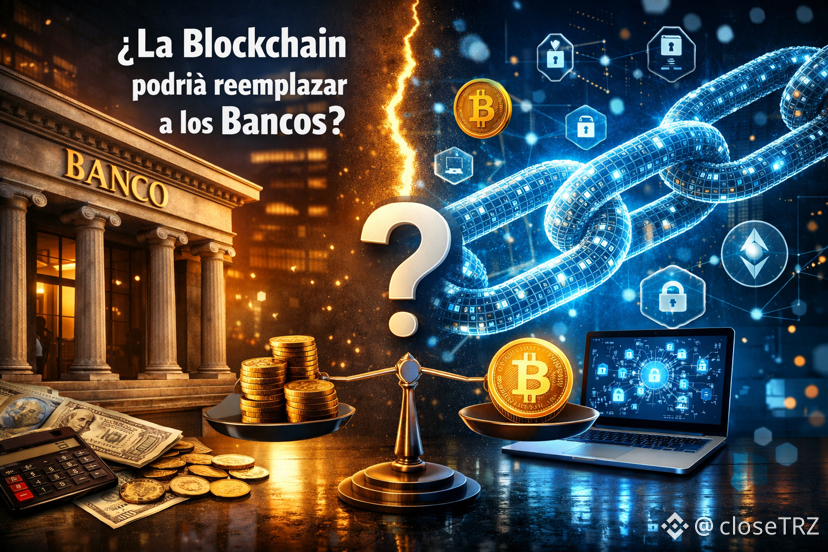
Could Blockchain replace banks?
👇🏼👇🏼👇🏼👇🏼👇🏼
So far we have managed our values through large intermediaries: banks, credit card companies, governments, social media companies, etc. And they are able to trust each other.
The blockchain represents a new platform where we can trust each other when it comes to exchanging data without the need for these intermediary institutions.
Blockchain is the technology on which cryptocurrencies operate, virtual currencies that are changing commerce by eliminating the presence of a third party to endorse a monetary transaction, as everything is recorded in this open and accessible blockchain of information for everyone.
In finance, the absence of a third party would help reduce transaction costs, as well as increase the speed of them. But at the same time, it implies the loss of prominence of the intermediaries that used to validate the validity of financial operations, such as banking and government.
The financial sector has been one of the first to be affected and large banks are already analyzing how to adapt to this technology and how to use it.
#blockchain #bitcoin #WORD #fyp
💛 Binancians…
Could Blockchain replace banks?
👇🏼👇🏼👇🏼👇🏼👇🏼
So far we have managed our values through large intermediaries: banks, credit card companies, governments, social media companies, etc. And they are able to trust each other.
The blockchain represents a new platform where we can trust each other when it comes to exchanging data without the need for these intermediary institutions.
Blockchain is the technology on which cryptocurrencies operate, virtual currencies that are changing commerce by eliminating the presence of a third party to endorse a monetary transaction, as everything is recorded in this open and accessible blockchain of information for everyone.
In finance, the absence of a third party would help reduce transaction costs, as well as increase the speed of them. But at the same time, it implies the loss of prominence of the intermediaries that used to validate the validity of financial operations, such as banking and government.
The financial sector has been one of the first to be affected and large banks are already analyzing how to adapt to this technology and how to use it.
#blockchain #bitcoin #WORD #fyp
Could Blockchain replace banks?
👇🏼👇🏼👇🏼👇🏼👇🏼
So far we have managed our values through large intermediaries: banks, credit card companies, governments, social media companies, etc. And they are able to trust each other.
The blockchain represents a new platform where we can trust each other when it comes to exchanging data without the need for these intermediary institutions.
Blockchain is the technology on which cryptocurrencies operate, virtual currencies that are changing commerce by eliminating the presence of a third party to endorse a monetary transaction, as everything is recorded in this open and accessible blockchain of information for everyone.
In finance, the absence of a third party would help reduce transaction costs, as well as increase the speed of them. But at the same time, it implies the loss of prominence of the intermediaries that used to validate the validity of financial operations, such as banking and government.
The financial sector has been one of the first to be affected and large banks are already analyzing how to adapt to this technology and how to use it.
#blockchain #bitcoin #WORD #fyp
9
605

The New Financial Reality: Non-Bank Financial Institutions Now Hold the Majority
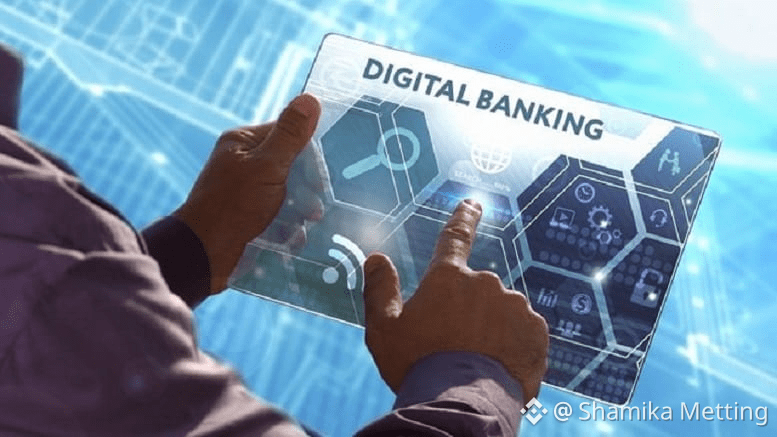
The global financial landscape has undergone a fundamental shift. For the first time, more than 50% of global financial assets are now owned by non-bank financial intermediaries (NBFIs)—such as hedge funds, private equity funds, and pension funds—rather than traditional banks.
As Jay Shetty from the International Monetary Fund explained, this "watershed moment" marks a permanent transformation in how capital flows around the world.
🗝️ Key Points
Shift in Power Dynamics: Credit and lending are no longer the exclusive domain of banks. Non-bank financial institutions (NBFIs) now manage larger capital pools than the traditional banking system.
Driving Force: Stricter banking regulations imposed after 2008 pushed higher-risk, higher-reward lending activities into the less-regulated non-bank financial institutions sector.
Modern Risks: Unlike banks, NBFIs lack "safety nets" such as central bank liquidity or deposit insurance, making them more vulnerable to sudden market shocks.
Please continue
$POL #WORD
{spot}(POLUSDT)
The New Financial Reality: Non-Bank Financial Institutions Now Hold the Majority
The global financial landscape has undergone a fundamental shift. For the first time, more than 50% of global financial assets are now owned by non-bank financial intermediaries (NBFIs)—such as hedge funds, private equity funds, and pension funds—rather than traditional banks.
As Jay Shetty from the International Monetary Fund explained, this "watershed moment" marks a permanent transformation in how capital flows around the world.
🗝️ Key Points
Shift in Power Dynamics: Credit and lending are no longer the exclusive domain of banks. Non-bank financial institutions (NBFIs) now manage larger capital pools than the traditional banking system.
Driving Force: Stricter banking regulations imposed after 2008 pushed higher-risk, higher-reward lending activities into the less-regulated non-bank financial institutions sector.
Modern Risks: Unlike banks, NBFIs lack "safety nets" such as central bank liquidity or deposit insurance, making them more vulnerable to sudden market shocks.
Please continue
$POL #WORD
The global financial landscape has undergone a fundamental shift. For the first time, more than 50% of global financial assets are now owned by non-bank financial intermediaries (NBFIs)—such as hedge funds, private equity funds, and pension funds—rather than traditional banks.
As Jay Shetty from the International Monetary Fund explained, this "watershed moment" marks a permanent transformation in how capital flows around the world.
🗝️ Key Points
Shift in Power Dynamics: Credit and lending are no longer the exclusive domain of banks. Non-bank financial institutions (NBFIs) now manage larger capital pools than the traditional banking system.
Driving Force: Stricter banking regulations imposed after 2008 pushed higher-risk, higher-reward lending activities into the less-regulated non-bank financial institutions sector.
Modern Risks: Unlike banks, NBFIs lack "safety nets" such as central bank liquidity or deposit insurance, making them more vulnerable to sudden market shocks.
Please continue
$POL #WORD

3
5
913

Log in to explore more content
Join global crypto users on Binance Square
⚡️ Get latest and useful information about crypto.
💬 Trusted by the world’s largest crypto exchange.
👍 Discover real insights from verified creators.
Email / Phone number
Trending Topics
1
#USAugustPPIRisesLessThanExpected
40,322 views
720 Discussing
2
#SECApprovesNasdaqTexasCommodityTrustRule
23,761 views
533 Discussing
3
#ECBRaisesRatesSecondTimeTo2.5%
21,433 views
385 Discussing
4
#USContinuingJoblessClaims1.774M
28,227 views
483 Discussing
5
#USAugustPPIYoYRisesTo5.4%
28,278 views
372 Discussing
6
#AppleDebutsFoldablePhone
104,191 views
1,510 Discussing
7
#TSMCAugustRevenueUp53.3%YoY
25,633 views
547 Discussing
8
#IranSaysReadyToEscalateWarWithUS
37,058 views
533 Discussing
9
#EUExtendsCentralContactPointToCASPs
31,932 views
544 Discussing
10
#US10YTreasuryYieldHitsHighestSinceNov2023
68,311 views
847 Discussing