

#thinkbeforeyouact
thinkbeforeyouact
838 views
16 Discussing
Hot
Latest

·
--
2.4.1
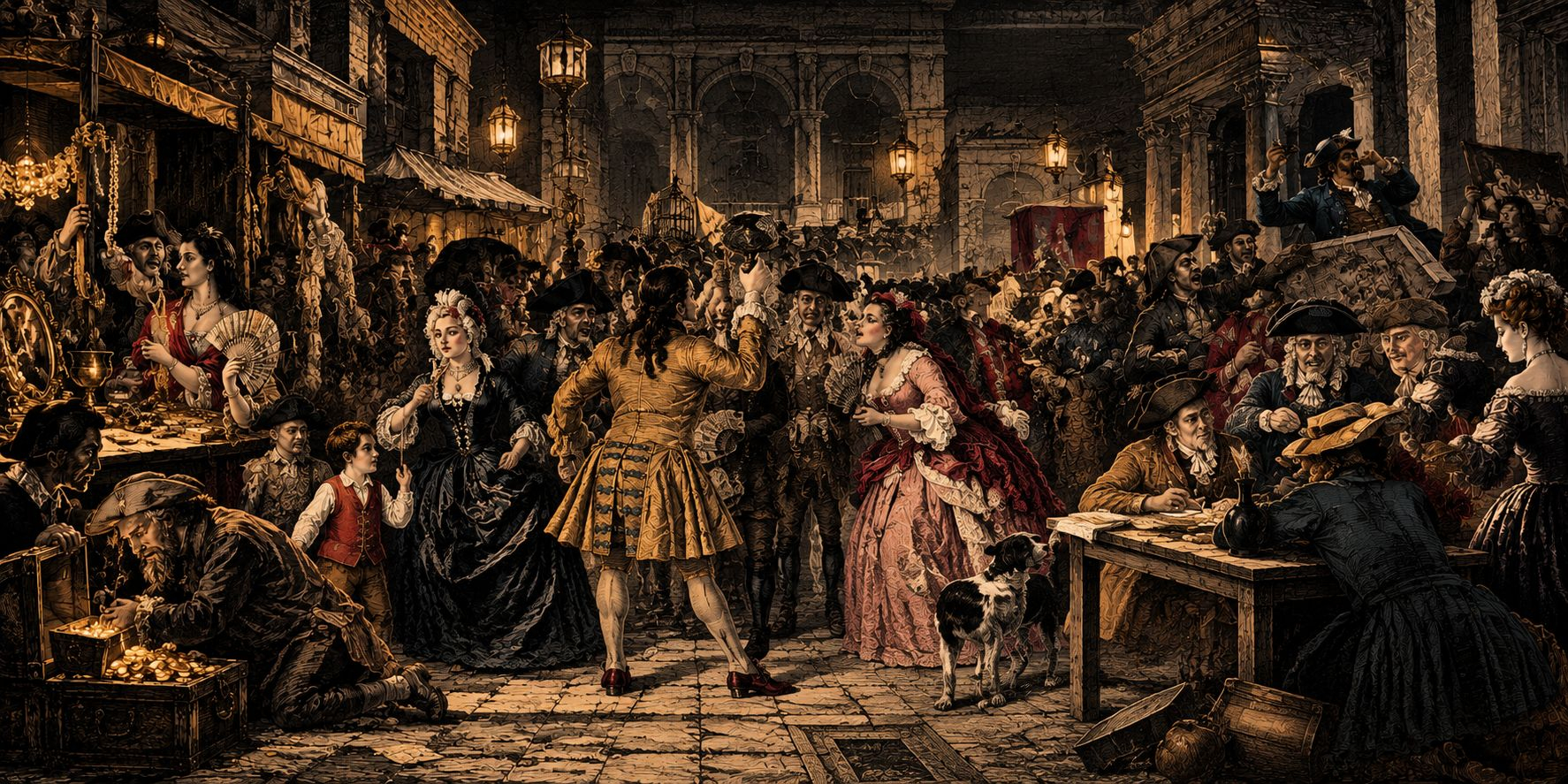
The South Sea Bubble
In 18th-century Britain, the South Sea Company became one of the most famous speculative bubbles in history.
- Its shares soared
- People rushed to invest
And soon, the excitement wasn't limited to wealthy investors, guess what?
Everyone wanted a piece of it!
What made it especially interesting?
The company had an aura of power, connections and credibility.
People saw important names getting involved
And that made the opportunity feel safer.
The thinking became:
«“Surely this many important people can't be wrong”»
- Then reality caught up
- The price collapsed
- Fortunes disappeared
And people discovered something that still matters today:
- A crowd can make an idea feel trustworthy without making it true
- Markets have changed dramatically since 1720
- Human psychology hasn't changed nearly as much
Sometimes the question isn't:
- “Who else believes this?”
It's:
- “What would make this true even if nobody believed it?”
~ Think before you act
#BinanceSquare #ThinkBeforeYouAct #History #BehavioralFinance
2.4.1
The South Sea Bubble
In 18th-century Britain, the South Sea Company became one of the most famous speculative bubbles in history.
- Its shares soared
- People rushed to invest
And soon, the excitement wasn't limited to wealthy investors, guess what?
Everyone wanted a piece of it!
What made it especially interesting?
The company had an aura of power, connections and credibility.
People saw important names getting involved
And that made the opportunity feel safer.
The thinking became:
«“Surely this many important people can't be wrong”»
- Then reality caught up
- The price collapsed
- Fortunes disappeared
And people discovered something that still matters today:
- A crowd can make an idea feel trustworthy without making it true
- Markets have changed dramatically since 1720
- Human psychology hasn't changed nearly as much
Sometimes the question isn't:
- “Who else believes this?”
It's:
- “What would make this true even if nobody believed it?”
~ Think before you act
#BinanceSquare #ThinkBeforeYouAct #History #BehavioralFinance
The South Sea Bubble
In 18th-century Britain, the South Sea Company became one of the most famous speculative bubbles in history.
- Its shares soared
- People rushed to invest
And soon, the excitement wasn't limited to wealthy investors, guess what?
Everyone wanted a piece of it!
What made it especially interesting?
The company had an aura of power, connections and credibility.
People saw important names getting involved
And that made the opportunity feel safer.
The thinking became:
«“Surely this many important people can't be wrong”»
- Then reality caught up
- The price collapsed
- Fortunes disappeared
And people discovered something that still matters today:
- A crowd can make an idea feel trustworthy without making it true
- Markets have changed dramatically since 1720
- Human psychology hasn't changed nearly as much
Sometimes the question isn't:
- “Who else believes this?”
It's:
- “What would make this true even if nobody believed it?”
~ Think before you act
#BinanceSquare #ThinkBeforeYouAct #History #BehavioralFinance
Ravi5897:
social proof
991
51
991
·
--
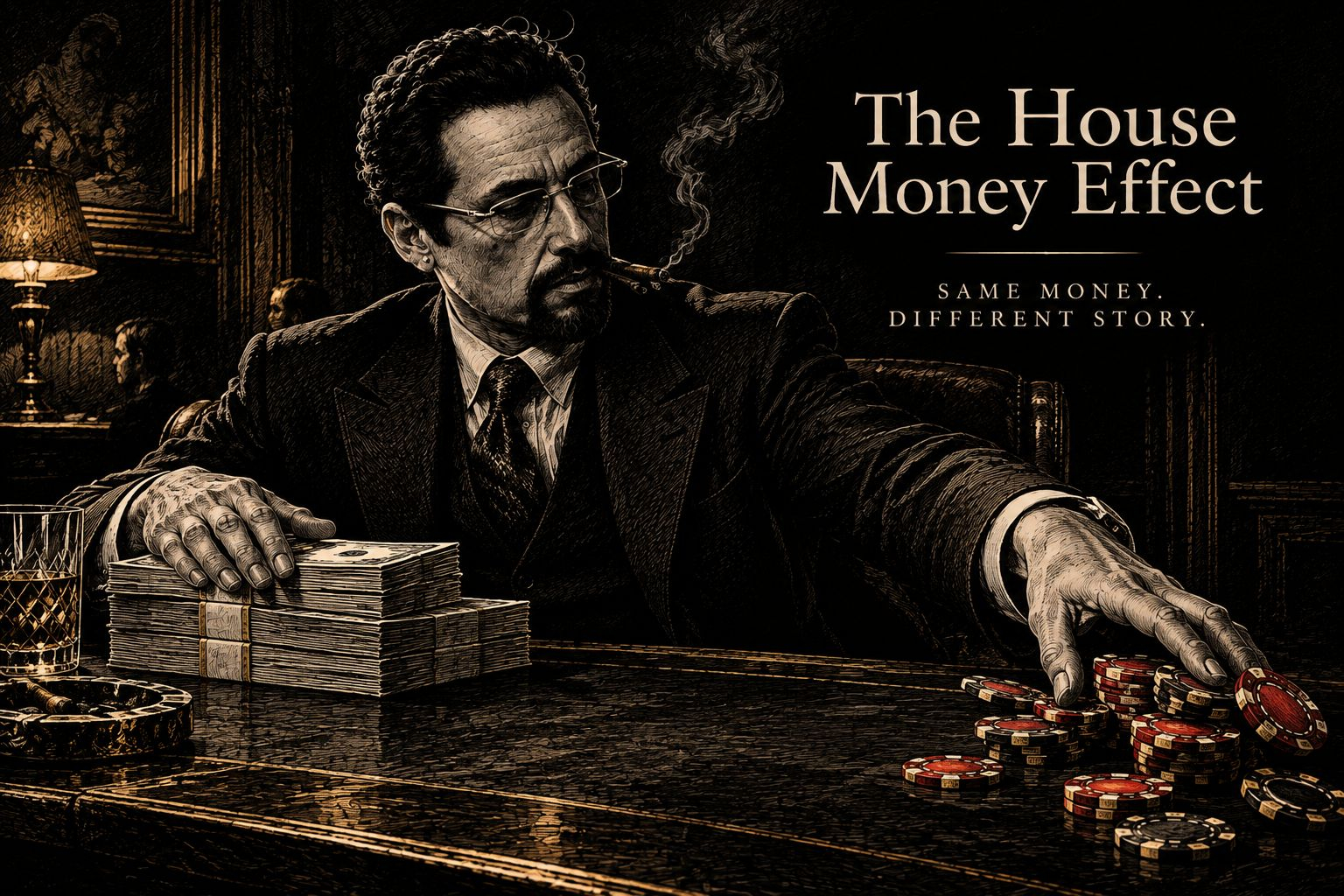
Imagine you win $500 at a casino
Would you treat that $500 the same way as $500 you earned from working?
Psychologically, many people don't
Once money feels like a “win”, it can feel less valuable or less painful to risk
So someone might think:
“It's not really my money. I won it.”
But it is
The money doesn't know where it came from.
Your brain does
And that's where things get interesting
The same thing can happen in investing:
- You buy an asset for $1,000
- It rises to $1,500
- Now you feel like you're playing with “profit”
So taking a bigger risk suddenly feels easier
Nothing changed about the money
Only the story attached to it changed
~ Think before you act
#BinanceSquare #ThinkBeforeYouAct #MoneyPsychology #BehavioralFinance
Imagine you win $500 at a casino
Would you treat that $500 the same way as $500 you earned from working?
Psychologically, many people don't
Once money feels like a “win”, it can feel less valuable or less painful to risk
So someone might think:
“It's not really my money. I won it.”
But it is
The money doesn't know where it came from.
Your brain does
And that's where things get interesting
The same thing can happen in investing:
- You buy an asset for $1,000
- It rises to $1,500
- Now you feel like you're playing with “profit”
So taking a bigger risk suddenly feels easier
Nothing changed about the money
Only the story attached to it changed
~ Think before you act
#BinanceSquare #ThinkBeforeYouAct #MoneyPsychology #BehavioralFinance
Would you treat that $500 the same way as $500 you earned from working?
Psychologically, many people don't
Once money feels like a “win”, it can feel less valuable or less painful to risk
So someone might think:
“It's not really my money. I won it.”
But it is
The money doesn't know where it came from.
Your brain does
And that's where things get interesting
The same thing can happen in investing:
- You buy an asset for $1,000
- It rises to $1,500
- Now you feel like you're playing with “profit”
So taking a bigger risk suddenly feels easier
Nothing changed about the money
Only the story attached to it changed
~ Think before you act
#BinanceSquare #ThinkBeforeYouAct #MoneyPsychology #BehavioralFinance
Marilyn Burrowes cHk9:
its story
978
1
38
978
·
--
2.2.1
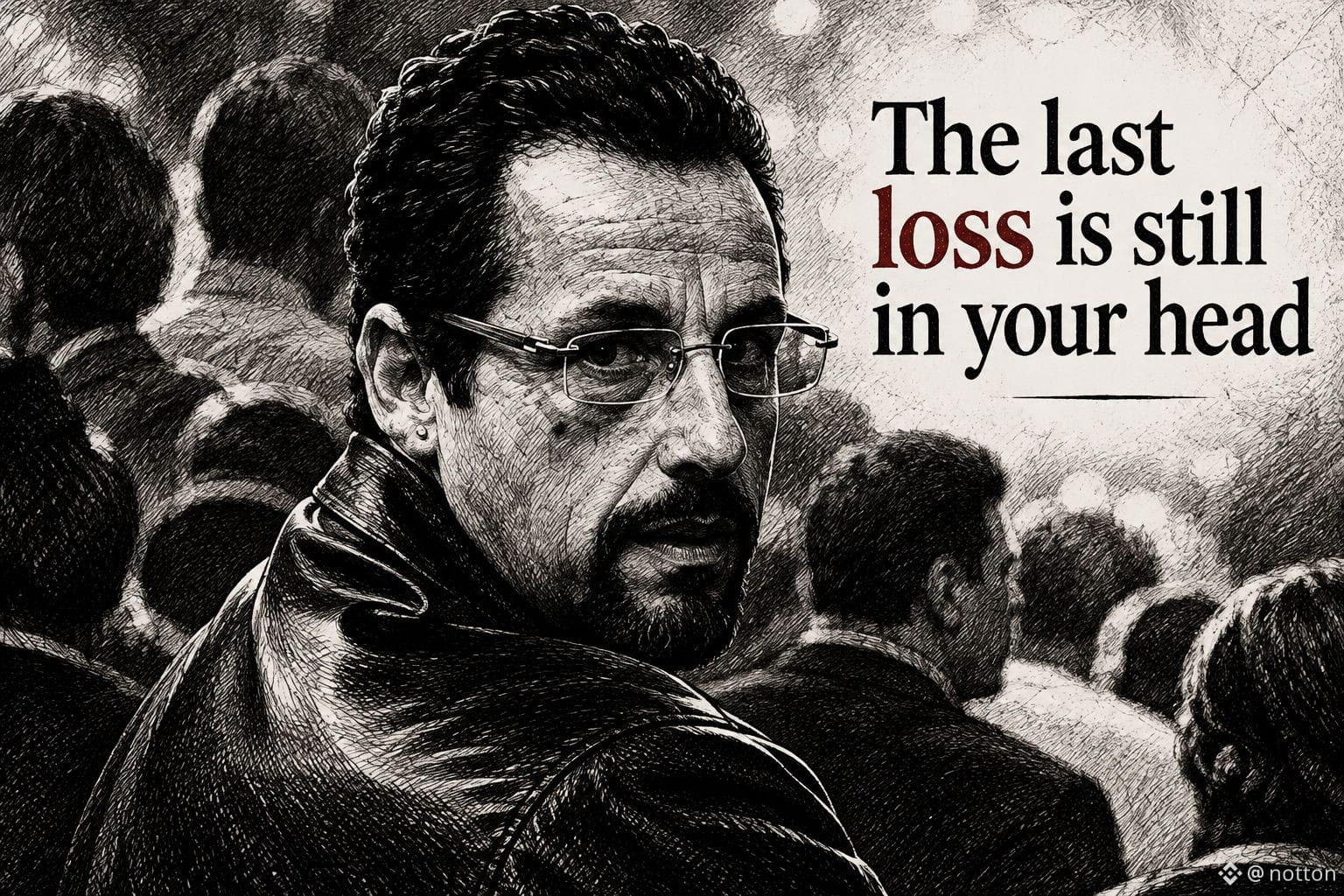
Why do we remember embarrassing moments for years?
You can forget what you ate three days ago
But remember something embarrassing you did 10 years ago with painful clarity
Your brain seems to give certain negative experiences disproportionate attention
Then connect it to money:
- You make one terrible investment.
- You lose $500
- You make ten good decisions afterward
- But your brain keeps returning to the one mistake.
So you become afraid to make the next decision
Sometimes one bad experience doesn't just cost you money
It changes how you see the next opportunity
This could lead into negativity bias, loss aversion, and how past experiences influence future financial decisions
~ Think before you act
#BinanceSquare #ThinkBeforeYouAct #Psychology #BehavioralFinance
2.2.1
Why do we remember embarrassing moments for years?
You can forget what you ate three days ago
But remember something embarrassing you did 10 years ago with painful clarity
Your brain seems to give certain negative experiences disproportionate attention
Then connect it to money:
- You make one terrible investment.
- You lose $500
- You make ten good decisions afterward
- But your brain keeps returning to the one mistake.
So you become afraid to make the next decision
Sometimes one bad experience doesn't just cost you money
It changes how you see the next opportunity
This could lead into negativity bias, loss aversion, and how past experiences influence future financial decisions
~ Think before you act
#BinanceSquare #ThinkBeforeYouAct #Psychology #BehavioralFinance
Why do we remember embarrassing moments for years?
You can forget what you ate three days ago
But remember something embarrassing you did 10 years ago with painful clarity
Your brain seems to give certain negative experiences disproportionate attention
Then connect it to money:
- You make one terrible investment.
- You lose $500
- You make ten good decisions afterward
- But your brain keeps returning to the one mistake.
So you become afraid to make the next decision
Sometimes one bad experience doesn't just cost you money
It changes how you see the next opportunity
This could lead into negativity bias, loss aversion, and how past experiences influence future financial decisions
~ Think before you act
#BinanceSquare #ThinkBeforeYouAct #Psychology #BehavioralFinance
Asthab:
future decisions
971
1
48
971
·
--
1.7.4
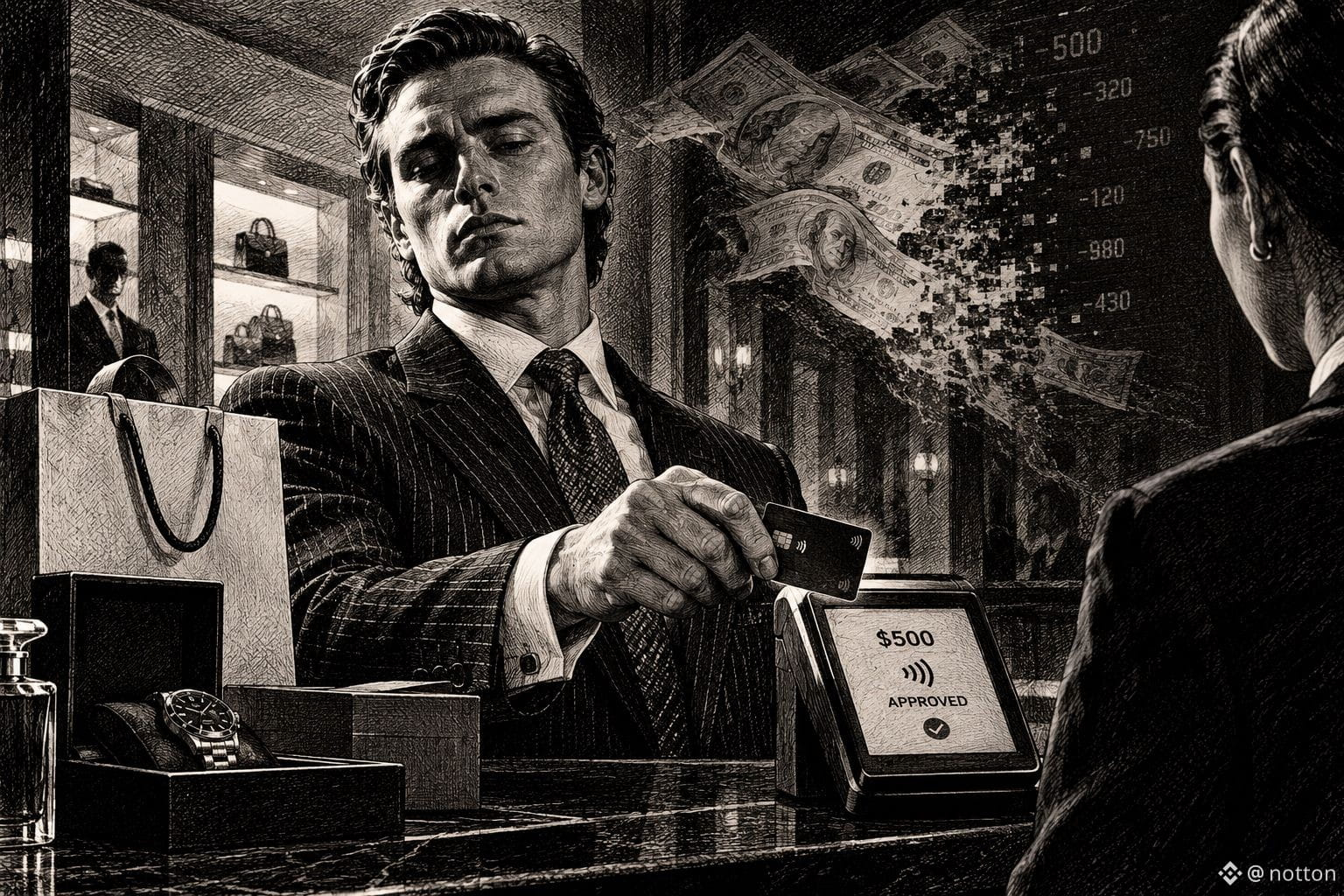
Why does paying with cash sometimes feel worse than paying with a card?
Because the act of paying makes the loss feel real
You hand over $50
You see it leave your wallet
With a card, there's no physical money disappearing:
- You tap
- Approved
- Done
The money is still gone
But psychologically, the payment can feel less immediate
And online, it can become even more abstract.
- You don't see money leaving
- You see a number on a screen change.
That's why sometimes the hardest part of spending isn't the price
It's feeling the payment
~ Think before you act
#BinanceSquare #ThinkBeforeYouAct #MoneyPsychology #BehavioralFinance
1.7.4
Why does paying with cash sometimes feel worse than paying with a card?
Because the act of paying makes the loss feel real
You hand over $50
You see it leave your wallet
With a card, there's no physical money disappearing:
- You tap
- Approved
- Done
The money is still gone
But psychologically, the payment can feel less immediate
And online, it can become even more abstract.
- You don't see money leaving
- You see a number on a screen change.
That's why sometimes the hardest part of spending isn't the price
It's feeling the payment
~ Think before you act
#BinanceSquare #ThinkBeforeYouAct #MoneyPsychology #BehavioralFinance
Why does paying with cash sometimes feel worse than paying with a card?
Because the act of paying makes the loss feel real
You hand over $50
You see it leave your wallet
With a card, there's no physical money disappearing:
- You tap
- Approved
- Done
The money is still gone
But psychologically, the payment can feel less immediate
And online, it can become even more abstract.
- You don't see money leaving
- You see a number on a screen change.
That's why sometimes the hardest part of spending isn't the price
It's feeling the payment
~ Think before you act
#BinanceSquare #ThinkBeforeYouAct #MoneyPsychology #BehavioralFinance
Kenny Marti RvqI:
it's abstract
1.4k
5
85
1.4k
·
--
1.7.2
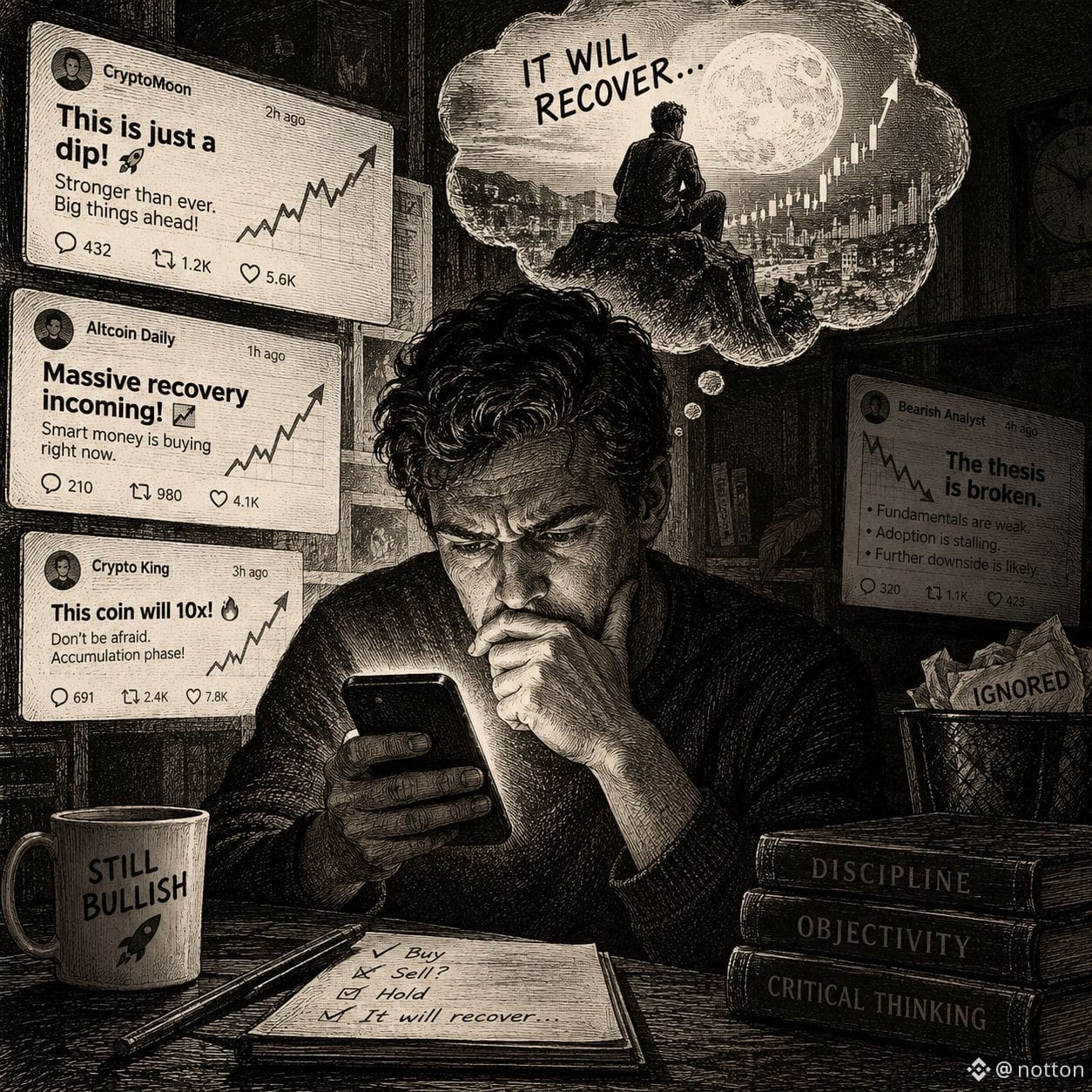
Why do we look for information that agrees with us?
- You buy a coin
- It starts falling
You search:
“Why will it recover?”
- You find someone bullish
- You feel better
- You ignore the analyst saying the thesis is broken
That's CONFIRMATION BIAS
We don't always search for the truth
Sometimes we search for evidence that makes us feel right
And the more money we've committed, the harder it can become to hear anything else
The dangerous question isn't:
“Am I right?”
It's:
“What would prove me wrong?”
~ Think before you act
#BinanceSquare #ThinkBeforeYouAct #Psychology #BehavioralFinance
1.7.2
Why do we look for information that agrees with us?
- You buy a coin
- It starts falling
You search:
“Why will it recover?”
- You find someone bullish
- You feel better
- You ignore the analyst saying the thesis is broken
That's CONFIRMATION BIAS
We don't always search for the truth
Sometimes we search for evidence that makes us feel right
And the more money we've committed, the harder it can become to hear anything else
The dangerous question isn't:
“Am I right?”
It's:
“What would prove me wrong?”
~ Think before you act
#BinanceSquare #ThinkBeforeYouAct #Psychology #BehavioralFinance
Why do we look for information that agrees with us?
- You buy a coin
- It starts falling
You search:
“Why will it recover?”
- You find someone bullish
- You feel better
- You ignore the analyst saying the thesis is broken
That's CONFIRMATION BIAS
We don't always search for the truth
Sometimes we search for evidence that makes us feel right
And the more money we've committed, the harder it can become to hear anything else
The dangerous question isn't:
“Am I right?”
It's:
“What would prove me wrong?”
~ Think before you act
#BinanceSquare #ThinkBeforeYouAct #Psychology #BehavioralFinance
Lorrie Kolasinski rH2q:
contradictions
993
3
52
993
·
--
1.7.1
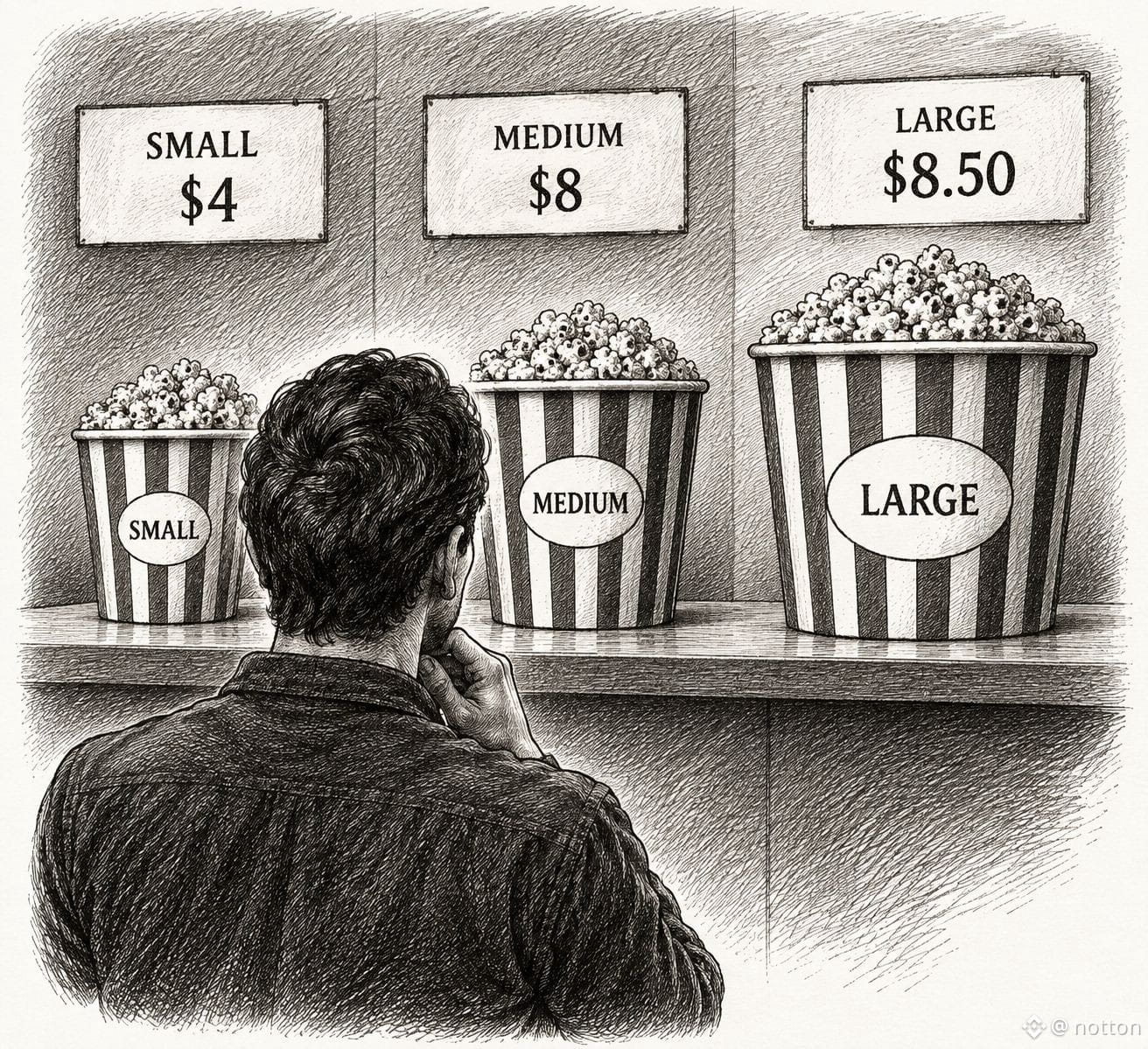
Why can adding a third option change what you choose?
There is two popcorns:
🍿 A — $4
🍿 B — $8.5
You might choose A
Now add:
🍿 C — $8, but smaller than B.
Suddenly B looks like the obvious choice
Nothing about B changed
Only the comparison changed
This is called the "Decoy Effect"
Money works the same way:
Sometimes we don't decide what something is worth
We decide what it's worth compared to something else...
A $100 price can feel expensive - until you see the $200 option.
- The number didn't change
Your reference point did!
How to Avoid It?
- Define needs first:
Know what you want and your budget before looking at options!!!
~ Think before you act
#BinanceSquare #ThinkBeforeYouAct #psychology #MoneyPsychology
1.7.1
Why can adding a third option change what you choose?
There is two popcorns:
🍿 A — $4
🍿 B — $8.5
You might choose A
Now add:
🍿 C — $8, but smaller than B.
Suddenly B looks like the obvious choice
Nothing about B changed
Only the comparison changed
This is called the "Decoy Effect"
Money works the same way:
Sometimes we don't decide what something is worth
We decide what it's worth compared to something else...
A $100 price can feel expensive - until you see the $200 option.
- The number didn't change
Your reference point did!
How to Avoid It?
- Define needs first:
Know what you want and your budget before looking at options!!!
~ Think before you act
#BinanceSquare #ThinkBeforeYouAct #psychology #MoneyPsychology
Why can adding a third option change what you choose?
There is two popcorns:
🍿 A — $4
🍿 B — $8.5
You might choose A
Now add:
🍿 C — $8, but smaller than B.
Suddenly B looks like the obvious choice
Nothing about B changed
Only the comparison changed
This is called the "Decoy Effect"
Money works the same way:
Sometimes we don't decide what something is worth
We decide what it's worth compared to something else...
A $100 price can feel expensive - until you see the $200 option.
- The number didn't change
Your reference point did!
How to Avoid It?
- Define needs first:
Know what you want and your budget before looking at options!!!
~ Think before you act
#BinanceSquare #ThinkBeforeYouAct #psychology #MoneyPsychology
BNB A1:
Comparison
995
1
57
995
·
--
2.4.2
riddle - [0.00001111bnb / 50 slots]
I arrive quickly, but disappear when you wait
I can make you buy, sell, speak, or leave
I don't ask whether it's a good idea
I only ask:
“Why not now?”
And sometimes, the best decision is simply to let me pass.
What am I?
#BinanceSquare #ThinkBeforeYouAct #Psychology #riddle
2.4.2
riddle - [0.00001111bnb / 50 slots]
I arrive quickly, but disappear when you wait
I can make you buy, sell, speak, or leave
I don't ask whether it's a good idea
I only ask:
“Why not now?”
And sometimes, the best decision is simply to let me pass.
What am I?
#BinanceSquare #ThinkBeforeYouAct #Psychology #riddle
riddle - [0.00001111bnb / 50 slots]
I arrive quickly, but disappear when you wait
I can make you buy, sell, speak, or leave
I don't ask whether it's a good idea
I only ask:
“Why not now?”
And sometimes, the best decision is simply to let me pass.
What am I?
#BinanceSquare #ThinkBeforeYouAct #Psychology #riddle

Manchester United FC:
impulse
242
1
1
373
·
--
2.3.3
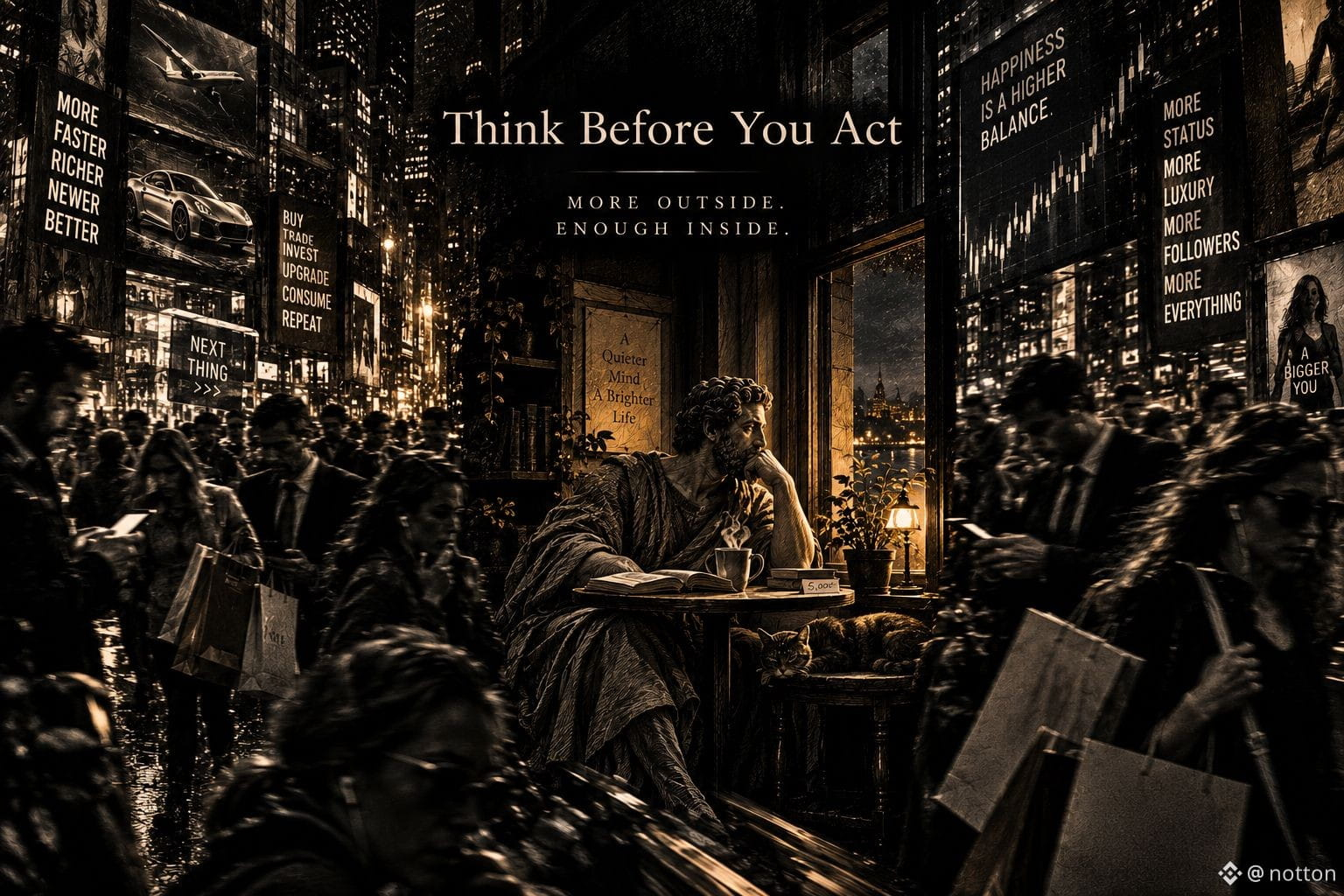
Why does something exciting eventually become normal?
- The first time you get a new phone, it feels special
- A few months later, it's just your phone
- You get used to the new thing
- Then you want the next thing
Psychologists call part of this hedonic adaptation.
And money has the same problem:
- You reach a goal
- You celebrate
Then your brain quietly moves the finish line
- $1,000 becomes $10,000
- $10,000 becomes $100,000.
And “enough” keeps moving...
Sometimes the problem isn't that we don't have enough
It's that we stop noticing what we already have
So today, we're stopping for a moment
5,000 of you are here
And instead of immediately asking:
- “What's next?”
We're going to ask:
- “What do we already have?”
Thank you for being part of this
Now -
back to
~ Thinking before we act
Q: What can make “enough” keep moving?
#ThinkBeforeYouAct #ThinkBeforeYouAct #Psychology #Gratitude
2.3.3
Why does something exciting eventually become normal?
- The first time you get a new phone, it feels special
- A few months later, it's just your phone
- You get used to the new thing
- Then you want the next thing
Psychologists call part of this hedonic adaptation.
And money has the same problem:
- You reach a goal
- You celebrate
Then your brain quietly moves the finish line
- $1,000 becomes $10,000
- $10,000 becomes $100,000.
And “enough” keeps moving...
Sometimes the problem isn't that we don't have enough
It's that we stop noticing what we already have
So today, we're stopping for a moment
5,000 of you are here
And instead of immediately asking:
- “What's next?”
We're going to ask:
- “What do we already have?”
Thank you for being part of this
Now -
back to
~ Thinking before we act
Q: What can make “enough” keep moving?
#ThinkBeforeYouAct #ThinkBeforeYouAct #Psychology #Gratitude
Why does something exciting eventually become normal?
- The first time you get a new phone, it feels special
- A few months later, it's just your phone
- You get used to the new thing
- Then you want the next thing
Psychologists call part of this hedonic adaptation.
And money has the same problem:
- You reach a goal
- You celebrate
Then your brain quietly moves the finish line
- $1,000 becomes $10,000
- $10,000 becomes $100,000.
And “enough” keeps moving...
Sometimes the problem isn't that we don't have enough
It's that we stop noticing what we already have
So today, we're stopping for a moment
5,000 of you are here
And instead of immediately asking:
- “What's next?”
We're going to ask:
- “What do we already have?”
Thank you for being part of this
Now -
back to
~ Thinking before we act
Q: What can make “enough” keep moving?
#ThinkBeforeYouAct #ThinkBeforeYouAct #Psychology #Gratitude
Alexander Bason Iw2e:
Adaptation
1.2k
1
61
1.2k
·
--
lose $400
40% chance to lose $1000
12 hr(s) left
967
2
58
967
·
--
2.3.2
now you already have $1000
choose one:
#BinanceSquare #ThinkBeforeYouAct #DecisionMaking #Psychology
2.3.2
now you already have $1000
choose one:
#BinanceSquare #ThinkBeforeYouAct #DecisionMaking #Psychology
now you already have $1000
choose one:
#BinanceSquare #ThinkBeforeYouAct #DecisionMaking #Psychology
keep $600 - guaranted
86%
$1000 - 60% chance
14%
14 votes • Voting closed
979
41
979
·
--
2.2.2
thank you for participating in the previous poll
here's another:
#BinanceSquareTalks #DecisionMaking
#thinkBeforeYouAct #psychology
2.2.2
thank you for participating in the previous poll
here's another:
#BinanceSquareTalks #DecisionMaking
#thinkBeforeYouAct #psychology
thank you for participating in the previous poll
here's another:
#BinanceSquareTalks #DecisionMaking
#thinkBeforeYouAct #psychology
$1000 - guaranted
60%
$2400 - 50% chance
20%
$5000 - 25% chance
20%
20 votes • Voting closed
928
2
41
928
·
--
1000$ - guaranteed
83%
2000$ - 50% chance
7%
4000$ - 25% chance
10%
29 votes • Voting closed
888
2
59
888


·
--
Article
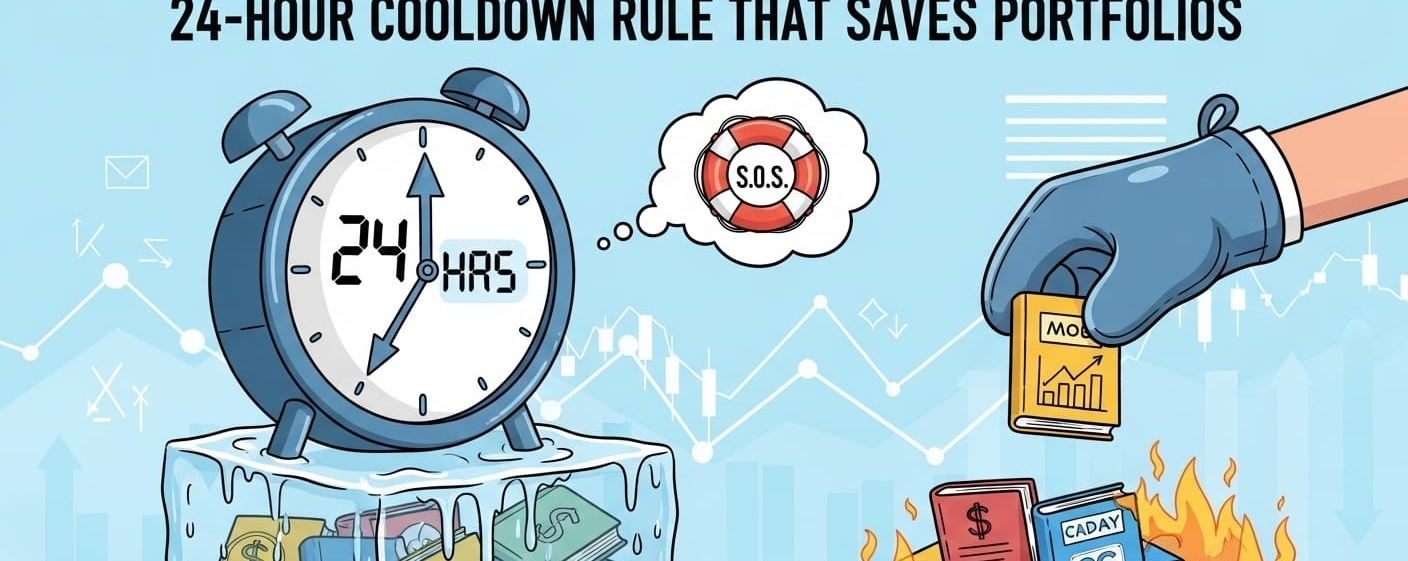
THE 24-HOUR COOLDOWN RULE THAT SAVES PORTFOLIOS ⏰🧊You see a coin pumping hard.
Your finger hovers over the buy button.
You feel the FOMO creeping in.
STOP.
Walk away for 24 hours.
That's the rule.
And it has saved my portfolio more times than I can count.
Let me explain why it works.
📍 WHAT IS THE 24-HOUR COOLDOWN RULE?
Simple:
Whenever you feel a strong urge to buy or sell – you wait 24 hours.
No exceptions.
After 24 hours, if the trade still makes sense, you can consider it.
But 90% of the time, the urge disappears.
And you saved yourself from a bad decision.
📍 WHY IT WORKS
Emotions are temporary.
FOMO lasts minutes to hours.
Panic lasts even less.
But the damage from an emotional trade can last months or years.
The 24-hour cooldown lets your rational brain catch up to your emotional brain.
It separates impulse from strategy.
📍 REAL EXAMPLES
Example 1: The Pump
You see a coin up 40% in an hour.
Everyone is screaming "100x!"
You want to buy.
You apply the 24-hour rule.
Next day, the coin is down 30%.
You dodged a bullet.
Example 2: The Dump
Your portfolio is down 20%.
Panic sets in. You want to sell everything.
You apply the 24-hour rule.
Next day, the market stabilizes.
You kept your position and recovered within a week.
Example 3: The FOMO
Your friend made 2x on a coin.
You feel left behind.
24-hour rule.
Next day, you realize you don't even understand the coin.
You skip it. Stay safe.
📍 WHAT TO DO DURING THE 24 HOURS
✅ Research the coin/trade properly
✅ Check if any red flags exist
✅ Ask yourself: "Would I be okay losing this money?"
✅ Look at the bigger picture (weekly chart)
✅ Sleep on it (literally)
📍 WHEN THE RULE DOESN'T APPLY
If you have a pre-planned limit order that triggers – that's fine.
If you're taking profits according to your plan – that's fine.
The rule is for emotional, unplanned trades.
Not for your strategy.
📍 MY EXPERIENCE
I used to make 3-5 emotional trades per week.
Most lost money.
Since applying the 24-hour rule:
I make 1-2 emotional trades per month (sometimes zero).
My win rate went from 40% to 70%.
My stress went from 100% to 20%.
My portfolio? Much healthier.
📍 MY RULE
If I can't wait 24 hours, I don't deserve the trade.
Because a real opportunity will still be there tomorrow.
Only traps need you to act now.
Will you try the 24-hour rule?
"Cooling down for 24 hours" 🧊
#StopEmotionalTrading #ThinkBeforeYouAct #RealTalk #Ayesha_Queen
$RAVE $POL
THE 24-HOUR COOLDOWN RULE THAT SAVES PORTFOLIOS ⏰🧊
You see a coin pumping hard.
Your finger hovers over the buy button.
You feel the FOMO creeping in.
STOP.
Walk away for 24 hours.
That's the rule.
And it has saved my portfolio more times than I can count.
Let me explain why it works.
📍 WHAT IS THE 24-HOUR COOLDOWN RULE?
Simple:
Whenever you feel a strong urge to buy or sell – you wait 24 hours.
No exceptions.
After 24 hours, if the trade still makes sense, you can consider it.
But 90% of the time, the urge disappears.
And you saved yourself from a bad decision.
📍 WHY IT WORKS
Emotions are temporary.
FOMO lasts minutes to hours.
Panic lasts even less.
But the damage from an emotional trade can last months or years.
The 24-hour cooldown lets your rational brain catch up to your emotional brain.
It separates impulse from strategy.
📍 REAL EXAMPLES
Example 1: The Pump
You see a coin up 40% in an hour.
Everyone is screaming "100x!"
You want to buy.
You apply the 24-hour rule.
Next day, the coin is down 30%.
You dodged a bullet.
Example 2: The Dump
Your portfolio is down 20%.
Panic sets in. You want to sell everything.
You apply the 24-hour rule.
Next day, the market stabilizes.
You kept your position and recovered within a week.
Example 3: The FOMO
Your friend made 2x on a coin.
You feel left behind.
24-hour rule.
Next day, you realize you don't even understand the coin.
You skip it. Stay safe.
📍 WHAT TO DO DURING THE 24 HOURS
✅ Research the coin/trade properly
✅ Check if any red flags exist
✅ Ask yourself: "Would I be okay losing this money?"
✅ Look at the bigger picture (weekly chart)
✅ Sleep on it (literally)
📍 WHEN THE RULE DOESN'T APPLY
If you have a pre-planned limit order that triggers – that's fine.
If you're taking profits according to your plan – that's fine.
The rule is for emotional, unplanned trades.
Not for your strategy.
📍 MY EXPERIENCE
I used to make 3-5 emotional trades per week.
Most lost money.
Since applying the 24-hour rule:
I make 1-2 emotional trades per month (sometimes zero).
My win rate went from 40% to 70%.
My stress went from 100% to 20%.
My portfolio? Much healthier.
📍 MY RULE
If I can't wait 24 hours, I don't deserve the trade.
Because a real opportunity will still be there tomorrow.
Only traps need you to act now.
Will you try the 24-hour rule?
"Cooling down for 24 hours" 🧊
#StopEmotionalTrading #ThinkBeforeYouAct #RealTalk #Ayesha_Queen
$RAVE $POL
Your finger hovers over the buy button.
You feel the FOMO creeping in.
STOP.
Walk away for 24 hours.
That's the rule.
And it has saved my portfolio more times than I can count.
Let me explain why it works.
📍 WHAT IS THE 24-HOUR COOLDOWN RULE?
Simple:
Whenever you feel a strong urge to buy or sell – you wait 24 hours.
No exceptions.
After 24 hours, if the trade still makes sense, you can consider it.
But 90% of the time, the urge disappears.
And you saved yourself from a bad decision.
📍 WHY IT WORKS
Emotions are temporary.
FOMO lasts minutes to hours.
Panic lasts even less.
But the damage from an emotional trade can last months or years.
The 24-hour cooldown lets your rational brain catch up to your emotional brain.
It separates impulse from strategy.
📍 REAL EXAMPLES
Example 1: The Pump
You see a coin up 40% in an hour.
Everyone is screaming "100x!"
You want to buy.
You apply the 24-hour rule.
Next day, the coin is down 30%.
You dodged a bullet.
Example 2: The Dump
Your portfolio is down 20%.
Panic sets in. You want to sell everything.
You apply the 24-hour rule.
Next day, the market stabilizes.
You kept your position and recovered within a week.
Example 3: The FOMO
Your friend made 2x on a coin.
You feel left behind.
24-hour rule.
Next day, you realize you don't even understand the coin.
You skip it. Stay safe.
📍 WHAT TO DO DURING THE 24 HOURS
✅ Research the coin/trade properly
✅ Check if any red flags exist
✅ Ask yourself: "Would I be okay losing this money?"
✅ Look at the bigger picture (weekly chart)
✅ Sleep on it (literally)
📍 WHEN THE RULE DOESN'T APPLY
If you have a pre-planned limit order that triggers – that's fine.
If you're taking profits according to your plan – that's fine.
The rule is for emotional, unplanned trades.
Not for your strategy.
📍 MY EXPERIENCE
I used to make 3-5 emotional trades per week.
Most lost money.
Since applying the 24-hour rule:
I make 1-2 emotional trades per month (sometimes zero).
My win rate went from 40% to 70%.
My stress went from 100% to 20%.
My portfolio? Much healthier.
📍 MY RULE
If I can't wait 24 hours, I don't deserve the trade.
Because a real opportunity will still be there tomorrow.
Only traps need you to act now.
Will you try the 24-hour rule?
"Cooling down for 24 hours" 🧊
#StopEmotionalTrading #ThinkBeforeYouAct #RealTalk #Ayesha_Queen
$RAVE $POL
3
5
806
Log in to explore more content
Join global crypto users on Binance Square
⚡️ Get latest and useful information about crypto.
💬 Trusted by the world’s largest crypto exchange.
👍 Discover real insights from verified creators.
Email / Phone number
Trending Topics
1
#BinanceWillListHyperliquid(HYPE)
125,104 views
2,356 Discussing
2
#FedOctoberRateHikeOddsRiseTo69.7%
38,194 views
942 Discussing
3
#BitcoinFallsBelow$83,000
3,671 views
20 Discussing
4
#BitcoinFallsToAround$84,600ThisWeek
0 views
0 Discussing
5
#US30YearYieldHighestSince2004
31,560 views
740 Discussing
6
#ETHBreaksAbove$2,700
1,595 views
19 Discussing
7
#USWeighsPromotingDollarStablecoinsAbroad
66,676 views
1,632 Discussing
8
#US10YTreasuryYieldHits19YearHigh
68,326 views
1,316 Discussing
9
#SpotBitcoinETFsInflow$2.31BInFourDays
7,665 views
79 Discussing
10
#BitcoinRejectedAt$87,300Twice
0 views
0 Discussing