

#shop
shop
5,961 views
97 Discussing
Hot
Latest


·
--
Bearish
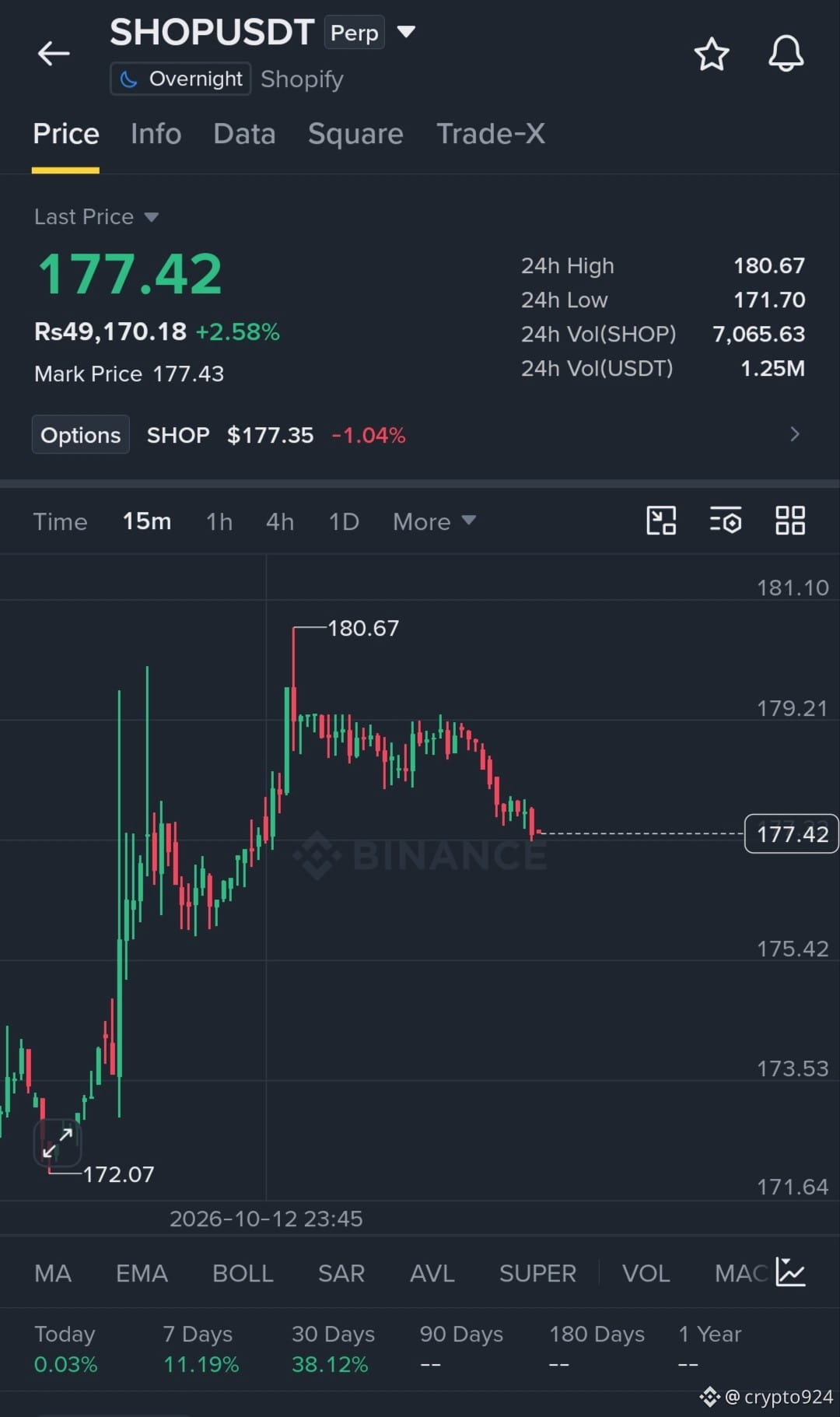
🚨🔻 $SHOP BREAKDOWN ALERT! BEARS TAKING CONTROL? 📉
🔴 SHORT Entry: $177.00–$178.80
🎯 TP: $175.50 | $173.20 | $171.00
🛑 SL: $181.40
⚡ Leverage: 16×
🔥 BINANCE SQUARE TRADERS — WATCH THIS SHORT SETUP! 👇
⚠️ Wait for confirmation. Leverage increases risk.
#SHOP #Write2Earn! #BinanceSquareTalks
🚨🔻 $SHOP BREAKDOWN ALERT! BEARS TAKING CONTROL? 📉
🔴 SHORT Entry: $177.00–$178.80
🎯 TP: $175.50 | $173.20 | $171.00
🛑 SL: $181.40
⚡ Leverage: 16×
🔥 BINANCE SQUARE TRADERS — WATCH THIS SHORT SETUP! 👇
⚠️ Wait for confirmation. Leverage increases risk.
#SHOP #Write2Earn! #BinanceSquareTalks
🔴 SHORT Entry: $177.00–$178.80
🎯 TP: $175.50 | $173.20 | $171.00
🛑 SL: $181.40
⚡ Leverage: 16×
🔥 BINANCE SQUARE TRADERS — WATCH THIS SHORT SETUP! 👇
⚠️ Wait for confirmation. Leverage increases risk.
#SHOP #Write2Earn! #BinanceSquareTalks
1
9

·
--
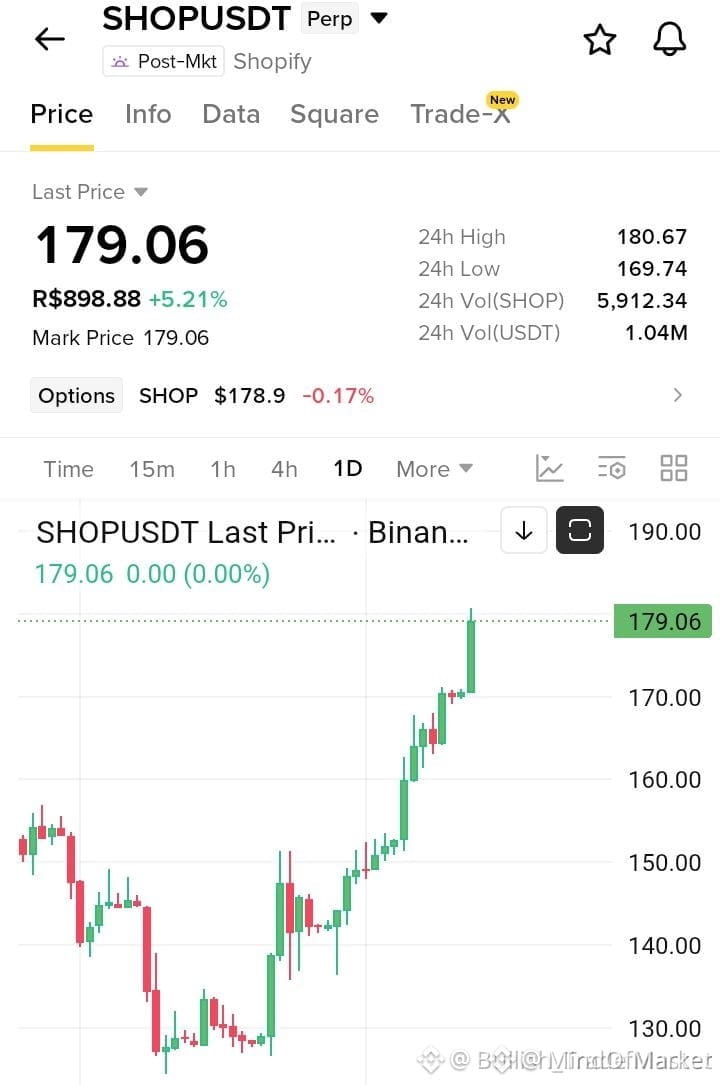
⚡ $SHOP INITIATES AGGRESSIVE BULLISH EXPANSION AS INSTITUTIONAL ORDER FLOW ACCELERATES! 🟢
$SHOP is printing a textbook structural breakout, with clear volume expansion confirming buyers are firmly defending internal discount zones. 🌊 The sustained upside velocity indicates smart money absorption rather than transient retail momentum.
With higher timeframes shifting market structure, primary order blocks are holding cleanly alongside sympathetic volume across $DOS and $GTC . 🔍 When price action decisively reclaims key ranges like this, upper inefficiencies typically get targeted next. 💬 Are you positioning on mitigation retests or waiting for liquidity sweeps above the local highs? 👇
⚠️ Not financial advice. Always manage your risk. 🛡️
🏷️ #SHOP #LongSetup #PriceAction #Bullish #Crypto
🎯 🦈
14

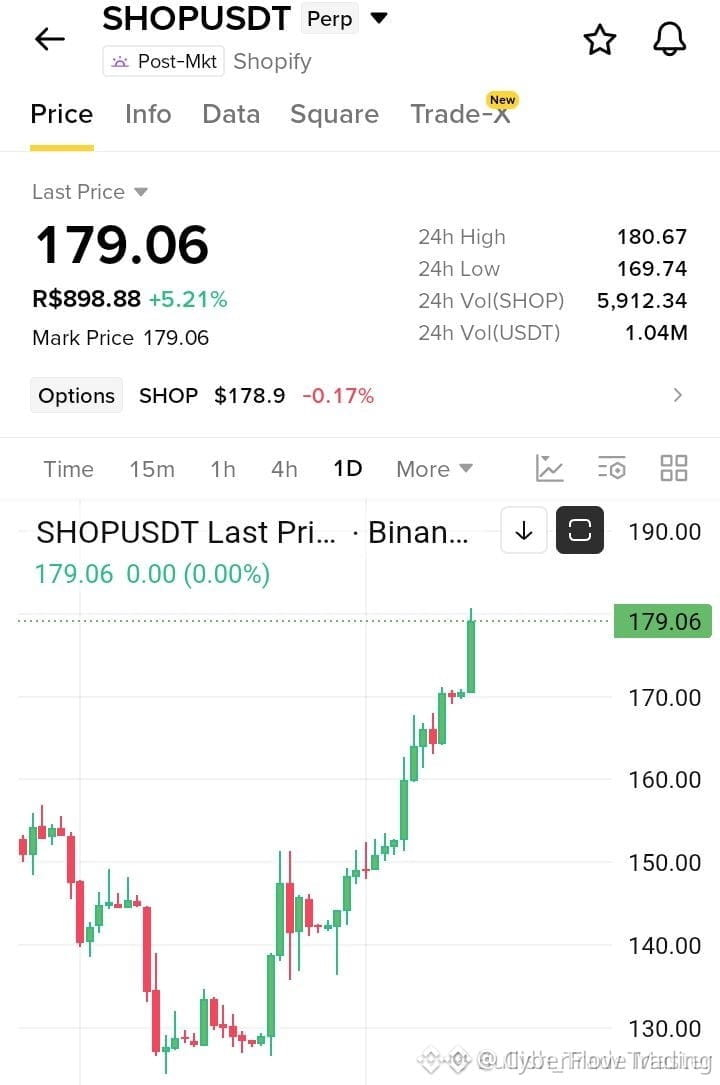
💥 $SHOP IGNITES AGGRESSIVE BULLISH EXPANSION AS BUYERS OVERPOWER THE TAPE! 🟢
The aggressive expansion unfolding on $SHOP shows aggressive market buyers stepping in and relentlessly absorbing overhead supply. ⚡ When price action transitions into this caliber of expansion velocity, passive sellers get steamrolled while momentum traders ride the wake.
Capital rotation is accelerating across secondary setups like $DOS and $GTC , confirming that risk-on appetite is firmly back on the table. 📊 We are seeing clean continuation candles with minimal pullback, signaling bids actively guarding every micro-dip. 💡
Are you front-running this continuation push, or waiting for a retest before loading up? 💬
⚠️ Not financial advice. Always manage your risk. 🛡️
🏷️ #SHOP #LongSetup #Bullish #Altcoins #Crypto
🔥 ⚡
48

·
--
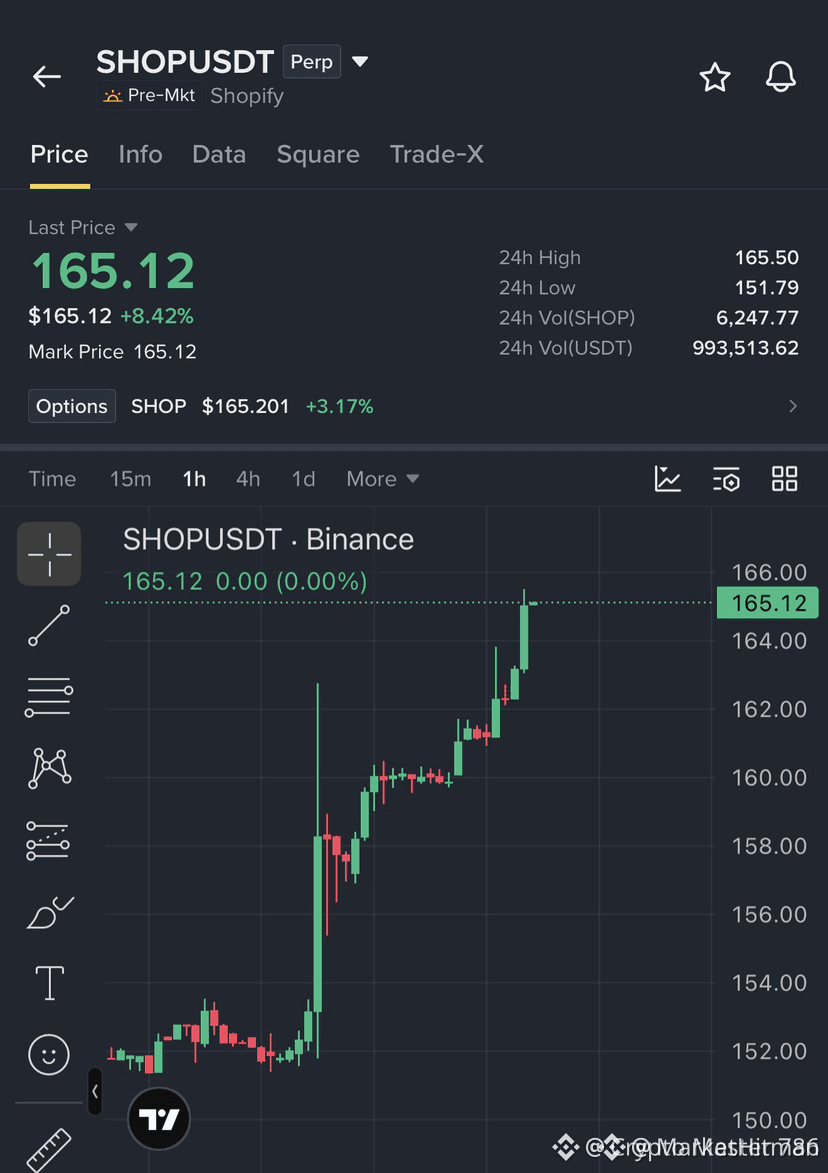
🚀 $SHOP IMPULSE CONTINUES AS BUYERS TARGET THE NEXT EXPLOSIVE LEG HIGHER! ⚡
Entry: $162.50 - $165.20 ⚡
Target: $168.00 / $172.00 / $176.00 🚀
Stop Loss: $159.80 ⚠️
📌 $SHOP is printing a textbook trend continuation, carving higher lows while aggressively soaking up seller liquidity at these elevated levels. Demand is consistently front-running deeper retests, signaling heavy buyer conviction for this immediate expansion.
📊 Order flow reveals steady spot accumulation absorbing every minor dip near the entry band, clearing the runway toward our higher targets. ⚡ Risk remains tightly defined under structural support, offering clean trade asymmetry on this next leg up.
💡 Momentum firmly favors the bulls, but precision entry execution is key when riding active breakouts. 💬 Are you bidding inside this entry block or waiting to buy the $168 reclaim? 👇
⚠️ Not financial advice. Always manage your risk. 🛡️
🏷️ #SHOP #LongSetup #Breakout #Trading #Crypto
🔥 ⚡
19

·
--
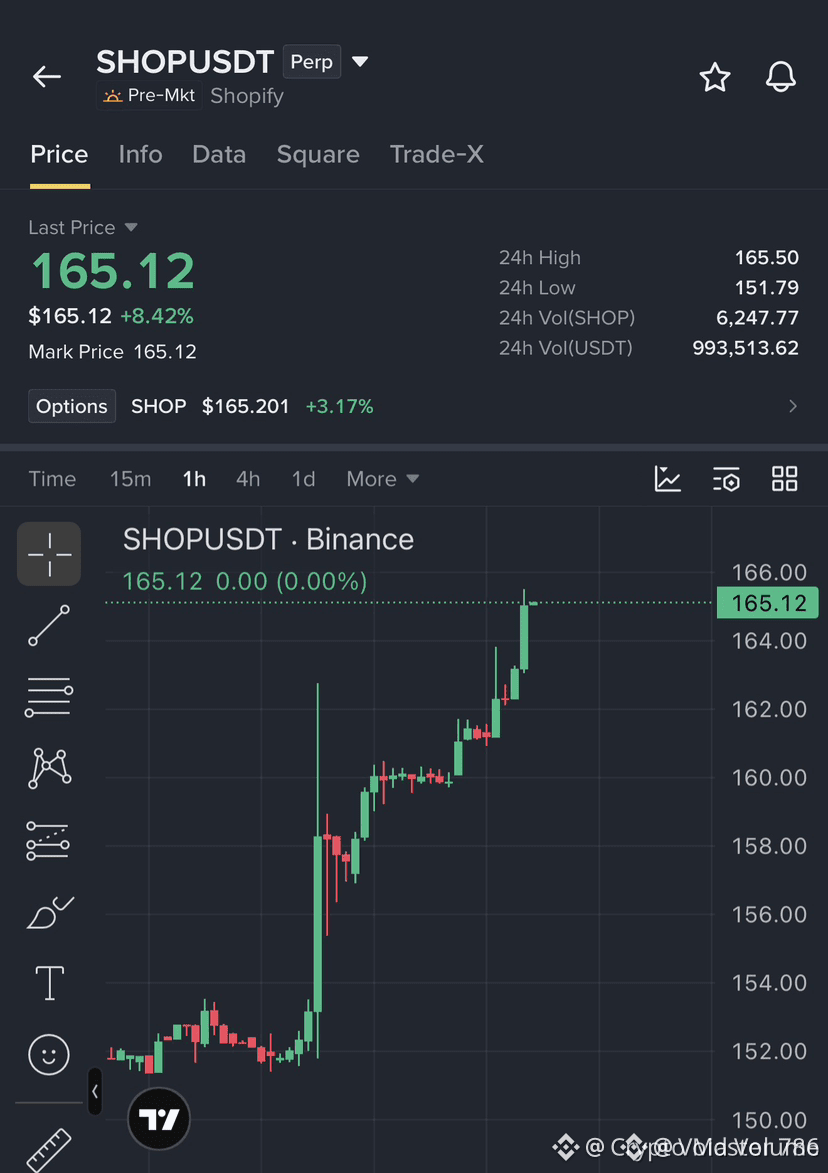
🚀 $SHOP ACCELERATES PAST LOCAL LIQUIDITY AS INSTITUTIONAL DEMAND EXPANDS! 📈
Entry: 162.50 - 165.20 ⚡
Target: 168.00 / 172.00 / 176.00 🚀
Stop Loss: 159.80 ⚠️
Smart money accumulation around the current demand zone signals a textbook market structure shift, pushing higher as sell-side liquidity gets systematically absorbed. 📊 Price action is maintaining clean momentum, respecting higher lows as volume expands into upper inefficiencies.
With structural support firmly established above 159.80, the path of least resistance points directly toward upper liquidity targets. 💡 Maintaining disciplined position sizing here ensures maximum R:R efficiency before the next volatility expansion phase. 💬 Are you taking the long retest now, or waiting for a structural shift on smaller timeframes? 👇
⚠️ Not financial advice. Always manage your risk. 🛡️
🏷️ #SHOP #LongSetup #Trading #Breakout
🎯 🦈
10

·
--
🚨 $SHOP JUST PRINTED A MONSTER QUARTER — 30% PRE-MARKET SURGE! 📈💥
📊 This was a textbook earnings acceleration — revenue up 34% to $3.58B, GMV up 32% to $115.6B, and free cash flow running at $654M. Every core metric is compounding above 30%, which is why smart money was stacked in the pre-market auction. 💡
The Q3 guide of low-30s revenue growth signals this isn't a one-quarter spike — it's a sustained growth engine. 🦈 Institutional buyers are treating this window as a chance to accumulate structurally strong names while risk appetite recovers. 🔍
💬 Are you treating $SHOP as a momentum trade or a core holding after this report? 👇
⚠️ Not financial advice. Always manage your risk. 🛡️
🏷️ #SHOP #Earnings #Bullish #GrowthStock #Investing
🔥 💎
25

·
--
Bullish
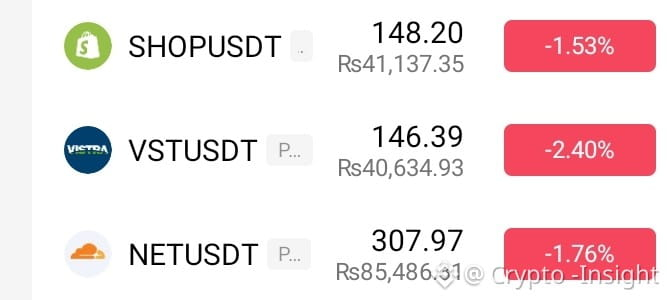
🚨 $SHOP $VST $NET — BEARS ARE TURNING UP THE PRESSURE! 🔻
The sellers are back in control, and the downside pressure is getting harder to ignore.
$SHOPUSDT drops -1.53% to 148.20, while $VSTUSDT falls -2.40% to 146.39. $NETUSDT is also under pressure at 307.97, down -1.76%.
⚠️ Three charts, one warning: momentum is weakening. If buyers fail to reclaim key levels, another sharp move lower could be next.
Watch support. Watch volume. Don't blindly catch the falling knife. 🔥
#Crypto #Trading #SHOP #VST #NET
{future}(NETUSDT)
🚨 $SHOP $VST $NET — BEARS ARE TURNING UP THE PRESSURE! 🔻
The sellers are back in control, and the downside pressure is getting harder to ignore.
$SHOPUSDT drops -1.53% to 148.20, while $VSTUSDT falls -2.40% to 146.39. $NETUSDT is also under pressure at 307.97, down -1.76%.
⚠️ Three charts, one warning: momentum is weakening. If buyers fail to reclaim key levels, another sharp move lower could be next.
Watch support. Watch volume. Don't blindly catch the falling knife. 🔥
#Crypto #Trading #SHOP #VST #NET
313

·
--
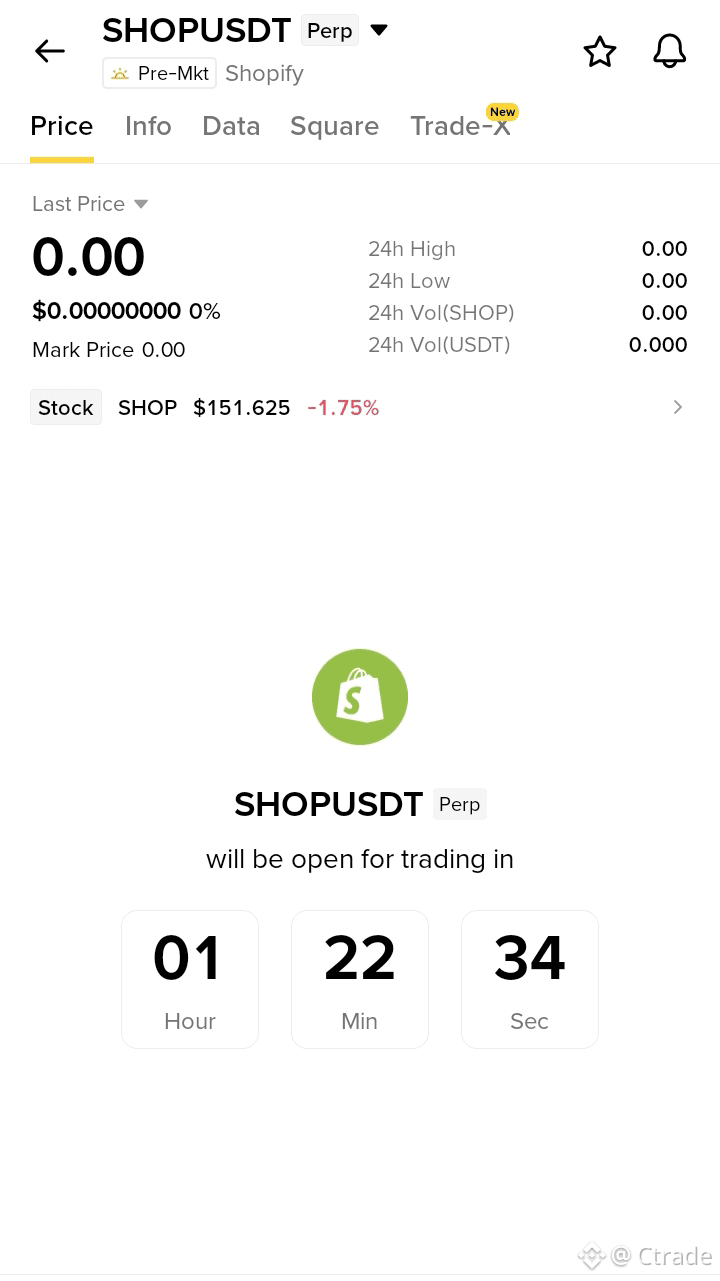
$SHOP As for the price right now: 152.11000, it’s down 1.451% over the past 24h. I checked the funding rate—it's 0.00000000. Neither side has paid the other. OI is 707.13—not big, but not small either, just “okay to look at.” It falls under the semiconductor AI chain angle, but today there’s no suitable reference contract in the same sector. The secondary comparison table is empty, so I can only break it down using $SHOP ’s own data.
With the price moving downward and the funding rate staying at zero, this suggests the drop isn’t caused by crowded contract longs getting liquidated in a panic. It’s more like sell orders on the spot side are gradually coming out.
The “funding rate rule” doesn’t help much here. When funding rate is above zero, longs pay shorts; below zero, shorts pay longs. Right now it’s exactly zero, so nobody is being forced to liquidate. The 1.451% drop happened in the background of funding being zero. Old dog’s read is that this is a liquidity lull, not an active short.
If it were shorts initiating positions, then usually alongside a 1.451% drop over 24h, OI would typically pile up. But OI is only 707.13—shorts haven’t shown heavy positioning. So what am I waiting for? Two signals: (1) price reclaims above 152.11 and OI rises—then it means funds are coming back in and I can follow with a small position. (2) price breaks below 152.11 and OI keeps shrinking—then I’ll withdraw and observe.
I’m not setting a specific support level because there’s nothing in the input; the only anchor is the spot price at 152.11.
The strongest counter-argument is: while the price is falling, the traded amount of 171840.2162 is sitting there, meaning real sell pressure exists on the spot side. You can’t just conclude the drop has no room just because the contract side looks cold. I agree.
Single-asset daily data can’t tell us too much—especially since the funding rate is zero. With no bias from funding, any conclusion is only a weak signal. What the market might be ignoring is that $SHOP dropped but funding didn’t cooperate, suggesting the sellers aren’t leverage players. They’re more likely holders reducing risk on the spot. This kind of sell-side liquidity often wears down more steadily; it usually won’t reverse just because the funding rate changes.
In the second-order effect: if price continues to grind below 152.11 and the contract side has no “meat,” spot holders will lose patience first. Trading volume may slowly dry up, and OI could drift even lower. Only when the funding rate flips from zero positive and price is still falling would that be the signal that longs start to absorb the order flow—then shorts would finally have room to squeeze.
Trading tag: #BinanceFutures #TradFi #USDⓈM #SHOP #SHOPUSDT $SHOP
16

·
--
The old dog glanced at the data for the $SHOP perpetual contract—over the past 24 hours it’s up 5.572%, with the price now at 147.59, but the funding rate remains firmly at zero. This combination is kind of interesting: the market is really rising, but neither the long nor the short side is willing to pay for positions. Trading volume is 2.06 million contracts—not exactly quiet—but combined with this zero fee, it looks more like spot trading is slowly pushing higher rather than leveraged capital rushing in.
Zooming out to the semiconductor/AI chain angle, $SHOP is classified under other sectors, and its logic isn’t quite like MU, NVDA, AMD—those are hardcore chip stocks. Its core is still an e-commerce infrastructure company, and AI enablement is more of an efficiency story; it’s not the kind of core target that “sells shovels.” In this round of sector rotation, it wasn’t treated like an AI hardware leader to be pumped. The neutral funding rate also serves as a confirmation: the market didn’t label it a strong AI winner. So longs aren’t acting crazy, and shorts aren’t rushing to pounce.
My take is that an uptrend supported by zero fees has a healthier internal structure than those coins with runaway funding. At least in the short term, the risk of blow-up cascade liquidations is lower. But momentum may also be limited—this is more like a steady, mild climb. Next, if the price can hold above 147 while OI modestly expands, that would suggest new capital is entering with a bullish stance—only then can the story be made sturdier. Conversely, if there’s still no new money and it relies purely on existing holders rotating positions, this impulse is likely to fizzle out.
For triggers: if price breaks through the 150 round-number level with volume, I’ll consider adding a bit and observing. If it pulls back and drops below 140, I’ll exit first, because that would mean the structure of this mild uptrend has been broken.
The strongest counterargument on the other side is: with no funding incentive, even arbitrage capital has no interest in playing—this kind of rise is likely rootless, so its sustainability is doubtful. The second-order effect is that if a fringe name like $SHOP can be pushed higher by relatively mild flows, capital may be more willing to look for other products with more funding arbitrage space and more dramatic OI changes, which could reduce the liquidity premium in the process.
Failure conditions are very clear: if next week’s data shows funding turning notably positive, but the price still goes sideways or even falls, that would indicate crowded longs are forming and the current mild narrative immediately breaks down.
Trading tag: #BinanceFutures #TradFi #USDⓈM #SHOP #SHOPUSDT $SHOP
58

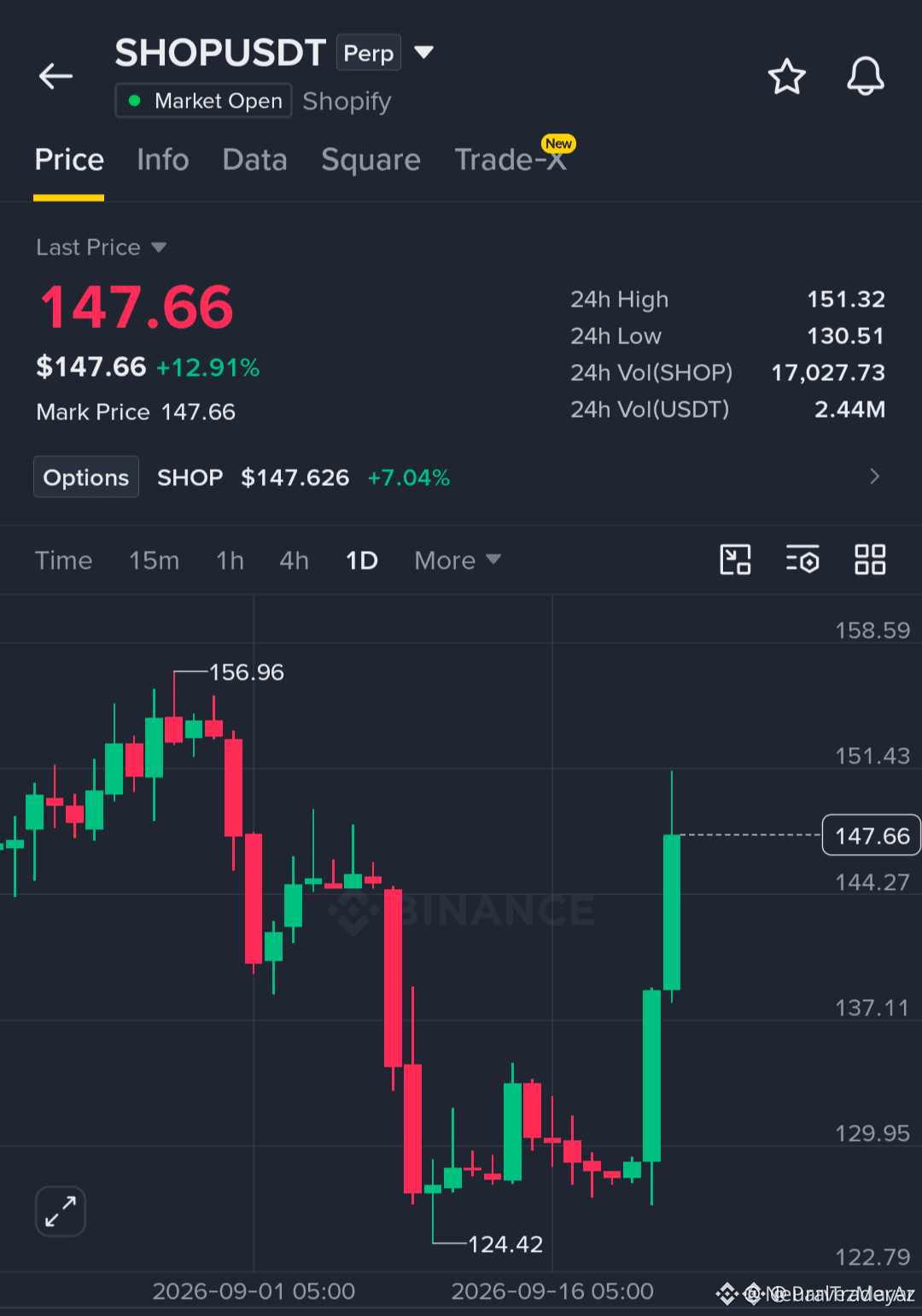
🚨 $SHOP RECLAIMS KEY LIQUIDITY AS META AI INTEGRATION DRIVES ACCELERATED BREAKOUT 💥
Entry: 144.00 ⚡
Target: 156.00 🚀
Institutional order flow swept $SHOP from the $124.42 demand floor straight into the $151.32 supply overhang following Meta’s AI checkout integration catalyst. 📊 The perpetual contract expanded over +13%, signaling heavy institutional positioning as AI-driven commerce turns passive user intent into direct transactional flow.
📌 Structural momentum remains net-bullish as long as price defends the $144.00–$145.00 demand retest zone. 💡 A clean hold above this structural pivot clears the pathway for smart money to test the critical $156.00–$157.00 liquidity pool above. 💬 Will institutional buyers push past $157 on this catalyst, or are you expecting a deeper sweep of the lower range? 👇
⚠️ Not financial advice. Always manage your risk. 🛡️
🏷️ #SHOP #Breakout #SmartMoney #Perpetuals
🔥 💎
17

·
--
From August 25 to now, CNN reports that global bond yields are surging. At the same time, CNBC data shows that the 30-year U.S. Treasury yield is at a high of 5.2%. As a high-growth technology stock, Shopify's valuation is extremely sensitive to long-term interest rates. Over the past 24 hours, $SHOP has fallen 3.61% to 146.99, which is a direct reflection of how macro interest-rate pressures are being transmitted.
Trading tag: #TradFi #链上美股 #SHOP
Where do you think this assessment is most likely to be wrong?
Trading tag: #TradFi #链上美股 #SHOP
Where do you think this assessment is most likely to be wrong?
11
·
--
$SHOP 24 hour drops 5.62%, ranking near the top among US tech stocks. This kind of drop is often linked to external policy risks, such as rising geopolitical tensions or increased expectations of tariffs, which directly hit global supply-chain costs.
The funding rate remains positive at 0.00055782, suggesting bullish sentiment has not dissipated. However, price and funding rate are diverging—external risks are suppressing the internal long thesis.
If geopolitical or trade-policy risks have not been resolved, institutions may continue to reduce positions in growth stocks like these, with capital possibly shifting toward domestic-demand or defensive sectors.
Trading tag: #TradFi #链上美股 #SHOP
Where do you think this assessment is most likely to be wrong?
9

$SHOP In the past 24 hours, it has fallen 4.86%. Current price: 140.15. The funding rate is 0.00045506, which is positive—longs are paying shorts. Open interest is 830.60. This position size is not low at the current price level.
When the price drops and the funding rate is positive, it’s a classic structure of longs getting trapped. Persistent positive funding means long sentiment is still hot, but the price hasn’t caught up—effectively, longs are paying rent while still losing money. On the political side, Trump’s headlines often hit market risk appetite. On-chain US stock derivatives react quickly to policy risk. If there are recent comments about trade protectionism or tighter regulation, SHOP as an e-commerce platform is likely to be affected by sentiment. In the current data, these two signals point in the same direction: longs are crowded and the price is weak; downside pressure is building.
What is the strongest counterargument? If US macro data suddenly turns better, or if Trump signals support for digital trade, the price could rebound quickly. But there’s no sign of that right now. The invalidation conditions are simple: if the price breaks above 145, or if the funding rate turns negative, my view is no longer valid. Breaking above 145 would mean longs are holding up against sell pressure. A turn to a negative funding rate would mean shorts are starting to crowd, and the direction could reverse.
The second-order effects are also clear. If longs are forced to liquidate, it will intensify sell pressure, and liquidity may flow toward the US dollar or stablecoins. After shorts take profit, some may exit—but as long as the trend doesn’t change, new shorts may step in to take over. The market is still ignoring political risk, which hasn’t been reflected in the price enough yet. If headlines hit again, the downside could deepen.
Action is clear. I will open a short position with 5x leverage. Stop-loss at 145.00 and take-profit at 130.00. Position size will be 8% of total capital. An aggressive approach: if the price breaks below 138, you can add up to 12%, but keep a close eye on the funding rate so it doesn’t spike. A more cautious approach is to wait for price confirmation of a break below 138 before entering—at this level, volatility may keep whipping back and forth. If you want to avoid: if the funding rate keeps falling to below 0.0002, that indicates short sentiment is heating up—then don’t touch it.
Anti-consensus view: Some people think that after a drop of nearly 5%, it should rebound; I disagree, because the funding rate is positive and the political shadow hasn’t cleared—longs haven’t fully flushed out yet.
Trading tag: #TradFi #链上美股 #SHOP
Where do you think this setup is most likely to be wrong?
62
·
--
$SHOP 24 hours dropped 7.331%, price is now 134.62. The funding rate has stalled at a high 0.064%—the longs are paying the shorts every 8 hours. Volume is 527,000 contracts, open interest is 1,177.8 contracts. For the on-chain US stock perpetual contract, these figures are laid out—near-term pressure looks pretty clear.
The old dog swept up this move; the key is the divergence between funding and price. As price falls, funding stays positive. According to the iron law of the funding rate, this looks like longs trapped and still adding with hard resistance. Funding of 0.064% means the longs are crowded. Shorts are collecting rent as prices drop. If the longs can’t hold and begin to liquidate, it can easily trigger a chain reaction of liquidations. Open interest of 1,177.8 contracts—this unit isn’t converted into USD, but when price moves down, these positions become potential sell pressure. Compared with the other coins in the same sector, the input doesn’t provide data for other assets, so we can’t determine whether $SHOP is leading the decline. But based on just these numbers, it’s sitting at a point where liquidity is tightening.
My view is that $SHOP will face continued short-term pressure. Trigger conditions: if the price breaks below 130, I’ll reduce my position. If the funding turns negative, I’ll reassess. The counter-consensus is that the market may think the 7% drop is already enough, but the old dog disagrees—because funding hasn’t turned negative, it means the longs haven’t accepted the exit yet. Any rebound is likely to be a dead-cat bounce. Position-wise, I’ve chosen to stay lightly loaded and observe from the sidelines; I won’t try to catch the bottom.
Where this call is most likely to be wrong: if funding turns negative quickly and forces shorts to cover, or if open interest suddenly spikes, indicating new longs are entering. If price climbs above 140 or if funding drops below 0, I’ll withdraw my bearish view.
Trading tags: #BinanceFutures #TradFi #USDⓈM #SHOP #SHOPUSDT $SHOP
18
·
--
$SHOP 24 hours drops 5.231%, funding rate stuck at 0.00097813, longs are still paying. This data is pretty eye-catching in on-chain US stock futures contracts—price is falling but funding is positive, a typical long-side trapped-and-adding position pattern. Open interest is 840.70. I don’t know how to compare size since I don’t have units, but the funding direction has an ironclad rule: positive funding means the long side is crowded, and liquidation risk piles upward.
I think the short-term structural risk is high. The trigger condition is price breaking below 139.51; I’ll clear out everything immediately.
Trade tag: #BinanceFutures #TradFi #USDⓈM #SHOP #SHOPUSDT $SHOP
I think the short-term structural risk is high. The trigger condition is price breaking below 139.51; I’ll clear out everything immediately.
Trade tag: #BinanceFutures #TradFi #USDⓈM #SHOP #SHOPUSDT $SHOP
10
·
--
$SHOP fell 3.6% over the past 24 hours, with a quoted price of 146.99. During the same period, US Treasury yields remained at elevated levels, with the 30-year yield hovering around 5.2%. The funding rate is zero; open interest is 740.47, indicating that the derivatives market is not making any extreme bets.
Elevated bond yields directly suppress the valuations of long-term growth stocks. As an e-commerce SaaS representative, $SHOP’s future cash flows are heavily discounted in a high-interest-rate environment. The current decline is driven more by macro interest-rate expectations rather than deterioration in the company’s own fundamentals.
Trading tag: #TradFi #链上美股 #SHOP
Where do you think this assessment is most likely to be wrong?
$SHOP fell 3.6% over the past 24 hours, with a quoted price of 146.99. During the same period, US Treasury yields remained at elevated levels, with the 30-year yield hovering around 5.2%. The funding rate is zero; open interest is 740.47, indicating that the derivatives market is not making any extreme bets.
Elevated bond yields directly suppress the valuations of long-term growth stocks. As an e-commerce SaaS representative, $SHOP ’s future cash flows are heavily discounted in a high-interest-rate environment. The current decline is driven more by macro interest-rate expectations rather than deterioration in the company’s own fundamentals.
Trading tag: #TradFi #链上美股 #SHOP
Where do you think this assessment is most likely to be wrong?
12
·
--
$SHOP fell 4.17% over the past 24 hours to 145.69, with its contract funding rate at -0.00116727. This combination points to a clear macro transmission chain being pushed down onto this underlying.
With the current price moving lower, the funding rate is negative. According to the rule for interpreting funding rate direction, a rate below zero means that shorts are paying fees to longs. This is a structure where short positions are crowded and bearish sentiment is overly concentrated. Price declines combined with a negative funding rate indicate that the market is being pushed down under a consensus dominated by shorts. This isn’t longs actively cutting positions—it’s shorts applying continuous pressure.
Why does this short crowding happen? The news layer provides the macro backdrop. A Schwab report says the market is being shaped by persistent inflation, rising long-term U.S. Treasury yields, fiscal concerns, and trade tensions. CNN directly mentioned that “global bond yields are surging.” These macro signals point to the same logic: financing costs are moving higher. The U.S. benchmark rate is currently 3.75%, and the two-year Treasury yield is near 4.19%. For rate-sensitive assets like $SHOP, a higher risk-free rate directly reduces the present value of its future cash flows, dragging down valuation. As a result, funds flow out of these assets, with part of that capital moving into short positions, increasing short crowding, which ultimately shows up as a negative funding rate.
The strongest counter-evidence lies in a reversal of the inflation narrative. Earlier reporting from The New York Times mentioned that July inflation was moderate. If subsequent CPI or PCE data unexpectedly continues to come in below expectations, it would directly challenge the market consensus that rates will stay elevated. At that point, Treasury yields could fall, macro pressure could ease, and the accumulated shorts would become the most fragile fuel—triggering an upward squeeze. What data would overturn my view? If the next inflation report shows core inflation accelerating month over month, and statements from Fed officials further reinforce a hawkish stance, then the current macro logic suppressing growth stocks would be solidified—or even strengthened.
A second-order effect is that if macro data does not turn, these shorts under the bearish consensus will enjoy a longer period of negative funding-rate returns (paid by longs), but the continued drift lower could also build the risk of a technical rebound. Conversely, if any macro data shows marginal improvement, the tightly concentrated shorts could unwind and rebound aggressively.
The condition under which my view is invalid is: the price rebounds quickly to above 145.69, and the contract funding rate simultaneously turns positive.
Trading tag: #TradFi #链上美股 #SHOP
Where do you think this set of judgments is most likely to be wrong?
$SHOP fell 4.17% over the past 24 hours to 145.69, with its contract funding rate at -0.00116727. This combination points to a clear macro transmission chain being pushed down onto this underlying.
With the current price moving lower, the funding rate is negative. According to the rule for interpreting funding rate direction, a rate below zero means that shorts are paying fees to longs. This is a structure where short positions are crowded and bearish sentiment is overly concentrated. Price declines combined with a negative funding rate indicate that the market is being pushed down under a consensus dominated by shorts. This isn’t longs actively cutting positions—it’s shorts applying continuous pressure.
Why does this short crowding happen? The news layer provides the macro backdrop. A Schwab report says the market is being shaped by persistent inflation, rising long-term U.S. Treasury yields, fiscal concerns, and trade tensions. CNN directly mentioned that “global bond yields are surging.” These macro signals point to the same logic: financing costs are moving higher. The U.S. benchmark rate is currently 3.75%, and the two-year Treasury yield is near 4.19%. For rate-sensitive assets like $SHOP , a higher risk-free rate directly reduces the present value of its future cash flows, dragging down valuation. As a result, funds flow out of these assets, with part of that capital moving into short positions, increasing short crowding, which ultimately shows up as a negative funding rate.
The strongest counter-evidence lies in a reversal of the inflation narrative. Earlier reporting from The New York Times mentioned that July inflation was moderate. If subsequent CPI or PCE data unexpectedly continues to come in below expectations, it would directly challenge the market consensus that rates will stay elevated. At that point, Treasury yields could fall, macro pressure could ease, and the accumulated shorts would become the most fragile fuel—triggering an upward squeeze. What data would overturn my view? If the next inflation report shows core inflation accelerating month over month, and statements from Fed officials further reinforce a hawkish stance, then the current macro logic suppressing growth stocks would be solidified—or even strengthened.
A second-order effect is that if macro data does not turn, these shorts under the bearish consensus will enjoy a longer period of negative funding-rate returns (paid by longs), but the continued drift lower could also build the risk of a technical rebound. Conversely, if any macro data shows marginal improvement, the tightly concentrated shorts could unwind and rebound aggressively.
The condition under which my view is invalid is: the price rebounds quickly to above 145.69, and the contract funding rate simultaneously turns positive.
Trading tag: #TradFi #链上美股 #SHOP
Where do you think this set of judgments is most likely to be wrong?
18

·
--
$SHOP fell 2.475% today to around 145, with open interest at 836 and the funding rate back to zero. When geopolitical risks emerge, tech stocks are the first to be sold off; a funding rate of zero means neither longs nor shorts are really taking action, just sitting still. This is not panic selling, but a withdrawal of liquidity.
The price has already broken the previous low, but without volume, which means it is grinding lower. If tensions in the Middle East heat up again, contracts with this kind of poor liquidity are the easiest to be used as cash machines. Open interest has not expanded, which means it has not yet reached the stage of panic-driven exit; bulls may still be waiting for a rebound.
Trading tag: #TradFi #链上美股 #SHOP
Where do you think this line of reasoning is most likely to be wrong?
2
Log in to explore more content
Join global crypto users on Binance Square
⚡️ Get latest and useful information about crypto.
💬 Trusted by the world’s largest crypto exchange.
👍 Discover real insights from verified creators.
Email / Phone number
Trending Topics
1
#CanMicrosoftDeliverOnAI
18,524 views
376 Discussing
2
#CanGoogleDefindItsCore
10,516 views
291 Discussing
3
#FOMCWatch
9M views
27,516 Discussing
4
#EthereumDropsBelow$2300
7,885 views
129 Discussing
5
#BitcoinSlipsBelow$80KAgain
22,491 views
98 Discussing
6
#ThailandLaunchesWORPTStablecoinToQRPaymentApp
41,980 views
652 Discussing
7
#StrategySkipsBitcoinPurchasesSpends$205MOnSTRCBuybacks
9,122 views
89 Discussing
8
#BitmineAdds10452ETH
82,151 views
1,032 Discussing
9
#SouthKoreaConsidersEducationTaxOnCryptoExchanges
43,543 views
757 Discussing
10
#OCCUrgesCommunityBanksToEnterStablecoinPayments
33,732 views
533 Discussing