
#payfi
payfi
260,166 views
1,587 Discussing
Hot
Latest


·
--
$PID Today I got on CMC and CG.
This project is building the payment infrastructure. It doesn’t touch your money, and everyday purchase receipts can also help you earn points.
The number of people who have scanned receipts is approaching one million, and our transaction partners mentioned $750 million in deal value.
Don’t just take my word for it—check the official website yourself.
#polyflow #PayFi #PID
@Polyflow_PayFi
$PID Today I got on CMC and CG.
This project is building the payment infrastructure. It doesn’t touch your money, and everyday purchase receipts can also help you earn points.
The number of people who have scanned receipts is approaching one million, and our transaction partners mentioned $750 million in deal value.
Don’t just take my word for it—check the official website yourself.
#polyflow #PayFi #PID
@Polyflow_PayFi
This project is building the payment infrastructure. It doesn’t touch your money, and everyday purchase receipts can also help you earn points.
The number of people who have scanned receipts is approaching one million, and our transaction partners mentioned $750 million in deal value.
Don’t just take my word for it—check the official website yourself.
#polyflow #PayFi #PID
@Polyflow_PayFi

1
171

·
--
It took a bit of time to go through all the materials from @Polyflow_PayFi, and it finally feels like PayFi is no longer just a slogan.
When many people hear about crypto payments, their first reaction is: scan a QR code with a stablecoin and make a transfer. But what truly blocks large-scale adoption is never the question of “whether you can pay.” It’s the chain of issues right after that—who can see the money, whether it’s compliant, whether cross-border settlement needs to wait for days, and once the transaction is done, the funds disappear. You can’t build credit, and you don’t generate any returns.
PolyFlow’s approach is pretty clear: split a payment into two separate streams.
PID manages identity and information, using zero-knowledge proofs for “light” compliance—so privacy and regulation don’t have to be an either/or choice;
PLP manages liquidity and settlement, with funds moving through smart contracts, and the platform never touches the money.
By separating the information flow and the funds flow, custodial risk is reduced first. Then cross-border settlement has a chance to be achieved in T+0, and costs can be pushed below traditional rails.
So it doesn’t feel like just another wallet. More like building infrastructure for payments. Above that, the longer product stack: Card connects on-chain assets to offline spending; Scan to Earn turns receipts into on-chain records. Things like eSIM, salary payouts, and business collections can all plug into the same settlement system. The recent app rollout also supports everything—fiat, stablecoins, transfers, and spending—collected into a single account, so when you use it, you don’t have to first think about which chain your money is on or which wallet holds it.
What I care about most is the Scan to Earn part. In daily life, buy a coffee or book a flight—upload the proof, and the act of spending itself starts to accumulate into credit and points. After the TGE, those can be redeemed into platform tokens. Payments stop being a one-time outflow and become your own on-chain spending history. In the materials, they compare it to Web3’s “ZhiMa Credit” (Sesame Credit), and that metaphor is actually quite accurate.
Whether PayFi really works ultimately isn’t about whether the whitepaper looks good—it’s about whether there are people actually paying, actually scanning, and writing real spending onto the chain. With the direction right, the rest is to walk the path all the way through.
#polyflow #PayFi
It took a bit of time to go through all the materials from @Polyflow_PayFi, and it finally feels like PayFi is no longer just a slogan.
When many people hear about crypto payments, their first reaction is: scan a QR code with a stablecoin and make a transfer. But what truly blocks large-scale adoption is never the question of “whether you can pay.” It’s the chain of issues right after that—who can see the money, whether it’s compliant, whether cross-border settlement needs to wait for days, and once the transaction is done, the funds disappear. You can’t build credit, and you don’t generate any returns.
PolyFlow’s approach is pretty clear: split a payment into two separate streams.
PID manages identity and information, using zero-knowledge proofs for “light” compliance—so privacy and regulation don’t have to be an either/or choice;
PLP manages liquidity and settlement, with funds moving through smart contracts, and the platform never touches the money.
By separating the information flow and the funds flow, custodial risk is reduced first. Then cross-border settlement has a chance to be achieved in T+0, and costs can be pushed below traditional rails.
So it doesn’t feel like just another wallet. More like building infrastructure for payments. Above that, the longer product stack: Card connects on-chain assets to offline spending; Scan to Earn turns receipts into on-chain records. Things like eSIM, salary payouts, and business collections can all plug into the same settlement system. The recent app rollout also supports everything—fiat, stablecoins, transfers, and spending—collected into a single account, so when you use it, you don’t have to first think about which chain your money is on or which wallet holds it.
What I care about most is the Scan to Earn part. In daily life, buy a coffee or book a flight—upload the proof, and the act of spending itself starts to accumulate into credit and points. After the TGE, those can be redeemed into platform tokens. Payments stop being a one-time outflow and become your own on-chain spending history. In the materials, they compare it to Web3’s “ZhiMa Credit” (Sesame Credit), and that metaphor is actually quite accurate.
Whether PayFi really works ultimately isn’t about whether the whitepaper looks good—it’s about whether there are people actually paying, actually scanning, and writing real spending onto the chain. With the direction right, the rest is to walk the path all the way through.
#polyflow #PayFi
When many people hear about crypto payments, their first reaction is: scan a QR code with a stablecoin and make a transfer. But what truly blocks large-scale adoption is never the question of “whether you can pay.” It’s the chain of issues right after that—who can see the money, whether it’s compliant, whether cross-border settlement needs to wait for days, and once the transaction is done, the funds disappear. You can’t build credit, and you don’t generate any returns.
PolyFlow’s approach is pretty clear: split a payment into two separate streams.
PID manages identity and information, using zero-knowledge proofs for “light” compliance—so privacy and regulation don’t have to be an either/or choice;
PLP manages liquidity and settlement, with funds moving through smart contracts, and the platform never touches the money.
By separating the information flow and the funds flow, custodial risk is reduced first. Then cross-border settlement has a chance to be achieved in T+0, and costs can be pushed below traditional rails.
So it doesn’t feel like just another wallet. More like building infrastructure for payments. Above that, the longer product stack: Card connects on-chain assets to offline spending; Scan to Earn turns receipts into on-chain records. Things like eSIM, salary payouts, and business collections can all plug into the same settlement system. The recent app rollout also supports everything—fiat, stablecoins, transfers, and spending—collected into a single account, so when you use it, you don’t have to first think about which chain your money is on or which wallet holds it.
What I care about most is the Scan to Earn part. In daily life, buy a coffee or book a flight—upload the proof, and the act of spending itself starts to accumulate into credit and points. After the TGE, those can be redeemed into platform tokens. Payments stop being a one-time outflow and become your own on-chain spending history. In the materials, they compare it to Web3’s “ZhiMa Credit” (Sesame Credit), and that metaphor is actually quite accurate.
Whether PayFi really works ultimately isn’t about whether the whitepaper looks good—it’s about whether there are people actually paying, actually scanning, and writing real spending onto the chain. With the direction right, the rest is to walk the path all the way through.
#polyflow #PayFi

192

·
--
PayFi—lately I’ve really been getting into it
I’ve been seeing PayFi’s whole lane a bit too often lately. At first I didn’t really take it seriously. I ended up just following the trail and watching through, and it turns out this thing probably isn’t just a pure hype concept.
Recently, the one I’ve been paying more attention to is @Polyflow_PayFi.
To put it simply, the project is actually quite straightforward.
Sure, I’ll look at how technically strong it is and how new the concepts are—but in the end it still comes down to one key question:
When can the money on-chain truly be taken out to spend?
One of Crypto’s biggest problems right now is that everyone is especially good at getting money to “mess around” on-chain.
Staking, lending, trading, mining—there’s one gimmick after another.
But if you actually want to take USDT and use it to consume in the real world, make cross-border transfers, or pay salaries—then you’ll find there’s still a whole bunch of steps in between.
Wallets, networks, Gas, payment rails…
At this point, most normal people would probably just close the page.
So projects like PolyFlow that enter from payment use cases, for me, actually feel pretty interesting.
Identity, funds, spending, cross-border transfers, payroll—sounds less “sexy,” but they’re exactly the most urgent needs in real life.
And later on there are also Card, eSIM, and AI Agent payments.
Especially AI Agent payments!
AI finds products, calculates prices, and completes the payment on its own.
You don’t even need to know which chain it’s running on.
This is how I understand PayFi.
Not constantly telling you “blockchain changes the world,” but hiding the blockchain behind the scenes so you don’t even feel it’s there.
It’s like paying by QR code now—who pauses to study the payment protocol when they’re the one paying?
The most useful Crypto is probably the kind that lets you forget you’re even using Crypto.
So my attitude toward PolyFlow right now is pretty simple:
No rush to hype it, and no rush to reach conclusions.
I’ll just keep watching to see if it can really make these things work.
If payments, cross-border transfers, Card, and then future AI Agent payments really get run end-to-end one by one, then this story won’t just be “yet another PayFi project.”
At least for now, this is the direction I’m most willing to spend time researching.
@Square-Creator-cf6856467
#PayFi #PolyFlow #Web3
PayFi—lately I’ve really been getting into it
I’ve been seeing PayFi’s whole lane a bit too often lately. At first I didn’t really take it seriously. I ended up just following the trail and watching through, and it turns out this thing probably isn’t just a pure hype concept.
Recently, the one I’ve been paying more attention to is @Polyflow_PayFi.
To put it simply, the project is actually quite straightforward.
Sure, I’ll look at how technically strong it is and how new the concepts are—but in the end it still comes down to one key question:
When can the money on-chain truly be taken out to spend?
One of Crypto’s biggest problems right now is that everyone is especially good at getting money to “mess around” on-chain.
Staking, lending, trading, mining—there’s one gimmick after another.
But if you actually want to take USDT and use it to consume in the real world, make cross-border transfers, or pay salaries—then you’ll find there’s still a whole bunch of steps in between.
Wallets, networks, Gas, payment rails…
At this point, most normal people would probably just close the page.
So projects like PolyFlow that enter from payment use cases, for me, actually feel pretty interesting.
Identity, funds, spending, cross-border transfers, payroll—sounds less “sexy,” but they’re exactly the most urgent needs in real life.
And later on there are also Card, eSIM, and AI Agent payments.
Especially AI Agent payments!
AI finds products, calculates prices, and completes the payment on its own.
You don’t even need to know which chain it’s running on.
This is how I understand PayFi.
Not constantly telling you “blockchain changes the world,” but hiding the blockchain behind the scenes so you don’t even feel it’s there.
It’s like paying by QR code now—who pauses to study the payment protocol when they’re the one paying?
The most useful Crypto is probably the kind that lets you forget you’re even using Crypto.
So my attitude toward PolyFlow right now is pretty simple:
No rush to hype it, and no rush to reach conclusions.
I’ll just keep watching to see if it can really make these things work.
If payments, cross-border transfers, Card, and then future AI Agent payments really get run end-to-end one by one, then this story won’t just be “yet another PayFi project.”
At least for now, this is the direction I’m most willing to spend time researching.
@polyflow_PayFi
#PayFi #PolyFlow #Web3
I’ve been seeing PayFi’s whole lane a bit too often lately. At first I didn’t really take it seriously. I ended up just following the trail and watching through, and it turns out this thing probably isn’t just a pure hype concept.
Recently, the one I’ve been paying more attention to is @Polyflow_PayFi.
To put it simply, the project is actually quite straightforward.
Sure, I’ll look at how technically strong it is and how new the concepts are—but in the end it still comes down to one key question:
When can the money on-chain truly be taken out to spend?
One of Crypto’s biggest problems right now is that everyone is especially good at getting money to “mess around” on-chain.
Staking, lending, trading, mining—there’s one gimmick after another.
But if you actually want to take USDT and use it to consume in the real world, make cross-border transfers, or pay salaries—then you’ll find there’s still a whole bunch of steps in between.
Wallets, networks, Gas, payment rails…
At this point, most normal people would probably just close the page.
So projects like PolyFlow that enter from payment use cases, for me, actually feel pretty interesting.
Identity, funds, spending, cross-border transfers, payroll—sounds less “sexy,” but they’re exactly the most urgent needs in real life.
And later on there are also Card, eSIM, and AI Agent payments.
Especially AI Agent payments!
AI finds products, calculates prices, and completes the payment on its own.
You don’t even need to know which chain it’s running on.
This is how I understand PayFi.
Not constantly telling you “blockchain changes the world,” but hiding the blockchain behind the scenes so you don’t even feel it’s there.
It’s like paying by QR code now—who pauses to study the payment protocol when they’re the one paying?
The most useful Crypto is probably the kind that lets you forget you’re even using Crypto.
So my attitude toward PolyFlow right now is pretty simple:
No rush to hype it, and no rush to reach conclusions.
I’ll just keep watching to see if it can really make these things work.
If payments, cross-border transfers, Card, and then future AI Agent payments really get run end-to-end one by one, then this story won’t just be “yet another PayFi project.”
At least for now, this is the direction I’m most willing to spend time researching.
@polyflow_PayFi
#PayFi #PolyFlow #Web3

风中浪客:
PayFi确实比纯炒概念强点,但关键还是看能不能真落地,别又是个画饼的。等Polyflow真能随时提钱出来再说吧,我先观望。
1
339

·
--
Amid the current wave of RWA, everyone is talking about the settlement volume of stablecoins in the tens of trillions—but have you ever wondered: after this money is paid, where does it go?
Today’s crypto payments are like withdrawing cash with a card—once the funds flow through, there’s no trace left behind.
What @Polyflow_PayFi is doing is turning transaction flows into your on-chain credit assets.
A simple breakdown of the two things it handles:
1️⃣ PID: essentially your “Web3 compliance passport + credit card.” Privacy is protected with ZK, but your spending behavior helps you accumulate on-chain credit.
2️⃣ PLP: essentially an “on-chain Yu’e Bao + liquidity pool.” Payment funds from merchants and users circulate within the pool, and they can also enjoy DeFi-derived yield.
Traditional payments settle one transaction at a time; with PolyFlow, every payment is building financial leverage for you.
The team’s core is made up of veterans from cross-border payments. Founder Raymond Qu, who is behind Geoswift, is the driving force behind this as well. When it comes to compliance and capital pools, only an established team can stay reliable.
If in the future blockchains no longer need to do “Web3 for the sake of Web3,” and real-world spending naturally becomes a ticket into on-chain finance, that’s the charm of PayFi.
To learn more about the project, follow the official Twitter:
@Polyflow_PayFi
#polyflow #PayFi #Web3支付
Amid the current wave of RWA, everyone is talking about the settlement volume of stablecoins in the tens of trillions—but have you ever wondered: after this money is paid, where does it go?
Today’s crypto payments are like withdrawing cash with a card—once the funds flow through, there’s no trace left behind.
What @Polyflow_PayFi is doing is turning transaction flows into your on-chain credit assets.
A simple breakdown of the two things it handles:
1️⃣ PID: essentially your “Web3 compliance passport + credit card.” Privacy is protected with ZK, but your spending behavior helps you accumulate on-chain credit.
2️⃣ PLP: essentially an “on-chain Yu’e Bao + liquidity pool.” Payment funds from merchants and users circulate within the pool, and they can also enjoy DeFi-derived yield.
Traditional payments settle one transaction at a time; with PolyFlow, every payment is building financial leverage for you.
The team’s core is made up of veterans from cross-border payments. Founder Raymond Qu, who is behind Geoswift, is the driving force behind this as well. When it comes to compliance and capital pools, only an established team can stay reliable.
If in the future blockchains no longer need to do “Web3 for the sake of Web3,” and real-world spending naturally becomes a ticket into on-chain finance, that’s the charm of PayFi.
To learn more about the project, follow the official Twitter:
@Polyflow_PayFi
#polyflow #PayFi #Web3支付
Today’s crypto payments are like withdrawing cash with a card—once the funds flow through, there’s no trace left behind.
What @Polyflow_PayFi is doing is turning transaction flows into your on-chain credit assets.
A simple breakdown of the two things it handles:
1️⃣ PID: essentially your “Web3 compliance passport + credit card.” Privacy is protected with ZK, but your spending behavior helps you accumulate on-chain credit.
2️⃣ PLP: essentially an “on-chain Yu’e Bao + liquidity pool.” Payment funds from merchants and users circulate within the pool, and they can also enjoy DeFi-derived yield.
Traditional payments settle one transaction at a time; with PolyFlow, every payment is building financial leverage for you.
The team’s core is made up of veterans from cross-border payments. Founder Raymond Qu, who is behind Geoswift, is the driving force behind this as well. When it comes to compliance and capital pools, only an established team can stay reliable.
If in the future blockchains no longer need to do “Web3 for the sake of Web3,” and real-world spending naturally becomes a ticket into on-chain finance, that’s the charm of PayFi.
To learn more about the project, follow the official Twitter:
@Polyflow_PayFi
#polyflow #PayFi #Web3支付

1
202

·
--
🌐 Conflux ($CFX) Network Upgrades & PayFi Integration Spotlight! ⚡
As cross-border payment utility and compliance-focused Layer-1 architectures continue to advance, Conflux ($CFX) remains a unique bridge connecting Asian and global crypto markets.
Key highlights keeping $CFX in focus:
* v3.1.0 Hard Fork Upgrade: The network recently executed a major mandatory upgrade incorporating vital Conflux Improvement Proposals (CIPs) to boost Ethereum Virtual Machine (EVM) compatibility, streamline developer tooling, and refine security architecture.
* Expanding PayFi Ecosystem: Growth initiatives like the Infini Card integration on Conflux eSpace allow users to bridge stablecoins while utilizing CFX for transaction mechanics, pushing real-world payment utility.
* Institutional Staking & Custody: Broadening ecosystem support from major staking providers and institutional custody solutions continues to improve network security and reduce liquid token circulating pressure.
Are you tracking Conflux's recent protocol upgrades or exploring its growing PayFi applications? Share your thoughts below! 👇
#CFX #Conflux #PayFi #Layer1
🌐 Conflux ($CFX ) Network Upgrades & PayFi Integration Spotlight! ⚡
As cross-border payment utility and compliance-focused Layer-1 architectures continue to advance, Conflux ($CFX ) remains a unique bridge connecting Asian and global crypto markets.
Key highlights keeping $CFX in focus:
* v3.1.0 Hard Fork Upgrade: The network recently executed a major mandatory upgrade incorporating vital Conflux Improvement Proposals (CIPs) to boost Ethereum Virtual Machine (EVM) compatibility, streamline developer tooling, and refine security architecture.
* Expanding PayFi Ecosystem: Growth initiatives like the Infini Card integration on Conflux eSpace allow users to bridge stablecoins while utilizing CFX for transaction mechanics, pushing real-world payment utility.
* Institutional Staking & Custody: Broadening ecosystem support from major staking providers and institutional custody solutions continues to improve network security and reduce liquid token circulating pressure.
Are you tracking Conflux's recent protocol upgrades or exploring its growing PayFi applications? Share your thoughts below! 👇
#CFX #Conflux #PayFi #Layer1
As cross-border payment utility and compliance-focused Layer-1 architectures continue to advance, Conflux ($CFX ) remains a unique bridge connecting Asian and global crypto markets.
Key highlights keeping $CFX in focus:
* v3.1.0 Hard Fork Upgrade: The network recently executed a major mandatory upgrade incorporating vital Conflux Improvement Proposals (CIPs) to boost Ethereum Virtual Machine (EVM) compatibility, streamline developer tooling, and refine security architecture.
* Expanding PayFi Ecosystem: Growth initiatives like the Infini Card integration on Conflux eSpace allow users to bridge stablecoins while utilizing CFX for transaction mechanics, pushing real-world payment utility.
* Institutional Staking & Custody: Broadening ecosystem support from major staking providers and institutional custody solutions continues to improve network security and reduce liquid token circulating pressure.
Are you tracking Conflux's recent protocol upgrades or exploring its growing PayFi applications? Share your thoughts below! 👇
#CFX #Conflux #PayFi #Layer1
2
314

·
--
Bullish
📊 Opinion poll about HUMA ($HUMA)
The Huma Finance project focuses on PayFi and linking finance and global payments with the blockchain, with clear growth in transaction volume. But do you think this growth will reflect on the performance of $HUMA in the future?
🔥 In your opinion, where could HUMA go in the next stage?
🔹 🚀 Strong uptrend
🔹 📈 Gradual increase
🔹 ↔️ Sideways movement
🔹 📉 Correction and decline
Share your opinion and the reason you chose it 👇
#HUMA #HumaFinance #PayFi
$HUMA
{spot}(HUMAUSDT)
😍
📊 Opinion poll about HUMA ($HUMA )
The Huma Finance project focuses on PayFi and linking finance and global payments with the blockchain, with clear growth in transaction volume. But do you think this growth will reflect on the performance of $HUMA in the future?
🔥 In your opinion, where could HUMA go in the next stage?
🔹 🚀 Strong uptrend
🔹 📈 Gradual increase
🔹 ↔️ Sideways movement
🔹 📉 Correction and decline
Share your opinion and the reason you chose it 👇
#HUMA #HumaFinance #PayFi
$HUMA
😍
The Huma Finance project focuses on PayFi and linking finance and global payments with the blockchain, with clear growth in transaction volume. But do you think this growth will reflect on the performance of $HUMA in the future?
🔥 In your opinion, where could HUMA go in the next stage?
🔹 🚀 Strong uptrend
🔹 📈 Gradual increase
🔹 ↔️ Sideways movement
🔹 📉 Correction and decline
Share your opinion and the reason you chose it 👇
#HUMA #HumaFinance #PayFi
$HUMA
😍

66

·
--
TTITLE: WHY WATCHING $HUMA - PayFi Could Be The Next Big Narrative 🚀
Post body:
I've been researching $HUMA (Huma Finance) for the last 2 weeks and here's my honest breakdown:
Huma Finance is building PayFi - Payment Financing. The idea is to bring real world payment volume on-chain. Unlike meme coins, they have actual partnerships and revenue.
What I like:
1. Real use case - cross border payments need speed
2. Team is doxxed and active on Binance Square
3. HUMA recently listed with strong volume, not just hype
Risks: New token = high volatility. The chart for HUMA shows pumps and dumps. Don't go all in.
My plan: I will not FOMO at green candle. Waiting for pullback, then DCA small. Also holding $BTC and $ETH as core.
This is NOT financial advice - just my journal as a Kenyan trader learning.
Question for you: Do you think PayFi can beat DePIN and AI as 2025 narrative? Let's discuss in comments.
$HUMA $BTC $SOL
#HUMA #PayFi #Write2Earn
{spot}(HUMAUSDT)
TTITLE: WHY WATCHING $HUMA - PayFi Could Be The Next Big Narrative 🚀
Post body:
I've been researching $HUMA (Huma Finance) for the last 2 weeks and here's my honest breakdown:
Huma Finance is building PayFi - Payment Financing. The idea is to bring real world payment volume on-chain. Unlike meme coins, they have actual partnerships and revenue.
What I like:
1. Real use case - cross border payments need speed
2. Team is doxxed and active on Binance Square
3. HUMA recently listed with strong volume, not just hype
Risks: New token = high volatility. The chart for HUMA shows pumps and dumps. Don't go all in.
My plan: I will not FOMO at green candle. Waiting for pullback, then DCA small. Also holding $BTC and $ETH as core.
This is NOT financial advice - just my journal as a Kenyan trader learning.
Question for you: Do you think PayFi can beat DePIN and AI as 2025 narrative? Let's discuss in comments.
$HUMA $BTC $SOL
#HUMA #PayFi #Write2Earn
Post body:
I've been researching $HUMA (Huma Finance) for the last 2 weeks and here's my honest breakdown:
Huma Finance is building PayFi - Payment Financing. The idea is to bring real world payment volume on-chain. Unlike meme coins, they have actual partnerships and revenue.
What I like:
1. Real use case - cross border payments need speed
2. Team is doxxed and active on Binance Square
3. HUMA recently listed with strong volume, not just hype
Risks: New token = high volatility. The chart for HUMA shows pumps and dumps. Don't go all in.
My plan: I will not FOMO at green candle. Waiting for pullback, then DCA small. Also holding $BTC and $ETH as core.
This is NOT financial advice - just my journal as a Kenyan trader learning.
Question for you: Do you think PayFi can beat DePIN and AI as 2025 narrative? Let's discuss in comments.
$HUMA $BTC $SOL
#HUMA #PayFi #Write2Earn
123

I started following the HUMA Finance project recently, and its unique idea caught my attention compared to other coins.
The project focuses on PayFi—meaning connecting real payments to decentralized finance, not just a coin for speculation.
Here are the points I liked:
1. Backed by major investors and available on strong networks
2. Has real use in payment transfers, not just a Meme
3. Its community is very active on X and Discord
Of course, any new project involves risk, and everyone should do their own research before taking any step.
What do you think about HUMA? Do you see it having a future in the payments space?
#HUMA #BinanceSquare #PayFi
#Binance
I started following the HUMA Finance project recently, and its unique idea caught my attention compared to other coins.
The project focuses on PayFi—meaning connecting real payments to decentralized finance, not just a coin for speculation.
Here are the points I liked:
1. Backed by major investors and available on strong networks
2. Has real use in payment transfers, not just a Meme
3. Its community is very active on X and Discord
Of course, any new project involves risk, and everyone should do their own research before taking any step.
What do you think about HUMA? Do you see it having a future in the payments space?
#HUMA #BinanceSquare #PayFi
#Binance
The project focuses on PayFi—meaning connecting real payments to decentralized finance, not just a coin for speculation.
Here are the points I liked:
1. Backed by major investors and available on strong networks
2. Has real use in payment transfers, not just a Meme
3. Its community is very active on X and Discord
Of course, any new project involves risk, and everyone should do their own research before taking any step.
What do you think about HUMA? Do you see it having a future in the payments space?
#HUMA #BinanceSquare #PayFi
#Binance

134

·
--
The Season 5 of #humafinance va full! 🚀🔥
It started in mid-June 2026 and is still active. The next airdrop is expected around September (about 3 months from the season start). They keep farming feathers/points by depositing in the app, staking $HUMA and $USDC
You’re earning real yield for real (no hype): around 9-12% APY on Classic En Prime up to 16-18%
Everything is backed by real-world payment flows; the protocol is growing strong.
More than $16B in transaction volume already, active liquidity above $230M, and $PST surpassed $200M in market cap, ranking in the top 3 of yield assets on Solana.
Also, it entered the top 10 platforms for tokenized credit.
This is real yield and points.
The ecosystem keeps growing with institutional adoption. If you’re in #PayFi , this season is still worth farming.
The Season 5 of #humafinance va full! 🚀🔥
It started in mid-June 2026 and is still active. The next airdrop is expected around September (about 3 months from the season start). They keep farming feathers/points by depositing in the app, staking $HUMA and $USDC
You’re earning real yield for real (no hype): around 9-12% APY on Classic En Prime up to 16-18%
Everything is backed by real-world payment flows; the protocol is growing strong.
More than $16B in transaction volume already, active liquidity above $230M, and $PST surpassed $200M in market cap, ranking in the top 3 of yield assets on Solana.
Also, it entered the top 10 platforms for tokenized credit.
This is real yield and points.
The ecosystem keeps growing with institutional adoption. If you’re in #PayFi , this season is still worth farming.
It started in mid-June 2026 and is still active. The next airdrop is expected around September (about 3 months from the season start). They keep farming feathers/points by depositing in the app, staking $HUMA and $USDC
You’re earning real yield for real (no hype): around 9-12% APY on Classic En Prime up to 16-18%
Everything is backed by real-world payment flows; the protocol is growing strong.
More than $16B in transaction volume already, active liquidity above $230M, and $PST surpassed $200M in market cap, ranking in the top 3 of yield assets on Solana.
Also, it entered the top 10 platforms for tokenized credit.
This is real yield and points.
The ecosystem keeps growing with institutional adoption. If you’re in #PayFi , this season is still worth farming.

2
206

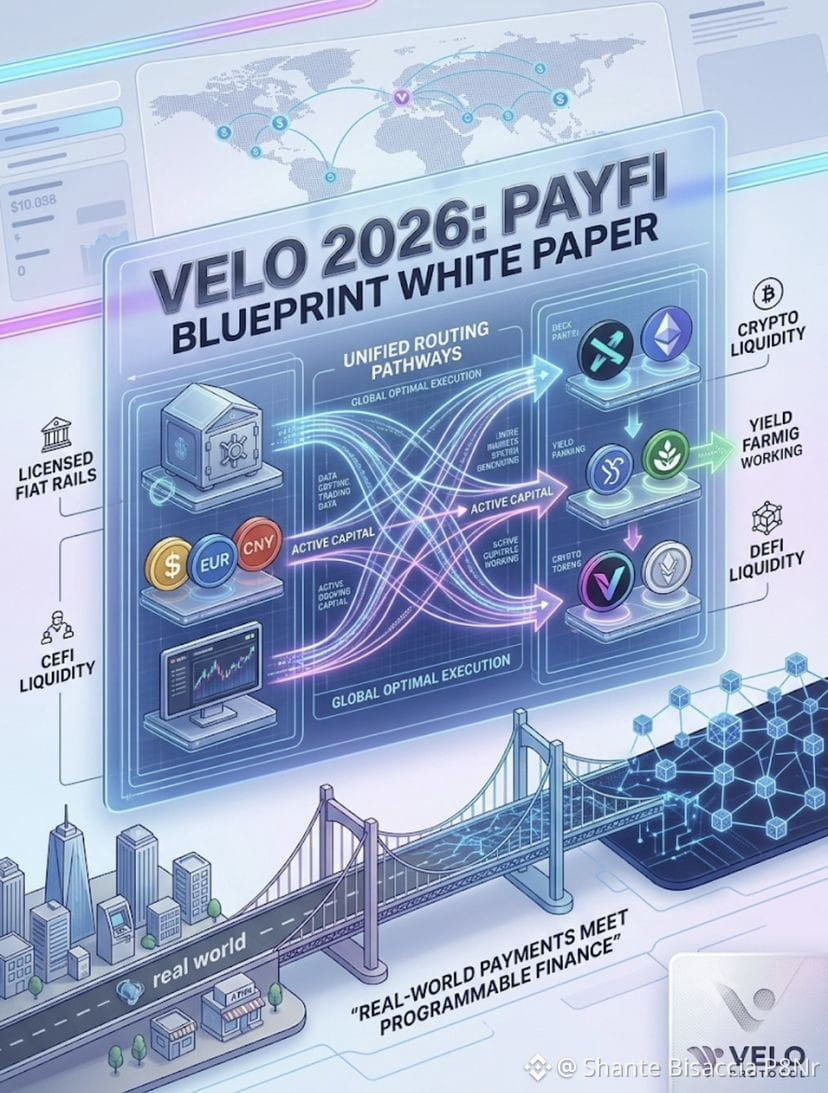
🚀 Velo Protocol presents its “2026 Blueprint Whitepaper”: What is the full-stack PayFi network?
Velo Protocol has shared the foundations of its strategic vision for the coming years through its new “Velo 2026 Blueprint Whitepaper.” The project strengthens the PayFi (Payment Finance) narrative, aiming to build a definitive bridge between traditional banking and the crypto ecosystem.
Key points:
• Fiat rails with License + Crypto Liquidity:
Velo focuses on combining regulated financial infrastructures with commercial licenses, along with native liquidity from the crypto ecosystem.
• Unifying CeFi + DeFi: Its ecosystem seeks to integrate liquidity from centralized finance (exchanges, OTC desks) and decentralized finance into a single execution layer.
• Global Intelligent Routing: Implementation of routing engines that automatically look for the best transaction path at the global level, optimizing costs, speed, and fees.
• Productive Capital (Time-Value of Money): Unlike traditional payments where funds remain idle or are held for days, Velo’s architecture allows capital in transit or treasury capital to generate returns while it works on the network.
Conclusion: Velo is strongly aiming at becoming a massive infrastructure layer for Asia and global markets, transforming cross-border payments from a slow and costly process into a real-time programmable system.
$VELO #PayFi #Web3 #CryptoNews
🚀 Velo Protocol presents its “2026 Blueprint Whitepaper”: What is the full-stack PayFi network?
Velo Protocol has shared the foundations of its strategic vision for the coming years through its new “Velo 2026 Blueprint Whitepaper.” The project strengthens the PayFi (Payment Finance) narrative, aiming to build a definitive bridge between traditional banking and the crypto ecosystem.
Key points:
• Fiat rails with License + Crypto Liquidity:
Velo focuses on combining regulated financial infrastructures with commercial licenses, along with native liquidity from the crypto ecosystem.
• Unifying CeFi + DeFi: Its ecosystem seeks to integrate liquidity from centralized finance (exchanges, OTC desks) and decentralized finance into a single execution layer.
• Global Intelligent Routing: Implementation of routing engines that automatically look for the best transaction path at the global level, optimizing costs, speed, and fees.
• Productive Capital (Time-Value of Money): Unlike traditional payments where funds remain idle or are held for days, Velo’s architecture allows capital in transit or treasury capital to generate returns while it works on the network.
Conclusion: Velo is strongly aiming at becoming a massive infrastructure layer for Asia and global markets, transforming cross-border payments from a slow and costly process into a real-time programmable system.
$VELO #PayFi #Web3 #CryptoNews
Velo Protocol has shared the foundations of its strategic vision for the coming years through its new “Velo 2026 Blueprint Whitepaper.” The project strengthens the PayFi (Payment Finance) narrative, aiming to build a definitive bridge between traditional banking and the crypto ecosystem.
Key points:
• Fiat rails with License + Crypto Liquidity:
Velo focuses on combining regulated financial infrastructures with commercial licenses, along with native liquidity from the crypto ecosystem.
• Unifying CeFi + DeFi: Its ecosystem seeks to integrate liquidity from centralized finance (exchanges, OTC desks) and decentralized finance into a single execution layer.
• Global Intelligent Routing: Implementation of routing engines that automatically look for the best transaction path at the global level, optimizing costs, speed, and fees.
• Productive Capital (Time-Value of Money): Unlike traditional payments where funds remain idle or are held for days, Velo’s architecture allows capital in transit or treasury capital to generate returns while it works on the network.
Conclusion: Velo is strongly aiming at becoming a massive infrastructure layer for Asia and global markets, transforming cross-border payments from a slow and costly process into a real-time programmable system.
$VELO #PayFi #Web3 #CryptoNews
1
78

·
--
Bullish
🚨 $XLM
{spot}(XLMUSDT)
SHORTS GETTING OBLITERATED — THIS IS NOT A DRILL 🚨
The battlefield is brutal right now… and the bears?
They’re getting wiped out in the tall grass. 🌿💀
is on a mission — and it’s not slowing down.
🔥 WHY XLM IS PUMPING (IT’S NOT RANDOM)
This move comes down to REAL USAGE — not hype.
💸 PayFi is kicking in hard:
MoneyGram is running stablecoin rails on Stellar
Zebec enabling instant payroll for businesses
👉 This is real-world adoption, not vaporware.
🏦 RWA TOKENIZATION EXPLODING:
Over $2 BILLION+ already tokenized
Giants like DTCC and Franklin Templeton are involved
👉 Translation: Institutional money is entering the game.
📊 MARKET STRUCTURE — THIS IS WHERE IT GETS SPICY
📈 Price = UP ONLY
🔴 Funding Rates = NEGATIVE
🐻 Bears = STILL SHORTING
💥 That combo = SHORT SQUEEZE FUEL
Every short opened right now?
👉 Basically paying the bulls to stay long.
🎯 TRADE SETUP (HIGH-CONVICTION)
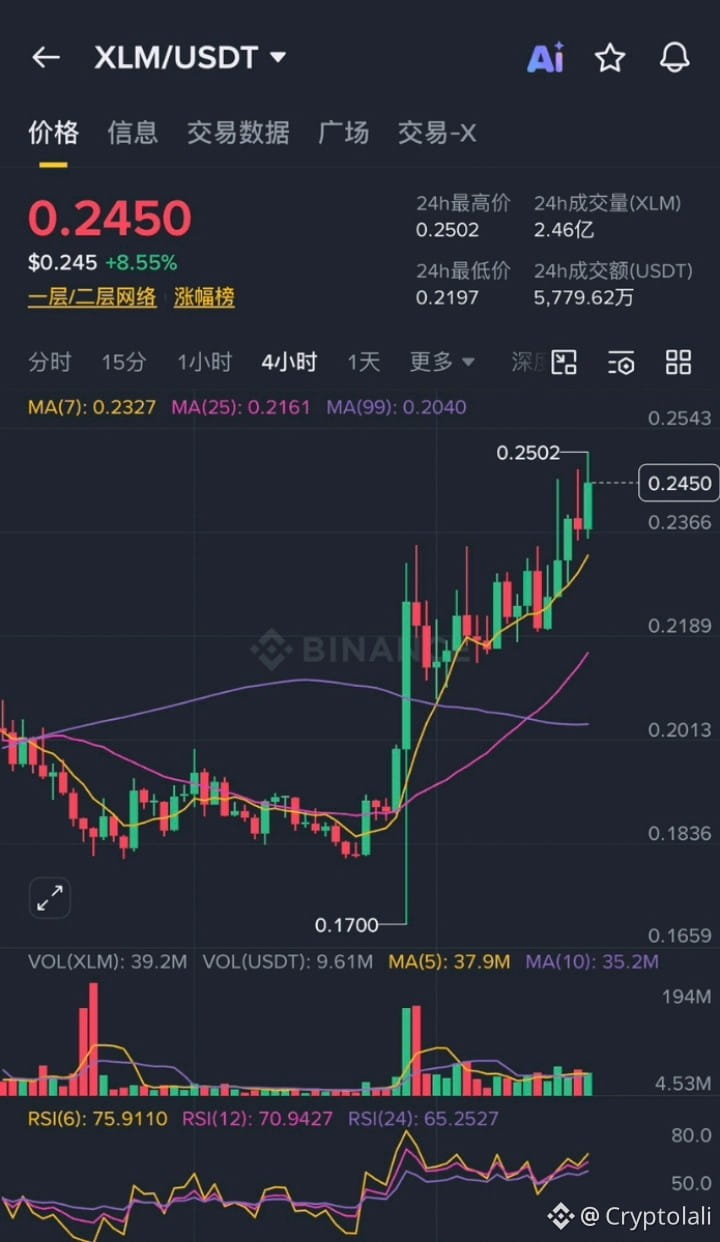
🟢 Entry Zone: $0.20 – $0.22 (buy the dip)
🎯 Target: $0.26
🛑 Stop Loss: $0.18
⚡ Current: ~$0.247 (+9.44%) — already heating up
⚠️ FINAL WARNING TO SHORTS
You’re not fighting hype…
You’re fighting adoption + institutions + liquidity dynamics
And right now?
👉 That’s a losing battle.
🚀 ISN’T JUST PUMPING — IT’S BEING USED
Still thinking about shorting?
Good luck… you’ll need it. 😏
#XLM #Altcoins #Stellar #RWA #PayFi
🚨 $XLM
SHORTS GETTING OBLITERATED — THIS IS NOT A DRILL 🚨
The battlefield is brutal right now… and the bears?
They’re getting wiped out in the tall grass. 🌿💀
is on a mission — and it’s not slowing down.
🔥 WHY XLM IS PUMPING (IT’S NOT RANDOM)
This move comes down to REAL USAGE — not hype.
💸 PayFi is kicking in hard:
MoneyGram is running stablecoin rails on Stellar
Zebec enabling instant payroll for businesses
👉 This is real-world adoption, not vaporware.
🏦 RWA TOKENIZATION EXPLODING:
Over $2 BILLION+ already tokenized
Giants like DTCC and Franklin Templeton are involved
👉 Translation: Institutional money is entering the game.
📊 MARKET STRUCTURE — THIS IS WHERE IT GETS SPICY
📈 Price = UP ONLY
🔴 Funding Rates = NEGATIVE
🐻 Bears = STILL SHORTING
💥 That combo = SHORT SQUEEZE FUEL
Every short opened right now?
👉 Basically paying the bulls to stay long.
🎯 TRADE SETUP (HIGH-CONVICTION)
🟢 Entry Zone: $0.20 – $0.22 (buy the dip)
🎯 Target: $0.26
🛑 Stop Loss: $0.18
⚡ Current: ~$0.247 (+9.44%) — already heating up
⚠️ FINAL WARNING TO SHORTS
You’re not fighting hype…
You’re fighting adoption + institutions + liquidity dynamics
And right now?
👉 That’s a losing battle.
🚀 ISN’T JUST PUMPING — IT’S BEING USED
Still thinking about shorting?
Good luck… you’ll need it. 😏
#XLM #Altcoins #Stellar #RWA #PayFi
SHORTS GETTING OBLITERATED — THIS IS NOT A DRILL 🚨
The battlefield is brutal right now… and the bears?
They’re getting wiped out in the tall grass. 🌿💀
is on a mission — and it’s not slowing down.
🔥 WHY XLM IS PUMPING (IT’S NOT RANDOM)
This move comes down to REAL USAGE — not hype.
💸 PayFi is kicking in hard:
MoneyGram is running stablecoin rails on Stellar
Zebec enabling instant payroll for businesses
👉 This is real-world adoption, not vaporware.
🏦 RWA TOKENIZATION EXPLODING:
Over $2 BILLION+ already tokenized
Giants like DTCC and Franklin Templeton are involved
👉 Translation: Institutional money is entering the game.
📊 MARKET STRUCTURE — THIS IS WHERE IT GETS SPICY
📈 Price = UP ONLY
🔴 Funding Rates = NEGATIVE
🐻 Bears = STILL SHORTING
💥 That combo = SHORT SQUEEZE FUEL
Every short opened right now?
👉 Basically paying the bulls to stay long.
🎯 TRADE SETUP (HIGH-CONVICTION)
🟢 Entry Zone: $0.20 – $0.22 (buy the dip)
🎯 Target: $0.26
🛑 Stop Loss: $0.18
⚡ Current: ~$0.247 (+9.44%) — already heating up
⚠️ FINAL WARNING TO SHORTS
You’re not fighting hype…
You’re fighting adoption + institutions + liquidity dynamics
And right now?
👉 That’s a losing battle.
🚀 ISN’T JUST PUMPING — IT’S BEING USED
Still thinking about shorting?
Good luck… you’ll need it. 😏
#XLM #Altcoins #Stellar #RWA #PayFi
113

·
--
Bullish
THE NEW ROUTES OF MONEY: VELO LABS KEEPS THE ASIAN FLOW
While Western spotlights get distracted by daily regulatory noise, one of the region’s heaviest and most real payment infrastructure plays has just been consolidated in Southeast Asia. Velo Labs stopped being a lab project and became pure institutional plumbing.
At the core of its traction is the deployment of its federated credit exchange network—an architecture engineered specifically to devour the costs and timelines of cross-border transfer and settlement in Asia’s most dynamic markets.
The project has just validated its commercial viability after securing a second round of strategic investment from UOB Venture Management, the investment arm of the United Overseas Bank (one of the region’s undisputed banking giants).
They’re not limiting themselves to retail remittances; they’ve already launched operational initiatives to process tokenized short-term treasury funds, putting heavy corporate money directly onto their digital rails.
By partnering with traditional banking like the United Overseas Bank and connecting Southeast Asia’s treasury funds, Velo isn’t competing for popularity on social networks; it’s building the exclusive channels through which the capital of tomorrow will travel.
Pipes keep connecting in silence. While the crowd watches the screen, smart money controls the ports.
#VeloLabs $VELO #PayFi #RWA
THE NEW ROUTES OF MONEY: VELO LABS KEEPS THE ASIAN FLOW
While Western spotlights get distracted by daily regulatory noise, one of the region’s heaviest and most real payment infrastructure plays has just been consolidated in Southeast Asia. Velo Labs stopped being a lab project and became pure institutional plumbing.
At the core of its traction is the deployment of its federated credit exchange network—an architecture engineered specifically to devour the costs and timelines of cross-border transfer and settlement in Asia’s most dynamic markets.
The project has just validated its commercial viability after securing a second round of strategic investment from UOB Venture Management, the investment arm of the United Overseas Bank (one of the region’s undisputed banking giants).
They’re not limiting themselves to retail remittances; they’ve already launched operational initiatives to process tokenized short-term treasury funds, putting heavy corporate money directly onto their digital rails.
By partnering with traditional banking like the United Overseas Bank and connecting Southeast Asia’s treasury funds, Velo isn’t competing for popularity on social networks; it’s building the exclusive channels through which the capital of tomorrow will travel.
Pipes keep connecting in silence. While the crowd watches the screen, smart money controls the ports.
#VeloLabs $VELO #PayFi #RWA
While Western spotlights get distracted by daily regulatory noise, one of the region’s heaviest and most real payment infrastructure plays has just been consolidated in Southeast Asia. Velo Labs stopped being a lab project and became pure institutional plumbing.
At the core of its traction is the deployment of its federated credit exchange network—an architecture engineered specifically to devour the costs and timelines of cross-border transfer and settlement in Asia’s most dynamic markets.
The project has just validated its commercial viability after securing a second round of strategic investment from UOB Venture Management, the investment arm of the United Overseas Bank (one of the region’s undisputed banking giants).
They’re not limiting themselves to retail remittances; they’ve already launched operational initiatives to process tokenized short-term treasury funds, putting heavy corporate money directly onto their digital rails.
By partnering with traditional banking like the United Overseas Bank and connecting Southeast Asia’s treasury funds, Velo isn’t competing for popularity on social networks; it’s building the exclusive channels through which the capital of tomorrow will travel.
Pipes keep connecting in silence. While the crowd watches the screen, smart money controls the ports.
#VeloLabs $VELO #PayFi #RWA
3
159

·
--
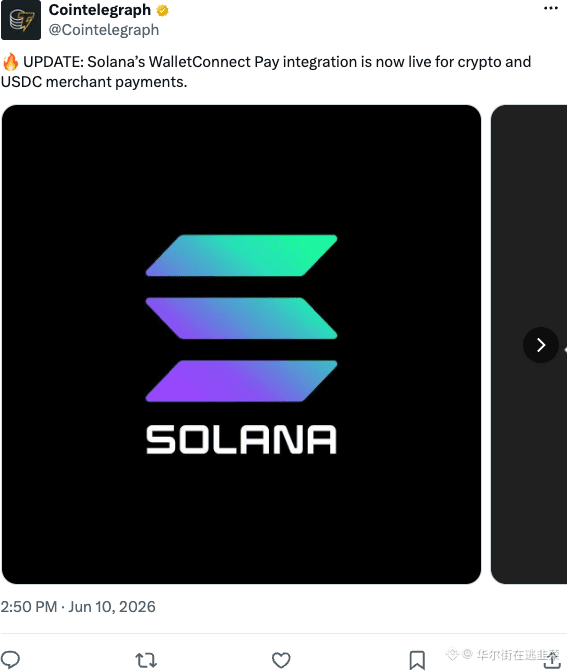
Wallet scanning to buy coffee can finally be done directly with USDC. Solana's latest WalletConnect Pay is definitely aiming for point-of-sale transactions. The payment narrative has been hyped up and is now three feet high, but for low-friction settlements, SOL can definitely handle the job. It all depends on whether merchants can truly roll it out; don’t get too eager to shout 'mass adoption' before we see any growth. #PayFi $SOL
{future}(SOLUSDT)
Wallet scanning to buy coffee can finally be done directly with USDC. Solana's latest WalletConnect Pay is definitely aiming for point-of-sale transactions. The payment narrative has been hyped up and is now three feet high, but for low-friction settlements, SOL can definitely handle the job. It all depends on whether merchants can truly roll it out; don’t get too eager to shout 'mass adoption' before we see any growth. #PayFi $SOL
120

·
--
In the last 12 hours, what I care most about isn’t just another U card, but how stablecoins are transitioning from a "withdrawal tool" to an "income stream".
On one hand, Deel is pushing stablecoin salary payments further into mainstream HR/Payroll scenarios, while on the other, the market keeps discussing the rise in crypto card usage and traditional payment institutions stepping up. Many are still choosing U cards based on "low fees, good design, and acceptance", but I think that's a bit outdated.
The next phase of comparison shouldn't be the card itself, but the whole pathway:
1. Once you receive stablecoins, can you seamlessly complete currency exchange/withdrawals?
2. Are the spending scenarios stable, without frequent drops, declined transactions, or risk management freezes?
3. Can you have a continuous experience from receiving, holding, to spending, rather than piecing it together?
To put it simply, U cards are becoming more like a "last mile product"; the layers of stablecoin receipt, settlement, compliance, and risk management are what truly define the upper limit of the experience.
So when evaluating PayFi or U card projects in the future, I’ll first ask: Does it solve card issues or pathway issues? If it’s just issuing a card, the competitive moat is thin; if it can clearly articulate withdrawal, payment, and spending scenarios, that’s where real value emerges.
This is also why I find tools like Payall.ai more interesting: it's not just about which card is the best, but helping users visualize different U cards, withdrawal paths, and spending scenarios all in one clear picture.
#稳定币 #加密支付 #PayFi
In the last 12 hours, what I care most about isn’t just another U card, but how stablecoins are transitioning from a "withdrawal tool" to an "income stream".
On one hand, Deel is pushing stablecoin salary payments further into mainstream HR/Payroll scenarios, while on the other, the market keeps discussing the rise in crypto card usage and traditional payment institutions stepping up. Many are still choosing U cards based on "low fees, good design, and acceptance", but I think that's a bit outdated.
The next phase of comparison shouldn't be the card itself, but the whole pathway:
1. Once you receive stablecoins, can you seamlessly complete currency exchange/withdrawals?
2. Are the spending scenarios stable, without frequent drops, declined transactions, or risk management freezes?
3. Can you have a continuous experience from receiving, holding, to spending, rather than piecing it together?
To put it simply, U cards are becoming more like a "last mile product"; the layers of stablecoin receipt, settlement, compliance, and risk management are what truly define the upper limit of the experience.
So when evaluating PayFi or U card projects in the future, I’ll first ask: Does it solve card issues or pathway issues? If it’s just issuing a card, the competitive moat is thin; if it can clearly articulate withdrawal, payment, and spending scenarios, that’s where real value emerges.
This is also why I find tools like Payall.ai more interesting: it's not just about which card is the best, but helping users visualize different U cards, withdrawal paths, and spending scenarios all in one clear picture.
#稳定币 #加密支付 #PayFi
On one hand, Deel is pushing stablecoin salary payments further into mainstream HR/Payroll scenarios, while on the other, the market keeps discussing the rise in crypto card usage and traditional payment institutions stepping up. Many are still choosing U cards based on "low fees, good design, and acceptance", but I think that's a bit outdated.
The next phase of comparison shouldn't be the card itself, but the whole pathway:
1. Once you receive stablecoins, can you seamlessly complete currency exchange/withdrawals?
2. Are the spending scenarios stable, without frequent drops, declined transactions, or risk management freezes?
3. Can you have a continuous experience from receiving, holding, to spending, rather than piecing it together?
To put it simply, U cards are becoming more like a "last mile product"; the layers of stablecoin receipt, settlement, compliance, and risk management are what truly define the upper limit of the experience.
So when evaluating PayFi or U card projects in the future, I’ll first ask: Does it solve card issues or pathway issues? If it’s just issuing a card, the competitive moat is thin; if it can clearly articulate withdrawal, payment, and spending scenarios, that’s where real value emerges.
This is also why I find tools like Payall.ai more interesting: it's not just about which card is the best, but helping users visualize different U cards, withdrawal paths, and spending scenarios all in one clear picture.
#稳定币 #加密支付 #PayFi
82

·
--
I went
XLM pumped nearly 10% today
I almost forgot this coin was still alive
Turns out, while everyone was focused on BTC,
it quietly dropped some big news
Stellar's on-chain transaction volume skyrocketed from 150 million to 880 million
That's over five times
I was stunned
Three catalysts exploded at once
Spiko Finance tokenized $1 billion worth of assets on Stellar
Not just proof of concept
This is real cash on-chain
Zebec Network launched a payroll platform on Stellar
Directly linked with Mastercard debit cards
In the future, salaries might really be paid in crypto
Canada's VersaBank rolled out a Digital Meteor plan
Issuing bank tokenized deposits on Stellar
Not a stablecoin
This is the bank's own liability proof
These two are completely different
On the technical side
XLM has reclaimed the 0.20-0.21 dense trading zone
RSI 59 is not overbought yet
Next resistance is at 0.26
I think this PayFi narrative is the real deal
Not just a hype concept
People are genuinely using blockchain for payments
Stellar has been doing cross-border payments for ten years
Now, someone is finally using it as payment infrastructure
But don't rush in
Institutional announcements and actual usage are two different things
Let's first see if on-chain activity can hold up
$XLM #PayFi #RWA #Stellar
I went
XLM pumped nearly 10% today
I almost forgot this coin was still alive
Turns out, while everyone was focused on BTC,
it quietly dropped some big news
Stellar's on-chain transaction volume skyrocketed from 150 million to 880 million
That's over five times
I was stunned
Three catalysts exploded at once
Spiko Finance tokenized $1 billion worth of assets on Stellar
Not just proof of concept
This is real cash on-chain
Zebec Network launched a payroll platform on Stellar
Directly linked with Mastercard debit cards
In the future, salaries might really be paid in crypto
Canada's VersaBank rolled out a Digital Meteor plan
Issuing bank tokenized deposits on Stellar
Not a stablecoin
This is the bank's own liability proof
These two are completely different
On the technical side
XLM has reclaimed the 0.20-0.21 dense trading zone
RSI 59 is not overbought yet
Next resistance is at 0.26
I think this PayFi narrative is the real deal
Not just a hype concept
People are genuinely using blockchain for payments
Stellar has been doing cross-border payments for ten years
Now, someone is finally using it as payment infrastructure
But don't rush in
Institutional announcements and actual usage are two different things
Let's first see if on-chain activity can hold up
$XLM #PayFi #RWA #Stellar
XLM pumped nearly 10% today
I almost forgot this coin was still alive
Turns out, while everyone was focused on BTC,
it quietly dropped some big news
Stellar's on-chain transaction volume skyrocketed from 150 million to 880 million
That's over five times
I was stunned
Three catalysts exploded at once
Spiko Finance tokenized $1 billion worth of assets on Stellar
Not just proof of concept
This is real cash on-chain
Zebec Network launched a payroll platform on Stellar
Directly linked with Mastercard debit cards
In the future, salaries might really be paid in crypto
Canada's VersaBank rolled out a Digital Meteor plan
Issuing bank tokenized deposits on Stellar
Not a stablecoin
This is the bank's own liability proof
These two are completely different
On the technical side
XLM has reclaimed the 0.20-0.21 dense trading zone
RSI 59 is not overbought yet
Next resistance is at 0.26
I think this PayFi narrative is the real deal
Not just a hype concept
People are genuinely using blockchain for payments
Stellar has been doing cross-border payments for ten years
Now, someone is finally using it as payment infrastructure
But don't rush in
Institutional announcements and actual usage are two different things
Let's first see if on-chain activity can hold up
$XLM #PayFi #RWA #Stellar
186

·
--
$RTX PRESALE HITS $30M AS PAYFI TRANSFERS GO LIVE ⚡
Remittix has crossed the $30 million presale mark while its completed PayFi platform begins processing real crypto-to-fiat transfers for selected community users. The project says fiat payouts are now reaching bank accounts, shifting the narrative from roadmap execution to early product validation.
The next key milestone is $32 million, where Remittix plans to reveal its official launch date. For traders and allocators, the focus should remain on user adoption, liquidity conditions, execution quality, and post-launch transparency rather than presale momentum alone.
Not financial advice. Manage your risk.
#Crypto #PayFi #Altcoins #BinanceSquare #Web3
🧭
{alpha}(560x4829a1d1fb6ded1f81d26868ab8976648baf9893)
$RTX PRESALE HITS $30M AS PAYFI TRANSFERS GO LIVE ⚡
Remittix has crossed the $30 million presale mark while its completed PayFi platform begins processing real crypto-to-fiat transfers for selected community users. The project says fiat payouts are now reaching bank accounts, shifting the narrative from roadmap execution to early product validation.
The next key milestone is $32 million, where Remittix plans to reveal its official launch date. For traders and allocators, the focus should remain on user adoption, liquidity conditions, execution quality, and post-launch transparency rather than presale momentum alone.
Not financial advice. Manage your risk.
#Crypto #PayFi #Altcoins #BinanceSquare #Web3
🧭
Remittix has crossed the $30 million presale mark while its completed PayFi platform begins processing real crypto-to-fiat transfers for selected community users. The project says fiat payouts are now reaching bank accounts, shifting the narrative from roadmap execution to early product validation.
The next key milestone is $32 million, where Remittix plans to reveal its official launch date. For traders and allocators, the focus should remain on user adoption, liquidity conditions, execution quality, and post-launch transparency rather than presale momentum alone.
Not financial advice. Manage your risk.
#Crypto #PayFi #Altcoins #BinanceSquare #Web3
🧭
512

Honestly, $HUMA —this candlestick today has something 🌶️
Over on the broader market: the big coin got dumped to 59622 (-1.8%). The majors and the trash coins are all being killed, with small-cap corpses everywhere. The result? On Solana, this PayFi blue-chip went against the trend, pumping +16% and breaking above 0.025. Volume hit $1.2M—already doubled—yet the market cap is only $44M. That’s the classic “small pond” being sniffed out by money.
Quick rundown: this is the first Payment Financing network. Cumulative transaction volume has long surpassed $2B. Its core is tokenizing real-world receivables (invoices/cross-border payments) to enable lending that earns interest. In September, it just integrated with the Circle USDC Payments Network to lay groundwork for compliant payments. Put simply, it’s a three-in-one story of DeFi + RWA + cross-border payments. In the RWA narrative, BlackRock’s BUIDL is already out front, and within that, PayFi is the only track that has actually managed to run and produce real transaction volume.
For the short term, I wouldn’t recommend going heavy here—$0.025 is a psychological level, and it failed to break through a few times before. But with a $44M market cap, in the PayFi sector this is basically a floor price. If it’s given a reasonable valuation, $100M is only a matter of time. A small position to gamble is fine; if the big coin breaks down below support, cut losses and run.
Let’s chat in the comments—do you like the PayFi theme?
#PayFi #RWA #山寨币
Honestly, $HUMA —this candlestick today has something 🌶️
Over on the broader market: the big coin got dumped to 59622 (-1.8%). The majors and the trash coins are all being killed, with small-cap corpses everywhere. The result? On Solana, this PayFi blue-chip went against the trend, pumping +16% and breaking above 0.025. Volume hit $1.2M—already doubled—yet the market cap is only $44M. That’s the classic “small pond” being sniffed out by money.
Quick rundown: this is the first Payment Financing network. Cumulative transaction volume has long surpassed $2B. Its core is tokenizing real-world receivables (invoices/cross-border payments) to enable lending that earns interest. In September, it just integrated with the Circle USDC Payments Network to lay groundwork for compliant payments. Put simply, it’s a three-in-one story of DeFi + RWA + cross-border payments. In the RWA narrative, BlackRock’s BUIDL is already out front, and within that, PayFi is the only track that has actually managed to run and produce real transaction volume.
For the short term, I wouldn’t recommend going heavy here—$0.025 is a psychological level, and it failed to break through a few times before. But with a $44M market cap, in the PayFi sector this is basically a floor price. If it’s given a reasonable valuation, $100M is only a matter of time. A small position to gamble is fine; if the big coin breaks down below support, cut losses and run.
Let’s chat in the comments—do you like the PayFi theme?
#PayFi #RWA #山寨币
Over on the broader market: the big coin got dumped to 59622 (-1.8%). The majors and the trash coins are all being killed, with small-cap corpses everywhere. The result? On Solana, this PayFi blue-chip went against the trend, pumping +16% and breaking above 0.025. Volume hit $1.2M—already doubled—yet the market cap is only $44M. That’s the classic “small pond” being sniffed out by money.
Quick rundown: this is the first Payment Financing network. Cumulative transaction volume has long surpassed $2B. Its core is tokenizing real-world receivables (invoices/cross-border payments) to enable lending that earns interest. In September, it just integrated with the Circle USDC Payments Network to lay groundwork for compliant payments. Put simply, it’s a three-in-one story of DeFi + RWA + cross-border payments. In the RWA narrative, BlackRock’s BUIDL is already out front, and within that, PayFi is the only track that has actually managed to run and produce real transaction volume.
For the short term, I wouldn’t recommend going heavy here—$0.025 is a psychological level, and it failed to break through a few times before. But with a $44M market cap, in the PayFi sector this is basically a floor price. If it’s given a reasonable valuation, $100M is only a matter of time. A small position to gamble is fine; if the big coin breaks down below support, cut losses and run.
Let’s chat in the comments—do you like the PayFi theme?
#PayFi #RWA #山寨币
132

·
--
Bullish
⚡ Powering the future of payments.
A PayFi network enabling instant liquidity for cross-border transfers and card payments—making global transactions faster, cheaper, and more efficient. 🌍💳🚀
#PayFi #CryptoPayments @humafinance @Binance_Square_Official $HUMA
{spot}(HUMAUSDT)
⚡ Powering the future of payments.
A PayFi network enabling instant liquidity for cross-border transfers and card payments—making global transactions faster, cheaper, and more efficient. 🌍💳🚀
#PayFi #CryptoPayments @Huma Finance 🟣 @Binance Square Official $HUMA
A PayFi network enabling instant liquidity for cross-border transfers and card payments—making global transactions faster, cheaper, and more efficient. 🌍💳🚀
#PayFi #CryptoPayments @Huma Finance 🟣 @Binance Square Official $HUMA

50

·
--
Verified
2026 Conflux Breakout Points - Compliance and PayFi
2026 Conflux's key breakout points: compliance and PayFi (Payment Finance)
In 2026, the Layer 1 race is heating up, but when it comes to [compliance rollout] and [real-world payments (PayFi)], you can't overlook Conflux_Network.
Many folks still think of Tree Graph as just 'high TPS', but they've got two real game-changers this year:
1️⃣ Compliant HKD Stablecoin $HKDA (AnchorX):
This isn't just hot air; it's a legit stablecoin backed by compliant custodial support from Hong Kong.
Seamlessly bridging Web2 traditional finance with the Web3 on-chain ecosystem, it's a new 'safe passage' for funds to flow in and out.
2️⃣ BSIM Card + PayFi's ultimate rollout:
Stop talking about those vapor apps.
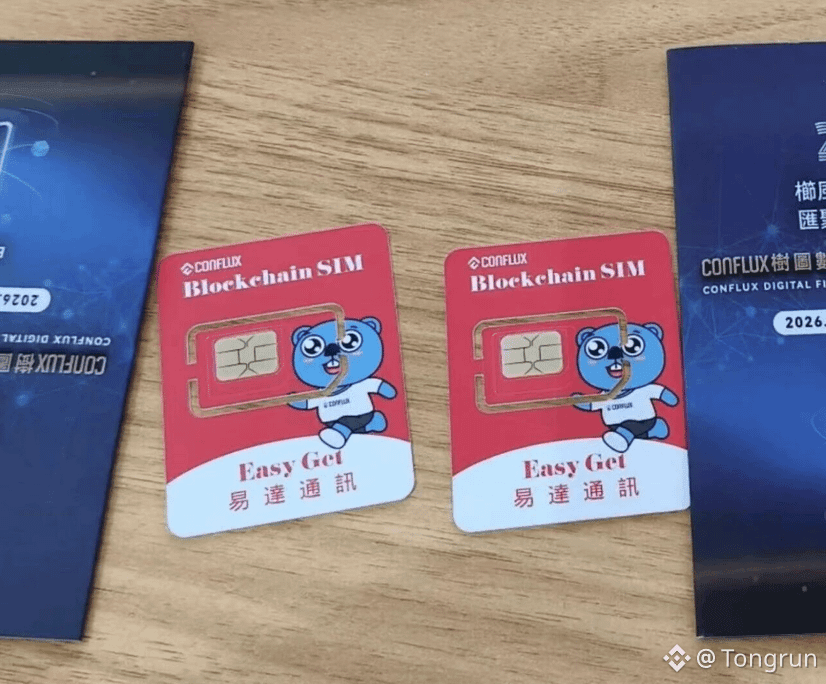
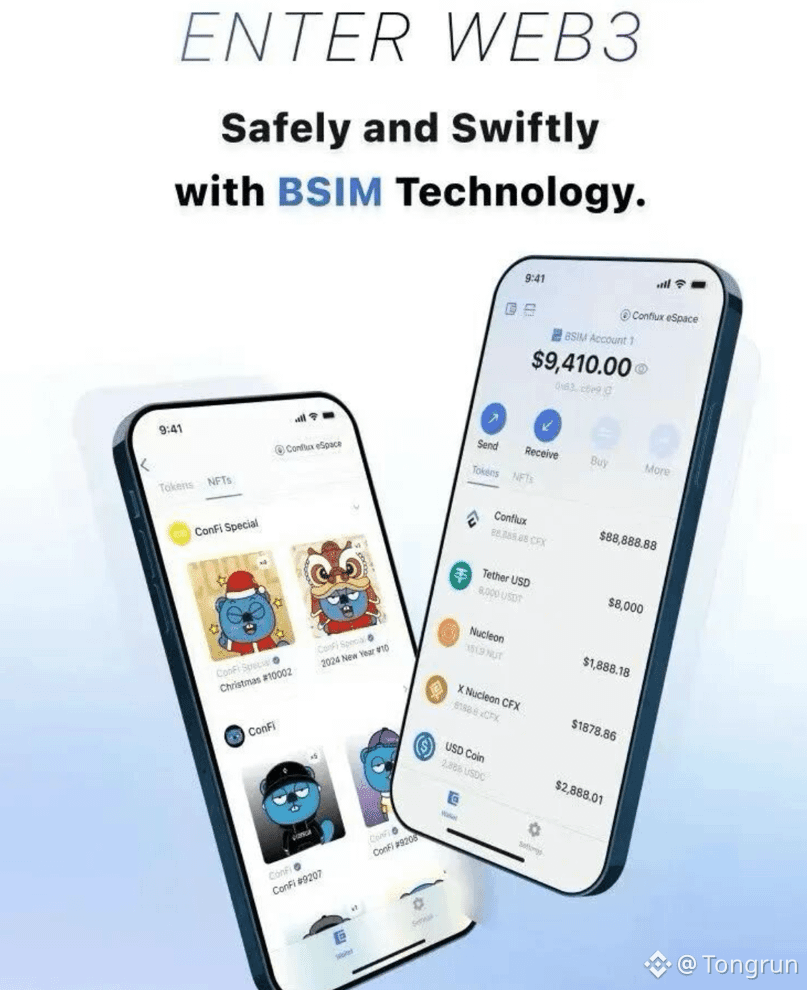
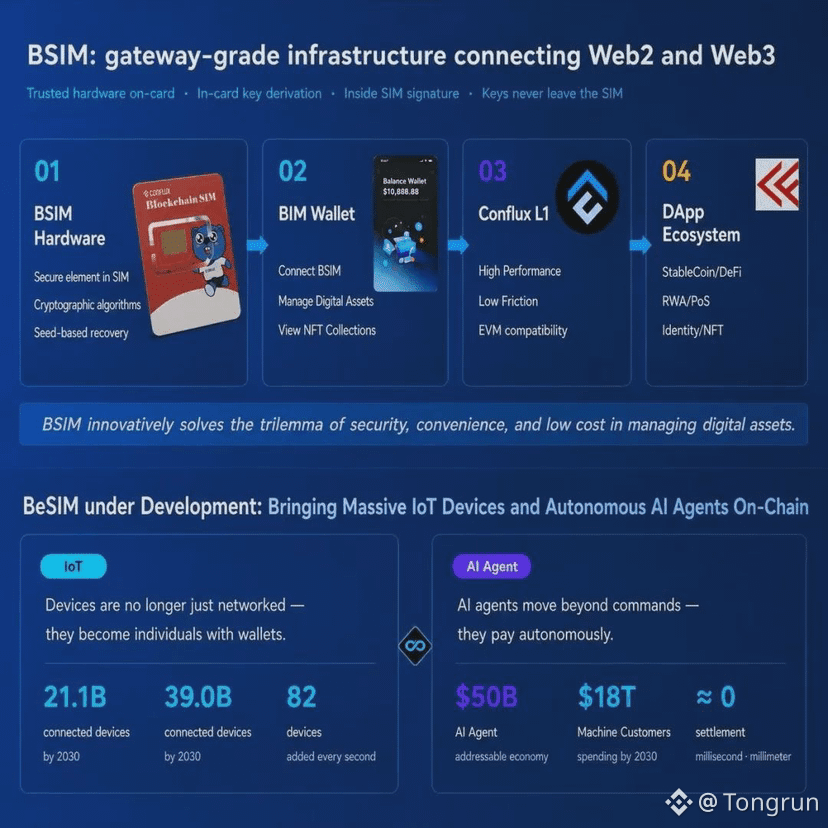
Conflux has teamed up with telecom giants to launch the BSIM card, turning your mobile SIM card into a hardware wallet.
With PayFi in the mix, future spending and cross-border payments can be confirmed directly at the hardware level with one click, ramping up security and smoothness.
In summary:
Core Space is driving native innovation, eSpace perfectly compatible with EVM, and both spaces are getting smoother every day.
This year, in the Greater Bay Area and the 'Belt and Road' digital finance construction, Conflux is definitely at the forefront.
The BSIM card, a new entry point merging communication and blockchain for Web3.0 — a digital asset wallet SIM card, is not just a carrier of signal but also a vessel for value and trust.
What do you guys think about CFX's performance this year? Let's chat in the comments! #Conflux #CFX #PayFi #Stablecoin #树图链cfx
About Conflux:
Conflux is a high-performance, permissionless Layer 1 public blockchain platform founded in 2018.
Technical Core: It uses a unique Tree-Graph ledger structure and GHAST consensus algorithm, breaking through the linear limitations of traditional blockchains (like Bitcoin and Ethereum), allowing for parallel processing of blocks and transactions.
Compliance: It's the only public chain project in mainland China that meets regulatory requirements, often serving as a bridge for international Web3 projects entering the Asian market, and actively promoting stablecoins (like offshore RMB stablecoins) and RWA (real-world assets).
Dual Space Design: The network is divided into Conflux Core Space (native space) and Conflux eSpace (fully compatible with Ethereum EVM space).
For more project details, visit 👉: https://www.confluxnetwork.org/zh
2026 Conflux Breakout Points - Compliance and PayFi
2026 Conflux's key breakout points: compliance and PayFi (Payment Finance)
In 2026, the Layer 1 race is heating up, but when it comes to [compliance rollout] and [real-world payments (PayFi)], you can't overlook Conflux_Network.
Many folks still think of Tree Graph as just 'high TPS', but they've got two real game-changers this year:
1️⃣ Compliant HKD Stablecoin $HKDA (AnchorX):
This isn't just hot air; it's a legit stablecoin backed by compliant custodial support from Hong Kong.
Seamlessly bridging Web2 traditional finance with the Web3 on-chain ecosystem, it's a new 'safe passage' for funds to flow in and out.
2️⃣ BSIM Card + PayFi's ultimate rollout:
Stop talking about those vapor apps.
Conflux has teamed up with telecom giants to launch the BSIM card, turning your mobile SIM card into a hardware wallet.
With PayFi in the mix, future spending and cross-border payments can be confirmed directly at the hardware level with one click, ramping up security and smoothness.
In summary:
Core Space is driving native innovation, eSpace perfectly compatible with EVM, and both spaces are getting smoother every day.
This year, in the Greater Bay Area and the 'Belt and Road' digital finance construction, Conflux is definitely at the forefront.
The BSIM card, a new entry point merging communication and blockchain for Web3.0 — a digital asset wallet SIM card, is not just a carrier of signal but also a vessel for value and trust.
What do you guys think about CFX's performance this year? Let's chat in the comments! #Conflux #CFX #PayFi #Stablecoin #树图链cfx
About Conflux:
Conflux is a high-performance, permissionless Layer 1 public blockchain platform founded in 2018.
Technical Core: It uses a unique Tree-Graph ledger structure and GHAST consensus algorithm, breaking through the linear limitations of traditional blockchains (like Bitcoin and Ethereum), allowing for parallel processing of blocks and transactions.
Compliance: It's the only public chain project in mainland China that meets regulatory requirements, often serving as a bridge for international Web3 projects entering the Asian market, and actively promoting stablecoins (like offshore RMB stablecoins) and RWA (real-world assets).
Dual Space Design: The network is divided into Conflux Core Space (native space) and Conflux eSpace (fully compatible with Ethereum EVM space).
For more project details, visit 👉: https://www.confluxnetwork.org/zh
2026 Conflux's key breakout points: compliance and PayFi (Payment Finance)
In 2026, the Layer 1 race is heating up, but when it comes to [compliance rollout] and [real-world payments (PayFi)], you can't overlook Conflux_Network.
Many folks still think of Tree Graph as just 'high TPS', but they've got two real game-changers this year:
1️⃣ Compliant HKD Stablecoin $HKDA (AnchorX):
This isn't just hot air; it's a legit stablecoin backed by compliant custodial support from Hong Kong.
Seamlessly bridging Web2 traditional finance with the Web3 on-chain ecosystem, it's a new 'safe passage' for funds to flow in and out.
2️⃣ BSIM Card + PayFi's ultimate rollout:
Stop talking about those vapor apps.
Conflux has teamed up with telecom giants to launch the BSIM card, turning your mobile SIM card into a hardware wallet.
With PayFi in the mix, future spending and cross-border payments can be confirmed directly at the hardware level with one click, ramping up security and smoothness.
In summary:
Core Space is driving native innovation, eSpace perfectly compatible with EVM, and both spaces are getting smoother every day.
This year, in the Greater Bay Area and the 'Belt and Road' digital finance construction, Conflux is definitely at the forefront.
The BSIM card, a new entry point merging communication and blockchain for Web3.0 — a digital asset wallet SIM card, is not just a carrier of signal but also a vessel for value and trust.
What do you guys think about CFX's performance this year? Let's chat in the comments! #Conflux #CFX #PayFi #Stablecoin #树图链cfx
About Conflux:
Conflux is a high-performance, permissionless Layer 1 public blockchain platform founded in 2018.
Technical Core: It uses a unique Tree-Graph ledger structure and GHAST consensus algorithm, breaking through the linear limitations of traditional blockchains (like Bitcoin and Ethereum), allowing for parallel processing of blocks and transactions.
Compliance: It's the only public chain project in mainland China that meets regulatory requirements, often serving as a bridge for international Web3 projects entering the Asian market, and actively promoting stablecoins (like offshore RMB stablecoins) and RWA (real-world assets).
Dual Space Design: The network is divided into Conflux Core Space (native space) and Conflux eSpace (fully compatible with Ethereum EVM space).
For more project details, visit 👉: https://www.confluxnetwork.org/zh
1
3
1.3k

·
--
🚀 $HUMA Update — PayFi Network Heating Up! 🔥
Huma Finance, the first PayFi network, is making waves today!
💰 Price: $0.0258 (+17% in 24H)
📊 Market Cap: $84.5M
💎 FDV: $259M
🔄 Circulating Supply: 3.26B / 10B HUMA (32%)
👥 Holders: 26.6K and climbing 📈
What is $HUMA?
Huma enables global payment institutions to settle payments 24/7 using stablecoins & on-chain liquidity — powering cross-border payments, credit cards, trade finance, and even DePIN financing. 🌍💳
Community Sentiment: 85% Bullish 🐂
⚠️ Things to Watch:
🔒 67.39% of supply still locked — upcoming unlocks (Aug, Nov 2026 & beyond) could add sell pressure
🐳 Top 10 holders control 82.82% of supply — high concentration risk
📉 Still -62.75% from ATH ($0.069, May 2025)
📍 ATL: $0.01106 (Feb 2026) → Up +133% from there
Bottom Line: Real-world use case + Binance ecosystem ties = solid narrative. But with heavy token unlocks ahead, this is a momentum play — not a "set and forget" position. Always DYOR! 🧠
#HUMA #payfi #Binance #CryptoNewss #BinanceSquare
$HUMA
{future}(HUMAUSDT)
🚀 $HUMA Update — PayFi Network Heating Up! 🔥
Huma Finance, the first PayFi network, is making waves today!
💰 Price: $0.0258 (+17% in 24H)
📊 Market Cap: $84.5M
💎 FDV: $259M
🔄 Circulating Supply: 3.26B / 10B HUMA (32%)
👥 Holders: 26.6K and climbing 📈
What is $HUMA ?
Huma enables global payment institutions to settle payments 24/7 using stablecoins & on-chain liquidity — powering cross-border payments, credit cards, trade finance, and even DePIN financing. 🌍💳
Community Sentiment: 85% Bullish 🐂
⚠️ Things to Watch:
🔒 67.39% of supply still locked — upcoming unlocks (Aug, Nov 2026 & beyond) could add sell pressure
🐳 Top 10 holders control 82.82% of supply — high concentration risk
📉 Still -62.75% from ATH ($0.069, May 2025)
📍 ATL: $0.01106 (Feb 2026) → Up +133% from there
Bottom Line: Real-world use case + Binance ecosystem ties = solid narrative. But with heavy token unlocks ahead, this is a momentum play — not a "set and forget" position. Always DYOR! 🧠
#HUMA #payfi #Binance #CryptoNewss #BinanceSquare
$HUMA
Huma Finance, the first PayFi network, is making waves today!
💰 Price: $0.0258 (+17% in 24H)
📊 Market Cap: $84.5M
💎 FDV: $259M
🔄 Circulating Supply: 3.26B / 10B HUMA (32%)
👥 Holders: 26.6K and climbing 📈
What is $HUMA ?
Huma enables global payment institutions to settle payments 24/7 using stablecoins & on-chain liquidity — powering cross-border payments, credit cards, trade finance, and even DePIN financing. 🌍💳
Community Sentiment: 85% Bullish 🐂
⚠️ Things to Watch:
🔒 67.39% of supply still locked — upcoming unlocks (Aug, Nov 2026 & beyond) could add sell pressure
🐳 Top 10 holders control 82.82% of supply — high concentration risk
📉 Still -62.75% from ATH ($0.069, May 2025)
📍 ATL: $0.01106 (Feb 2026) → Up +133% from there
Bottom Line: Real-world use case + Binance ecosystem ties = solid narrative. But with heavy token unlocks ahead, this is a momentum play — not a "set and forget" position. Always DYOR! 🧠
#HUMA #payfi #Binance #CryptoNewss #BinanceSquare
$HUMA
100
Log in to explore more content
Join global crypto users on Binance Square
⚡️ Get latest and useful information about crypto.
💬 Trusted by the world’s largest crypto exchange.
👍 Discover real insights from verified creators.
Email / Phone number
Trending Topics
1
#CPIWatch
86.8M views
502,575 Discussing
2
#BitcoinReboundsAbove$79KAfterCPI
1,967 views
111 Discussing
3
#BNBTops730USDT
17,110 views
598 Discussing
4
#BitcoinOpenInterestShareRisesTo42.1%
7,946 views
309 Discussing
5
#OpenAILaunchesAgentsAPIPublicBeta
5,664 views
185 Discussing
6
#SpotGoldRises0.87%SilverGains1.13%
6,609 views
182 Discussing
7
#USCoreCPIRises0.3%InAugustBeatingForecasts
18,523 views
293 Discussing
8
#BitcoinFallsTo$77KAfterGoldenCross
3,171 views
67 Discussing
9
#OracleJumpsOver6%OnEarningsBeat
26,911 views
418 Discussing
10
#CLARITYActRevisionToRuleNonDeFiControllers
34,559 views
526 Discussing