
#hood
hood
96,337 views
1,126 Discussing
Hot
Latest

·
--
Bearish
HOOD📉
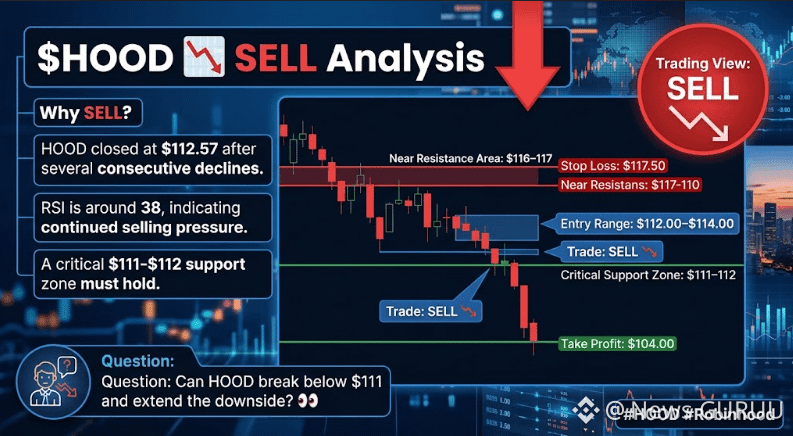
Why SELL? HOOD closed at $112.57 after several consecutive declines, with RSI around 38, showing continued selling pressure. The $111–112 support zone is critical; a break below it can open further downside, while $116–117 is the near resistance area.
Entry: $112.00–$114.00
Stop Loss: $117.50
Take Profit: $104.00
Trading View: SELL📉
Question: Can HOOD break below $111 and extend the downside? 👀 "CLICK ON THE BELOW YELLOW COIN TAG TO GO TO DESIRED TRADING PAGE TO GET BENEFIT TRADE"$HOOD
{future}(HOODUSDT)
#HOOD #Robinhood #CryptoLiquidations$674MIn24H #US10YearTreasuryYieldNears5% #ClarityActFacesProceduralVoteSept15
HOOD📉
Why SELL? HOOD closed at $112.57 after several consecutive declines, with RSI around 38, showing continued selling pressure. The $111–112 support zone is critical; a break below it can open further downside, while $116–117 is the near resistance area.
Entry: $112.00–$114.00
Stop Loss: $117.50
Take Profit: $104.00
Trading View: SELL📉
Question: Can HOOD break below $111 and extend the downside? 👀 "CLICK ON THE BELOW YELLOW COIN TAG TO GO TO DESIRED TRADING PAGE TO GET BENEFIT TRADE"$HOOD
#HOOD #Robinhood #CryptoLiquidations$674MIn24H #US10YearTreasuryYieldNears5% #ClarityActFacesProceduralVoteSept15
Why SELL? HOOD closed at $112.57 after several consecutive declines, with RSI around 38, showing continued selling pressure. The $111–112 support zone is critical; a break below it can open further downside, while $116–117 is the near resistance area.
Entry: $112.00–$114.00
Stop Loss: $117.50
Take Profit: $104.00
Trading View: SELL📉
Question: Can HOOD break below $111 and extend the downside? 👀 "CLICK ON THE BELOW YELLOW COIN TAG TO GO TO DESIRED TRADING PAGE TO GET BENEFIT TRADE"$HOOD
#HOOD #Robinhood #CryptoLiquidations$674MIn24H #US10YearTreasuryYieldNears5% #ClarityActFacesProceduralVoteSept15
1
40
·
--
🚨 $HOOD PROTOCOL REVENUE SLIPS BELOW 1M AS INSTITUTIONAL ACTIVITY COOLS! 📉
On-chain telemetry shows protocol revenue for $HOOD chain contracting for six consecutive sessions, registering roughly $720k over the last 24 hours. 📊 This marks four straight days below the $1 million baseline, representing a sharp drop from its historic peak of $6 million during high-volatility expansion.
Institutional participants appear to be scaling back on-chain activity, waiting for low-timeframe market structure to re-establish a clear liquidity range before deploying fresh capital. 🔍 With network fee generation cooling down, order flow dynamics suggest smart money is taking a defensive stance. 💬 Do you view this revenue compression as healthy consolidation, or is network velocity slowing down permanently? 👇
⚠️ Not financial advice. Always manage your risk. 🛡️
🏷️ #HOOD #OnChainData #DeFi #MarketStructure
📊 🔍
🚨 $HOOD PROTOCOL REVENUE SLIPS BELOW 1M AS INSTITUTIONAL ACTIVITY COOLS! 📉
On-chain telemetry shows protocol revenue for $HOOD chain contracting for six consecutive sessions, registering roughly $720k over the last 24 hours. 📊 This marks four straight days below the $1 million baseline, representing a sharp drop from its historic peak of $6 million during high-volatility expansion.
Institutional participants appear to be scaling back on-chain activity, waiting for low-timeframe market structure to re-establish a clear liquidity range before deploying fresh capital. 🔍 With network fee generation cooling down, order flow dynamics suggest smart money is taking a defensive stance. 💬 Do you view this revenue compression as healthy consolidation, or is network velocity slowing down permanently? 👇
⚠️ Not financial advice. Always manage your risk. 🛡️
🏷️ #HOOD #OnChainData #DeFi #MarketStructure
📊 🔍
On-chain telemetry shows protocol revenue for $HOOD chain contracting for six consecutive sessions, registering roughly $720k over the last 24 hours. 📊 This marks four straight days below the $1 million baseline, representing a sharp drop from its historic peak of $6 million during high-volatility expansion.
Institutional participants appear to be scaling back on-chain activity, waiting for low-timeframe market structure to re-establish a clear liquidity range before deploying fresh capital. 🔍 With network fee generation cooling down, order flow dynamics suggest smart money is taking a defensive stance. 💬 Do you view this revenue compression as healthy consolidation, or is network velocity slowing down permanently? 👇
⚠️ Not financial advice. Always manage your risk. 🛡️
🏷️ #HOOD #OnChainData #DeFi #MarketStructure
📊 🔍
18

·
--
⚡ HATE FUELS THE ENGINE AS $HOOD AND $PONS PREPARE TO SHATTER FUD 💥
When market noise reaches maximum volume, smart money steps in to absorb the panic selling. 🌊 Both $HOOD and $PONS are holding key levels through intense skepticism, setting up a textbook disbelief rally.
Controversy acts as free attention capital in high-beta setups. ⚡ The loudest structural doubt often precedes the sharpest expansion as aggressive spot absorption traps overconfident shorts. 💡
Tunnels of disbelief build the highest-velocity momentum moves. 💬 Are you positioning ahead of the liquidity sweep or waiting to chase the top? 👇
⚠️ Not financial advice. Always manage your risk. 🛡️
🏷️ #HOOD #PONS #Degen #Breakout #Crypto
🔥 ⚡
⚡ HATE FUELS THE ENGINE AS $HOOD AND $PONS PREPARE TO SHATTER FUD 💥
When market noise reaches maximum volume, smart money steps in to absorb the panic selling. 🌊 Both $HOOD and $PONS are holding key levels through intense skepticism, setting up a textbook disbelief rally.
Controversy acts as free attention capital in high-beta setups. ⚡ The loudest structural doubt often precedes the sharpest expansion as aggressive spot absorption traps overconfident shorts. 💡
Tunnels of disbelief build the highest-velocity momentum moves. 💬 Are you positioning ahead of the liquidity sweep or waiting to chase the top? 👇
⚠️ Not financial advice. Always manage your risk. 🛡️
🏷️ #HOOD #PONS #Degen #Breakout #Crypto
🔥 ⚡
When market noise reaches maximum volume, smart money steps in to absorb the panic selling. 🌊 Both $HOOD and $PONS are holding key levels through intense skepticism, setting up a textbook disbelief rally.
Controversy acts as free attention capital in high-beta setups. ⚡ The loudest structural doubt often precedes the sharpest expansion as aggressive spot absorption traps overconfident shorts. 💡
Tunnels of disbelief build the highest-velocity momentum moves. 💬 Are you positioning ahead of the liquidity sweep or waiting to chase the top? 👇
⚠️ Not financial advice. Always manage your risk. 🛡️
🏷️ #HOOD #PONS #Degen #Breakout #Crypto
🔥 ⚡
24

🚨 INSTITUTIONAL ACCUMULATION SPOTTED IN $HOOD AND $PONS AMID EXTREME RETAIL DISBELIEF! 🦈
When market sentiment hits peak retail exhaustion and heavy FUD spreads, smart money silently engineers liquidity sweeps to build massive long positions. 🔍 $HOOD and $PONS are currently exhibiting classic institutional accumulation characteristics, where sell-side pressure is being quietly absorbed directly into key demand zones.
Chasing vertical expansion after a multi-multiplier markup leaves retail trapped as late exit liquidity. 📥 Strategic position building during the structural consolidation phase—before the volatility expansion takes place—offers the highest asymmetric risk-to-reward ratio.
💡 Order flow confirms the institutional footprint is aggressively active while retail sentiment remains deeply depressed. 💬 Are you positioning during this disbelief phase or waiting to buy the top of the markup expansion? 👇
⚠️ Not financial advice. Always manage your risk. 🛡️
🏷️ #HOOD #PONS #SmartMoney #Altcoins #Crypto
🦈 ⚡
🚨 INSTITUTIONAL ACCUMULATION SPOTTED IN $HOOD AND $PONS AMID EXTREME RETAIL DISBELIEF! 🦈
When market sentiment hits peak retail exhaustion and heavy FUD spreads, smart money silently engineers liquidity sweeps to build massive long positions. 🔍 $HOOD and $PONS are currently exhibiting classic institutional accumulation characteristics, where sell-side pressure is being quietly absorbed directly into key demand zones.
Chasing vertical expansion after a multi-multiplier markup leaves retail trapped as late exit liquidity. 📥 Strategic position building during the structural consolidation phase—before the volatility expansion takes place—offers the highest asymmetric risk-to-reward ratio.
💡 Order flow confirms the institutional footprint is aggressively active while retail sentiment remains deeply depressed. 💬 Are you positioning during this disbelief phase or waiting to buy the top of the markup expansion? 👇
⚠️ Not financial advice. Always manage your risk. 🛡️
🏷️ #HOOD #PONS #SmartMoney #Altcoins #Crypto
🦈 ⚡
When market sentiment hits peak retail exhaustion and heavy FUD spreads, smart money silently engineers liquidity sweeps to build massive long positions. 🔍 $HOOD and $PONS are currently exhibiting classic institutional accumulation characteristics, where sell-side pressure is being quietly absorbed directly into key demand zones.
Chasing vertical expansion after a multi-multiplier markup leaves retail trapped as late exit liquidity. 📥 Strategic position building during the structural consolidation phase—before the volatility expansion takes place—offers the highest asymmetric risk-to-reward ratio.
💡 Order flow confirms the institutional footprint is aggressively active while retail sentiment remains deeply depressed. 💬 Are you positioning during this disbelief phase or waiting to buy the top of the markup expansion? 👇
⚠️ Not financial advice. Always manage your risk. 🛡️
🏷️ #HOOD #PONS #SmartMoney #Altcoins #Crypto
🦈 ⚡
143

HEAVY FUD IS THE ULTIMATE PUMP CATALYST FOR $HOOD AND $PONS ! ⚡ 🦈
📌 When retail consensus drowns in heavy FUD, market makers quietly execute aggressive accumulation blocks behind the scenes. $HOOD and $PONS are prime examples where maximum narrative noise masks heavy institutional absorption. 🦈
⚡ Entering at current market structure front-runs the inevitable volatility squeeze. Waiting for a vertical 3x green vector only turns late buyers into exit liquidity for smart money taking profits at the highs. 📈
💬 Are you bidding the heavy retail disbelief now or waiting to chase the vertical candle at the top? 👇
⚠️ Not financial advice. Always manage your risk. 🛡️
🏷️ #HOOD #PONS #Crypto #Altcoins #Trading
🔥 💎
HEAVY FUD IS THE ULTIMATE PUMP CATALYST FOR $HOOD AND $PONS ! ⚡ 🦈
📌 When retail consensus drowns in heavy FUD, market makers quietly execute aggressive accumulation blocks behind the scenes. $HOOD and $PONS are prime examples where maximum narrative noise masks heavy institutional absorption. 🦈
⚡ Entering at current market structure front-runs the inevitable volatility squeeze. Waiting for a vertical 3x green vector only turns late buyers into exit liquidity for smart money taking profits at the highs. 📈
💬 Are you bidding the heavy retail disbelief now or waiting to chase the vertical candle at the top? 👇
⚠️ Not financial advice. Always manage your risk. 🛡️
🏷️ #HOOD #PONS #Crypto #Altcoins #Trading
🔥 💎
📌 When retail consensus drowns in heavy FUD, market makers quietly execute aggressive accumulation blocks behind the scenes. $HOOD and $PONS are prime examples where maximum narrative noise masks heavy institutional absorption. 🦈
⚡ Entering at current market structure front-runs the inevitable volatility squeeze. Waiting for a vertical 3x green vector only turns late buyers into exit liquidity for smart money taking profits at the highs. 📈
💬 Are you bidding the heavy retail disbelief now or waiting to chase the vertical candle at the top? 👇
⚠️ Not financial advice. Always manage your risk. 🛡️
🏷️ #HOOD #PONS #Crypto #Altcoins #Trading
🔥 💎
123

·
--
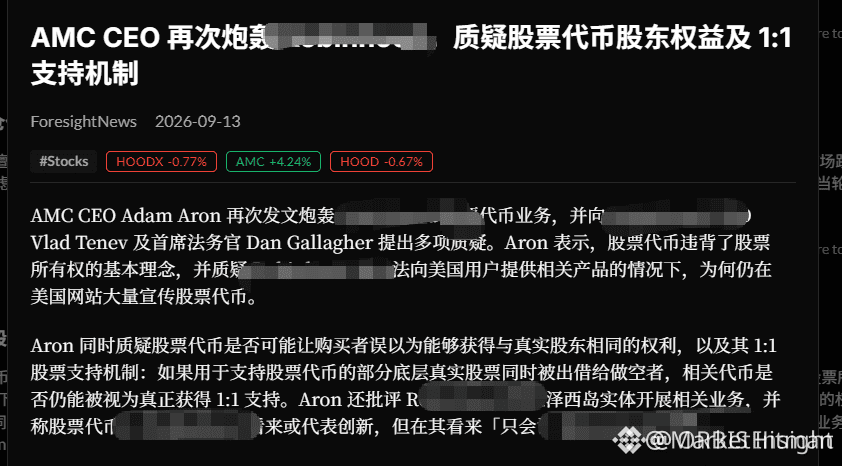
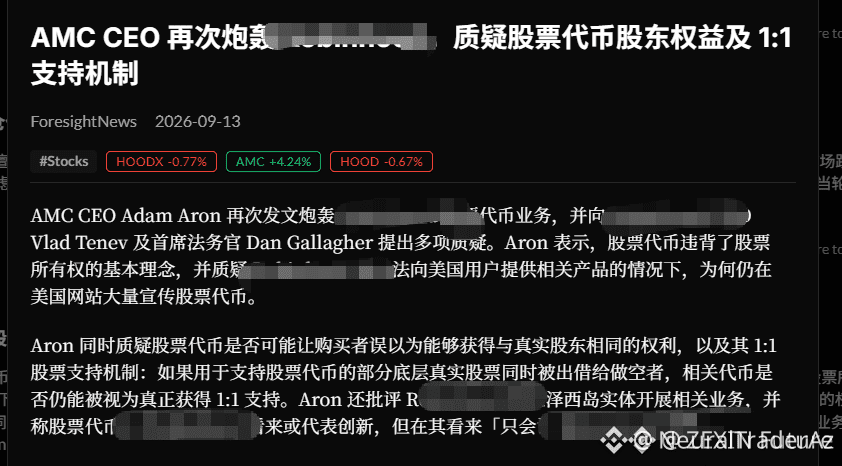
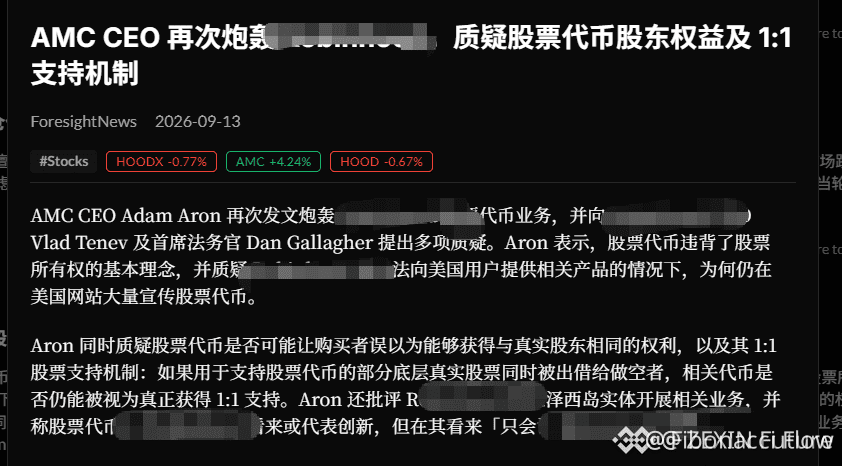
AMC CEO SLAMS $HOOD TOKENIZED STOCKS AS UNREGULATED SYNTHETIC DERIVATIVES! ⚠️ 🚨
AMC executive leadership is sounding the alarm on tokenized equities, targeting $HOOD over regulatory arbitrage and synthetic backing integrity. 🏦 The core issue rests on market structure: offshore issuance creates counterparty risk while token holders lack underlying voting rights and structural guarantees. 🔍
If underlying shares backing these synthetic assets are simultaneously lent to short sellers, the 1:1 collateral claims become opaque paper leverage. 📊 Institutional issuers are pushing back as market structure questions mount over regulatory friction and investor protection. 💡 💬 Do you believe tokenized stocks provide genuine market efficiency, or are synthetic derivatives creating hidden counterparty risk? 👇
⚠️ Not financial advice. Always manage your risk. 🛡️
🏷️ #HOOD #TokenizedAssets #MarketStructure #Crypto #Derivatives
🎯 🦈
AMC CEO SLAMS $HOOD TOKENIZED STOCKS AS UNREGULATED SYNTHETIC DERIVATIVES! ⚠️ 🚨
AMC executive leadership is sounding the alarm on tokenized equities, targeting $HOOD over regulatory arbitrage and synthetic backing integrity. 🏦 The core issue rests on market structure: offshore issuance creates counterparty risk while token holders lack underlying voting rights and structural guarantees. 🔍
If underlying shares backing these synthetic assets are simultaneously lent to short sellers, the 1:1 collateral claims become opaque paper leverage. 📊 Institutional issuers are pushing back as market structure questions mount over regulatory friction and investor protection. 💡 💬 Do you believe tokenized stocks provide genuine market efficiency, or are synthetic derivatives creating hidden counterparty risk? 👇
⚠️ Not financial advice. Always manage your risk. 🛡️
🏷️ #HOOD #TokenizedAssets #MarketStructure #Crypto #Derivatives
🎯 🦈
AMC executive leadership is sounding the alarm on tokenized equities, targeting $HOOD over regulatory arbitrage and synthetic backing integrity. 🏦 The core issue rests on market structure: offshore issuance creates counterparty risk while token holders lack underlying voting rights and structural guarantees. 🔍
If underlying shares backing these synthetic assets are simultaneously lent to short sellers, the 1:1 collateral claims become opaque paper leverage. 📊 Institutional issuers are pushing back as market structure questions mount over regulatory friction and investor protection. 💡 💬 Do you believe tokenized stocks provide genuine market efficiency, or are synthetic derivatives creating hidden counterparty risk? 👇
⚠️ Not financial advice. Always manage your risk. 🛡️
🏷️ #HOOD #TokenizedAssets #MarketStructure #Crypto #Derivatives
🎯 🦈
17

🚨 $HOOD PLUNGES INTO DEEP DUMP ZONE – SELL THE HYPE NOW! 🩸
📊 The order flow on the 4‑hour chart is screaming a massive liquidity sweep, with sellers gobbling every uptick as buyers choke out. Volume spikes confirm the exit of smart money, and the price is now trapped below a tight demand block.
⚡ With the hype furnace cooling, the next wave looks set to drag $HOOD deeper into the red, feeding the bear’s appetite. The liquidity moat 🌊 is widening as the market devours remaining longs, prompting a cascade of stop‑losses. 💬 Are you already loading your short positions or waiting for the next trigger?
⚠️ Not financial advice. Always manage your risk. 🛡️
🏷️ #HOOD #ShortSetup #Bearish #Crypto #LiquiditySweep
🔥 💎
🚨 $HOOD PLUNGES INTO DEEP DUMP ZONE – SELL THE HYPE NOW! 🩸
📊 The order flow on the 4‑hour chart is screaming a massive liquidity sweep, with sellers gobbling every uptick as buyers choke out. Volume spikes confirm the exit of smart money, and the price is now trapped below a tight demand block.
⚡ With the hype furnace cooling, the next wave looks set to drag $HOOD deeper into the red, feeding the bear’s appetite. The liquidity moat 🌊 is widening as the market devours remaining longs, prompting a cascade of stop‑losses. 💬 Are you already loading your short positions or waiting for the next trigger?
⚠️ Not financial advice. Always manage your risk. 🛡️
🏷️ #HOOD #ShortSetup #Bearish #Crypto #LiquiditySweep
🔥 💎
📊 The order flow on the 4‑hour chart is screaming a massive liquidity sweep, with sellers gobbling every uptick as buyers choke out. Volume spikes confirm the exit of smart money, and the price is now trapped below a tight demand block.
⚡ With the hype furnace cooling, the next wave looks set to drag $HOOD deeper into the red, feeding the bear’s appetite. The liquidity moat 🌊 is widening as the market devours remaining longs, prompting a cascade of stop‑losses. 💬 Are you already loading your short positions or waiting for the next trigger?
⚠️ Not financial advice. Always manage your risk. 🛡️
🏷️ #HOOD #ShortSetup #Bearish #Crypto #LiquiditySweep
🔥 💎
50

·
--
🏦 $HOOD CHALLENGES CORPORATE VETOES AS TOKENIZED EQUITY INFRASTRUCTURE SCALES UP ⚡
The battle for institutional liquidity is shifting toward Real-World Asset tokenization. 🏦 By decoupling economic exposure from traditional equity rights, secondary issuers are constructing 24/7 liquidity pools backed 1:1 by custody holdings without needing legacy corporate approval.
📊 With traditional market infrastructure firms allocating heavy capital into tokenized stock networks, smart money is positioning for massive order flow migration onto onchain execution layers. ⚡ This structural pivot fundamentally redefines capital efficiency and global market access.
💬 Will legacy corporate issuers be forced to accept these decentralized derivative structures, or will regulatory friction slow the rollout? 👇
⚠️ Not financial advice. Always manage your risk. 🛡️
🏷️ #HOOD #RWA #Tokenization #Crypto #MarketStructure
🏦 ⚡
🏦 $HOOD CHALLENGES CORPORATE VETOES AS TOKENIZED EQUITY INFRASTRUCTURE SCALES UP ⚡
The battle for institutional liquidity is shifting toward Real-World Asset tokenization. 🏦 By decoupling economic exposure from traditional equity rights, secondary issuers are constructing 24/7 liquidity pools backed 1:1 by custody holdings without needing legacy corporate approval.
📊 With traditional market infrastructure firms allocating heavy capital into tokenized stock networks, smart money is positioning for massive order flow migration onto onchain execution layers. ⚡ This structural pivot fundamentally redefines capital efficiency and global market access.
💬 Will legacy corporate issuers be forced to accept these decentralized derivative structures, or will regulatory friction slow the rollout? 👇
⚠️ Not financial advice. Always manage your risk. 🛡️
🏷️ #HOOD #RWA #Tokenization #Crypto #MarketStructure
🏦 ⚡
The battle for institutional liquidity is shifting toward Real-World Asset tokenization. 🏦 By decoupling economic exposure from traditional equity rights, secondary issuers are constructing 24/7 liquidity pools backed 1:1 by custody holdings without needing legacy corporate approval.
📊 With traditional market infrastructure firms allocating heavy capital into tokenized stock networks, smart money is positioning for massive order flow migration onto onchain execution layers. ⚡ This structural pivot fundamentally redefines capital efficiency and global market access.
💬 Will legacy corporate issuers be forced to accept these decentralized derivative structures, or will regulatory friction slow the rollout? 👇
⚠️ Not financial advice. Always manage your risk. 🛡️
🏷️ #HOOD #RWA #Tokenization #Crypto #MarketStructure
🏦 ⚡
27
INSTITUTIONAL LIQUIDITY BUILDS AS $HOOD RECORD METRICS SILENCE SHORT-TERM NOISE 🚨 🦈
Retail is focused on the temporary daily revenue dip to $840K, completely missing the structural divergence under the hood. Smart money tracks network health, where $HOOD just printed a record ATH TVL of $920M alongside a massive $1.037B stablecoin inflow. 📊
DEX volume surging to $2.557B combined with network throughput reaching 30M gas/s—outpacing $COIN at 21M gas/s—indicates institutional capital is aggressively positioning ahead of a potential short squeeze. 🔍
When raw network execution outpaces market sentiment this heavily, late short sellers become target liquidity. 💬 Are you building positions on these underlying metrics or letting surface noise drive your execution? 👇
⚠️ Not financial advice. Always manage your risk. 🛡️
🏷️ #HOOD #COIN #MarketStructure #OnChain #Crypto
🎯 🦈
INSTITUTIONAL LIQUIDITY BUILDS AS $HOOD RECORD METRICS SILENCE SHORT-TERM NOISE 🚨 🦈
Retail is focused on the temporary daily revenue dip to $840K, completely missing the structural divergence under the hood. Smart money tracks network health, where $HOOD just printed a record ATH TVL of $920M alongside a massive $1.037B stablecoin inflow. 📊
DEX volume surging to $2.557B combined with network throughput reaching 30M gas/s—outpacing $COIN at 21M gas/s—indicates institutional capital is aggressively positioning ahead of a potential short squeeze. 🔍
When raw network execution outpaces market sentiment this heavily, late short sellers become target liquidity. 💬 Are you building positions on these underlying metrics or letting surface noise drive your execution? 👇
⚠️ Not financial advice. Always manage your risk. 🛡️
🏷️ #HOOD #COIN #MarketStructure #OnChain #Crypto
🎯 🦈
Retail is focused on the temporary daily revenue dip to $840K, completely missing the structural divergence under the hood. Smart money tracks network health, where $HOOD just printed a record ATH TVL of $920M alongside a massive $1.037B stablecoin inflow. 📊
DEX volume surging to $2.557B combined with network throughput reaching 30M gas/s—outpacing $COIN at 21M gas/s—indicates institutional capital is aggressively positioning ahead of a potential short squeeze. 🔍
When raw network execution outpaces market sentiment this heavily, late short sellers become target liquidity. 💬 Are you building positions on these underlying metrics or letting surface noise drive your execution? 👇
⚠️ Not financial advice. Always manage your risk. 🛡️
🏷️ #HOOD #COIN #MarketStructure #OnChain #Crypto
🎯 🦈
23

$HOOD SHORTS ARE GETTING BAITED WHILE SMART MONEY PUMPS TVL TO ATH! 🦈⚡
Bears are panicking over a temporary revenue dip to $840k, completely missing the real macro picture. 📊 TVL just hit a record all-time high of $920M, backed by a massive $1.037B stablecoin injection absorbing sell pressure.
DEX volume smashed through $2.557B while network throughput spiked to 30M gas/s, comfortably outperforming $COIN at 21M gas/s. 🦈 Heavy institutional capital is building massive positioning in deep liquidity while retail gets distracted by surface noise.
This underlying fundamental divergence is setting up a brutal squeeze against overconfident short sellers. 💬 Are you bidding $HOOD before the order flow forces an upward expansion, or watching from the sidelines? 👇
⚠️ Not financial advice. Always manage your risk. 🛡️
🏷️ #HOOD #OnChain #Crypto #Altcoins
🔥 💎
$HOOD SHORTS ARE GETTING BAITED WHILE SMART MONEY PUMPS TVL TO ATH! 🦈⚡
Bears are panicking over a temporary revenue dip to $840k, completely missing the real macro picture. 📊 TVL just hit a record all-time high of $920M, backed by a massive $1.037B stablecoin injection absorbing sell pressure.
DEX volume smashed through $2.557B while network throughput spiked to 30M gas/s, comfortably outperforming $COIN at 21M gas/s. 🦈 Heavy institutional capital is building massive positioning in deep liquidity while retail gets distracted by surface noise.
This underlying fundamental divergence is setting up a brutal squeeze against overconfident short sellers. 💬 Are you bidding $HOOD before the order flow forces an upward expansion, or watching from the sidelines? 👇
⚠️ Not financial advice. Always manage your risk. 🛡️
🏷️ #HOOD #OnChain #Crypto #Altcoins
🔥 💎
Bears are panicking over a temporary revenue dip to $840k, completely missing the real macro picture. 📊 TVL just hit a record all-time high of $920M, backed by a massive $1.037B stablecoin injection absorbing sell pressure.
DEX volume smashed through $2.557B while network throughput spiked to 30M gas/s, comfortably outperforming $COIN at 21M gas/s. 🦈 Heavy institutional capital is building massive positioning in deep liquidity while retail gets distracted by surface noise.
This underlying fundamental divergence is setting up a brutal squeeze against overconfident short sellers. 💬 Are you bidding $HOOD before the order flow forces an upward expansion, or watching from the sidelines? 👇
⚠️ Not financial advice. Always manage your risk. 🛡️
🏷️ #HOOD #OnChain #Crypto #Altcoins
🔥 💎
38
🦈 INSANE LIQUIDITY CONCENTRATION AS $HOOD DOMINATES OVER 70% OF MEME VOLUME! ⚡
Order flow data reveals an unprecedented capital rotation as $HOOD captures over 70% of total meme market volume. 🌊 Liquidity is aggressively migrating away from ranging high-caps to feed high-velocity order books across leaders like $PONS and $EMBER . 📊
When systemic volume centralizes so heavily into a single narrative catalyst, holding non-performing consolidation zones creates severe opportunity cost. ⚡ Smart capital is following the raw momentum, targeting expansion phases where market efficiency is at its peak. 💡
Are you realigning your positioning to follow this active order flow, or holding through legacy consolidation? 👇
⚠️ Not financial advice. Always manage your risk. 🛡️
🏷️ #HOOD #MemeMeta #Crypto #VolumeBreakout #OrderFlow
⚡ 🦈
🦈 INSANE LIQUIDITY CONCENTRATION AS $HOOD DOMINATES OVER 70% OF MEME VOLUME! ⚡
Order flow data reveals an unprecedented capital rotation as $HOOD captures over 70% of total meme market volume. 🌊 Liquidity is aggressively migrating away from ranging high-caps to feed high-velocity order books across leaders like $PONS and $EMBER . 📊
When systemic volume centralizes so heavily into a single narrative catalyst, holding non-performing consolidation zones creates severe opportunity cost. ⚡ Smart capital is following the raw momentum, targeting expansion phases where market efficiency is at its peak. 💡
Are you realigning your positioning to follow this active order flow, or holding through legacy consolidation? 👇
⚠️ Not financial advice. Always manage your risk. 🛡️
🏷️ #HOOD #MemeMeta #Crypto #VolumeBreakout #OrderFlow
⚡ 🦈
Order flow data reveals an unprecedented capital rotation as $HOOD captures over 70% of total meme market volume. 🌊 Liquidity is aggressively migrating away from ranging high-caps to feed high-velocity order books across leaders like $PONS and $EMBER . 📊
When systemic volume centralizes so heavily into a single narrative catalyst, holding non-performing consolidation zones creates severe opportunity cost. ⚡ Smart capital is following the raw momentum, targeting expansion phases where market efficiency is at its peak. 💡
Are you realigning your positioning to follow this active order flow, or holding through legacy consolidation? 👇
⚠️ Not financial advice. Always manage your risk. 🛡️
🏷️ #HOOD #MemeMeta #Crypto #VolumeBreakout #OrderFlow
⚡ 🦈
13
⚡ $HOOD COMMANDS OVER 70% OF MEME VOLUME AS CAPITAL ROTATES AGGRESSIVELY! 🚀
$HOOD is operating as a complete liquidity magnet right now, commanding over 70% of the entire meme market trading volume. 📊 Capital is aggressively draining out of stagnant, rangebound top-caps and funneling straight into high-velocity momentum plays.
The order flow driving leaders like $PONS and $EMBER shows aggressive buyers stepping up, absorbing minor dips in real time. 🌊 When volume concentration hits these extreme levels, traders following the money flow are catching the strongest market waves.
💬 Are you reallocating capital into these high-volume leaders or waiting for a structural pull-back? 👇
⚠️ Not financial advice. Always manage your risk. 🛡️
🏷️ #HOOD #MemeCoins #Crypto #CapitalRotation #Breakout
🔥 ⚡
⚡ $HOOD COMMANDS OVER 70% OF MEME VOLUME AS CAPITAL ROTATES AGGRESSIVELY! 🚀
$HOOD is operating as a complete liquidity magnet right now, commanding over 70% of the entire meme market trading volume. 📊 Capital is aggressively draining out of stagnant, rangebound top-caps and funneling straight into high-velocity momentum plays.
The order flow driving leaders like $PONS and $EMBER shows aggressive buyers stepping up, absorbing minor dips in real time. 🌊 When volume concentration hits these extreme levels, traders following the money flow are catching the strongest market waves.
💬 Are you reallocating capital into these high-volume leaders or waiting for a structural pull-back? 👇
⚠️ Not financial advice. Always manage your risk. 🛡️
🏷️ #HOOD #MemeCoins #Crypto #CapitalRotation #Breakout
🔥 ⚡
$HOOD is operating as a complete liquidity magnet right now, commanding over 70% of the entire meme market trading volume. 📊 Capital is aggressively draining out of stagnant, rangebound top-caps and funneling straight into high-velocity momentum plays.
The order flow driving leaders like $PONS and $EMBER shows aggressive buyers stepping up, absorbing minor dips in real time. 🌊 When volume concentration hits these extreme levels, traders following the money flow are catching the strongest market waves.
💬 Are you reallocating capital into these high-volume leaders or waiting for a structural pull-back? 👇
⚠️ Not financial advice. Always manage your risk. 🛡️
🏷️ #HOOD #MemeCoins #Crypto #CapitalRotation #Breakout
🔥 ⚡
9
·
--
🚨 $HOOD CHAIN REVENUE DROPS BELOW 1M AS ON-CHAIN METRICS SIGNAL INSTITUTIONAL RETREAT 📉
📊 On-chain data reveals a notable structural cooldown as Robinhood Chain daily revenue slips to $943K, marking a four-day consecutive decline down to $15.15M weekly. Despite DEX trading volume holding around $1.82B, the revenue compression suggests institutional order flow is temporarily slowing down. 🔍
💡 Protocol revenue contracting while DEX volume stays elevated often signals liquidity reallocation rather than systemic panic. Smart money appears to be sitting on hands, awaiting clear structural confirmation before initiating the next major expansion. 📌
💬 Do you view this revenue slowdown as smart money accumulation or a preliminary warning of broader liquidity exhaustion? 👇
⚠️ Not financial advice. Always manage your risk. 🛡️
🏷️ #HOOD #OnChain #DeFi #MarketStructure #Crypto
👁️ ⚖️
🚨 $HOOD CHAIN REVENUE DROPS BELOW 1M AS ON-CHAIN METRICS SIGNAL INSTITUTIONAL RETREAT 📉
📊 On-chain data reveals a notable structural cooldown as Robinhood Chain daily revenue slips to $943K, marking a four-day consecutive decline down to $15.15M weekly. Despite DEX trading volume holding around $1.82B, the revenue compression suggests institutional order flow is temporarily slowing down. 🔍
💡 Protocol revenue contracting while DEX volume stays elevated often signals liquidity reallocation rather than systemic panic. Smart money appears to be sitting on hands, awaiting clear structural confirmation before initiating the next major expansion. 📌
💬 Do you view this revenue slowdown as smart money accumulation or a preliminary warning of broader liquidity exhaustion? 👇
⚠️ Not financial advice. Always manage your risk. 🛡️
🏷️ #HOOD #OnChain #DeFi #MarketStructure #Crypto
👁️ ⚖️
📊 On-chain data reveals a notable structural cooldown as Robinhood Chain daily revenue slips to $943K, marking a four-day consecutive decline down to $15.15M weekly. Despite DEX trading volume holding around $1.82B, the revenue compression suggests institutional order flow is temporarily slowing down. 🔍
💡 Protocol revenue contracting while DEX volume stays elevated often signals liquidity reallocation rather than systemic panic. Smart money appears to be sitting on hands, awaiting clear structural confirmation before initiating the next major expansion. 📌
💬 Do you view this revenue slowdown as smart money accumulation or a preliminary warning of broader liquidity exhaustion? 👇
⚠️ Not financial advice. Always manage your risk. 🛡️
🏷️ #HOOD #OnChain #DeFi #MarketStructure #Crypto
👁️ ⚖️
7
📉 $HOOD CHAIN REVENUE SLIPS BELOW $1M AS ON-CHAIN ACTIVITY COOLS OFF! 🚨
On-chain revenue for the network just slid to $943K over 24 hours, marking two straight days under the $1M mark. 📊 Even with DEX volumes holding around $1.82B, network fee capture has now Tumbled for four consecutive days since September 7th.
Weekly revenue has contracted to $15.15M, signaling a clear shift in fee dynamics despite heavy trading volume. 🔍 When volume stays elevated while fee revenue compresses, yield dynamics across liquidity pools begin to shift rapidly.
💡 Smart money tracks fee velocity to gauge sustainable network demand before committing fresh capital to the ecosystem. 💬 Do you see this revenue compression as a healthy consolidation or a warning sign of further deceleration? 👇
⚠️ Not financial advice. Always manage your risk. 🛡️
🏷️ #HOOD #OnChain #DeFi #Crypto #MarketMetrics
📉 🚨
📉 $HOOD CHAIN REVENUE SLIPS BELOW $1M AS ON-CHAIN ACTIVITY COOLS OFF! 🚨
On-chain revenue for the network just slid to $943K over 24 hours, marking two straight days under the $1M mark. 📊 Even with DEX volumes holding around $1.82B, network fee capture has now Tumbled for four consecutive days since September 7th.
Weekly revenue has contracted to $15.15M, signaling a clear shift in fee dynamics despite heavy trading volume. 🔍 When volume stays elevated while fee revenue compresses, yield dynamics across liquidity pools begin to shift rapidly.
💡 Smart money tracks fee velocity to gauge sustainable network demand before committing fresh capital to the ecosystem. 💬 Do you see this revenue compression as a healthy consolidation or a warning sign of further deceleration? 👇
⚠️ Not financial advice. Always manage your risk. 🛡️
🏷️ #HOOD #OnChain #DeFi #Crypto #MarketMetrics
📉 🚨
On-chain revenue for the network just slid to $943K over 24 hours, marking two straight days under the $1M mark. 📊 Even with DEX volumes holding around $1.82B, network fee capture has now Tumbled for four consecutive days since September 7th.
Weekly revenue has contracted to $15.15M, signaling a clear shift in fee dynamics despite heavy trading volume. 🔍 When volume stays elevated while fee revenue compresses, yield dynamics across liquidity pools begin to shift rapidly.
💡 Smart money tracks fee velocity to gauge sustainable network demand before committing fresh capital to the ecosystem. 💬 Do you see this revenue compression as a healthy consolidation or a warning sign of further deceleration? 👇
⚠️ Not financial advice. Always manage your risk. 🛡️
🏷️ #HOOD #OnChain #DeFi #Crypto #MarketMetrics
📉 🚨
22

·
--
The structural levels for a $HOOD long entry are officially defined.
⚡ $HOOD — LONG SETUP
📍 Entry: 111.11 – 111.78
🎯 TP1: 113.13
🎯 TP2: 114.03
🎯 TP3: 115.37
🛑 Stop Loss: 110.43
Trade here 👇
📌 Trade management rules: see pinned post.
What's your outlook on $HOOD for the upcoming session? Follow for more daily setups.
#WriteToEarn #HOOD #CryptoTrading #BinanceSquare #Crypto
The structural levels for a $HOOD long entry are officially defined.
⚡ $HOOD — LONG SETUP
📍 Entry: 111.11 – 111.78
🎯 TP1: 113.13
🎯 TP2: 114.03
🎯 TP3: 115.37
🛑 Stop Loss: 110.43
Trade here 👇
📌 Trade management rules: see pinned post.
What's your outlook on $HOOD for the upcoming session? Follow for more daily setups.
#WriteToEarn #HOOD #CryptoTrading #BinanceSquare #Crypto
⚡ $HOOD — LONG SETUP
📍 Entry: 111.11 – 111.78
🎯 TP1: 113.13
🎯 TP2: 114.03
🎯 TP3: 115.37
🛑 Stop Loss: 110.43
Trade here 👇
📌 Trade management rules: see pinned post.
What's your outlook on $HOOD for the upcoming session? Follow for more daily setups.
#WriteToEarn #HOOD #CryptoTrading #BinanceSquare #Crypto
1
15

·
--
$HOOD current price 108.31, down 3.501% in the past 24 hours. Funding rate is -0.00136758, with shorts paying longs. The combination of price declines plus a negative funding rate is uncommon in the derivatives/futures market.
My take: shorts are overly crowded, so the probability of a short-term rebound is higher than the probability of continued selling.
The evidence chain is only two layers, but it’s enough. When the price is falling, the normal market sentiment is that longs pay shorts, so the funding rate is positive. Now it’s reversed: shorts are paying. That indicates short positions have built up to an extreme level—bearish consensus is too strong. Based on how the funding-rate mechanism works, when it’s negative, shorts pay the cost to longs. If the price doesn’t keep dropping, shorts can’t hold and will be liquidated/closed out; the buy pressure from closing will push the price higher, forming a short squeeze. Open interest of 171994.24 is sitting there, but the units differ, so I can’t directly compare it with price—so I won’t weigh it.
The strongest contrary evidence is worsening macro risk sentiment. If the entire U.S. stock market gets hit and plunges due to macro factors, $HOOD as a brokerage stock would be dragged down too, and a negative funding rate wouldn’t stop the selloff. But the input didn’t provide macro data, so I can only talk based on the on-chain structure. The current structure suggests that short crowding is the main contradiction.
The second-order effect is very clear: if the price rebounds, shorts will be forced to close. The closing buy orders will accelerate the rally. Who pays the cost? Shorts. Who is forced to rebalance? Shorts. Liquidity will flow from short covering into longs.
Conditions for the thesis to fail: if the price drops another 3.501% from the current level, or if the funding rate turns positive, that would indicate the short-crowded state has eased and the rebound logic fails. The 3.501% comes from the pct24h figure—no need to make anything up.
Action-wise, the aggressive approach is to try going long with a light position now. If the price rebounds more than 3.501% from the current level, then keep holding; set the stop-loss at a level where the price has dropped another 3.501% from the current price. The more conservative approach is to wait until the funding rate turns positive before acting—by then, shorts may already have exited. The avoidance approach is to short, but the risk is high because a squeeze is easy. I won’t short here—the risk/reward isn’t favorable at this level.
Finally, three scenarios in one sentence each: aggressive = lightly go long, anchoring the 3.501% move to set stop-loss and take-profit; conservative = stay on the sidelines and wait for the funding-rate signal; avoidance = don’t touch it unless you’re betting on a macro crash. I disagree with the market’s current bearish consensus because shorts have been paying for too long—an anti-intuitive rebound could come at any time.
Trading tag: #TradFi #链上美股 #HOOD
Where do you think this thesis is most likely to be wrong?
$HOOD current price 108.31, down 3.501% in the past 24 hours. Funding rate is -0.00136758, with shorts paying longs. The combination of price declines plus a negative funding rate is uncommon in the derivatives/futures market.
My take: shorts are overly crowded, so the probability of a short-term rebound is higher than the probability of continued selling.
The evidence chain is only two layers, but it’s enough. When the price is falling, the normal market sentiment is that longs pay shorts, so the funding rate is positive. Now it’s reversed: shorts are paying. That indicates short positions have built up to an extreme level—bearish consensus is too strong. Based on how the funding-rate mechanism works, when it’s negative, shorts pay the cost to longs. If the price doesn’t keep dropping, shorts can’t hold and will be liquidated/closed out; the buy pressure from closing will push the price higher, forming a short squeeze. Open interest of 171994.24 is sitting there, but the units differ, so I can’t directly compare it with price—so I won’t weigh it.
The strongest contrary evidence is worsening macro risk sentiment. If the entire U.S. stock market gets hit and plunges due to macro factors, $HOOD as a brokerage stock would be dragged down too, and a negative funding rate wouldn’t stop the selloff. But the input didn’t provide macro data, so I can only talk based on the on-chain structure. The current structure suggests that short crowding is the main contradiction.
The second-order effect is very clear: if the price rebounds, shorts will be forced to close. The closing buy orders will accelerate the rally. Who pays the cost? Shorts. Who is forced to rebalance? Shorts. Liquidity will flow from short covering into longs.
Conditions for the thesis to fail: if the price drops another 3.501% from the current level, or if the funding rate turns positive, that would indicate the short-crowded state has eased and the rebound logic fails. The 3.501% comes from the pct24h figure—no need to make anything up.
Action-wise, the aggressive approach is to try going long with a light position now. If the price rebounds more than 3.501% from the current level, then keep holding; set the stop-loss at a level where the price has dropped another 3.501% from the current price. The more conservative approach is to wait until the funding rate turns positive before acting—by then, shorts may already have exited. The avoidance approach is to short, but the risk is high because a squeeze is easy. I won’t short here—the risk/reward isn’t favorable at this level.
Finally, three scenarios in one sentence each: aggressive = lightly go long, anchoring the 3.501% move to set stop-loss and take-profit; conservative = stay on the sidelines and wait for the funding-rate signal; avoidance = don’t touch it unless you’re betting on a macro crash. I disagree with the market’s current bearish consensus because shorts have been paying for too long—an anti-intuitive rebound could come at any time.
Trading tag: #TradFi #链上美股 #HOOD
Where do you think this thesis is most likely to be wrong?
My take: shorts are overly crowded, so the probability of a short-term rebound is higher than the probability of continued selling.
The evidence chain is only two layers, but it’s enough. When the price is falling, the normal market sentiment is that longs pay shorts, so the funding rate is positive. Now it’s reversed: shorts are paying. That indicates short positions have built up to an extreme level—bearish consensus is too strong. Based on how the funding-rate mechanism works, when it’s negative, shorts pay the cost to longs. If the price doesn’t keep dropping, shorts can’t hold and will be liquidated/closed out; the buy pressure from closing will push the price higher, forming a short squeeze. Open interest of 171994.24 is sitting there, but the units differ, so I can’t directly compare it with price—so I won’t weigh it.
The strongest contrary evidence is worsening macro risk sentiment. If the entire U.S. stock market gets hit and plunges due to macro factors, $HOOD as a brokerage stock would be dragged down too, and a negative funding rate wouldn’t stop the selloff. But the input didn’t provide macro data, so I can only talk based on the on-chain structure. The current structure suggests that short crowding is the main contradiction.
The second-order effect is very clear: if the price rebounds, shorts will be forced to close. The closing buy orders will accelerate the rally. Who pays the cost? Shorts. Who is forced to rebalance? Shorts. Liquidity will flow from short covering into longs.
Conditions for the thesis to fail: if the price drops another 3.501% from the current level, or if the funding rate turns positive, that would indicate the short-crowded state has eased and the rebound logic fails. The 3.501% comes from the pct24h figure—no need to make anything up.
Action-wise, the aggressive approach is to try going long with a light position now. If the price rebounds more than 3.501% from the current level, then keep holding; set the stop-loss at a level where the price has dropped another 3.501% from the current price. The more conservative approach is to wait until the funding rate turns positive before acting—by then, shorts may already have exited. The avoidance approach is to short, but the risk is high because a squeeze is easy. I won’t short here—the risk/reward isn’t favorable at this level.
Finally, three scenarios in one sentence each: aggressive = lightly go long, anchoring the 3.501% move to set stop-loss and take-profit; conservative = stay on the sidelines and wait for the funding-rate signal; avoidance = don’t touch it unless you’re betting on a macro crash. I disagree with the market’s current bearish consensus because shorts have been paying for too long—an anti-intuitive rebound could come at any time.
Trading tag: #TradFi #链上美股 #HOOD
Where do you think this thesis is most likely to be wrong?
1
11
·
--
$HOOD In the past 24 hours, it has dropped 3.5%, and the price is $108.31. Meanwhile, its perpetual contract funding rate is -0.00136758. The price decline combined with the significantly negative funding rate points to a clear micro-level fact: bearish consensus is building up, but the shorts are already starting to pay the cost for it, while the longs sit back and collect. The market has already begun to show a structural crack.
A funding rate below zero means shorts are paying fees to longs. When prices weaken in sync, this is often interpreted as strengthened short confidence and heightened bearish sentiment. But a deeply negative funding rate also has another implication: the short positions are overcrowded. Any bounce in price will immediately start eroding the shorts’ profits and force them to pay out real money for their holdings. The current funding level indicates that shorts are paying a not-insignificant premium to hold bearish positions. This is not a stable equilibrium—it is accumulating reverse energy.
The strongest counter-evidence comes from a sudden fundamental reversal. If, for example, user growth or revenue data comes in far above expectations, it would quickly flip the bearish narrative for $HOOD . In that situation, the deeply negative funding rate structure would turn from a burden into fuel, and shorts’ panic covering would directly drive the price up rapidly, creating a short-term short-squeeze. My thesis fails if: the funding rate turns positive quickly, and the open interest continues to decline at the same time. That would indicate shorts are conceding and exiting, the bearish structure is breaking down, and the market needs to find a new direction.
At this level, for the longs it is a risky left-side gamble, but the odds support them from a microstructure perspective. The longer the shorts hold, the more they pay each day. As long as the price does not resume a one-way plunge, time stands on the side of the longs. My approach won’t be to guess the bottom—I will observe.
**Three-scenario playbook:**
Aggressive: Take a small long position at the current price; set the stop loss below the recent low. The core bet is that the fact of the funding rate being negative is itself consuming the shorts.
Cautious: Wait for one of two signals to appear: either the funding rate rises back above -0.0005, indicating reduced short pressure; or the price breaks out with volume and holds above $115, confirming that short-term downside momentum has exhausted.
Avoid: If open interest increases sharply as the price falls, while the funding rate becomes even more negative, that suggests new shorts are continually entering. In that case, never catch a falling knife.
Market consensus is bearish, but the fee structure shows that bearish trading has become crowded.
Trading tag: #TradFi #链上美股 #HOOD
Where do you think this outlook is most likely to be wrong?
$HOOD In the past 24 hours, it has dropped 3.5%, and the price is $108.31. Meanwhile, its perpetual contract funding rate is -0.00136758. The price decline combined with the significantly negative funding rate points to a clear micro-level fact: bearish consensus is building up, but the shorts are already starting to pay the cost for it, while the longs sit back and collect. The market has already begun to show a structural crack.
A funding rate below zero means shorts are paying fees to longs. When prices weaken in sync, this is often interpreted as strengthened short confidence and heightened bearish sentiment. But a deeply negative funding rate also has another implication: the short positions are overcrowded. Any bounce in price will immediately start eroding the shorts’ profits and force them to pay out real money for their holdings. The current funding level indicates that shorts are paying a not-insignificant premium to hold bearish positions. This is not a stable equilibrium—it is accumulating reverse energy.
The strongest counter-evidence comes from a sudden fundamental reversal. If, for example, user growth or revenue data comes in far above expectations, it would quickly flip the bearish narrative for $HOOD . In that situation, the deeply negative funding rate structure would turn from a burden into fuel, and shorts’ panic covering would directly drive the price up rapidly, creating a short-term short-squeeze. My thesis fails if: the funding rate turns positive quickly, and the open interest continues to decline at the same time. That would indicate shorts are conceding and exiting, the bearish structure is breaking down, and the market needs to find a new direction.
At this level, for the longs it is a risky left-side gamble, but the odds support them from a microstructure perspective. The longer the shorts hold, the more they pay each day. As long as the price does not resume a one-way plunge, time stands on the side of the longs. My approach won’t be to guess the bottom—I will observe.
**Three-scenario playbook:**
Aggressive: Take a small long position at the current price; set the stop loss below the recent low. The core bet is that the fact of the funding rate being negative is itself consuming the shorts.
Cautious: Wait for one of two signals to appear: either the funding rate rises back above -0.0005, indicating reduced short pressure; or the price breaks out with volume and holds above $115, confirming that short-term downside momentum has exhausted.
Avoid: If open interest increases sharply as the price falls, while the funding rate becomes even more negative, that suggests new shorts are continually entering. In that case, never catch a falling knife.
Market consensus is bearish, but the fee structure shows that bearish trading has become crowded.
Trading tag: #TradFi #链上美股 #HOOD
Where do you think this outlook is most likely to be wrong?
A funding rate below zero means shorts are paying fees to longs. When prices weaken in sync, this is often interpreted as strengthened short confidence and heightened bearish sentiment. But a deeply negative funding rate also has another implication: the short positions are overcrowded. Any bounce in price will immediately start eroding the shorts’ profits and force them to pay out real money for their holdings. The current funding level indicates that shorts are paying a not-insignificant premium to hold bearish positions. This is not a stable equilibrium—it is accumulating reverse energy.
The strongest counter-evidence comes from a sudden fundamental reversal. If, for example, user growth or revenue data comes in far above expectations, it would quickly flip the bearish narrative for $HOOD . In that situation, the deeply negative funding rate structure would turn from a burden into fuel, and shorts’ panic covering would directly drive the price up rapidly, creating a short-term short-squeeze. My thesis fails if: the funding rate turns positive quickly, and the open interest continues to decline at the same time. That would indicate shorts are conceding and exiting, the bearish structure is breaking down, and the market needs to find a new direction.
At this level, for the longs it is a risky left-side gamble, but the odds support them from a microstructure perspective. The longer the shorts hold, the more they pay each day. As long as the price does not resume a one-way plunge, time stands on the side of the longs. My approach won’t be to guess the bottom—I will observe.
**Three-scenario playbook:**
Aggressive: Take a small long position at the current price; set the stop loss below the recent low. The core bet is that the fact of the funding rate being negative is itself consuming the shorts.
Cautious: Wait for one of two signals to appear: either the funding rate rises back above -0.0005, indicating reduced short pressure; or the price breaks out with volume and holds above $115, confirming that short-term downside momentum has exhausted.
Avoid: If open interest increases sharply as the price falls, while the funding rate becomes even more negative, that suggests new shorts are continually entering. In that case, never catch a falling knife.
Market consensus is bearish, but the fee structure shows that bearish trading has become crowded.
Trading tag: #TradFi #链上美股 #HOOD
Where do you think this outlook is most likely to be wrong?
7
·
--
$HOOD fell 3.5% over the past 24 hours, to 108.31, while the funding rate is down to -0.00136758. Shorts are paying longs—bear bets are extremely crowded.
This is the most important signal to watch right now.
When price is falling and funding is negative, it means shorts are adding positions, not testing waters. Shorts are willing to pay a negative funding rate to maintain their positions, which suggests they believe the downside room is large enough to cover funding costs with room to spare. Among the order book with 171,994 contracts, at the -0.0013 funding level, shorts are bleeding out to the outside every settlement cycle.
This structure has two implications. First, shorts are confident in their downside view and are unlikely to retreat in the near term. Second, even if the price rebounds by a few points, shorts’ situation can deteriorate sharply: in addition to being underwater, they must continue paying funding; the probability of forced liquidations rises accordingly. A setup where shorts are heavily positioned but continuously bleeding is the prelude to a short squeeze.
But the prelude isn’t the main event.
At the moment, I’m missing macro-level catalyst information. The tradfi_news and hot_topics fields are both empty—there are no new policies, institutional actions, or industry events that could serve as a trigger. Purely from the positioning structure, crowded shorts do set up mean reversion, but a packed barrel of gunpowder still needs something to ignite, and I don’t have the lighter.
The assessment has two layers.
In terms of positioning structure, the short pressure on $HOOD is skewed extremely to the bearish side. With a negative funding rate and falling price, shorts are paying costs every day. Any marginal improvement can trigger shorts to cover, and short covering itself is buy-side demand. Longs currently hold essentially free positions—what they need to do is simply wait.
On the macro front, the only facts I can confirm are the data itself; there are no external catalysts I can point to. If the U.S. stock market remains under pressure, it’s reasonable that broker-related stocks would track lower as well, and shorts may add even more. If the broader market stabilizes, the intensity of short covering for $HOOD could be stronger than the index rebound, because shorts are carrying both position losses and double funding costs.
The strongest counter-evidence: shorts losing money and shorts being right can happen at the same time. A negative funding rate is shorts’ cost, not proof that shorts must be wrong. If $HOOD fundamentals or the overall market environment truly deteriorate, shorts would still be willing to pay this money—meaning they’ve done the math and believe it’s worth it.
There are two conditions that could overturn the current view. If the funding rate turns positive, it would indicate shorts are retreating and longs are taking control.
Trading tag: #TradFi #链上美股 #HOOD
Where do you think this setup is most likely to be wrong?
$HOOD fell 3.5% over the past 24 hours, to 108.31, while the funding rate is down to -0.00136758. Shorts are paying longs—bear bets are extremely crowded.
This is the most important signal to watch right now.
When price is falling and funding is negative, it means shorts are adding positions, not testing waters. Shorts are willing to pay a negative funding rate to maintain their positions, which suggests they believe the downside room is large enough to cover funding costs with room to spare. Among the order book with 171,994 contracts, at the -0.0013 funding level, shorts are bleeding out to the outside every settlement cycle.
This structure has two implications. First, shorts are confident in their downside view and are unlikely to retreat in the near term. Second, even if the price rebounds by a few points, shorts’ situation can deteriorate sharply: in addition to being underwater, they must continue paying funding; the probability of forced liquidations rises accordingly. A setup where shorts are heavily positioned but continuously bleeding is the prelude to a short squeeze.
But the prelude isn’t the main event.
At the moment, I’m missing macro-level catalyst information. The tradfi_news and hot_topics fields are both empty—there are no new policies, institutional actions, or industry events that could serve as a trigger. Purely from the positioning structure, crowded shorts do set up mean reversion, but a packed barrel of gunpowder still needs something to ignite, and I don’t have the lighter.
The assessment has two layers.
In terms of positioning structure, the short pressure on $HOOD is skewed extremely to the bearish side. With a negative funding rate and falling price, shorts are paying costs every day. Any marginal improvement can trigger shorts to cover, and short covering itself is buy-side demand. Longs currently hold essentially free positions—what they need to do is simply wait.
On the macro front, the only facts I can confirm are the data itself; there are no external catalysts I can point to. If the U.S. stock market remains under pressure, it’s reasonable that broker-related stocks would track lower as well, and shorts may add even more. If the broader market stabilizes, the intensity of short covering for $HOOD could be stronger than the index rebound, because shorts are carrying both position losses and double funding costs.
The strongest counter-evidence: shorts losing money and shorts being right can happen at the same time. A negative funding rate is shorts’ cost, not proof that shorts must be wrong. If $HOOD fundamentals or the overall market environment truly deteriorate, shorts would still be willing to pay this money—meaning they’ve done the math and believe it’s worth it.
There are two conditions that could overturn the current view. If the funding rate turns positive, it would indicate shorts are retreating and longs are taking control.
Trading tag: #TradFi #链上美股 #HOOD
Where do you think this setup is most likely to be wrong?
This is the most important signal to watch right now.
When price is falling and funding is negative, it means shorts are adding positions, not testing waters. Shorts are willing to pay a negative funding rate to maintain their positions, which suggests they believe the downside room is large enough to cover funding costs with room to spare. Among the order book with 171,994 contracts, at the -0.0013 funding level, shorts are bleeding out to the outside every settlement cycle.
This structure has two implications. First, shorts are confident in their downside view and are unlikely to retreat in the near term. Second, even if the price rebounds by a few points, shorts’ situation can deteriorate sharply: in addition to being underwater, they must continue paying funding; the probability of forced liquidations rises accordingly. A setup where shorts are heavily positioned but continuously bleeding is the prelude to a short squeeze.
But the prelude isn’t the main event.
At the moment, I’m missing macro-level catalyst information. The tradfi_news and hot_topics fields are both empty—there are no new policies, institutional actions, or industry events that could serve as a trigger. Purely from the positioning structure, crowded shorts do set up mean reversion, but a packed barrel of gunpowder still needs something to ignite, and I don’t have the lighter.
The assessment has two layers.
In terms of positioning structure, the short pressure on $HOOD is skewed extremely to the bearish side. With a negative funding rate and falling price, shorts are paying costs every day. Any marginal improvement can trigger shorts to cover, and short covering itself is buy-side demand. Longs currently hold essentially free positions—what they need to do is simply wait.
On the macro front, the only facts I can confirm are the data itself; there are no external catalysts I can point to. If the U.S. stock market remains under pressure, it’s reasonable that broker-related stocks would track lower as well, and shorts may add even more. If the broader market stabilizes, the intensity of short covering for $HOOD could be stronger than the index rebound, because shorts are carrying both position losses and double funding costs.
The strongest counter-evidence: shorts losing money and shorts being right can happen at the same time. A negative funding rate is shorts’ cost, not proof that shorts must be wrong. If $HOOD fundamentals or the overall market environment truly deteriorate, shorts would still be willing to pay this money—meaning they’ve done the math and believe it’s worth it.
There are two conditions that could overturn the current view. If the funding rate turns positive, it would indicate shorts are retreating and longs are taking control.
Trading tag: #TradFi #链上美股 #HOOD
Where do you think this setup is most likely to be wrong?
7
·
--
It fell 3.5% over $HOOD 24 hours, with the current price at 108.31. That drop is not small, but the funding rate is negative, meaning shorts are paying longs, and open interest is still holding above 170,000 without a significant decline. The price is falling, a lot of people are shorting, but shorts are actually paying a cost, and positions still haven’t been unwound. This is a classic contradiction: bearish consensus is very strong, but the cost of maintaining that consensus is accumulating.
Why is this happening? A negative funding rate means short positions are more crowded than longs, and they need to pay fees to the other side. A price decline combined with a negative funding rate shows shorts are dominating the trend, while longs are holding positions for free. High open interest means a large amount of capital is locked into short positions, and those traders still haven’t conceded and exited. In this structure, once the price rebounds, even by a modest amount, the negative funding rate will quickly erode shorts’ unrealized gains, forcing some traders to close positions, and the price may be pushed up rapidly, creating a short squeeze.
The strongest counterargument is that if overall sentiment in the U.S. stock market worsens, or if there is a major negative catalyst specifically tied to Robinhood’s business, the price could continue breaking down. In that case, the negative funding rate would be overwhelmed by stronger selling, and open interest might finally drop sharply. My current view is based on the assumption that there is no sudden black swan event in the market. There are two invalidation conditions: first, if the price falls below the psychological $100 level and funding turns positive, that would indicate shorts are starting to give up and cover, or new long buying is entering; second, if funding rate rises quickly above zero, that means the balance of power has reversed, and downside momentum is exhausted.
The second-order effect is very clear. Shorts are the ones bearing the cost under a negative funding rate. If the price moves sideways or rebounds slightly, they will continue bleeding. Once funds start buying the dip and pushing the price higher, these shorts will be forced to buy back contracts to close positions, further driving the price up and creating an upward positive feedback loop. Liquidity will emerge from the act of short covering.
So the current play is clear: do not chase shorts. Under the current structure, shorting is like catching a falling knife while also paying interest. I would wait and watch for two signals: first, if the price rebounds toward 120, observe whether funding remains negative; if it does, that may only be short-term covering by shorts. Second, if the price rebounds while open interest drops sharply, that would mean shorts have capitulated and unwound, and the trend may reverse. Until then, hold cash and do neither long nor short.
Trading tag: #TradFi #链上美股 #HOOD
Where do you think this whole judgment is most likely to be wrong?
It fell 3.5% over $HOOD 24 hours, with the current price at 108.31. That drop is not small, but the funding rate is negative, meaning shorts are paying longs, and open interest is still holding above 170,000 without a significant decline. The price is falling, a lot of people are shorting, but shorts are actually paying a cost, and positions still haven’t been unwound. This is a classic contradiction: bearish consensus is very strong, but the cost of maintaining that consensus is accumulating.
Why is this happening? A negative funding rate means short positions are more crowded than longs, and they need to pay fees to the other side. A price decline combined with a negative funding rate shows shorts are dominating the trend, while longs are holding positions for free. High open interest means a large amount of capital is locked into short positions, and those traders still haven’t conceded and exited. In this structure, once the price rebounds, even by a modest amount, the negative funding rate will quickly erode shorts’ unrealized gains, forcing some traders to close positions, and the price may be pushed up rapidly, creating a short squeeze.
The strongest counterargument is that if overall sentiment in the U.S. stock market worsens, or if there is a major negative catalyst specifically tied to Robinhood’s business, the price could continue breaking down. In that case, the negative funding rate would be overwhelmed by stronger selling, and open interest might finally drop sharply. My current view is based on the assumption that there is no sudden black swan event in the market. There are two invalidation conditions: first, if the price falls below the psychological $100 level and funding turns positive, that would indicate shorts are starting to give up and cover, or new long buying is entering; second, if funding rate rises quickly above zero, that means the balance of power has reversed, and downside momentum is exhausted.
The second-order effect is very clear. Shorts are the ones bearing the cost under a negative funding rate. If the price moves sideways or rebounds slightly, they will continue bleeding. Once funds start buying the dip and pushing the price higher, these shorts will be forced to buy back contracts to close positions, further driving the price up and creating an upward positive feedback loop. Liquidity will emerge from the act of short covering.
So the current play is clear: do not chase shorts. Under the current structure, shorting is like catching a falling knife while also paying interest. I would wait and watch for two signals: first, if the price rebounds toward 120, observe whether funding remains negative; if it does, that may only be short-term covering by shorts. Second, if the price rebounds while open interest drops sharply, that would mean shorts have capitulated and unwound, and the trend may reverse. Until then, hold cash and do neither long nor short.
Trading tag: #TradFi #链上美股 #HOOD
Where do you think this whole judgment is most likely to be wrong?
Why is this happening? A negative funding rate means short positions are more crowded than longs, and they need to pay fees to the other side. A price decline combined with a negative funding rate shows shorts are dominating the trend, while longs are holding positions for free. High open interest means a large amount of capital is locked into short positions, and those traders still haven’t conceded and exited. In this structure, once the price rebounds, even by a modest amount, the negative funding rate will quickly erode shorts’ unrealized gains, forcing some traders to close positions, and the price may be pushed up rapidly, creating a short squeeze.
The strongest counterargument is that if overall sentiment in the U.S. stock market worsens, or if there is a major negative catalyst specifically tied to Robinhood’s business, the price could continue breaking down. In that case, the negative funding rate would be overwhelmed by stronger selling, and open interest might finally drop sharply. My current view is based on the assumption that there is no sudden black swan event in the market. There are two invalidation conditions: first, if the price falls below the psychological $100 level and funding turns positive, that would indicate shorts are starting to give up and cover, or new long buying is entering; second, if funding rate rises quickly above zero, that means the balance of power has reversed, and downside momentum is exhausted.
The second-order effect is very clear. Shorts are the ones bearing the cost under a negative funding rate. If the price moves sideways or rebounds slightly, they will continue bleeding. Once funds start buying the dip and pushing the price higher, these shorts will be forced to buy back contracts to close positions, further driving the price up and creating an upward positive feedback loop. Liquidity will emerge from the act of short covering.
So the current play is clear: do not chase shorts. Under the current structure, shorting is like catching a falling knife while also paying interest. I would wait and watch for two signals: first, if the price rebounds toward 120, observe whether funding remains negative; if it does, that may only be short-term covering by shorts. Second, if the price rebounds while open interest drops sharply, that would mean shorts have capitulated and unwound, and the trend may reverse. Until then, hold cash and do neither long nor short.
Trading tag: #TradFi #链上美股 #HOOD
Where do you think this whole judgment is most likely to be wrong?
21

·
--
[M1_mag7]
HOOD fell 2.912% over the past 24 hours. The current price is 112.34, and the open interest in the contract has stayed at 172369.86 shares. Old dog glanced at it: this OI number sits in an order book where daily trading value is over $35 million. Liquidity isn’t exactly tight, but when the price moved down, there was no expansion in volume and no liquidation cascade. That’s kind of interesting.
In this round of on-chain U.S. stock narratives, HOOD’s positioning is as an on-chain brokerage entry point, tightly linked to the beta of the traditional broad market. As a [M1_mag7] angle target, its up and down should reflect overall market preference for crypto broker risk assets. But right now, the funding rate is solidly at zero—neither bulls nor bears have any obligation to pay the other. What does that indicate? Both sides’ position costs are the same, and there isn’t one-sided crowding to the extent that funding is needed for balance. It dropped nearly 3%, yet the funding rate didn’t budge. The shorts didn’t press their advantage by adding to suppress price, and the longs weren’t panicked enough to smash the market and flee. This spot looks more like a low-volume, trend-following grind lower rather than the main players deciding a do-or-die battle.
My read is that HOOD is currently in a neutral-to-weak waiting zone. 112.34 has become the near-term observational anchor. If the price continues lower and breaks below 112.34, while the funding rate turns positive, that would mean the bulls are stubbornly holding on—I’d consider trimming to avoid getting caught in a liquidity stampede. Conversely, if the price can hold around 112.34 and even bounce back on volume, with the funding rate still zero or only slightly negative, that would suggest selling pressure has temporarily dried up—you can wait for a right-side signal. With this zero-funding breakdown, I choose not to touch it and wait for it to print a direction on its own.
The strongest counter-argument is simple: if broader market sentiment suddenly warms up, and since HOOD is a token with real business mapping, it could V-reverse and trap the batch of hesitant shorts that are currently uncertain. But the second-order effect is that if it keeps grinding here for too long, those long positions built at higher levels may gradually lose patience, and any wave of further selling could trigger their forced closes, creating a negative feedback loop.
Invalidation conditions are very clear: first, the price holds firm and breaks above today’s 112.34 level; second, the funding rate moves away from the zero axis toward an extreme. If either of these two signals appears, I’ll need to reassess the “neutral-to-weak” call. Until then, I’ll maintain a wait-and-see stance and won’t add aggressively.
Trading tag: #BinanceFutures #TradFi #USDⓈM #HOOD #HOODUSDT $HOOD
[M1_mag7]
HOOD fell 2.912% over the past 24 hours. The current price is 112.34, and the open interest in the contract has stayed at 172369.86 shares. Old dog glanced at it: this OI number sits in an order book where daily trading value is over $35 million. Liquidity isn’t exactly tight, but when the price moved down, there was no expansion in volume and no liquidation cascade. That’s kind of interesting.
In this round of on-chain U.S. stock narratives, HOOD’s positioning is as an on-chain brokerage entry point, tightly linked to the beta of the traditional broad market. As a [M1_mag7] angle target, its up and down should reflect overall market preference for crypto broker risk assets. But right now, the funding rate is solidly at zero—neither bulls nor bears have any obligation to pay the other. What does that indicate? Both sides’ position costs are the same, and there isn’t one-sided crowding to the extent that funding is needed for balance. It dropped nearly 3%, yet the funding rate didn’t budge. The shorts didn’t press their advantage by adding to suppress price, and the longs weren’t panicked enough to smash the market and flee. This spot looks more like a low-volume, trend-following grind lower rather than the main players deciding a do-or-die battle.
My read is that HOOD is currently in a neutral-to-weak waiting zone. 112.34 has become the near-term observational anchor. If the price continues lower and breaks below 112.34, while the funding rate turns positive, that would mean the bulls are stubbornly holding on—I’d consider trimming to avoid getting caught in a liquidity stampede. Conversely, if the price can hold around 112.34 and even bounce back on volume, with the funding rate still zero or only slightly negative, that would suggest selling pressure has temporarily dried up—you can wait for a right-side signal. With this zero-funding breakdown, I choose not to touch it and wait for it to print a direction on its own.
The strongest counter-argument is simple: if broader market sentiment suddenly warms up, and since HOOD is a token with real business mapping, it could V-reverse and trap the batch of hesitant shorts that are currently uncertain. But the second-order effect is that if it keeps grinding here for too long, those long positions built at higher levels may gradually lose patience, and any wave of further selling could trigger their forced closes, creating a negative feedback loop.
Invalidation conditions are very clear: first, the price holds firm and breaks above today’s 112.34 level; second, the funding rate moves away from the zero axis toward an extreme. If either of these two signals appears, I’ll need to reassess the “neutral-to-weak” call. Until then, I’ll maintain a wait-and-see stance and won’t add aggressively.
Trading tag: #BinanceFutures #TradFi #USDⓈM #HOOD #HOODUSDT $HOOD
HOOD fell 2.912% over the past 24 hours. The current price is 112.34, and the open interest in the contract has stayed at 172369.86 shares. Old dog glanced at it: this OI number sits in an order book where daily trading value is over $35 million. Liquidity isn’t exactly tight, but when the price moved down, there was no expansion in volume and no liquidation cascade. That’s kind of interesting.
In this round of on-chain U.S. stock narratives, HOOD’s positioning is as an on-chain brokerage entry point, tightly linked to the beta of the traditional broad market. As a [M1_mag7] angle target, its up and down should reflect overall market preference for crypto broker risk assets. But right now, the funding rate is solidly at zero—neither bulls nor bears have any obligation to pay the other. What does that indicate? Both sides’ position costs are the same, and there isn’t one-sided crowding to the extent that funding is needed for balance. It dropped nearly 3%, yet the funding rate didn’t budge. The shorts didn’t press their advantage by adding to suppress price, and the longs weren’t panicked enough to smash the market and flee. This spot looks more like a low-volume, trend-following grind lower rather than the main players deciding a do-or-die battle.
My read is that HOOD is currently in a neutral-to-weak waiting zone. 112.34 has become the near-term observational anchor. If the price continues lower and breaks below 112.34, while the funding rate turns positive, that would mean the bulls are stubbornly holding on—I’d consider trimming to avoid getting caught in a liquidity stampede. Conversely, if the price can hold around 112.34 and even bounce back on volume, with the funding rate still zero or only slightly negative, that would suggest selling pressure has temporarily dried up—you can wait for a right-side signal. With this zero-funding breakdown, I choose not to touch it and wait for it to print a direction on its own.
The strongest counter-argument is simple: if broader market sentiment suddenly warms up, and since HOOD is a token with real business mapping, it could V-reverse and trap the batch of hesitant shorts that are currently uncertain. But the second-order effect is that if it keeps grinding here for too long, those long positions built at higher levels may gradually lose patience, and any wave of further selling could trigger their forced closes, creating a negative feedback loop.
Invalidation conditions are very clear: first, the price holds firm and breaks above today’s 112.34 level; second, the funding rate moves away from the zero axis toward an extreme. If either of these two signals appears, I’ll need to reassess the “neutral-to-weak” call. Until then, I’ll maintain a wait-and-see stance and won’t add aggressively.
Trading tag: #BinanceFutures #TradFi #USDⓈM #HOOD #HOODUSDT $HOOD
15
Log in to explore more content
Join global crypto users on Binance Square
⚡️ Get latest and useful information about crypto.
💬 Trusted by the world’s largest crypto exchange.
👍 Discover real insights from verified creators.
Email / Phone number
Trending Topics
1
#SECReceivesGrayscaleLitecoinTrustETFFiling
92,237 views
1,470 Discussing
2
#ClarityActFacesProceduralVoteSept15
214,965 views
2,366 Discussing
3
#US10YearTreasuryYieldNears5%
77,061 views
1,314 Discussing
4
#CryptoLiquidations$674MIn24H
18,949 views
192 Discussing
5
#TokenizedStockHoldersUp619.1%
67,525 views
1,079 Discussing
6
#RevolutConfirmsFakeGovEmailDataBreach
101,523 views
1,356 Discussing
7
#CanadaOSFISaysTokenizedDepositsEqualTraditionalDeposits
5,561 views
102 Discussing
8
#USBankCompletesCrossBorderPaymentPilotOnStellar
82,155 views
1,244 Discussing
9
#NvidiaInTalksToInvestUpTo$10BInAnthropicIPO
5,598 views
93 Discussing
10
#EtherRalliesAsBearishBetsLiquidate
131,699 views
1,596 Discussing