

#bitcoinetf
bitcoinetf
1.9M views
5,264 Discussing
Hot
Latest

·
--
$BTC ETFs are back in the green, but October is still a losing month for flows 📊
The numbers from SoSoValue:
• Monday, Oct 26: about 110 million dollars of net inflows into US spot Bitcoin ETFs
• The two trading days before that: about 774 million dollars pulled out
• October so far: roughly 202 million dollars of net outflows
What it tells us: ETF buyers are cautious, not gone. Money is moving in and out around big macro events, and the Fed decision today is the next test.
Why it matters: ETF flows are one of the clearest signals of what institutions are doing with Bitcoin. Strong inflows after the Fed would be a good sign for a push back toward 85,000. More outflows would keep pressure on the 80,000 area.
Do you watch ETF flows before you trade $BTC ? 👇
#BitcoinETF #Bitcoin #CryptoNews
88

$BTC ETF scorecard: the bleeding stopped, but October is still red 📊
US spot Bitcoin ETF flows (SoSoValue):
• Thu + Fri: about -774 million dollars
• Mon, Oct 26: about +110 million dollars
• October so far: about -202 million dollars net
On top of that, Galaxy says some long-term funds added Bitcoin ETFs in Q3, and a single wealth platform (SigFig) added about 73 million dollars. The full 13F picture lands by Nov 16.
How I read it:
• Big money is cautious around the Fed, not leaving
• Monday's inflow came right as price defended 79.5K. Buyers are active at support
• A strong inflow day after the Fed would be the clearest bullish signal this week
Key levels for $BTC right now: 81,300 above, 79,221 below.
Do you track ETF flows before trading? 👇
NFA
#BitcoinETF #Bitcoin #FOMCWatch
No Binance account yet? Get 20% of your trading fees back 👉 [Sign up on Binance](https://www.binance.com/register?ref=TGCSTKKM)
$BTC ETF scorecard: the bleeding stopped, but October is still red 📊
US spot Bitcoin ETF flows (SoSoValue):
• Thu + Fri: about -774 million dollars
• Mon, Oct 26: about +110 million dollars
• October so far: about -202 million dollars net
On top of that, Galaxy says some long-term funds added Bitcoin ETFs in Q3, and a single wealth platform (SigFig) added about 73 million dollars. The full 13F picture lands by Nov 16.
How I read it:
• Big money is cautious around the Fed, not leaving
• Monday's inflow came right as price defended 79.5K. Buyers are active at support
• A strong inflow day after the Fed would be the clearest bullish signal this week
Key levels for $BTC right now: 81,300 above, 79,221 below.
Do you track ETF flows before trading? 👇
NFA
#BitcoinETF #Bitcoin #FOMCWatch
No Binance account yet? Get 20% of your trading fees back 👉 Sign up on Binance
8


·
--

Article
Bitcoin ETF Flows: Is Institutional Confidence Changing?Bitcoin’s next major move may depend on more than price charts. The movement of institutional capital is becoming an important signal, and recent spot Bitcoin ETF flows reveal a market caught between renewed buying interest and persistent uncertainty.
The real question is not simply whether institutions are buying Bitcoin, but whether that demand can remain consistent.
A Market Sending Mixed Signals
On October 26, U.S. spot Bitcoin ETFs recorded approximately $110.3 million in net inflows, according to reported ETF flow data. This marked a return to positive daily flows after a challenging period for institutional demand. However, October’s cumulative net flows remained negative through that session.
This distinction matters. One positive session can indicate renewed interest, but it does not establish a lasting trend. Institutional investors can change their positioning as economic conditions, liquidity and market expectations evolve.
For Bitcoin, the direction of capital flows may therefore provide useful context alongside price action.
Why Bitcoin ETF Flows Matter
Spot Bitcoin ETFs provide investors with a regulated way to gain exposure to Bitcoin through traditional investment accounts. When demand for these funds increases, creations of new fund shares can lead to additional Bitcoin purchases. When investors withdraw, redemptions can have the opposite effect.
But ETF flows should not be interpreted in isolation. Bitcoin’s price also responds to broader economic conditions, derivatives activity, liquidity and investor sentiment.
A strong inflow does not guarantee a rally, just as an outflow does not automatically mean a deeper decline.
The Federal Reserve Adds Another Layer
Investors are also watching the Federal Reserve’s October 27–28 policy meeting. Interest-rate expectations can influence financial conditions and appetite for risk-sensitive assets, including cryptocurrencies.
If the economic outlook supports stronger demand for risk assets, renewed ETF inflows could reinforce positive sentiment. Conversely, persistent uncertainty or tighter financial conditions could make investors more cautious.
The relationship is not automatic. Markets often react to the difference between expectations and the actual policy outcome, rather than to the headline decision alone.
What Should Investors Watch Next?
Three signals deserve attention:
- Consistency of inflows: Do positive ETF flows continue across multiple sessions, or does buying interest fade?- Bitcoin price confirmation: Does BTC respond positively to renewed demand, or does selling pressure absorb it?- Macroeconomic conditions: Do Federal Reserve signals and broader market sentiment support sustained participation?
Together, these indicators can provide a more balanced picture than focusing on a single daily figure.
The Bigger Picture
Bitcoin ETFs have created a visible channel through which traditional investors can participate in the crypto market. Their flows offer a useful measure of demand, but they are only one piece of a much larger market.
For now, the important development is the contrast between a fresh daily inflow and October’s still-negative cumulative flows. The coming sessions may help clarify whether this represents the beginning of a more sustained recovery in institutional demand or merely a temporary pause in withdrawals.
#Bitcoin #BTC走势分析 #BitcoinETF
Will Bitcoin’s latest ETF inflow mark the beginning of sustained institutional demand, or will the next trading sessions reveal that confidence remains fragile?
{spot}(BTCUSDT)
Bitcoin ETF Flows: Is Institutional Confidence Changing?
Bitcoin’s next major move may depend on more than price charts. The movement of institutional capital is becoming an important signal, and recent spot Bitcoin ETF flows reveal a market caught between renewed buying interest and persistent uncertainty.
The real question is not simply whether institutions are buying Bitcoin, but whether that demand can remain consistent.
A Market Sending Mixed Signals
On October 26, U.S. spot Bitcoin ETFs recorded approximately $110.3 million in net inflows, according to reported ETF flow data. This marked a return to positive daily flows after a challenging period for institutional demand. However, October’s cumulative net flows remained negative through that session.
This distinction matters. One positive session can indicate renewed interest, but it does not establish a lasting trend. Institutional investors can change their positioning as economic conditions, liquidity and market expectations evolve.
For Bitcoin, the direction of capital flows may therefore provide useful context alongside price action.
Why Bitcoin ETF Flows Matter
Spot Bitcoin ETFs provide investors with a regulated way to gain exposure to Bitcoin through traditional investment accounts. When demand for these funds increases, creations of new fund shares can lead to additional Bitcoin purchases. When investors withdraw, redemptions can have the opposite effect.
But ETF flows should not be interpreted in isolation. Bitcoin’s price also responds to broader economic conditions, derivatives activity, liquidity and investor sentiment.
A strong inflow does not guarantee a rally, just as an outflow does not automatically mean a deeper decline.
The Federal Reserve Adds Another Layer
Investors are also watching the Federal Reserve’s October 27–28 policy meeting. Interest-rate expectations can influence financial conditions and appetite for risk-sensitive assets, including cryptocurrencies.
If the economic outlook supports stronger demand for risk assets, renewed ETF inflows could reinforce positive sentiment. Conversely, persistent uncertainty or tighter financial conditions could make investors more cautious.
The relationship is not automatic. Markets often react to the difference between expectations and the actual policy outcome, rather than to the headline decision alone.
What Should Investors Watch Next?
Three signals deserve attention:
- Consistency of inflows: Do positive ETF flows continue across multiple sessions, or does buying interest fade?- Bitcoin price confirmation: Does BTC respond positively to renewed demand, or does selling pressure absorb it?- Macroeconomic conditions: Do Federal Reserve signals and broader market sentiment support sustained participation?
Together, these indicators can provide a more balanced picture than focusing on a single daily figure.
The Bigger Picture
Bitcoin ETFs have created a visible channel through which traditional investors can participate in the crypto market. Their flows offer a useful measure of demand, but they are only one piece of a much larger market.
For now, the important development is the contrast between a fresh daily inflow and October’s still-negative cumulative flows. The coming sessions may help clarify whether this represents the beginning of a more sustained recovery in institutional demand or merely a temporary pause in withdrawals.
#Bitcoin #BTC走势分析 #BitcoinETF
Will Bitcoin’s latest ETF inflow mark the beginning of sustained institutional demand, or will the next trading sessions reveal that confidence remains fragile?
M_Yousaf_Trader:
Good prospective✅
1
3
129

·
--
$BTC | SMSF trustees ask me the wrong question about Australia's spot Bitcoin ETFs: not which is cheapest, but whether the structure clears custody admin. SatoshiMacro's tracker shows combined ASX FUM at A$486.7 million across VBTC, IBIT, QBTC and BTXX, with IBIT's 0.25 percent fee pulling A$63.1 million since its November 2025 listing. On the desk I'd rather fix the audit problem than chase basis points: sole purpose compliance, less custody paperwork, tax reporting via the issuer's statement. SMSF tax runs 15 percent in accumulation, 10 percent held past 12 months. My read: the audit trail beats the fee gap in pension phase. Not advice; check the deed first.
https://satoshimacro.com/tools/crypto/etf-flows/australian-btc-etfs/?utm_source=binance_square&utm_medium=social&utm_campaign=autopilot_short-1
#SatoshiMacro #BitcoinETF #SMSF #Bitcoin
https://satoshimacro.com/tools/crypto/etf-flows/australian-btc-etfs/?utm_source=binance_square&utm_medium=social&utm_campaign=autopilot_short-1
#SatoshiMacro #BitcoinETF #SMSF #Bitcoin
50
·
--
Can an Australian Investor Actually Buy IBIT, the World's Biggest Bitcoin ETF?$BTC | Not easily, and that gap is the real story behind the IBIT-GBTC swing most takes skip over. Australian retail brokers mostly keep IBIT off their approved product list, not because the fund is risky, but because of ASIC's design and distribution obligations on unapproved foreign products. SatoshiMacro's ETF-flow tracker shows why the US fee war barely changes what most Australians can actually buy.
## Why Can't I Just Buy IBIT From My Australian Broker?
Most mainstream Australian trading platforms will not list BlackRock's iShares Bitcoin Trust (IBIT), Fidelity's FBTC, or Grayscale's GBTC on their standard order screen. This is not a ban on Bitcoin exposure. It is a disclosure problem. Under ASIC's design and distribution obligations, an AFSL holder generally needs a target market determination before actively offering a product to retail clients, and US ETF issuers do not produce one for the Australian market. Some brokers with genuine US market access can still get you an execution-only trade in IBIT through a nominee account, but that comes with US withholding tax on distributions, currency conversion both ways, and estate-law complications most investors never price in. None of that makes IBIT a bad fund. It makes it the wrong default comparison for an Australian reader.
## What Is The IBIT vs GBTC Swing, And Why Does It Matter?
Since the three main US spot Bitcoin ETFs launched together on 11 January 2024, SatoshiMacro's tracker shows IBIT has pulled in cumulative net inflows above USD 60 billion, the fastest any ETF has reached that level. GBTC, the converted legacy trust, has shed roughly USD 20 to 23 billion over the same stretch. Put the two together and you get a swing of over USD 80 billion moving from one wrapper to the other while the underlying Bitcoin exposure barely changes. That is not new money entering the asset class. It is existing money switching the box it sits in, chasing a lower fee.
## Why Has GBTC Kept Bleeding Assets Two Years Later?
The fee gap explains most of it. GBTC still charges a 1.50 percent expense ratio against 0.25 percent for IBIT and FBTC, and even Grayscale's own cheaper BTC Mini Trust only came in at 0.15 percent, launched mid-2024 as a direct answer to the bleed. The slower part of the story is behavioural. GBTC's pre-conversion holders often sit on large unrealised gains from the trust's closed-end days, and some hold through institutional mandates that have not been rewritten since the ETF conversion. On the desk, this is a familiar pattern. The investors who move fastest out of an expensive legacy wrapper are the ones with the smallest tax or mandate friction holding them in place, and the slowest movers set the long tail of the outflow curve.
## Does FBTC's Smaller Share Tell You Anything Useful?
FBTC runs at roughly 20 to 25 percent of IBIT's flow magnitude, and the two funds' daily flows correlate at about 0.85, which tells you they are mostly drawing from the same pool of demand rather than competing head to head. The gap between them comes down to distribution, not product quality. BlackRock's wider institutional and advisor network outpaces Fidelity's narrower but still meaningful foothold in the RIA and 401(k) channels. Neither number changes what an Australian retail investor can access through a standard local platform.
## So What Is The Actual Comparison For An Australian Investor?
It is not IBIT versus GBTC. It is the ASX-listed spot Bitcoin ETFs against each other, because those are the funds most Australian brokers will actually let you buy on market. VBTC and QBTC both charge 0.45 percent, and BTXX sits at 0.49 percent, all well above the 0.25 percent IBIT and FBTC charge in the US. Run the numbers on a $50,000 holding over five years and the 0.20 percentage point gap between an ASX fund and IBIT compounds to roughly $500 to $600 in extra fee drag at current Bitcoin prices, before you even account for the US fund's inaccessibility to most AU retail accounts in the first place. That is the real price of staying inside the Australian-compliant product set: a known, bounded fee premium instead of an uncertain cross-border access project.
## My Read
If you already hold Bitcoin directly and just want a lower-maintenance wrapper inside a super fund or a standard brokerage account, the ASX products do the job the compliance system was built for, and the fee premium is the cost of that convenience, not a rip-off. If you are chasing the headline IBIT flow numbers specifically, you are probably solving the wrong problem. The flow war between IBIT and GBTC is a US distribution story. It is informative about where institutional conviction is landing, but it is not a shopping list for an Australian account.
## One Honest Limitation
SatoshiMacro's ETF-flow tracker pulls its numbers from Farside Investors' daily issuer-level flow table and keeps a last-known-good snapshot if that feed goes dark on any given day, so a single day's reading can lag the headline. It is a flow tracker, not a product-access guide, and none of this is personal advice on which wrapper suits your own tax position or super structure. Check your own platform's approved product list and get specific tax advice before acting on anything here.
Full breakdown, including the live cumulative chart, sits on SatoshiMacro's IBIT vs FBTC vs GBTC page.
https://satoshimacro.com/tools/crypto/etf-flows/ibit-vs-fbtc-vs-gbtc/?utm_source=binance_square&utm_medium=social&utm_campaign=autopilot_article
#SatoshiMacro #BitcoinETF #IBIT #Bitcoin
Can an Australian Investor Actually Buy IBIT, the World's Biggest Bitcoin ETF?
$BTC | Not easily, and that gap is the real story behind the IBIT-GBTC swing most takes skip over. Australian retail brokers mostly keep IBIT off their approved product list, not because the fund is risky, but because of ASIC's design and distribution obligations on unapproved foreign products. SatoshiMacro's ETF-flow tracker shows why the US fee war barely changes what most Australians can actually buy.
## Why Can't I Just Buy IBIT From My Australian Broker?
Most mainstream Australian trading platforms will not list BlackRock's iShares Bitcoin Trust (IBIT), Fidelity's FBTC, or Grayscale's GBTC on their standard order screen. This is not a ban on Bitcoin exposure. It is a disclosure problem. Under ASIC's design and distribution obligations, an AFSL holder generally needs a target market determination before actively offering a product to retail clients, and US ETF issuers do not produce one for the Australian market. Some brokers with genuine US market access can still get you an execution-only trade in IBIT through a nominee account, but that comes with US withholding tax on distributions, currency conversion both ways, and estate-law complications most investors never price in. None of that makes IBIT a bad fund. It makes it the wrong default comparison for an Australian reader.
## What Is The IBIT vs GBTC Swing, And Why Does It Matter?
Since the three main US spot Bitcoin ETFs launched together on 11 January 2024, SatoshiMacro's tracker shows IBIT has pulled in cumulative net inflows above USD 60 billion, the fastest any ETF has reached that level. GBTC, the converted legacy trust, has shed roughly USD 20 to 23 billion over the same stretch. Put the two together and you get a swing of over USD 80 billion moving from one wrapper to the other while the underlying Bitcoin exposure barely changes. That is not new money entering the asset class. It is existing money switching the box it sits in, chasing a lower fee.
## Why Has GBTC Kept Bleeding Assets Two Years Later?
The fee gap explains most of it. GBTC still charges a 1.50 percent expense ratio against 0.25 percent for IBIT and FBTC, and even Grayscale's own cheaper BTC Mini Trust only came in at 0.15 percent, launched mid-2024 as a direct answer to the bleed. The slower part of the story is behavioural. GBTC's pre-conversion holders often sit on large unrealised gains from the trust's closed-end days, and some hold through institutional mandates that have not been rewritten since the ETF conversion. On the desk, this is a familiar pattern. The investors who move fastest out of an expensive legacy wrapper are the ones with the smallest tax or mandate friction holding them in place, and the slowest movers set the long tail of the outflow curve.
## Does FBTC's Smaller Share Tell You Anything Useful?
FBTC runs at roughly 20 to 25 percent of IBIT's flow magnitude, and the two funds' daily flows correlate at about 0.85, which tells you they are mostly drawing from the same pool of demand rather than competing head to head. The gap between them comes down to distribution, not product quality. BlackRock's wider institutional and advisor network outpaces Fidelity's narrower but still meaningful foothold in the RIA and 401(k) channels. Neither number changes what an Australian retail investor can access through a standard local platform.
## So What Is The Actual Comparison For An Australian Investor?
It is not IBIT versus GBTC. It is the ASX-listed spot Bitcoin ETFs against each other, because those are the funds most Australian brokers will actually let you buy on market. VBTC and QBTC both charge 0.45 percent, and BTXX sits at 0.49 percent, all well above the 0.25 percent IBIT and FBTC charge in the US. Run the numbers on a $50,000 holding over five years and the 0.20 percentage point gap between an ASX fund and IBIT compounds to roughly $500 to $600 in extra fee drag at current Bitcoin prices, before you even account for the US fund's inaccessibility to most AU retail accounts in the first place. That is the real price of staying inside the Australian-compliant product set: a known, bounded fee premium instead of an uncertain cross-border access project.
## My Read
If you already hold Bitcoin directly and just want a lower-maintenance wrapper inside a super fund or a standard brokerage account, the ASX products do the job the compliance system was built for, and the fee premium is the cost of that convenience, not a rip-off. If you are chasing the headline IBIT flow numbers specifically, you are probably solving the wrong problem. The flow war between IBIT and GBTC is a US distribution story. It is informative about where institutional conviction is landing, but it is not a shopping list for an Australian account.
## One Honest Limitation
SatoshiMacro's ETF-flow tracker pulls its numbers from Farside Investors' daily issuer-level flow table and keeps a last-known-good snapshot if that feed goes dark on any given day, so a single day's reading can lag the headline. It is a flow tracker, not a product-access guide, and none of this is personal advice on which wrapper suits your own tax position or super structure. Check your own platform's approved product list and get specific tax advice before acting on anything here.
Full breakdown, including the live cumulative chart, sits on SatoshiMacro's IBIT vs FBTC vs GBTC page.
https://satoshimacro.com/tools/crypto/etf-flows/ibit-vs-fbtc-vs-gbtc/?utm_source=binance_square&utm_medium=social&utm_campaign=autopilot_article
#SatoshiMacro #BitcoinETF #IBIT #Bitcoin
99

·
--
Bullish
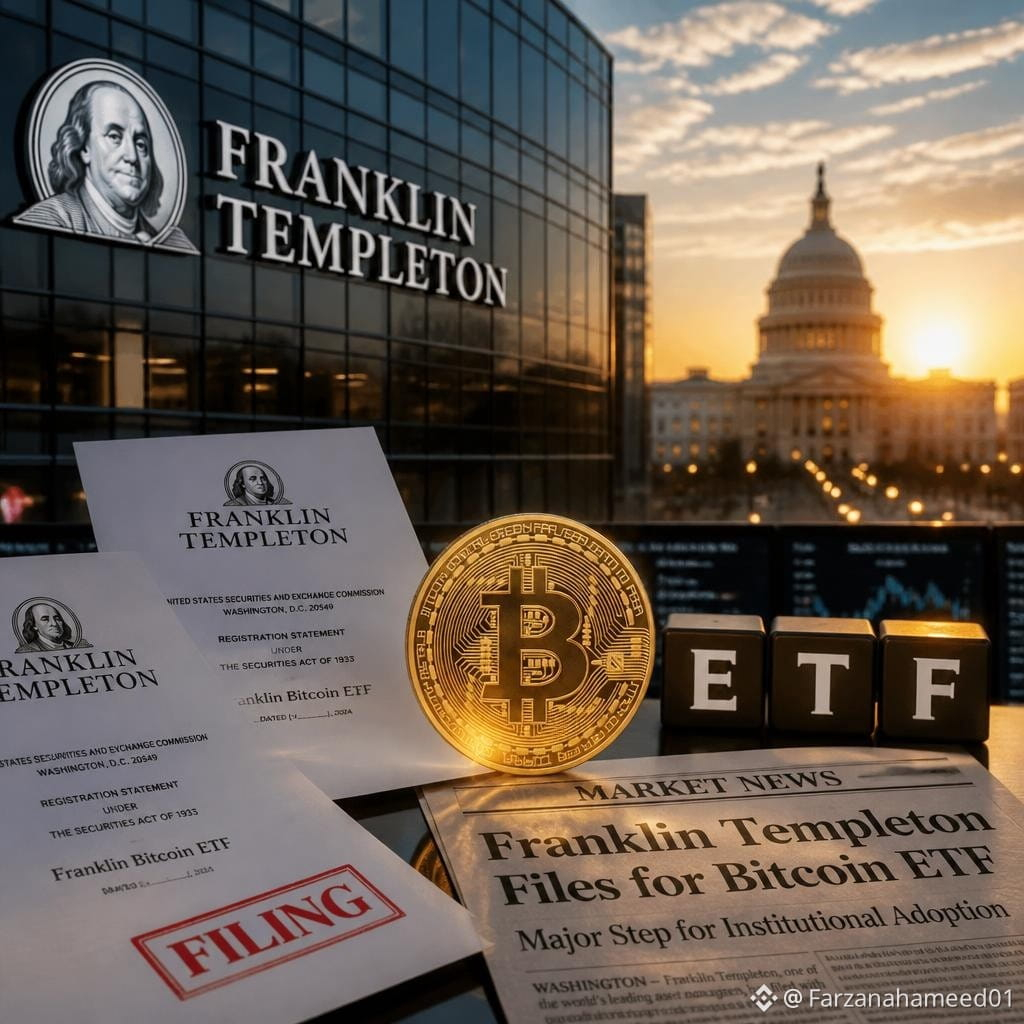
#franklintempletonfilestwodividendbitcoinetfs 🚨 Franklin Templeton's Bitcoin ETF Move Deserves Attention
This is worth watching - even for crypto traders.
HARD DATA:
SEC filing on Oct 22, 2026 shows Franklin Templeton registered 2 new ETFs - Franklin US Equity Bitcoin DRIP Index ETF and Franklin US Innovation Bitcoin DRIP Index ETF. The $1.8 Trillion asset manager plans 95% US stocks + 5% Bitcoin allocation on Nasdaq, with all stock dividends auto-routed into Bitcoin exposure.
$BTC
WHY CARE?
Why should crypto traders care? This is not just another ETF. It's a new flow mechanism. Every time those portfolio companies pay dividends, that cash becomes BTC buying pressure. If approved, it creates a passive, rules-based demand loop from traditional equity income straight into Bitcoin.
$BTC
BALANCED VIEW:
The other side matters: Risk bhi hai. 1) It's still a filing, not approval. 2) BTC is capped at a small sleeve, so impact depends on how big these ETFs actually get. 3) If equities fall and dividends get cut, the Bitcoin buying engine slows too. And bearish market me ye structure underperform kar sakta hai.
TAKEAWAY:
The takeaway: treat this as a signal about institutional adoption, not a trading trigger. Big asset managers are now engineering products to turn stock income into crypto exposure.
#BitcoinETF #FranklinTempleton #CryptoNews
5
44

·
--
#FranklinTempletonFilesForTwoDividendToBitcoinETFs BITCOIN IS GETTING ANOTHER WALL STREET CONNECTION — ARE YOU READY?
Franklin Templeton has filed for two proposed ETFs designed to connect stock dividend income with Bitcoin exposure.
Both target an initial 5% BTC allocation, potentially creating another bridge between traditional finance and crypto.
If adoption grows, could this become a long-term catalyst for $BTC?
Smart traders watch the news, plan their entries, and manage risk. Don't chase pumps — trade with a strategy.
My 3 Target Support Zones for BTC:
Zone 1: $80K–$81K Zone 2: $78K–$79K Zone 3: $75K–$76K
I AM DCA BUYING MY FAVORITE COINS FOR THE LONG TERM: 👉 $BNB | $ETH | $BTC
My strategy is simple: Buy gradually, stay patient, and hold for the long term.
YOUR MOVE: BUY BTC, HOLD, OR WAIT FOR A DIP?
Share your strategy in the comments.
buy and hold in spot long terM 👇
{spot}(SOLUSDT)
{spot}(SUIUSDT)
{spot}(BTCUSDT)
#bitcoin #BTC #BitcoinETF #CryptoNews
#FranklinTempletonFilesForTwoDividendToBitcoinETFs BITCOIN IS GETTING ANOTHER WALL STREET CONNECTION — ARE YOU READY?
Franklin Templeton has filed for two proposed ETFs designed to connect stock dividend income with Bitcoin exposure.
Both target an initial 5% BTC allocation, potentially creating another bridge between traditional finance and crypto.
If adoption grows, could this become a long-term catalyst for $BTC ?
Smart traders watch the news, plan their entries, and manage risk. Don't chase pumps — trade with a strategy.
My 3 Target Support Zones for BTC:
Zone 1: $80K–$81K Zone 2: $78K–$79K Zone 3: $75K–$76K
I AM DCA BUYING MY FAVORITE COINS FOR THE LONG TERM: 👉 $BNB | $ETH | $BTC
My strategy is simple: Buy gradually, stay patient, and hold for the long term.
YOUR MOVE: BUY BTC, HOLD, OR WAIT FOR A DIP?
Share your strategy in the comments.
buy and hold in spot long terM 👇
#bitcoin #BTC #BitcoinETF #CryptoNews
1
1
157

🚨 WALL STREET MEETS BITCOIN! FRANKLIN TEMPLETON TAKES A NEW STEP ₿
Big news for the crypto market! 👀 Franklin Templeton is moving closer to bringing Bitcoin exposure into traditional stock investment strategies.
Here’s what makes these two proposed ETFs interesting:
📊 95% Stocks + 5% Bitcoin: Both funds start with this target allocation.
💰 Dividends Into Bitcoin: Instead of reinvesting stock dividends back into shares, the strategy directs those dividends toward Bitcoin exposure.
🏦 Two Different Strategies:
🔹 FBEQ — Focuses on large-cap US stocks.
🔹 FIBT — Focuses on innovation-oriented US companies.
📈 Why It Matters: This structure could offer traditional investors another route to gain indirect Bitcoin exposure without buying BTC directly themselves.
⚠️ Important Detail: The latest filings point to October 27 as the effective date, but that does not automatically mean trading has started. The funds also carry investment risks, and their Bitcoin allocation is subject to rebalancing rules.
🧠 My Take: The bigger story is how traditional finance continues exploring new ways to connect stock-market investing with Bitcoin. It could broaden access to BTC exposure, but it does not guarantee higher prices.
💬 What do you think? Could dividend-funded Bitcoin exposure become a popular investment strategy?
👇 Share your thoughts!
$BTC
#Bitcoin #CryptoNews #BitcoinETF
1
69

·
--
#FranklinTempletonFilesForTwoDividendToBitcoinETFs
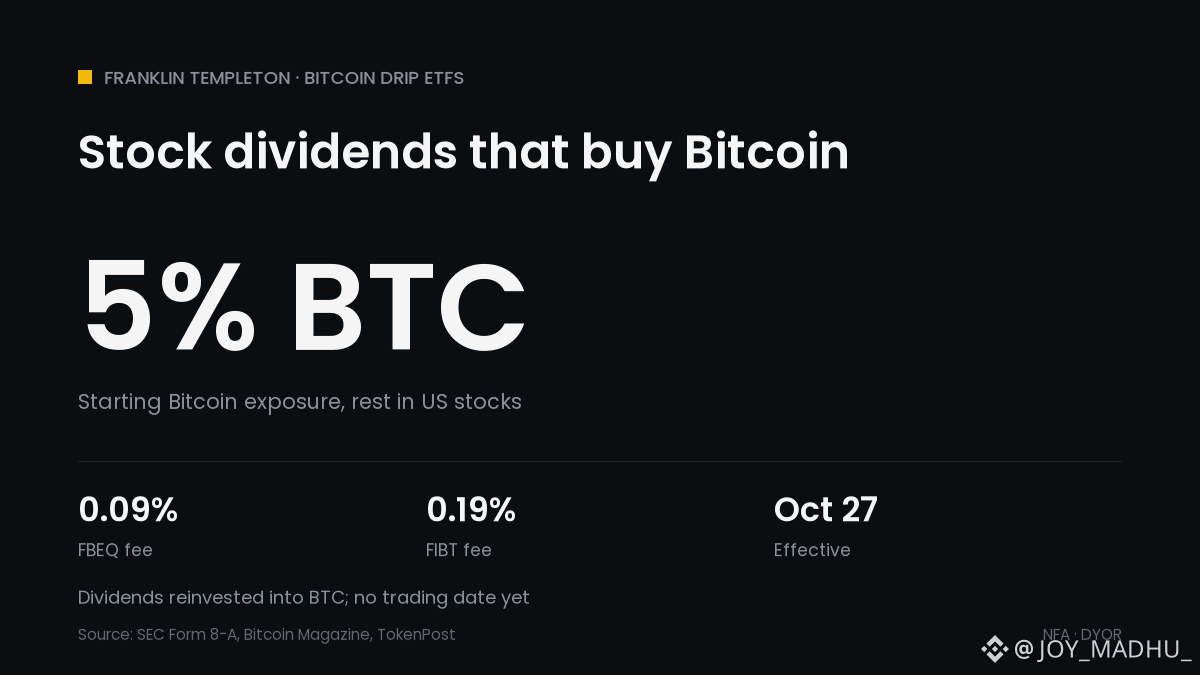
🏦 Franklin Templeton Wants Stock Dividends to Buy Bitcoin
📄 Oct 22: Franklin filed to list two "Bitcoin DRIP" ETFs on Nasdaq
📊 FBEQ tracks 500 large US stocks (0.09% fee); FIBT tracks 100 innovation stocks (0.19%)
⚖️ Each index starts at 95% stocks and 5% Bitcoin exposure
🔁 Every dividend, regular or special, gets reinvested into Bitcoin the day after the ex-date
⚠️ Caps: BTC above 5% is trimmed to 4.5% each quarter, and never runs past 20%
📅 Prospectuses take effect Oct 27, but no trading date has been announced
What it means for Bitcoin: a $1.8T asset manager is building a slow, automatic BTC bid into plain stock funds. It's a small sleeve, not a spot ETF. BTC is near $80.4K, up about 0.3% in 24h.
Would you rather get dividends in cash or in Bitcoin? 👇
$BTC
#CryptoNews #BitcoinETF #FranklinTempleton #FranklinTempletonFilesForTwoDividendToBitcoinETFs
16

·
--
🚨 BITCOIN ETFs BREAK 2-WEEK OUTFLOW STREAK WITH $301M COMEBACK! 🔥
US spot Bitcoin ETFs recorded approximately $301 million in net inflows, ending two consecutive weeks of outflows.
📊 KEY MARKET HIGHLIGHTS:
💰 $301M — Weekly net inflows into Bitcoin ETFs.
🏦 $1.08B — Inflows recorded between Monday and Wednesday.
⚠️ $774M — Withdrawn on Thursday and Friday as BTC retreated toward $80,000.
📉 Bitcoin dropped from a weekly high of $84,777 to around $80,025.
🐻 Meanwhile, US spot Ethereum ETFs recorded another $221 million in weekly outflows, extending their losing streak to four weeks.
WHAT'S NEXT FOR BITCOIN? 👀
ETF inflows have turned positive again, but heavy late-week withdrawals suggest uncertainty remains in the market.
The big question is whether institutional demand can return strongly enough to support the next BTC rally.
#BTC #BitcoinETF #BinancePick
{spot}(BTCUSDT)
🚨 BITCOIN ETFs BREAK 2-WEEK OUTFLOW STREAK WITH $301M COMEBACK! 🔥
US spot Bitcoin ETFs recorded approximately $301 million in net inflows, ending two consecutive weeks of outflows.
📊 KEY MARKET HIGHLIGHTS:
💰 $301M — Weekly net inflows into Bitcoin ETFs.
🏦 $1.08B — Inflows recorded between Monday and Wednesday.
⚠️ $774M — Withdrawn on Thursday and Friday as BTC retreated toward $80,000.
📉 Bitcoin dropped from a weekly high of $84,777 to around $80,025.
🐻 Meanwhile, US spot Ethereum ETFs recorded another $221 million in weekly outflows, extending their losing streak to four weeks.
WHAT'S NEXT FOR BITCOIN? 👀
ETF inflows have turned positive again, but heavy late-week withdrawals suggest uncertainty remains in the market.
The big question is whether institutional demand can return strongly enough to support the next BTC rally.
#BTC #BitcoinETF #BinancePick
1
65

🔥 Spot Bitcoin ETFs aren't just a headline; they’re a market‑shifting inflection point.
📈 Monday saw $532 million pour into U.S. spot Bitcoin ETFs for the third straight day, led by BlackRock and Fidelity, while BTC hovers at $80,345 with a bearish RSI 42.6 and futures open interest at $7.55 billion supporting a modest +0.0080% funding rate. #BitcoinETF #InstitutionalMoney
🌐 This flood of regulated capital signals the next phase of the #CryptoCycle – institutional confidence often precedes the “price discovery” wave that launches a multi‑year bull run, echoing the early‑2021 surge when on‑chain smart‑money wallets began loading up. #LongTermThesis
💡 Practical move: keep a modest allocation in BTC or a spot‑ETF, monitor the weekly chart for a breakout above the 33.4% Bollinger mid‑range, and hold cash ready for a pull‑back when the RSI dips below 35.
❓ How are you positioning now – buying the dip, waiting for a breakout, or staying on the sidelines?
58

·
--
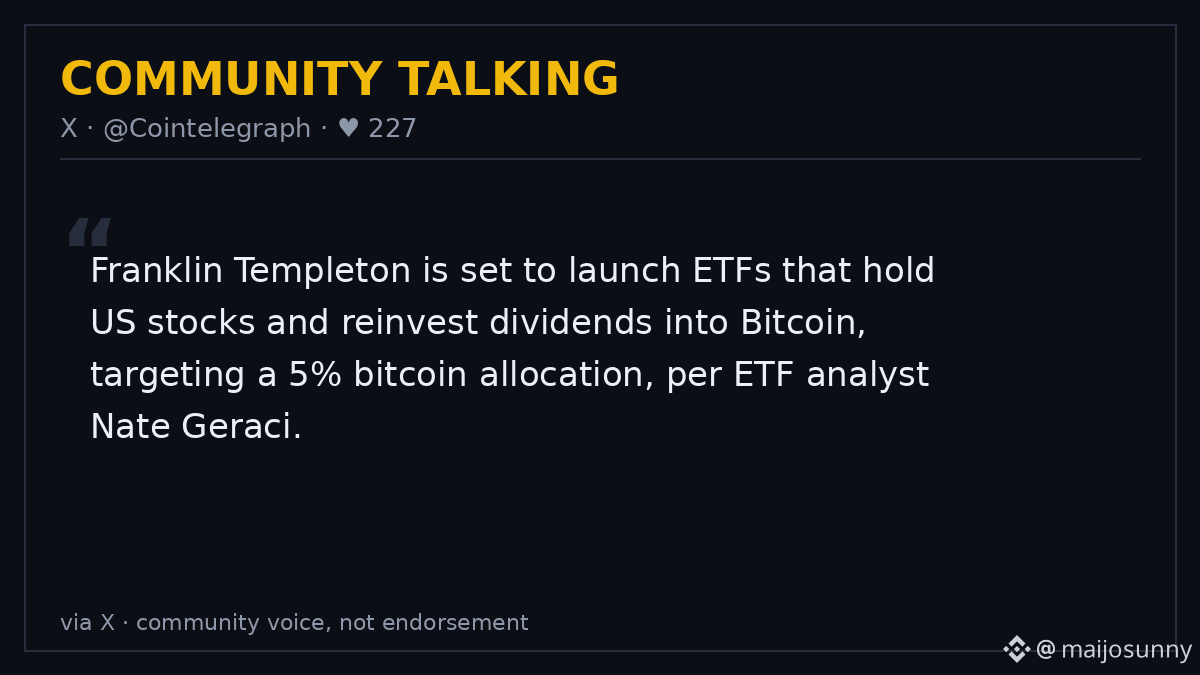
👀 "Franklin Templeton is set to launch ETFs that hold US stocks and reinvest dividends into Bitcoin."
That is Cointelegraph on X today, crediting ETF analyst Nate Geraci. The details underneath are better than the headline.
Two funds, FBEQ and FIBT, start at 95% US stocks and 5% Bitcoin exposure. Every dividend those stocks pay, regular or special, gets reinvested into Bitcoin at the next day's open instead of buying more shares. Registration goes effective Oct 27, with fees from 0.09%. No trading date announced yet.
My take: this is a plumbing innovation, not a Bitcoin buying spree. The funds do not hold BTC directly. Exposure comes through Bitcoin ETPs, futures and options, and the Bitcoin sleeve gets trimmed back to 4.5% at each quarterly rebalance if it drifts above 5%.
And here is the number everyone will misread. $1.8 trillion is Franklin Templeton's total assets under management. It is NOT money flowing into Bitcoin. The actual BTC buying is limited to dividend cash from the equity sleeve, a slow drip by design.
Why it matters: if this structure works, every dividend season becomes a small mechanical bid for $BTC, and other managers will copy it. Approval alone does not guarantee a single dollar of inflows, so the test is simple. Watch whether FBEQ and FIBT actually gather assets once trading starts.
🟢 Bull case: the DRIP model spreads and dividend flows become a steady Bitcoin demand channel.
🔴 Bear case: investors ignore it and it joins the long list of clever ETFs with no flows.
What to watch:
- Oct 27: registration effective
- First trading date, still unannounced
- Early flows, after $635M left US spot BTC ETFs on Oct 22
Meanwhile $BTC sits at $80,154, down 0.9% in 24h, holding just above $80K.
Would you let your dividends buy Bitcoin for you, or keep the cash? 👇
Not financial advice. DYOR.
#BitcoinETF #crypto
👀 "Franklin Templeton is set to launch ETFs that hold US stocks and reinvest dividends into Bitcoin."
That is Cointelegraph on X today, crediting ETF analyst Nate Geraci. The details underneath are better than the headline.
Two funds, FBEQ and FIBT, start at 95% US stocks and 5% Bitcoin exposure. Every dividend those stocks pay, regular or special, gets reinvested into Bitcoin at the next day's open instead of buying more shares. Registration goes effective Oct 27, with fees from 0.09%. No trading date announced yet.
My take: this is a plumbing innovation, not a Bitcoin buying spree. The funds do not hold BTC directly. Exposure comes through Bitcoin ETPs, futures and options, and the Bitcoin sleeve gets trimmed back to 4.5% at each quarterly rebalance if it drifts above 5%.
And here is the number everyone will misread. $1.8 trillion is Franklin Templeton's total assets under management. It is NOT money flowing into Bitcoin. The actual BTC buying is limited to dividend cash from the equity sleeve, a slow drip by design.
Why it matters: if this structure works, every dividend season becomes a small mechanical bid for $BTC , and other managers will copy it. Approval alone does not guarantee a single dollar of inflows, so the test is simple. Watch whether FBEQ and FIBT actually gather assets once trading starts.
🟢 Bull case: the DRIP model spreads and dividend flows become a steady Bitcoin demand channel.
🔴 Bear case: investors ignore it and it joins the long list of clever ETFs with no flows.
What to watch:
- Oct 27: registration effective
- First trading date, still unannounced
- Early flows, after $635M left US spot BTC ETFs on Oct 22
Meanwhile $BTC sits at $80,154, down 0.9% in 24h, holding just above $80K.
Would you let your dividends buy Bitcoin for you, or keep the cash? 👇
Not financial advice. DYOR.
#BitcoinETF #crypto
67

·
--
🚨🔥 BITCOIN UNDER PRESSURE — BUT IS THE BIG MONEY COMING BACK? 🐋📊
💥 THE CRYPTO MARKET IS SENDING MIXED SIGNALS!
📉 Bitcoin ETF outflows reportedly reached around $635 MILLION in one day on October 22, raising fresh questions about institutional demand. Meanwhile, investors are watching whether Bitcoin can hold near the $80K level. 👀 <Cite refs={["turn525380search3","turn525380search5"]}/>
⚡ HERE'S WHAT MATTERS:
🔴 ETF outflows could signal short-term caution.
🟢 Institutional demand could return if market sentiment improves.
🐋 Whale movements and global economic news remain important signals.
🔥 The next move could change the market mood!
💬 THE BIG QUESTION: Is BTC preparing for a recovery, or could more volatility be ahead?
👇 Comment your view: BULLISH 🐂 or BEARISH 🐻?
⚠️ Crypto is highly volatile. This post is for discussion, not financial advice.
#Bitcoin #BTC #Binance #CryptoNews #CryptoMarket #BitcoinETF #CryptoCommunity
$SOL $BTC

126
·
--
$BTC
{spot}(BTCUSDT)
🚨 BITCOIN ETF's RECORD $301 MILLION IN WEEKLY INFLOWS!
US spot Bitcoin ETFs ended the week with approximately $301.2 million in net inflows, breaking a two-week streak of outflows totaling around $910 million.
📊 KEY HIGHLIGHTS:
💰 $301.2M — Total weekly net inflows.
🏦 $565.7M — BlackRock's IBIT weekly inflows, making it the biggest contributor.
📈 Monday and Wednesday saw strong inflows, bringing in over $1 billion combined.
⚠️ However, Thursday and Friday recorded significant outflows totaling $773.5 million.
🐋 Despite late-week selling pressure, IBIT remained the strongest contributor overall.
WHAT DOES THIS MEAN FOR BTC?
ETF inflows may signal renewed institutional demand, but the heavy late-week outflows show that investor sentiment remains mixed.
👀 Will institutional money push Bitcoin higher, or are we heading for another correction?
Drop your thoughts below! 👇🔥
#Bitcoin #BitcoinETF #CryptoNews #CryptoNewss
$BTC
🚨 BITCOIN ETF's RECORD $301 MILLION IN WEEKLY INFLOWS!
US spot Bitcoin ETFs ended the week with approximately $301.2 million in net inflows, breaking a two-week streak of outflows totaling around $910 million.
📊 KEY HIGHLIGHTS:
💰 $301.2M — Total weekly net inflows.
🏦 $565.7M — BlackRock's IBIT weekly inflows, making it the biggest contributor.
📈 Monday and Wednesday saw strong inflows, bringing in over $1 billion combined.
⚠️ However, Thursday and Friday recorded significant outflows totaling $773.5 million.
🐋 Despite late-week selling pressure, IBIT remained the strongest contributor overall.
WHAT DOES THIS MEAN FOR BTC?
ETF inflows may signal renewed institutional demand, but the heavy late-week outflows show that investor sentiment remains mixed.
👀 Will institutional money push Bitcoin higher, or are we heading for another correction?
Drop your thoughts below! 👇🔥
#Bitcoin #BitcoinETF #CryptoNews #CryptoNewss
1
53

·
--
Spot Bitcoin ETFs pull in $301M, ending two‑week outflow streak.
The inflow signals renewed investor appetite despite recent outflows that kept October negative.
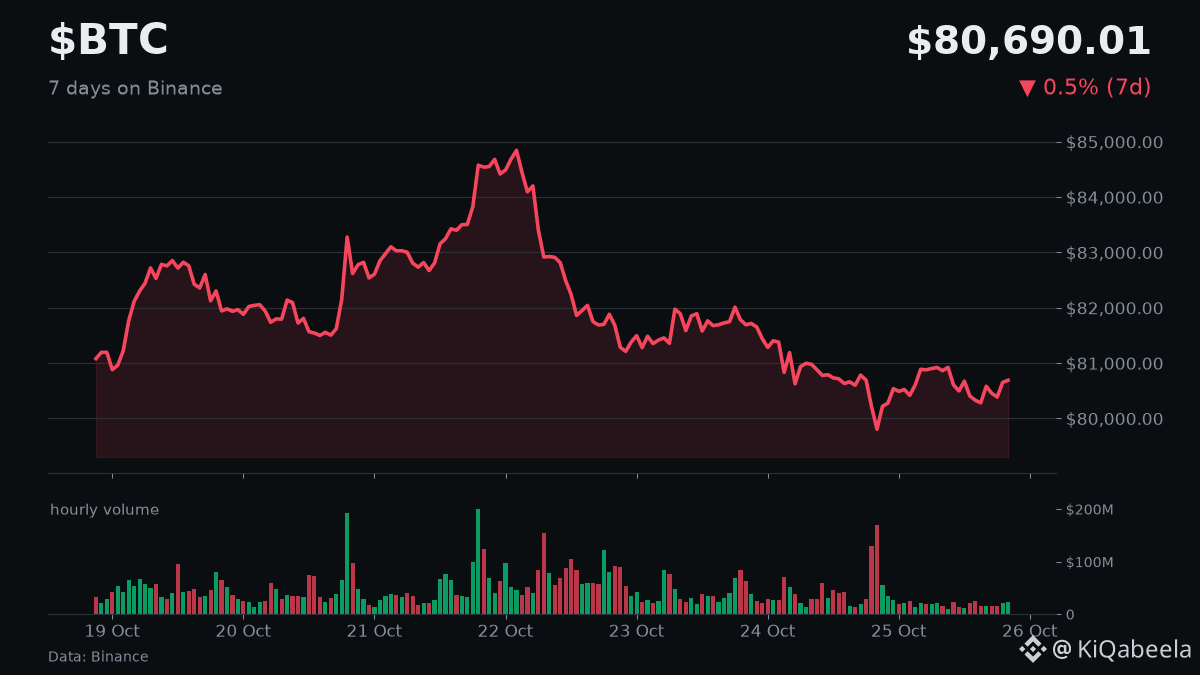
$BTC is up 0.2% at $80,375, but 24h volume sits at half its weekly average, hinting limited trading enthusiasm. Funding is +0.008%, so longs are paying shorts. Open interest slipped 2% to $7.5B and long‑to‑short accounts sit at 2.07‑to‑1.
My view: the modest price rise paired with thin volume suggests the ETF money may be more about portfolio rebalancing than fresh buying power.
💬 Bullish, bearish or waiting? One word.
#BitcoinETF #SpotETF
2

Spot Bitcoin ETFs managed to break their two week losing streak by recording three hundred and one million dollars in net inflows this week. Despite a late week slide that left October in the red, the net positive figure suggests underlying demand remains resilient. Traders should watch if this momentum can sustain through the end of the month or if outflows will return.
#BitcoinETF #SpotBitcoin ⠀
#BitcoinETF #SpotBitcoin ⠀
4

·
--
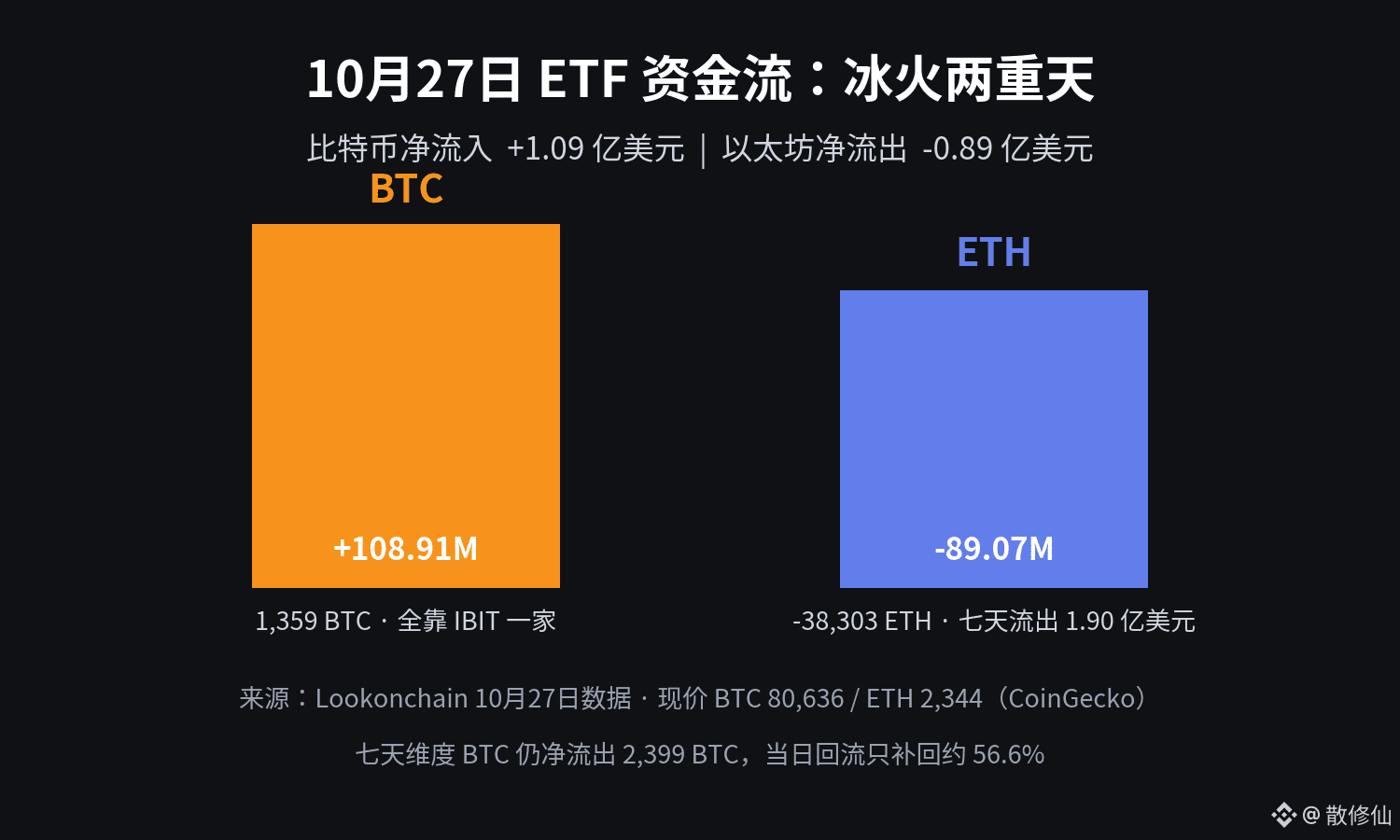
On the same day, Bitcoin ETFs saw $109 million in net inflows, while Ethereum ETFs saw $89.07 million in net outflows. That’s hardly a market recovery—it’s money being split at the door.
Data from Lookonchain: On October 27, Bitcoin ETFs saw net inflows of 1,359 BTC, all of it brought in by BlackRock’s IBIT. Excluding IBIT, the other products saw a combined net outflow of 22 BTC.
Ethereum was even more straightforward: 38,303 ETH flowed out in a single day, with total outflows of 81,754 ETH over seven days, worth about $190 million.
Just checked the latest prices on CoinGecko: BTC at $80,636, up 0.91%; ETH at $2,344, up 1.25%. Prices haven’t crashed, and the Fear & Greed Index is still stuck in neutral at 48.
I wouldn’t call this a return of institutional consensus. It’s more like BlackRock standing alone at the door with an umbrella while everyone else stays inside, waiting to see if the rain gets heavier.
The seven-day view is even more revealing: Bitcoin ETFs are still down 2,399 BTC net over seven days. This $109 million inflow only makes up about 56.6% of that—barely more than half the hole. Don’t rush to call a reversal.
Here’s the invalidation condition: if Bitcoin ETFs return to net outflows over the next two days, this “return of flows” is immediately off the table. Only consecutive net inflows would count as institutions genuinely turning back around.
No calls, no empty promises—where the money is going is plain as day on the chart.
Which side are you betting on: is this just a dead-cat bounce with IBIT carrying the load alone, or are institutional funds really about to turn back around?
$BTC $ETH
#BitcoinETF #ETFFundFlows
29

🧐 BITCOIN ETFs: INSTITUTIONAL MONEY IS FLOWING IN—WILL THE PRICE DEFINITELY RISE?
Don’t jump to conclusions!
Bitcoin ETF fund flows can help us understand investor interest, but they’re not the only factor driving prices.
There are 3 things to check:
1️⃣ Net inflow and outflow data.
2️⃣ The data period and sources used.
3️⃣ BTC’s price response and overall market conditions.
Inflows don’t guarantee that prices will rise. Likewise, outflows don’t automatically mean the market will fall.
💬 What do you think—how much influence do ETFs have on BTC price movements compared with macroeconomic sentiment?
Let’s discuss using data, not just guesswork. 👇
#BitcoinETF #BTC #CryptoMarket
$BTC
{spot}(BTCUSDT)
🧐 BITCOIN ETFs: INSTITUTIONAL MONEY IS FLOWING IN—WILL THE PRICE DEFINITELY RISE?
Don’t jump to conclusions!
Bitcoin ETF fund flows can help us understand investor interest, but they’re not the only factor driving prices.
There are 3 things to check:
1️⃣ Net inflow and outflow data.
2️⃣ The data period and sources used.
3️⃣ BTC’s price response and overall market conditions.
Inflows don’t guarantee that prices will rise. Likewise, outflows don’t automatically mean the market will fall.
💬 What do you think—how much influence do ETFs have on BTC price movements compared with macroeconomic sentiment?
Let’s discuss using data, not just guesswork. 👇
#BitcoinETF #BTC #CryptoMarket
$BTC
1
55

·
--
Bullish
📉 Bitcoin and Ethereum ETF outflows have exceeded one billion dollars this month. However, history has taught us that the best entry points tend to appear when sentiment turns negative. 🚀 #BitcoinETF #EthereumETF $$BTC
{spot}(BTCUSDT)
📉 Bitcoin and Ethereum ETF outflows have exceeded one billion dollars this month. However, history has taught us that the best entry points tend to appear when sentiment turns negative. 🚀 #BitcoinETF #EthereumETF $$BTC
28

·
--
Bitcoin ETFs see $110 million in single-day inflows, but October still records $202 million in net outflows
Spot Bitcoin ETFs saw a one-day inflow on Monday, but remained in net outflow territory for October as a whole. The contrast between “turning positive” on the day and “remaining negative” for the month is the key point to clarify.
According to Cointelegraph, U.S. spot Bitcoin ETFs recorded net inflows of about $110 million on Monday, rebounding after outflows of roughly $774 million the previous day. However, for October as a whole, spot ETFs saw cumulative net outflows of about $202 million, leaving overall flows weak.
ETF flows are considered one of the clearest indicators of market direction in this cycle. The shift from net outflows to positive inflows in a single day suggests that short-term buyers returned after a sharp pullback, providing some support for the price of $BTC. But viewed over a longer period, October’s $202 million in net outflows indicates that structural selling pressure has yet to ease. Whether the one-day rebound in flows can persist still needs to be confirmed by price action and subsequent flows.
The comparison between the figures is telling: $774 million in outflows followed by a $110 million rebound the next day reflects how quickly sentiment can shift amid extreme volatility. Meanwhile, $202 million in net outflows for the month shows that funds are still withdrawing cautiously on a monthly basis. It remains unclear whether this “one-day recovery” can develop into a “trend reversal.”
The market may interpret the figures in one of two ways. If the inflows continue, short-term sentiment could stabilize, and ETF flows may support the price of $BTC. But if this was merely a technical, one-day rebound and the monthly net-outflow pattern remains unchanged, the upside for any rally could be limited, with the risk of a “bull trap” worth watching.
There are also clear countervailing factors: October’s $202 million in net outflows indicates that institutional investors are still reducing their positions overall, and a one-day rebound does not necessarily signal a return of longer-term confidence. In addition, the $774 million outflow the previous day highlights the volatility in flows, and the possibility of sentiment reversing again should not be overlooked.
What to watch next: whether the one-day rebound in flows can continue is key. Keep an eye on the direction of ETF flows over the next few trading days, and whether the price of $BTC can hold steady as flows improve. If price and flows strengthen together, the rebound may be sustainable. If prices weaken and flows turn negative again, this rebound is more likely to be a short-term recovery than a trend reversal.
$BTC #BitcoinETF #Bitcoin
The above is a summary of information and personal analysis, and does not constitute investment advice.
Bitcoin ETFs see $110 million in single-day inflows, but October still records $202 million in net outflows
Spot Bitcoin ETFs saw a one-day inflow on Monday, but remained in net outflow territory for October as a whole. The contrast between “turning positive” on the day and “remaining negative” for the month is the key point to clarify.
According to Cointelegraph, U.S. spot Bitcoin ETFs recorded net inflows of about $110 million on Monday, rebounding after outflows of roughly $774 million the previous day. However, for October as a whole, spot ETFs saw cumulative net outflows of about $202 million, leaving overall flows weak.
ETF flows are considered one of the clearest indicators of market direction in this cycle. The shift from net outflows to positive inflows in a single day suggests that short-term buyers returned after a sharp pullback, providing some support for the price of $BTC . But viewed over a longer period, October’s $202 million in net outflows indicates that structural selling pressure has yet to ease. Whether the one-day rebound in flows can persist still needs to be confirmed by price action and subsequent flows.
The comparison between the figures is telling: $774 million in outflows followed by a $110 million rebound the next day reflects how quickly sentiment can shift amid extreme volatility. Meanwhile, $202 million in net outflows for the month shows that funds are still withdrawing cautiously on a monthly basis. It remains unclear whether this “one-day recovery” can develop into a “trend reversal.”
The market may interpret the figures in one of two ways. If the inflows continue, short-term sentiment could stabilize, and ETF flows may support the price of $BTC . But if this was merely a technical, one-day rebound and the monthly net-outflow pattern remains unchanged, the upside for any rally could be limited, with the risk of a “bull trap” worth watching.
There are also clear countervailing factors: October’s $202 million in net outflows indicates that institutional investors are still reducing their positions overall, and a one-day rebound does not necessarily signal a return of longer-term confidence. In addition, the $774 million outflow the previous day highlights the volatility in flows, and the possibility of sentiment reversing again should not be overlooked.
What to watch next: whether the one-day rebound in flows can continue is key. Keep an eye on the direction of ETF flows over the next few trading days, and whether the price of $BTC can hold steady as flows improve. If price and flows strengthen together, the rebound may be sustainable. If prices weaken and flows turn negative again, this rebound is more likely to be a short-term recovery than a trend reversal.
$BTC #BitcoinETF #Bitcoin
The above is a summary of information and personal analysis, and does not constitute investment advice.
Log in to explore more content
Join global crypto users on Binance Square
⚡️ Get latest and useful information about crypto.
💬 Trusted by the world’s largest crypto exchange.
👍 Discover real insights from verified creators.
Email / Phone number
Trending Topics
1
#CanMicrosoftDeliverOnAI
150,368 views
1,196 Discussing
2
#CanGoogleDefindItsCore
75,909 views
833 Discussing
3
#FOMCWatch
9.1M views
28,474 Discussing
4
#SKHynixUnveils$45BShareholderReturns
87 views
5 Discussing
5
#OSMOPlansToBurn100MTokensFromCommunityPool
3,363 views
119 Discussing
6
#EthereumDropsBelow$2300
12,568 views
167 Discussing
7
#BitcoinSlipsBelow$80KAgain
35,634 views
133 Discussing
8
#ThailandLaunchesWORPTStablecoinToQRPaymentApp
78,958 views
941 Discussing
9
#StrategySkipsBitcoinPurchasesSpends$205MOnSTRCBuybacks
14,161 views
101 Discussing
10
#BitmineAdds10452ETH
131,707 views
1,365 Discussing