
#arvo
arvo
923 views
6 Discussing
Hot
Latest

·
--
Bullish
🧠 The Importance of Knowing Which Charts to Avoid
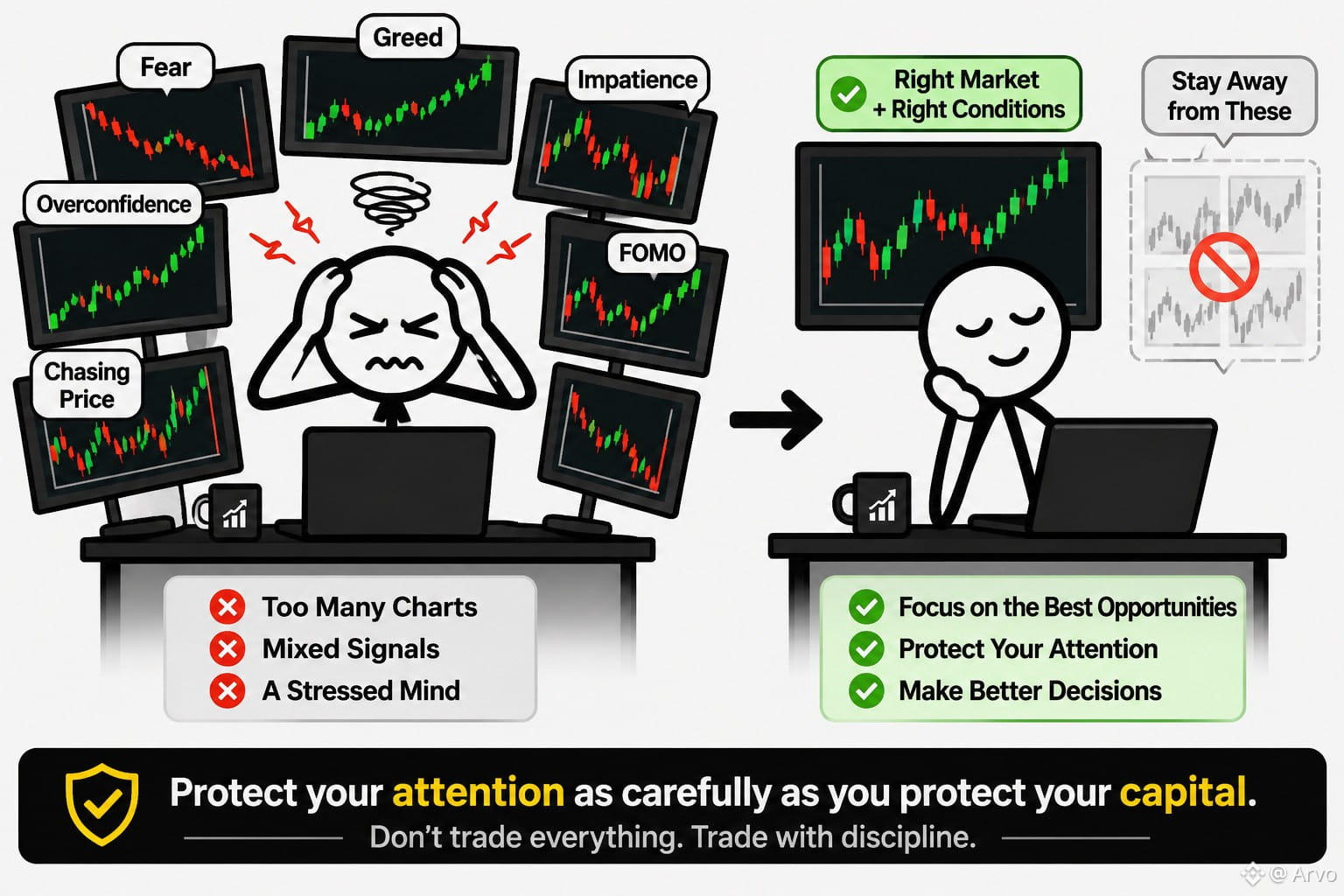
Most traders lose money not because they lack knowledge or strategies, but because they don't know which charts to avoid and when to stay away from the market.
Every chart you open affects your mind differently. Think of each chart as a separate wave of energy influencing your emotions and decisions.
Some charts trigger:
😨 Fear — making you hesitate or exit too early.
🤑 Greed — making you chase unrealistic opportunities.
😤 Impatience — pushing you to enter trades without proper setups.
🔥 Overconfidence — encouraging unnecessary risks.
😵 Confusion — making it harder to focus on your actual strategy.
The more charts you watch, the more psychological pressure you expose yourself to.
🎯 Key Points to Remember
📊 Be selective: You don't need to monitor every market.
🧠 Protect your focus: Too much chart exposure creates unnecessary mental noise.
🚫 Avoid bad setups: Not every movement is an opportunity.
⏳ Know when to stay away: Sometimes doing nothing is the best trade.
🎯 Focus on quality, not quantity: A few good opportunities are better than dozens of random trades.
💡 The Main Lesson
A professional trader doesn't chase every opportunity. They know what to watch, what to ignore, and when to walk away.
Protect your attention as carefully as you protect your capital. Your mental clarity is one of your greatest trading assets.
Watching: $PRL $KGEN $DJT
#arvo #HuangRisksOusterOverReportedAffairWithSubordinate
522
·
--
Bullish
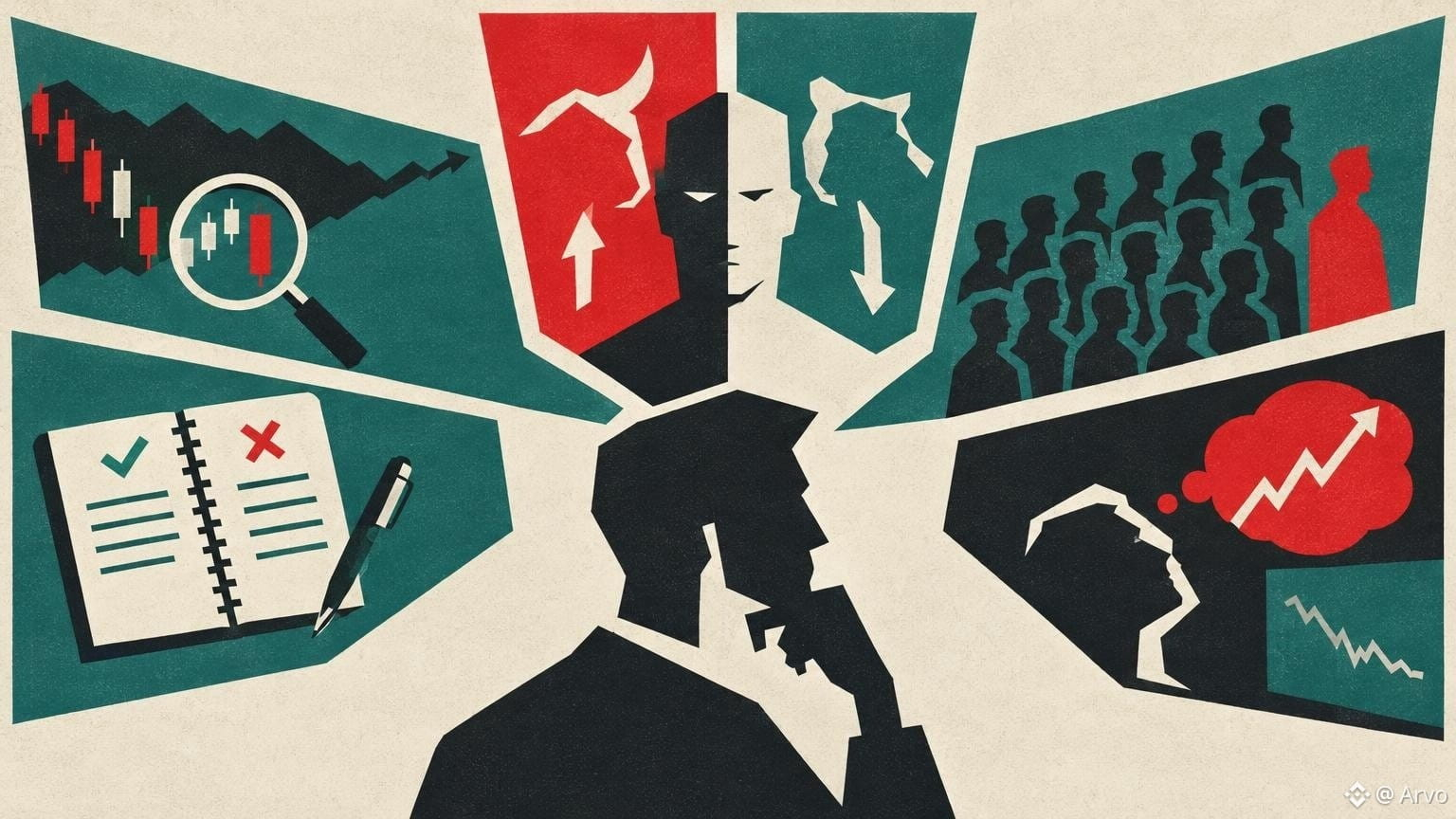
5 Trading Biases That Can Distort Your Decisions
1. Recency Bias: Letting recent wins or losses influence your next trade. A few losses can shake your confidence, while a recent market move can distract you from the bigger picture. Focus on the overall trend and follow your strategy.
2. Confirmation Bias: Looking only for information that supports your opinion while ignoring evidence against it. Challenge your own analysis and consider opposing views before entering a trade.
3. Herding Bias: Following the crowd instead of making independent decisions. Whether most traders are bullish or bearish, base your trades on solid analysis, not popular sentiment.
4. Attribution Bias: Taking full credit for winning trades while blaming losses on external factors. Review every trade honestly, identify your mistakes, and use a trading journal to improve your decision-making.
5. Addiction Bias: Becoming attached to the excitement of big wins and chasing that feeling with more trades. Past profits do not guarantee future success. Evaluate every setup objectively and trade only when your criteria are met.
The key lesson: Successful trading requires more than market knowledge. Recognize your psychological biases, control your emotions, and let your strategy—not your impulses—guide your decisions.
#arvo $IRYS $BIRB $ZEC
689
Log in to explore more content
Join global crypto users on Binance Square
⚡️ Get latest and useful information about crypto.
💬 Trusted by the world’s largest crypto exchange.
👍 Discover real insights from verified creators.
Email / Phone number
Trending Topics
1
#A Packed Week of Earnings and Data Tests Markets
7,475 views
106 Discussing
2
#AnthropicIPOTestsInvestorAppetiteForAI
4,103 views
168 Discussing
3
#HuangReportedlyConsidersReturnToNvidia
23,841 views
374 Discussing
4
#CryptoSelloffTriggersMultipleWhaleLiquidations
295,327 views
2,422 Discussing
5
#BitcoinSpotETFsPost$1.065BOutflowsForThirdStraightWeek
2,020 views
52 Discussing
6
#About64000BitcoinMiningMachinesReportedlyHijacked
20,818 views
273 Discussing
7
#USSpotXRPETFsSeeLargestWeeklyOutflowIn8Months
232,219 views
1,891 Discussing
8
#WillFOMCMinutesReinforceRateHikeExpectations?
87,385 views
962 Discussing
9
#BitcoinActiveSupplyInProfitDropsBelow45%
305,384 views
2,098 Discussing
10
#KavaSaysAbnormalActivityLimitedToKavaLend
199,262 views
1,188 Discussing