
#voyager1
voyager1
178 views
6 Discussing
Hot
Latest

·
--
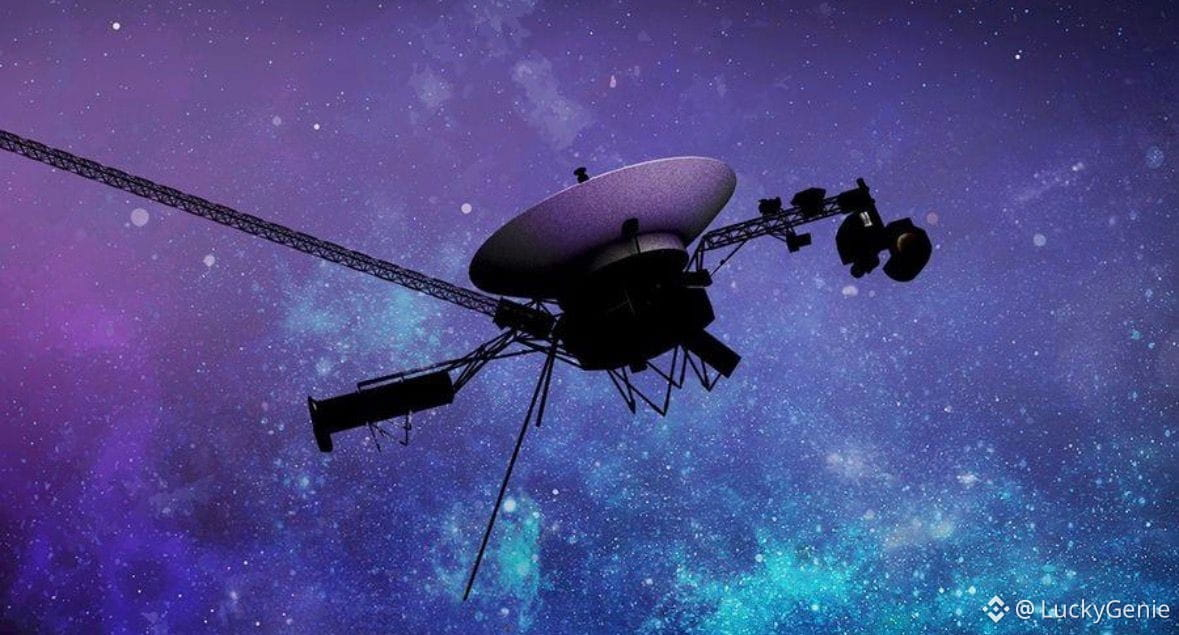
🚀 HUMANITY HAS ACHIEVED THE INCREDIBLE!
On November 18, 2026, at 12:16 Kyiv time, Voyager 1 became the first spacecraft in history to reach a distance of one light-day from Earth — about 25.9 billion kilometers!
$MSFTB
Launched in 1977, it is still continuing its journey through interstellar space.
$TSLAB
On board is a golden record bearing a message from humanity to possible extraterrestrial civilizations. The project was overseen by the great Carl Sagan.
Nearly half a century has passed, yet this creation of human hands continues to travel ever farther into space. 🌌
Do you think anyone will ever find our message?
#Voyager1 #NASA #космос #LuckyGenie
{spot}(NVDABUSDT)
🚀 HUMANITY HAS ACHIEVED THE INCREDIBLE!
On November 18, 2026, at 12:16 Kyiv time, Voyager 1 became the first spacecraft in history to reach a distance of one light-day from Earth — about 25.9 billion kilometers!
$MSFTB
Launched in 1977, it is still continuing its journey through interstellar space.
$TSLAB
On board is a golden record bearing a message from humanity to possible extraterrestrial civilizations. The project was overseen by the great Carl Sagan.
Nearly half a century has passed, yet this creation of human hands continues to travel ever farther into space. 🌌
Do you think anyone will ever find our message?
#Voyager1 #NASA #космос #LuckyGenie
7
106

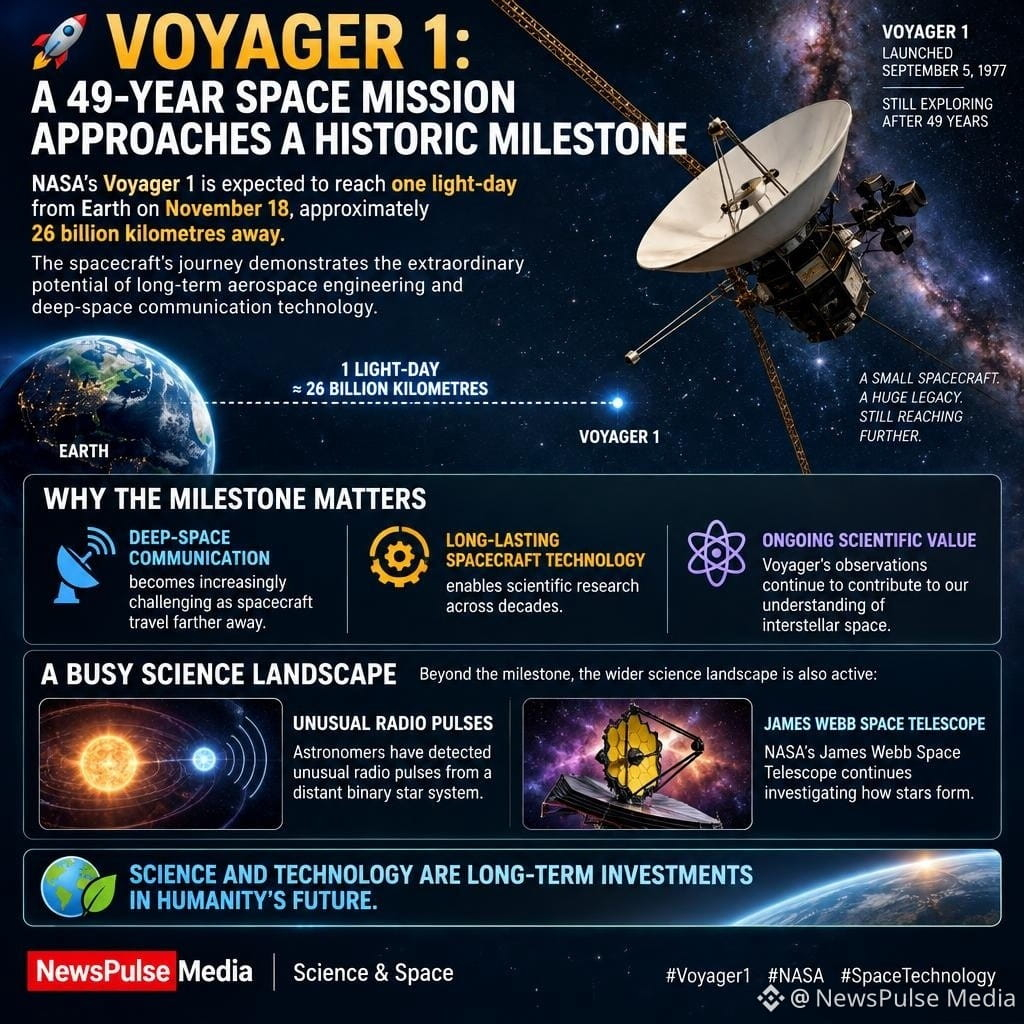
🚀 VOYAGER 1: A 49-YEAR SPACE MISSION APPROACHES A HISTORIC MILESTONE
NASA's Voyager 1 is expected to reach one light-day from Earth on November 18, approximately 26 billion kilometres away.
The spacecraft's journey demonstrates the extraordinary potential of long-term aerospace engineering and deep-space communication technology.
Why the milestone matters:
- Deep-space communication becomes increasingly challenging as spacecraft travel farther away.
- Long-lasting spacecraft technology enables scientific research across decades.
- Voyager's observations continue to contribute to our understanding of interstellar space.
Beyond the milestone, the wider science landscape is also active: astronomers have detected unusual radio pulses from a distant binary star system, while NASA's James Webb Space Telescope continues investigating how stars form.
Science and technology are long-term investments in humanity's future.
NewsPulse Media | Science & Space
#Voyager1 #NASA #SpaceTechnology #Aerospace #ScientificInnovation #Astronomy #DeepSpace #NewsPulseMedia
2
27
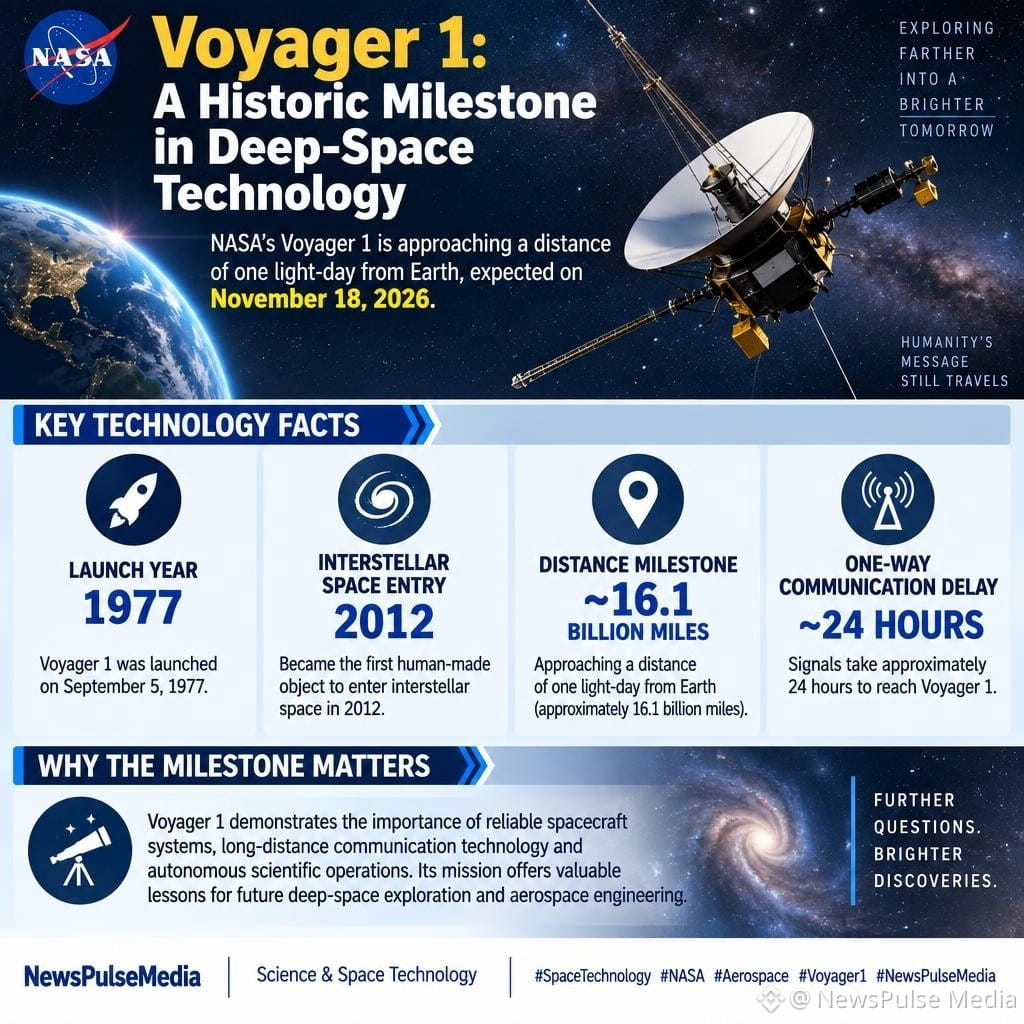
🚀 Voyager 1: A Historic Milestone in Deep-Space Technology
NASA's Voyager 1 is approaching a distance of one light-day from Earth, expected on November 18, 2026.
Key Technology Facts
- Launch year: 1977
- Interstellar space entry: 2012
- Distance milestone: Approximately 16.1 billion miles
- One-way communication delay: Approximately 24 hours
Why the Milestone Matters
Voyager 1 demonstrates the importance of reliable spacecraft systems, long-distance communication technology and autonomous scientific operations.
Its mission offers valuable lessons for future deep-space exploration and aerospace engineering.
NewsPulse Media | Science & Space Technology
#SpaceTechnology #NASA #Aerospace #Voyager1 #NewsPulseMedia
1
28
Log in to explore more content
Join global crypto users on Binance Square
⚡️ Get latest and useful information about crypto.
💬 Trusted by the world’s largest crypto exchange.
👍 Discover real insights from verified creators.
Email / Phone number
Trending Topics
1
#IsAnthropic’s$1.5TMarketCapJustified?
11,232 views
88 Discussing
2
#BTCRemainsUnderPressureAfterHawkishFOMCMinutes
248,453 views
2,109 Discussing
3
#NvidiaBoardReportedlySplitOverHuang’sReturn
120,991 views
1,141 Discussing
4
#StrategySTRCPreferredSlips3.65%Below$100Par
7,957 views
77 Discussing
5
#MASToUpgradeSGDTestnetToSGDigitalLedger
22,411 views
265 Discussing
6
#CanGTA6'sLaunchLiftTTWOShares?
87,092 views
824 Discussing
7
#Solana2027RoadmapTargetsDoubleComputeCapacity
9,710 views
137 Discussing
8
#InjectiveTokenizedRealEstateMortgagesTop$1.5B
1,192 views
28 Discussing
9
#TetherMakesStrategicInvestmentInSCRYPT
6,874 views
110 Discussing
10
#CapitalGroupAdds1264500StrategyShares
31,690 views
241 Discussing