

#tao
tao
18.3M views
47,944 Discussing
Hot
Latest

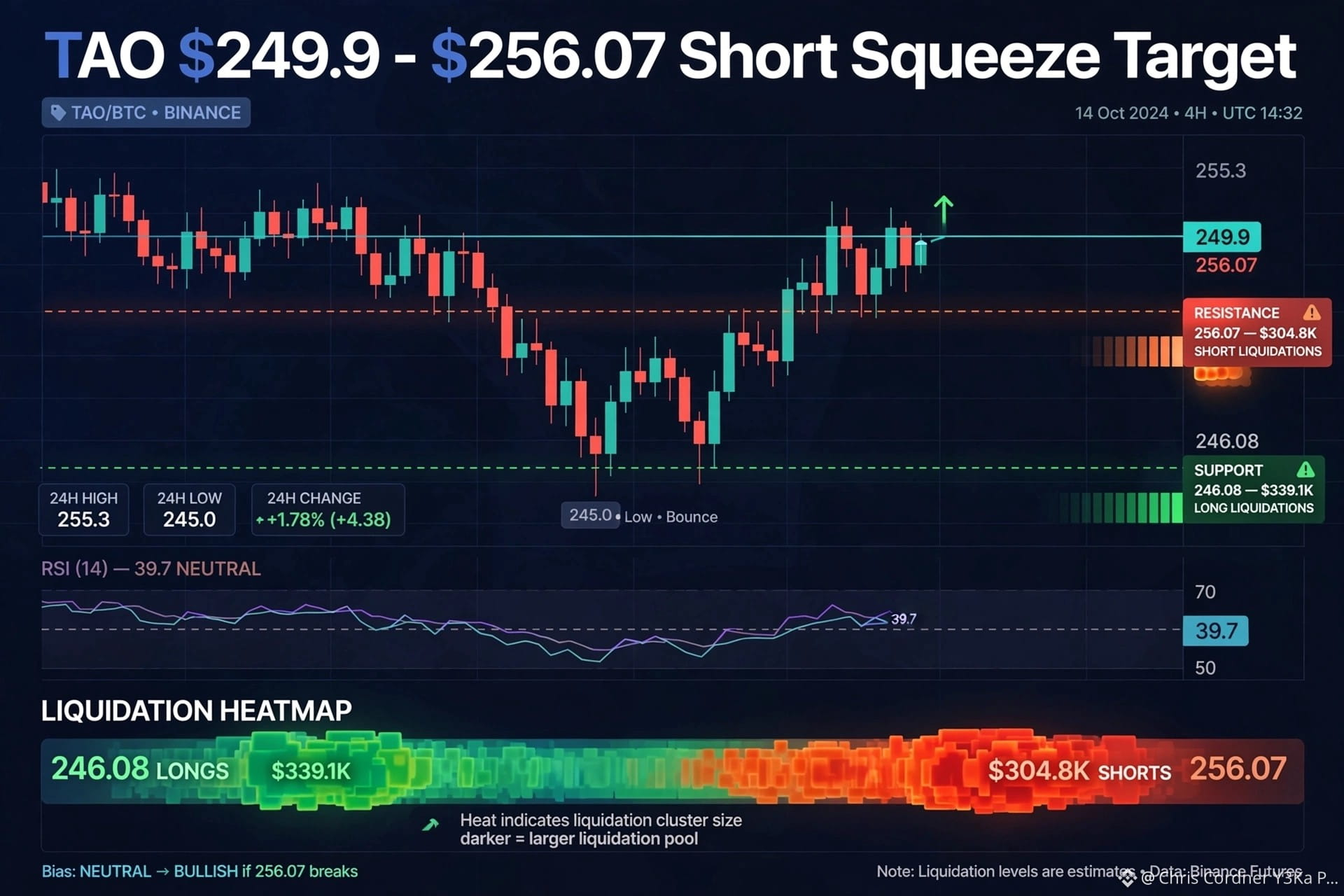
🚨 TAO $249.9 BOUNCING — $245 LOW SWEPT, $304K SHORTS AT $256.07 NEXT? 🚨
$TAO just bounced from $245.0 to $249.9 (+1.78%) — low swept, shorts next.
Live data Mon 10AM EAT Oct 26:
- Spot: $249.9 (+1.05%)
- Today: High $255.3 / Low $245.0
- OI: $373.9M (leverage building)
- 24h Vol: $219.8M
- Longs Rekt 24h: $77.6K
- Shorts Rekt 24h: $41.7K
Liquidation map RIGHT NOW:
- ABOVE: $256.07 = $304.8K short cluster (2.5% away) — LARGEST SHORT FUEL
- BELOW: $246.08 = $339.1K long cluster (1.5% away) — just swept at $245
- Spot bias: $3.2M shorts above vs $3.7M longs below — balanced, breakout incoming
Translation: Long liquidity at $246.08 / $245 taken, price bounced $5. Now path of least resistance is UP to $256.07 where $304.8K shorts get REKT.
I'm LONG $249.9 add $246.08 SL $244 TP1 $256.07 TP2 $260
RSI 39.7 neutral -> bullish reversal. Close 4H above $250 = squeeze to $256.07 FAST. Lose $246.08 we see $242.
👇 VOTE: Does TAO squeeze $256.07 today or retest $246.08 first? LONG or SHORT here? I reply to ALL!
#TAO #bittensor #crypto
🚨 TAO $249.9 BOUNCING — $245 LOW SWEPT, $304K SHORTS AT $256.07 NEXT? 🚨
$TAO just bounced from $245.0 to $249.9 (+1.78%) — low swept, shorts next.
Live data Mon 10AM EAT Oct 26:
- Spot: $249.9 (+1.05%)
- Today: High $255.3 / Low $245.0
- OI: $373.9M (leverage building)
- 24h Vol: $219.8M
- Longs Rekt 24h: $77.6K
- Shorts Rekt 24h: $41.7K
Liquidation map RIGHT NOW:
- ABOVE: $256.07 = $304.8K short cluster (2.5% away) — LARGEST SHORT FUEL
- BELOW: $246.08 = $339.1K long cluster (1.5% away) — just swept at $245
- Spot bias: $3.2M shorts above vs $3.7M longs below — balanced, breakout incoming
Translation: Long liquidity at $246.08 / $245 taken, price bounced $5. Now path of least resistance is UP to $256.07 where $304.8K shorts get REKT.
I'm LONG $249.9 add $246.08 SL $244 TP1 $256.07 TP2 $260
RSI 39.7 neutral -> bullish reversal. Close 4H above $250 = squeeze to $256.07 FAST. Lose $246.08 we see $242.
👇 VOTE: Does TAO squeeze $256.07 today or retest $246.08 first? LONG or SHORT here? I reply to ALL!
#TAO #bittensor #crypto
$TAO just bounced from $245.0 to $249.9 (+1.78%) — low swept, shorts next.
Live data Mon 10AM EAT Oct 26:
- Spot: $249.9 (+1.05%)
- Today: High $255.3 / Low $245.0
- OI: $373.9M (leverage building)
- 24h Vol: $219.8M
- Longs Rekt 24h: $77.6K
- Shorts Rekt 24h: $41.7K
Liquidation map RIGHT NOW:
- ABOVE: $256.07 = $304.8K short cluster (2.5% away) — LARGEST SHORT FUEL
- BELOW: $246.08 = $339.1K long cluster (1.5% away) — just swept at $245
- Spot bias: $3.2M shorts above vs $3.7M longs below — balanced, breakout incoming
Translation: Long liquidity at $246.08 / $245 taken, price bounced $5. Now path of least resistance is UP to $256.07 where $304.8K shorts get REKT.
I'm LONG $249.9 add $246.08 SL $244 TP1 $256.07 TP2 $260
RSI 39.7 neutral -> bullish reversal. Close 4H above $250 = squeeze to $256.07 FAST. Lose $246.08 we see $242.
👇 VOTE: Does TAO squeeze $256.07 today or retest $246.08 first? LONG or SHORT here? I reply to ALL!
#TAO #bittensor #crypto
1
1
172

$TAO Coin Price Forecast 🚀🔥☠️💥⚡
If you invest $ 1,000.00 in Bittensor today and hold until Jan 17, 2027, our prediction suggests you could see a potential profit of $ 1,733.25, reflecting a 173.32% ROI over the next 90 days.
TAO Price Forecast for 2026
Market experts expect that in November 2026, the value will not drop below a minimum of $320.48 The maximum peak expected this month is $431.85 The estimated average trading value will be at the level of $392.17
Price Prediction 2027
After the analysis of the prices of in previous years, it is assumed that in 2026, the minimum price of will be around $567.54. The maximum expected TAO price may be around $775.19. On average, the trading price might be $673.84 in 2027.
Price Prediction 2028
Based on the technical analysis by cryptocurrency experts regarding the prices of , in 2028, TAO is expected to have the following minimum and maximum prices: about $863.74 and $1,060.22, respectively. The average expected trading cost is $888.19.
Price Prediction 2029
The experts in the field of cryptocurrency have analyzed the prices of and their fluctuations during the previous years. It is assumed that in 2029, the minimum TAO price might drop to $1,271.34, while its maximum can reach $1,497.77. On average, the trading cost will be around $1,318.69.
Please🙏 Follow Me ❤
#TAO
$TAO Coin Price Forecast 🚀🔥☠️💥⚡
If you invest $ 1,000.00 in Bittensor today and hold until Jan 17, 2027, our prediction suggests you could see a potential profit of $ 1,733.25, reflecting a 173.32% ROI over the next 90 days.
TAO Price Forecast for 2026
Market experts expect that in November 2026, the value will not drop below a minimum of $320.48 The maximum peak expected this month is $431.85 The estimated average trading value will be at the level of $392.17
Price Prediction 2027
After the analysis of the prices of in previous years, it is assumed that in 2026, the minimum price of will be around $567.54. The maximum expected TAO price may be around $775.19. On average, the trading price might be $673.84 in 2027.
Price Prediction 2028
Based on the technical analysis by cryptocurrency experts regarding the prices of , in 2028, TAO is expected to have the following minimum and maximum prices: about $863.74 and $1,060.22, respectively. The average expected trading cost is $888.19.
Price Prediction 2029
The experts in the field of cryptocurrency have analyzed the prices of and their fluctuations during the previous years. It is assumed that in 2029, the minimum TAO price might drop to $1,271.34, while its maximum can reach $1,497.77. On average, the trading cost will be around $1,318.69.
Please🙏 Follow Me ❤
#TAO
If you invest $ 1,000.00 in Bittensor today and hold until Jan 17, 2027, our prediction suggests you could see a potential profit of $ 1,733.25, reflecting a 173.32% ROI over the next 90 days.
TAO Price Forecast for 2026
Market experts expect that in November 2026, the value will not drop below a minimum of $320.48 The maximum peak expected this month is $431.85 The estimated average trading value will be at the level of $392.17
Price Prediction 2027
After the analysis of the prices of in previous years, it is assumed that in 2026, the minimum price of will be around $567.54. The maximum expected TAO price may be around $775.19. On average, the trading price might be $673.84 in 2027.
Price Prediction 2028
Based on the technical analysis by cryptocurrency experts regarding the prices of , in 2028, TAO is expected to have the following minimum and maximum prices: about $863.74 and $1,060.22, respectively. The average expected trading cost is $888.19.
Price Prediction 2029
The experts in the field of cryptocurrency have analyzed the prices of and their fluctuations during the previous years. It is assumed that in 2029, the minimum TAO price might drop to $1,271.34, while its maximum can reach $1,497.77. On average, the trading cost will be around $1,318.69.
Please🙏 Follow Me ❤
#TAO

novato000:
e em 2030 ?
1
1
842

·
--
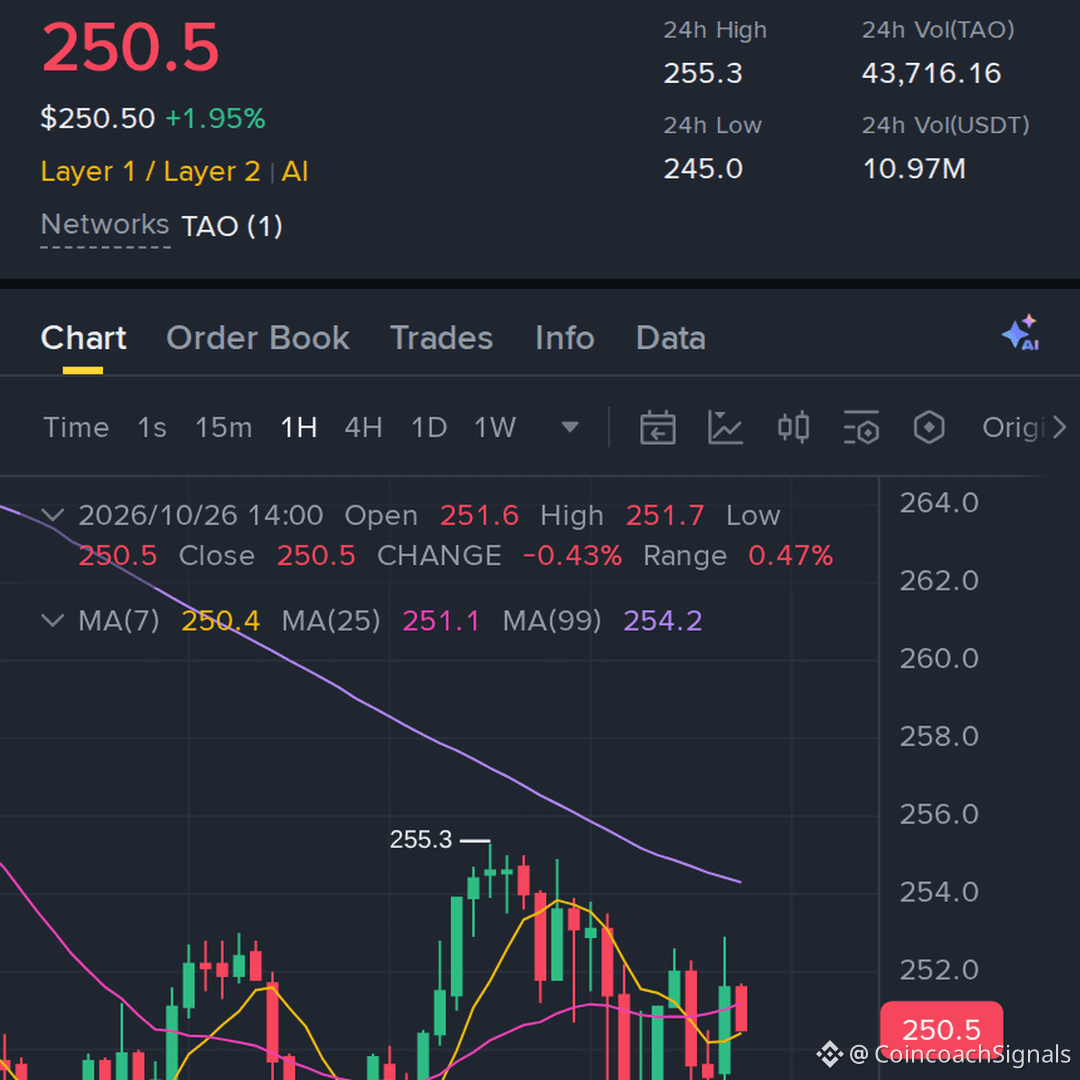
Hourly volume sits at 1.34x the daily average as $TAO trades near $251.50.
A tight 24-hour range between $246.10 and $255.30 highlights an ongoing battle between momentum buyers and exhaustion risk.
If buyers push and hold above the $255.30 high, continuation toward the upper boundary remains in play. However, losing the $246.10 low invalidates this setup and signals fading participation.
Will a break above $255.30 confirm true continuation, or does dropping below $246.10 signal a deeper retest?
Tap $TAO for the live chart. #TAO #BinanceSquare
Hourly volume sits at 1.34x the daily average as $TAO trades near $251.50.
A tight 24-hour range between $246.10 and $255.30 highlights an ongoing battle between momentum buyers and exhaustion risk.
If buyers push and hold above the $255.30 high, continuation toward the upper boundary remains in play. However, losing the $246.10 low invalidates this setup and signals fading participation.
Will a break above $255.30 confirm true continuation, or does dropping below $246.10 signal a deeper retest?
Tap $TAO for the live chart. #TAO #BinanceSquare
A tight 24-hour range between $246.10 and $255.30 highlights an ongoing battle between momentum buyers and exhaustion risk.
If buyers push and hold above the $255.30 high, continuation toward the upper boundary remains in play. However, losing the $246.10 low invalidates this setup and signals fading participation.
Will a break above $255.30 confirm true continuation, or does dropping below $246.10 signal a deeper retest?
Tap $TAO for the live chart. #TAO #BinanceSquare

·
--
Bullish
$TAO /USDT
LONG TRADE SETUP 📈
💰 Reference Price: ~$254
🎯 Entry Zone: $246–$250
✅ TP1: $255
✅ TP2: $263
✅ TP3: $274
🛑 Stop-Loss: $242
📊 Trade mindset
$TAO is approaching a key support zone. Buyers need to defend $246–$250 and reclaim $255 to strengthen the bullish setup.
Wait for a bullish reversal near support or a confirmed breakout above $255 before entering. A break below support invalidates this setup.
💬 Are you LONG or SHORT on $TAO? Share your targets below! 👇
#TAO #Bittensor #CryptoTrading #BinanceSquare #Altcoins
Trade at your own risk.
$TAO /USDT
LONG TRADE SETUP 📈
💰 Reference Price: ~$254
🎯 Entry Zone: $246–$250
✅ TP1: $255
✅ TP2: $263
✅ TP3: $274
🛑 Stop-Loss: $242
📊 Trade mindset
$TAO is approaching a key support zone. Buyers need to defend $246–$250 and reclaim $255 to strengthen the bullish setup.
Wait for a bullish reversal near support or a confirmed breakout above $255 before entering. A break below support invalidates this setup.
💬 Are you LONG or SHORT on $TAO ? Share your targets below! 👇
#TAO #Bittensor #CryptoTrading #BinanceSquare #Altcoins
Trade at your own risk.
LONG TRADE SETUP 📈
💰 Reference Price: ~$254
🎯 Entry Zone: $246–$250
✅ TP1: $255
✅ TP2: $263
✅ TP3: $274
🛑 Stop-Loss: $242
📊 Trade mindset
$TAO is approaching a key support zone. Buyers need to defend $246–$250 and reclaim $255 to strengthen the bullish setup.
Wait for a bullish reversal near support or a confirmed breakout above $255 before entering. A break below support invalidates this setup.
💬 Are you LONG or SHORT on $TAO ? Share your targets below! 👇
#TAO #Bittensor #CryptoTrading #BinanceSquare #Altcoins
Trade at your own risk.

267


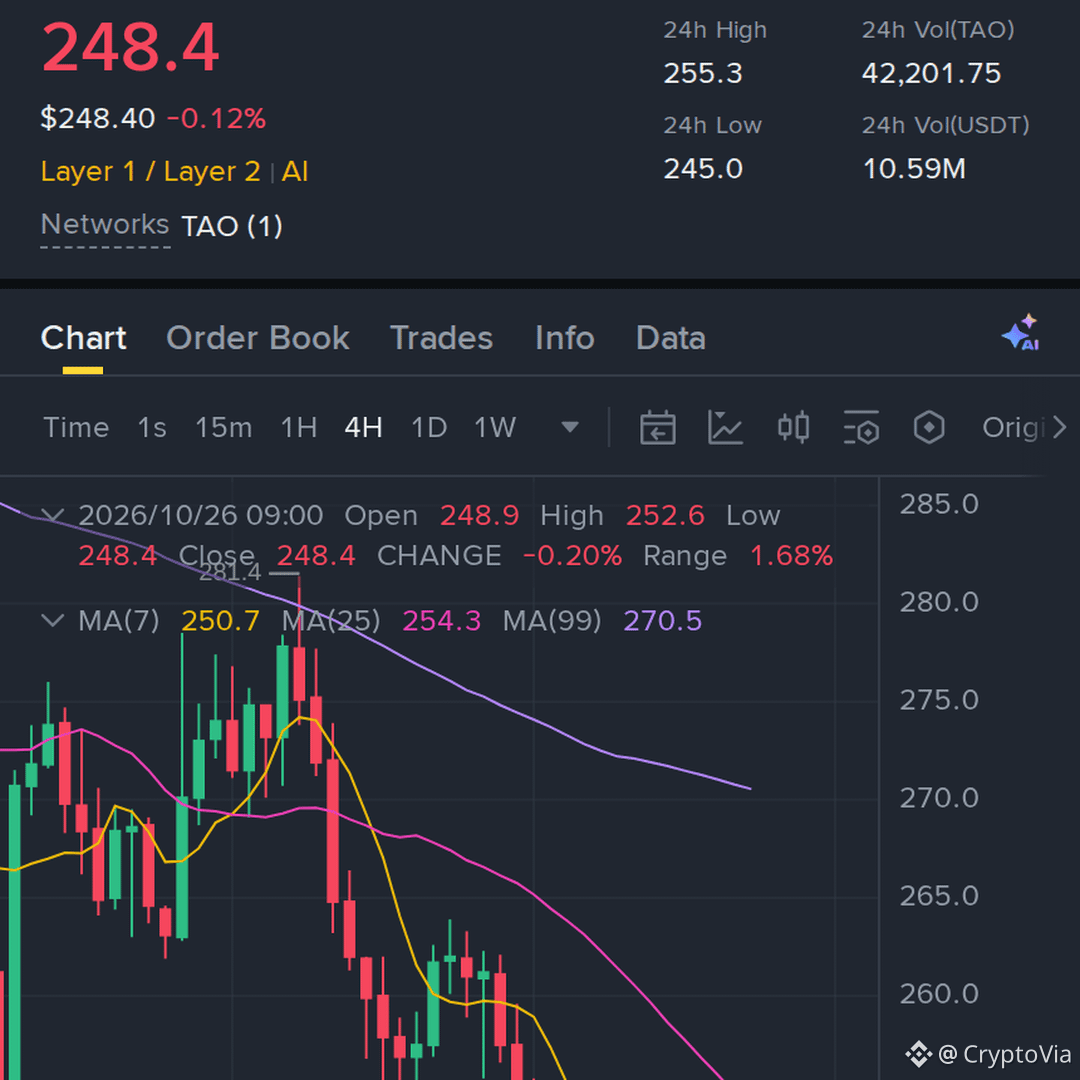

🚨 $TAO STALLED AT WEEKLY DEMAND ZONE – WILL SMART MONEY RE‑ENGAGE? 📉
📊 The weekly demand block remains intact, yet price lacks the bite to break daily highs, signaling a possible liquidity vacuum. 🦈 Institutional hunters may be waiting for a decisive squeeze before re‑allocating capital. ⚡ Market‑wide weakness is capping upside, turning the zone into a tension point rather than a launchpad. 📌 Watch for a sudden volume spike that could either confirm a hidden accumulation or trigger a deeper retrace.
💬 Is the smart money poised for a liquidity sweep, or should we brace for another pullback? 👇
⚠️ Not financial advice. Always manage your risk. 🛡️
🏷️ #TAO #SmartMoney #DemandZone #Crypto #Setup
🦈 🔥
🚨 $TAO STALLED AT WEEKLY DEMAND ZONE – WILL SMART MONEY RE‑ENGAGE? 📉
📊 The weekly demand block remains intact, yet price lacks the bite to break daily highs, signaling a possible liquidity vacuum. 🦈 Institutional hunters may be waiting for a decisive squeeze before re‑allocating capital. ⚡ Market‑wide weakness is capping upside, turning the zone into a tension point rather than a launchpad. 📌 Watch for a sudden volume spike that could either confirm a hidden accumulation or trigger a deeper retrace.
💬 Is the smart money poised for a liquidity sweep, or should we brace for another pullback? 👇
⚠️ Not financial advice. Always manage your risk. 🛡️
🏷️ #TAO #SmartMoney #DemandZone #Crypto #Setup
🦈 🔥
📊 The weekly demand block remains intact, yet price lacks the bite to break daily highs, signaling a possible liquidity vacuum. 🦈 Institutional hunters may be waiting for a decisive squeeze before re‑allocating capital. ⚡ Market‑wide weakness is capping upside, turning the zone into a tension point rather than a launchpad. 📌 Watch for a sudden volume spike that could either confirm a hidden accumulation or trigger a deeper retrace.
💬 Is the smart money poised for a liquidity sweep, or should we brace for another pullback? 👇
⚠️ Not financial advice. Always manage your risk. 🛡️
🏷️ #TAO #SmartMoney #DemandZone #Crypto #Setup
🦈 🔥
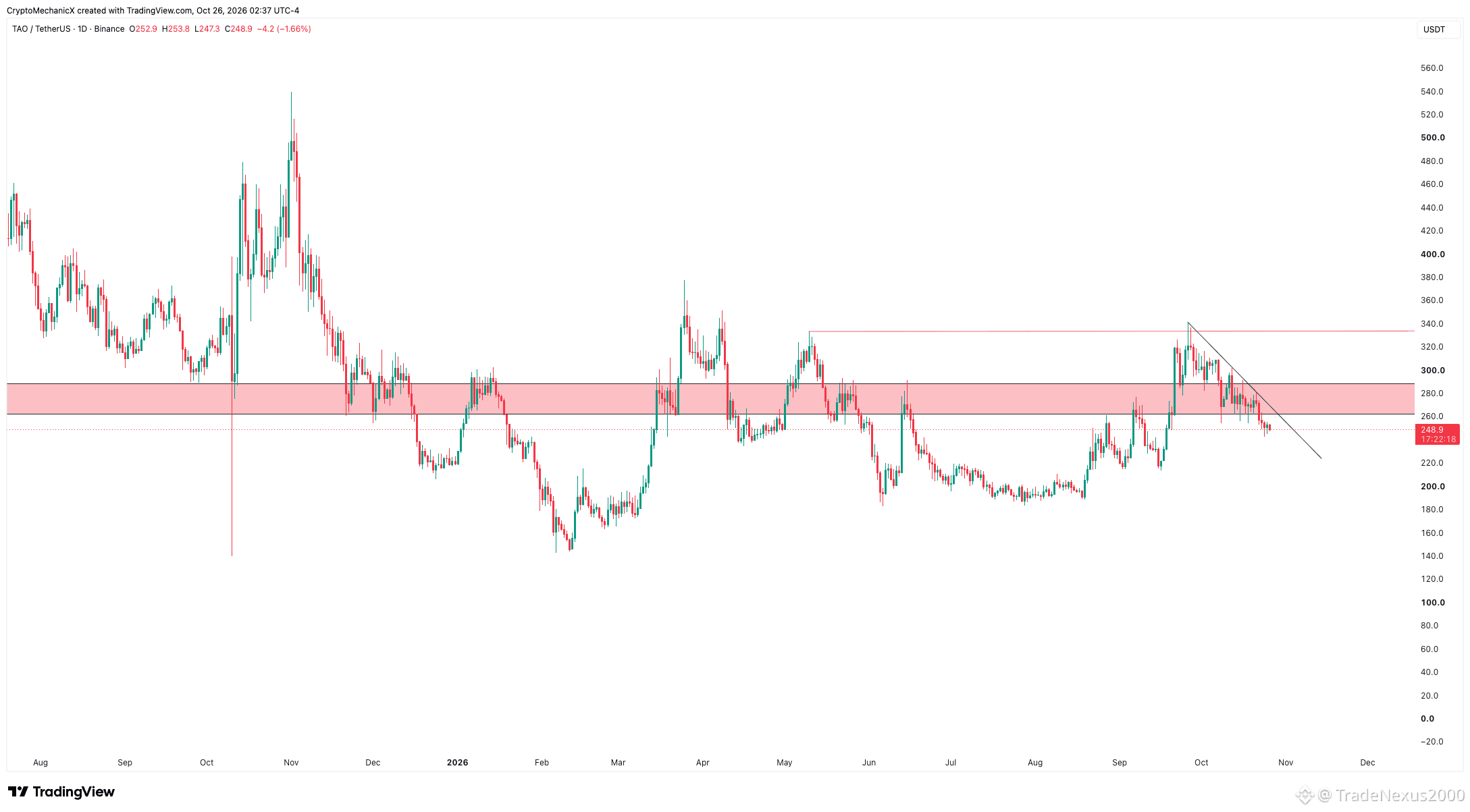
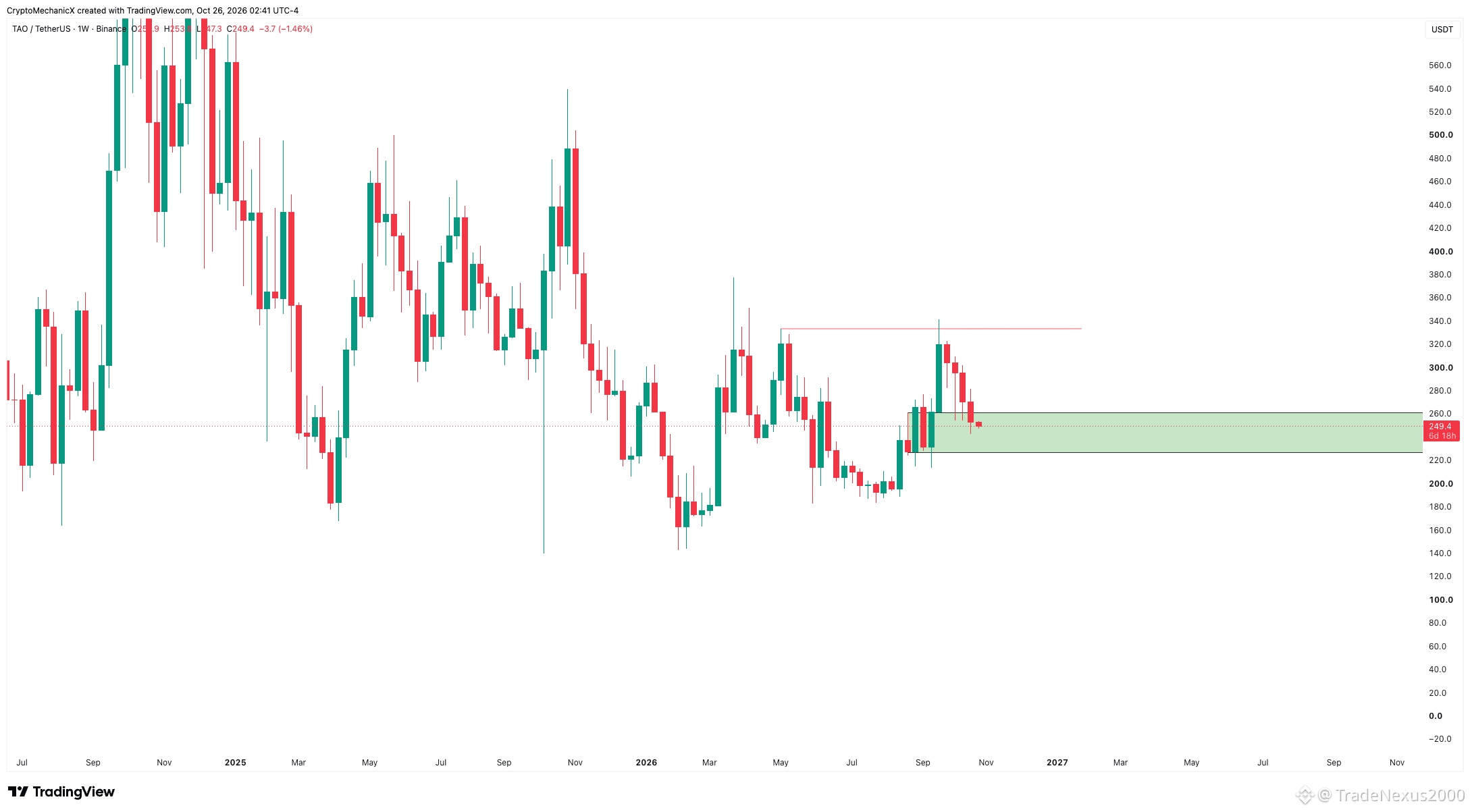

the trend on $TAO, bounced into resistance and sellers showed up again, so 27x feels reasonable here
Entry: 248.4–250 • Stop Loss: 256.4
TP1: 237.9 | TP2: 228.9 | TP3: 215.8
#TAO #Binance #Write2Earn #Crypto
the trend on $TAO , bounced into resistance and sellers showed up again, so 27x feels reasonable here
Entry: 248.4–250 • Stop Loss: 256.4
TP1: 237.9 | TP2: 228.9 | TP3: 215.8
#TAO #Binance #Write2Earn #Crypto
Entry: 248.4–250 • Stop Loss: 256.4
TP1: 237.9 | TP2: 228.9 | TP3: 215.8
#TAO #Binance #Write2Earn #Crypto
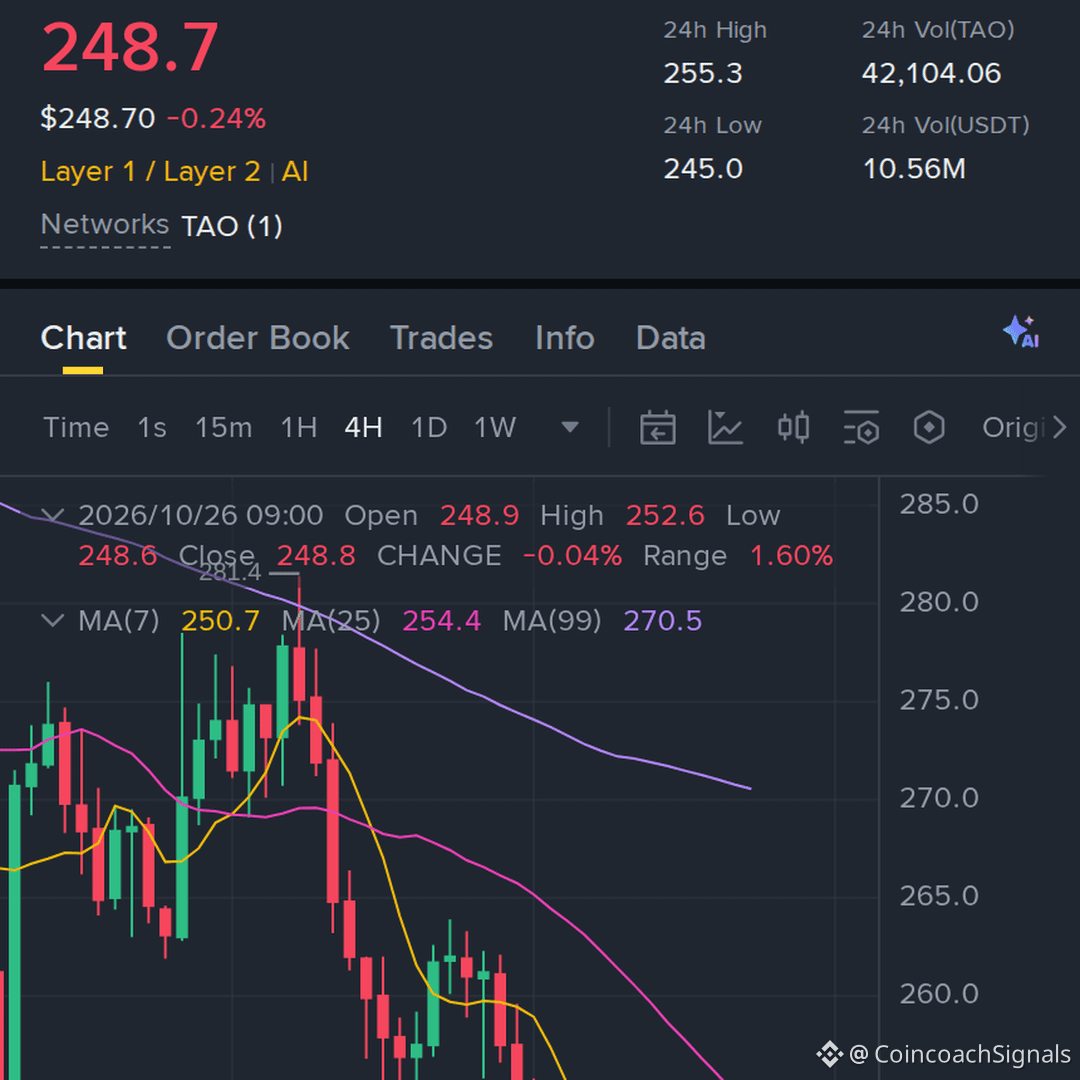
3


🚨 $TAO IS SILENTLY ACCUMULATING IN THE DISCOUNT ZONE BEFORE THE NEXT EXPANSION! ⚡
Entry: 220 ⚡
Target: 444 🚀
📌 Smart money is quietly absorbing sell orders on $TAO around the $220 discount zone while retail remains completely distracted. 🌊 Once liquidity flips back into top AI infrastructure assets, late buyers will inevitably chase the momentum toward the $748 main target and $1,400 expansion zone.
📊 Sharp traders stack bids during quiet consolidation phases rather than chasing top-tick euphoria. 💡 History proves the highest-conviction entries always feel the most boring in real time. 💬 Are you quietly accumulating $TAO at these levels or waiting to buy the hype near $1,000? 👇
⚠️ Not financial advice. Always manage your risk. 🛡️
🏷️ #TAO #Crypto #Altcoins #Bullish #AI
🔥 🎯
🚨 $TAO IS SILENTLY ACCUMULATING IN THE DISCOUNT ZONE BEFORE THE NEXT EXPANSION! ⚡
Entry: 220 ⚡
Target: 444 🚀
📌 Smart money is quietly absorbing sell orders on $TAO around the $220 discount zone while retail remains completely distracted. 🌊 Once liquidity flips back into top AI infrastructure assets, late buyers will inevitably chase the momentum toward the $748 main target and $1,400 expansion zone.
📊 Sharp traders stack bids during quiet consolidation phases rather than chasing top-tick euphoria. 💡 History proves the highest-conviction entries always feel the most boring in real time. 💬 Are you quietly accumulating $TAO at these levels or waiting to buy the hype near $1,000? 👇
⚠️ Not financial advice. Always manage your risk. 🛡️
🏷️ #TAO #Crypto #Altcoins #Bullish #AI
🔥 🎯
Entry: 220 ⚡
Target: 444 🚀
📌 Smart money is quietly absorbing sell orders on $TAO around the $220 discount zone while retail remains completely distracted. 🌊 Once liquidity flips back into top AI infrastructure assets, late buyers will inevitably chase the momentum toward the $748 main target and $1,400 expansion zone.
📊 Sharp traders stack bids during quiet consolidation phases rather than chasing top-tick euphoria. 💡 History proves the highest-conviction entries always feel the most boring in real time. 💬 Are you quietly accumulating $TAO at these levels or waiting to buy the hype near $1,000? 👇
⚠️ Not financial advice. Always manage your risk. 🛡️
🏷️ #TAO #Crypto #Altcoins #Bullish #AI
🔥 🎯
4
🚨 $TAO RECLAIMS THE 4H EMA CLUSTER AS BUYERS PRESS KEY RESISTANCE! ⚡
Entry: $226.50 - $228.00 ⚡
Target: $233.30 - $245.00 🚀
Stop Loss: $223.00 ⚠️
$TAO is slicing back above the 4H EMA cluster, turning previous seller domain into solid ground. Momentum is visibly building while price knocks directly against the $230.16 resistance ceiling. 📊
Rather than chasing into resistance, patient capital is eyeing the $226.50-$228.00 retest zone where risk-to-reward stretches up to 4.4R. A 4H close below $223.00 invalidates the setup completely. 💡
Are you setting bids on the pullback or waiting for the $230.16 breakout push? 👇
⚠️ Not financial advice. Always manage your risk. 🛡️
🏷️ #TAO #LongSetup #Crypto #Breakout #Trading
🔥 💎
🚨 $TAO RECLAIMS THE 4H EMA CLUSTER AS BUYERS PRESS KEY RESISTANCE! ⚡
Entry: $226.50 - $228.00 ⚡
Target: $233.30 - $245.00 🚀
Stop Loss: $223.00 ⚠️
$TAO is slicing back above the 4H EMA cluster, turning previous seller domain into solid ground. Momentum is visibly building while price knocks directly against the $230.16 resistance ceiling. 📊
Rather than chasing into resistance, patient capital is eyeing the $226.50-$228.00 retest zone where risk-to-reward stretches up to 4.4R. A 4H close below $223.00 invalidates the setup completely. 💡
Are you setting bids on the pullback or waiting for the $230.16 breakout push? 👇
⚠️ Not financial advice. Always manage your risk. 🛡️
🏷️ #TAO #LongSetup #Crypto #Breakout #Trading
🔥 💎
Entry: $226.50 - $228.00 ⚡
Target: $233.30 - $245.00 🚀
Stop Loss: $223.00 ⚠️
$TAO is slicing back above the 4H EMA cluster, turning previous seller domain into solid ground. Momentum is visibly building while price knocks directly against the $230.16 resistance ceiling. 📊
Rather than chasing into resistance, patient capital is eyeing the $226.50-$228.00 retest zone where risk-to-reward stretches up to 4.4R. A 4H close below $223.00 invalidates the setup completely. 💡
Are you setting bids on the pullback or waiting for the $230.16 breakout push? 👇
⚠️ Not financial advice. Always manage your risk. 🛡️
🏷️ #TAO #LongSetup #Crypto #Breakout #Trading
🔥 💎
3

🚨 TECH METAS ARE SHIFTING AND $TAO BUILDERS ARE DEMANDING PURE ADAPTABILITY! 💥
📊 Institutional capital in the decentralized tech space is no longer rewarding static skill sets. Projects and firms are looking past isolated programming syntax, shifting focus entirely toward raw problem-solving capability and seamless AI integration.
💡 With AI tools scaling developer output, building teams must adapt to new stacks in real time to ship code. The market has zero patience for learning on the job anymore; you either execute on day one or get left behind in the order flow.
💬 Are you positioned in adaptive AI ecosystems like $TAO or still holding legacy tech infrastructure? 👇
⚠️ Not financial advice. Always manage your risk. 🛡️
🏷️ #TAO #AI #Web3 #Crypto #TechTrends
🔥 ⚡
🚨 TECH METAS ARE SHIFTING AND $TAO BUILDERS ARE DEMANDING PURE ADAPTABILITY! 💥
📊 Institutional capital in the decentralized tech space is no longer rewarding static skill sets. Projects and firms are looking past isolated programming syntax, shifting focus entirely toward raw problem-solving capability and seamless AI integration.
💡 With AI tools scaling developer output, building teams must adapt to new stacks in real time to ship code. The market has zero patience for learning on the job anymore; you either execute on day one or get left behind in the order flow.
💬 Are you positioned in adaptive AI ecosystems like $TAO or still holding legacy tech infrastructure? 👇
⚠️ Not financial advice. Always manage your risk. 🛡️
🏷️ #TAO #AI #Web3 #Crypto #TechTrends
🔥 ⚡
📊 Institutional capital in the decentralized tech space is no longer rewarding static skill sets. Projects and firms are looking past isolated programming syntax, shifting focus entirely toward raw problem-solving capability and seamless AI integration.
💡 With AI tools scaling developer output, building teams must adapt to new stacks in real time to ship code. The market has zero patience for learning on the job anymore; you either execute on day one or get left behind in the order flow.
💬 Are you positioned in adaptive AI ecosystems like $TAO or still holding legacy tech infrastructure? 👇
⚠️ Not financial advice. Always manage your risk. 🛡️
🏷️ #TAO #AI #Web3 #Crypto #TechTrends
🔥 ⚡
12
⚡ $TAO RECLAIMS CRITICAL EMA CLUSTER AS BUYERS BUILD BULLISH MOMENTUM! 🚀
Entry: $220 - $230 ⚡
Target: $250 / $280 / $320 🚀
Stop Loss: $205 ⚠️
📌 After a violent bounce off the $180-$200 demand zone, $TAO has reclaimed the EMA 7, 25, and 99 on strong momentum. Higher lows are aggressively forming right above the $220 breakout shelf, signaling heavy accumulation before the next expansion leg. 📊
💡 Sellers are getting squeezed while buyers front-run the order block, setting up a prime risk-to-reward window toward major targets. 🌊 Are you riding this momentum stack to $320 or waiting for a pullback? 👇
⚠️ Not financial advice. Always manage your risk. 🛡️
🏷️ #TAO #LongSetup #Breakout #Crypto #Altcoins
⚡ 💎
⚡ $TAO RECLAIMS CRITICAL EMA CLUSTER AS BUYERS BUILD BULLISH MOMENTUM! 🚀
Entry: $220 - $230 ⚡
Target: $250 / $280 / $320 🚀
Stop Loss: $205 ⚠️
📌 After a violent bounce off the $180-$200 demand zone, $TAO has reclaimed the EMA 7, 25, and 99 on strong momentum. Higher lows are aggressively forming right above the $220 breakout shelf, signaling heavy accumulation before the next expansion leg. 📊
💡 Sellers are getting squeezed while buyers front-run the order block, setting up a prime risk-to-reward window toward major targets. 🌊 Are you riding this momentum stack to $320 or waiting for a pullback? 👇
⚠️ Not financial advice. Always manage your risk. 🛡️
🏷️ #TAO #LongSetup #Breakout #Crypto #Altcoins
⚡ 💎
Entry: $220 - $230 ⚡
Target: $250 / $280 / $320 🚀
Stop Loss: $205 ⚠️
📌 After a violent bounce off the $180-$200 demand zone, $TAO has reclaimed the EMA 7, 25, and 99 on strong momentum. Higher lows are aggressively forming right above the $220 breakout shelf, signaling heavy accumulation before the next expansion leg. 📊
💡 Sellers are getting squeezed while buyers front-run the order block, setting up a prime risk-to-reward window toward major targets. 🌊 Are you riding this momentum stack to $320 or waiting for a pullback? 👇
⚠️ Not financial advice. Always manage your risk. 🛡️
🏷️ #TAO #LongSetup #Breakout #Crypto #Altcoins
⚡ 💎
10


🚨 $TAO /USDT — LONG SIGNAL 🟢📈
🟢 Entry Zone: $246.50–$249.00
- TP1: $255.00
- TP2: $263.50
- TP3: $274.00
🛑 Stop-Loss: $243.50
📊 Key Levels
- Support: $246.40 / $236.40
- Resistance: $255.10 / $263.50
⚡ Confirmation Checklist
✅ 15m/1H bullish candle close
✅ Support holds with increasing volume
✅ Reclaim $255 for stronger bullish confirmation
💡 Don't chase a breakout. Wait for confirmation and manage position size carefully.
DYOR • NFA
#BinancePick #EarningsSeason
#TAO #cryptotrading #BinanceSquare
🚨 $TAO /USDT — LONG SIGNAL 🟢📈
🟢 Entry Zone: $246.50–$249.00
- TP1: $255.00
- TP2: $263.50
- TP3: $274.00
🛑 Stop-Loss: $243.50
📊 Key Levels
- Support: $246.40 / $236.40
- Resistance: $255.10 / $263.50
⚡ Confirmation Checklist
✅ 15m/1H bullish candle close
✅ Support holds with increasing volume
✅ Reclaim $255 for stronger bullish confirmation
💡 Don't chase a breakout. Wait for confirmation and manage position size carefully.
DYOR • NFA
#BinancePick #EarningsSeason
#TAO #cryptotrading #BinanceSquare
🟢 Entry Zone: $246.50–$249.00
- TP1: $255.00
- TP2: $263.50
- TP3: $274.00
🛑 Stop-Loss: $243.50
📊 Key Levels
- Support: $246.40 / $236.40
- Resistance: $255.10 / $263.50
⚡ Confirmation Checklist
✅ 15m/1H bullish candle close
✅ Support holds with increasing volume
✅ Reclaim $255 for stronger bullish confirmation
💡 Don't chase a breakout. Wait for confirmation and manage position size carefully.
DYOR • NFA
#BinancePick #EarningsSeason
#TAO #cryptotrading #BinanceSquare

5
370
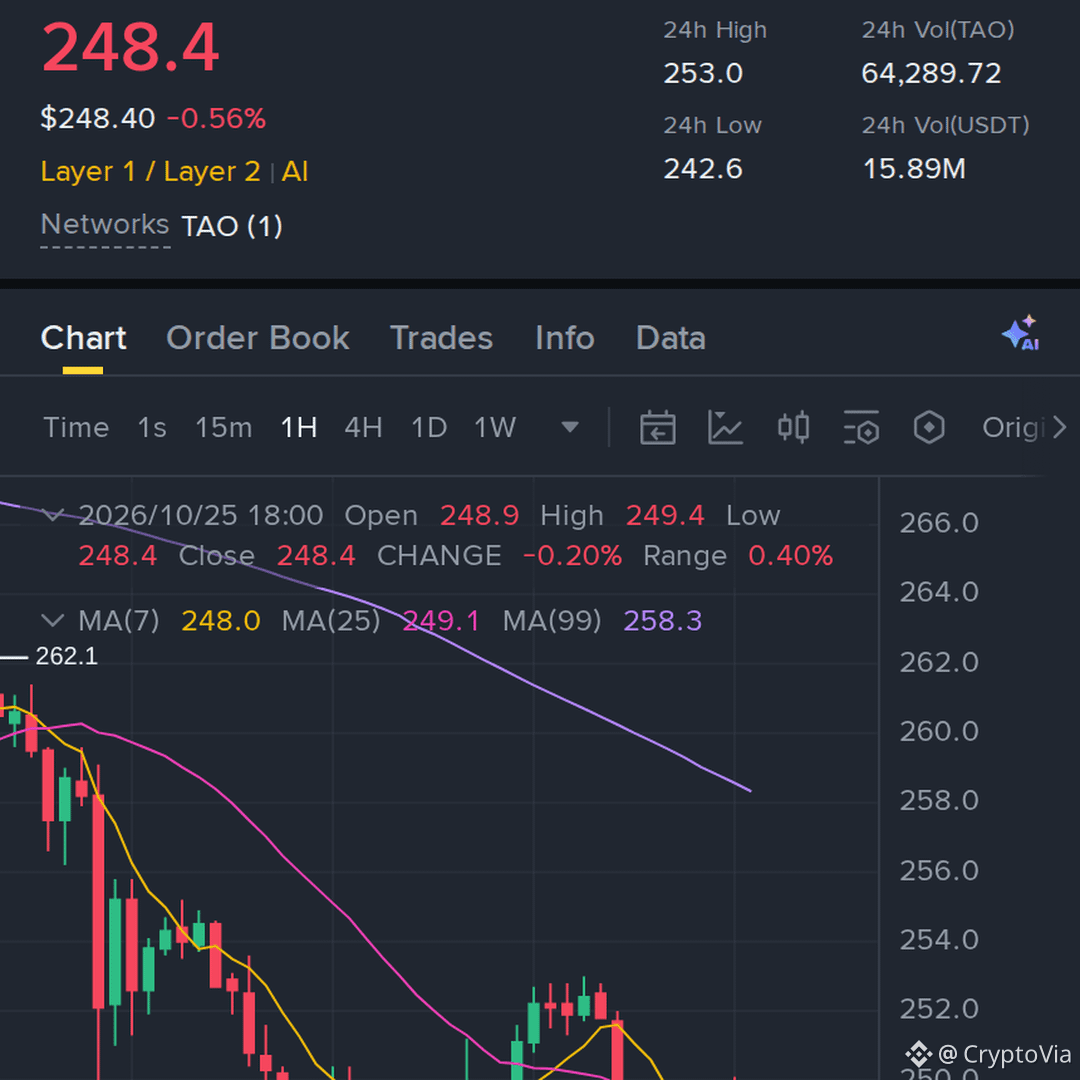

One important development is eTAO, which allows subnet owners to adjust how emissions are distributed among owners, validators, and miners.
Previously, subnet emissions followed a largely fixed allocation.
Now, owners have more flexibility to reward the participants they believe contribute most to their subnet.
Why does this matter?
🔹 For miners: Subnets can allocate a larger share of emissions to productive contributors.
🔹 For subnet owners: Incentives can be adapted to different business models.
🔹 For investors: Better incentives could improve competitiveness, but they do not guarantee profitable demand.
Here’s the critical distinction:
A subnet attracting emissions is not necessarily generating sustainable revenue.
I want to see paying customers, useful AI output, repeat usage, and evidence that economic activity can justify the incentives being distributed.
TAO’s long-term thesis becomes stronger when decentralized AI creates measurable value rather than merely circulating tokens.
My rule: Follow the economics beneath the narrative.
The question isn’t whether decentralized AI sounds promising.
It’s whether the network can turn that promise into durable demand.
Do Your Own Research
#bittensor #TAO #DecentralizedAI #MannequinCrypto
One important development is eTAO, which allows subnet owners to adjust how emissions are distributed among owners, validators, and miners.
Previously, subnet emissions followed a largely fixed allocation.
Now, owners have more flexibility to reward the participants they believe contribute most to their subnet.
Why does this matter?
🔹 For miners: Subnets can allocate a larger share of emissions to productive contributors.
🔹 For subnet owners: Incentives can be adapted to different business models.
🔹 For investors: Better incentives could improve competitiveness, but they do not guarantee profitable demand.
Here’s the critical distinction:
A subnet attracting emissions is not necessarily generating sustainable revenue.
I want to see paying customers, useful AI output, repeat usage, and evidence that economic activity can justify the incentives being distributed.
TAO’s long-term thesis becomes stronger when decentralized AI creates measurable value rather than merely circulating tokens.
My rule: Follow the economics beneath the narrative.
The question isn’t whether decentralized AI sounds promising.
It’s whether the network can turn that promise into durable demand.
Do Your Own Research
#bittensor #TAO #DecentralizedAI #MannequinCrypto
Previously, subnet emissions followed a largely fixed allocation.
Now, owners have more flexibility to reward the participants they believe contribute most to their subnet.
Why does this matter?
🔹 For miners: Subnets can allocate a larger share of emissions to productive contributors.
🔹 For subnet owners: Incentives can be adapted to different business models.
🔹 For investors: Better incentives could improve competitiveness, but they do not guarantee profitable demand.
Here’s the critical distinction:
A subnet attracting emissions is not necessarily generating sustainable revenue.
I want to see paying customers, useful AI output, repeat usage, and evidence that economic activity can justify the incentives being distributed.
TAO’s long-term thesis becomes stronger when decentralized AI creates measurable value rather than merely circulating tokens.
My rule: Follow the economics beneath the narrative.
The question isn’t whether decentralized AI sounds promising.
It’s whether the network can turn that promise into durable demand.
Do Your Own Research
#bittensor #TAO #DecentralizedAI #MannequinCrypto

173

·
--
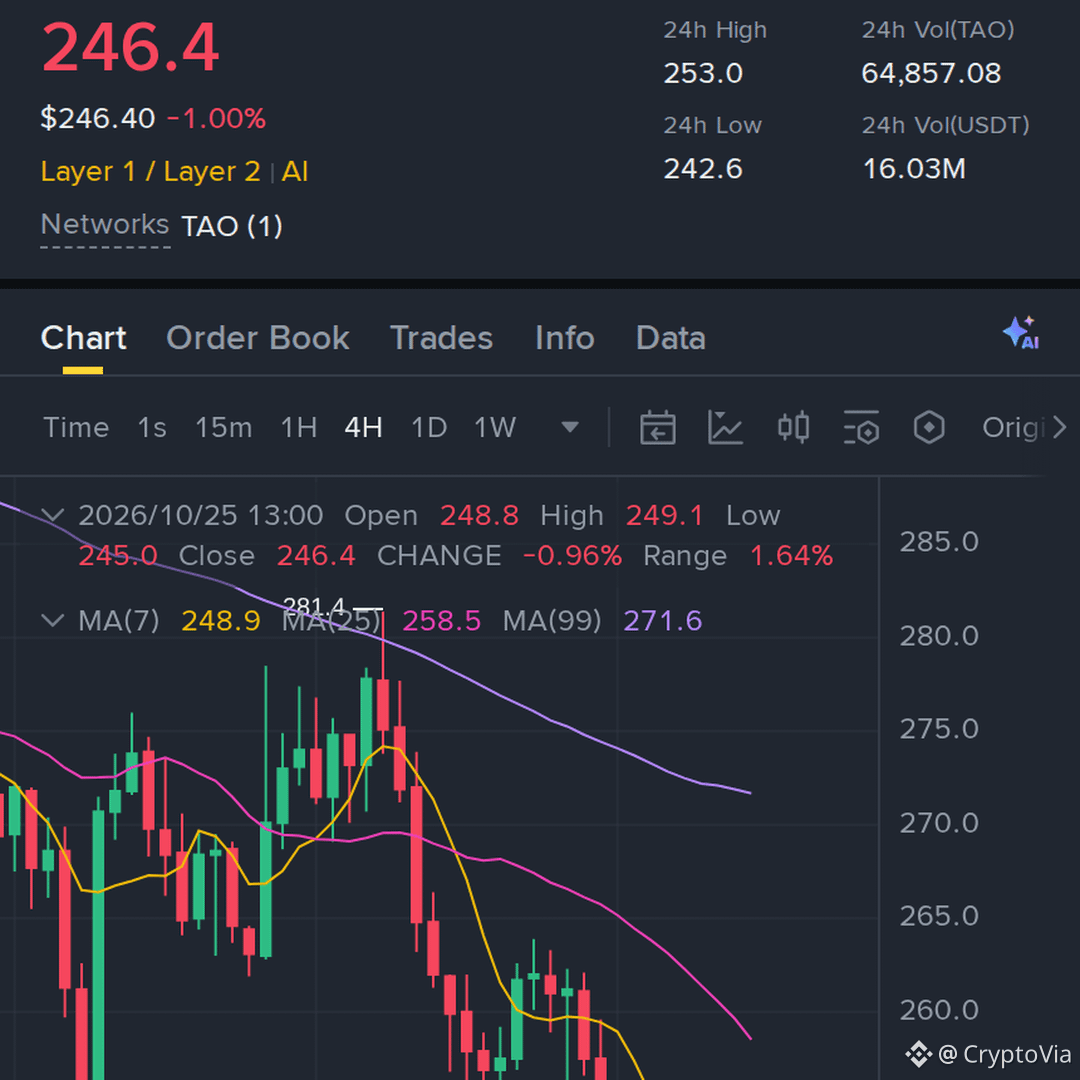
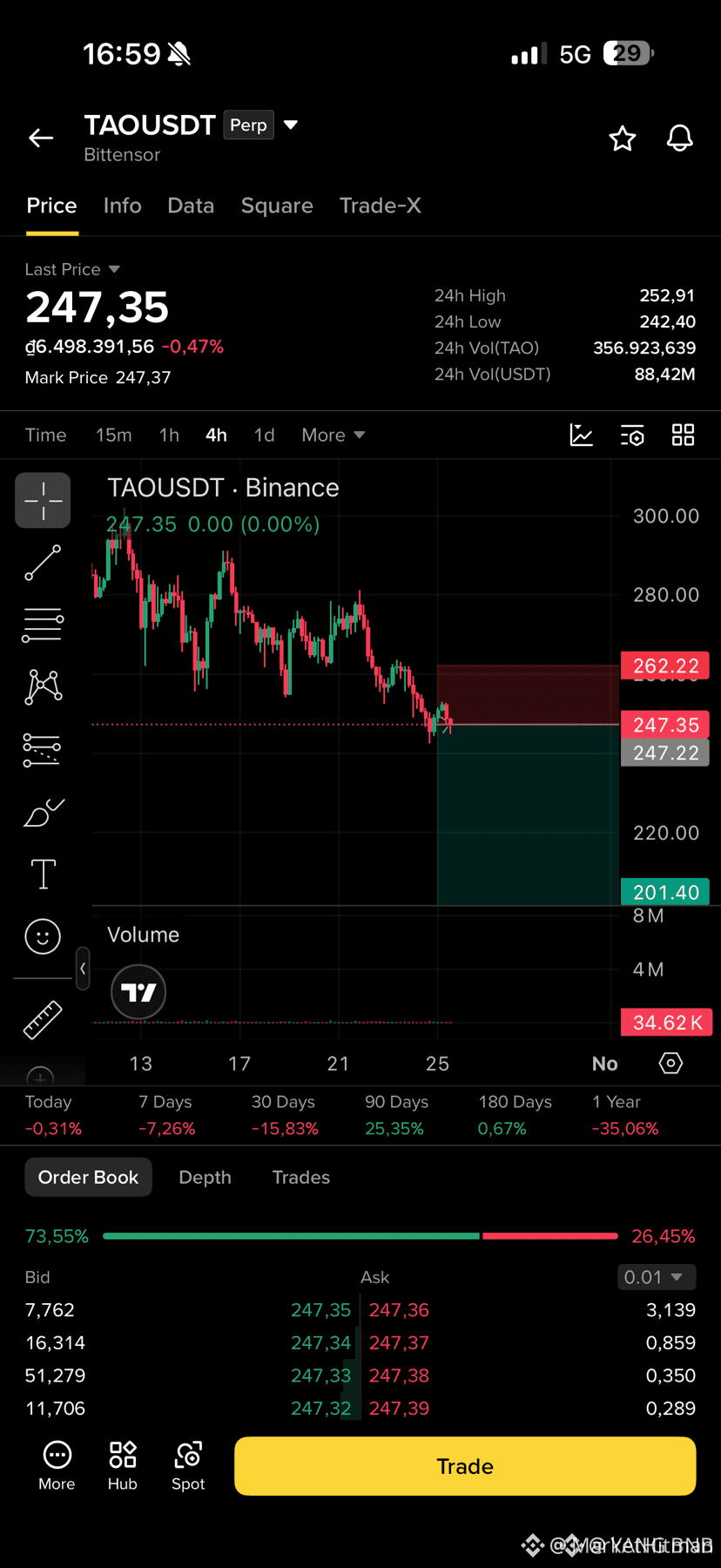
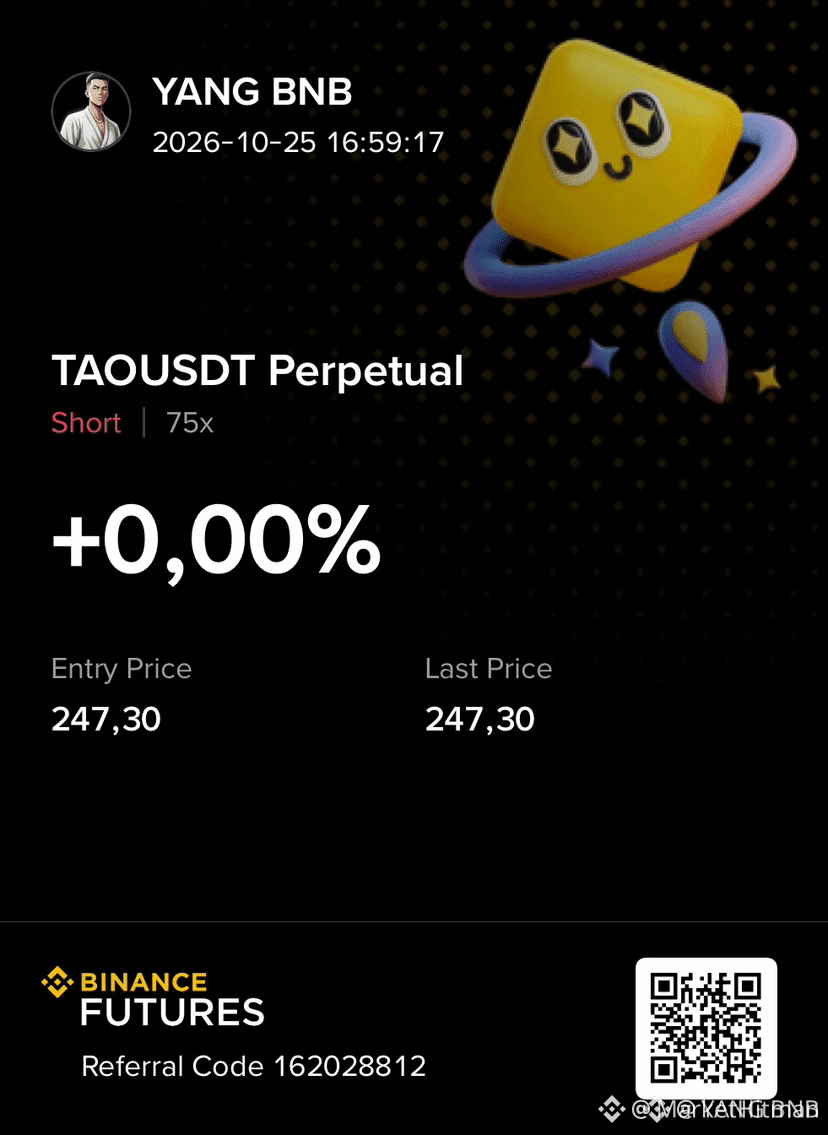
🚨 $TAO BEAR SWEEP THREATENS $240 BREAKDOWN! 🔴
Entry: 247-250 ⚡
Target: 240 🚀
Target: 225 🎯
Target: 201.40 💥
Stop Loss: 262.22 ⚠️
📊 The 4H chart is painting a textbook downtrend—lower highs, lower lows, and a crumbling recovery attempt. 🦈 Smart money is draining liquidity around the $247 zone, forcing sellers to step on the gas. 📈 Volume spikes confirm the bears are in control, and every candle tests that support like a pressure gauge. 💡 With three aggressive profit targets, the risk‑to‑reward ratio screams “play the short” for anyone watching the order flow.
💬 Who’s ready to ride this bearish wave down to the next liquidity pool? 👇
⚠️ Not financial advice. Always manage your risk. 🛡️
🏷️ #TAO #ShortSetup #Bearish #Crypto
🔥 💎
🚨 $TAO BEAR SWEEP THREATENS $240 BREAKDOWN! 🔴
Entry: 247-250 ⚡
Target: 240 🚀
Target: 225 🎯
Target: 201.40 💥
Stop Loss: 262.22 ⚠️
📊 The 4H chart is painting a textbook downtrend—lower highs, lower lows, and a crumbling recovery attempt. 🦈 Smart money is draining liquidity around the $247 zone, forcing sellers to step on the gas. 📈 Volume spikes confirm the bears are in control, and every candle tests that support like a pressure gauge. 💡 With three aggressive profit targets, the risk‑to‑reward ratio screams “play the short” for anyone watching the order flow.
💬 Who’s ready to ride this bearish wave down to the next liquidity pool? 👇
⚠️ Not financial advice. Always manage your risk. 🛡️
🏷️ #TAO #ShortSetup #Bearish #Crypto
🔥 💎
Entry: 247-250 ⚡
Target: 240 🚀
Target: 225 🎯
Target: 201.40 💥
Stop Loss: 262.22 ⚠️
📊 The 4H chart is painting a textbook downtrend—lower highs, lower lows, and a crumbling recovery attempt. 🦈 Smart money is draining liquidity around the $247 zone, forcing sellers to step on the gas. 📈 Volume spikes confirm the bears are in control, and every candle tests that support like a pressure gauge. 💡 With three aggressive profit targets, the risk‑to‑reward ratio screams “play the short” for anyone watching the order flow.
💬 Who’s ready to ride this bearish wave down to the next liquidity pool? 👇
⚠️ Not financial advice. Always manage your risk. 🛡️
🏷️ #TAO #ShortSetup #Bearish #Crypto
🔥 💎
16

·
--
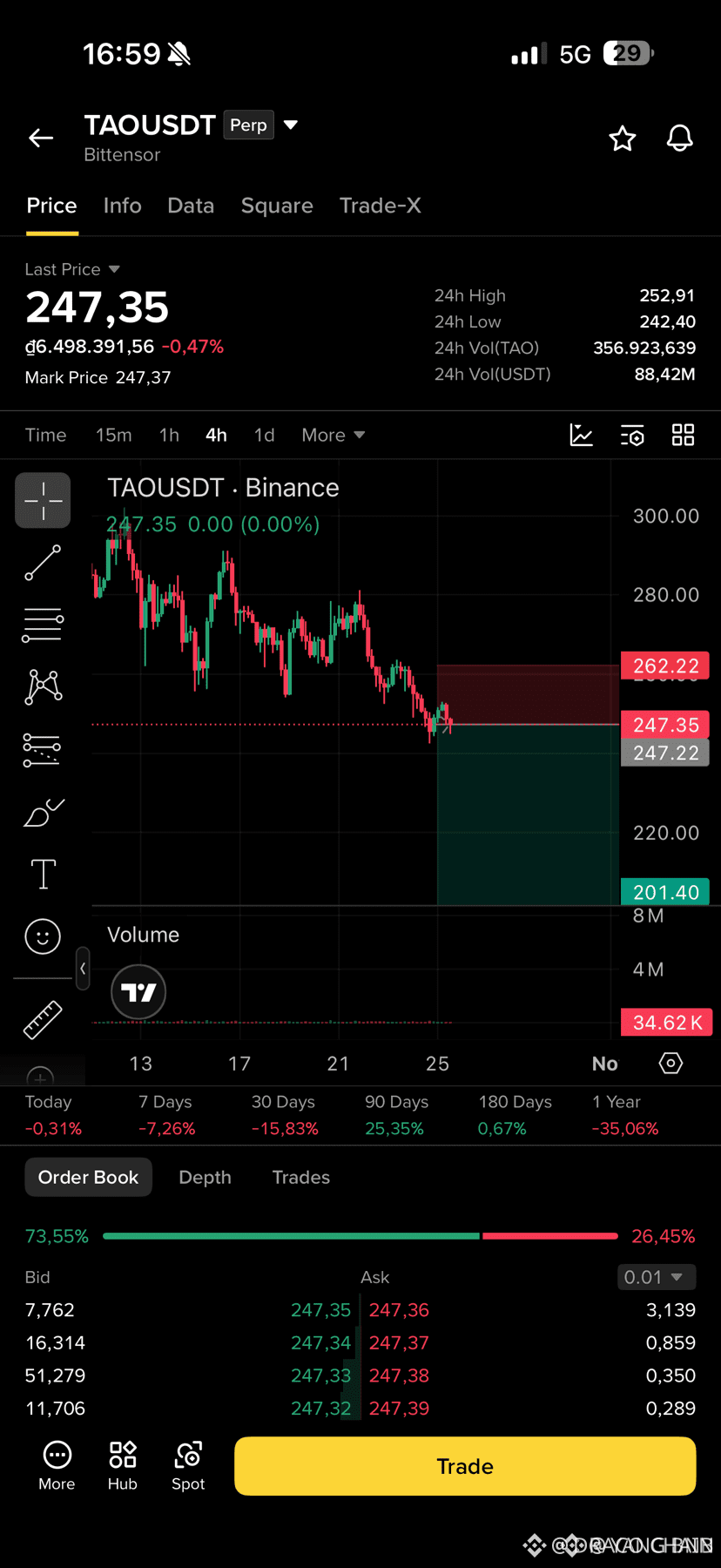
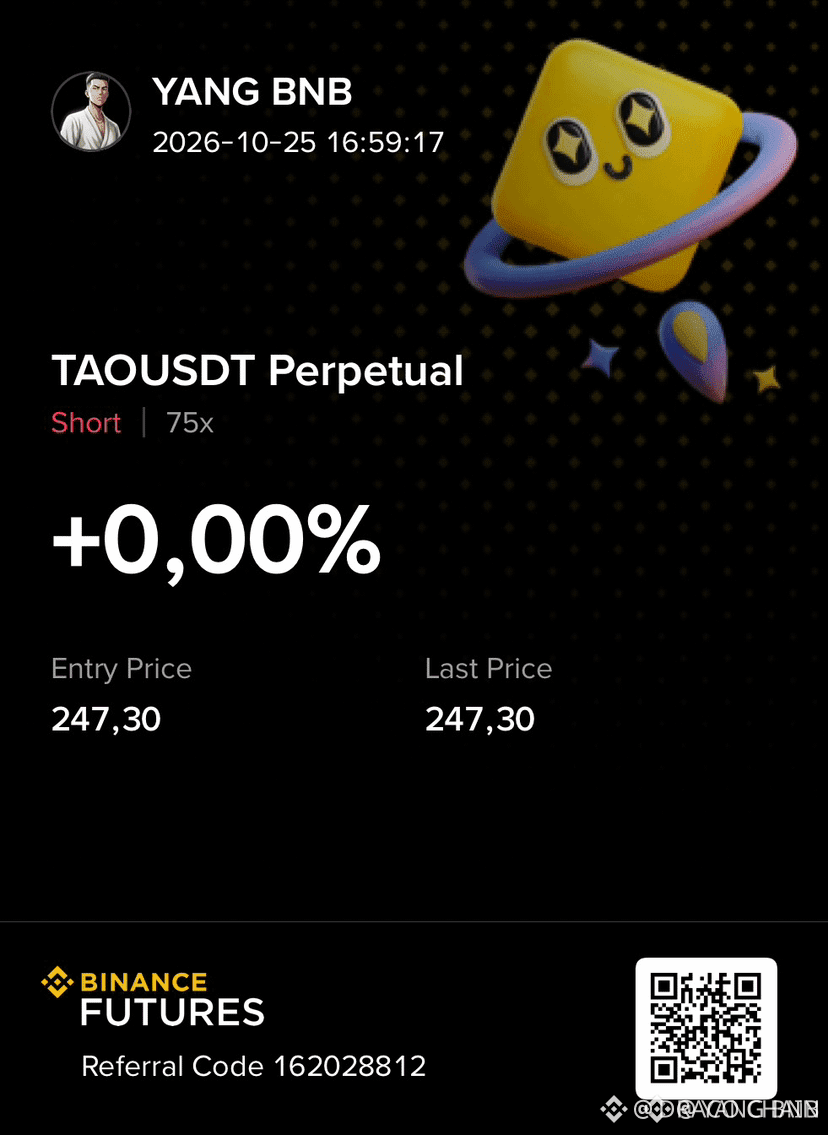
🔴 $TAO BEAR SWEEP TARGETING 250‑247 ZONE! 📉
Entry: 247‑250 ⚡
Target: 240 🚀
Target: 225 🎯
Target: 201.40 💥
Stop Loss: 262.22 ⚠️
📊 The 4H is painting a textbook downtrend—lower highs, lower lows, and a failing recovery attempt. 🦈 Smart money is clearing the 247‑250 liquidity bucket, exposing the next order block beneath. ⚡ Volume spikes on each sell candle confirm aggressive distribution, while the price respects the $247 support as a new bearish pivot. 📌 Expect the market to hunt the remaining liquidity toward the 225‑201 region before any reversal breath.
💬 Are you ready to ride the downside or waiting for a liquidity trap to unfold? 👇
⚠️ Not financial advice. Always manage your risk. 🛡️
🏷️ #TAO #ShortSetup #Bearish #Crypto #Trading
🦈 🔥
🔴 $TAO BEAR SWEEP TARGETING 250‑247 ZONE! 📉
Entry: 247‑250 ⚡
Target: 240 🚀
Target: 225 🎯
Target: 201.40 💥
Stop Loss: 262.22 ⚠️
📊 The 4H is painting a textbook downtrend—lower highs, lower lows, and a failing recovery attempt. 🦈 Smart money is clearing the 247‑250 liquidity bucket, exposing the next order block beneath. ⚡ Volume spikes on each sell candle confirm aggressive distribution, while the price respects the $247 support as a new bearish pivot. 📌 Expect the market to hunt the remaining liquidity toward the 225‑201 region before any reversal breath.
💬 Are you ready to ride the downside or waiting for a liquidity trap to unfold? 👇
⚠️ Not financial advice. Always manage your risk. 🛡️
🏷️ #TAO #ShortSetup #Bearish #Crypto #Trading
🦈 🔥
Entry: 247‑250 ⚡
Target: 240 🚀
Target: 225 🎯
Target: 201.40 💥
Stop Loss: 262.22 ⚠️
📊 The 4H is painting a textbook downtrend—lower highs, lower lows, and a failing recovery attempt. 🦈 Smart money is clearing the 247‑250 liquidity bucket, exposing the next order block beneath. ⚡ Volume spikes on each sell candle confirm aggressive distribution, while the price respects the $247 support as a new bearish pivot. 📌 Expect the market to hunt the remaining liquidity toward the 225‑201 region before any reversal breath.
💬 Are you ready to ride the downside or waiting for a liquidity trap to unfold? 👇
⚠️ Not financial advice. Always manage your risk. 🛡️
🏷️ #TAO #ShortSetup #Bearish #Crypto #Trading
🦈 🔥
10
Log in to explore more content
Join global crypto users on Binance Square
⚡️ Get latest and useful information about crypto.
💬 Trusted by the world’s largest crypto exchange.
👍 Discover real insights from verified creators.
Email / Phone number
Trending Topics
1
#BinancePick
2.7M views
143,316 Discussing
2
#EarningsSeason
5M views
24,599 Discussing
3
#SouthKoreaReportedlyWeighsFourthCryptoTaxDelay
1,176 views
81 Discussing
4
#FranklinTempletonFilesForTwoDividendToBitcoinETFs
6,154 views
213 Discussing
5
#StrategyMSTRSurpassesNasdaqInMarketCap
5,573 views
181 Discussing
6
#CanadaProposesStablecoinRedemptionWithin3BusinessDays
181 views
15 Discussing
7
#ElectrumWalletBugLetRogueServersStealFunds
11,820 views
303 Discussing
8
#ArgentineCourtDismissesLIBRACaseAgainstMilei
21,891 views
369 Discussing
9
#SKHynixReportedlyPlansSpecialDividendFromKioxiaStakeSale
3,417 views
48 Discussing
10
#KeystoneWebsiteBreachExposesBuyersShippingAddresses
1,801 views
41 Discussing