

#shutterstockfallsaftergettyendsmerger
shutterstockfallsaftergettyendsmerger
79,322 views
538 Discussing
Hot
Latest

·
--

Article
Why Did Shutterstock Share Fall After Getty Images Ended the Merger?Shutterstock shares declined sharply after Getty Images announced it was terminating its planned merger with the company, disappointing investors who had expected the deal to create a stronger player in the global visual content industry. The collapse of the merger removed the possibility of significant cost savings, broader market reach, and increased competitiveness, leading to an immediate negative reaction in the stock market.$SHARE
The merger was initially viewed as a strategic move to combine two of the world's largest providers of stock photography, videos, music, and other digital creative assets. By joining forces, Getty Images and Shutterstock hoped to strengthen their position in an industry that has become increasingly competitive due to the rapid growth of artificial intelligence, user-generated content, and subscription-based media platforms.
One of the primary reasons for the merger's failure was increased regulatory scrutiny. Competition authorities carefully examined the proposed transaction because the combined company would have held a dominant position in the stock media market. Regulators were concerned that the merger could reduce competition, limit customer choice, and potentially increase prices for businesses, publishers, marketers, and creative professionals who rely on licensed digital content.$OPG
Rather than face a prolonged legal battle or uncertain regulatory approval process, Getty Images decided to terminate the agreement. The decision effectively ended months of planning and dashed expectations that the companies would soon operate as a single business.
Investors reacted swiftly to the news. Shutterstock's share price fell because the merger had included the prospect of a premium valuation and future financial benefits. Without the deal, shareholders must once again evaluate Shutterstock based solely on its independent growth prospects and financial performance. The sudden removal of expected merger-related gains naturally weighed on investor sentiment.$XAU
The failed merger also highlights the challenges facing the digital content industry. Stock image providers are adapting to major technological changes as artificial intelligence transforms how images, illustrations, and videos are created. AI-powered image generators have increased competition and changed customer expectations, forcing traditional licensing companies to invest heavily in new technologies while protecting the value of their existing content libraries.
Despite the merger's collapse, both Getty Images and Shutterstock remain significant players in the creative content market. Each company continues to expand its AI capabilities, strengthen partnerships with content creators, and develop new licensing solutions for businesses. However, they will now pursue these strategies independently rather than as a combined organization.
Looking ahead, investors will closely monitor Shutterstock's ability to maintain revenue growth, attract new customers, and compete against both traditional rivals and emerging AI-driven platforms. Getty Images also faces the challenge of delivering long-term growth without the operational efficiencies that the merger could have provided.
Ultimately, Shutterstock's share decline reflects investor disappointment over the loss of a transaction that promised strategic and financial advantages. The merger unraveled primarily because of regulatory concerns over market competition, demonstrating how antitrust authorities continue to play a major role in shaping corporate mergers involving leading technology and digital media companies. The outcome serves as a reminder that even carefully planned deals can fail when regulatory obstacles outweigh the expected benefits.
#ShutterstockFallsAfterGettyEndsMerger
{spot}(BTCUSDT)
{spot}(ADAUSDT)
{spot}(LINKUSDT)
Why Did Shutterstock Share Fall After Getty Images Ended the Merger?
Shutterstock shares declined sharply after Getty Images announced it was terminating its planned merger with the company, disappointing investors who had expected the deal to create a stronger player in the global visual content industry. The collapse of the merger removed the possibility of significant cost savings, broader market reach, and increased competitiveness, leading to an immediate negative reaction in the stock market.$SHARE
The merger was initially viewed as a strategic move to combine two of the world's largest providers of stock photography, videos, music, and other digital creative assets. By joining forces, Getty Images and Shutterstock hoped to strengthen their position in an industry that has become increasingly competitive due to the rapid growth of artificial intelligence, user-generated content, and subscription-based media platforms.
One of the primary reasons for the merger's failure was increased regulatory scrutiny. Competition authorities carefully examined the proposed transaction because the combined company would have held a dominant position in the stock media market. Regulators were concerned that the merger could reduce competition, limit customer choice, and potentially increase prices for businesses, publishers, marketers, and creative professionals who rely on licensed digital content.$OPG
Rather than face a prolonged legal battle or uncertain regulatory approval process, Getty Images decided to terminate the agreement. The decision effectively ended months of planning and dashed expectations that the companies would soon operate as a single business.
Investors reacted swiftly to the news. Shutterstock's share price fell because the merger had included the prospect of a premium valuation and future financial benefits. Without the deal, shareholders must once again evaluate Shutterstock based solely on its independent growth prospects and financial performance. The sudden removal of expected merger-related gains naturally weighed on investor sentiment.$XAU
The failed merger also highlights the challenges facing the digital content industry. Stock image providers are adapting to major technological changes as artificial intelligence transforms how images, illustrations, and videos are created. AI-powered image generators have increased competition and changed customer expectations, forcing traditional licensing companies to invest heavily in new technologies while protecting the value of their existing content libraries.
Despite the merger's collapse, both Getty Images and Shutterstock remain significant players in the creative content market. Each company continues to expand its AI capabilities, strengthen partnerships with content creators, and develop new licensing solutions for businesses. However, they will now pursue these strategies independently rather than as a combined organization.
Looking ahead, investors will closely monitor Shutterstock's ability to maintain revenue growth, attract new customers, and compete against both traditional rivals and emerging AI-driven platforms. Getty Images also faces the challenge of delivering long-term growth without the operational efficiencies that the merger could have provided.
Ultimately, Shutterstock's share decline reflects investor disappointment over the loss of a transaction that promised strategic and financial advantages. The merger unraveled primarily because of regulatory concerns over market competition, demonstrating how antitrust authorities continue to play a major role in shaping corporate mergers involving leading technology and digital media companies. The outcome serves as a reminder that even carefully planned deals can fail when regulatory obstacles outweigh the expected benefits.
#ShutterstockFallsAfterGettyEndsMerger
The merger was initially viewed as a strategic move to combine two of the world's largest providers of stock photography, videos, music, and other digital creative assets. By joining forces, Getty Images and Shutterstock hoped to strengthen their position in an industry that has become increasingly competitive due to the rapid growth of artificial intelligence, user-generated content, and subscription-based media platforms.
One of the primary reasons for the merger's failure was increased regulatory scrutiny. Competition authorities carefully examined the proposed transaction because the combined company would have held a dominant position in the stock media market. Regulators were concerned that the merger could reduce competition, limit customer choice, and potentially increase prices for businesses, publishers, marketers, and creative professionals who rely on licensed digital content.$OPG
Rather than face a prolonged legal battle or uncertain regulatory approval process, Getty Images decided to terminate the agreement. The decision effectively ended months of planning and dashed expectations that the companies would soon operate as a single business.
Investors reacted swiftly to the news. Shutterstock's share price fell because the merger had included the prospect of a premium valuation and future financial benefits. Without the deal, shareholders must once again evaluate Shutterstock based solely on its independent growth prospects and financial performance. The sudden removal of expected merger-related gains naturally weighed on investor sentiment.$XAU
The failed merger also highlights the challenges facing the digital content industry. Stock image providers are adapting to major technological changes as artificial intelligence transforms how images, illustrations, and videos are created. AI-powered image generators have increased competition and changed customer expectations, forcing traditional licensing companies to invest heavily in new technologies while protecting the value of their existing content libraries.
Despite the merger's collapse, both Getty Images and Shutterstock remain significant players in the creative content market. Each company continues to expand its AI capabilities, strengthen partnerships with content creators, and develop new licensing solutions for businesses. However, they will now pursue these strategies independently rather than as a combined organization.
Looking ahead, investors will closely monitor Shutterstock's ability to maintain revenue growth, attract new customers, and compete against both traditional rivals and emerging AI-driven platforms. Getty Images also faces the challenge of delivering long-term growth without the operational efficiencies that the merger could have provided.
Ultimately, Shutterstock's share decline reflects investor disappointment over the loss of a transaction that promised strategic and financial advantages. The merger unraveled primarily because of regulatory concerns over market competition, demonstrating how antitrust authorities continue to play a major role in shaping corporate mergers involving leading technology and digital media companies. The outcome serves as a reminder that even carefully planned deals can fail when regulatory obstacles outweigh the expected benefits.
#ShutterstockFallsAfterGettyEndsMerger
4
2
892

·
--
Bullish
#shutterstockfallsaftergettyendsmerger
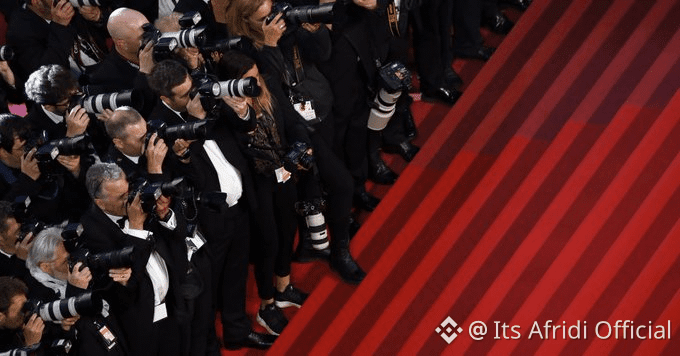
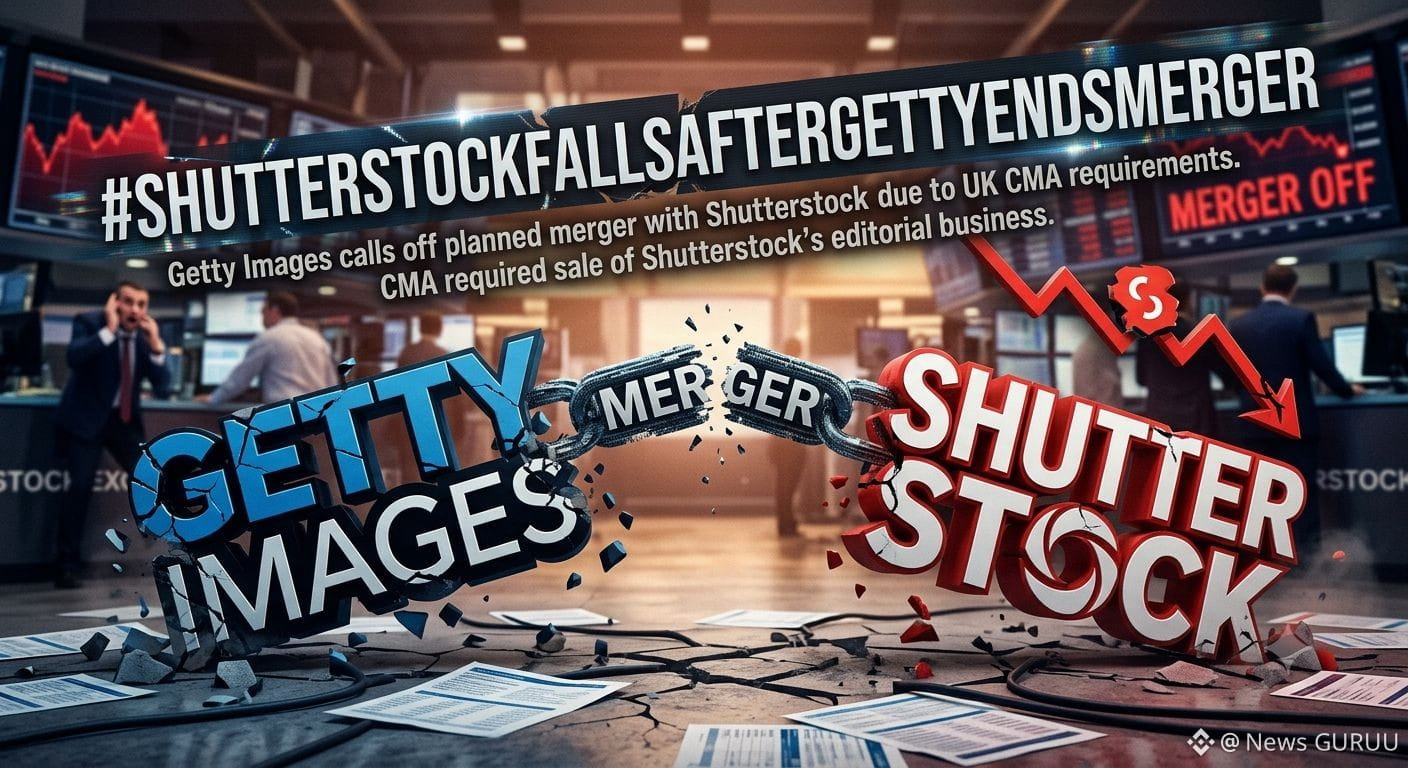
Getty Images said on Tuesday it has called off its planned merger with Shutterstock due to the UK competition regulator's requirement to sell Shutterstock's editorial business as a condition for approval.
$AAVE
{future}(AAVEUSDT)
$RAVE
{future}(RAVEUSDT)
$RIVER
{alpha}(560xda7ad9dea9397cffddae2f8a052b82f1484252b3)
#shutterstockfallsaftergettyendsmerger
Getty Images said on Tuesday it has called off its planned merger with Shutterstock due to the UK competition regulator's requirement to sell Shutterstock's editorial business as a condition for approval.
$AAVE
$RAVE
$RIVER
Getty Images said on Tuesday it has called off its planned merger with Shutterstock due to the UK competition regulator's requirement to sell Shutterstock's editorial business as a condition for approval.
$AAVE
$RAVE
$RIVER
2
6
7.3k

#ShutterstockFallsAfterGettyEndsMerger 📉
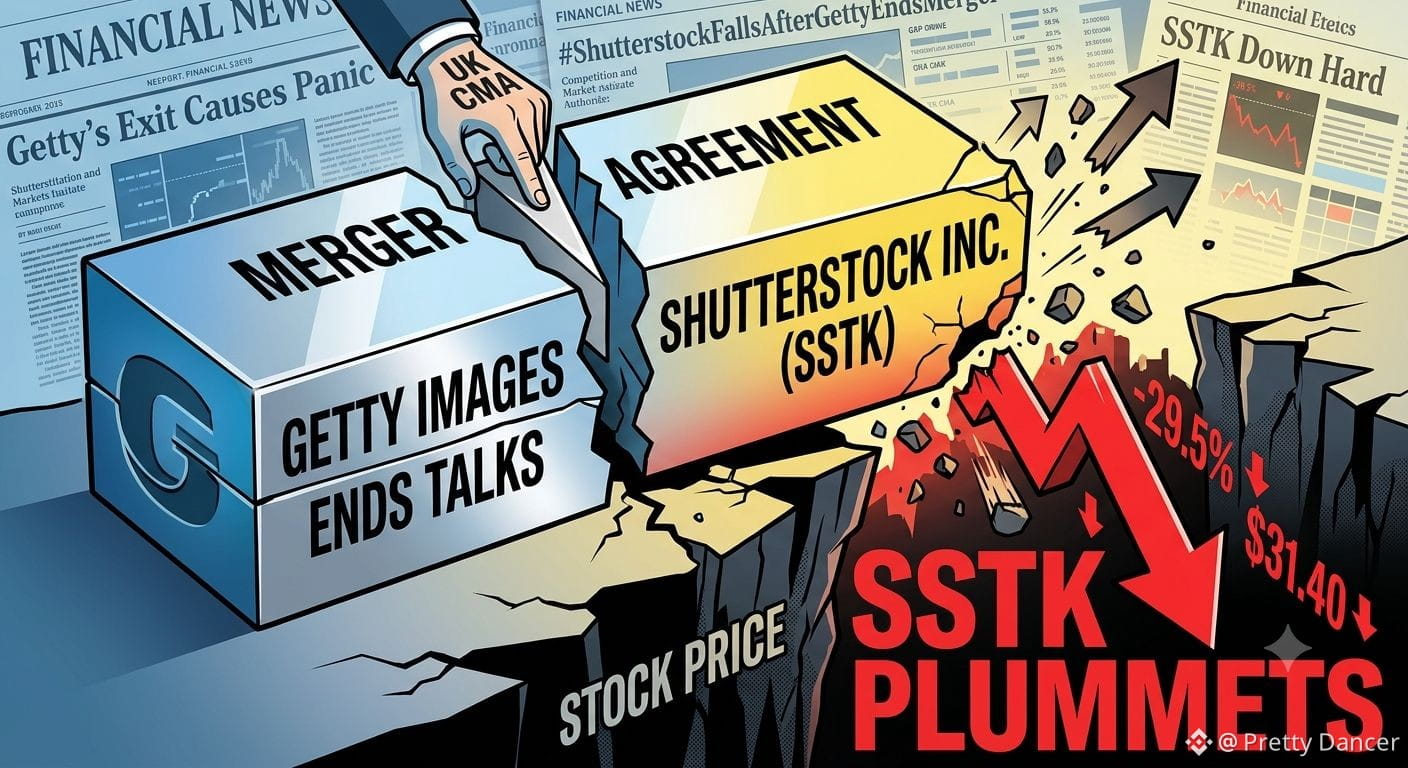
There’s been a big drop in Shutterstock (SSTK) stock! Getty Images terminated the proposed merger, which hurt investor sentiment and sent shares sharply lower.
There were hopes for consolidation in the stock photography and AI content space, but now uncertainty has increased. Will this bring fresh challenges for the sector?
What’s your take—buy the dip or avoid? 👇
#SSTK #GettyImages #StockMarket #BusinessNews
#ShutterstockFallsAfterGettyEndsMerger 📉
There’s been a big drop in Shutterstock (SSTK) stock! Getty Images terminated the proposed merger, which hurt investor sentiment and sent shares sharply lower.
There were hopes for consolidation in the stock photography and AI content space, but now uncertainty has increased. Will this bring fresh challenges for the sector?
What’s your take—buy the dip or avoid? 👇
#SSTK #GettyImages #StockMarket #BusinessNews
There’s been a big drop in Shutterstock (SSTK) stock! Getty Images terminated the proposed merger, which hurt investor sentiment and sent shares sharply lower.
There were hopes for consolidation in the stock photography and AI content space, but now uncertainty has increased. Will this bring fresh challenges for the sector?
What’s your take—buy the dip or avoid? 👇
#SSTK #GettyImages #StockMarket #BusinessNews
SSTKUS-0.49%
76

·
--
Bearish
#ShutterstockFallsAfterGettyEndsMerger
📉 #ShutterstockFallsAfterGettyEndsMerger
Shutterstock shares declined after Getty Images announced it was ending its planned merger with the company. The deal had been expected to create a stronger competitor in the digital media industry, but its cancellation has raised uncertainty about both companies' future growth strategies.
The decision highlights how mergers and acquisitions can significantly impact investor sentiment. When major deals fall through, markets often react quickly as traders reassess company valuations and future opportunities.
For investors, this serves as a reminder that corporate announcements can create sudden price movements. Keeping an eye on company news, earnings, and strategic decisions is essential for making informed investment choices.
#StockMarket #Shutterstock #GettyImages #Investing #MarketNews #Stocks #Finance #Trading #Business #WallStreet
$BTC
{future}(BTCUSDT)
#ShutterstockFallsAfterGettyEndsMerger
📉 #ShutterstockFallsAfterGettyEndsMerger
Shutterstock shares declined after Getty Images announced it was ending its planned merger with the company. The deal had been expected to create a stronger competitor in the digital media industry, but its cancellation has raised uncertainty about both companies' future growth strategies.
The decision highlights how mergers and acquisitions can significantly impact investor sentiment. When major deals fall through, markets often react quickly as traders reassess company valuations and future opportunities.
For investors, this serves as a reminder that corporate announcements can create sudden price movements. Keeping an eye on company news, earnings, and strategic decisions is essential for making informed investment choices.
#StockMarket #Shutterstock #GettyImages #Investing #MarketNews #Stocks #Finance #Trading #Business #WallStreet
$BTC
📉 #ShutterstockFallsAfterGettyEndsMerger
Shutterstock shares declined after Getty Images announced it was ending its planned merger with the company. The deal had been expected to create a stronger competitor in the digital media industry, but its cancellation has raised uncertainty about both companies' future growth strategies.
The decision highlights how mergers and acquisitions can significantly impact investor sentiment. When major deals fall through, markets often react quickly as traders reassess company valuations and future opportunities.
For investors, this serves as a reminder that corporate announcements can create sudden price movements. Keeping an eye on company news, earnings, and strategic decisions is essential for making informed investment choices.
#StockMarket #Shutterstock #GettyImages #Investing #MarketNews #Stocks #Finance #Trading #Business #WallStreet
$BTC
26

·
--
Bearish
Verified
#shutterstockfallsaftergettyendsmerger
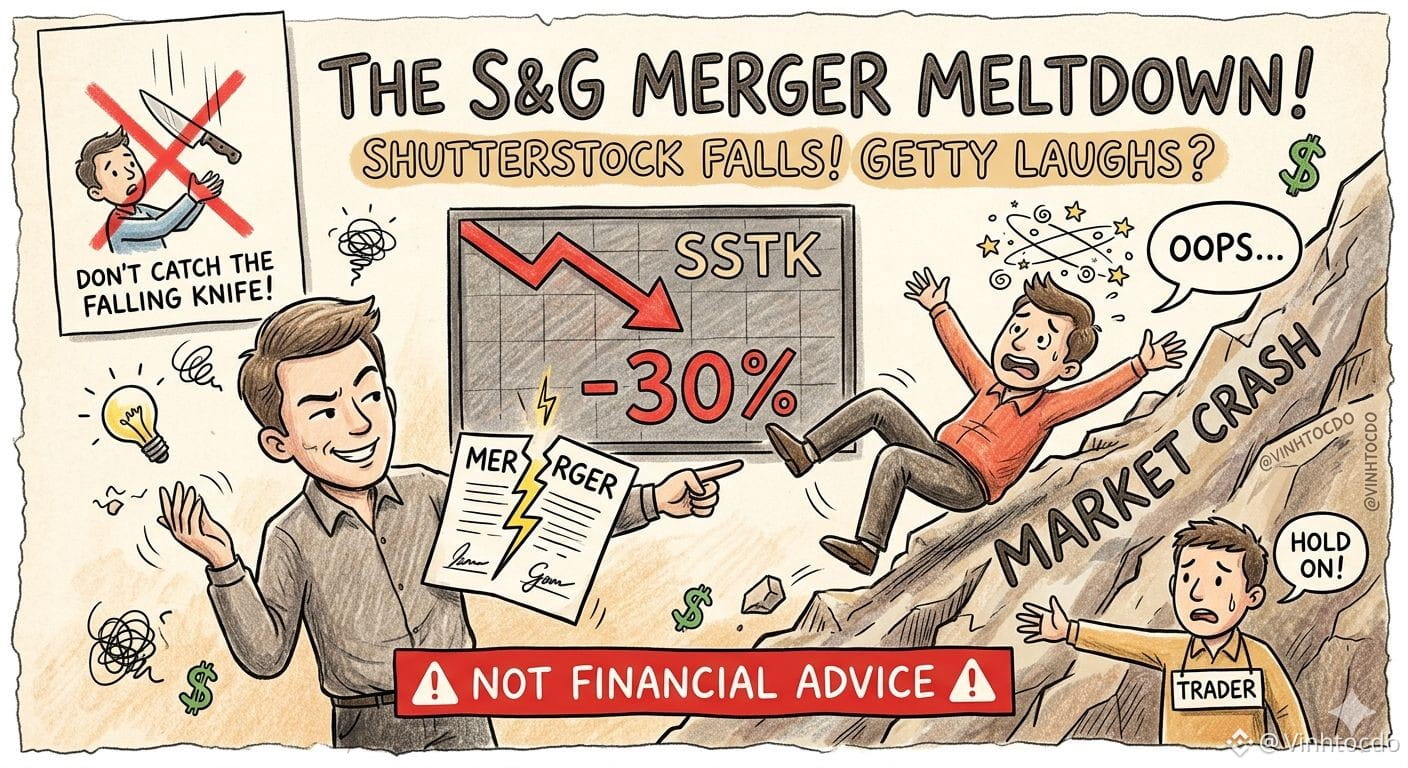
📉 Life really is like this: the worker can’t make ends meet, while the one who just takes has more than they need! That billion-dollar merger deal fell apart, and right away Shutterstock’s stock (SSTK) “reversed course and dug its own grave,” dropping nearly 30%—for real, folks. A single “bail on the deal” and you know the two sides turn on each other immediately; it’s an escape-proof disaster!
So what should traders do right now? Don’t just sit there—but also don’t chase the deep drop and grab a falling knife; you might end up badly hurt. Wait for the rebound and then trade lightly, just riding the timing!
⚠️ This is not financial advice. Use the code VINHTOCDO to support me!
#Shutterstock #USstock #getty #VINHTOCDO
$SPCXB
{spot}(SPCXBUSDT)
$MUB
{spot}(MUBUSDT)
$NVDAB
{spot}(NVDABUSDT)
#shutterstockfallsaftergettyendsmerger
📉 Life really is like this: the worker can’t make ends meet, while the one who just takes has more than they need! That billion-dollar merger deal fell apart, and right away Shutterstock’s stock (SSTK) “reversed course and dug its own grave,” dropping nearly 30%—for real, folks. A single “bail on the deal” and you know the two sides turn on each other immediately; it’s an escape-proof disaster!
So what should traders do right now? Don’t just sit there—but also don’t chase the deep drop and grab a falling knife; you might end up badly hurt. Wait for the rebound and then trade lightly, just riding the timing!
⚠️ This is not financial advice. Use the code VINHTOCDO to support me!
#Shutterstock #USstock #getty #VINHTOCDO
$SPCXB
$MUB
$NVDAB
📉 Life really is like this: the worker can’t make ends meet, while the one who just takes has more than they need! That billion-dollar merger deal fell apart, and right away Shutterstock’s stock (SSTK) “reversed course and dug its own grave,” dropping nearly 30%—for real, folks. A single “bail on the deal” and you know the two sides turn on each other immediately; it’s an escape-proof disaster!
So what should traders do right now? Don’t just sit there—but also don’t chase the deep drop and grab a falling knife; you might end up badly hurt. Wait for the rebound and then trade lightly, just riding the timing!
⚠️ This is not financial advice. Use the code VINHTOCDO to support me!
#Shutterstock #USstock #getty #VINHTOCDO
$SPCXB
$MUB
$NVDAB
2
7
3.4k
·
--
Bullish
Verified
#shutterstockfallsaftergettyendsmerger
Shares of Shutterstock plunged about 30% in after-hours trading after Getty Images said it would cancel a planned merger due to a ruling from UK regulators
$ELON
{alpha}(560xe07ae3a6f1bd86b92b563084e286757eb34878d7)
$BILI.US
{stock_us}(BILI.US)
$TRUMP
{future}(TRUMPUSDT)
#shutterstockfallsaftergettyendsmerger
Shares of Shutterstock plunged about 30% in after-hours trading after Getty Images said it would cancel a planned merger due to a ruling from UK regulators
$ELON
$BILI.US
$TRUMP
Shares of Shutterstock plunged about 30% in after-hours trading after Getty Images said it would cancel a planned merger due to a ruling from UK regulators
$ELON
$BILI.US
$TRUMP
1
6
1.2k

·
--
Verified
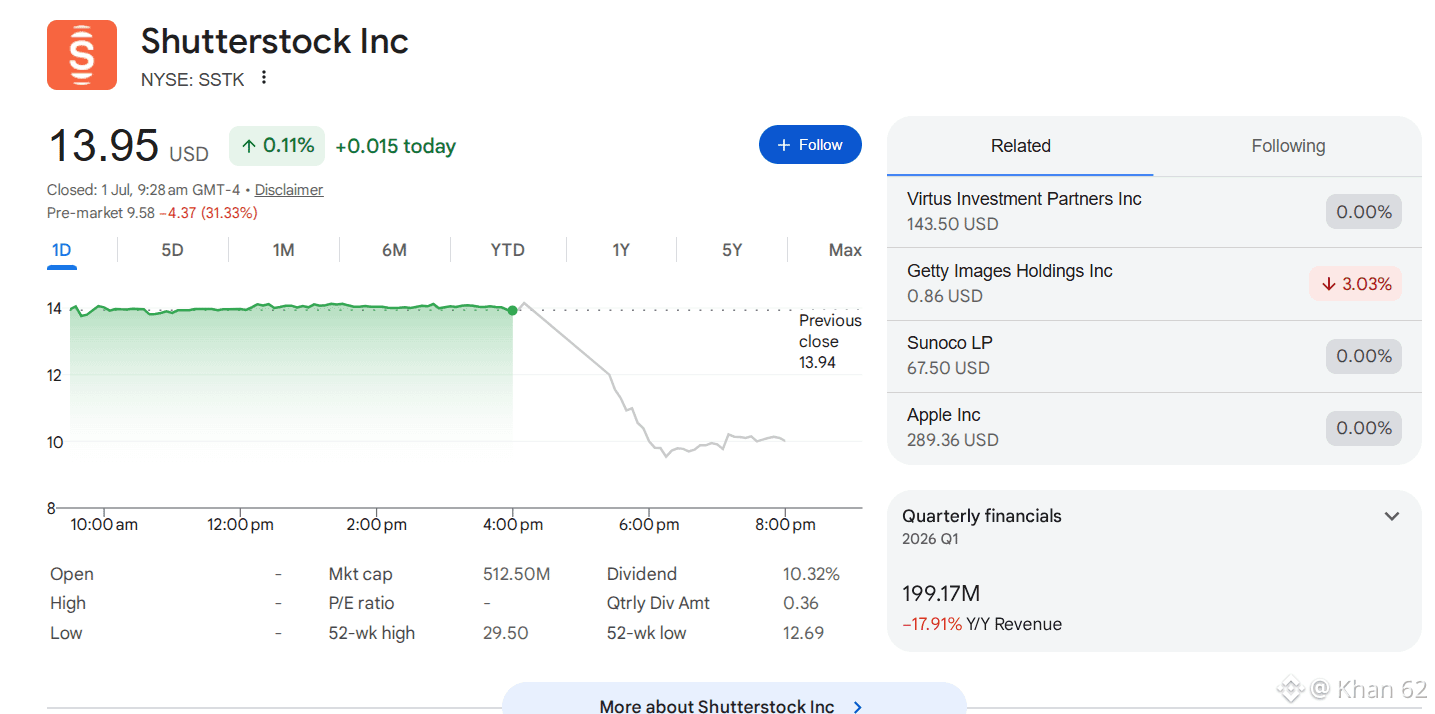
#shutterstockfallsaftergettyendsmerger 🚨 Shutterstock stock has taken a hit dropping 32% after the big merger with Getty did not happen. The deal was worth $3.7 billion.
Shutterstock stock fell than 32% because Getty Images decided not to go through with the planned merger. This is a deal for the digital media industry.
💥 So what happened?
The people in charge of making sure companies do not get too powerful in the UK made Shutterstock sell its editorial photography business. This includes Rex Features, Splash News and Backgrid. Getty Images did not want to do this so they stopped the merger.
📉 Why do traders care about this?
* Shutterstock stock had its drop in one day since the company started selling stock to the public in 2012. Now people are wondering if Shutterstock can grow on its own in a market that is using a lot of intelligence.
* Getty Images stock also went down. The company has to pay back some debt that's due in 2030 and find other ways to get money, which is adding to their financial problems.
What does this mean for the picture?
This merger was supposed to help Shutterstock and Getty Images compete with companies that make images using intelligence like Midjourney and OpenAIs DALL·E. Now that the merger is not happening both companies have to deal with the changes artificial intelligence is bringing on their own.
👀 People are watching these stocks: Shutterstock and Getty Images.
Can Shutterstock do well on its own or is this the start of problems for the stock?
👇 Are you going to buy Shutterstock stock that it is cheaper stay away, from it or wait to see what happens next?
#stockmarket #TradingNews #trade #Khan62 $ADBE $META $GOOGL
{future}(GOOGLUSDT)
{future}(METAUSDT)
{future}(ADBEUSDT)
#shutterstockfallsaftergettyendsmerger 🚨 Shutterstock stock has taken a hit dropping 32% after the big merger with Getty did not happen. The deal was worth $3.7 billion.
Shutterstock stock fell than 32% because Getty Images decided not to go through with the planned merger. This is a deal for the digital media industry.
💥 So what happened?
The people in charge of making sure companies do not get too powerful in the UK made Shutterstock sell its editorial photography business. This includes Rex Features, Splash News and Backgrid. Getty Images did not want to do this so they stopped the merger.
📉 Why do traders care about this?
* Shutterstock stock had its drop in one day since the company started selling stock to the public in 2012. Now people are wondering if Shutterstock can grow on its own in a market that is using a lot of intelligence.
* Getty Images stock also went down. The company has to pay back some debt that's due in 2030 and find other ways to get money, which is adding to their financial problems.
What does this mean for the picture?
This merger was supposed to help Shutterstock and Getty Images compete with companies that make images using intelligence like Midjourney and OpenAIs DALL·E. Now that the merger is not happening both companies have to deal with the changes artificial intelligence is bringing on their own.
👀 People are watching these stocks: Shutterstock and Getty Images.
Can Shutterstock do well on its own or is this the start of problems for the stock?
👇 Are you going to buy Shutterstock stock that it is cheaper stay away, from it or wait to see what happens next?
#stockmarket #TradingNews #trade #Khan62 $ADBE $META $GOOGL
Shutterstock stock fell than 32% because Getty Images decided not to go through with the planned merger. This is a deal for the digital media industry.
💥 So what happened?
The people in charge of making sure companies do not get too powerful in the UK made Shutterstock sell its editorial photography business. This includes Rex Features, Splash News and Backgrid. Getty Images did not want to do this so they stopped the merger.
📉 Why do traders care about this?
* Shutterstock stock had its drop in one day since the company started selling stock to the public in 2012. Now people are wondering if Shutterstock can grow on its own in a market that is using a lot of intelligence.
* Getty Images stock also went down. The company has to pay back some debt that's due in 2030 and find other ways to get money, which is adding to their financial problems.
What does this mean for the picture?
This merger was supposed to help Shutterstock and Getty Images compete with companies that make images using intelligence like Midjourney and OpenAIs DALL·E. Now that the merger is not happening both companies have to deal with the changes artificial intelligence is bringing on their own.
👀 People are watching these stocks: Shutterstock and Getty Images.
Can Shutterstock do well on its own or is this the start of problems for the stock?
👇 Are you going to buy Shutterstock stock that it is cheaper stay away, from it or wait to see what happens next?
#stockmarket #TradingNews #trade #Khan62 $ADBE $META $GOOGL
2
5
3.2k

#ShutterstockFallsAfterGettyEndsMerger #ShutterstockFallsAfterGettyEndsMerger means shares of Shutterstock declined after Getty Images ended their planned merger.
In simple terms:
The proposed merger between Shutterstock and Getty Images will no longer go ahead.
Investors had expected the deal to create a larger, more competitive company with potential cost savings and strategic benefits.
When the merger was terminated, those expected benefits disappeared, leading to selling pressure on Shutterstock's stock.
Potential market impact:
📉 Shutterstock shares may remain under pressure in the short term.
📊 Getty Images' stock could also see increased volatility as investors reassess its standalone outlook.
💼 The companies will continue operating independently.
👀 Investors will focus on each company's future growth strategy and financial performance without the merger.
#ShutterstockFallsAfterGettyEndsMerger #ShutterstockFallsAfterGettyEndsMerger means shares of Shutterstock declined after Getty Images ended their planned merger.
In simple terms:
The proposed merger between Shutterstock and Getty Images will no longer go ahead.
Investors had expected the deal to create a larger, more competitive company with potential cost savings and strategic benefits.
When the merger was terminated, those expected benefits disappeared, leading to selling pressure on Shutterstock's stock.
Potential market impact:
📉 Shutterstock shares may remain under pressure in the short term.
📊 Getty Images' stock could also see increased volatility as investors reassess its standalone outlook.
💼 The companies will continue operating independently.
👀 Investors will focus on each company's future growth strategy and financial performance without the merger.
In simple terms:
The proposed merger between Shutterstock and Getty Images will no longer go ahead.
Investors had expected the deal to create a larger, more competitive company with potential cost savings and strategic benefits.
When the merger was terminated, those expected benefits disappeared, leading to selling pressure on Shutterstock's stock.
Potential market impact:
📉 Shutterstock shares may remain under pressure in the short term.
📊 Getty Images' stock could also see increased volatility as investors reassess its standalone outlook.
💼 The companies will continue operating independently.
👀 Investors will focus on each company's future growth strategy and financial performance without the merger.
32

·
--
#ShutterstockFallsAfterGettyEndsMerger
The merger agreement valued in billions of dollars 💲💲💲 that went wrong caused Shutterstock’s stock (SSTK) to turn around and point to the ground, with a drop of almost 30% of one.
Honestly, folks, we feel like they’re going to “cancel the deal” and you can already see who they’re working things out with—an absolute mess and at the same time it seems like they’re in a bottomless barrel 😬😬😬. $BTC
{spot}(BTCUSDT)
#ShutterstockFallsAfterGettyEndsMerger
The merger agreement valued in billions of dollars 💲💲💲 that went wrong caused Shutterstock’s stock (SSTK) to turn around and point to the ground, with a drop of almost 30% of one.
Honestly, folks, we feel like they’re going to “cancel the deal” and you can already see who they’re working things out with—an absolute mess and at the same time it seems like they’re in a bottomless barrel 😬😬😬. $BTC
The merger agreement valued in billions of dollars 💲💲💲 that went wrong caused Shutterstock’s stock (SSTK) to turn around and point to the ground, with a drop of almost 30% of one.
Honestly, folks, we feel like they’re going to “cancel the deal” and you can already see who they’re working things out with—an absolute mess and at the same time it seems like they’re in a bottomless barrel 😬😬😬. $BTC
55

·
--
Bearish
Verified
#shutterstockfallsaftergettyendsmerger #stockmarket
📉 SHUTTERSTOCK DROPS AS GETTY MERGER COLLAPSES
Getty Images has officially ended its merger with Shutterstock after UK regulators required Shutterstock to sell its editorial business for approval.
❌ Merger canceled
❌ Negative sentiment for Shutterstock
❌ Increased short-term uncertainty
📊 Trading View: SELL or avoid new BUY positions until the stock finds strong support and market sentiment improves."CLICK ON THE BELOW YELLOW COIN TAG TO GO TO DESIRED TRADING PAGE TO GET BENEFIT TRADE OK." $AAVE $RIVER $RAVE
{future}(RAVEUSDT)
{future}(RIVERUSDT)
{spot}(AAVEUSDT)
#shutterstockfallsaftergettyendsmerger #stockmarket
📉 SHUTTERSTOCK DROPS AS GETTY MERGER COLLAPSES
Getty Images has officially ended its merger with Shutterstock after UK regulators required Shutterstock to sell its editorial business for approval.
❌ Merger canceled
❌ Negative sentiment for Shutterstock
❌ Increased short-term uncertainty
📊 Trading View: SELL or avoid new BUY positions until the stock finds strong support and market sentiment improves."CLICK ON THE BELOW YELLOW COIN TAG TO GO TO DESIRED TRADING PAGE TO GET BENEFIT TRADE OK." $AAVE $RIVER $RAVE
📉 SHUTTERSTOCK DROPS AS GETTY MERGER COLLAPSES
Getty Images has officially ended its merger with Shutterstock after UK regulators required Shutterstock to sell its editorial business for approval.
❌ Merger canceled
❌ Negative sentiment for Shutterstock
❌ Increased short-term uncertainty
📊 Trading View: SELL or avoid new BUY positions until the stock finds strong support and market sentiment improves."CLICK ON THE BELOW YELLOW COIN TAG TO GO TO DESIRED TRADING PAGE TO GET BENEFIT TRADE OK." $AAVE $RIVER $RAVE
1
4
1.7k

·
--
The Architecture of Centralization: Rules, Realignment, and Capital! 👇
What pulls us back to systems like BandLedger isn’t just code it’s the question:
Who decides what users can do?
Most people don't read mechanics;they read the promise.They want to know what is possible,protected,and fair. If rules are clear, trust is earned; if they are too dense, centralization returns. The real test is whether ordinary people understand their rights.
While centralized systems reshuffle,smart money looks past the noise directly at objective macro volatility:
The Macro Disruption Reality:
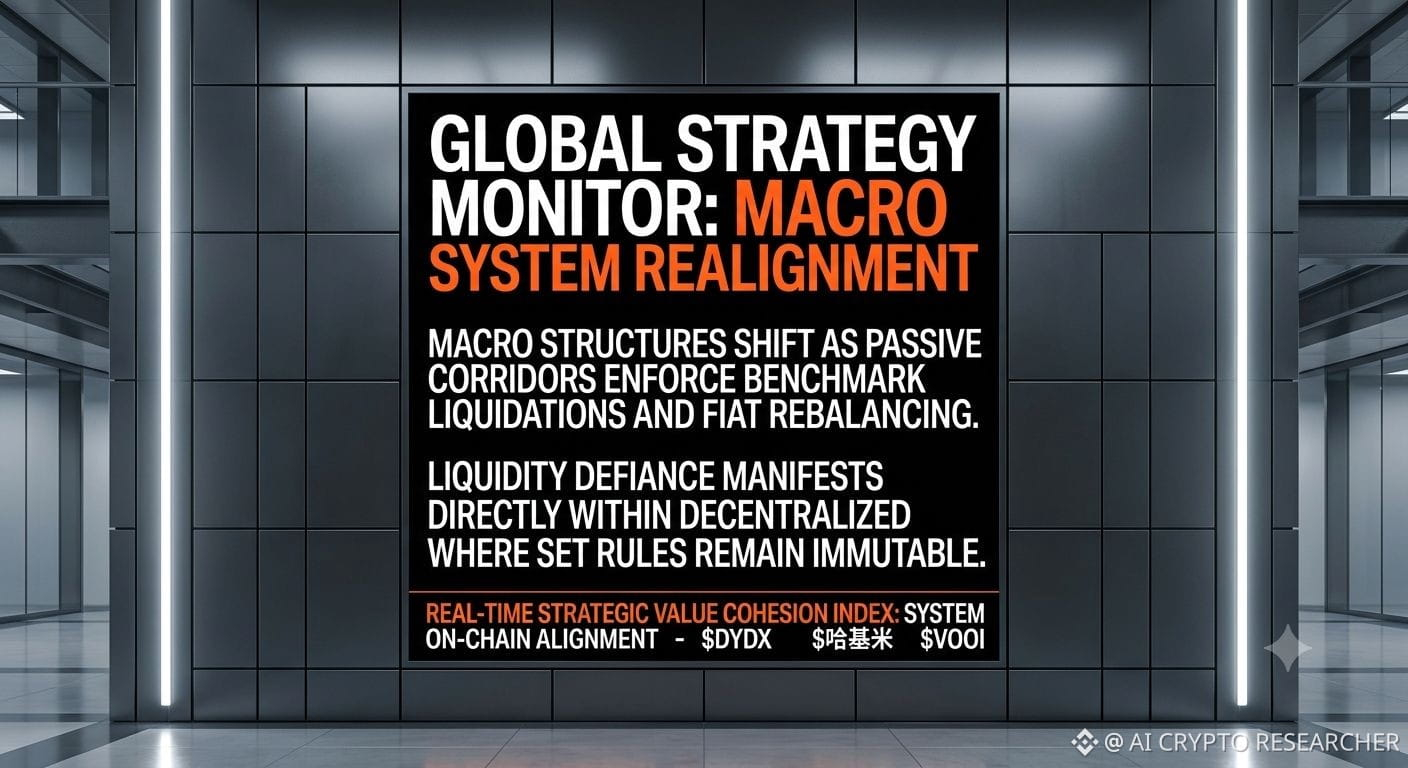
The Passive Index Drop: Circle CRCL has been dropped from five major Russell Growth Indexes, forcing programmatic selling by passive equity funds. This rigid corporate rebalancing changes zero on-chain stablecoin fundamentals.
The Merger Collapse:
Shutterstock SSTK plunged nearly 30% after Getty Images terminated their $3.7B merger due to UK regulatory mandates—proving how fast centralized entities can stall corporate growth.
Sovereign Tech Shifts:
The U.S. abruptly lifted export controls on advanced AI models. This regulatory whiplash highlights the unstable landscape of centralized tech enforcement compared to open-source protocols.
Fiat & Energy Pressures:
The South Korean Won (KRW) remains pinned at its weakest levels since 2009 due to heavy equity outflows, while falling crude oil prices squeeze energy-dependent fiat reserves.
Technical Analysis & On-Chain Alpha:
Decentralized Layer Defiance:While Bitcoin undergoes a structural flush, volume is concentrating in pure decentralized layers.
Assets like
$DYDX
{spot}(DYDXUSDT)
$哈基米
{alpha}(560x82ec31d69b3c289e541b50e30681fd1acad24444)
$VOOI
{alpha}(560x876cecb73c9ed1b1526f8e35c6a5a51a31bcf341)
are printing sharp technical setups, confirming a liquidity migration toward permissionless trading hubs where rules cannot be arbitrarily rewritten.
Let data guide,enforce defense,and let charts validate!
#OilPriceFalls
#ShutterstockFallsAfterGettyEndsMerger
#CircleRemovedFromRussellGrowthIndexes
#Binance #TrendingTopic 0
The Architecture of Centralization: Rules, Realignment, and Capital! 👇
What pulls us back to systems like BandLedger isn’t just code it’s the question:
Who decides what users can do?
Most people don't read mechanics;they read the promise.They want to know what is possible,protected,and fair. If rules are clear, trust is earned; if they are too dense, centralization returns. The real test is whether ordinary people understand their rights.
While centralized systems reshuffle,smart money looks past the noise directly at objective macro volatility:
The Macro Disruption Reality:
The Passive Index Drop: Circle CRCL has been dropped from five major Russell Growth Indexes, forcing programmatic selling by passive equity funds. This rigid corporate rebalancing changes zero on-chain stablecoin fundamentals.
The Merger Collapse:
Shutterstock SSTK plunged nearly 30% after Getty Images terminated their $3.7B merger due to UK regulatory mandates—proving how fast centralized entities can stall corporate growth.
Sovereign Tech Shifts:
The U.S. abruptly lifted export controls on advanced AI models. This regulatory whiplash highlights the unstable landscape of centralized tech enforcement compared to open-source protocols.
Fiat & Energy Pressures:
The South Korean Won (KRW) remains pinned at its weakest levels since 2009 due to heavy equity outflows, while falling crude oil prices squeeze energy-dependent fiat reserves.
Technical Analysis & On-Chain Alpha:
Decentralized Layer Defiance:While Bitcoin undergoes a structural flush, volume is concentrating in pure decentralized layers.
Assets like
$DYDX
$哈基米
$VOOI
are printing sharp technical setups, confirming a liquidity migration toward permissionless trading hubs where rules cannot be arbitrarily rewritten.
Let data guide,enforce defense,and let charts validate!
#OilPriceFalls
#ShutterstockFallsAfterGettyEndsMerger
#CircleRemovedFromRussellGrowthIndexes
#Binance #TrendingTopic 0
What pulls us back to systems like BandLedger isn’t just code it’s the question:
Who decides what users can do?
Most people don't read mechanics;they read the promise.They want to know what is possible,protected,and fair. If rules are clear, trust is earned; if they are too dense, centralization returns. The real test is whether ordinary people understand their rights.
While centralized systems reshuffle,smart money looks past the noise directly at objective macro volatility:
The Macro Disruption Reality:
The Passive Index Drop: Circle CRCL has been dropped from five major Russell Growth Indexes, forcing programmatic selling by passive equity funds. This rigid corporate rebalancing changes zero on-chain stablecoin fundamentals.
The Merger Collapse:
Shutterstock SSTK plunged nearly 30% after Getty Images terminated their $3.7B merger due to UK regulatory mandates—proving how fast centralized entities can stall corporate growth.
Sovereign Tech Shifts:
The U.S. abruptly lifted export controls on advanced AI models. This regulatory whiplash highlights the unstable landscape of centralized tech enforcement compared to open-source protocols.
Fiat & Energy Pressures:
The South Korean Won (KRW) remains pinned at its weakest levels since 2009 due to heavy equity outflows, while falling crude oil prices squeeze energy-dependent fiat reserves.
Technical Analysis & On-Chain Alpha:
Decentralized Layer Defiance:While Bitcoin undergoes a structural flush, volume is concentrating in pure decentralized layers.
Assets like
$DYDX
$哈基米
$VOOI
are printing sharp technical setups, confirming a liquidity migration toward permissionless trading hubs where rules cannot be arbitrarily rewritten.
Let data guide,enforce defense,and let charts validate!
#OilPriceFalls
#ShutterstockFallsAfterGettyEndsMerger
#CircleRemovedFromRussellGrowthIndexes
#Binance #TrendingTopic 0
680

Young people: a buying opportunity
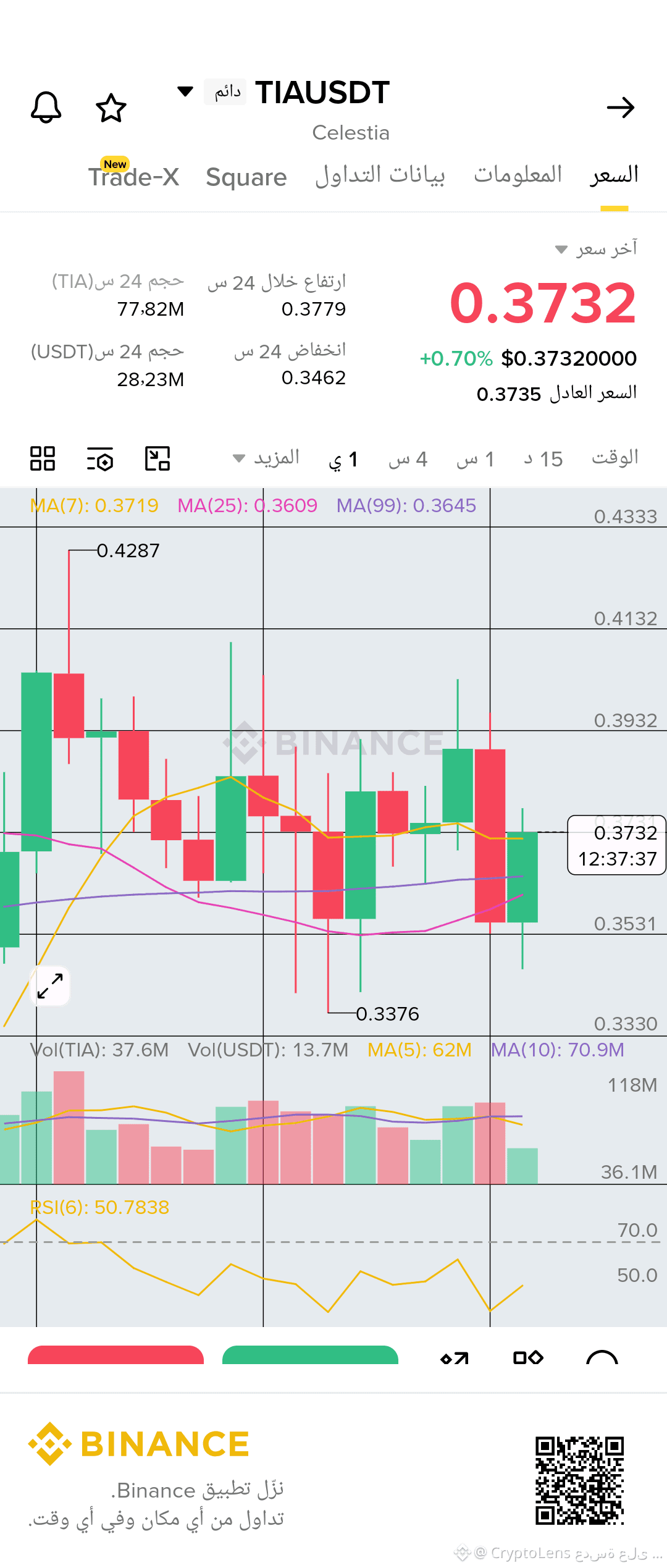
$TIA Buy / Long positions 📈🚨
Entry zone: 0.3680–0.3720
Stop loss: 0.3580
Targets:
TP1: 0.3765
TP2: 0.3835
TP3: 0.3920
TP4: 0.4020
Press below and take a long position 👇$TIA
TIAUSDT
#tia #CircleRemovedFromRussellGrowthIndexes #ShutterstockFallsAfterGettyEndsMerger #KoreanWonWeakestSince2009 #BinanceHerYerde
Young people: a buying opportunity
$TIA Buy / Long positions 📈🚨
Entry zone: 0.3680–0.3720
Stop loss: 0.3580
Targets:
TP1: 0.3765
TP2: 0.3835
TP3: 0.3920
TP4: 0.4020
Press below and take a long position 👇$TIA
TIAUSDT
#tia #CircleRemovedFromRussellGrowthIndexes #ShutterstockFallsAfterGettyEndsMerger #KoreanWonWeakestSince2009 #BinanceHerYerde
$TIA Buy / Long positions 📈🚨
Entry zone: 0.3680–0.3720
Stop loss: 0.3580
Targets:
TP1: 0.3765
TP2: 0.3835
TP3: 0.3920
TP4: 0.4020
Press below and take a long position 👇$TIA
TIAUSDT
#tia #CircleRemovedFromRussellGrowthIndexes #ShutterstockFallsAfterGettyEndsMerger #KoreanWonWeakestSince2009 #BinanceHerYerde
96


·
--
🚀 $BASED /USDT – LONG Signal 🌟📈
🟢 Entry: 0.1180 – 0.1200
🎯 Target 1: 0.1235
🎯 Target 2: 0.1275
🎯 Target 3: 0.1320
🛑 Stop Loss: 0.1140
Explanation:
💪 Price remains above the 7, 25, and 99 MA, indicating the bullish trend is still intact after consolidating below the recent high.
🔥 RSI is holding above 60 and the pullback occurred on declining volume, suggesting buyers remain in control. A breakout above 0.1245 could accelerate the next bullish leg. Use disciplined risk management.
#OilPriceFalls #ShutterstockFallsAfterGettyEndsMerger ITGRaises$312.2MInUSIPO#JDVanceDisclosesBTCHoldings
{future}(BASEDUSDT)
🚀 $BASED /USDT – LONG Signal 🌟📈
🟢 Entry: 0.1180 – 0.1200
🎯 Target 1: 0.1235
🎯 Target 2: 0.1275
🎯 Target 3: 0.1320
🛑 Stop Loss: 0.1140
Explanation:
💪 Price remains above the 7, 25, and 99 MA, indicating the bullish trend is still intact after consolidating below the recent high.
🔥 RSI is holding above 60 and the pullback occurred on declining volume, suggesting buyers remain in control. A breakout above 0.1245 could accelerate the next bullish leg. Use disciplined risk management.
#OilPriceFalls #ShutterstockFallsAfterGettyEndsMerger ITGRaises$312.2MInUSIPO#JDVanceDisclosesBTCHoldings
🟢 Entry: 0.1180 – 0.1200
🎯 Target 1: 0.1235
🎯 Target 2: 0.1275
🎯 Target 3: 0.1320
🛑 Stop Loss: 0.1140
Explanation:
💪 Price remains above the 7, 25, and 99 MA, indicating the bullish trend is still intact after consolidating below the recent high.
🔥 RSI is holding above 60 and the pullback occurred on declining volume, suggesting buyers remain in control. A breakout above 0.1245 could accelerate the next bullish leg. Use disciplined risk management.
#OilPriceFalls #ShutterstockFallsAfterGettyEndsMerger ITGRaises$312.2MInUSIPO#JDVanceDisclosesBTCHoldings
127

·
--
$TAC
*TAC (TAC) $0.62, an alternative coin with a very small market cap. Weak liquidity + high volatility.*
Price: *$0.62* | Market Cap: ∼$12-18M (estimated) | 24h Volume: $400-800K | All-Time High: *$1.24* (start of 2026)
📈 *Movement*: TAC is a coin with a very small market cap and weak coverage on major exchanges. In 2026 it’s a sharp range of $0.40-$0.75. It can rise 40-60% on a single large buy, then bleed for days. No correlation with Bitcoin. Volume depends on Telegram/Twitter buzz.
🏷️ *Positives*:
1. *Very small float*: market cap < $20M = easy to move. If liquidity shifts to altcoins, TAC can reach 2-3x quickly on thin order books.
2. *Narrative beta*: moves with the AI/RWA/DeFi cycle depending on what the community is promoting that week. High beta in a risk-on bull market.
3. *Clean chart*: no big investors, no FTX/3AC overhang. Just retail.
📊 *Negatives*:
1. *Liquidity risk*: daily volume < $1M, wide spreads. 5-10% slippage on $10K orders. Whales can drop you 30% in a single candle.
2. *No fundamentals*: no listing on major exchanges, no audits, no product development. Pure speculation.
3. *Supply openings*: most coins < $20M have early investors + team unlocks. Quiet sell pressure.
*Key Levels*: Support $0.40-0.45. Resistance $0.72-0.75. Break $0.75 = $0.90-1.00. Break $0.40 = $0.32-0.35.
$TAC
{future}(TACUSDT)
#OilPriceFalls #CircleRemovedFromRussellGrowthIndexes
#ShutterstockFallsAfterGettyEndsMerger #JDVanceDisclosesBTCHoldings
$TAC
*TAC (TAC) $0.62, an alternative coin with a very small market cap. Weak liquidity + high volatility.*
Price: *$0.62* | Market Cap: ∼$12-18M (estimated) | 24h Volume: $400-800K | All-Time High: *$1.24* (start of 2026)
📈 *Movement*: TAC is a coin with a very small market cap and weak coverage on major exchanges. In 2026 it’s a sharp range of $0.40-$0.75. It can rise 40-60% on a single large buy, then bleed for days. No correlation with Bitcoin. Volume depends on Telegram/Twitter buzz.
🏷️ *Positives*:
1. *Very small float*: market cap < $20M = easy to move. If liquidity shifts to altcoins, TAC can reach 2-3x quickly on thin order books.
2. *Narrative beta*: moves with the AI/RWA/DeFi cycle depending on what the community is promoting that week. High beta in a risk-on bull market.
3. *Clean chart*: no big investors, no FTX/3AC overhang. Just retail.
📊 *Negatives*:
1. *Liquidity risk*: daily volume < $1M, wide spreads. 5-10% slippage on $10K orders. Whales can drop you 30% in a single candle.
2. *No fundamentals*: no listing on major exchanges, no audits, no product development. Pure speculation.
3. *Supply openings*: most coins < $20M have early investors + team unlocks. Quiet sell pressure.
*Key Levels*: Support $0.40-0.45. Resistance $0.72-0.75. Break $0.75 = $0.90-1.00. Break $0.40 = $0.32-0.35.
$TAC
#OilPriceFalls #CircleRemovedFromRussellGrowthIndexes
#ShutterstockFallsAfterGettyEndsMerger #JDVanceDisclosesBTCHoldings
*TAC (TAC) $0.62, an alternative coin with a very small market cap. Weak liquidity + high volatility.*
Price: *$0.62* | Market Cap: ∼$12-18M (estimated) | 24h Volume: $400-800K | All-Time High: *$1.24* (start of 2026)
📈 *Movement*: TAC is a coin with a very small market cap and weak coverage on major exchanges. In 2026 it’s a sharp range of $0.40-$0.75. It can rise 40-60% on a single large buy, then bleed for days. No correlation with Bitcoin. Volume depends on Telegram/Twitter buzz.
🏷️ *Positives*:
1. *Very small float*: market cap < $20M = easy to move. If liquidity shifts to altcoins, TAC can reach 2-3x quickly on thin order books.
2. *Narrative beta*: moves with the AI/RWA/DeFi cycle depending on what the community is promoting that week. High beta in a risk-on bull market.
3. *Clean chart*: no big investors, no FTX/3AC overhang. Just retail.
📊 *Negatives*:
1. *Liquidity risk*: daily volume < $1M, wide spreads. 5-10% slippage on $10K orders. Whales can drop you 30% in a single candle.
2. *No fundamentals*: no listing on major exchanges, no audits, no product development. Pure speculation.
3. *Supply openings*: most coins < $20M have early investors + team unlocks. Quiet sell pressure.
*Key Levels*: Support $0.40-0.45. Resistance $0.72-0.75. Break $0.75 = $0.90-1.00. Break $0.40 = $0.32-0.35.
$TAC
#OilPriceFalls #CircleRemovedFromRussellGrowthIndexes
#ShutterstockFallsAfterGettyEndsMerger #JDVanceDisclosesBTCHoldings
175

·
--
Bullish
$PRL Market Update
PRL is maintaining a healthy uptrend with a +12.83% gain, trading near $0.16818. Price action remains constructive as buyers defend key support.
Market Stats
Price: $0.16818
24H Change: +12.83%
Volume: $1.41M
Trade Setup
Entry: $0.166–0.169
TP1: $0.178
TP2: $0.188
TP3: $0.200
Stop Loss: $0.156
Holding above support could strengthen the bullish trend.
#OilPriceFalls #CircleRemovedFromRussellGrowthIndexes #USLiftsExportControlsOnAnthropicModels #ShutterstockFallsAfterGettyEndsMerger #JDVanceDisclosesBTCHoldings
$PRL
{alpha}(560xd20fb09a49a8e75fef536a2dbc68222900287bac)
$PRL Market Update
PRL is maintaining a healthy uptrend with a +12.83% gain, trading near $0.16818. Price action remains constructive as buyers defend key support.
Market Stats
Price: $0.16818
24H Change: +12.83%
Volume: $1.41M
Trade Setup
Entry: $0.166–0.169
TP1: $0.178
TP2: $0.188
TP3: $0.200
Stop Loss: $0.156
Holding above support could strengthen the bullish trend.
#OilPriceFalls #CircleRemovedFromRussellGrowthIndexes #USLiftsExportControlsOnAnthropicModels #ShutterstockFallsAfterGettyEndsMerger #JDVanceDisclosesBTCHoldings
$PRL
PRL is maintaining a healthy uptrend with a +12.83% gain, trading near $0.16818. Price action remains constructive as buyers defend key support.
Market Stats
Price: $0.16818
24H Change: +12.83%
Volume: $1.41M
Trade Setup
Entry: $0.166–0.169
TP1: $0.178
TP2: $0.188
TP3: $0.200
Stop Loss: $0.156
Holding above support could strengthen the bullish trend.
#OilPriceFalls #CircleRemovedFromRussellGrowthIndexes #USLiftsExportControlsOnAnthropicModels #ShutterstockFallsAfterGettyEndsMerger #JDVanceDisclosesBTCHoldings
$PRL
1
19

·
--
Bearish
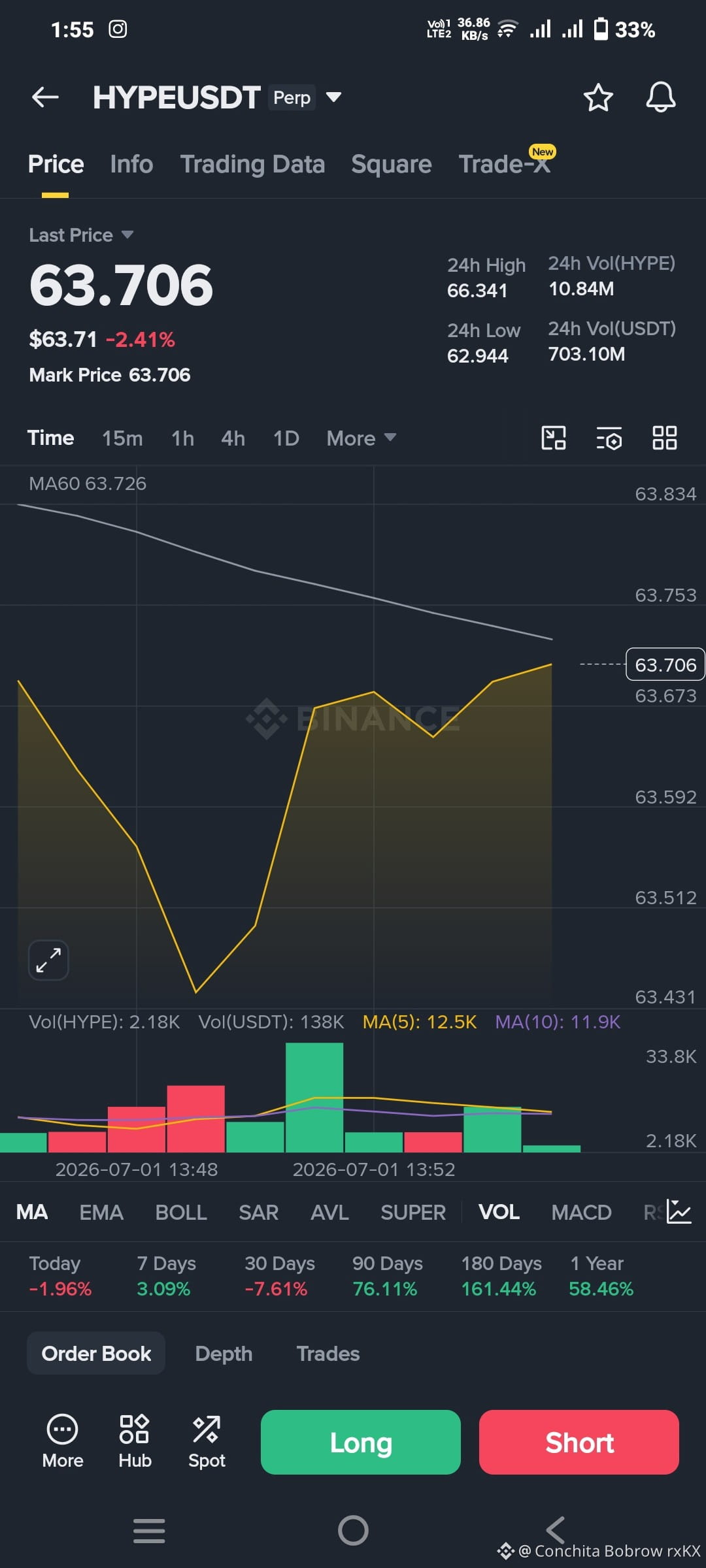
$HYPE Don’t break! 67.5 continue to short! If the downtrend rebounds, short into it! Don’t wait until it drops below 60 and then slap your thigh in regret!
#ShutterstockFallsAfterGettyEndsMerger #JDVanceDisclosesBTCHoldings #OilPriceFalls
#CircleRemovedFromRussellGrowthIndexes #USLiftsExportControlsOnAnthropicModels
$HYPE
{future}(HYPEUSDT)
$HYPE Don’t break! 67.5 continue to short! If the downtrend rebounds, short into it! Don’t wait until it drops below 60 and then slap your thigh in regret!
#ShutterstockFallsAfterGettyEndsMerger #JDVanceDisclosesBTCHoldings #OilPriceFalls
#CircleRemovedFromRussellGrowthIndexes #USLiftsExportControlsOnAnthropicModels
$HYPE
#ShutterstockFallsAfterGettyEndsMerger #JDVanceDisclosesBTCHoldings #OilPriceFalls
#CircleRemovedFromRussellGrowthIndexes #USLiftsExportControlsOnAnthropicModels
$HYPE
58

·
--
Bullish
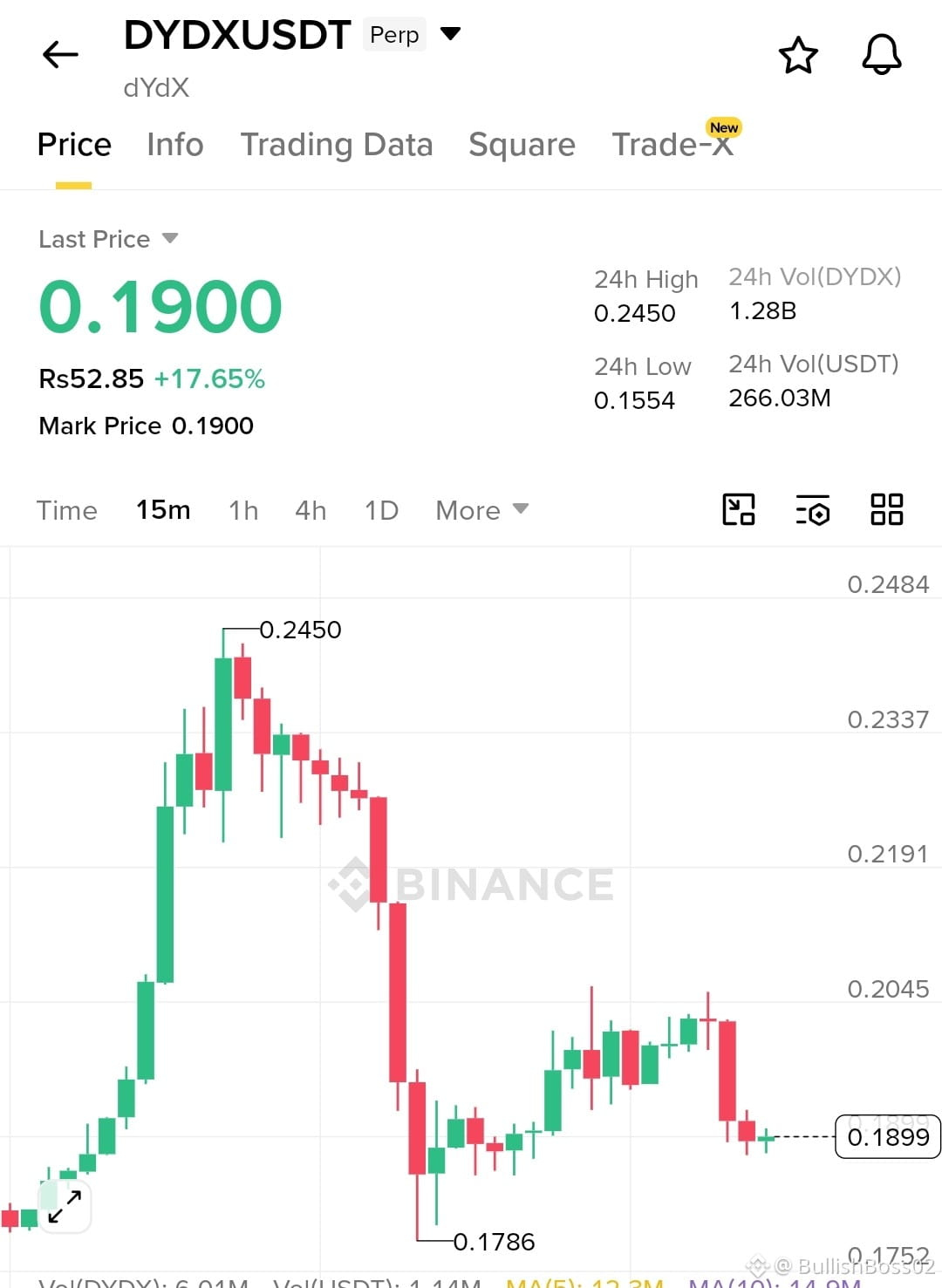
$DYDX LONG SIGNAL
· Entry: 0.1880 – 0.1920
· SL: 0.1780
· TP1: 0.2045
· TP2: 0.2190
· TP3: 0.2450
Why?
Price just ripped from 0.1554 lows and is consolidating near 0.19. Break above 0.2045 opens the door straight to 0.2190 and eventually the 24h high at 0.2450. Sellers are trapped, buyers are stacking. this one's got serious runway left. Don't overthink it.
trade here
{future}(DYDXUSDT)
$TQQQ
$MVLL
#OilPriceFalls
SpotSilverRises3%To$60.10
#KoreanWonWeakestSince2009
BitcoinSlidesTo$59250
#ShutterstockFallsAfterGettyEndsMerger
$DYDX LONG SIGNAL
· Entry: 0.1880 – 0.1920
· SL: 0.1780
· TP1: 0.2045
· TP2: 0.2190
· TP3: 0.2450
Why?
Price just ripped from 0.1554 lows and is consolidating near 0.19. Break above 0.2045 opens the door straight to 0.2190 and eventually the 24h high at 0.2450. Sellers are trapped, buyers are stacking. this one's got serious runway left. Don't overthink it.
trade here
$TQQQ
$MVLL
#OilPriceFalls
SpotSilverRises3%To$60.10
#KoreanWonWeakestSince2009
BitcoinSlidesTo$59250
#ShutterstockFallsAfterGettyEndsMerger
· Entry: 0.1880 – 0.1920
· SL: 0.1780
· TP1: 0.2045
· TP2: 0.2190
· TP3: 0.2450
Why?
Price just ripped from 0.1554 lows and is consolidating near 0.19. Break above 0.2045 opens the door straight to 0.2190 and eventually the 24h high at 0.2450. Sellers are trapped, buyers are stacking. this one's got serious runway left. Don't overthink it.
trade here
$TQQQ
$MVLL
#OilPriceFalls
SpotSilverRises3%To$60.10
#KoreanWonWeakestSince2009
BitcoinSlidesTo$59250
#ShutterstockFallsAfterGettyEndsMerger
1
155
·
--
Bullish
$NES remains one of today's stronger performers, climbing +15.36% to $0.18767. Strong trading volume suggests sustained market interest.
Market Stats • Price: $0.18767 • 24H Change: +15.36% • Volume: $102.67M
Trade Setup • Entry: $0.184–0.189 • TP1: $0.198 • TP2: $0.210 • TP3: $0.225 • Stop Loss: $0.175
A confirmed breakout above resistance could open the door for another bullish rally.
#OilPriceFalls #CircleRemovedFromRussellGrowthIndexes #JDVanceDisclosesBTCHoldings #ShutterstockFallsAfterGettyEndsMerger
$NES
{alpha}(560x3131f6b80c26936ab03f7d9d29eb4ddf36ac3fb5)
$NES remains one of today's stronger performers, climbing +15.36% to $0.18767. Strong trading volume suggests sustained market interest.
Market Stats • Price: $0.18767 • 24H Change: +15.36% • Volume: $102.67M
Trade Setup • Entry: $0.184–0.189 • TP1: $0.198 • TP2: $0.210 • TP3: $0.225 • Stop Loss: $0.175
A confirmed breakout above resistance could open the door for another bullish rally.
#OilPriceFalls #CircleRemovedFromRussellGrowthIndexes #JDVanceDisclosesBTCHoldings #ShutterstockFallsAfterGettyEndsMerger
$NES
Market Stats • Price: $0.18767 • 24H Change: +15.36% • Volume: $102.67M
Trade Setup • Entry: $0.184–0.189 • TP1: $0.198 • TP2: $0.210 • TP3: $0.225 • Stop Loss: $0.175
A confirmed breakout above resistance could open the door for another bullish rally.
#OilPriceFalls #CircleRemovedFromRussellGrowthIndexes #JDVanceDisclosesBTCHoldings #ShutterstockFallsAfterGettyEndsMerger
$NES
1
42
·
--
After getting through it, trading becomes simple$ETH
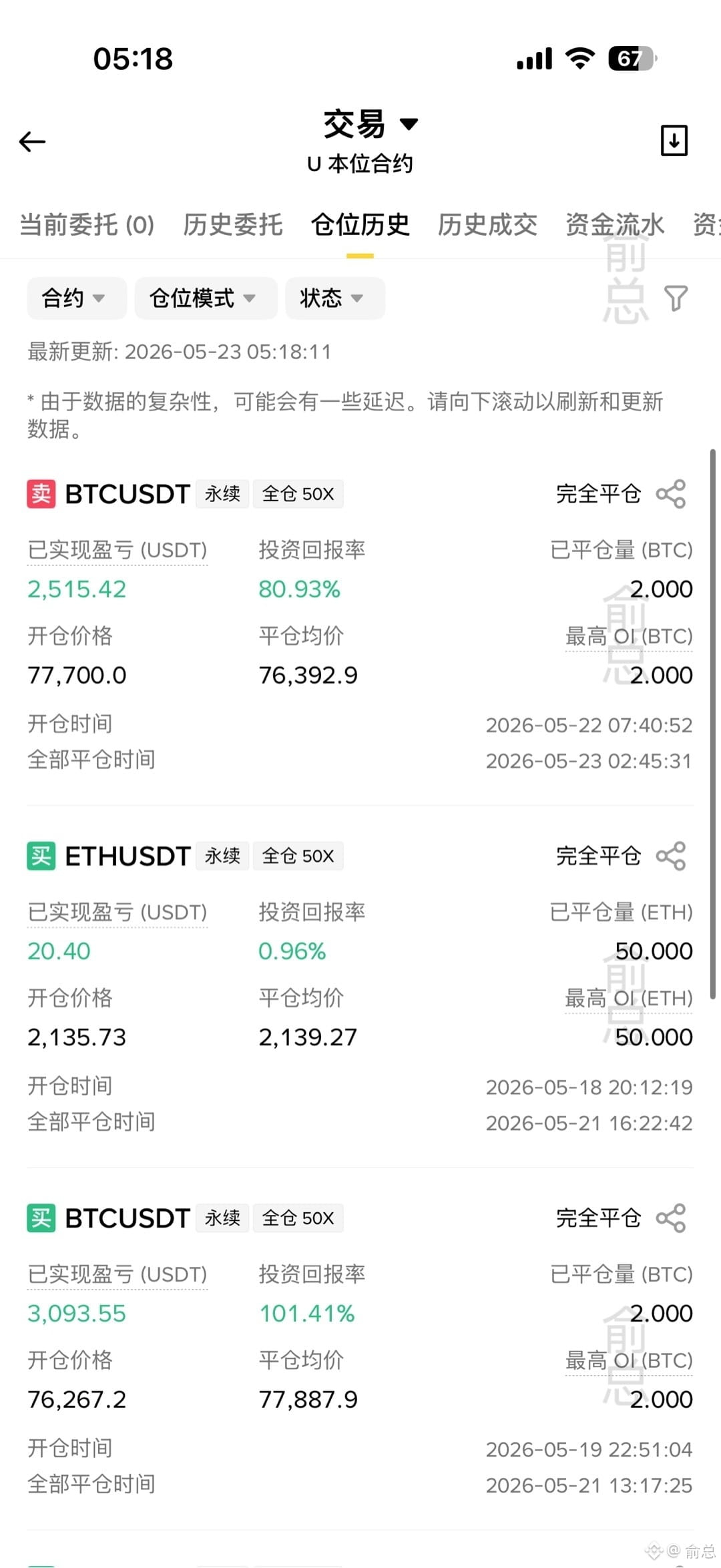
The technical operations of trading are actually not complicated. Once the entry conditions, position sizing, take-profit and stop-loss levels, and holding period are determined, what remains is to repeat execution. But most people can’t do it, because during repeated execution they are disrupted by all kinds of factors. When in unrealized profit, they want to hold for more; when in unrealized loss, they want to hold on; when suffering consecutive losses, they want to break even and recover.#ShutterstockFallsAfterGettyEndsMerger $TAC
After getting through these stages, trading becomes very simple. Enter when it’s time to enter, exit when it’s time to exit, and wait when you should wait. It’s not because your technical skills have become stronger—it’s because the emotions that interfere with execution have been dealt with. When emotions are still there, no matter how accurate your direction judgment is, you can’t get the profits you’re supposed to get. Once emotions are controlled, the standard moves are executed repeatedly, and the results naturally appear. Profit is just the outcome; the cost is hidden in the dark.$LAB
After getting through it, trading becomes simple$ETH
The technical operations of trading are actually not complicated. Once the entry conditions, position sizing, take-profit and stop-loss levels, and holding period are determined, what remains is to repeat execution. But most people can’t do it, because during repeated execution they are disrupted by all kinds of factors. When in unrealized profit, they want to hold for more; when in unrealized loss, they want to hold on; when suffering consecutive losses, they want to break even and recover.#ShutterstockFallsAfterGettyEndsMerger $TAC
After getting through these stages, trading becomes very simple. Enter when it’s time to enter, exit when it’s time to exit, and wait when you should wait. It’s not because your technical skills have become stronger—it’s because the emotions that interfere with execution have been dealt with. When emotions are still there, no matter how accurate your direction judgment is, you can’t get the profits you’re supposed to get. Once emotions are controlled, the standard moves are executed repeatedly, and the results naturally appear. Profit is just the outcome; the cost is hidden in the dark.$LAB
The technical operations of trading are actually not complicated. Once the entry conditions, position sizing, take-profit and stop-loss levels, and holding period are determined, what remains is to repeat execution. But most people can’t do it, because during repeated execution they are disrupted by all kinds of factors. When in unrealized profit, they want to hold for more; when in unrealized loss, they want to hold on; when suffering consecutive losses, they want to break even and recover.#ShutterstockFallsAfterGettyEndsMerger $TAC
After getting through these stages, trading becomes very simple. Enter when it’s time to enter, exit when it’s time to exit, and wait when you should wait. It’s not because your technical skills have become stronger—it’s because the emotions that interfere with execution have been dealt with. When emotions are still there, no matter how accurate your direction judgment is, you can’t get the profits you’re supposed to get. Once emotions are controlled, the standard moves are executed repeatedly, and the results naturally appear. Profit is just the outcome; the cost is hidden in the dark.$LAB
271

·
--
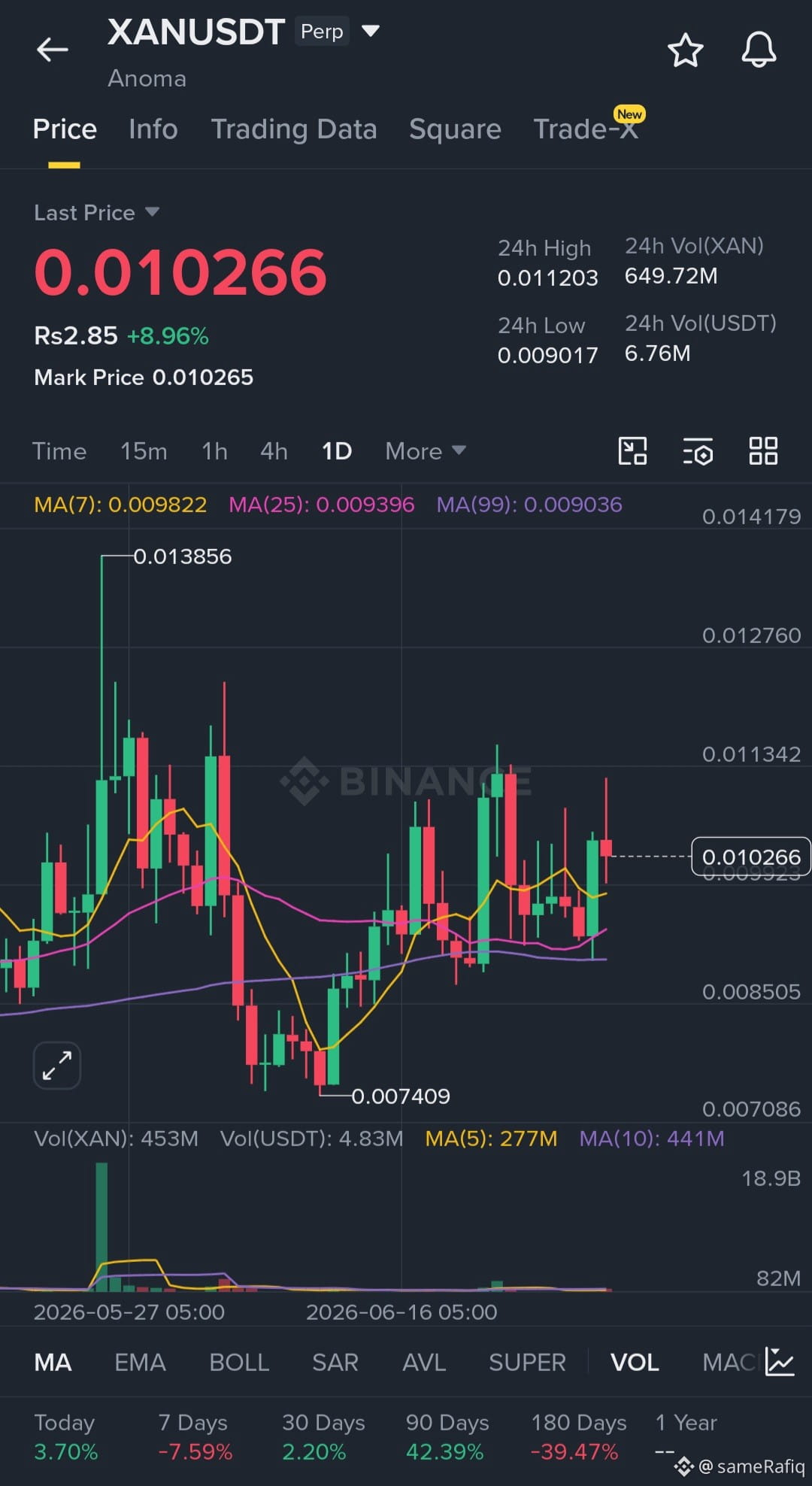
$XAN — LONG 🚀
Entry: $0.0100 – $0.0101
SL: $0.0098
TP: $0.0114 | $0.0122 | $0.0130 | $0.0139 | $0.0150
Support is holding, and momentum favors a bullish bounce from the current zone.
{alpha}(560x7427bd9542e64d1ac207a540cfce194b7390a07f)
#OilPriceFalls #KoreanWonWeakestSince2009 #USLiftsExportControlsOnAnthropicModels #JDVanceDisclosesBTCHoldings #ShutterstockFallsAfterGettyEndsMerger
$XAN — LONG 🚀
Entry: $0.0100 – $0.0101
SL: $0.0098
TP: $0.0114 | $0.0122 | $0.0130 | $0.0139 | $0.0150
Support is holding, and momentum favors a bullish bounce from the current zone.
#OilPriceFalls #KoreanWonWeakestSince2009 #USLiftsExportControlsOnAnthropicModels #JDVanceDisclosesBTCHoldings #ShutterstockFallsAfterGettyEndsMerger
Entry: $0.0100 – $0.0101
SL: $0.0098
TP: $0.0114 | $0.0122 | $0.0130 | $0.0139 | $0.0150
Support is holding, and momentum favors a bullish bounce from the current zone.
#OilPriceFalls #KoreanWonWeakestSince2009 #USLiftsExportControlsOnAnthropicModels #JDVanceDisclosesBTCHoldings #ShutterstockFallsAfterGettyEndsMerger
1
55
Log in to explore more content
Join global crypto users on Binance Square
⚡️ Get latest and useful information about crypto.
💬 Trusted by the world’s largest crypto exchange.
👍 Discover real insights from verified creators.
Email / Phone number
Trending Topics
1
#ChainlinkLaunchesBankSWIFTLedgerFramework
0 views
0 Discussing
2
#EarningsSeason
402,825 views
3,066 Discussing
3
#SECChairWantsStockMarketsOnChain
2,496 views
104 Discussing
4
#MulticoinInvestsInGrass
1,186 views
72 Discussing
5
#CEARenamesToBNBStandardUnderBNC
2,470 views
89 Discussing
6
#BitwiseLaunchesFirstSpotNEARETF
50,964 views
723 Discussing
7
#USJobOpeningsFallToFiveMonthLow
54,846 views
554 Discussing
8
#ECBToTestAIAgentsInDigitalEuroPayments
36,155 views
603 Discussing
9
#JapanFSABacksFourthStablecoinTradeSettlementPilot
41,036 views
629 Discussing
10
#BitgetHackerFailsToMoveStolenFunds
58,335 views
694 Discussing